Article

A Study on the Micro-Scale Flow Patterns and Ion Regulation Mechanisms in Low-Salinity Water Flooding


1
School of Petroleum Engineering, Xi’an Shiyou University, Xi’an 710065, China
2
College of Carbon Neutrality Future Technology, China University of Petroleum, Beijing 102249, China
*
Author to whom correspondence should be addressed.
Energies 2026, 19(2), 509; https://doi.org/10.3390/en19020509

Submission received: 15 December 2025 / Revised: 4 January 2026 / Accepted: 16 January 2026 / Published: 20 January 2026

Abstract

As an effective technology for enhancing oil recovery, low-salinity water flooding requires further investigation into its microscopic displacement mechanisms and the regulatory roles of key ions. Based on microscopic visualization displacement experiments, this study systematically investigated the effects of injected water salinity, key ion types (Na+, K+, Ca2+, Mg2+, HCO3, CO32−, SO42−, and OH), and their concentrations on crude oil displacement behavior in both high- and low-permeability zones. Experimental results indicate that no significant correlation exists between displacement efficiency and injected water salinity in high-permeability zones. In low-permeability zones, displacement efficiency increases with decreasing salinity, peaking at 26.5% when injected water salinity reaches 5000 mg/L. The cation displacement efficiency in the formation, from highest to lowest, is Ca2+ > K+ > Mg2+ > Na+. The anion displacement efficiency, from highest to lowest, is OH > SO42− > CO32− > HCO3. When the CaCl2 concentration decreased from 100 wt% to 50 wt%, the displacement effect in the low-permeability zone improved further, indicating that a higher concentration of the divalent cation Ca2+ is not necessarily better. In medium-to-high salinity formation water reservoirs, and under conditions where the influence of clay minerals is disregarded, ion type and reservoir permeability are the most significant factors affecting oil recovery efficiency. These findings provide theoretical support for elucidating the micro-dynamic mechanisms of low-salinity water flooding in low-permeability zones and optimizing injection water formulations.

1. Introduction

In oilfield development practice, water flooding serves as a fundamental technology for enhancing crude oil displacement efficiency [1,2]. Domestic and international scholars have discovered that reducing the salinity of injected water—known as low-salinity water flooding—can significantly improve reservoir displacement efficiency [3,4,5,6,7]. The mechanism of low-salinity water flooding technology is relatively complex, but research generally attributes its effectiveness to factors such as wettability changes, osmotic pressure effects, ion exchange interactions, and double layer expansion [8,9,10,11,12]. Furthermore, the effectiveness of low-salinity water flooding technology is influenced by multiple variables, including salinity differences, crude oil properties, injection flow rates, and formation conditions. Different mineral compositions and rock types also impact low-to-medium salinity water flooding performance [5,13,14,15,16,17,18].
Scholars worldwide have conducted extensive research on low-salinity water flooding. Nguyen, N. et al. [19] analyzed its impact on formation properties and flow control from perspectives such as particle migration and wettability alteration. Al-Saedi, H. N. et al. [20] focused on divalent ions and their dilution effects, demonstrating superior performance at specific dilution ratios. Wang, J. [21,22,23] experimentally confirmed the positive role of specific total dissolved solid (TDS) ranges (1000–5000 ppm) and key ions (Na+, Ca2+, Mg2+, and SO42−) in enhancing recovery rates. Takeda, M. et al. [24] demonstrated through suction experiments that reservoir rocks containing crude oil and brine can rapidly induce chemisorption when salinity differentials change. Similarly, He, Y. et al. [25] and other researchers further confirmed the positive impact of non-salinity and ion levels on displacement efficiency through numerical simulations. Over the past five years, micro-visualization techniques have provided new avenues for revealing oil displacement dynamics at the pore scale. Kumar Sharma, V. et al. [26] employed particle image velocimetry to conduct microscopic studies of chemical displacement by low-salinity brine in 2D porous micro-models, enabling visualization and quantification of displacement processes and efficiency. Karimpour Khamaneh, M. et al. [27] investigated the functional relationship with salinity through microfluidic oil displacement experiments. Results indicate that non-monotonic oil recovery behavior at the macro-scale arises from several concurrent micro-scale phenomena, each exhibiting non-monotonicity with salinity and possessing its own optimal salinity threshold.
Based on the current literature, although extensive experimental and simulation results have been accumulated at the core scale for low-salinity water flooding, microscopic dynamic observations of oil–water flow behavior during displacement remain scarce. In particular, systematic studies on fluid behavior within different permeability channels are still lacking. To address this gap in microscopic visualization within existing low-salinity waterflooding research, this study designed a dual-permeability microfluidic chip featuring both high- and low-permeability channels. By eliminating interference from actual reservoir rock properties, the chip enables direct observation at the pore scale of how injected water salinity, ion type, and concentration influence crude oil displacement behavior and efficiency. This provides theoretical support for elucidating the microscopic dynamic mechanisms underlying low-salinity water flooding.

2. Materials and Methods

2.1. Experimental Apparatus and Materials

The crude oil used in the experiment had a density of 0.8 g·cm−3. Its composition included 3.3% asphaltene, 10.2% colloids, 15% aromatics, and 71.5% saturated hydrocarbons (Table 1). The simulated formation water used in the experiment had a salinity of 50,000 mg/L. Its chemical composition was formed by mixing the typical ions Na+, K+, Ca2+, Mg2+, and Cl in specific proportions. The analytical-grade reagents NaCl, KCl, CaCl2, and MgCl2 were used to simulate actual formation water. This study designed three types of injection water to systematically investigate their displacement effects. The first was salinity. By altering total salinity while maintaining the same ion types and relative proportions as formation water, the impact of salinity on the displacement process was evaluated. The second was ion type. Single-ion solutions were prepared, including a 5000 mg/L NaCl solution containing only NaCl, to investigate the influence of a single ion type on oil displacement. The third was ion concentration. To maintain consistent salinity in the injection water, the ion concentration and proportions were adjusted by adding NaCl. For example, a 5000 mg/L solution containing 50 wt% NaCl and 50 wt% CaCl2 could be compared with a 5000 mg/L CaCl2 solution to study the effect of different ion concentrations on displacement efficiency (Table 2). The formation water salinity of 50,000 mg/L represents a moderately high salinity level. Establishing a 10-fold, significant salinity gradient with the key injection water at 5000 mg/L enables the driving force for chemical osmosis and ion exchange within the actual reservoir. This gradient also prevents severe particle migration caused by excessively high chemical gradients, thereby avoiding damage to the reservoir.

2.2. Experimental Setup and Structure

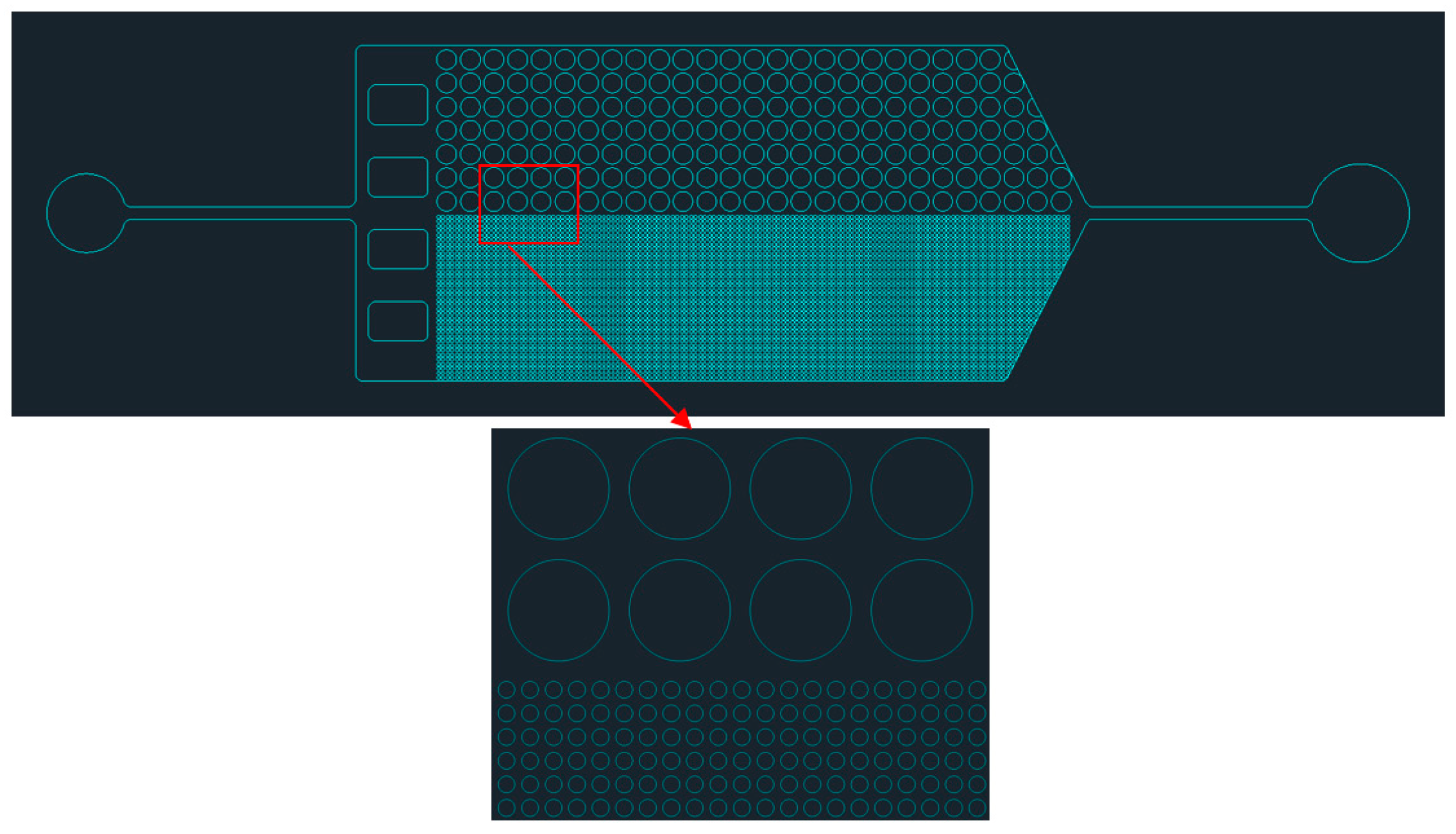
This study employed a microfluidic experimental platform primarily composed of a micro-displacement pump, a biological microscope, and a high-speed camera, enabling real-time microscopic observation of displacement dynamics. The experimental chip structure, fabricated from polydimethylsiloxane (PDMS), mimics the typical characteristics of heterogeneous reservoirs. The chip employs a regular circular pattern to simulate the reservoir matrix, divided into two interconnected zones: a high-permeability region with 60 μm matrix spacing forming dominant fluid pathways (representing fractures or high-permeability reservoirs) and a low-permeability region with 20 μm spacing increasing fluid flow resistance (simulating tight or low-permeability reservoirs). Different fluid types enter the chip structure from the left inlet, visually revealing their dynamic behavior within the upper and lower high- and low-permeability zones (Figure 1). Since the PDMS chip is electrically neutral and lacks reservoir minerals, this experiment focuses on observing gradient effects, ion specificity effects, and charge influences between crude oil and injected water on the electrically neutral chip surface without considering clay minerals.
The experiment employed PDMS to fabricate simulated reservoir structures. First, the reservoir simulation structure was etched onto a silicon wafer. Subsequently, the PDMS base resin and crosslinking agent were mixed in a 10:1 ratio and stirred clockwise for 15–20 min before being poured into the silicon wafer mold. The mold was placed in a vacuum pump for degassing until no bubbles remained. After removal, the mold was baked at 60 °C for 8 h to cure the PDMS. After curing, the PDMS structure was cut from the silicon wafer mold. Needles were used to pierce both ends of the structure to serve as water injection inlet and outlet ports. The structure was then placed with a glass slide into a plasma cleaner for bonding. After bonding, the assembly was placed in an oven at 45 °C for 1 h. Upon removal, the chip was ready for use. Prior to experimentation, the bonding process can be repeated to ensure the hydrophilicity of the reservoir-simulating chip.

2.3. Experimental Procedure

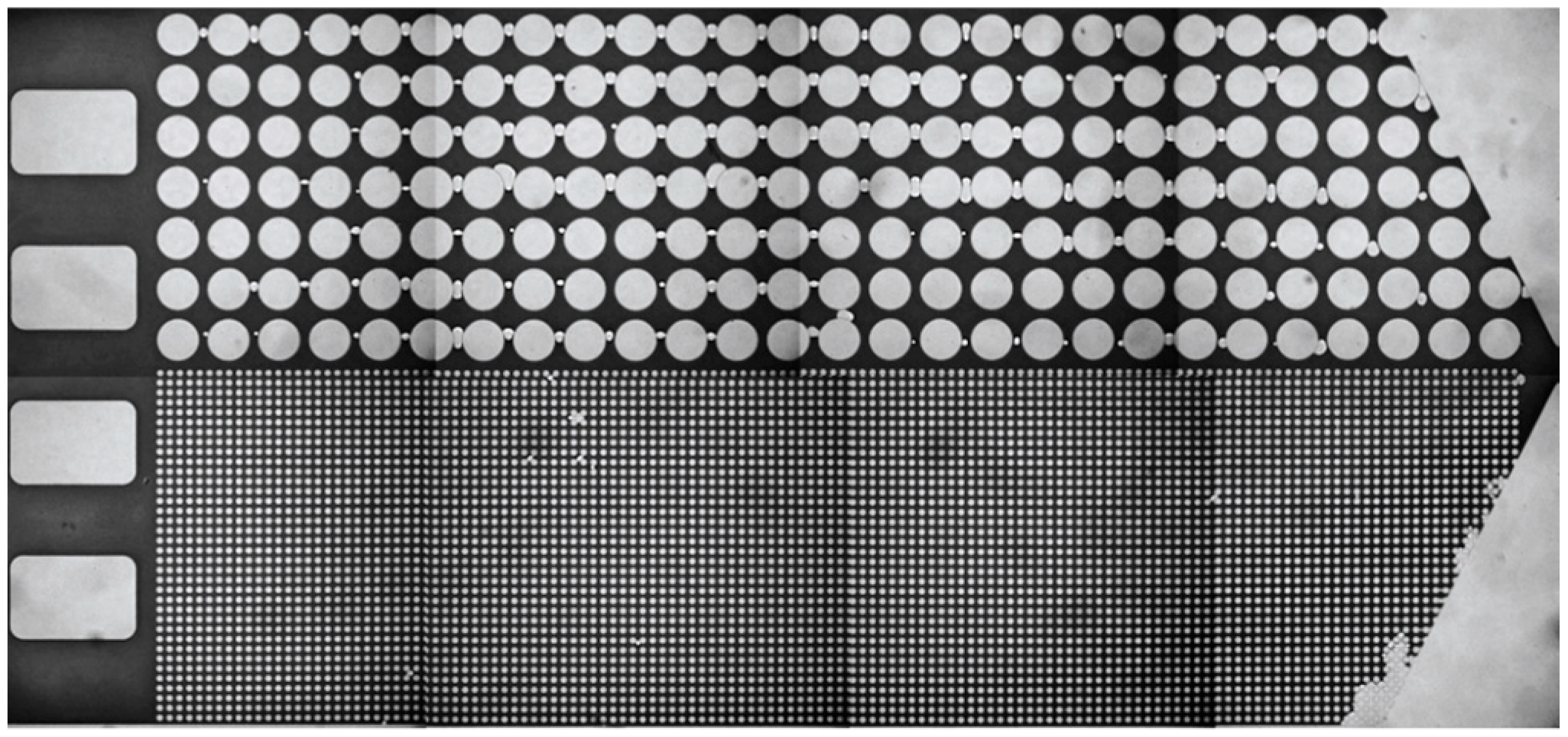
The experiment was conducted at room temperature. First, the syringe was secured to a micro-displacement pump and connected to the needle via tubing. The needle was inserted into the PDMS chip’s injection port to establish a fluid injection channel. Initially, saturated formation water (5000 mg/L) was injected into the chip at a flow rate of 3 μL/min until no residual bubbles remained in the model. Crude oil was then injected at 2 μL/min until saturation equilibrium between crude oil and bound water was reached within the model (Figure 2). Finally, injection water with varying degrees of salinity, ion types, and concentrations was introduced at 0.5 μL/min to observe the dynamic displacement behavior in both high- and low-permeability zones. During the experiment, images were captured every 6 min to document the progression of the displacement front toward the outlet.

3. Experimental Results and Discussion

3.1. Effect of Salinity on Displacement Efficiency

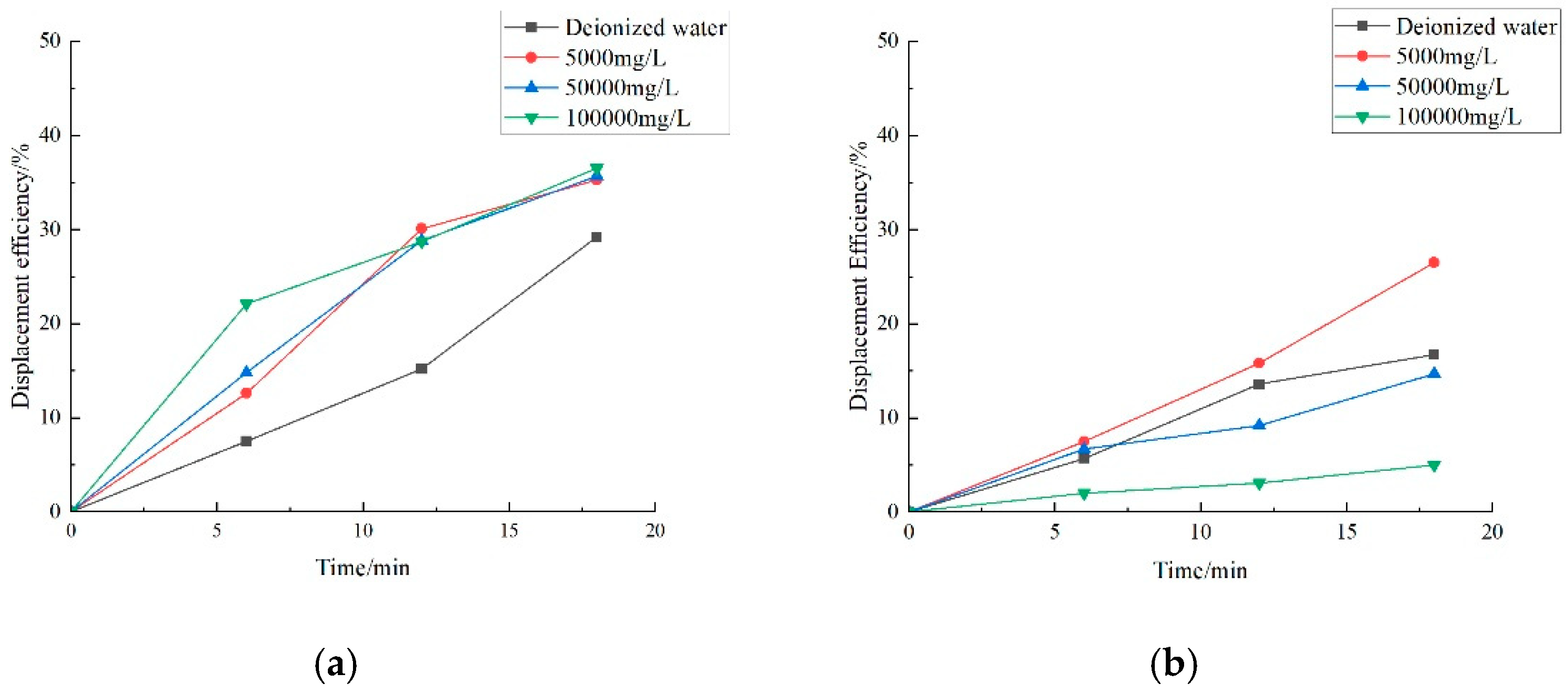
Injection water with varying degrees of salinity (deionized water, 5000 mg/L, 50,000 mg/L, and 100,000 mg/L) exhibits distinct permeability characteristics in high- and low-permeability zones over identical time periods. High-permeability zones, characterized by larger inter-matrix spacing and lower fluid flow resistance, allowed rapid passage and effective displacement of extensive crude reserves by all injected water types. In contrast, low-permeability zones, constrained by narrow pore throats, exhibited more complex displacement patterns and slower process progression. Specifically, deionized water primarily advanced along high-permeability pathways within the first 12 min, showing limited penetration into low-permeability zones. Expansion into low-permeability zones occurred gradually between 12 and 18 min, with vertical penetration into these zones (Figure 3). At a salinity of 5000 mg/L, the water demonstrated excellent flow capability in both high- and low-permeability zones, penetrating deep into the pore structure to displace crude oil without forming distinct fingering patterns. After 6 min of displacement, the water effectively entered the low-permeability zone, continuing its longitudinal expansion after 12 min. By 18 min, breakthroughs occurred both longitudinally and transversely, gradually forming a networked flow path without any dominant pathways emerging throughout the process (Figure 4). Under high-salinity conditions (50,000 mg/L and 100,000 mg/L), particularly at 100,000 mg/L, injected water advanced most uniformly at the leading edge of high-permeability zones. However, its penetration capability into both high- and low-permeability reservoirs weakened, with more pronounced fingering compared with low-salinity systems, making it difficult to effectively mobilize crude oil in low-permeability zones (Figure 5 and Figure 6). Results indicate that displacement efficiency in low-permeability zones decreases significantly with increasing salinity, reflecting the diminished wetting ability of highly saline fluids in complex pore systems. Lower-salinity conditions enhance surface hydrophilicity and improve micro-scale wetting coverage.
In the high-permeability zone, injection water with different salinity levels (100,000 mg/L, 50,000 mg/L, and 5000 mg/L) achieved similar displacement efficiencies, all around 35%, while deionized water exhibited the lowest displacement efficiency at 29.2%. In low-permeability zones, the 5000 mg/L injection water and deionized water exhibited relatively high displacement efficiencies of 26.5% and 16.7%, respectively. The displacement efficiency for 50,000 mg/L injection water was 14%, while 100,000 mg/L injection water had the lowest displacement efficiency at only 5% (Figure 7). In practical reservoir water injection development, selecting injection water with a salinity of 5000 mg/L can maintain satisfactory displacement effects while reducing potential reservoir damage caused by excessive salinity differences between the injection water and formation water, thereby mitigating particle migration within the reservoir.
During the initial displacement phase, low-salinity injection water (5000 mg/L) and high-salinity confined water (50,000 mg/L formation water) were separated by the continuous oil phase (Figure 8). At 4–6 min into displacement, a distinct rupture of the oil phase membrane was clearly observable. Due to the significant water chemical potential difference across the oil film, water spontaneously migrated across the oil film from the low-salinity zone to the high-salinity zone. This ultimately destabilized the oil film at its weakest point, causing rupture. Subsequently, the injected water continued to advance the oil phase front.

3.2. Effect of Key Ion Types on Displacement Efficiency

3.2.1. Key Cations

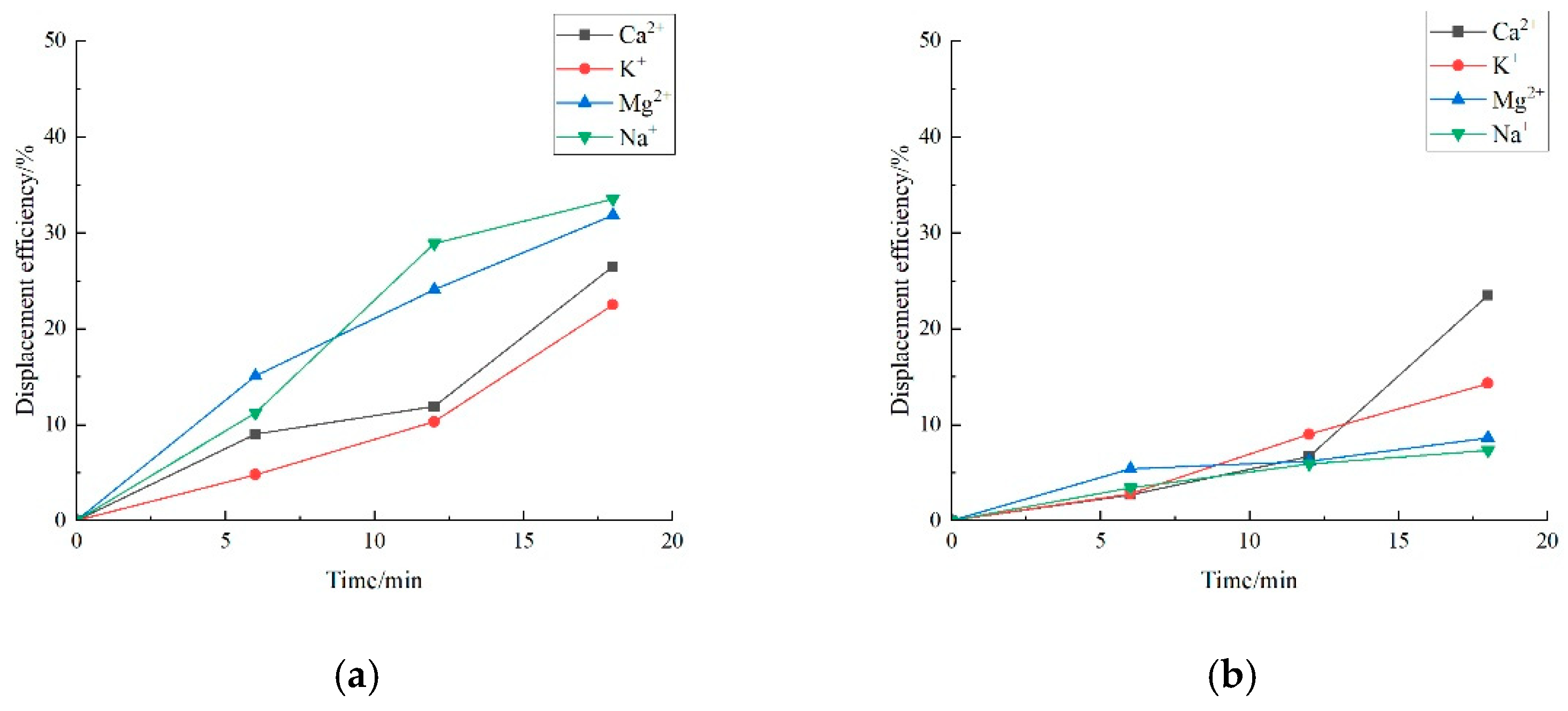
Under fixed salinity conditions (5000 mg/L), this study further investigated the effects of different cation types (Na+, K+, Ca2+, and Mg2+) on the micro-scale oil displacement process. Na+ displacement rapidly advanced water primarily through hypertonic channels within 18 min, with very limited reach into low-permeability zones (Figure 9). In contrast, K+ effectively propagated through both high- and low-permeability zones, penetrating deeper into the reservoir to mobilize crude oil (Figure 10). The divalent cation Ca2+ demonstrated strong oil displacement capability, particularly maximizing crude mobilization in low-permeability zones. This may stem from Ca2+’s interaction with polar components in crude oil, which effectively enhanced the permeability of injected water within the micro-pore throat system and significantly reduced the capillary resistance’s impact on displacement (Figure 11). Similarly, Mg2+, another divalent cation, demonstrated inferior oil displacement performance in low-permeability zones compared with Ca2+, indicating that, beyond the valence state, the specific type of cation decisively influences displacement behavior (Figure 12). Na+ and Mg2+ exhibited similar displacement patterns, both advancing rapidly through high-permeability channels while showing poor penetration and displacement efficacy in low-permeability regions. Differences between ion types confirm the sensitivity of key ions to reservoir space. Ca2+ emerges as the key component for initiating crude oil displacement in low-permeability zones. Within electrically neutral PDMS chips, the displacement behavior at a concentration of 5000 mg/L for four cations (Na+, K+, Ca2+, and Mg2+) exhibited complex specificity, where oil displacement efficiency cannot simply be explained by ionic valence or single stability factors.
The displacement efficiency in the high-permeability zones follows the order Na+ (33.5%) > Mg2+ (31.8%) > Ca2+ (26.5%) > K+ (22.5%). In the low-permeability zones, the displacement efficiency order changes to Ca2+ (23.5%) > K+ (14.3%) > Mg2+ (8.6%) > Na+ (7.3%) (Figure 13).

3.2.2. Key Anions

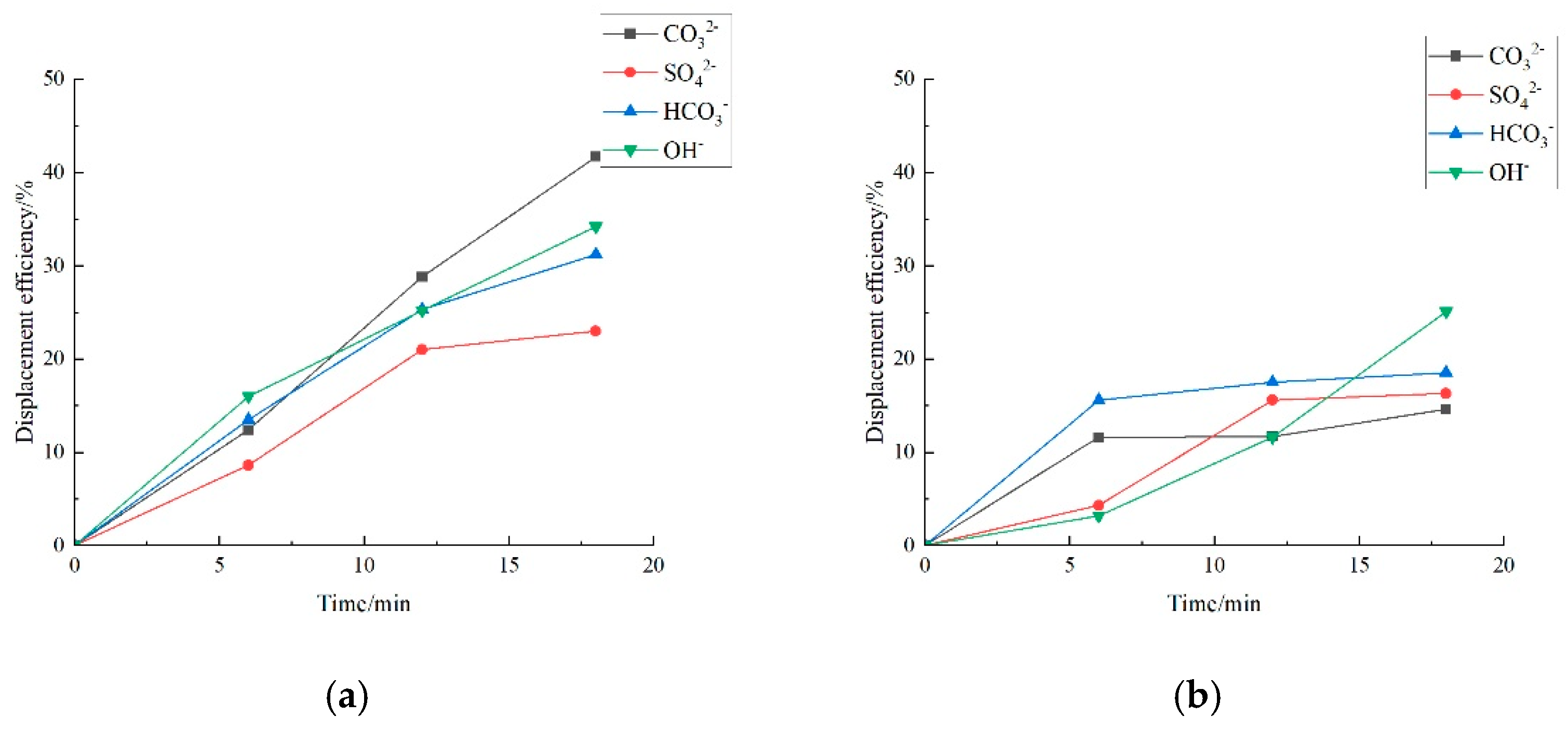
Under fixed salinity conditions of 5000 mg/L, distinct differences in displacement behavior were observed across different anion systems. In the NaHCO3 system (Figure 14), the displacement front advanced relatively uniformly, entering the low-permeability zone preliminarily at 6 min and forming a continuous flow channel after 12 min, demonstrating excellent vertical expansion capability. In the Na2CO3 system (Figure 15), the displacement front advanced relatively uniformly, entering the low-permeability zone preliminarily at 6 min and forming a continuous flow channel after 12 min, demonstrating excellent vertical expansion capability. The Na2SO4 system (Figure 16) clearly entered the low-permeability zone by 6 min and developed a more complex flow network over time. Expansion into the low-permeability zone commenced within 12 min, but the extent reached at 18 min was less than that achieved by NaHCO3 and Na2CO3. The NaOH system (Figure 17) exhibited the most pronounced early flow and expansion capability in the low-permeability zone. By 6 min, it had clearly penetrated the low-permeability zone and progressively formed interconnected crude displacement pathways over time. This indicates that OH not only possesses strong interfacial activity but also effectively alters the oil–water distribution within microscopic pore throats, thereby significantly enhancing crude mobilization in low-permeability zones. Among anions, CO32− exhibits optimal displacement efficiency in high-permeability zones, while the OH system demonstrates exceptional performance in low-permeability zones. Its alkalinity enables mobilization of crude oil over a larger area.
The displacement efficiency in the anion high-permeability zone follows the order CO32− (41.7%) > OH (34.2%) > HCO3 (31.2%) > SO42− (23.0%), indicating that CO32− exhibits the strongest crude oil stripping and migration capacity in this zone. In low-permeability zones, the displacement efficiency sequence changes significantly, to OH (25.1%) > HCO3 (18.5%) > SO42− (16.3%) > CO32− (11.7%). This indicates that OH holds greater advantages in promoting crude oil initiation and flow expansion within low-permeability zones (Figure 18).

3.3. Effect of Key Ion Concentration on Displacement Efficiency

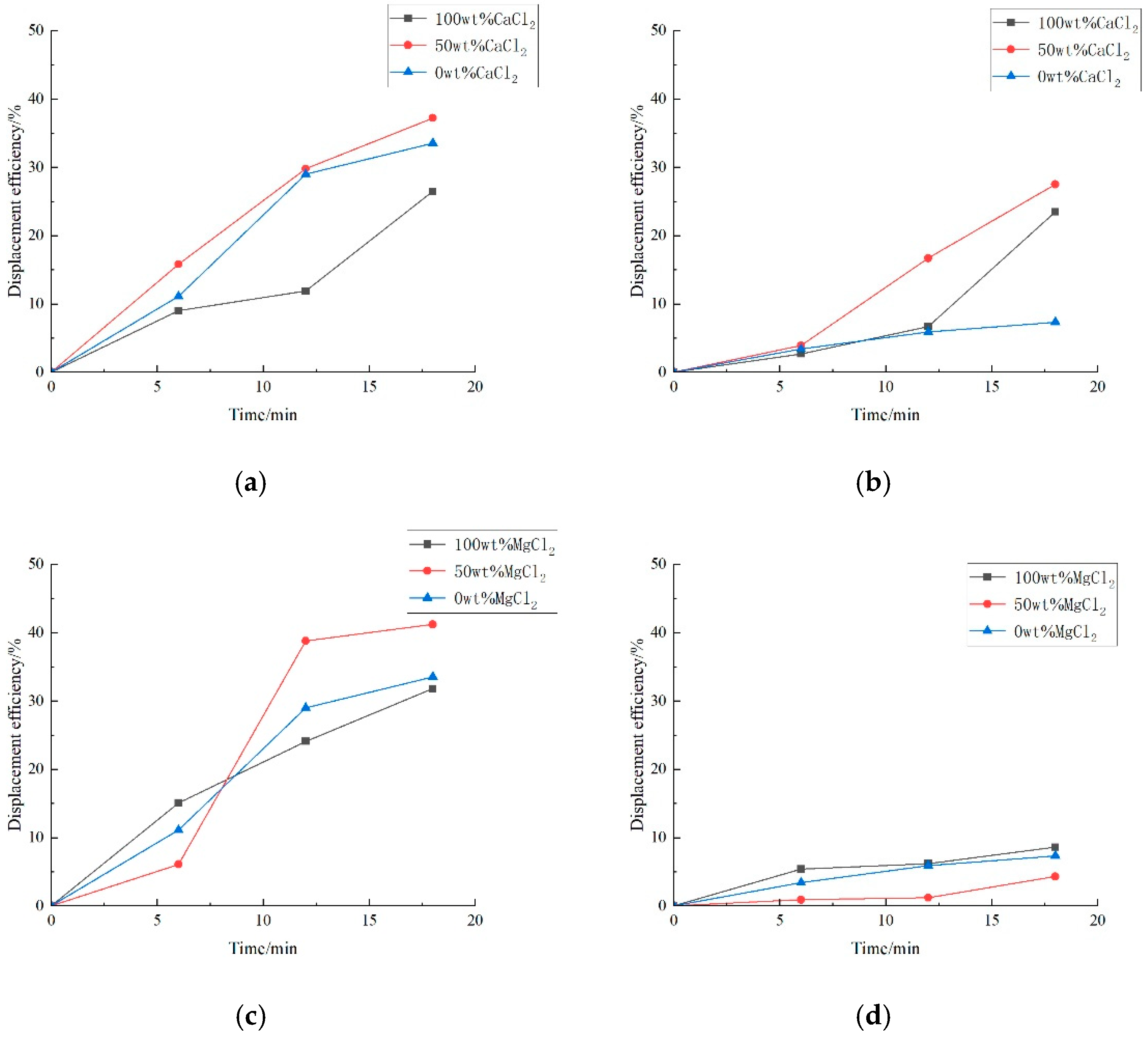
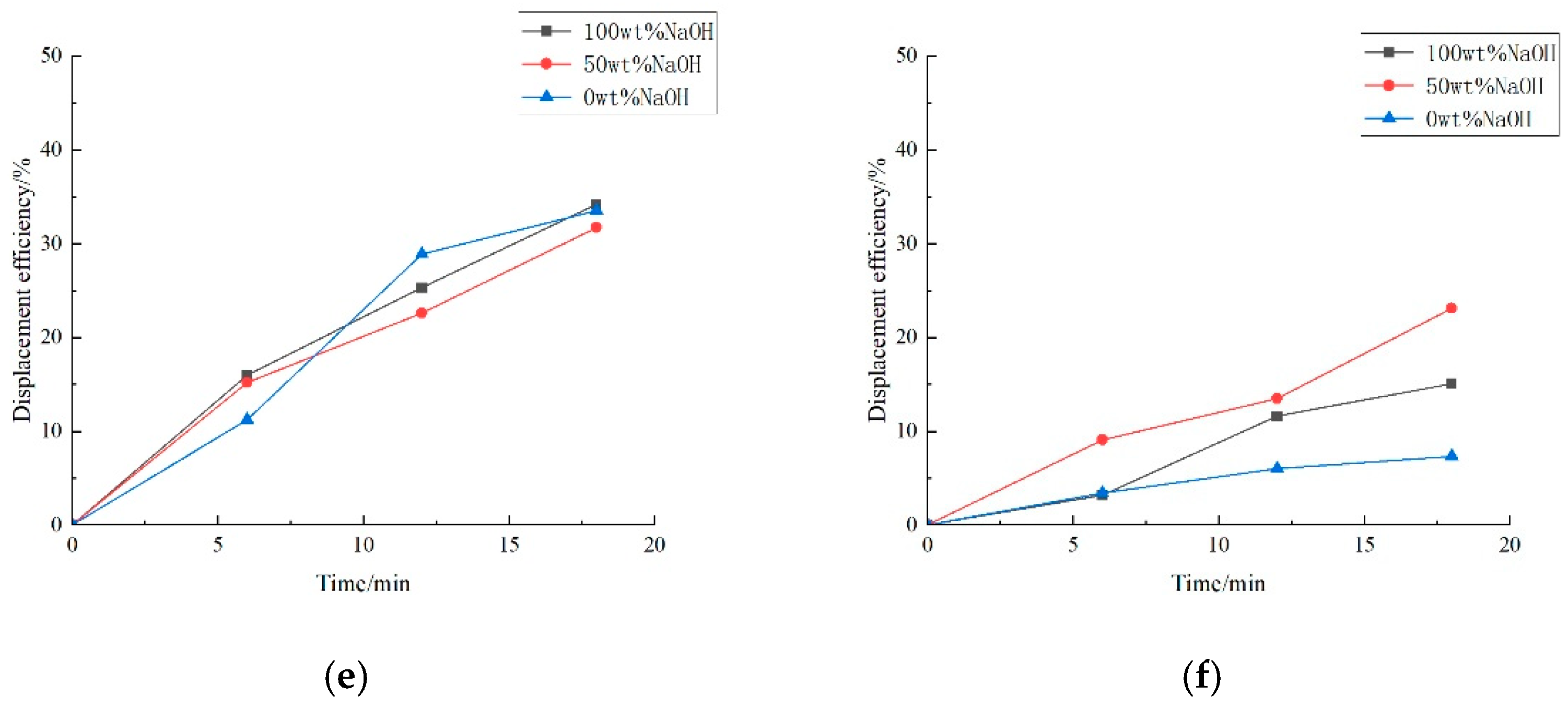
For the Ca2+, OH system, reducing the ion concentration from 100 wt% to 50 wt% enhanced the displacement efficiency in both hypertonic and low-permeability zones. However, the displacement weakened when the CaCl2 concentration was zero, indicating that moderate dilution improves the sweep efficiency and crude oil initiation capacity at the pore scale (Figure 19). In contrast, the Mg2+ system showed improved displacement efficiency only in the high-permeability zone after a concentration reduction, while efficiency decreased in the low-permeability zone, reflecting specificity in its mechanism of action and concentration response within low-permeability channels (Figure 20). The OH system rapidly penetrated low-permeability zones within the initial displacement phase (6 min) and continued to expand (Figure 21). In contrast, the Ca2+ system remained predominantly confined to high-permeability channels at the same time point, achieving effective penetration into low-permeability zones only between 12 and 18 min. This temporal discrepancy indicates that OH exhibits faster kinetic responses in reducing oil–water interfacial tension and enhancing rock surface wettability, whereas Ca2+’s effects rely more on its slow diffusion within pores and ion exchange processes.
Natural surfactants in crude oil typically impart a negative charge to oil droplets in aqueous phases, resulting in electrostatic repulsion between oil droplets. In the simplified pore model constructed on electrically neutral PDMS chips, the initially saturated high-salinity formation water contains various cations (e.g., Na+, Ca2+, and Mg2+). These ions can physically adsorb onto the hydrophilic PDMS surface, forming a positively charged surface. The negatively charged polar components in crude oil (e.g., carboxylic acids) tend to bind with these cations. Injecting low-salinity water reduces the original ion concentration on the chip surface, thereby detaching some oil droplets. Simultaneously, calcium ions (Ca2+), due to their higher charge density (divalent), can more effectively bind to negatively charged crude oil, displacing or partially desorbing previously bound crude oil and promoting its migration. However, excessive Ca2+ can over-neutralize crude oil droplets, causing severe compression of the double electric layer. This weakens electrostatic repulsion between droplets, leading to easier coalescence. The resulting oil clusters become difficult to pass through micro-pores and more likely to adhere to the chip surface, ultimately reducing the wave propagation efficiency or recovery rate. As another divalent cation, magnesium ions (Mg2+) exhibit lower interfacial efficiency than calcium ions due to their larger hydration radius. Consequently, under equivalent conditions, Mg2+ demonstrates weaker recovery enhancement effects. The influence of ion concentration on displacement behavior does not follow a single trend but is closely linked to ion type, valence state, and their interactions with pore structures.
When injecting water with CaCl2 concentrations of 100 wt%, 50 wt%, and 0 wt%, the displacement efficiencies in the high-permeability zone were 26.4%, 37.2%, and 33.5%, respectively, while those in the low-permeability zone were 23.5%, 27.5%, and 7.3%, respectively. When MgCl2 concentrations were 100 wt%, 50 wt%, and 0%, the displacement efficiencies in the high-permeability zone were 31.7%, 41.3%, and 33.5%, respectively, while those in the low-permeability zone were 8.6%, 9.4%, and 7.3%, respectively. At NaOH concentrations of 100 wt%, 50 wt%, and 0%, the displacement efficiencies in the high-permeability zone were 34.2%, 31.7%, and 33.5%, respectively, while those in the low-permeability zone were 25.1%, 23.2%, and 7.3%, respectively (Figure 22).

3.4. Analysis of the Significance of Influencing Factors

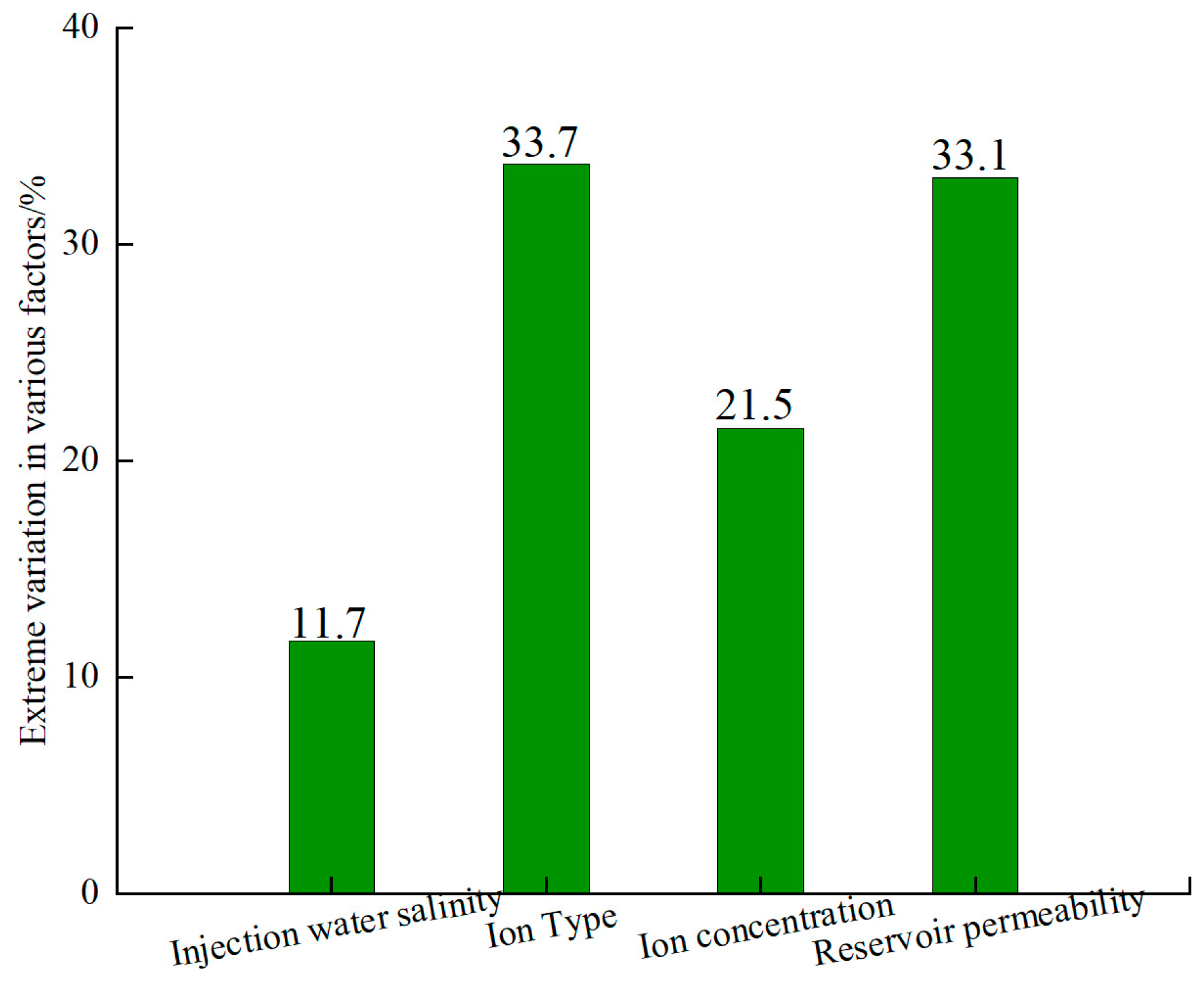
By comparing the range values of injected water salinity, ion types, ion concentrations, and reservoir permeability through range analysis, we systematically evaluated their relative importance to chip oil recovery efficiency. The results of the orthogonal experiment range analysis are shown in Figure 23. Under conditions of medium-to-high salinity formation water reservoirs and without considering the influence of clay minerals, ion type and reservoir permeability are the most significant factors affecting oil recovery efficiency.
This study investigated crude oil displacement using electrically neutral PDMS chip structures in laboratory micro-scale experiments. Despite excluding the influence of clay minerals present in actual reservoirs, distinct dynamic flow characteristics among different fluids were observed. This confirms that optimizing the salinity, ion type, and concentration of injected water alone can enhance displacement dynamics, even without accounting for clay minerals. In practical field development, key sensitive ions within the reservoir must be identified based on characteristics such as permeability distribution, formation water versus crude oil properties, and clay minerals. This enables optimization of displacement efficiency in both high- and low-permeability zones through tailored injection water composition.

4. Conclusions

In micro-visualization experiments, low-salinity water flooding can significantly enhance displacement efficiency. This technology is influenced by multiple variables, including salinity differences, ion types, and ion concentrations.
No significant correlation was observed between displacement efficiency in high-permeability zones and injected water salinity. Conversely, displacement efficiency in low-permeability zones increased with decreasing salinity. The displacement efficiencies for 100,000 mg/L, 50,000 mg/L, and 5000 mg/L injected water were 5%, 14.7%, and 26.5%, respectively, while deionized water achieved 16.7% displacement. Permeability gradients within formations also promote fluid flow through porous media.
Key ions prevalent in formations exhibit regional variations across permeability zones. In low-permeability areas, key cation displacement efficiency follows the order Ca2+ > K+ > Mg2+ > Na+, while key anion displacement efficiency follows the order OH > SO42− > CO32− > HCO3.
Reducing the Ca2+ concentration improves displacement efficiency in both low- and high-permeability zones, magnesium ion concentration changes have a negligible impact in low-permeability zones, and lowering the OH concentration enhances displacement efficiency in low-permeability zones. Displacement effectiveness does not continuously improve with sustained increases in key ion concentrations.

Author Contributions

Conceptualization, X.L. and T.Y.; data curation, Y.C. and L.P.; formal analysis, T.Y. and Y.C.; funding acquisition, X.L.; investigation, Y.R.; methodology, X.L. and Y.C.; project administration, T.Y.; resources, X.L.; supervision, X.L.; visualization, L.P. and Y.R.; writing—original draft, X.L., T.Y. and Y.C.; writing—review and editing, X.L. and T.Y. All authors have read and agreed to the published version of the manuscript.

Funding

This work was supported by the National Natural Science Foundation of China (Grant No. 52374038 and U23B2089) and the Innovation Capability Support Program of Shaanxi (Program No. 2024ZC-KJXX-064).

Data Availability Statement

The raw data supporting the conclusions of this article will be made available by the authors on request. The data are not publicly available due to the subsequent analysis of the data.

Conflicts of Interest

The authors declare no conflicts of interest.

References

  1. Fan, H.; Liu, X.; Li, G.; Li, X.; Radwan, A.E.; Yin, S. Study on Characteristics, Efficiency, and Variations of Water Flooding in Different Stages for Low Permeability Oil Sandstone. Energy Sci. Eng. 2024, 12, 5245–5265. [Google Scholar] [CrossRef]
  2. Song, W.; Zhao, G.; Yu, H.; Huang, H.; Wang, J.; Wang, K.; Li, Y.; Li, D.; Yuan, B. Study on the Law of Waterflooding Enhancement in Tight Reservoirs. Phys. Fluids 2025, 37, 087122. [Google Scholar] [CrossRef]
  3. Chaabi, O.; Al Kobaisi, M.; Haroun, M. Quantifying the Low Salinity Waterflooding Effect. Energies 2021, 14, 1979. [Google Scholar] [CrossRef]
  4. Wang, X.; Wu, X.; Shi, L.; Ogaidi, A.R.S.; Shan, X.; Ye, Z.; Qin, G.; Liu, J.; Wu, B. Application of Low-Salinity Waterflooding in Heavy Oil Sandstone Reservoir: Oil Recovery Efficiency and Mechanistic Study. ACS Omega 2024, 9, 30782–30793. [Google Scholar] [CrossRef]
  5. He, Y.; Liu, Y.; Zhang, B.; Li, J.; Fan, P.; Chai, R.; Xue, L. Low-salinity water flooding in Middle East Offshore Carbonate Reservoirs: Adaptation to Reservoir Characteristics and Dynamic Recovery Mechanisms. Phys. Fluids 2025, 37, 076605. [Google Scholar] [CrossRef]
  6. Khishvand, M.; Oraki Kohshour, I.; Alizadeh, A.H.; Piri, M.; Prasad, S. A Multi-Scale Experimental Study of Crude Oil-Brine-Rock Interactions and Wettability Alteration during Low-Salinity Waterflooding. Fuel 2019, 250, 117–131. [Google Scholar] [CrossRef]
  7. Su, W.; Liu, Y.; Gao, Z.; Yang, L.; Yang, R.; Mcharo, W.; Tang, R. Relative Permeability Variations during Low-salinity water flooding in Carbonate Rocks with Different Mineral Compositions. J. Dispers. Sci. Technol. 2020, 41, 227–234. [Google Scholar] [CrossRef]
  8. Kumar Saw, R.; Mandal, A. Experimental Investigation on Fluid/Fluid and Rock/Fluid Interactions in Enhanced Oil Recovery by Low-salinity water flooding for Carbonate Reservoirs. Fuel 2023, 352, 129156. [Google Scholar] [CrossRef]
  9. Uoda, M.K.; Hussein, H.Q.; Jalil, R.R. Experimental Investigation of Low Salinity Water to Improve Oil Recovery at Nassiriyah Oil Field. Chem. Pap. 2024, 78, 6191–6202. [Google Scholar] [CrossRef]
  10. Al-Bayati, A.; Karunarathne, C.I.; Al Jehani, A.S.; Al-Yaseri, A.Z.; Keshavarz, A.; Iglauer, S. Wettability Alteration during Low-salinity water flooding. Energy Fuels 2022, 36, 871–879. [Google Scholar] [CrossRef]
  11. Wu, J.; Chang, Y.; Li, J.; Liang, T.; Guo, X. Mechanisms of Low Salinity Waterflooding Enhanced Oil Recovery and Its Application. J. Southwest Pet. Univ. 2015, 37, 145–151. [Google Scholar]
  12. Yan, B.; Fan, H.; Wu, Z. Research Progress on Low-salinity water flooding for Enhanced Oil Recovery. Oilfield Chem. 2022, 39, 554–563. [Google Scholar]
  13. Garcia-Olvera, G.; Reilly, T.M.; Lehmann, T.E.; Alvarado, V. Effects of Asphaltenes and Organic Acids on Crude Oil-Brine Interfacial Visco-Elasticity and Oil Recovery in Low-Salinity Waterflooding. Fuel 2016, 185, 151–163. [Google Scholar] [CrossRef]
  14. Hadia, N.J.; Hansen, T.; Tweheyo, M.T.; Torsæter, O. Influence of Crude Oil Components on Recovery by High and Low Salinity Waterflooding. Energy Fuels 2012, 26, 4328–4335. [Google Scholar] [CrossRef]
  15. Balavi, A.; Salari, A.; Ayatollahi, S.; Mahani, H. Asphaltene Deposition during Low-Salinity Waterflooding: Effects of Aging, Brine Salinity, and Injection Rate. Energy Fuels 2025, 39, 11636–11649. [Google Scholar] [CrossRef]
  16. Liu, Y.; He, F.; Hu, Z.; Zhu, Z.; Ling, C. Microfluidic Study on the Effect of Single Pore-Throat Geometry on Spontaneous Imbibition. Langmuir 2024, 40, 19209–19219. [Google Scholar] [CrossRef] [PubMed]
  17. Villero-Mandon, J.; Pourafshary, P.; Riazi, M. Oil/Brine Screening for Improved Fluid/Fluid Interactions during Low-salinity water flooding. Colloids Interfaces 2024, 8, 23. [Google Scholar] [CrossRef]
  18. Lee, Y.; Park, H.; Lee, J.; Sung, W. Enhanced Oil Recovery Efficiency of Low-salinity water flooding in Oil Reservoirs Including Fe2+ Ions. Energy Explor. Exploit. 2019, 37, 355–374. [Google Scholar] [CrossRef]
  19. Nguyen, N.; Dang, C.; Gorucu, S.E.; Nghiem, L.; Chen, Z. The Role of Fines Transport in Low Salinity Waterflooding and Hybrid Recovery Processes. Fuel 2020, 263, 116542. [Google Scholar] [CrossRef]
  20. Al-Saedi, H.N.; Flori, R.E. Effect of Divalent Cations in Low-salinity water flooding in Sandstone Reservoirs. J. Mol. Liq. 2019, 283, 417–426. [Google Scholar] [CrossRef]
  21. Wang, J.; Song, H.; Wang, Y. Investigation on the Micro-Flow Mechanism of Enhanced Oil Recovery by Low-salinity water flooding in Carbonate Reservoir. Fuel 2020, 266, 117156. [Google Scholar] [CrossRef]
  22. Hosseini, E.; Sarmadivaleh, M.; Mohammadnazar, D. Numerical Modeling and Experimental Investigation on the Effect of Low-salinity water flooding for Enhanced Oil Recovery in Carbonate Reservoirs. J. Pet. Explor. Prod. Technol. 2021, 11, 925–947. [Google Scholar] [CrossRef]
  23. Saw, R.K.; Mandal, A. Impact of phosphate ions on ion-tuned low salinity water flooding in carbonate reservoirs. Adv. Colloid Interface Sci. 2025, 342, 103539. [Google Scholar] [CrossRef]
  24. Takeda, M.; Manaka, M.; Ito, D. Experimental Evidence of Chemical Osmosis-Driven Improved Oil Recovery in Low-salinity water flooding: Generation of Osmotic Pressure via Oil-Saturated Sandstone. J. Pet. Sci. Eng. 2022, 215, 110731. [Google Scholar] [CrossRef]
  25. He, Y.; Liu, Y.; Zhang, B.; Fan, P.; Li, F.; Chai, R.; Xue, L. Application and Mechanisms of High-Salinity Water Desalination for Enhancing Oil Recovery in Tight Sandstone Reservoir. Desalination 2025, 614, 119165. [Google Scholar] [CrossRef]
  26. Kumar Sharma, V.; Singh, A.; Tiwari, P. An Experimental Study of Pore-Scale Flow Dynamics and Heavy Oil Recovery Using Low Saline Water and Chemical Flooding. Fuel 2023, 334, 126756. [Google Scholar] [CrossRef]
  27. Karimpour Khamaneh, M.; Mahani, H. Pore-Scale Insights into the Nonmonotonic Effect of Injection Water Salinity on Wettability and Oil Recovery in Low-Salinity Waterflooding. Energy Fuels 2023, 37, 14764–14777. [Google Scholar] [CrossRef]
Figure 1. Chip structure.
Energies 19 00509 g001
Figure 2. Chip saturated oil rendering.
Energies 19 00509 g002
Figure 3. Oil Recovery Process at Salinity-Deionized Water.
Energies 19 00509 g003
Figure 4. Oil Recovery Process at Salinity—5000 mg/L.
Energies 19 00509 g004
Figure 5. Oil recovery process at a salinity of 50,000 mg/L.
Energies 19 00509 g005
Figure 6. Oil recovery process at a salinity of 100,000 mg/L.
Energies 19 00509 g006
Figure 7. Comparison of the displacement efficiency of injection water with different salinity levels in high-permeability and low-permeability zones. (a) Comparison of displacement efficiency in high-permeability zones; (b) comparison of displacement efficiency in low-permeability zones.
Energies 19 00509 g007
Figure 8. Red Box—Chemical permeation process between formation water and 5000 mg/L injection water.
Energies 19 00509 g008
Figure 9. Oil recovery process—5000 mg/L NaCl.
Energies 19 00509 g009
Figure 10. Oil recovery process—5000 mg/L KCl.
Energies 19 00509 g010
Figure 11. Oil recovery process—5000 mg/L CaCl2.
Energies 19 00509 g011
Figure 12. Oil recovery process—5000 mg/L MgCl2.
Energies 19 00509 g012
Figure 13. Comparison of the displacement efficiency of different types of injection water in high- permeability and low-permeability zones. (a) Comparison of the displacement efficiency in high-permeability zones with different cations; (b) comparison of the displacement efficiency in low-permeability zones with different cations.
Energies 19 00509 g013
Figure 14. Oil recovery process—5000 mg/L NaHCO3.
Energies 19 00509 g014
Figure 15. Oil recovery process—5000 mg/L Na2CO3.
Energies 19 00509 g015
Figure 16. Oil recovery process—5000 mg/L Na2SO4.
Energies 19 00509 g016
Figure 17. Oil recovery process—5000 mg/L NaOH.
Energies 19 00509 g017
Figure 18. Comparison of the displacement efficiency of different types of injection water in high- permeability and low-permeability zones. (a) Comparison of the displacement efficiency in high-permeability zones with different anions; (b) comparison of the displacement efficiency in low-permeability zones with different anions.
Energies 19 00509 g018
Figure 19. Oil Recovery Process—5000 mg/L 50 wt%NaCl + 50 wt%CaCl2.
Energies 19 00509 g019
Figure 20. Oil recovery process—5000 mg/L 50 wt%NaCl + 50 wt%MgCl2.
Energies 19 00509 g020
Figure 21. Oil recovery process—5000 mg/L 50 wt%NaCl + 50 wt%NaOH.
Energies 19 00509 g021
Figure 22. Comparison of displacement efficiency for CaCl2, MgCl2, and NaOH at different concentrations (100 wt%, 50 wt%, and 0 wt%) in high-permeability and low-permeability Zones. (a) Comparison of the displacement efficiency of different CaCl2 concentrations in high-permeability zones; (b) comparison of the displacement efficiency of different CaCl2 concentrations in low-permeability zones; (c) comparison of the displacement efficiency of different MgCl2 concentrations in high-permeability zones; (d) comparison of the displacement efficiency of different MgCl2 concentrations in low-permeability zones; (e) comparison of the displacement efficiency of different NaOH concentrations in high-permeability zones; (f) comparison of the displacement efficiency of different NaOH concentrations in low-permeability zones.
Energies 19 00509 g022aEnergies 19 00509 g022b
Figure 23. Comparison of range differences among factors.
Energies 19 00509 g023
Table 1. Crude oil components.
Asphalt Content (%)Gelatinous
(%)
Aromatic Hydrocarbons
(%)
Saturated Hydrocarbons
(%)
3.310.21571.5
Table 2. Injection water composition.
NumberInjection Water TypeInjection Water Salinity (mg/L)Injection Water CompositionIon Concentration
(mmo/L)
1Groundwater50,000NaCl (60 wt%), KCl (10 wt%), CaCl2 (15 wt%), MgCl2 (15 wt%)Na+ 513, Ca2+ 67, Mg2+ 79, K+ 67, Cl 872
2Injection water0Deionized waterIon-free
3Injection water5000NaCl (60 wt%), KCl (10 wt%), CaCl2 (15 wt%), MgCl2 (15 wt%)Na+ 51.3, Ca2+ 6.7, Mg2+ 7.9, K+ 6.7, Cl 87.2
4Injection water50,000NaCl (60 wt%), KCl (10 wt%), CaCl2 (15 wt%), MgCl2 (15 wt%)Na+ 513, Ca2+ 67, Mg2+ 79, K+ 67, Cl 872
5Injection water100,000NaCl (60 wt%), KCl (10 wt%), CaCl2 (15 wt%), MgCl2 (15 wt%)Na+ 1026, Ca2+ 134, Mg2+ 158, K+ 134, Cl 1744
6Injection water5000NaClNa+ 85, Cl 85
7Injection water5000KClK+ 67, Cl 67
8Injection water5000CaCl2Ca2+ 45, Cl 90
9Injection water5000MgCl2Mg2+ 53, Cl 106
10Injection water5000NaHCO3Na+ 60, HCO3 60
11Injection water5000Na2CO3Na+ 94, CO32− 47
12Injection water5000Na2SO4Na+ 70, SO42− 35
13Injection water5000NaOHNa+ 125, OH 125
14Injection water5000NaCl (50 wt%), CaCl2 (50 wt%)Na+ 42, Ca2+ 22, Cl 86
15Injection water5000NaCl (50 wt%), MgCl2 (50 wt%)Na+ 42, Mg2+ 26, Cl 94
16Injection water5000NaCl (50 wt%), NaOH (50 wt%)Na+ 105, Cl 42, OH 63
Disclaimer/Publisher’s Note: The statements, opinions and data contained in all publications are solely those of the individual author(s) and contributor(s) and not of MDPI and/or the editor(s). MDPI and/or the editor(s) disclaim responsibility for any injury to people or property resulting from any ideas, methods, instructions or products referred to in the content.