Article

Challenges in the Legal and Technical Integration of Photovoltaics in Multi-Family Buildings in the Polish Energy Grid


1
Faculty of Electrical and Control Engineering, Gdansk University of Technology, Narutowicza 11/12, 80-233 Gdansk, Poland
2
Faculty of Applied Physics and Mathematics, Gdansk University of Technology, Narutowicza 11/12, 80-233 Gdansk, Poland
*
Author to whom correspondence should be addressed.
Energies 2026, 19(2), 474; https://doi.org/10.3390/en19020474 (registering DOI)
Submission received: 22 December 2025 / Revised: 13 January 2026 / Accepted: 15 January 2026 / Published: 17 January 2026

Abstract

This article analyzes the case of a typical modern residential area, which was built following current legal regulations in Poland. For the purposes of the calculations, a housing estate consisting of 32 houses was assumed, with a connection power of 36 kW each. The three variants evaluate power consumption and photovoltaic system operation: Variant I assumes no PV installations and fluctuating consumer power demands; Variant II involves PV installations in all estate buildings with a total capacity matching the building’s 36 kW connection power and minimal consumption; and Variant III increases installed PV capacity per building to 50 kW, aligning with apartment connection powers, also with minimal consumption. The simulations performed indicated that there may be problems with voltage levels and current overloads of network elements. Although in case I the transformer worked properly, after connecting the PV installation in an extreme case, it was overloaded by about 117% (Variant II) or even about 180% (Variant III). The described case illustrates the impact of changes in regulations on the stability of the electricity distribution network. A potential solution to this problem is to oversize the distribution network elements, introduce power restrictions for PV installations or to oblige prosumers to install energy storage facilities.

1. Introduction

In recent years, dynamic changes have been observed in the energy sector related to the so-called green transformation. Its main goal is to reduce greenhouse gas emissions in order to stop climate change. One way to achieve this assumption is to replace fossil fuel power plants with renewable energy sources (RES). The energy crisis related to limited access to fossil fuels may contribute to accelerating the processes related to this transformation. An additional incentive is government subsidy programs promoting the use of green technologies, e.g., the Polish program, Mój Prąd (My Electricity) [1]. In 2018, 78% of electric power in Poland was generated in coal-fired thermal power plants; however, the share of renewable energy sources has increased significantly in recent years [2]. Among the renewable energy sources, photovoltaic systems are the most popular in Poland, as well as in many other countries. One of the reasons for the dominance of solar energy among RES is the development of technology for producing photovoltaic panels, which contributed to increasing their efficiency and extending the average operating time [3]. Moreover, it is relatively cheap technology with good scalability, i.e., suitable for both single households and large-scale power plants. In 2023, Poland ranked fourth in the European Union for newly installed PV capacity (4886.7 MW) and maintained sixth place in cumulative photovoltaic capacity (17,057.1 MW), following leading countries like Germany, Spain, and Italy [4]. The dominant share (~74%) in the Polish PV sector is held by so-called micro-installations, i.e., photovoltaic power plants with a unit capacity not exceeding 50 kW [5]. Until now, PV systems have primarily been found in single-family homes. However, following the EPDB Directive, starting from 2028, all newly constructed buildings will be required to incorporate such installations [6]. Additionally, in line with the WT 2021 standard, the non-renewable primary energy index (an indicator that determines the building’s annual demand for non-renewable primary energy) for new and renovated multi-family buildings must not exceed 65 kWh/m2 per year [7]. This requirement underscores the necessity of utilizing RES. Consequently, it is anticipated that an increasing number of multi-family buildings will be equipped with PV systems in the foreseeable future.
Regardless of the fact that PV systems are a promising source of renewable energy, there are also some obvious disadvantages to this solution. Among them, the most important is a dependence on generated energy from insolation, which is described in the literature as a “cloud effect” [8]. The passage of even a single cloud over the module can lead to a sudden decrease in power to zero and subsequently, a significant drop in production, which reaches up to 20% within a few minutes [9]. As a result, there are rapid voltage fluctuations that the power grid must cope with. Moreover, in specific scenarios (such as a low load due to minimal energy consumption during peak generation), PV installations might cause elevated voltage levels in the electrical networks [10]. Another problem is the emission of harmonic currents, which is related to PV power inverters applied to transform DC generated by PV modules into AC in the grid.
Harmonics are generated by specific loads that introduce frequencies in multiples of electric network’s frequency, which can disrupt the operation of equipment and lead to unintended outcomes [11]. Furthermore, the literature [12,13] mentions problems related to high-frequency distortions emitted by PV converters during the switching process. The question about the impact of PV installations on national power systems is a subject of multiple case studies and can be a valuable contribution to a discussion about future development of renewable energy. The reviewed literature consistently shows that large-scale deployment of photovoltaic systems brings both systemic benefits and technical challenges, which strongly depend on grid structure, penetration level, and regulatory context. Case studies from developing and emerging economies indicate that domestic and distributed PV installations can significantly reduce peak demand, alleviate supply–demand gaps, and improve energy security, while also offering attractive economic returns under appropriate net-metering or feed-in schemes [14]. At the same time, analyses of highly industrialized power systems demonstrate that rapid PV penetration may lead to operational constraints, such as grid congestion, curtailment, and increased system costs, if installations are not optimally located with respect to transmission capacity and regional demand profiles [15]. From a technical perspective, detailed measurements at the point of common coupling confirm that, under compliant inverter standards, grid-connected PV systems generally do not violate voltage quality or harmonic limits, although local voltage rise and fast fluctuations may occur in weak or lightly loaded low-voltage networks [9,16]. Overall, the collected evidence suggests that the impact of PV on national power systems is not inherently negative but highly context-dependent: positive effects dominate when PV deployment is coordinated with grid capacity, supported by appropriate planning tools and standards, whereas uncoordinated expansion can necessitate additional investments in grid reinforcement, storage, or curtailment mechanisms. Although the implementation of solar energy systems varies significantly from country to country, there are many common technical challenges. Moreover, the analysis of legal regulations from various countries (see Table 1) can be helpful for governments during improvement of the current law. The comparison reveals that while economic incentives are a necessary condition for profitable PV deployment in multi-family buildings, they are insufficient in the absence of clear legal mechanisms for collective decision-making and electricity sharing, as illustrated particularly by the Chinese and Austrian cases.
The issue of stability of national power systems in Poland in the face of the increasing contribution of renewable energy from PV installations was previously raised in the literature [26,27,28]. Nevertheless, possible problems and risks related to PV systems installed on multi-family buildings in accordance with Polish regulations have not yet been analyzed. It is worth to note that similar case studies were performed for few countries, and their results are strongly dependent on a local condition [29,30,31].
The article highlights a set of technical and safety-related problems that have emerged as an unintended consequence of inadequately designed regulatory changes governing the installation of photovoltaic systems in multi-family residential buildings in Poland. In particular, it demonstrates how the current legal framework, although intended to promote the deployment of renewable energy sources, has led to solutions that raise concerns regarding system safety and local grid stability. The analysis examines both the advantages and limitations of the applied regulatory-driven solutions and evaluates their impact on the operation of the low-voltage power network using a representative case study of a modern residential area developed in strict compliance with existing Polish regulations. The findings reveal that insufficient consideration of technical constraints during the legislative process can result in systemic challenges that undermine the intended benefits of PV deployment. Consequently, the results are relevant not only for informing future amendments to Polish energy law but also as a cautionary example for policymakers in other countries, underscoring the importance of evidence-based regulation and the need for close cooperation between legislators and technical experts.
This paper is structured as follows. In Section 2 are presented issues related to PV systems for multifamily houses and their impact on exploitation safety of these buildings, in addition to the illustration of the current legal regulations in Poland. Section 3 explains methodology of performed calculations and elaborates on details of the study case. Section 4 shows computational results for a selected case of PV installations on multi-family buildings and a comprehensive discussion about the investigations. In Section 5 are described conclusions and an outlook for future studies.

2. Design PV Installations on Multi-Family Buildings

Photovoltaic panels are the main part of every PV system, although without an appropriate Balance of System (BoS) [32], which includes components such as wires, inverters and mounting systems, they cannot function properly [33]. The selection of these components should be the responsibility of a designer with appropriate qualifications and industry experience; however, practice shows that PV installations are often carried out inconsistently with the principles of technical knowledge and guidelines of standards and regulations [34,35,36,37,38]. The consequences of these errors may be particularly severe in the case of PV installations in multi-family buildings, because the potential losses are greater. For this reason, designing such installations is more challenging and requires good knowledge of issues from various fields, such as electrical engineering, structural mechanics and fire safety. Furthermore, current legal regulations related to this issue should be taken into account.

2.1. Technical Challenges

The main question, which has a crucial meaning in design of PV systems for multi-family buildings, is a way of settlement of produced electric power. A housing cooperative must choose between setting up as a group of individual prosumers or jointly as a tenant prosumer. In the first case, each of the individual self-consumers conclude a separate agreement with a distribution system operator. In the second case, the PV installation is connected to the meter of common areas, commonly known as the administrative meter. Examples of PV installations in multi-family buildings are shown in Figure 1.
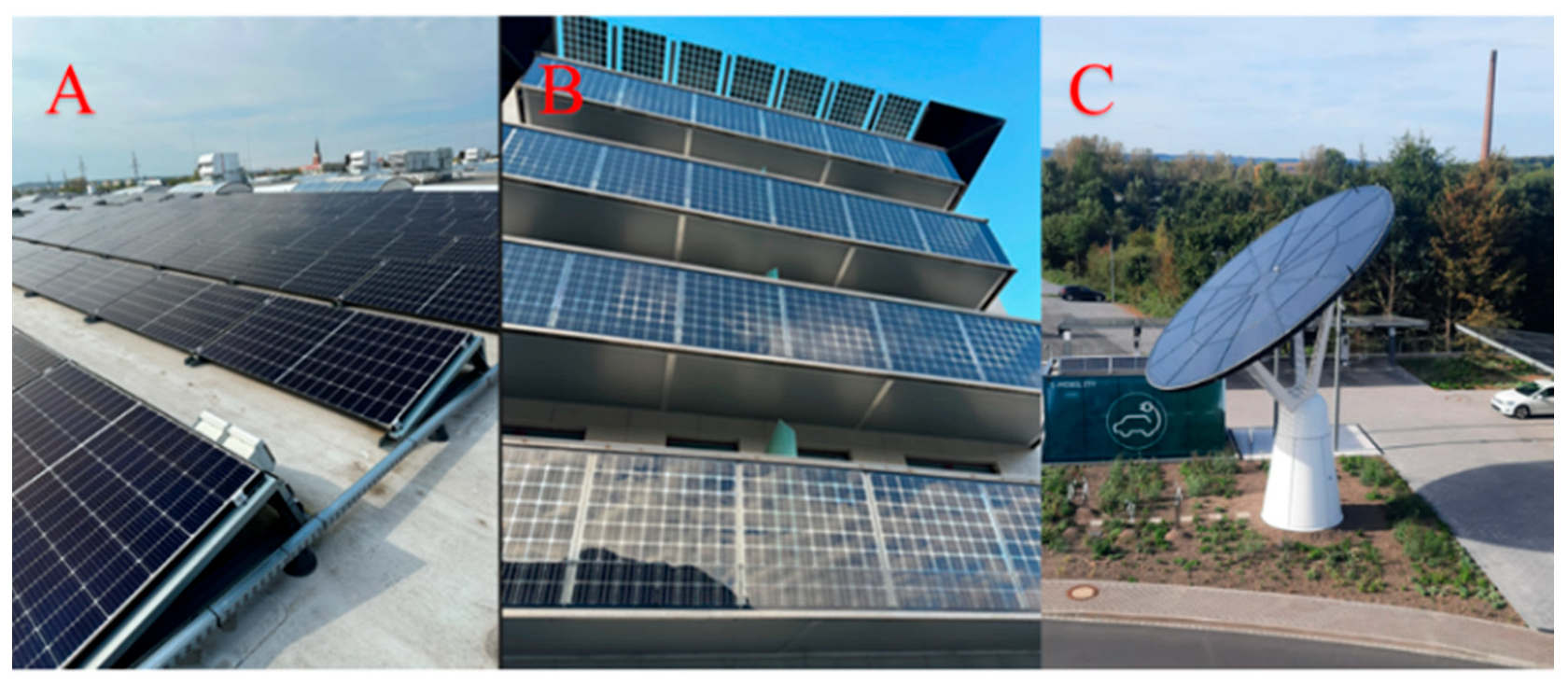
The second important issue concerns the place of installation of PV panels. Typical solutions include installations mounted on roofs, facades or on the ground belonging to a given building (see Figure 2). In the case of PV installations connected to an administrative meter, the most popular option is to place PV panels on the roof of a building; however, recently ground-mounted installations have become more and more common. It is also worth mentioning the possibility of using shelters and roofs located in the common part of the land belonging to the property for this purpose, e.g., in the parking lot. In the case in question, it is recommended that the inverter and protection devices (e.g., fuse boxes) should be installed near the facility’s main switchboard. A noteworthy alternative may be PV installations based on microinverters. Regardless of the case, all cables related to such an installation should be routed into properly prepared cable tracks passing through common parts of the building. In the scenario described, the energy generated by the panels will be used for consumption attributed to common areas such as elevators, lighting in stairwells and basements, gate drives, etc. Surplus energy will be stored by the energy provider and settled in a net-billing system or sold to the distribution system operator. If the housing community decides to install individual PV installations, the PV panels and all equipment should be located within the premises. Regarding the location of PV panels, an interesting solution may be to replace balcony glass with integrated PV panels. In this case, the electricity generated is settled on the same terms as in the case of single-family buildings.

2.2. Safety Issues

Photovoltaic installations are a relatively cheap and safe source of renewable energy, provided they are properly designed and built. A good designer should predict possible sources of threat and apply appropriate countermeasures. In the case of PV installations, it is necessary to consider issues related to electrical aspects (including lightning and surge protection), mechanical strength and fire safety. The selection of equipment for PV systems for multi-family buildings is subject to the same recommendations as for other installations of this type. It is necessary to comply with the requirements defined in the standards both in the case of the components used (e.g., IEC 61730-1:2023 [39]) and the method of installation (e.g., IEC 60364 [40]). In addition, PV equipment should be adapted to the current and voltage generated by PV panels, and they should be compatible with each other. Due to the fact that the gaps between PV panels and the main switchgear in a single-family building can be significant, the issue of proper routing of DC cables and their proper fastening is particularly important. In the above-mentioned case, the stresses related to thermal expansion may be significant; therefore, their incorrect installation may result in damage to the DC cables.
The risk of lightning losses can be estimated using the algorithm presented in standard IEC-62305-2:2024 [41], which specifies four types of lightning losses along with their maximum tolerated values RT. Exceeding the permissible values requires the use of additional protection measures, e.g., lightning protection system (LPS), surge protection devices (SPD) or fire protection. The articles [42,43,44] show that installing a PV installation on the roof of a building does not significantly increase the risk of lightning losses.
When designing a PV installation on the roof of a building, it should be taken into account whether it can withstand the additional load associated with it. A common mistake is to use static load (Qs) in calculations, which is related to the weight of PV modules and their equipment on the roof. This approach ignores the dynamic component of the load, which is related to the impact of atmospheric factors such as wind and snow. A comprehensive approach to the issue of calculating the total actual roof load (Qr) resulting from the installation of a PV system is presented in the article [45].
The designer’s responsibilities also include determining the impact of the PV installation on the fire safety of the building [46]. When selecting PV panels for a given installation, care should also be taken to ensure that their fire resistance class is not lower than that of the roofing materials. Ensuring appropriate safety distances is crucial for effective firefighting in buildings equipped with PV systems. The literature recommends maintaining a minimum distance of 1 m from the roof edge to enhance accessibility for emergency responders [47]. Additionally, PV panels contain combustible materials [48], necessitating installation away from heat sources such as chimneys to mitigate fire risks. The combustion products of PV panels are highly toxic [49], potentially compromising evacuation procedures if smoke infiltrates ventilation systems. Consequently, PV systems should not be placed near air intakes. It is also essential to assess the safety implications of installing photovoltaic panels on buildings. In particular, it is necessary to verify whether the installation of panels on the roof of a given building exceeds the permissible fire load limit, as this could create structural hazards in the event of a fire [50].

2.3. Legal Regulations in Poland

In addition to meeting safety requirements, obtaining the necessary consents and permits is essential for installing a photovoltaic (PV) system in a multi-family building. The Act on Premises Ownership [51] stipulates that actions exceeding ordinary management require a resolution from property owners, authorizing the management board to undertake such activities. Installing a PV system falls within this category, as it entails modifications to shared building structures and their designated use. Consequently, prior to installation, property owners must formally approve the investment. However, this requirement does not apply to PV installations within an individual apartment unless modifications to common areas, such as the roof or facade, are involved. Another critical consideration is the allocation of revenue generated by the PV system. According to the act [51], property owners have the right to co-use common property and benefit from any associated revenues. Such revenues should primarily cover maintenance expenses, with any surplus distributed among owners according to their shares. Therefore, energy generated by a PV system connected to a shared meter should be classified as a common benefit. Conversely, if the installation is linked to an individual tenant’s meter, the generated revenue becomes the tenant’s property.
Furthermore, in accordance with the amendments to the Construction Law of 19 September 2020 [52], PV installations with a power exceeding 6.5 kW require approval by a fire protection expert in terms of meeting fire protection requirements. Moreover, the said act obliges one to notify the authorities of the State Fire Service about the completion of the construction of such a photovoltaic installation and the planned commencement of its use. In the case of a PV installation in a multi-family building, it is very likely that the limit specified in the act will be exceeded; therefore, the need to comply with the above-mentioned provisions should be taken into account.
At this point, it is also worth paying attention to the amendment to the regulations of 17 August 2023, regarding changes to the RES Act and related acts [53]. The above-mentioned changes are intended to improve the development of the renewable energy sector and increase its share in gross consumption, in line with the assumptions of reducing the emission intensity of the economy specified in international agreements [54]. According to the amended regulations, PV installations with a capacity of no more than 150 kW do not require a building permit. This is an important change for potential tenant prosumers, because previous regulations allowed the construction of PV installations without a building permit if their power did not exceed 50 kW. In the context of the above legal provisions, a question arises about the impact of PV installations in multi-family buildings on the energy grid to which they are connected. In the rest of the article, the above problem is presented in the example of a multi-family housing estate.

3. Methodology and Experimental Details

The research was carried out in the form of computer simulations of the operation of the distribution network of a multi-family housing estate. In order to obtain results that reflect the operation of such a network as accurately as possible, data from real devices were used to develop the computer model. The analyses were conducted for the calendar period from May to July, as this interval typically exhibits the most favorable solar irradiation conditions in northern Poland, which directly translates into the highest PV generation levels on sunny days. For the considered months, both the maximum PV generation curve was determined (based on measurement data collected during the period May–June 2021), and the electricity consumption curves of the residential area were established (based on load profiles of individual consumers connected to the power grid, forecast for the May–June period of 2023).

3.1. Research Object

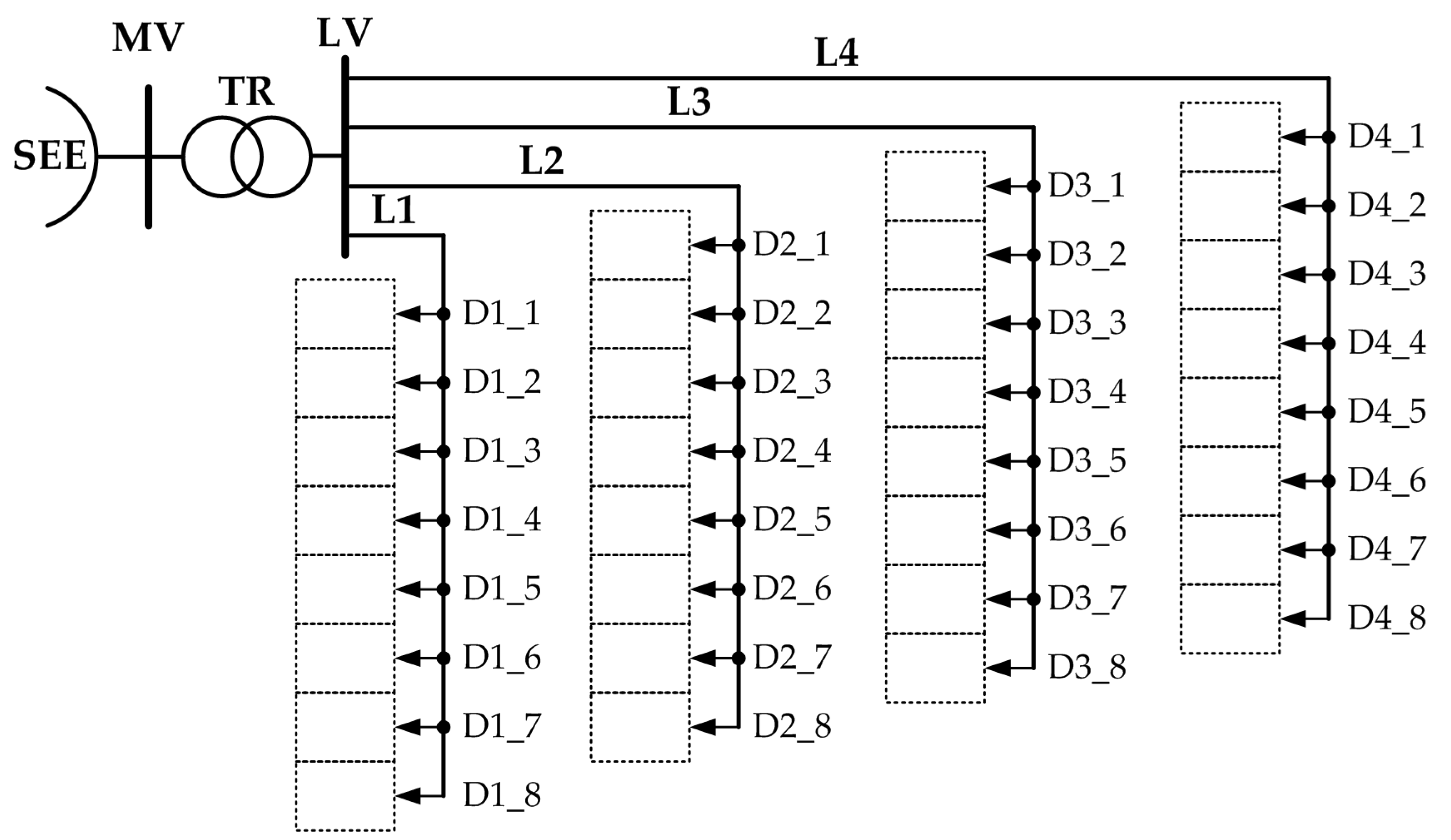
A newly built housing estate of multi-family houses in the Pomeranian Voivodeship was selected as the research object. The estate consists of 32 houses, each with four apartments. The houses are grouped into four so-called rows of eight buildings in each. In the modeling process, consumers operating under the G11 tariff were assumed. This is the most commonly selected electricity tariff for residential customers in Poland. It is characterized by a uniform electricity price independent of the time of day or night. The tariff is primarily intended for individual consumers and is typically applied in apartments, single-family houses, and small commercial buildings, such as holiday cottages and garages. The connection power of a single apartment is 12.5 kW, and the connection power of the building as a whole was determined by the designers to be 36 kW. The structure of the estate’s electrical network is presented in Figure 3.
The estate’s low-voltage (LV) power network, rated at 0.4 kV, is supplied from the medium-voltage (MV) distribution network with a rated voltage of 15 kV via a T3O 17.5/630 distribution transformer. The transformer is equipped with an off-load tap changer featuring seven tap positions, enabling manual voltage adjustment within a range of ±7.5% (±3 × 2.5%). At the point of connection to the 15 kV network, the short-circuit power is 180 MVA, ensuring a relatively stiff supply condition. The 0.4 kV network consists of four radial cable feeders supplying individual groups of buildings, implemented using NAYY 4 × 240 SE 0.6/1 kV cables. The effective feeder lengths are as follows: L1—140 m plus seven intermediate sections of 24 m between successive segments of building row D1; L2—240 m plus seven sections of 24 m for row D2; L3—340 m plus seven sections of 24 m for row D3; and L4—440 m plus seven sections of 24 m for row D4. More detailed technical parameters of the transformer and the cable are provided in Table 2.
Individual houses were marked as follows: Dn_m, where m denotes the subsequent numbers of buildings in a given row n. Individual buildings correspond to voltage profiles marked as U(Dn_m). Similarly, the voltage on the primary side of the transformer was marked as U(TR_MV), and on the secondary side as U(TR_LV). All components described above were selected in accordance with the regulations and standards currently applicable in Poland. The rated power of the distribution transformer was determined based on the declared connection capacities of all residential buildings within the housing estate, supplemented by the estimated demand of shared infrastructure such as street lighting, pumping stations, and monitoring systems. To reflect the statistical diversity of individual load profiles, the aggregate demand was adjusted using an appropriate coincidence factor, in line with the guidelines of the local Distribution System Operator (DSO). The resulting peak active power was then converted into apparent power by applying a typical residential power factor of 0.93–0.95. Finally, the transformer was selected from a standard commercially available series, ensuring that the maximum expected load would not exceed 80% of its rated capacity and that an additional margin was included to accommodate future demand growth, such as the integration of electric vehicle charging stations or heat pumps.

3.2. Characteristics of PV Generation and Power Demand of Electricity Consumers

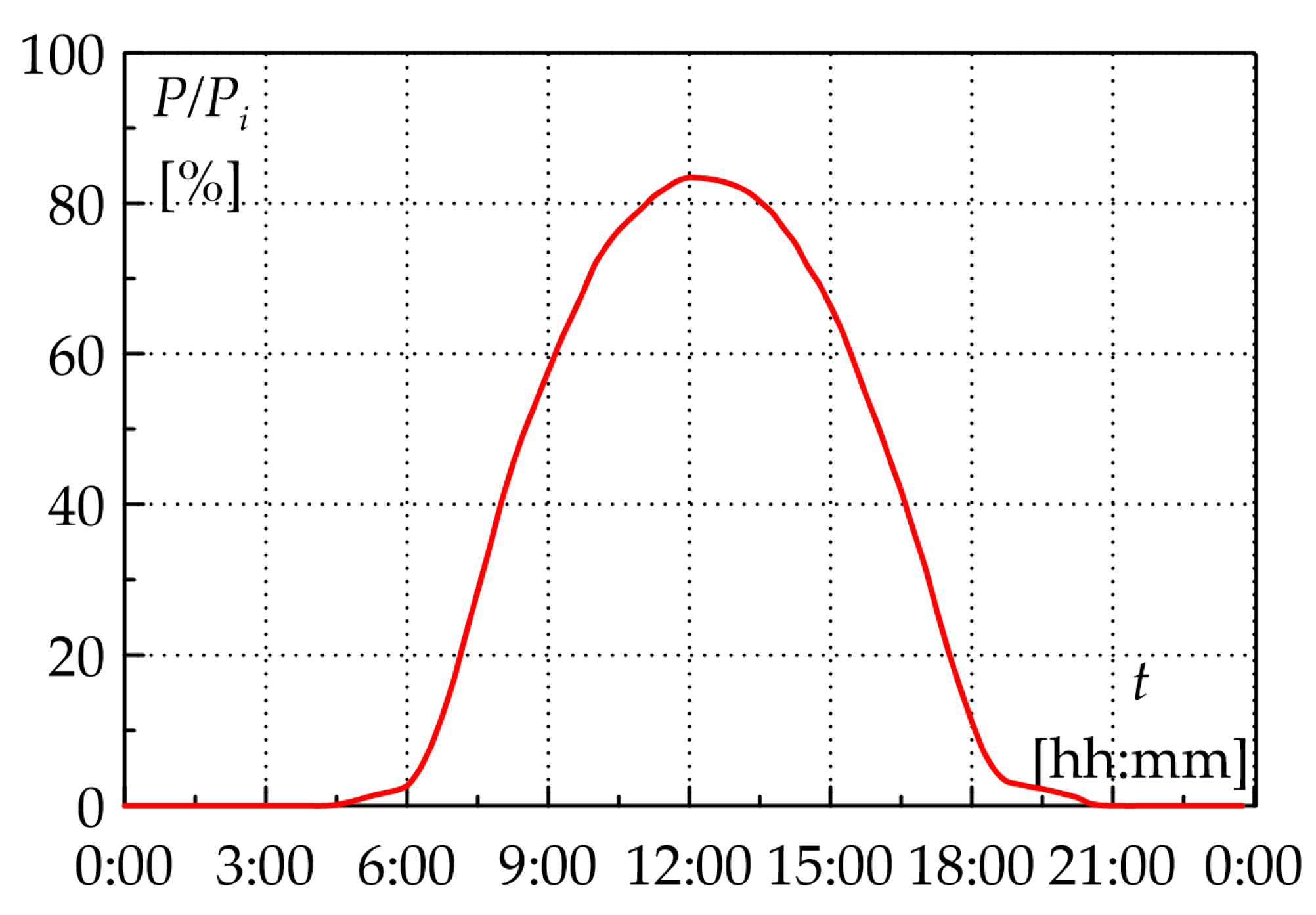
In order to present the operation of photovoltaic power plants installed in the estate (roofs, facades, available land), the PV generation characteristics were used, presented in Figure 4, where P denotes the value of the achieved power, and Pi denotes installed power (rated power of the PV power plant). For the purposes of the analysis, it was assumed that the PV panels would be positioned in the most favorable way with respect to the incidence of sunlight.
The presented curve was developed on the basis of research on the operation of various home photovoltaic power plants located in the Pomeranian Voivodeship, carried out, among others, for the research presented in [55]. It shows the generation curve of a south-facing PV power plant, inclined at an angle of 38° to the earth’s surface, characterized by the highest relative energy yield achieved during 2021.
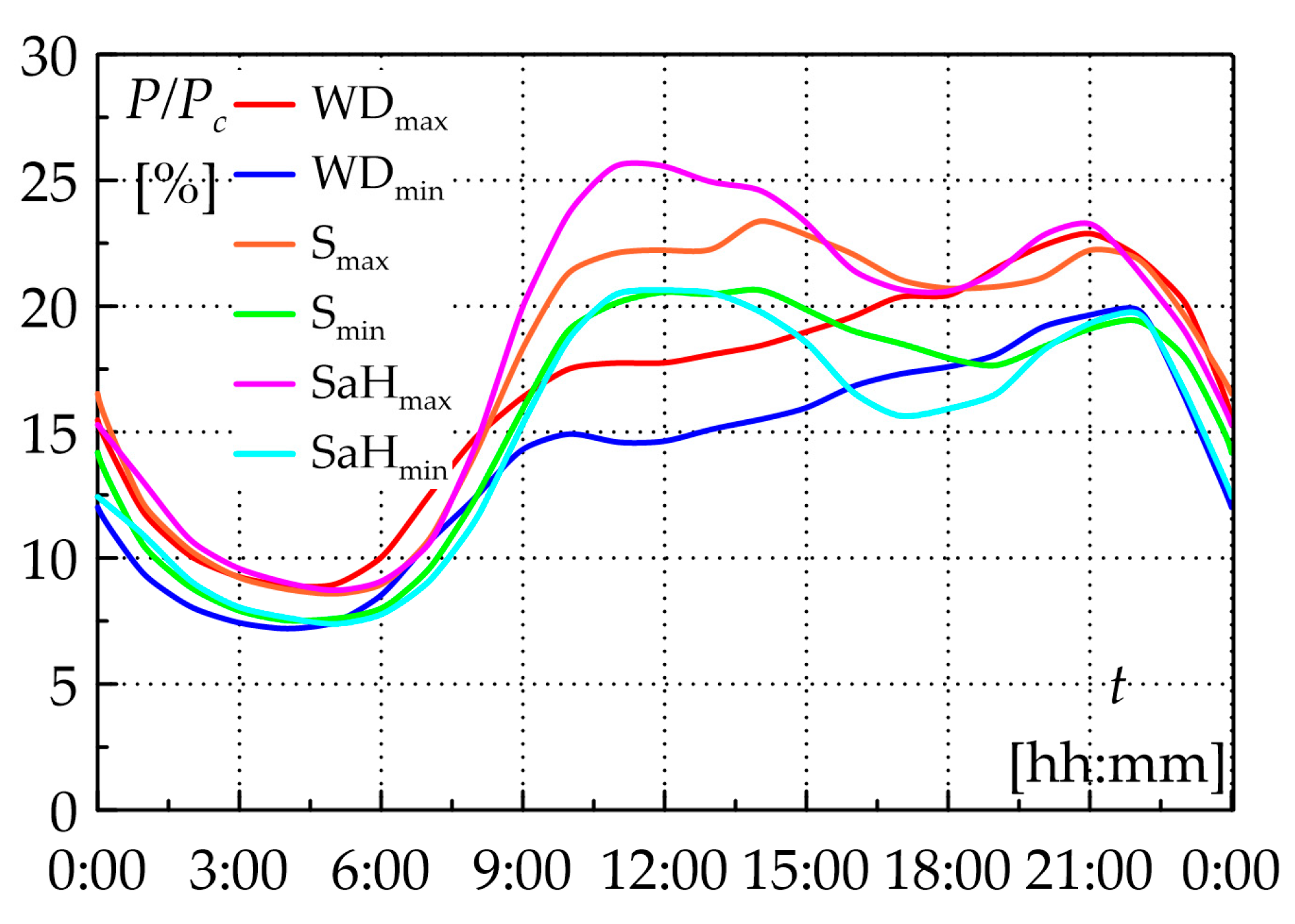
In order to present the expected power consumption by consumers, consumption curves were developed based on load profiles for profile consumers connected to the electrical network, predicted for 2023 [56]. For the given period (01.05–31.07), the expected hourly loads were compiled for customers of groups A (individual customers) and B (single-zone tariffs), divided into weekdays (WD), Saturdays (S) and Sundays and holidays (SaH). Data for a given type of day has been sorted in such a way as to determine for each hour the lowest and highest expected power consumption that may occur in the analyzed period of time. In this way, characteristics showing the highest expected power consumption in a given type of day (max) or the lowest (min) were obtained. The determined load curves are presented in Figure 5, where P is the value of the consumed power, and Pc is the connection power of the consumer.
Among the presented curves, two were selected for research: the curve representing the minimum load in the network (at which the lowest value of power consumption occurs during a daily period)—marked on the chart as WD_min, and the curve representing the highest power consumption—represented as SaH_max.

3.3. Computer Model

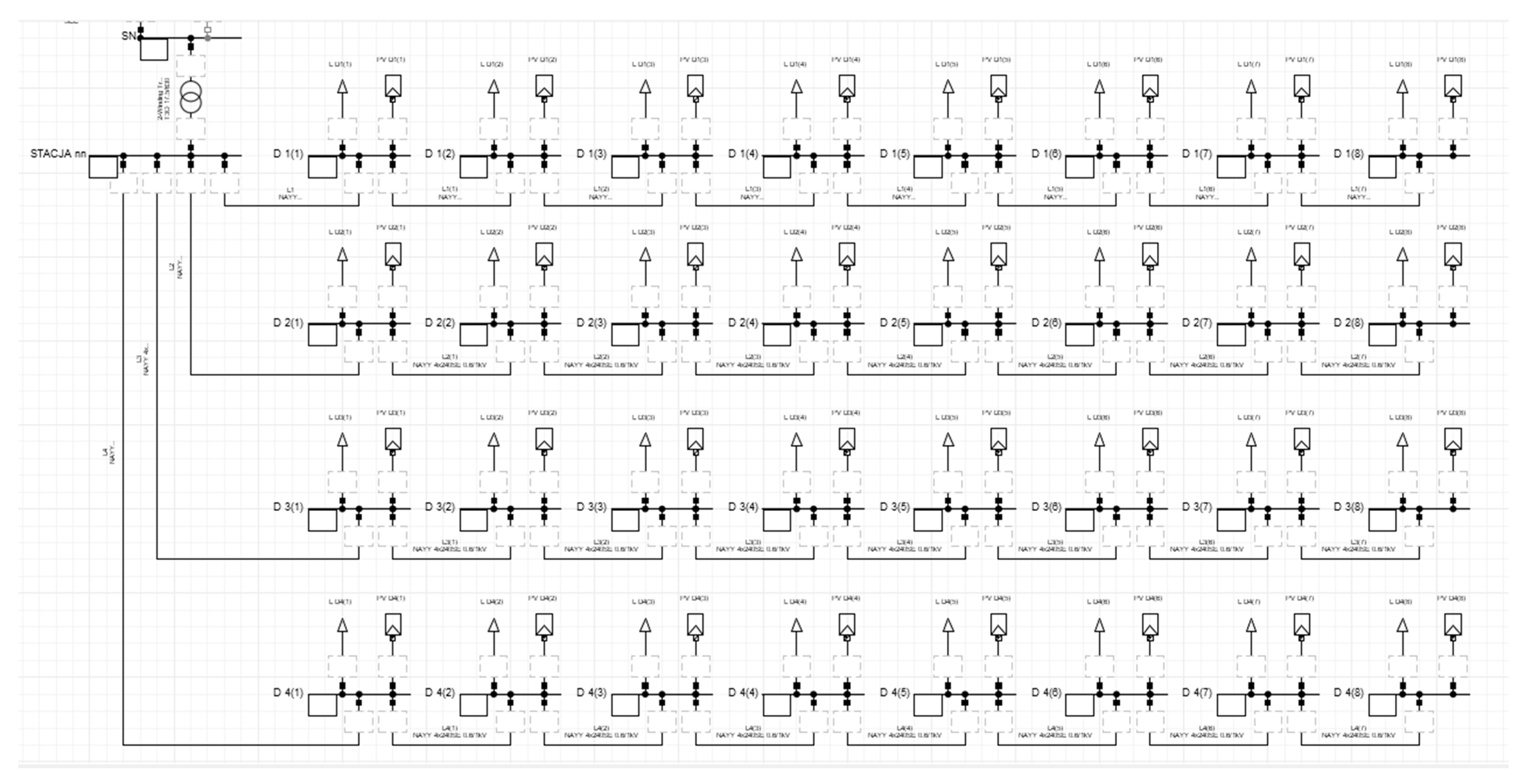
The model of the analyzed network was developed using DIgSILENT PowerFactory 2022 SP1 (×64) software. Based on the collected data and the built-in components available in the computational environment, detailed models of individual network elements were created, and appropriate operating characteristics were implemented. Power flow calculations and voltage distribution analyses at selected nodes of the network were performed using the nodal potential method—Newton-Raphson (Power Equations, classical). The diagram of the prepared model is presented in Appendix A.

3.4. Presented Research Variants

For the purposes of the simulations, a reference case and two extreme situations were assumed. The following variants were selected to present the results of detailed analyses regarding the operation of the distribution network supplying the estate’s buildings:
  • Variant I—No photovoltaic installations in the estate, minimum and maximum power consumption by consumers.
  • Variant II—Operation of photovoltaic installations in all buildings of the estate with the total power installed in a single building equal to the building’s connection power of 36 kW, minimum power consumption by consumers.
  • Variant III—Operation of photovoltaic installations in all buildings of the estate with the total power installed in a single building equal to the sum of the connection power of individual apartments in the building, which gives the value of the power installed in the building amounting to 50 kW (12.5 kW × 4 apartments in the building); consumption power by consumers is minimal.
For variants II and III, the maximum installed PV power that can be connected was assumed in the analyses, depending on the billing method. The adoption of such conditions resulted from the fact that the currently existing legal provisions allow for such a possibility, so such solutions are theoretically possible. The research carried out for variants II and III presented only cases related to minimum power consumption by consumers, because here the highest voltage levels were observed during PV operation, as well as the highest daily voltage variability.
For the purposes of the analyses, it was assumed, as the starting point for the research, that the voltage value in the power system was maintained at 1.05 p.u. and the transformer’s tap changer was set in the neutral position (tap no. 4).

4. Results and Discussion

The analysis included voltages at characteristic points of the network (transformer station—upper and lower sides, voltages at the end point of each cable line—the connection point of the furthest building in a given group), the load on individual cable lines and the transformer. To assess the voltage variability in the 0.4 kV network, the parameters used were the daily voltage variability at individual nodes (points) of the network and the daily voltage variability in the entire network [57]. The first is defined as
Δ U max ( i ) = U max ( i ) U min ( i )
where
  • ii-th node of the network.
  • Umax—maximum voltage value determined for the node during the day.
  • Umin—minimum voltage value determined for the node during the day.
While the second is defined as
Δ U max = U max U min
where
  • Umax—the maximum voltage value occurring in the network nodes during the day.
  • Umin—the minimum voltage value occurring in the network nodes during the day.
In the conducted analyses, it was assumed that the modeled photovoltaics operate without limiting power generation resulting, for example, from too high voltage values at the connection point. This was intended to demonstrate the potential highest voltage values that could appear in the tested network when trying to maximize the use of generation.

4.1. Variant I

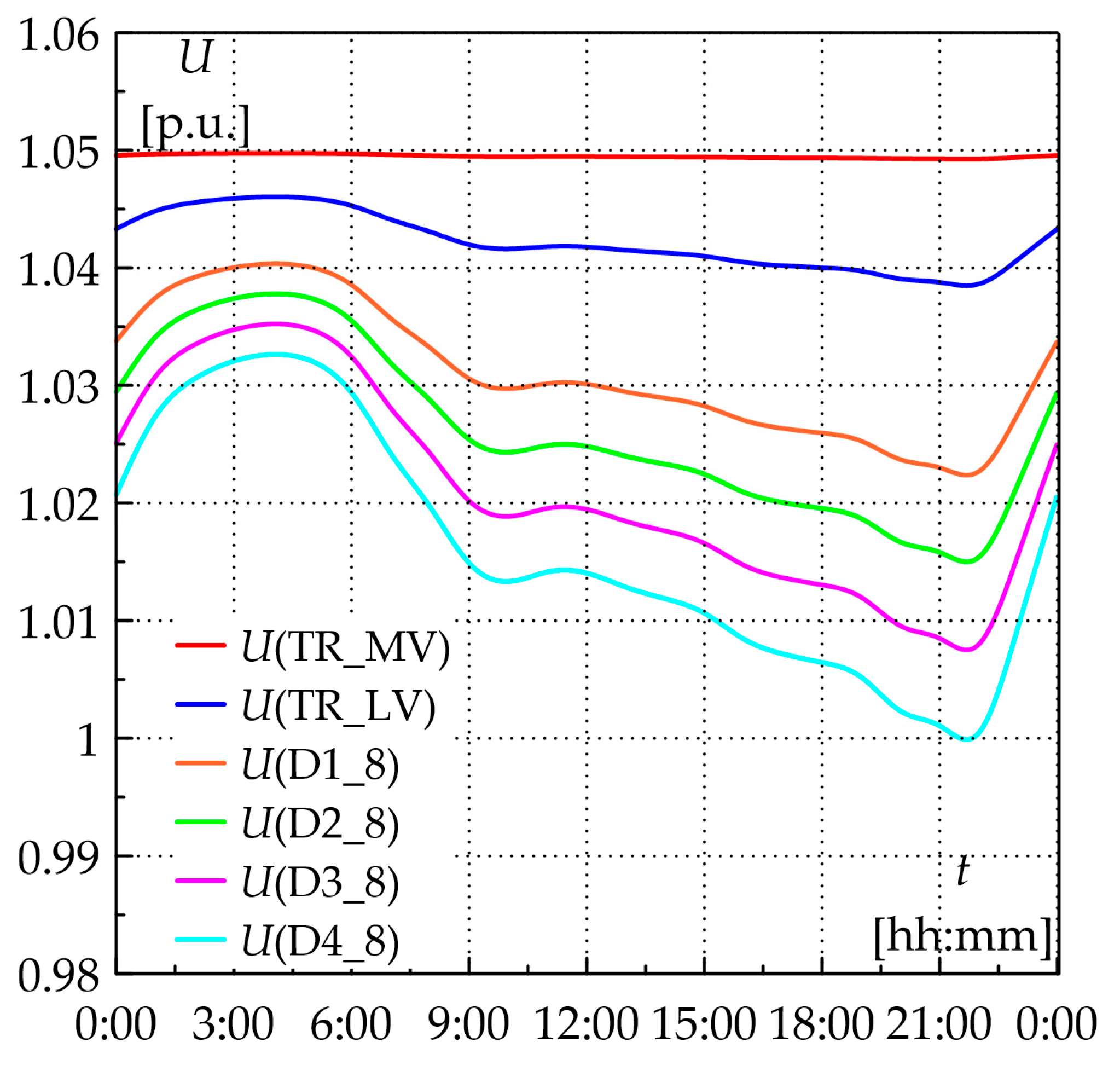
This research variant represents the conditions for which the analyzed distribution network was designed. First, the voltage distribution in the estate’s network was analyzed. The obtained voltage levels results are presented in Figure 6.
The voltage analysis shows that at the values of all points in the network are correct and are within the required range of ±10% of the rated voltage. The voltage variability in the 0.4 kV network is 0.04 p.u. However, the voltage variability at power consumption points is in the range of 0.02–0.03 p.u.; only on the transformer station busbars does it not exceed 0.01 p.u. A detailed voltage analysis showed that the point with the highest voltage variability is D4_8, for which the voltage variability reaches a value slightly exceeding 0.03 p.u.
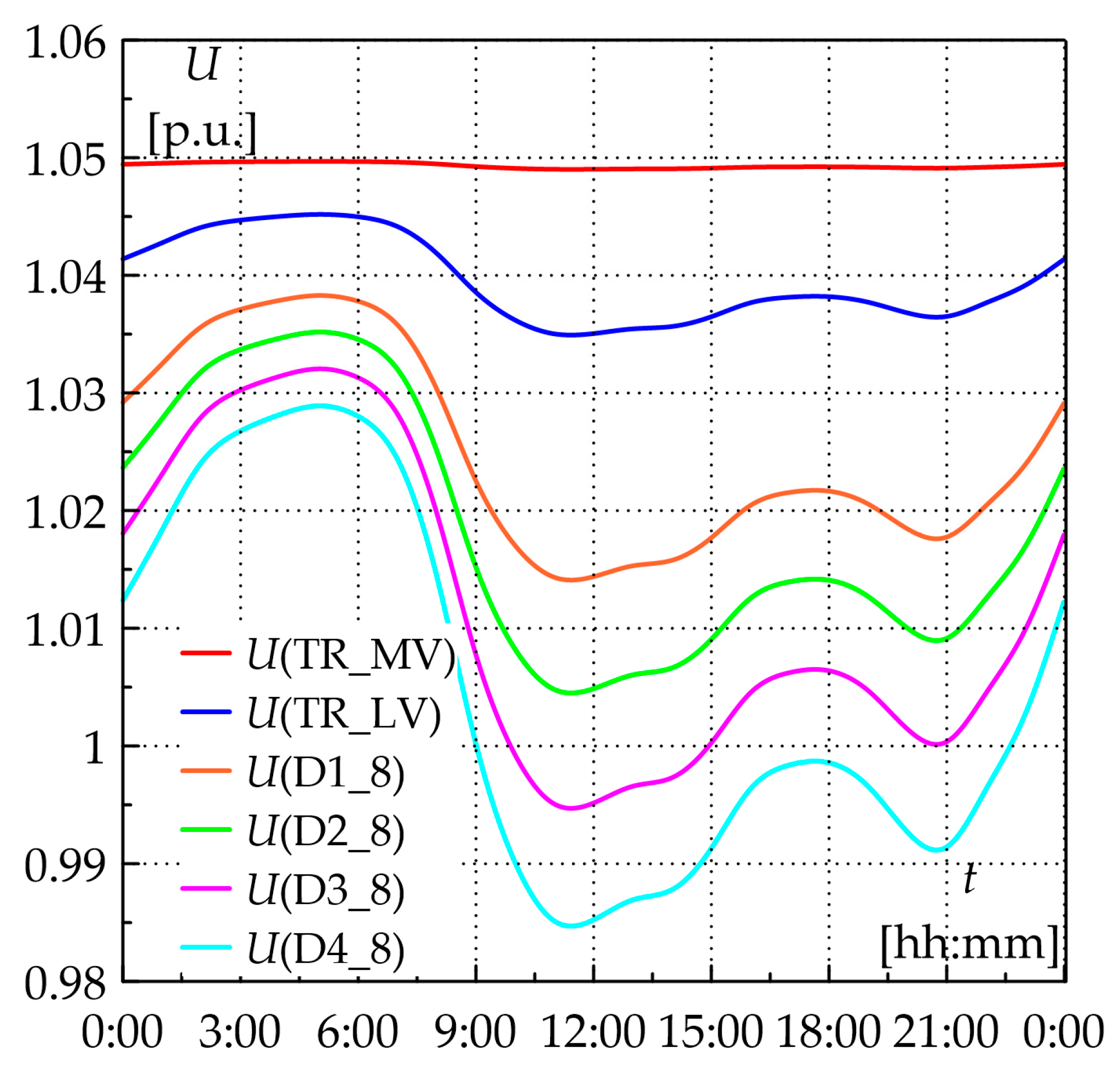
The tests were repeated assuming the maximum power consumption by consumers. Figure 7 shows the obtained voltage profiles.
In this case, the voltage values are also correct, showing no tendency to approach the voltage limits. The voltage variability in the 0.4 kV network is 0.07 p.u., and the point with the highest variability is again D4_8, for which the voltage variability reaches the value of 0.05 p.u.
The values of the highest load level of the line and transformer were also checked. In the case of the line, their highest load did not exceed 44%, while in the case of the transformer, it was 71%.

4.2. Variant II

In this variant, it was assumed that each building has photovoltaics with a total installed power equal to the building’s connection power, and the network is loaded to a minimum.
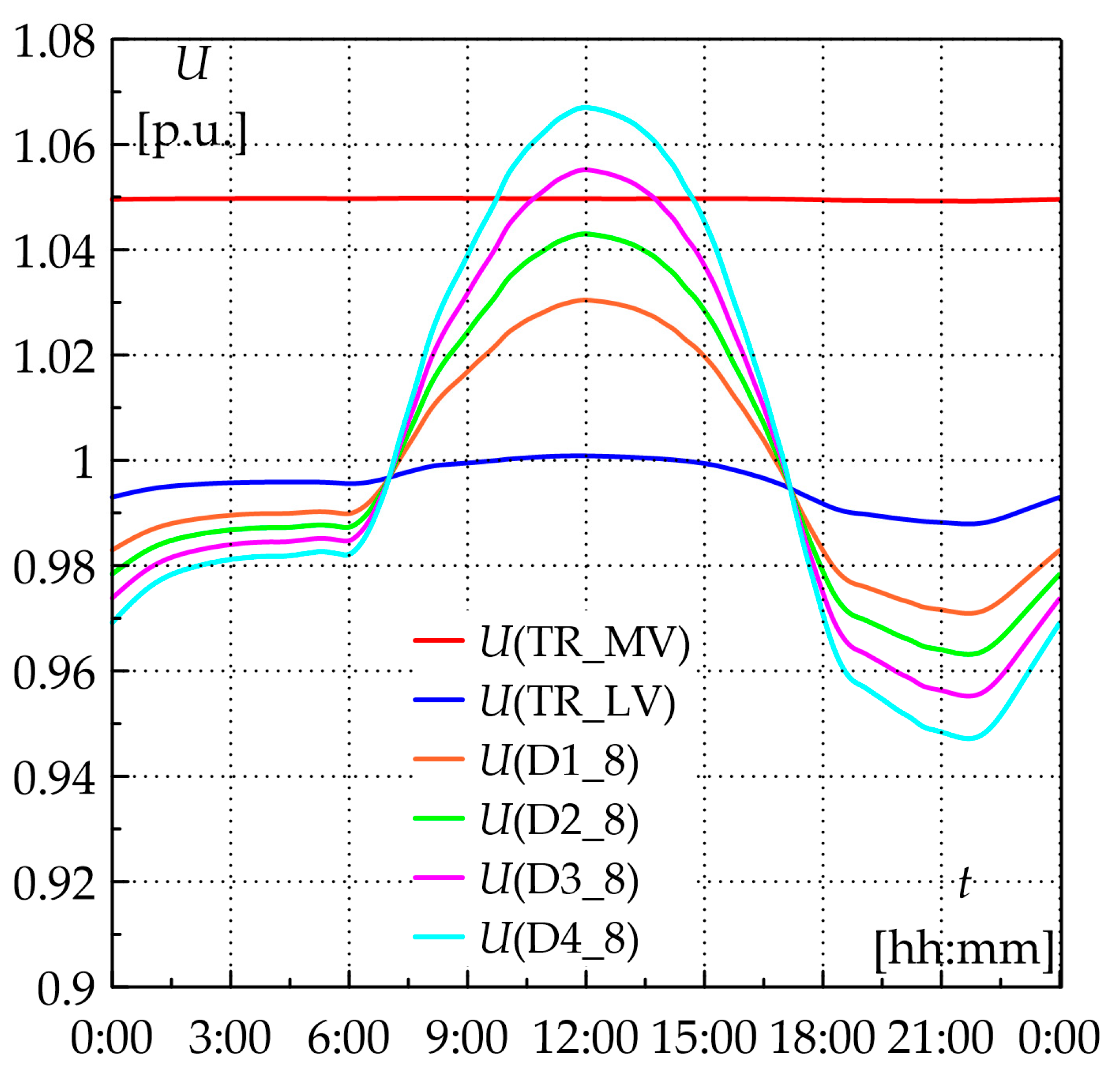
The analysis began with an assessment of voltage levels. The highest permissible voltage value in a 0.4 kV network is a level no greater than 1.1 p.u. The analysis showed that this level was exceeded at the furthest points of the network during the highest power generation in photovoltaic panels, i.e., between 9:30 and 14:30. This means that an unacceptable operating state of such a network was reached. To check whether the voltages could be reduced to an appropriate level based on the available regulation, the transformer tap number was changed to position 6. The obtained voltage values are shown in Figure 8.
The change in the transformer tap number has had the desired effect; the voltages are now within the required range. The voltage variability in the network and the voltage variability in the node for this case are identical and amount to 0.12 p.u.—this is determined by the voltage change occurring at node D4_8. This is already a very significant value if we take into account the fact that the maximum permissible change in voltage value is ±0.1 p.u., which gives the maximum theoretically permissible variability at the level of 0.2 p.u.
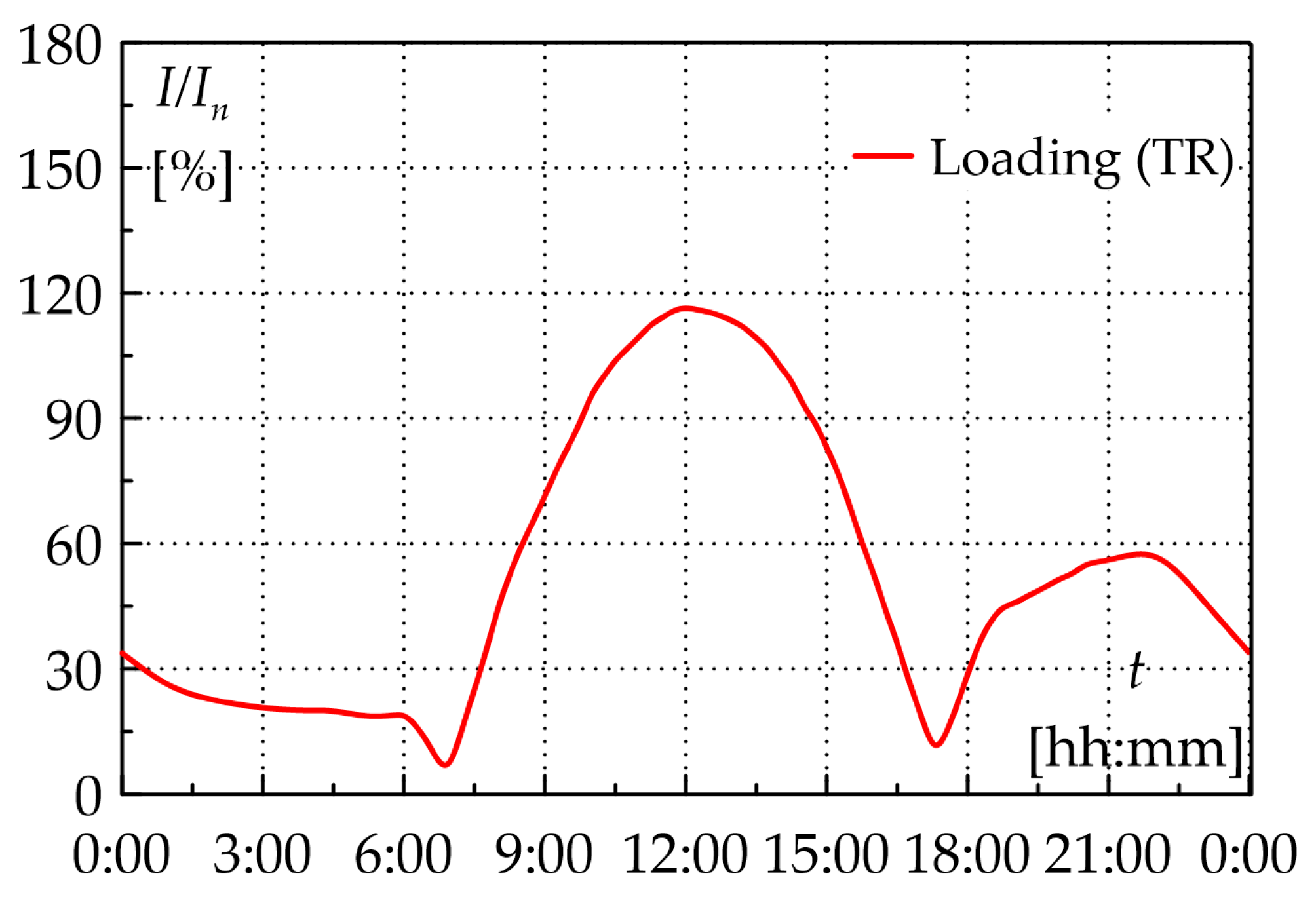
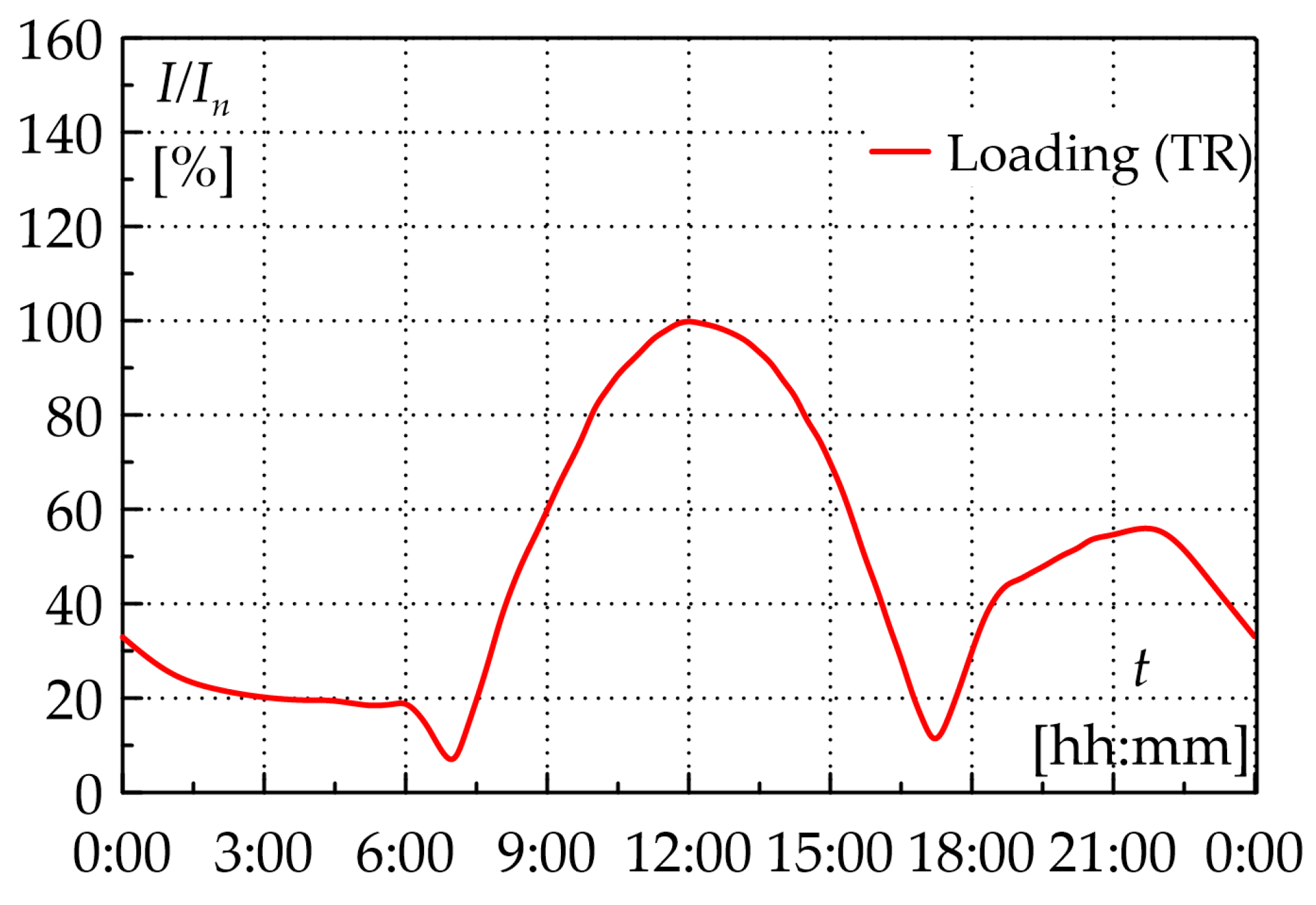
Then, the load level of the lines and the transformer was checked. The obtained values of the transformer load are presented in Figure 9.
In the case of the lines, the introduction of photovoltaics at this generation level resulted in an increase in the maximum load almost twice as compared to variant I.
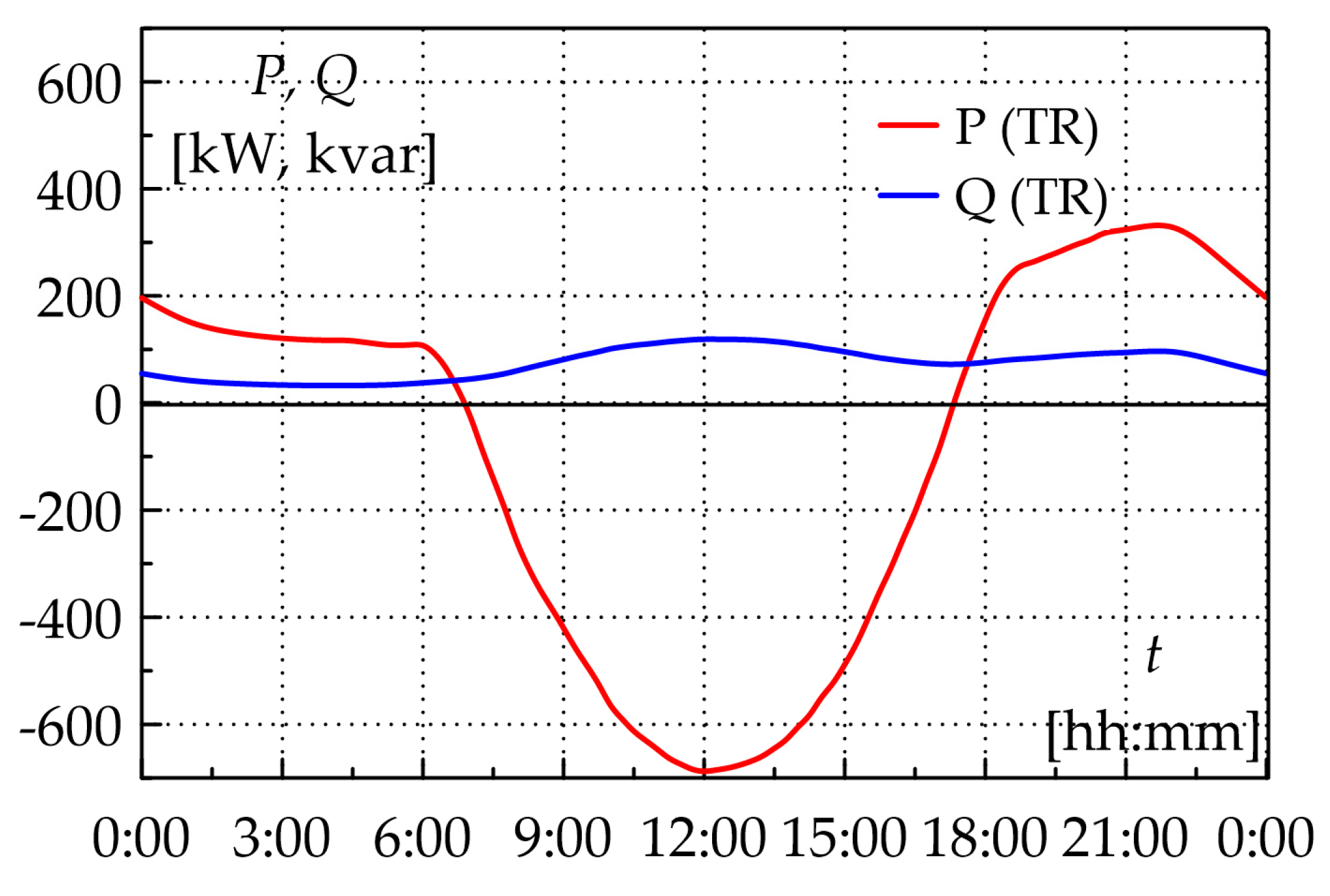
The transformer load looks worse. Here, between 10:15 a.m. and 2:15 p.m., the load exceeded 100%, reaching a maximum of nearly 117%. For this generation, this variant is the least favorable due to the lowest expected power consumption by consumers. Such an increase in the transformer load results directly from the reversal of the direction of active power flow through it, as shown in Figure 10. The flow of active power to the power system is illustrated by the negative values of active power presented in this figure. The generation obtained in PV power plants is so large that it clearly exceeds the demand of the housing estate network and leads to overload of the installed transformer.

4.3. Variant III

The analysis of this variant allows for an assessment of the situation, illustrating what could happen to the voltage levels and loads of the distribution network components if a photovoltaic system with the maximum possible installed power, in accordance with applicable regulations, was connected to such an estate.
The assessment began with determining the voltage values obtained for the initial setting of the transformer tap changer. It turned out that in this case the permissible voltage values were exceeded at the ends of all lines. A detailed analysis showed that in fifteen buildings the voltage value would exceed the permissible levels at the time of the highest energy generation in photovoltaics.
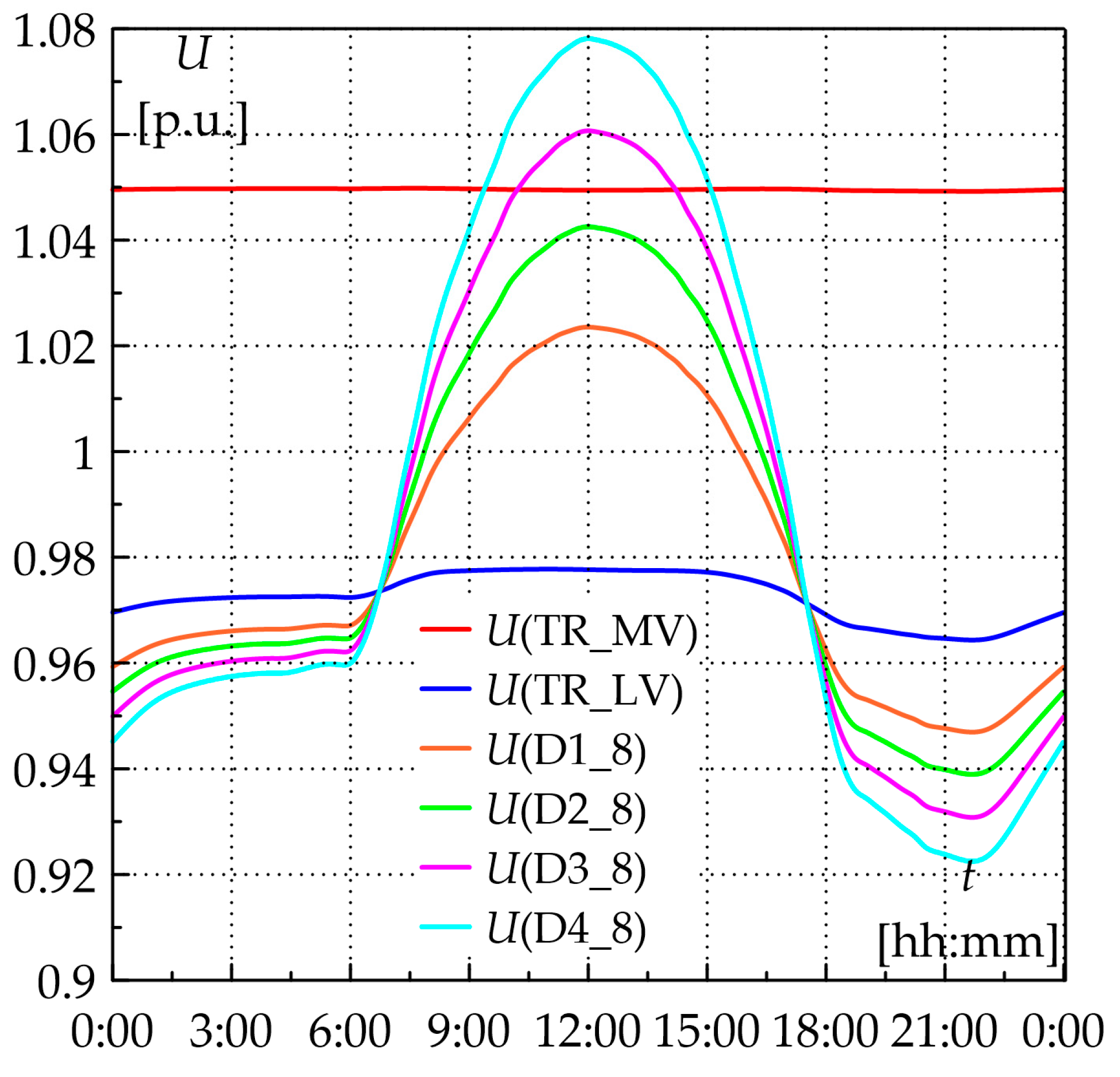
In order to check whether the voltages can be reduced to the appropriate level based on the available regulation, the transformer tap number was changed to the lowest possible position, no. 7. The obtained voltage values are presented in Figure 11.
As in variant II, the operation performed here also improved the voltage situation. The voltage variability in the network for this case is also identical to the voltage variability at point D4_8, for which it reaches a value of 0.16 p.u. This is a very significant value compared to the theoretically possible maximum value on such a network (0.2 p.u.).
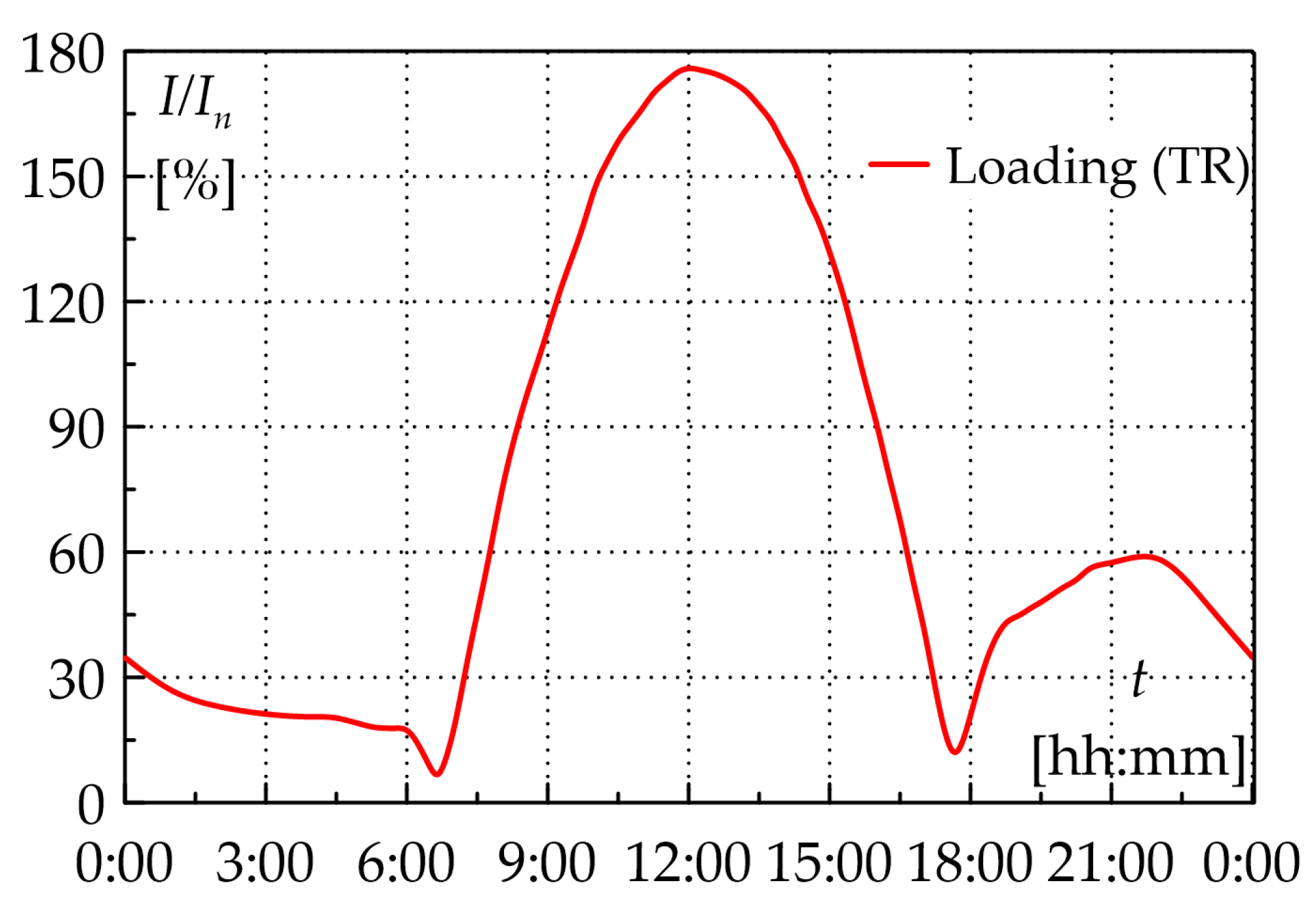
For the transformer operating point set in this way, the line load and the transformer load were also determined. In the case of lines at maximum energy generation in photovoltaic panels, their load level reached 110%, which is unacceptable. In the case of the transformer, its overload reaches an even greater value, reaching 176% at maximum generation (Figure 12).
The obtained load values of the electric network components showed that a network designed according to currently applicable standards would not be able to cope with a situation such as the one analyzed. Not only is the transformer overloaded, but the lines also experience periodic loads exceeding 100%.

4.4. Discussion of the Obtained Results

The results obtained for variant I indicate the correct selection of network components, because with the highest expected load, there is still some reserve capacity, which allows for potential expansion, e.g., with new loads. However, it should be clearly noted that this selection is currently carried out assuming only the power consumption of consumers. Therefore, this selection does not take into account the specific operation of PV installations that may potentially appear in such a network, with a significant value of generated power.
The analysis of two potential variants of connecting PV generators in the local distribution network (variants II and III) showed potential problems regarding both voltage levels and current overloads of network components. This suggests that the currently applicable regulations regarding the construction of network supplying multi-family housing estates are not correlated with the regulations regarding the possibility of installing renewable energy sources in such buildings.
Voltage problems in such a network can be reduced in practice in several ways. The simplest and currently most frequently used is the use of overvoltage protection for PV inverters, which, when too high a voltage appears on the AC side, simply disconnects the inverter and thus the entire PV installation. However, this is an unfavorable solution for the owners of the installations, leading to a reduction in the amount of electricity obtained this way.
Therefore, it is worth considering methods that do not cause this nuisance. As research has shown, it is possible to try to find a setting for the transformer tap changer that will not cause problems. However, this is relatively difficult given the demonstrated levels of voltage variability in the LV network with PV, and in a real network, where the voltage value changes in the entire network depending on its operating status, it might not be possible.
Another solution could be the use of a transformer with an on-load tap changer and a designated appropriate control node, which would allow for follow-up voltage regulation [57]. In contrast, voltage regulation solutions such as the use of reactive power compensators or the regulation capabilities of PV inverters should be rejected as relatively ineffective in the LV network [57].
It is much more difficult to eliminate overloading of network components. There are basically three potential solutions left here.
The first is a top-down limitation of the power that can be installed in the form of photovoltaic power plants or the introduction of limits on the allowable power generation. From the point of view of the network owner, this would be the simplest solution, but it would limit the possibility of generating energy from PV.
In order to determine what generation would be “acceptable” in the considered system, the PV generation was reduced in variants II and III until the overloads were eliminated. Research has shown that a maximum of 32.5 kW of PV could be installed in each building. This constitutes approximately 90% of the power installed in PV in variant II and 65% of the power installed in variant III. With this limit on the installed PV capacity, the transformer supplying the local grid operates at 100% load during peak generation. The corresponding transformer load profile is shown in Figure 13.
The second solution is to take into account the possible maximum power generation in potential PV power plants that may be included in such a network and to select this network components appropriately in this respect. Unfortunately, this would lead to an increase in the costs of constructing such a network and could also result in its significant over-dimensioning in relation to real needs.
The third potential solution involves the deployment of electricity storage systems or the immediate local utilization of surplus electricity through its conversion into heat, for example, for domestic hot water preparation. From an economic perspective, increasing on-site self-consumption of photovoltaic electricity is particularly important in light of decreasing feed-in tariffs and changing settlement mechanisms for prosumers. The literature provides multiple examples of using excess electricity generated by PV installations to supply heat pumps or to support integrated PV–thermal systems dedicated to water heating, which can significantly reduce household energy expenditures and improve overall system profitability [58]. In many cases, converting surplus PV electricity into thermal energy proves to be more cost-effective than exporting it to the grid, as it allows prosumers to substitute purchased electricity or fuels with locally generated energy. Furthermore, the development of multi-energy systems within energy communities, especially in multi-family residential buildings, has been demonstrated, among others, under the German Tenant Electricity Law framework, where collective self-consumption and internal energy balancing contribute to improved economic performance and reduced energy costs for end users [59]. A comparative assessment of the advantages and limitations of the above-mentioned solutions is provided in Table 3.
In the above context, it should also be mentioned that energy education constitutes a critical enabling factor for the sustainable development of prosumer PV systems, as it directly influences both individual decision-making and the quality of technical implementation. The literature consistently indicates that informed stakeholders are more likely to adopt renewable energy technologies responsibly, understand their environmental and economic implications, and engage in energy-conscious behavior [60]. Education for sustainable development fosters not only awareness of renewable energy benefits but also the competencies required to integrate such technologies into socio-technical systems in a reliable and safe manner [61]. Empirical studies further demonstrate that education significantly enhances users’ understanding of system operation, grid interactions, and regulatory frameworks, thereby reducing unrealistic expectations and mitigating operational and safety risks [62]. Importantly, the education of future engineers and technicians (particularly electricians) emerges as a cornerstone of sustainable PV deployment. Adequate formal training equips these professionals with interdisciplinary knowledge spanning electrical engineering, grid stability, safety standards, and environmental impacts, which is essential given the increasing penetration of decentralized PV systems and their effects on low-voltage networks. Moreover, higher levels of education are associated with greater engagement in energy-saving behaviors and improved capacity to translate intentions into practice, largely through enhanced perceived control and technical competence [63]. Consequently, strengthening energy education at vocational and university levels is not merely complementary but fundamental to ensuring that the rapid expansion of prosumer PV systems supports long-term sustainability, system reliability, and the broader goals of the energy transition.

5. Conclusions

Photovoltaic installations, which were previously used mainly in single-family buildings, are becoming increasingly popular in multi-family buildings. Legal regulations in various countries not only allow the installation of PV systems in multi-family buildings but also oblige their use. Implementing these assumptions is a challenge from a technical point of view, as it requires the designer to conduct a multi-faceted analysis of a given case, which will take into account, among others, the location of the PV panels, the type of installation, the way of running the cables, etc. Equally important is the issue of how to settle the generated electricity. The first option is settling as a group of individual prosumers and the second is jointly as a tenant prosumer. Furthermore, it is necessary to take into account safety issues, e.g., the mechanical load of roofs, fire safety, lightning and surge protection.
PV installations must be made in accordance with applicable standards and local regulations; however, meeting these requirements does not always mean that the installation will operate properly. Using the example of a real multi-family housing estate located in Poland, the impact of a PV installation with the maximum permissible power on the stability of the power network was analyzed. The results obtained indicate problems regarding both voltage levels and current overloads of network components. In this article we focused on a selected case; however, it should be borne in mind that depending on the adopted parameters, the transformer overload in a given case may be much greater than its results from the presented calculations. Potential solutions to voltage problems include the use of inverters with overvoltage protection, selecting the optimal setting of the transformer tap changer or using a transformer with an on-load tap changer and a designated appropriate control node. A much bigger problem is the issue of overloading of network elements. Possible solutions include limiting the power of PV generators, oversizing the network or using energy storage. In practice, the implementation of the above solutions would require modifying the existing regulations in order to avoid situations in which the network becomes overloaded.
Future research will concern the usage of a surplus energy from PV installations to heating, e.g., with a heat pump. This issue has not yet been described for multi-family buildings, taking into account the Polish realities. Also remaining to be considered is the potential use of energy storage facilities, which would store excess energy during the strongest generation times and then return it to the network during times of increased demand. Accordingly, further investigations should focus on creating a proposal of the optimal energy system layout in Polish conditions. Moreover, it is necessary to address the issue of how the energy produced will be settled—either collectively by the owners’ association or individually by the apartment owners.

Author Contributions

R.K.: Conceptualization, Methodology, Validation, Investigation, Data curation, Writing—original draft, Writing—review and editing, Visualization, Supervision, Resources. D.K.: Validation, Investigation, Data curation, Writing—review and editing, Visualization. K.S.: Conceptualization, Data curation, Writing—original draft, Visualization. L.S.L.: Investigation, Data curation, Writing—original draft, Writing—review and editing, Visualization. All authors have read and agreed to the published version of the manuscript.

Funding

This research received no external funding.

Data Availability Statement

Basic data are provided within the manuscript. Additional data are available upon request. To obtain these data, please contact the corresponding author (leszek.litzbarski@pg.edu.pl).

Conflicts of Interest

The authors declare no conflicts of interest.

Appendix A. Supplementary Data

Figure A1. Model of the analyzed power system in DIgSILENT PowerFactory 2022 SP1 (×64) software.
Energies 19 00474 g0a1

References

  1. Cader, J.; Olczak, P.; Koneczna, R. Regional dependencies of interest in the ‘My Electricity’ photovoltaic subsidy program in Poland. Polityka Energetyczna—Energy Policy J. 2021, 24, 97–116. [Google Scholar] [CrossRef]
  2. Paska, J.; Surma, T.; Terlikowski, P.; Zagrajek, K. Electricity Generation from Renewable Energy Sources in Poland as a Part of Commitment to the Polish and EU Energy Policy. Energies 2020, 13, 4261. [Google Scholar] [CrossRef]
  3. Tyagi, V.V.; Rahim, N.A.A.; Rahim, N.A.; Jeyraj, A.; Selvaraj, L. Progress in solar PV technology: Research and achievement. Renew. Sustain. Energy Rev. 2013, 20, 443–461. [Google Scholar] [CrossRef]
  4. Hysa, B.; Mularczyk, A. PESTEL Analysis of the Photovoltaic Market in Poland—A Systematic Review of Opportunities and Threats. Resources 2024, 13, 136. [Google Scholar] [CrossRef]
  5. Gulkowski, S.; Krawczak, E. Long-Term Energy Yield Analysis of the Rooftop PV System in Climate Conditions of Poland. Sustainability 2024, 16, 3348. [Google Scholar] [CrossRef]
  6. Cumo, F.; Pennacchia, E.; Zylka, C. Energy-Efficient Solutions: A Multi-Criteria Decision Aid Tool to Achieve the Targets of the European EPDB Directive. Energies 2023, 16, 6245. [Google Scholar] [CrossRef]
  7. Fedorczak-Cisak, M.; Kowalska-Koczwara, A.; Kozak, E.; Pachla, F.; Szuminski, J.; Tatara, T. Energy and Cost Analysis of Adapting a New Building to the Standard of the NZEB. IOP Conf. Ser. Mater. Sci. Eng. 2019, 471, 112076. [Google Scholar] [CrossRef]
  8. Jasiński, M.; Sikorski, T.; Kostyła, P.; Kaczorowska, D.; Leonowicz, Z.; Rezmer, J.; Szymańda, J.; Janik, P.; Bejmert, D.; Rybiański, M.; et al. Influence of Measurement Aggregation Algorithms on Power Quality Assessment and Correlation Analysis in Electrical Power Network with PV Power Plant. Energies 2019, 12, 3547. [Google Scholar] [CrossRef]
  9. Rönnberg, S.; Bollen, M.; Larsson, A. Grid impact from PV-installations in Northern Scandinavia. In Proceedings of the 22nd International Conference and Exhibition on Electricity Distribution (CIRED 2013), Stockholm, Sweden, 10–13 June 2013; pp. 1–4. [Google Scholar] [CrossRef]
  10. ElNozahy, M.S.; Salama, M.M.A. Technical impacts of grid-connected photovoltaic systems on electrical networks—A review. J. Renew. Sustain. Energy 2013, 5, 32702. [Google Scholar] [CrossRef]
  11. Nwaigwe, K.N.; Mutabilwa, P.; Dintwa, E. An overview of solar power (PV systems) integration into electricity grids. Mater. Sci. Energy Technol. 2019, 2, 629–633. [Google Scholar] [CrossRef]
  12. Torquato, R.; Hax, G.T.; Freitas, W.; Nassif, A. Impact Assessment of High-Frequency Distortions Produced by PV Inverters. IEEE Trans. Power Deliv. 2021, 36, 2978–2987. [Google Scholar] [CrossRef]
  13. Knenicky, M.; Prochazka, R.; Hlavacek, J.; Sefl, O. Impact of High-Frequency Voltage Distortion Emitted by Large Photovoltaic Power Plant on Medium Voltage Cable Systems. IEEE Trans. Power Deliv. 2021, 36, 1882–1891. [Google Scholar] [CrossRef]
  14. Shabbir, N.; Usman, M.; Jawad, M.; Zafar, M.H.; Iqbal, M.N.; Kütt, L. Economic analysis and impact on national grid by domestic photovoltaic system installations in Pakistan. Renew Energy 2020, 153, 509–521. [Google Scholar] [CrossRef]
  15. Komiyama, R.; Fujii, Y. Optimal integration assessment of solar PV in Japan’s electric power grid. Renew Energy 2019, 139, 1012–1028. [Google Scholar] [CrossRef]
  16. Bouchakour, S.; Arab, A.H.; Abdeladim, K.; Amrouche, S.O.; Semaoui, S.; Taghezouit, B.; Boulahchiche, S.; Razagui, A. Investigation of the voltage quality at PCC of grid connected PV system. Energy Procedia 2017, 141, 66–70. [Google Scholar] [CrossRef]
  17. Komendantova, N.; Schwarz, M.M.; Amann, W. Economic and regulatory feasibility of solar PV in the Austrian multi-apartment housing sector. AIMS Energy 2018, 6, 810–831. [Google Scholar] [CrossRef]
  18. Yildiz, Ö.; Gotchev, B.; Holstenkamp, L.; Müller, J.R.; Radtke, J.; Welle, L. Consumer (Co-) ownership in renewables in Germany. In Energy Transition: Financing Consumer Co-Ownership in Renewables; Springer: Berlin/Heidelberg, Germany, 2019; pp. 271–293. [Google Scholar]
  19. Braeuer, F.; Kleinebrahm, M.; Naber, E. Effects of the tenants electricity law on energy system layout and landlord-tenant relationship in a multi-family building in Germany. In IOP Conference Series: Earth and Environmental Science; IOP Publishing: Bristol, UK, 2019; p. 12168. [Google Scholar]
  20. Kisiel, E. Solar Panels in Condominium Communities. LSU J. Energy L. Resour. 2019, 8, 207. [Google Scholar]
  21. Cochran, G.K. An Exploration of Solar Access: How Can Tenants Benefit from Solar Financing Policies? Kleinman Center for Energy Policy: Philadelphia, PA, USA, 2024. [Google Scholar]
  22. AS4777.2; Inverter Requirements Standard. Australian Energy Market Operator: Melbourne, Australia, 2020.
  23. Roberts, M.B.; Bruce, A.; MacGill, I. Opportunities and barriers for photovoltaics on multi-unit residential buildings: Reviewing the Australian experience. Renew. Sustain. Energy Rev. 2019, 104, 95–110. [Google Scholar] [CrossRef]
  24. Mari, C.; Chierici, M.; Franzò, S.; Causone, F. Economic Performance Analysis of Jointly Acting Renewable Self-Consumption: A Case Study on 109 Condominiums in an Italian Urban Area. Buildings 2025, 15, 2808. [Google Scholar] [CrossRef]
  25. Wu, J.; Wang, S.; Meng, Z.; Zhang, R. Public acceptance of residential photovoltaic installation: A case study in China. Heliyon 2023, 9, e20891. [Google Scholar] [CrossRef]
  26. Grycan, W.; Brusilowicz, B.; Kupaj, M. Photovoltaic farm impact on parameters of power quality and the current legislation. Sol. Energy 2018, 165, 189–198. [Google Scholar] [CrossRef]
  27. Janik, P.; Kosobudzki, G.; Schwarz, H. Influence of increasing numbers of RE-inverters on the power quality in the distribution grids: A PQ case study of a representative wind turbine and photovoltaic system. Front. Energy 2017, 11, 155–167. [Google Scholar] [CrossRef]
  28. Gała, M.; Jaderko, A. Assessment of the impact of photovoltaic system on the power quality in the distribution network. Prz. Elektrotech. 2018, 94, 162–165. [Google Scholar] [CrossRef]
  29. Schreurs, T.; Madani, H.; Zottl, A.; Sommerfeldt, N.; Zucker, G. Techno-economic analysis of combined heat pump and solar PV system for multi-family houses: An Austrian case study. Energy Strategy Rev. 2021, 36, 100666. [Google Scholar] [CrossRef]
  30. Gassar, A.A.A.; Cha, S.H. Feasibility assessment of adopting distributed solar photovoltaics and phase change materials in multifamily residential buildings. Sustain. Prod. Consum. 2022, 29, 507–528. [Google Scholar] [CrossRef]
  31. Kozarcanin, S.; Andresen, G.B. Grid integration of solar PV for multi-apartment buildings. Int. J. Sustain. Energy Plan. Manag. 2018, 17, 3–14. [Google Scholar]
  32. Baumgartner, F. 5—Photovoltaic (PV) balance of system components: Basics, performance. In The Performance of Photovoltaic (PV) Systems; Pearsall, N., Ed.; Woodhead Publishing: Sawston, UK, 2017; pp. 135–181. [Google Scholar] [CrossRef]
  33. Dhere, N.G. Reliability of PV modules and balance-of-system components. In Proceedings of the Conference Record of the Thirty-first IEEE Photovoltaic Specialists Conference, Lake Buena Vista, FL, USA, 3–7 January 2005; pp. 1570–1576. [Google Scholar] [CrossRef]
  34. PN-EN IEC 61730-1:2018-06; Ocena Bezpieczeństwa Modułu Fotowoltaicznego (PV)—Część 1: Wymagania Dotyczące Konstrukcji. Polish Committee for Standardization: Warsaw, Poland, 2018; pp. 1–64.
  35. PN-EN 62109-1:2010; Bezpieczeństwo Konwerterów Mocy Stosowanych W Fotowoltaicznych Systemach Energetycznych—Część 1: Wymagania Ogólne. Polish Committee for Standardization: Warsaw, Poland, 2010; pp. 1–156.
  36. PN-HD 60364-8-2:2019-01; Instalacje Elektryczne Niskiego Napięcia—Część 8-2 Niskonapięciowe Instalacje Elektryczne Prosumenta. Polish Committee for Standardization: Warsaw, Poland, 2019; pp. 1–58.
  37. PN-HD 60364-7-712:2016-05; Instalacje Elektryczne Niskiego Napięcia—Część 7-712: Wymagania Dotyczące Specjalnych Instalacji Lub Lokalizacji—Fotowoltaiczne (PV) Układy Zasilania. Polish Committee for Standardization: Warsaw, Poland, 2016; pp. 1–30.
  38. Association of Polish Electrical Engineers (SEP). Electrical Installations in Buildings. Electrical Installations in Residential Buildings. Planning Basics; Bialystok University of Technology: Białystok, Poland, 2006. [Google Scholar]
  39. IEC 61730-1:2023; Photovoltaic (PV) Module Safety Qualification—Part 1: Requirements for Construction. International Electrotechnical Commission: Geneva, Switzerland, 2023.
  40. IEC 60364; Low-Voltage Electrical Installations. International Electrotechnical Commission: Geneva, Switzerland, 2025.
  41. IEC-62305-2:2024; Protection Against Lightning—Part 2: Risk Management. International Electrotechnical Commission: Geneva, Switzerland, 2024.
  42. Litzbarski, L.; Olesz, M.; Seklecki, K.; Nowak, M. Ryzyko strat odgromowych a systemy fotowoltaiczne. Prz. Elektrotech. 2023, 293–295. [Google Scholar] [CrossRef]
  43. Damianaki, K.; Christodoulou, C.A.; Kokalis, C.-C.A.; Kyritsis, A.; Ellinas, E.D.; Vita, V.; Gonos, I.F. Lightning Protection of Photovoltaic Systems: Computation of the Developed Potentials. Appl. Sci. 2021, 11, 337. [Google Scholar] [CrossRef]
  44. Ahmad, N.I.; Ab-Kadir, M.; Izadi, M.; Azis, N.; Radzi, M.; Zaini, N.; Nasir, M. Lightning protection on photovoltaic systems: A review on current and recommended practices. Renew. Sustain. Energy Rev. 2018, 82, 1611–1619. [Google Scholar] [CrossRef]
  45. Litzbarski, L.S.; Seklecki, K.; Adamowicz, M.; Grochowski, J. PV installations and the safety of residential buildings. Inżynieria Bezpieczeństwa Obiektów Antropog. 2023, Nr 4, 1–10. [Google Scholar] [CrossRef]
  46. Seklecki, K.; Olesz, M.; Adamowicz, M.; Nowak, M.; Litzbarski, L.S.; Balcarek, K.; Grochowski, J. A Comprehensive System for Protection of Photovoltaic Installations in Normal and Emergency Conditions. Energies 2025, 18, 1749. [Google Scholar] [CrossRef]
  47. Iringova, A. Location of Photovoltaic Panels in the Building Envelope in Terms of Fire Safety. Civ. Environ. Eng. 2022, 18, 523–531. [Google Scholar] [CrossRef]
  48. Ju, X.; Zhou, X.; Gong, J.; Zhao, K.; Peng, Y.; Zhang, C.; Ren, X.; Yang, L. Impact of flat roof–integrated solar photovoltaic installation mode on building fire safety. Fire Mater. 2019, 43, 936–948. [Google Scholar] [CrossRef]
  49. Liao, B.; Ju, X.; Lai, D.; Yang, L. Experimental study of combustion characteristics of PET laminated photovoltaic panels by fire calorimetry. Sol. Energy Mater. Sol. Cells 2023, 253, 112242. [Google Scholar] [CrossRef]
  50. Ong, N.A.F.M.N.; Tohir, M.Z.M.; Mutlak, M.M.; Sadiq, M.A.; Omar, R.; Said, M.S.M. BowTie analysis of rooftop grid-connected photovoltaic systems. Process Saf. Prog. 2022, 41, S106–S117. [Google Scholar] [CrossRef]
  51. Republic of Poland. Act of 24 June 1994 on Ownership of Premises; Government Legislation Centre: Warsaw, Poland, 1994.
  52. Sejm RP, “Construction Law.”. Available online: https://isap.sejm.gov.pl/isap.nsf/DocDetails.xsp?id=WDU20250000418 (accessed on 22 December 2025).
  53. Republic of Poland. Act of August 17, 2023 amending the Act on Renewable Energy Sources and Certain Other Acts; Government Legislation Centre: Warsaw, Poland, 2023.
  54. Official Journal of the European Union. Directive (EU) 2018/2001 of the European Parliament and of the Council of 11 December 2018 on the Promotion of the Use of Energy from Renewable Sources (Recast) (Text with EEA Relevance); European Union: Brussels, Belgium, 2018. [Google Scholar]
  55. Kowalak, R. Charakterystyka pracy instalacji fotowoltaicznej trójpłaszczyznowej małej mocy—Studium przypadku. Przegląd Elektrotechniczny. 2024. Available online: https://api.semanticscholar.org/CorpusID:268683365 (accessed on 22 December 2025).
  56. Energa-Operator S.A. Distribution Network Operation and Maintenance Manual, Appendix No. 5 “List of Load Profiles for Profile Customers Connected to ENERGA-OPERATOR S.A. Network; Energa: Gdańsk, Poland, 2023. [Google Scholar]
  57. Kowalak, R.; Czapp, S. Improving Voltage Levels in Low-Voltage Networks with Distributed Generation—Case Study. In Proceedings of the 2018 Progress in Applied Electrical Engineering (PAEE), Koscielisko, Poland, 18–22 June 2018; pp. 1–6. Available online: https://api.semanticscholar.org/CorpusID:52130276 (accessed on 22 December 2025).
  58. Chwieduk, B.; Chwieduk, D. Analysis of operation and energy performance of a heat pump driven by a PV system for space heating of a single family house in polish conditions. Renew Energy 2021, 165, 117–126. [Google Scholar] [CrossRef]
  59. Braeuer, F.; Kleinebrahm, M.; Naber, E.; Scheller, F.; McKenna, R. Optimal system design for energy communities in multi-family buildings: The case of the German Tenant Electricity Law. Appl. Energy 2022, 305, 117884. [Google Scholar] [CrossRef]
  60. Wicki, L.; Pietrzykowski, R.; Kusz, D. Factors Determining the Development of Prosumer Photovoltaic Installations in Poland. Energies 2022, 15, 5897. [Google Scholar] [CrossRef]
  61. Ocetkiewicz, I.; Tomaszewska, B.; Mróz, A. Renewable energy in education for sustainable development. Pol. Exp. Renew. Sustain. Energy Rev. 2017, 80, 92–97. [Google Scholar] [CrossRef]
  62. Mularczyk, A.; Zdonek, I.; Turek, M.; Tokarski, S. Intentions to Use Prosumer Photovoltaic Technology in Poland. Energies 2022, 15, 6300. [Google Scholar] [CrossRef]
  63. Pals, H.; Singer, L. Residential energy conservation: The effects of education and perceived behavioral control. J. Environ. Stud. Sci. 2015, 5, 29–41. [Google Scholar] [CrossRef]
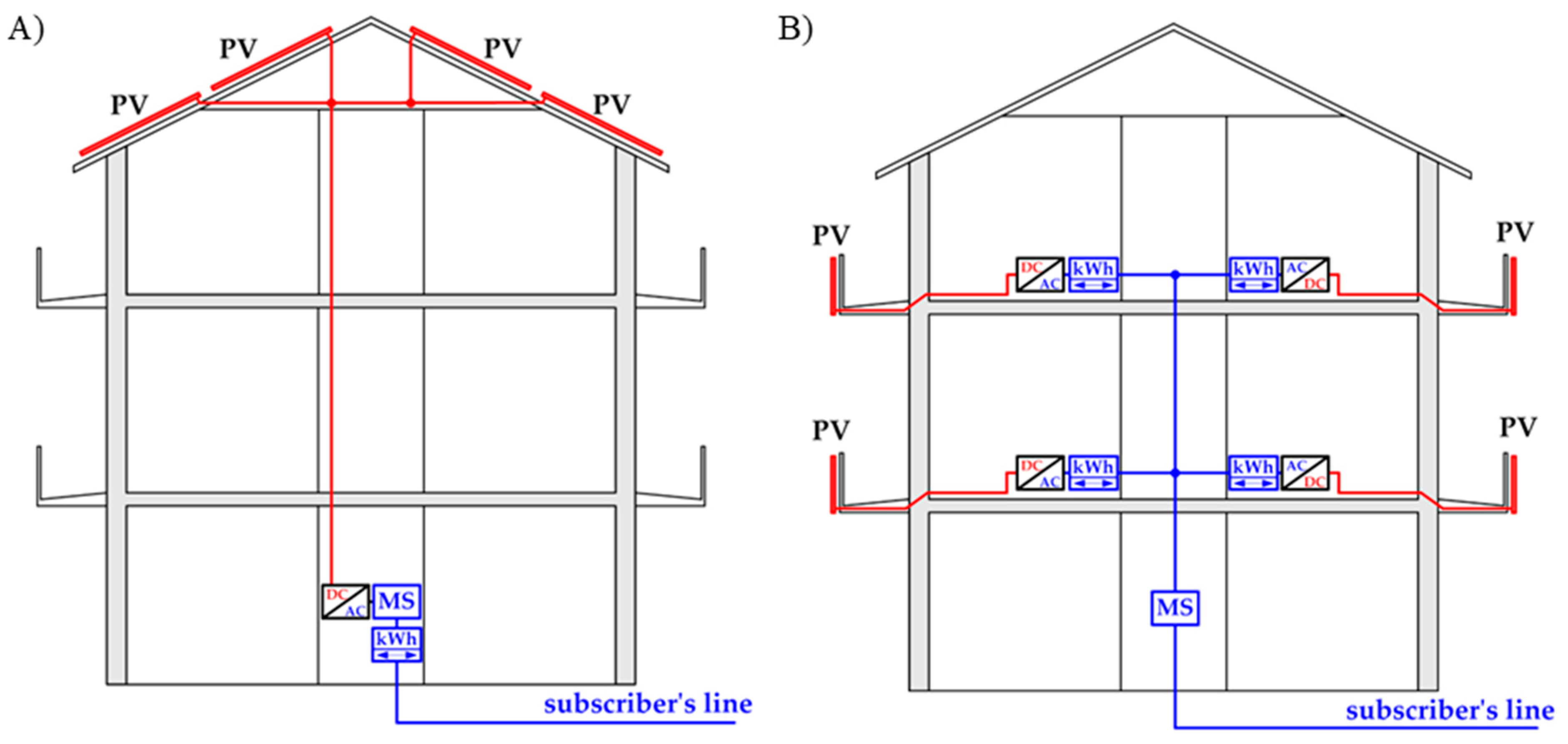
Figure 1. An example of a PV installation in a multi-family building: a collective prosumer (A) and individual prosumers (B). The following designations are used in the diagrams: PV—photovoltaic module; AC/DC—inverter; kWh—bidirectional electricity meter; MS—main switchboard. DC part of installation is marked by red and AC is marked by blue.
Energies 19 00474 g001
Figure 2. PV panels mounted on roofs (A), facades (B) and on the ground (C).
Energies 19 00474 g002
Figure 3. The structure of the power grid in a multi-family housing estate. The following designations are used in the diagrams: SEE—electrical energy system; MV—medium voltage; LV—low voltage; TR—transformer; L1–L4—power lines; D1_1–D4_8—multi-family houses.
Energies 19 00474 g003
Figure 4. Daily generation curve of PV power plants used in the research (based on [55]).
Energies 19 00474 g004
Figure 5. Consumers’ daily power consumption curves (determined from [56]).
Energies 19 00474 g005
Figure 6. Voltage values at characteristic points of the network—minimum load: U(TR_MV)—15 kV busbars of the transformer station, U(TR_LV)—0.4 kV busbars of the transformer station, U(D1_8)—end of line L1, U(D2_8)—end of line L2, U(D3_8)—end of line L3, U(D4_8)—end of line L4.
Energies 19 00474 g006
Figure 7. Voltage values at characteristic points of the network–maximum load: U(TR_MV)—15 kV busbars of the transformer station, U(TR_LV)—0.4 kV busbars of the transformer station, U(D1_8)—end of line L1, U(D2_8)—end of line L2, U(D3_8)—end of line L3, U(D4_8)—end of line L4.
Energies 19 00474 g007
Figure 8. Voltage values at characteristic points of the network—tap no. 6 of the transformer tap changer: U(TR_MV)—15 kV busbars of the transformer station, U(TR_LV)—0.4 kV busbars of the transformer station, U(D1_8)—end of line L1, U(D2_8)—end of line L2, U(D3_8)—end of line L3, U(D4_8)—end of line L4.
Energies 19 00474 g008
Figure 9. Transformer load values for variant II.
Energies 19 00474 g009
Figure 10. Values of active power P and reactive Q flow through the transformer.
Energies 19 00474 g010
Figure 11. Voltage values at characteristic points of the network–tap no. 7 of the transformer tap changer: U(TR_MV)—15 kV busbars of the transformer station, U(TR_LV)—0.4 kV busbars of the transformer station, U(D1_8)—end of line L1, U(D2_8)—end of line L2, U(D3_8)—end of line L3, U(D4_8)—end of line L4.
Energies 19 00474 g011
Figure 12. Transformer load values.
Energies 19 00474 g012
Figure 13. Transformer load values with the installed PV capacity limited to 32.5 kV in each building.
Energies 19 00474 g013
Table 1. Comparison of legal and regulatory frameworks for PV installations in multi-family residential buildings in selected countries.
Country/RegionOwnership and Decision-Making FrameworkLegal Model for PV Electricity SharingKey Regulatory BarriersEnabling Legal Instruments/PoliciesProfitability ImplicationsRef
AustriaCo-ownership of roof under housing law; strong separation between housing and energy lawLimited internal supply; collective use mainly via special contractual arrangements (e.g., all-in usage contracts)Internal electricity sales trigger supplier and grid obligations; consumer protection law increases contractual riskAmendments to Electricity Act (ElWOG, incl. §16a); Green Electricity Act (Ökostromgesetz); pilot projects (e.g., StromBIZ)Profitability is moderate and highly case-specific; high transaction and compliance costs reduce economic viability[17]
GermanyCo-ownership in multi-family buildings; regulated landlord–tenant relationsTenant Electricity Model (Mieterstrom): direct on-site supply to tenantsAdministrative complexity; metering and billing obligations; dependence on policy incentivesMieterstromgesetz; partial exemption from grid fees and leviesProfitability can be positive at high self-consumption rates, but remains sensitive to incentive levels[18,19]
United States (California)Condominium associations/HOAs; shared ownership of common areasIndividual or shared PV; virtual net metering in selected casesHOA approval procedures; aesthetic restrictions; reduced export compensationCalifornia Solar Rights Act; deemed approval rules; evolving net-metering schemesProfitability increasingly relies on self-consumption and storage; export-oriented PV less attractive[20]
United States (e.g., New York, Illinois)State-dependent condominium and landlord–tenant lawCommunity solar; virtual net metering (state-dependent)Lack of enabling legislation in some states; limited tenant access to incentivesState community solar acts; federal Investment Tax Credit (ITC); Solar for AllProfitability varies widely by state; community solar improves access but often yields lower returns[21]
AustraliaStrata Title system; roof as common property; Owners Corporation approval requiredEmbedded networks; emerging local energy trading modelsHigh transaction costs; regulatory obligations for embedded network operators; declining feed-in tariffsState-level limits on banning sustainability infrastructure; AER exemption framework; AS4777 standards [22]Profitability driven by on-site consumption; embedded networks improve returns but add regulatory complexity[23]
ItalyCondominium co-ownership under Civil Code (Art. 1117); joint decision-making by apartment ownersJointly Acting Renewable Self-Consumption (JARS); Renewable Energy Communities (RECs)Incentive dependency; dilution of per capita benefits in large buildings; regulatory complexityRED II transposition; incentive tariff for shared energy; tax bonuses for PV investmentEmpirically positive profitability: payback ~8–9 years; annual per capita benefit when incentives and bill savings are combined[24]
ChinaClear distinction between single-family houses and multi-family buildings; collective ownership of roofs in apartment buildingsPredominantly individual residential PV; limited feasibility in multi-family buildings due to collective decision rulesInstallation in apartment buildings requires approval of owners’ congress; incomplete property rights; declining subsidiesNational PV promotion programs; feed-in mechanisms; targeted rural PV policies; gradual subsidy phase-outProfitability is high for single-family houses (self-use + grid sales), but remains low and uncertain for multi-family buildings; economic incentives are necessary but insufficient without governance reform[25]
Table 2. Technical parameters of applied transformer and cable.
ParameterValue
Transformer T3O 17.5/630
Rated power [kVA]630
Rated voltage HV–side [kV]15.75
Rated voltage LV–side [kV]0.42
Short-circuit voltage [%]4.5
Copper losses [kW]4.6
No load current [%]0.35
No load losses [kW]0.8
Cable NAYY 4 × 240SE 0.6/1 kV
Rated current [A]357
Phases3
Nominal frequency [Hz]50
AC-resistance r’ (20 °C) [Ω/km]0.127
Reactance x’ [Ω/km]0.08
Susceptance b’ [μS/km]237.3
Table 3. Comparison of solutions for mitigating overloading of network components due to PV installations in multi-family residential areas.
SolutionDescriptionAdvantagesDisadvantages
1. Limitation of installed or generated PV powerTop-down restriction on maximum PV capacity per building or on allowable power generation to prevent network overloading
  • Simple to implement from the network operator’s perspective
  • Effectively eliminates transformer and line overloads
  • No additional infrastructure required
  • Limits renewable energy potential and prosumer participation
  • Leads to underutilization of available roof area and PV potential
  • Transformer operates at its maximum capacity during peak generation, leaving no safety margin
2. Oversizing of network componentsDesigning transformers and network elements to accommodate maximum potential PV generation
  • Allows unrestricted PV deployment
  • Eliminates overloading without curtailment
  • Technically robust and future-proof for high RES penetration
  • Significantly increases investment costs
  • Risk of over-dimensioning relative to actual demand
  • Low utilization of network assets for most of the operating time
3. Energy storage or local use of surplus energyUse of electrical storage systems or conversion of surplus PV electricity into heat (e.g., domestic hot water, heat pumps)
  • Increases on-site self-consumption
  • Reduces stress on the distribution grid
  • Improves economic performance under declining feed-in tariffs
  • Supports development of multi-energy systems and energy communities
  • Requires additional investment (storage systems, control infrastructure)
  • Increased system complexity
  • Economic viability depends on technology costs and regulatory framework
Disclaimer/Publisher’s Note: The statements, opinions and data contained in all publications are solely those of the individual author(s) and contributor(s) and not of MDPI and/or the editor(s). MDPI and/or the editor(s) disclaim responsibility for any injury to people or property resulting from any ideas, methods, instructions or products referred to in the content.