A Coupling Coordination Analysis for Natural Gas Production: A Perspective from the Energy Trilemma


Abstract
1. Introduction
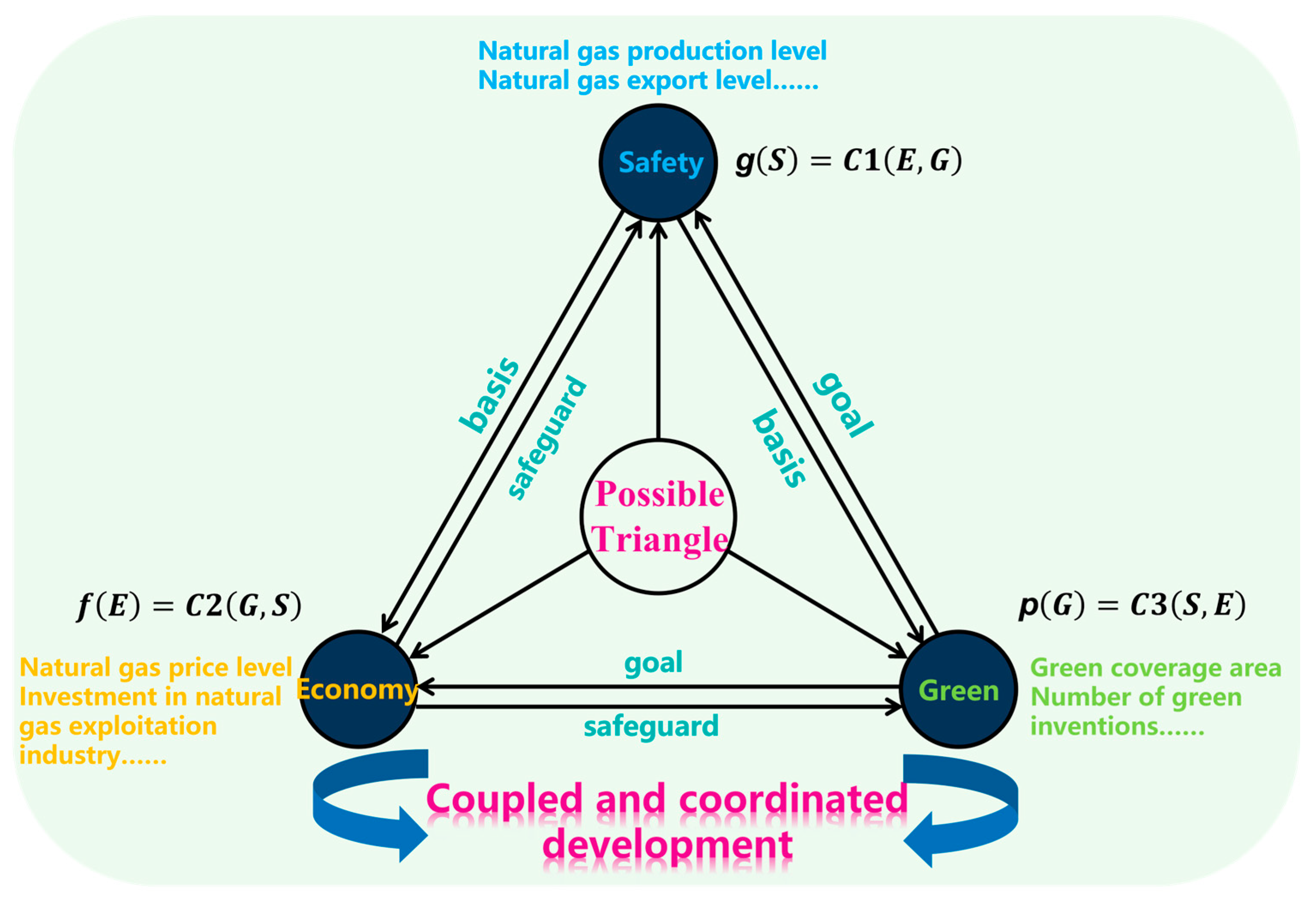
2. Definition of the “Possible Triangle” of Regional Natural Gas Industry
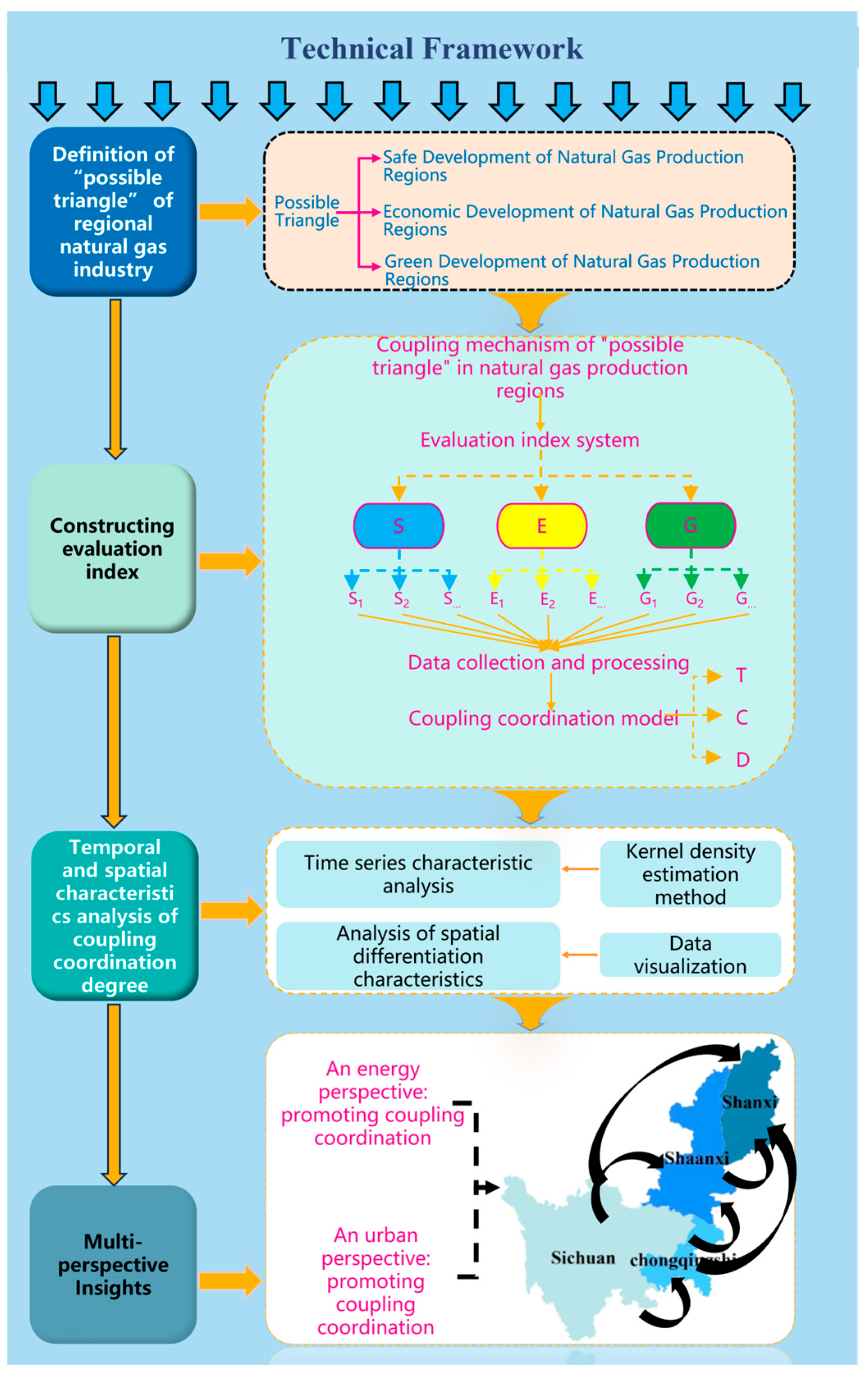
3. Method
3.1. Construction of the Evaluation Index System
- (1)
- Data normalization with min-max scaling [40].
- (2)
- Data translation Ximn:
- (3)
- Indicator proportion determination :
- (4)
- Determination of indicator weights:
- (5)
- Calculation of composite score:

| Primary Indicators | Secondary Indicators | Interpretation and Calculation of Indicators | Units | Weight | Reference |
|---|---|---|---|---|---|
| Safety | Level of natural gas production | Total natural gas production | 108 m3 | 0.159 | [42] |
| Natural gas export level | natural gas export volume | 108 m3 | 0.206 | \ | |
| Scientific and technical inputs to natural gas extraction | Research and development (R&D) expenses of natural gas extraction | 108 CNY | 0.267 | [43] | |
| Natural gas transportation capacity | Natural gas pipeline length | km | 0.133 | [44] | |
| Natural gas extraction capacity | Number of people employed in natural gas extraction | 104 people | 0.235 | \ | |
| Economy | Natural gas gate station price | The sum of ex-factory and transportation prices of natural gas | CNY/km3 | 0.135 | [45] |
| Industrial cost margins in the natural gas extraction industry | Total profit/total costs | % | 0.283 | [46] | |
| Investment in the natural gas extraction industry | Reflecting the intensity of investment in the construction of natural gas extraction facilities | 108 CNY | 0.282 | [47] | |
| Natural gas loss ratio | Gas losses/gas production | % | 0.097 | \ | |
| Growth rate of total industrial output value of natural gas exploitation industry | Reflecting the economic development of the natural gas extraction industry | % | 0.203 | \ | |
| Green | Carbon emissions from natural gas production and supply | Carbon dioxide from natural gas during the supply phase of production | t | 0.075 | \ |
| Industrial SO2 emission intensity | Industrial sulfur dioxide emissions/Area | t/km2 | 0.108 | [48] | |
| Number of green inventions | Reflecting green and low-carbon development capacity | \ | 0.279 | \ | |
| Area covered by greenery | Reflecting urban greening | ha | 0.253 | [49] | |
| Total investment in environmental pollution control | Reflecting the level of environmental pollution control | 108 CNY | 0.285 | [50] |
3.2. Verification of Collinearity Among Indicators
3.3. Coupled Coordination Degree Model
3.4. Kernel Density Analysis Method
4. Study Area and Data
5. Results
5.1. Characteristics of the Time-Series Evolution of “S-E-G” Coupling Coordination Degree
5.1.1. Time-Series Characteristics of the Safety, Economic, and Green Indices
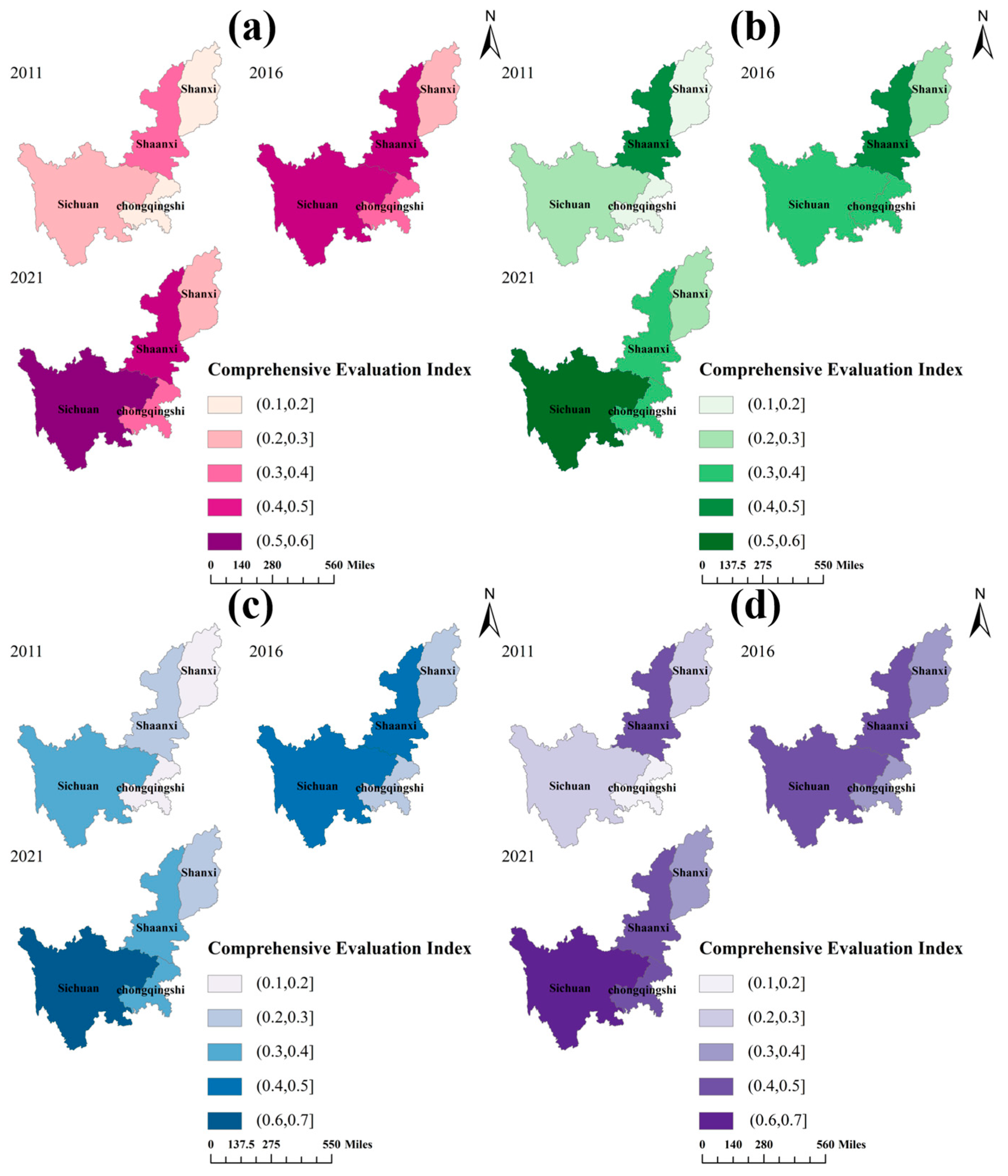
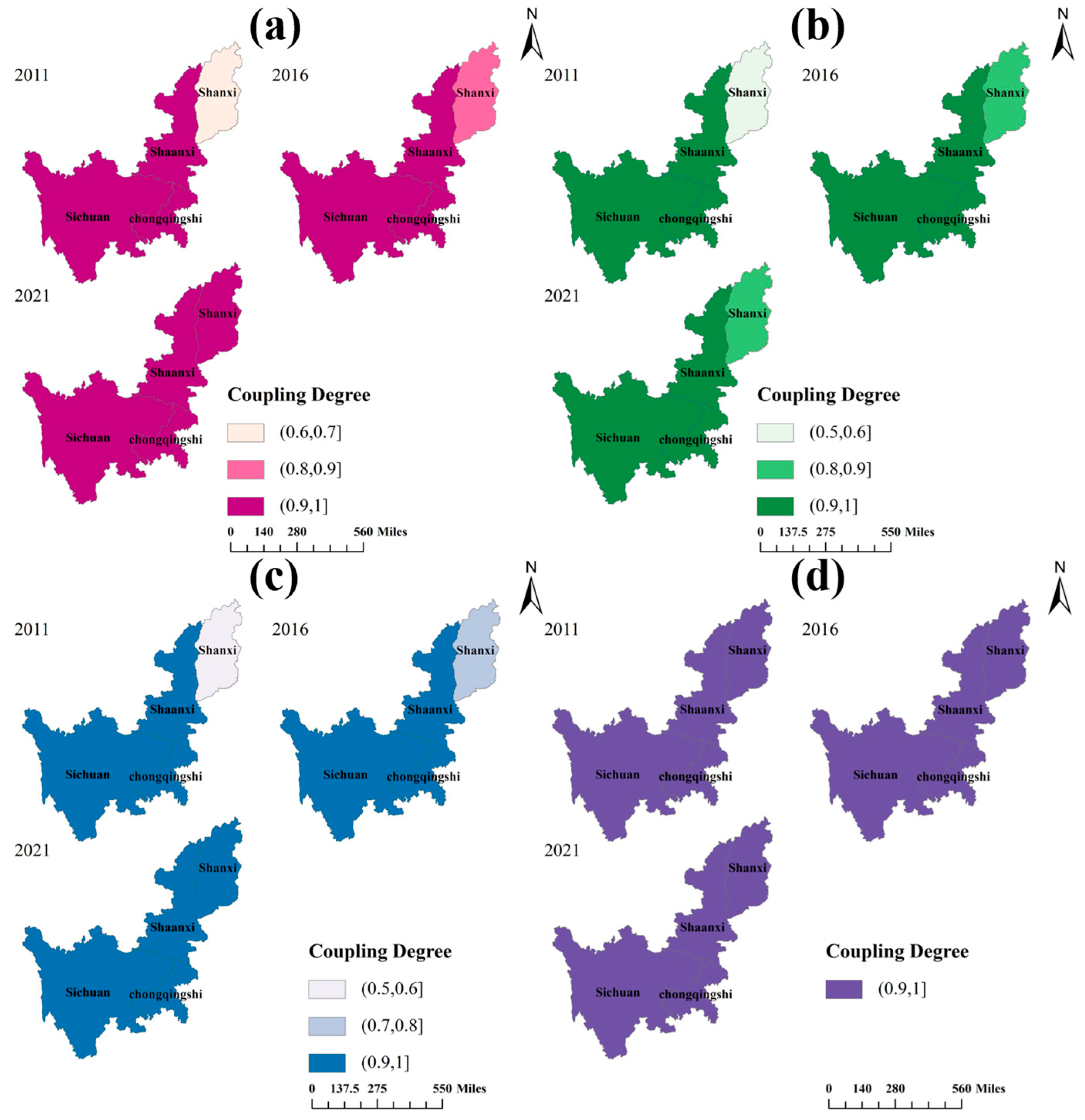
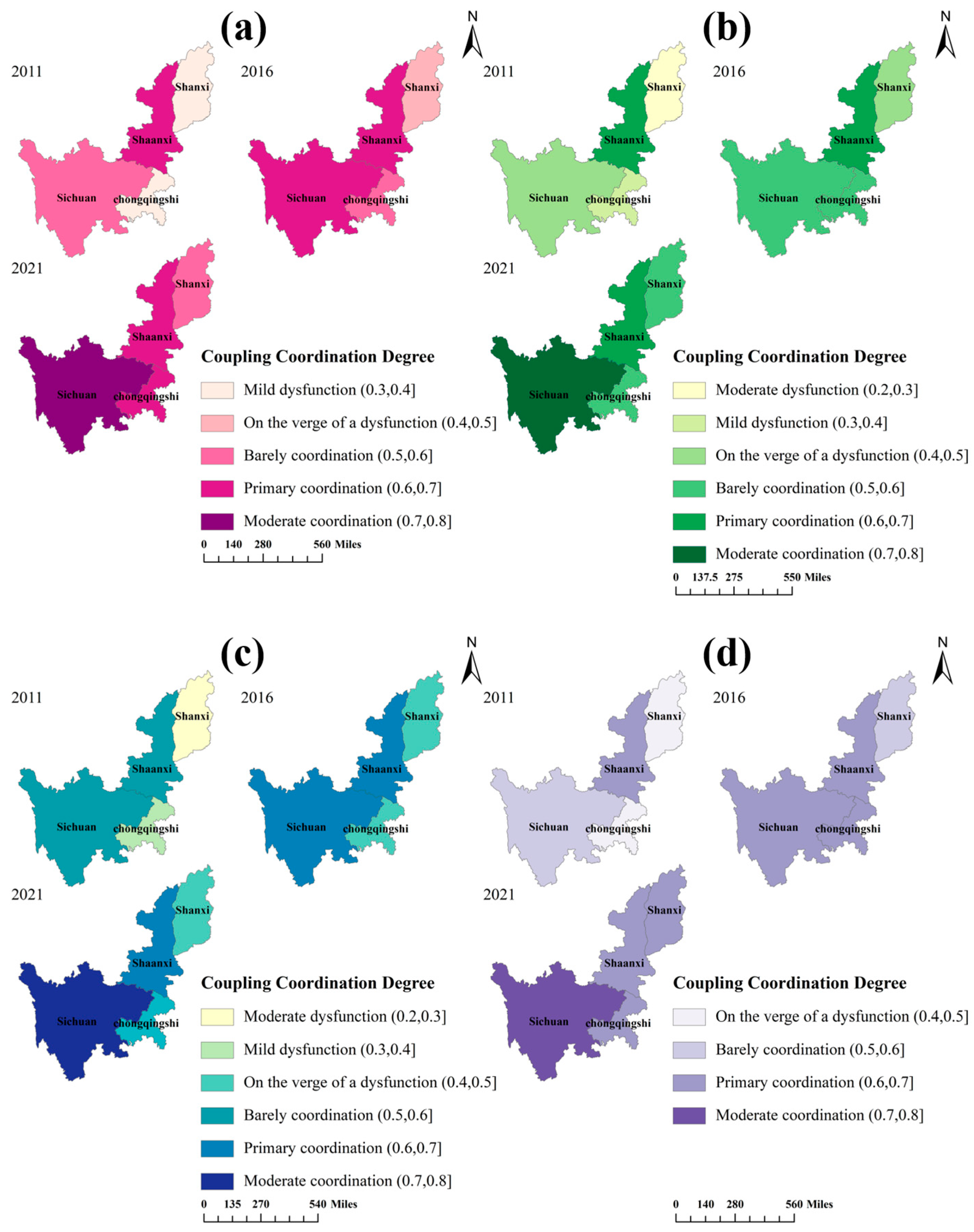
5.1.2. Time-Series Characterization of Comprehensive Evaluation Index, Coupling Degree, and Coupling Coordination Degree
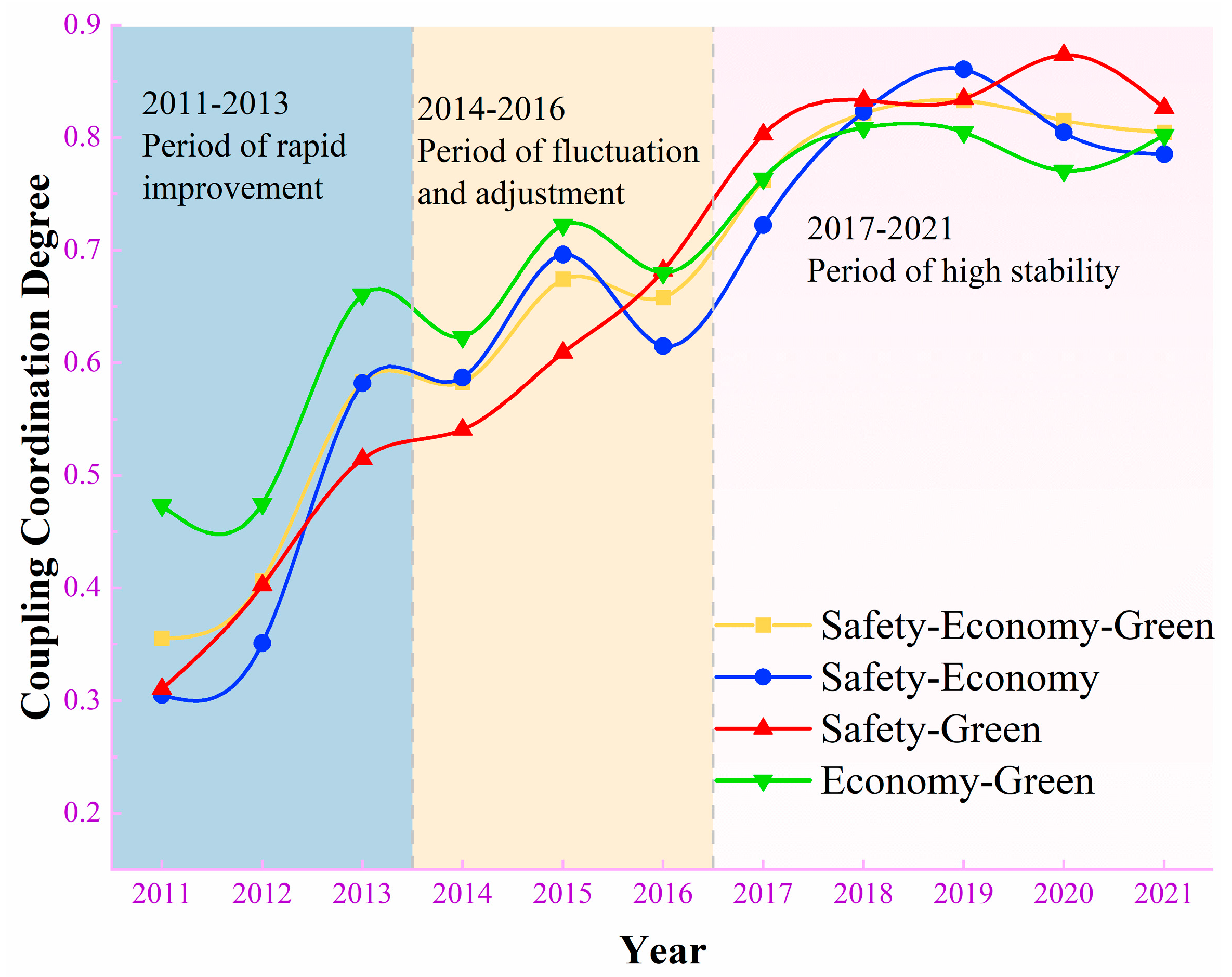
5.1.3. Time-Series Characterization of Coupled Coordination Between the Overall and Internal Subsystems of “S-E-G”
- (1)
- 2011–2013: Period of rapid improvement
- (2)
- 2014–2016: Period of fluctuation and adjustment
- (3)
- 2017–2021: Period of high stability
5.2. Spatial Distribution Characteristics of Comprehensive Evaluation Index, Coupling Degree, and Coupling Coordination Degree
6. Discussion
7. Conclusions
- (1)
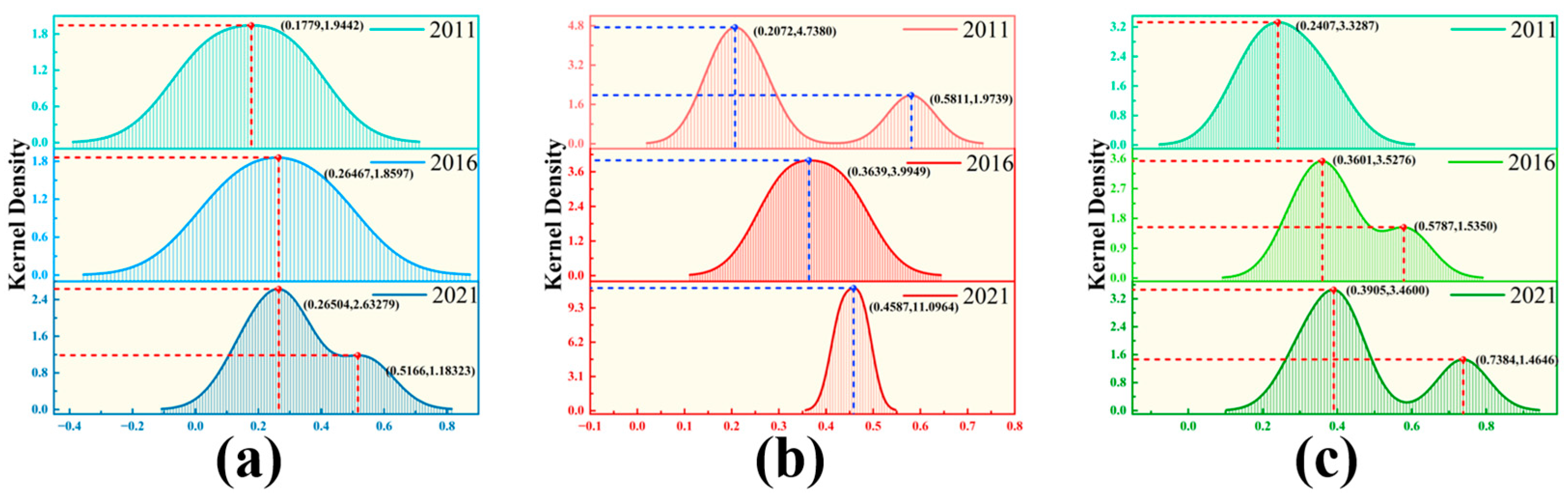
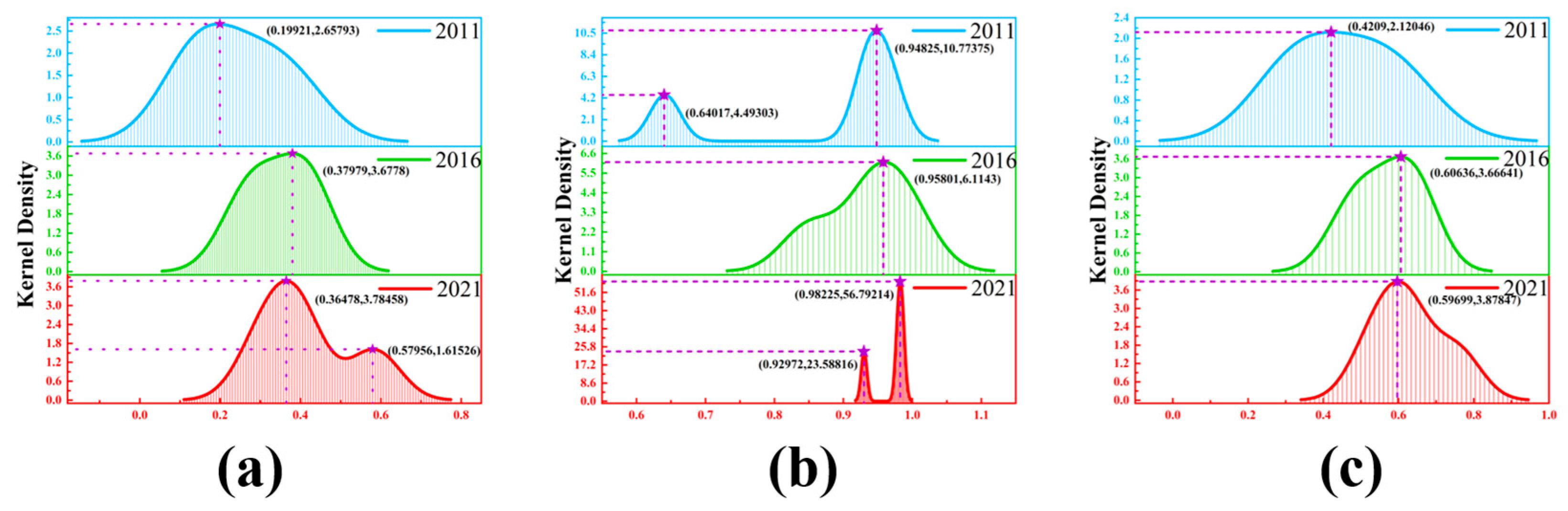
- Spatiotemporal Evolution of Subsystems and Coupling Coordination: Subsystem development exhibited asynchrony and multiploidization. Regional disparities were significant and multipolar for safety and green dimensions. While the economic dimension’s regional gap narrowed, overall polarization intensified. The coupling degree consistently exceeded the coupling coordination degree, indicating strong interactions but insufficient overall synergy. Regional gaps in coupling and coupling coordination narrowed over time, concentrating at high levels. The green dimension emerged as the key bottleneck constraining system coordination.
- (2)
- Trends in Comprehensive Coupling Coordination: The comprehensive coupling coordination degree demonstrated phased growth, rising at an average annual rate of 4%, with significantly enhanced subsystem synergy. The evolution comprised three distinct phases: Rapid Increase (2011–2013), dominated by “safety-economy” synergy; Fluctuation and Adjustment (2014–2016), where international energy price shocks caused economic indicator volatility and contracted environmental investment; and High Stabilization (2017–2021), where environmental investment rose notably, but system synergy entered a plateau period under the “dual carbon” target, highlighting the conflict between green transformation and production increase/supply security.
- (3)
- Spatial Heterogeneity and Regional Differentiation: Significant spatial variation in coupling coordination levels was observed. Sichuan Province led, achieving “moderate coordination (0.7–0.8)” due to superior resource endowment and effective policy implementation. Shaanxi maintained a stable “initial coordination (0.6–0.7)”. Chongqing and Shanxi lagged, remaining at “barely coordinated (0.5–0.6)” or “on the verge of dysfunction (0.4–0.5)”. These disparities stemmed from varied resource conditions, infrastructure investment intensity, policy support/effectiveness, and energy structures.
Author Contributions
Funding
Data Availability Statement
Conflicts of Interest
References
- Zhang, X.; Cheng, X.; Qi, X.; Yang, K.; Zhao, Z. Evaluation of China’s double-carbon energy policy based on the policy modeling consistency index. Util. Policy 2024, 90, 101783. [Google Scholar] [CrossRef]
- Zhen, W.; Zang, M.; Wang, Y.; Qiao, S.; Wang, Q. Integrated analysis of energy carbon emissions and air pollution in Ningxia based on MGWR and multisource remote sensing data. Arab. J. Geosci. 2023, 16, 522. [Google Scholar] [CrossRef]
- Duan, W.; Zhao, W.; Xu, D. Study on the pathway of energy transition in Inner Mongolia under the “dual carbon” goal. Heliyon 2024, 10, e39764. [Google Scholar] [CrossRef]
- He, B.J.; Yin, M. Government is expected to lead the payment of heat-resilient infrastructure. iScience 2023, 26, 106566. [Google Scholar] [CrossRef]
- Nan, Y.; Sun, R.; Jing, L.; Li, Y. Calculation and prediction of China’s energy ecological footprint based on the carbon cycle. Int. J. Environ. Sci. Technol. 2023, 20, 11075–11092. [Google Scholar] [CrossRef]
- Ahmed, M.; Shuai, C.; Ahmed, M. Analysis of energy consumption and greenhouse gas emissions trend in China, India, the USA, and Russia. Int. J. Environ. Sci. Technol. 2023, 20, 2683–2698. [Google Scholar] [CrossRef]
- Qin, Y.; Tong, F.; Yang, G.; Mauzerall, D.L. Challenges of using natural gas as a carbon mitigation option in China. Energy Policy 2018, 117, 457–462. [Google Scholar] [CrossRef]
- Xu, B.; Lin, B. Can expanding natural gas consumption reduce China’s CO2 emissions? Energy Econ. 2019, 81, 393–407. [Google Scholar] [CrossRef]
- Wang, X.; Qiu, Y.; Chen, J.; Hu, X. Evaluating natural gas supply security in China: An exhaustible resource market equilibrium model. Resour. Policy 2022, 76, 102562. [Google Scholar] [CrossRef]
- Fleming, J.M. Domestic Financial Policies under Fixed and under Floating Exchange Rates (Politiques finacierieures interieures avec un systeme de taux de change fixe et avec un systeme de taux de change fluctuant) (Politica financiera interna bajo sistemas de tipos de cambio fijos o de tipos de cambio fluctuantes). Staff. Pap.-Int. Monet. Fund 1962, 9, 369–380. Available online: http://www.jstor.org/stable/3866091 (accessed on 18 January 2025).
- Mundell, R.A. The appropriate use of monetary and fiscal policy for internal and external stability. Staff Pap. 1962, 9, 70–79. Available online: http://www.jstor.org/stable/3866082 (accessed on 18 January 2025). [CrossRef]
- Ito, H.; Kawai, M. Monetary and fiscal policy impacts under alternative trilemma regimes. J. Int. Money Financ. 2024, 149, 103182. [Google Scholar] [CrossRef]
- Lin, Y.; Zhang, T.; Liu, X.; Yu, J.; Li, J.; Gao, K. Dynamic monitoring and modeling of the growth-poverty-inequality trilemma in the Nile River Basin with consistent night-time data (2000–2020). Int. J. Appl. Earth Obs. Geoinf. 2022, 112, 102903. [Google Scholar] [CrossRef]
- Kosai, S.; Tan, C. Quantitative analysis on a zero energy building performance from energy trilemma perspective. Sustain. Cities Soc. 2017, 32, 130–141. [Google Scholar] [CrossRef]
- Huang, Y.; Bailis, R. Foreign policy ‘trilemmas’: Understanding China’s stance on international cap-and-trade. Clim. Policy 2015, 15, 494–516. [Google Scholar] [CrossRef]
- Wang, Z.; Deng, X.; Wong, C.; Li, Z.; Chen, J. Learning urban resilience from a social-economic-ecological system perspective: A case study of Beijing from 1978 to 2015. J. Clean. Prod. 2018, 183, 343–357. [Google Scholar] [CrossRef]
- Magazzino, C.; Alola, A.A.; Schneider, N. The trilemma of innovation, logistics performance, and environmental quality in 25 topmost logistics countries: A quantile regression evidence. J. Clean. Prod. 2021, 322, 129050. [Google Scholar] [CrossRef]
- Lowe, P.; Abdelhak Chibani, M.; Barseghyan, H.; Kolodziejczyk, B.; Oyewole, O.; Diendorfer, C.; Smon, I. World Energy Trilemma Index 2020. Report+ Summary. Available online: https://www.worldenergy.org/publications/entry/world-energy-trilemma-index-2020 (accessed on 18 January 2025).
- Zhao, X.; Ke, X.; Jiang, S. Spatial impact of green finance reform pilot zones on environmental efficiency: A pathway to mitigating China’s energy trilemma. Energy 2024, 312, 133602. [Google Scholar] [CrossRef]
- Song, L.; Fu, Y.; Zhou, P.; Lai, K.K. Measuring national energy performance via energy trilemma index: A stochastic multicriteria acceptability analysis. Energy Econ. 2017, 66, 313–319. [Google Scholar] [CrossRef]
- Peng, C.; Chen, H.; Lin, C.; Guo, S.; Yang, Z.; Chen, K. A framework for evaluating energy security in China: Empirical analysis of forecasting and assessment based on energy consumption. Energy 2021, 234, 121314. [Google Scholar] [CrossRef]
- Al Asbahi, A.A.M.H.; Gang, F.Z.; Iqbal, W.; Abass, Q.; Mohsin, M.; Iram, R. Novel approach of Principal Component Analysis method to assess the national energy performance via Energy Trilemma Index. Energy Rep. 2019, 5, 704–713. [Google Scholar] [CrossRef]
- Yan, X.; Chen, M.; Chen, M.Y. Coupling and coordination development of Australian energy, economy, and ecological environment systems from 2007 to 2016. Sustainability 2019, 11, 6568. [Google Scholar] [CrossRef]
- Wang, J.; Shahbaz, M.; Song, M. Evaluating energy economic security and its influencing factors in China. Energy 2021, 229, 120638. [Google Scholar] [CrossRef]
- Yang, Z.; Liu, H.; Yuan, Y.; Li, M. Can renewable energy development facilitate China’s sustainable energy transition? Perspective from Energy Trilemma. Energy 2024, 304, 132160. [Google Scholar] [CrossRef]
- Zhao, C.; Dong, K.; Wang, K.; Dong, X. How does energy trilemma eradication reduce carbon emissions? The role of dual environmental regulation for China. Energy Econ. 2022, 116, 106418. [Google Scholar] [CrossRef]
- Wei, T.; Duan, Z.; Xie, P. The multi-dimensional assessment and dynamic evolution of the energy trilemma in China. Environ. Impact Assess. Rev. 2025, 114, 107914. [Google Scholar] [CrossRef]
- Boulton, J.; Krumdieck, S. The Three Doors: An attention shift process to break through the sustainability tri-lemma for oil production enterprises. Energy Res. Soc. Sci. 2025, 127, 104217. [Google Scholar] [CrossRef]
- Tachega, M.A.; Chen, Y.; Agbanyo, G.K.; Ahmed, R.; Appiah, A.; Mintah, C. Energy efficiency, economic growth, and natural resource rent: A trilemma analysis of environmental sustainability in Africa. Energy 2024, 307, 132693. [Google Scholar] [CrossRef]
- Basu, S.; Nayak, S.P. India’s Energy Trilemma and Coal-Based Power Generation. In The Role of Coal in a Sustainable Energy Mix for India; Routledge: London, UK, 2023. [Google Scholar] [CrossRef]
- Lackey, G.; Freeman, G.M.; Buscheck, T.A.; Haeri, F.; White, J.A.; Huerta, N.; Goodman, A. Characterizing hydrogen storage potential in US underground gas storage facilities. Geophys. Res. Lett. 2023, 50, e2022GL101420. [Google Scholar] [CrossRef]
- Talukdar, M.; Blum, P.; Heinemann, N.; Miocic, J. Techno-economic analysis of underground hydrogen storage in Europe. Iscience 2024, 27, 108771. [Google Scholar] [CrossRef]
- He, B.J.; Zhao, D.X.; Zhu, J.; Darko, A.; Gou, Z.H. Promoting and implementing urban sustainability in China: An integration of sustainable initiatives at different urban scales. Habitat Int. 2018, 82, 83–93. [Google Scholar] [CrossRef]
- Haken, H. Synergetics. Phys. Bull. 1977, 28, 412. [Google Scholar] [CrossRef]
- Lv, Y.; Yan, S.; Lai, X.; Li, Y. Dynamic modeling of the water-energy-food-carbon nexus: Scenario analysis and security assessment in Sichuan Province, China. J. Clean. Prod. 2025, 502, 145370. [Google Scholar] [CrossRef]
- Cheshmehzangi, A.; He, B.J.; Sharifi, A.; Matzarakis, A. Climate change, cities, and the importance of cooling strategies, practices, and policies. In Climate Change and Cooling Cities; Springer Nature: Singapore, 2023; pp. 2–19. [Google Scholar] [CrossRef]
- Von Bertalanffy, L. General System Theory; Allen Lane: New York, NY, USA, 1968; Volume 41973, p. 40. [Google Scholar]
- Więckowski, J.; Kizielewicz, B.; Wątróbski, J.; SaŁabun, W. A new approach for handling uncertainty of expert judgments in complex decision problems. IEEE Access 2024, 12, 142026–142046. [Google Scholar] [CrossRef]
- Brodny, J.; Tutak, M. Assessing sustainable energy development in the central and eastern European countries and analyzing its diversity. Sci. Total Environ. 2021, 801, 149745. [Google Scholar] [CrossRef]
- Ye, R.; Zhou, Y.; Chen, J.; Tu, K. Natural gas security evaluation from a supply vs. demand perspective: A quantitative application of four As. Energy Policy 2021, 156, 112425. [Google Scholar] [CrossRef]
- Xin, S.; Luo, J.; Liu, J.; Zhou, Y.; Wang, K.; Wang, J. Advanced control of multi-source heat pump systems: Synergizing Taguchi experimental design with entropy weight method for multi-criteria coordination. Energy Build. 2025, 348, 116461. [Google Scholar] [CrossRef]
- Xie, M.; Min, J.; Fang, X.; Sun, C.; Zhang, Z. Policy selection based on China’s natural gas security evaluation and comparison. Energy 2022, 247, 123460. [Google Scholar] [CrossRef]
- Kang, D. The establishment of evaluation systems and an index for energy superpower. Appl. Energy 2024, 356, 122344. [Google Scholar] [CrossRef]
- Zeng, F.; Li, J. Study on comprehensive evaluation and countermeasures of natural gas safety in EU. Energy Strategy Rev. 2023, 49, 101167. [Google Scholar] [CrossRef]
- Lin, B.; Li, Z. Does natural gas pricing reform establish an effective mechanism in China: A policy evaluation perspective. Appl. Energy 2021, 282, 116205. [Google Scholar] [CrossRef]
- Afgan, N.H.; Carvalho, M.G.; Pilavachi, P.A.; Martins, N. Evaluation of natural gas supply options for south east and central Europe. Part 1: Indicator definitions and single indicator analysis. Energy Convers. Manag. 2007, 48, 2517–2524. [Google Scholar] [CrossRef]
- Yuan, J.; Wang, L.; Li, Y.; Wang, Y.; Ma, T.; Luo, X. Set pair prediction for Chinese natural gas energy security based on higher-order Markov chain with risk attitude. Resour. Policy 2022, 77, 102741. [Google Scholar] [CrossRef]
- Zeng, F.; Li, J. Research on EU natural gas security and countermeasures based on two-dimensional cloud model. Energy 2024, 305, 132196. [Google Scholar] [CrossRef]
- Wang, R.; Cheng, J.; Zhu, Y.; Lu, P. Evaluation on the coupling coordination of resources and environment carrying capacity in Chinese mining economic zones. Resour. Policy 2017, 53, 20–25. [Google Scholar] [CrossRef]
- Bamisile, O.; Ojo, O.; Yimen, N.; Adun, H.; Li, J.; Obiora, S.; Huang, Q. Comprehensive functional data analysis of China’s dynamic energy security index. Energy Rep. 2021, 7, 6246–6259. [Google Scholar] [CrossRef]
- Yu, M.; Liu, S.; You, Z.; Yang, Z.; Li, J.; Yang, L.; Chen, G. A prediction model of the friction coefficient of asphalt pavement considering traffic volume and road surface characteristics. Int. J. Pavement Eng. 2023, 24, 2160451. [Google Scholar] [CrossRef]
- Stempien, J.P.; Chan, S.H. Addressing energy trilemma via the modified Markowitz Mean-Variance Portfolio Optimization theory. Appl. Energy 2017, 202, 228–237. [Google Scholar] [CrossRef]
- Wang, Y.; Guo, L.; Wang, Y.; Zhang, Y.; Zhang, S.; Liu, Z.; Xing, J.; Liu, X. Bi-level programming optimization method of rural integrated energy system based on coupling coordination degree of energy equipment. Energy 2024, 298, 131289. [Google Scholar] [CrossRef]
- Hu, Y.; Duan, W.; Zou, S.; Chen, Y.; De Maeyer, P.; Van de Voorde, T.; Takara, K.; Kayumba, P.M.; Kurban, A.; Goethals, P.L. Coupling coordination analysis of the water-food-energy-carbon nexus for crop production in Central Asia. Appl. Energy 2024, 369, 123584. [Google Scholar] [CrossRef]
- Qin, G.; Zeng, P.; Zhang, P. Assessment of “possible triangle” in natural gas resource-based provinces of China: Spatiotemporal differentiation investigations. Energy Sustain. Dev. 2025, 88, 101798. [Google Scholar] [CrossRef]
- Cheng, Y.; Wang, J.; Shu, K. The coupling and coordination assessment of food-water-energy systems in China based on sustainable development goals. Sustain. Prod. Consum. 2023, 35, 338–348. [Google Scholar] [CrossRef]
- Davis, R.A.; Lii, K.S.; Politis, D.N. Remarks on some nonparametric estimates of a density function. In Selected Works of Murray Rosenblatt; Springer: New York, NY, USA, 2011; pp. 95–100. [Google Scholar] [CrossRef]
- Dong, W.; Sun, H.; Tan, J.; Li, Z.; Zhang, J.; Yang, H. Regional wind power probabilistic forecasting based on an improved kernel density estimation, regular vine copulas, and ensemble learning. Energy 2022, 238, 122045. [Google Scholar] [CrossRef]
- National Bureau of Statistics of China. China Statistical Yearbook; China Statistics Press: Beijing, China, 2022. [Google Scholar]
- Ministry of Housing and Urban-Rural Development. China Urban Construction Statistical Yearbook; China Planning Press: Beijing, China, 2022. [Google Scholar]
- National Bureau of Statistics of China, Ministry of Energy. China Energy Statistical Yearbook; China Statistics Press: Beijing, China, 2022. [Google Scholar]
- National Bureau of Statistics of China, Ministry of Science and Technology. China Science and Technology Statistical Yearbook; China Statistics Press: Beijing, China, 2022. [Google Scholar]
- Blu, T.; Thévenaz, P.; Unser, M. Linear interpolation revitalized. IEEE Trans. Image Process. 2004, 13, 710–719. [Google Scholar] [CrossRef] [PubMed]


| Coupling Coordination Degree | Level | Type of Coordination |
|---|---|---|
| [0, 0.1] | Extreme dysfunction | Dysfunction and decline category |
| (0.1, 0.2] | Severe dysfunction | |
| (0.2, 0.3] | Moderate dysfunction | |
| (0.3, 0.4] | Mild dysfunction | |
| (0.4, 0.5] | On the verge of dysfunction | Transition category |
| (0.5, 0.6] | Barely coordination | |
| (0.6, 0.7] | Initial coordination | |
| (0.7, 0.8] | Moderate coordination | Coordinated development category |
| (0.8, 0.9] | Good coordination | |
| (0.9, 1] | High coordination |
| Coupling Coordination Status | Policy Diagnostics/Reality Drivers | Targeted Recommendations |
|---|---|---|
| (1) The pervasive characteristic of the entire system is high coupling but low coordination. | During the 2014–2016 period of international energy price volatility, the economic subsystem contracted, weakening its coordination with other dimensions. The green dimension remained a systemic bottleneck: under the “Dual Carbon” goals, increased natural gas extraction raised emissions while pollution control investment was cut during economic downturns. Meanwhile, green technology uptake lagged, resulting in unstable environmental performance and undermining overall coordination. | Regions with strong green technology foundations (e.g., Sichuan, Shaanxi) should establish regional technology promotion centers, supported by fiscal and tax incentives, to accelerate deployment of CCUS, low-pollution drilling fluids, and methane monitoring. Lagging regions (e.g., Shanxi, Chongqing) must increase investment in pollution control, safeguarding environmental expenditures against economic fluctuations to prevent erosion of subsystem synergy. |
| (2) Progression from Coordination to Optimization (Sichuan) | It leads in the synergy of resources, technology, and policies, and must not only maintain but also further optimize this favorable condition in the future. | Sichuan should leverage its advantages to pioneer intelligent shale gas extraction and digital transformation, establishing a national green extraction demonstration zone. |
| (3) Moderate Coordination with Stagnant Growth (Shaanxi) | The complex geological conditions, such as those in the Ordos Basin, lead to high extraction costs and difficulties in improving efficiency, which constrain the economic subsystem’s ability to support safety and green initiatives, resulting in a developmental plateau. | Establish a special fund for complex oil and gas reservoir extraction technologies, encourage joint industry-academia research initiatives, and improve recovery rates and economic efficiency. |
| (4) Low coordination level (Chongqing) | Chongqing exhibits a disconnect between policy planning and implementation, with insufficient supporting funding and administrative efficacy, leading to diluted policy outcomes. | Chongqing must enhance policy implementation efficiency and deepen synergy with Sichuan for shared technology and infrastructure. |
| (5) Lagging coordination (Shanxi) | Shanxi’s coal-dominated energy structure and entrenched interests create a lock-in effect, squeezing out the investment, market, and policy space needed for natural gas development. | Shanxi needs a structural shift away from coal dependency toward integrated “coal-to-gas—CCUS—hydrogen energy” models to increase gas consumption and enhance tripartite coordination. |
Disclaimer/Publisher’s Note: The statements, opinions and data contained in all publications are solely those of the individual author(s) and contributor(s) and not of MDPI and/or the editor(s). MDPI and/or the editor(s) disclaim responsibility for any injury to people or property resulting from any ideas, methods, instructions or products referred to in the content. |
© 2026 by the authors. Licensee MDPI, Basel, Switzerland. This article is an open access article distributed under the terms and conditions of the Creative Commons Attribution (CC BY) license.
Share and Cite
Zhang, P.; Deng, R.; Liu, W.; Sun, Y.; Qin, G. A Coupling Coordination Analysis for Natural Gas Production: A Perspective from the Energy Trilemma. Energies 2026, 19, 421. https://doi.org/10.3390/en19020421
Zhang P, Deng R, Liu W, Sun Y, Qin G. A Coupling Coordination Analysis for Natural Gas Production: A Perspective from the Energy Trilemma. Energies. 2026; 19(2):421. https://doi.org/10.3390/en19020421
Chicago/Turabian StyleZhang, Peng, Ruyue Deng, Wei Liu, Yinghao Sun, and Guojin Qin. 2026. "A Coupling Coordination Analysis for Natural Gas Production: A Perspective from the Energy Trilemma" Energies 19, no. 2: 421. https://doi.org/10.3390/en19020421
APA StyleZhang, P., Deng, R., Liu, W., Sun, Y., & Qin, G. (2026). A Coupling Coordination Analysis for Natural Gas Production: A Perspective from the Energy Trilemma. Energies, 19(2), 421. https://doi.org/10.3390/en19020421