1. Introduction
Sustainable trends towards decarbonizing power generation and the need to reduce carbon dioxide (CO
2) emissions in transportation have resulted in considerable growth in the use of renewable energy sources (RES) and the integration of electric vehicles (EVs) into existing power systems. Various technical improvements in EV technology have occurred in recent years, and more funding is available to create additional EV charging stations. Given the stochastic nature of RES generation and the operational flexibility of EVs, a coordinated operation of both technologies is seen as a crucial solution in sustainable initiatives [
1,
2].
The increasing transition toward renewable-energy-based power systems reduces conventional synchronous inertia and introduces greater variability in power generation, thereby increasing the need for effective frequency support and energy management strategies in low-inertia microgrids. So, transitioning to renewable energy and electric mobility is a major challenge. To meet electricity demand in a sustainable manner, the integration of RES is an effective solution. The primary concern with RES is their reliance on weather conditions. This leads to an unknown nature of sources and unpredictable power [
3]. The increased penetration of RES has a negative influence on the power grid due to erratic power generation [
4]. This affects the system’s power quality, dependability, and stability. As a result, it becomes the most difficult undertaking to integrate RES such as wind and solar into the system. Wind-powered systems, in particular, complicate frequency regulation further. When generation and demand are not matched, frequency violations occur. If generation exceeds demand, frequency increases. If a generation is less in demand, the frequency decreases. To mitigate such changes and maintain consistent output power, an energy storage system is used [
5]. Because of the limitations of conventional generators and unpredictable load demands, energy management and the environmental crises pose difficult challenges in electrical power systems, particularly in current microgrids [
6,
7]. In addition, RES (e.g., wind farms (WFs) and photovoltaic (PV) and EVs) are increasingly engaging in microgrids to generate electrical power [
8,
9]. Their high penetration level will provide electricity support for microgrids [
10]. In recent years, numerous strategies and concepts have been proposed to reduce frequency fluctuations in microgrids. In [
11], the effect of communication delays on secondary frequency regulation in a microgrid is thoroughly explored.
The large-scale integration of RESs into the power grid contributes to frequency and voltage instability [
12]. In general, RESs contain no or low inertia; the converters are necessary for the integration of the PV system to the grid, which does not supply inertia to the grid. Similarly, wind turbines (WTs) require variable frequency converters, which reduce the WT’s inertial response and do not contribute to grid stability. As the penetration of RES increases, the inertia of the power system reduces [
13]. The rate of change in frequency increases when the power system’s inertia decreases, causing frequency fluctuation in a relatively short amount of time, as well as power imbalance, resulting in system frequency instability [
14]. Frequency is a constantly changing phenomenon in power networks, determined by both power output and demand. In the majority of Asian and European countries, the nominal frequency is 50 Hertz (Hz), while in North and South America, it is 60 Hz. In China, the lowest permitted frequency is 49.8 Hz, and the highest is 50.2 Hz. Meanwhile, under typical conditions, the operational frequency range in France, Great Britain, Belgium, and Austria is 50 Hz ± 0.5 Hz [
15].
EVs have recently received a lot of attention due to modern diffusion in EV technologies such as vehicle-to-grid (V2G) or vehicle-to-home (V2H), flexible load nature, and the capacity to provide numerous auxiliary services to the electric grid at the transmission, distribution, and consumer end [
16,
17]. EVs were popular mostly because of their energy storage capacity and fast-acting capability, which mimicked the typical behavior of battery storage systems or synchronous generator governor responses. The function of EV in power systems for delivering primary frequency response has already been investigated in large-scale power systems such as the Spanish power system [
18] and the British power system [
19].
V2G provides a variety of services, including supplementary services, active power support, reactive power compensation, and assistance for RES [
20]. V2G provides the grid with sufficient electricity while EVs are parked. With this approach, EVs are a cost-effective and pollution-reducing solution that also generates income for EV owners [
21]. EVs can store the excess energy produced by RES in batteries. When generation exceeds demand, energy is stored in batteries; when generation is low, EVs feed power into the grid. Thus, EVs are utilized to keep the frequency at a consistent level [
22,
23]. EVs can support the grid in a variety of ways. It supports valley filling, which is the charging of EVs during low load or at night, as well as peak load shaving, which is the provision of power to the grid to preserve balance [
24].
The usage of a separate generator for frequency adjustment raises various concerns. Despite its extended start-up time, it is ineffective at restoring frequency. It raises overall costs and emissions, necessitating the development of an alternative method of frequency management. In this procedure, a battery energy storage system is one method for reducing frequency changes caused by an abrupt shift in demand. Several research studies have looked into EV participation in controlling primary frequency control in a microgrid. The investigations in [
25,
26] demonstrated the performance of EVs in providing frequency regulation. However, the analysis in [
27] lacks adequate comprehensive information on EV battery capacity and EV contribution to primary frequency control, whereas [
28] completely ignored the impact of EV modelling and SOC. Ref. [
29] investigated the effects of various EV penetration levels on microgrid frequency variation. ESS is used in power systems to support RES [
30,
31], including PVs [
32].
In [
33], the impact of EVs on primary frequency response was examined while taking into account their SOC levels and the intermittent nature of renewables. A control approach for EVs to participate in frequency response was described in [
34]. In this study, the SOC of EVs was managed utilizing a smart charging method that allowed car owners to schedule charging requests. Ref. [
35] regulated the power grid’s frequency utilizing EVs and a smart pricing mechanism. In [
36], a frequency control approach for EVs and controllable loads was presented. In order to reduce frequency variation in the power system with a large integration of RES, a new frequency control approach incorporating EVs and heat pump water heaters was developed [
37]. In [
38], EV charging requests were analyzed while taking into account the battery condition in order to reduce frequency fluctuations.
Recent studies have shown the increasing role of EVs in supporting the stability of the energy system through V2G technology. EVs batteries can function as distributed energy storage units capable of providing ancillary services such as frequency regulation and peak load management. For example, recent research has investigated the integration of electric vehicles into microgrids powered by renewable energy to mitigate frequency fluctuations caused by intermittent solar and wind power generation.
Several studies have proposed different control strategies to coordinate EVs participation in frequency regulation. These methods include advanced control techniques and optimization algorithms to improve the dynamic performance of microgrids with high renewable energy penetration. Recent simulation studies have shown that coordinated participation of EVs can significantly improve frequency stability and reduce peak load demand in microgrid systems.
Despite these advancements, many current studies focus either on frequency regulation or load management separately. In contrast, the current work investigates the role of EVs in mitigating frequency deviations in an isolated microgrid powered by renewable energy, taking into account the interaction between load fluctuations and renewable energy generation fluctuations.
Table 1 illustrates a comparison of recent studies on frequency regulation based on EVs.
The main contributions of this paper are summarized as follows:
A renewable-energy-based microgrid model integrating PV, wind generation, local loads, and EVs with V2G capability is developed for frequency stability analysis.
Unlike studies that generally discuss EV ancillary services, this work provides a systematic dynamic assessment of EV participation in frequency regulation under renewable generation and load disturbances.
The impact of different EV participation levels, namely 10%, 50%, 90%, and 100%, is evaluated to quantify the improvement in frequency deviation and dynamic stability.
The structure of this paper is as follows:
Section 1 introduces the research background and objectives.
Section 2 provides an overview of frequency control in microgrids.
Section 3 presents the microgrid model and system configuration.
Section 4 describes the proposed V2G-based frequency regulation methodology.
Section 5 presents the simulation results and discussion.
Section 6 summarizes the main conclusions, while
Section 7 discusses the limitations of the present study and directions for future work.
2. Frequency Control Overview
In a grid-connected microgrid, the main grid determines the voltage at the point of common coupling (PCC), and the microgrid’s primary function is to accommodate the real or reactive power provided by distributed energy resources (DERs) units as well as the load demand. When a microgrid goes into isolated mode due to a failure or a blackout, the voltage phase angles shift. It reduces the system frequency. So, an isolated microgrid should have voltage and frequency regulation, as well as active and reactive power balance [
44,
45].
In this analysis, the load, number of EVs, PV, and WF power production are all assumed to be variable. As a result of these changes, there is a significant change in power generation in the microgrid’s overall frequency. To overcome this issue, the frequencies of EV, PV, and WF buses and loads are monitored using data analysis and detection to determine frequency deviation [
46,
47].
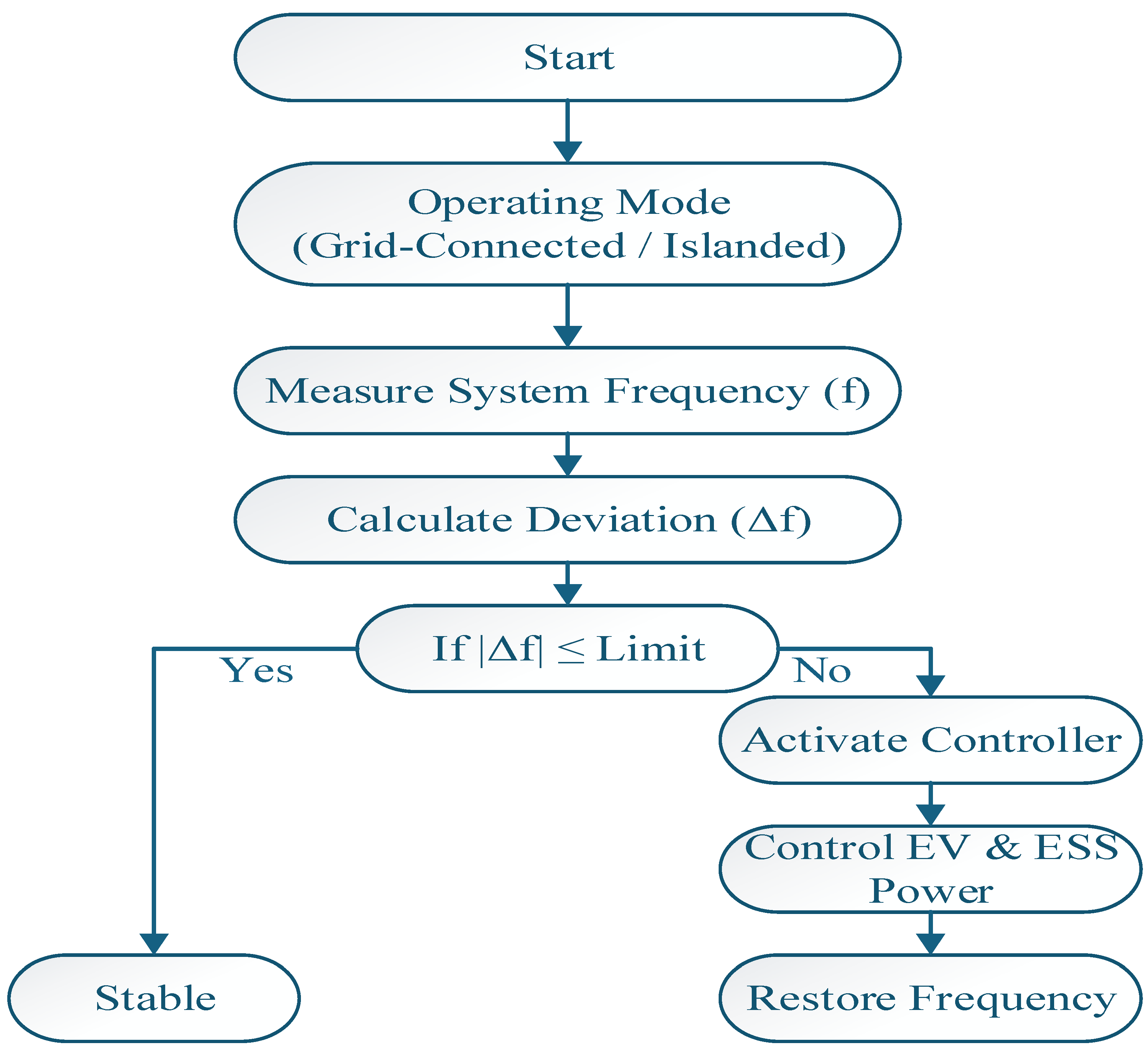
When the frequency variation becomes undesirable, the centralized controller is triggered to regulate and keep the frequency within acceptable limits. An energy storage system is linked to the same bus as the EVs to regulate the EV power output as shown in
Figure 1 [
48].
- A.
Frequency Control
The nominal operating frequency is maintained by balancing electricity generation and demand. The grid-defined non-critical frequency range varies according to the country grid codes and the size of the microgrid. However, such smooth frequency regulation is typically difficult for a microgrid to withstand, particularly when renewable generation and load factors alter. System inertia establishes the initial rate of frequency change, which influences a system’s damping capabilities while adjusting frequency [
25,
49].
- B.
Microgrid Power System
The study looked at a microgrid power system with integrated PV to see how well EVs might manage primary frequencies. In this study, a single charging station is used, and all available EVs are connected to the grid using two EV aggregators. The PV farm is connected to the same bus as the charging station [
27]. Various levels of EV connection are explored to determine EV performance in adjusting microgrid frequency after contingency occurrences [
28].
3. Configuration and Model for Proposed System
The renewable energy sources include a solar PV system and a WT generator, which represent the primary generation units in the microgrid. Due to the intermittent nature of these renewable sources, fluctuations in power generation may lead to frequency deviations in the microgrid.
To mitigate these fluctuations, EVs are integrated into the system using the V2G concept. In this framework, EV batteries can either absorb excess energy or inject power into the microgrid depending on the system frequency conditions.
The system behavior and dynamic performance are evaluated through simulations conducted in MATLAB version 2024a, where disturbances in load demand and renewable generation are introduced to analyze the effectiveness of the proposed control strategy.
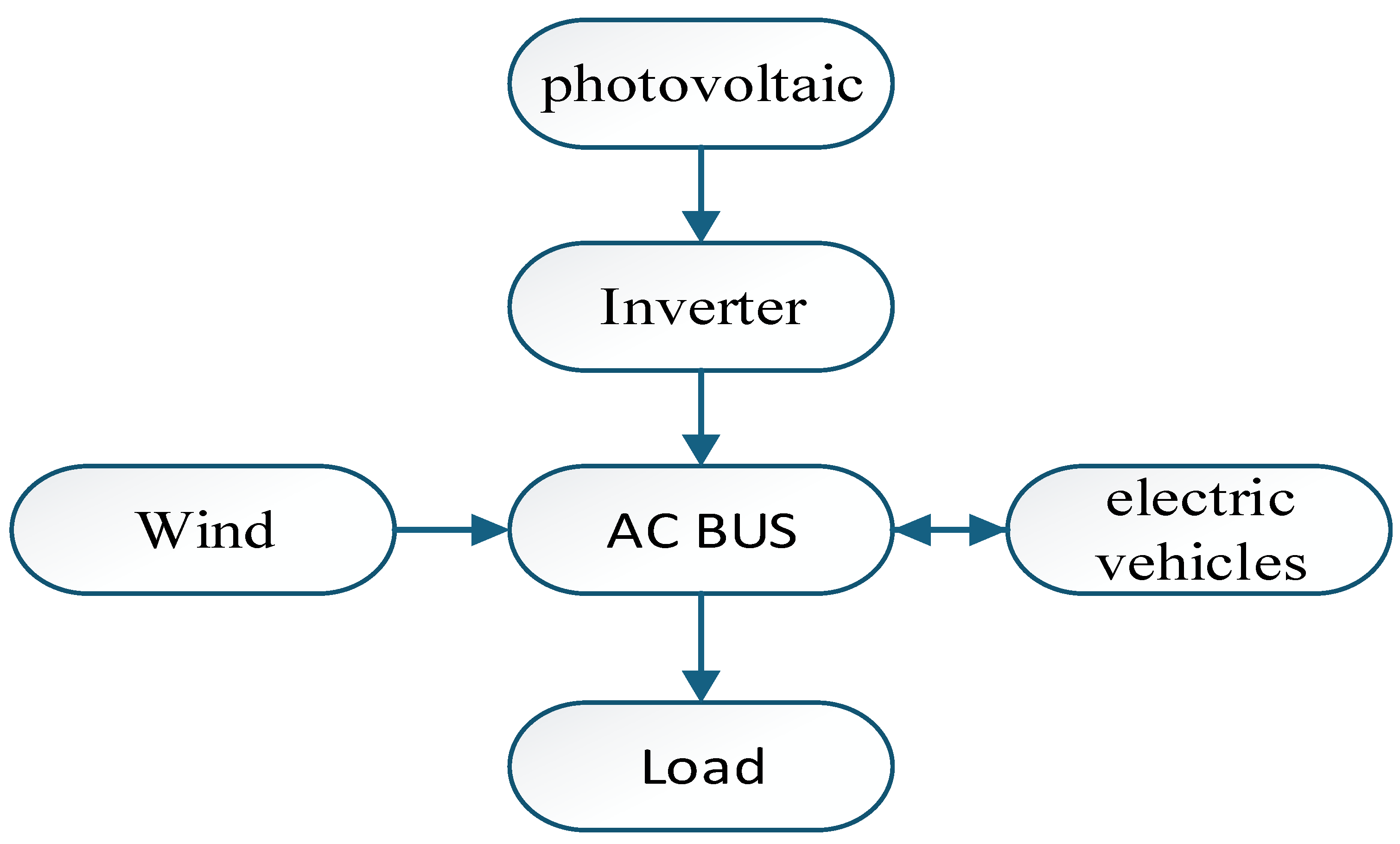
Figure 2 illustrates the suggested microgrid configuration connects all these components.
Figure 2 presents a conceptual representation of the proposed microgrid architecture, intended to illustrate the main system components and their functional interconnection. It is not intended to represent a detailed electrical schematic or protection-level network diagram.
The studied test system is a renewable-energy-based microgrid composed of a solar PV system, a wind generation unit, local loads, and an EV fleet connected to a common AC bus. The PV system is interfaced with the AC bus through a power electronic inverter, while the wind generation unit supplies power directly to the AC bus according to the available wind power. The local load is supplied from the total available renewable generation and the EV fleet when V2G support is required.
Under normal operating conditions, the generated power from the PV and wind units is delivered to the AC bus to meet the local load demand. If renewable generation exceeds the load demand, the surplus power can be absorbed by the EV fleet through charging, which helps reduce over-frequency conditions. Conversely, if the load demand exceeds the available renewable generation, or if renewable output suddenly decreases, EVs operate in V2G mode and inject active power into the AC bus to support the load and reduce the frequency drop. Therefore, the EV fleet acts as a bidirectional power-support unit between the source side and the load side.
- A.
Solar system model
The solar system is one of the most promising solutions to energy challenges created by the continued use of conventional sources. The solar system operates using the PV effect, which converts light energy into electric energy. The solar cell serves as a fundamental component of the solar system. By connecting a number of cells in series and parallel, the output power can be enhanced. Sun system efficiency is determined by irradiation and temperature. In addition, solar power fluctuates greatly depending on the environmental conditions. The modelling and parameters of a solar system are described in [
50].
The output of flat panel PV arrays is calculated using the solar global horizontal irradiation (GHI) resource. PV power output is calculated as follows:
where
Qp is the rated capacity of the PV array [kW],
Gt,stc is incident radiation under standard test conditions,
is solar radiation incident on the PV array at t hours of the year, and
is the PV derating factor [
51].
- B.
Wind model
A wind system includes a wind turbine, an electromechanical system, and a generator. Turbines transform kinetic energy into electrical energy. It captures the kinetic energy of wind and turns it into mechanical energy. The turbines are connected to the generator’s rotor, which transform s mechanical energy to electricity. There are several types of generators used in wind systems. It may be an asynchronous or synchronous generator. Asynchronous generators use doubly fed or induction generators with a squirrel cage design. The induction generator is popular because it requires little maintenance, is inexpensive, is efficient, produces high-quality power, and has a variable speed. To generate a magnetic field, the wind system requires reactive power. Such power can be achieved by attaching a parallel capacitor bank to the stator side of a wind generator [
52].
The output power of the wind turbine is as follows:
where
is mechanical output power of turbine [W].
is power coefficient of the turbine. λ is tip speed ratio.
β is pitch angle [deg].
is the air density [kg/m
3].
A is area [m
2] swept by turbine.
V is wind speed [m/s] [
53].
- C.
EVs model
EV batteries are built as a DC voltage source that varies with battery state of charge and is connected to the grid via a DC/AC converter. Commercially, EVs are charged at charging stations; hence, they are considered to be managed by the aggregator that manages EV charging. As a result, EV participation in frequency regulation can be controlled via an interactive charging management approach managed by the aggregator control center. In this work, EVs are represented at the fleet/aggregator level rather than as individually controlled vehicles. The aggregator coordinates the available EV fleet and determines the total charging or discharging contribution according to the measured frequency deviation and the available SOC. Therefore, the model focuses on the aggregated frequency support capability of EVs instead of the detailed behavior of each individual vehicle. The variations in EV battery energy, or SOC state, during the charging/discharging process can be represented as follows [
54]:
where Et is the rated energy capacity of EV. To make sure that EV is available for driving at any time, sufficient level of SOC is maintained during discharging period. control [
55].
In this study, the EV fleet is represented by a single aggregated equivalent model with a total energy capacity of 100 kWh and a maximum charging/discharging power of 20 kW. The initial SOC is set to 50%. Individual EV arrival/departure patterns and charging efficiencies are not explicitly considered, since the main objective is to evaluate the effect of aggregate V2G participation on microgrid frequency stability.
4. Proposed Methodology
The proposed methodology aims to evaluate the role of EVs in supporting frequency stability in a renewable-energy-based microgrid. First, the microgrid system consisting of solar photovoltaic generation, wind generation, local loads, and EVs is modeled in MATLAB. The EVs are integrated into the system using the V2G framework, allowing bidirectional power exchange between the EV batteries and the microgrid.
The proposed V2G control strategy is implemented as a fast primary frequency support mechanism. When the system frequency decreases due to load increase or renewable generation reduction, the EV fleet injects active power into the microgrid. Conversely, when the frequency increases due to load decrease or excess renewable generation, the EV fleet absorbs the surplus power through charging. The charging/discharging decision is governed by the measured frequency deviation, the PID controller parameters, the EV charging/discharging power limits, and the SOC constraints. Secondary frequency restoration and tertiary economic scheduling are not explicitly modeled in this study, as the main objective is to evaluate the short-term dynamic contribution of EVs to frequency stabilization.
Unlike droop-control methods, the proposed approach does not use predefined frequency–power droop characteristics. It is also different from VSG or inertia-emulation methods, since no virtual swing equation or synthetic inertia loop is implemented. In addition, the method is not based on conventional demand-side regulation such as load curtailment or load shifting. Instead, it uses EVs as distributed storage units to provide PID-based V2G active power support through charging and discharging according to the frequency deviation.
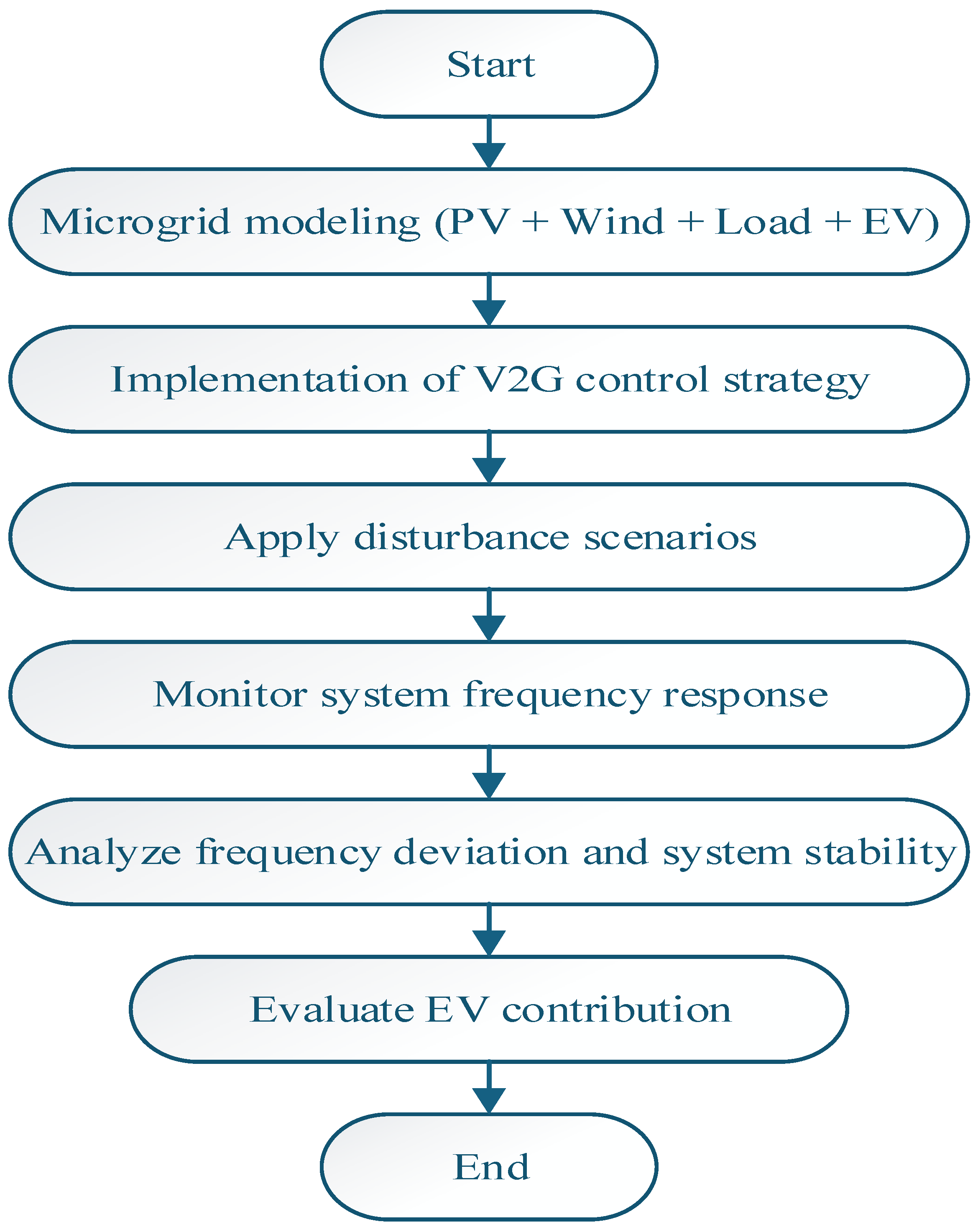
Next, several disturbance scenarios are introduced, including sudden load changes and fluctuations in renewable generation. The system frequency response is then monitored to evaluate the dynamic performance of the microgrid. Finally, the impact of EV participation on mitigating frequency deviations and improving system stability is analyzed and compared with the case without EV support.
Figure 3 illustrates the flowchart of proposed methodology.
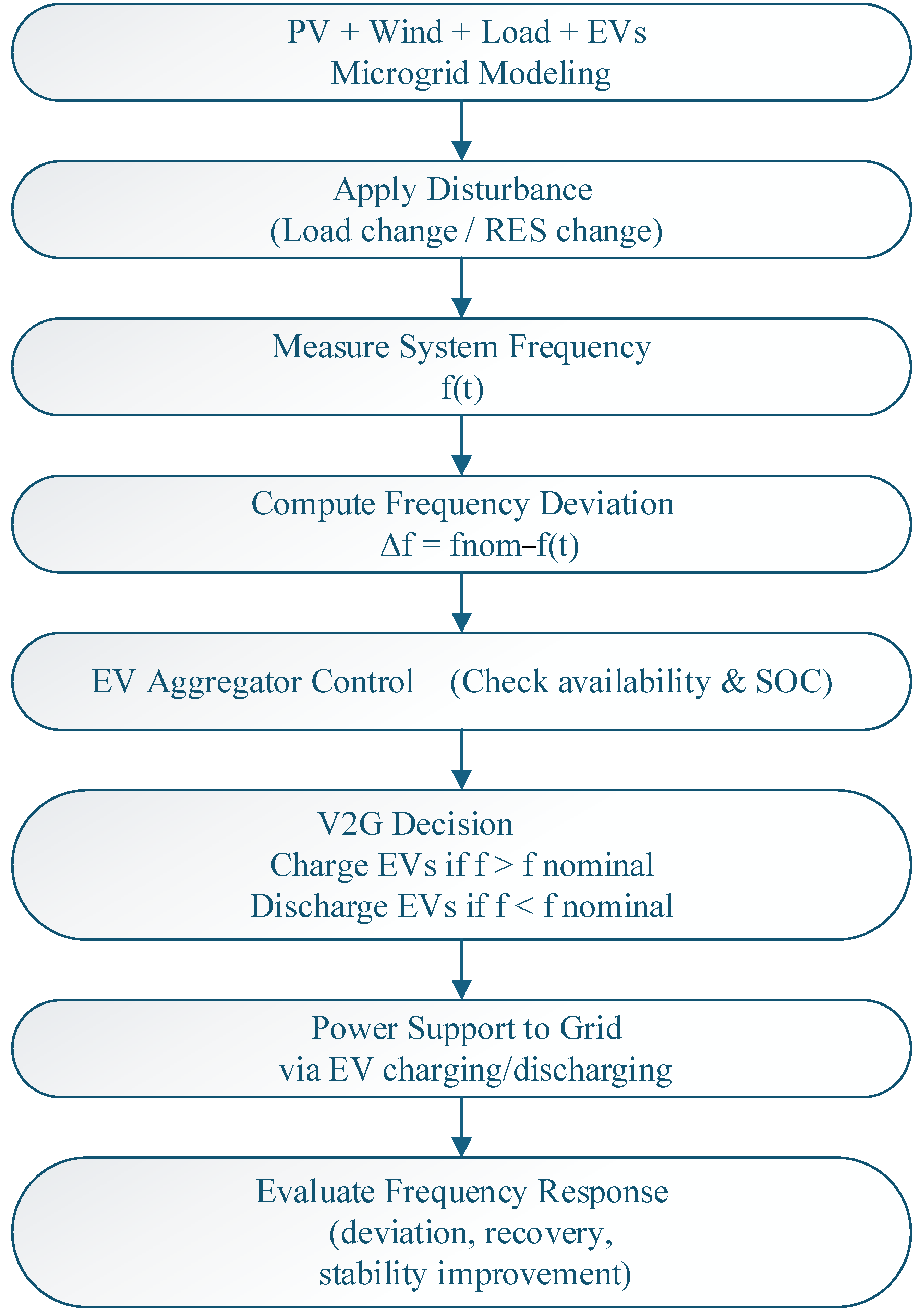
Figure 4 presents the workflow of the proposed model. First, the microgrid is modeled by integrating PV generation, wind generation, local loads, and the EV fleet. Then, disturbance scenarios such as load variations or renewable generation fluctuations are applied. The system frequency is continuously monitored and compared with the nominal value. Based on the detected frequency deviation, the EV aggregator determines the required V2G action, i.e., charging during over-frequency conditions or discharging during under-frequency conditions, while respecting EV availability and SOC constraints. Finally, the dynamic frequency response of the microgrid is evaluated to assess the effectiveness of the proposed control strategy.
Table 2 summarizes the key parameters of the studied microgrid system used in the simulation, and the specifications of the EV battery. The provided values are used to evaluate the performance of the proposed frequency regulation strategy based on EVs under different disturbance scenarios.
The PID controller regulates system frequency using three gains. The proportional gain (Kp_freq) provides a fast response to instantaneous frequency deviations. The integral gain (Ki_freq) eliminates steady-state error by accumulating past deviations. The derivative gain (Kd_freq) improves stability by damping oscillations and reducing overshoot. The term Integral_error_freq represents the accumulated frequency error used in the integral action. Proper tuning of these parameters ensures stable and accurate frequency control.
The PID controller parameters were selected using an iterative simulation-based tuning procedure in MATLAB. Different combinations of proportional, integral, and derivative gains were tested under the considered load and renewable-generation disturbance scenarios. The final values were chosen to reduce the maximum frequency deviation, minimize oscillations and overshoot, improve the settling time, and maintain the system frequency within the acceptable operating range of (50\pm 0.5) Hz. Therefore, the adopted tuning approach is a time-domain simulation-based tuning method rather than an optimization-based PID design.
The objective of the present model is to evaluate the influence of EV participation on microgrid frequency stability. Therefore, a simplified control-oriented frequency representation is adopted rather than a detailed electromechanical model. The frequency error is defined as
where f_ref = 50 Hz and (k_f = 0.001) Hz/kW. A PID controller with (K_p = 0.5), (K_i = 0.1), and (K_d = 0.2) is used to correct the frequency deviation. Equivalent inertia, damping, system base power, and detailed converter dynamics are not explicitly modeled, since the main focus of this work is the comparative assessment of EV participation levels.
The same PID gains are maintained for all EV participation scenarios in order to isolate the effect of the available V2G support on frequency stability. The selected parameters are therefore intended for the operating conditions considered in this study and are not claimed to represent a globally optimal or robust controller design. Detailed battery degradation, converter deadband effects, and broader nonlinear operating conditions may require adaptive or robust control techniques and are considered a subject for future investigation.
The PID controller is implemented in discrete form using the frequency deviation as its main input, with Kp = 0.5, Ki = 0.1, and Kd = 0.2. The short-term simulation uses a 1 s sampling interval. No explicit deadband, derivative filtering, PID-output saturation, or anti-windup mechanism is included in the simplified model. The same controller parameters are maintained for all EV participation scenarios because the primary objective is to evaluate the effect of EV participation rather than to optimize the controller.
To provide additional mathematical validation of the implemented discrete-time controller, the closed-loop poles were evaluated using the adopted PID parameters (K_p = 0.5), (K_i = 0.1), and (K_d = 0.2). The resulting poles are (z1 = −0.3303) and (z2,3 = 0.7652 ± j0.1415), with a maximum magnitude of approximately 0.7781. Since all poles lie inside the unit circle, the simplified discrete-time closed-loop controller is locally stable. The EV participation level changes the available V2G disturbance-compensation magnitude but does not modify the homogeneous closed-loop dynamics; therefore, the pole locations remain unchanged for the investigated 10%, 50%, 90%, and 100% participation levels. The present stability assessment applies to the adopted aggregated control-oriented model and does not represent detailed converter-level stability analysis.
In the adopted formulation, the EV participation factor affects the available disturbance-compensation capability rather than the characteristic dynamics of the closed-loop controller. Therefore, the stability assessment is intentionally performed for the common closed-loop configuration used throughout all participation scenarios. The role of varying EV participation is subsequently evaluated through the corresponding time-domain frequency responses, allowing the effect of available V2G support to be examined independently of controller retuning. Accordingly, the presented pole analysis is intended to verify the local stability of the adopted control-oriented model, while a broader robustness assessment involving higher-fidelity converter and nonlinear control dynamics lies beyond the scope of the present study.
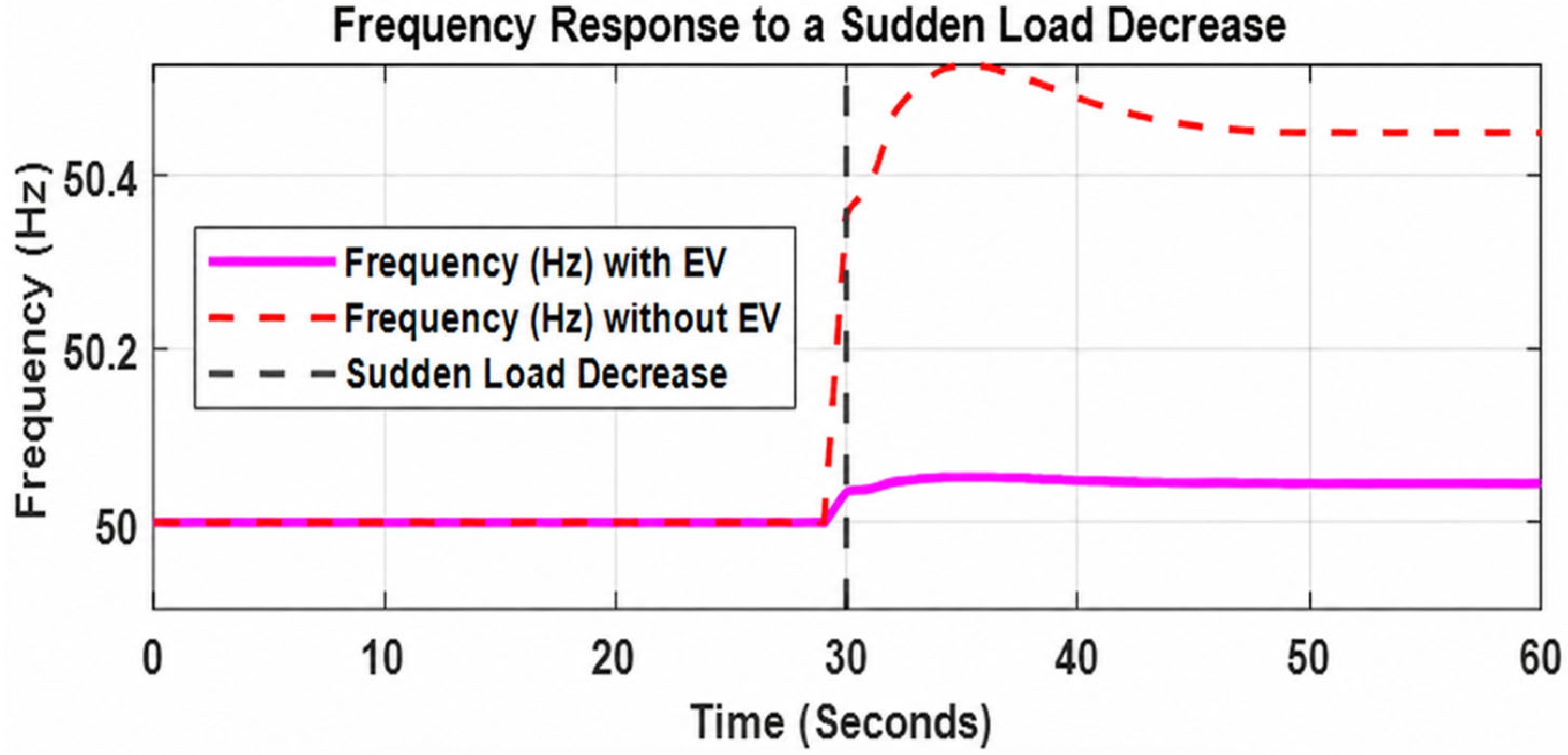
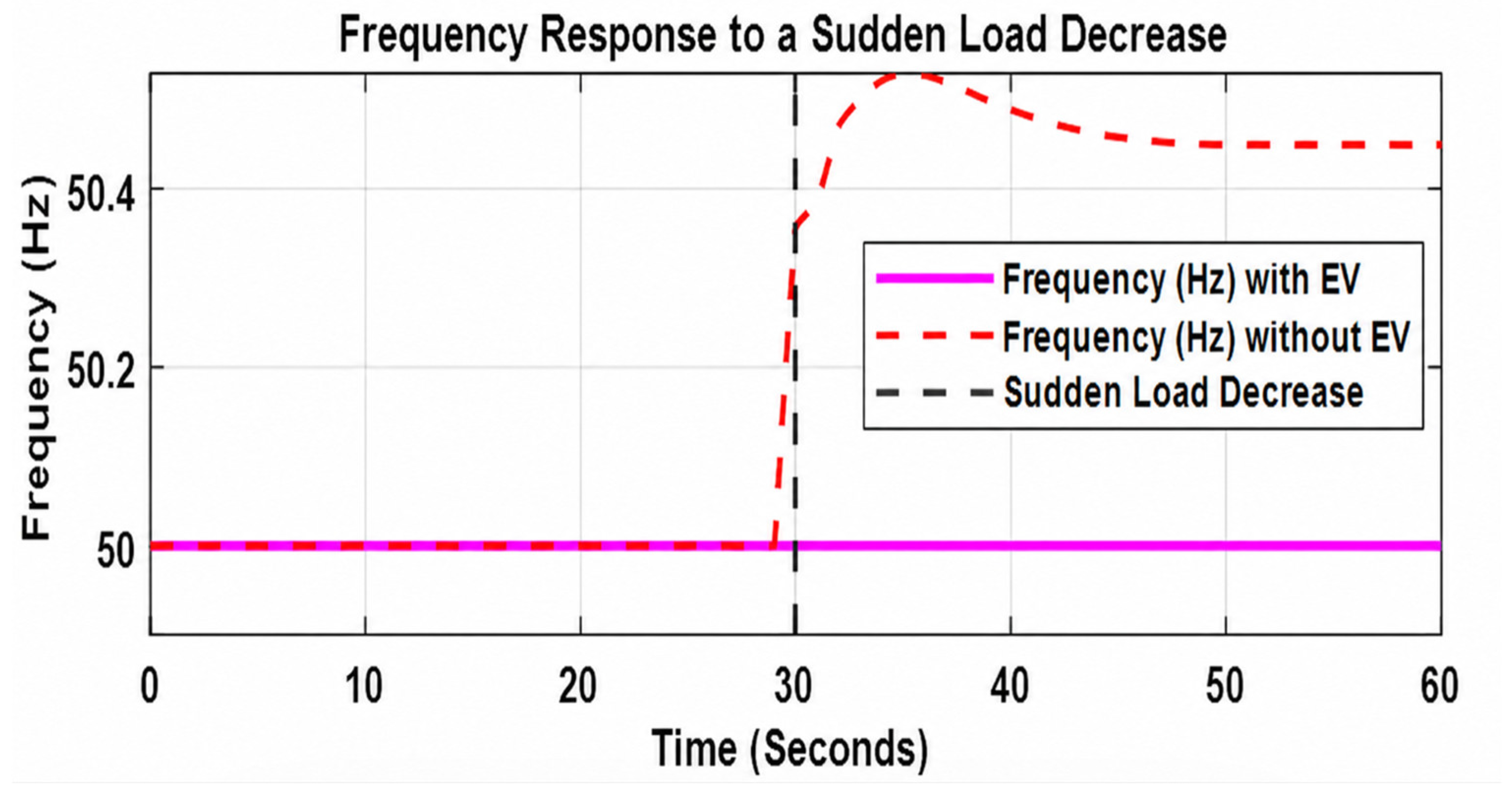
To clearly evaluate the effectiveness of the frequency regulation strategy based on EVs, a quantitative comparison was made between the system’s performance with and without the participation of EVs. In the absence of EV frequency support, the steady-state frequency deviation following the disturbance is approximately 0.50 Hz. With V2G participation, this deviation is progressively reduced to approximately 0.45 Hz, 0.25 Hz, 0.05 Hz, and 0 Hz for EV participation levels of 10%, 50%, 90%, and 100%, respectively.
In the absence of EV support, the steady-state frequency deviation following the disturbance is approximately 0.50 Hz. With V2G participation, this deviation is progressively reduced to approximately 0.45 Hz, 0.25 Hz, 0.05 Hz, and 0 Hz for EV participation levels of 10%, 50%, 90%, and 100%, respectively. Thus, increasing EV participation progressively drives the system frequency toward the nominal value of 50 Hz, with a short response time to adapt to changes, indicating a significant improvement in the time-domain frequency response of the microgrid under the investigated disturbance scenarios. These results demonstrate the important role that EVs can play in improving frequency regulation in renewable energy-based microgrids.
5. Results and Discussion
To evaluate the proposed V2G frequency support strategy, the microgrid frequency response is analyzed under different active-power disturbance conditions. The system response without EV frequency support is compared with the response obtained at different EV participation levels.
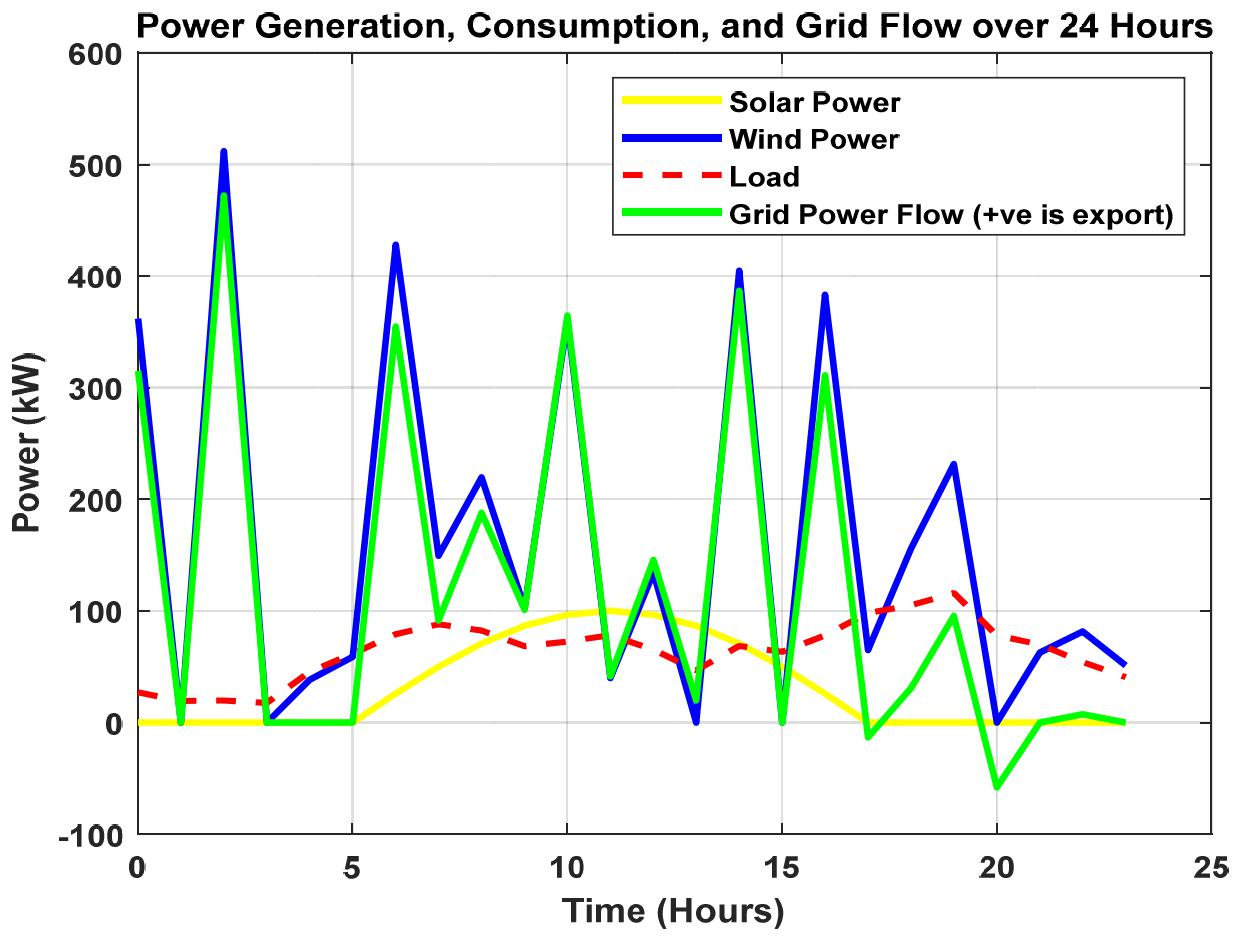
Figure 5 shows the daily power profile of the studied microgrid, including PV generation, wind generation, local load demand, and the resulting grid power flow. It can be observed that during several periods, the combined renewable generation exceeds the load demand. In these periods, the microgrid has surplus power, which may lead to an over-frequency condition if the surplus is not absorbed or exported. Therefore, EVs can operate as controllable loads by charging and absorbing the excess renewable power.
Variations in renewable generation and load demand may create temporary active-power imbalances in the microgrid. During periods of low demand and high renewable generation, EVs can absorb surplus power through charging. Conversely, during periods of increased load demand or a sudden reduction in renewable generation, EVs can inject active power into the microgrid through V2G operation.
An under-frequency condition occurs when the load demand exceeds the available generation or when renewable generation suddenly decreases. In such deficit conditions, EVs operate in V2G mode and inject active power into the microgrid to reduce the frequency drop. Therefore,
Figure 5 is used to illustrate the daily power balance, while the under-frequency response is evaluated separately through the disturbance scenarios presented in the following frequency response cases.
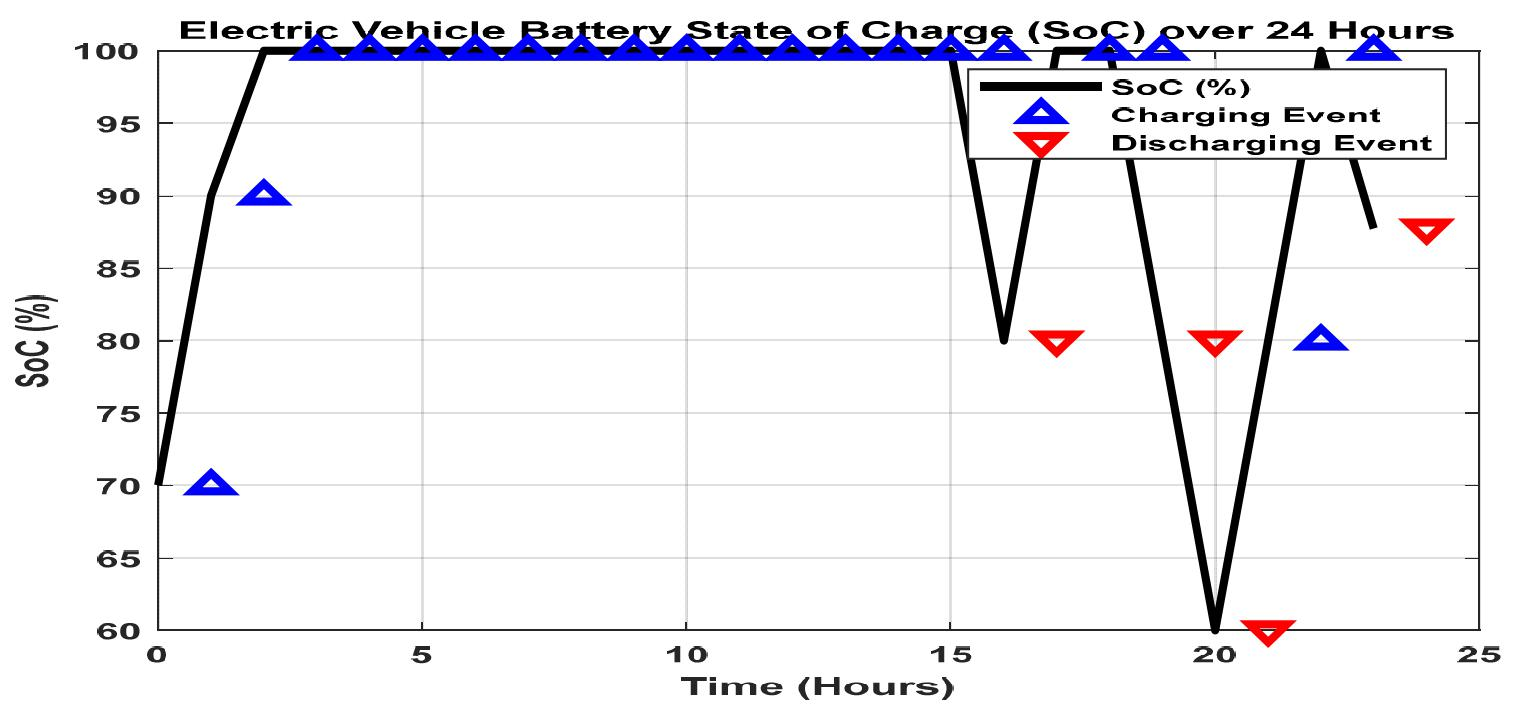
Figure 6 illustrates the charging and discharging times for EVs based on an analysis of the network in terms of loads, production, and sudden changes. The charging and discharging times for electric cars vary from day to day depending on weather conditions and loads.
The following figures compare the microgrid frequency response without EV frequency support and with V2G support at different EV participation levels. Without EV support, the imposed active-power imbalance produces a larger frequency excursion. When EVs participate in frequency regulation, coordinated charging or discharging compensates for part of the power imbalance, thereby reducing the frequency deviation and driving the system frequency closer to its nominal value.
In the following cases1 and 2, the percentages 10%, 50%, 90%, and 100% represent different EV participation levels, defined by the available aggregate V2G capacity to compensate for the corresponding fraction of the imposed active-power disturbance. These participation levels are varied to evaluate the influence of increasing EV participation on the magnitude of frequency deviation and the time-domain frequency-regulation performance of the microgrid.
For clarity, the sign convention adopted throughout this section is that an active-power surplus (generation > load) produces a positive frequency deviation, whereas an active-power deficit (load > generation) produces a negative frequency deviation.
In this case, a sudden change in the electrical grid may occur due to a sudden drop in loads or a sudden increase in generated power, and thus this effect appears on the frequency where the frequency rises and the grid becomes unstable.
Figure 7,
Figure 8,
Figure 9 and
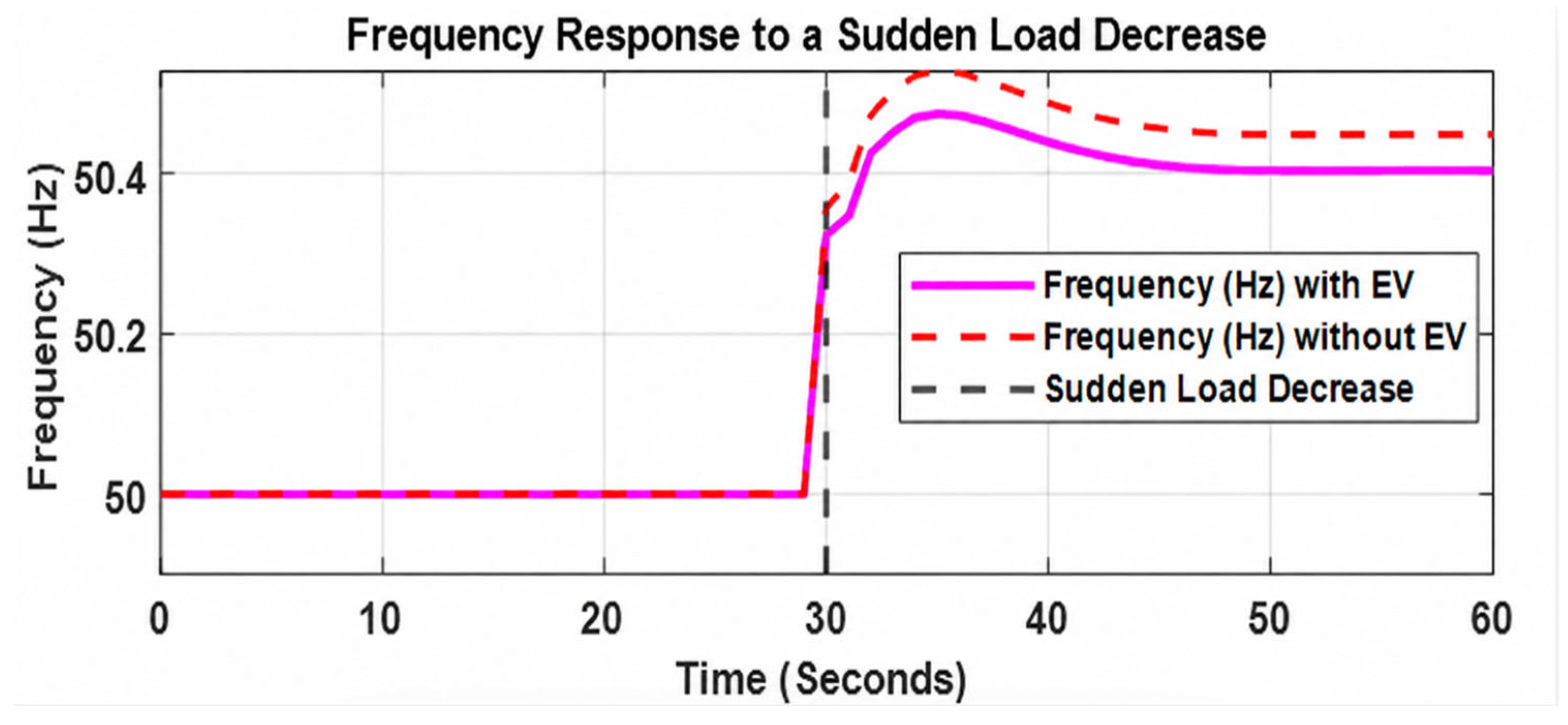
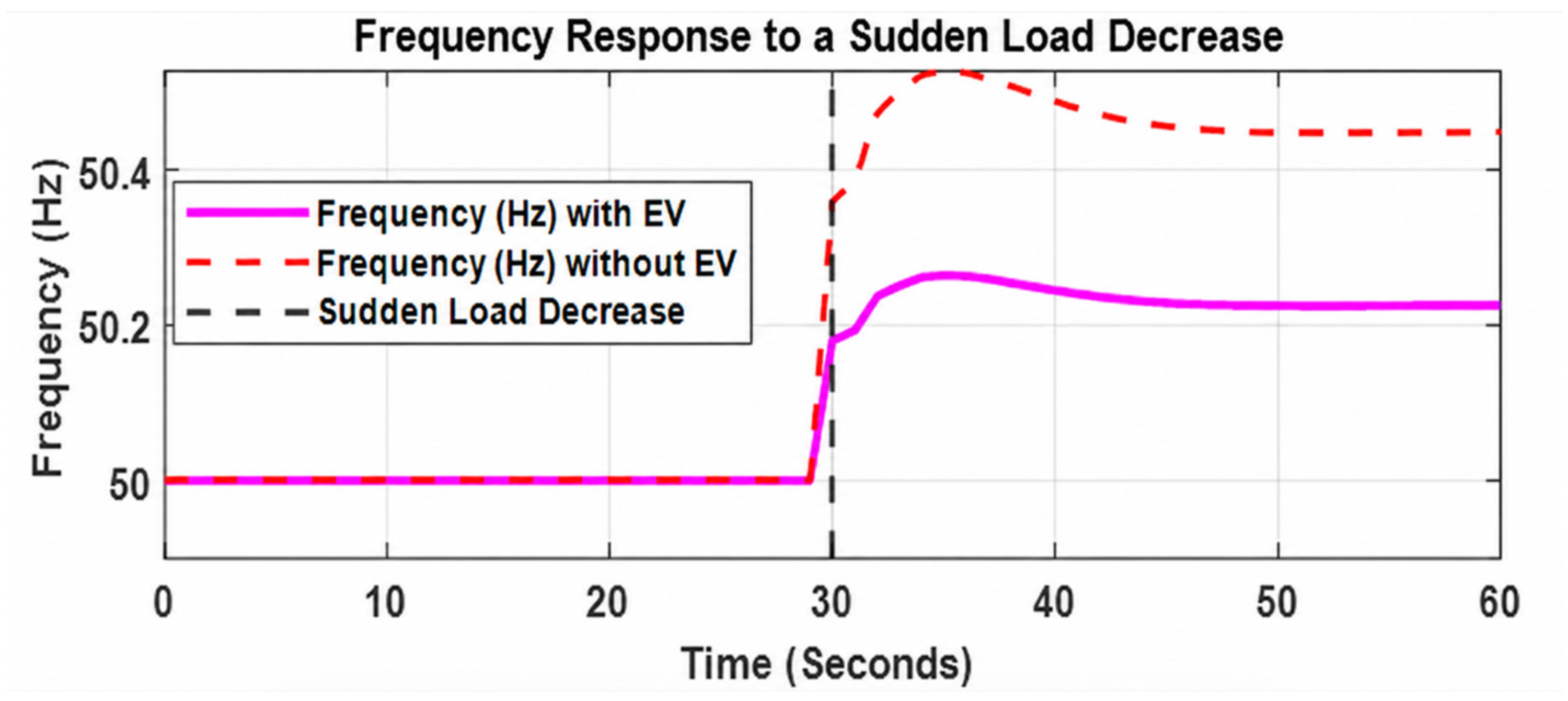
Figure 10 compare the frequency response for EV participation levels of 10%, 50%, 90%, and 100% under a sudden load decrease or generation increase. At the 10% participation level, the EV fleet absorbs only a limited fraction of the surplus power, resulting in a relatively small reduction in the frequency deviation. Increasing the participation to 50% produces a more pronounced mitigation, while at 90% the frequency excursion is substantially reduced and the response approaches the nominal frequency. The 100% participation case provides the highest level of compensation for the imposed disturbance. Overall, the comparison demonstrates a progressive reduction in the over-frequency deviation as the available V2G participation increases.
Figure 7.
Frequency response for a 10% EV participation level.
Figure 7.
Frequency response for a 10% EV participation level.
Figure 8.
Frequency response for a 50% EV participation level.
Figure 8.
Frequency response for a 50% EV participation level.
Figure 9.
Frequency response for a 90% EV participation level.
Figure 9.
Frequency response for a 90% EV participation level.
Figure 10.
Frequency response for a 100% EV participation level.
Figure 10.
Frequency response for a 100% EV participation level.
The EV participation level is set to compensate for 10%, 50%, 90%, and 100% of the disturbance active-power magnitude.
- B.
Case 2: Sudden Load Increase/Generation Decrease
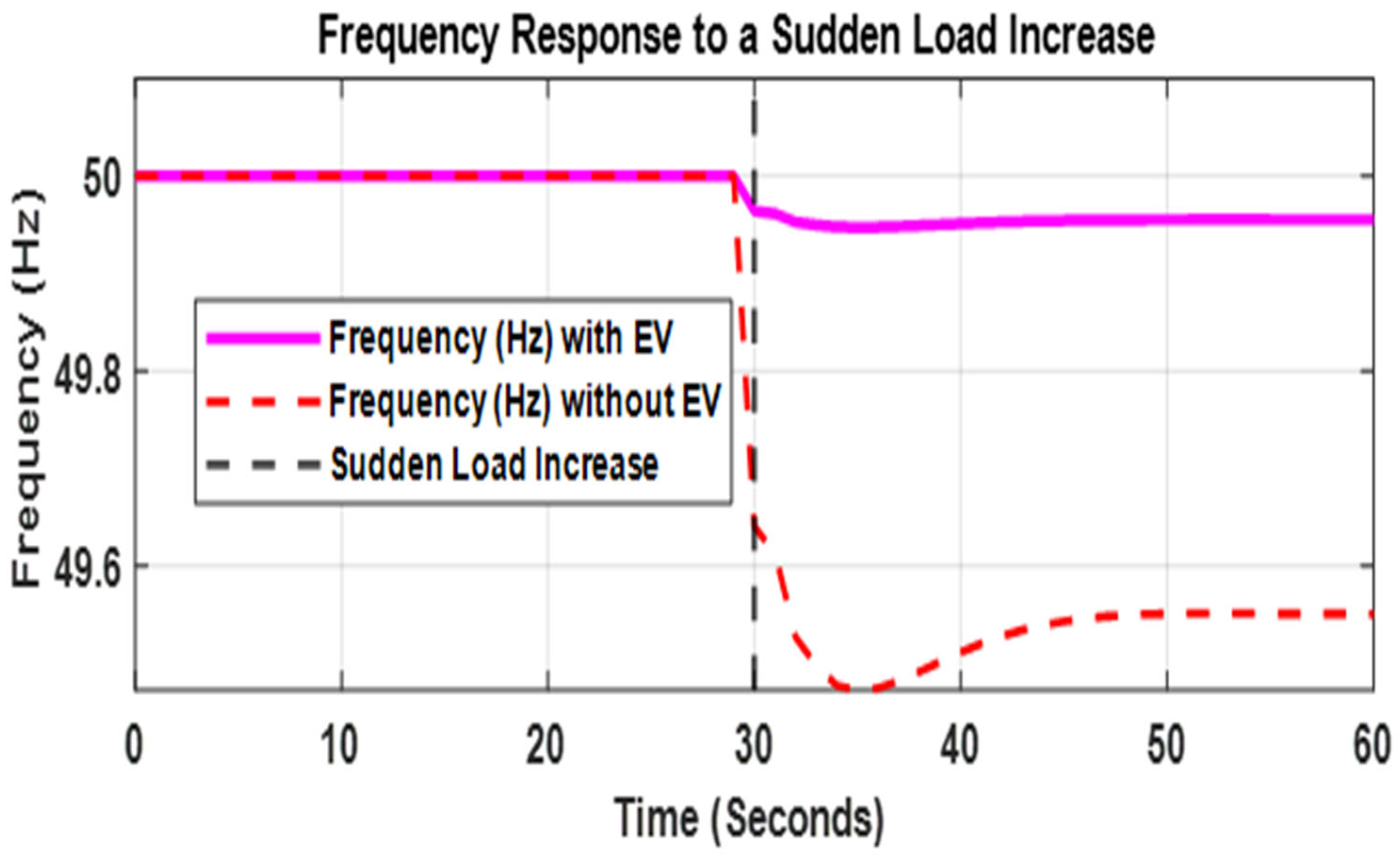
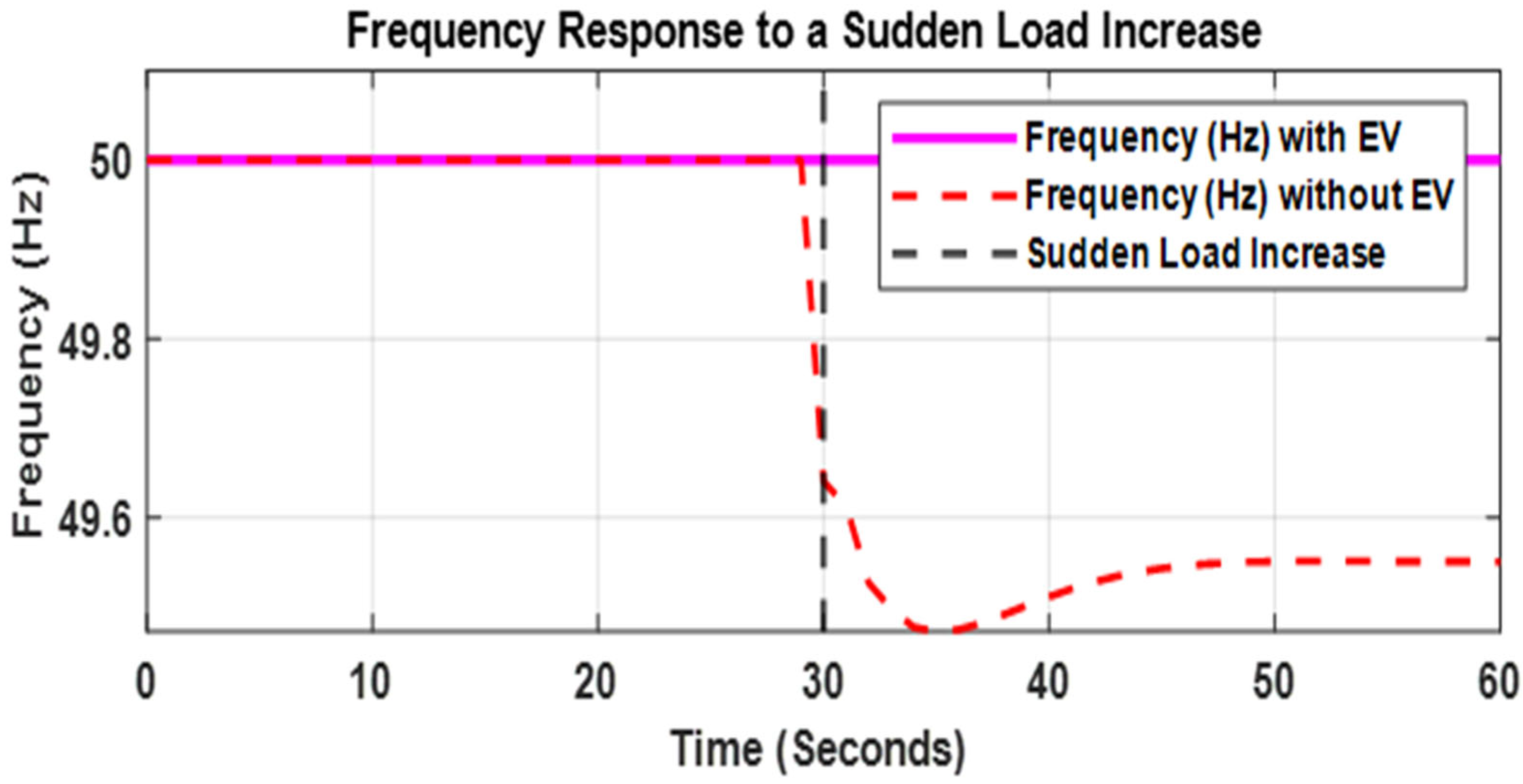
In this case, a sudden change in the electrical grid may occur due to a sudden increase in loads or a sudden decrease in generated power, and thus this effect appears on the frequency where the frequency decreases and the grid becomes unstable.
Figure 11,
Figure 12,
Figure 13 and
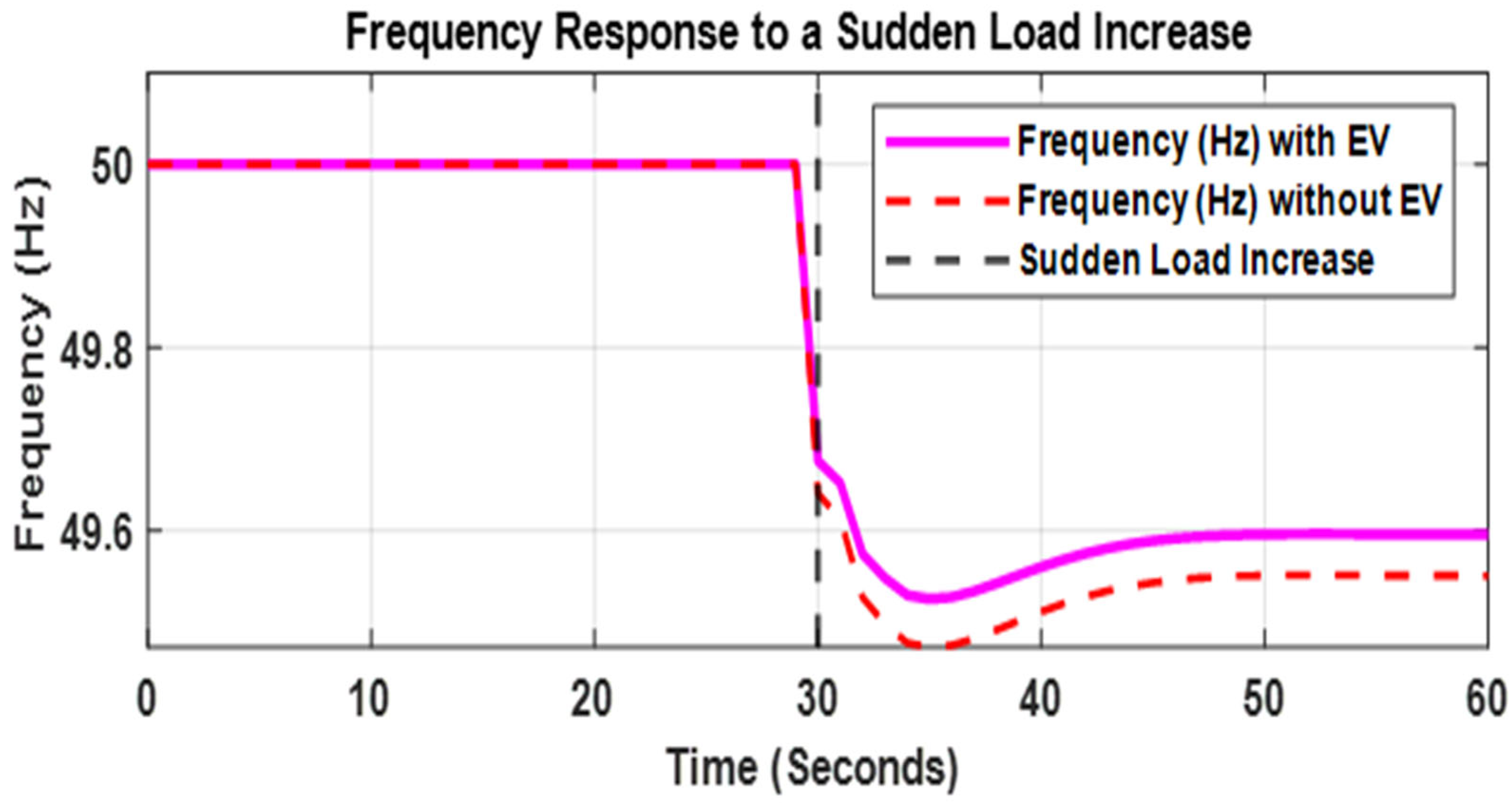
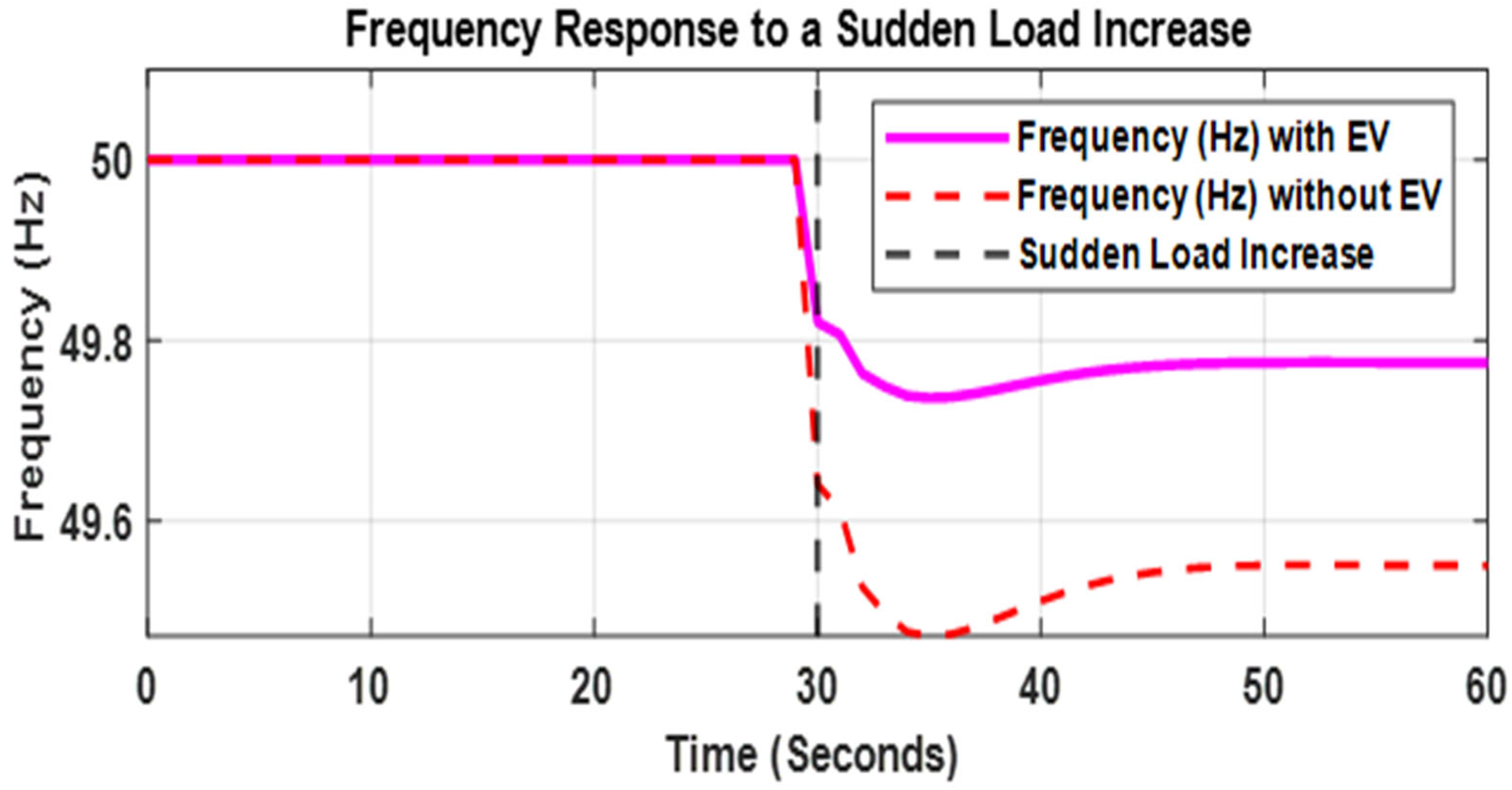
Figure 14 present the corresponding comparison for a sudden load increase or generation decrease. Under this condition, the EV fleet operates in V2G discharging mode to provide active-power support to the microgrid. At low EV participation, the reduction in the under-frequency deviation is limited. As the participation level increases from 10% to 50% and 90%,100%, the frequency excursion is progressively attenuated. The 100% participation case provides the greatest compensation for the imposed active-power deficit. These results consistently demonstrate that increasing the available EV participation enhances the capability of the microgrid to mitigate frequency deviations following power-imbalance disturbances.
The EV participation level is set to compensate for 10% to 50% and 90%, 100% of the disturbance active-power magnitude.
Figure 11.
Frequency response for a 10% EV participation level.
Figure 11.
Frequency response for a 10% EV participation level.
Figure 12.
Frequency response for a 50% EV participation level.
Figure 12.
Frequency response for a 50% EV participation level.
Figure 13.
Frequency response for a 90% EV participation level.
Figure 13.
Frequency response for a 90% EV participation level.
Figure 14.
Frequency response for a 100% EV participation level.
Figure 14.
Frequency response for a 100% EV participation level.
The advantage of using EVs to maintain grid stability lies in their low cost and the fact that they do not harm the environment, as they do not produce harmful emissions. Additionally, EVs have a high response to changes in the grid and a short response time compared to generators used for this purpose. As a result, EVs reduce the grid’s oscillation time and accelerate its return to a stable state.
- C.
Comparison with alternative frequency support methods
The literature has suggested various methods to enhance frequency stability in microgrids, including traditional droop control and battery energy storage systems. Conventional droop control is widely adopted because of its relatively simple implementation and decentralized structure. However, its transient frequency-regulation capability may become suboptimal under high participation of stochastic renewable-energy sources, particularly when the available system inertia is limited. Centralized battery energy storage systems can provide rapid active-power support and improve frequency stability; nevertheless, their large-scale deployment may involve substantial capital expenditure, dedicated power-conversion infrastructure, and additional operational and maintenance requirements.
EVs that use the V2G concept, on the other hand, offer a flexible and decentralized way to control frequency. EV batteries can quickly fix power imbalances by either taking in or sending out power from the microgrid. This feature lets EV fleets work as a distributed energy storage system, which makes microgrids that use renewable energy more stable over time.
- D.
Comparison with previous studies
Previous studies have explored various approaches to frequency regulation in microgrids using different control strategies and system configurations. The work by [
56] proposed an EMS integrating photovoltaic, battery storage, and EVs, where EVs contribute to frequency regulation through a coordinated V2G-based control scheme. While this approach enhances energy efficiency and system coordination, it mainly focuses on optimal energy allocation rather than analyzing the dynamic impact of EV participation levels. In contrast, Ref. [
57] introduced a demand response -based strategy that controls frequency by adjusting controllable loads instead of using energy storage systems. Although this method reduces dependency on batteries and operational cost, it relies heavily on communication infrastructure and lacks the flexibility offered by distributed storage such as EVs. Furthermore, Ref. [
58] investigated the use of EVs with DC fast-charging architecture to enable bidirectional power flow (G2V/V2G) for frequency regulation. This study demonstrated the effectiveness of EVs as distributed storage; however, it mainly focuses on charging infrastructure and control implementation rather than system-level performance analysis.
In comparison, the proposed work presents a comprehensive investigation of EV-based frequency regulation in a renewable-energy microgrid integrating both PV and wind sources. Unlike previous studies, it evaluates the impact of different EV penetration levels (10–100%) on system dynamic performance. The results demonstrate that increasing EV participation significantly reduces frequency deviation and improves system stability, providing a more practical and scalable insight into the role of EVs in future microgrids.
Table 3 Comparison between related microgrid-based EV integration studies and the proposed work, highlighting the novelty of analyzing EV penetration levels and their dynamic impact on frequency stability in a renewable-based microgrid case study.
To clearly distinguish the present work from existing V2G-based frequency-control studies, it should be emphasized that the contribution of this study does not lie in proposing a new PID control structure. Instead, the proposed methodology is designed as a controlled participation-sensitivity framework for quantifying the dynamic contribution of aggregated EVs to microgrid frequency support. The PID structure and gains are maintained unchanged for all investigated scenarios, while the available aggregate V2G capacity is systematically varied. Consequently, the effect of EV participation can be evaluated independently of controller retuning or optimization.
This approach differs from Refs. [
39,
43], which primarily focus on advanced or optimized control strategies, including fractional-order fuzzy control, adaptive virtual inertia, cascaded load-frequency controllers, probabilistic/real-time frequency regulation, and droop-based EV charging control. It also differs from Refs. [
56,
58], which mainly emphasize converter-level V2G implementation, optimized frequency control in complex microgrid architectures, or DC fast-charging-based V2G operation. In the present study, EV participation is explicitly defined according to the available aggregate V2G capacity required to compensate for 10%, 50%, 90%, and 100% of an imposed active-power disturbance. Both over-frequency and under-frequency events resulting from renewable-generation and load variations are investigated under the same controller parameters and EV SOC/power constraints. Therefore, the resulting frequency responses provide a direct quantitative measure of the incremental frequency-stability benefit obtained from increasing EV participation.
6. Conclusions
In this paper, EVs have been integrated into the planned microgrid to regulate frequency. Energy and frequency in the microgrid fluctuate due to the intermittent nature of solar and wind power systems. EVs using V2G technology achieve power regulation. The rapid response of V2G technology reduces energy fluctuations and stabilizes system frequency, as it has a fast response to changes occurring in the grid. When the penetration of EVs is strong, the frequency is more stable around 50 Hz compared to when the penetration of EVs is low. The energy generated from renewable sources was simulated over a 24 h period, illustrating the charging and discharging times for EVs according to the disturbances occurring in the grid. This was done by simulating sudden changes in solar energy production in a small grid with a variable fleet of EVs capable of providing V2G service. Scenarios with different sizes of household loads on the grid were modeled, assuming a disturbance at a specific time to illustrate the response of those cars, as shown in the results section. It was discovered that in an island grid with limited spinning reserve, electric vehicles can increase the stability of the grid. This research proposes a correct technique for managing the response of EVs to frequency changes in a microgrid that includes renewable energy sources. With this technique, the charging and discharging of EVs will follow a specific pattern, increasing the energy reserve in the microgrid.
7. Limitation and Future Work
In this study, the variability of renewable energy sources and EV availability is represented using deterministic disturbance scenarios in order to clearly analyze the dynamic response of the microgrid. While this approach provides useful insights into the effectiveness of EV-based frequency support, real-world microgrid operation may involve stochastic variations in renewable generation and EV charging behavior. Another limitation of the present study is the use of a simplified control-oriented frequency model. Equivalent system inertia, load damping, grid-forming converter dynamics, and detailed converter inner-control loops are not explicitly represented.
Future work may incorporate stochastic modeling techniques to represent the random nature of solar irradiation, wind speed, and EV arrival/departure times. Such an approach would enable a more comprehensive evaluation of the proposed control strategy under realistic operating conditions. Future work will extend the model to include a physics-based isolated-microgrid frequency formulation, including equivalent inertia and damping parameters, frequency-dependent loads, and detailed grid-forming and V2G converter dynamics.
The adopted transient model also uses a 1 s sampling interval and does not explicitly include frequency deadband, PID-output saturation, or anti-windup mechanisms; these features will be considered in future extensions of the control model.




 ,
,