2.1. Construction and Optimization of the Combustion Mechanism
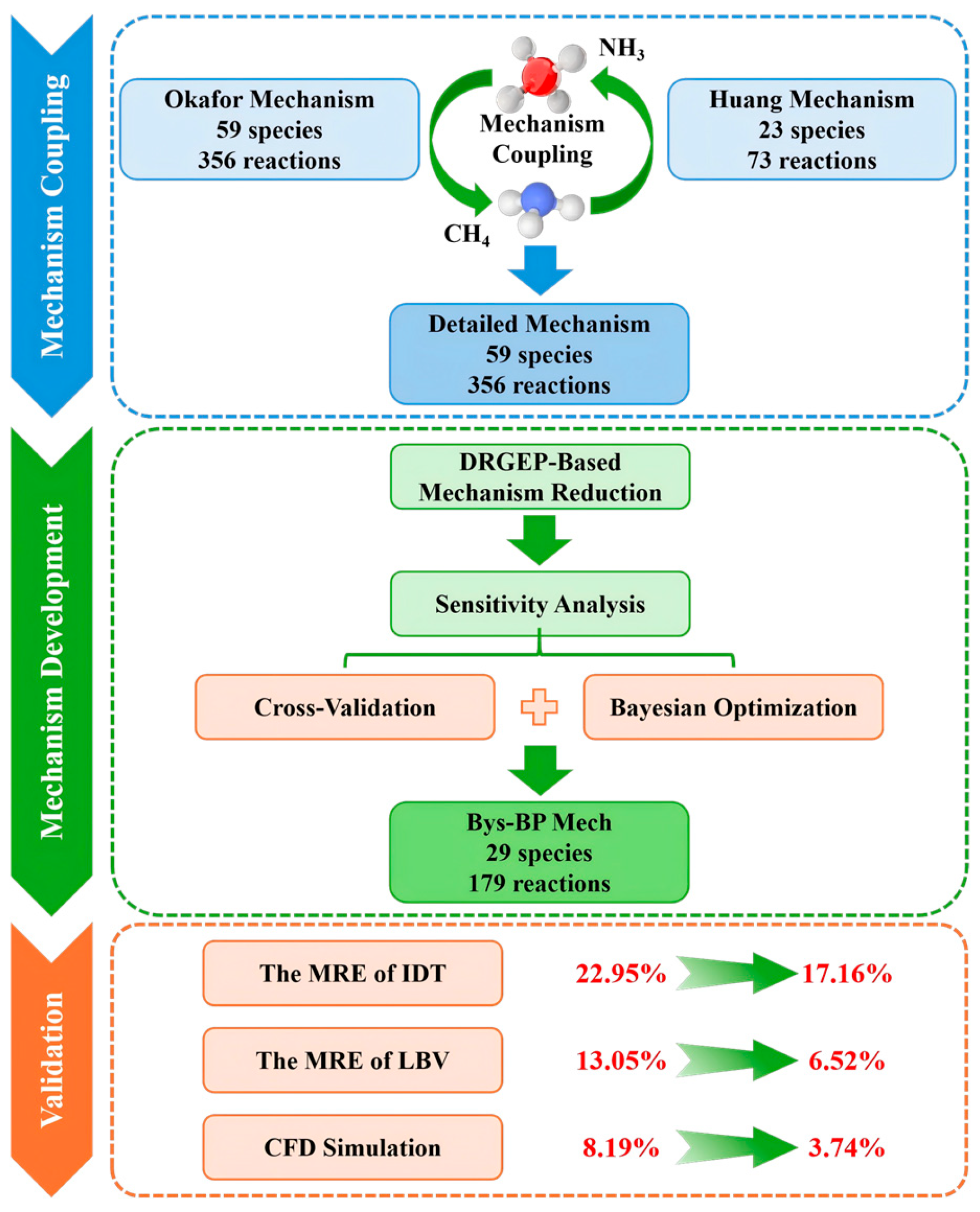
The overall methodology adopted in this study is shown in
Figure 1, mainly including mechanism coupling, reduction, optimization, and validation processes. The classical combustion reaction models Okafor [
6], Huang [
18], Wang [
24], and GRI3.0 [
25], which are applicable over wide operating ranges, were selected in this study. These mechanisms exhibit high prediction accuracy for LBV and IDT and can serve as reliable benchmarks for subsequent mechanism coupling and data-driven optimization. IDT and LBV simulations were performed using ANSYS Chemkin 2021 R2 and compared with relevant experimental data. Finally, the Huang and Okafor mechanisms were selected for coupling.
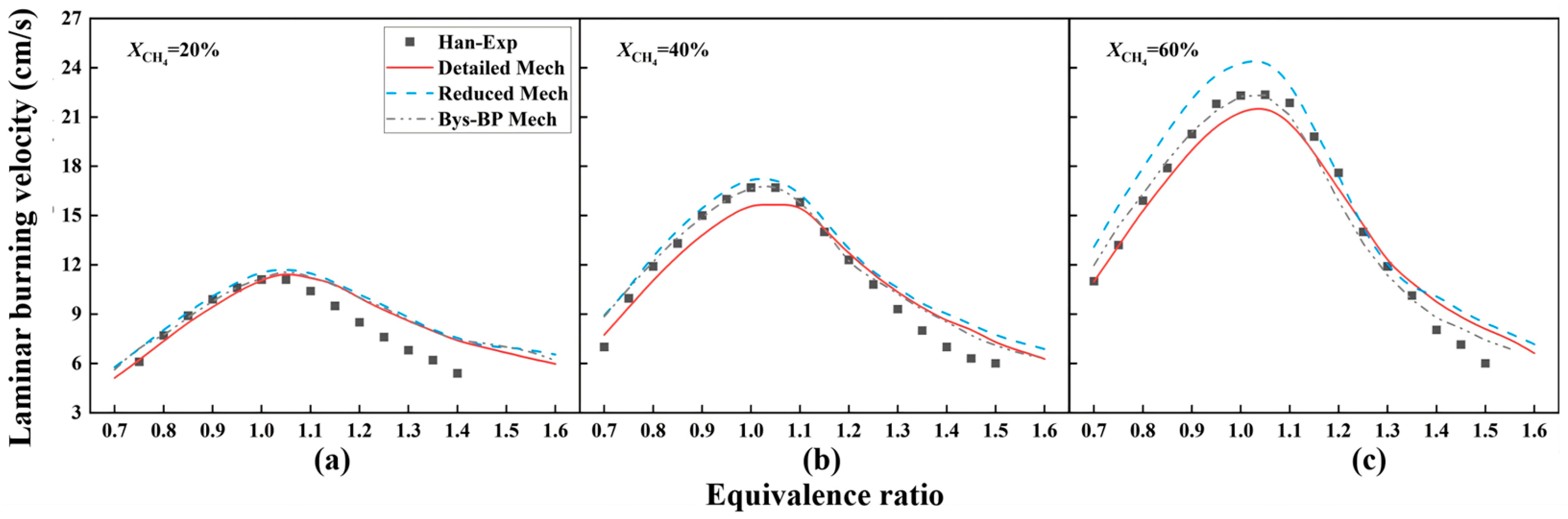
The LBV was predicted using the laminar premixed reactor model and compared with the experimental values reported by Han et al. [
26]. The experimental conditions of Han et al. were an equivalence ratio of
Φ 0.7
1.6, a CH
4 blending ratio of
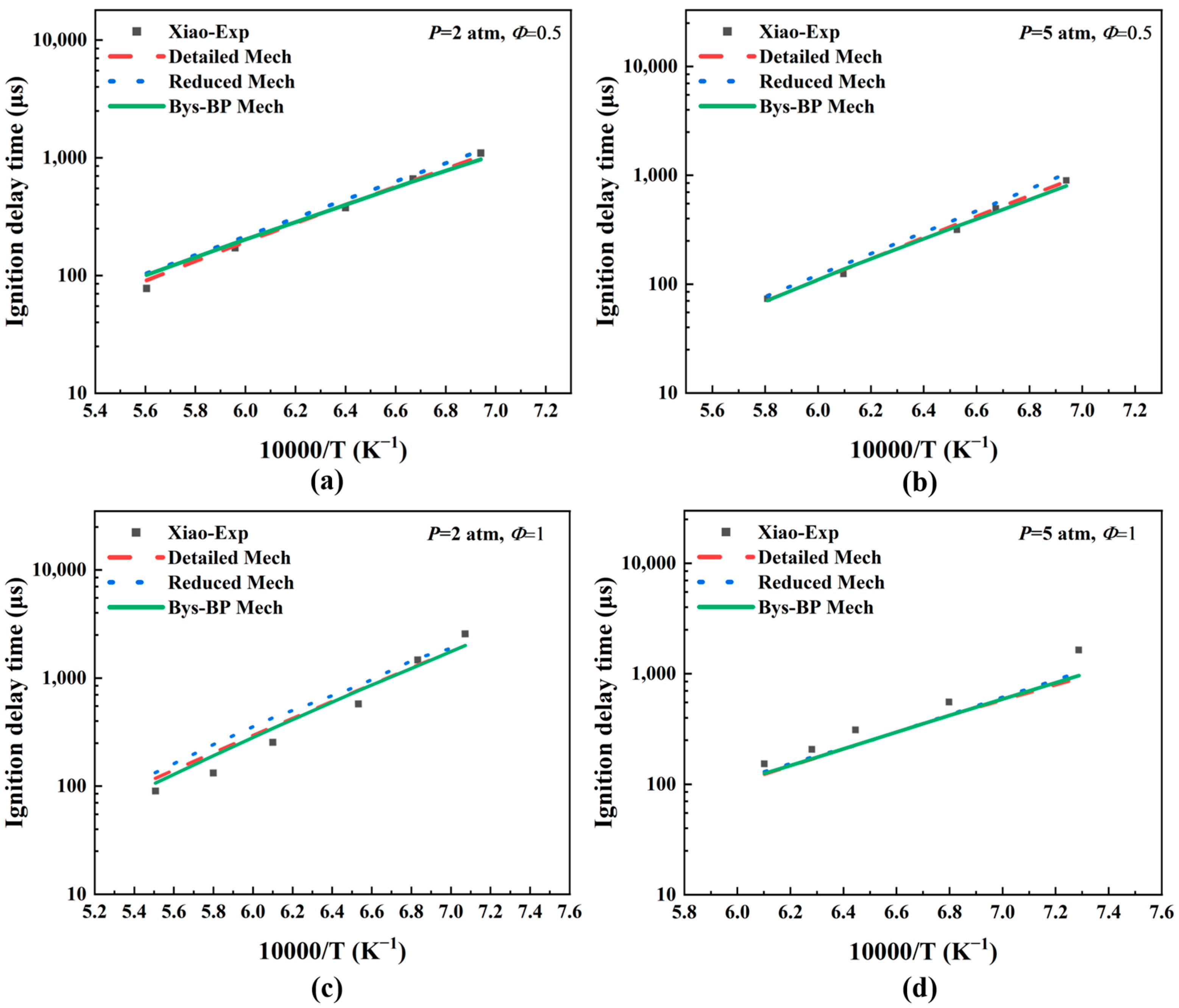
, a burner ambient temperature of 413 K, a fuel inlet temperature of 298 K, and a pressure of 1 atm. The simulated IDT values were obtained using the homogeneous reactor model and compared with the experimental data reported by Shu et al. [
27] and Xiao et al. [
28]. The rapid compression machine used by Shu et al. and Xiao et al. had a volume of 10 L, and adiabatic, homogeneous, and constrained-volume assumptions were applied. The shock tube volume was 0.0746 m
3, and the specific conditions are listed in
Table 2.
Table 2.
IDT experimental conditions of Shu et al. [
27] and Xiao et al. [
28].
Table 2.
IDT experimental conditions of Shu et al. [
27] and Xiao et al. [
28].
| Case | | Pressure (atm) | Equivalence Ratio |
|---|
| Shu | Case1 | 20% | 19.74 | 0.5 |
| Case2 | 10% | 19.74 | 2 |
| Xiao | Case3 | 40% | 5 | 0.5 |
| Case4 | 40% | 5 | 2 |
The Mechanism Utilities module in Chemkin was selected to couple the Huang and Okafor mechanisms. The Okafor mechanism, which showed higher predictive accuracy for IDT, was used as the primary reaction mechanism model, and the Huang mechanism, which exhibited higher predictive accuracy for LBV, was used as the secondary reaction mechanism model. The kinetic parameters in the primary reaction mechanism were preferentially adopted when identical elementary reactions and rate constants were encountered. The Okafor mechanism contained 59 species and 356 elementary reactions, while the Huang mechanism comprised 65 species and 466 elementary reactions. The coupled detailed mechanism (Detailed Mech) for NH3/CH4 co-firing contained 65 species and 471 elementary reactions.
Mechanism reduction was performed using the Directed Relation Graph with Error Propagation (DRGEP) method, which accounted for the effect of error propagation in the relation graph on the evaluation of species dependence and corrected the coefficients of direct interactions among species in the mechanism, as shown in Equations (1)–(3):
where
is the coupling coefficient between species A and B,
is the ith reaction,
is the stoichiometric coefficient of species A in the ith reaction,
is the net reaction rate of the ith reaction (mol/s·m
3), and
is the total number of reactions. The term
equals 1 if the ith reaction involves species B, and 0 otherwise.
and
represent the production rate and consumption rate of species A, respectively [
18].
The key innovation of the DRGEP method lies in its consideration of not only direct coupling relationships but also the indirect propagation effects of errors along reaction pathways. Along a specific path
, the dependence of species A on species B is characterized by the path coupling coefficient
, which is expressed by Equation (4):
where
is the number of species traversed from A to B along path
, and
is an intermediate species on the pathway [
15]. The overall dependence of species A on species B,
, is defined as the maximum coupling coefficient among all possible pathways, as shown in Equation (5):
The species selection criterion of DRGEP is defined as follows: if at least one pathway exists from target species A to species B and its
value is greater than the prescribed threshold
ε, this species must be retained in the reduced mechanism. Conversely, if the
values of a given species B relative to the target species are lower than
ε along all possible pathways, this species is considered to have a minor influence on the target parameters and can be removed [
15].
The reduction process was performed under combustor operating conditions, with operating ranges of P
2
5 atm and T
1100
1800 K. IDT, CO, and NO concentrations were selected as the target parameters. CO and NO are key intermediate products during NH
3/CH
4 combustion, and their reaction pathways affect exhaust emissions [
27]. CH
4, CO, CO
2, H
2O, N
2, NH
3, NO, and O
2 were first selected as the initially retained species, because CO, CO
2, H
2O, N
2, and NO are the most important products and nitrogen oxide precursors during combustion, and their concentrations and reaction pathways directly affect the predictive accuracy of IDT and NO emissions [
14]. The dependence coefficient
of each species on the target species was calculated using Equation (5), and the key species that directly or indirectly influenced the target parameters were identified. On this basis, a relative error threshold of
ε 30% was specified to ensure a reasonable balance between prediction accuracy and computational scale after reduction, and all species with
and their associated reactions were removed [
18]. Finally, a reduced mechanism (Reduced Mech) consisting of 29 species and 179 elementary reaction steps was obtained.
To determine the influence intensity of key reactions on combustion characteristics, the effects of different CH
4 blending ratios, pressures, and temperatures on IDT were investigated based on sensitivity analysis in this study. The sensitivity coefficient was defined by Equation (6):
where
ki is the rate constant of the ith reaction,
is the IDT when the reaction rate remains unchanged, and
is the IDT when the rate constant of the ith reaction is doubled. A positive sensitivity coefficient indicates that IDT increases when the reaction rate is doubled, thereby inhibiting the fuel ignition process, whereas a negative value promotes ignition [
18].
In this study, a comprehensive analysis identified the top 10 elementary reactions exerting the greatest influence on IDT in Reduced Mech, as listed in
Table 3. Four elementary reactions associated with CH
3 were included among them. Ignition occurrence depended on the rate of H-abstraction, and CH
4 blending supplied abundant H* and OH* during the reaction process, thereby intensifying the ignition process.
Sensitivity analysis of Reduced Mech showed that the CH4 co-firing ratio, pressure, and temperature significantly affected the key elementary reactions governing IDT. As the CH4 proportion increased, the inhibiting effects of R57 and R23 on IDT weakened, with the sensitivity coefficients decreasing from 0.400 and 0.358 to 0.160 and 0.229, respectively. Meanwhile, the CH3 concentration increased, making R79 and R87 the dominant reactions. As the pressure increased, the promoting effect of R87 was enhanced, with the coefficient decreasing from −0.26 to −0.28, whereas the inhibiting effects of R23 and R57 were strengthened, with the coefficients increasing to 0.30 and 0.22, respectively.
Considering all operating conditions, the reactions exerting substantial effects on IDT included R23, R57, R79, R87, R112, R65, and R64. In addition, the reactions with the highest sensitivities to CO and NO concentrations were R23 and R117, respectively, with an inhibition coefficient of 0.34 for CO by R23 and an inhibition coefficient of 0.48 for NO by R117. Accordingly, the pre-exponential factors (
A) and activation energies (
Ea) of R23, R57, and R79 were selected as optimization parameters, while the temperature exponents b were kept unchanged in this study. This was because the sensitivity coefficients of R23, R57, and R79 reached 0.400, 0.358, and 0.280, respectively, and these reactions maintained significant dominance under different CH
4 blending ratios, pressures, and temperatures. If more reactions were optimized, the computational cost would increase exponentially, whereas the marginal improvement in prediction accuracy would be limited. This strategy was consistent with the ANN-based kinetic optimization study conducted by Huang et al. [
18].
Because ANN can accurately model the intrinsic patterns of training data and possesses strong nonlinear modeling capability, feature adaptivity, and advantages in effectively capturing high-order interactions, an initial neural network model (BP Model) was constructed using ANN in this study to support the optimization of the reduced reaction mechanism.
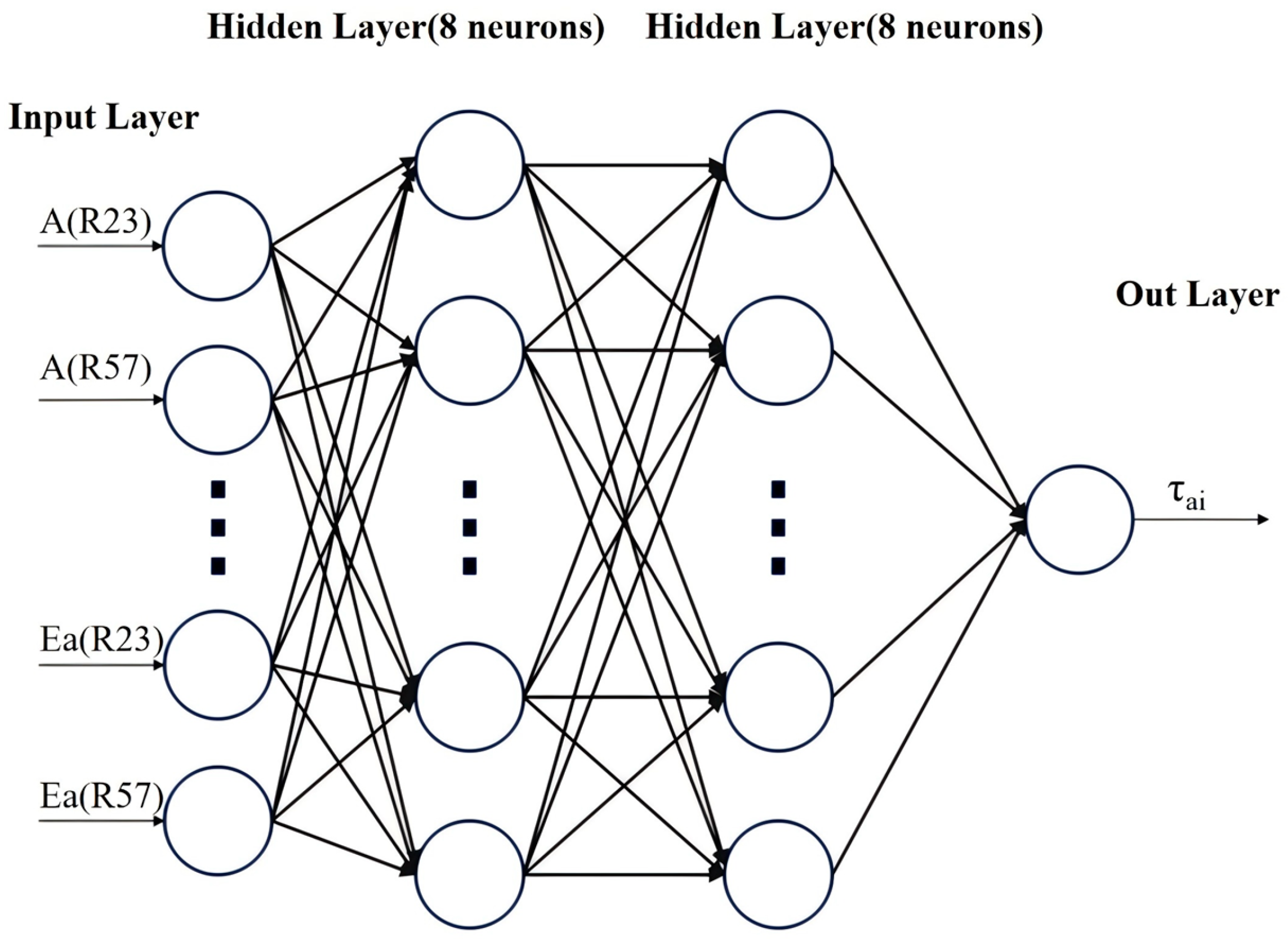
Figure 2 shows the architecture of the initial BP Model, which contained two hidden layers with eight neurons in each layer.
The six input parameters of the initial BP Model were
A and
Ea for three elementary reactions (R23, R57, and R79), and the output parameter was IDT. The input parameters were randomly generated within the specified ranges of
A and
Ea, as shown in
Table 4. A total of 6000 groups of data randomly generated within the range of each parameter were used as the input parameters of the initial BP Model. The obtained 6000 groups of
A and
Ea were then imported into the Chemkin zero-dimensional homogeneous reactor model for numerical simulations, yielding 6000 groups of IDT. Before training, all input and output parameters were normalized [
18], as shown in Equation (7):
where
represents the maximum value among all parameters, and
represents the minimum value among all parameters.
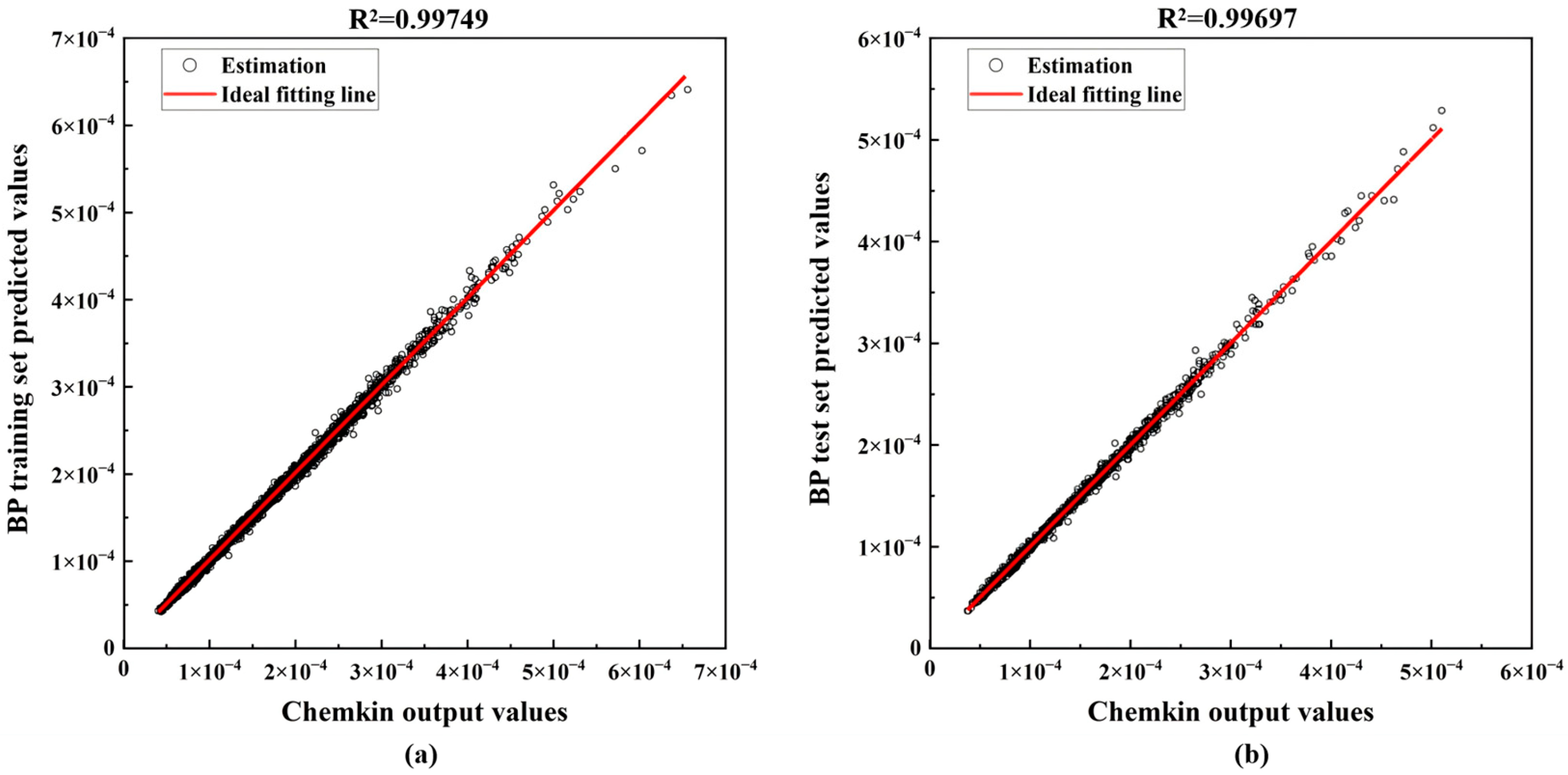
The dataset was divided into 80% training set and 20% test set. The coefficients of determination (R
2) of the initial model were 0.99749 for the training set and 0.99697 for the test set, respectively, as shown in
Figure 3. The coefficient of determination for the test set was only 0.00052 lower than that for the training set, indicating no overfitting and confirming the predictive reliability of the model for new data. The model could effectively capture the nonlinear mapping between the inputs and IDT. To further improve the linear correlation of the predictions, 5-fold cross-validation and Bayesian optimization were employed for model optimization, and whether the model architecture or hyperparameters needed to be adjusted was evaluated. The cross-validation loss and Mean Squared Error (MSE) are defined in Equations (8) and (9):
where
is the cross-validation loss,
is the number of folds,
is the total number of samples,
is the true value of the ith sample, and
i is the predicted value of the ith sample [
29].
After cross-validation, the number of neurons was adjusted to 16 + 8, and the validation loss was 0.0023383. The relatively high validation loss indicated that Bayesian optimization was required for subsequent hyperparameter optimization of the model. The core concept of Bayesian optimization is to regard the mapping relationship between hyperparameters and model performance as an unknown function, construct a probabilistic surrogate model of this function using a Gaussian process, and adaptively select the next evaluation point in the hyperparameter space through an acquisition function, thereby approaching the global optimum within fewer iterations. During the optimization process, minimization of the 5-fold cross-validation loss was used as the objective function, and the maximum number of iterations was set to 50.
After Bayesian optimization, the model architecture was changed to 16 + 12 neurons, and the activation function was expanded from a single ReLU to a combination of ReLU and Tanh [
30]. The regularization coefficient was reduced from 5 × 10
−3 to 9.9841 × 10
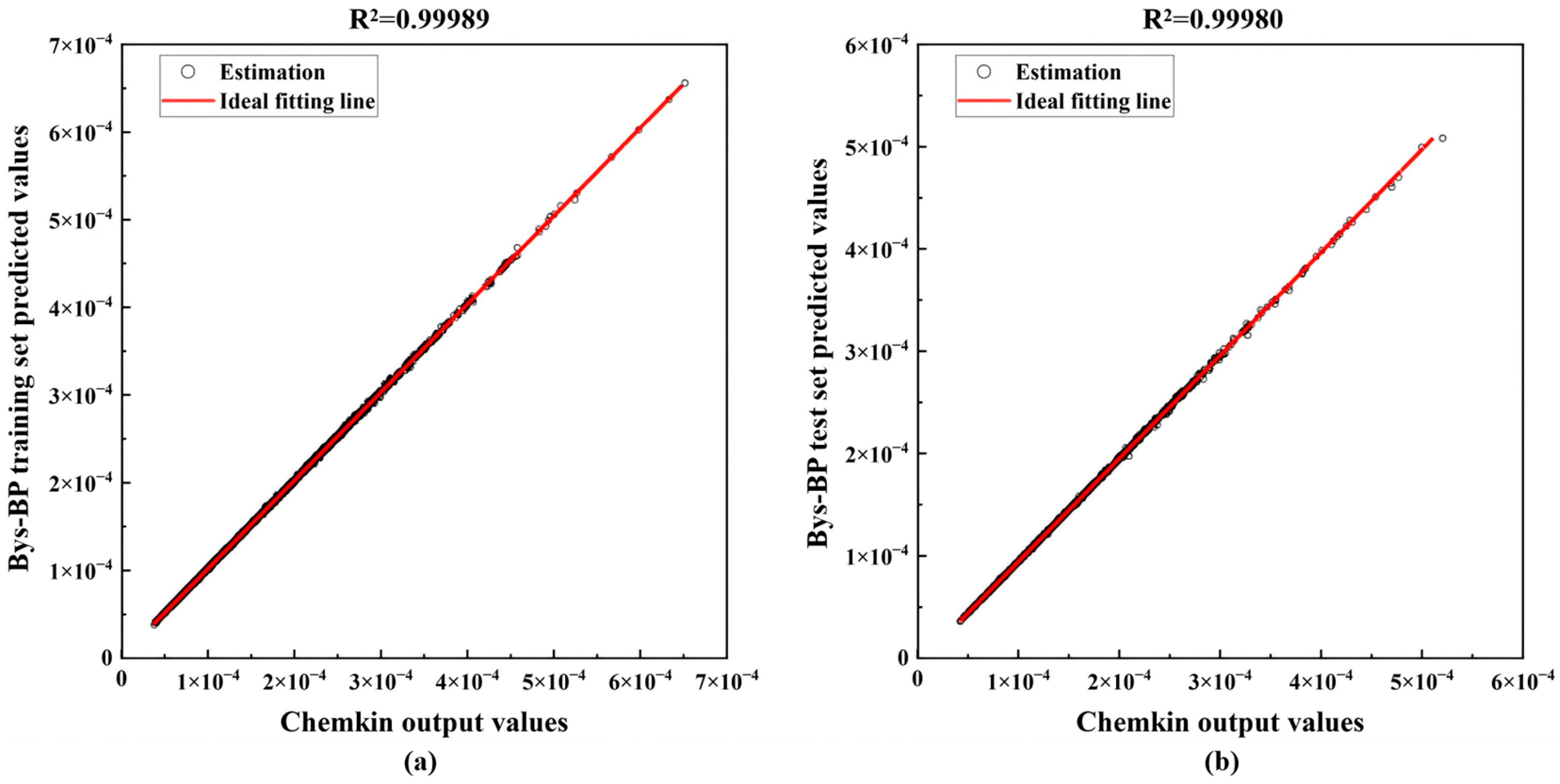
−8, enabling the model to fit the training data more flexibly. R
2 increased to 0.99989 for the training set and 0.99980 for the test set, as shown in
Figure 4.
After optimization, the mean relative error (4.56%) was used as the evaluation metric, and this value was lower than the experimental measurement uncertainty of 5%. The optimized model showed consistent performance in terms of the mean absolute error (MAE), root mean squared error (RMSE), and R
2, with reduced errors. The comparison of performance metrics before and after model optimization is presented in
Table 5.
Finally, the trained Bys-BP Model was applied to elementary reaction parameter optimization. The reference IDT values were calculated using Detailed Mech under identical thermodynamic conditions. Subsequently, 30,000 sets of parameter combinations were randomly generated, and the IDT was predicted using the model. Parameters with errors relative to the reference values of less than 10
−6 were screened, as shown in
Table 6. These parameters were incorporated into the reduced mechanism, yielding the optimized Bys-BP Mech.
It should be noted that the parameters optimized using ANN may deviate from physically meaningful true values. Therefore, cross-validation and Bayesian optimization were adopted to avoid overfitting and enhance the generalization capability of the ANN model [
16] in this study. Meanwhile, the optimized Arrhenius parameters listed in
Table 6 were compared with data from the NIST Chemical Kinetics Database. The results showed that the
A and
Ea energies of the three reactions were all within reasonable ranges of experimental uncertainty [
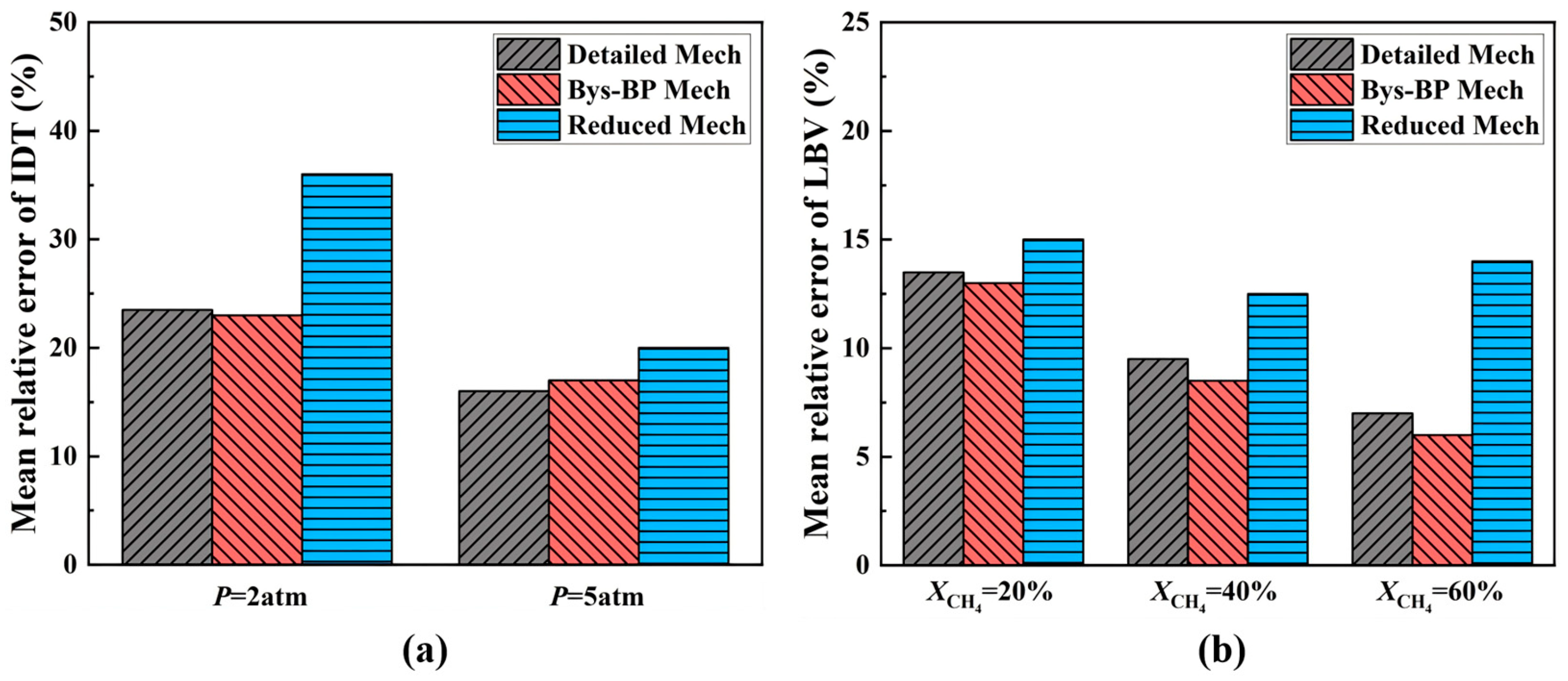
31]. In addition, the LBV and IDT predicted by the optimized Bys-BP Mech were extensively validated against independent experimental data, and the prediction errors remained consistently low, indicating that the uncertainty introduced by ANN optimization was well controlled.
2.2. Construction of the Geometric Model and Operating Conditions
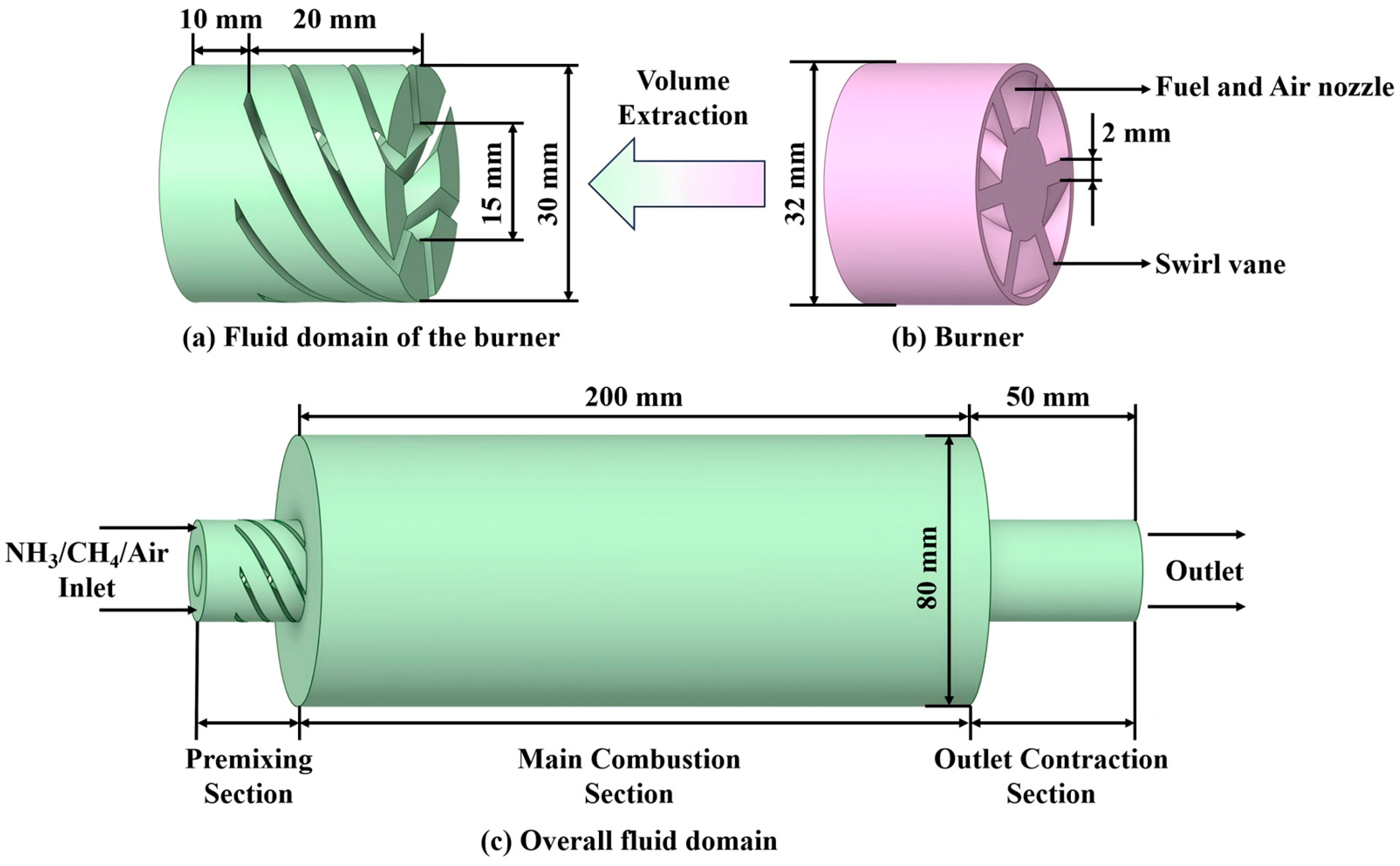
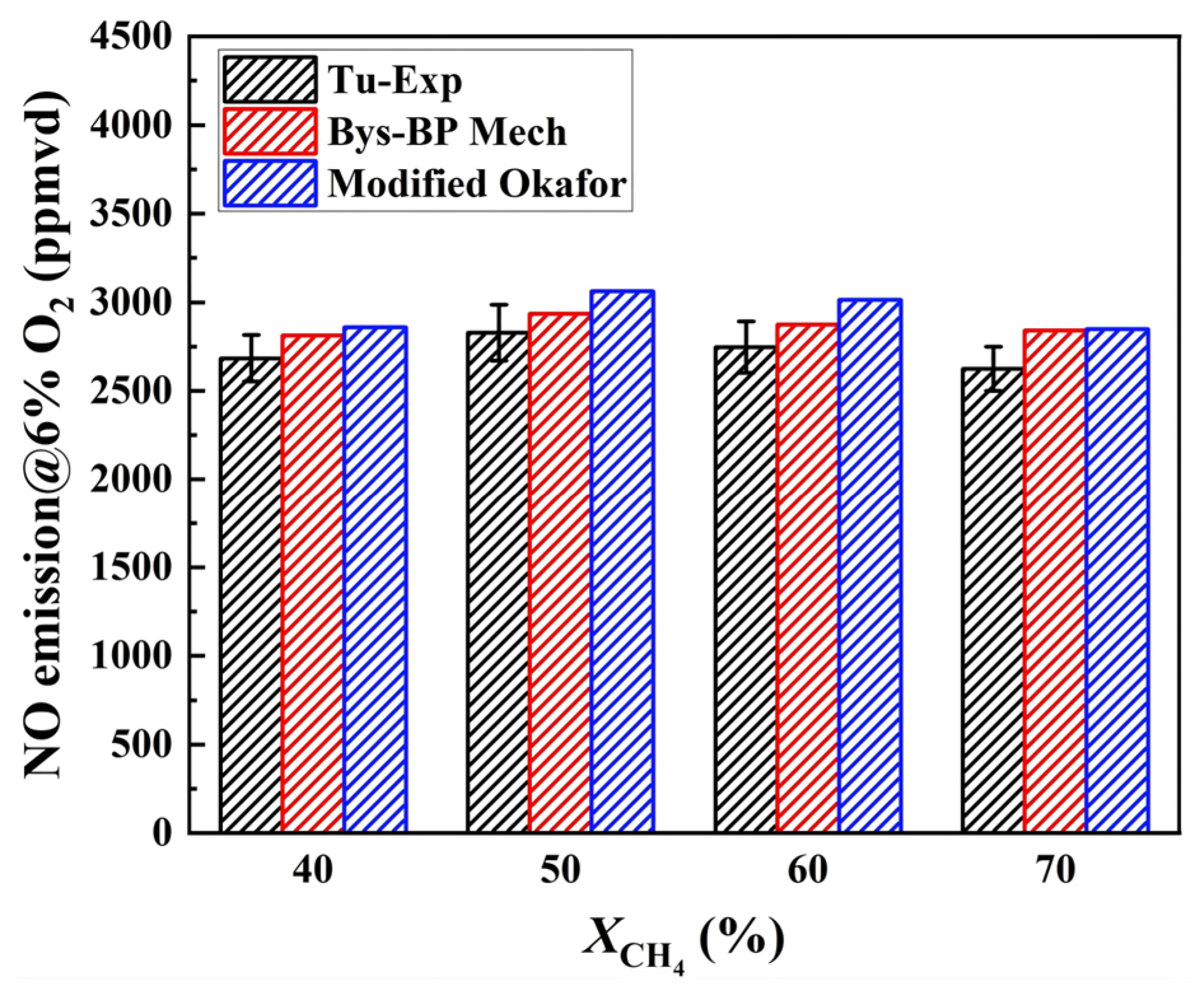
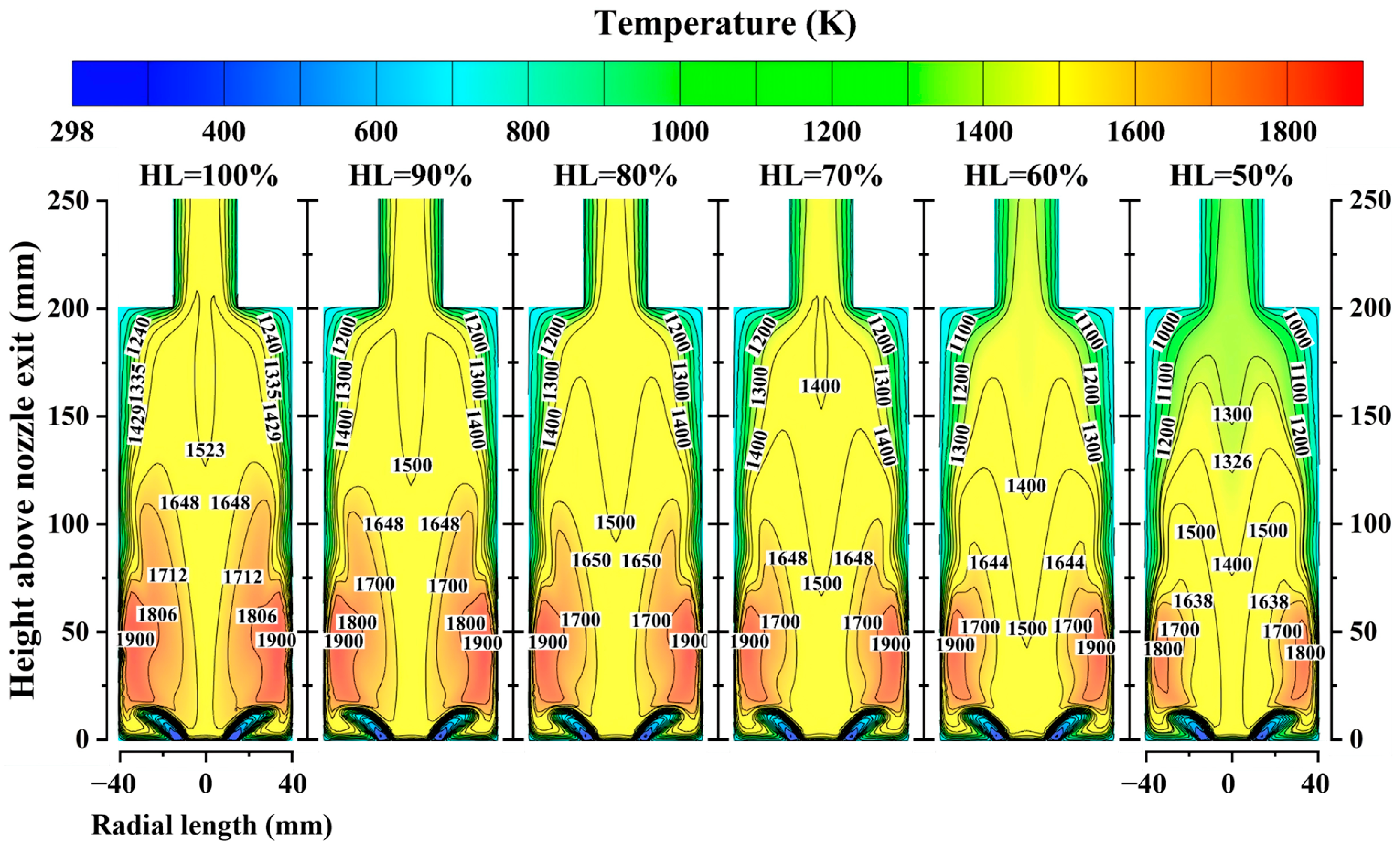
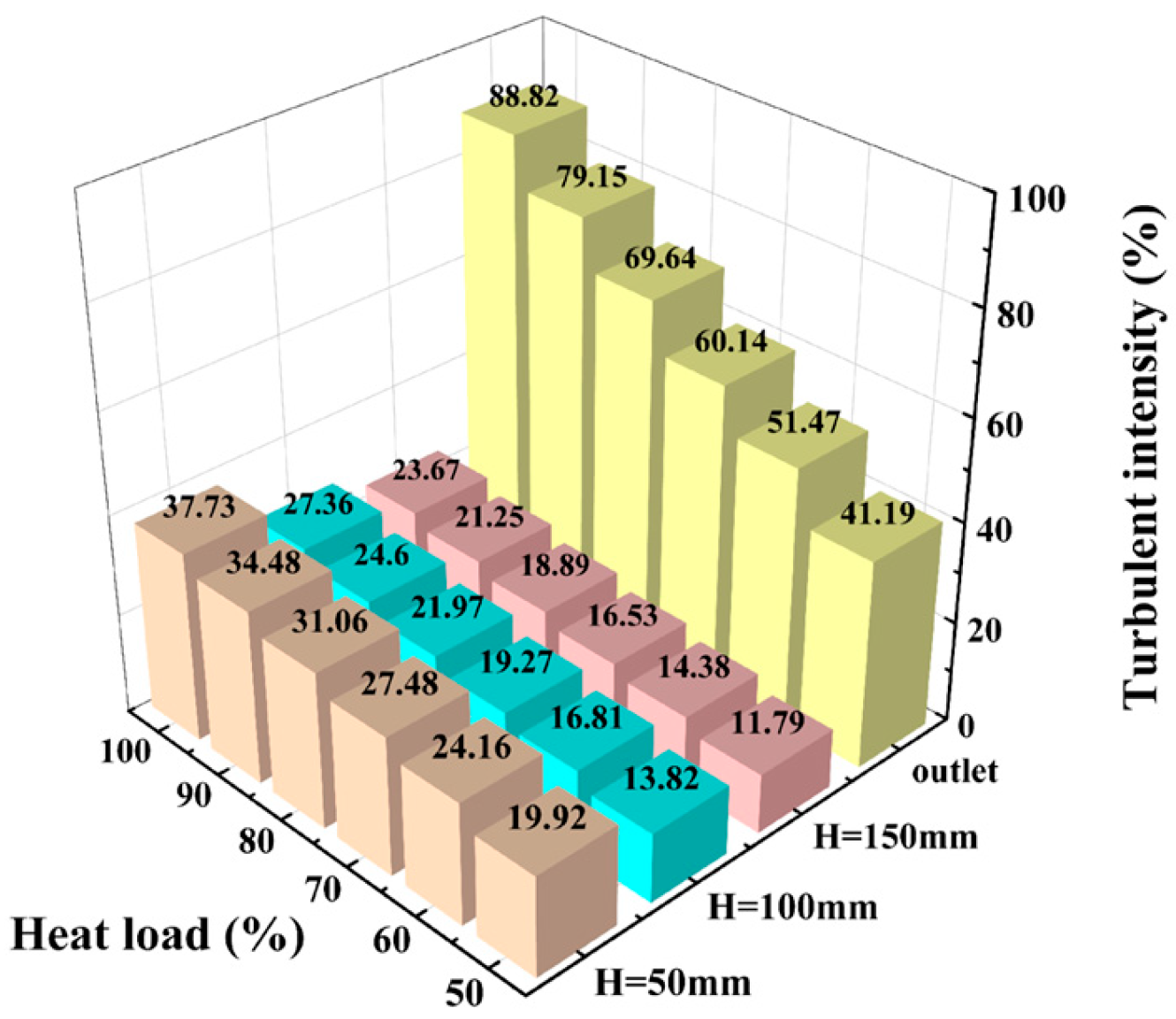
To evaluate the performance of Bys-BP Mech in CFD simulations, numerical simulations of the temperature field, flow field, and NO emission characteristics of a gas turbine were conducted under different heat loads using ANSYS Fluent 2021 R2 in this study. The combustor geometry was based on the premixed swirl flame configuration reported by Tu et al. [
22] The three-dimensional solid model was constructed using SolidWorks 2022 and then imported into ANSYS SpaceClaim for volume extraction, yielding the fluid domain containing the combustor and combustion chamber, as shown in
Figure 5.
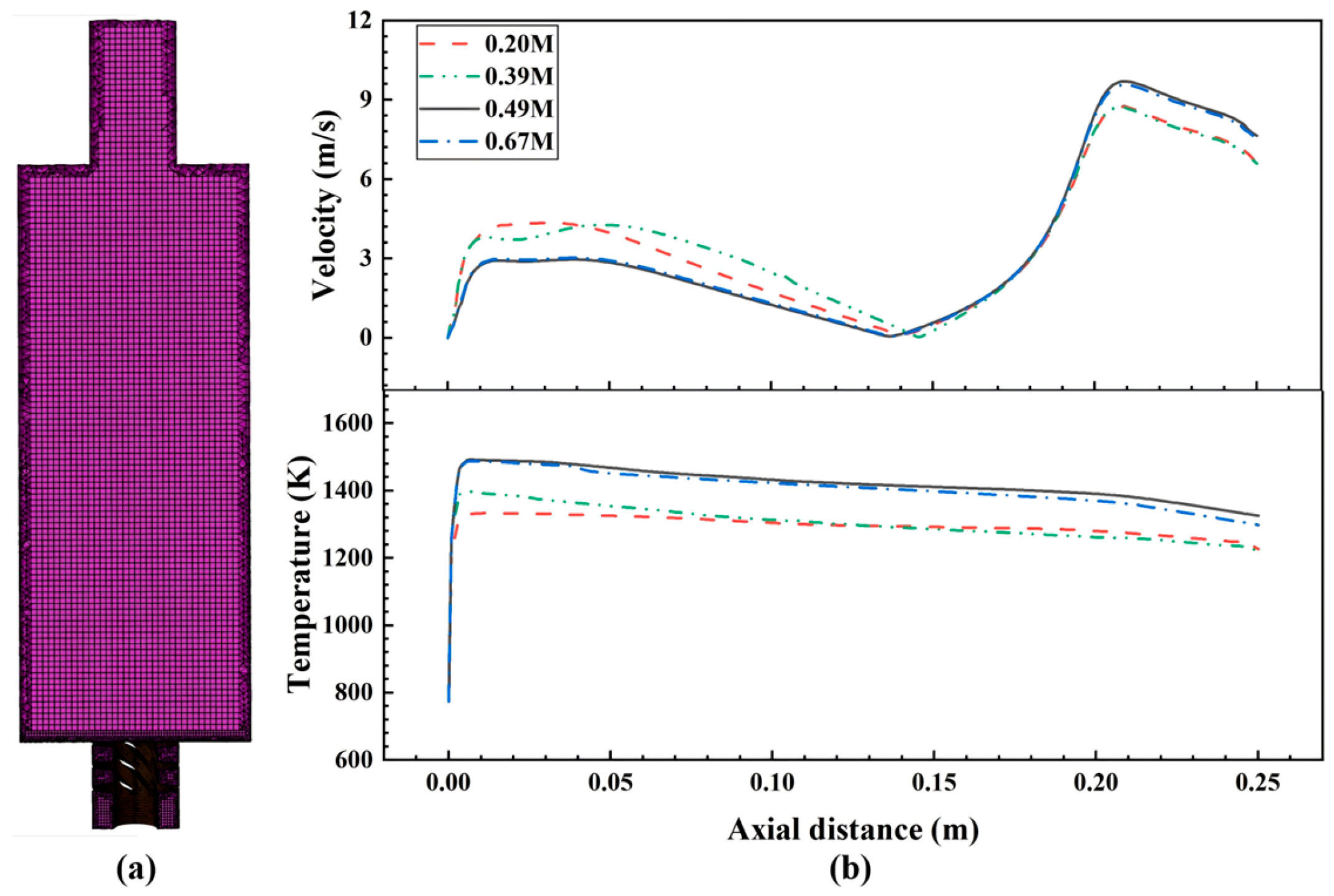
Mesh generation was performed in ANSYS Fluent Meshing using a hexahedral-dominant hybrid meshing strategy. The computational domain included the fuel-air nozzle, combustion chamber, and chimney. Since chemical reactions mainly occurred near the nozzle outlet, local mesh refinement was applied in this region, as shown in
Figure 6a. To assess mesh independence, four mesh densities of 0.20 million, 0.39 million, 0.49 million, and 0.67 million cells were generated, respectively.
Figure 6b presents the velocity and temperature distributions along the axial centerline of the combustion chamber. Significant discrepancies were observed among the results when the mesh size was below 0.39 million cells. The profile curves became essentially consistent when the mesh size reached 0.49 million cells or above. Considering both prediction accuracy and computational cost, the 0.49 million-cell mesh was finally adopted for subsequent simulations in this study.
The combustor was operated at a fixed fuel power of 3 kW under ambient pressure. The combustor wall temperature was 773 K, the inlet air temperature was 298 K, the CH
4 blending ratio in the fuel was 50%, the equivalence ratio was 0.85, the swirler vane angle was 45°, and the swirl number was 0.78. To eliminate the effect of oxygen concentration differences, the NO emission data were corrected to 6% O
2 [
32]. The numerical model was solved using the Realizable
k-
ε turbulence model, which can provide reliable solutions for combustion problems [
21,
33]. The chemical reactions defined in the system were numerically described using the species transport model, and the turbulence–chemistry interaction was treated using the Eddy Dissipation Concept (EDC) model. The EDC model can couple detailed chemical reaction mechanisms in the calculation of the mean reaction rate and assumes that chemical reactions occur only within the fine structures of turbulent eddies that reach the Kolmogorov scale. Their length scale (
) and time scale (
) are estimated by Equations (10) and (11), respectively:
where the volume fraction constant (
) and the time-scale constant (
) were retained at the default values in Fluent (2.1377 and 0.4083, respectively).
The fine structures were treated as perfectly stirred reactors (PSR), within which chemical reactions proceeded at finite rates. The mass fraction of each species in the fine structures,
, was obtained by solving Bys-BP Mech. The mean reaction rate was calculated using Equation (12):
where
is the mean reaction rate of species
,
is the fluid density,
is the mass fraction of species
in the fine structures, and
is the mean mass fraction of species
in the surrounding fluid [
34]. This reaction rate was coupled into the species transport equations as a source term, thereby enabling two-way coupling between the detailed chemical reaction mechanism and the turbulent flow field. In addition, to improve the prediction accuracy of radiative heat transfer, the Discrete Ordinates (DO) radiation model was adopted in combination with the Weighted-Sum-of-Gray-Gases model (WSGG). This model assumes that the total gas-phase emissivity is a function of temperature and partial pressure. The boundary conditions were specified as velocity inlet and pressure outlet. The detailed values of the simulation conditions under different operating conditions are listed in
Table 7.




 ,
,