Additively Manufactured Ni–Co Superalloys for Hydrogen Safety Enhancement of Gas-Turbine Energy Systems: Microstructural Degradation and Crack Initiation Mechanisms

 ,
,  ,
,  , , and
Abstract
1. Introduction
2. Current State of Heat-Resistant Gas-Turbine Ni–Co Materials
3. Materials and Methods for Investigation
3.1. Investigated Alloys
3.2. Microscopy Imaging
3.3. Statistical Processing of Microstructural Parameters
3.4. Grad-CAM Heatmap Construction
3.5. Hydrogen Charging of the Ni–Co Super Alloys
4. Results and Discussion
4.1. Microstructural Examination and Analysis of the Ni–Co Superalloys
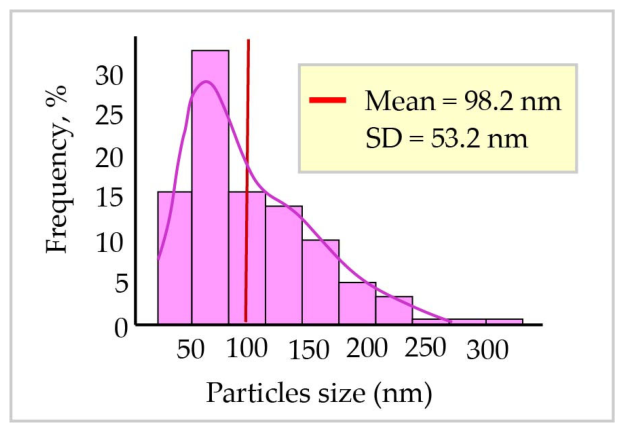
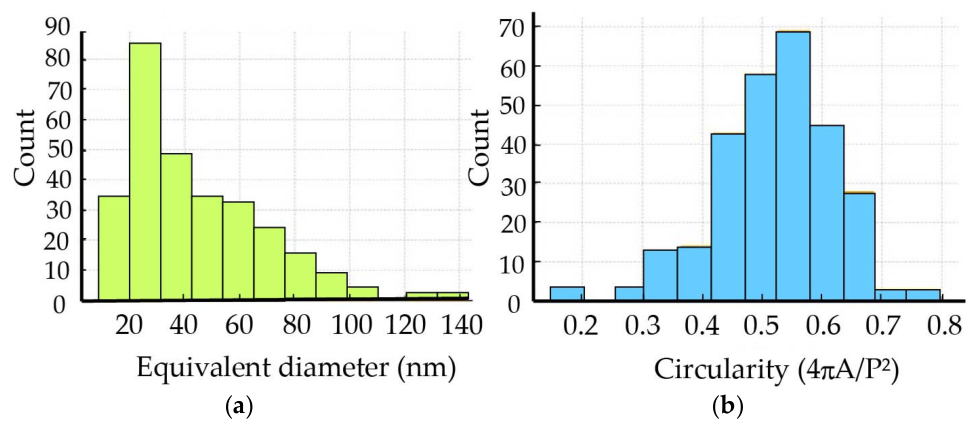
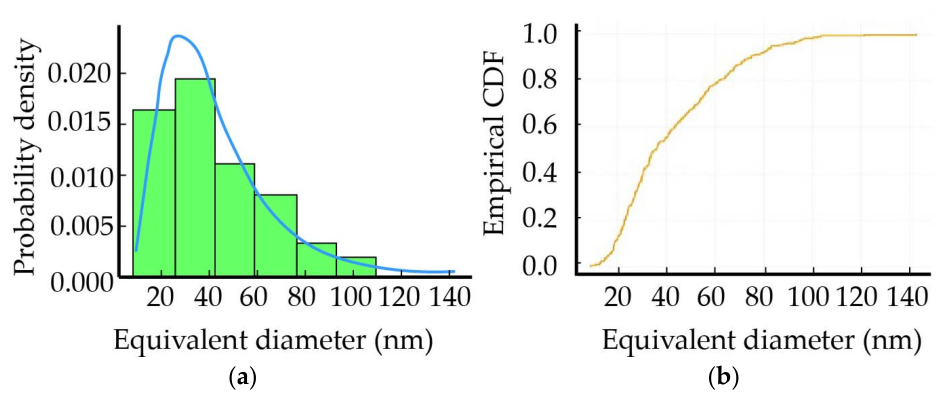
- ~50% of the particles have D < 80 nm;
- ~90% have D < 120 nm.
4.2. Grad-CAM Heatmap Construction for the Ni–Co Superalloy Microstructure
4.3. Relationship Between Microstructure and Hydrogen-Induced Degradation Mechanisms in Ni–Co Superalloys
4.4. Additive Manufacturing and 3D-Printing Technologies for Energy Applications
4.5. Optimal Modern Chemical Composition of 3D-Printed Ni-Based Superalloys for High-Temperature Applications in Energy and Aviation
5. Conclusions
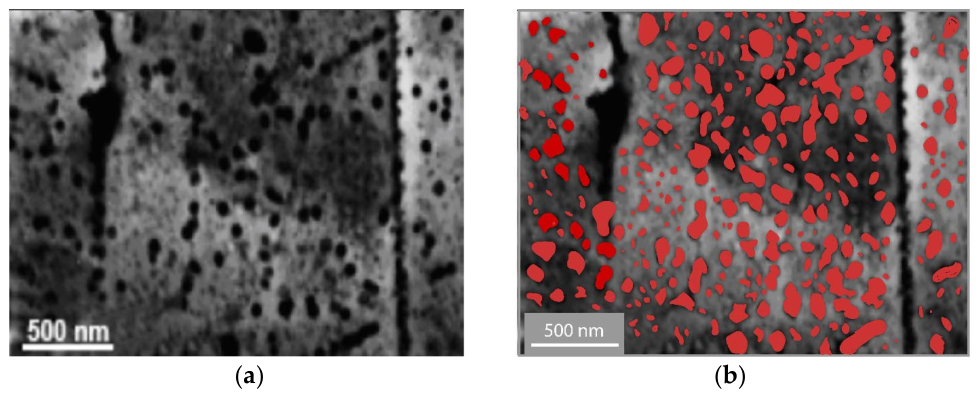
- A comprehensive multiscale analysis of hydrogen-induced nanoscale degradation and crack initiation in γ/γ′-strengthened Ni–Co superalloys, which are promising materials for energy and turbomachinery applications, was carried out. According to the results of transmission electron microscopy and quantitative morphometry, a dense and homogeneous distribution of coherent γ′ precipitates with characteristic sizes in the range of 40–120 nm, which are described by the log law and have a predominantly spherical shape, was established.
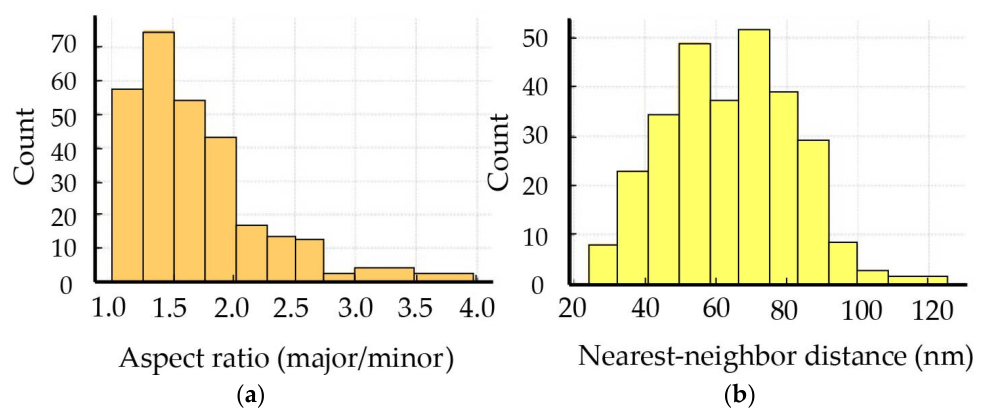
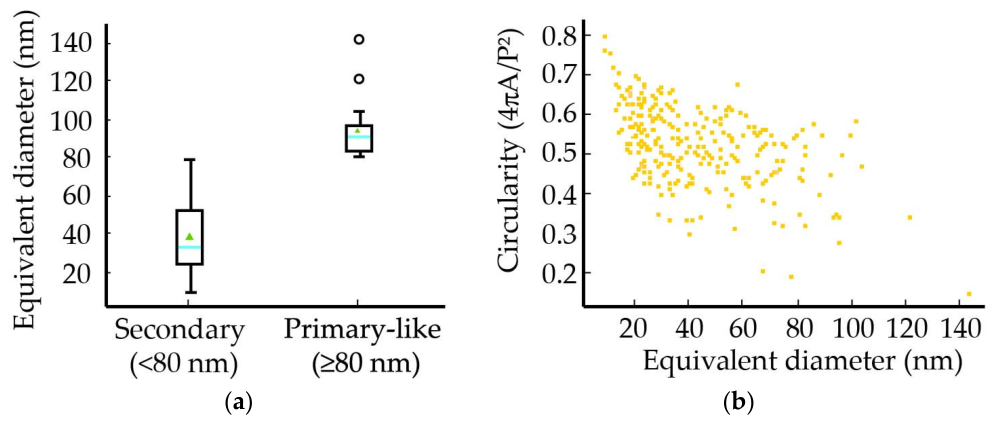
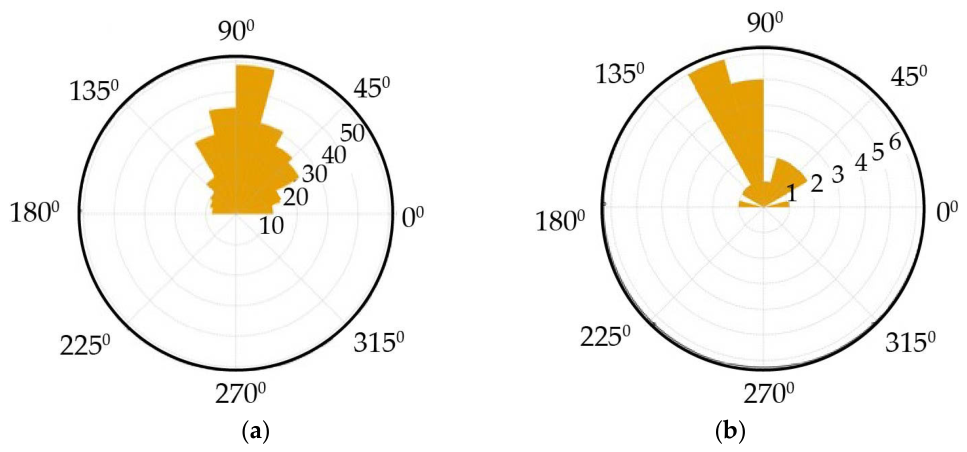
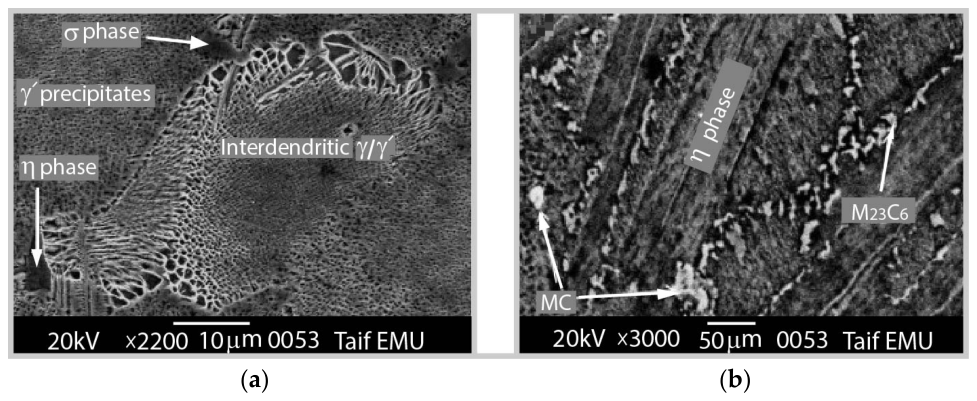
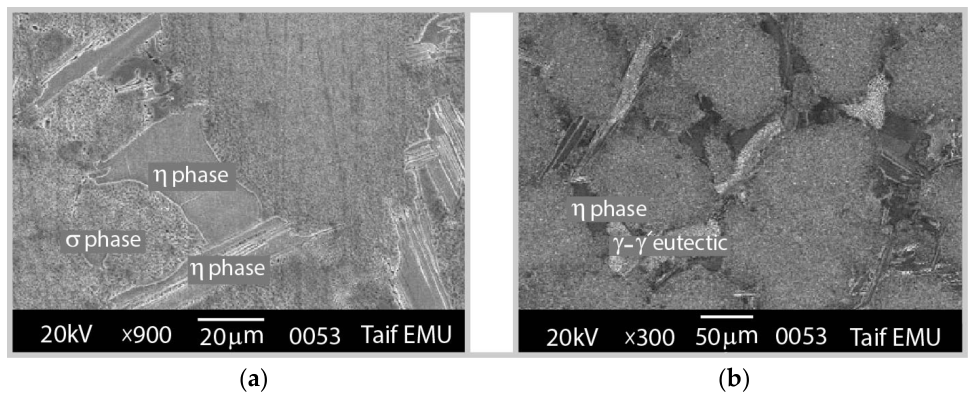
- Statistical analysis revealed a correlation between particle size, aspect ratio, and roundness, indicating a partial loss of coherence and the onset of coagulation for γ′ precipitates larger than ~80 nm. The presence of TCP phases (η, σ, μ, Laves) and various types of carbides at grain boundaries and within grains increases microstructural heterogeneity and creates highly efficient hydrogen traps, promoting decohesion at interfacial boundaries and microcrack initiation.
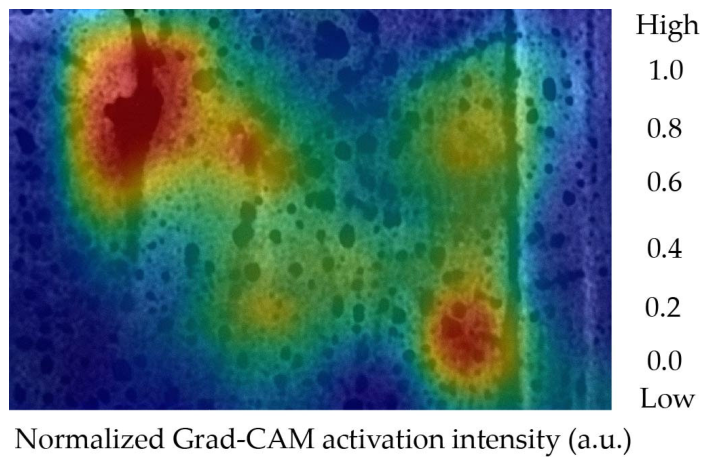
- The application of the Grad-CAM method to SEM images allowed us to visualize the microstructural regions most sensitive to hydrogen-assisted damage and to emphasize the decisive role of γ/γ′ interfaces, TCP phases, and defect clusters in crack initiation.
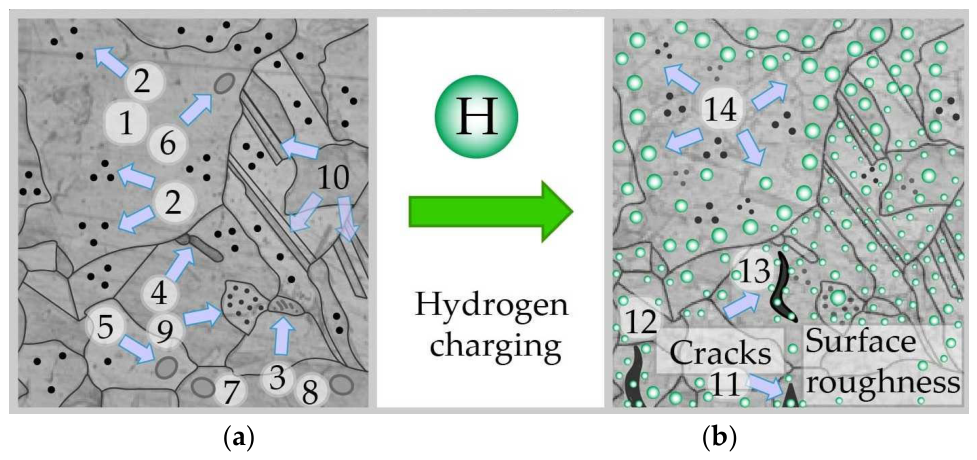
- It is established that hydrogen-induced degradation in Ni–Co γ/γ′ superalloys is determined by the interconnected system “microstructure–hydrogen–stress state”, in which the morphology of nanoscale precipitates, intermetallic phases, and defects caused by additive manufacturing control hydrogen capture, the localization of plastic deformation, and the transition from micro-void formation to microcrack growth. The results obtained create a physically sound basis for optimizing the chemical composition, heat treatment regimes, and 3D-printing parameters, as well as for developing digital and AI-oriented models for predicting the lifetime of critical components of hydrogen-cooled generators and gas hydrogen turbines.
- Additive manufacturing technologies (LPBF/SLM, EBM, DED/WAAM) show strong potential for producing and repairing Ni–Co superalloy components for energy applications, including turbine disks, combustor parts, and elements of hydrogen infrastructure. AM processing introduces specific challenges such as hot cracking, residual porosity, chemical inhomogeneity, anisotropy, and residual stresses, which require optimized alloy design, processing parameters, and post-treatments to support predictive models for the durability of critical components in hydrogen-energy and high-temperature power-generation systems with increased hydrogen safety.
- For hydrogen-energy systems, the integration of AM-based microstructural design with hydrogen resistance is critical, since recent studies have demonstrated significant hydrogen uptake, complex roles of oxide scales, and changes in fracture mechanisms in Ni-based superalloys under hydrogen flames and high-pressure H2. An integrated strategy combining γ′-oriented printing, HIP and aging, and the use of diffusion-barrier coatings with controlled oxide layers appears to be the most promising route to ensure long-term durability.
Funding
Data Availability Statement
Conflicts of Interest
Nomenclature and Abbreviations
| AM | additive manufacturing |
| GTEs | gas-turbine engines |
| GTUs | gas-turbine units |
| LCL | lubricating cooling liquids |
| CH | hydrogen concentration |
| ppm | parts per millions |
| TA | turbo aggregate (turbine + turbogenerator) |
| HCTG | hydrogen-cooled turbogenerator |
| SLM | selective laser melting |
| °C | degree Celsius |
| TEM | transmission electron microscopy |
| BD | build direction |
| CDF | cumulative distribution function |
| APS | atmospheric plasma spraying |
| DED | directed energy deposition |
| EBM | electron beam melting |
| EBSD | electron backscatter diffraction |
| EP-741P | nickel-based superalloy, powder variant |
| EP-742 | nickel-based superalloy, deformable variant |
| GTT | gas-turbine technology |
| HAZ | heat affected zone |
| HE | hydrogen embrittlement |
| HEA | high-entropy alloy |
| HEDE | hydrogen-enhanced decohesion |
| HELP | hydrogen-enhanced localized plasticity |
| HESIV | hydrogen-enhanced strain-induced vacancy |
| HIP | hot isostatic pressing |
| H2 | hydrogen |
| HV | Vickers hardness |
| IoT | Internet of Things |
| ISO | International Organization for Standardization |
| KIC | fracture toughness |
| Kth | threshold stress intensity factor |
| LCL | lubricating cooling liquids |
| LPBF | laser powder bed fusion |
| MC | metal carbide |
| MQL | minimum quantity lubrication |
| SEM | scanning electron microscopy |
| SLM | selective laser melting |
| TEM | transmission electron microscopy |
| TCP | topologically close-packed phases |
| TCH | total combustion hydrogen analyzer (LECO) |
| γ | gamma-matrix phase |
| γ′ | gamma-prime strengthening phase (Ni3(Al, Ti, Co)) |
| η | eta phase (Ni3(Ti, Nb)) |
| σ | sigma phase (Cr, Mo, W rich TCP phase) |
| AI | artificial intelligence |
References
- Balitskii, A.I.; Syrotyuk, A.M.; Ivaskevich, L.M.; Balitskii, O.A.; Kochmanski, P.; Kolesnikov, V.O. Hydrogen accelerated nanopore nucleation, crack initiation and propagation in the Ni–Co superalloys. Int. J. Hydrogen Energy 2024, 82, 320–332. [Google Scholar] [CrossRef]
- Balitskii, A.I.; Kvasnytska, Y.H.; Ivaskevych, L.M.; Kvasnytska, K.H.; Balitskii, O.A.; Miskiewicz, R.M.; Noha, V.O.; Parkhomchuk, Z.V.; Veis, V.I.; Dowejko, J.M. Improvement of hydrogen-resistant gas turbine engine blades: Single-crystal superalloy manufacturing technology. Materials 2024, 17, 4265. [Google Scholar] [CrossRef] [PubMed]
- Balitskii, A.I.; Kvasnytska, Y.H.; Ivaskevych, L.M.; Kvasnytska, K.H.; Balitskii, O.A.; Shalevska, I.A.; Shynskii, O.Y.; Ja-worski, J.M.; Dowejko, J.M. Hydrogen and corrosion resistance of nickel superalloys for gas turbines, engines cooled blades. Energies 2023, 16, 1154. [Google Scholar] [CrossRef]
- Liu, W.-T.; Zhou, J.-C.; Ruan, J.-J.; Zhang, H.; Zhou, X.; Jiang, L.; Zhu, L.-L. Effects of process parameters on defect for-mation in laser additive manufacturing of a novel Ni-based superalloy. Materials 2025, 18, 3102. [Google Scholar] [CrossRef] [PubMed]
- Galpin, S.J. A review of microstructure phenomena during manufacture of polycrystalline Ni-based superalloys. Mater. Sci. Technol. 2022, 38, 1315–1331. [Google Scholar] [CrossRef]
- Balitskii, A.I.; Ivaskevich, L.M. Hydrogen effect on cumulation of failure, mechanical properties, and fracture toughness of Ni-Cr alloys. Adv. Mat. Sci. Eng. 2019, 2019, 3680253. [Google Scholar] [CrossRef]
- Balitskii, A.; Krohmalny, O.; Ripey, I. Hydrogen cooling of turbogenerators and the problem of rotor retaining ring materials degradation. Int. J. Hydrogen Energy 2000, 25, 167–171. [Google Scholar] [CrossRef]
- Mostafaei, A.; Ghiaasiaan, R.; Ho, I.-T.; Strayer, S.; Chang, K.-C.; Shamsaei, N.; Shao, S.; Paul, S.; Yeh, A.-C.; Tin, S.; et al. Additive manufacturing of nickel-based superalloys: A state-of-the-art review on process–structure–defect–property relationship. Prog. Mater. Sci. 2023, 136, 101108. [Google Scholar] [CrossRef]
- Balitskii, A.I.; Ivaskevich, L.M.; Balitskii, O.A. Rotor steels crack resistance and fracture behavior for hydrogen targeted materials ever-widening database. Eng. Fract. Mech. 2022, 260, 108168. [Google Scholar] [CrossRef]
- Murray, S.P.; Pusch, K.M.; Polonsky, A.T.; Adamek, E.A.; Ladani, L.; Taylor, D.; Pollock, T.M. A defect-resistant Co–Ni superalloy for 3D printing. Nat. Commun. 2020, 11, 4975. [Google Scholar] [CrossRef] [PubMed]
- Schulz, P.; Dziedzic, D.; Rocha, N.; Ezenwajiaku, C.; Talibi, M.; Balachandran, R.; Galindo-Nava, E. Hydrogen uptake and embrittlement in nickel-base superalloys during hydrogen flame charging. Commun. Mater. 2025, 6, 265. [Google Scholar] [CrossRef]
- Stefan, E.; Talic, B.; Larring, Y.; Gruber, A.; Peters, T.A. Materials challenges in hydrogen-fuelled gas turbines. Int. Mater. Rev. 2022, 67, 461–486. [Google Scholar] [CrossRef]
- Ivanyts’kyi, Y.L.; Hembara, O.V.; Chepil’, O.Y. Determination of the durability of elements of power-generating equipment with regard for the influence of working media. Mater. Sci. 2015, 51, 104–113. [Google Scholar] [CrossRef]
- Ivanyts’Kyi, Y.L.; Kun’, P.S.; Shtayura, S.T.; Mochul’s’kyi, V.M. Theoretical-experimental approach to the analysis of fatigue crack propagation in hydrogenated materials. Mater. Sci. 2010, 46, 213–220. [Google Scholar] [CrossRef]
- Kobayashi, N.; Koyama, M.; Kobayashi, K.; Hojo, T.; Akiyama, E. Hydrogen embrittlement behavior of pure Ni and Ni–20Cr alloy with different grain sizes. Mater. Trans. 2022, 63, 247–256. [Google Scholar] [CrossRef]
- Mai, H.L.; Cui, X.-Y.; Scheiber, D.; Romaner, L.; Ringer, S.P. An Understanding of hydrogen embrittlement in nickel grain boundaries from first principles. Mater. Des. 2021, 212, 110283. [Google Scholar] [CrossRef]
- Behvar, A.; Haghshenas, M.; Djukic, M. Hydrogen embrittlement and hydrogen induced crack initiation in additively manufactured metals: A critical review on mechanical and cyclic loading. Int. J. Hydrogen Energy 2024, 58, 1214–1239. [Google Scholar] [CrossRef]
- Krella, A. Hydrogen-induced degradation of metallic materials—A Short Review. Materials 2025, 18, 597. [Google Scholar] [CrossRef] [PubMed]
- Calabokis, O.P.; de la Rosa, N.Y.E.; Ballesteros-Ballesteros, V.; González, G.E.A. Nitriding treatments in nickel–chromium-based superalloy INCONEL 718: A review. Coatings 2024, 14, 993. [Google Scholar] [CrossRef]
- Singh, A.N.; Swain, S.K.; Meena, A.; Islam, M.; Nam, K.-W. Advances in corrosion of high-temperature materials: Interfacial migration and alloy design strategies. Ceramics 2024, 7, 1928–1963. [Google Scholar] [CrossRef]
- Badea, T.-A.; Dombrovschi, M. The Influence of alloying elements on the hot corrosion behavior of nickel-based superalloys. Materials 2025, 18, 1996. [Google Scholar] [CrossRef] [PubMed]
- Smetankina, N.; Morhun, S. Numerical analysis of the modern marine gas turbine rotor stress-strain state. In Integrated Computer Technologies in Mechanical Engineering–2023; Nechyporuk, M., Pavlikov, V., Krytskyi, D., Eds.; Lecture Notes in Networks and Systems; Springer: Cham, Switzerland, 2024; Volume 1008. [Google Scholar] [CrossRef]
- Fatriansyah, J.F.; Ajiputro, D.I.; Pradana, A.F.; Kaban, R.S.P.; Federico, A.; Anis, M.; Priadi, D.; Gascoin, N. Physical property prediction of high-temperature nickel and iron–nickel superalloys using direct and inverse composition machine learning models. Metals 2025, 15, 565. [Google Scholar] [CrossRef]
- Barwinska, I.; Kopec, M.; Kukla, D.; Senderowski, C.; Kowalewski, Z.L. Thermal barrier coatings for high-temperature performance of Nickel-based superalloys: A synthetic review. Coatings 2023, 13, 769. [Google Scholar] [CrossRef]
- Bu, H.; Chen, L.; Duan, Y. Effect of solution heat treatment on the porosity growth of nickel-based P/M superalloys. Metals 2022, 12, 1973. [Google Scholar] [CrossRef]
- Zhang, P.; Yi, C.; Chen, G.; Qin, H.; Wang, C. Constitutive model based on dynamic recrystallization behavior during thermal deformation of a Nickel-based superalloy. Metals 2016, 6, 161. [Google Scholar] [CrossRef]
- Glotka, O.A. Distribution of alloying elements in carbides of refractory nickel alloys under the conditions of equiaxial crystallization. Mater. Sci. 2021, 56, 714–721. [Google Scholar] [CrossRef]
- Glotka, O.; Byelikov, S.; Lysytsya, O. Modeling of carbide formation in alloy of the Ni-Cr-Co-W-Mo-Al-Ti-C system. Acta Metall. Slovaca 2024, 30, 15–18. [Google Scholar] [CrossRef]
- Szwajka, K.; Zielińska-Szwajka, J.; Trzepieciński, T. Microstructure and mechanical properties of solid-state rotary friction welded Inconel 713C and 32CrMo4 steel joints used in a turbocharger rotor. Materials 2023, 16, 2273. [Google Scholar] [CrossRef] [PubMed]
- Glotka, A.A.; Moroz, A.N. Comparison of the effects of carbides and nonmetallic inclusions on formation of fatigue microcracks in steels. Metal Sci. Heat Treat. 2019, 61, 521–524. [Google Scholar] [CrossRef]
- Greshta, V.L.; Glotka, O.A.; Obnosov, K.V.; Sotnikov, D.E. Effect of alloying on the phase composition of nickel-based superalloys. Arch. Metall. Mater. 2025, 70, 721–725. [Google Scholar] [CrossRef]
- Glotka, A.A.; Ol’shanetskii, V.Y. Mathematical prediction of the properties of heat-resistant nickel alloys after directional crystallization. Mater. Sci. 2023, 58, 679–685. [Google Scholar] [CrossRef]
- Cormier, J. Ni- and Co-based superalloys and their coatings. Metals 2018, 8, 1055. [Google Scholar] [CrossRef]
- Xu, Y.; Sun, W.; Dai, W.; Hu, C.; Liu, X.; Zhang, W. Experimental and numerical modeling of the stress rupture behavior of nickel-based single crystal superalloys subject to multi-row film cooling holes. Metals 2017, 7, 340. [Google Scholar] [CrossRef]
- Glotka, A.A.; Haiduk, S.V.; Ol’shanetskii, V.Y. Modeling thermophysical characteristics of nickel-based superalloys. J. Eng. Phys. Thermophys. 2021, 94, 1363–1368. [Google Scholar] [CrossRef]
- Glotka, A.A.; Ol’shanetskii, V.E. Prediction thermo-physical characteristics of heat-resistant nickel alloys directional crystallization. Acta Metall. Slovaca 2021, 27, 68–71. [Google Scholar] [CrossRef]
- Parsa, A.B.; Ramsperger, M.; Kostka, A.; Somsen, C.; Körner, C.; Eggeler, G. Transmission electron microscopy of a CMSX-4 Ni-based superalloy produced by selective electron beam melting. Metals 2016, 6, 258. [Google Scholar] [CrossRef]
- Zhang, X.; Zou, M.; Lu, S.; Li, L.; Zhuang, X.; Feng, Q. A novel high Cr CoNi based superalloy with superior high temperature microstructural stability, oxidation resistance and mechanical properties. Int. J. Miner. Metall. Mater. 2024, 31, 1373–1381. [Google Scholar] [CrossRef]
- Zenk, C.H.; Volz, N.; Zenk, C.; Felfer, P.J.; Neumeier, S. Impact of the Co/Ni-ratio on microstructure, thermophysical properties and creep performance of multi-component γ′-strengthened superalloys. Crystals 2020, 10, 1058. [Google Scholar] [CrossRef]
- Bao, H.S.; Gong, Z.H.; Chen, Z.Z.; Wang, C.; Li, J.; Zhang, J.S. Evolution of precipitates in Ni–Co–Cr–W–Mo superalloys with different tungsten contents. Rare Met. 2020, 39, 716–724. [Google Scholar] [CrossRef]
- Weisenburger, A.; Zimmermann, M.; Dafferner, B.; Heinzel, A.; Kelm, S.; Müller, G.; Möslang, A. Development and properties of Ni-based alloys for high-temperature applications in advanced energy systems. Adv. Eng. Mater. 2023, 25, 2201514. [Google Scholar] [CrossRef]
- Xiao, Z.; He, J.; Gu, J.; Gan, B.; Song, M. Microstructure and mechanical properties of a new Ni–Co-based superalloy at intermediate temperatures. J. Mater. Res. Technol. 2024, 29, 2620–2627. [Google Scholar] [CrossRef]
- Zhang, Y.; Li, J.; Li, Y.; Dong, J.; Guo, C.; Yu, H.; Wang, Q. Mechanical property and deformation mechanisms of a novel Ni–Co–based wrought superalloy via a solution–rolling–aging treatment. Preprints 2024. [Google Scholar] [CrossRef]
- Xu, H.; Guo, Y.; Wang, J.; Li, Z.; Wang, L.; Li, X.; Zhang, Z. Refining micron-sized grains to nanoscale in Ni-Co based superalloy by quasistatical compressive deformation at high temperature. Coatings 2023, 13, 1325. [Google Scholar] [CrossRef]
- Volz, N.; Zenk, C.H.; Karpstein, N.; Lenz, M.; Spiecker, E.; Göken, M.; Neumeier, S. Creep properties and deformation mechanisms of single-crystalline γ′- strengthened superalloys in dependence of the Co/Ni ratio. Philos. Mag. 2021, 102, 718–744. [Google Scholar] [CrossRef]
- Bai, Y.; Zhang, R.; Cui, C.; Zhou, Y.; Sun, X. In-situ observation of Ni-Co based wrought superalloy high-temperature deformation: Lattice rotation and grain boundary response. Mater. Res. Lett. 2024, 12, 869–876. [Google Scholar] [CrossRef]
- Quan, Q.; Sun, S.; Sheng, N.; Deng, J.; Hou, G.; Li, J.; Chen, J.; Zhou, Y.; Sun, X. Effect of Mo on the microstructures and mechanical properties of the polycrystalline superalloy with high W content. Materials 2022, 15, 7509. [Google Scholar] [CrossRef] [PubMed]
- Tai, W.; Zhang, R.; Cui, C.; Zhou, Z.; Zhou, Y.; Sun, X. Solidification segregation behavior and homogenization process of a difficult-to-deform superalloy used at 850 °C. Crystals 2023, 13, 1582. [Google Scholar] [CrossRef]
- Liu, D.; Ding, Q.; Zhou, Q.; Zhou, D.; Wei, X.; Zhao, X.; Zhang, Z.; Bei, H. Microstructure, mechanical properties and thermal stability of Ni-based single crystal superalloys with low specific weight. Crystals 2023, 13, 610. [Google Scholar] [CrossRef]
- Akca, E.; Gürsel, A. A Review of superalloys and IN718 nickel-based Inconel superalloy. Period. Eng. Nat. Sci. (PEN) 2015, 3, 15–27. Available online: https://www.semanticscholar.org/paper/A-Review-on-Superalloys-and-IN718-Nickel-Based-Akca-G%C3%BCrsel/e8b749b9e1e9429f88f9cb067dd5019f6ee3105c?p2df (accessed on 14 May 2026). [CrossRef]
- Unnikrishnan, U.; Yang, V. A review of cooling technologies for high temperature rotating components in gas turbine. Propuls. Power Res. 2022, 11, 293–310. [Google Scholar] [CrossRef]
- Behera, A.; Sahoo, A.K.; Mahapatra, S.S. Application of Ni-based superalloy in aero turbine blade: A review. Proc. Inst. Mech. Eng. Part E J. Process Mech. Eng. 2023. [Google Scholar] [CrossRef]
- Pollock, T.M.; Tin, S. Nickel-based superalloys for advanced turbine engines: Chemistry, microstructure and proper-ties. J. Propuls. Power 2006, 22, 361–374. [Google Scholar] [CrossRef]
- Li, C.; Teng, J.; Yang, B.; Ye, X.; Liu, J.; Li, Y. Correlation between microstructure and mechanical properties of novel Co-Ni-based powder metallurgy superalloy. Mater. Charact. 2021, 181, 111480. [Google Scholar] [CrossRef]
- Guédou, J.-Y.; Augustins-Lecallier, I.; Nazé, L.; Caron, P.; Locq, D. Development of a new fatigue and creep resistant PM nickel-base superalloy for disk applications. Superalloys 2008, 21–30. [Google Scholar] [CrossRef]
- Xiong, J.; Yin, C.; Wang, C.; Feng, G.; Guo, J. The effect of long-term aging on the microstructure and properties of a novel nickel-based powder superalloy FGH4113A. Materials 2024, 17, 4175. [Google Scholar] [CrossRef] [PubMed]
- Zhao, Y.; Li, K.; Gargani, M.; Xiong, W. Application of hot isostatic pressing in nickel-based single crystal superalloys. Crystals 2022, 12, 805. [Google Scholar] [CrossRef]
- Ajay, P.; Dabhade, V.V. Heat treatments of Inconel 718 nickel-based superalloy: A Review. Met. Mater. Int. 2025, 31, 1204–1231. [Google Scholar] [CrossRef]
- Selvaraj, S.K.; Sundaramali, G.; Dev, S.J.; Swathish, R.S.; Karthikeyan, R.; Vijay Vishaal, K.E.; Paramasivam, V. Recent advancements in the field of Ni based superalloys. Adv. Mater. Sci. Eng. 2021, 2021, 9723450. [Google Scholar] [CrossRef]
- Tkachev, V.I.; Levina, I.M.; Ivas’kevych, L.M. Distinctive features of hydrogen degradation of heat-resistance alloys based on nickel. Mater. Sci. 1997, 33, 524–531. [Google Scholar] [CrossRef]
- Haines, M.P.; Rielli, V.V.; Primig, S.; Haghdadi, N. Powder bed additive manufacturing of Ni based superalloys: A review of the main microstructural constituents and characterization techniques. J. Mater. Sci. 2022, 57, 14135–14187. [Google Scholar] [CrossRef]
- Ouyang, X.; Liu, F.; Huang, L.; Ye, L.; Dong, H.; Tan, L.; Wang, L.; Jin, X.; Liu, Y. The effects of Co on the microstructure and mechanical properties of Ni-based superalloys prepared via selective laser melting. Materials 2023, 16, 2926. [Google Scholar] [CrossRef] [PubMed]
- Adam, B.M.; Langan, S.M.; Michelson, A.A.; Te, A.; Ahsan, M.R.U.; Tewksbury, G.; Birt, A.; Champagne, V. Microstruc-tural evaluation of a dissimilar metal interface of Ni Co based superalloys fabricated using wire arc directed energy deposition additive manufacturing. JOM 2024, 76, 4802–4812. [Google Scholar] [CrossRef]
- Ghoussoub, J.N.; Tang, Y.T.; Dick-Cleland, W.J.B.; Németh, A.A.N.; Gong, Y.; McCartney, D.G.; Cocks, A.C.F.; Reed, R.C. On the influence of alloy composition on the additive manufacturability of Ni-based superalloys. Metall. Mater. Trans. A 2022, 53, 962–998. [Google Scholar] [CrossRef]
- Yang, C.; Tang, H.; Li, Z.; Zeng, Z.; Shi, S.; Zhang, Y.; Shen, C. Mitigating microstructural heterogeneity in la-ser directed energy deposition Ni based superalloys by heat accumulation in situ heat treatment. Virtual Phys. Prototyp. 2025, 20, e2509614. [Google Scholar] [CrossRef]
- Mosallanejad, M.H.; Niroumand, B.; Aversa, A.; Saboori, A. In-situ alloying in laser-based additive manufacturing processes: A critical review. J. Alloys Compd. 2021, 872, 159567. [Google Scholar] [CrossRef]
- Lv, Y.; Wang, Y.; Zhou, G.; Shi, Y.; Deng, W.; Tian, Y.; Ju, Y.; Yu, H. Investigating the anisotropic behavior and high-temperature mechanical properties of GH4251 nickel-based superalloy prepared by selective laser melting and post heat treatment. J. Alloys Compd. 2025, 1010, 177951. [Google Scholar] [CrossRef]
- Gudivada, G.; Pandey, A.K. Recent developments in nickel-based superalloys for gas turbine applications: Review. J. Alloys Compd. 2023, 963, 171128. [Google Scholar] [CrossRef]
- Boittin, G.; Locq, D.; Rafray, A.; Caron, P.; Kanouté, P.; Gallerneau, F.; Cailletaud, G. Influence of γ′ precipitate size and distribution on LCF behavior of a PM disk superalloy. Superalloys 2012, 167–176. [Google Scholar] [CrossRef]
- Luo, L.; Di, L.; Fu, H.; Yang, Y.; Qian, X.; He, Z.; Li, Y.; Luo, F. Influence mechanism of γ’ phase dissolution on micro-structural characteristics and creep properties of Ni-based single-crystal superalloys at 1200 C. J. Mater. Engin. Perform. 2025, 34, 16510–16522. [Google Scholar] [CrossRef]
- Zhao, Y.; Liu, M.; Zhao, J.; Lu, H.; Liu, S.; Chen, Y.; Pang, D.; Xie, L.; Li, A.; Wang, L. Effect of the Ni/Co ratio on the structural and initial oxidation properties of NiCo-based superalloys revealed by in situ microscopy. J. Mater. Res. Technol. 2024, 29, 779–788. [Google Scholar] [CrossRef]
- Pandey, P.; Sawant, A.K.; Nithin, B.; Peng, Z.; Makineni, S.K.; Gault, B.; Chattopadhyay, K. On the effect of Re addition on microstructural evolution of a CoNi-based superalloy. Acta Mater. 2019, 168, 37–51. [Google Scholar] [CrossRef]
- Harris, D.; Bhattacharyya, J.J.; Ronevich, J.A.; Agnew, S.R.; Burns, J.T. The combined effects of hydrogen and aging condition on the deformation and fracture behavior of a precipitation-hardened nickel-base superalloy. Acta Mater. 2020, 186, 616–630. [Google Scholar] [CrossRef]
- Li, X.; Zhang, J.; Cui, Y.; Djukic, M.B.; Feng, H.; Wang, Y. Review of the hydrogen embrittlement and interactions be-tween hydrogen and microstructural interfaces in metallic alloys: Grain boundary, twin boundary, and nano-precipitate. Int. J. Hydrogen Energy 2024, 72, 74–109. [Google Scholar] [CrossRef]
- Khalid, H.; Shunmugasamy, V.C.; DeMott, R.W.; Hattar, K.; Mansoor, B. Effect of grain size and precipitates on hydro-gen embrittlement susceptibility of nickel alloy 718. Int. J. Hydrogen Energy 2024, 55, 474–490. [Google Scholar] [CrossRef]
- Zhou, L.; Zhang, H.; Yu, Z.; Wang, J.; Cui, H. Hydrogen-induced fatigue behavior of GH4169 alloy: Experimentation and crystal plasticity life prediction modeling. Int. J. Hydrogen Energy 2025, 193, 152356. [Google Scholar] [CrossRef]
- Zheng, L.; Shen, L.; Wang, Y.; Wang, H.; Zhao, Y.; Ramamurty, U.; Hu, J. Effect of the solutioning temperature on the strength and hydrogen embrittlement resistance of the laser powder bed fused Inconel 718 superalloy. Corros. Sci. 2026, 262, 113642. [Google Scholar] [CrossRef]
- Selvaraju, R.R.; Cogswell, M.; Das, A.; Vedantam, R.; Parikh, D.; Batra, D. Grad-CAM: Visual explanations from deep networks via gradient-based localization. arXiv 2017, arXiv:1610.02391. https://arxiv.org/abs/1610.02391.
- Campari, A.; Konert, F.; Razavi, N.; Sobol, O.; Alvaro, A. Hydrogen-assisted cracking: A deep learning approach for fractographic analysis. Comput. Mater. Sci. 2026, 262, 114366. [Google Scholar] [CrossRef]
- Balitskii, A.; Ivaskevich, L.; Mochulskyi, V.; Eliasz, J.; Skolozdra, O. Influence of high pressure and high temperature hydrogen on fracture toughness of Ni-containing steels and alloys. Arch. Mech. Eng. 2014, LXI, 129–138. [Google Scholar] [CrossRef]
- Robertson, I.M.; Sofronis, P.; Nagao, A.; Martin, M.L.; Wang, S.; Gross, D.W.; Nygren, K.E. Hydrogen embrittlement understood. Metall. Mater. Trans. A 2015, 46, 2323–2341. [Google Scholar] [CrossRef]
- Michler, T.; Schweizer, F.; Wackermann, K. Review on the influence of temperature upon hydrogen effects in structural alloys. Metals 2021, 11, 423. [Google Scholar] [CrossRef]
- Zhou, C.; Zhou, H.; Zhang, L. The impact of impurity gases on the hydrogen embrittlement behavior of pipeline steel in high-pressure H2 environments. Materials 2024, 17, 2157. [Google Scholar] [CrossRef] [PubMed]
- Guo, Z.; Zhao, M.; Li, C.; Chen, S.; Rong, L. Mechanism of hydrogen embrittlement in a gamma-prime phase strengthened Fe–Ni based austenitic alloy. Mater. Sci. Eng. A 2012, 555, 77–84. [Google Scholar] [CrossRef]
- Balitskii, O.I.; Kvasnytska, Y.H.; Ivaskevych, L.M.; Mialnitsa, H.P.; Kvasnytska, K.H. Fatigue fracture of the blades of gas turbine engine made of a new refractory nickel alloy. Mater. Sci. 2022, 57, 475–483. [Google Scholar] [CrossRef]
- LECO Corporation. TCH 600–Series (Nitrogen, Oxygen, Hydrogen Determination)–Technical/Application Note; LECO Corporation: St. Joseph, MI, USA, 2003; 6p, Available online: https://www.lecomexico.com/inorganico/tch600series209-105.pdf (accessed on 14 May 2026).
- El-Bagoury, N. Microstructure and mechanical properties of aged nickel base superalloy. Arch. Appl. Sci. Res. 2011, 3, 266–276. Available online: https://www.researchgate.net/publication/260639167_Microstructure_and_Mechanical_Properties_of_Aged_Nickel_Base_Superalloy (accessed on 14 May 2026).
- El-Bagoury, N.; Mohsen, Q. Gamma prime and TCP phases and mechanical properties of thermally exposed nickel-base superalloy. Phase Transit. 2011, 84, 1108–1122. [Google Scholar] [CrossRef]
- Álvarez, G.; Harris, Z.; Wada, K.; Rodríguez, C.; Martínez-Pañeda, E. Hydrogen embrittlement susceptibility of additively manufactured 316L stainless steel: Influence of post-processing, printing direction, temperature and pre-straining. Addit. Manuf. 2023, 78, 103834. [Google Scholar] [CrossRef]
- Yu, H.; Díaz, A.; Lu, X.; Sun, B.; Ding, Y.; Koyama, M.; He, J.; Zhou, X.; Oudriss, A.; Feaugas, X.; et al. Hydrogen embrittlement as a conspicuous material challenge—Comprehensive review and future directions. Chem. Rev. 2024, 124, 6271–6392. [Google Scholar] [CrossRef] [PubMed]
- Barrera, O.; Bombac, D.; Chen, Y.; Daff, T.D.; Galindo-Nava, E.; Gong, P.; Haley, D.; Horton, R.; Katzarov, I.; Kermode, J.R.; et al. Understanding and mitigating hydrogen embrittlement of steels: A review of experimental, modelling and design progress from atomistic to continuum. J. Mater. Sci. 2018, 53, 6251–6290. [Google Scholar] [CrossRef] [PubMed]
- Liu, J.; Zhao, M.; Rong, L. Overview of hydrogen-resistant alloys for high-pressure hydrogen environment: On the hy-drogen energy structural materials. Clean Energy 2023, 7, 99–115. [Google Scholar] [CrossRef]
- Radavich, J.F.; Furrer, D.U.; Carneiro, T. The microstructure and mechanical properties of EP741NP powder metallurgy disc material. Superalloys 2008, 2008, 63–72. Available online: https://www.tms.org/superalloys/10.7449/2008/Superalloys_2008_63_72.pdf (accessed on 14 May 2026). [CrossRef]
- El-Bagoury, N.; Nofal, A. Microstructure of an experimental Ni base superalloy under various casting conditions. Mater. Sci. Eng. A 2010, 527, 7793–7800. [Google Scholar] [CrossRef]
- Shingledecker, J.P.; Pharr, G.M. The role of eta phase formation on the creep strength and ductility of INCONEL alloy 740 at 1023 K (750 °C). Met. Mater. Trans. A 2012, 43, 1902–1910. [Google Scholar] [CrossRef]
- Bouse, G.K. Eta (η) and platelet phases in investment cast superalloys. In Superalloys 1996: Proceedings of the Eighth International Symposium on Superalloys; Kissinger, R.D., Deye, D.J., Anton, D.L., Cetel, A.D., Clouet, P., Khan, T., Eds.; TMS (The Minerals, Metals & Materials Society): Warrendale, PA, USA, 1996; pp. 163–172. [Google Scholar] [CrossRef]
- Beals, J.M. The Effect of Eta Phase on the Creep Properties of a Nickel-Based Superalloy. Ph.D. Thesis, Michigan Technological University, Houghton, MI, USA, 2019. [Google Scholar]
- Kontis, P.; Kostka, A.; Raabe, D.; Gault, B. Influence of composition and precipitation evolution on damage at grain boundaries in a crept polycrystalline Ni-based superalloy. Acta Mater. 2019, 166, 158–167. [Google Scholar] [CrossRef]
- Sireesha, M.; Prabhu, N.; Srinivasa Rao, K. Microstructure and mechanical properties of nickel-based superalloys: A review. Mater. Sci. Proc. 2023, 10, 65–82. [Google Scholar] [CrossRef]
- Im, H.J.; Pereira dos Santos, J.C.; Campbell, C.E.; Dunand, D.C. Microstructure and properties of Co-Ni-Al-W γ/γ′ sup-eralloy fabricated via laser fusion of elemental powders. Addit. Manuf. 2023, 76, 103790. [Google Scholar] [CrossRef]
- Ebling, F.; Bratsch, P.; Wagner, S.; Pundt, A.; Preußner, J.; Oesterlin, H.; Wackermann, K.; Michler, T. Assessing hydrogen embrittlement of alloy 718: Hollow and conventional tensile tests. Eng. Fract. Mech. 2025, 319, 111028. [Google Scholar] [CrossRef]
- Rakoczy, Ł.; Rutkowski, B.; Grudzień-Rakoczy, M.; Cygan, R.; Ratuszek, W.; Zielińska-Lipiec, A. Analysis of γ′ precipitates, carbides and nano-borides in heat-treated Ni-based superalloy using SEM, STEM-EDX, and HRSTEM. Materials 2020, 13, 4452. [Google Scholar] [CrossRef] [PubMed]
- Park, K.; Withey, P. Compositions of gamma and gamma prime phases in an as-cast nickel-based single crystal super-alloy turbine blade. Crystals 2022, 12, 299. [Google Scholar] [CrossRef]
- Zhang, X.; Shang, H.; Gao, Q.; Ma, Q.; Zhang, H.; Li, H.; Sun, L. Coarsening evolution of γ′-phase and failure mechanism of Co-Ni-Al-Ti-based superalloys during isothermal aging. Front. Mater. 2022, 9, 863305. [Google Scholar] [CrossRef]
- Wu, X.; Makineni, S.K.; Liebscher, C.H.; Dehm, G.; Mianroodi, J.R.; Shanthraj, P.; Svendsen, B.; Bürger, D.; Eggeler, G.; Raabe, D.; et al. Unveiling the Re effect in Ni-based single crystal superalloys. Nat. Commun. 2020, 11, 389. [Google Scholar] [CrossRef] [PubMed]
- Grudzień-Rakoczy, M.; Rakoczy, Ł.; Cygan, R.; Kromka, F.; Pirowski, Z.; Milkovič, O. Fabrication and characterization of the newly developed superalloys based on Inconel 740. Materials 2020, 13, 2362. [Google Scholar] [CrossRef] [PubMed]
- Grudzień-Rakoczy, M.; Rakoczy, Ł.; Cygan, R.; Chrzan, K.; Milkovič, O.; Pirowski, Z. Influence of Al/Ti ratio and Ta concentration on the as-cast microstructure, phase composition, and phase transformation temperatures of lost-wax Ni-based superalloy castings. Materials 2022, 15, 3296. [Google Scholar] [CrossRef] [PubMed]
- Sadeghi, B.; Cavaliere, P.; Stanislawska, A. 3D modelling of hydrogen embrittlement in austenitic stainless steel and nickel-based superalloy: Physical metallurgy aspects on hydrogen entrapment. Phys. Open 2025, 24, 100253. [Google Scholar] [CrossRef]
- Guo, W.; Zhao, H.; Ru, Y.; Pei, Y.; Wang, J.; Liu, Q.; Li, X.; Wang, H.; Zhang, S.; Gong, S.; et al. Topologically closed packed phase and its interaction with dislocation movement in Ni–based superalloy during high–temperature creep. Crystals 2022, 12, 1446. [Google Scholar] [CrossRef]
- Antonov, S.; Huo, J.; Feng, Q.; Isheim, D.; Seidman, D.N.; Helmink, R.C.; Sun, E.; Tin, S. σ and η phase formation in ad-vanced polycrystalline Ni-base superalloys. Mater. Sci. Eng. A 2017, 687, 232–240. [Google Scholar] [CrossRef]
- Wilson, A.S. Formation and effect of topologically close-packed phases in nickel-base superalloys. Mater. Sci. Technol. 2017, 33, 1108–1118. [Google Scholar] [CrossRef]
- Darolia, R.; Lahrman, D.F.; Field, R.D. Formation of topologically closed-packed phases in nickel-based single-crystal superalloys. In Superalloys 1988—Proceedings of the Sixth International Symposium on Superalloys; Reichman, S., Duhl, D.N., Maurer, G., Antolovich, S., Lund, C., Eds.; The Metallurgical Society (TMS): Warrendale, PA, USA, 1988; pp. 255–264. [Google Scholar] [CrossRef]
- Shi, Q.; Huo, J.; Cao, L.; Li, J.; Ding, X.; Zheng, Y.; Feng, Q. Compositional effect on TCP phase formation in Ru-containing Ni-based single crystal superalloys. MATEC Web Conf. 2014, 14, 01002. [Google Scholar] [CrossRef]
- Liu, L.R.; Zhou, B.X.; Wang, Q.F.; Yang, Y.H.; Yu, J.J.; Sun, B.Z. Intergrowth structure of laves within μ phases in Co–Al–W base superalloy. J. Alloys Compd. 2020, 844, 155822. [Google Scholar] [CrossRef]
- Kajima, Y.; Takaichi, A.; Kittikundecha, N.; Nakamoto, T.; Kimura, T.; Nomura, N.; Kawasaki, A.; Hanawa, T.; Takahashi, H.; Wakabayashi, N. Effect of heat-treatment temperature on microstructures and mechanical properties of Co–Cr–Mo alloys fabricated by selective laser melting. Mater. Sci. Eng. A. 2018, 726, 21–31. [Google Scholar] [CrossRef]
- Xiao, X.; Jin, M.; Qin, W.; Yao, J. A Review of emerging trends in laves phase research: Bibliometric analysis and visu-alization. High Temp. Mater. Process. 2024, 43, 20220319. [Google Scholar] [CrossRef]
- Schirra, J.J.; Caless, R.H.; Hatala, R.W. The effect of laves phase on the mechanical properties of wrought and cast + HIP Inconel 718. Superalloys 1991, 1991, 375–388. [Google Scholar] [CrossRef]
- Zhou, Y.; Zhao, X.; Fan, Y.; Yue, Q.; Xia, W.; Pan, Q.; Cheng, Y.; Gu, Y.; Zhang, Z. Precipitation of β-NiAl phase in a high Ru-containing Ni-based single crystal superalloy. Mater. Lett. 2024, 362, 136215. [Google Scholar] [CrossRef]
- Song, W.; Wang, X.G.; Li, J.G.; Meng, J.; Duan, T.F.; Yang, Y.H.; Liu, J.L.; Liu, J.D.; Pei, W.L.; Zhou, Y.Z.; et al. The formation and evolution of NiAl phase in a fourth generation nickel-based single crystal superalloy. J. Alloys Compd. 2020, 848, 156584. [Google Scholar] [CrossRef]
- Wahlmann, B.; Bandorf, J.; Volz, N.; Förner, A.; Pröbstle, J.; Multerer, K.; Göken, M.; Markl, M.; Neumeier, S.; Körner, C. Numerical design of CoNi-base superalloys with improved casting structure. Metall. Mater. Trans. A. 2023, 54, 1683–1698. [Google Scholar] [CrossRef]
- Cao, K.; Yang, W.; Liu, C.; Qu, P.; Qin, J.; Zhang, J.; Liu, L. Precipitation of TCP phases with R/P intergrowth structure during directional solidification in a Ru-containing nickel-based single crystal superalloy. J. Alloys Compd. 2023, 942, 168951. [Google Scholar] [CrossRef]
- Zhao, Y.; Chang, Y.; Li, X.; Xie, Y.; Sun, Y.; Zhang, H.; Zhao, C. P phase precipitation and strengthening behavior of a novel polycrystalline Ni3Al-based intermetallic alloy at 1100 °C. Acta Mater. 2024, 265, 119601. [Google Scholar] [CrossRef]
- Ruan, J.J.; Ueshima, N.; Oikawa, K. Growth behavior of the δ-Ni3Nb phase in superalloy 718 and modified KJMA modeling for the transformation-time-temperature diagram. J. Alloys Compd. 2020, 814, 152289. [Google Scholar] [CrossRef]
- Páramo-Kañetas, P.J.; Orozco-Mendoza, E.A.; Calvo, J.; Cabrera-Marrero, J.-M.; Zamora-Antuñano, M.A.; Guerrero-Mata, M.P. Microstructural analysis of a partially recrystallized nickel-based superalloy undergoing delta-processing. J. Alloys Compd. 2022, 907, 164403. [Google Scholar] [CrossRef]
- Kañetas, P.J.P.; Calvo, J.; Rodriguez-Calvillo, P.; Cabrera Marrero, J.M.; Zamora Antuñano, M.A.; Guerrero-Mata, M.P. EBSD study of delta-processed Ni-based superalloy. Metals 2020, 10, 1466. [Google Scholar] [CrossRef]
- Volpato, G.M.; Vollhüter, J.; Diepold, B.; Meier, M.S.; Pröbstle, M.; Göken, M.; Niendorf, T.; Felfer, P.; Neumeier, S. Revealing the γ′ and γ″ phase fractions of additively manufactured and differently heat-treated nickel-base superalloy IN718 by atom probe tomography and their impact on mechanical properties. Adv. Eng. Mater. 2024, 27, 2401954. [Google Scholar] [CrossRef]
- Lee, S.-Y.; Kim, H.-J.; Ahn, C.-H.; Baek, S.-W.; Shim, J.-H.; Suh, J.-Y. Hydrogen-induced intergranular fracture behavior accelerated by needle-like MC carbide in IN740H superalloy. Hydrogen 2022, 3, 474–487. [Google Scholar] [CrossRef]
- Araujo, L.S.; Guimaraes, A.V.; Siqueira, M.C.; Mendes, M.C.; Mallet, L.; dos Santos, D.S.; de Almeida, L.H. The influence of the processing route on the fragmentation of (Nb,Ti)C stringers and its role on mechanical properties and hydrogen embrittlement of nickel based alloy 718. Int. J. Hydrogen Energy 2021, 46, 16164–16178. [Google Scholar] [CrossRef]
- Depover, T.; Verbeken, K. The detrimental effect of hydrogen at dislocations on the hydrogen embrittlement susceptibility of Fe-C-X alloys: An experimental proof of the HELP mechanism. Int. J. Hydrogen Energy 2018, 43, 3050–3061. [Google Scholar] [CrossRef]
- Balitskii, A.I.; Kolesnikov, V.O.; Havrilyuk, M.R.; Balitska, V.O.; Ripey, I.V.; Królikowski, M.A.; Pudlo, T.K. Steel hydrogen-induced degradation diagnostics for turbo aggregated rotor shaft repair technologies. Energies 2025, 18, 4368. [Google Scholar] [CrossRef]
- Balitskii, A.I.; Syrotyuk, A.M.; Havrilyuk, M.R.; Balitska, V.O.; Kolesnikov, V.O.; Ivaskevych, L.M. Hydrogen cooling of turbo aggregates and the problem of rotor shafts materials degradation evaluation. Energies 2023, 16, 7851. [Google Scholar] [CrossRef]
- Reed, R.C. The Superalloys: Fundamentals and Applications; Cambridge University Press: Cambridge, UK, 2006; 372p. [Google Scholar]
- Balitskii, O.I.; Kolesnikov, V.O.; Ivaskevych, L.M.; Havrylyuk, M.R. The influence of specific features of load and hydrogen charging on steel tribotechnical properties. Mater. Sci. 2023, 58, 502–512. [Google Scholar] [CrossRef]
- Glotka, O.A.; Ol’shanetskii, V.I. Mathematical forecasting composition of secondary carbides in the single-crystal superalloys. Arch. Mater. Sci. Eng. 2021, 111, 34–41. [Google Scholar] [CrossRef]
- Balitskii, A.; Kolesnikov, V.; Abramek, K.F.; Balitskii, O.; Eliasz, J.; Marya, H.; Ivaskevych, L.; Kolesnikova, I. Influence of hydrogen-containing fuels and environmentally friendly lubricating coolant on nitrogen steels’ wear resistance for spark ignition engine pistons and rings kit gasket set. Energies 2021, 14, 7583. [Google Scholar] [CrossRef]
- Balitskii, A.I.; Kolesnikov, V.O.; Balitska, V.O.; Ivaskevych, L.M.; Dowejko, J.M.; Pilecki, B.J.; Havrilyuk, M.R. Computer-integrated surface image processing of hydrogen-saturated steel wear products. Appl. Sci. 2024, 14, 11762. [Google Scholar] [CrossRef]
- Dmytrakh, I.; Syrotyuk, A.; Hembara, O.; Hrynenko, M. Effect of hydrogen concentration in metal on residual durability of defected pipelines. Procedia Struct. Integr. 2024, 59, 74–81. [Google Scholar] [CrossRef]
- Hembara, O.; Syrotyuk, A.; Chepil, O.; Sapuzhak, Y.; Hembara, N. Evaluation of increased local hydrogen concentration in the vicinity of various types of defects in low-alloyed steels. Procedia Struct. Integr. 2024, 59, 190–197. [Google Scholar] [CrossRef]
- Dmytrakh, I.M.; Syrotyuk, A.M.; Leshchak, R.L. Specific features of the deformation and fracture of low-alloy steels in hydrogen-containing media: Influence of hydrogen concentration in the metal. Mater. Sci. 2018, 54, 295–308. [Google Scholar] [CrossRef]
- Pokhmurs’kyi, V.I.; Kopylets’, V.I.; Balyts’kyi, O.I.; Kornii, S.A. Investigation of the effect of deformation of metals on their interaction with media on the atomic level. Mater. Sci. 1996, 32, 267–271. [Google Scholar] [CrossRef]
- Choudhury, I.A.; El-Baradie, M.A. Machinability of nickel-base super alloys: A general review. J. Mater. Process. Technol. 1998, 77, 278–284. [Google Scholar] [CrossRef]
- Wang, R.; Yang, D.; Wang, W.; Wei, F.; Lu, Y.; Li, Y. Tool wear in nickel-based superalloy machining: An overview. Processes 2022, 10, 2380. [Google Scholar] [CrossRef]
- Balitskii, A.I.; Havrilyuk, M.R.; Balitska, V.O.; Kolesnikov, V.O.; Ivaskevych, L.M. Increasing turbine hall safety by using fire-resistant, hydrogen-containing lubricant cooling liquid for rotor steel mechanical treatment. Energies 2023, 16, 535. [Google Scholar] [CrossRef]
- Balyts’kyi, O.I.; Kolesnikov, V.O.; Havrylyuk, M.R. Influence of modification of 38KhN3MFA steel on the structural-phase state and cutting products under variable technological conditions. Mater. Sci. 2020, 55, 915–920. [Google Scholar] [CrossRef]
- Balyts’kyi, O.I.; Kolesnikov, V.O.; Havrylyuk, M.R. Influence of lubricating liquid on the formation of the products of cutting of 38KhN3MFA Steel. Mater. Sci. 2019, 54, 722–727. [Google Scholar] [CrossRef]
- Balitskii, O.; Kolesnikov, V. Identification of wear products in the automotive tribotechnical system using computer vision methods, artificial intelligence and big data. In Proceedings of the 2019 XIth International Scientific and Practical Conference on Electronics and Information Technologies (ELIT), Lviv, Ukraine, 16–18 September 2019; pp. 24–27. [Google Scholar] [CrossRef]
- Balyts’kyi, O.I.; Kolesnikov, V.O. Investigation of the wear products of austenitic manganese cast irons. Mater. Sci. 2004, 40, 78–82. [Google Scholar] [CrossRef]
- Balyts’kyi, O.I.; Kolesnikov, V.O.; Kawiak, P. Triboengineering properties of austenitic manganese steels and cast irons under sliding friction conditions. Mater. Sci. 2005, 41, 624–630. [Google Scholar] [CrossRef]
- Balitskii, A.I.; Syrotyuk, A.M.; Kolesnikov, V.O.; Balitska, V.O.; Ivaskevych, L.M.; Havrilyuk, M.R. The effect of absorbed hydrogen on the rotors of steel machining products during powerful turbo aggregate repairs. Materials 2024, 17, 6257. [Google Scholar] [CrossRef] [PubMed]
- Balyts’kyi, O.I.; Kolesnikov, V.O.; Eliasz, Y.; Havrylyuk, M.R. Specific features of the fracture of hydrogenated high-nitrogen manganese steels under conditions of rolling friction. Mater. Sci. 2015, 50, 604–611. [Google Scholar] [CrossRef]
- Balitskii, O.A.; Kolesnikov, V.O.; Balitskii, A.I.; Eliasz, J.; Havrylyuk, M.R. Hydrogen effect on the high-nickel surface steel properties during machining and wear with lubricants. Arch. Mater. Sci. Eng. 2020, 104, 49–57. [Google Scholar] [CrossRef]
- Nykyforchyn, H.; Kyryliv, V.; Maksymiv, O.; Zvirko, O. Mechanical fabrication methods of nanostructured surfaces. In Handbook of Modern Coating Technologies: Fabrication Methods and Functional Properties; Elsevier: Amsterdam, The Netherlands, 2021; pp. 25–67. [Google Scholar] [CrossRef]
- Kusyi, Y.; Stupnytskyy, V.; Onysko, O.; Dragašius, E.; Baskutis, S.; Chatys, R. Optimization synthesis of technological parameters during manufacturing of the parts. Eksploat. Niezawodn. 2022, 24, 655–667. [Google Scholar] [CrossRef]
- Onysko, O.; Panchuk, V.; Kopei, V.; Pituley, L.; Lukan, T. Influence of back rake angle of a threading cutter on the drill-string tool-joint pitch diameter. In Lecture Notes in Mechanical Engineering; Springer: Cham, Switzerland, 2023. [Google Scholar] [CrossRef]
- Jaworski, J.; Trzepieciński, T. Quality assurance of machine repair in production plants. Acta Metall. Slovaca 2017, 23, 387–393. [Google Scholar] [CrossRef]
- Kalchenko, V.; Yeroshenko, A.; Boyko, S.; Sira, N. Determination of cutting forces in grinding with crossed axes of tool and workpiece. Acta Mech. Autom. 2017, 11, 58–63. [Google Scholar] [CrossRef]
- Jaworski, J.; Trzepieciński, T. Surface layer properties of low-alloy high-speed steel after grinding. Acta Mech. Autom. 2016, 10, 275–279. [Google Scholar] [CrossRef][Green Version]
- Duriagina, Z.A.; Trostianchyn, A.M.; Kulyk, V.V.; Vavrukh, V.I.; Filimonov, O.S. Specific features of the fine structure and local stress state of 13Kh11N2V2MF steel under cyclic loading. Mater. Sci. 2022, 57, 711–715. [Google Scholar] [CrossRef]
- Jaworski, J.; Trzepieciński, T. Research on durability of turning tools made of low-alloy high-speed steels. Kov. Mater. 2016, 54, 17–25. [Google Scholar] [CrossRef]
- Hussain, M.; Zhang, T.; Nazir, U. Emerging technologies and innovations. In Hydrogen Pipeline Integrity; Green Energy and Technology; Springer: Singapore, 2026. [Google Scholar] [CrossRef]
- Ivaskevych, L.M. Evaluation of the KhN56MBYuD alloy embrittlement under long-term action of hydrogen and high temperatures. Mater. Sci. 2025, 61, 660–666. [Google Scholar] [CrossRef]
- Khoma, M.S.; Ivashkiv, V.R.; Halaichak, S.A.; Chuchman, M.R.; Vasyliv, K.B. Influence of the structure of carbon steels on the corrosion, hydrogenation, and corrosion cracking in hydrogen-sulfide media. Mater. Sci. 2019, 55, 272–276. [Google Scholar] [CrossRef]
- Tretiak, O.; Kravchenko, S.; Shestak, B.; Shpitalnyi, D.; Arefieva, M.; Tretiak, I.; Serhiienko, S.; Kovryga, A. Devising a method for designing multicomponent diffusers of compressors in turbogenerators with hydrogen cooling. East.-Eur. J. Enterp. Technol. 2025, 4, 26–38. [Google Scholar] [CrossRef]
- Gakal, P.; Ovsiannykova, O.; Przybysz, J.; Tretiak, O. Analysis of the temperature field of the rotor of a 550 MW turbogenerator with direct hydrogen cooling. Prz. Elektrotech. 2017, 93, 63–66. [Google Scholar] [CrossRef][Green Version]
- Javorskyj, I.; Torba, Y.; Yuzefovych, R.; Sbrodov, Y.; Lychak, O. Periodically Non-stationary properties of vibrations in a gas turbine engine with an unbalanced rotor. Sci. Innov. 2025, 21, 38–48. [Google Scholar] [CrossRef]
- Ivanytskyj, Y.; Shtayura, S.; Molkov, Y.; Lenkovskiy, T. Hydrogen influence on fracture of sheet carbon steel. Int. J. Fract. 2012, 176, 17–23. [Google Scholar] [CrossRef]
- Peshko, V.; Usatyi, O.; Chernousenko, O. The efficiency and durability of a nuclear power plant turbine without the stage of damaged blades. In Advances in Mechanical and Power Engineering II; Altenbach, H., Gao, X.W., Syngellakis, S., Cheng, A.H.D., Lampart, P., Tkachuk, A., Eds.; Lecture Notes in Mechanical Engineering; Springer: Cham, Switzerland, 2025. [Google Scholar] [CrossRef]
- Balitskii, A.I.; Dmytryk, V.V.; Ivaskevich, L.M.; Balitskii, O.A.; Glushko, A.V.; Medovar, L.B.; Abramek, K.F.; Stovpchenko, G.P.; Eliasz, J.J.; Krolikowski, M.A. Improvement of the mechanical characteristics, hydrogen crack resistance and durability of turbine rotor steels welded joints. Energies 2022, 15, 6006. [Google Scholar] [CrossRef]
- Balyts’kyi, O.O. Elastic characteristics of laminated gallium and indium chalcogenides. Mater. Sci. 2004, 40, 706–709. [Google Scholar] [CrossRef]
- Khoma, M.S.; Korniy, S.A.; Vynar, V.A.; Datsko, B.M.; Maksishko, Y.Y.; Dykha, O.V.; Bukliv, R.L. Influence of hydrogen sulfide on carbon dioxide corrosion and the mechanical characteristics of high-strength pipe steel. Mater. Sci. 2022, 57, 805–812. [Google Scholar] [CrossRef]
- Balitskii, A.; Kindrachuk, M.; Volchenko, D.; Abramek, K.F.; Balitskii, O.; Skrypnyk, V.; Zhuravlev, D.; Bekish, I.; Ostashuk, M.; Kolesnikov, V. Hydrogen containing nanofluids in the spark engine’s cylinder head cooling system. Energies 2022, 15, 59. [Google Scholar] [CrossRef]
- Shpotyuk, Y.; Demchenko, P.; Shpotyuk, O.; Balitska, V.; Boussard-Pledel, C.; Bureau, B.; Lukáčová Bujňáková, Z.; Baláž, P. High-energy mechanical milling-driven reamorphization in glassy arsenic monoselenide: On the path of tailoring special molecular-network glasses. Materials 2021, 14, 4478. [Google Scholar] [CrossRef] [PubMed]
- Balitskii, A.I.; Vytvytskyi, V.I.; Ivaskevich, L.M. The low-cycle fatigue of corrosion-resistant steels in high pressure hydrogen. Procedia Eng. 2010, 2, 2367–2371. [Google Scholar] [CrossRef]
- Yuzevych, V.M.; Lozovan, V.P. Influence of mechanical stresses on the propagation of corrosion cracks in pipeline walls. Mater. Sci. 2022, 57, 539–548. [Google Scholar] [CrossRef]
- Shpotyuk, O.I.; Balitska, V.O.; Vakiv, M.M.; Shpotyuk, L. Sensors of high-energy radiation based on amorphous chalcogenides. Sens. Actuators A Phys. 1998, 68, 356. [Google Scholar] [CrossRef]
- Kolesnikov, V. The influence of microstructure parameters on the formation of cutting products during machining of parts from steels 38KhN3MFA taking into account the influence of hydrogen. In Advanced and Novel Technologies—Interdisciplinary Collaboration in Materials Science; Aikin, M., Smolyakov, O., Girzhon, V., Tkach, D., Belikov, S., Yar-Mukhamedova, G.S., Shalomeev, V., Narivskyi, O., Eds.; ANTICM 2025; Advances in Science, Technology & Innovation; Springer: Cham, Switzerland, 2025; pp. 77–88. [Google Scholar] [CrossRef]
- Balitska, V.O.; Golovchak, R.; Kovalskiy, A.; Skordeva, E.; Shpotyuk, O. Effect of Co60 γ-irradiation on the optical properties of As-Ge-S glasses. J. Non-Cryst. Solids 2003, 326–327, 130–134. [Google Scholar] [CrossRef]
- Balyts’kyi, O.I.; Kolesnikov, V.O.; Kubicki, E. Enhancement of the crack resistance of manganese cast irons. Mater. Sci. 2005, 41, 67–73. [Google Scholar] [CrossRef]
- Ol’shanetskii, V.Y.; Glotka, O.A. Influence of alloying elements on the composition of primary carbides in the Ni–11.5Cr–5Co–3.6Al–4.5Ti–7W–0.8Mo–0.06C system. Met. Adv. Technol. 2022, 44, 861. [Google Scholar] [CrossRef]
- Krechkovska, H.V.; Solovei, P.R.; Student, O.Z. Effect of non-metallic inclusions in steel structure on the premature failure of the steam turbine rotor disk. Mater. Sci. 2025, 61, 66–72. [Google Scholar] [CrossRef]
- Kindrachuk, M.; Volchenko, D.; Balitskii, A.; Abramek, K.F.; Volchenko, M.; Balitskii, O.; Skrypnyk, V.; Zhuravlev, D.; Yurchuk, A.; Kolesnikov, V. Wear resistance of spark ignition engine piston rings in hydrogen-containing environments. Energies 2021, 14, 4801. [Google Scholar] [CrossRef]
- Humnabad, P.S.; Tarun, R.; Das, I. An overview of direct metal laser sintering (DMLS) technology for metal 3D printing. J. Mines Met. Fuels 2022, 70, 127–133. [Google Scholar] [CrossRef]
- Żaba, K.; Balcerzak, M.; Kuczek, Ł.; Wiewióra, M.; Różycka, I.; Trzepieciński, T.; Mizera, J. Application of powder-bed fusion of metals using a laser for manufacturing of M300 maraging steel tools intended for sheet metal bending. Materials 2024, 17, 6185. [Google Scholar] [CrossRef] [PubMed]
- Kanishka, K.; Acherjee, B. A systematic review of additive manufacturing-based remanufacturing techniques for com-ponent repair and restoration. J. Manuf. Process. 2023, 89, 220–283. [Google Scholar] [CrossRef]
- Trzepieciński, T.; Kowalik, M.; Najm, S.M.; Laouini, S.E.; Mezher, M.T. Emerging trends in advanced biomimetic composite materials inspired by biological structures and functions in nature. AIMS Mater. Sci. 2025, 12, 775–812. [Google Scholar] [CrossRef]
- CNC vs. Additive Manufacturing (AM): 3 Scenarios Where AM Wins. Available online: https://www.stratasys.com/en/166.resources/blog/cnc-vs-additive-manufacturing-am-3-scenarios-where-am-wins/ (accessed on 14 May 2026).
- Trzepieciński, T. Recent Developments and Trends in Sheet Metal Forming. Metals 2020, 10, 779. [Google Scholar] [CrossRef]
- Zhu, S.; Du, W.; Wang, X.; Han, G.; Ren, Z.; Zhou, K. Advanced additive remanufacturing technology. Chin. J. Mech. Eng. Addit. Manuf. Front. 2023, 2, 100066. [Google Scholar] [CrossRef]
- Zastosowania Druku 3D Dla Stali Narzedziowej. Available online: https://centrumdruku3d.pl/zastosowania-druku-3d-dla-stali-narzedziowej/ (accessed on 14 May 2026).
- Leal, R.; Barreiros, F.M.; Alves, L.; Romeiro, F.; Vasco, J.C.; Santos, M.; Marto, C. Additive manufacturing tooling for the automotive industry. Int. J. Adv. Manuf. Technol. 2017, 92, 1671–1676. [Google Scholar] [CrossRef]
- Najm, S.M.; Oleksik, V.; Trzepieciński, T. Applications of incremental sheet forming. In Analysis and Optimization of Sheet Metal Forming Processes; CRC Press: Boca Raton, FL, USA, 2024. [Google Scholar] [CrossRef]
- Balcerzak, M.; Żaba, K.; Hojny, M.; Puchlerska, S.; Kuczek, Ł.; Trzepieciński, T.; Novák, V. Experimental research and numerical modelling of the cold forming process of the Inconel 625 alloy sheets using flexible punch. Materials 2024, 17, 85. [Google Scholar] [CrossRef] [PubMed]
- Ihnatieva, V. Improving the quality of complex profile products from composites used in earthquake-resistant structures. Procedia Struct. Integr. 2024, 59, 487–493. [Google Scholar] [CrossRef]
- Ihnatieva, V. Research of technological processing of semi-finished products in the manufacture of profile products from composite materials. Strength Mater. Theory Struct. 2024, 112, 268–272. [Google Scholar] [CrossRef]
- Glotka, O.A.; Ovchinnikov, O.V.; Degtyaryov, V.I.; Kameneva, S.A. Application of domestic heat-resistant powders in additive techniques. Powder Metall. Metal. Ceram. 2018, 56, 726–732. [Google Scholar] [CrossRef]
- Żaba, K.; Balcerzak, M.; Pałka, P.; Čada, R.; Trzepieciński, T.; Szczepańska, M. Effect of build-up strategy and selective laser melting process parameters on microstructure and mechanical properties of 316L stainless steel. Materials 2026, 19, 26. [Google Scholar] [CrossRef] [PubMed]
- Lamb, J.; Pusch, K.M.; Polonsky, A.T.; Forsik, S.A.J.; Zhou, N.; Dicus, A.D.; Geurts, R.; Echlin, M.P.; Pollock, T.M. Analysis of the high cracking resistance of a Co–Ni superalloy during laser additive manufacturing. Scr. Mater. 2024, 239, 115770. [Google Scholar] [CrossRef]
- Adomako, N.; Haghdadi, N.; Primig, S. Electron- and laser-based additive manufacturing of Ni-based superalloys: A Review of heterogeneities in microstructure and mechanical properties. Mater. Des. 2022, 223, 111245. [Google Scholar] [CrossRef]
- Li, Y.; Liang, X.; Yu, Y.; Wang, D.; Lin, F. Review on additive manufacturing of single-crystal nickel-based superalloys. Chin. J. Mech. Eng. Addit. Manuf. Front. 2022, 1, 100019. [Google Scholar] [CrossRef]
- Aydogan, B.; Sahasrabudhe, H. Enabling Multi-Material Structures of Co-Based Superalloy Using Laser Directed Energy Deposition Additive Manufacturing. Metals 2021, 11, 1717. [Google Scholar] [CrossRef]
- Hu, R.; Zhao, J.; Yang, C.; Du, J.; Luo, X.; Bi, Z.; Gan, B. Temperature effects on the deformation mechanisms in a Ni-Co-based superalloys. Crystals 2022, 12, 1409. [Google Scholar] [CrossRef]
- Wang, Z.; Yu, H.; Ning, Y.; Xie, B.; Huang, S.; Zhang, W.; Zhang, B. Dislocation motion and deformation mechanism of Ni-Co-Cr superalloys with intra-intergranular γ′-precipitates and μ-phases. J. Alloys Compd. 2025, 1031, 181032. [Google Scholar] [CrossRef]
- Liu, P.; Zhang, R.; Yuan, Y.; Cui, C.; Zhou, Y.; Sun, X. Hot deformation behavior and workability of a Ni–Co based superalloy. J. Alloys Compd. 2020, 831, 154618. [Google Scholar] [CrossRef]
- Im, H.J.; Pereira dos Santos, J.C.; Campbell, C.E.; Dunand, D.C. Co–Ni–Al–W γ/γ′ superalloy with Cr and Ti additions fabricated via laser fusion of elemental powders. Mater. Sci. Engin. A 2024, 914, 147105. [Google Scholar] [CrossRef]
- Attallah, M.M.; Jennings, R.; Wang, X.; Carter, L.N. Additive manufacturing of Ni-based superalloys: The outstanding issues. MRS Bull. 2016, 41, 758–764. [Google Scholar] [CrossRef]
- Takasawa, K.; Nishimoto, K.; Ikeda, R.; Hashi, K. Hydrogen environment embrittlement in nickel-base superalloy alloy 617. Int. J. Hydrogen Energy 2023, 48, 36158–36168. [Google Scholar] [CrossRef]
- Matache, G.; Paraschiv, A.; Condruz, M.R. Tensile notch sensitivity of additively manufactured IN 625 superalloy. Materials 2020, 13, 4859. [Google Scholar] [CrossRef] [PubMed]
- Lee, D.-H.; Zhao, Y.; Lee, S.Y. Hydrogen-assisted failure in Inconel 718 fabricated by laser powder bed fusion: The role of solidification substructure in the embrittlement. Scr. Mater. 2022, 207, 114308. [Google Scholar] [CrossRef]
- Zhang, Y.; Lan, L.; Zhao, Y. Effect of precipitated phases on the mechanical properties and fracture mechanisms of Inconel 718 alloy. Mater. Sci. Eng. A 2023, 864, 144598. [Google Scholar] [CrossRef]
- Tolcha, M.A.; Altenbach, H.; Naumenko, K.; Lemu, H.G. Computational and experimental investigation of thermodynamic and atomic diffusion behavior in relation to microstructural evolution for Inconel 718 alloy during the wire arc additive manufacturing process. J. Alloys Compd. 2026, 1050, 185783. [Google Scholar] [CrossRef]
- Guo, C.; Li, G.; Li, S.; Hu, X.; Lu, H.; Li, X.; Xu, Z.; Chen, Y.; Li, Q.; Lu, J.; et al. Additive manufacturing of Ni-based superalloys: Residual stress, mechanisms of crack formation and strategies for crack inhibition. Nano Mater. Sci. 2023, 5, 53–77. [Google Scholar] [CrossRef]
- Shahwaz, M.; Nath, P.; Sen, I. Recent advances in additive manufacturing technologies for Ni-Based Inconel superalloys—A comprehensive review. J. Alloys Compd. 2025, 1010, 177654. [Google Scholar] [CrossRef]
- Antonio del Bosque, A.; Fernández-Arias, P.; Vergara, D. Advances in the additive manufacturing of superalloys. J. Manuf. Mater. Process. 2025, 9, 215. [Google Scholar] [CrossRef]
- Enrique, P.D.; Minasyan, T.; Toyserkani, E. Laser powder bed fusion of difficult-to-print γ′ Ni-based superalloys: A review of processing approaches, properties, and remaining challenges. Addit. Manuf. 2025, 106, 104811. [Google Scholar] [CrossRef]
- Dai, K.; He, X.; Kong, D.; Revilla, R.I.; Ji, Y.; Liu, T.; Zhangm, W.; Fu, A.; Dong, C. High-strength yet hydrogen embrittlement-resistant laser powder bed fusion Inconel 718 alloy through heat treatment. Corros. Sci. 2025, 256, 113208. [Google Scholar] [CrossRef]
- Yao, J.; Tan, Q.; Venezuela, J.; Atrens, A.; Zhang, M.-X. Recent research progress in hydrogen embrittlement of additively manufactured metals—A review. Curr. Opin. Solid State Mater. Sci. 2023, 27, 101106. [Google Scholar] [CrossRef]
- Koval, N.O.; Vodennikova, O.S. Investigation of mechanical properties and structure of in718 alloy produced by 3d-printing. Aerosp. Tech. Technol. 2020, 3, 21–29. [Google Scholar] [CrossRef]
- Wang, C.; Zheng, R.; Liu, X.; Li, M.; Chen, D. Effect of heat treatment on microstructure and residual stress of a nickel-cobalt-based superalloy produced by laser powder bed fusion. Metals 2025, 15, 405. [Google Scholar] [CrossRef]
- Chauvet, E.; Kontis, P.; Jägle, E.A.; Gault, B.; Raabe, D.; Tassin, C.; Blandin, J.-J.; Dendievel, R.; Vayre, B.; Abed, S.; et al. Hot cracking mechanism affecting a non-weldable Ni-based superalloy produced by selective electron beam melting. Acta Mater. 2018, 142, 82–94. [Google Scholar] [CrossRef]
- Fardan, A.; Gårdstam, J.; Oscarsson, E.; Brodin, H.; Hryha, E. Impact of hot isostatic pressing on microstructure evolution and creep performance of powder bed fusion–laser beam processed. Adv. Eng. Mater. 2025, 27, 2500691. [Google Scholar] [CrossRef]
- Kvasnytska, Y.H.; Ivaskevich, L.M.; Balitskii, A.I.; Kvasnytska, K.H.; Mialnitsa, H.P. Structural and mechanical properties of the nickel alloy of gas-turbine engine blades. Mater. Sci. 2022, 57, 688–694. [Google Scholar] [CrossRef]
- Ren, S.; Zhang, R.; Bu, K.; Xiao, Z.; Liu, J. Turbine blade investment casting: A review of process mechanisms, modeling, and intelligent manufacturing. Prog. Mater. Sci. 2026, 163, 101748. [Google Scholar] [CrossRef]
- Tkachov, V.I.; Ivaskevych, L.M.; Mochulskyi, V.M. Temperature dependences of the mechanical properties of austenitic and martensitic steels in hydrogen. Mater. Sci. 2007, 43, 654–666. [Google Scholar] [CrossRef]
- Balitskii, O.I.; Ivaskevich, L.M.; Mochulskyi, V.M. Temperature dependences of age-hardening austenitic steels mechanical properties in gaseous hydrogen. In Proceedings of the 12th International Conference on Fracture, ICF-12, Ottawa, ON, Canada, 12–17 July 2009; Paper No. T19.001; Code 93954; Elboujdaini, M., Ed.; NRC: Ottawa, ON, Canada, 2009; Volume 8; pp. 5786–5792. Available online: https://www.researchgate.net/publication/281269596_Temperature_Dependences_of_Agehardening_Austenitic_Steels_Mechanical_Properties_in_Gaseous_Hydrogen (accessed on 14 May 2026).
- Balyts’kyi, O.I.; Ivas’kevych, L.M.; Mochul’s’kyi, V.M.; Holiyan, O.M. Influence of hydrogen on the crack resistance of 10Kh15N27T3V2MR steel. Mater. Sci. 2009, 45, 258–267. [Google Scholar] [CrossRef]
- Johnson, J.; Kujawski, D. Impact of notches on additively manufactured Inconel 718 tensile performance. Materials 2023, 16, 6740. [Google Scholar] [CrossRef] [PubMed]
- Mohandas, N.K.; Giorgini, A.; Vanazzi, M.; Riemslag, T.; Scott, S.P.; Popovich, V. Hydrogen embrittlement of inconel 718 manufactured by laser powder bed fusion using sustainable feedstock: Effect of heat treatment and microstructural anisotropy. Metals 2023, 13, 418. [Google Scholar] [CrossRef]
- Diepold, B.; Vorlaufer, N.; Neumeier, S.; Göken, M. Optimization of the heat treatment of additively manufactured Ni-base superalloy IN718. Int. J. Miner. Metall. Mater. 2020, 27, 640–648. [Google Scholar] [CrossRef]
- Xi, N.; Fang, X.; Duan, Y.; Zhang, Q.; Huang, K. Wire arc additive manufacturing of Inconel 718: Constitutive modelling and its microstructure basis. J. Manufact. Process. 2022, 75, 1134–1143. [Google Scholar] [CrossRef]
- Attaran, M. The rise of 3-D printing: The advantages of additive manufacturing over traditional manufacturing. Bus. Horiz. 2017, 60, 677–688. [Google Scholar] [CrossRef]
- Shahwaz, M.; Nath, P.; Sen, I. A critical review on the microstructure and mechanical properties correlation of additively manufactured nickel-based superalloys. J. Alloys Compd. 2022, 907, 164530. [Google Scholar] [CrossRef]
- Saleh, B.; Fathi, R.; Zhao, L. Additive manufacturing of nickel superalloys: A critical review of recent advances and future perspectives. Appl. Mater. Today 2026, 48, 103051. [Google Scholar] [CrossRef]
- Maldonado, C.-T.S.; Zafra, A.; Pañeda, E.M.; Sandmann, P.; Morana, R.; Pham, M.-S. Influence of dislocation cells on hydrogen embrittlement in wrought and additively manufactured Inconel 718. Commun. Mater. 2024, 5, 223. [Google Scholar] [CrossRef]
- Sridharan, V.S.; Verma, V.K.; Lakshmi Narayan, R.; Lu, X.; Siwei, D.; Chaudhary, V.; Hua, L.; ZhiLi, D. Hydrogen embrittlement of additively manufactured metallic materials. Int. J. Hydrogen Energy 2025, 121, 245–272. [Google Scholar] [CrossRef]
- Jang, J.; Ko, T.; Lee, J.; Kim, D.; Hwang, H.; Jeong, T.; Lee, S.H. Energy-assisted additive manufacturing for weldable and non-weldable Ni-based superalloys: A review. Virtual Phys. Prototyp. 2025, 20, e2512163. [Google Scholar] [CrossRef]



| No | Precipitate Size Range (nm) | Count | Fraction (%) |
|---|---|---|---|
| 1. | 21–60 | 76 | 27.0 |
| 2. | 60–99 | 91 | 32.3 |
| 3. | 99–138 | 52 | 18.4 |
| 4. | 138–177 | 37 | 13.1 |
| 5. | 177–216 | 15 | 5.3 |
| γ′ Precipitate Class | Size | Purpose |
|---|---|---|
| Secondary | <80 nm | Primary strengthening effect |
| Primary-like | ≥80 nm | Indicator of partial coalescence |
| Phase | Type | Stabilizing Elements | Impact on Properties. | Reference |
|---|---|---|---|---|
| γ′ phase | L12 FCC (face-centered cubic) | Al, Ti, Nb, Ta | Increased high-temperature strength, precipitation strengthening; increased heat resistance, precipitation hardening; spherical shape. | [98,99] |
| γ″ phase (Ni3Nb) coherent with FCC like γ′ | BCT (body-centered tetragonal) DO22 (space group I4/mmm), coherent with matrix γ-Ni. | Stable up to 650 °C, with Ni3Nb appear Ni3V, Ni3Mo, Ni3Ta, Ni3W | Ordered metastable intermetallic phase, Ni3Nb; disk-shaped particles, with pronounced anisotropy along the c axis, which is responsible for the primary strengthening of superalloys. Lattice parameters γ″: a ≈ 3.62–3.64 Å; c ≈ 7.41–7.49 Å. | [98,99,100,101] |
| η-phase (Ni3Ti) non coherent | D019 TCP (topologically close packed) | Ti, Ta | Promotes embrittlement, impedes deformation. Forms slowly, which causes brittleness and makes deformation difficult. The absorbed hydrogen enhances the negative trends. | [100,101,102,103] |
| σ phase | TCP | Cr, Mo, W | Brittleness causes a reduction in ductility and fracture toughness, and a decrease in ductility and crack resistance. The absorbed hydrogen enhances the negative trends. | [104,105,106,107] |
| μ-phase, (Mu-phase) | TCP | Mo, W, Cr, Re | Reduced ductility. The absorbed hydrogen exacerbates the negative trends. | [107,108,109] |
| Laves phase | TCP | Nb, Ti, Mo | Embrittlement, failure. Absorbed hydrogen exacerbates negative trends. | [110,111,112] |
| β-phase | B2 orthorhombic | Ni–Al–Ti | High heat resistance. | [113,114,115] |
| R-phase | TCP | Re | Risk of cracking. The absorbed hydrogen exacerbates the negative trends. | [108] |
| P-phase | TCP | Re, Mo, W | A very fragile phase. The absorbed hydrogen exacerbates the negative trends. | [116,117] |
| δ-phase | Ni3Nb | Nb | Borderline embrittlement. The absorbed hydrogen exacerbates the negative trends. | [118,119,120,121] |
| γ-phase (Ni) | HCC A1 | Co, Cr, Fe, V, W, Ta | Strengthen the solid solution. | [120,121,122,123] |
Disclaimer/Publisher’s Note: The statements, opinions and data contained in all publications are solely those of the individual author(s) and contributor(s) and not of MDPI and/or the editor(s). MDPI and/or the editor(s) disclaim responsibility for any injury to people or property resulting from any ideas, methods, instructions or products referred to in the content. |
© 2026 by the authors. Licensee MDPI, Basel, Switzerland. This article is an open access article distributed under the terms and conditions of the Creative Commons Attribution (CC BY) license.
Share and Cite
Balitskii, A.I.; Kolesnikov, V.O.; Ivaskevych, L.M.; Balitskii, O.A.; Królikowski, M.A.; Dowejko, J.M. Additively Manufactured Ni–Co Superalloys for Hydrogen Safety Enhancement of Gas-Turbine Energy Systems: Microstructural Degradation and Crack Initiation Mechanisms. Energies 2026, 19, 3295. https://doi.org/10.3390/en19143295
Balitskii AI, Kolesnikov VO, Ivaskevych LM, Balitskii OA, Królikowski MA, Dowejko JM. Additively Manufactured Ni–Co Superalloys for Hydrogen Safety Enhancement of Gas-Turbine Energy Systems: Microstructural Degradation and Crack Initiation Mechanisms. Energies. 2026; 19(14):3295. https://doi.org/10.3390/en19143295
Chicago/Turabian StyleBalitskii, Alexander I., Valerii O. Kolesnikov, Ljubomyr M. Ivaskevych, Olexiy A. Balitskii, Marcin A. Królikowski, and Jakub M. Dowejko. 2026. "Additively Manufactured Ni–Co Superalloys for Hydrogen Safety Enhancement of Gas-Turbine Energy Systems: Microstructural Degradation and Crack Initiation Mechanisms" Energies 19, no. 14: 3295. https://doi.org/10.3390/en19143295
APA StyleBalitskii, A. I., Kolesnikov, V. O., Ivaskevych, L. M., Balitskii, O. A., Królikowski, M. A., & Dowejko, J. M. (2026). Additively Manufactured Ni–Co Superalloys for Hydrogen Safety Enhancement of Gas-Turbine Energy Systems: Microstructural Degradation and Crack Initiation Mechanisms. Energies, 19(14), 3295. https://doi.org/10.3390/en19143295