1. Introduction
The global transition toward EVs is driven by the need to reduce greenhouse gas emissions and air pollution, decrease dependence on fossil fuels, lower operating costs, and benefit from government incentives and continuous technological advancements. Together, these factors make EVs increasingly attractive to both policymakers and consumers. Moreover, the worldwide depletion of fossil fuel resources and the consequent rise in crude oil prices pose serious challenges to the internal combustion engine (ICE) vehicle industry. As a result, EVs are widely regarded as a key solution to the environmental and economic problems associated with fossil-fuel-powered transportation [
1,
2].
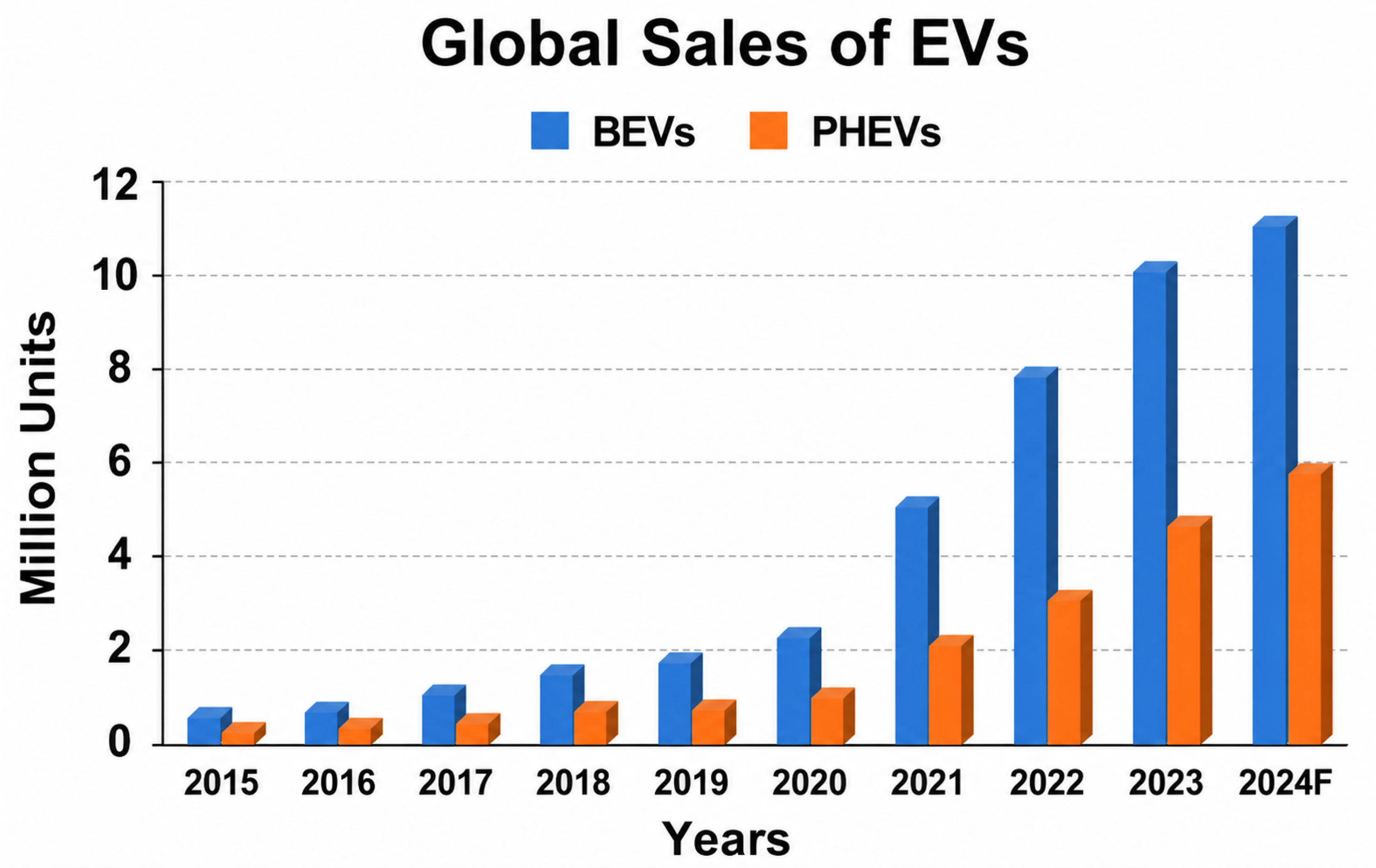
Combined global sales of battery electric vehicles (BEVs) and plug-in hybrid electric vehicles (PHEVs) increased by 22% year-on-year, reaching 1.35 million units [
3]. EV sales increased from 0.543 million units in 2015 to 16.5 million units in the first half of 2024, with their market share rising from 0.6% in 2015 to 19.2% in the first half of 2024 [
4], as illustrated in
Figure 1. Global EV sales further increased by approximately 3.5 million units in 2023 compared with 2022, corresponding to an annual growth rate of 35%. Compared with 2018, this sales volume was more than six times higher. On a weekly basis, new registrations surpassed 250,000 units, exceeding the total annual registrations recorded in 2013. EVs accounted for roughly 18% of total global passenger car sales in 2023, up from 14% in 2022 and just 2% in 2018, reflecting the accelerating market penetration of EVs. BEVs constituted around 70% of the total electric car stock in 2023, underscoring their dominant role in the transition toward low-emission transportation [
5]. The recent expectations from the International Energy Agency (IEA) and BloombergNEF (BNEF) indicate that global EV sales will maintain a strong upward trend throughout this decade, reaching between 40 and 50 million units annually by 2030. BEVs are expected to account for roughly 85–90% of these sales [
5,
6]. The global EV stock is projected to surpass 200 million vehicles by 2030, representing nearly half of the worldwide passenger car fleet under the stated policies scenario [
5]. This anticipated growth is largely attributed to ongoing advancements in battery technology, reductions in production costs, and stronger policy measures such as the European Union’s carbon oxide (CO
2) emissions standards. In addition, the rapid expansion of charging infrastructure and increased integration of EVs into power grids are expected to further accelerate adoption, positioning EVs to overtake ICE cars in several major markets before the end of the decade.
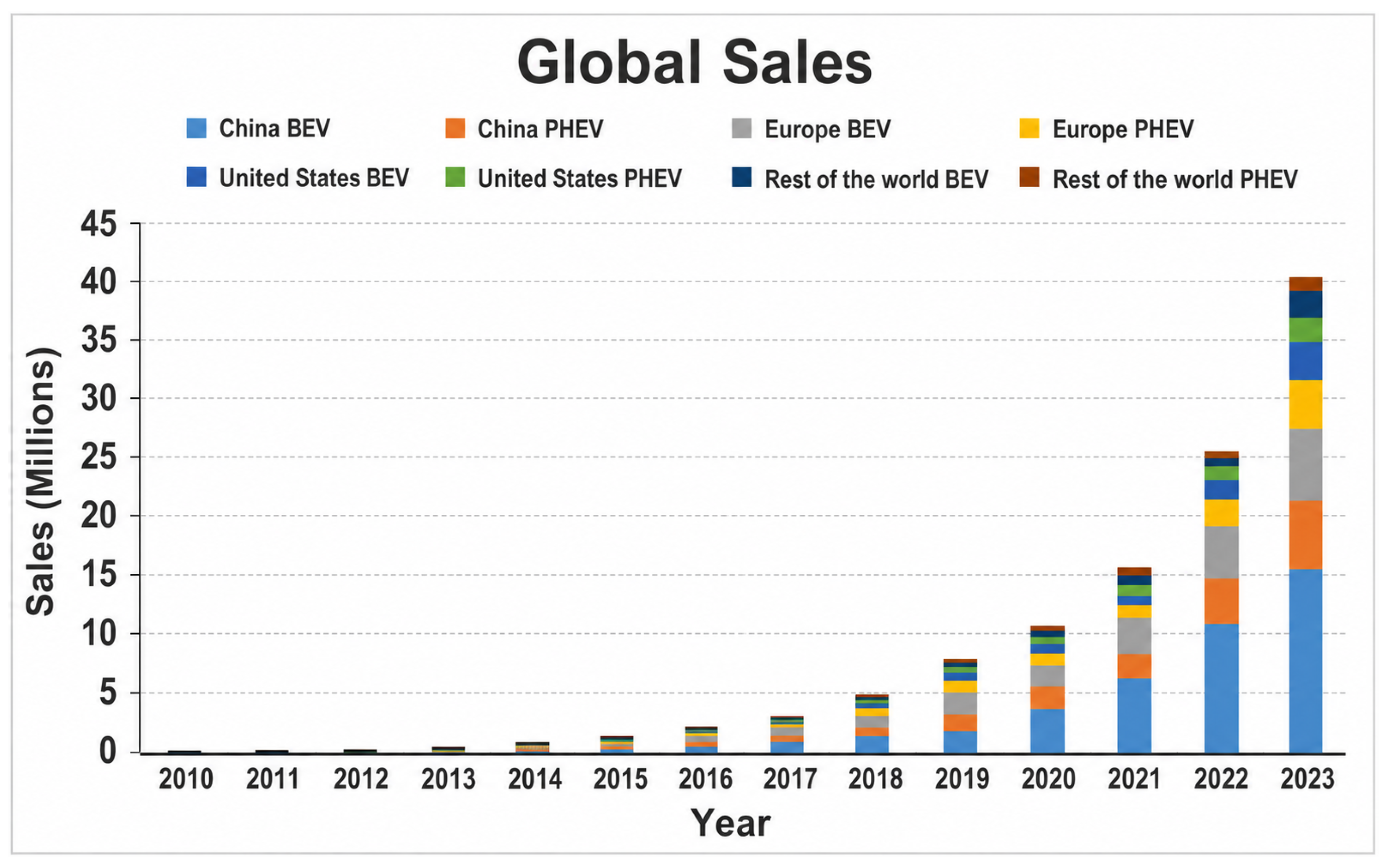
Despite this growth, most EV sales remain concentrated in a few major markets. In 2023, China dominated with nearly 60% of all new electric car registrations, followed by Europe at approximately 25% and the USA at about 10%—together representing nearly 95% of global EV sales, as shown in
Figure 2. EVs constitute more than one-third of new car registrations in China, more than one-fifth in Europe, and one-tenth in the USA. Adoption remains low in other developed automotive markets, including Japan and India. This uneven sales distribution creates a similar pattern in global EV stock. The three regions of China, Europe, and the USA together account for two-thirds of worldwide passenger car sales and vehicle population, which will largely determine how their electrification efforts influence global EV adoption patterns [
5].
Charging stations are facilities where EVs connect to recharge their batteries. Depending on desired charging speed and location (e.g., home, workplace, or highway), different power levels and connector types are employed. These stations comprise power electronics, safety and control systems, communication modules, and user interfaces to effectively supply electricity to EVs.
The primary contribution of this work lies in the development of a unified, cross-disciplinary framework that bridges the traditional gaps between power electronics hardware, control software, and grid-level infrastructure, providing a comprehensive analysis of the modern EV charging ecosystem within a single reference. Methodologically, this study presents a comprehensive review of EV charging technologies complemented by a structured comparative analysis of 13 review papers published between 2015 and 2026. The selected review papers were identified based on their relevance to key topics addressed in this work, including EV charging technologies, charging standards, power converter topologies, charging control methods, renewable energy integration, and future research challenges. To ensure a consistent evaluation, the reviewed papers were compared according to eight predefined research objectives (
–
, as summarized in
Table 1. This approach enables the identification of research trends, literature gaps, and emerging directions in EV charging technologies. On a hardware level, the paper delivers a rigorous technical evaluation of advanced AC/DC and DC/DC converter topologies, focusing extensively on the integration of next-generation wide-bandgap (WBG) semiconductors like SiC and GaN to map peak efficiencies and power density indicators. Furthermore, it synthesizes software intelligence by contrasting classical battery charging protocols (CC–CV and CP–CV) against advanced linear and non-linear control algorithms, such as Model Predictive Control (MPC) and Sliding Mode Control (SMC). Finally, this review extends into system-level dynamics by providing a strategic roadmap for bidirectional Vehicle-to-Grid (V2G) energy management and multi-port architectures, explicitly addressing how localized energy storage can mitigate grid stability issues caused by intermittent solar and wind energy penetration.
In
Table 1, “fully covered” indicates that the corresponding research objective is comprehensively addressed in the reviewed paper; “partially covered” indicates that the topic is discussed but with limited depth, scope, or analysis; and “not covered” indicates that the research objective is not explicitly addressed.
The remainder of this paper is organized as follows:
Section 2 provides an overview of different types of EVs, highlighting their respective advantages and disadvantages.
Section 3 reviews various battery charging methods and standards applicable to EVs.
Section 4 analyzes the power converters used in EV systems, including AC/DC rectifiers and DC/DC converters.
Section 5 examines bidirectional power transfer between EVs and the electrical grid.
Section 6 focuses on the integration of RESs with the electrical grid and their relationship to EV charging infrastructure.
Section 7 discusses the key challenges and emerging trends in EV charging systems powered by RES. Finally,
Section 8 presents the conclusions of the study.
2. Types of Electric Vehicles
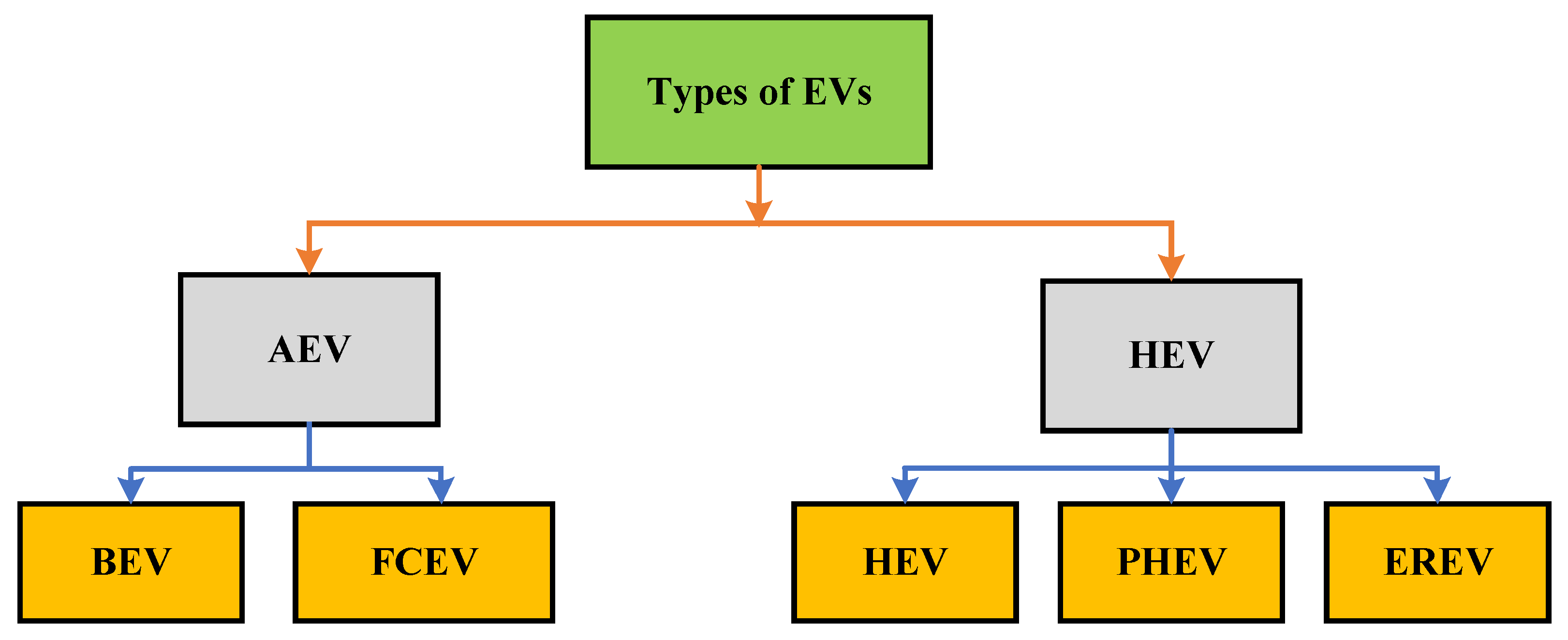
EVs can be broadly classified into two main types. Hybrid electric vehicles (HEVs) rely on two power sources: a conventional fuel (such as gasoline) and an electric motor. All-electric vehicles (AEVs), by contrast, rely solely on an electric motor. HEVs are further categorized into three subtypes: HEVs, PHEVs, and extended-range electric vehicles (EREVs). AEVs are divided into two primary categories: BEVs and fuel cell electric vehicles (FCEVs) [
22], as shown in
Figure 3.
BEVs are a category of AEVs powered exclusively by electricity stored in a battery, without an ICE. They produce zero tailpipe emissions, making them an effective solution for mitigating global warming and combating climate change. BEVs rely on substantial battery packs as their primary energy source. One key advantage of BEVs is regenerative braking, which recovers kinetic energy during braking and converts it into electrical energy to recharge the battery.
The typical driving range of BEVs varies between 150 and over 500 km. However, some limitations include range anxiety, long charging times, and the need for accessible charging infrastructure [
23].
Table 2 presents a comparison of three representative BEV models.
FCEVs are a type of AEV whose energy source is hydrogen fuel cells that power an electric motor. They generate electricity through an electrochemical reaction between hydrogen
and oxygen
, producing only water as a by-product. The advantages of FCEVs include zero tailpipe emissions, quick refueling times (3–5 min), and a long driving range (typically 500–700 km). However, a major drawback is the very limited hydrogen refueling infrastructure. Examples of FCEVs include the Toyota Mirai (2014, Gen 1; 2021, Gen 2), which can travel up to 650 km on a single tank [
24], and the Hyundai NEXO (2018), which can travel about 610 km before refueling is required [
25].
An HEV is a type of vehicle that combines a conventional ICE with an electric motor powered by a small battery. Unlike a PHEV, an HEV does not need to be charged off-board. Instead, its battery is automatically recharged during driving, primarily through regenerative braking, which captures and stores energy that would otherwise be lost during braking or deceleration. The advantages of HEVs include lower emissions and improved fuel efficiency compared to traditional vehicles. However, HEVs are generally more complex, more expensive, and have a shorter electric-only driving range than conventional cars. An example of an HEV is the Toyota Prius (2026 Prius) [
26].
A PHEV is a type of EV that combines a traditional ICE with an electric motor powered by a larger battery equipped with a plug-in charging port. The all-electric driving range depends on the battery capacity and typically varies between 30 and 80 km. The advantages of PHEVs include lower emissions, extended driving range when using the ICE, and reduced fuel consumption. However, they are more expensive than HEVs, require external charging, and have larger batteries compared to HEVs. The Toyota RAV4 Prime (2024–2025) is an example of a vehicle that uses plug-in hybrid technology [
27].
An EREV is a type of EV that operates solely using an electric motor for propulsion. It features a large battery that provides substantial electric-only driving range, typically between 60 and 80 km. When the battery is depleted, a small ICE activates—not to drive the wheels directly, but to function as a generator that produces electricity. This electricity either recharges the battery or directly powers the electric motor, thereby extending the total driving range. Unlike a traditional HEV, the ICE in an EREV never directly propels the vehicle, keeping the powertrain fully electric. The BMW i3 is an example of an EREV featuring a lithium-ion battery with an optional gasoline engine used solely as a range extender [
27].
3. Standards, Charging Stations, Charging Methods, Charging Controls of EV Batteries
This section provides an overview of the key standards for EV battery charging, including those developed by the Institute of Electrical and Electronics Engineers (IEEE) and the Society of Automotive Engineers (SAE). Both AC and DC charging stations are discussed, along with the various charging methods used in EVs.
3.1. Standards of EV Charging
EV charging standards define how EVs connect and communicate with chargers, specifying plug types, power levels (AC/DC), and communication protocols. These standards vary by region, vehicle type, and charging speed. Different countries adopt specific standards based on local preferences and technological development.
For example, CHAdeMO is widely used in Japan and has been adopted in parts of Europe for fast charging of early Japanese-manufactured EVs, such as the Nissan Leaf [
28]. In contrast, the USA primarily follows IEEE [
29] and SAE standards, particularly SAE J1772 and the Combined Charging System (CCS) [
11]. Meanwhile, China employs the GB/T standards, administered by the Standardization Administration of China (SAC), generally compliant with International Electrotechnical Commission (IEC) frameworks [
17,
30].
In SAE standards, “Level” refers to the charging power classification, while the equivalent term in IEC standards is “Mode”.
Table 3 summarizes the differences among SAE J1772, IEC 62196, IEC 61851-1 [
31], and Tesla NACS [
32]. According to SAE J1772, on-board chargers operating at AC Level 1 and Level 2 use 120 V and 240 V, delivering approximately 1.92 kW and 19.2 kW, respectively. These moderate power levels are ideal for slow, sustained charging sessions—such as leaving a vehicle plugged in overnight—without imposing heavy loads on the electrical supply. All standards in
Table 3 apply to conductive charger types [
11]. Off-board chargers operating at DC Mode 3 and Mode 4 typically run at 200–450 V DC and are designed for DC fast charging, currently reaching up to 400 kW.
It should be noted that the standards summarized in
Table 3 address different aspects of EV charging. Some standards define charging levels or charging modes (e.g., IEC 61851 and SAE J1772), while others specify connector interfaces and communication requirements (e.g., CCS, CHAdeMO, and GB/T). Therefore, the comparison is intended to highlight their respective roles within the EV charging ecosystem rather than to provide a direct comparison of equivalent standards.
The IEC 62196 standard [
33] specifies three AC charging levels and one DC charging level. For DC fast charging, four types of couplers are defined: Configuration AA (CHAdeMO), Configuration BB (GB/T, China), Configuration CC (Type 1 CCS, North America), and Configuration FF (Type 2 CCS, Europe and Australia).
ISO 15118-20 [
34] and the SAE J2954 [
35] family address complementary aspects of EV charging, covering communication protocols, power delivery methods, and system architectures. ISO 15118-20 focuses on high-level communication for bidirectional charging between the EV and external EV supply equipment (EVSE). In this case, the physical charger is typically a conductive DC fast charger based on the CCS standard. These chargers operate in DC modes or levels, with DC bus voltages up to approximately 1000 V, currents up to 400 A, and maximum powers reaching several hundred kilowatts on current CCS-based systems [
34]. In contrast, SAE J2954 standardizes inductive wireless power transfer (WPT). Here, the source charger consists of a ground assembly pad and associated power electronics. Power is supplied as AC on the input side and transferred contactless across the air gap via high-frequency resonant coupling. The standard defines multiple WPT power classes or modes—for example, WPT1 (3.7 kW), WPT2 (7.7 kW), and WPT3 (11 kW) for light-duty vehicles, with extended classes such as WPT9 for heavy-duty applications. The DC voltage and current on the vehicle side are not fixed by the standard but are determined by the onboard rectifier and battery system [
35]. Together, these standards illustrate two complementary approaches to EV charging: ISO 15118-20 emphasizes communication and integration for high-power conductive charging, while SAE J2954 provides guidelines for flexible, contactless power transfer, with clearly defined power classes that span light- to heavy-duty applications.
EV charging standards refer to a variety of regional and functional standards that, together, define the overall landscape for the world’s charging infrastructure. There are many standards, some of which include SAE J1772 for AC charging, Levels 1 and 2 (North American legacy, 2010, with revisions in 2024), IEC 62196 for plug types such as Type 1, Type 2, and CCS (global, 2011), IEC 61851-1 for conductive modes (2001), Tesla NACS/J3400 for narrow connectors for AC/DC up to 1 MW (SAE adoption, 2024), ISO 15118-20 for bidirectional V2G communication, and SAE J2954 for wireless charging (3.7 kW to 500 kW, 2017, with heavy-duty modes expected for 2026). All these standards, together, define the overall landscape for the world’s charging infrastructure. In the case of the USA, the primary standards are J1772, NACS, and CCS1, with pilot projects also underway. In the case of Europe, the publicly stated mandates are Type 2, CCS2, and ISO 15118. In the case of China and Japan, the standards are GB/T and CHAdeMO, respectively, with pilot projects for wireless charging underway. Convergence standards are also underway, with the ISO layer building upon the IEC and SAE standards.
CCS, CHAdeMO, ISO 15118, and Open Charge Point Protocol (OCPP) are key technologies that support modern EV charging infrastructure by addressing different aspects of the charging process. The CCS is a widely adopted conductive charging standard that supports both AC charging and high-power DC fast charging through a single connector [
11]. CHAdeMO is a DC fast-charging standard developed in Japan and is recognized for its support of bidirectional V2G power transfer [
28]. ISO 15118 defines the communication protocol between the EV and the charging station, enabling advanced features such as Plug-and-Charge authentication, smart charging, and V2G operation [
34]. In contrast, the OCPP manages communication between charging stations and central management systems, facilitating remote monitoring, billing, load management, and interoperability among charging networks [
29].
3.2. Classification of Charging Stations for EVs
EV charging stations are designed to ensure reliable, efficient, and user-friendly energy transfer. Charging stations are generally classified as AC or DC.
3.2.1. AC Charging Stations
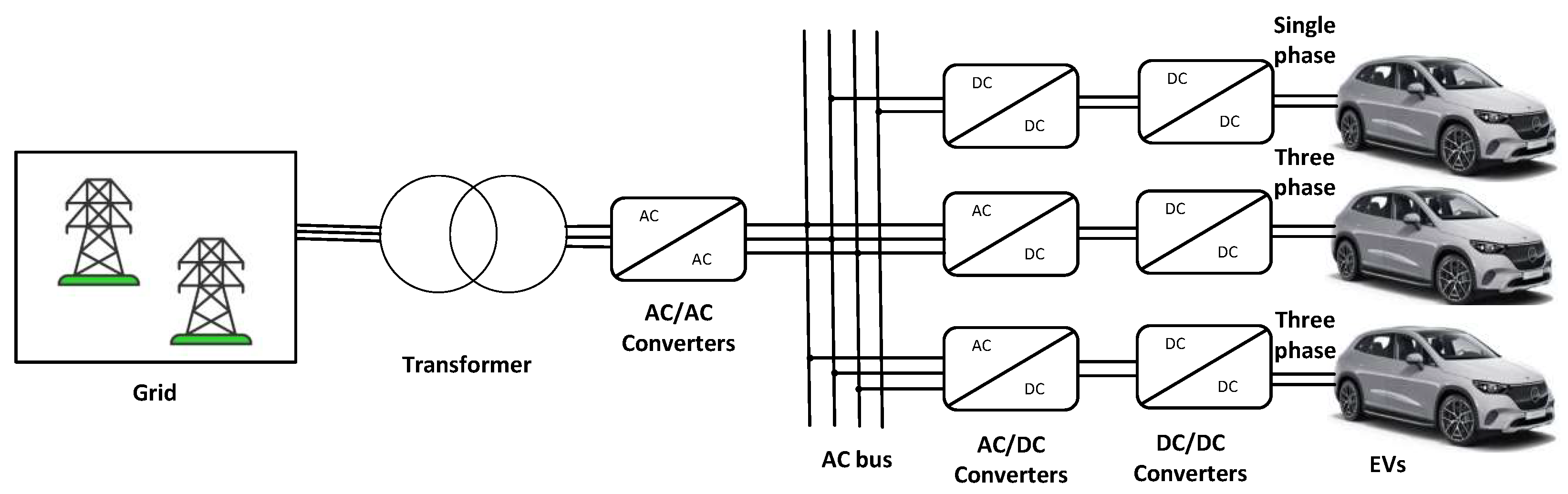
AC charging stations use single-phase or three–phase power, depending on the EV, battery capacity, and desired charging duration. Single-phase systems typically operate at 120–240 V, while three–phase systems operate at 250–480 V, enabling faster charging. Single- and three–phase stations are shown in
Figure 4. AC charging stations utilize the vehicle’s on-board charger.
AC stations offer advantages including widespread availability, lower protection requirements, suitability for local loads, and high stability. They also enable control of real and reactive power. However, drawbacks include the need for multiple power converters, which reduce efficiency and rated power output, increase costs, and require additional stages to mitigate harmonics. Maintaining power quality and integrating with RES is more complex due to DC/DC conversion requirements [
16]. AC bus-connected slow charging is typically limited to 19.2 kW [
14].
3.2.2. DC Charging Stations
DC charging stations deliver current directly to the battery using off-board chargers, making them ideal for fast and ultra-fast charging. They operate up to 1000 V DC, with DC fast charging ranging from 22–200 kW and ultra-fast charging reaching 350 kW today [
12] and expected to increase to 500 kW or higher in next-generation chargers.
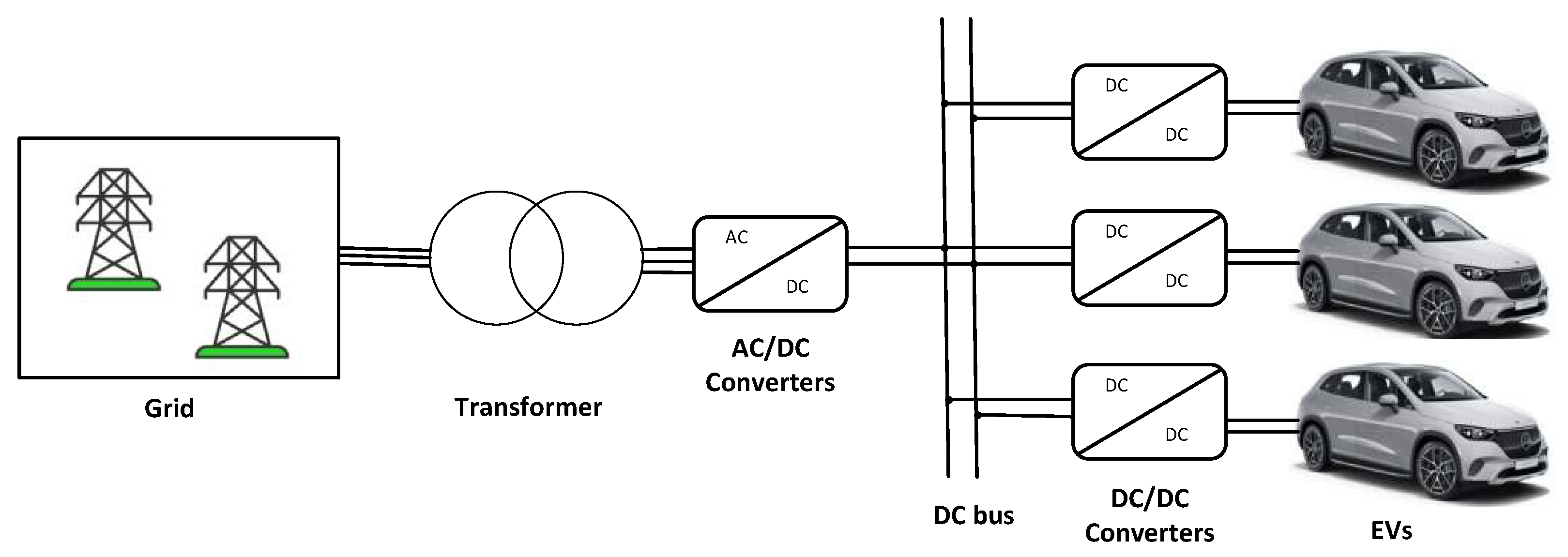
Figure 5 shows a DC charging station.
DC stations offer advantages including simplified control, high efficiency, lower infrastructure costs, and ease of integration with RES and ESS. However, drawbacks include the need for robust protection devices, higher system complexity due to additional power sources, and centralized converters for high-power levels [
16].
The planning and siting of high-power off-board DC charging infrastructure require careful geographical and spatial analysis. In [
36], feasibility frameworks for highway fast-charging stations were established by mapping spatial demand patterns along transit corridors. However, when deployed at scale, these high-power charging loads can pose significant challenges to local distribution systems. In [
37], it was demonstrated that the high power demand of fast chargers can adversely affect voltage stability and reduce the reliability of radial distribution systems.
3.3. Classification of EV Charging Methods
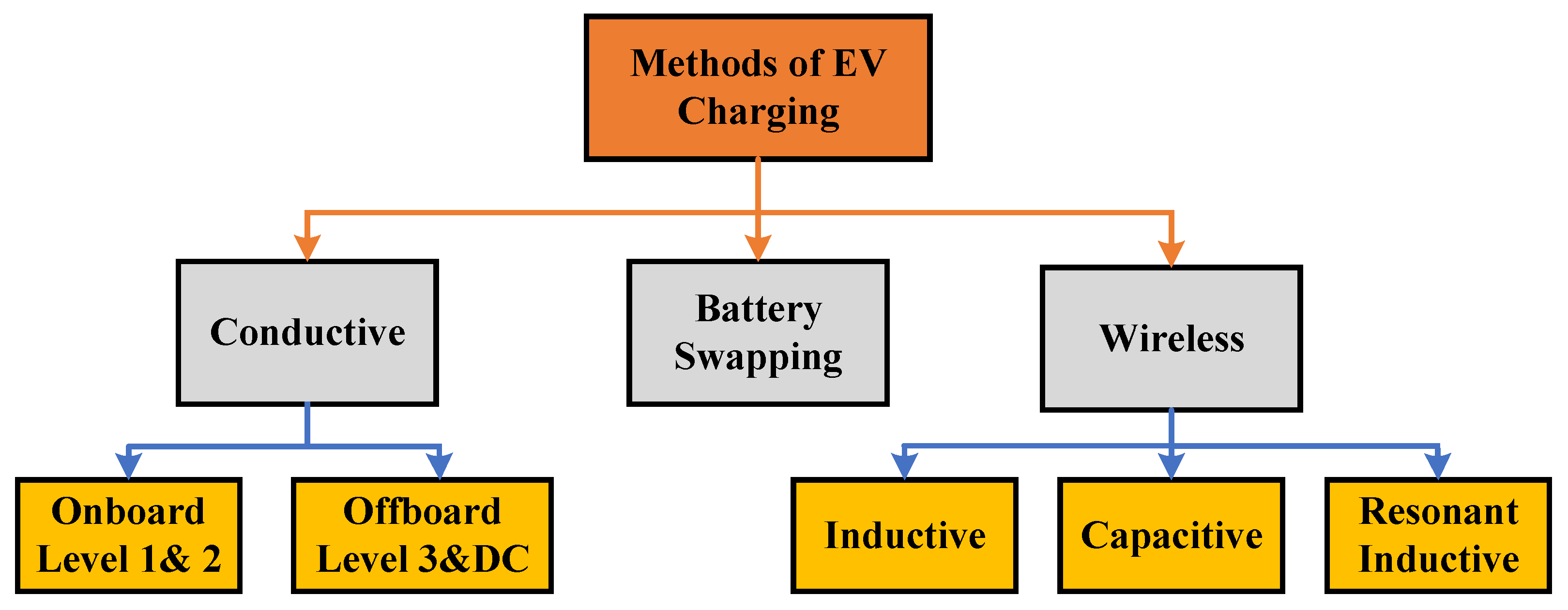
The three main EV charging techniques are conductive charging, wireless charging, and battery swapping. Conductive charging is the most common and efficient method. It can be implemented as on-board charging (charger inside the vehicle) or off-board charging (external charger).
Figure 6 shows these methods.
3.3.1. Conductive Charging
Conductive charging delivers electricity directly via plugs and cables, supporting Level 1, 2, 3, and DC fast charging. Its benefits include high efficiency, low energy loss, widespread availability, and integrated protection against overvoltage and overcurrent. It also supports bidirectional power flow, including V2G and Grid-to-Vehicle (G2V) [
38].
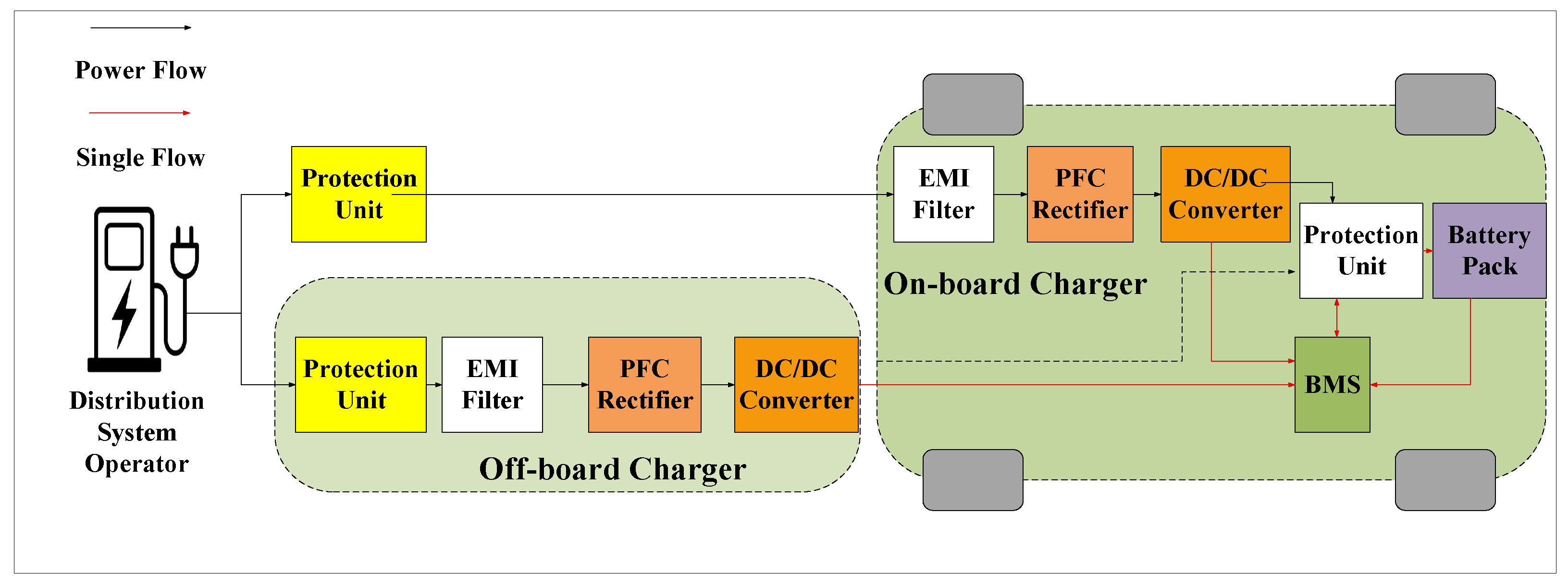
On-board chargers convert AC from the grid to DC for the battery, supporting Level 1 and 2 charging with low power and long durations (hours to a full day). They require less infrastructure and are suitable for residential or workplace charging [
39].
Off-board chargers provide DC directly, supporting Level 3 and fast charging. Charging times are reduced to minutes, but they require significant infrastructure, typically located along highways and at public hubs.
Figure 7 illustrates these configurations. The battery management system (BMS) manages battery charging in both cases.
3.3.2. Battery Swap Stations
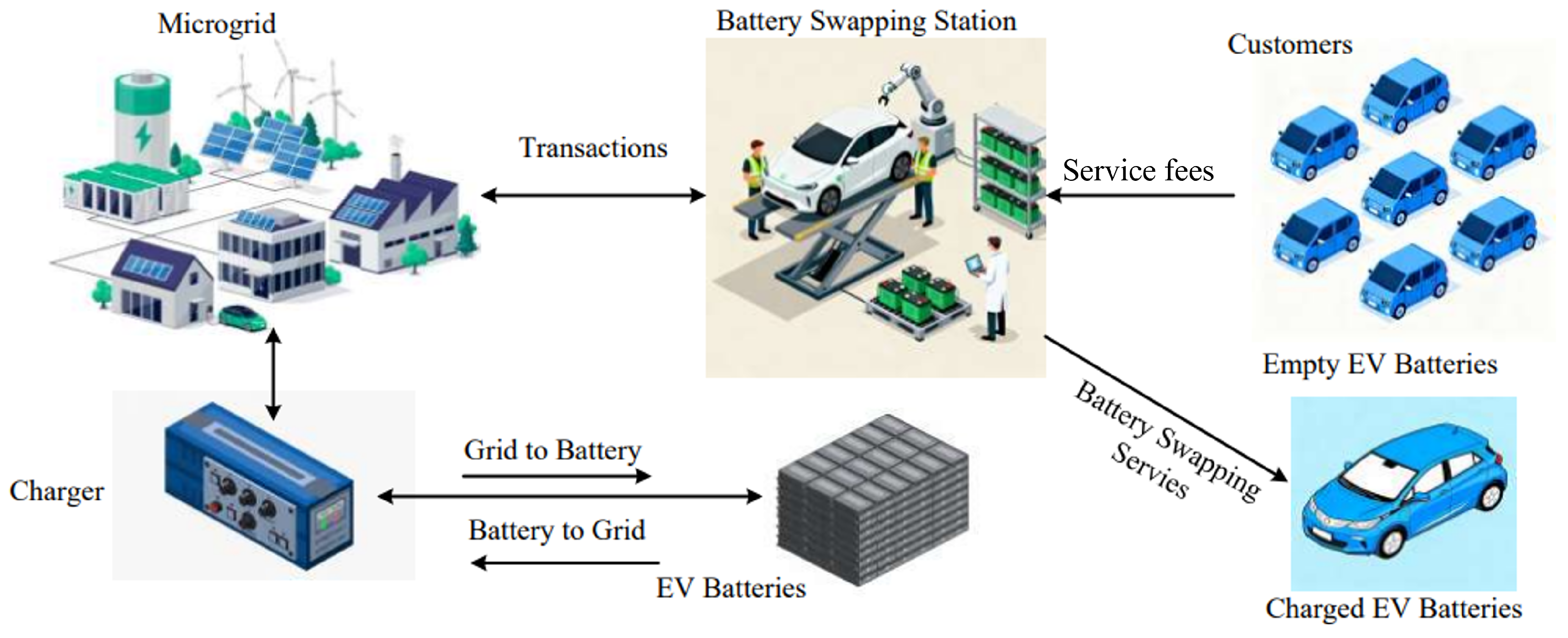
Battery swapping replaces a depleted battery with a fully charged one, reducing downtime and improving convenience [
40]. Robotic systems complete swaps in minutes, similar to refueling conventional cars [
41]. For example, Tesla swaps a battery in 1.5 min, reducing range anxiety [
42,
43]. The swapping company manages maintenance, quality, and warranty. Off-peak charging reduces grid stress [
44,
45].
Figure 8 shows a battery swapping station.
3.3.3. Wireless Charging
WPT delivers electricity without physical connectors via electromagnetic fields (EMFs). Methods include Capacitive Power Transfer (CPT), Inductive Power Transfer (IPT), and Resonant Inductive Power Transfer (RIPT) [
46]. Only CPT and IPT are used for EV batteries, with IPT being the most effective due to power range and air gap (10–40 cm) [
47]. IPT allows charging while driving, is maintenance-free, and requires no physical connection.
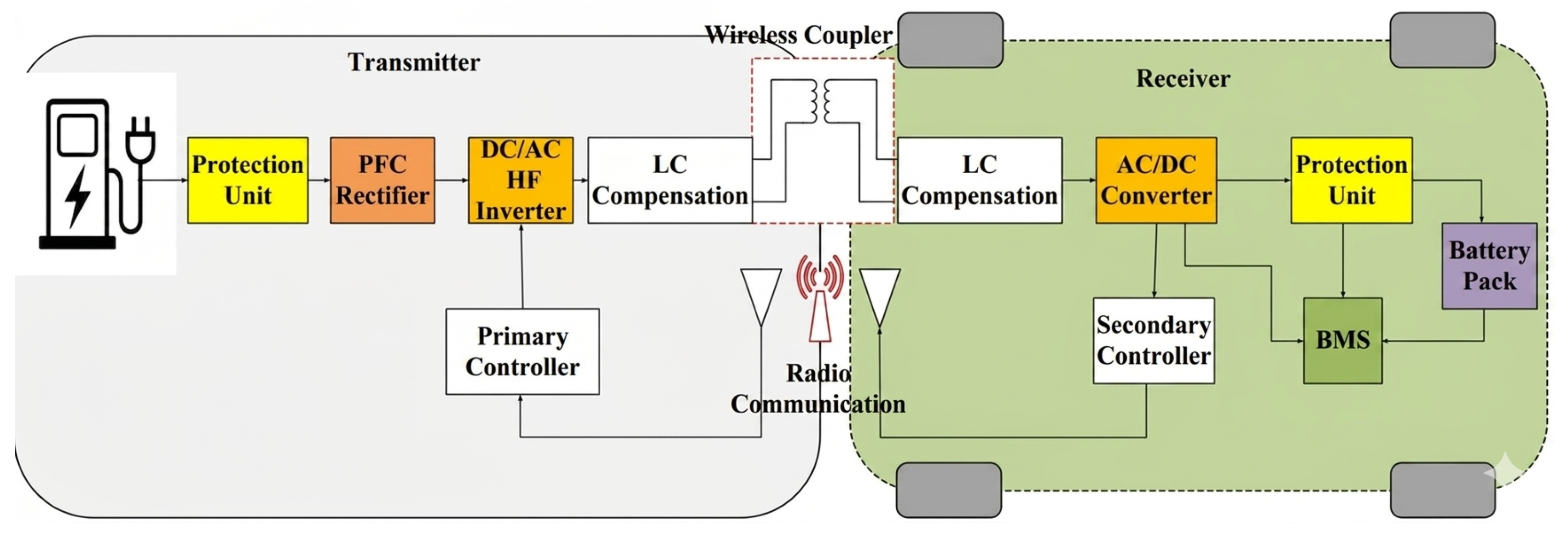
Figure 9 shows an IPT system, consisting of a transmitter circuit (grid-connected AC/DC rectifier, PFC, high-frequency inverter, LC network, protection unit) and a receiver circuit in the vehicle (LC network, AC/DC rectifier). The transmitter coil generates a high-frequency magnetic field, inducing voltage in the receiver coil, which is rectified to DC to charge the battery [
48].
The IPT charging modes are classified into:
Static: Vehicle stationary; simple infrastructure, limited locations.
Dynamic: Charging while moving; reduces battery size, requires high infrastructure investment.
Quasi-dynamic: Temporary stops (traffic lights); faster than static, lower infrastructure cost.
The drawbacks of IPT charging include limited power transfer, eddy current losses, communication latency, high cost, and potential EMF-related health risks [
49].
Recent developments in EV charging methods focus on ultra-fast charging rates above 400 kW, artificial intelligence-based predictive charging to improve grid stability, and V2G integration to facilitate power supply to the grid during peak demand [
50]. Recent developments in EV charging and battery technology indicate that laboratory-scale and early prototype solid-state lithium batteries for EV applications can achieve up to 80% SoC within 15–30 min under optimized fast-charging conditions, in addition to advancements in liquid-cooled battery systems and DC-coupled storage solutions aimed at reducing grid stress [
51]. Sophisticated charging methods, including constant current/constant voltage charging with soft-switching, are being employed to reduce battery aging during high C-rate charging sessions [
52,
53]. Other methods, like constant power/constant voltage charging, are also under investigation [
54]. In [
55], a comprehensive comparative analysis is presented for four observer-based control techniques—Luenberger, Sliding Mode, PI, and PID—used to estimate states of a lithium-ion battery. The study considers a second-order equivalent circuit model and evaluates performance using driving profiles and real-world EV field data. Meanwhile, Ref. [
56] proposes an intelligent fast-charging strategy for lithium-ion batteries, that optimizes charging duration while ensuring thermal safety and satisfying physical constraints.
3.4. Charging Control Protocols
EV battery charging requires efficient and reliable control strategies to ensure fast, safe, and durable energy transfer. Among the various approaches, the constant current–constant voltage (CC-–CV) strategy is widely used in EV battery charging because of its simplicity and reliability. In this conventional charging protocol, the battery is charged at a constant current until its terminal voltage reaches a specified limit, after which the charging current gradually decreases under constant voltage regulation. To improve charging performance, several advanced charging methods, including multi-stage CC, pulse charging, boost charging, and variable current profiles, have been proposed [
54]. Moreover, the advanced method of charging the EV battery is constant power–constant voltage (CP–CV) control.
In the CP-–CV charging strategy, the initial charging stage operates under constant power before transitioning to constant voltage. Compared with CC-–CV, the CP-–CV protocol maintains higher charging power during the initial stage, which can reduce charging time. It also operates with lower charging current, which could contribute to limiting battery temperature and prevent overheating while supporting higher C–rates during fast charging [
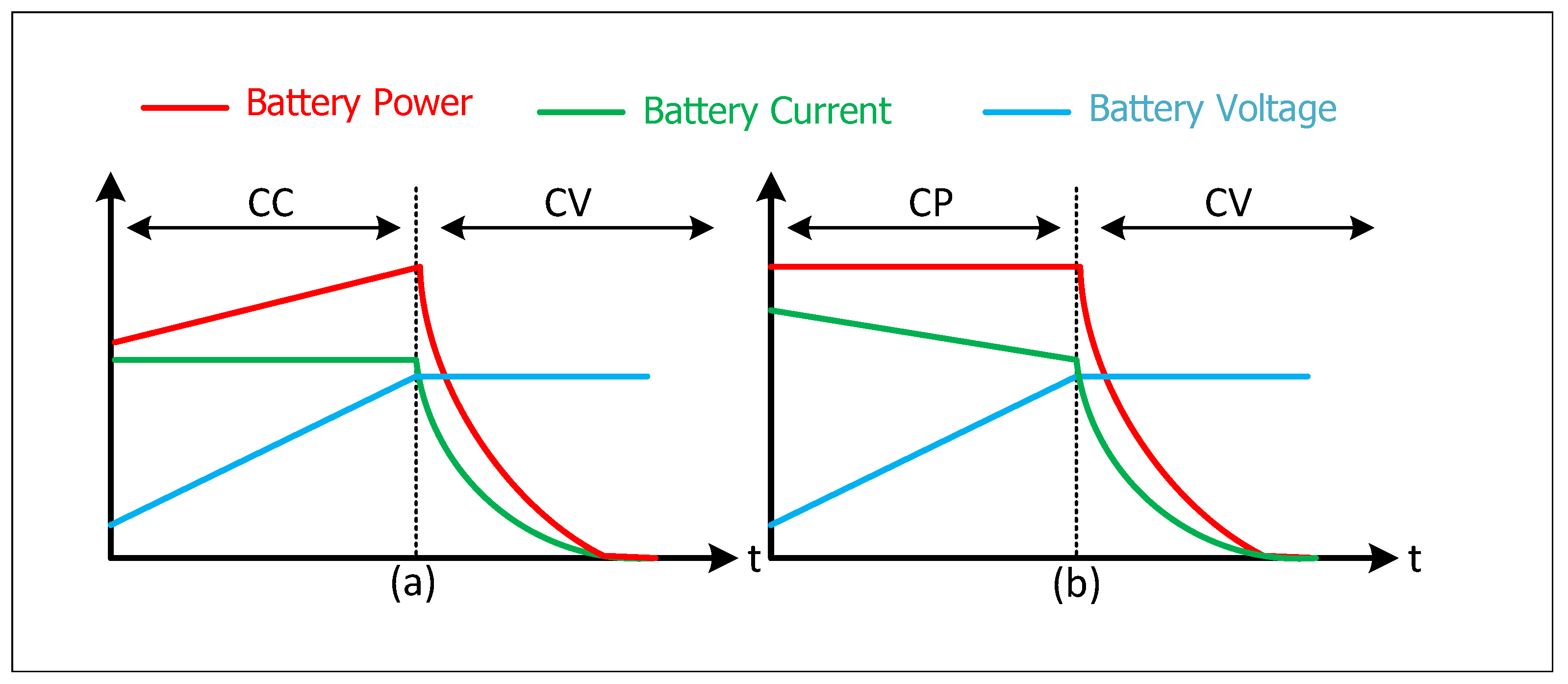
54]. The CC–CV and CP–CV EV charging protocols are illustrated in
Figure 10. The controller regulates the charging current and voltage to keep them within safe limits, thereby preventing both overcharging and undercharging. In addition, it manages the battery thermal system and monitors the state of charge (SoC) to reduce the risk of thermal runaway and improve battery lifespan. The following section presents various linear and nonlinear control techniques used in battery charging protocols together with their operating principles.
3.4.1. Proportional–Integral (PI) Controller
A linear PI controller is widely used in EV battery charging because it is simple, reliable, and effective. The proportional term makes the system respond quickly to changes in the charger parameters, while the integral term removes steady-state error and improves charging accuracy. In practice, this makes it well suited for regulating charging current and voltage during the CC and CV phases, even when battery conditions or supply variations change. Several studies have used PI-based control in EV battery charging systems to improve regulation and dynamic performance [
57]. In addition, modified plug-in EV charger controllers with grid-support functionality and revised PI strategies for DC/DC conversion have been reported to improve charging performance, reduce overshoot, and increase efficiency [
58]. More recently, optimized PI-based control has also been applied in PV-integrated EV charging microgrids to support better voltage regulation and adaptive energy management [
59].
3.4.2. Model Predictive Controller (MPC)
Charging an EV battery using model predictive control (MPC) begins by modeling the battery and charger dynamics in discrete time with periodic sampling and setting physical limits on current, voltage, SoC, and temperature, as well as grid or charging-station power constraints. At the beginning of each sampling period, MPC uses the measured battery current, SoC, voltage, and temperature, together with forecasts of the expected charging time, to solve an optimization problem over a future prediction horizon. This optimization computes a sequence of charging power or current references that minimizes charging time or battery degradation while ensuring efficient use. The controller then applies only the first value of this sequence to the charger and at the next expected value, repeats the whole process with updated measurements and forecasts in a receding-horizon manner, continuing until the battery reaches the desired SoC, at which point the charging session is safely stopped [
21]. Several studies have used MPC in EV charging because it can manage charging limits while still improving performance. For instance, it has been applied to fast charging of EV batteries to reduce charging time and temperature rise, to plug-and-play EV charging dispatch so that voltage limits are respected, and to stochastic energy management in charging hubs that include renewable generation and storage. In [
60], a hybrid fuzzy-MPC control strategy that simultaneously optimizes fast EV charging, advanced battery thermal management, and renewable grid integration has been proposed.
3.4.3. Fuzzy Logic Controller
A fuzzy logic controller (FLC) is an approach widely used in nonlinear systems. It can be applied without requiring a precise mathematical model and adeptly manages uncertainties. Its core principle relies on expert knowledge and linguistic rules rather than intricate equations, enabling intuitive design. Moreover, it can be integrated seamlessly with PI, PID, or hysteresis controllers to leverage their strengths, yielding smooth responses and straightforward tuning. Studies optimizing EV charging via SoC, error, and grid conditions demonstrated that FLC can be used to effectively handle the battery’s changing process by smoothly adjusting charging current and voltage, thereby improving efficiency, ensuring safety, and reducing battery stress [
61]. An FLC-based PID strategy for PV-powered chargers was used to improve voltage regulation and to minimize power losses in [
62], while a Mamdani fuzzy approach was employed in [
63] to enhance smart V2G charging/discharging, SoC management, and cost reduction.
3.4.4. Sliding-Mode Controller
Sliding Mode Control (SMC) uses a discontinuous control law to drive a selected system variable, known as the sliding variable, toward a predefined sliding surface in finite time. Once the trajectory reaches this surface, the controller maintains the system motion along it until the desired operating condition is achieved. SMC is widely used in power electronics because of its robustness against parameter variations and external disturbances. Originally it was developed in the analog domain, and later digital SMC was also used. Both analog and digital approaches are well suited and widely applied to power electronic converters [
21,
64,
65]. In EV battery charging, SMC works very well because it quickly adapts to changes [
66].
SMC has been extensively utilized in EV battery-charging systems, proving its robustness in different topologies and operational scenarios. In [
66], SMC was introduced for fast-charging of EVs, where it was shown that it effectively eliminates voltage overshoots and current peaks during CC–CV phases compared to fuzzy-logic control. In [
67], a PWM control law based on SMC was used for isolated DC/DC converters in battery storage, showing superior transient response and better steady-state accuracy under parameter uncertainties compared with a PI regulator. In [
68], SMC was combined with a Linear Quadratic Regulator (LQR) for PV-powered EV hybrid storage, yielding faster dynamics and improved disturbance rejection under variable irradiance conditions.
5. Power Flow
The power flow in EV charging systems can be classified into two categories: unidirectional (G2V) for battery charging and bidirectional (both G2V and V2G) for enabling both battery charging and grid-support services. In unidirectional G2V charging, an AC/DC rectifier is used on the grid side, while a unidirectional DC/DC converter is employed on the vehicle side within the on-board charger. This setup allows a relatively simple control strategy. In contrast, bidirectional systems enable energy transfer in both directions: from the grid to the vehicle during charging and from the vehicle battery back to the grid during discharge [
117].
Most existing charging infrastructure operates in unidirectional G2V mode. This approach uses minimal hardware and simple control strategies to deliver electricity from the grid or local generation sources to the EV battery. It facilitates easier grid integration and helps mitigate battery degradation [
13]. Unidirectional converters are often implemented in Single–stage configurations, reducing system weight, volume, cost, and power losses [
118]. Moreover, active front-end unidirectional converters can provide reactive power compensation by adjusting the current phase angle without drawing energy from the battery. Large-scale deployment of unidirectional chargers satisfies grid requirements while avoiding the cost, safety, and reliability challenges associated with bidirectional solutions.
Table 6 summarizes the differences between unidirectional and bidirectional charging systems.
V2G technology enables bidirectional energy exchange between EVs and the power grid, coordinated through communication protocols embedded in the charging infrastructure [
119]. In this mode, EVs simultaneously act as distributed generation units, ESSs, and controllable loads. Recent studies highlight V2G’s value in ancillary service markets—particularly voltage regulation and spinning reserves—beyond simple peak load management.
Standardized V2G testing programs typically focus on three areas: battery performance, network operation, and system-level response. BEVs, with their large storage capacities, offer not only extended driving ranges but also greater potential for grid support. Future developments in V2G will rely on advancements in energy storage technologies, powertrain systems, and charging infrastructure. Comprehensive testing and development are essential to ensure V2G systems reliably contribute to grid stability and operational efficiency under real-world conditions [
120].
The impact of EV charging on distribution network capacity is strongly influenced by the charging strategy employed [
121]. In uncontrolled charging, EVs begin charging immediately upon connection to the grid, which can lead to substantial increases in peak electricity demand, overloading of distribution transformers, higher power losses, and voltage fluctuations within the network [
122].
To mitigate these challenges, smart or coordinated charging strategies are used to manage the charging process based on grid conditions and user preferences [
123]. By shifting charging to off-peak periods, these approaches reduce peak demand and improve the utilization of existing network infrastructure [
124].
In addition, V2G technology provides further benefits by enabling EVs to supply stored energy back to the grid during periods of high demand [
125]. This capability supports services such as peak load reduction and voltage regulation, thereby enhancing distribution network hosting capacity and reducing the need for costly infrastructure upgrades [
121,
122]. Overall, advanced charging strategies improve power quality, increase system reliability, and facilitate the large-scale integration of EVs into future power systems [
122].
6. Renewable Energy Integration with EV Charging Stations
Integration of RES with EV charging systems is crucial for enabling clean, reliable, and cost-effective power for charging EV batteries. Moreover, RES integration benefits the power grid by reducing peak demand, minimizing transmission losses, and lowering overall energy transfer costs from generation to loads. EV charging systems are increasingly integrated with photovoltaic (PV) systems, wind energy, super-capacitors, and ESSs, with fuel cells emerging as a recent addition [
126,
127]. The availability of diverse RESs has led to the development of multiple EV charging system configurations. PV-based charging stations, in particular, have become more reliable due to recent technological advancements.
ESSs have emerged as essential components in RES-integrated EV charging infrastructure. For instance, Ref. [
128] proposed a hybrid optimization algorithm for integrated EV charging stations combining PV systems and ESS, which minimizes overall charging costs by optimally scheduling energy flows between PV sources, ESS, and the grid while improving system efficiency and reliability. Similarly, Ref. [
129] proposed an EV charging infrastructure integrating multiple energy sources, including the grid, PV, ESS, and a diesel generator (DG), to ensure uninterrupted charging availability. This hybrid configuration leverages PV generation for EVs, provides DG backup when PV and ESS are insufficient, and relies on grid connection to balance peak loads and enable bidirectional energy exchange. Compared to single-source charging solutions, such multi-source strategies improve system flexibility, cost-effectiveness, and reliability.
A decentralized adaptation integrating EV charging with wind power was presented in [
130], using real-time coordinated control to balance charging demand with intermittent wind generation. This approach enhances energy utilization efficiency, reduces grid stress, and lowers overall charging costs. Smart coordination of EV charging systems to maximize RES utilization significantly alleviates grid burden while meeting most charging demand with clean energy sources. Such strategies enhance grid stability, reduce greenhouse gas emissions, and promote sustainable energy integration [
131].
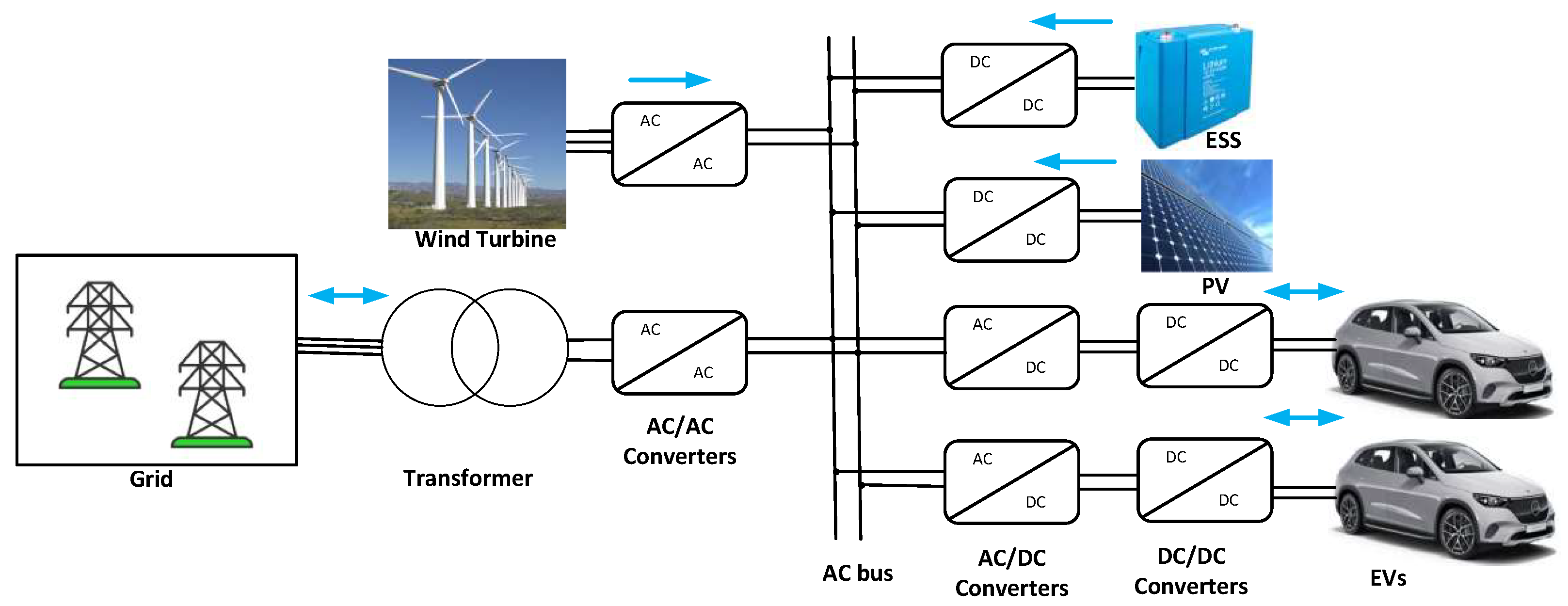
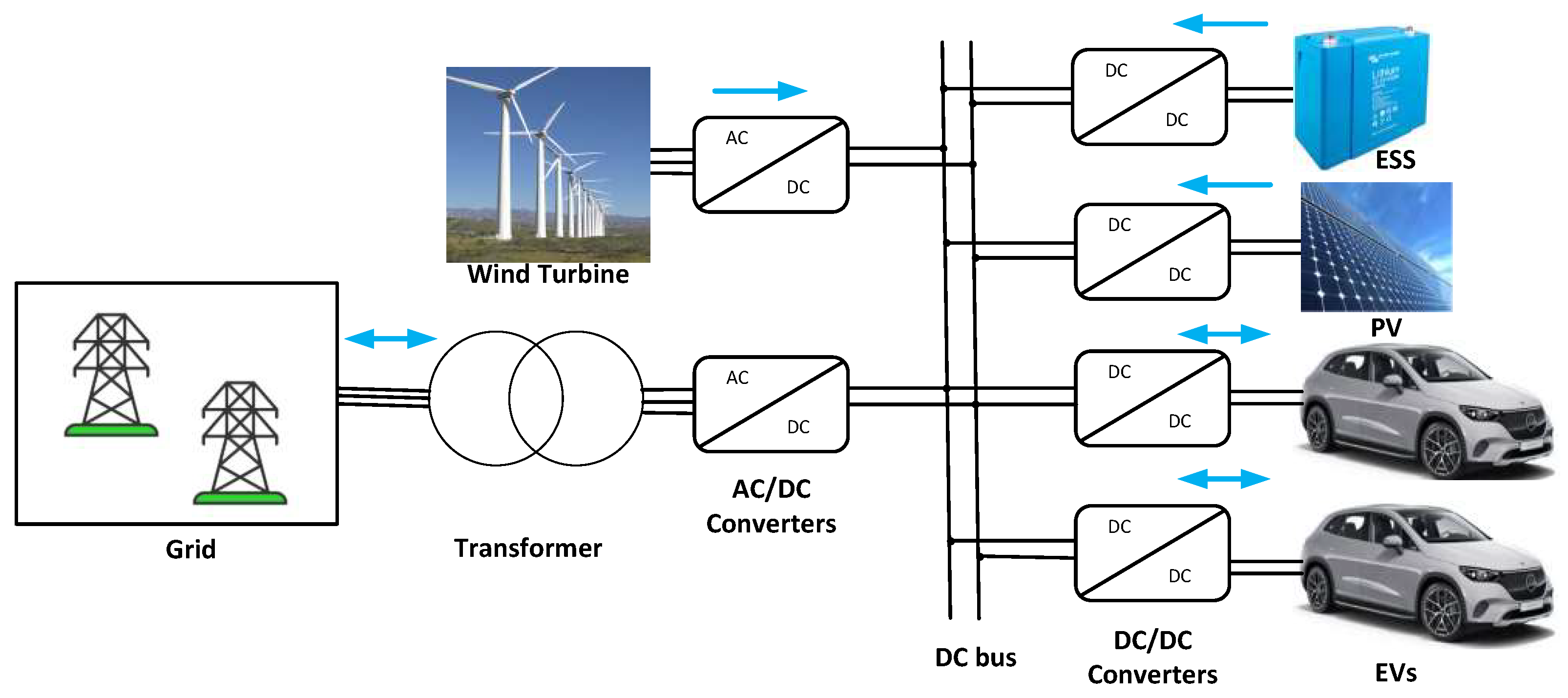
EV charging stations can be powered directly from the grid, RES, or hybrid combinations of both. The optimal choice depends on factors such as grid capacity and local availability, aiming to prevent overloads while maximizing charging efficiency through RES and battery storage. Many studies prioritize minimizing grid power draw during charging, which offers advantages such as reduced line losses, improved network efficiency, and enhanced reliability. Architectures of RES-integrated EV charging systems using a shared AC bus and a DC bus are illustrated in
Figure 33 and
Figure 34, respectively. These configurations typically combine the utility grid, PV panels, wind generation, ESS, and bidirectional EV charging/discharging capabilities, supported by suitable converters and control mechanisms.
RES-based charging systems are gaining popularity for several reasons. Integrating RES with EVs enables sustainable charging by directly powering vehicles with renewable energy, particularly during peak demand periods [
20]. Solar PV-integrated EV charging systems reduce grid reliance and alleviate peak load pressures. EV batteries also serve as effective storage for PV generation, and declining solar installation costs have accelerated PV adoption [
132]. Numerous studies show that coordinated operation of PV and EV systems can mitigate negative grid impacts associated with individual integration [
133]. However, integrating EVs and RES with the grid remains challenging, requiring advanced planning, multiple conversion stages, and sophisticated control strategies. Without proper coordination, system stability could be compromised, severely impacting the distribution network [
134]. Among the available options, RES-based common DC bus EV charging station (EVCS) architectures are extensively studied due to their superior efficiency, flexibility in integrating diverse energy sources, and advanced smart control capabilities [
135].
On-board charging systems face inherent limitations in weight, volume, and physical size, which restricts their power transfer capacities to levels typically corresponding to Level 1 and Level 2 charging. These chargers (on-board and off-board) can operate in unidirectional or bidirectional modes and usually employ a two-stage power conversion architecture, consisting of an AC/DC converter on the grid side and a DC/DC converter on the vehicle battery side. The AC/DC rectifier stage commonly uses half-bridge, full–bridge, or multilevel topologies, which constrain the overall power transfer capability. Consequently, on-board chargers generally require longer charging times compared to off-board chargers, but off-board chargers can deliver higher power more rapidly [
136].
Several studies have explored advanced control methods for on-board chargers to enhance grid support, controllability, and efficiency. For example, Ref. [
137] introduced a compact single-phase on-board charger using a current oscillation compensation technique. The configuration employs a series arrangement of a zeta converter and a boost converter with the EV battery, eliminating the need for bulky passive components. In [
138], a comparative study of wide band-gap devices for on-board chargers is presented, demonstrating a practical 400 V/80 A test bench using Si MOSFET components. A versatile on-board charger operating as both an AC/DC converter with PFC and a V2G converter, utilizing different inductors and switches, is presented in [
139]. Additionally, a three–phase on-board charging system integrated with the EV propulsion system is studied in [
140], featuring a 3.3 kW three–phase integrated charger with unity power factor, 92.6% efficiency, and THD reduced to 4.77%.
A literature review on integrated RES with on-board EV chargers is presented in [
141]. The study models a DG, EV battery, wind turbine, PV system, single-phase grid (230 V, 50 Hz), and load. System controls include P&O MPPT for PV, PWM for inverter and boost converter, and constant current control for EV charging, validated through MATLAB (
https://journal.esrgroups.org/jes/article/view/3740 (accessed on 15 April 2026)) simulations.
Similarly, Ref. [
142] demonstrates that hybrid renewable charging stations combining PV arrays, wind turbines, and EVs can meet diverse EV power demands, reduce fossil fuel dependence, and enable cleaner transportation. Challenges such as renewable intermittency and infrastructure costs can be mitigated through energy storage, robust grid integration, and supportive policies.
In [
143], a hybrid system comprising a 10 kW solar PV panel and a 10 kW biogas generator (20 kW total) is proposed, including standard charging assemblies and load management controls. A fuzzy logic-based energy management algorithm optimizes charging costs and maximizes renewable utilization. Results show cost reductions up to 74.67% compared to grid-only stations, greenhouse gas emissions reduction of 54.86%, and support for 4–20 vehicles. Similarly, Ref. [
144] explores RES integration with EV systems into smart grids using bidirectional charging, highlighting improved grid reliability and sustainable energy adoption. Ref. [
145] demonstrated models of grid connections with RES and PHEVs across three scenarios: grid only, grid with PHEV, and grid with PHEV plus RES, demonstrating improved reactive power management, maintained voltage profiles, reduced grid dependence, and stable operation.
Recent research has increasingly emphasized the integration of RES into off-board EV charging infrastructures to enhance transportation sustainability and alleviate stress on power grid systems. In [
146], an efficient PV-integrated multifunctional off-board EV charger was proposed to improve grid power quality. The charger uses a reduced-switch topology, which simplifies the converter structure and helps increase the overall efficiency. In [
147], an experimentally validated EV charging station with a reduced switch count converter topology was introduced. The design was focused on minimizing the number of active switches to reduce complexity, cost, and switching losses, without sacrificing reliability.
There are numerous benefits of using RESs, particularly solar PV panels, in EV charging infrastructures. First, they can decrease reliance on fossil fuels, lower greenhouse gas emissions, and improve the environmental friendliness of EV charging stations. Second, by depending on locally generated clean energy, they also increase energy security and can eventually reduce electricity bills by relieving demand on the main grid. Furthermore, solar-powered charging is particularly useful in isolated locations or areas with poor grid connectivity, where it may be costly or difficult to construct traditional charging stations [
20].
However, there are also important challenges of using RESs in charging systems. Solar power is not always available, since its output depends on weather conditions, time of day, and season. Because of this, charging systems often need energy storage, smart control systems, or backup grid power to operate reliably. Another major challenge is the high initial cost of solar panels, power electronics inverters, batteries, and other supporting equipment. Grid integration can also be complicated, since many solar-powered chargers may cause voltage and frequency fluctuations if they are not properly managed [
148].
The environmental effects are largely positive. Charging EVs with renewable energy sources can significantly reduce carbon emissions and air pollution compared with charging from fossil-fuel-based electricity. It also supports the move toward cleaner urban transport and reduces reliance on imported oil. Even so, the overall environmental benefit ultimately depends on how effectively the system is designed and managed. Without careful planning of energy storage, control strategies, and grid integration, part of the expected environmental gains may be offset by inefficiencies and additional infrastructure requirements [
20].
Despite significant advancements in EV charging technologies, the practical deployment of charging infrastructure remains associated with several technical, economic, and operational challenges. The installation of EV charging stations requires considerable capital investment, including equipment procurement, grid connection, land acquisition, and civil engineering costs. In addition, maintenance expenses related to charger reliability, communication systems, and periodic component replacement can significantly affect the long-term economic viability of charging networks [
149]. Safety considerations are equally important, requiring compliance with electrical protection standards, thermal management, and fault detection measures to ensure reliable operation. Furthermore, the widespread adoption of fast-charging stations imposes substantial stress on distribution networks, potentially leading to transformer overloading, voltage fluctuations, increased power losses, and the need for grid reinforcement [
149]. Consequently, effective charging station planning should consider not only charging demand but also grid capacity, traffic patterns, user behavior, renewable energy integration, and smart charging strategies to optimize infrastructure utilization and minimize adverse impacts on the power system [
150]. A comprehensive planning framework that balances installation cost, maintenance requirements, safety, and grid constraints is therefore essential for the sustainable expansion of EV charging infrastructure [
150,
151].
7. Future Trends and Challenges
EVs are expanding rapidly and are playing a central role in the ongoing transformation of the transportation sector. While this transition contributes to the reduction of greenhouse gas emissions, it also introduces significant challenges for electrical distribution networks. Among the most frequently cited concerns are limited driving range, relatively long charging durations compared with conventional refueling, high acquisition costs, and uncertainties related to battery durability. For this reason, continuous assessment of emerging technologies, innovative control strategies, and future EV charging paradigms is essential to improve system efficiency and ensure reliable integration with modern power grids [
16].
Forecasts reported by the U.S. Department of Energy [
152] suggest that substantial technological progress is expected in the coming years. Battery energy densities are projected to approach approximately 35,000 Wh/L, while the operational lifetime of EV batteries could exceed 500,000 km, corresponding to roughly 16 years of usage. These improvements are partly attributed to the ongoing development of solid-state battery technologies. At the same time, BEVs are becoming dominant in newly fabricated vehicles. Modular design approaches adopted by manufacturers provide greater flexibility, improve system performance, and contribute to cost reductions estimated at approximately 15–20% [
153].
Furthermore, over-the-air software updates allow vehicle manufacturers to remotely upgrade and modify embedded software without requiring physical intervention [
154,
155]. This capability enables continuous improvement of vehicle performance throughout its lifetime. In particular, it can be used to refine energy management strategies, enhance control algorithms, and optimize the operation of key subsystems such as battery management and power electronics. In addition, it allows the deployment of new functionalities after vehicle delivery, including improved driver assistance features, updated infotainment services, and enhanced user interfaces.
Beyond functional upgrades, over-the-air technology also plays an important role in maintenance and reliability. It enables rapid correction of software bugs, implementation of safety improvements, and mitigation of cybersecurity vulnerabilities, thereby reducing the need for service visits or hardware recalls. As a result, the vehicle becomes a more flexible and adaptive system, capable of evolving over time in response to user needs, regulatory requirements, and technological advancements.
Rapid progress is also observed in charging infrastructure, where ultra-fast charging stations rated between 350 kW and 800 kW aim to approach the refueling convenience of conventional ICE vehicles while employing artificial intelligence (AI) techniques for load optimization and dynamic pricing [
156].
Wireless Power Transfer (WPT) and V2G technologies are transforming EV charging by enabling greater convenience, automation and grid interaction. Resonant inductive coupling enables contactless charging, reducing maintenance requirements and facilitating usability in residential and workplace environments [
157]. Meanwhile, V2G systems enable two-way energy flow, allowing EVs to support the grid during peak demand and even generate additional revenue for users [
158]. In addition, advances in BMS and machine learning integration improve the accuracy of SoC estimation and extend battery life. Additional innovations in the Internet of Vehicles (IoV) and 5G-related frameworks enable real-time intelligent vehicle communication, resulting in better energy efficiency and mobility services [
159]. Integrating RESs such as solar and wind with energy storage and AI-based energy management systems will increase grid resilience and promote sustainable EV charging infrastructures.
Current Trends and Perspectives: Today’s EV ecosystem is rapidly evolving, with ultra-fast charging stations, expanding V2G services, and the rise of wireless charging. Researchers are exploring smart energy management, AI-driven charging optimization, and advanced battery technologies that offer higher capacity and longer life. These innovations are making charging more convenient, enhancing grid stability, and promoting sustainability, hence providing a clear outlook on the future of EV systems and renewable energy integration. Several emerging trends are set to shape the future of electric EV charging:
Dynamic WPT on roads: Charging while driving on specially equipped roads, allowing EVs to operate with smaller batteries and reducing the need for stops.
High-efficiency resonant systems: Improved coil designs and intelligent control strategies that maintain efficiency above 90%, even if the vehicle is not perfectly aligned.
Renewable-energy EV microgrids: Integration of solar and wind energy at charging stations with direct battery connections to provide cost-effective and efficient power.
V2G/V2X bidirectional energy flow: EVs contributing to grid stability by storing surplus renewable energy and feeding it back when needed, with AI optimizing the timing.
Solid-state batteries: Advanced batteries offering higher energy density, ultra-fast charging, and improved safety under frequent wireless or solar top-ups.
Smart battery management systems (BMS): Real-time monitoring of battery health and adaptive charging based on the availability of wireless power and renewable energy.
8. Summary and Conclusions
The rapid growth of EV adoption has been driven by continuous advancements in charging infrastructure, battery technologies, and power electronic converters. This review has comprehensively examined EV classifications, charging standards, charging station architectures, charging techniques, charging control strategies, converter topologies, and the integration of RESs into EV charging systems. In addition, the interactions between EV charging infrastructures and electrical distribution networks have been discussed, highlighting their role in supporting future sustainable transportation systems.
The findings of this review indicate that AC charging technologies are well suited for residential and workplace applications, whereas DC fast and ultra-fast charging architectures are essential for commercial and public charging infrastructures. Market trends demonstrate the rapid expansion of EV adoption, with global EV sales reaching approximately 16.5 million units in the first half of 2024 and China, Europe, and the USA accounting for nearly 95% of the global market [
4]. Furthermore, recent developments in charging infrastructure and power electronics have enabled higher charging powers while improving overall system efficiency.
Power electronic converter technologies remain a key enabling factor for advanced EV charging systems. Among the reviewed topologies, MMC structures provide excellent scalability and high efficiency for high-power applications, while DAB and CLLC converters offer efficient isolated DC/DC conversion for fast-charging stations. The adoption of wide-bandgap semiconductor devices, particularly SiC and GaN technologies, has significantly improved converter efficiency, switching performance, and power density, with reported efficiencies approaching 99% for advanced converter topologies. These improvements support the implementation of ultra-fast charging stations and facilitate the effective integration of renewable energy sources into EV charging infrastructures.
The review also highlights the importance of battery charging control strategies, including CC–CV and CP–CV methods combined with PI, MPC, SMC, and FLC controllers, for improving charging performance, reducing battery degradation, and enhancing operational safety. In addition, renewable-energy-powered charging stations offer significant environmental and economic benefits by reducing greenhouse gas emissions, lowering operating costs, and increasing energy sustainability. Previous studies have reported considerable reductions in both operating costs and emissions through renewable-integrated EV charging systems [
143].
Despite these advances, several technical challenges continue to limit the large-scale deployment of EV charging technologies. Grid congestion, battery driving range limitations, renewable energy intermittency, communication requirements, and the commercial implementation of V2G systems remain important issues. Although V2G and renewable-integrated charging stations provide significant opportunities for enhancing grid flexibility and energy management, their practical deployment requires further improvements in bidirectional power converters, battery management systems, communication protocols, and system interoperability.
Future research should focus on the development of highly efficient bidirectional converter topologies, broader adoption of wide-bandgap semiconductor devices, intelligent charging and energy management strategies, advanced V2G technologies, standardized communication protocols such as ISO 15118-20, and enhanced integration of renewable energy and energy storage systems. These developments will contribute to the realization of reliable, efficient, and sustainable EV charging infrastructures capable of supporting the continued global electrification of transportation.