A Synergistic Hybrid CPCM–Liquid Thermal Management System for High-Power Battery Modules


Abstract
1. Introduction
2. Physical Model and Numerical Methodology
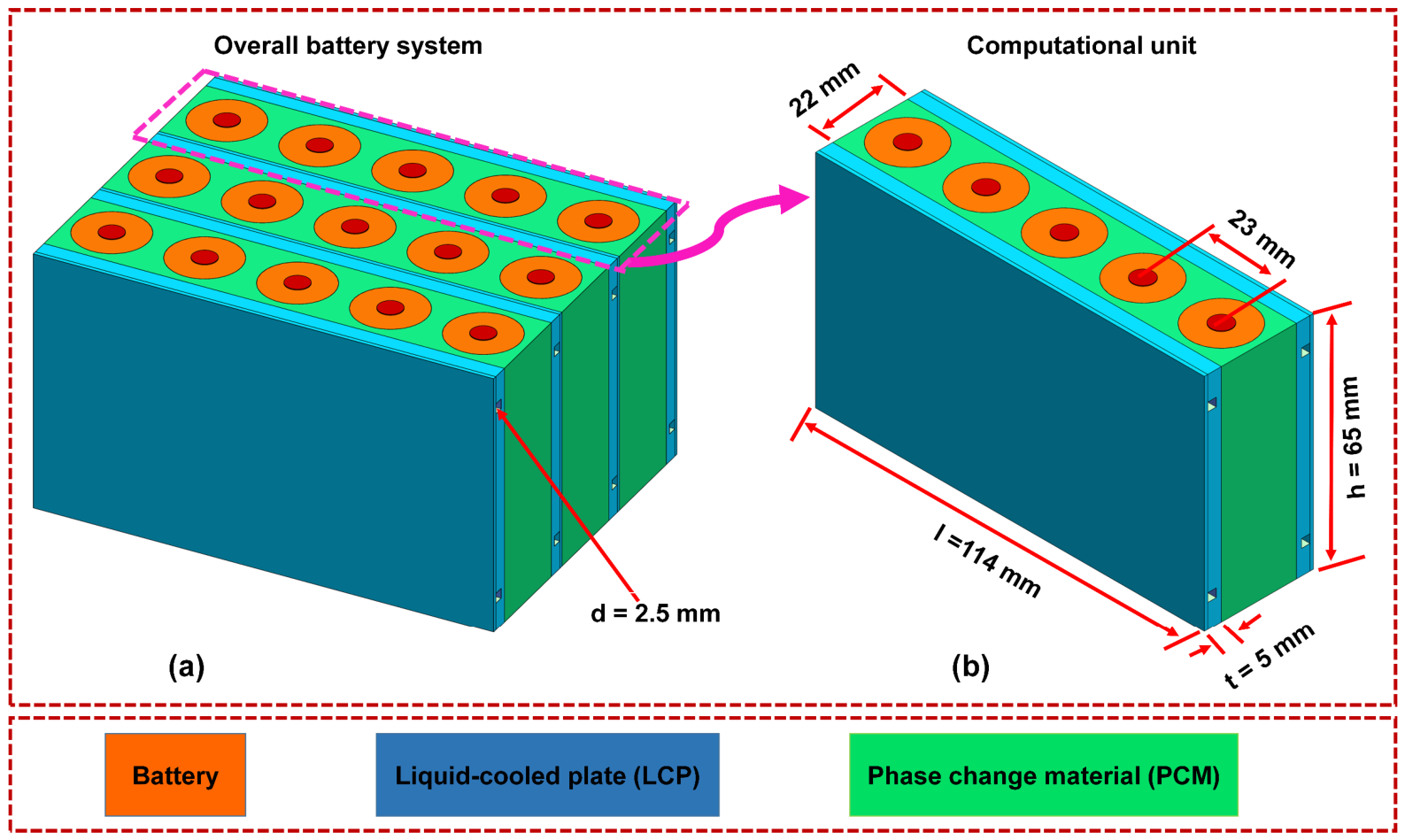
2.1. Physical Model of Hybrid CPCM–Liquid BTMS
2.2. Numerical Model and Governing Equations
2.2.1. Battery HG (Heat Generation) Model
2.2.2. Heat Transfer (HT) Model
2.3. Simulation Method and Boundary Conditions
- The simulations were conducted over a range of inlet temperatures from 291.15 K to 309.15 K, in increments of 6 K, along with various CFS to enable a comprehensive parametric analysis.
- A uniform velocity inlet condition was applied at the channel inlet, while a pressure outlet boundary condition with a gauge pressure of 0 Pa was prescribed at the channel outlet.
- A no-slip condition was prescribed at the coolant–LCP interfaces.
- The battery cell–PCM interface was modeled as a thermally coupled wall, with thermal contact resistance neglected.
- The PCM-LCP as well as coolant interfaces were also treated as thermally coupled walls to account for conjugate heat transfer.
- All other walls of the LCPs and battery cells were assumed adiabatic.
- The external surfaces of the batteries were subjected to natural convection, with a convective heat-transfer coefficient of 5 W/(m2.K).
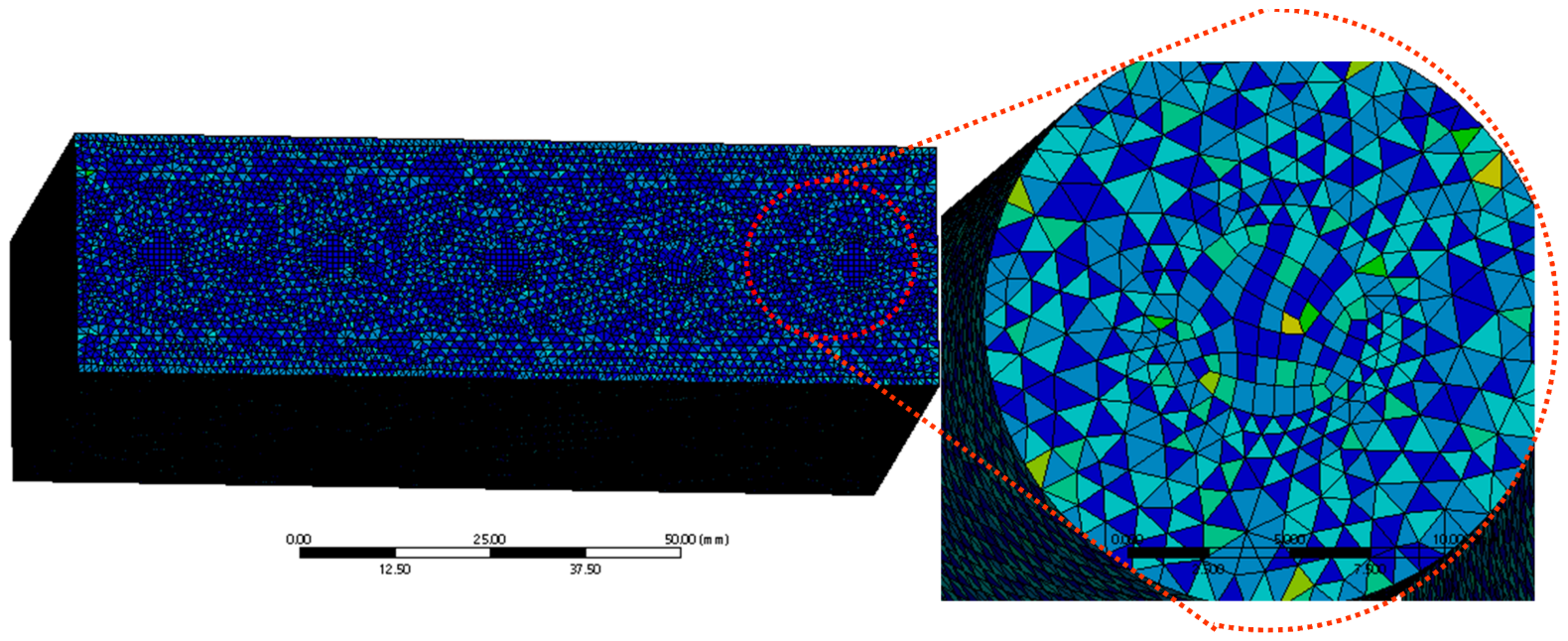
2.4. Grid Independence Verification
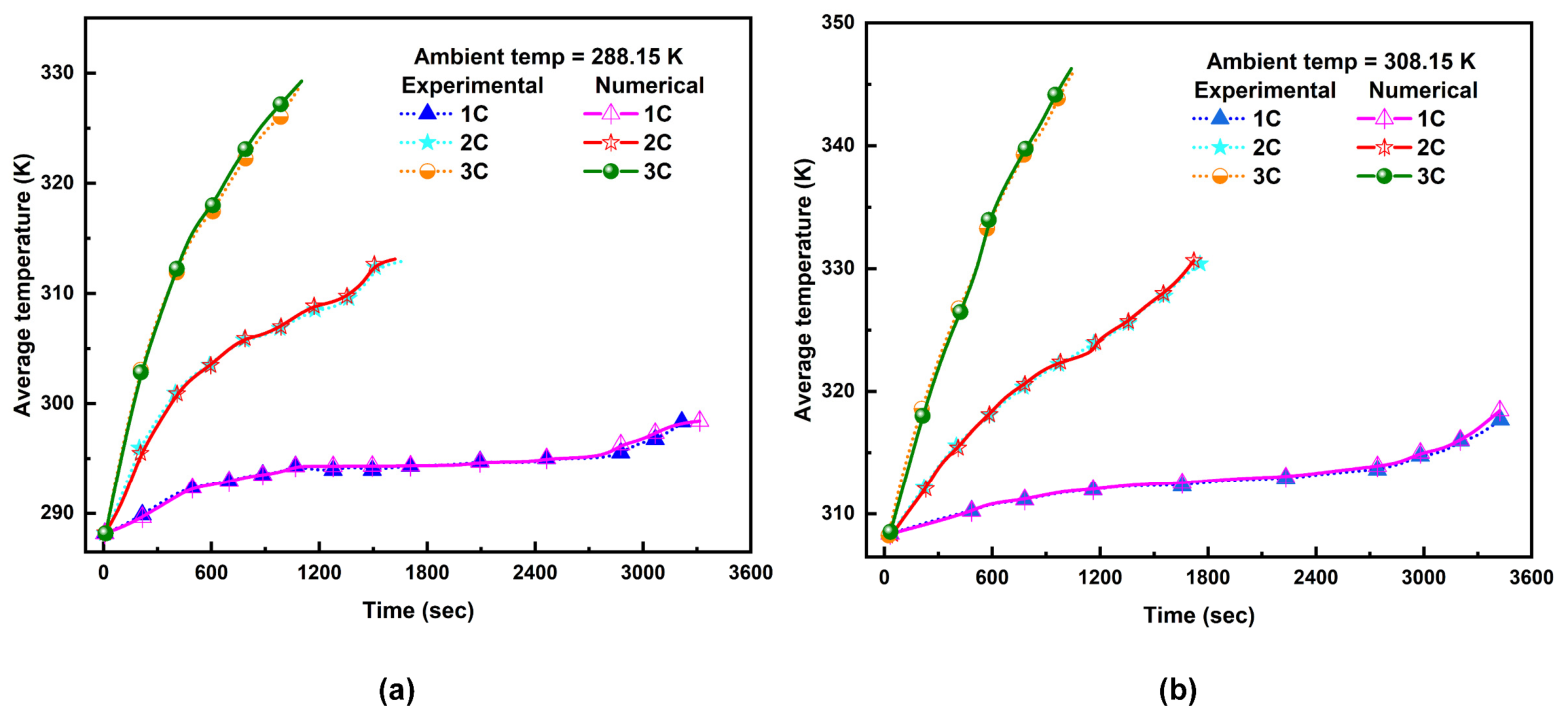
2.5. Model Validation
3. Results and Discussions
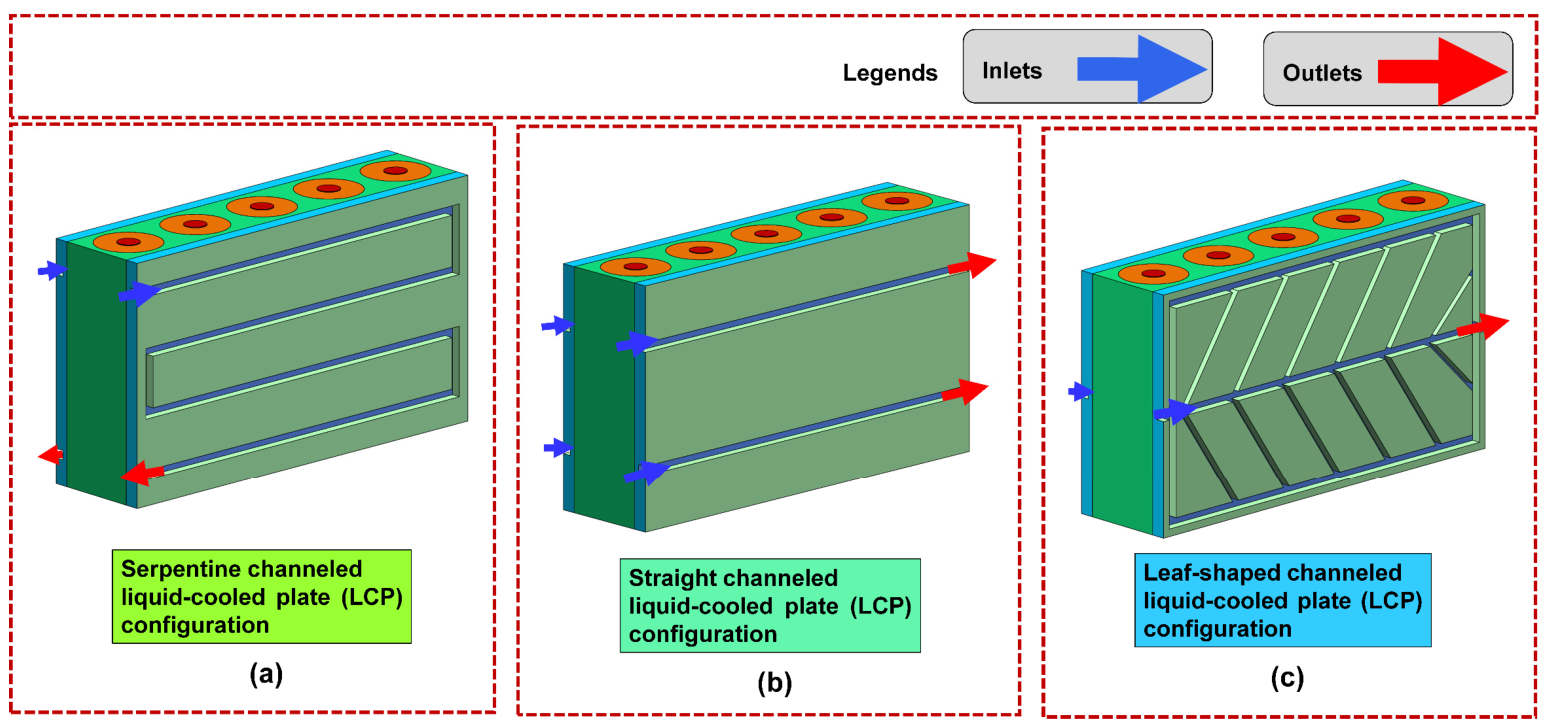
3.1. Investigation of LCP Configurations
3.2. Flow Channel Topology (FCT) Optimization
3.3. Effects of the Coolant Flow Speed (CFS)
3.4. Investigation of Ambient Temperature Effects
3.5. Performance Evaluation of CPCM-Only and Hybrid CPCM–Liquid BTMS Configurations
4. Conclusions
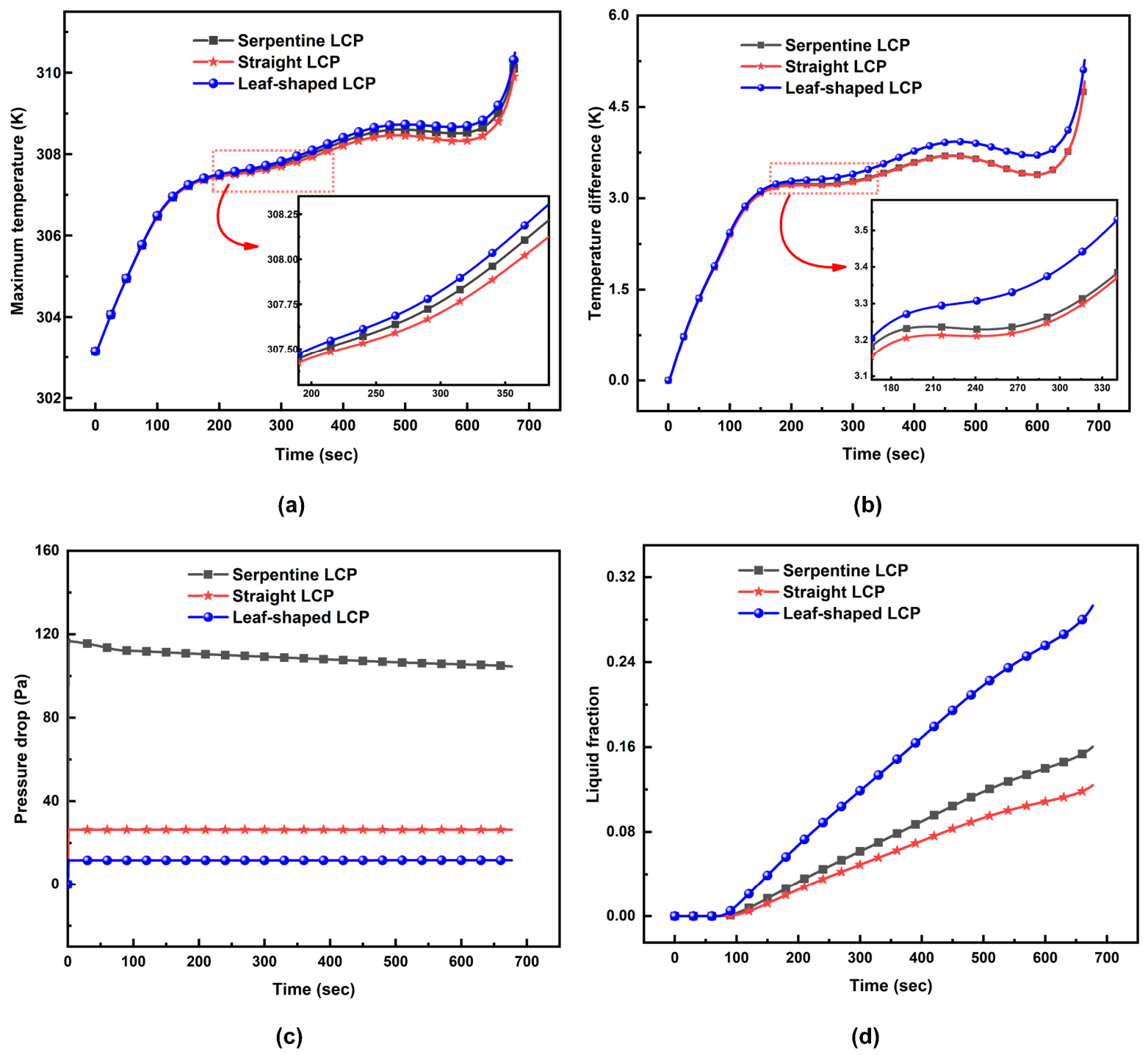
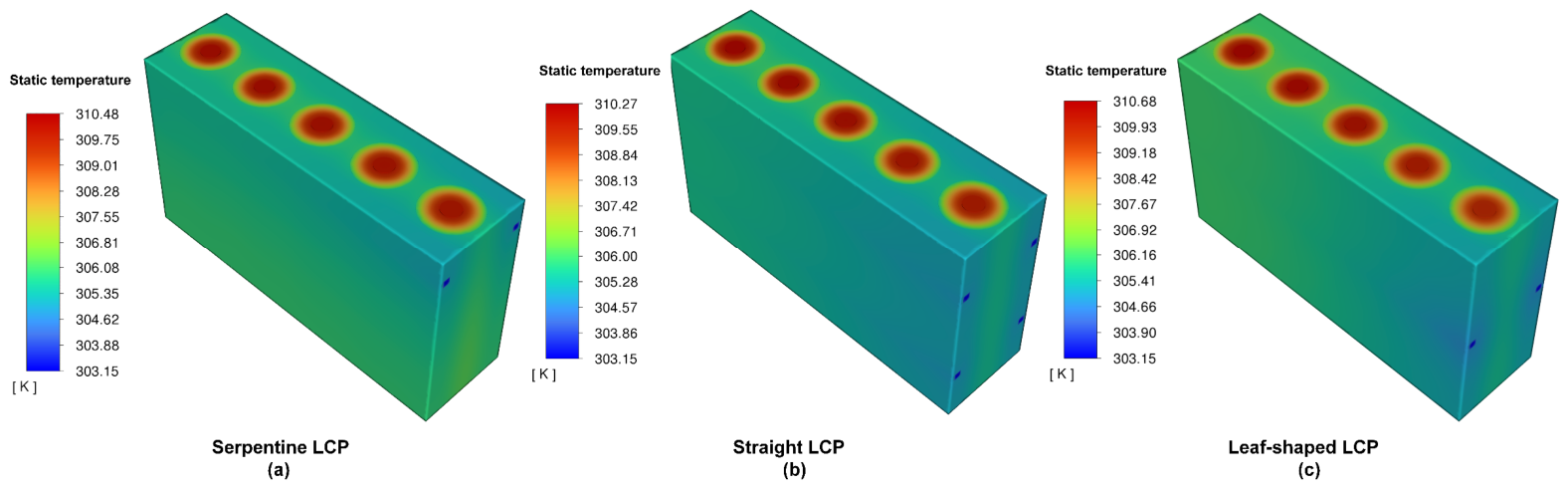
- All three LCP configurations maintain maximum temperature and temperature uniformity within safe operating limits at a CFS of 0.05 m/s. The straight LCP achieves the lowest maximum temperature (310.10 K), followed by the serpentine (310.29 K) and leaf-shaped design (310.49 K). Temperature uniformity is similar for the straight and serpentine configurations (4.92 K and 4.91 K), while the leaf-shaped LCP slightly exceeds the recommended threshold (5.27 K). Despite this marginal deviation, the leaf-shaped LCP exhibits a substantially lower pressure drop (by 88.79% compared to the serpentine). Thus, the leaf-shaped LCP offers the most favorable overall trade-off between TMP, hydraulic efficiency, and system effectiveness for the intended application.
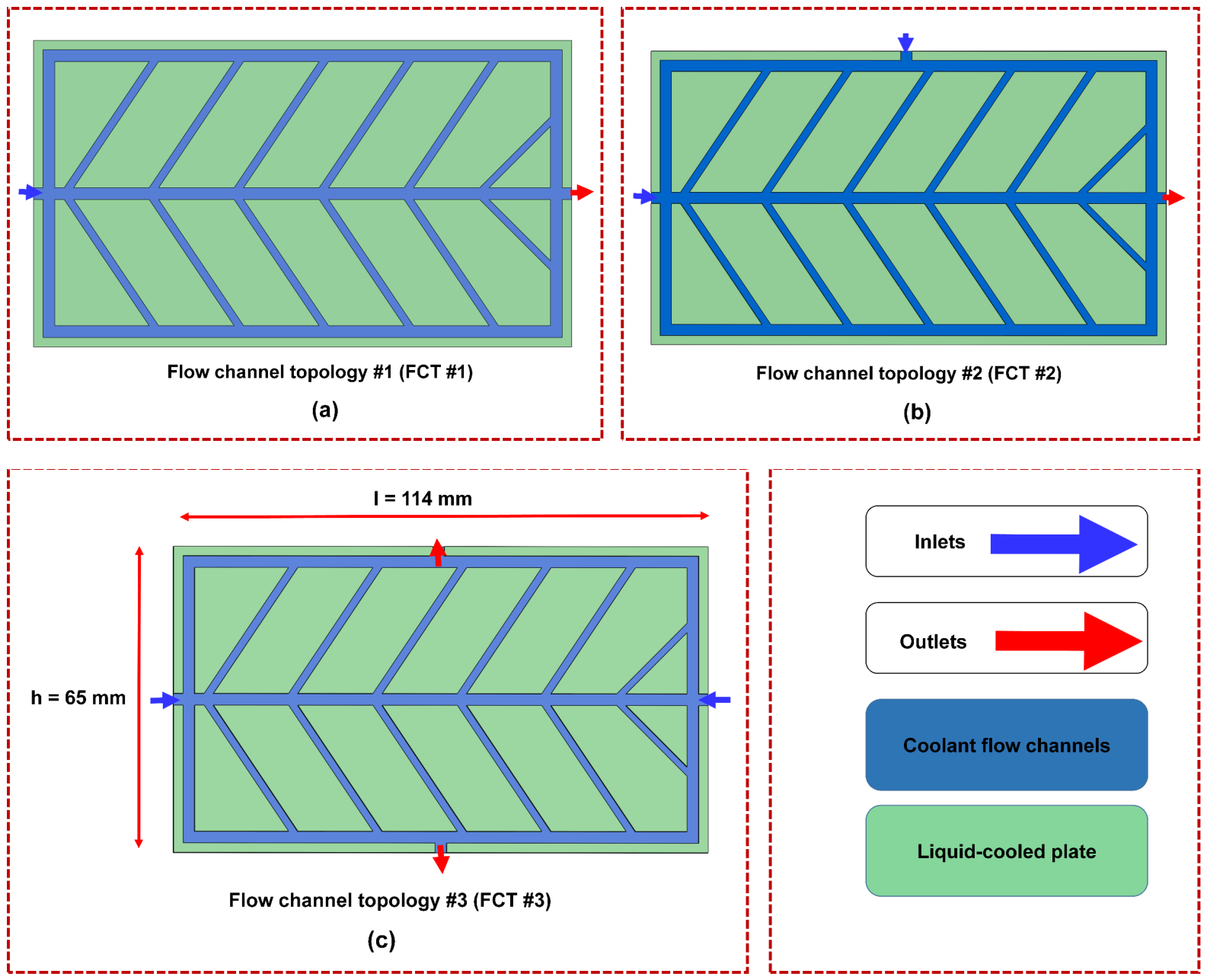
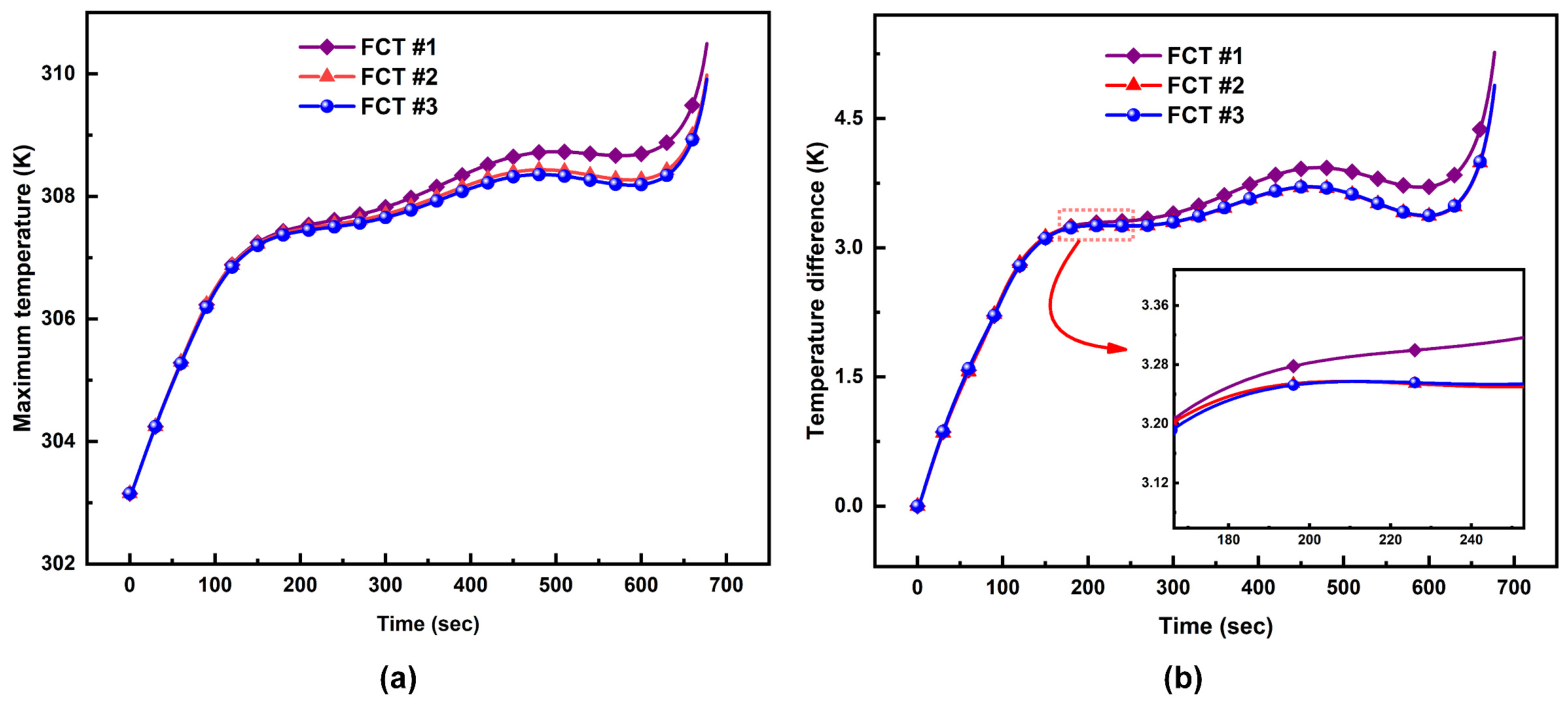
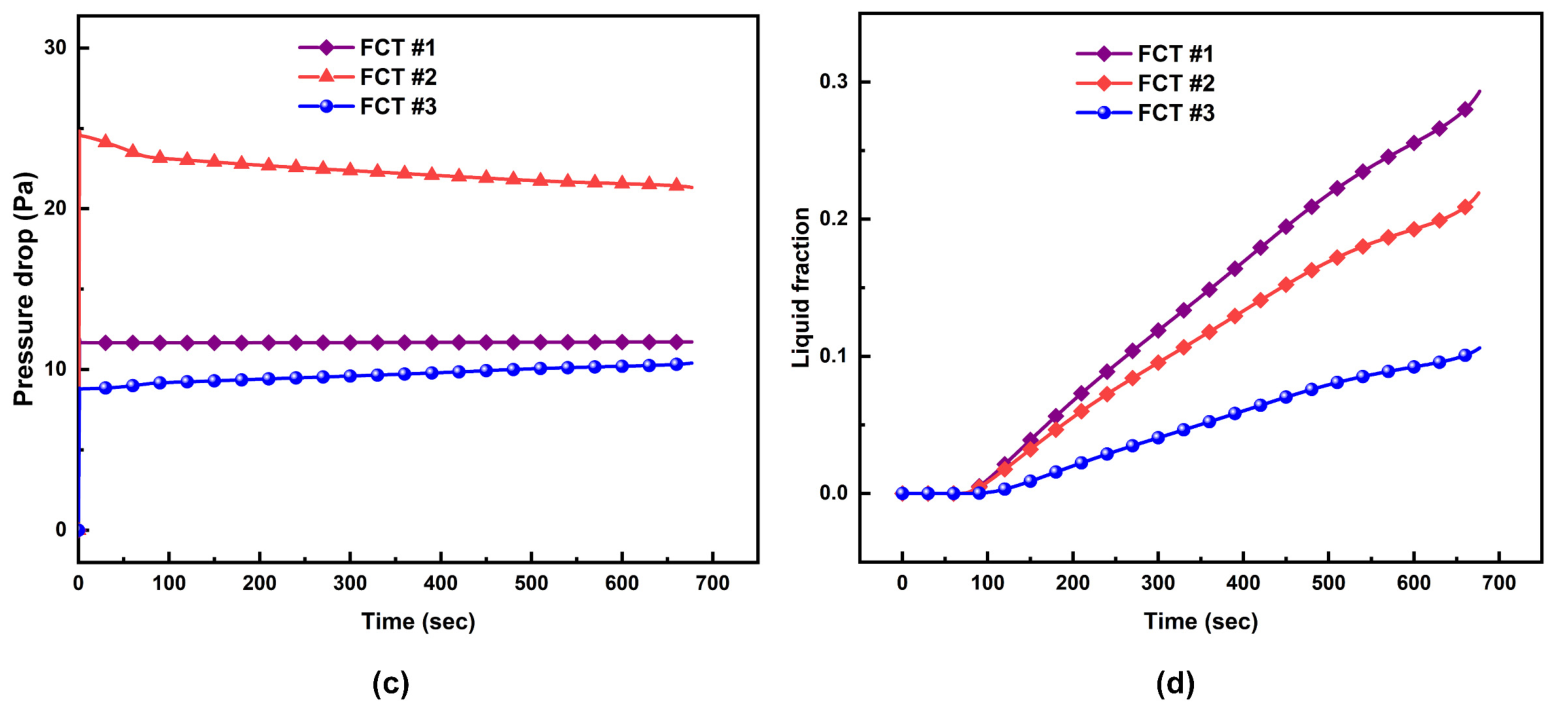
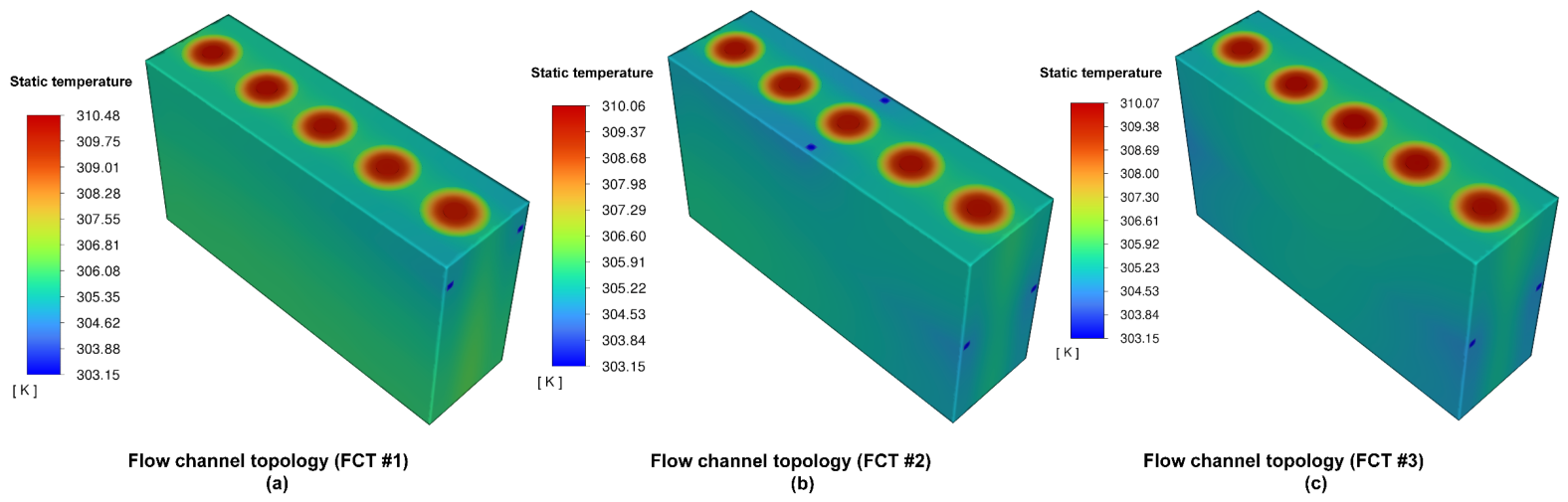
- The optimization of FCT is performed, and the FCT #2 configuration (featuring two inlets and one outlet per side) demonstrated the most balanced overall performance, achieving the lowest temperature variation (4.87 K) and a reduction in maximum temperature of 0.51 K compared to the baseline configuration (FCT #1). While FCT #3 exhibited the lowest pressure drop and a notable decrease in PCM liquid fraction, it is accompanied by a complex structural design. Overall, FCT #2 is identified as the optimal configuration, offering a superior balance between thermal regulation, energy efficiency, and system reliability.
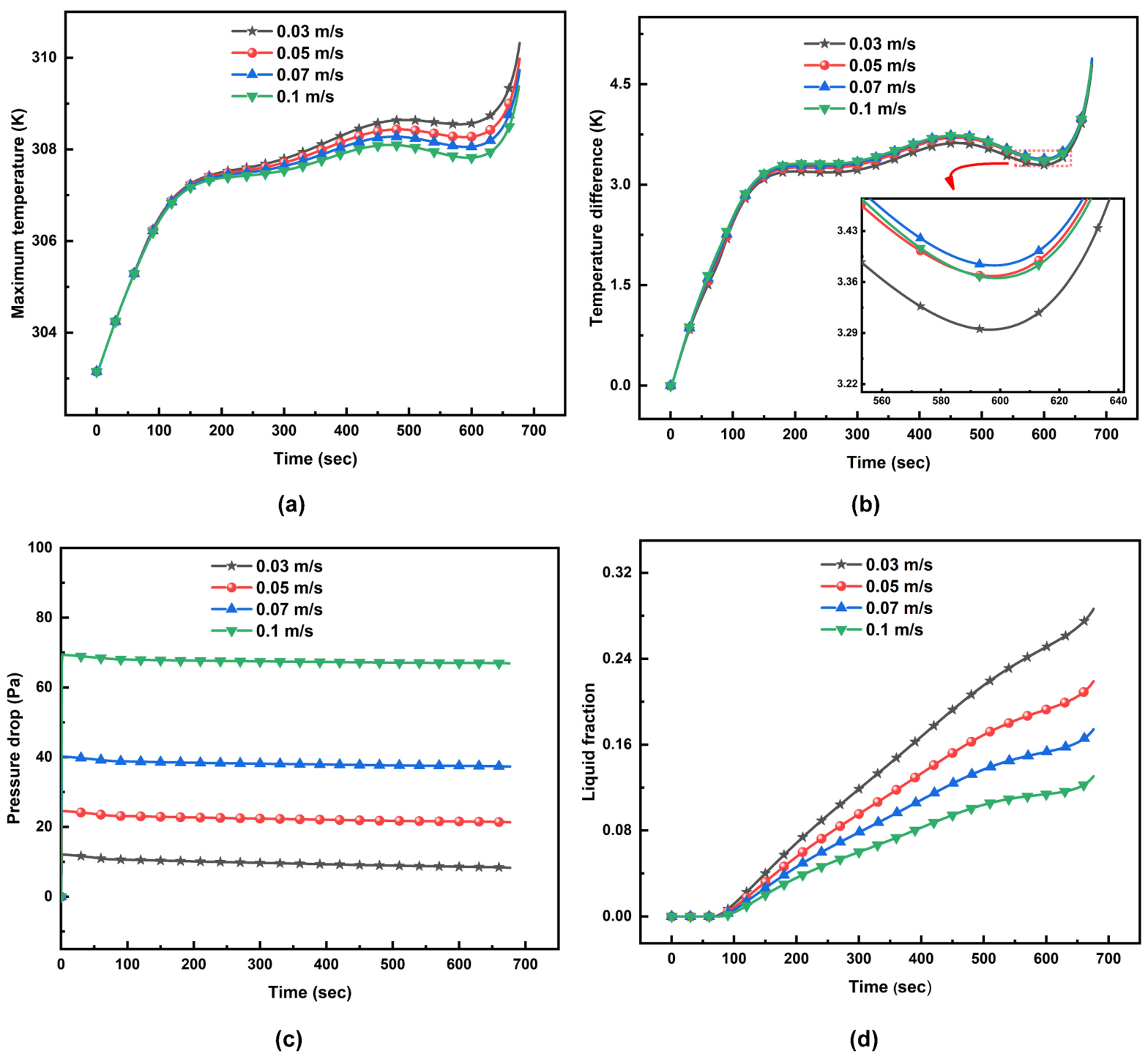
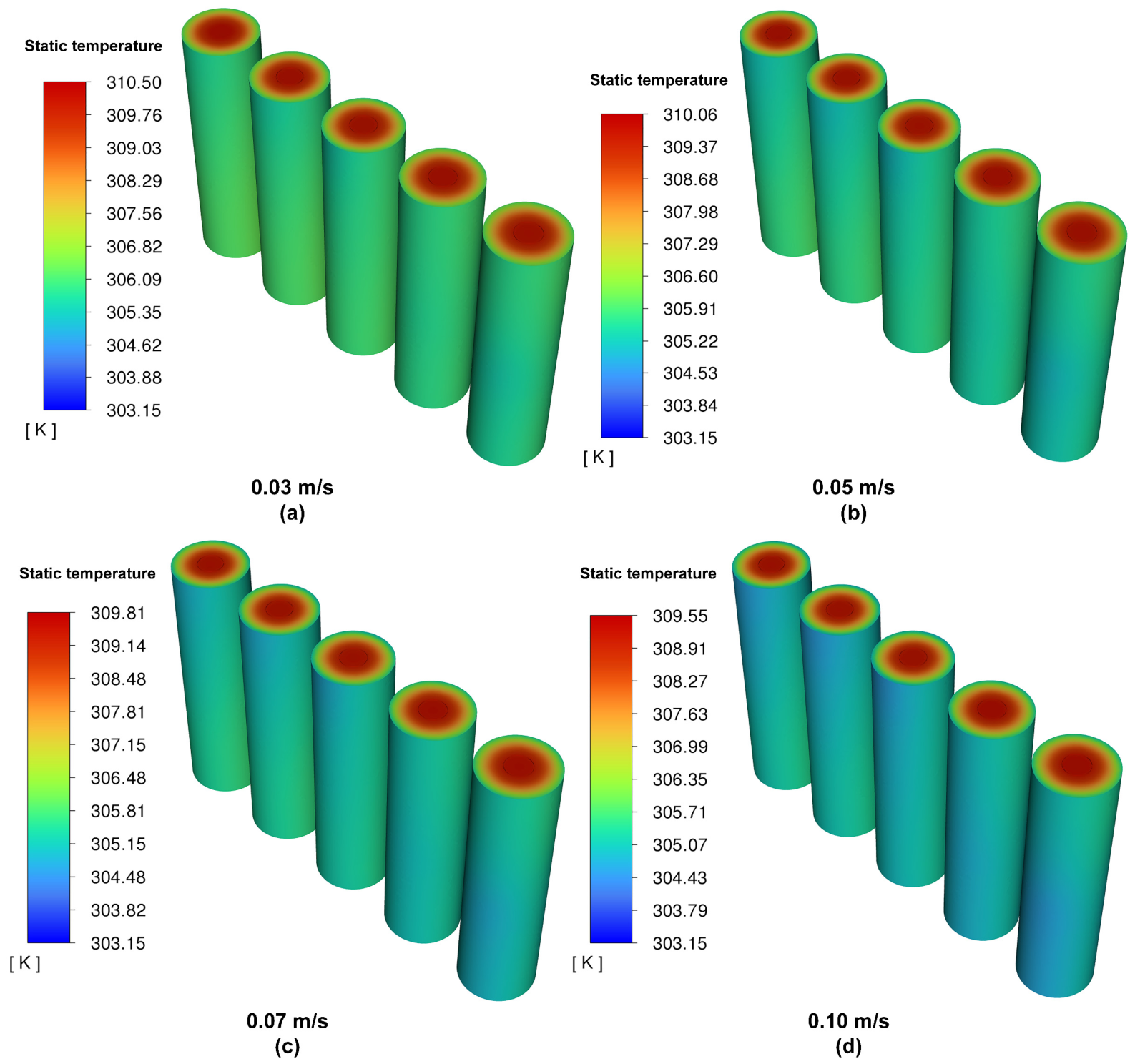
- Increasing the CFS from 0.03 m/s to 0.10 m/s reduces the maximum battery temperature from 310.32 K to 309.38 K (below 0.94 K reduction) and decreases the PCM liquid fraction from 28.65% to 13.07%, while temperature non-uniformity shows a slight variation (rises from 4.80 K to 4.89 K before reducing to 4.79 K); however, this enhancement is accompanied by a notable rise in pressure drop, indicating that an optimal CFS is necessary to balance thermal performance and pumping power in the hybrid CPCM–liquid BTMS.
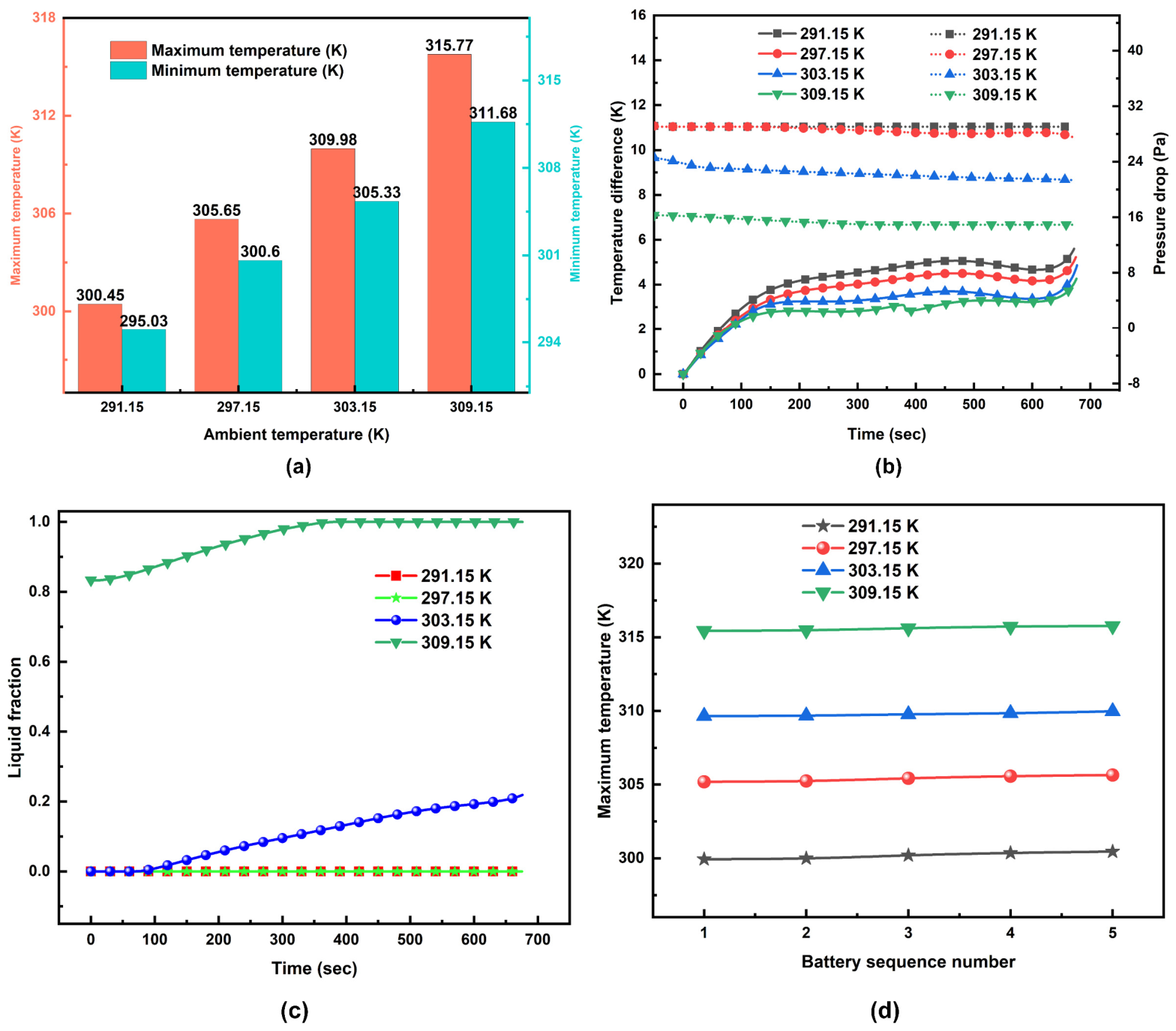
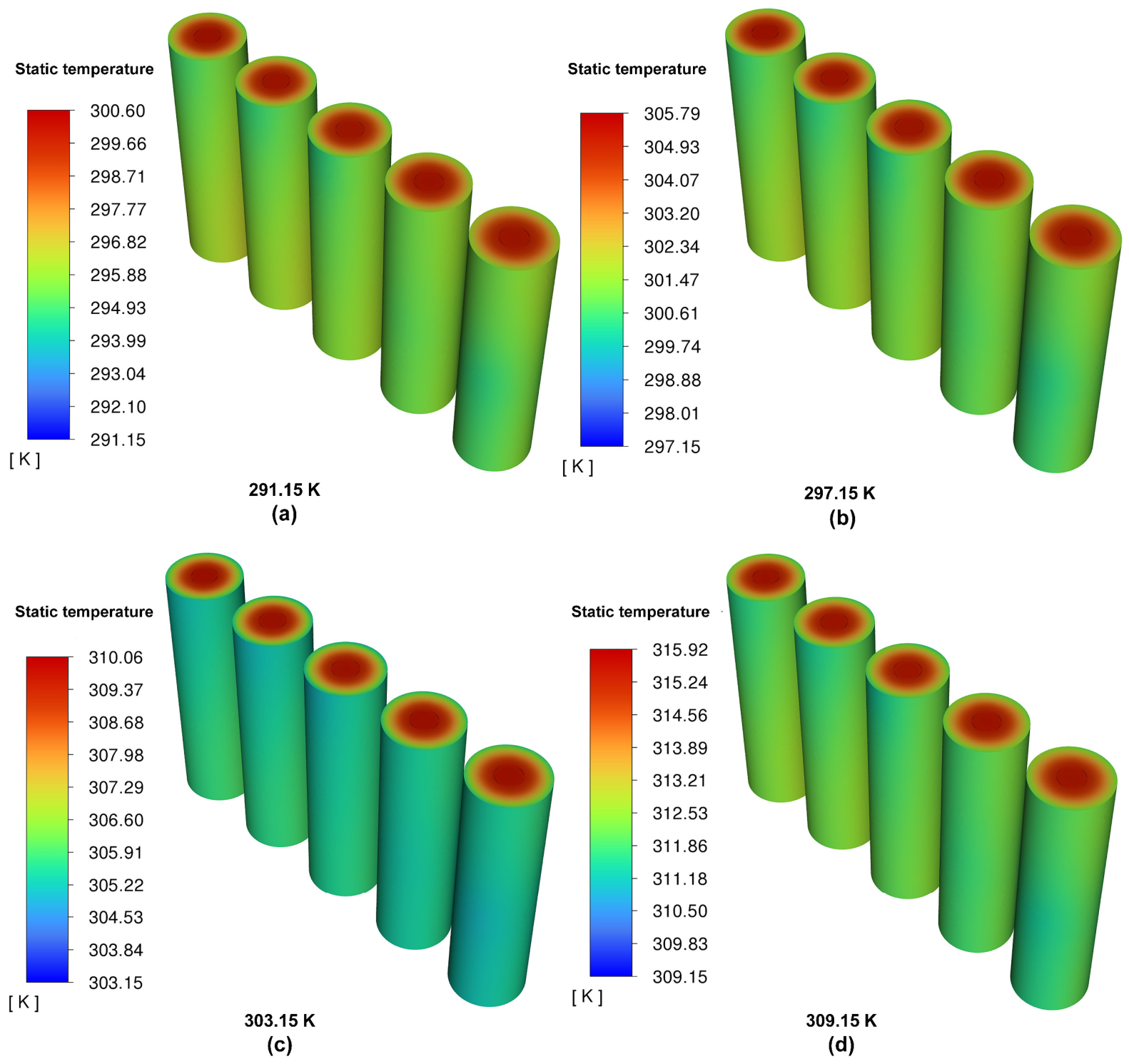
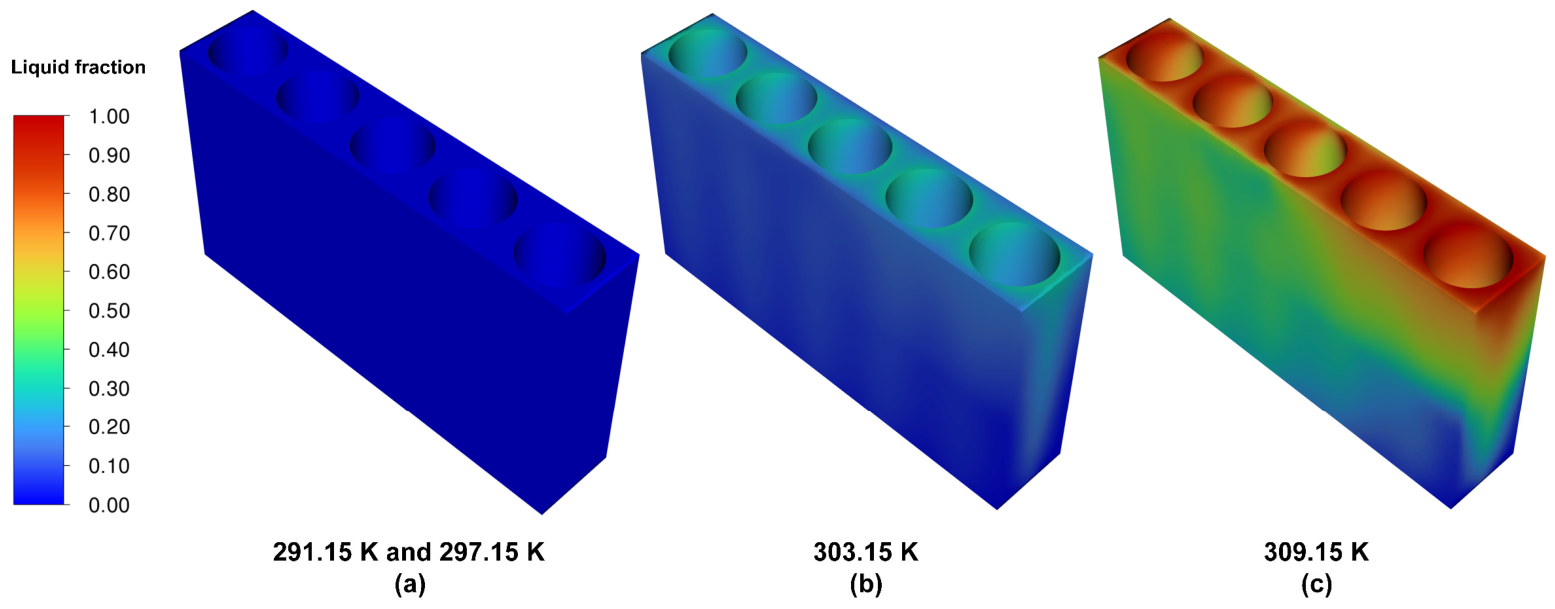
- Increasing the ambient temperature (291.15–309.15 K) results in a proportional rise in both the maximum and minimum battery module temperatures due to increased heat generation. In contrast, temperature non-uniformity decreases significantly (by 23.89%), indicating improved thermal uniformity. Additionally, the pressure drop decreases markedly (by 48.59%), while the PCM liquid fraction increases from nearly 0% to 100%, confirming the full activation of latent heat storage. The hybrid CPCM–liquid BTMS maintains effective thermal regulation even under harsh ambient conditions, highlighting its robustness and reliability.
- The maximum temperature distribution among individual cells is also evaluated under varying ambient temperatures. The results show that the maximum cell-to-cell temperature difference remains very low (below 0.51 K), which is well within recommended limits, thereby demonstrating excellent thermal uniformity. However, a consistent temperature gradient is observed along the flow direction, with higher temperatures at the outlet side due to cumulative heat absorption by the coolant.
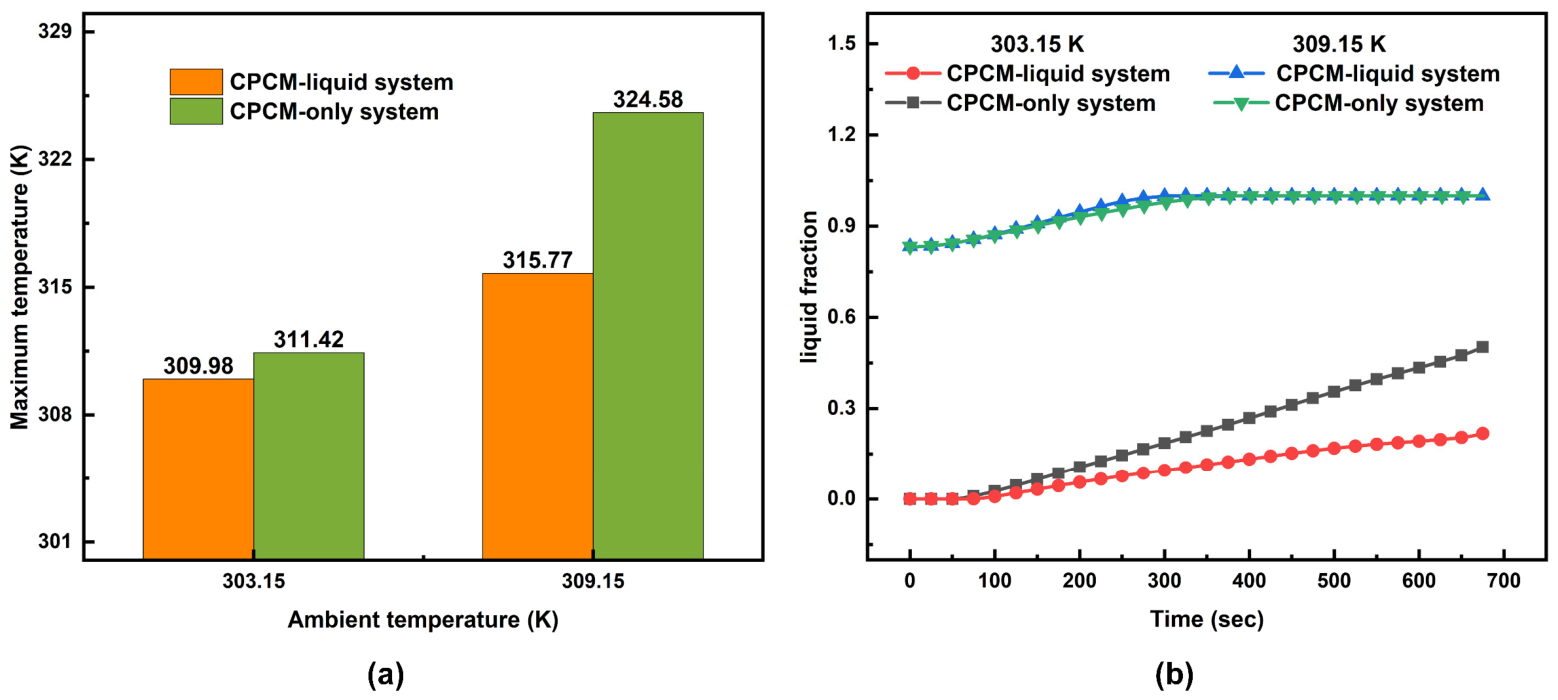
- Under an ambient temperature of 309.15 K, the hybrid CPCM–liquid BTMS maintained the maximum temperature to 315.77 K, outperforming the CPCM-only configuration, which reached 324.58 K, indicating an 8.81 K increase that may raise safety concerns.
Author Contributions
Funding
Data Availability Statement
Conflicts of Interest
Abbreviations
| LIB | Lithium-ion battery |
| BTMS | Battery thermal management system |
| NEVs | New energy vehicles |
| LCP | Liquid-cooled plate |
| TMP | Thermal management performance |
| OT | Operating temperature |
| HT | Heat transfer |
| HG | Heat generation |
| TR | Thermal runaway |
| PCM | Phase-change material |
| CPCM | Composite phase-change material |
| CFS | Coolant flow speed |
| CFD | Computational fluid dynamics |
| FCT | Flow channel topology |
| RT35HC | Rubitherm 35 high capacity |
References
- Wang, X.; Dong, X.; Zhang, Z.; Wang, Y. Transportation carbon reduction technologies: A review of fundamentals, application, and performance. J. Traffic Transp. Eng. 2024, 11, 1340–1377. [Google Scholar] [CrossRef]
- Hasan, M.M.; Haque, R.; Jahirul, M.I.; Rasul, M.G.; Fattah, I.M.R.; Hassan, N.M.S.; Mofijur, M. Advancing energy storage: The future trajectory of lithium-ion battery technologies. J. Energy Storage 2025, 120, 116511. [Google Scholar] [CrossRef]
- Njema, G.G.; Ouma, R.B.O.; Kibet, J.K. A Review on the Recent Advances in Battery Development and Energy Storage Technologies. J. Renew. Energy 2024, 2024, 2329261. [Google Scholar] [CrossRef]
- Shi, C.; Zhu, D.; Zhang, L.; Song, S.; Sheldon, B.W. Transfer learning prediction on lithium-ion battery heat release under thermal runaway condition. Nano Res. Energy 2024, 3, e9120147. [Google Scholar] [CrossRef]
- Najafi Khaboshan, H.; Jaliliantabar, F.; Abdullah, A.A.; Panchal, S.; Azarinia, A. Parametric investigation of battery thermal management system with phase change material, metal foam, and fins; utilizing CFD and ANN models. Appl. Therm. Eng. 2024, 247, 123080. [Google Scholar] [CrossRef]
- Takiso, T.A.; Yu, J. Research progress on the optimization of thermal management systems for lithium-ion batteries in new energy vehicles. J. Energy Storage 2025, 134, 118144. [Google Scholar] [CrossRef]
- Oyewola, O.M.; Awonusi, A.A.; Ismail, O.S. Design optimization of Air-Cooled Li-ion battery thermal management system with Step-like divergence plenum for electric vehicles. Alex. Eng. J. 2023, 71, 631–644. [Google Scholar] [CrossRef]
- Zhang, F.; Zhang, L.; Lin, A.; Wang, P.; Liu, P. Multi-method collaborative optimization for parallel air cooling lithium-ion battery pack. Int. J. Energy Res. 2022, 46, 14318–14333. [Google Scholar] [CrossRef]
- Xiaoming, X.; Wei, T.; Jiaqi, F.E.I.; Donghai, H.; Xudong, S. The forced air cooling heat dissipation performance of different battery pack bottom duct. Int. J. Energy Res. 2018, 42, 3823–3836. [Google Scholar] [CrossRef]
- Chen, K.; Wu, W.; Yuan, F.; Chen, L.; Wang, S. Cooling efficiency improvement of air-cooled battery thermal management system through designing the flow pattern. Energy 2019, 167, 781–790. [Google Scholar] [CrossRef]
- Singh, L.K.; Kumar, R.; Gupta, A.K. A novel strategy of enhanced thermal performance in air cooled lithium-ion battery by wavy walls. Therm. Sci. Eng. Prog. 2023, 43, 101964. [Google Scholar] [CrossRef]
- Guo, Z.; Wang, Y.; Zhao, S.; Zhao, T.; Ni, M. Investigation of battery thermal management system with considering effect of battery aging and nanofluids. Int. J. Heat Mass Transf. 2023, 202, 123685. [Google Scholar] [CrossRef]
- Mitra, A.; Kumar, R.; Singh, D.K. Thermal management of lithium-ion batteries using carbon-based nanofluid flowing through different flow channel configurations. J. Power Sources 2023, 555, 232351. [Google Scholar] [CrossRef]
- Lai, Y.; Wu, W.; Chen, K.; Wang, S.; Xin, C. A compact and lightweight liquid-cooled thermal management solution for cylindrical lithium-ion power battery pack. Int. J. Heat Mass Transf. 2019, 144, 118581. [Google Scholar] [CrossRef]
- Guo, Z.; Xu, Q.; Zhao, S.; Zhai, S.; Zhao, T.; Ni, M. A new battery thermal management system employing the mini-channel cold plate with pin fins. Sustain. Energy Technol. Assess. 2022, 51, 101993. [Google Scholar] [CrossRef]
- Buonomo, B.; Ercole, D.; Manca, O.; Menale, F. Thermal cooling behaviors of lithium-ion batteries by metal foam with phase change materials. Energy Procedia 2018, 148, 1175–1182. [Google Scholar] [CrossRef]
- Kumar, A.; Senapati, J.R.; Acharya, S. Passive cooling of a lithium-ion battery pack using PCM and longitudinal/circular fins: A numerical study with experimental validation. J. Energy Storage 2025, 111, 115464. [Google Scholar] [CrossRef]
- Pal, R.K.; Paw, J.K.S.; Ganesan, P.; Tong, C.W. Modeling and simulation of phase change material-based passive and hybrid thermal management systems for lithium-ion batteries: A comprehensive review. J. Energy Storage 2025, 116, 116011. [Google Scholar] [CrossRef]
- Rahmani, A.; Dibaj, M.; Akrami, M. Recent Advancements in Battery Thermal Management Systems for Enhanced Performance of Li-Ion Batteries: A Comprehensive Review. Batteries 2024, 10, 265. [Google Scholar] [CrossRef]
- Lee, Y.-J.; Park, T.-G.; Park, C.-H.; Kim, S.-J.; Lee, J.-S.; Rhi, S.-H. Heat Pipe Integrated Cooling System of 4680 Lithium–Ion Battery for Electric Vehicles. Energies 2025, 18, 4132. [Google Scholar] [CrossRef]
- Ammar, H.; Delbani, M.; Fardoun, F.; Zoghbi, B.E.; Mouzanar, H.; Faraj, J.; Khaled, M. Hybrid liquid–PCM thermal management for high–capacity lithium–ion batteries under fast charging: A parametric comparative study. Results Eng. 2025, 27, 106674. [Google Scholar] [CrossRef]
- Wu, Z.; Chen, H.; Jiang, L.; Zhang, P.; Ji, Z.; Luo, D. Thermal management of lithium-ion batteries using a PCM-HP-TEC hybrid BTMS: A numerical study. Int. Commun. Heat Mass Transf. 2025, 169, 109702. [Google Scholar] [CrossRef]
- Rahmani, A.; Dibaj, M.; Akrami, M. Enhancing Battery Pack Cooling Efficiency Through Graphite-Integrated Hybrid-Battery Thermal Management Systems. Batteries 2025, 11, 113. [Google Scholar] [CrossRef]
- Rabiei, M.; Gharehghani, A.; Saeedipour, S.; Andwari, A.M.; Könnö, J. Proposing a Hybrid BTMS Using a Novel Structure of a Microchannel Cold Plate and PCM. Energies 2023, 16, 6238. [Google Scholar] [CrossRef]
- Chen, X.; Su, Y.; Zhang, Y.; Shen, J.; Xu, X.; Wang, X.; Zhou, F. Performance of thermal management system based on PCM/forked liquid-cold plate for 18650 cylindrical battery. J. Energy Storage 2024, 91, 112071. [Google Scholar] [CrossRef]
- Hyun, S.W.; Kim, J.H.; Shin, D.H. Hybrid PCM–Liquid Cooling System with Optimized Channel Design for Enhanced Thermal Management of Lithium–Ion Batteries. Energies 2025, 18, 4996. [Google Scholar] [CrossRef]
- Shen, C.; Su, C.; Zhang, Z.; Wang, F.; Wang, Z.; Wang, S. Synergistic PCM–Liquid Thermal Management for Large-Format Cylindrical Batteries Under High-Rate Discharge. Appl. Sci. 2026, 16, 3200. [Google Scholar] [CrossRef]
- Tan, Z.; Wu, X.; Chen, Z.; Xiao, J.; Yang, S. Heat Dissipation and Structural Optimization of Cylindrical Lithium-Ion Batteries with Phase Change Material–Liquid Hybrid Cooling: A Numerical Study. Energies 2025, 18, 6108. [Google Scholar] [CrossRef]
- An, Z.; Zhong, H.; Liu, H.; Gao, Z. Performance evaluation on liquid-PCM hybrid battery thermal management with spatial network flow channels. J. Energy Storage 2025, 118, 116251. [Google Scholar] [CrossRef]
- Tan, S.; Huang, Y.; Zhang, F.; E, J.; Song, X. Effect of variable cross-section liquid cooling pipes on thermal management performance enhancement of lithium-ion batteries. Energy 2025, 334, 137649. [Google Scholar] [CrossRef]
- Hussien, S.A.; Ali, A.B.M.; Alkhatib, O.J.; Mahariq, I. Enhanced passive thermal management of lithium-ion batteries with conical cylindrical chamber incorporating various phase change materials. Sci. Rep. 2025, 15, 35675. [Google Scholar] [CrossRef] [PubMed]
- Calborean, A.; Máthé, L.; Bruj, O. Phase Change Materials for Thermal Management in Lithium-Ion Battery Packs: A Review. Batteries 2025, 11, 432. [Google Scholar] [CrossRef]
- Choi, H.; Lee, H.; Han, U.; Jung, J.; Lee, H. Comparative Evaluation of Liquid Cooling-Based Battery Thermal Management Systems: Fin Cooling, PCM Cooling, and Intercell Cooling. Int. J. Energy Res. 2024, 2024, 5395508. [Google Scholar] [CrossRef]
- Dongellini, M.; Martino, G.; Naldi, C.; Lorente, S.; Morini, G.L. Experimental study on the heat transfer performance of finned-tube heat exchangers in latent thermal energy storages: Effects of PCM types and operating conditions. Appl. Therm. Eng. 2025, 271, 126273. [Google Scholar] [CrossRef]
- Jayachandran, A.; Kannan, A.M.; Basker, A. Passive thermal management of 21700 Li-ion batteries using plant-based eutectic phase change materials. Int. J. Heat Mass Transf. 2026, 255, 127837. [Google Scholar] [CrossRef]
- Zhao, Y.; Zou, B.; Ding, J.; Ding, Y. Experimental and numerical investigation of a hybrid battery thermal management system based on copper foam-paraffin composite phase change material and liquid cooling. Appl. Therm. Eng. 2023, 218, 119312. [Google Scholar] [CrossRef]
- Tong, L.; Gong, X.; Su, S.; Xu, L.; Liu, M.; Chen, L.; Xin, Q.; Yang, T.; Zhang, H.; Xiao, J. Performance Improvement of a Honeycomb Battery Thermal Management System Based on Fin–Casing Synergistically Enhanced Heat Transfer. Batteries 2026, 12, 94. [Google Scholar] [CrossRef]
- Balasubramanian, D.; Venugopal, I.P.; Subramanian, M.; Raja, V.; Kale, U.; Matijošius, J. Study on the battery thermal management system for cylindrical lithium-ion battery with nano-doped phase change material and liquid cooling. Sci. Rep. 2025, 15, 24053. [Google Scholar] [CrossRef] [PubMed]
- Mane, N.S.; Kodancha, P.; Hemadri, V.; Tripathi, S. Investigation on Cooling Performance of Composite PCM and Graphite Fin for Battery Thermal Management System of Electric Vehicles. Energy Storage 2024, 6, e70024. [Google Scholar] [CrossRef]
- Wang, C.-L.; Leong, J.C. Analysis of Thermal Management Strategies for 21700 Lithium-Ion Batteries Incorporating Phase Change Materials and Porous Copper Foam with Different Battery Orientations. Energies 2024, 17, 1553. [Google Scholar] [CrossRef]
- Yang, H.; Li, M.; Wang, Z.; Ma, B. A compact and lightweight hybrid liquid cooling system coupling with Z-type cold plates and PCM composite for battery thermal management. Energy 2023, 263, 126026. [Google Scholar] [CrossRef]
- Liao, G.; Wang, W.; Zhang, F.; E, J.; Chen, J.; Leng, E. Thermal performance of lithium-ion battery thermal management system based on nanofluid. Appl. Therm. Eng. 2022, 216, 118997. [Google Scholar] [CrossRef]
- Jha, P.; Hussain, M.; Khan, M.K. Numerical evaluation of nanofluid-based indirect liquid cooling of a Li-ion battery pack using equivalent circuit model under static and dynamic loading conditions. Int. Commun. Heat Mass Transf. 2024, 159, 108079. [Google Scholar] [CrossRef]
- Wu, C.; Wu, L.; Qiu, C.; Yang, J.; Yuan, X.; Cai, Y.; Shi, H. Experimental and numerical studies on lithium-ion battery heat generation behaviors. Energy Rep. 2023, 9, 5064–5074. [Google Scholar] [CrossRef]
- Yousefi, E.; Ramasamy, D.; Kadirgama, K.; Talele, V.; Najafi, H.; Olyaei, M.; Miljkovic, N.; Panchal, S. Electrochemical-thermal modeling of phase change material battery thermal management systems: Investigating mesh types for accurate simulations. Int. J. Heat Mass Transf. 2025, 247, 127107. [Google Scholar] [CrossRef]
- Zare, P.; Perera, N.; Lahr, J.; Hasan, R. A novel thermal management system for cylindrical lithium-ion batteries using internal-external fin-enhanced phase change material. Appl. Therm. Eng. 2024, 238, 121985. [Google Scholar] [CrossRef]
- Dai, Z.; Nawaz, K.; Park, Y.G.; Bock, J.; Jacobi, A.M. Correcting and extending the Boomsma–Poulikakos effective thermal conductivity model for three-dimensional, fluid-saturated metal foams. Int. Commun. Heat Mass Transf. 2010, 37, 575–580. [Google Scholar] [CrossRef]
- Yang, H.; Li, Y.; Yang, Y.; Chen, D.; Zhu, Y. Effective thermal conductivity of high porosity open-cell metal foams. Int. J. Heat Mass Transf. 2020, 147, 118974. [Google Scholar] [CrossRef]
- Liu, Q.; Liu, F.; Liu, S.; Wang, Y.; Panchal, S.; Fowler, M.; Fraser, R.; Yuan, J.; Zhao, J. Improved performance of Li-ion battery thermal management system by ternary hybrid nanofluid. J. Energy Storage 2025, 109, 115234. [Google Scholar] [CrossRef]
- Posobkiewicz, K.; Górecki, K. Influence of Selected Factors on Thermal Parameters of the Components of Forced Cooling Systems of Electronic Devices. Electronics 2021, 10, 340. [Google Scholar] [CrossRef]
- Sun, W.; Li, P.; Cheng, W.; Li, C.; Qi, X.; Shen, H.; Shao, X. Novel hybrid thermal management system for cylindrical lithium-ion battery based on CPCM and topology-optimized liquid cooling. Energy 2025, 329, 136719. [Google Scholar] [CrossRef]
- Luo, D.; Jiang, L.; Wu, Z. Enhanced thermal performance of a hybrid battery thermal management system with sandwich-structure phase change materials at a high discharge rate. Energy 2025, 324, 136032. [Google Scholar] [CrossRef]



| Materials | RT35HC | Battery | Water | LCP |
|---|---|---|---|---|
| Properties | ||||
| Density solid (kg/m3) | 880 | 2055 | - | 2719 |
| Density liquid (kg/m3) | 770 | - | 998.20 | - |
| Heat capacity (J/kg.K) | 2000 | 1299 | 4182 | 871 |
| Latent heat (kJ/kg) | 247.60 | - | - | - |
| Thermal conductivity (W/m.K) | PCM= 0.20 | λradial = 1.1 | 0.60 | 202.40 |
| CPCM = 5.62 | λaxial = 12.5 | - | - | |
| Meshy zone (K) | 304.15–310.15 | - | - | - |
| Solidus temperature Ts (K) | 304.15 | - | - | - |
| Liquidus temperature Tl (K) | 310.15 | - | - | - |
| Parameters | Specifications | Unit |
|---|---|---|
| Dimension | Φ18 × 65 | mm |
| Rated capacity | 2.60 | Ah |
| Nominal voltage | 3.70 | V |
| Minimum stop voltage | 2.75 | V |
| Maximum stop voltage | 4.20 | V |
| Weight | 45 | g |
| Cathode material | LiNi0.8Co0.15Al0.05O2 | - |
| Anode material | Graphite | - |
| Parameter | Thickness (μm) | ρ (kg/m3) | Cp (J/kg.K) | λ(W/m.K) |
|---|---|---|---|---|
| Positive current collector | 20 | 2770 | 875 | 170 |
| Cathode | 150 | 2328.50 | 1269.20 | 1.60 |
| Separator | 30 | 1009 | 1978.20 | 0.40 |
| Negative current collector | 14 | 8933 | 385 | 398 |
| Anode | 120 | 1347.33 | 1437.40 | 1.10 |
| Studies | BTMS Strategies | Operating Condition | Performance | ||
|---|---|---|---|---|---|
| C-Rate | Tamb (K) | Tmax (K) | ΔT | ||
| Sun et al. [51] | CPCM + liquid | 5 | 310 | 319.3 | 4.5 |
| Tan et al. [28] | PCM + liquid | 3 | 303.15 | 319.76 | 3.57 |
| Luo et al. [52] | PCM + HP + TEC | 5 | 303.15 | 316.78 | 4.09 |
| Dhinesh et al. [38] | PCM + 10% Al2O3 + liquid | 3 | 301.15 | 313.96 | - |
| Current study | CPCM + liquid | 5 | 303.15 | 309.98 | 4.87 |
| //Current study | //CPCM + liquid | //5 | 309.15 | 315.77 | 4.27 |
Disclaimer/Publisher’s Note: The statements, opinions and data contained in all publications are solely those of the individual author(s) and contributor(s) and not of MDPI and/or the editor(s). MDPI and/or the editor(s) disclaim responsibility for any injury to people or property resulting from any ideas, methods, instructions or products referred to in the content. |
© 2026 by the authors. Licensee MDPI, Basel, Switzerland. This article is an open access article distributed under the terms and conditions of the Creative Commons Attribution (CC BY) license.
Share and Cite
Takiso, T.A.; Yu, J.; Bizuneh, G.G. A Synergistic Hybrid CPCM–Liquid Thermal Management System for High-Power Battery Modules. Energies 2026, 19, 2907. https://doi.org/10.3390/en19122907
Takiso TA, Yu J, Bizuneh GG. A Synergistic Hybrid CPCM–Liquid Thermal Management System for High-Power Battery Modules. Energies. 2026; 19(12):2907. https://doi.org/10.3390/en19122907
Chicago/Turabian StyleTakiso, Temesgen Abera, Jianwu Yu, and Girum Girma Bizuneh. 2026. "A Synergistic Hybrid CPCM–Liquid Thermal Management System for High-Power Battery Modules" Energies 19, no. 12: 2907. https://doi.org/10.3390/en19122907
APA StyleTakiso, T. A., Yu, J., & Bizuneh, G. G. (2026). A Synergistic Hybrid CPCM–Liquid Thermal Management System for High-Power Battery Modules. Energies, 19(12), 2907. https://doi.org/10.3390/en19122907