1. Introduction
In recent years, the increasing frequency of extreme weather events worldwide has led to large-scale power outages, resulting in significant economic losses and societal impacts [
1]. After such disasters, communication links and power lines are often simultaneously damaged, and the coupled failures of these two networks substantially increase the complexity and difficulty of distribution system restoration [
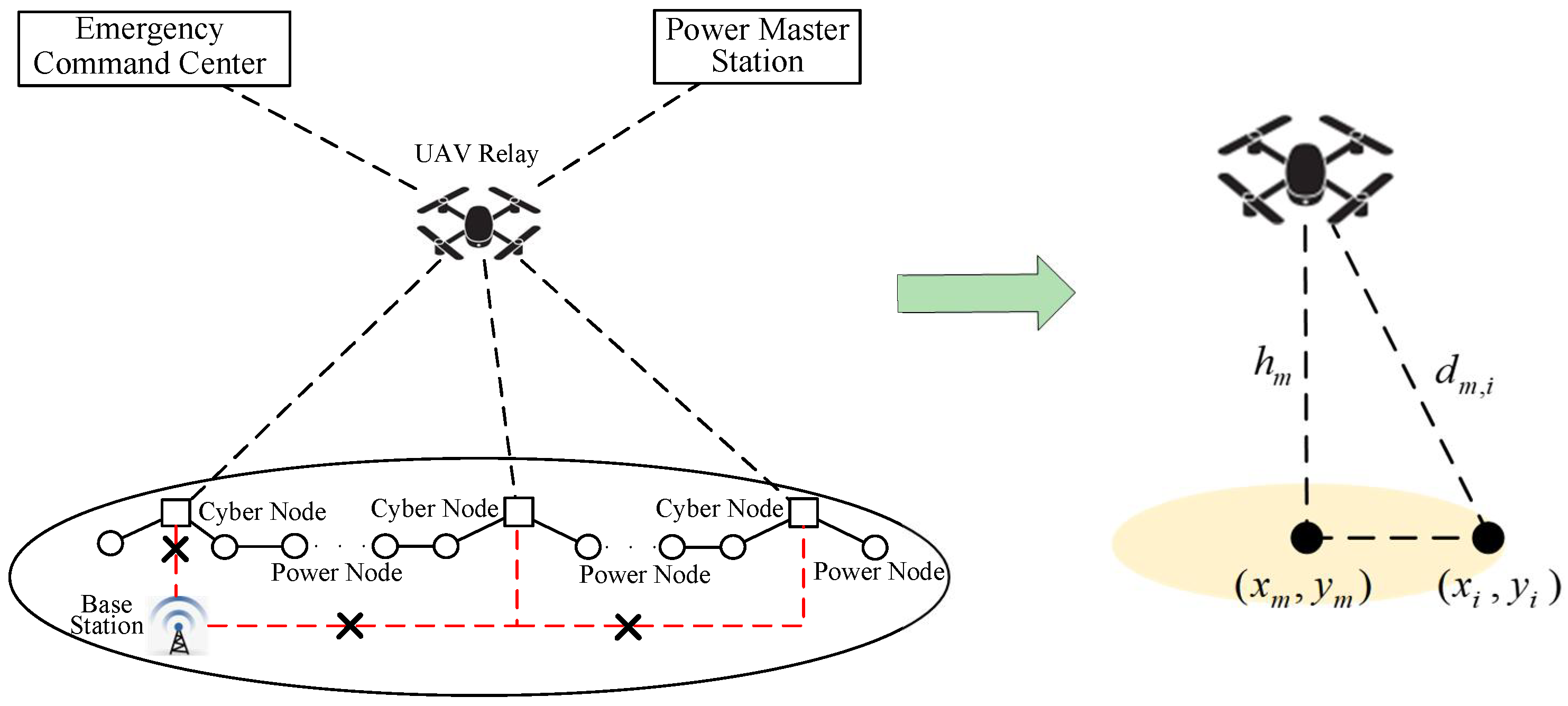
2]. With the rapid development of new-type power systems dominated by renewable energy, large-scale integration of distributed generation (DG) and energy storage systems provides strong support for sustaining power supply to critical loads. Meanwhile, advances in emergency communication technologies have enabled UAVs equipped with wireless communication modules to become an effective means for communication restoration in distribution networks, thereby mitigating the adverse impacts of extreme disasters. However, most existing studies focus on a single network perspective and lack a systematic characterization of the coordinated recovery mechanism between the cyber and physical layers. Therefore, how to optimally allocate emergency resources across both layers, achieve coordinated restoration of communication and power networks, and develop effective fault repair and critical load recovery strategies have become critical issues that urgently need to be addressed.
With the large-scale integration of DG and the development of microgrid technologies, important technical support has been provided for rapid post-disaster power system restoration [
3]. Existing studies [
4] have systematically reviewed resilience enhancement methods for power systems under natural disasters, highlighting the key roles of DG and microgrids in restoration. Based on this, studies in [
5,
6] combine islanding strategies and network reconfiguration to maximize load restoration using intelligent optimization algorithms, while [
7,
8] incorporate fault repair strategies into mixed-integer programming models to optimize restoration schemes. In addition, reinforcement learning-based approaches have been explored in [
9,
10] to improve computational efficiency. However, most of these studies assume an ideal and fully functional communication system, neglecting the large-scale communication failures that commonly occur after disasters. As a result, the obtained restoration strategies may be infeasible or ineffective in practical scenarios, making them insufficient to support coordinated recovery in distribution CPS.
Meanwhile, emergency communication technologies play a crucial role in recovery of CPS communication [
11]. In UAV-assisted communication network deployment, existing studies focus mainly on optimization of base station placement, trajectory planning, and coverage maximization. For example, ref. [
12] proposes an adaptive UAV deployment strategy that jointly optimizes flight trajectories and communication resources to construct UAV-assisted emergency communication networks. In [
13], the deployment of UAV-based communication networks is investigated using evolutionary algorithms to optimize the locations of the base station. Furthermore, refs. [
14,
15,
16] consider dynamic user distribution and communication constraints to develop UAV deployment optimization models to maximize coverage. However, these studies focus primarily on the restoration of public communication networks and pay limited attention to the operational and control requirements of power systems, making them difficult to apply directly to communication recovery in distribution CPSs.
In addition, UAVs have been widely applied in fault assessment and repair in power systems, significantly enhancing situational awareness. In terms of fault location, refs. [
17,
18] employ UAVs to address insufficient communication coverage of fault indicators in distribution networks. In UAV control and optimization, ref. [
19] utilizes deep reinforcement learning to achieve multi-objective optimization considering coverage, fairness, energy consumption, and connectivity, while [
20] proposes a multi-UAV coordination model to alleviate power capacity constraints. Moreover, studies such as [
21] explore UAV-assisted vehicular networks for reliable data transmission. Nevertheless, most of these works treat UAVs as independent tools for inspection or communication relaying, lacking a unified modeling and optimization framework that jointly considers communication restoration and power network reconfiguration in CPS fault scenarios, thereby failing to fully exploit the potential of UAVs in coordinated cyber–physical recovery.
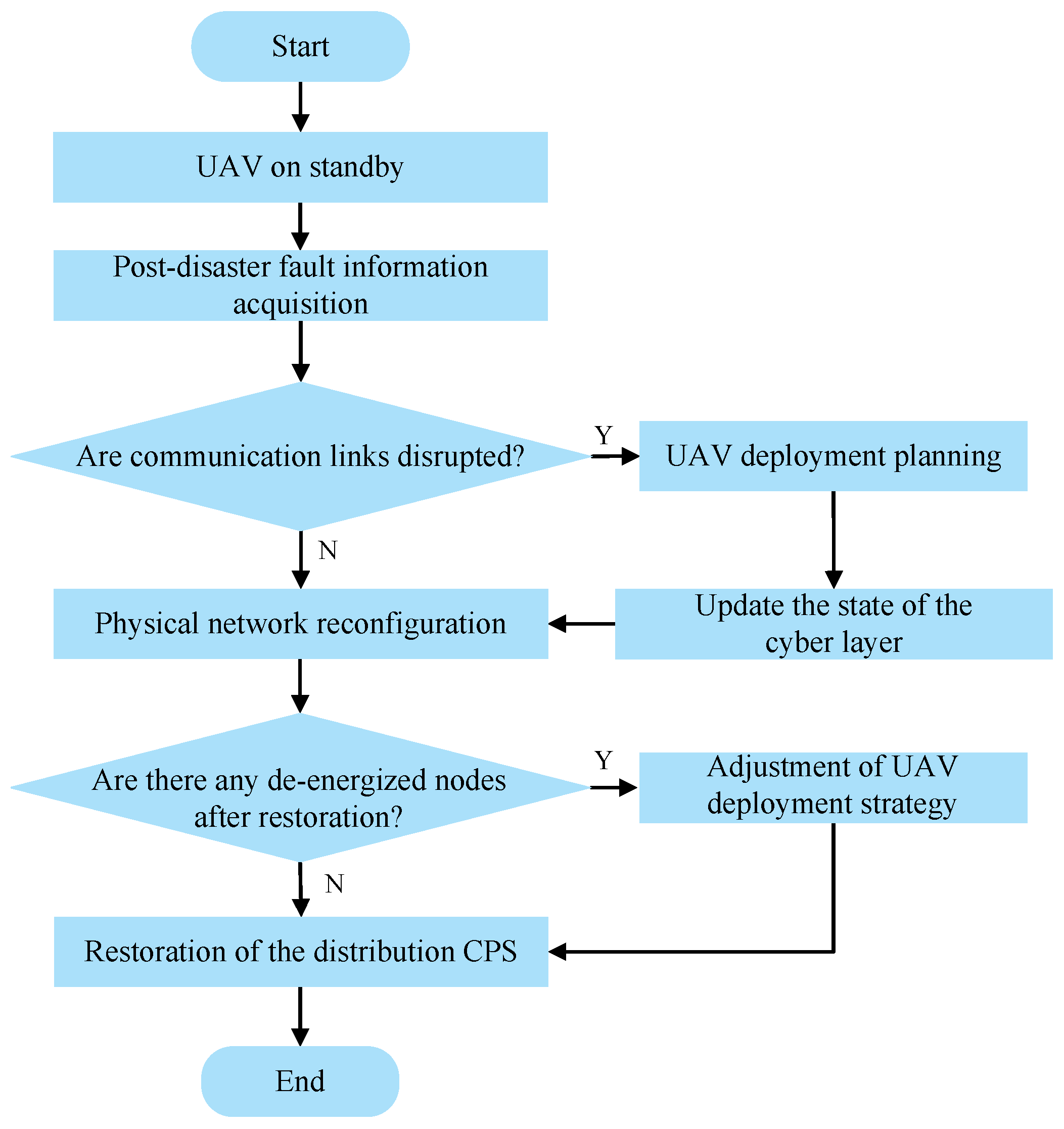
To address the aforementioned challenges, this paper proposes a coordinated recovery method for distribution CPS based on a two-stage UAV deployment strategy. Unlike conventional approaches that treat communication restoration and recovery of the power system separately, the proposed method dynamically integrates UAV-assisted emergency communication into the restoration process of the power grid. Furthermore, a feedback mechanism from distribution network reconfiguration to UAV deployment is introduced, enabling bidirectional coordination between the cyber layer and the physical layer. Specifically, a coupled model of the communication network and the power network is first established to characterize the interaction between the cyber layer and the physical layer. On this basis, a bi-level optimization model for distribution CPS recovery is developed. In the upper level, a two-stage dynamic deployment strategy is employed to minimize the number of deployed UAVs. In the lower level, the reconfiguration of the distribution network is performed under communication accessibility constraints to maximize the weighted load restoration. Finally, simulations are conducted on a modified IEEE 33-bus distribution system. The results demonstrate that, compared to conventional recovery strategies, the proposed method significantly reduces load shedding and improves restoration efficiency, thus validating the effectiveness of the coordinated recovery strategy for post-disaster distribution CPS. The contributions of this paper are summarized as follows:
(1) A two-stage UAV deployment strategy is proposed to support emergency communication recovery in distribution CPS, enabling efficient utilization of limited UAV resources.
(2) A bi-level coordinated recovery model is developed by integrating UAV-assisted communication restoration and distribution network reconfiguration, explicitly capturing the interactions between the communication and power layers.
(3) The proposed coordinated recovery framework effectively improves the post-disaster restoration performance of the distribution CPS. Case studies on the IEEE 33-bus system show that the proposed method reduces the cumulative load loss rate by 15.75% and 2.42%, respectively, compared with two benchmark recovery schemes.
Section 2 introduces the coupled modeling framework of the distribution CPS and the interaction between the power and communication layers.
Section 3 develops the coordinated fault recovery model integrating UAV-assisted communication recovery and distribution network reconfiguration.
Section 4 presents the overall solution procedure of the proposed strategy.
Section 5 provides case studies and comparative analyses to verify the effectiveness of the proposed method. Finally,
Section 6 concludes the paper and discusses future research directions.
2. Coupling Framework of Distribution CPS
The distribution CPS is a typical multidimensional complex system integrating physical infrastructure with communication networks [
22]. To facilitate analysis, the physical components and topological structures of both the power and communication layers are simplified and modeled as graphs. Specifically, the power network is represented as an undirected graph
, where
and
denote the sets of nodes and power lines, respectively. The corresponding adjacency matrix is defined as
, where
n is the number of nodes. If nodes
i and
j are connected, then
; otherwise,
. Similarly, the communication network is modeled as an undirected graph
, where
and
represent the sets of communication nodes and links, respectively. Its adjacency matrix is given by
, where
denotes the number of communication nodes. If nodes
and
are connected, then
; otherwise,
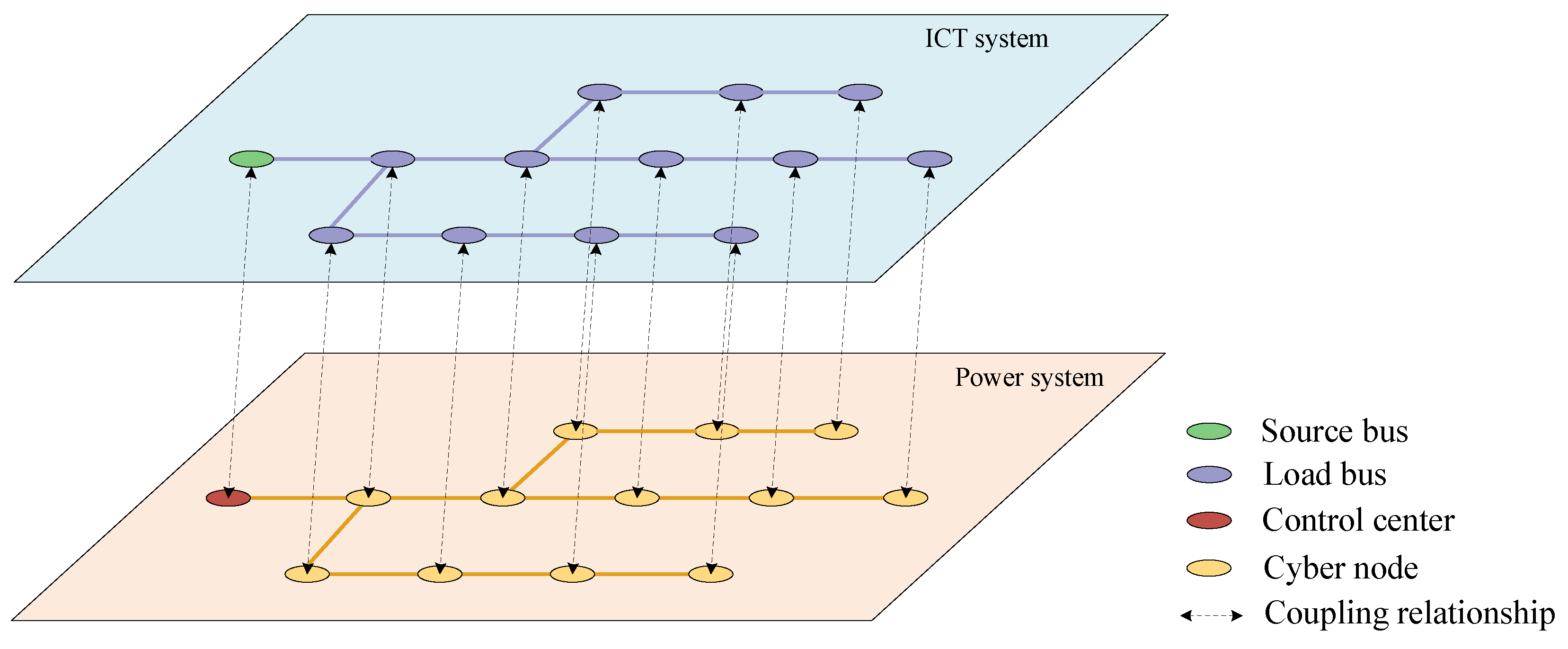
. The coupling relationships between the two layers are illustrated in
Figure 1.
For research simplification, this paper assumes a direct coupling relationship between communication nodes and power nodes, where each communication node is powered by its corresponding power node following a one-to-one dependency [
23]. Furthermore, each critical communication node is equipped with a temporary low-power backup module, whose capacity is only sufficient to report fault status immediately after failure occurrence.
2.1. Power Supply Model
Based on the above analysis, this section analyzes the operating states of communication nodes and their dependence on the control and monitoring functions of power systems from the perspective of the connection relationship between communication nodes and power nodes. The normal operation of a communication node relies on the power supply provided by its corresponding power node. Specifically, a communication node can be activated only when the restored power capacity of the associated power node meets its energy demand [
24]. The corresponding constraints are formulated as follows:
where
denotes the operating state of communication node
at time period
t;
is a binary variable indicating whether power node
i is restored at time
t;
is a binary variable indicating whether communication node
is served by UAV
m at time
t;
represents the set of upstream communication nodes of communication node
; and
indicates the operating state of the control center at time period
t.
Equation (
1) ensures that each communication node can function when it is either connected to a power node or covered by a UAV. Equation (
2) ensures that all communication nodes remain connected to the control center or their upstream nodes, while guaranteeing that the control center always operates in a normal state.
2.2. Information Control Model
This section focuses on the monitoring and control of power equipment such as electrical loads and distributed generators by communication nodes. The failure of a communication node will render its corresponding power node unobservable and uncontrollable. The corresponding constraints are presented as follows:
where
is the restored active power of node at time
t;
denotes the rated active power load at node
i;
are the active output power of distributed generators at node
i;
denote the maximum active power limits of distributed generators; and
N denotes the set of all nodes in the distribution network.
Equation (
3) restricts the active power of loads and distributed generators at the power nodes to operate within the allowable ranges only when the corresponding communication nodes are available.
5. Case Study
To verify the effectiveness of the proposed load scheduling method for a distribution CPS based on UAV emergency communication, simulation tests are conducted on an improved IEEE 33-node distribution network test system. The simulation environment is configured as follows: the CPU is an Intel Core i7; the proposed algorithm is implemented in MATLAB 2019b using the YALMIP (version 20230622) toolbox; and the Gurobi 12.0.0 solver is adopted for optimization.
5.1. Case Parameters
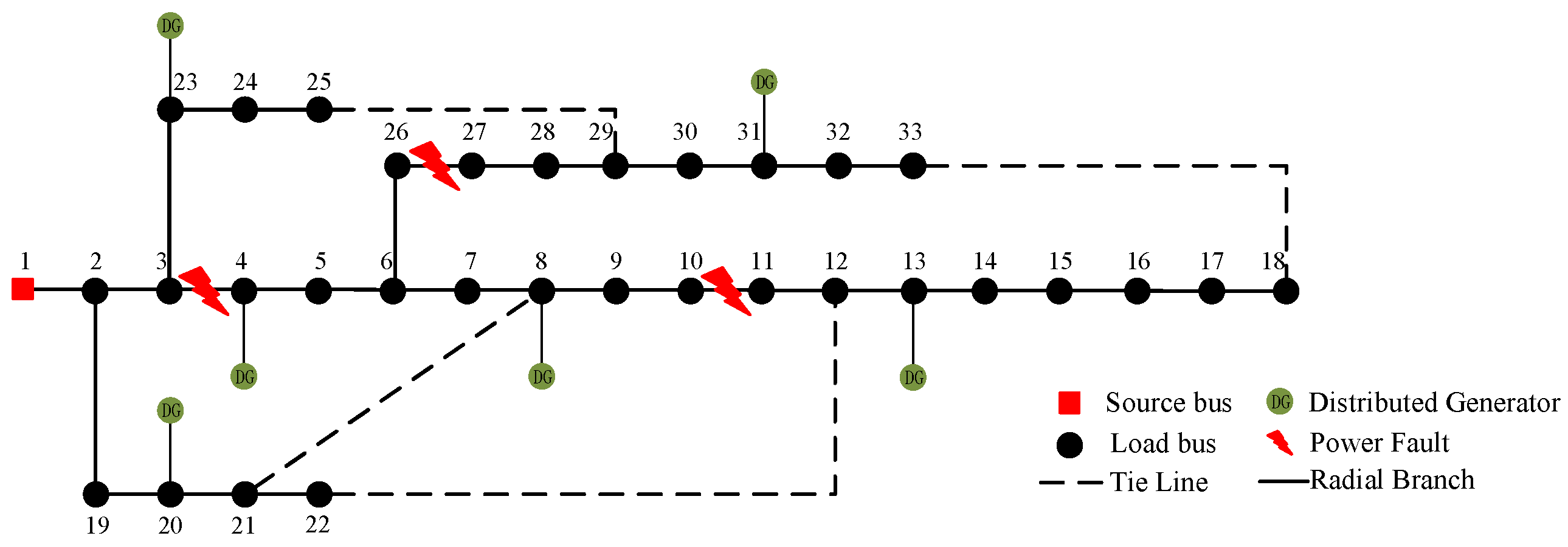
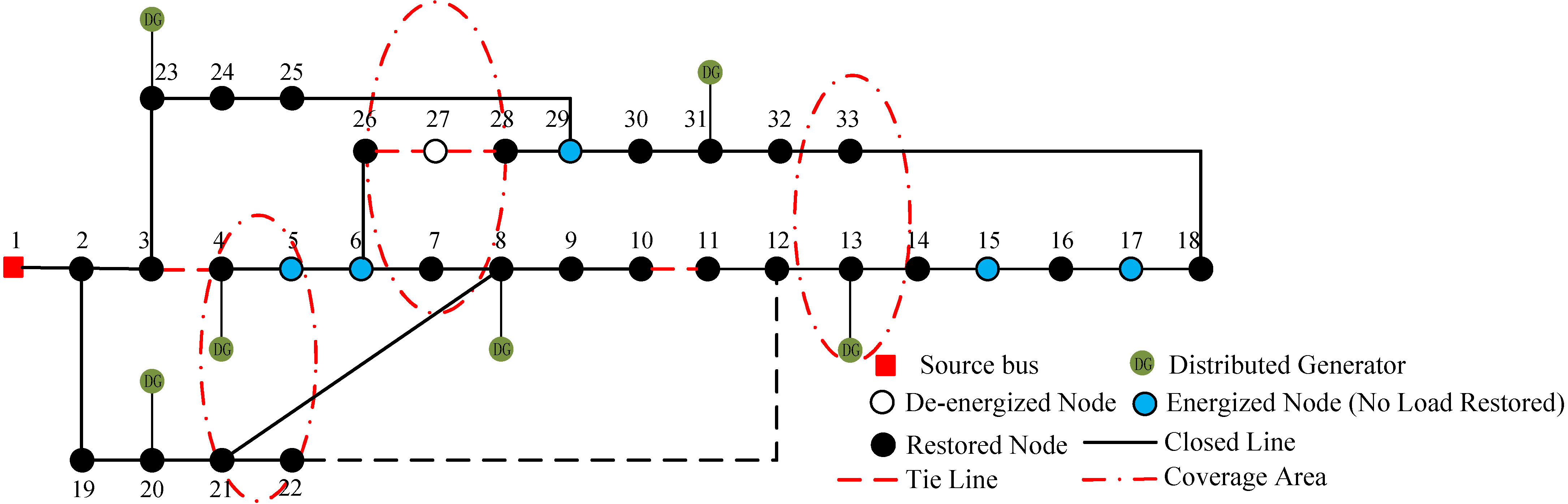
Based on the IEEE 33-node distribution system, distributed generators including photovoltaic units and wind turbine units are integrated to construct an improved network topology. Meanwhile, power lines 8–21, 9–15, 12–22, 18–33 and 25–29 are set as tie lines. The detailed structure is illustrated in
Figure 4 [
31].
To reflect the difference in importance among various loads, the concept of the importance weight of the node is introduced in the model. All nodes are classified into three load levels: primary load, secondary load and tertiary load, with corresponding weights set to 10, 2 and 1, respectively. These weights are incorporated into the objective function to explicitly represent load prioritization. Considering both network connectivity and the priority restoration of critical loads, which is guided by the objective function design rather than the mathematical formulation itself, the proposed model allows partial low-priority nodes to be connected to the power network without immediate load recovery, thereby reserving feasible power supply paths for high-priority loads. The load levels, weights, and corresponding nodes are summarized in
Table 1.
According to the practical requirements of post-disaster restoration, multiple types of DGs are configured in the test case. Photovoltaic units are connected at node 20, wind turbine units are installed at node 23, and micro gas turbine units are integrated at nodes 4, 8, 13 and 32. Different DGs possess distinct output characteristics and can provide local power support during post-disaster recovery. The installation locations and rated capacities of all DGs are presented in
Table 2 [
32].
In practical power systems, renewable energy generation and electricity demand exhibit significant stochastic fluctuations. Such uncertainties can alter power flow distributions and supply capabilities of the distribution network, thereby affecting load restoration schemes and UAV deployment strategies. To ensure the consistency of case analysis and the comparability of simulation results, the load parameters of the IEEE 33-node system are uniformly set, and all loads are assumed to remain stable without temporal variation during the restoration process. Under this assumption, the influence of load fluctuations is neglected to better evaluate the effectiveness of the proposed method. The detailed load data of each node are listed in
Table 3.
Finally, to simulate the simultaneous damage of power and communication networks under extreme disaster scenarios, all DG nodes are modeled as PV nodes in this case. Power lines 3–4, 10–11, 26–27 and communication links 13–14, 20–21, 32–33 are set to fault states.
5.2. Simulation Result Analysis
(1) UAV deployment and system restoration
The proposed UAV-based emergency communication scheduling method is adopted to optimize post-disaster restoration, realizing orderly recovery of faulty communication nodes and efficient reconfiguration of power supply paths. The detailed restoration scheme, including UAV deployment positions, communication coverage ranges and network reconfiguration paths, is presented in
Figure 5, which provides fundamental data for subsequent performance evaluation and method verification.
As shown in
Figure 5, UAVs are deployed at key positions according to the proposed deployment model, which effectively guarantees the connectivity of the communication network. Supported by the recovered communication system, the power network completes load restoration through topology reconfiguration.
(2) The node voltage distribution analies
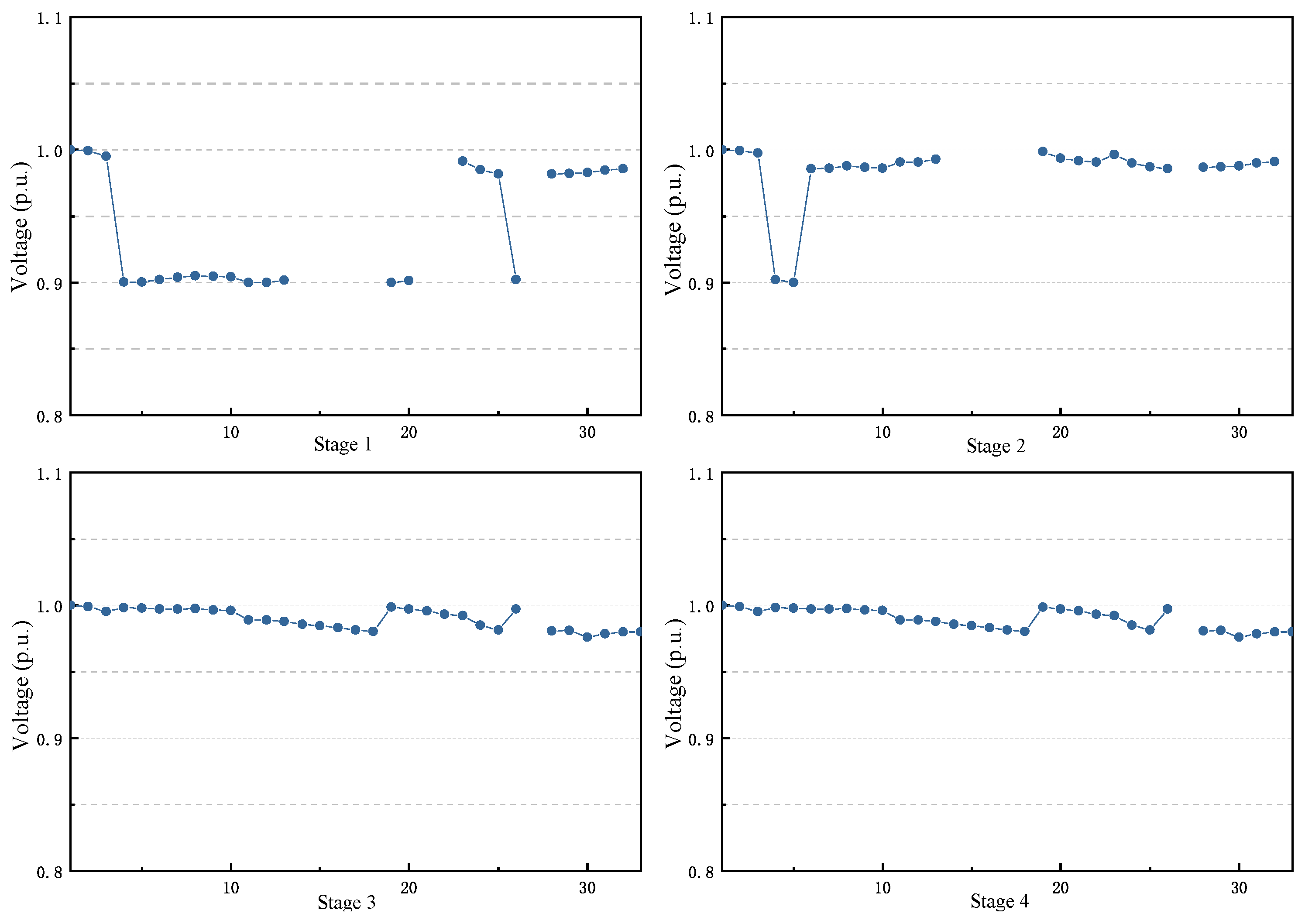
Furthermore, to evaluate the voltage stability of the proposed method, the node voltage distribution is analyzed at different restoration stages.
Figure 6 illustrates the voltage profile per-unit after restoration using the proposed strategy.
It can be observed that after communication recovery and network reconfiguration, the node voltages at all stages remain within the allowable range, ensuring satisfactory voltage stability and operational security. Furthermore, the voltage deviation of critical nodes is gradually reduced during the restoration process, indicating that the proposed coordinated recovery strategy effectively improves the voltage regulation capability of the distribution system. Compared with the fault condition, the post-restoration voltage profiles show smaller fluctuations and better voltage stability, demonstrating that the recovered network topology can support load restoration while maintaining stable system operation.
(3) Load recovery performance for nodes with different importance levels
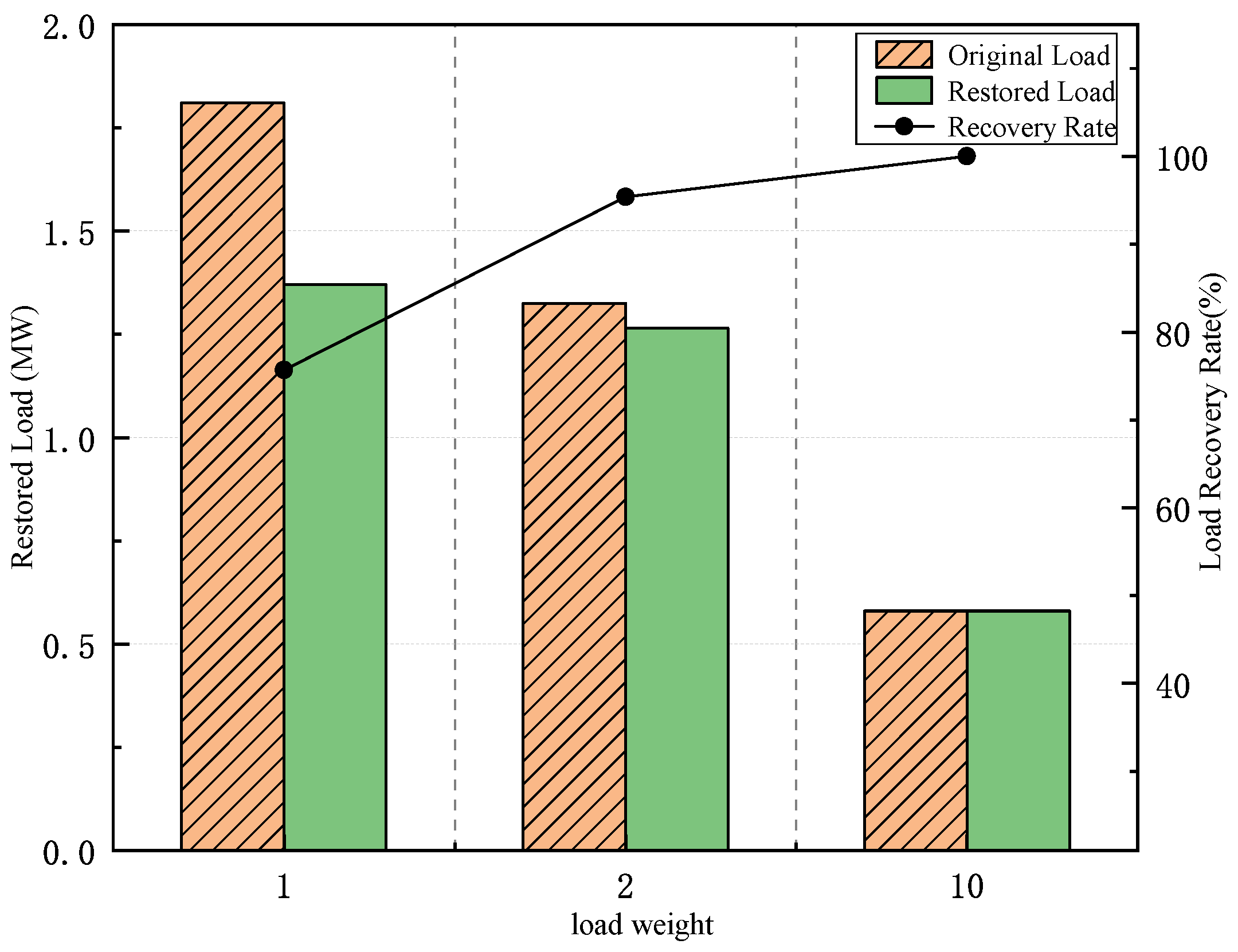
In addition, to compare the restoration performance for loads with different importance levels, statistical analysis is conducted on load recovery results.
Figure 7 demonstrates the original load magnitude, restored load capacity and recovery ratio for nodes with different importance weights in the final restoration stage, which verifies the effectiveness of the load priority strategy.
It is obvious from
Figure 7 that the proposed method prioritizes the power supply of primary and secondary critical nodes during restoration, which fully validates the advantages of priority scheduling. Specifically, the recovery ratio of primary loads reaches 100%, which is significantly higher than that of secondary and tertiary loads. The results indicate that the proposed method can guarantee reliable power supply for critical loads, realize hierarchical restoration of distribution networks, and effectively enhance the resilience of distribution CPS after disasters.
(4) Performance Comparison under Different Fault Scenarios and System Scales
To further validate the effectiveness and scalability of the proposed method, comparative simulations are conducted under different system scales and fault scenarios. Three representative fault scenarios are considered to reflect different levels of system damage, and two distribution network test systems with different sizes are used to evaluate the scalability of the proposed approach. Different metaheuristic algorithms are compared in terms of restored load, computational efficiency, and convergence performance.
As shown in
Table 4, the proposed method achieves satisfactory load restoration across various faults and system scales. Its performance declines slightly as faults become more severe, yet the overall restoration rate stays stable. Moreover, the IEEE 69-bus system outperforms the 33-bus system, since its richer topology offers more options for network reconfiguration and power supply rerouting.
(5) Robustness Evaluation across Different Operating Conditions
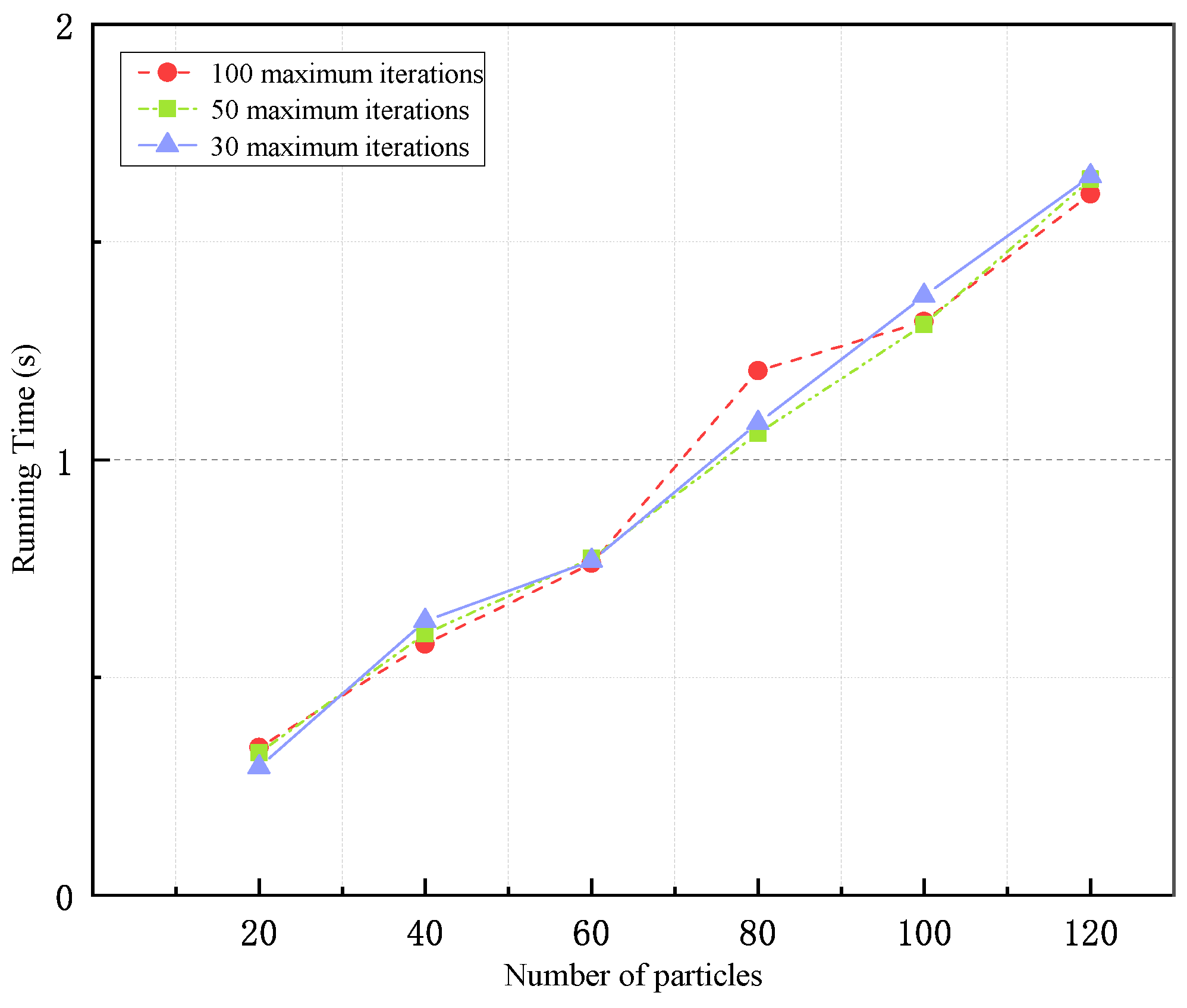
To further investigate the robustness of the proposed method, a sensitivity analysis is conducted based on the improved BPSO algorithm. Specifically, key parameters including population size, inertia weight, and load priority weighting factors are varied within a reasonable range to evaluate their impact on the final restoration performance. The main parameter settings of the improved BPSO algorithm are given as follows: the population size is set to 100, the maximum iteration number is 50, the inertia weight varies from 0.4 to 0.9, and both learning factors are set to 1.5. The results are illustrated in
Figure 8.
As shown in
Figure 8, the proposed method maintains stable performance in terms of restored load under different parameter settings. Although slight variations can be observed when adjusting population size and inertia weight, the overall trend remains consistent. This indicates that the improved BPSO-based recovery model is not highly sensitive to parameter tuning and exhibits good robustness and practical applicability in CPS coordinated recovery problems.
5.3. Comparison with Different Recovery Algorithms
To further verify the effectiveness of the selected algorithm, a comparative analysis between improved BPSO and other representative metaheuristic algorithms is conducted under the same fault scenario.
As shown in
Table 5, all compared algorithms achieve the same final load restoration ratio because the communication fault scale in the studied scenario is relatively small and can be fully covered by all optimization methods. However, the proposed improved BPSO algorithm converges with significantly fewer iterations and lower computation time compared with GA, GWO, and the DRL-based method [
33]. This demonstrates that the proposed method provides better optimization efficiency and convergence performance for UAV-assisted CPS recovery problems.
5.4. Comparative Analysis
To further verify the superiority and effectiveness of the proposed UAV emergency communication-based load restoration method, three typical restoration strategies are selected for comprehensive comparison and numerical evaluation. The detailed schemes are described as follows:
Scheme 1: Post-disaster communication restoration is neglected. Only the residual communication network is utilized for network reconfiguration to achieve load restoration as much as possible.
Scheme 2: Both power line faults and communication link failures are considered. A single static UAV deployment model is established to cover faulty communication nodes, where UAV positions and flight trajectories are determined offline according to disaster scenarios [
34].
Scheme 3: Considering the power supply limitation of distributed generators, the proposed collaborative restoration strategy with dynamic two-stage UAV deployment is adopted to realize load recovery of distribution CPS.
(1) Comparison under different disaster scenarios
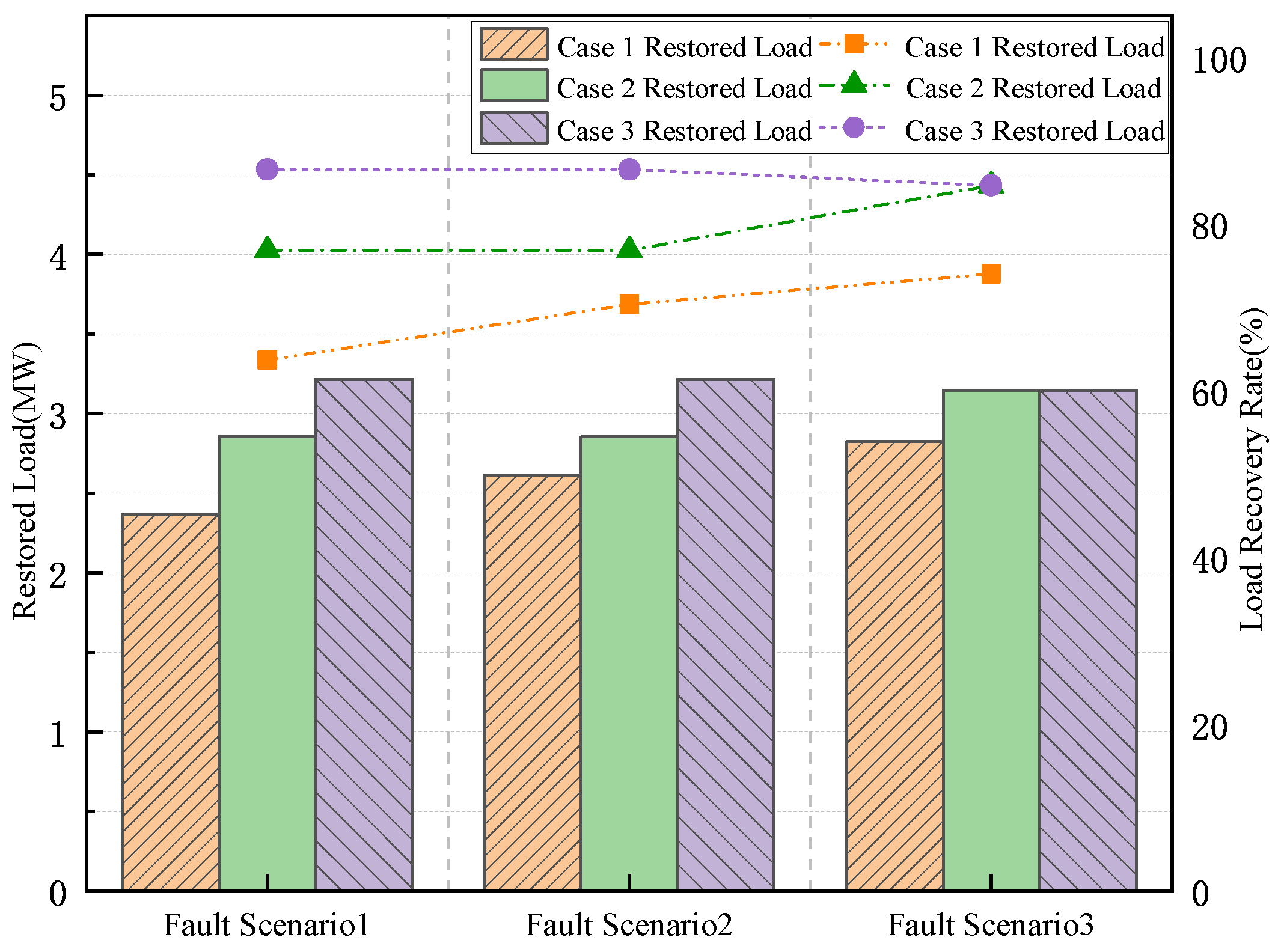
Simulation tests are carried out to compare the restoration performance of the three schemes under various fault conditions. The total restored load capacity and overall recovery ratio are evaluated with different damaged nodes and communication links.
Figure 9 shows the final restoration state of each scheme, which reflects the adaptability and power guaranty capability under diverse post-disaster operating conditions.
The simulation results reveal that the proposed collaborative restoration method remarkably improves the total load recovery level. Under three typical fault scenarios, the load recovery ratios reach 86.54%, 84.66% and 86.54%, respectively, which are much higher than those of Scheme 1 and Scheme 2. Scheme 1 suffers from severe recovery limitations due to the lack of communication restoration; Scheme 2 adopts static UAV placement and presents lower restoration efficiency. By adopting dynamic UAV deployment, the proposed method realizes fast coverage of critical communication nodes and high-efficiency load restoration, which fully demonstrates its superiority in improving post-disaster recovery performance.
(2) Comparison with different quantities of communication faults
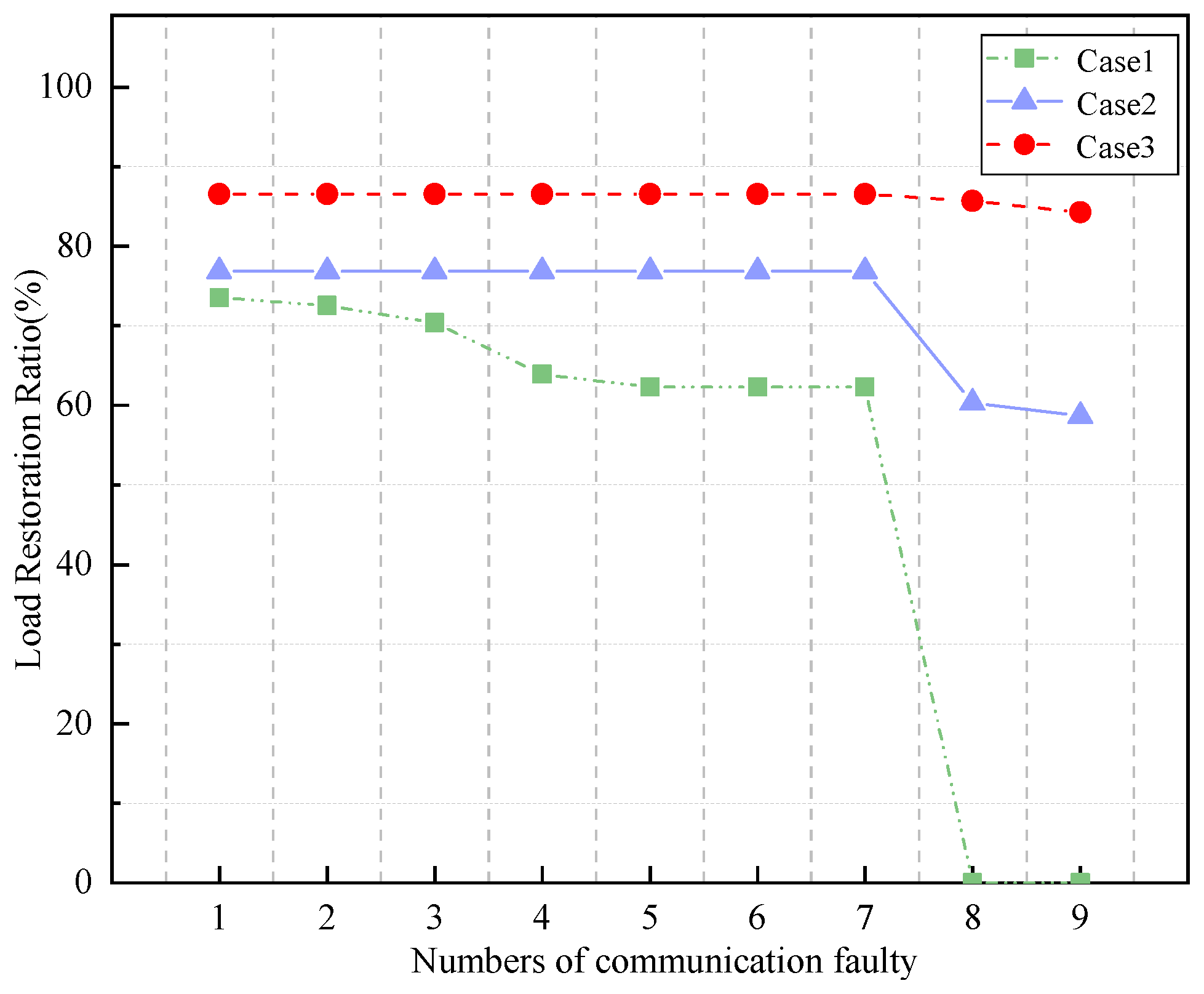
To validate the robustness of the proposed method under varying communication damage scales, multiple test cases are designed with different numbers of faulty communication links while the power line faults are kept unchanged. Different damage degrees of the communication network were constructed to evaluate the adaptability of each scheme. The corresponding results are shown in
Figure 10.
The comparison results indicate that the scale of communication faults exerts distinct influences on different schemes. Scheme 1 is completely dependent on residual communication resources, and its restoration performance continuously decreases as the number of faults increases; once the fault scale exceeds a threshold, an effective network reconfiguration cannot be performed. By contrast, Scheme 2 and Scheme 3 adopt emergency UAV coverage and maintain stable performance under slight communication damage. However, their recovery ratios decrease gradually with the further expansion of faults due to the limitation of available UAV quantities. In all test cases, Scheme 3 with dynamic deployment achieves optimal restoration performance and robustness.
(3) Comparison of cumulative load loss
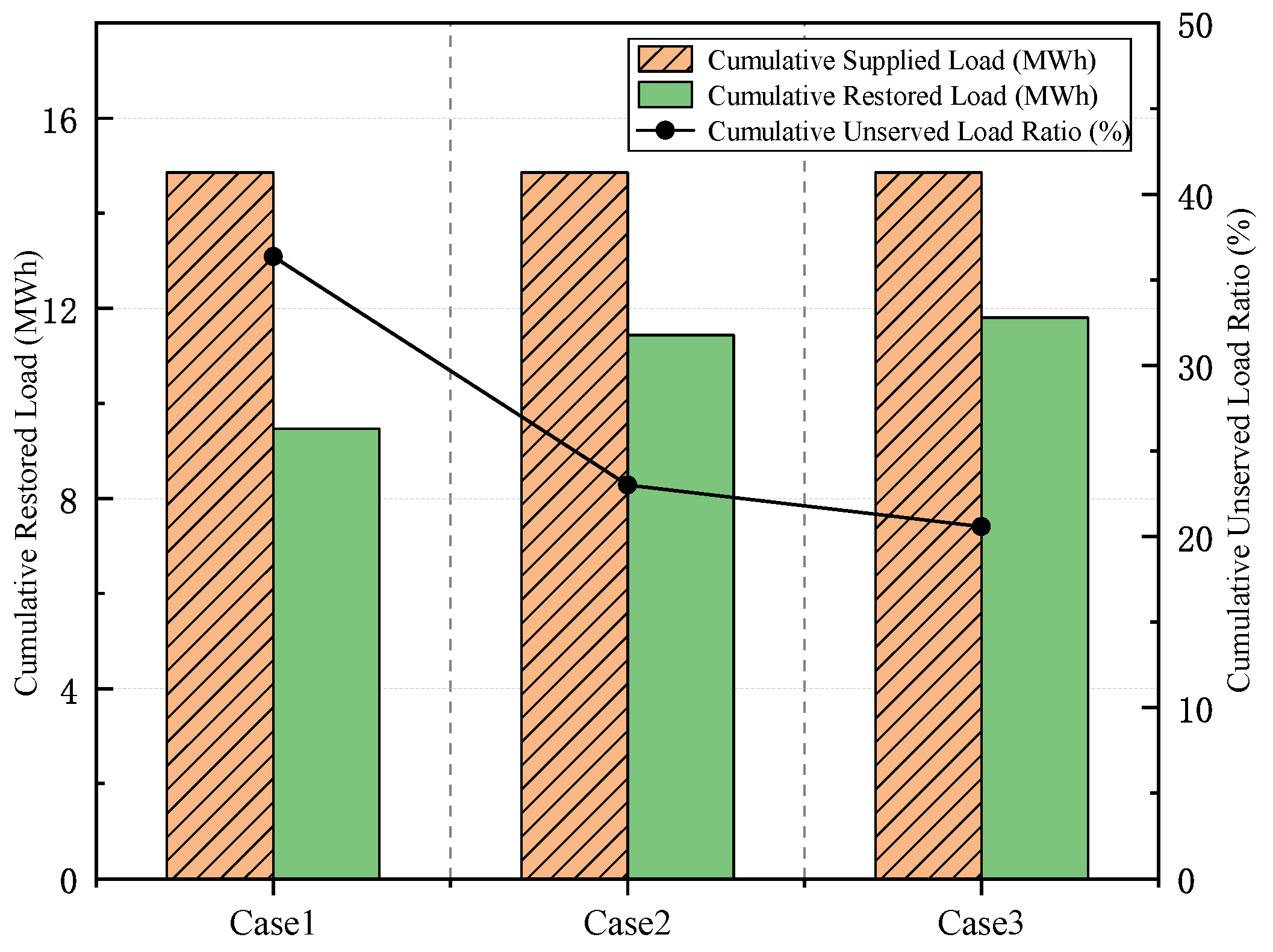
To comprehensively evaluate the overall performance during the entire restoration process, cumulative unsupplied energy of different schemes is analyzed. The cumulative load loss ratio is adopted as a key index to quantify the reliability and efficiency of the power supply; a lower ratio indicates faster and more sufficient load recovery after disasters. The comparison results of the cumulative load loss ratios are illustrated in
Figure 11.
As demonstrated in the figure, the cumulative load loss ratio of the proposed method is 20.59%, which is obviously lower than the 36.34% of Scheme 1 and 23.01% of Scheme 2. Compared to static strategies, the dynamic UAV deployment adjusts communication coverage according to real-time fault distribution and delivers rapid response to critical nodes. The results confirm that the proposed collaborative restoration strategy effectively reduces power supply loss during post-disaster recovery and enhances the overall reliability of distribution CPS.
6. Conclusions
This paper addresses the problem of coordinated failures in distribution power systems and communication networks under extreme disasters and proposes a CPS-based load scheduling method with UAV-assisted deployment. By constructing a coupled cyber–physical network model and integrating a graph-theory-based power path reconfiguration mechanism, the proposed method achieves joint optimization of the cyber and physical layers. On this basis, a novel dynamic deployment and adjustment strategy for UAVs is designed: in the initial stage, the direct fault nodes of the communication structure are repaired to restore the core communication links; meanwhile, the deployment of UAVs is dynamically optimized to cover communication nodes that fail due to power supply interruptions during reconfiguration, thereby ensuring reliable transmission and execution of control commands. Simulation studies on the modified IEEE 33-bus distribution system demonstrate that the proposed method outperforms conventional recovery strategies in terms of total load restoration, priority supply of critical loads, voltage stability, and distributed generation utilization efficiency. Specifically, the overall load restoration rate and cumulative load loss rate reach 86.54% and 20.59%, respectively, which are significantly better than those of the benchmark strategies. These results verify the practicality and effectiveness of the proposed approach in post-disaster scenarios. The contributions of this work provide an effective technical pathway for enhancing the resilience and recovery capability of distribution networks under extreme disasters and offer valuable insights for advancing disaster-response mechanisms in cyber–physical integrated systems. Unlike static recovery methods, this approach not only rapidly restores core infrastructure links in the initial stage, but also dynamically eliminates continuous cyber-blindness caused by supply interruptions during physical reconfiguration, thereby offering valuable insights for advancing real-time disaster-response mechanisms in cyber–physical integrated systems.
However, its practical application still faces several challenges, including the idealized modeling of communication channels under extreme weather conditions, the lack of explicit consideration of uncertainties associated with renewable generation and time-varying load demands, computational scalability for large-scale distribution networks, and the simplified treatment of UAV logistical and endurance constraints. Therefore, future research will focus on incorporating detailed UAV energy consumption models and failure scenarios into the restoration framework, validating the proposed method on larger-scale systems and hardware-in-the-loop simulation platforms, and investigating stochastic fault and operational scenarios to further improve the robustness and practical applicability of the proposed strategy.