Review

Digital Transformations in the Renewable Energy Sector for Net-Zero Targets on the Path to a Sustainable Future

1
Department of Information Technology, College of Engineering and Information Technology, Ajman University, Ajman P.O. Box 346, United Arab Emirates
2
Department of Electrical and Computer Engineering, College of Engineering and Information Technology, Ajman University, Ajman P.O. Box 346, United Arab Emirates
3
Artificial Intelligence Research Center (AIRC), Ajman University, Ajman P.O. Box 346, United Arab Emirates
*
Author to whom correspondence should be addressed.
Energies 2026, 19(12), 2742; https://doi.org/10.3390/en19122742
Submission received: 8 February 2026 / Revised: 25 April 2026 / Accepted: 28 May 2026 / Published: 7 June 2026
(This article belongs to the Special Issue Energy Economics and Management, Energy Efficiency, Renewable Energy)

Abstract

The global renewable energy sector now represents the world’s fastest-growing sector, with growth projected to more than double by 2030 and expected to exceed 4600 GW between 2025 and 2030. This is driven by falling costs, increasing consumer awareness, sustainable energy production models, and national and international climate commitments. This review study aims to discuss the transformation initiatives in the renewable energy sector with net-zero targets. A total of 89 studies published between 2020 and 2026 were identified for this literature review. The results indicate that digital transformation has the potential to significantly optimize the performance of the renewable energy sector by resolving its sustainability issues. This study discusses the waste types and waste management strategies in the renewable energy sector. It also highlights the indicators, barriers, and drivers of sustainable performance in the renewable energy sector by integrating advanced technological solutions in manufacturing, supply chain management, maintenance, monitoring, and the management of renewable energy equipment. The study findings demand global commitment and policy coordination in achieving the goals of decarbonization. The literature insights highlight future core research fields and can guide international organizations, industrial policymakers, and academic scholars towards a better and more sustainable future.

1. Introduction

The world is battling the rapid depletion of natural resources and environmental sustainability crises [1]. In response, renewable energy resources have become a lifeline for our planet. Clean and green energy resources are increasingly being incorporated into electrical utilities across the world [2]. Solar and wind power are the leading sources of among renewable energy resources [3]. As a result, renewable energy hybrid projects have been established in various countries, such as the Khavda Renewable Energy Park in Gujarat, India, with a target capacity of 30 GW. On the other hand, Dubai has launched the largest CSP project, the “Mohammed bin Rashid Al Maktoum Solar Park,” on the world’s largest single-site solar park, with a current capacity of 3860 MW and a planned capacity of 7260 MW by 2030 [4]. In addition, the Qinghai Golmud Solar Park in China, with a current capacity of 2.8 GW, has plans to extend to 16 GW. The world’s largest offshore wind farm, “Dogger Bank”, is being developed in the UK, with a planned capacity of 3.6 GW across three phases (A, B, and C). It is expected to be fully operational by 2027 and may further increase its capacity through a potential fourth phase (D).
According to the International Energy Agency (IEA) 2019 report, the world’s renewable power capacity was projected to expand by 60% in 2025 and is expected to triple by 2030, promoting a greener environment through reduced CO2 emissions and enhanced environmental sustainability [1,5]. Despite these developments, existing studies demonstrate that the extensive implementation of renewable energy generation systems is the reason for the rapid depletion of natural resources such as cobalt, copper, and silver. The massive production of renewable equipment also pollutes the environment with hazardous chemicals that are used during manufacturing processes [6]. In addition, many scholars have claimed that renewable energy generation systems rarely reach their declared maximum capacity [7]. The efficiency of solar power plants and wind power farms is affected by many environmental factors, such as temperature, heat, dust, dirt, and pollen, as well as failures of various parts, connectors, and cables. Therefore, the renewable energy sector requires more balancing and advanced management of power and production capacity than fuel-based energy power stations [8].
Renewable energy generation systems must be carefully observed, controlled, and monitored to capture all possible energy harvesting opportunities and respond to any abnormalities in real time [9]. In addition, fault detection and diagnosis from bottom-to-top control levels are essential for safe operations, optimization, and longer equipment lifetimes [10]. In the era of Industry 4.0 and 5.0, many advanced technologies and systems are available to digitize the renewable energy sector. Examples of these systems include cyber–physical systems (CPSs), supervisory control and data acquisition systems (SCADA), customer information systems, outage management systems, distribution management systems, and geographic information systems [11]. These advanced systems are driven by innovation accelerators, which include the Internet of Things (IoT), robotics, 3D printing, artificial intelligence (AI), machine learning (ML), augmented and virtual reality, cybersecurity, simulation, horizontal/lateral software integration, blockchain, nanotechnology, cloud computing, and big data [12]. These advanced technologies, systems, and communication networks have the capability to manage renewable energy generation systems with improved reliability and efficiency while reducing environmental and cost issues [13].
The literature review highlights the rapid development of digital transformation across various sectors. Scholars have carried out a lot of research on the application of different advanced technologies in different organizations and industries; however, they have not approached the renewable energy sector from this perspective. In addition, most researchers have focused on the renewable energy sector from the perspective of harnessing its benefits and have ignored the challenges associated with this industry in terms of waste and resource management, manufacturing, supply chain management, and how digital transformation can help mitigate these issues. To date, there has been almost no scholarly investigation into how the energy sector approaches and benefits from digital transformation [14]. No one can deny the advantages of digital transformation in any sector; however, failure can have a negative impact. Moreover, digital transformations that are intended to improve efficiency have a high failure rate of up to 90% [15]. A recent study by McKinsey shows that 70% of all complex, large-scale digital transformation projects end in failure. Therefore, identifying the challenges that hinder the success of digital transformation is of great importance. The important topic of waste is not often highlighted when talking about renewable energy. There may be some negligence in focusing on the many benefits while ignoring the possible negative effects of the renewable energy sector [6]. The reason for this may be the urgency of finding alternative energy resources in response to climate change pressures [14]. However, to ensure that renewable energy is utilized in a truly sustainable way, it is essential to find solutions to reduce these negative effects [15].
The objective of this study is to determine the recent status of the scholarly investigation regarding sustainability issues and the role of digital transformation in the renewable sector. It is also possible to identify the potential issues, enablers, indicators, and challenges associated with digital transformation in the renewable energy sector. The study results will guide decision-makers (policymakers and responsible authorities) in installing the best technologies to optimize the renewable energy sector and achieve net-zero targets. These initiatives can bring not only considerable benefits in terms of financial, social, and environmental sustainability but also contribute to the success of digital transformation projects.
Although previous review studies have discussed many emerging and advanced technologies individually, no scholars have yet investigated the digital transformation in the renewable energy sector with net-zero targets, from production to consumption, and other strategic challenges altogether. In addition, these study results can identify future research directions. The following research questions (RQ) are designed to align with the research objectives.
RQ1: What type of waste are produced, and how are they managed in the renewable energy sector?
RQ2: What technologies and processes can facilitate the digital transformation transition in the renewable energy sector?
RQ3: What challenges are associated with the implementation of digital transformation in the renewable energy sector?
The paper structure is organized as follows: the second section presents the material and methods. The third and fourth sections discuss the study findings and results based on descriptive and qualitative analysis of selected studies that are used in this review. The last section concludes and summarizes the study with future research directions.

2. Materials and Methods

2.1. Research Strategy

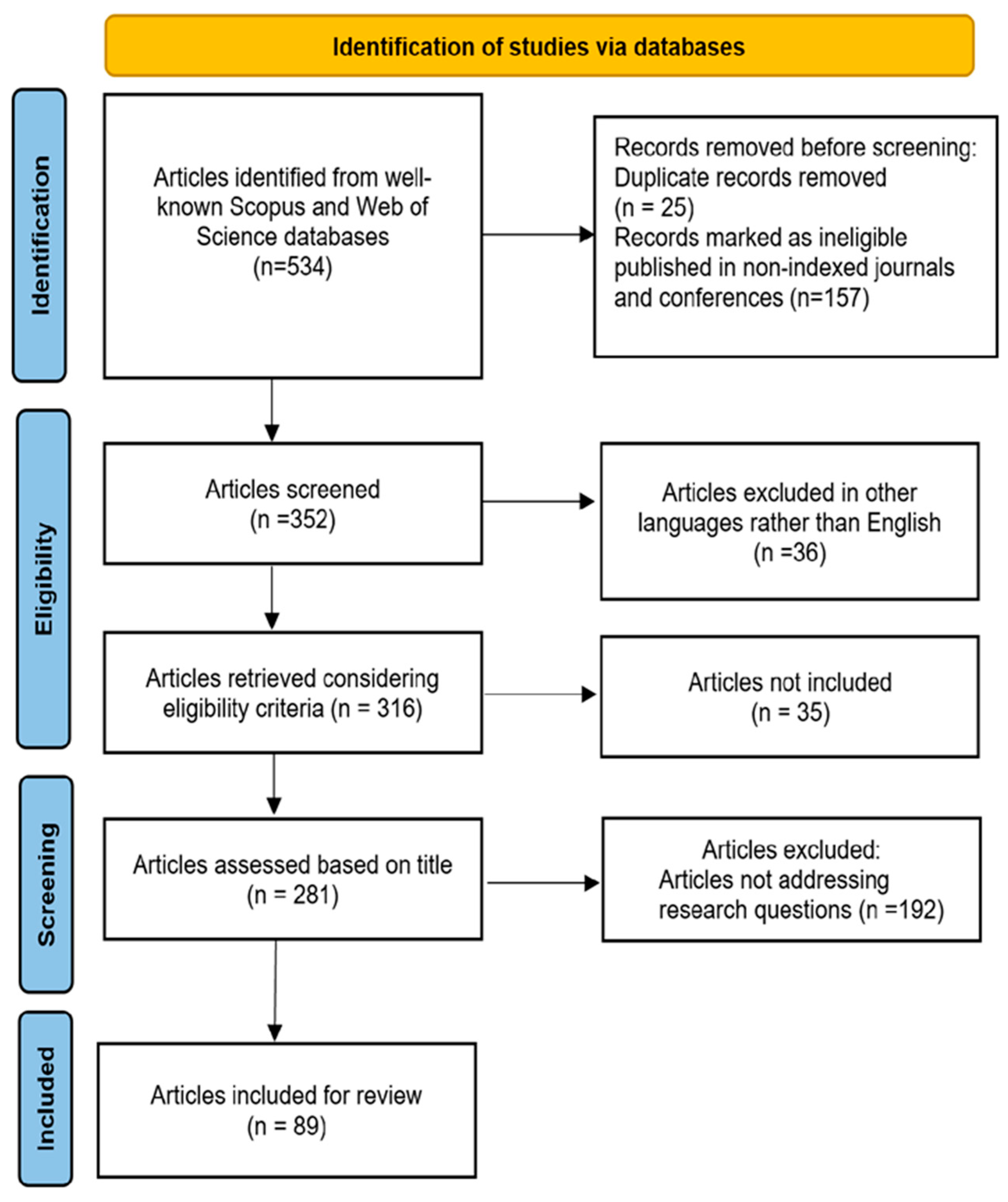
The selected research strategy for this study is a highly rigorous and appropriate approach designed to identify state-of-the-art literature on the selected research topic. As proven by the literature review, digital transformation is an emerging topic in the renewable energy sector [16]. The study aim is to provide the most recent knowledge rather than obsolete technology driven by rapid advancements. As a result, the digital transition away fossil fuels has intensified the integration of advanced technologies, resulting in a rapid surge in research publications on energy digitalization during 2021–2023 [17]. Therefore, the majority of the articles addressing the selected topics were published between 2020 and 2026. From this perspective, the selected strategy allows a detailed evaluation of the literature and a critical analysis of the research topic through transparent objectives [18]. The research strategy is the Preferred Reporting Items for Systematic Reviews and Meta-Analyses (PRISMA) to ensure methodological transparency, as shown in Figure 1. Article screening, identification, eligibility assessment, and selection were conducted based on PRISMA guidelines [18]. A PRISMA flow diagram was designed for this review process.

2.2. Article Identification

The list of keywords was designed based on the key concepts explored in this study. The first stage entailed a systematic search for relevant articles across ten well-known online databases selected for their scholarly quality and impact in the research field. Google Scholar was used as the main repository for scientific papers. Only academic and mainstream industry journals were considered for this review. The repositories were queried with a targeted set of keywords to scrutinize the recent literature related to the study topic. The following key search strings were used in different search engines “Digital transformation OR Digitization AND Renewable energy sector AND Digital transformation in solar plants and wind turbine farms OR Digitization renewable energy generation systems, sustainable renewable energy sector AND sustainability issues of solar, wind turbine, and batteries, emerging technologies AND renewable energy sector AND emerging technologies in solar plants and wind farms OR Green energy sources, Digitized manufacturing AND sustainable supply chain management”. We applied a time span filter from 2020 to 2026 based on keywords for each search result and then shortlisted the first 59 hits from each search result, resulting in a total of 534 papers. An article screening process was then carried out, first based on the title and subsequently by the abstract. The final filtering process considered the contents of the paper and resulted in the selection of 89 studies for inclusion in this SLR. The targeted keywords and databases are listed in Table 1.

2.3. Article Screening

After the article identification stage, 25 duplicate studies were first removed using “Mendeley Reference Manager v2.143.0.” The next stage involves the most important systematic selection criteria, which include only articles published in indexed journals, conferences, and books. As a result, a total of 157 non-indexed articles were removed. The second screening stage included only articles published in the English language. Thus, 36 published in other national or international languages were excluded. Furthermore, a step-based screening strategy was applied using Mendeley v2.143.0. Folders and subfolders with specific categories were created for “included and excluded”, facilitating a robust article screening process. The abstracts and conclusions of the research articles were reviewed at this stage, leading to the exclusion of an additional 35 articles that did not meet the eligibility criteria. During the last screening stage, a further 192 articles were removed. This screening step aimed to identify research articles that were somehow relevant to the context of this review.

2.4. Article Eligibility Assessment

At this stage, a full-text screening was performed to assess the eligibility of the research articles for final inclusion. The focus was to recognize issues, strategies, technologies, and solutions with digital transformation in the renewable energy sector from a sustainability perspective. Studies were excluded if they were unable to provide enough discussion of the selected topics. Only 89 studies qualified for the next stage. An eligibility assessment criterion was applied to check the eligibility of the selected research articles and achieve the best interpretation of the results. Therefore, a question/answer (QA) criterion was applied to determine the eligibility of the selected research articles, such as
Q1: Is the research topic relevant to the keywords (digital transformation, renewable energy sector, and environmental sustainability)?
Q2: Is the research purpose clearly discussed?
Q3: Are the research materials and methods clearly mentioned, including data collection and data analysis processes?
Q4: Is the research approach adequately explained?
A quality ranking system with three levels (i.e., 3, 2, and 1, corresponding to “high, medium, and low” quality) was used to evaluate the selected research articles [19]. In this process, a score of 3 was taken as highly relevant to the four QA eligibility criteria, whereas a rank of 1 is considered the lowest score. Although a rank of 0.5 was assigned to articles that partially satisfied the eligibility criteria, while a score of 0 was assigned to studies that did not meet the predefined eligibility criteria. By applying this eligibility criteria, 35 research articles were found to be low quality, 10 research articles met the medium eligibility standard, and 79 studies were ranked as high quality. Thus, a total of 89 studies were included for this review after excluding 35 research items that failed to meet the quality criteria.

2.5. Article Analysis

The article analysis stage consisted of two types of analysis: descriptive analysis and qualitative analysis. These analyses were performed on the selected research articles in this review study. Descriptive analysis was conducted to provide an overview of the significant characteristics of the selected articles. The descriptive analysis included the chronological distribution of journals, spatial distribution based on research contribution and collaboration, and publication by journals. Patterns and connections among countries for research collaboration were explored by conducting co-occurrence analysis for this study. In addition, the “Tags and Notes” feature of Mendeley made the final synthesis easier by labeling articles according to specific criteria. Finally, qualitative analysis was conducted using NVivo-15 software to explore the key themes required in the current study. NVivo provides various ways to select and filter segments for deeper analysis. The “Text Search and Word Frequency” feature of NVivo-15 allows rapid filtering of particular terms across thousands of research items, which helps identify the most relevant articles for specific themes. Short or long summaries of articles were generated with PDF and NVivo-15, which helped data synthesis. The “Matrix Coding Queries” feature of NVivo-15 was used to create tables displaying how several themes intersected with the selected studies. In addition, ChatGPT-5.5 was used to create visual representations of some key themes. It is an AI-powered conversational assistant supported by OpenAI. It uses advanced large language models (LLMs) to understand prompts and create human-like text, code, and images. The AI-created images were critically assessed, refined, and modified by the authors.

3. General Findings Based on Descriptive Analysis

A total of 89 research articles were considered for adequate discussion based on the PRISMA strategy. Descriptive analysis was performed on 89 research articles, which helped in understanding research trends relevant to the selected topic over the years. Based on the study scope, 89 studies were included in this review. Well-known journal articles were intentionally prioritized over conference proceedings and book chapters, considering the selected eligibility criteria.

3.1. Journal Outlet

An analysis of the 89 selected studies showed that they were published across a total of 42 journals, as shown in Table 2. Publication density varied, with thirty-one journals producing one paper each, two journals producing three papers each, and six journals producing two papers each. The remaining thirty-seven studies appeared in five journals, as detailed in Table 2.The Sustainability journal published the highest number of studies (10), followed by Applied Sciences (9), Energies (9), Journal of Cleaner Production (6), and Sensors (6). The significant pool of sources for the 89 research articles shows that the sustainability factor in various sectors has attracted more attention worldwide.

3.2. Chronological Distribution of Articles

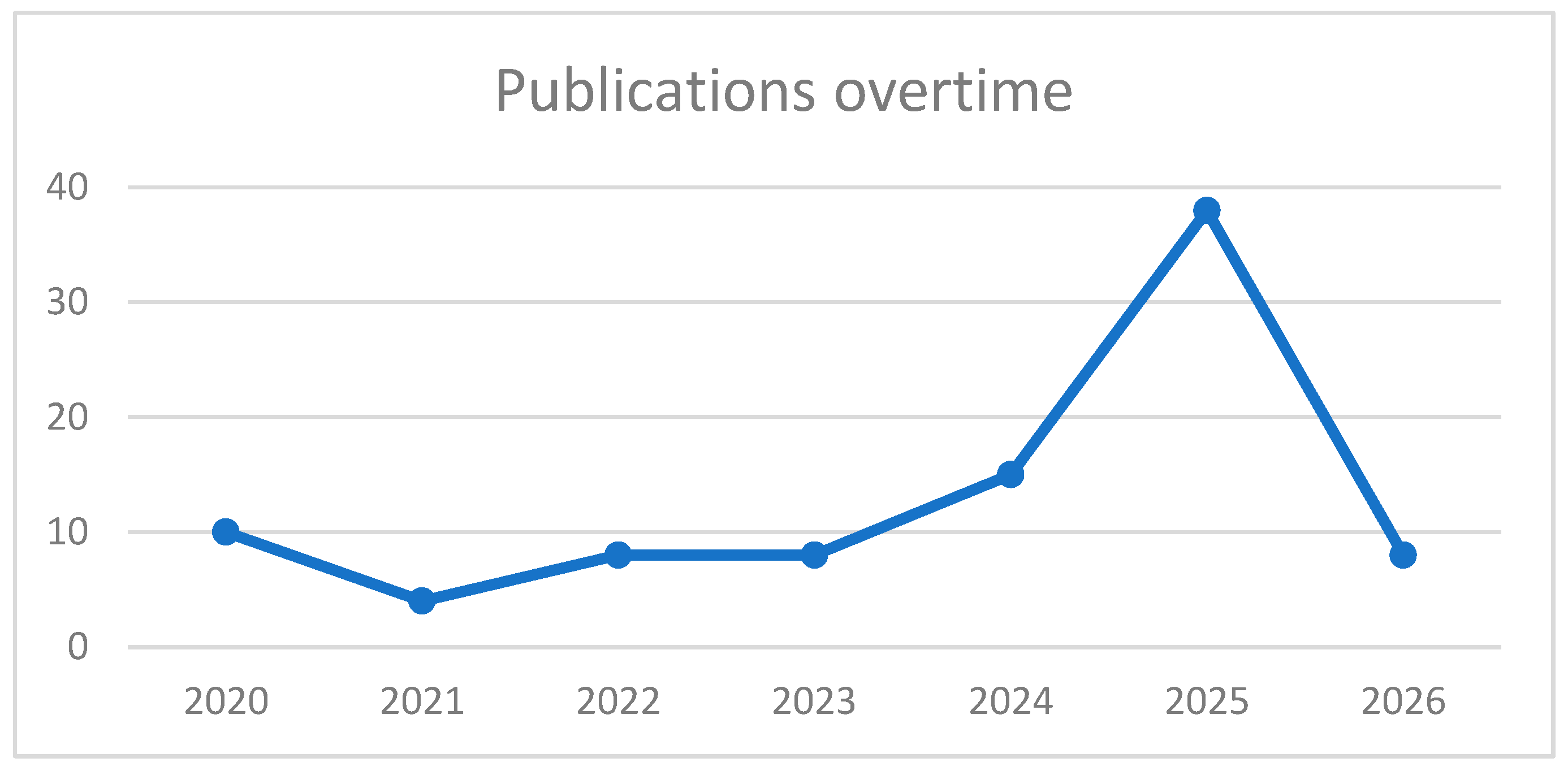
A total of 89 research articles published between 2020 and 2026 were reviewed. Although the annual publication volume remained stagnant between 2020 and 2023, a significant spike was observed in 2025, with 39 published articles within that single calendar year. As shown in Figure 2, the number of research studies published began to show an upward trend in 2024, with 16 studies. Prior to this, the publication count was eight in 2020, decreased to five in 2021 and increased to six in 2022, and reached eight in 2023. This unstable trend revealed the low interest of researchers in the selected topics before 2024. Conversely, countries and companies are more prone to integrating clean and green energy, driving manufacturing companies and increasing production through the consumption of natural resources on a massive scale. Ultimately, producing more waste has a greater impact on the environment, which might have pushed research scholars to explore smart technological options in the sector and make it more eco-friendly. This trend is depicted by the great number of publications in 2025 and 2026 (with seven articles published in January 2026 alone).

3.3. Spatial Research Contribution and Collaboration

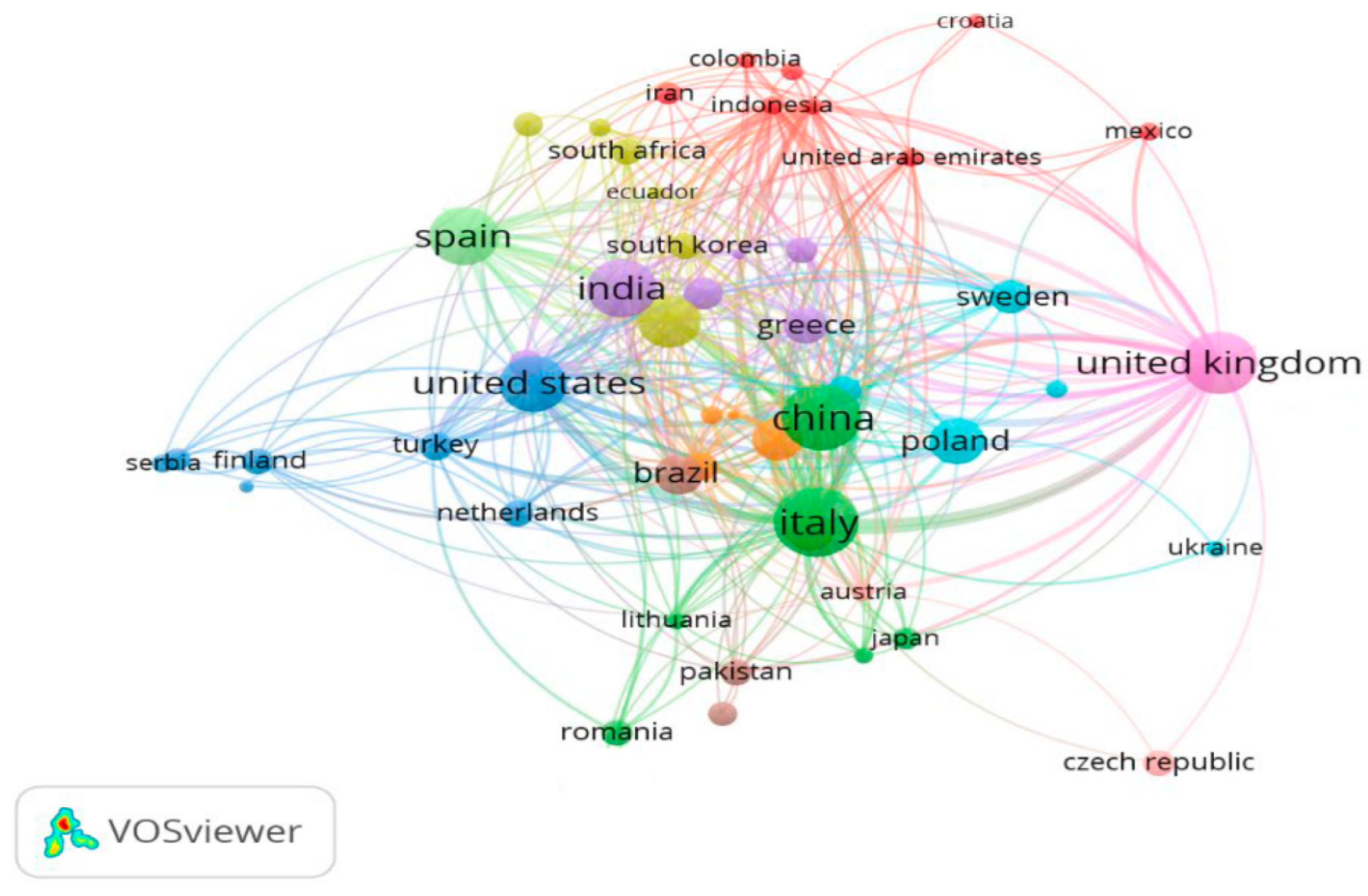
The spatial distribution of publications was analyzed by categorizing countries based on their economic developmental status. China ranked at the top with substantial research contributions. Furthermore, developed countries such as the United Kingdom, the United States, Italy, Spain, and Sweden secured prominent positions, with a significant number of publications. This scenario reflects their strong policy framework and heavy investments in advanced technological infrastructure. Conversely, developing countries like Brazil, India, and Poland exhibited optimal growth, driven by their increasing interest in energy security and resource efficiency. However, the gap between developing and developed countries underscores disparities and emphasizes the critical requirement for international policy measures that foster equitable access to global resource sharing and research collaborations. In addition, China has established a distinctive position through potential research collaboration with other countries such as the United Kingdom, Italy, Poland, and Japan. A visual illustration of the collaboration map is shown in Figure 3. These collaborations exhibit China’s role as a bridge in supporting global research partnerships. These research collaborations can help address complex international sustainability challenges by promoting the renewable energy sector.

4. Key Findings Based on Qualitative Analysis

In this section, an initial set of topics areas was identified. Key themes addressing the research questions were analyzed and discussed in detail. Three main themes are discussed based on research questions that were asked in the first section. For example, theme 1 is mainly focused on waste types and waste management in the renewable energy sector, while theme 2 discusses the application of various technologies, such as IoT, big data, cloud technology, ML, AI, and blockchain, in facilitating digital transformation in the renewable energy sector. These technologies are integrated into product development, support equipment traceability, efficiency monitoring, waste reduction, and improvements in equipment efficiency. The 89 research articles show vigorous interest in how advanced technologies facilitate a successful transition to digital transformation across various sectors. These technologies not only aid the operational efficiency of equipment but are also significant enablers for the potential adoption of sustainable practices. This theme mainly discusses the processes and technologies used in the renewable energy sector to solve environmental issues. Lastly, theme 3 discusses the different challenges associated with digital transformation in the renewable sector. The ultimate objective is to introduce the renewable energy sector as a net-zero sector. To address the RQs, these themes are discussed further in the following sub-sections. When discussing the sustainable renewable energy sector, a crucial concern is the management of waste disposal. Renewable energy sources such as hydroelectric, wind, and solar power are more eco-friendly compared to fossil fuels; however, they still utilize natural resources that are polluting the environment and influencing human life.

4.1. What Type of Waste Is Produced in the Renewable Energy Sector and How Is It Managed?

An extensive shift from old fossil fuel power plants to renewable energy infrastructure has introduced new challenges in managing large volumes of end-of-life waste. Renewable energy infrastructure generates production and demolition waste and relies on critical raw materials such as lithium, cobalt, silicon, and rare-earth elements, as well as valuable recyclable materials such as glass, fiberglass, concrete, aluminum, copper, and steel. The scalable growth of the renewable energy sector is constrained by infrastructure deficits regarding the end-of-life waste disposal. It is estimated that by 2050, the world will accumulate 60–75 million tons of photovoltaic (PV) waste, 1 million tons of lithium battery waste, and up to 45 million tons of wind turbine blade waste [20].
Four types of waste were identified in the selected research articles, which are categorized based on the nature of the material: solid waste, electronic and electric equipment waste, hazardous waste, and environmental waste. The first categorization is solid waste, which includes packaging materials, metals, resins, and glass. The most common solid waste type were identified in the renewable energy sector, which are produced at the end of wind turbines’ and solar panels’ lifecycles, ranging from 20 to 30 years, including glass fiber, copper, mercury, indium, gallium, lead, selenium, and others [6,20,21]. The second categorization is electrical and electronic equipment waste, such as cables, batteries, meters, inverters, and other components used to operate electricity systems [22,23]. According to estimates, roughly 9.3 kg of copper waste and 33.5 kg of silicon waste are produced from one ton of solar panels at the end of their lifecycle [22]. In the same way, each kilowatt of wind power requires 10 kg of material for wind turbine blades (10 kg kW−1 or 10 t MW−1), which would generate roughly 200,000 tonnes of blade trash by 2034 [21]. In the next five years, the expected quantity of electronic waste will reach 44.4 million metric tons.
The third categorization is hazardous waste, which can negatively influence human life, although the criteria for this type of categorization vary among countries [24]. The growing global reliance on renewable energy technologies has led to the massive production of renewable energy equipment [25]. As a result, a huge amount of emissions is produced during the manufacturing phase due to the consumption of hazardous chemicals [26,27,28,29]. A significant number of wafers, silicon ingots, fiberglass, and metals are also lost during melting and cutting processes [25]. Lastly, a large amount of waste from the renewable energy sector impacts the ecosystem at significant levels. This refers to the CO2 and greenhouse emissions that are generated from the movement of raw materials or final products using transportation and logistics [24,27,28]. In addition, a substantial amount of waste from renewable energy equipment is not recyclable. For example, glass fiber used to make wind turbine blades and solar panels. The reinforced thermoset polymer composite is difficult to recycle and turn into new usable material due to its nature [22,29]. On the other hand, the leaching process generates components that come at a high cost to environmental sustainability and adversely affect human health [20,22,30]. Table 3 shows a summary of various types of waste identified in the literature, with their respective examples from the renewable energy sector.

4.2. Waste Management Strategies in the Renewable Energy Sector

A total of five potential waste management strategies have been identified in the renewable energy sector: repair, recycling, reuse, incineration, and dumping. The first three strategies are linked with circular economy strategies that address sustainability issues related to the renewable energy sector. Table 4 and Table 5 present the strategies identified in the reviewed literature.
  • Repair
The first option is maintenance and repair processes, which improve the longevity of renewable energy equipment, reducing waste and enhancing sustainability [31,32]. According to the market research firm Transparency Reports, the international wind turbine operations and maintenance market grew to $15 billion in 2020 and is projected to grow by 14.4% between 2025 and 2031. Regular maintenance of wind farms and solar panels is as important as their installation [33]. Timely repair and maintenance optimize energy production and enhance the performance of wind turbines and photovoltaic systems [34]. Instead of direct recycling, current strategies prioritize refurbishing panels for a “second life” in energy production before final recycling. Repair options also promote the resale of renewable energy equipment by extending its functional lifespan.
  • Recycling
Secondly, the disposal of renewable energy involves the recycling and repurposing of materials like batteries, electric wires, wind turbine blades, and solar panels. Although current recycling practice ratios are inconsistent and low, several authors [20,21,22,35] agree that renewable energy equipment reaching the end of its lifecycle is recycled across the world. Despite all efforts, waste management in the renewable energy sector is low compared to waste generation [36]. The recycling process facilitates waste management by converting used materials into raw materials for new products. Recycling opportunities in the renewable energy sector facilitate resource recovery by reclaiming commodities such as resin, copper, nickel, cobalt, manganese, glass, aluminum, glass fiber, and silicon, thereby reducing emissions and energy usage (see Table 4). Identified strategies encompass the implementation of electrical and electronic waste recycling plants, the establishment of decentralized recycling facilities, and the provision of system deactivation services [22].
The European Commission claims that costly metals and materials used in the renewable energy sector are the main attractions for recyclers. The major costly metals and materials are silver, copper, cobalt, glass fiber, and mercury. Nevertheless, approximately 5.2% of the global cobalt supply comes from recycled sources, which is a very small percentage compared to usage [27]. The recycling processes of anode materials such as silicon, graphite, and lithium are not economically feasible [22]. On the other hand, components of wind turbines, including the generator, gearbox, and towers, are readily recyclable, but the recycling of blades is challenging [36]. They are typically made of thermoset resin or a composite of epoxy and glass fiber. Cross-linked polymers cannot be recycled or melted down compared to thermoplastics such as polypropylene [20].
In addition, according to a European Commission study, the improper disposal of PV panel waste is another problem, including the leaching of heavy metals such as lead and mercury. This improper disposal drives the need for recycling to prevent the release of heavy metals and mitigate health risks due to environmental pollution [37]. The recycling process of panels is not problem-free: almost 20 kg of metals, including zinc, lead, tin, and aluminum, is recovered as hydroxides. Furthermore, 3 kg of material is likely lost during electrolysis as nitrous oxide emissions and the reduction of fluorine at the furnace level result in 5 kg of ash [23]. For further use as photovoltaic material, the quality of the recovered silicon is also not good enough, but it is suitable for use in steel alloys, especially aluminum [38]. Several authors agreed in the selected studies that recycling of solar panels and wind turbines is beneficial in the context of environmental sustainability but unprofitable economically [20,35,36].
  • Reuse
Thirdly, the reuse option is recognized in the literature and includes the second-hand use of wind turbine blades, batteries, and solar panels, as well as the use of recycled materials as raw inputs for other industries [39]. Repurposing solar panels and wind turbines is possible via second-hand markets, especially in developing countries, where cost and affordability are major challenges. The reuse option encompasses refurbishing panels, batteries, and electric wires for installation and resale; steel production; and packaging materials that utilize the repurposing of silicon waste (e.g., cardboard and wood). In addition, ash derived from biogas waste is reused on agricultural lands as a natural fertilizer for soil stabilization, supplying valuable nutrients like potassium and phosphorus to crops [40]. The ash has the capability to restore the deteriorated fertility of fields, an alternative sustainable approach, and lower costs associated with commercial fertilizers [41]. Second-hand and reconditioned solar panels and wind turbines are in high demand globally due to the two-year-long wait for new ones and costs that are 40% lower. Asia, Latin America, and Eastern Europe are among the potential buyers of used solar panels and turbines. Afghanistan is currently the top market of second-hand renewable energy equipment buyers, followed by Pakistan. Even so, this option is lucrative for small community-owned renewable energy schemes [22]. According to Google sources, the Isle of Gigha Heritage Trust bought three reconditioned Vestas turbines in 2004, and they meet almost all of the required electricity for the people on the island.
  • Incineration
The fourth option refers to the incineration of renewable energy waste such as wind turbine blades and solar panels, which is linked to the burning of waste materials [29,42]. Various renewable equipment (e.g., carbon fiber in wind blades) is difficult to incinerate, and burning it may not generate valuable energy compared to other materials. Most researchers endorsed that it is an inappropriate practice of waste management that commonly happens, ignoring GHG emissions [22].
  • Dumping
The last option is dumping, which is the most common and extensive approach [21]. Dumping is considered illegal in some countries, such as Germany, France, and Spain [21,22]. However, there are no proper guidelines available to manage such waste [43], so this practice is continuously applied. Although the landfill option is considered the worst option, it is widely used. In addition, cross-border dumping of solar and wind turbine waste has also been observed [44]. The primary driver of dumping is the cost of recycling, which is higher than sending it to a landfill (e.g., $20–$30 (recycling cost) vs. $1–$2 (dumping) per panel in the US). The low value of some recovered materials is another potential reason for dumping renewable energy equipment [6]. The weather-resistant and durable design of renewable energy equipment makes it costly and difficult to separate and dismantle into usable materials. Logistic challenges also support dumping practices, especially for large wind turbines blades, which are not easy to transport from one place to another and often end up in landfills [21].
Table 5. Waste management strategies.
Waste Management StrategiesDescriptionReferences
RepairIncreasing the longevity of RE equipment. [21,32,33,34]
RecyclingLow percentage of material recycling.[20,21,22,27,35,36]
ReuseSecond-hand use in developing countries. [22,39,40,41]
IncinerationGeneral practice that ignores emission control.[22,29,42]
DumpingA very common practice worldwide. [20,22,43,44]

4.3. What Are Technologies and Processes That Can Facilitate the Digital Transformation Transition in the Renewable Energy Sector?

This section aims to present conventional and digital technologies that address sustainability issues related to the renewable energy sector. While several strategies and advanced technologies have been proven useful for sustainable development, their selection and implementation in industry are based on local conditions and their long-term impacts [45]. From the perspective of a net-zero renewable energy sector, this entails minimizing waste and optimizing both the supply chain and energy-related activities. It is also important to verify that the materials used in manufacturing are environmentally friendly without compromising long-term sustainability goals. In the era of Industry 4.0 and 5.0, no one can deny the utmost importance of digital transformation in any sector in improving efficiency, with the ultimate objective of sustainability [46,47]. We have reviewed the literature to address RQ2 in the current study, and the findings reveal how advanced technologies can facilitate the digital transformation in the renewable energy sector to achieve net-zero targets [24,42,48]. Industry 4.0 technologies, such as digital platforms based on big data, cloud technology, 3D printing, robotics, virtual reality, blockchain, AI, ML, and IoT, drive digital transformation and contribute to social, economic, and environmental sustainability [49]. These technologies minimize raw material consumption by leveraging wise decision-making based on real-time data monitoring. They automate processes to fix exact problems and reduce pollutant activities, fostering environmental sustainability [50,51]. Key technologies play a crucial role in manufacturing, supply chain management, monitoring, maintenance, repairing, and management activities in the renewable energy sector. They focus heavily on predictive maintenance by leveraging AI, ML, robotics, automation, and various sensor-based monitoring systems integrated through the IoT paradigm.

4.3.1. Digitized Green Manufacturing

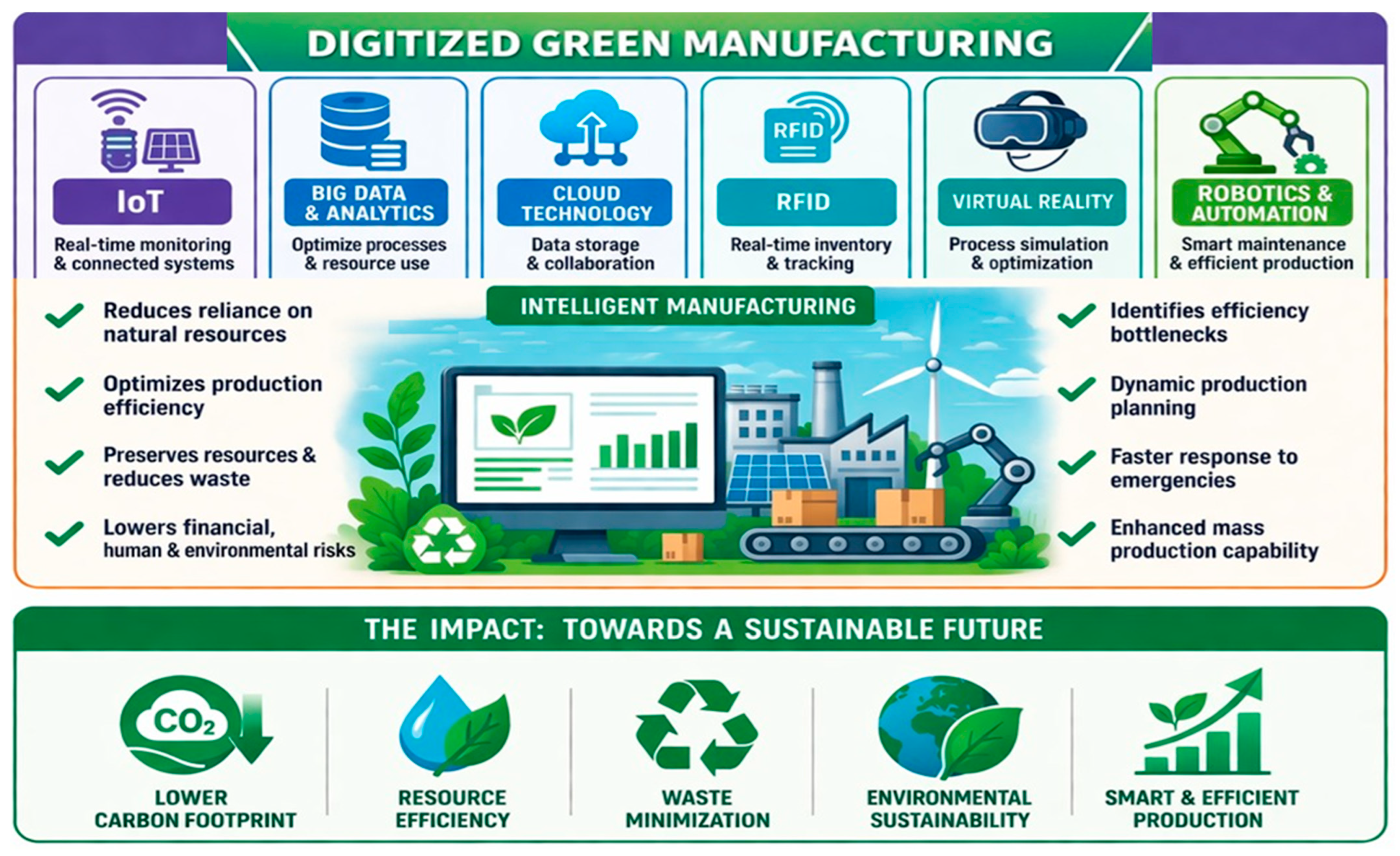
Environmental sustainability is a great concern for the value chain in the renewable energy sector [48]. Although the renewable energy sector is considered an environmentally sustainable industry, the procedures encompassed in their manufacturing and production can still have negative environmental effects [24,42,48]. The extraction of raw materials for renewable energy equipment, such as mining for cobalt or lithium, can cause soil erosion, deforestation, water pollution, and environmental degradation. In addition, the production and manufacturing processes of renewable energy equipment consume large amounts of energy, water, and toxic chemicals and generate large amounts of waste [20,46,47]. Thus, integrating digitized green manufacturing at every stage, from initial design to final dispatch, is essential for achieving eco-friendly production and significantly lowering a company’s carbon footprint [46,52]. According to multiple studies, green manufacturing supported by digital technologies provides innovative and eco-friendly manufacturing operations while improving resource efficiency [52]. Smart technologies can be used to design and manage products and materials throughout their entire lifecycle. They also maintain and repair equipment automatically with robots while preserving resources and mitigating financial, human, and environmental risks [13,24,53]. Thus, digitized green manufacturing reduces reliance on natural resources by optimizing production efficiency and promoting environmental sustainability [54]. Furthermore, digital transformation leverages intelligent tools to identify efficiency bottlenecks, uses virtual reality to simulate production processes and enhances mass production at a significant level [55]. IoT, big data, cloud technology, and RFID support real-time inventory management systems and optimize resource allocation by adjusting dynamic production plans and improving response speed to emergencies [56,57]. A visual illustration of the processes and benefits of digitized green manufacturing is depicted in Figure 4.

4.3.2. Digitized Supply Chain Management

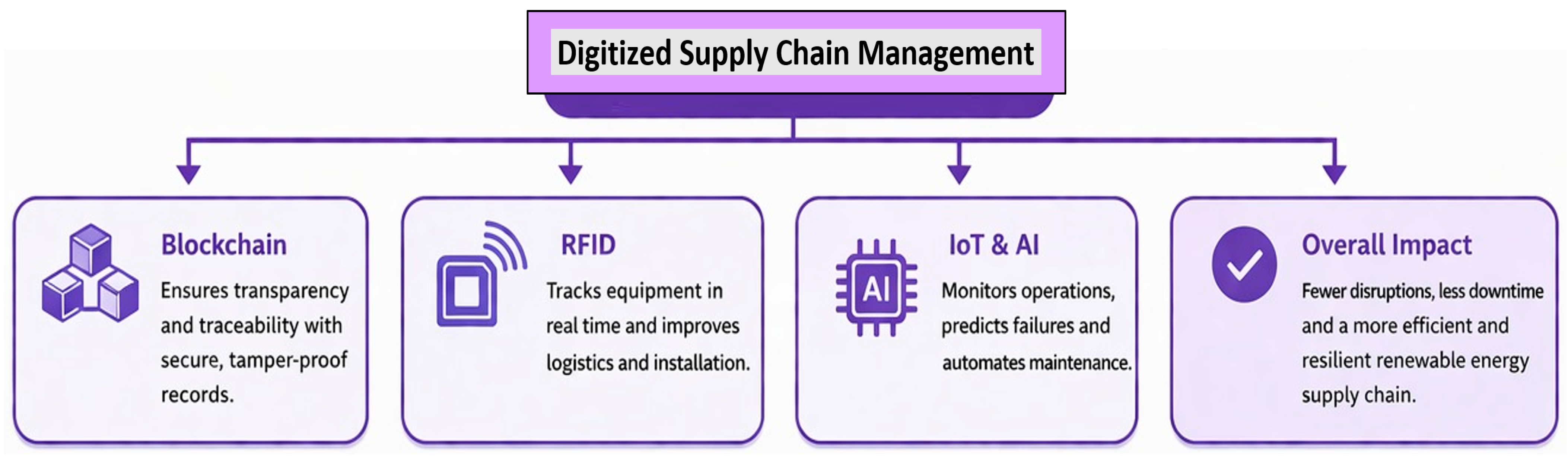
As industries and countries invest in eco-friendly energy sources such as bioenergy, wind, and solar power, the renewable energy sector is expanding rapidly. However, this growth brings several issues, including technological disruption, environmental risks, geopolitical tensions, and fluctuating resource availability [58,59]. To ensure the continued stability and success of the renewable energy industry, the digital transformation of supply chain resilience has become a crucial focus for mitigating risks and ensuring smooth processes [58,60]. Digitization promotes long-term sustainability by supporting optimal collaboration with Industry 4.0 initiatives that improve smart decision-making and enhance supply chain performance, thereby ensuring the efficiency and reliability of renewable energy operations [54]. Research findings indicate that digital technologies in supply chain management system not only enhance organizational economic capabilities but also contribute to sustainable development, social responsibility and environmental protection [24,54]. The reviewed studies demonstrate that a digitized supply chain can reduce carbon emissions by optimizing resource allocation and improving energy production and transmission efficiency through the integration of blockchain, big data, and AI in the renewable energy sector [61] (see Figure 5). Blockchain technology supports full transparency of supply chain processes through encryption algorithms and distributed ledgers, enabling real-time data sharing for traceability, production scheduling, logistics distribution, and improved data immutability [62,63]. Improved transparency not only brings down transactional costs but also reduces resource wastage by automating and optimizing inventory management without human intervention. This transparency also reduces the risk of supply disruptions, which can be caused by harsh weather conditions [62]. RFID technology plays a pivotal role in the complex supply chain management of renewable energy equipment [64]. Real-time tracking of equipment is possible using RFID, which reduces unseen delays and ensures smooth installation by improving logistics [64]. Real-time monitoring of logistics is also possible using RFID, AI algorithms, and IoT devices to predict equipment failure, automate scheduled maintenance and optimize resource allocation, which significantly improves emergency response times [50,64,65]. In addition, digital transformation reduces unplanned downtime and significantly enhances supply chain efficiency [63,64].

4.3.3. Monitoring and Diagnostics Technologies

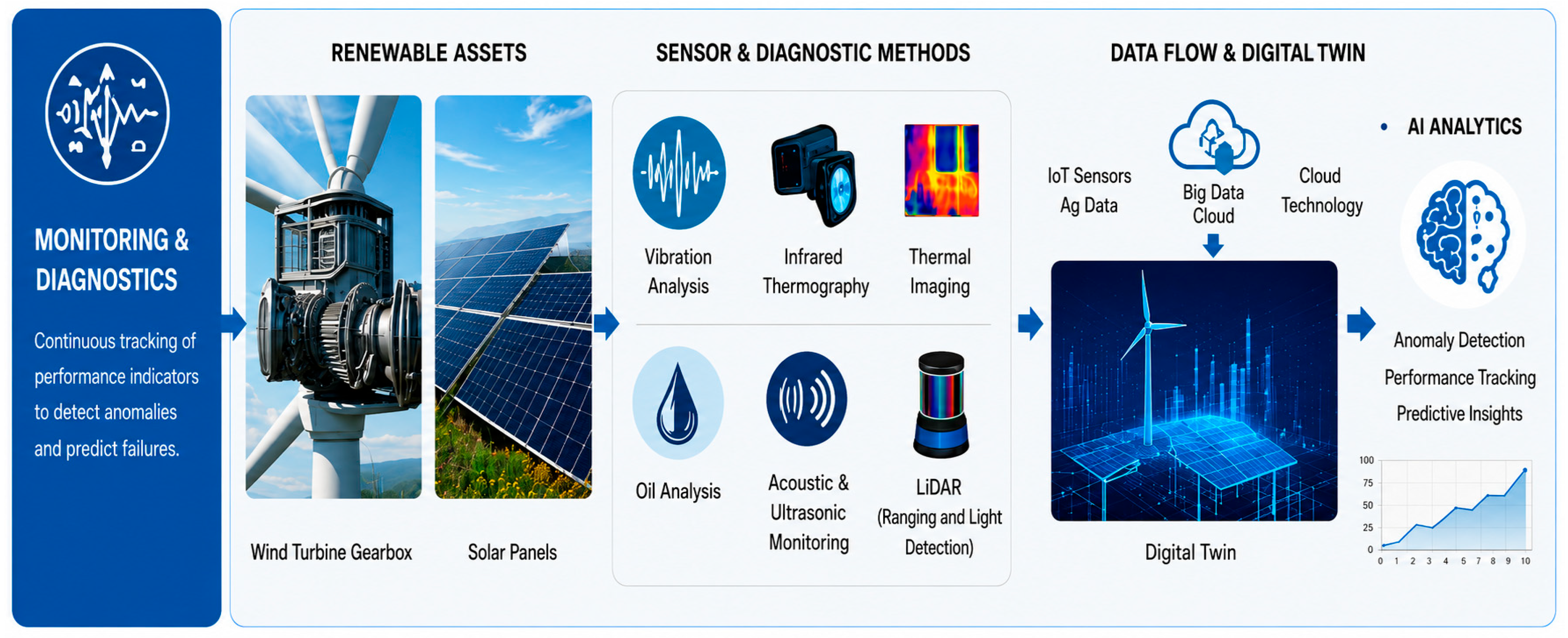
These technologies enable early fault detection, allowing proactive intervention before major failures occur, as depicted in Figure 6.
  • Internet of Things (IoT): The IoT is the most prominent technologies of the Industry 4.0 revolution. IoT sensors are deployed across installations (e.g., wind turbine gearboxes and solar panels) to continuously track performance indicators like temperature, vibration, and humidity [66]. IoT devices and sensors send vast amounts of real-time data to central systems through big data and cloud technologies, enabling the control of distributed renewable sources and the efficient integration of wind and solar energy [10]. This integration improves overall system responsiveness and energy efficiency by up to 80% and reduces energy cost from 18% to 60% through real-time monitoring and management of renewable energy generation systems and smart grid technologies [42,67]. As a result, CO2 emissions were reduced by 25%–61% [68].
  • Vibration Analysis: Vibration analysis is a core predictive maintenance technique for wind turbines. It detects early signs of mechanical issues, such as gearbox wear and bearing misalignments, by analyzing vibration patterns [69]. Digital twins, AI, and IoT-connected sensors can optimize vibration analysis through real-time monitoring and fault detection in wind turbines. This integrated approach can improve fault diagnosis by 90%, reduced unplanned downtime by up to 70%, and lower overall maintenance cost by up to 30% [70]. Consequently, it is a crucial strategy for effective predictive maintenance [71]. The renewable energy sector can leverage the benefits of automated data analysis through the integration of high-sensitivity sensors, which can prevent expensive machine failures by reducing unplanned downtime and optimizing maintenance schedules efficiently [13,72].
  • Infrared Thermography and Thermal Imaging: Using cameras, operators can identify “hot spots” and overheating in solar panels, inverters, and other electrical components, pinpointing vulnerable areas non-invasively [71]. Machine learning techniques and artificial intelligence methods have been observed to play significant roles in infrared imaging combined with active thermography [72]. Convolutional neural networks (CNNs) are used to effectively recognize patterns and extract features during image processing, as they use the non-destructive testing (NDT) technique of infrared thermal imaging to detect defects [72]. They provide accurate results in image segmentation and dimensionality reduction. In this case, deep learning can automatically diagnose defect depth with an accuracy of 85% to 99% [73,74].
  • Analysis of Oil: Lubricant oil analysis helps to diagnose the health of hydraulic systems and wind turbine gearboxes and detect contamination and internal wear [75]. Devices like Poseidon Systems oil quality sensors provide real-time data on oil condition and limit the requirement for manual sampling by 50% to 75% [76]. This system optimizes oil change intervals and nearly doubles lubricant lifespan. Real-time measurement of wear debris is possible with Poseidon Systems (e.g., DM4500), which function as indications of gearbox conditions and identify failures in advance [76].
  • Acoustic and Ultrasonic Monitoring: These methods provide another layer of non-invasive diagnostics by detecting abnormal sounds that may be from defective equipment. ML models such as random forests, artificial neural networks, and support vector machines (SVMs) are applied to analyze large datasets from condition monitoring systems (CMS) and SCADA to diagnose abnormalities in real time with an accuracy capacity of over 95% [77,78].
  • LiDAR (Ranging and Light Detection): This technology has become a crucial high-standard precision tool for the installation, maintenance, and optimization of renewable energy equipment such as wind turbines and solar panels [79]. LiDAR provides spatial mapping by using laser pulses to create detailed 3D point cloud data. This system helps to generate correct shade reports for the optimal installation of solar panels to maximize sunlight exposure, while also supporting exact atmospheric measurements for wind turbine installations [80]. Scanning LiDAR allows operators to fix turbine layout by measuring wind wakes and using wake-steering strategies, which help to improve overall farm energy production [80]. This tool measures the wind speed and direction for optimal turbine alignment, maximizing power output while minimizing mechanical issues [80].

4.3.4. Repair and Maintenance Technologies

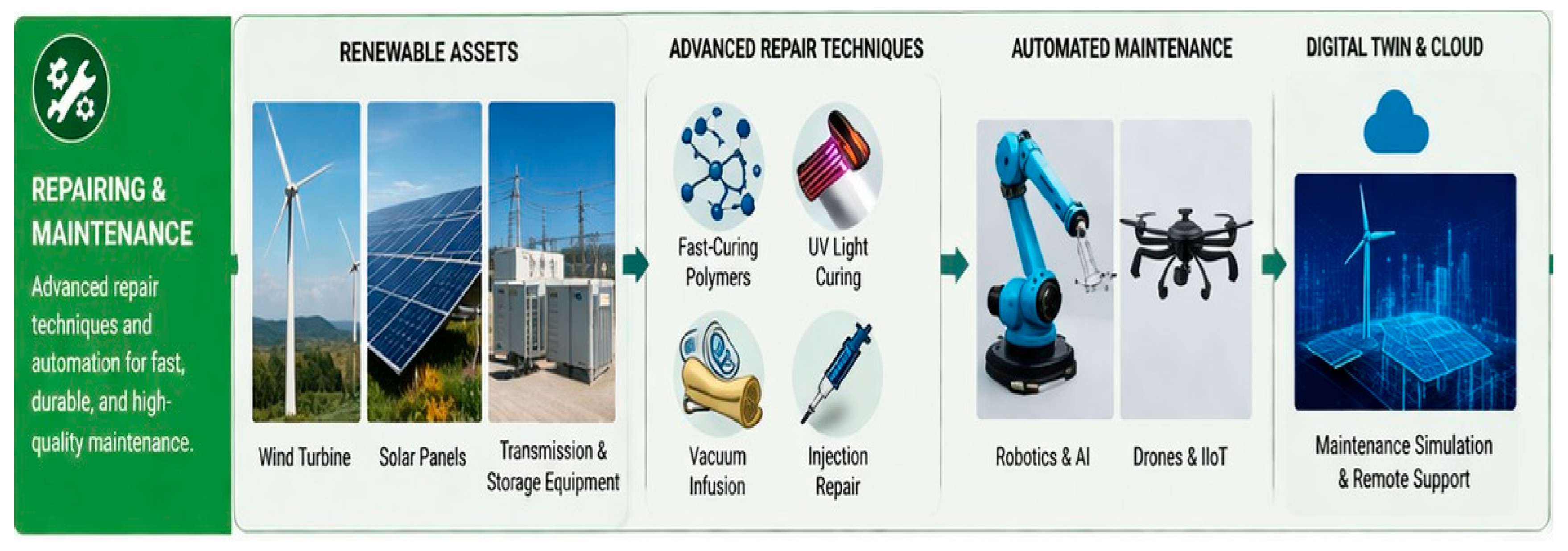
The following methods and technologies are used to repair the identified issues, as presented in Figure 7.
  • Robotics and Drones: Drones and robotic systems are equipped with arms, sensors, and high-resolution cameras that can diagnose, repair, and perform specific tasks (like solar panel and wind blade cleaning) that are not easy to approach, especially in hazardous areas such as large solar plants and tall wind turbines. Robotic systems support digital automation and present promising solutions for maintenance activities such as cleaning, which is a critical task for the maintenance of windmills and solar plants under extreme weather conditions [5]. Autonomous systems are increasingly integrated into wind turbine maintenance, performing manufacturing, maintenance, and operational tasks independently. Using drones, inspection costs can be reduced by up to 90% compared to conventional methods, and downtime can be reduced by up to 85% [45,81]. NDT is used for accurate inspection to prevent costly failure and extend the lifespan of wind turbines, especially in “offshore wind farms” [64]. Robotic automation has also reduced operational costs, optimizing performance efficiency in solar power plants [5].
  • Advanced Materials and Curing: For repairing composite wind turbine blades, technologies involving fast-curing polymers, ultraviolet (UV) light curing, and vacuum infusion techniques are used to ensure durable and high-quality repairs [82]. The curing of composite materials in wind and solar farms is revolutionized through the integration of digital twins, AI and sensors, which accelerate curing processes and enhance equipment lifespan [69]. Renewable energy equipment installed in harsh atmospheric conditions can be monitored and cured in real time, which minimizes curing time by 12.5% while maximizing its strength [10,69]. This synergy, often considered part of Industry 4.0, enables real-time monitoring and, in some cases, autonomous infrastructure repair [83,84].
  • Injection Repair: A technique for nonstructural composite damage, where low-viscosity resin is injected into matrix cracks and minor delamination zones to seal them and prevent further damage growth in renewable energy equipment [34]. Digital transformation has revolutionized injection repair by shifting maintenance from reactive and time-based approaches to proactive, data-driven strategies in the renewable energy sector [85]. By leveraging digital twins, AI-driven analytics, and Industrial Internet of Things (IIoT) sensors, operators can monitor equipment health (such as solar panels, composite blades, gearboxes, and turbines) in real time and carry out accurate repairs before sudden failures occur [77,85].
  • Remote Troubleshooting and Software Updates: Smart inverters and control systems often allow technicians to diagnose and fix software-related problems remotely, reducing the need for on-site visits [77,85].

4.3.5. Data Management and Optimization Technologies

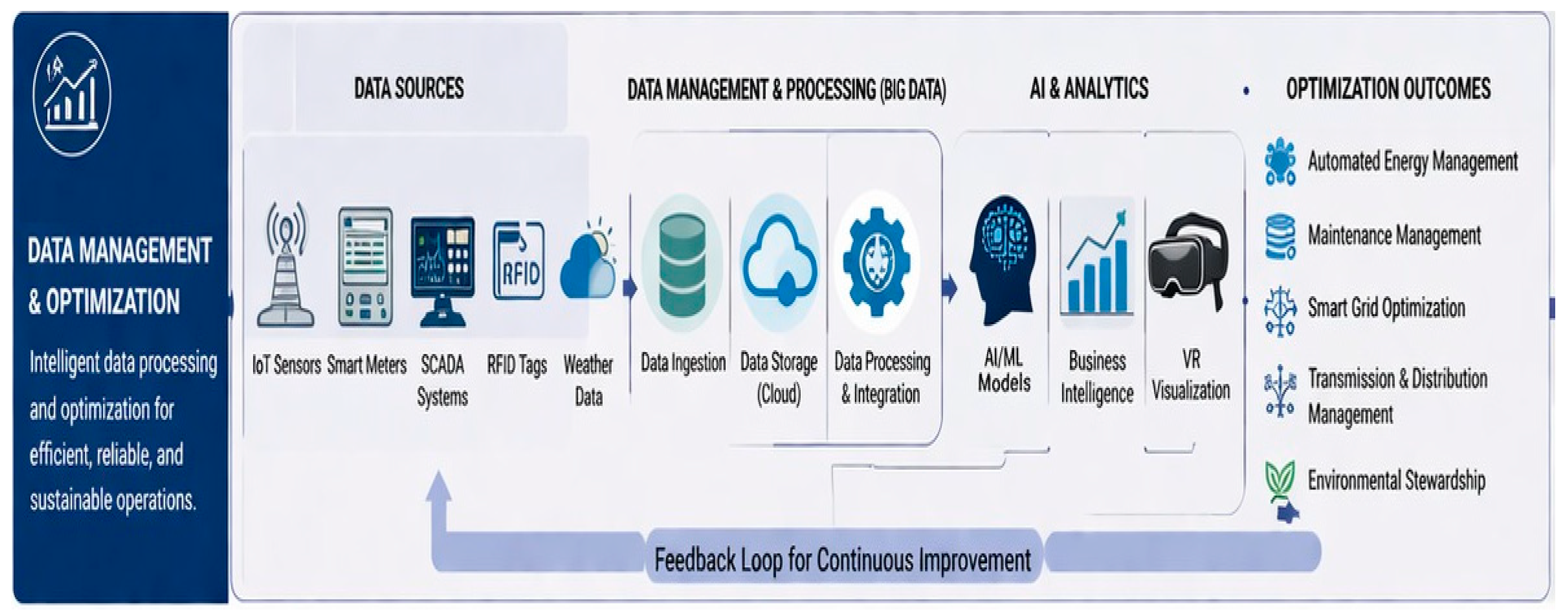
These overarching technologies enhance the entire management strategy, as revealed in Figure 8.
  • Automated Energy Management: Artificial intelligence (AI) and ML allow automated energy management by using predictive algorithms and historical data. These technologies improve decision-making, enhance predictive maintenance, and support energy demand forecasting by up to 15 to 50% [58,86]. These technologies analyze vast datasets collected by IoT sensors to identify patterns, predict future failures, and optimize maintenance schedules. AI assistance can help human inspectors improve the efficiency and accuracy of fault detection [87,88].
  • Dataset Processing and Management: Big data and business intelligence analytics based on cloud platforms enable the real-time processing and management of large datasets, providing maintenance actionable insights and improving efficiency by up to 25% to 40%. In the renewable energy sector, proper planning and overall system optimization have been shown to enhance efficiency from 35% to 60% and increase equipment lifespan by 20% [10,66,77].
  • Maintenance Management: Digital twins/virtual replicas of physical systems (e.g., a wind turbine or entire wind and solar farms) simulate performance in real time, allow operators to test maintenance strategies, optimize operations, and anticipate potential issues in a virtual environment before applying them physically [11,89]. Digital twins can support equipment operations from design to disposal using a 3D, data-rich model throughout an asset’s lifespan, improving efficiency by up to 30% [55,56].
  • Smart Grid Optimization: In the context of smart grids and smart meters, big data analytics enables the processing of large volumes of data to optimize energy distribution and consumption by 30% to 50% [90,91]. In addition, blockchain technology has attracted significant attention for supporting complicated applications such as peer-to-peer energy trading and virtual power plants (VPPs) [7,42]. The integration of IoT devices with blockchain technology has improved data security and management across various smart devices and sensors in smart grids. IoT and AI-driven frameworks have improved grid stability by up to 96.25% [13,77].
  • Prototype Renewable Energy Management Systems: As the installation costs of renewable energy generation systems are high [92], it is not practically feasible to analyze the system performance and observe system behavior by applying system modeling techniques, because this needs extra costs for modifying the existing setup [13]. This extra cost discourages the use and installation of renewable energy sources. Virtual reality (VR) techniques and tools are helpful for planning by enabling simulation and visualization of installed systems [57]. Augmented reality and VR, or mixed reality, are used for many applications; however, their major use is to have an immersive experience of renewable energy generation systems and to visualize the virtual environment prior to the operational phase [57]. Furthermore, incorporating built-in VR tools into project engineering and implementation greatly enhances project integration success in complex systems where it would otherwise be impossible [55]. This technology can also support the integration of other assistive technologies, such as IoT, in the renewable energy sector.
  • Transmission Network and Power Distribution Management: RFID technology plays a significant role in managing transmission networks and power distribution systems. Utility companies can ensure proper energy distribution by monitoring and tracking power flows with the help of RFID systems, often achieving tracking and management accuracies of 99% or higher in utility infrastructures [65]. RFID can also improve the production and operational performance of renewable energy equipment. Renewable energy projects can optimize equipment performance and diminish downtime through RFID integration (downtime occurs due to mechanical and failure issues) [65]. RFID technology also supports recycling and waste management by enabling real-time decision-making [43,64].
  • Environmental Stewardship: Energy data management software contributes to environmental sustainability by empowering the renewable energy industry to curtail its carbon footprint [46]. By leveraging informed decision-making based on real-time data, organizations can optimize energy consumption. This optimization directly mitigates greenhouse gas emissions and facilitates a more sustainable and eco-friendlier footprint [47].

4.4. Identified Challenges for Digital Transformation in the Renewable Energy Sector

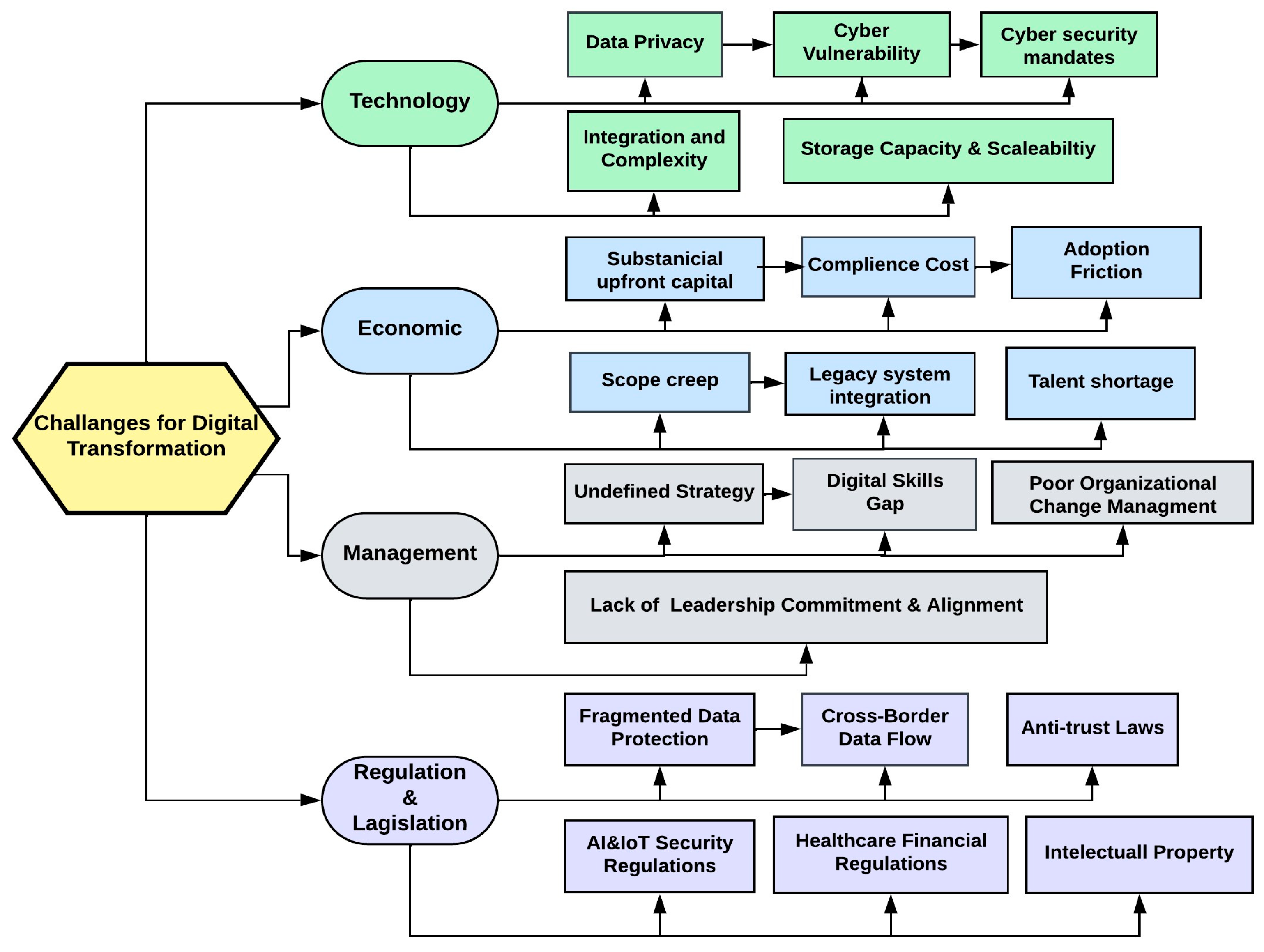
In spite of the identified opportunities and benefits of digital transformation in the renewable energy sector and the verified diffusion of digital technologies in renewables, there are still various challenges associated with this technological transition. A comprehensive synthesis of the 89 reviewed studies highlights the major challenges in the field. They are divided into four main categories: technology-, economic-, management-, and regulation- and legislation-associated challenges. Figure 9 provides excerpts of statements on challenges and concerns taken from the reviewed studies.

4.4.1. Technology-Associated Challenges

The technology-associated challenges raised in the reviewed studies are further divided into subcategories (Figure 5) to help pinpoint the exact challenges relevant to digital transformation. Three of these subcategories, namely “data privacy risks, cybersecurity vulnerabilities, and cybersecurity mandates,” are associated with digital security in one form or another. Although these terms are generally used interchangeably in the reviewed literature, they differ in terms of functionality. The other two subcategories are “integration and complexity and storage capacity and scalability.”
  • Data privacy risks pertain to the mishandling and protection of sensitive data (energy data in this case). Furthermore, a major issue is the lack of a data-driven framework that enables data labeling and data sharing while complying with privacy regulations worldwide, especially in terms of data collection and sharing across various platforms. Data reliability includes quality and stability issues in power supplies and grids in the renewable energy sector.
  • Cybersecurity vulnerabilities refer to cyberattacks, as the significant integration of digital technologies enhances vulnerability to information security threats, data breaches, and cyberattacks [65]. Many available technological options overwhelm the market; therefore, the selection of appropriate solutions in terms of efficiency, seamless performance, and affordability is another challenge [85].
  • Cybersecurity mandates allude to new strict regulations (e.g., the Cyber Resilience Act and the EU NIS2 Directive) that demand high levels of security, including mandatory vulnerability reporting and secure-by-design requirements.
  • Integration and complexity refer to challenges, namely the integration of advanced technological solutions into existing energy infrastructure and grids; complexity also includes grid monitoring and control operations. Lastly, organizations and industries are uncertain about material and technological solutions in terms of their future, as the technology paradigm is changing rapidly with advancements. As a result, technological integration has become a bottleneck in the adoption of digital transformation [92].
  • Storage capacity and scalability have been deeply questioned in the era of blockchain, and are considered as serious problems for the success of digital transformation [93]. In blockchain technology, the chain grows continuously at a rate of approximately 1 MB per block every 10 minutes, particularly within the Bitcoin network, and full nodes must maintain complete copies of the ledger to ensure decentralized validation in the network [94]. Although only full nodes store the entire blockchain, this still requires significant storage. As the size grows, nodes require more resources, thus reducing system scalability. In addition, an oversized chain negative impacts performance; for instance, it increases synchronization time for new users.

4.4.2. Economic-Associated Challenges

The most emerging constraint is cost, including high maintenance, operational, and transactional costs [95]. The economic viability of advanced technologies in the energy sector remains a significant challenge, particularly due to the high upfront costs associated with their implementation, operation, and maintenance in later stages [96]. Technologies such as smart renewable energy systems with IoT, smart grids, and energy storage offer long-term benefits; however, the initial investment can be a substantial barrier for many stakeholders, especially smaller utilities and independent power producers [97]. The economic landscape of the energy sector is influenced by various external factors, including market volatility and competition from traditional energy sources, which can further complicate investment decisions. Some key factors are as follows:
  • Substantial upfront capital is required for new technological infrastructure, such as hardware, software, and advanced technologies, as well as latent costs including data migration, software updates, and system maintenance [95].
  • Compliance costs entail the capital required for digital technologies to comply with data regulations. These escalating compliance costs demand substantial funding for the implementation of digital tools in the renewable energy sector [95].
  • Adoption friction refers to the additional financial resources required to support and train employees because of low user adoption rates and failure to prepare for new technologies [96].
  • Scope creep accrues when costly projects, like digital transformation initiatives, are delayed and require costly rework due to undefined objectives and a lack of a clear actionable roadmap [98,99].
  • Legacy system integration pertains to the integration of agile, modern technologies with outdated legacy systems. This process is highly complicated and is a leading factor in budget escalation [99,100].
  • Talent shortage refers to the lack of in-house expert professionals, necessitating costly outsourcing or new hiring, which significantly inflates project costs [95].

4.4.3. Management-Associated Challenges

Digital transformation is rarely a technological failure; rather, it is primarily hindered by human and managerial obstacles [95]. Experts continue to endorse weak leadership and organizational inertia as the primary causes for the 87.5% failure rate of digital transformation initiatives in 2026 [92,96]. Management-associated challenges are considered core systemic obstacles, including “human factors” and “policy.” Typical management challenges are failing approaches (e.g., a top-down approach), existing bureaucracy processes, and problems with managing energy storage or overheads [77]. Overall, management-related challenges include the digital skills gap, talent management, poor organizational changes, inadequate management strategies, lack of leadership commitment and alignment, and resistance to change.
  • Undefined Strategy: Many industries jump into digitization based on hype rather than a planned strategy, leading to an ineffective, fragmented technology stack instead of addressing their business issues [96,97,101].
  • Digital Skills Gap: Higher management faces obstacles in upskilling current employees or hiring expert staff in areas such as data science, AI, and cloud-based IoT architecture [102]. The lack of a continuous learning culture has widened this gap [100].
  • Poor Organizational Change Management (OCM): Companies often consider digital transformation as a technical upgrade rather than a cultural shift [11,103]. Without a structured OCM, this leads to “change saturation”, causing employee fatigue driven by a high volume of uncoordinated initiatives, ultimately threatening project return on investment (ROI) [96,99,104].
  • Lack of Leadership Commitment and Alignment: Various high-tech projects, like digital transformation, fail because of a lack of leadership alignment and commitment to project objectives [99,101]. In this case, departments often move in opposite directions without a unified vision and strategy from the board level down [96]. This phenomenon leads to wastage of resources and the loss of heavy investments [99].
  • Resistance to Change: The most frequently cited management challenge is resistance to change, where employees feel uncomfortable with new technologies and remain stuck in stagnant work situations due to a combination of rigid habits [96,97,99,101]. It stems from “psychological inertia with fear of job loss.”

4.4.4. Regulation- and Legislation-Associated Challenges

The second-most frequently raised challenge is “regulation and legislation” (the lack of an appropriate regulatory framework) [95,105]. Government regulations, laws, policies, and legislation cause significant challenges to digital transformation, especially in developing countries [106]. Recent taxation policies and systems are not aligned with advanced technological solutions [107]. High taxation policies and strict government regulations discourage software companies from approaching markets with low-cost advanced technologies. The majority of governments do not offer financial incentives and funds to digitize sectors [104]. For example, it is not possible to cover the costly infrastructure for digital transformation with insufficient funds provided by governments, and almost all large renewable energy sectors are under government ownership. Regulatory frameworks are too slow to keep up with the rapid pace of technological change [108,109]. As companies digitize, they must align with conflicting, often stringent global regulations and legislation.
  • Fragmented Data Protection: Compliance with regulations like the General Data Protection Regulation (GDPR) in Europe, the California Consumer Privacy Act (CCPA), and others requires adherence to complex and varying data handling legislation, which severely hinders digital transformation projects by disseminating data across siloed and disconnected systems [95]. These laws are preventing appropriate integration, causing more than 80% of digital projects to fail and creating high-risk, unmanageable infrastructures that hinder agility and data-driven decision-making [95,96].
  • Cross-Border Data Flows: Restrictions on transferring data across borders hinder digital transformation projects and complicate innovation and global operations [96,110].
  • AI and IoT Security Standards and Regulation: The EU AI Act and similar measures are establishing strict legislation banning specific AI usage based on risk and demands transparent, human-centric design [56,109]. Some international regulations are now putting pressure on manufacturers to ensure that software for IoT deployments remains updated [111].
  • Healthcare and Financial Regulations: Strict rules like HIPAA (healthcare) and DORA (financial operational resilience) require extensive reporting, auditing, and secure infrastructure, complicating rapid cloud migration during digital transformation.
  • Antitrust Law: Large software companies are facing scrutiny under new rules like the Digital Markets Act (DMA) in Europe, which may obstruct digital projects [107].
  • Intellectual Property (IP): Digital transformation makes ownership, licensing, and IP protection more complex, especially when using open-source software and collaborating with external partners. Some government regulations demand companies to ensure that their software vendors comply with mandatory security standards [95].

5. Concluding Remarks

This review study highlights key areas related to the renewable energy sector, such as waste types (solid, electronic and electric equipment, hazardous, and environmental waste) and management strategies (repair, recycling, reuse, incineration, and dumping). The literature review reveals that the recycling of renewable energy equipment is the most discussed strategy compared to other waste management strategies. However, recycling processes are more challenging and costly than production processes [20,35,36]. Although the current review results present that, as volumes rise and technologies advance in the future, the collection and management of the renewable energy trash may become economically viable [22], the selected studies are unable to account for the potential impact of recycling on the total lifecycle cost of renewable energy production. Currently, recycling processes for anode materials, specifically lithium, graphite, silicon, fiberglass, and resins, are not cost-effective, which limits their integration into cost modeling [22]. Further, the role of digital technology integration in sustainable supply chain management and green manufacturing is discussed. Advanced technologies such as blockchain, robotics, AR/VR, big data, RFID, AI, and IoT are inevitable for the digital transition toward a sustainable future in any sector. For instance, IoT, cloud technology, AI, and ML hold significant positions throughout the value chain, from the design, production, monitoring, distribution, and management of renewable energy to the maintenance of the systems. In particular, big data, AI, and ML not only improve decision-making and predictive maintenance but also support energy demand forecasting accuracy by up to 15% to 50% [58,86]. In addition, the integration of IoT with AI and ML techniques improves overall system responsiveness and energy efficiency by up to 80%. By enabling real-time monitoring and management of renewable energy generation systems, these technologies can reduce energy costs ranging from 18% to 60%, particularly in smart grid systems [42,67]. As a result, CO2 emissions can be reduced, achieving a 25%–61% reduction in carbon footprint [68]. Digital twins, AI, and IoT-connected sensors can optimize vibration analysis through real-time monitoring, fault detection, diagnostic grid management, and predictive maintenance in wind farms and solar plants. This integrated approach can improve fault diagnosis by 90%, reduced unplanned downtime by up to 70%, and lower overall maintenance cost by up to 30% [70]. Renewable energy equipment installed in harsh atmospheric conditions can also be monitored with drones and cured in real time through the application of autonomous systems [10,69]. Smart inverters and control systems enable engineers and operators to track and monitor physical models and fix the problems remotely, reducing the need for on-site visits [77,85]. Digital twins support applications from design to disposal operations using 3D data-rich models throughout the lifespan of renewable energy assets, improving efficiency by up to 30% [55,56]. As per the National Renewable Energy Laboratory (NREL), 3D-printed solar panels cost half the price of traditional ones while achieving 20% higher efficiency [112]. In the context of smart grids and meters, big data and business intelligence analytics enable the processing of large volumes of data to optimize energy distribution and consumption by 30% to 50% [90,91]. Utility companies can ensure proper energy distribution by monitoring and tracking power flow with the help of RFID and blockchain technologies. Utility infrastructure can be tracked and managed with high accuracy through the application of RFID systems, while blockchain can enhance decentralized energy systems like microgrids and enable peer-to-peer energy trading.
This study also reveals that the integration of modern and conventional technologies enhances the implementation of digital transformation across production, design, monitoring, maintenance, management, and equipment repair processes [50]. However, digital transformation faces various challenges, including technological, economic, organizational, managerial, and governmental obstacles. Without intensified investments in digital transformation in the renewable energy sector accompanied by appropriate legislation and policies, it is not possible to approach net-zero emission goals at national and international levels in the coming decades.
Further, all stakeholders, including scholars and industry practitioners, should take collaborative actions to reduce raw material extraction, turn waste into valuable resources, and decrease energy and water consumption during the production and manufacturing of renewable energy equipment. Recycling techniques and technologies should be advanced through research and development efforts [113]. Advanced disposal and recycling procedures can contribute not only to a more sustainable renewable energy sector from production to consumption but also to the end of its lifecycle. Moreover, the transition to digital transformation often demands substantial capital, posing a significant challenge for financially constrained entities [86,94]. Additionally, significant challenges in the adoption of advanced technologies persist due to technological limitations and the lack of unified global protocols.
Advanced energy technologies require innovative financing models, such as green bonds and public–private partnerships. In this case, government subsidies and incentives are inevitable to accelerate the adoption of sustainable solutions and reduce financial burdens on stakeholders [105]. Similarly, there is a lack of appropriate incentive and reward policies for sustainability initiative, such as tax rebates, to support green and clean manufacturing companies [70,108,109]. For example, despite their commitments, many governments are failing to meet their Paris Agreement pledges and 18% of Sustainable Development Goal (SDG) targets are actually moving in reverse of sustainability policy implementation [70]. A mutual alliance among all stakeholders is required to address these challenges, especially through national support in terms of financial incentives and the relaxation of regulatory, levy, and taxation systems. The future of the renewable energy sector depends not only on the responsible use of resources but also on the integration of innovative, advanced techniques and technologies [114,115]. By adopting digital transformation, the renewable energy sector can enhance environmental sustainability while optimizing production, supply chain, and waste management processes, supporting the sector’s growth and helping it cope with future challenges.

Research Limitations and Future Research Directions

The current review endorsed that digital transformation in the renewable energy sector is crucial for achieving net-zero goals; however, it also faces significant research limitations and challenges that future studies must address. For instance, many studies have focused on the integration of IoT, AI, and ML for predictive maintenance only, rather than holistic approaches to digital transformation concepts across the entire renewable energy lifecycle. In addition, most scholars emphasized technical solutions while underestimating organizational inertia and the crucial role of human capital, which can inhabit digital transformation, particularly in SMEs. Further research is required to explore the development of a skilled and trained workforce, along with supporting management strategies, to overcome resistance to the adoption of emerging technologies. Although digital transformation in any sector is generally considered a significant facilitator of sustainability, in-depth research is still limited regarding the environmental footprint of digital infrastructure itself (e.g., the energy consumption of data centers and the generation of electronic waste). Scholars should evaluate the environmental costs of digitalization (e.g., data energy use, digital tool waste, and data center energy usage) from the perspective of sustainability gains. Moreover, fragmented information due to a lack of data standards and integrated platforms results in poor cross-platform decision-making. Further studies should focus on developing open-source communication protocols and standards that enable seamless data exchange among different legacy systems and vendor platforms. Although a significant portion of scholarly investigation is focused on the USA, Europe, and China, there is limited research concentrated in developing and emerging economies. In addition, limited research is available on the integration of digital technologies with traditional renewable energy infrastructure. Researchers must investigate the significance of regulatory models in digital transformation implementation, particularly incentives that encourage investment in digital transformation by smaller players (SMEs) in emerging economies. The current review reveals that the highest barriers to digital transformation is high investment costs. Future research should aim to quantify the ROI of digital projects to overcome these barriers by presenting a techno-economic analysis of digital technologies. Advanced technological models based on operational and practical data should be introduced and validated by researchers and industry to ensure more sustainable equipment that supports the clean energy revolution that will save both the planet and future generations.

Author Contributions

S.A. developed the research protocol and collected the articles. Articles were selected for review by mutual consensus among all authors. Data coding and content analysis were done by S.A. and A.R. The results analyses was finalized by S.A. and A.B.A. The article draft was formulated and written by all authors. The U.J.B. helped to review and finalize the manuscript. All authors have read and agreed to the published version of the manuscript.

Funding

This research was funded by Ajman University, grant number “2025-IRG-CEIT-1”.

Data Availability Statement

The original contributions presented in this study are included in the article. Further inquiries can be directed to the corresponding author.

Acknowledgments

The authors gratefully acknowledge the Deanship of Research & Graduate Studies, Ajman University, for supporting this research. During the preparation of this manuscript, the authors used ChatGPT supported by OpenAI for the purpose of visual representation of some themes. The authors have critically reviewed and edited the output and take full responsibility for the content of this publication.

Conflicts of Interest

The authors declare no conflicts of interest.

References

  1. Zhang, Y. Industry heterogeneity of environmental, social, and governance performance, impact mechanisms and trend forecasts—Evidence from big data and machine learning analysis. J. Clean. Prod. 2026, 538, 147305. [Google Scholar] [CrossRef]
  2. Dogan, E.; Mohammed, K.S.; Khan, Z.; Binsaeed, R.H. Analyzing the nexus between environmental sustainability and clean energy for the USA. Environ. Sci. Pollut. Res. 2024, 31, 27789–27803. [Google Scholar] [CrossRef]
  3. Melo, G.d.A.; Cyrino Oliveira, F.L.; Maçaira, P.M.; Meira, E. Exploring complementary effects of solar and wind power generation. Renew. Sustain. Energy Rev. 2025, 209, 115139. [Google Scholar] [CrossRef]
  4. Lahouel, I.M.; Gheyathaldin, L. Mohammed Bin Rashid Al Maktoum Solar Park: A Pillar in Dubai’s Clean Energy Strategy and Sustainability. In Corporate Social Responsibility in the Practice and in the Classroom: The Middle East and North Africa Region Perspective; Stachowicz-Stanusch, A., Sergio, R., Barson, N., Alami, R., Eds.; Emerald Publishing Limited: West Yorkshire, UK, 2024; Chapter 14; pp. 165–179. [Google Scholar] [CrossRef]
  5. Taraglio, S.; Chiesa, S.; De Vito, S.; Paoloni, M.; Piantadosi, G.; Zanela, A.; Di Francia, G. Robots for the Energy Transition: A Review. Processes 2024, 12, 1982. [Google Scholar] [CrossRef]
  6. Tun, M.M.; Palacky, P.; Juchelkova, D.; Síťař, V. Renewable Waste-to-Energy in Southeast Asia: Status, Challenges, Opportunities, and Selection of Waste-to-Energy Technologies. Appl. Sci. 2020, 10, 7312. [Google Scholar] [CrossRef]
  7. Sun, L.; You, F. Machine Learning and Data-Driven Techniques for the Control of Smart Power Generation Systems: An Uncertainty Handling Perspective. Engineering 2021, 7, 1239–1247. [Google Scholar] [CrossRef]
  8. Maroufkhani, P.; Desouza, K.C.; Perrons, R.K.; Iranmanesh, M. Digital transformation in the resource and energy sectors: A systematic review. Resour. Policy 2022, 76, 102622. [Google Scholar] [CrossRef]
  9. Saeed, S.; Gull, H.; Aldossary, M.M.; Altamimi, A.F.; Alshahrani, M.S.; Saqib, M.; Iqbal, S.Z.; Almuhaideb, A.M. Digital Transformation in Energy Sector: Cybersecurity Challenges and Implications. Information 2024, 15, 764. [Google Scholar] [CrossRef]
  10. Bonavolontà, F.; Liccardo, A.; Mottola, F.; Proto, D. Real-Time Monitoring of Energy Contributions in Renewable Energy Communities Through an IoT Measurement System. Sensors 2025, 25, 402. [Google Scholar] [CrossRef] [PubMed]
  11. Brosinsky, D.; Krebs, C.; Westermann, R. Embedded Digital Twins in future energy management systems: Paving the way for automated grid control. Automatisierungstechnik 2020, 68, 750–764. [Google Scholar] [CrossRef]
  12. Bajic, B.; Rikalovic, A.; Suzic, N.; Piuri, V. Industry 4.0 Implementation Challenges and Opportunities: A Managerial Perspective. IEEE Syst. J. 2021, 15, 546–559. [Google Scholar] [CrossRef]
  13. Pandey, V.; Sircar, A.; Bist, N.; Solanki, K.; Yadav, K. Accelerating the renewable energy sector through Industry 4.0: Optimization opportunities in the digital revolution. Int. J. Innov. Stud. 2023, 7, 171–188. [Google Scholar] [CrossRef]
  14. Mbasso, W.F.; Harrison, A.; Dagal, I.; Jangir, P.; Khishe, M.; Kotb, H.; Shaikh, M.S.; Smerat, A.; Donfack, E.F.; Kumar, R. Digital twins in renewable energy systems: A comprehensive review of concepts, applications, and future directions. Energy Strategy Rev. 2025, 61, 101814. [Google Scholar] [CrossRef]
  15. Kumbhar, S.R.; Satpute, S.T.; Patil, Y.S. Harnessing green power: A comprehensive analysis of India’s renewable energy growth and future outlook. Next Energy 2026, 10, 100493. [Google Scholar] [CrossRef]
  16. Thakkar, P.; Khodaei, H.; Ortt, J.R.; Kharbeet, G. Digital Technologies as Drivers of Business Model Change in the Renewable Energy Firms: A Systematic Literature Review. Systems 2026, 14, 269. [Google Scholar] [CrossRef]
  17. Kuzmin, E.; Vlasov, M.; Strielkowski, W.; Faminskaya, M.; Kharchenko, K. Digitalization of the energy sector in its transition towards renewable energy: A role of ICT and human capital. Energy Strategy Rev. 2024, 53, 2024101418. [Google Scholar] [CrossRef]
  18. Trifu, A.; Smîdu, E.; Badea, D.O.; Bulboacă, E.; Haralambie, V. Applying the PRISMA method for obtaining systematic reviews of occupational safety issues in literature search. MATEC Web Conf. 2022, 354, 00052. [Google Scholar] [CrossRef]
  19. Zhdaneev, O.V.; Aleshkevich, T.V. Renewable energy waste recycling. Int. J. Hydrogen Energy 2024, 93, 499–512. [Google Scholar] [CrossRef]
  20. Lichtenegger, G.; Rentizelas, A.A.; Trivyza, N.; Siegl, S. Offshore and onshore wind turbine blade waste material forecast at a regional level in Europe until 2050. Waste Manag. 2020, 106, 120–131. [Google Scholar] [CrossRef]
  21. Ahmad, S.; Miskon, S.; Alkanhal, T.A.; Tlili, I. Modeling of Business Intelligence Systems Using the Potential Determinants and Theories with the Lens of Individual, Technological, Organizational, and Environmental Contexts-A Systematic Literature Review. Appl. Sci. 2020, 10, 3208. [Google Scholar] [CrossRef]
  22. Piedrahita, A.; Cárdenas, L.M.; Zapata, S. Solar Panel Waste Management: Challenges, Opportunities, and the Path to a Circular Economy. Energies 2025, 18, 1844. [Google Scholar] [CrossRef]
  23. Prichard, V.S.; Tembo, M. Current trends in silicon-based photovoltaic recycling: A technology, assessment, and policy review. Sol. Energy 2023, 259, 137–150. [Google Scholar] [CrossRef]
  24. Nie, S.; Cao, X.; Li, Z.; Liu, M.; Zhang, Y. Supply chain digitization in the net-zero era: The impact of digital technology, renewable energy, and infrastructure. Energy Econ. 2025, 144, 108403. [Google Scholar] [CrossRef]
  25. Wang, P.; Jin, S. Can Green Funds Improve Corporate Carbon Performance? Firm-Level Evidence from China. Sustainability 2025, 17, 5409. [Google Scholar] [CrossRef]
  26. Areth Koroth, R.; Elgh, F.; Raudberget, D.; Lennartsson, M. A Systematic Review of Methods and Tools for Working with Sustainability Aspects in Product and Production Co-Development from a Requirements Management Perspective. Sustainability 2025, 17, 5398. [Google Scholar] [CrossRef]
  27. Crîstiu, D.; d’Amore, F.; Bezzo, F. Optimal design of sustainable supply chains for critical raw materials recycling in renewable energy technologies. Resour. Conserv. Recycl. 2025, 218, 108250. [Google Scholar] [CrossRef]
  28. De Felice, F.; Fareed, A.G.; Zahid, A.; Nenni, M.E.; Petrillo, A. Circular economy practices in the textile industry for sustainable future: A systematic literature review. J. Clean. Prod. 2024, 486, 144547. [Google Scholar] [CrossRef]
  29. Ma, Z.; Qu, L.; Zhou, P.; Song, Z.; Zhao, X.; Wang, W. A Review of Research on the Resource Utilization of Pyrolysis of Decommissioned Wind Turbine Blades. Energies 2025, 18, 782. [Google Scholar] [CrossRef]
  30. Raygoza-Limón, M.E.; Orduño-Osuna, J.H.; Trujillo-Hernández, G.; Bravo-Zanoguera, M.E.; Garcia, J.A.A.; Ramírez-Hernández, L.R.; Flores-Fuentes, W.; Antúnez-García, J.; Murrieta-Rico, F.N. Supply Chain Management in Renewable Energy Projects from a Life Cycle Perspective: A Review. Appl. Sci. 2025, 15, 5043. [Google Scholar] [CrossRef]
  31. Lin, B.; Zhu, Y. Supply chain configuration and total factor productivity of renewable energy. Renew. Sustain. Energy Rev. 2025, 209, 115140. [Google Scholar] [CrossRef]
  32. Jaiswal, K.K.; Chowdhury, C.R.; Yadav, D.; Verma, R.; Dutta, S.; Jaiswal, K.S.; SangmeshB; Karuppasamy, K.S.K. Renewable and sustainable clean energy development and impact on social, economic, and environmental health. Energy Nexus 2022, 7, 100118. [Google Scholar] [CrossRef]
  33. Baklouti, A.; Mifdal, L.; Dellagi, S.; Chelbi, A. An optimal preventive maintenance policy for a solar photovoltaic system. Sustainability 2020, 12, 4266. [Google Scholar] [CrossRef]
  34. Nieto-Morone, M.B.; Rosillo, F.G.; Muñoz-García, M.A.; Alonso-García, M.C. Enhancing photovoltaic module sustainability: Defect analysis on partially repaired modules from Spanish PV plants. J. Clean. Prod. 2024, 461, 142575. [Google Scholar] [CrossRef]
  35. Ratner, S.; Gomonov, K.; Revinova, S.; Lazanyuk, I. Eco-design of energy production systems: The problem of renewable energy capacity recycling. Appl. Sci. 2020, 10, 4339. [Google Scholar] [CrossRef]
  36. Massoud, M.; Vega, G.; Subburaj, A.; Partheepan, J. Review on recycling energy resources and sustainability. Heliyon 2023, 9, e15107. [Google Scholar] [CrossRef] [PubMed]
  37. Chatterjee, B.; Das, S. Sustainable Management of Discarded Solar Photovoltaic Material: Enhancing Electronic Waste Recycling in India BT—Technological Advancements in Waste Management: Challenges and Opportunities. In Technological Advancements in Waste Management: Challenges and Opportunities; Kumar, V., Dubey, B.K., Yadav, K.D., Eds.; Springer Nature: Singapore, 2025; pp. 57–71. [Google Scholar]
  38. Deng, R.; Zhuo, Y.; Shen, Y. Recent progress in silicon photovoltaic module recycling processes. Resour. Conserv. Recycl. 2022, 187, 106612. [Google Scholar] [CrossRef]
  39. Kim, B.; Azzaro-Pantel, C.; Pietrzak-David, M.; Maussion, P. Life cycle assessment for a solar energy system based on reuse components for developing countries. J. Clean. Prod. 2019, 208, 1459–1468. [Google Scholar] [CrossRef]
  40. Feiz, R.; Larsson, M.; Ekstrand, E.M.; Hagman, L.; Ometto, F.; Tonderski, K. The role of biogas solutions for enhanced nutrient recovery in biobased industries—Three case studies from different industrial sectors. Resour. Conserv. Recycl. 2021, 175, 105897. [Google Scholar] [CrossRef]
  41. Pastorelli, R.; Valboa, G.; Lagomarsino, A.; Fabiani, A.; Simoncini, S.; Zaghi, M.; Vignozzi, N. Recycling biogas digestate from energy crops: Effects on soil properties and crop productivity. Appl. Sci. 2021, 11, 750. [Google Scholar] [CrossRef]
  42. Abdirahman, A.A.; Asif, M.; Mohsen, O. Circular economy in the renewable energy sector: A review of growth trends, gaps and future directions. Energy Nexus 2025, 17, 100395. [Google Scholar] [CrossRef]
  43. Czekała, W.; Drozdowski, J.; Łabiak, P. Modern Technologies for Waste Management: A Review. Appl. Sci. 2023, 13, 8847. [Google Scholar] [CrossRef]
  44. Zupančič, M.; Možic, V.; Može, M.; Cimerman, F.; Golobič, I. Current Status and Review of Waste-to-Biogas Conversion for Selected European Countries and Worldwide. Sustainability 2022, 14, 1823. [Google Scholar] [CrossRef]
  45. Bingxin, W.; Qamri, G.M.; Hui, G.; Ameer, W.; Majeed, M.A. From digitalization to renewable energy: How the tech-energy connection drives the green energy in belt and road countries. Energy Econ. 2025, 144, 108324. [Google Scholar] [CrossRef]
  46. Yang, J.; Shan, H.; Xian, P.; Xu, X.; Li, N. Impact of Digital Transformation on Green Innovation in Manufacturing under Dual Carbon Targets. Sustainability 2024, 16, 7652. [Google Scholar] [CrossRef]
  47. Chen, X.; Despeisse, M.; Johansson, B. Environmental Sustainability of Digitalization in Manufacturing: A Review. Sustainability 2020, 24, 10298. [Google Scholar] [CrossRef]
  48. Magdalena, R.; Torrubia, J.; Valero, A. Assessing the role of renewable energy in mitigating the impacts of declining ore grades in mining. J. Clean. Prod. 2025, 519, 145978. [Google Scholar] [CrossRef]
  49. Plekhanov, D.; Franke, H.; Netland, T.H. Digital transformation: A review and research agenda. Eur. Manag. J. 2023, 41, 821–844. [Google Scholar] [CrossRef]
  50. Ahmad, S.; Miskon, S.; Alabdan, R.; Tlili, I. Towards sustainable textile and apparel industry: Exploring the role of business intelligence systems in the era of industry 4.0. Sustainability 2020, 12, 2632. [Google Scholar] [CrossRef]
  51. Li, J.; Qamri, G.M.; Tang, M.; Cheng, Y. Connecting the sustainability: How renewable energy and digitalization drive green global value chains. J. Environ. Manag. 2025, 380, 124779. [Google Scholar] [CrossRef]
  52. Koul, P. Green manufacturing in the age of smart technology: A comprehensive review of sustainable practices and digital innovations. J. Mater. Manuf. 2025, 4, 1–20. [Google Scholar] [CrossRef]
  53. Lin, M.; Zhonghe, Z.; Arif, M. The intersection of digital transformation and environmental responsibility in traditional manufacturing enterprises amid new productive forces. J. Clean. Prod. 2025, 503, 145426. [Google Scholar] [CrossRef]
  54. Lai, K.H.; Feng, Y.; Zhu, Q. Digital transformation for green supply chain innovation in manufacturing operations. Transp. Res. E Logist. Transp. Rev. 2023, 175, 103145. [Google Scholar] [CrossRef]
  55. Qin, Q.; Liu, Z.; Zhong, R.; Wang, X.V.; Wang, L.; Wiktorsson, M.; Wang, W. Robot digital twin systems in manufacturing: Technologies, applications, trends and challenges. Robot. Comput. Integr. Manuf. 2026, 97, 103103. [Google Scholar] [CrossRef]
  56. Jørgensen, B.N.; Ma, Z.G. Digital Twin of the European Electricity Grid: A Review of Regulatory Barriers, Technological Challenges, and Economic Opportunities. Appl. Sci. 2025, 15, 6475. [Google Scholar] [CrossRef]
  57. Farooq, A.; Wu, X. Review of edutainment immersive visualization (IV) development tools for simulating renewable energy systems (RESs). Energy Strategy Rev. 2022, 44, 101000. [Google Scholar] [CrossRef]
  58. Onukwulu, E.C.; Agho, M.O.; Eyo-Udo, N.L. Developing a framework for supply chain resilience in renewable energy operations. Glob. J. Res. Sci. Technol. 2023, 1, 001–018. [Google Scholar] [CrossRef]
  59. Hwang, H.J.; Seruga, J. An Intelligent Supply Chain Management System to Enhance Collaboration in Textile Industry. Int. J. U-E-Serv. Sci. Technol. 2011, 4, 47–62. [Google Scholar]
  60. Zelbst, P.J.; Green, K.W., Jr.; Sower, V.E.; Baker, G. RFID utilization and information sharing: The impact on supply chain performance. J. Bus. Ind. Mark. 2010, 25, 582–589. [Google Scholar] [CrossRef]
  61. Sun, H.; Dong, J.; Liu, H.; Shi, W.; Feng, Q.; Yao, K.; Huang, S.; Peng, L.; Cai, Z. Review of Non-Destructive Testing for Wind Turbine Bolts. Sensors 2025, 25, 5726. [Google Scholar] [CrossRef]
  62. Tavana, M.; Shaabani, A.; Raeesi Vanani, I.; Kumar Gangadhari, R. A Review of Digital Transformation on Supply Chain Process Management Using Text Mining. Processes 2022, 10, 842. [Google Scholar] [CrossRef]
  63. Karaduman, Ö.; Gülhas, G. Blockchain-Enabled Supply Chain Management: A Review of Security, Traceability, and Data Integrity Amid the Evolving Systemic Demand. Appl. Sci. 2025, 15, 5168. [Google Scholar] [CrossRef]
  64. Zhang, Y.; Lin, Y.; Esfahbodi, A. Digital Transformations of Supply Chain Management via RFID Technology: A Systematic Literature Review. J. Digit. Econ. 2025, 4, 251–267. [Google Scholar] [CrossRef]
  65. Akbari, A. The application of radio-frequency identification (RFID) technology in the petroleum engineering industry: Mixed review. Pet. Res. 2025, 10, 912–922. [Google Scholar] [CrossRef]
  66. Ioannides, M.G.; Stamelos, A.; Papazis, S.A.; Papoutsidakis, A.; Vikentios, V.; Apostolakis, N. Iot monitoring system for applications with renewable energy generation and electric drives. Renew. Energy Power Qual. J. 2021, 19, 565–570. [Google Scholar] [CrossRef]
  67. Ramdan, M.; Hakim, A.L.; Ramdani, S.; Wicaksana, F.A. IoT Integration for Renewable Energy Storage: A Systematic Literature Approach. Eng. Proc. 2025, 107, 101. [Google Scholar] [CrossRef]
  68. Rojek, I.; Mikołajewski, D.; Mroziński, A.; Macko, M.; Bednarek, T.; Tyburek, K. Internet of Things Applications for Energy Management in Buildings Using Artificial Intelligence—A Case Study. Energies 2025, 18, 1706. [Google Scholar] [CrossRef]
  69. Ligęza, P.; Jamróz, P.; Socha, K. Development Trends of Air Flow Velocity Measurement Methods and Devices in Renewable Energy. Energies 2025, 18, 412. [Google Scholar] [CrossRef]
  70. Alagha, N.; Khairuddin, A.S.M.; Haitaamar, Z.N.; Al-Khatib, O.; Kanesan, J. Artificial Intelligence in Wind Turbine Fault Detection and Diagnosis: Advances and Perspectives. Energies 2025, 18, 1680. [Google Scholar] [CrossRef]
  71. Glavaš, H.; Žnidarec, M.; Šljivac, D.; Veić, N. Application of Infrared Thermography in an Adequate Reusability Analysis of Photovoltaic Modules Affected by Hail. Appl. Sci. 2022, 12, 745. [Google Scholar] [CrossRef]
  72. Nowakowski, A.Z.; Kaczmarek, M. Artificial Intelligence in IR Thermal Imaging and Sensing for Medical Applications. Sensors 2025, 25, 891. [Google Scholar] [CrossRef]
  73. Vishwakarma, L.P.; Singh, R.K.; Mishra, R.; Kumari, A. Application of artificial intelligence for resilient and sustainable healthcare system: Systematic literature review and future research directions. Int. J. Prod. Res. 2025, 63, 822–844. [Google Scholar] [CrossRef]
  74. Magalhaes, C.; Mendes, J.; Vardasca, R. Meta-Analysis and Systematic Review of the Application of Machine Learning Classifiers in Biomedical Applications of Infrared Thermography. Appl. Sci. 2021, 11, 842. [Google Scholar] [CrossRef]
  75. Bagheri Nia, M.; Edalat, P. Strategic decision-making in offshore oil and gas platform-to-wind turbine conversion: An integrated analysis of structural integrity into retrofit lifecycle costs and climate change impacts. Appl. Energy 2025, 389, 125728. [Google Scholar] [CrossRef]
  76. Lopez, P.; Mabe, J.; Miró, G.; Etxeberria, L. Low cost photonic sensor for in-line oil quality monitoring: Methodological development process towards uncertainty mitigation. Sensors 2020, 18, 2015. [Google Scholar] [CrossRef] [PubMed]
  77. Cavus, M. Advancing Power Systems with Renewable Energy and Intelligent Technologies: A Comprehensive Review on Grid Transformation and Integration. Electronics 2025, 14, 1159. [Google Scholar] [CrossRef]
  78. Mai, X.-K.; Lee, J.-Y.; Lee, J.-I.; Go, B.-S.; Lee, S.-J.; Dinh, M.-C. Design of an Efficient Deep Learning-Based Diagnostic Model for Wind Turbine Gearboxes Using SCADA Data. Energies 2025, 18, 2814. [Google Scholar] [CrossRef]
  79. Salcedo-bosch, A.; Rocadenbosch, F. Enhanced Dual Filter for Floating Wind Lidar Motion Correction: The Impact of Wind and Initial Scan Phase Models. Remote Sens. 2022, 14, 4704. [Google Scholar] [CrossRef]
  80. Askarzadeh, T.; Bridgelall, R. Cost Efficiency and Effectiveness of Drone Applications in Bridge Condition Monitoring. Infrastructures 2025, 10, 63. [Google Scholar] [CrossRef]
  81. Li, Z.; Han, Y.; Wu, L.; Zang, Z.; Dai, M.; Set, S.Y.; Yamashita, S.; Li, Q.; Fu, H. Towards an ultrafast 3D imaging scanning LiDAR system: A review. Photonics Res. 2024, 12, 1709. [Google Scholar] [CrossRef]
  82. Dağ, M.; Aydoğmuş, E.; Arslanoğlu, H.; Yalçin, Z.G. Exploring role of polyester composites in biocomposites for advanced material technologies: A comprehensive review. Polym.-Plast. Technol. Mater. 2025, 64, 63–87. [Google Scholar] [CrossRef]
  83. Ali, S.S.; Choi, B.J. State-of-the-art artificial intelligence techniques for distributed smart grids: A review. Electronics 2020, 9, 1030. [Google Scholar] [CrossRef]
  84. Islam, M.T.; Sepanloo, K.; Woo, S.; Woo, S.H.; Son, Y.J. A Review of the Industry 4.0 to 5.0 Transition: Exploring the Intersection, Challenges, and Opportunities of Technology and Human–Machine Collaboration. Machines 2025, 13, 267. [Google Scholar] [CrossRef]
  85. Ledmaoui, Y.; El Maghraoui, A.; El Aroussi, M.; Saadane, R. Review of Recent Advances in Predictive Maintenance and Cybersecurity for Solar Plants. Sensors 2025, 25, 206. [Google Scholar] [CrossRef]
  86. Zhou, Y.; Liu, J. Advances in emerging digital technologies for energy efficiency and energy integration in smart cities. Energy Build. 2024, 315, 114289. [Google Scholar] [CrossRef]
  87. Kyriakarakos, G. Artificial Intelligence and the Energy Transition. Sustainability 2025, 17, 1140. [Google Scholar] [CrossRef]
  88. Zhang, W.; Fu, S.; Chiu, Y.-B.; Hsiao, C.Y.-L. Artificial intelligence, digital inclusive finance, and financial performance: Dynamic threshold insights from renewable energy enterprises. Energy Econ. 2025, 148, 108687. [Google Scholar] [CrossRef]
  89. Pimenow, S.; Pimenowa, O.; Prus, P.; Niklas, A. The Impact of Artificial Intelligence on the Sustainability of Regional Ecosystems: Current Challenges and Future Prospects. Sustainability 2025, 17, 4795. [Google Scholar] [CrossRef]
  90. Mostafa, N.; Ramadan, H.S.M.; Elfarouk, O. Renewable energy management in smart grids by using big data analytics and machine learning. Mach. Learn. Appl. 2022, 9, 100363. [Google Scholar] [CrossRef]
  91. Elhajj, M.; Attar, A.E.; Mikati, A. Integrating IoT and blockchain for smart urban energy management: Enhancing sustainability through real-time monitoring and optimization. Clust. Comput. 2025, 28, 960. [Google Scholar] [CrossRef]
  92. Mangridas Morkonas, J.W. Role of IOT and AI in Advancing Renewable Energy USe in Agriculture. Energies 2024, 5984, 5984. [Google Scholar]
  93. Hansen, A.K.; Christiansen, L.; Lassen, A.H. Technology isn’t enough for Industry 4.0: On SMEs and hindrances to digital transformation. Int. J. Prod. Res. 2025, 63, 6585–6605. [Google Scholar] [CrossRef]
  94. Kandpal, M.; Goswami, V.; Priyadarshini, R.; Barik, R.K. Towards Data Storage, Scalability, and Availability in Blockchain Systems: A Bibliometric Analysis. Data 2023, 8, 148. [Google Scholar] [CrossRef]
  95. Pittri, H.; Godawatte, G.A.G.R.; Esangbedo, O.P.; Antwi-Afari, P.; Bao, Z. Exploring Barriers to the Adoption of Digital Technologies for Circular Economy Practices in the Construction Industry in Developing Countries: A Case of Ghana. Buildings 2025, 15, 90. [Google Scholar] [CrossRef]
  96. Al Maazmi, A.; Piya, S.; Araci, Z.C. Exploring the Critical Success Factors Influencing the Outcome of Digital Transformation Initiatives in Government Organizations. Systems 2024, 12, 524. [Google Scholar] [CrossRef]
  97. Zhan, H.; Hwang, B.-G.; Krishnankutty, P. Embracing digital transformation for sustainable development: Barriers to adopting digital twin in asset management within Singapore’s energy and chemicals industry. Sustain. Dev. 2025, 33, 2864–2887. [Google Scholar] [CrossRef]
  98. Brunetti, F.; Matt, D.T.; Bonfanti, A.; De Longhi, A.; Pedrini, G.; Orzes, G. Digital transformation challenges: Strategies emerging from a multi-stakeholder approach. TQM J. 2020, 32, 697–724. [Google Scholar] [CrossRef]
  99. Gajdosikova, D.; Valaskova, K. Digital Barriers in Digital Transition and Digital Transformation: Literature Review. Econ. Cult. 2023, 20, 30–42. [Google Scholar] [CrossRef]
  100. Borovkov, A.; Rozhdestvenskiy, O.; Pavlova, E.; Glazunov, A.; Savichev, K. Key barriers of digital transformation of the high-technology manufacturing: An evaluation method. Sustainability 2021, 13, 11153. [Google Scholar] [CrossRef]
  101. Hariyani, D.; Hariyani, P.; Mishra, S. The role of leadership in sustainable digital transformation of the organization. Sustain. Futur. 2025, 10, 101130. [Google Scholar] [CrossRef]
  102. Singun, A.J. Unveiling the barriers to digital transformation in higher education institutions: A systematic literature review. Discov. Educ. 2025, 4, 1–41. [Google Scholar] [CrossRef]
  103. Larsson, J.K.J. Digital innovation for sustainable apparel systems: Experiences based on projects in textile value chain development. Res. J. Text. Appar. 2018, 22, 370–389. [Google Scholar] [CrossRef]
  104. Zhang, X.; Zhao, X.; Chen, R.; Wu, H. Analysis of manufacturers’ digital transformation strategies in response to government incentives. J. Model. Manag. 2025, 20, 1769–1788. [Google Scholar] [CrossRef]
  105. Hao, X.; Chen, X.; Wang, F. How Government Subsidies Facilitate the Digital Transformation of Suppliers. Sustainability 2024, 16, 8652. [Google Scholar] [CrossRef]
  106. Zhu, J.; Baker, J.S.; Song, Z.; Yue, X.G.; Li, W. Government regulatory policies for digital transformation in small and medium-sized manufacturing enterprises: An evolutionary game analysis. Humanit. Soc. Sci. Commun. 2023, 10, 751. [Google Scholar] [CrossRef]
  107. Yun, J.H.J.; Zhao, X.; Liu, Z. Regulation architecture of open innovation under digital transformation: Case study on telemedicine and for-profit-hospital. J. Open Innov. Technol. Mark. Complex. 2024, 10, 100252. [Google Scholar] [CrossRef]
  108. Li, R.; Du, J.; Wu, J.; Chen, X. Government carbon reduction policies and the shift to green lifestyles: The role of innovation, incentive, driving and economic effect. J. Environ. Manag. 2025, 374, 124056. [Google Scholar] [CrossRef]
  109. Jiang, Y.; Wang, X.; Wang, W.; Yu, X. Impact of government attention guided by environmental policies on green technology innovation. Int. Rev. Financ. Anal. 2025, 101, 104009. [Google Scholar] [CrossRef]
  110. Nahum, N.; Olaison, U.L.; Uman, T.; Achtenhagen, L. Corporate governance for digital transformation: The role of ownership and the board of directors [techfore.2025.124453)). Technol. Forecast. Soc. Change 2026, 223, 124453. [Google Scholar] [CrossRef]
  111. Jørgensen, B.N.; Ma, Z.G. Impact of EU Laws on the Adoption of AI and IoT in Advanced Building Energy Management Systems: A Review of Regulatory Barriers, Technological Challenges, and Economic Opportunities. Buildings 2025, 15, 2160. [Google Scholar] [CrossRef]
  112. Naeem, G.; Asif, M.; Khalid, M. Industry 4.0 digital technologies for the advancement of renewable energy: Functions, applications, potential and challenges. Energy Convers. Manag. X 2024, 24, 100779. [Google Scholar] [CrossRef]
  113. Etim, E.; Duke, J.E.; Ibikunle, B.Q.; Nnamdi, K.C.; Otonne, A.; Odunlade, O.; Adegorite, O.; Erondu, I.N.; Adisa, I.; Oguntimehin, O.J.; et al. Policy instruments and cultural currents shaping recycling behaviours: A systematic review. Environ. Dev. 2026, 58, 101432. [Google Scholar] [CrossRef]
  114. Zubair, M.; Awan, A.B.; Baseer, M.A.; Khan, M.N.; Abbas, G. Optimization of parabolic trough based concentrated solar power plant for energy export from Saudi Arabia. Energy Rep. 2021, 7, 4540–4554. [Google Scholar] [CrossRef]
  115. Zubair, M.; Awan, A.B.; Ghuffar, S.; Butt, A.D.; Farhan, M. Analysis and Selection Criteria of Lakes and Dams of Pakistan for Floating Photovoltaic Capabilities. ASME. J. Sol. Energy Eng. 2019, 142, 031001. [Google Scholar] [CrossRef]
Figure 1. PRISMA flowchart.
Energies 19 02742 g001
Figure 2. Chronological distribution of articles.
Energies 19 02742 g002
Figure 3. Spatial research contribution and collaboration map.
Energies 19 02742 g003
Figure 4. Digitized green manufacturing processes and benefits (created by ChatGPT and modified by the authors).
Energies 19 02742 g004
Figure 5. Digitized supply chain management processes and benefits.
Energies 19 02742 g005
Figure 6. Monitoring and diagnostics technologies (created by ChatGPT and modified by the authors).
Energies 19 02742 g006
Figure 7. Repairing and maintenance technologies (created by ChatGPT and modified by the authors).
Energies 19 02742 g007
Figure 8. Data management and optimization technologies (created by ChatGPT and modified by the authors).
Energies 19 02742 g008
Figure 9. Structure of challenges for digital transformation.
Energies 19 02742 g009
Table 1. Keywords and database list.
Years2020–2026
Keywords“Digitized renewable energy generation systems, solar power systems, windmills, green energy, digital transformation in the renewable energy sector, sustainable renewable energy sources, sustainability issues of the renewable energy sector/sources, digitized green manufacturing, digitized or sustainable supply chain management, and emerging technologies in the renewable energy sector.”
DatabaseGoogle Scholar, Scopus, Web of Science, ScienceDirect, Emerald Insight, IEEE/IEE, Electronic Library, Springer link, Taylor & Frances, and MDPI.
Table 2. Journal outlet.
Journal Name CountJournal NameCount
Sustainability10Applied Energy1
Applied Sciences9Engineering Processes1
Energies9Journal of Digital Economy1
Journal of Cleaner Production6Environmental Development1
Sensors6Engineering1
Energy Nexus3Next Energy1
Energy Economics3International Journal of Innovation Studies1
Resources, Conservation, and Recycling2Resources Policy1
Electronics2IEEE Systems Journal1
Journal of Environmental Management2Machine Learning with Applications1
Processes2Information1
Systems2Petroleum Research1
Energy Strategy Reviews2Journal of Modelling in Management1
Renewable and Sustainable Energy Reviews1European Management Journal1
Solar Energy1Environmental Development1
Journal of Materials and Manufacturing1International Journal of Innovation Studies1
International Journal of Production Research1Humanities and Social Sciences Communications1
Sustainable Development1International Review of Financial Analysis1
International Journal of Production Research1Journal of Open Innovation: Technology, Market, and Complexity1
Robotics and Computer-Integrated Manufacturing1Renewable Energy and Power Quality Journal1
Environmental Development1Photonic Research1
Table 3. Types of waste in the renewable energy sector.
Types of WasteDescription References
SolidsPackaging, metals, glass, etc.[6,20,21]
Electronic and ElectricBatteries, cables, inverters, meters, etc.[21,22,23]
HazardousMercury, metals, chemicals, etc.[22,23,25,26]
EnvironmentalProduction, logistics, and dismantling processes generate waste, leaching, GHG emissions, etc.[24,25,27,28]
Table 4. Recycling of renewable energy equipment.
EquipmentMaterialRecycling Process
Wind TurbinesIron, Cast, Copper, Steel (85%–94% of mass), and AluminumMechanical grinding into filler material for cement used in construction, thermal recycling to melt resins, and creative repurposing applications.
Solar PanelsCopper, Silver,
Silicon, Glass (75%), and Aluminum (10%)
Mechanical shredding, chemical extraction of high-value metals like silver, and thermal delamination (heat to melt seals).
Storage BatteriesLithium, Graphite Copper, Manganese Nickel, and Cobalt Chemical leaching and pyrometallurgy (smelting) for high-purity material recovery.
Disclaimer/Publisher’s Note: The statements, opinions and data contained in all publications are solely those of the individual author(s) and contributor(s) and not of MDPI and/or the editor(s). MDPI and/or the editor(s) disclaim responsibility for any injury to people or property resulting from any ideas, methods, instructions or products referred to in the content.