1. Introduction
Over the past decade, additive manufacturing technology, commonly referred to as 3D printing, has developed rapidly. This method has evolved from a rapid prototyping tool into a process for producing functional components. One of the most widely used techniques of additive manufacturing technology is Fused Deposition Modelling (FDM) method, in which a printed part is built layer by layer from a thermoplastic filament. The FDM method is faster than techniques such as Multi Jet Printing (MJP) and Stereolithography (SLA). However, MJP and SLA generally provide higher accuracy. The minimum layer thickness for MJP is typically around 16
[
1]. For SLA, layer thicknesses are commonly in the range of 25–100
[
2,
3]. In FDM, the layer thickness is typically on the order of 330
[
1]; however, it is recommended not to use a layer height greater than 75% of the nozzle diameter,
[
4]. Additive manufacturing enables both low- and high-volume production of geometrically complex parts with short lead times and low tooling costs. Consequently, 3D printing is being adopted increasingly across many industrial sectors, including medicine, mechanical engineering, and the electrical and electronics industries. In recent years, 3D-printed components have been proposed and investigated for use in transformer insulation systems, including oil-immersed applications [
5].
Materials used in FDM, such as poly(lactic acid) (PLA), acrylonitrile butadiene styrene (ABS), polyethylene terephthalate glycol (PETG), and acrylonitrile styrene acrylate (ASA), are polymers with dielectric properties. In this work, PLA was selected as the printing material because it is one of the most commonly used materials in FDM printing processes. PLA exhibits good mechanical properties, is easy to extrude due to its relatively low extrusion temperature , and shows low printing shrinkage. Low printing shrinkage is an important factor contributing to experimental reproducibility. On the other hand, PLA is hygroscopic and exhibits limited thermal and UV resistance, which may restrict its applicability in long-term service under demanding environmental conditions. From the viewpoint of oil-immersed insulation systems, the hygroscopic nature of PLA is also relevant, since moisture uptake may influence its dielectric behaviour. For this reason, the specimens were printed shortly before testing in order to minimise moisture absorption. A detailed assessment of the long-term compatibility between PLA and transformer oil was beyond the scope of the present study. Other materials, such as PETG and ABS, may also exhibit good dielectric properties; however, they generally pose greater challenges during printing, including higher shrinkage and reduced dimensional stability. The key parameter determining their applicability in high-voltage insulating systems is dielectric strength, complemented by permittivity and the dielectric loss factor. However, the electrical properties of FDM-printed parts may differ substantially from those of bulk material produced by conventional methods, such as injection moulding. This is due to the characteristic microstructure of printed objects, including air gaps between adjacent extruded beads and between layers, interlayer bond inhomogeneity, as well as defects formed during the printing process.
Previous studies [
6] indicate that FDM process parameters, such as nozzle temperature, build-plate temperature, layer height, printing speed, and infill density, have a significant influence on the internal structure of printed parts. Consequently, they affect local electric-field intensification and the initiation of electrical breakdown processes. However, filament manufacturers rarely report dielectric strength values for materials intended for 3D printing. When such data are available, they typically refer to the bulk raw material rather than to parts produced by the additive process, as dielectric strength depends strongly on the printing parameters mentioned above. In the present study, the influence of FDM process parameters was investigated using a controlled-variable approach. Printing speed, build-plate temperature, layer height, and infill density were kept constant throughout all experiments, while only the extrusion temperature
(Experiment A) and the nozzle diameter
(Experiment B) were treated as independent variables.
From the perspective of insulation coordination, it is therefore necessary to determine experimentally the breakdown strength of printed materials and to identify the influence of printing process parameters on dielectric failure mechanisms. Of particular importance is the statistical analysis of the dispersion of breakdown voltages, for example using the Weibull distribution, as well as the examination of breakdown channel structures and surface damage. This enables electrical phenomena to be related to the microstructure of the printed part.
2. Specimens Preparation and Measurement Method
The tested specimens were printed from PLA, which stands for poly(lactic acid). PLA is commonly used in 3D printing. It exhibits good mechanical properties, but it is hygroscopic and not UV-resistant. The specimens were printed shortly before the experiments to minimise moisture absorption by the PLA material. The filament manufacturer recommended an extrusion temperature in the range 185–225 °C. Heating the build platform was also recommended; the temperature of build plate was set to 60 °C. The printing speed was set to 55 mm/s.
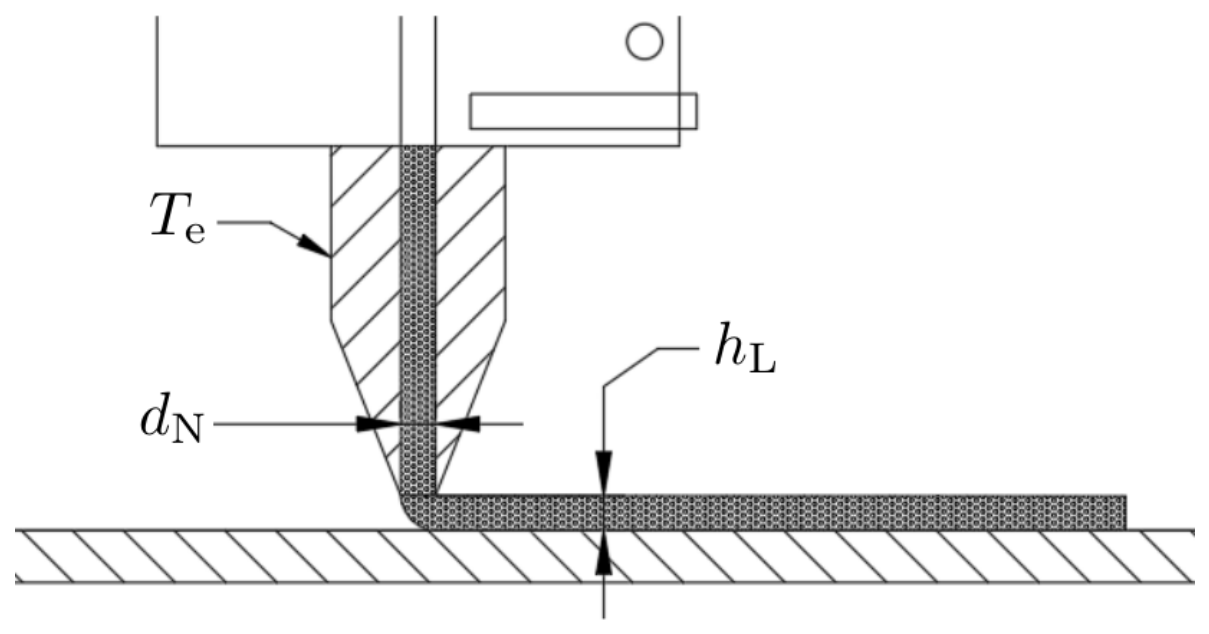
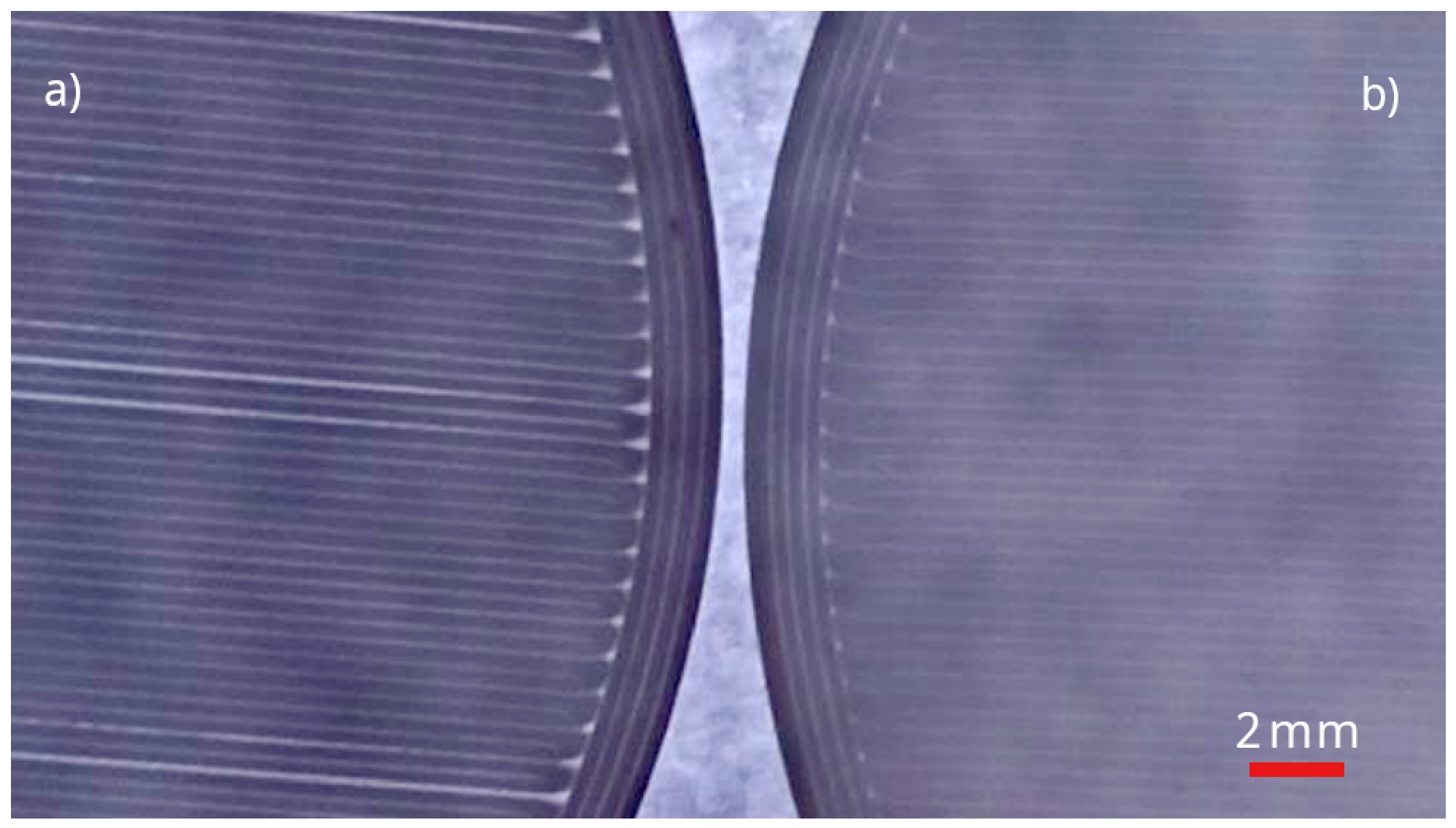
Cylindrical test specimens with a diameter of 55 mm were fabricated for the experiments. To build the specimens, adjacent layers were printed with perpendicular deposition directions. Each sample consists of two deposited layers, with a constant layer height of
(
Figure 1). Thus, the nominal specimen thickness was
. The thickness
was selected because the number of deposited layers directly influences printing time. Increasing the specimen thickness would result in higher breakdown voltages and would require larger specimen dimensions in order to avoid surface flashover, even when the sample is immersed in oil. This would also increase the printing time and the material consumption needed to prepare a sufficiently large number of specimens for Weibull analysis.
Two experimental series were conducted (Experiments A and B):
- (A)
A series of specimens was printed using a nozzle diameter of , while the extrusion temperature was varied (190, 200, 220 and 240 °C).
- (B)
A series of specimens was printed at a constant extrusion temperature of , while the nozzle diameter was varied (0.3, 0.4, and 0.6 mm).
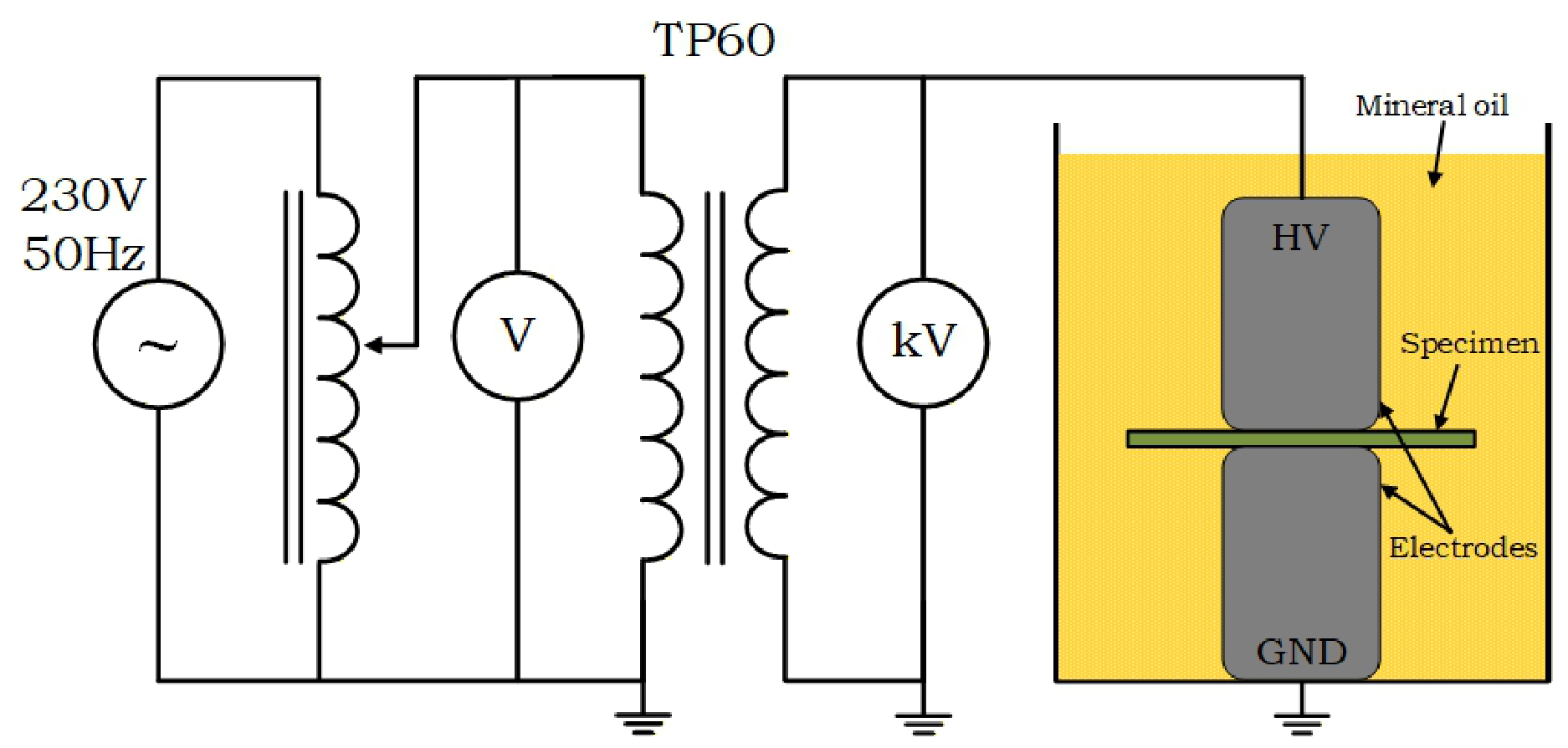
The laboratory investigation was based on electrical breakdown voltage measurements. Measurements were performed according to IEC 60243-1 [
7]. The sample diameter was reduced to 55 mm to shorten the printing process. This diameter is sufficient to perform the experiment. Equal diameter electrodes
according to [
7] were used, the arrangement of the electrodes is shown in
Figure 2. Examined specimens were submerged in mineral oil to ensure sufficient insulation against surface discharges. Mineral oil was used at room temperature. The breakdown voltage of the oil, specified by the manufacturer as
according to IEC 60156 [
8] (
gap), confirms its suitability for preventing external flashover during testing. The specimens were submerged in insulating oil immediately prior to the experiment. The thickness of the sample
a is quantised and depends strictly on the number of deposited layers and the layer height
. As stated previously, two layers were extruded.
During experiment the voltage was increased from zero at a uniform rate of 500 V/s until electrical breakdown occurred [
7]. In each experiment at least 14 specimens were used, this number of samples is sufficient to perform correct Weibull analysis [
9,
10,
11,
12].
3. Statistical Analysis of the Test Results
The statistical analysis in ageing studies of electrical insulation samples is usually conducted according to the methods described in the IEC 62539 standard [
9]. IEC 62539 recommends the use of the Weibull distribution for such analysis. Ageing studies are a specific type of analysis. In contrast to Normal distribution, the Weibull distribution is asymmetric and is defined for the variable
, which makes it more suitable for lifetime analysis.
The Weibull distribution (1) was originally introduced by Waloddi Weibull for studies of material strength [
13]; in electrical ageing studies, it may be used to model either the time to breakdown [
14] or the breakdown voltage. The Cumulative Distribution Function (CDF), denoted as
, is given by Formula (1), while the Probability Distribution Function (PDF), denoted as
, is given by Formula (2). The scale parameter
corresponds to the value of
x at which the probability of failure equals
, which is approximately 0.632 (percentile
). For a two-parameter Weibull distribution, other percentiles
can be calculated (with
x given in %) using Formula (3) [
9]. The scale parameter
is always positive and is expressed in the units of the variable
x. While
is analogous to the mean value of the Normal distribution, the shape parameter
is analogous to the inverse of the standard deviation [
9]. The higher the value of
, the more concentrated the data points are.
In contrast to the standard deviation of the Normal distribution, has no unit. The shape parameter provides useful information about the failure behaviour of the samples:
indicates that failures occur at the beginning of the experiment or at low voltages (infant mortality means production- or material-related defects),
indicates random failures (constant failure probability),
indicates wear-out behaviour of the material (increasing failure probability).
Following standard survival analysis theory [
15] and recommendations of IEC 62539 [
9] Weibull parametres
(scale parameter) and
(shape parameter) were estimated. In Equations (1) and (2),
x denotes the measured electrical breakdown strength
in kV/mm.
In the present work, the median corresponds to the percentile , whereas the lower-tail percentile is particularly relevant from the viewpoint of insulation design, as it quantifies a conservative electrical strength level. The percentile was also calculated to characterise the upper tail of the distribution and to provide insight into the dispersion of the breakdown data. Although the percentile would be of practical interest, it is not reported in this paper due to the limited number of samples examined. Lower-tail percentiles such as or are more sensitive to the estimation of the shape parameter , particularly for small sample sizes.
4. Experiment A and B Results
The nominal thickness of the sample
is the thickness resulting from the layer thickness
multiplied by the number of extruded layers. The measured thicknesses of the printed samples
a are presented in
Table 1. The sample thickness within each series is consistent, with a standard deviation ranging from 0.011 to 0.014 mm. For
, the average sample thickness exceeds that measured at higher extrusion temperatures by 0.02 mm, corresponding to an approximately 5% increase relative to the nominal thickness
. This indicates that insufficient extrusion temperature affects the deposition characteristics.
Based on breakdown-voltage measurements (or, more precisely, the calculated electrical strength
), the Weibull parameters
and
were estimated following IEC 62539 [
9]. Results of Experiment A are presented in
Table 2. Calculated scale parameter
, which in this application corresponds to the characteristic electric strength, varies with extrusion temperature
. The highest characteristic electric strength of the PLA samples was measured at
, whereas the lowest was recorded at
. It is worth recalling that
was the lowest extrusion temperature recommended by the filament manufacturer.
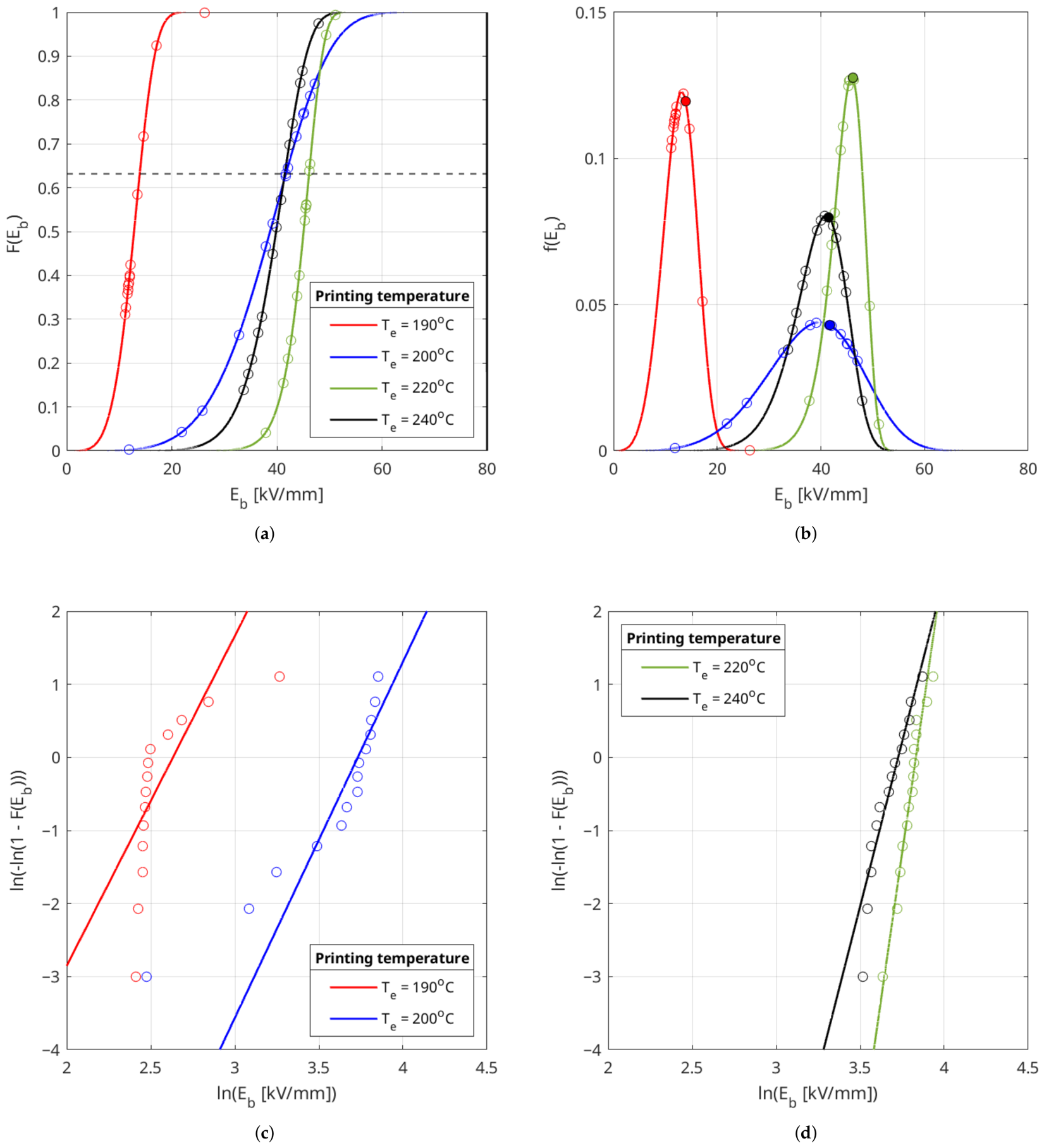
The results of Experiment A are shown in
Table 2 and in graphical form in
Figure 3. It is significant that for
the characteristic electrical strength is the lowest, amounting to approximately one third of the characteristic electrical strength recorded for the extrusion temperature
and above. The low electrical strength of the samples extruded at
corresponds to extrusion-related defects, such as reduced inter-layer bonding and void formation. Although the shape parameter
is the lowest for
, it remains greater than 1. The Weibull probability plots shown in
Figure 3c confirm that the transformed breakdown-strength data follow an approximately linear trend, which supports the applicability of the two-parameter Weibull model used in this work. Therefore, in the present case, the parameter
should be interpreted primarily as a descriptor of the statistical shape and dispersion of the breakdown-strength distribution rather than as a direct indicator of dielectric quality. Higher extrusion temperatures
exhibit improved electrical characteristics (
Figure 3d). Notably, increasing
from
to
resulted in a rapid increase in electrical strength. The highest electrical strength, 46.13 kV/mm, was obtained for samples printed at
, which lies within the manufacturer’s recommended extrusion temperature range for the filament used (185–225 °C). Moreover, at this extrusion temperature, the shape parameter
is the highest among all cases investigated. A value of
indicates a narrow statistical dispersion of the measured breakdown strengths. A clearer interpretation of the Weibull fit is provided by the calculated percentiles
,
, and
. Note that, for a two-parameter Weibull distribution, the scale parameter
corresponds to
(since
). The best high-voltage performance is exhibited by samples printed at
, for which the
percentile reaches
. For an extrusion temperature of
, the
percentile is 35% lower than the corresponding
value obtained at
.
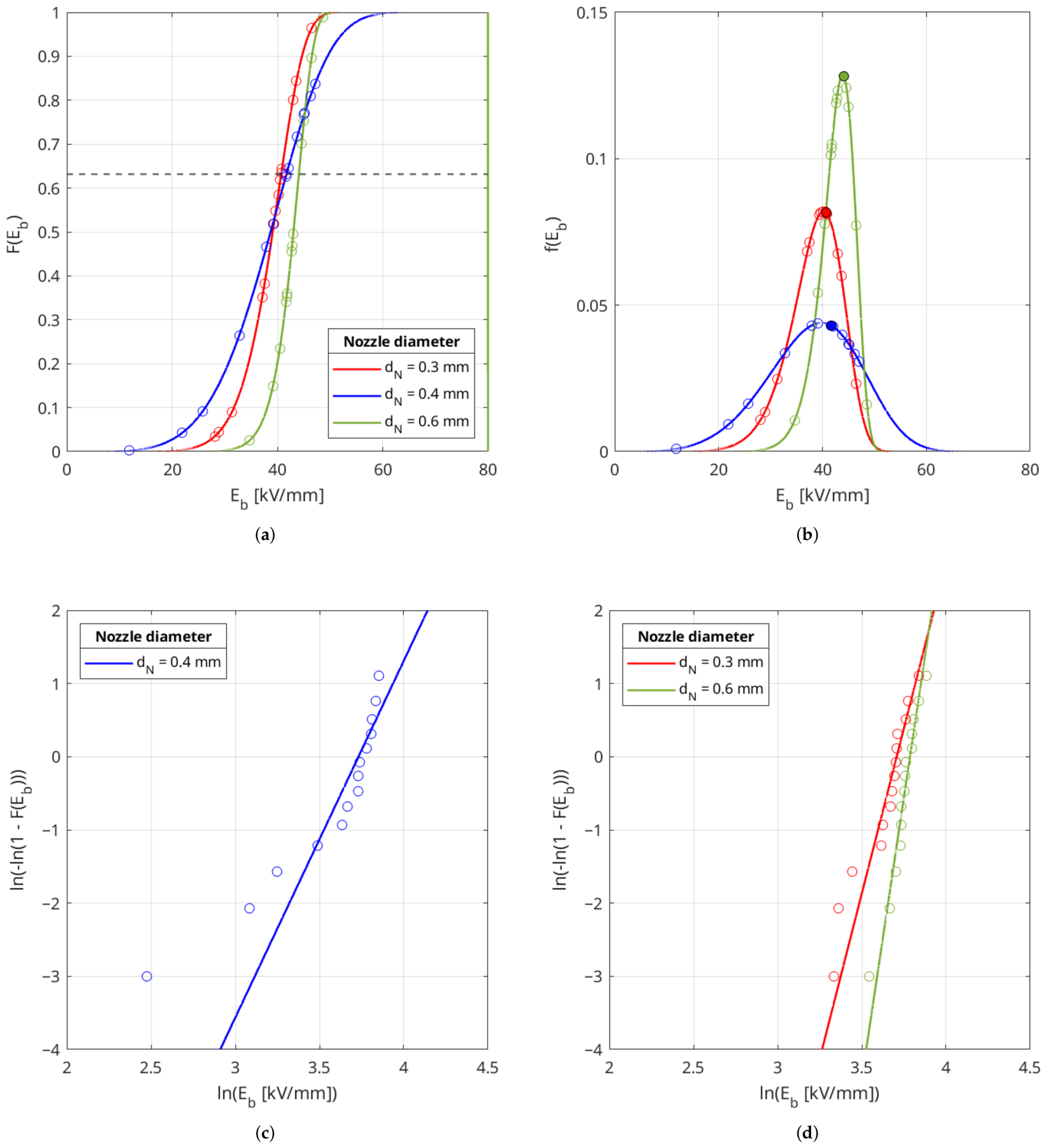
The results of Experiment B are presented in
Table 3 and graphically in
Figure 4. This part of the investigation was conducted at a single extrusion temperature,
. This temperature was selected because it lies in the middle of the manufacturer’s recommended extrusion temperature range for the filament used. The highest electrical strength was measured for a nozzle diameter of
; for this nozzle, the highest shape parameter (
) in Experiment B was also recorded. Such a high value of
indicates a narrow statistical dispersion of the measured breakdown-strength data. A better representation of the dispersion of the measured electrical strength is obtained when the percentile
is taken into account. Again, it is evident that the best high-voltage performance is achieved for samples printed using a nozzle diameter of
. In this case, the percentile
is estimated at 38.08 kV/mm. This improved high-voltage performance may be attributed to a lower number of voids formed when a larger nozzle diameter
is used, resulting in fewer weak points within the same material volume, although direct microstructural confirmation was beyond the scope of the present study. It should also be noted that the investigated range of nozzle diameters was limited to three discrete values. Therefore, the observed behaviour of the
series should be interpreted in the context of statistical dispersion rather than as evidence of a well-defined continuous trend with nozzle diameter.
6. Electric Field Simulations
The electric field distribution in the 3D-printed samples was analysed in order to investigate and correlate the Weibull statistical parameters with extrusion defects that may occur during the FDM printing process. For the finite element analysis, the FEMM 4.2 was used. The results of computations were exported using a Lua script and subsequently post-processed and visualised in Python (NumPy, Pandas, Matplotlib), with the model geometry in DXF format imported using ezdxf.
The space between the metal electrodes was modelled, and the 3D-printed samples were represented as extruded PLA filament beads. The lower electrode was defined as a grounded plane, whereas the upper electrode was energised and set to a potential of 10 kV. The filament was assumed to be a homogeneous solid material without defects. The relative permittivity was set to
, which lies within the range 2.65–2.76 reported in the literature [
16]. Other values, such as
[
17] and
[
18], have also been reported. Layer height is modelled along the
y-axis and is set to
. The nozzle diameter
is modelled along the
x-axis. The influence of the printing temperature was represented by the presence and size of air gaps between adjacent PLA beads, which result in local electric field enhancement due to permittivity contrast. The investigated structure should therefore not be interpreted as a fully oil-impregnated PLA–oil composite, since closed voids formed during printing remain air-filled and act as local sites of electric-field enhancement.
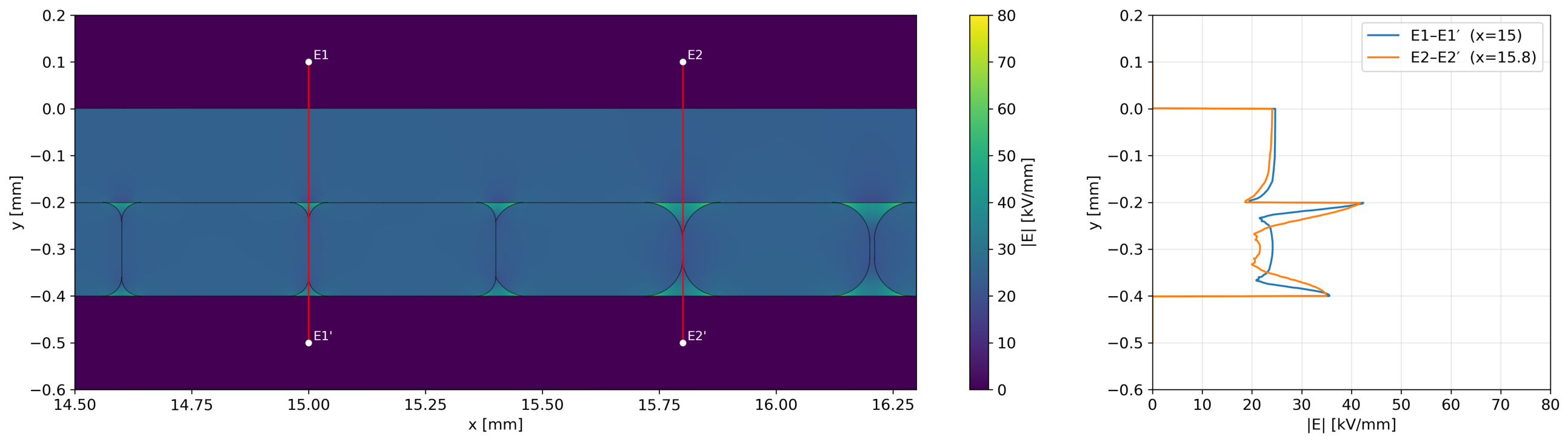
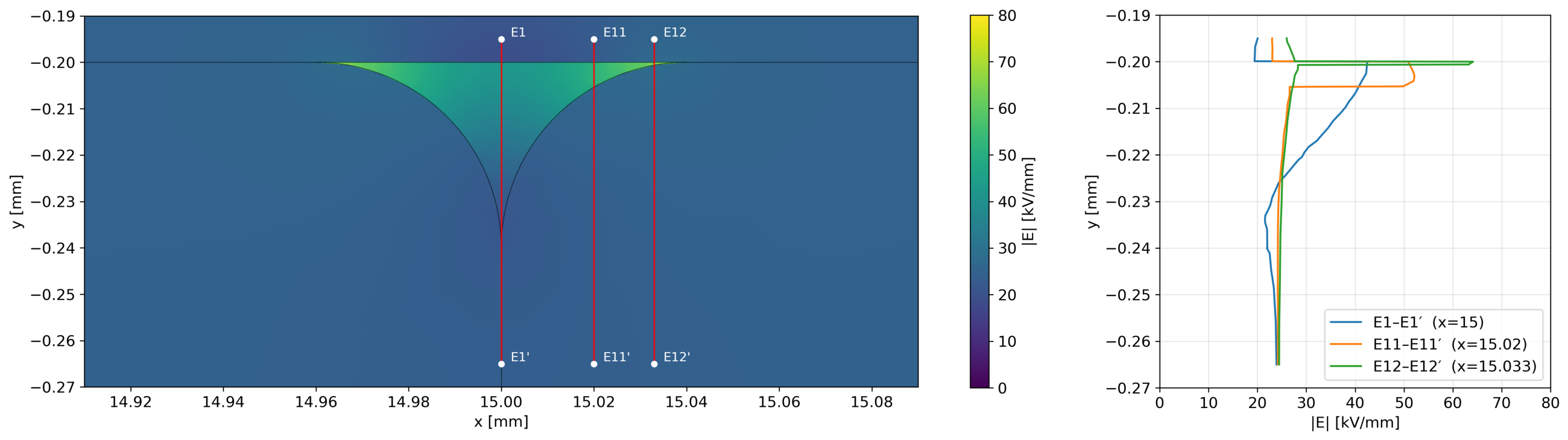
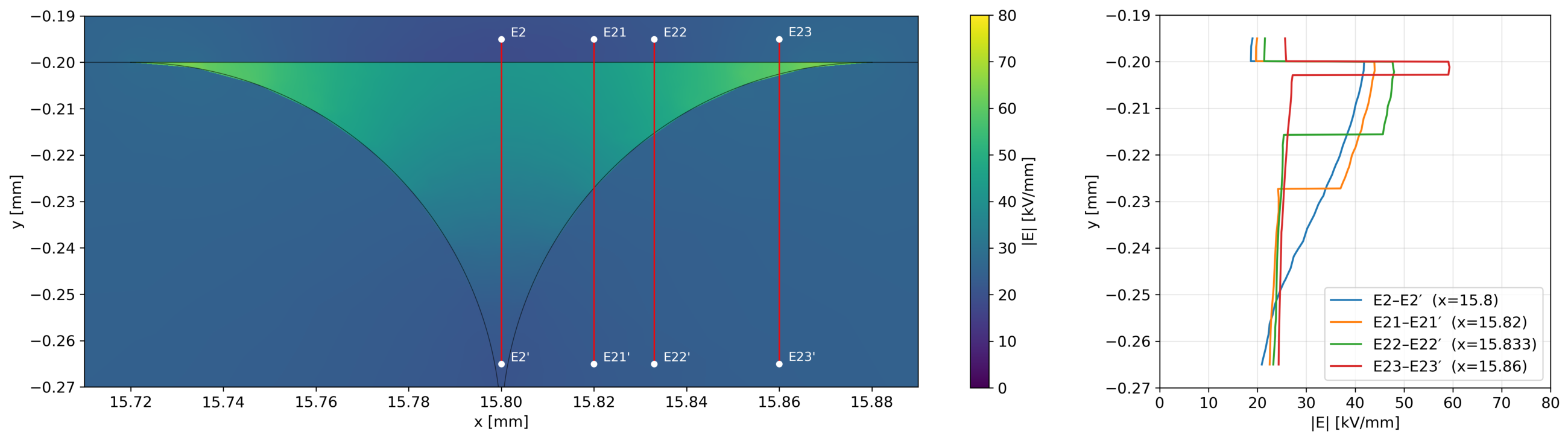
The FEMM simulation results are presented in
Figure 6,
Figure 7 and
Figure 8. Influence to printing characteristics are modelled as fillet radius
R, when lower
is used for printing then bigger fillet is formed. As an example, two fillets were modelled:
shown in
Figure 7 and
shown in
Figure 8.
A default mesh density was used to generate the finite element model; however, the mesh was locally refined in regions of particular interest. The mesh was locally refined in the air-gap region, where steep electric-field gradients were expected. The maximum element size in the air gap was limited to
, at least one order of magnitude smaller than the minimum void thickness considered in the model.
Figure 6 presents the electric-field profiles along E1–E1’ and E2–E2’; close-up views are provided in
Figure 7 and
Figure 8. The maximum electric-field magnitude occurs within the thinnest air gap along E1–E1’, reaching a peak of 65 kV/mm (
Figure 7). A similar trend is observed for the fillet radius
= 0.08 mm, where the field magnitude again approaches
(
Figure 8). These values are substantially higher than the field magnitude calculated in the solid insulation, which is approximately
. The electric-field distributions were computed for the applied voltage corresponding to the measured breakdown level; hence, the reported field magnitudes represent near-breakdown stresses; for service conditions, the field scales linearly with the operating voltage.
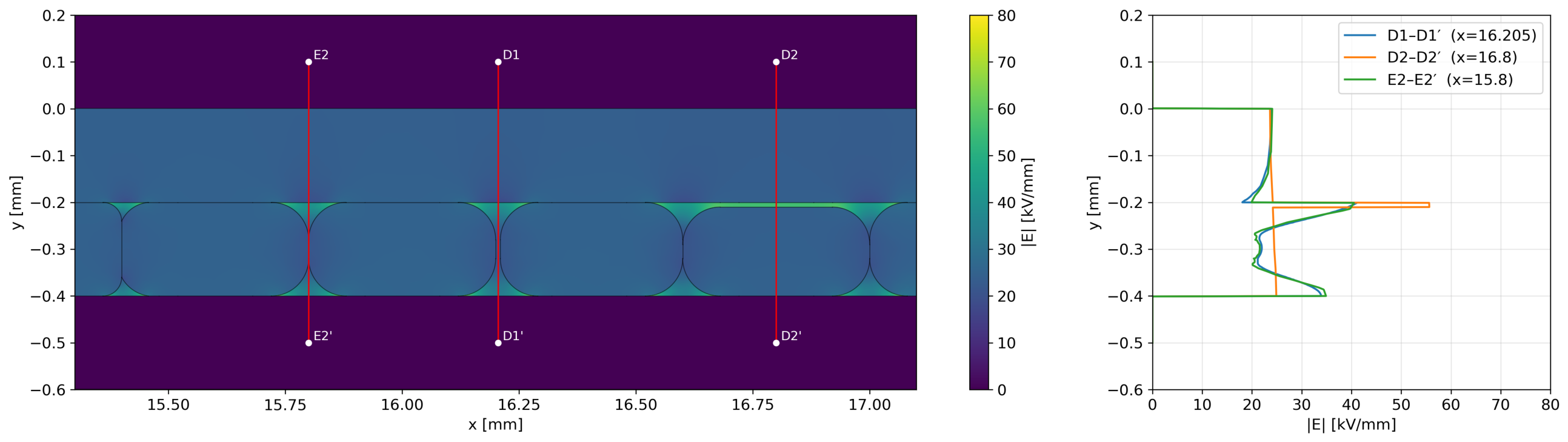
Figure 9 presents two types of extrusion defects. These defects resemble classical insulation delaminations described in the high-voltage literature [
19]. Two flat air gaps were modelled: the vertical gap D1 with a thickness of
, and the horizontal gap D2, also with a thickness of
. The mechanisms responsible for formation are similar; both arise from irregularities in the filament diameter. A constant filament diameter is assumed in the slicing process; therefore, the filament feed rate is defined as constant in the generated G-code. Variations in filament diameter lead to non-uniform material deposition and irregular bead geometry within the printed structure. When comparing the electric-field magnitude profiles (
Figure 9), E2 (proper extrusion) and D1 (a void between adjacent beads within the same layer), it is evident that the vertical air gap has a negligible effect on the overall electric-field distribution. In contrast, when the horizontal air gap D2 (an inter-layer void between successive layers) is considered, the peak electric-field magnitude increases to approximately
.
7. Discussion
3D-printed elements may be considered for selected auxiliary insulating components, particularly where complex geometries are required to realise the insulation design. However, their broader applicability in complete high-voltage insulation systems requires further investigation. In particular, practical use in such systems should also take into account the resistance of the material to ageing caused by partial discharges, as well as the influence of moisture on its electrical performance. Experiment A showed that, in some cases, even a
increase in extrusion temperature can improve the high-voltage performance of a 3D-printed component. In Experiment B, nozzle diameter was identified as a factor influencing dielectric reliability; in particular, the
percentile provides a conservative measure of the breakdown performance of the printed insulation. The
percentile was used as a conservative, design-relevant value for high-voltage insulation systems. It is worth noting that, for a given characteristic strength
in a two-parameter Weibull model, the corresponding
value depends on the dispersion of the breakdown data, i.e., on the shape parameter
: a higher
implies a narrower distribution and therefore a higher
relative to
(compare
and
values in
Table 2 and
Table 3). The Weibull analysis, and in particular the
percentile, indicates that an extrusion temperature
can be selected to identify the most promising processing conditions for high-voltage applications. When
is too low, inter-bead adhesion and bead formation deteriorate, which promotes the formation of air gaps and reduces the electrical strength of the printed component. Air gaps formed in 3D-printed elements affect their high-voltage behaviour because the voids are small and the relative permittivity of PLA differs markedly from that of air, which leads to local electric-field enhancement. A pronounced electric-field enhancement is also formed when an inter-layer air gap arises due to irregularities in filament diameter (
Figure 9). Compared with previous studies [
3,
5,
6], the present work applies a more rigorous statistical treatment of breakdown data. Specifically, the Weibull analysis performed in accordance with IEC 62539 [
9] provides deeper insight into both the reliability and the high-voltage characteristics of the investigated specimens.
In our opinion, for each nozzle diameter there exists an extrusion temperature that yields the most favourable high-voltage performance. Moreover, the use of larger nozzle diameters is recommended, as it can reduce the density of potential weak points associated with inter-bead and inter-layer interfaces in FDM-printed elements.
Future work will focus on partial discharge (PD) inception voltage measurements (according to IEC 60270 [
20]), as well as on the influence of printing orientation and infill parameters on the electrical characteristics of 3D-printed high-voltage insulation systems. In addition, more sophisticated three-dimensional models of the air-gap geometries described in this paper would be beneficial.