2. System Description and Component Modeling
2.1. System Architecture
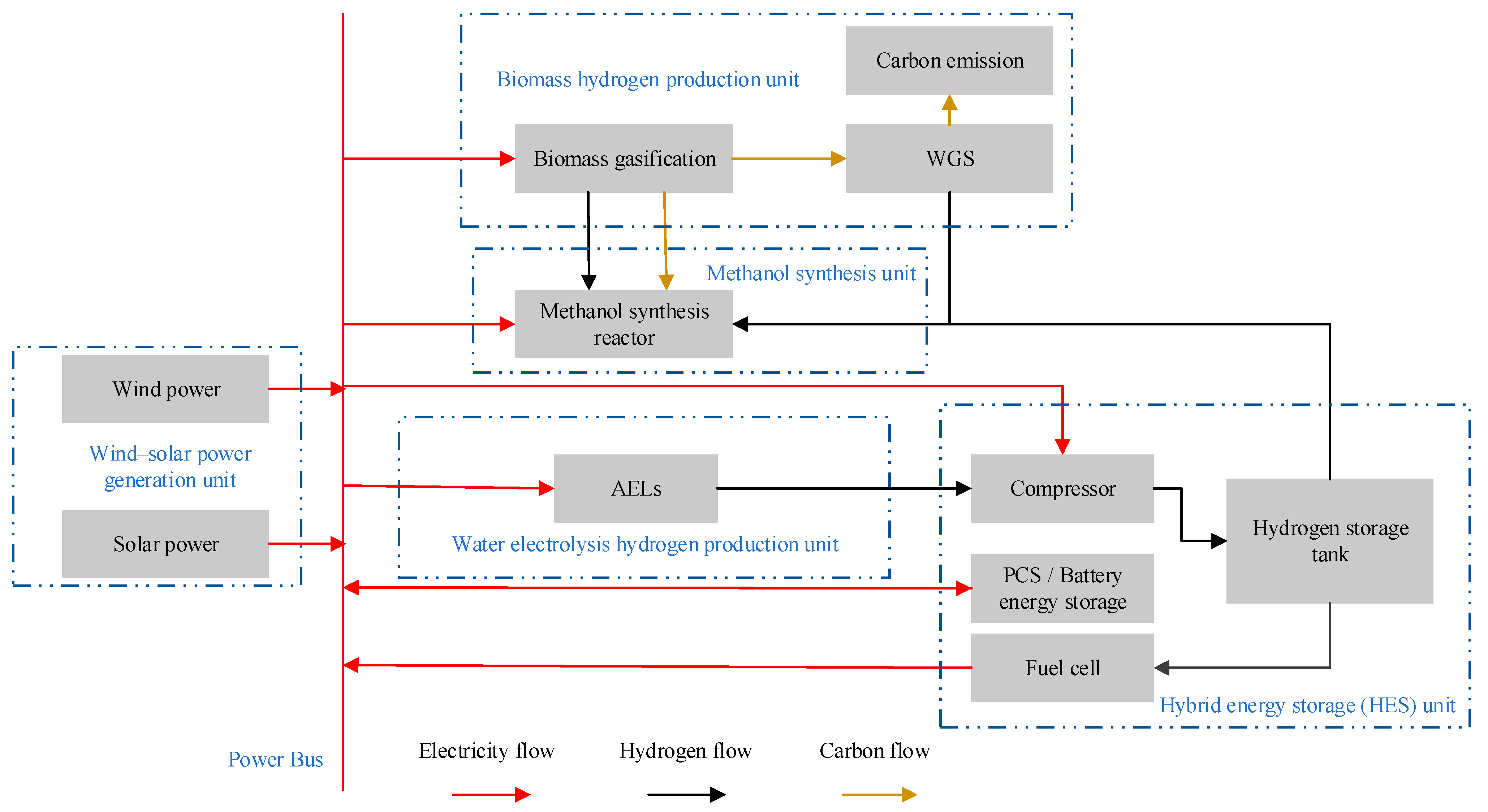
The Off-Grid Wind–Solar Hydrogen Storage for Green Methanol Synthesis System (hereafter referred to as the PHM system) is based on an energy conversion chain of wind–solar power generation, hydrogen production via water electrolysis, HES, biomass-based hydrogen production, and methanol synthesis. The system achieves flexible hydrogen production and methanol synthesis under fluctuating wind–solar conditions through the dual coupling of electrical energy and hydrogen energy. The PHM system mainly consists of a renewable power generation unit, a water electrolysis hydrogen production unit, a HES unit, a biomass hydrogen production unit, and a methanol synthesis unit. The units are connected through the conversion of electrical energy, hydrogen energy, and carbon energy. They jointly support the stable operation of the overall system. The structure of the PHM system is shown in
Figure 1. The red arrows represent electricity flow. The black arrows represent hydrogen flow. The yellow arrows represent carbon flow.
The variables, parameters, and index used throughout this study are summarized in
Table 1.
The wind–solar power generation unit is the sole electricity source of the PHM system. Its green electricity can directly supply the load of the methanol synthesis unit. It can also drive the operation of the water electrolysis hydrogen production unit. The hydrogen production unit adopts alkaline electrolyzers (AELs) due to their low cost and technological maturity. AELs convert intermittent electricity into stable hydrogen output.
The HES unit consists of electrochemical energy storage (EES) and hydrogen storage (HS). EES includes battery energy storage. HS includes hydrogen storage tanks and fuel cells. A compressor is installed between the water electrolysis unit and the HES unit for pressure regulation. Hydrogen produced by water electrolysis is first compressed to meet the pressure requirements of the hydrogen storage tank. The compressed hydrogen is stored in the tank. It is used to buffer hydrogen supply under wind–solar fluctuations. It also provides a long-term hydrogen source for the methanol synthesis unit. When wind–solar power is insufficient for a prolonged period, the system must ensure the safe operation of the methanol synthesis unit. At this time, hydrogen stored in the tank can be converted back into electricity by the fuel cell. This process compensates for power shortages and satisfies safety constraints.
The biomass hydrogen production unit provides a stable source of carbon monoxide for methanol synthesis. Carbon monoxide produced by biomass gasification can directly participate in methanol synthesis with hydrogen. A WGS reaction unit is also configured to regulate the carbon-to-hydrogen ratio in methanol synthesis. The methanol synthesis unit consumes electricity, carbon, and hydrogen to produce green methanol.
2.2. Water Electrolysis Hydrogen Production Unit
The water electrolysis hydrogen production unit is the core component of the PHM system. It converts intermittent wind–solar electricity into high-energy-density hydrogen. Its operating state directly determines hydrogen production efficiency, hydrogen storage level, and external hydrogen supply capability. This section explains the operating mechanism of the hydrogen production unit from the perspective of operational scheduling. It provides the basis for the subsequent capacity configuration and scheduling model.
This section establishes a multi-operating-condition model for AELs. The start-up and shutdown characteristics of AELs are modeled in detail. The model can realistically reflect AEL behavior under wind–solar fluctuations. This modeling approach improves the accuracy of hydrogen production process simulation. It also provides more precise physical constraints for subsequent optimization models.
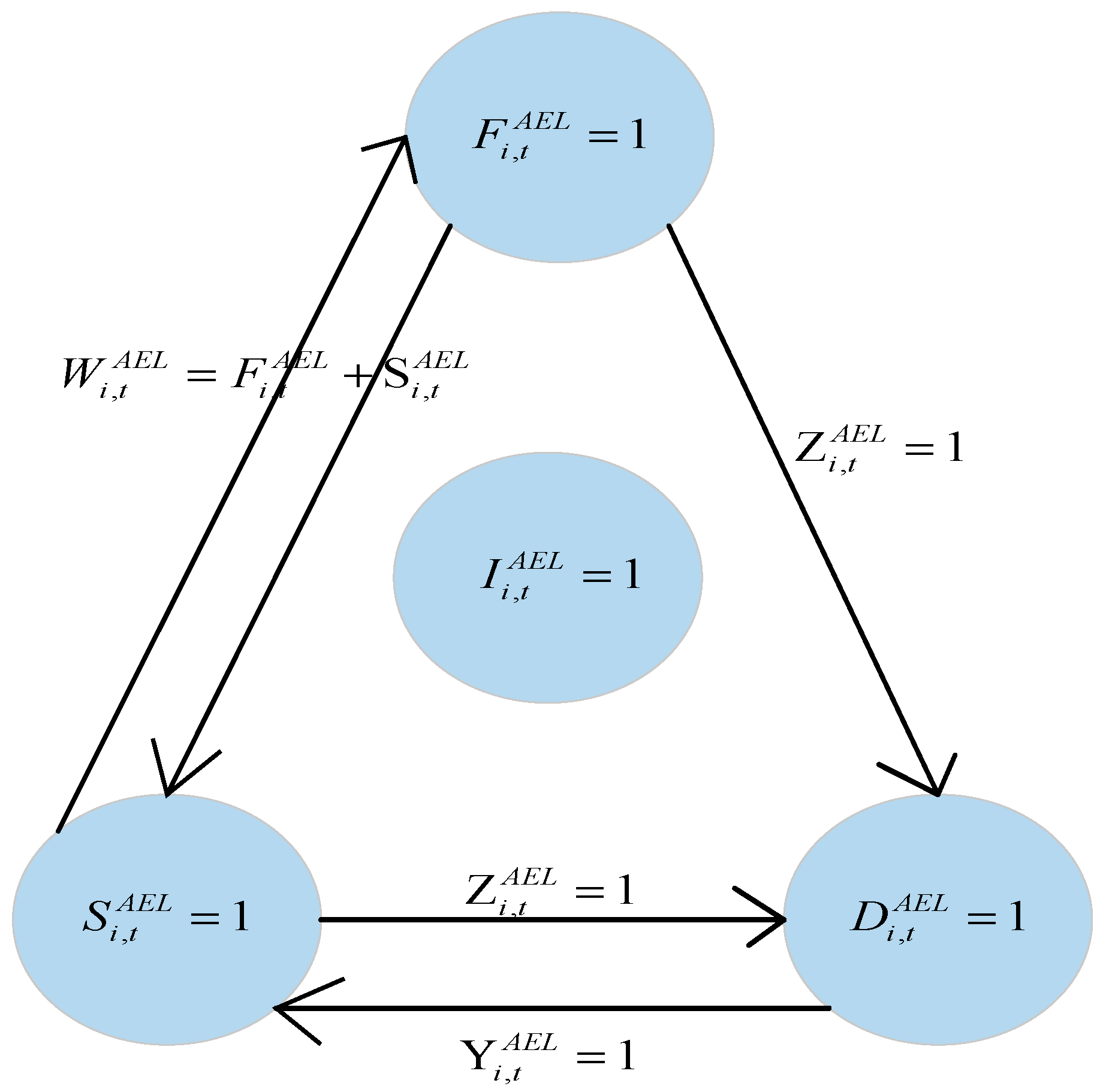
As shown in the state transition diagram of the AEL in
Figure 2, the operating modes of the AEL include normal operation mode, standby mode, and shutdown mode. The AEL cannot switch directly from the shutdown mode to the normal operation mode. It must pass through the standby mode for 1 h.
The AEL is defined with three operating modes: normal operation, standby operation, and shutdown, denoted as
,
, and
, respectively. The start-up state is defined as the sum of the normal and standby modes:
Binary variable indicates whether the AEL is enabled, and / denotes the start-up action of the AELs.
For the AEL, electricity is consumed in both normal and standby modes. However, hydrogen is only produced in the normal operation mode. Therefore, the electricity consumption power and hydrogen production power are distinguished and modeled as follows:
The hydrogen production rate of the AELs at time
is given by:
Equation (4) represents the total installed capacity of the AELs.
2.3. HES Unit
Due to the fluctuations of wind–solar output, a single energy storage technology cannot simultaneously satisfy short-term power balancing and long-term energy balancing. Therefore, this study proposes a HES structure. By exploiting the complementary characteristics of different technologies, coordinated optimization is achieved across the time and energy domains. This structure provides stable support for subsequent capacity configuration and operational scheduling.
2.3.1. EES
EES is represented by batteries. It features fast response, high regulation accuracy, and high energy conversion efficiency. It is mainly used for power balancing on the minute-to-hour timescale. The battery model used in this study is described as follows.
Equation (5) represents the recursive relationship of the internal energy of the battery between two consecutive time steps. Equation (6) enforces the limits of the battery to protect it from deep discharge.
2.3.2. HS
The HS unit consists of a compressor, a hydrogen storage tank, and a fuel cell. The compressor collects the hydrogen produced by the AELs and compresses it before injection into the storage tank. The storage tank manages the hydrogen flow, including hydrogen storage, hydrogen supply to the methanol synthesis unit, and hydrogen discharge for power generation by the fuel cell. The detailed model is described as follows.
Equation (7) provides a linear model for the power consumption of the compressor. Equation (8) describes the recursive relationship of the hydrogen amount in the storage tank between two consecutive time steps. It mainly accounts for hydrogen inflow from water electrolysis and hydrogen outflow for fuel cell power generation and methanol synthesis. Equation (9) represents the hydrogen-to-electricity conversion model of the fuel cell. It converts hydrogen consumption into electrical power based on the heating value of hydrogen.
2.4. Biomass Gasification Unit
The biomass unit is the only source of carbon in the entire system. It provides carbon monoxide required for methanol synthesis and also supplies hydrogen. The WGS reaction is used to regulate the carbon-to-hydrogen ratio in the system.
Equations (10)–(12) calculate the flow rates of
,
and
produced by biomass gasification based on the carbon and hydrogen contents of the biomass feedstock.
Equation (13) ensures that the total amount of
allocated to methanol synthesis and the water–gas shift reaction equals the
produced by biomass gasification.
Reaction (14) shows the chemical equation of the WGS reaction. Equation (15) is derived from the stoichiometric molar ratios of the chemical reaction. It ensures that the amount of participating in the WGS reaction equals the amount of produced and is equal to the amount of emitted. The loss of WGS is 0.1. Equation (16) indicates that the emitted is generated from biomass gasification and the WGS reaction.
2.5. Methanol Synthesis Unit
The main reactants in the methanol synthesis unit are carbon monoxide and hydrogen. Carbon monoxide is entirely supplied by biomass gasification. Hydrogen is supplied by biomass gasification, the WGS reaction, and hydrogen discharged from the storage tank.
Reaction (17) presents the reaction equation of the methanol synthesis unit.
Equation (18) represents the methanol production rate, where 1.43 is the conversion coefficient used to convert the volumetric rate into the mass rate. Equation (19) represents the annual methanol production.
Equation (20) calculates the
consumption based on the amount of
involved in the methanol synthesis reaction. Equation (21) gives the calculation of the
to be supplied by the hydrogen storage tank.
Equations (22) and (23) represent the power consumption of the biomass gasification unit and the methanol synthesis unit, respectively.
3. Capacity Configuration Optimization of the PHM System
3.1. Objective Function
This study minimizes the annual investment cost, operation and maintenance cost, biomass feedstock cost, carbon emission cost, and wind–solar curtailment cost of the PHM system. Based on this objective, an optimization model for the off-grid wind–solar hydrogen-to-methanol system with multi-factor coordination is established. The objective function is formulated as follows.
Equation (24) defines the objective function of the PHM system optimization model, which aims to minimize the annual comprehensive cost.
Equation (25) presents the calculation of the annual investment cost, where the total life-cycle investment cost is converted into an annual value using the discount rate and the planning horizon. Equation (26) gives the calculation of the annual operation and maintenance cost, which is determined using fixed O&M cost coefficients.
The set includes wind–solar power generation units, AELs, batteries, fuel cells, hydrogen storage tanks, biomass gasification unit and the methanol synthesis unit.
Equation (27) calculates the biomass feedstock cost, which is obtained by multiplying the unit cost by the consumption. Equation (28) represents the carbon emission cost, which penalizes carbon emissions exceeding the emission quota. Equation (29) defines the wind–solar curtailment penalty cost.
3.2. Constraints
3.2.1. Multi-Operating-Mode Constraints of the AEL
The multi-operating-mode behavior of the AEL described above must satisfy the following constraints. Equation (30) below fully couples the operating-mode transitions and the start-up/shut-down behavior of the AEL.
3.2.2. HES Constraints
- (1)
Battery charging and discharging constraints
Equation (31) shows that the battery can only be in one operating state (charging or discharging) at each time step.
- (2)
Fuel cell discharging constraints
- (3)
Hydrogen storage tank capacity constraints
3.2.3. Biomass Gasification Unit Constraints
Equation (34) represents the capacity constraint of the biomass gasification unit.
3.2.4. Methanol Synthesis Unit Constraints
Equation (35) requires the operating power of the methanol synthesis unit to vary only within 0.6 to 1.0 of its rated power. Equation (36) defines the ramping constraint of the methanol synthesis unit, which limits the power change to 5% per hour. Both constraints are safety constraints of the methanol synthesis unit and must be strictly satisfied [
28].
3.2.5. Power Balance Constraints
The power balance constraint requires that the total power output on the generation side must equal the total power consumption on the load side. According to the system structure, at each time step, the wind–solar power output plus the discharging power of the battery and the fuel cell must equal the power consumption of the AELs and the compressor, the battery charging power, the curtailed power, and the power consumption of the methanol synthesis unit.
For the AEL, in addition to the power consumed in the normal operating mode, power is also consumed in the standby mode. Therefore, the standby power of the AELs is included in the power balance constraint. Equation (37) gives the calculation of the AELs’ power consumption. Equation (38) gives the power balance constraint.
3.3. Solution Algorithm
The proposed model is a mixed-integer linear programming (MILP) model that considers both capacity configuration and operational scheduling.
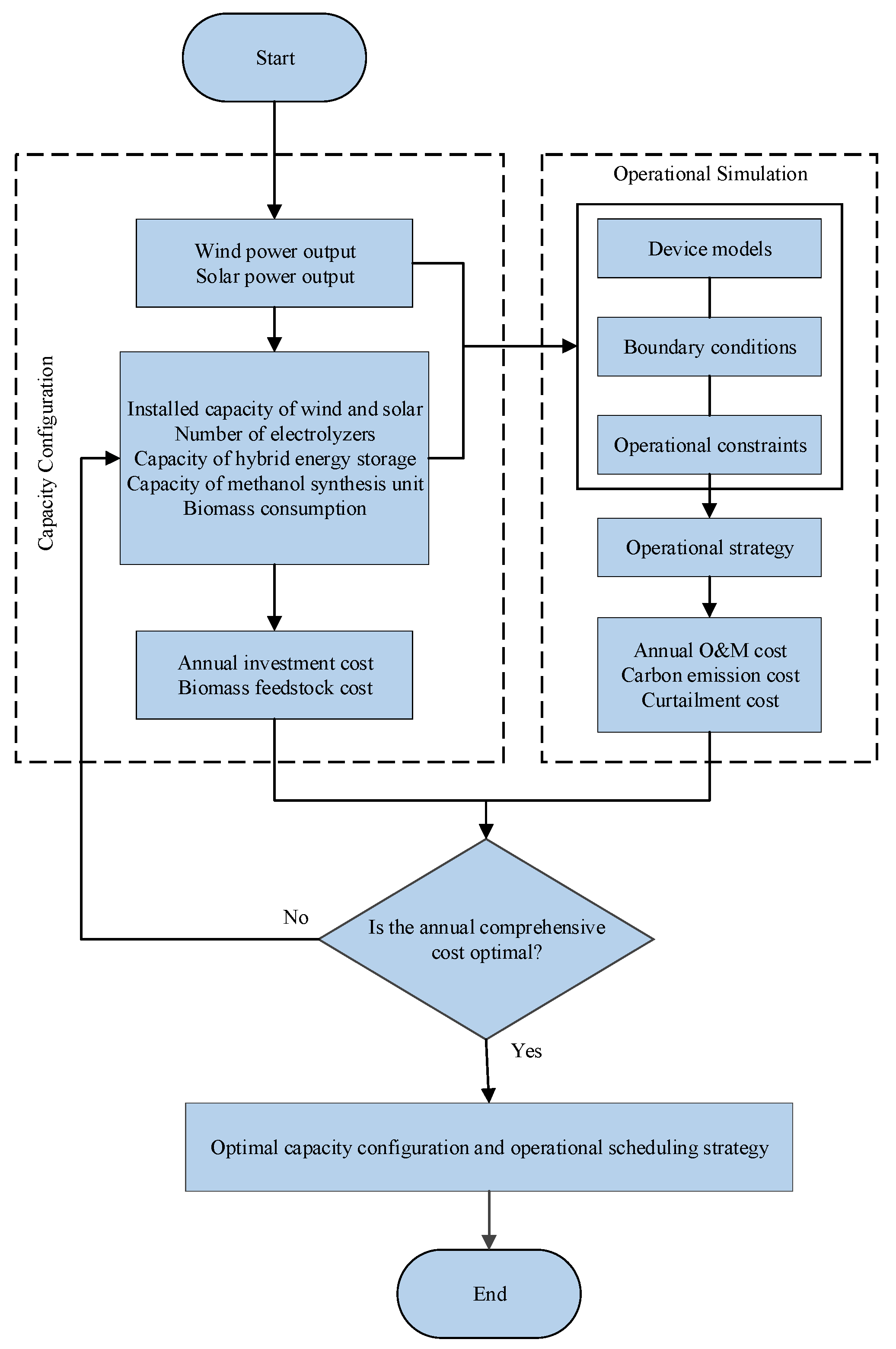
The solution process is divided into two stages. In the first stage, capacity configuration is performed. The wind and solar output series are used as inputs to determine the installed capacities of wind and solar power, the number of AELs, the capacity of the methanol synthesis unit, the capacities of devices in the hybrid energy storage unit, and the biomass consumption. Based on these decisions, the annual investment cost and the biomass feedstock cost are calculated. In the second stage, operational simulation is conducted. Under the determined capacities, device models are established and operational constraints are applied to obtain feasible scheduling strategies. The annual operation and maintenance cost, carbon emission cost, and curtailment cost are then evaluated. The annual comprehensive cost is obtained by aggregating all cost components, and the solution is updated through iterative optimization. The model contains multiple integer variables and continuous variables and remains linear in formulation, thus constituting a MILP problem. The model is solved in MATLAB (version R2023b) using the YALMIP toolbox with the Gurobi solver.
Figure 3 shows the flowchart of the optimization algorithm for the proposed model.
4. Case Study and Analysis
4.1. Data Preparation
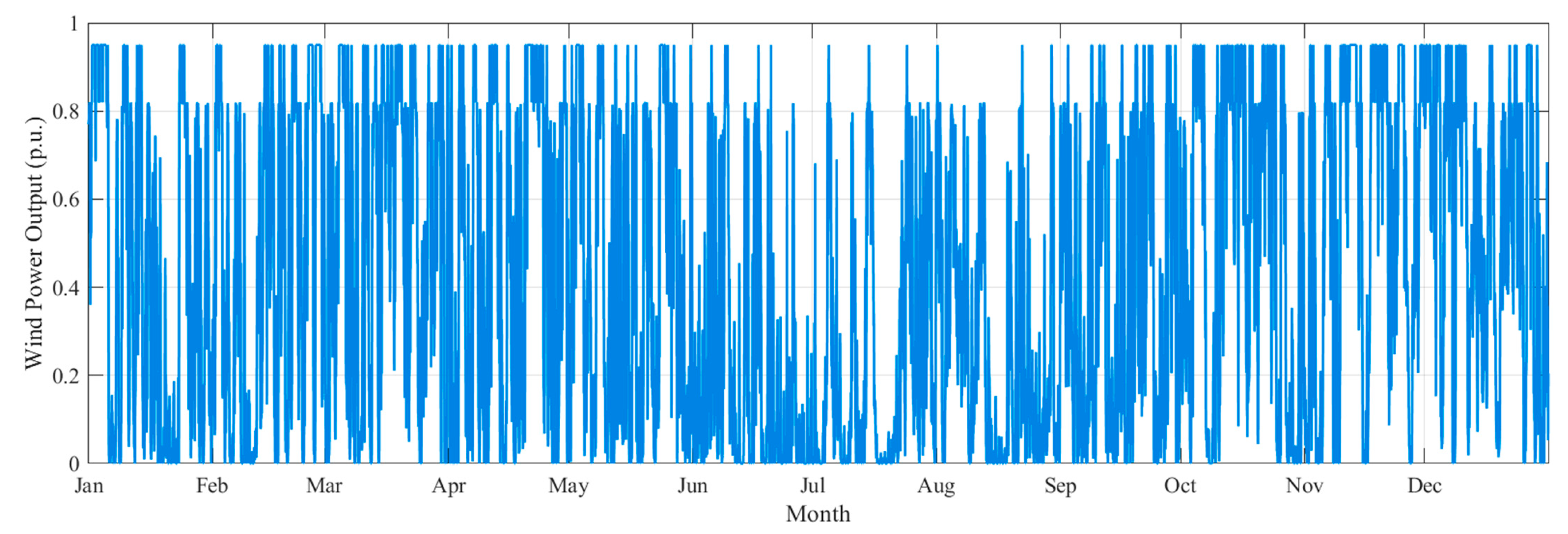
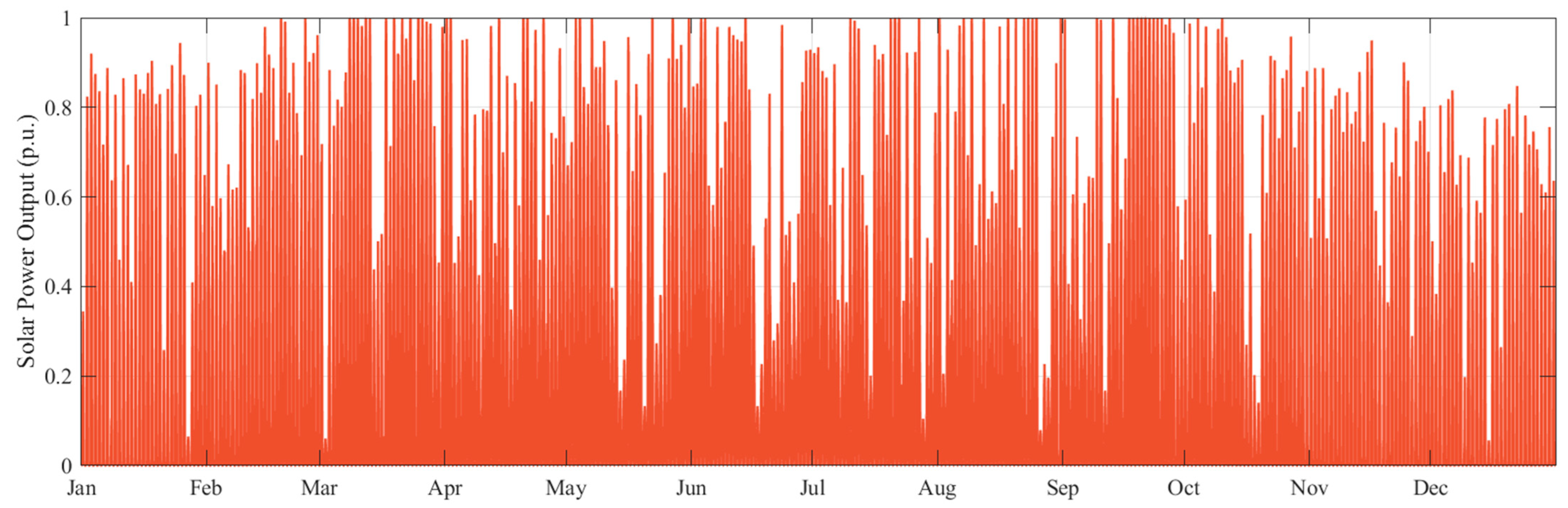
The wind and solar data used in this study are measured output data from a region in Northeast China, with a time resolution of 1 h and a total duration of 8760 h. The annual methanol production is required to be 100,000 tons.
Figure 4 shows the per-unit wind and solar output over the entire year in the study area.
The study area has abundant wind and solar resources. The terrain is dominated by mountains and hills, and significant wind shortages mainly occur in summer. Solar output is relatively stable throughout the year but exhibits large day–night fluctuations. To fully capture the complementary characteristics of wind and solar power, the installed capacities of wind and solar are treated as decision variables in the model for capacity configuration.
To balance the temporal characteristics of wind and solar power output with the computational efficiency of the optimization model, the original 8760 h wind–solar data are reduced into typical scenarios in this paper. If the full-year hourly data are directly used for coordinated optimization, the model complexity will increase significantly, and the solution efficiency will decrease accordingly. Therefore, it is necessary to reduce the dimensionality of the annual data while preserving the original temporal characteristics and seasonal differences as much as possible.
Traditional K-means clustering may lead to the loss of temporal continuity in the annual data and cannot reflect the cross-seasonal storage advantage of hydrogen storage. In contrast, pure time-series clustering cannot account for the delayed start-up of hot standby operation in AELs. Therefore, this paper adopts a typical-day construction method based on “monthly stratification, intra-month clustering, and sequential concatenation.” First, the annual data are divided into 12 months, and the number of typical days is determined according to the number of days in each month. Second, Ward’s hierarchical clustering method is applied to cluster all daily output curves within each month. Taking the minimum increment of the within-cluster sum of squares as the criterion, the Ward method can improve the consistency of curve patterns within the same cluster. For each cluster, the real day with the shortest distance to the cluster center is selected as the representative typical day, and the number of original days contained in that cluster is taken as its weight to reflect the representativeness of the typical day over the year. Subsequently, the typical days selected from each month are arranged in chronological order and concatenated end to end to reconstruct a typical output sequence with a length of 744 h. Meanwhile, the number of original days represented by each typical day is recorded as its weight to reflect its statistical importance over the year.
In the subsequent optimization model, the 744 h typical sequence is used as the input time series for system operation constraints and energy balance, while the weights corresponding to each typical day are used to scale indicators such as operation and maintenance cost, curtailed energy, and carbon emissions to the annual level, thereby ensuring that the dimension-reduced results still retain annual statistical significance.
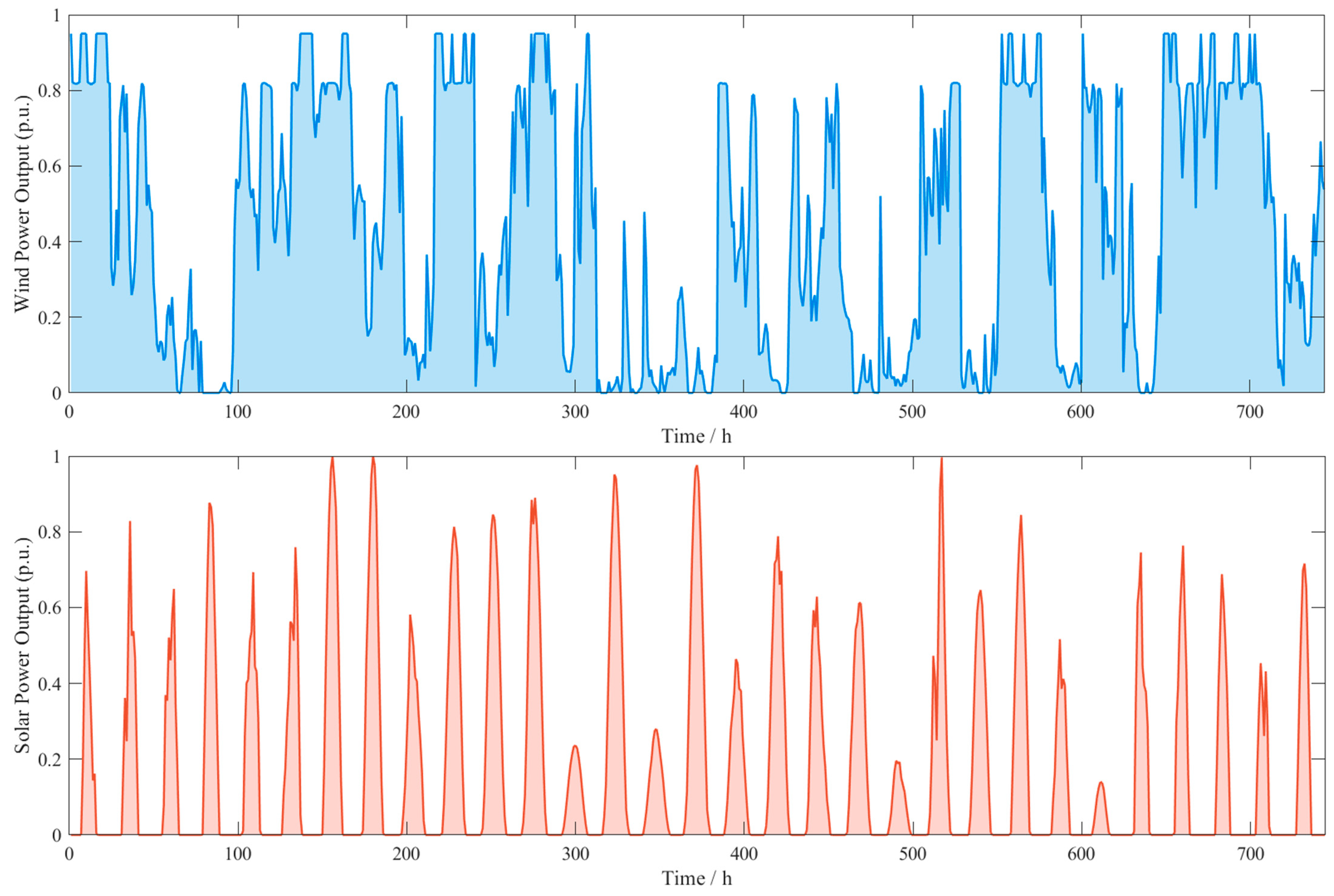
After applying the above clustering method, the original 365 days of data are reduced to 31 typical days, and the hourly data are reduced from 8760 h to 744 h.
Equation (39) describes the dimensionality reduction process.
Here,
denote the days of January, and
denote the representative days of January after clustering; the same applies to other months. For months with 31 days, three representative days are selected, while for months with 30 days or fewer, two representative days are selected, resulting in a total of 31 representative days.
Figure 5 shows the wind and solar output curves after clustering.
To fully account for the cross-day regulation capability of hydrogen storage in the HES system, constraints were applied to both the EES and HS units. The EES is required to operate in a daily cycle, returning to its initial state every 24 h. The HS calculates the net hydrogen change for each typical day, which is then weighted by the corresponding day’s coefficient. At the end of the 744 h horizon, the HS returns to its initial state.
The equipment data used in the case study are listed in
Table 2.
The 744 h model was solved using the Gurobi solver setting with a MIP Gap of 0.5%. The model contains 36,468 variables and 24,500 constraints. All configured scenarios were solved within 20 min, with deviations from the theoretical optimum not exceeding 0.5%.
4.2. Analysis of Optimization Results
To verify the effectiveness of the proposed multi-factor coordinated hydrogen-to-methanol approach, four comparative scenarios are designed and compared with the proposed scenario.
- (1)
Scenario 1: Photovoltaic capacity is not considered, and wind turbines are the only source of electricity. This scenario is used to illustrate the role of wind–solar coordination in the PHM system.
- (2)
Scenario 2: Electrochemical energy storage is used as the only storage device, and no fuel cell is configured.
- (3)
Scenario 3: No electrochemical energy storage is configured. Scenarios 2 and 3 are jointly used to illustrate the short-term and long-term coordinated effects achieved by hybrid energy storage in the PHM system.
- (4)
Scenario 4: The water–gas shift reaction is not considered. This scenario is used to illustrate the role of the coordination between biomass gasification and the water–gas shift reaction in the PHM system.
- (5)
Scenario 5: The PHM system proposed in this paper.
As shown in
Table 3, the wind and solar installed capacities of Scenario 5, namely the PHM system, are 98.31 MW and 66.98 MW, respectively, with an annual power generation of 469.82 GWh. In terms of annual electricity generation, the PHM system requires the lowest annual output from renewable capacity among all scenarios, while Scenarios 2 and 3 are slightly higher. Since the water–gas shift reaction is not considered in Scenario 4, the hydrogen storage tank is required to supply more hydrogen, which in turn requires more AELs. Accordingly, the demand for electricity on the source side is also the highest in this scenario. Scenario 1 lacks the complementary characteristics of wind and photovoltaic generation, which leads to the need for more installed capacity to satisfy the power balance during certain extreme periods. This also indirectly results in the highest equivalent annual comprehensive cost among the five scenarios due to the higher cost of wind turbines.
While maintaining a relatively high scale of renewable energy output, Scenario 5 achieves a coordinated regulation mechanism across short- and long-timescales by configuring 45.40 MW/113.87 MWh of EES and a 9.95 MW fuel cell. By comparison, Scenario 2 lacks the long-timescale regulation capability of hydrogen storage, and the configured capacity of the hydrogen storage tank is only 62.61 kNm3. As a result, most of the hydrogen produced by electrolysis is directly supplied to the methanol synthesis unit. Therefore, in order to maintain overall system balance and hydrogen supply capability, Scenario 2 chooses to expand the capacity of the higher-cost battery storage, which leads to a relatively high cost. In contrast, Scenario 3 lacks the fast power support provided by batteries and thus requires a larger-capacity fuel cell to undertake the regulation task. Meanwhile, this also causes the configured hydrogen storage capacity in Scenario 3 to be much higher than that in Scenario 2 and the PHM system in Scenario 5. Taken together, Scenarios 2 and 3 indicate that a single energy storage mode often results in an excessively large capacity allocation for a certain type of equipment, thereby increasing the overall cost. By contrast, considering a hybrid energy storage system makes it possible to achieve a better balance among different types of equipment.
Compared with the PHM system, the disadvantages of Scenario 4 are quite evident. First, its total wind and photovoltaic installed capacity reach 293.85 MW, with an annual power generation of 717.16 GWh, which is significantly higher than the PHM system, whose total wind–solar installed capacity and annual power generation are 165.29 MW and 469.82 GWh, respectively. This means that the power supply demand in Scenario 4 increases by nearly 53%. Owing to the insufficient hydrogen supply in Scenario 4, the configured AELs capacity is nearly twice that of the PHM system, while the configured hydrogen storage capacity is more than three times larger. Although Scenario 4 requires less biomass feedstock, the cost of biomass feedstock is expected to continue decreasing in the future. Therefore, this scenario would only have an advantage in regions where biomass feedstock prices are extremely high. Overall, the importance of the water–gas shift reaction in the PHM system is self-evident.
In terms of cost performance, the PHM system has an equivalent annual comprehensive cost of CNY 318 million, which is the lowest among the five scenarios. Scenarios 2 and 3 exhibit slightly higher costs because both adopt only a single energy storage mode. Although Scenario 4 avoids the carbon emissions associated with the water–gas shift reaction, it requires a more expensive configuration on the wind–solar–hydrogen storage side. The high cost of Scenario 1 is mainly caused by the over-allocation of wind turbines and hydrogen storage tanks, making it the most expensive among the five scenarios. The comparison indicates that wind–solar coordination is crucial in the PHM system, especially given the current high cost of wind turbines. In addition, a HES configuration is more economically advantageous than any system relying on a single storage mode and is therefore more consistent with practical engineering requirements. Meanwhile, considering the water–gas shift reaction to regulate the carbon-to-hydrogen ratio after biomass gasification can also significantly reduce the overall system cost.
Overall, the PHM system proposed in this paper incorporates wind–solar coordination, hybrid energy storage coordination, and the coordination between biomass gasification and the water–gas shift reaction, making it the most comprehensive among the five scenarios. It achieves the lowest wind and solar curtailment rate as well as the lowest equivalent annual comprehensive cost, thereby balancing renewable energy accommodation and economic performance. Therefore, considering factors such as installed equipment capacity, economic benefits, and wind–solar utilization, the PHM system performs optimally among the five scenarios, which verifies the effectiveness and feasibility of the proposed scheme.
4.3. Analysis of Energy Flows
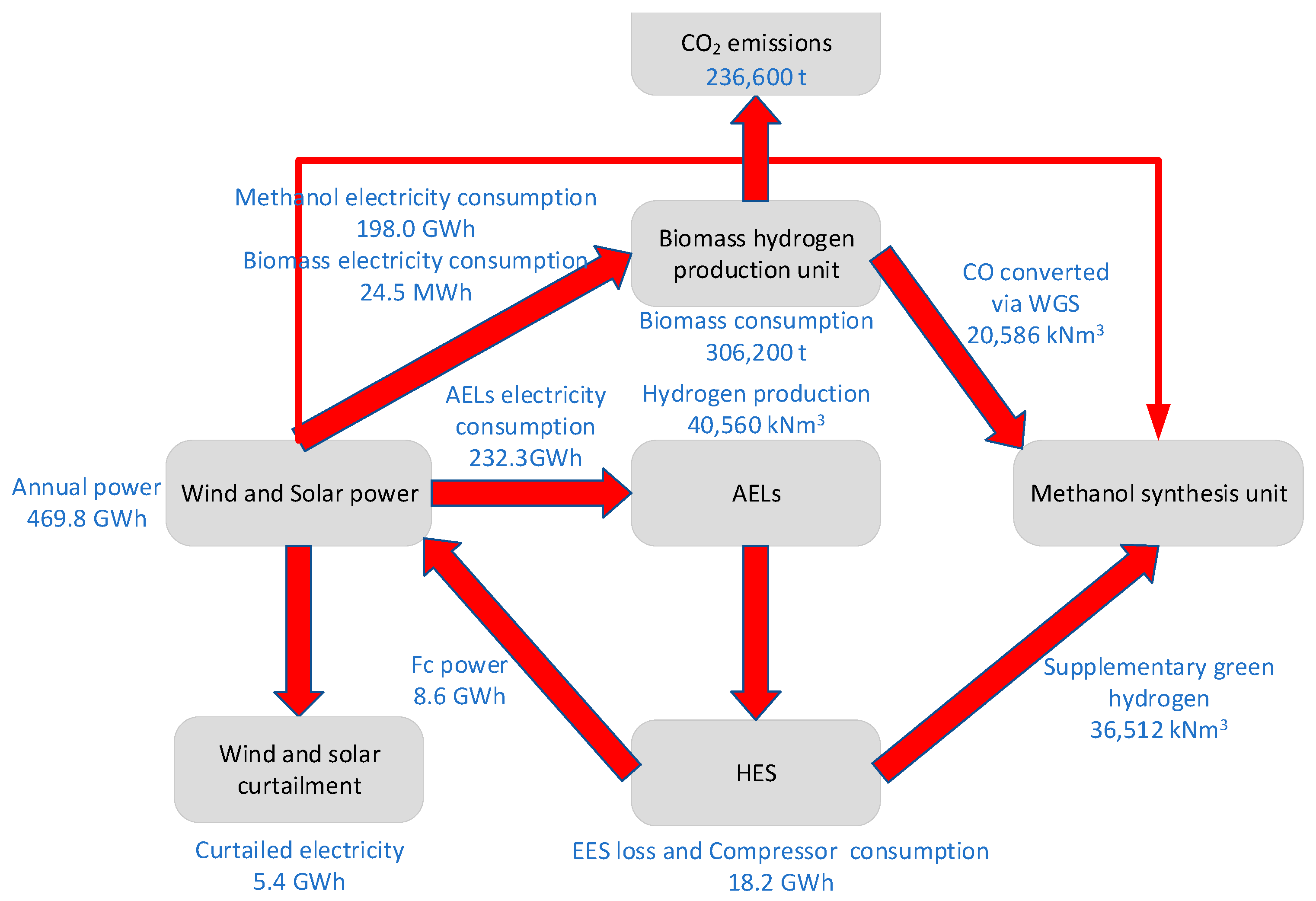
Under the optimal results obtained in Scenario 5 of the previous section, the annual energy flows of the PHM system are illustrated in
Figure 6. The combined annual electricity generation from wind and solar reaches 469.8 GWh, of which approximately 49% is allocated to the AEL units for hydrogen production, yielding a total of 40,560 kNm
3 of hydrogen. Around 47% of the generated electricity is supplied to the biomass gasification and methanol synthesis units. The fuel cell contributes 8.6 GWh of electricity generation. The system experiences 5.4 GWh of curtailed electricity, corresponding to a curtailment rate of 1.14%, which demonstrates the PHM system’s effective capability for accommodating renewable energy.
Based on the analysis of material flows in the PHM system, the AEL units produce 40,560 kNm3 of hydrogen annually. Among this, 36,512 kNm3 of hydrogen is supplied as green hydrogen to the methanol synthesis unit, while the remaining approximately 10% is utilized for electricity generation via the fuel cell. To achieve an annual methanol production of 100,000 tons, the PHM system consumes 306,200 tons of biomass and emits 236,600 tons of . Compared with an existing biomass-coupled green hydrogen-to-methanol project in China, the proposed scheme achieves a lower emission per ton of methanol—2.366 t/t MeOH versus 2.62 t/t MeOH—demonstrating the effectiveness of the proposed approach in reducing carbon emissions.
4.4. Analysis of Operational Results
This subsection further analyzes the operational performance of the PHM system under the optimal capacity configuration of Scenario 5 based on the 744 h representative time horizon.
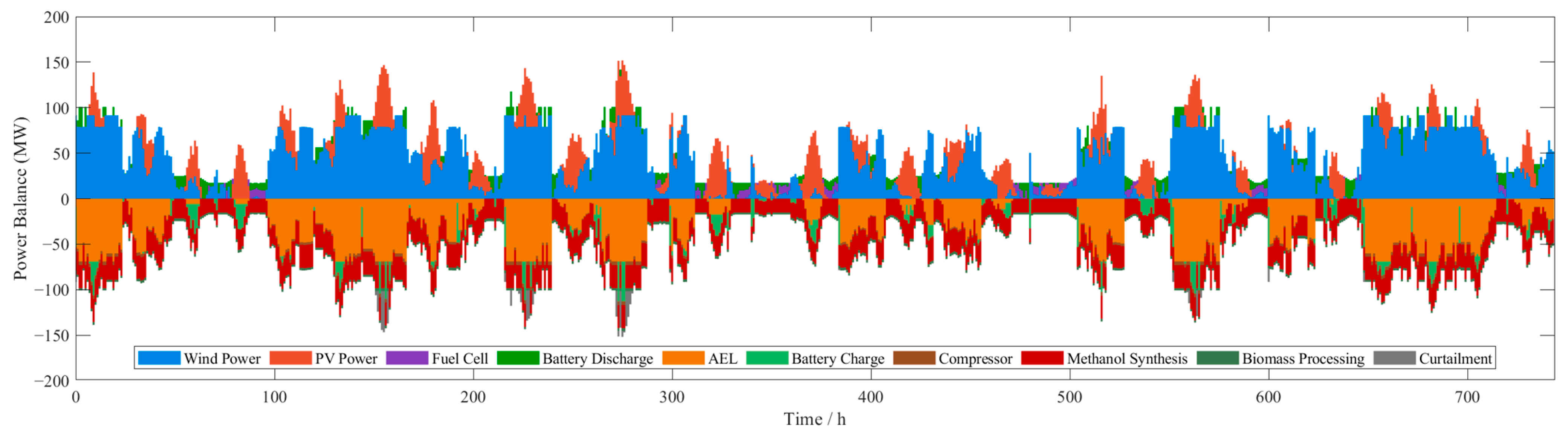
Figure 7 presents the power balance results of the operation simulation. It can be seen that wind power and photovoltaic power jointly constitute the main energy sources of the system. During periods of high wind–solar output, AELs preferentially absorb renewable electricity, while the battery is charged to undertake part of the peak-shaving function. During periods of low wind–solar output, in order to maintain the stable operation of the methanol synthesis unit, the PHM system requires the fuel cell and the battery to discharge jointly to maintain the power balance, as specifically reflected in periods such as 85–95 h and 300–400 h.
Wind and solar curtailment mainly occur during periods when wind–solar output remains continuously high while the absorption capacity of the AELs and the HES system is constrained by power limits and boundary conditions. As shown in the figure, wind and solar resources are extremely abundant around 150 h, 220 h, and 280 h, resulting in a small amount of curtailed electricity.
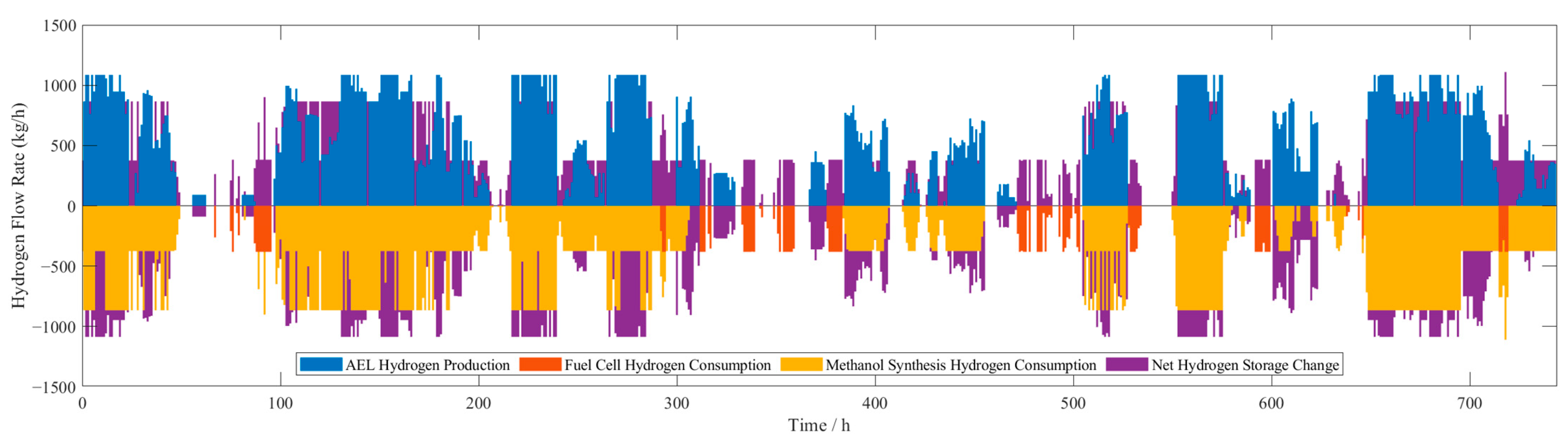
Figure 8 shows the hydrogen balance of the hydrogen storage tank. Hydrogen produced by the AELs is the only source of hydrogen entering the tank, and the hydrogen production rate fluctuates with the power consumption of the AEL. When the hydrogen production rate exceeds the external hydrogen demand and the hydrogen consumption rate of the fuel cell, the surplus hydrogen is stored in the hydrogen tank. Conversely, during periods of insufficient wind–solar output when the power supply side is supported by fuel cell discharge, hydrogen released from the storage tank becomes the main source of hydrogen supply.
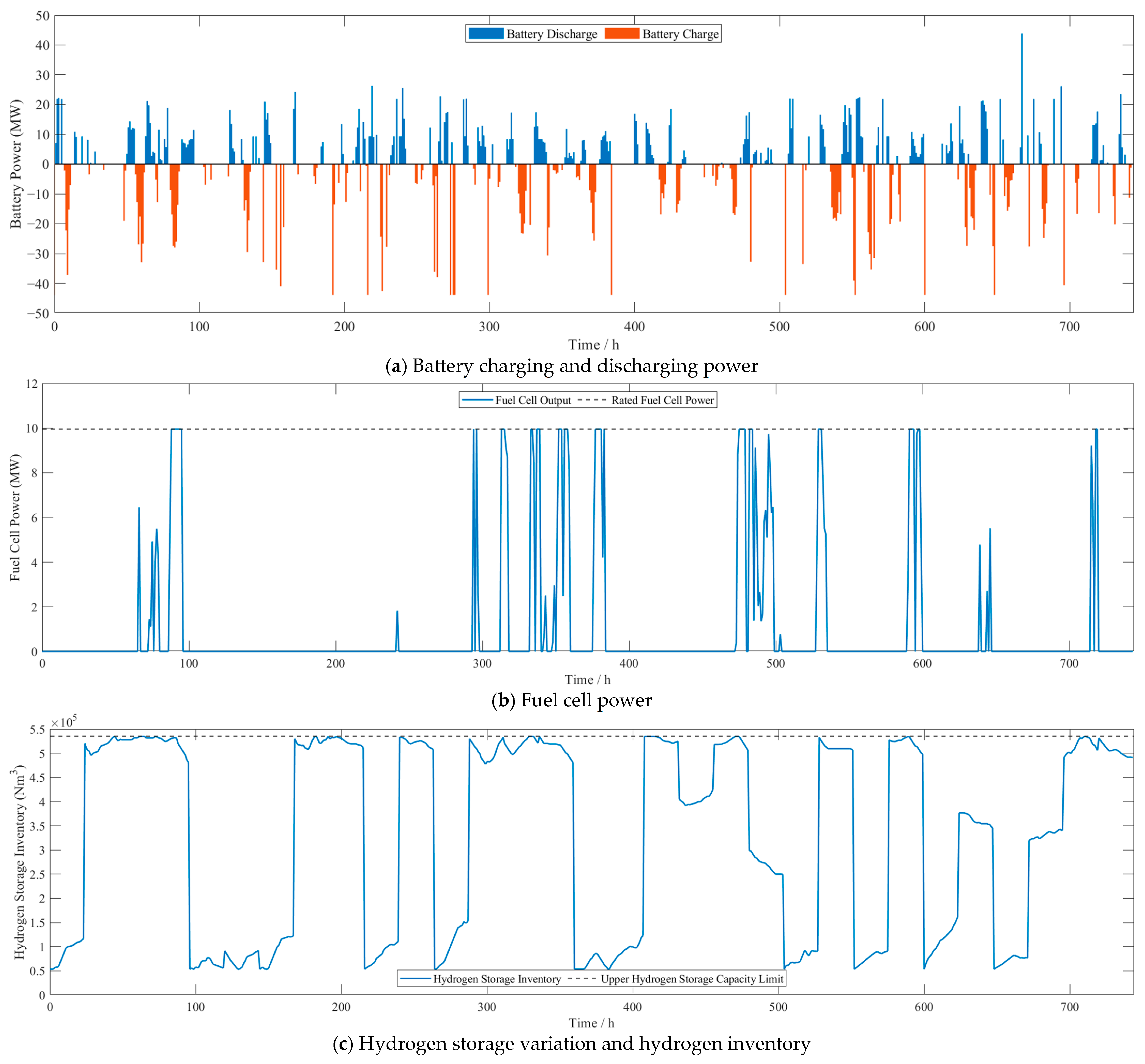
Figure 9a–c present the internal operating states of each device in the HES unit. It can be observed that the battery is mainly used for short-term power balancing and intra-day fluctuation mitigation. When wind and solar power are abundant and AELs and loads have not yet fully absorbed the available electricity, the battery is charged and its stored energy increases. When wind–solar output declines or the load rises and leads to a power deficit, the battery rapidly discharges to maintain system balance. The fuel cell appears only when the power supply is severely insufficient and usually operates at a relatively high output power. Specifically, when renewable generation is inadequate and battery discharge is constrained by power or energy capacity limits, the fuel cell is activated to compensate for the power shortfall. During periods of abundant wind–solar output and high hydrogen production by AELs, the hydrogen storage tank inventory increases and approaches its upper limit. In contrast, during periods of insufficient wind–solar output and high hydrogen demand from the methanol synthesis unit and the fuel cell, the tank inventory decreases and approaches its lower limit.
Figure 9b shows the power output of the fuel cell. It exhibits an intermittent and pulse-like operating pattern: during most periods, it remains at low output or does not operate, and it is activated only when renewable generation is insufficient, the battery capacity is low, and the power demand of the methanol synthesis unit cannot be met. This indicates that, in the optimization model, the fuel cell is positioned as a medium- to short-term backup and supporting power source.
Figure 9c reflects the dynamic variation in the hydrogen storage inventory. It exhibits a cyclical fluctuation pattern of “charging–consumption–recharging,” demonstrating that hydrogen storage can provide energy storage over a long timescale: the inventory increases when hydrogen production by electrolysis is surplus, and decreases when hydrogen consumption for fuel cell power generation and methanol synthesis rises.
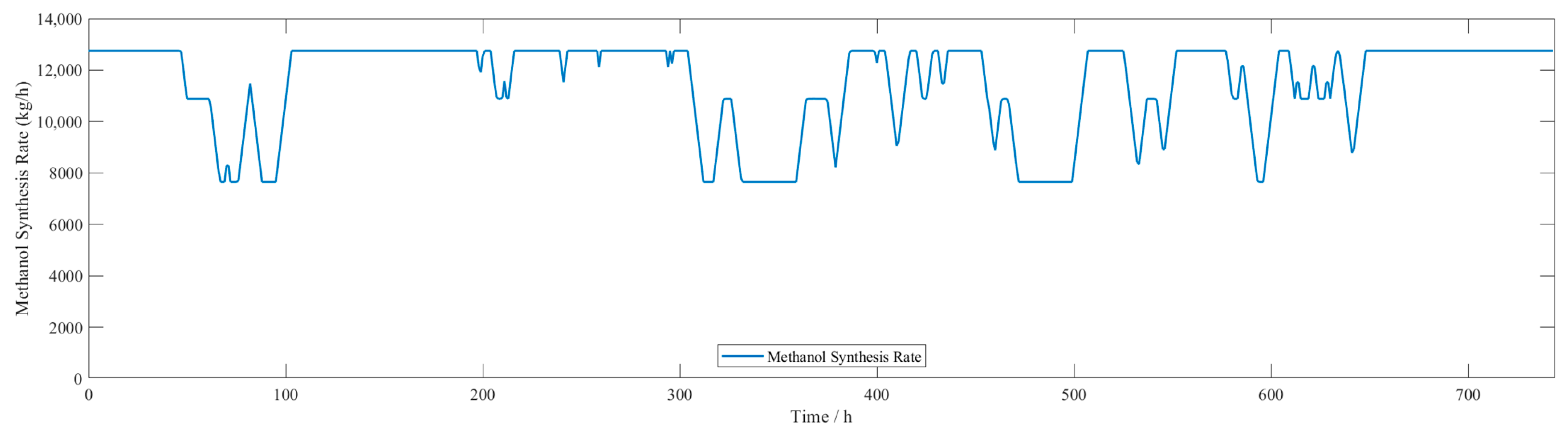
Figure 10 shows the methanol synthesis rate. It can be observed that, through the regulating effects of the HES and the WGS reaction, the methanol synthesis rate remains relatively smooth. This verifies that the PHM system is capable of converting fluctuating renewable electricity into methanol energy.
Combined with
Figure 9 and
Figure 10, it can be concluded that the battery mainly undertakes hourly level power balancing and fluctuation smoothing; the AELs and hydrogen storage realize day-level energy shifting by converting surplus wind–solar power into hydrogen and storing it; the fuel cell acts as a backup power source to provide compensation during critical power shortage periods; and the methanol synthesis unit maintains relatively stable operation under ramping and minimum load constraints.
As a result, while meeting the annual production target, the system achieves multi-energy coordinated optimization of “Power–Hydrogen–Methanol”.
4.5. Sensitivity Analysis
In the previous section, the efficiencies of the AELs and the fuel cell were both treated as constant values to simplify the model. Based on this assumption, this section conducts a sensitivity analysis on the efficiencies of the AELs and the fuel cell, respectively, in order to evaluate the impact of efficiency variations on the capacity configuration.
For the AELs and the fuel cell, the efficiency varied from 0.5 to 0.7, with seven and six experiments conducted within this range. The resulting capacities of each device, as well as the biomass consumption and
emissions per ton of methanol, were recorded, as shown in
Table 4 and
Table 5.
Analysis of
Table 4 and
Table 5 indicates that the installed capacities of wind and solar power, as well as the configuration of the AELs, are relatively insensitive to changes in efficiency. As efficiency increases, the same amount of electricity produces more hydrogen. It slightly reduces the effective value of hydrogen within the system. This leads the system to rely more on the fuel cell for power regulation, resulting in a reduced battery capacity. Consequently, the capacities of both the fuel cell and the hydrogen storage tank show an increasing trend. Simultaneously, as the effective value of hydrogen decreases, the biomass consumption per ton of methanol and the
emissions are also reduced. Overall, the fluctuations in the system’s capacity configuration remain within an acceptable range.
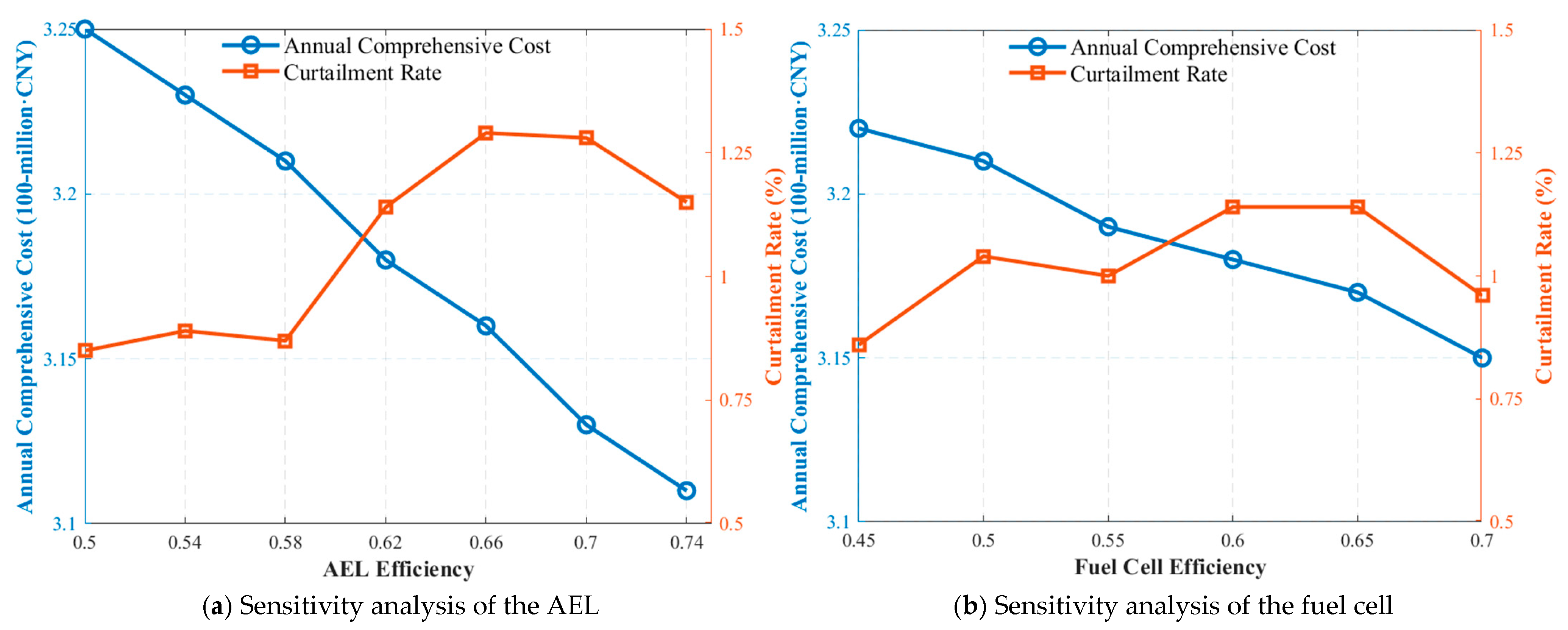
Figure 11a,b illustrate the effects of variations in the efficiencies of the AELs and the fuel cell on the PHM system’s annual comprehensive cost and curtailment electricity rate.
4.6. Analysis of the Levelized Cost of Methanol (LCOM)
To better evaluate the feasibility of integrating biomass with renewable electricity–based hydrogen production, this section analyzes the levelized cost of methanol.
The calculation method of the levelized cost of methanol (LCOM) for the PHM system is as follows [
13]:
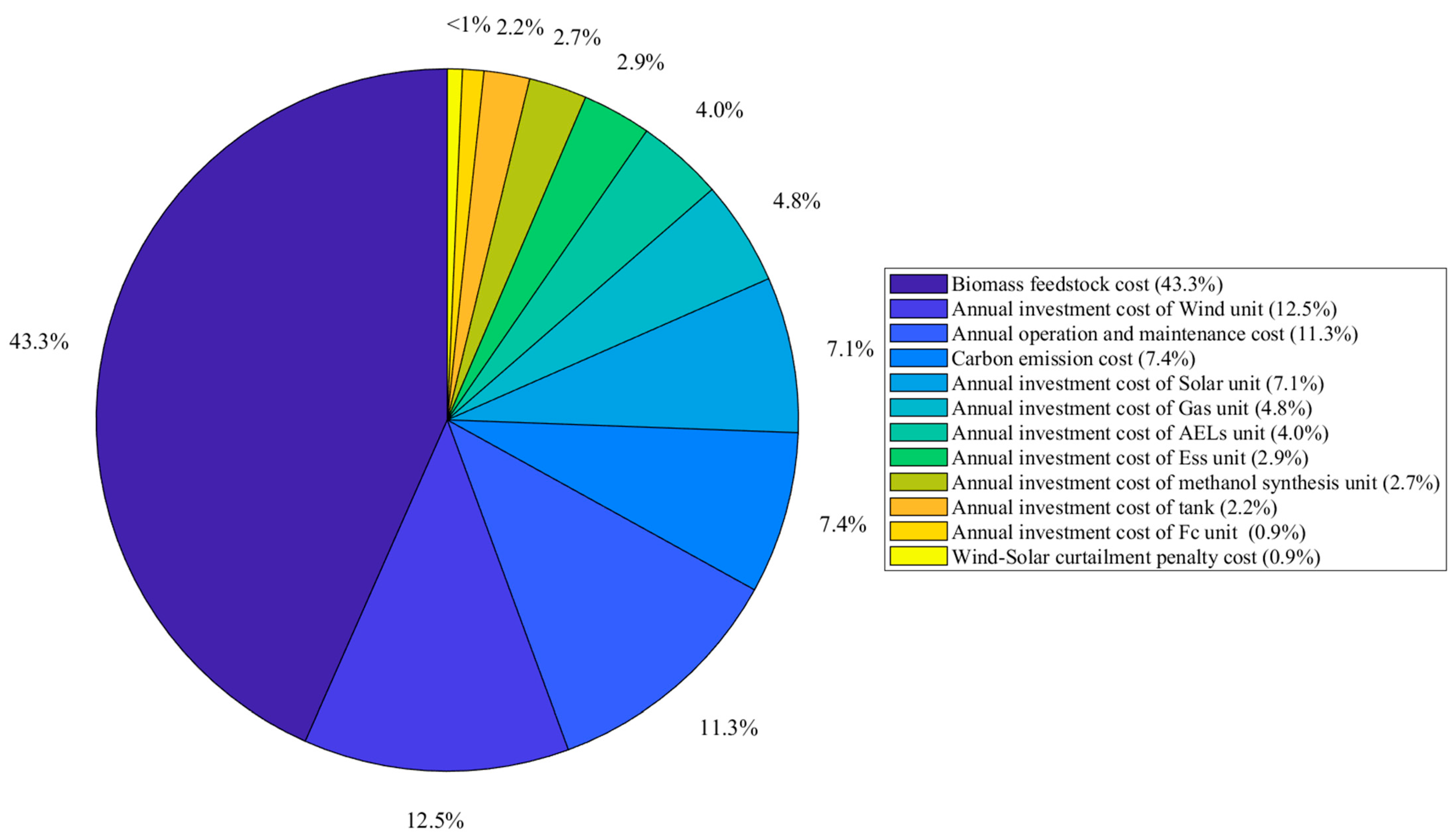
Based on the above calculation, the unit cost of methanol produced by the PHM system is 3189 CNY/t. The main cost components are shown in
Figure 12.
As indicated in
Figure 12, the biomass feedstock cost constitutes the largest share of the methanol cost, followed by the investment cost of wind–solar renewable power generation equipment.
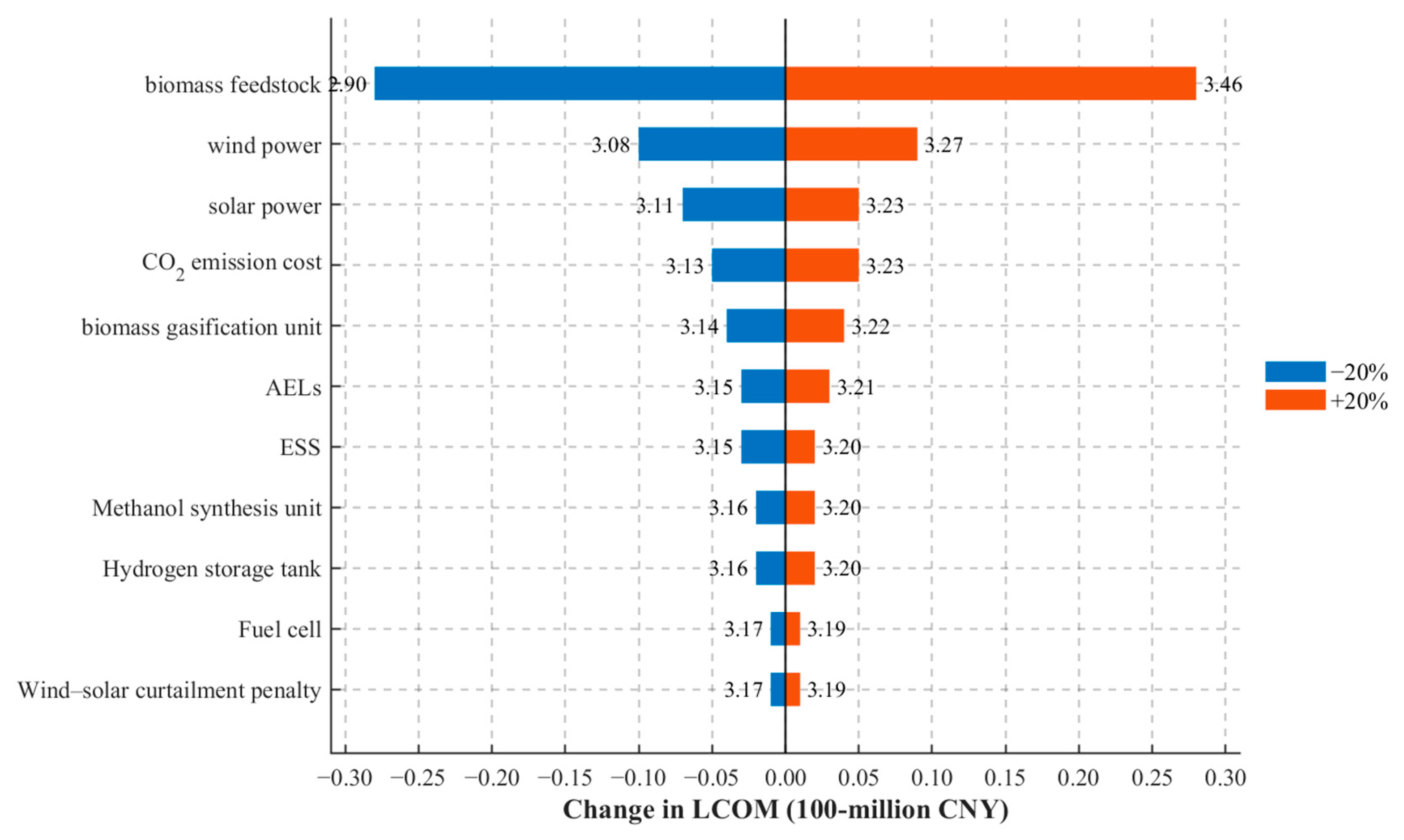
Based on the above cost analysis, a tornado diagram is constructed to further evaluate the effects of price fluctuations and parameter variations on the LCOM. As shown in
Figure 13, the unit price of biomass feedstock has the most significant influence on the LCOM, followed by the unit investment costs of wind power and photovoltaic power. In addition, the cost associated with
emissions also exerts a non-negligible impact.
With technological progress, the cost of biomass feedstock is expected to decrease to less than 30% of its current level. At the same time, the cost of wind and solar power generation equipment is also showing a clear downward trend, which will further reduce the cost of methanol. In the future, methanol synthesis via the integration of biomass gasification and renewable electricity–based hydrogen production is expected to achieve better economic performance.
5. Conclusions
The main research conclusions of this study are as follows.
- (1)
Coordinated wind–solar generation reduces overall system costs and improves renewable utilization. It lowers annual electricity generation by 18.6%. The hybrid energy storage requirements are also reduced. PCS capacity decreases by 26%, and hydrogen storage drops to less than 10% of the comparison case. Including hydrogen storage in HES reduces the equivalent annual comprehensive cost by 10% compared with the case without HS. EES and AEL capacities, annual electricity generation, and curtailment rates all decrease. Configuring EES lowers the cost by 3%. The required hydrogen storage tank capacity is 80% of the case without EES. Considering the WGS reaction further reduces costs by 17%. However, it requires larger HES and AEL capacities. Its advantage diminishes if biomass feedstock costs continue to decline.
- (2)
When the AEL efficiency increased from 0.50 to 0.74, the PHM system’s annual comprehensive cost decreased from 325 million CNY to 311 million CNY, a reduction of 4.3%. When the fuel cell efficiency increased from 0.45 to 0.70, the cost decreased from 322 million CNY to 315 million CNY, a reduction of 2.2%. The energy utilization rate of the PHM system remained within an acceptable range. Using constant efficiencies in optimization can significantly reduce model complexity. Therefore, it is necessary to adopt constant efficiency optimization in the PHM system.
- (3)
To better analyze the future economic performance of the PHM system, the LCOM is calculated. The results show that the biomass feedstock cost accounts for 43% of the total system cost and is the dominant cost component. The investment costs of wind power and solar power generation equipment account for 13% and 7%, respectively. Carbon emission penalty accounts for 7%. These components together constitute the majority of the methanol cost. The cost sensitivity analysis shows that the biomass feedstock cost has the largest impact on LCOM, far exceeding other factors. The wind and solar installed capacity costs have the next largest effect. emission costs and the investment costs of other equipment have relatively small impacts on LCOM.
Off-grid systems generally have higher system costs than grid-connected systems. However, they offer advantages in energy independence and carbon emissions. Grid-connected systems are suitable for regions with reliable grids and price-sensitive markets. Off-grid systems are more suitable for remote areas with abundant wind and solar resources.
Finally, it should be noted that this study provides a practical MILP-based mathematical model for integrated planning–operation optimization of similar systems. However, there remain directions for further improvement. This study uses 744 h typical day clustering rather than full 8760 h hourly modeling. This may overlook the impacts of extreme weather fluctuations on wind and solar generation. The effects of equipment lifetime degradation are not considered. Planning is based on annual methanol production and does not account for market price fluctuations.
In the future, similar planning can be applied to regions with different wind and solar resources to study their impact on optimal system capacity and identify region-specific designs. The effects of methanol market fluctuations can be considered by introducing dynamic methanol prices. Full 8760 h simulations can be explored using appropriate solution methods for long-term optimization. Additionally, equipment degradation can be incorporated into the analysis.




 ,
,