Article

Study on Load Characteristics and Fatigue Life of a Distributed Pitch Wind Turbine Under Turbulent Wind Conditions

1
School of Energy and Power Engineering, Inner Mongolia University of Technology, Hohhot 010010, China
2
China Petroleum Engineering & Construction Corporation Beijing Design Branch, Beijing 100085, China
3
Yunda Energy Technology Group Co., Ltd., Hangzhou 311106, China
4
Inner Mongolia Yufeng Muguang Energy Co., Ltd., Ordos 017499, China
*
Author to whom correspondence should be addressed.
Energies 2026, 19(10), 2409; https://doi.org/10.3390/en19102409
Submission received: 1 March 2026 / Revised: 21 April 2026 / Accepted: 14 May 2026 / Published: 17 May 2026

Abstract

Loading fluctuations and fatigue-related structural demand under turbulent wind conditions are important factors that limit the reliability of small wind turbines. This study investigates the separate effects of turbulence intensity and pitch angle on a 5 kW distributed variable-pitch wind turbine prototype using an OpenFAST-based aeroelastic model validated against field measurements. Under the adopted simulation setup and selected operating conditions, increasing turbulence intensity from 5% to 20% leads to a pronounced increase in the extreme blade-root flapwise bending moment and a substantial reduction in the estimated comparative fatigue life. The analysis also reveals a clear trade-off between aerodynamic efficiency and structural durability: among the tested pitch settings, the 6° case yields the highest power output, but also exhibits the largest load fluctuations and the shortest estimated comparative fatigue life. Adjusting the pitch angle to 0° or 12°, while reducing power to some extent, alleviates fatigue-related structural demand and increases the estimated comparative fatigue life. Overall, the results provide a validated prototype-level comparative assessment of how turbulence intensity and pitch angle influence aerodynamic performance, structural response, and fatigue-related demand in the studied turbine. Because the present work focuses on one prototype and does not include cross-turbine comparison or a full stochastic convergence study, the reported quantitative results should not be interpreted as directly generalizable to other turbine configurations. These findings may nevertheless provide a useful basis for future studies on load-aware pitch regulation under turbulent inflow.

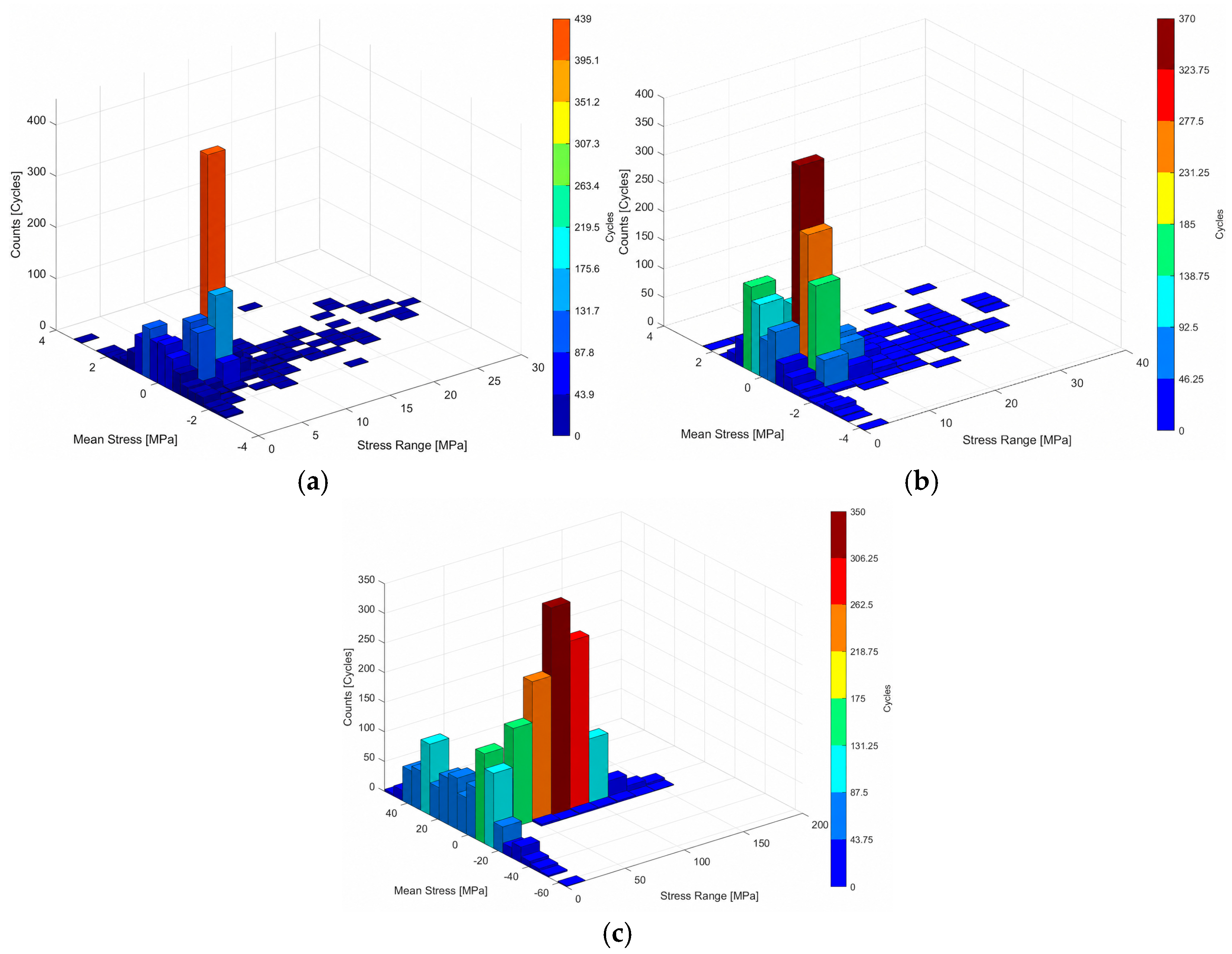
1. Introduction

Amid the global transition towards sustainable energy and low carbon development, wind energy has progressively established itself as a fundamental source of clean, renewable power. Among these, distributed small wind turbines, which capitalize on their adaptable deployment and benefits for local consumption, have significant application potential in microgrids, rural electricity supply, and industrial auxiliary power sectors [1,2]. Nevertheless, these turbines are generally located in areas rich in wind resources but characterized by complex environments—such as urban outskirts, forested mountainous regions, and rooftops—resulting in operational wind conditions that are often marked by increased turbulence, significant shear, and variable flow patterns [3,4]. High turbulence intensity not only causes significant fluctuations in output power but also exerts considerable dynamic structural loads and accumulates fatigue damage, thereby significantly jeopardizing the operational safety and service lifespan of the turbines [5,6]. Therefore, conducting a comprehensive investigation into the aerodynamic performance and fatigue life of small wind turbines under turbulent wind conditions is essential for their reliable and large-scale implementation.
The mechanism by which turbulence affects wind turbine performance is complex and strongly depends on operating conditions. Extensive research indicates that below the rated wind speed, turbulence can positively influence power output by enhancing flow mixing and delaying flow separation. For instance, Lubitz [7] confirmed the power-enhancing effect of turbulence at low wind speeds through field measurements. Yashwant [8] wind tunnel experiments further revealed that turbulence improves blade aerodynamic performance within the 4–7 m/s wind speed range. However, when wind speeds reach or exceed the rated value, turbulence-induced angle-of-attack fluctuations and dynamic stall can cause significant adverse effects, leading to reduced power output and increased load fluctuations. Asadi [9] reported that increasing turbulence intensity from 5% to 20% can reduce turbine power output by 23–42%. Pagnini [10] also reported significant deviations of actual power curves from idealized behavior under turbulent conditions. Notably, turbulence effects exhibit complex nonlinear characteristics rather than a simple linear relationship [11,12,13,14], and their impact mechanisms on upstream versus downstream turbines within wind farms may even be the opposite [15].
At the structural dynamics level, high turbulence intensity is widely acknowledged as a primary factor that intensifies load fluctuations and fatigue damage in wind turbines. Both numerical simulations and field measurements indicate that turbulence markedly enhances the dynamic response of essential components such as blades and towers. Tao [16] observed notable increases in fatigue and transient peak loads under high-turbulence conditions. Bangga [17] suggested that turbulent inflow significantly increases the average blade load. Gao [18,19] further demonstrated, using empirical data from large wind turbines, that turbulence intensity significantly increases flapwise bending moments at blade roots. It precipitates exponential increases in mooring stresses and fatigue damage in floating wind turbines. Furthermore, the spatial attributes of turbulence—including coherence and scale composition—are crucial factors that substantially influence load prediction accuracy. Li [20] demonstrated, through wind-tunnel tests, that increased turbulence intensity enhances lift correlation along the spanwise direction. Chai [21] found that the presence of more large-scale structures in measured wind fields leads the traditional Kaimal model to a significant underestimation of both load fluctuations and fatigue damage risk.
To accurately simulate complex fluid–structure interactions under turbulent conditions, numerical methods like IDDES [22] and VLES [23] have been developed, greatly enhancing predictions of power, deformation, and pressure distributions. Meanwhile, active control techniques are regarded as a practical method for managing turbulent loads. Zhang [24] found that using active yaw control during typhoons significantly reduces critical loads. Liu [25] further showed through coupled simulations that active yaw control of upstream turbines can optimize wake flow and thereby affect fatigue loads on downstream turbines.
Although the previous studies have established a robust foundation for this research, existing investigations have predominantly concentrated on large wind turbines. Additionally, analyses of aerodynamic performance and structural response are generally conducted independently. Conversely, the independent influences and underlying mechanisms of turbulence intensity and pitch angle on the dynamic response and fatigue life of small variable-pitch wind turbines have not yet been systematically elucidated. Furthermore, from a methodological perspective, developing a comprehensive framework that integrates aeroelastic simulation with fatigue life assessment to quantify the damage processes induced by turbulence remains an ongoing research challenge.
This study focuses on a 5 kW distributed variable-pitch wind turbine prototype. By establishing and validating an aeroelastic simulation model, the separate effects of turbulence intensity and pitch angle on aerodynamic response, structural loading, and fatigue-related behavior are investigated. Rainflow counting combined with Miner’s linear cumulative damage theory is employed to evaluate the comparative fatigue response at the blade root under selected operating conditions. The work is intended as a first-step prototype-based comparative study in which the principal influence of each variable is isolated under controlled conditions, rather than as a full multivariable design-space analysis. The objective is to clarify the trade-off between aerodynamic efficiency and fatigue-related structural demand, and to provide a validated basis for future studies on operating-condition optimization and load-aware control of small variable-pitch wind turbines.

2. Numerical Model Development and Validation

2.1. Overview of the Studied Variable-Pitch Wind Turbine Prototype

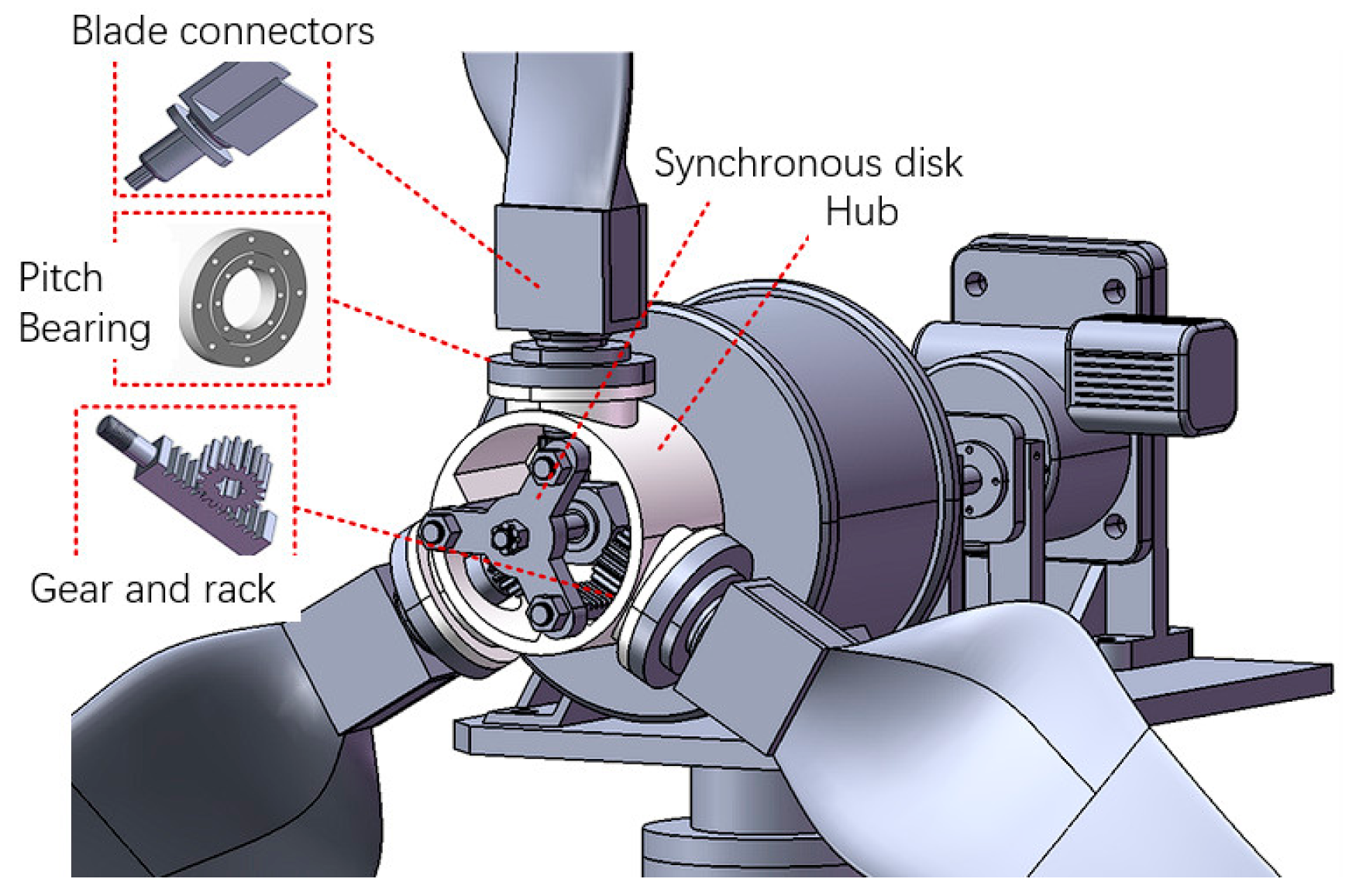
The numerical model in this study is based on a 5 kW horizontal-axis distributed variable-pitch wind turbine prototype previously developed by our research group [26,27]. A distinctive engineering feature of the studied prototype is its centralized synchronous mechanical pitch-actuation configuration, which is described here to clarify the structural implementation of the prototype rather than to claim the novelty of active pitch control as a control principle.
Figure 1 illustrates the pitch-actuation mechanism of the studied prototype. The hydraulic actuator converts linear motion into rotational motion through a rack-and-pinion transmission, which then drives the three blades to pitch synchronously through a centralized actuation path. This figure is intended to explain the mechanical realization of the tested prototype.
Table 1 summarizes the main design parameters of the studied prototype, including the rotor size, blade material, airfoil type, tower height, and rated operating conditions. These parameters define the physical basis of the aeroelastic model used in the subsequent analysis. The blades are based on the NACA 4412 airfoil and were manufactured from pine wood for the present prototype. This material choice was made primarily for prototype-oriented engineering reasons, including material availability, ease of machining, relatively low manufacturing cost, and maintenance convenience. This prototype-oriented material choice is also consistent with previous studies on timber blades for small wind turbines, in which material availability, manufacturability, and fatigue behavior were explicitly discussed [29]. This choice should therefore be understood as specific to the developed 5 kW prototype rather than as a general recommendation for commercial small wind turbine blades, for which composite materials such as glass- or carbon-fiber-reinforced polymers are more commonly used. The purpose of this study is therefore to investigate the aeroelastic response and fatigue behavior of the developed prototype as built.

2.2. Development of the Aeroelastic Simulation Model

This section outlines the procedure for establishing an aeroelastic simulation model for the studied distributed variable-pitch wind turbine prototype. Using the open-source simulation platform OpenFAST (version 3.5.0), a coupled aeroelastic model of this wind turbine was developed. This model accurately simulates the dynamic response of turbine blades in a turbulent wind environment by integrating the structural dynamics module with the aerodynamics module at each discrete time step [30].

2.2.1. Structural Dynamics Model

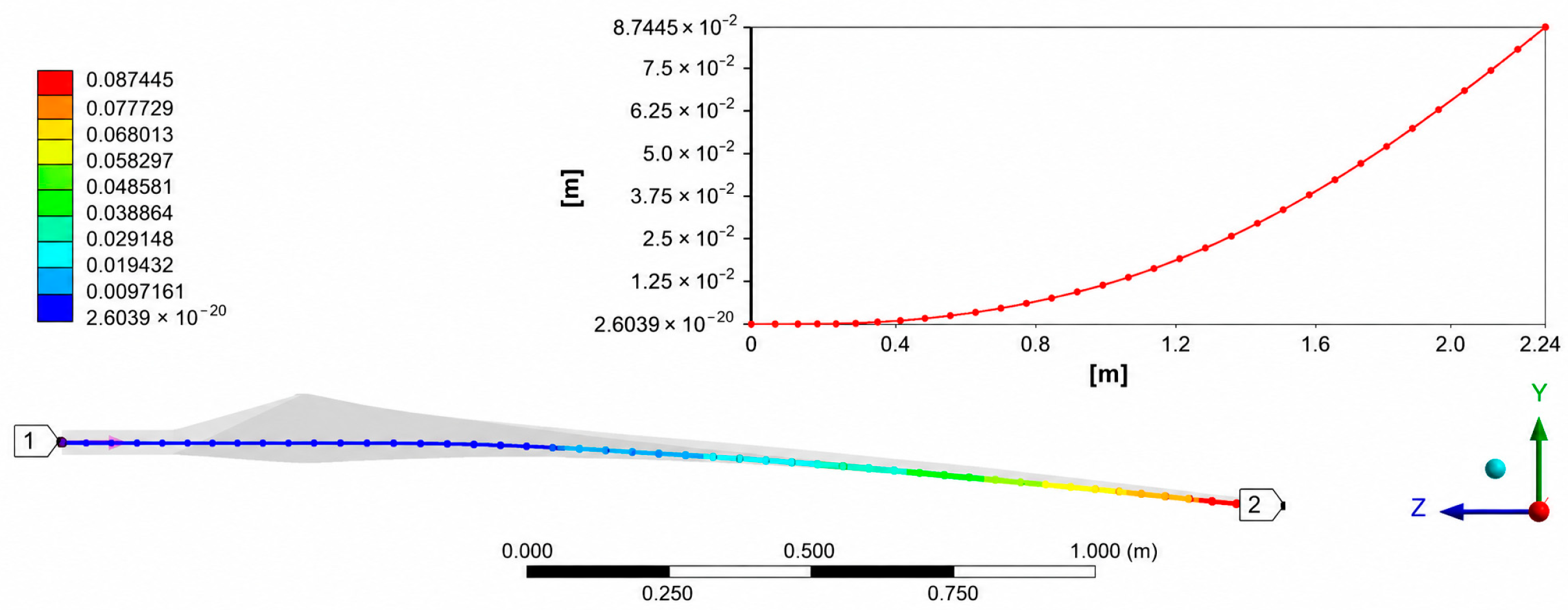
The structural dynamics model was established using the ElastoDyn module in OpenFAST version 3.5.0, in which the blade was represented as a flexible body. Figure 2 shows the finite-element analysis used to identify the sectional stiffness of the blade. Based on this procedure, the spanwise stiffness distribution listed in Table 2 was obtained and implemented in the structural model to represent the non-uniform flexible characteristics of the prototype blade.
The distribution of sectional stiffness along the blade span is listed in Table 2. The blade sectional stiffness used in OpenFAST was not assigned from a generic handbook description of wood, but was identified through finite-element analysis of the fabricated prototype blade so as to represent its equivalent structural characteristics. The mass distribution characteristics were obtained using the mass-center evaluation function in SolidWorks 2024. Key parameters, such as the blade mass of 5.67 kg, showed a deviation of 3.24% from the measured value, verifying the consistency between the model’s mass properties and the actual physical prototype. The tower was similarly modeled as a flexible beam structure, with its properties determined from the measured geometrical and material parameters. Therefore, the blade model used in OpenFAST should be interpreted as an equivalent structural representation of the tested prototype rather than as a generic constitutive model for wooden blades. In addition, the overall aeroelastic model was subsequently validated by comparison between simulated and measured blade-root flapwise bending moments under field operating conditions, which further supports the adequacy of the adopted equivalent structural description for the present prototype.

2.2.2. Aerodynamic Model

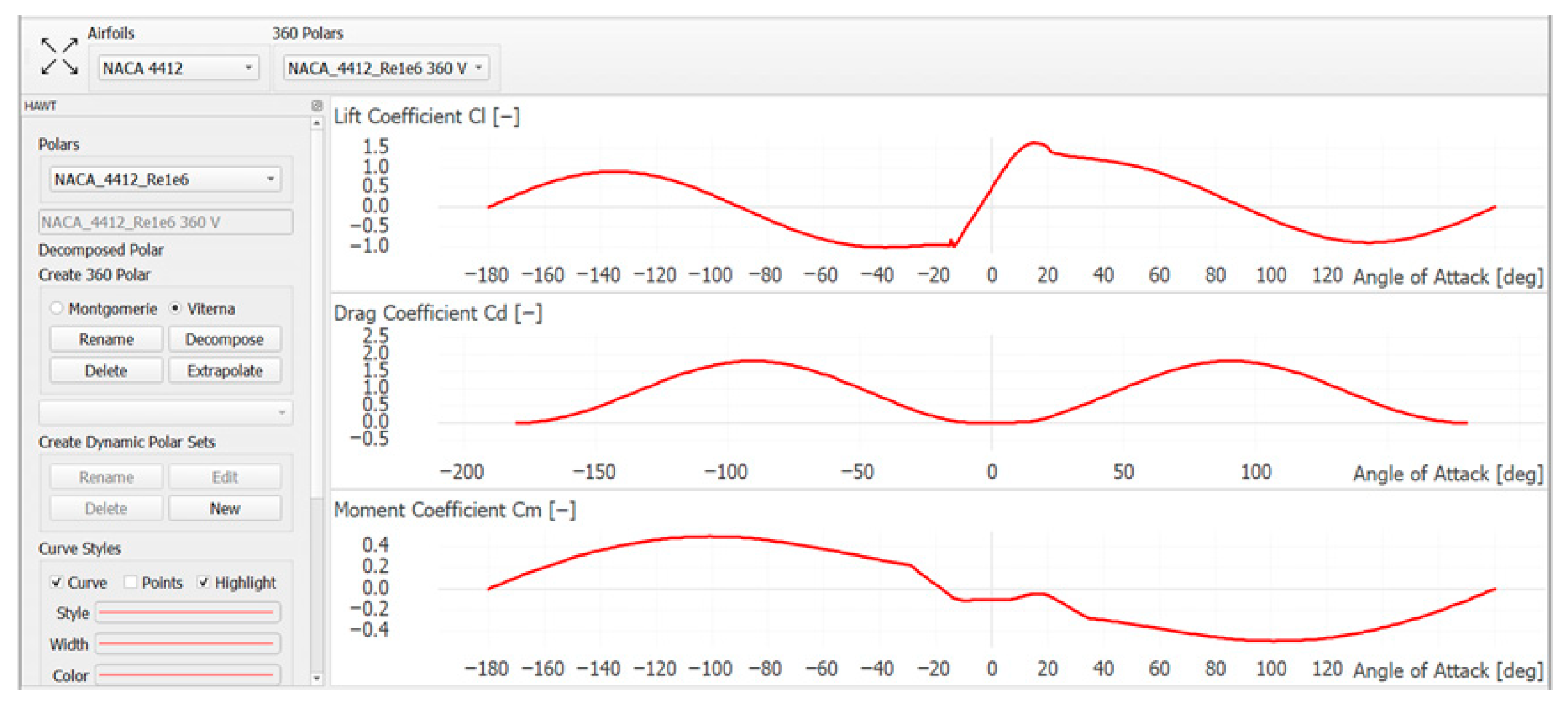
Aerodynamic calculations were performed using the AeroDyn module in OpenFAST version 3.5.0 based on Blade Element Momentum theory. Figure 3 presents the extrapolation of airfoil aerodynamic data to the full angle-of-attack range using the Viterna method [31,32]. This processing step was introduced to provide a complete set of lift, drag, and pitching-moment coefficients for AeroDyn, especially under the high-angle-of-attack conditions relevant to unsteady inflow and dynamic stall.
A comprehensive aerodynamic table containing the lift, drag, and pitching moment coefficients was generated for AeroDyn. This table served as the input for load calculations, and the rotor was discretized into 17 aerodynamic elements in the present OpenFAST setup. No dedicated aerodynamic-discretization sensitivity study was carried out in this work; therefore, this discretization should be understood as the adopted engineering modeling setup for comparative analysis rather than as a demonstrated mesh-independent optimum.
This modeling approach systematically integrates geometric properties, structural stiffness, and aerodynamic characteristics to develop a numerical model that accurately captures the wind turbine’s dynamic response, providing a reliable simulation platform for subsequent detailed investigations.

2.3. Model Validation

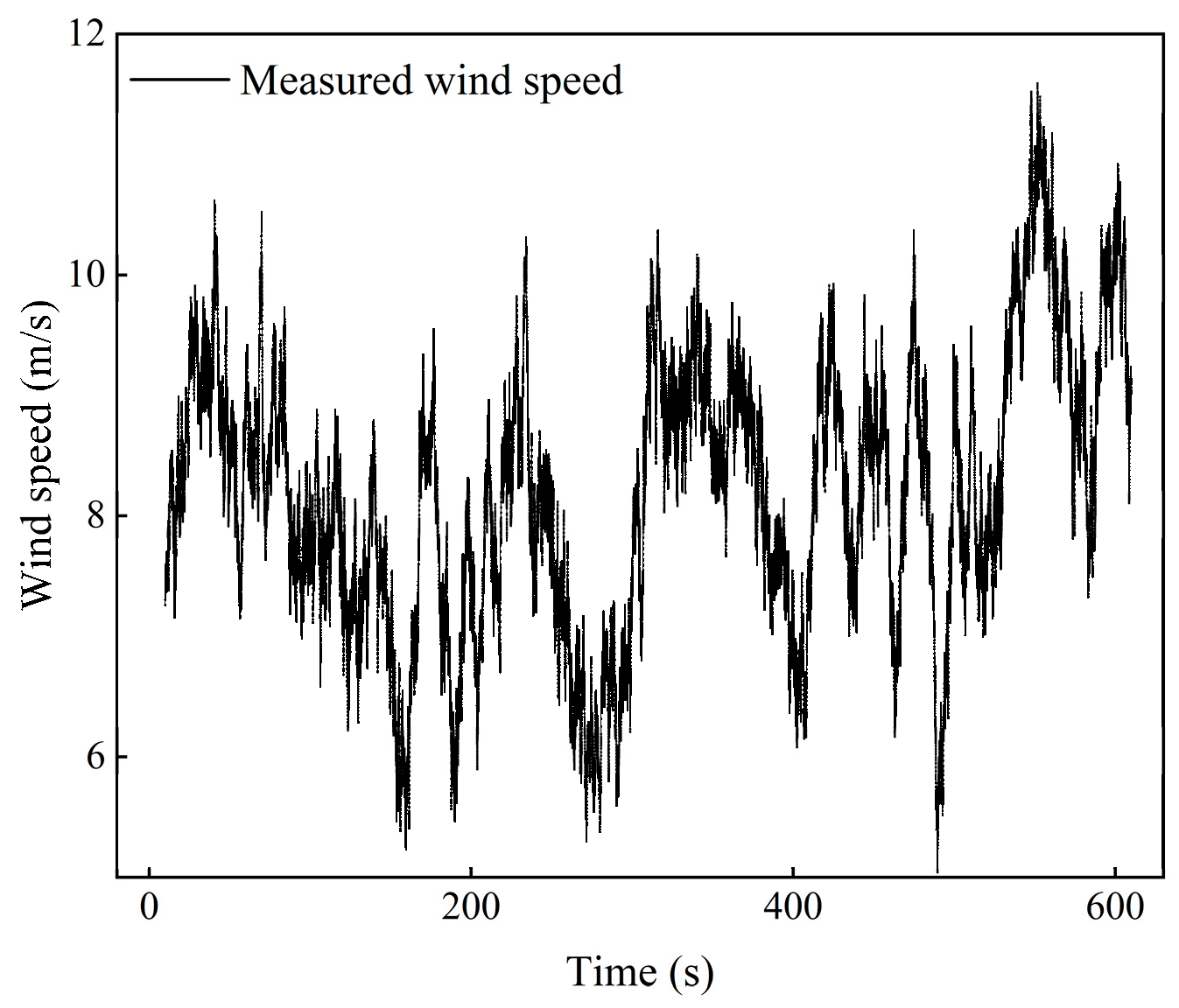
To validate the accuracy of the OpenFAST-based distributed 5 kW variable-pitch wind turbine model, this study compares field-measurement data with numerical simulation results. The specific workflow is as follows: using actual wind farm wind speeds as input conditions, these were loaded into OpenFAST’s InflowWind module for dynamic simulation, outputting corresponding root bending-moment simulation values. Simultaneously, the simulation results were compared and analyzed against measured root bending-moment data collected under identical operating conditions. During data processing, preprocessing operations, including outlier removal, low-pass filtering, and time-domain synchronous alignment, were performed on the raw measured data to enhance data quality and the reliability of comparisons. The measured wind-speed sequence used for model validation is shown in Figure 4. The record has an average wind speed of 8.2 m/s and a turbulence intensity of 13.2%, and is therefore considered representative for validating the dynamic response of the aeroelastic model under realistic inflow conditions.
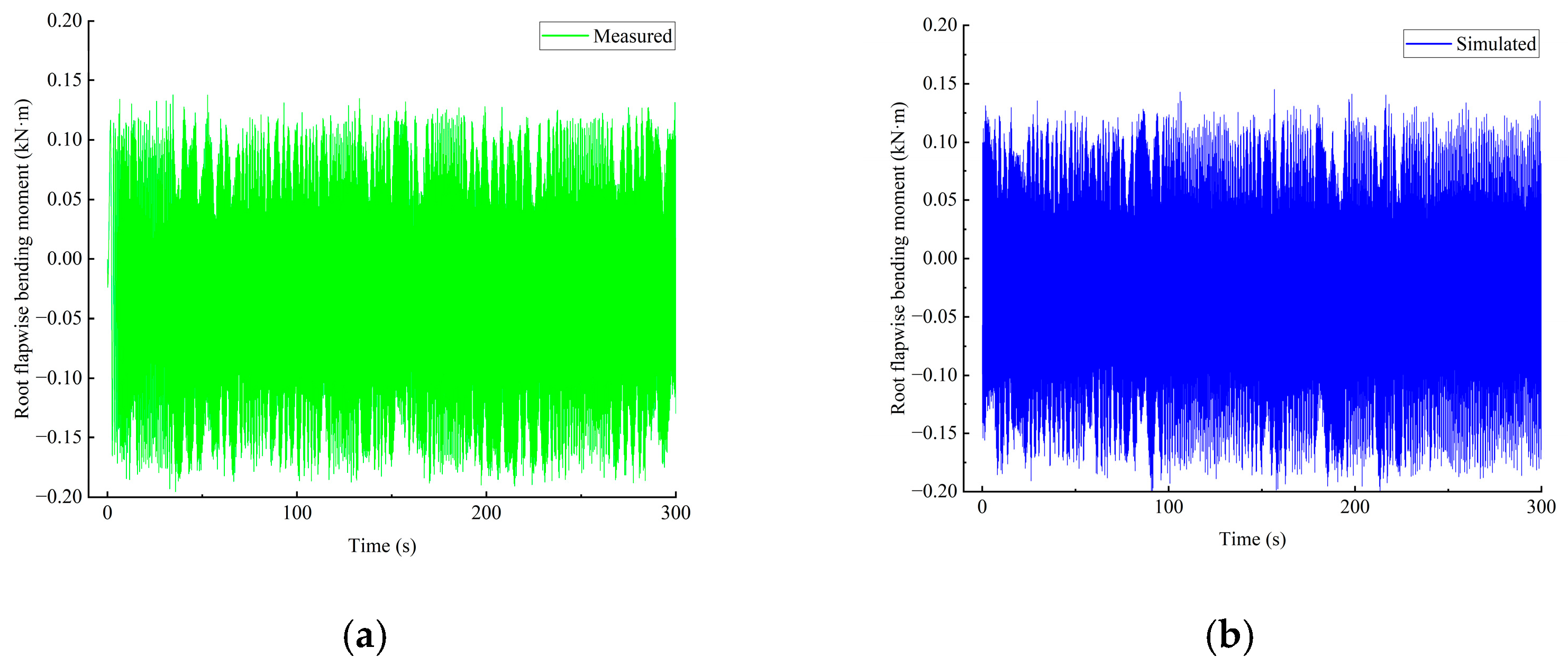
Figure 5 compares the measured and simulated time series of root flapwise bending moment. The close agreement between the two signals in both amplitude and phase indicates that the established OpenFAST model is capable of reproducing the principal dynamic characteristics of the blade-root response. The key statistical metrics of the root flapwise bending moment are summarized in Table 3. The relative errors in the mean, standard deviation, minimum, and maximum values all remain within 5.2%, which supports the adequacy of the model for the subsequent comparative analysis under controlled turbulent inflow conditions. The remaining discrepancies are mainly attributed to structural idealization in the model, incomplete representation of site-specific inflow non-uniformity, and measurement uncertainty in the field data.
The key statistical metrics for the root flapwise bending moment are compared in Table 3. The minor discrepancies observed between experimental and simulation results primarily originate from three factors: firstly, the structural model inherently simplifies certain aspects, such as employing isotropic material properties and idealized boundary conditions, which hampers the comprehensive representation of the complex mechanical behavior of actual blades; secondly, the complex environmental factors encountered in field tests—such as vertical wind shear, fluctuations in wind direction, and non-uniform inflow in front of the rotor—could not be fully quantified or accurately reproduced in simulations; and thirdly, errors intrinsic to sensor measurements and the data acquisition system contributed to these discrepancies. Nevertheless, extensive validation confirms that the established OpenFAST model demonstrates high accuracy in predicting the dynamic structural responses of wind turbines, with relative errors for key statistical metrics all remaining within 5.2%. Accordingly, the utilization of this model for subsequent performance and load analysis under various controlled turbulent conditions is both reasonable and dependable.
On this basis, the validated blade-root bending-moment response can be used as the input for the subsequent comparative fatigue assessment under different operating conditions.

2.4. Fatigue Life Analysis Theory

To evaluate the fatigue-damage trend of the blade root under turbulent wind conditions, this section establishes a comparative fatigue-assessment framework based on linear cumulative damage theory. The overall fatigue-assessment procedure adopted in this study is summarized in Figure 6. The blade-root bending-moment history obtained from the aeroelastic simulation is first converted into an equivalent stress history, after which rainflow counting, Goodman mean-stress correction, an empirical S–N relationship, and Miner’s linear cumulative damage rule are applied to estimate the comparative fatigue-damage trend under different operating conditions [33,34].
In terms of methodological positioning, the present procedure follows a simulation-based fatigue-evaluation route for small wind turbines by using aeroelastic simulation results as the input for subsequent stress and damage post-processing, which is consistent with the structural verification logic of IEC 61400-2 [35]. However, the present study does not aim to perform a full certification-level implementation of IEC 61400-2. Instead, it focuses on the comparative fatigue response of the blade root under selected turbulence-intensity and pitch-angle conditions. Therefore, the estimated fatigue life reported here should be interpreted as a comparative metric under a unified set of assumptions, rather than as a complete standard-compliant design certification result.
Based on cantilever beam theory and with reference to the structural evaluation framework of IEC 61400-2, the blade-root flapwise bending-moment time history data obtained from the OpenFAST simulation are converted into an equivalent stress time history. This conversion is performed using Equation (1):
σ   = M flap S x x
where σ is the equivalent stress (MPa), Mflap is the blade-root flapwise bending moment (N·m), and Sxx is the section modulus in the flapwise direction (m3). The section modulus was calculated from the sectional moment of inertia obtained from finite-element analysis. In this study, the equivalent stress is used as the fatigue post-processing variable for comparative evaluation of the blade-root section.
The stress time history, σ(t), was processed using the rainflow counting method to identify all closed stress cycles. This procedure extracts the statistical distributions of stress amplitude, σa, and mean stress, σm.
To account for the influence of mean stress on fatigue life, the non-zero mean-stress cycles were corrected to equivalent fully reversed cycles using the Goodman relation, given as Equation (2):
σ a r = σ a 1 σ m σ uts
Here, σuts represents the reference ultimate tensile strength adopted for the present prototype-based fatigue assessment, and σar is the equivalent fully reversed stress amplitude.
The fatigue performance of the blade material is described by an empirical S–N relationship. The relationship between the equivalent stress amplitude σar and the number of cycles to failure N is expressed by Equation (3):
N σ a r m = C
In the present study, the material parameters used in the Goodman correction and S–N evaluation were adopted as engineering reference values for the fabricated prototype blade and were applied consistently to all simulated operating cases. Because the fatigue behavior of wood depends strongly on species, moisture content, loading mode, and stress ratio, these parameters should not be interpreted as universal material constants for pine wood.
The total fatigue damage was calculated based on Miner’s linear cumulative damage rule. The cumulative damage index, D, is given by Equation (4):
D = i n i N i
In this equation, ni is the actual number of cycles at a specific stress level i and Ni is the number of cycles to failure at that same stress level.
Finally, the predicted fatigue life of the blade in years, Lfatigue, is calculated by inverting the total damage index relative to the average annual operating time, as shown in Equation (5):
L fatigue = 1 D T year
In this study, the average annual full-load equivalent operating time, Tyear, was set to 2000 h as a reference equivalent annual operating-time assumption for the prototype-based comparative fatigue assessment. This value is used to provide a consistent normalization basis when converting cumulative fatigue damage into an estimated fatigue-life indicator in years, and should not be interpreted as a universal annual operating-time value for all small wind turbines or deployment sites. Under the same Tyear assumption, the relative comparison among different operating cases remains unchanged, whereas the absolute fatigue-life values in years scale directly with the adopted annual operating-time assumption. A supplementary sensitivity check with alternative annual operating-time assumptions was also performed for representative cases to confirm that the comparative ranking remains unchanged, although the absolute fatigue-life values vary as expected. Overall, the combination of aeroelastic simulation, stress conversion, cycle counting, mean-stress correction, and linear cumulative damage assessment is used here as a simulation-based comparative fatigue-evaluation framework aligned with IEC 61400-2. Nevertheless, because the present work does not include the complete set of design load cases, full long-term extrapolation, or certification factors required for formal design verification, the results are reported as comparative fatigue indicators rather than certification-level lifetime predictions.
Accordingly, in the present study, the fatigue-life values reported in years should be interpreted primarily as comparative indicators under a unified set of modeling and operating assumptions. Within this framework, the relative ranking among the investigated cases is more robust than the absolute life values themselves, which remain sensitive to the adopted annual operating-time assumption and the simplified fatigue-damage formulation.


3. Results and Analysis

This section examines the separate effects of turbulence intensity and pitch angle on the aerodynamic performance, structural response, and fatigue-related behavior of the studied prototype. A one-factor-at-a-time framework was intentionally adopted as a first-step screening analysis so that the principal influence of each variable could be isolated and interpreted more clearly under controlled conditions. Turbulence intensities of 5%, 10%, 15%, and 20% were considered together with pitch angles of 0°, 6°, and 12°. For the turbulence-intensity analysis, the pitch angle was fixed at 6°, whereas for the pitch-angle analysis, the turbulence intensity was fixed at 10%. This treatment was chosen to highlight the dominant response trends associated with each variable, rather than to imply that interaction effects are negligible. All simulations were conducted with a time step of 0.05 s over 600 s, and the interval from 200 s to 400 s was used for statistical evaluation. In the main parametric matrix, one turbulent realization with random seed 12345678 was used for each operating condition. Therefore, the reported results should be interpreted as engineering-level comparative observations under the adopted numerical setup rather than as statistically converged design values. The main parameters adopted for turbulent wind-field generation and numerical simulation are summarized in Table 4.
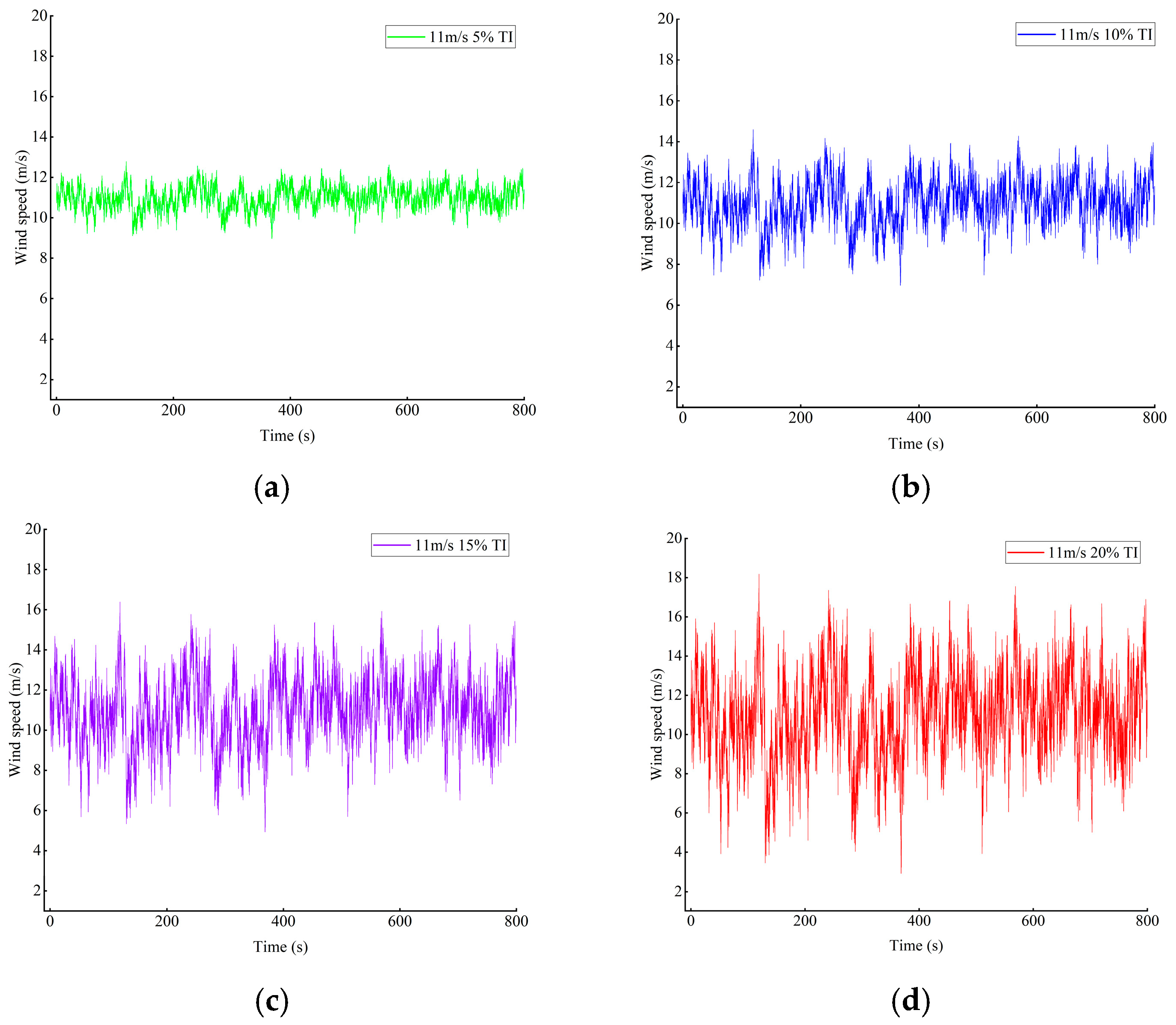
Using TurbSim (version v2.00.07a-bjj), turbulent inflow fields were generated based on the IEC von Kármán spectrum model. In the present work, this inflow description was adopted as a representative engineering model for comparative evaluation under controlled stochastic conditions, rather than as an exhaustive treatment of all possible turbulent inflow cases. Figure 7 shows the hub-height wind-speed time series under the four turbulence-intensity conditions. As the turbulence intensity increases from 5% to 20%, the fluctuation amplitude of the instantaneous wind speed becomes progressively larger, while the mean wind speed remains fixed at 11 m/s.
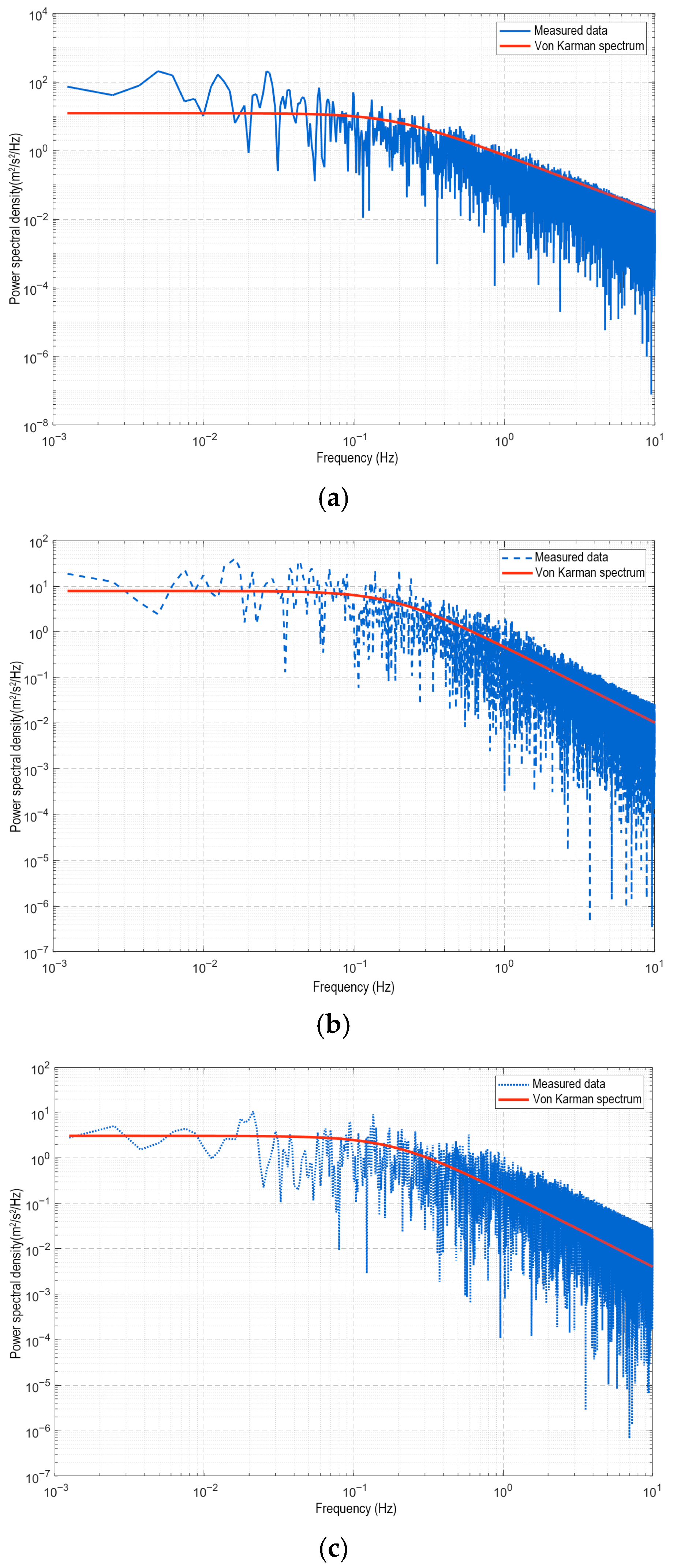
To verify the quality of the simulated turbulent inflow, the power spectrum of the fluctuating wind speed at hub height under the 5% turbulence-intensity condition was compared with the IEC von Kármán spectrum, as shown in Figure 8. The simulated spectra in the U, V, and W directions closely follow the target spectral trend, indicating that the generated turbulent wind field is suitable for subsequent load–response analysis.
As can be observed from the figure, the power spectra of the simulated fluctuating wind speeds in all three directions closely match the trend of the target IEC Von Kármán spectrum in the frequency domain. This indicates that the generated turbulent inflow field is suitable for the subsequent load–response analysis.
With the turbulent inflow model thus verified, the separate influence of turbulence intensity on aerodynamic response, structural loading, and fatigue-related behavior is examined first.

3.1. Effects of Turbulence Intensity on Wind Turbine Performance and Structural Dynamics

To quantitatively assess the influence of environmental turbulence on wind turbine performance, this section systematically examines simulation results across different turbulence intensities at a constant pitch angle of 6°.

3.1.1. Impact on Aerodynamic Performance

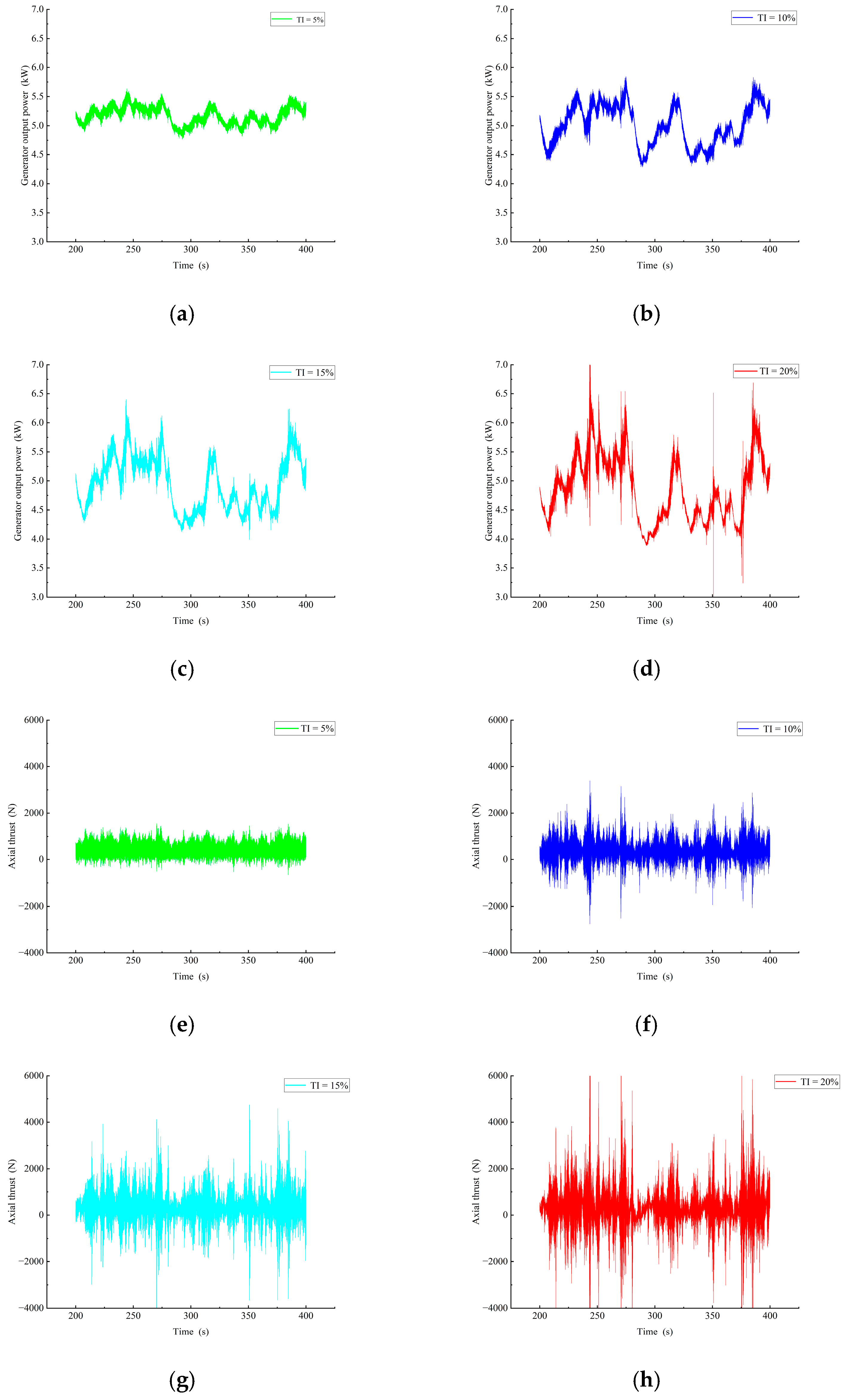
Turbulence intensity significantly influences wind turbine aerodynamic performance, particularly output stability. Figure 9 presents the time series of generator output power and axial thrust under different turbulence intensities at a fixed pitch angle of 6°. As the turbulence intensity increases from 5% to 20%, both the power output and the axial thrust exhibit progressively larger short-term fluctuations, indicating a clear degradation in output stability and a stronger unsteady aerodynamic excitation acting on the rotor.
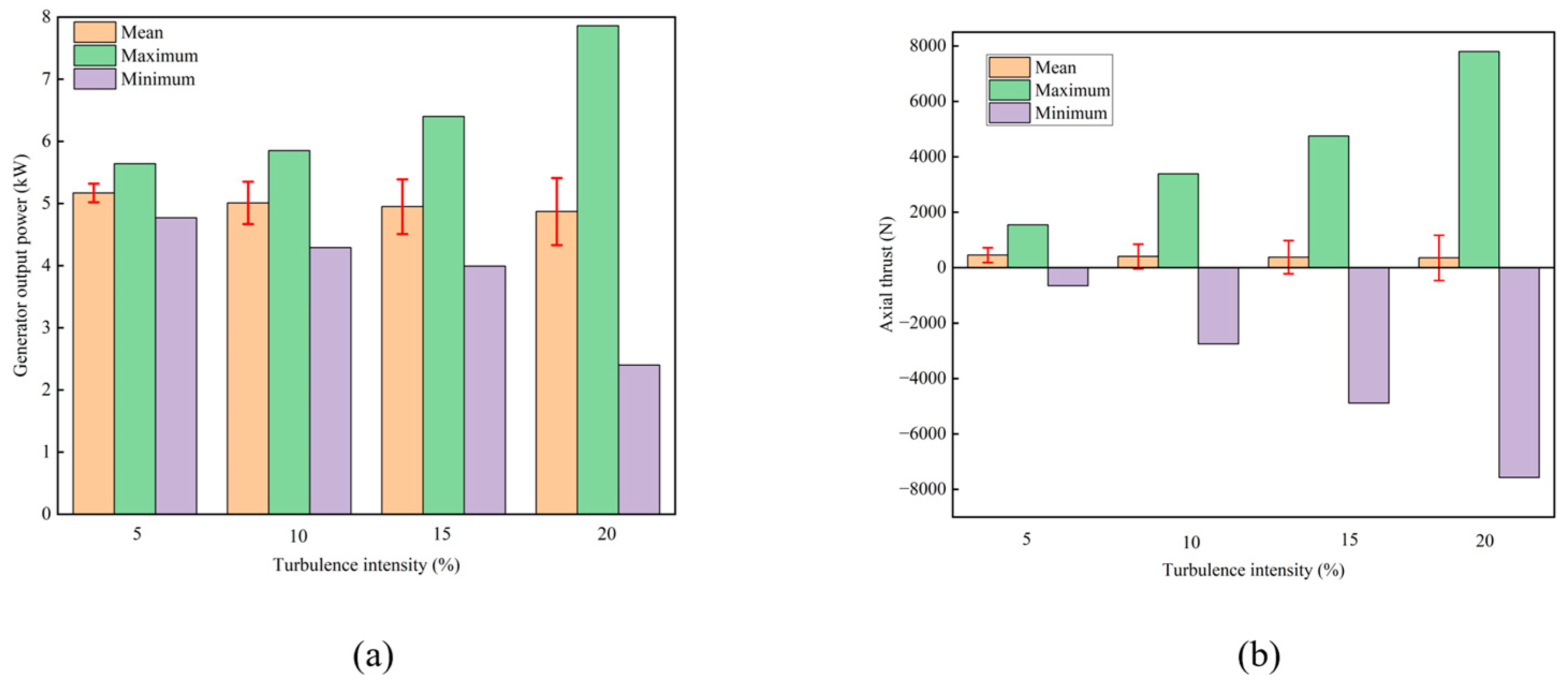
The corresponding statistical results are summarized in Figure 10. The standard deviation of generator output power increases monotonically from 0.16 kW to 0.59 kW, representing an increase of 269.4%. Although the average output power increases slightly with turbulence intensity, the much stronger increase in fluctuation level indicates that high turbulence intensity mainly affects the turbine through reduced stability rather than through a large change in mean operating level alone. A similar trend is observed for axial thrust, whose fluctuation range also increases significantly with turbulence intensity. This indicates a stronger unsteady aerodynamic excitation acting on the turbine structure, particularly the blades, and provides the loading basis for the intensified structural response discussed below.
To examine how this strengthened aerodynamic excitation is transmitted into structural behavior, the corresponding blade displacement and blade-root load responses are analyzed next.

3.1.2. Impact on Structural Dynamic Response

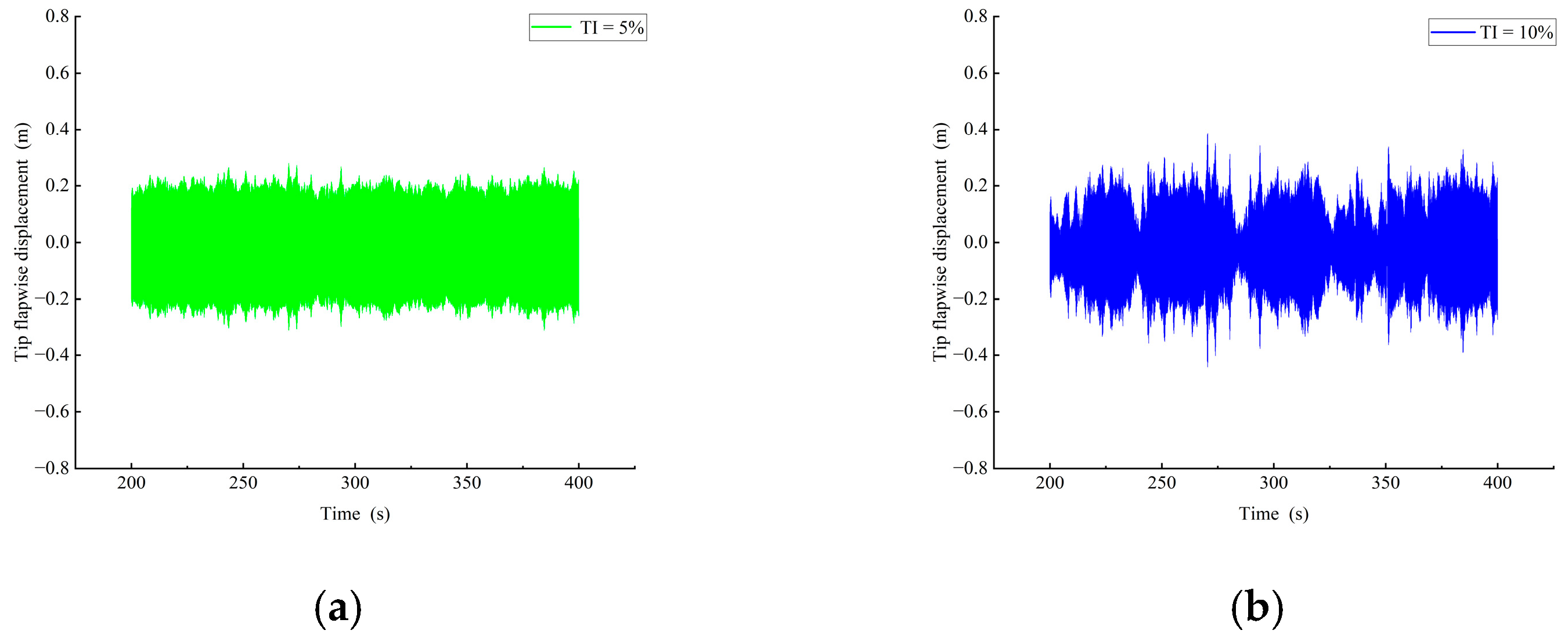
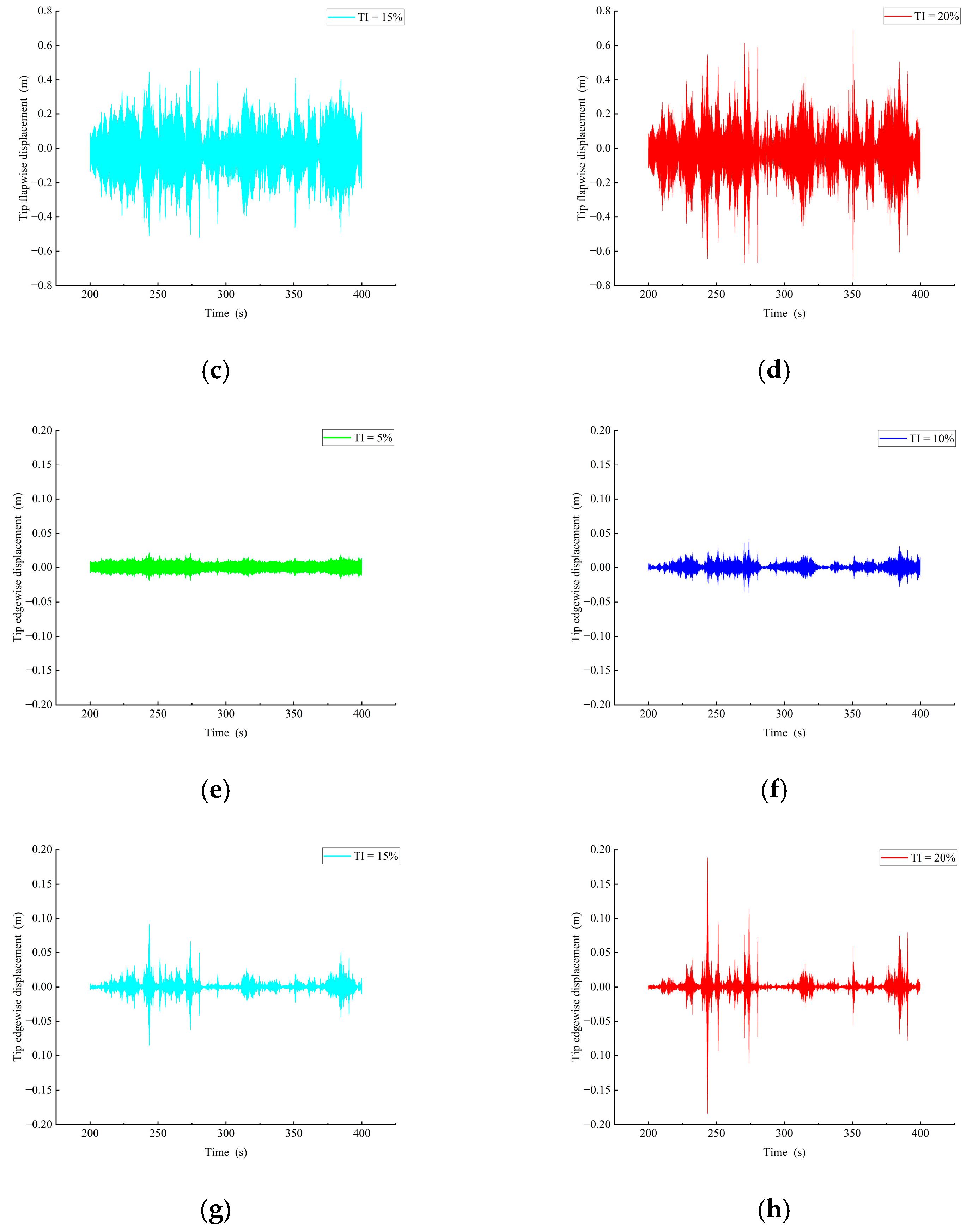
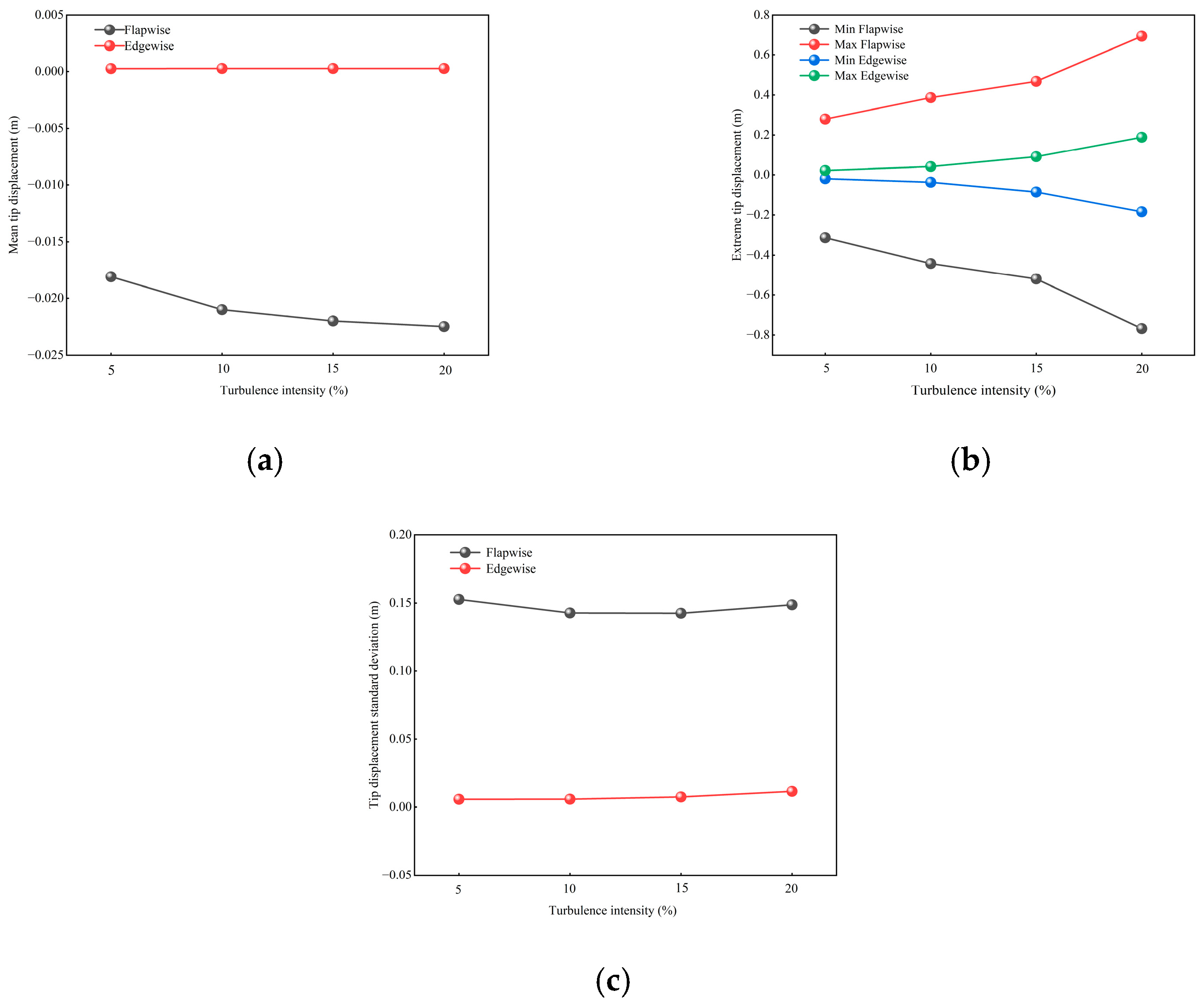
The increase in turbulence intensity significantly amplifies the dynamic response of the blade structure. Figure 11 shows the time histories of blade-tip displacement in the flapwise and edgewise directions under different turbulence intensities. With increasing turbulence intensity, the displacement response becomes more irregular and its amplitude becomes larger, especially in the flapwise direction, indicating that turbulence has a stronger effect on the dominant out-of-plane bending motion of the blade. The statistical characteristics of blade-tip displacement are summarized in Figure 12. The flapwise response shows a clear increase in extreme value and standard deviation with increasing turbulence intensity, whereas the edgewise response remains much smaller in magnitude. In particular, the standard deviation of flapwise displacement increases markedly, confirming that turbulence mainly amplifies the flapwise flexible response of the blade.
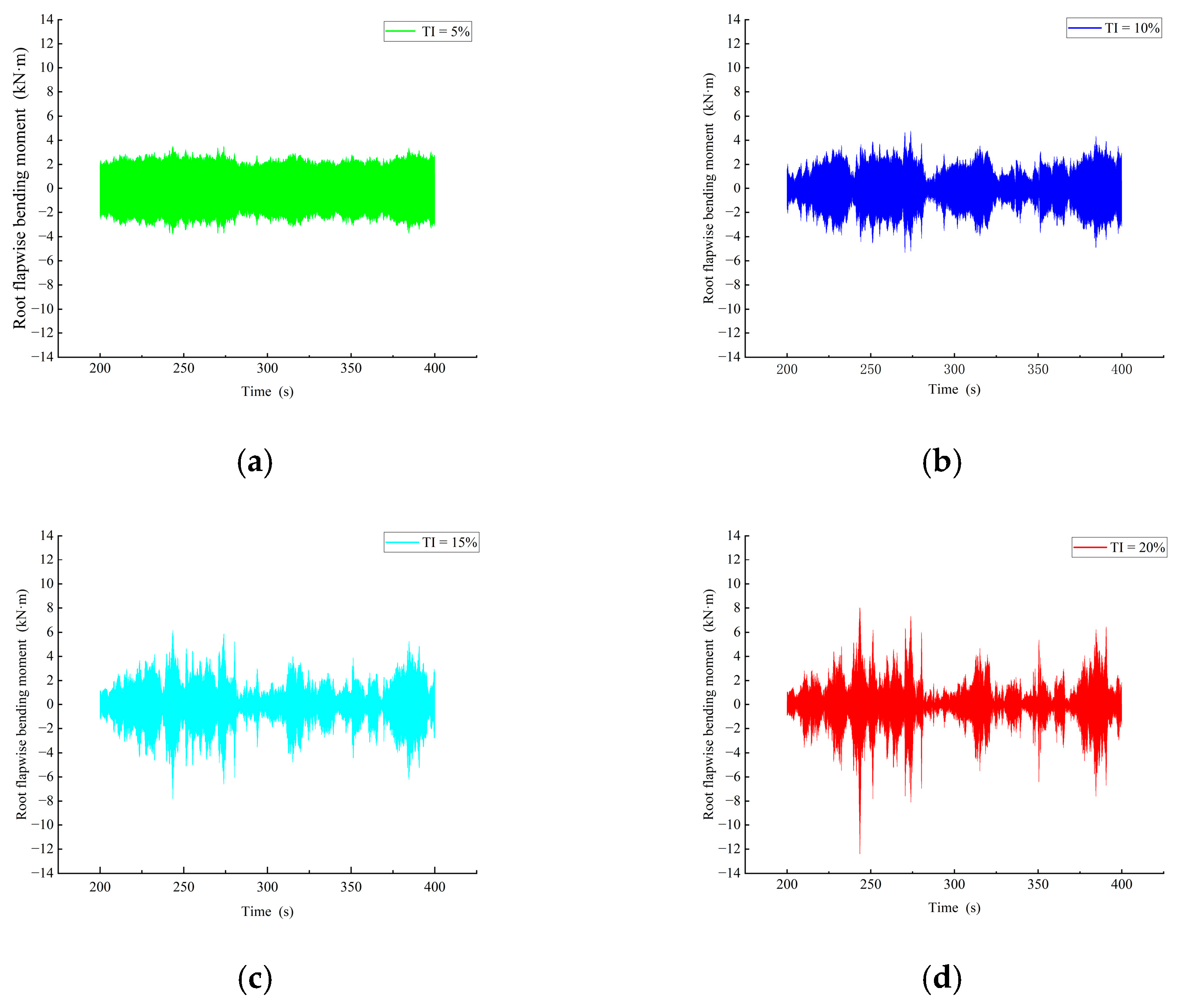
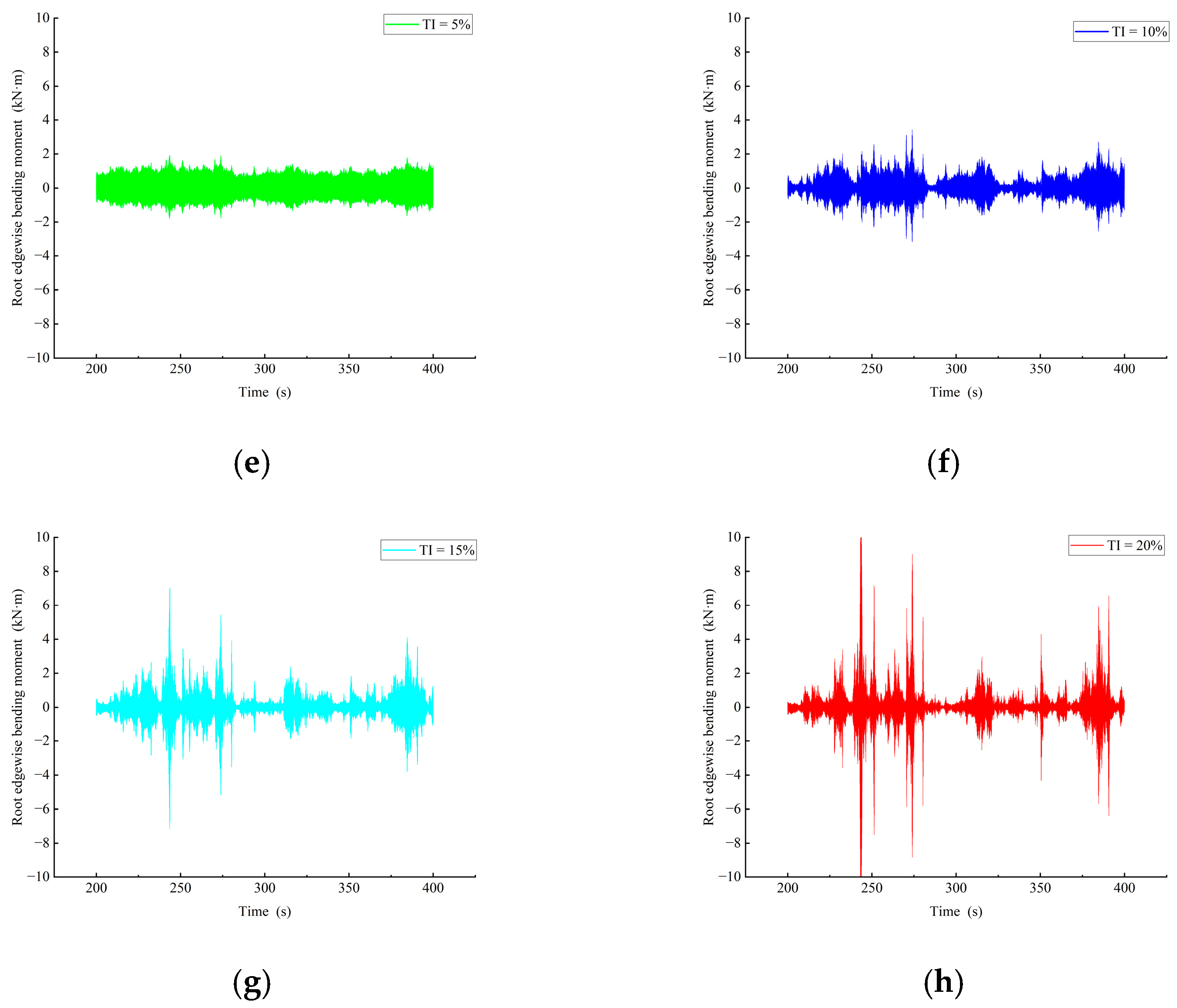
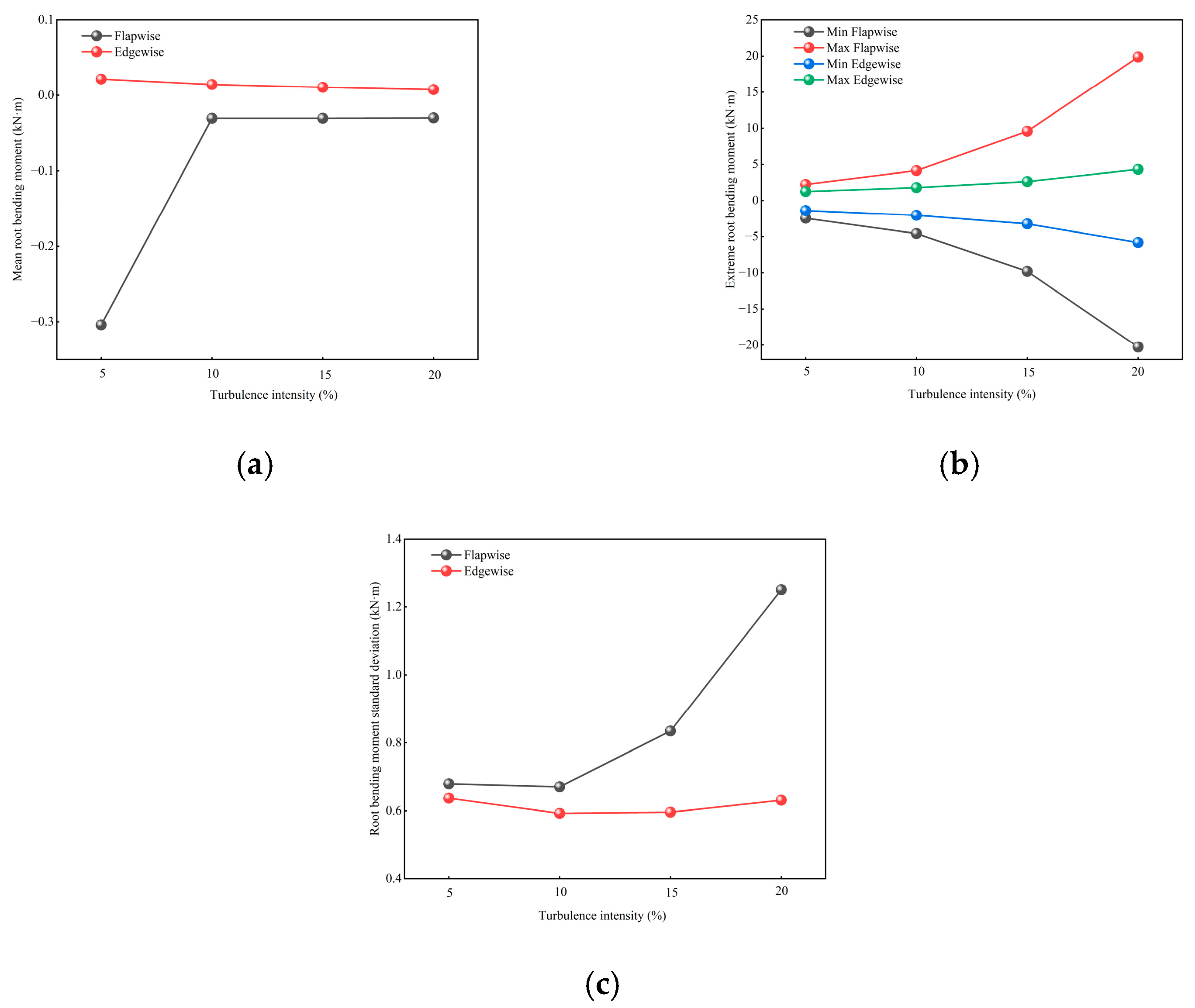
As a direct indicator of blade-root load demand, the root bending moment exhibits a response pattern consistent with, but even more sensitive than, the displacement response. Figure 13 presents the time histories of root bending moment under different turbulence intensities, while Figure 14 summarizes the corresponding statistical characteristics. As turbulence intensity increases from 5% to 20%, the extreme flapwise root bending moment rises from 2.46 kN·m to 20.27 kN·m, corresponding to a 725.0% increase. This pronounced nonlinear growth suggests that under high-turbulence conditions the blade root is exposed to substantially increased extreme dynamic loading, which poses a severe challenge to structural safety.
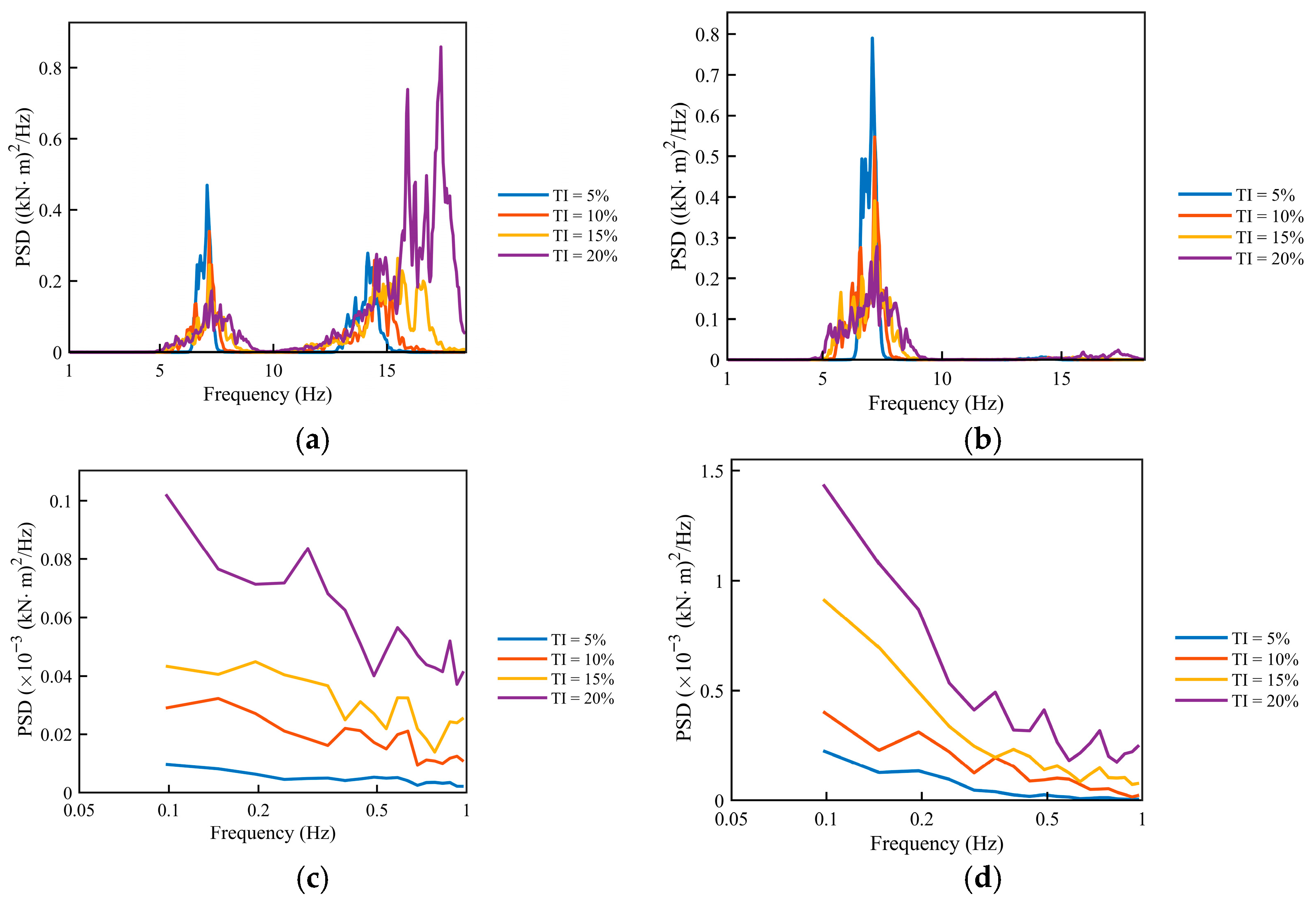
This pronounced nonlinear growth suggests that under high-turbulence conditions the blade root is exposed to substantially increased extreme dynamic loading, which poses a severe challenge to structural safety. To further characterize the frequency-domain features of the blade-root load response, the power spectral density (PSD) of the blade-root flapwise and edgewise bending moments is presented in Figure 15.
As shown in Figure 15, both flapwise and edgewise blade-root bending moments exhibit a pronounced dominant response band around 7 Hz under most turbulence-intensity cases. The added PSD results provide response-based frequency-domain information for interpreting the blade-root response under turbulent inflow. In addition, the flapwise response exhibits enhanced higher-frequency content in the range of approximately 15–18 Hz under higher turbulence conditions. Low-frequency response content below about 0.5 Hz is also observed and is used here as supplementary frequency-domain information. These features are interpreted as response-spectrum characteristics of the simulated blade-root loads rather than as formally identified modal frequencies. The PSD response summary is provided in Table 5 for completeness.
These load–response characteristics provide the mechanical basis for the subsequent fatigue assessment, since larger response fluctuations and more severe blade-root load demand are expected to promote stress-cycle accumulation and cumulative fatigue damage.

3.1.3. Effect on Fatigue Life

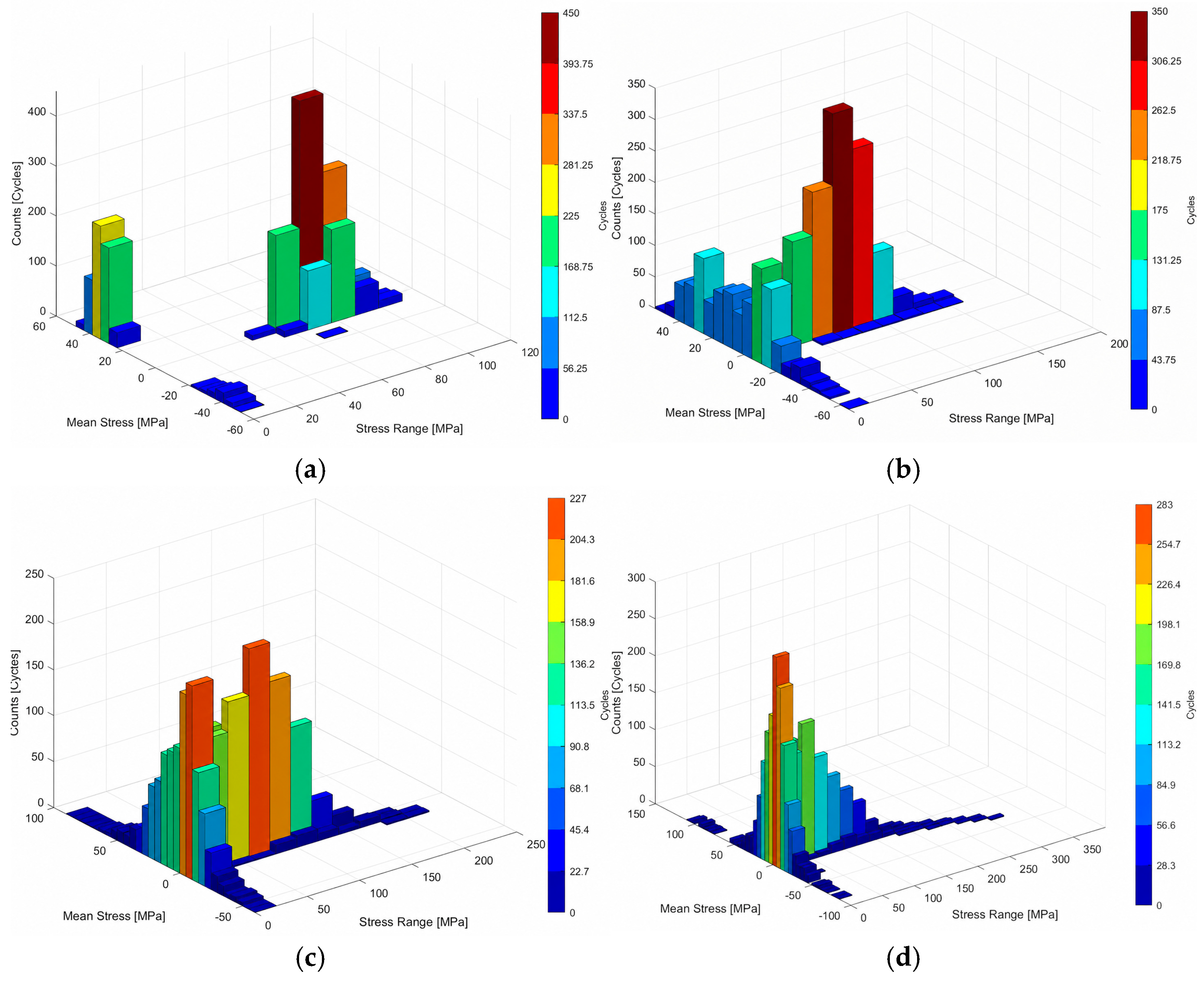
Using rainflow counting and Miner’s linear cumulative damage rule, the fatigue consequence of increasing turbulence intensity was further evaluated at the blade root. Figure 16 shows the rainflow-counted stress-amplitude distributions under different turbulence intensities. As turbulence intensity increases, the stress-cycle distribution broadens and the occurrence of large-amplitude cycles becomes more frequent, which directly explains the increase in cumulative fatigue damage. The calculated cumulative damage increases nonlinearly from 2.92 × 10⁻⁷ at 5% turbulence intensity to 8.71 × 10⁻⁷ at 20% turbulence intensity. Accordingly, under the adopted equivalent annual operating-time assumption and the present comparative fatigue-assessment framework, the estimated fatigue-life indicator under the selected operating conditions decreases from 21.69 years to 7.27 years, representing a reduction of 66.47%. These results indicate that, from the perspective of fatigue-damage accumulation, turbulence intensity is a critical environmental factor affecting the long-term structural reliability of the studied prototype.
To further assess realization sensitivity, a preliminary robustness check was carried out for two representative fatigue cases using three TurbSim random seeds, namely 12345678, 13472568, and 17843526. The results are summarized in Table 6. For the lower-turbulence case, the estimated comparative fatigue life varies from 19.87 to 24.28 years, with a mean value of 21.95 years and a coefficient of variation of 10.10%. For the higher-turbulence case, the corresponding range is 5.72 to 8.48 years, with a mean value of 7.16 years and a coefficient of variation of 19.32%. Although realization-induced scatter is observed in the absolute fatigue-life values, the principal comparative trend remains unchanged: the higher-turbulence case consistently shows a substantially shorter estimated comparative fatigue life than the lower-turbulence case. This added result should therefore be interpreted as a preliminary realization-sensitivity check rather than as a full stochastic convergence study.
To further clarify the role of the annual operating-time assumption in the fatigue-life conversion, a supplementary sensitivity check was carried out for the same two representative cases by varying Tyear from 2000 h/year to 3000 h/year and 4000 h/year. The results are summarized in Table 7. As expected, increasing Tyear reduces the estimated comparative fatigue life in years. However, the relative ranking remains unchanged: the higher-turbulence case consistently exhibits a substantially shorter comparative fatigue life than the lower-turbulence case. This confirms that the principal comparative conclusion regarding the effect of turbulence intensity is robust with respect to the selected annual operating-time assumption, even though the absolute fatigue-life values are sensitive to it. Taken together, these two supplementary checks further support the robustness of the comparative fatigue conclusions under the adopted simplified assessment framework.

3.2. Influence of Pitch Angle on Wind Turbine Performance and Structural Dynamics

To examine the regulatory function of pitch angle as a principal control variable, this section compares simulation outcomes for three fixed pitch angles—0°, 6°, and 12°—under consistent conditions of a rated wind speed of 11 m/s and a 10% turbulence intensity.

3.2.1. Impact of Pitch Angle on Aerodynamic Performance

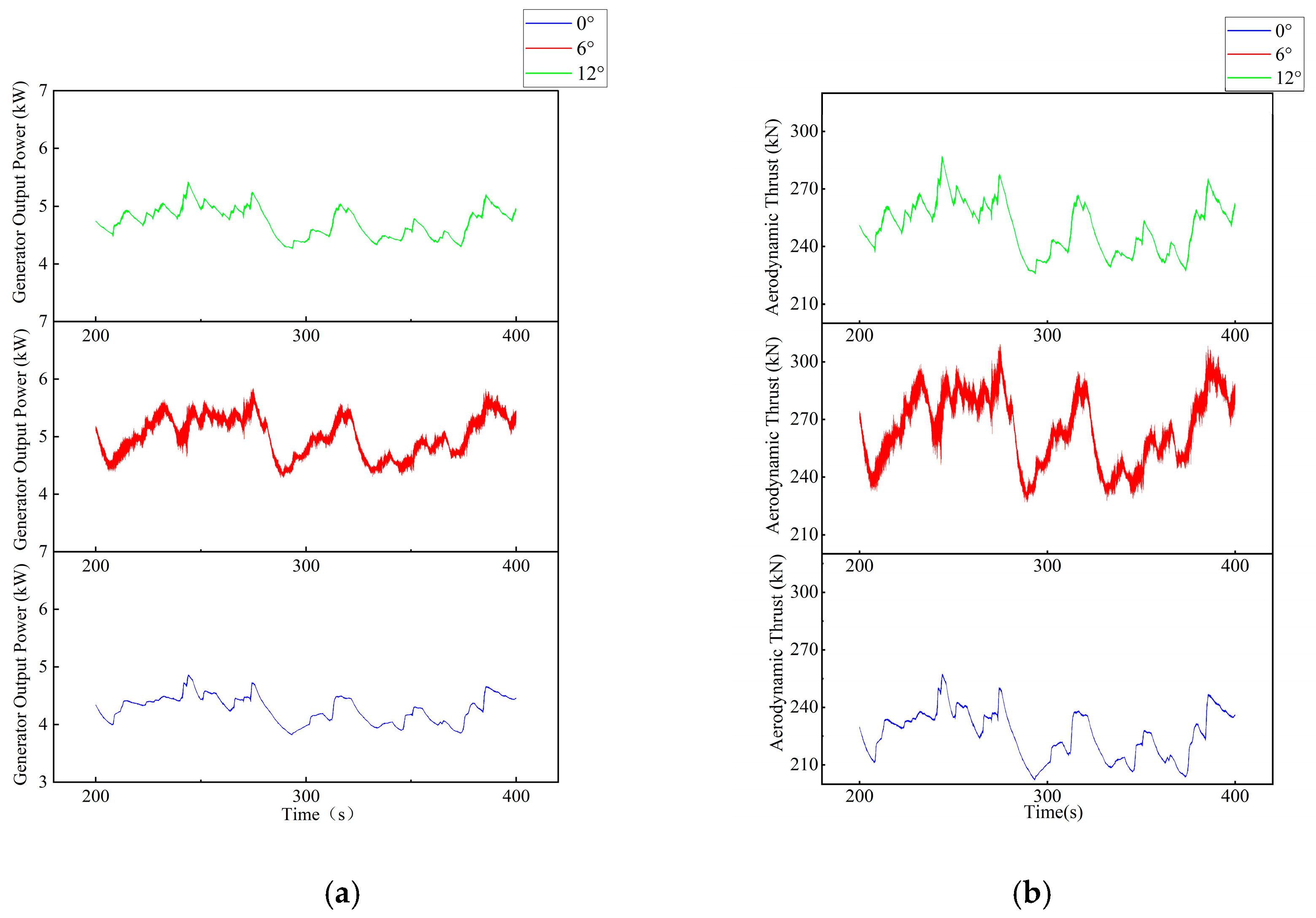
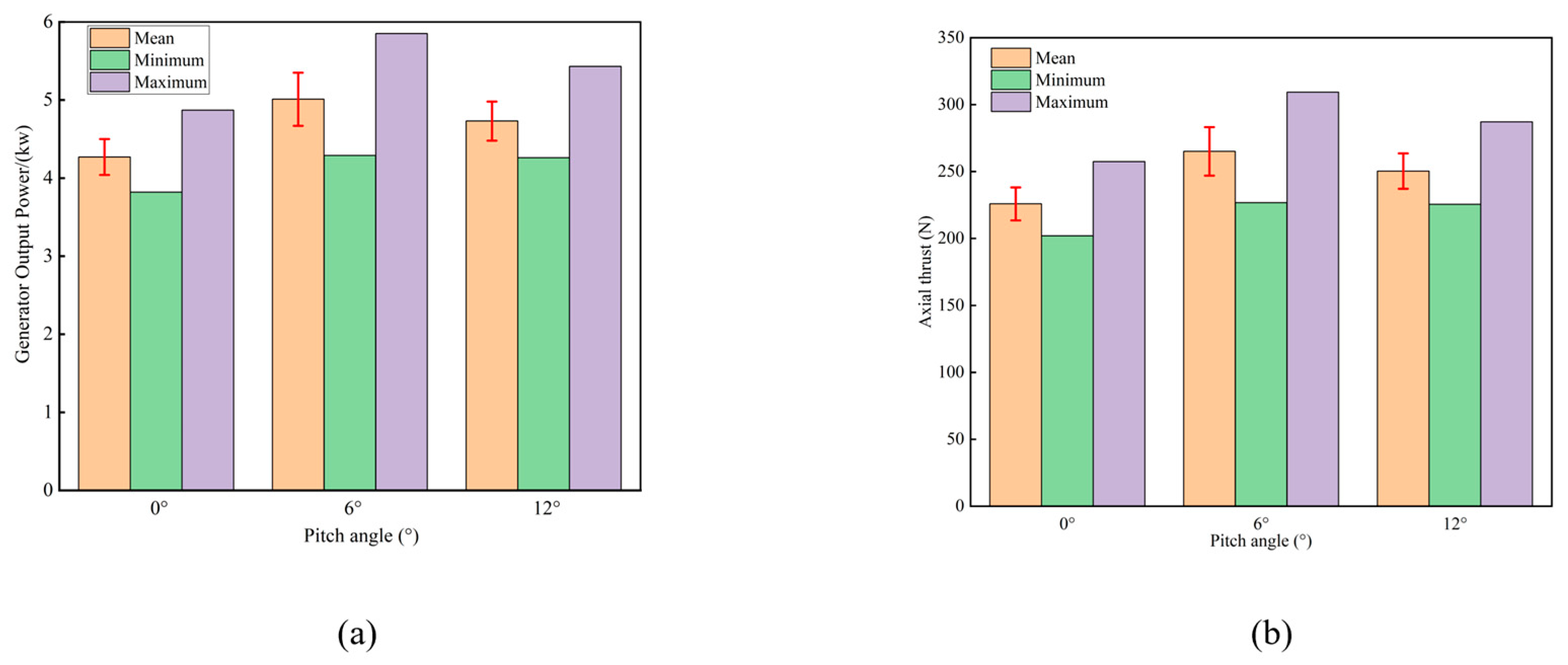
The effect of pitch angle on aerodynamic performance exhibits significant nonlinear characteristics. Figure 17 presents the time histories of generator output power and axial thrust at different pitch angles, while Figure 18 summarizes the corresponding statistical results. The 6° case yields the highest average power output, reaching 5.01 kW, which is 17.37% higher than the 0° case and 5.87% higher than the 12° case. This indicates that 6° corresponds to the most aerodynamically favorable operating point under the present inflow condition. However, this higher aerodynamic efficiency is accompanied by reduced stability. The fluctuation level of both power output and axial thrust is also largest at 6°, as reflected by the corresponding standard deviations. By contrast, the 12° case slightly sacrifices average power output but noticeably improves output stability, reducing the fluctuation level of both variables. These results indicate that shifting the pitch angle away from the maximum-efficiency operating point can be an effective way to mitigate aerodynamic-load fluctuations under turbulent inflow.

3.2.2. Influence on Structural Dynamic Response

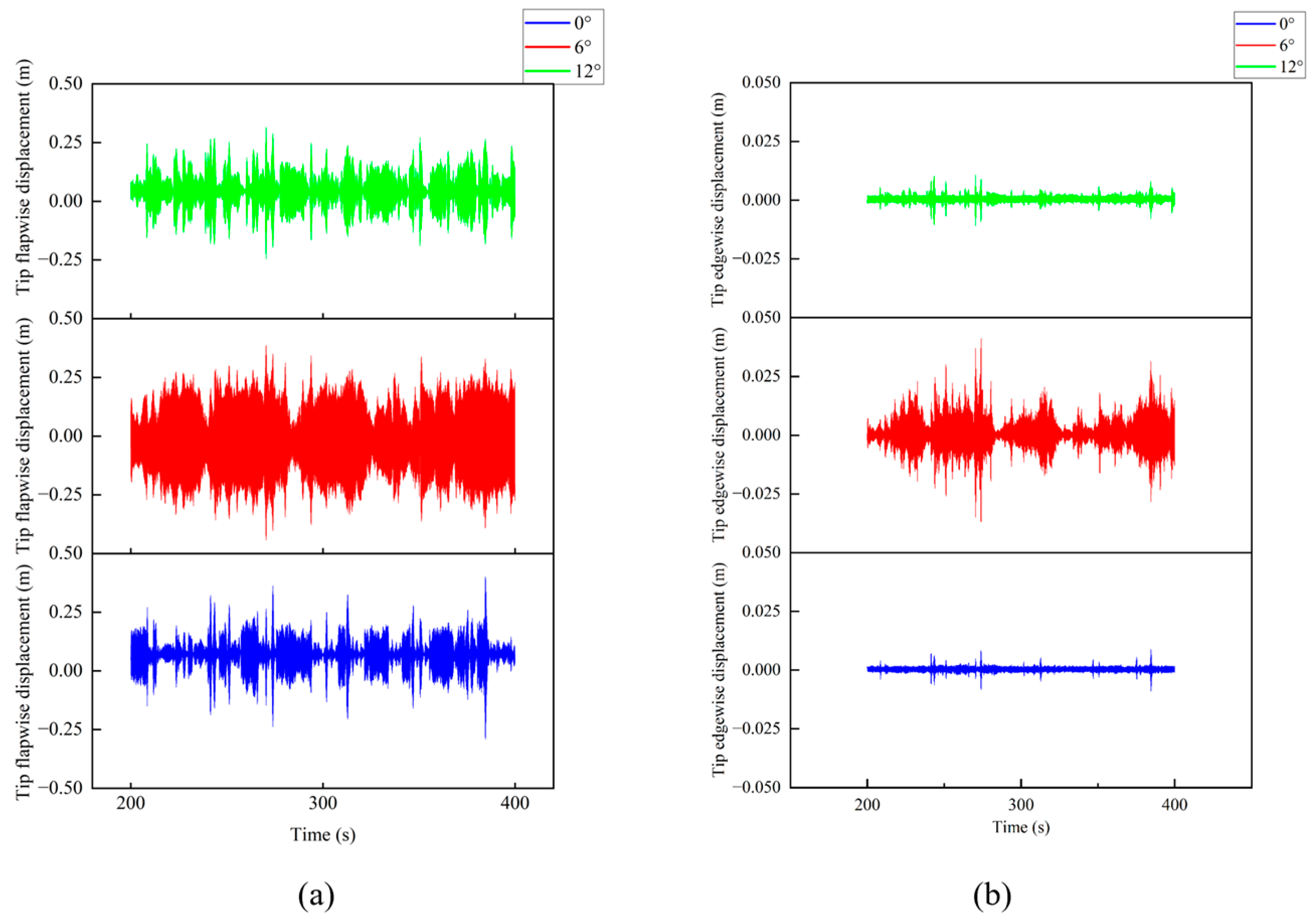
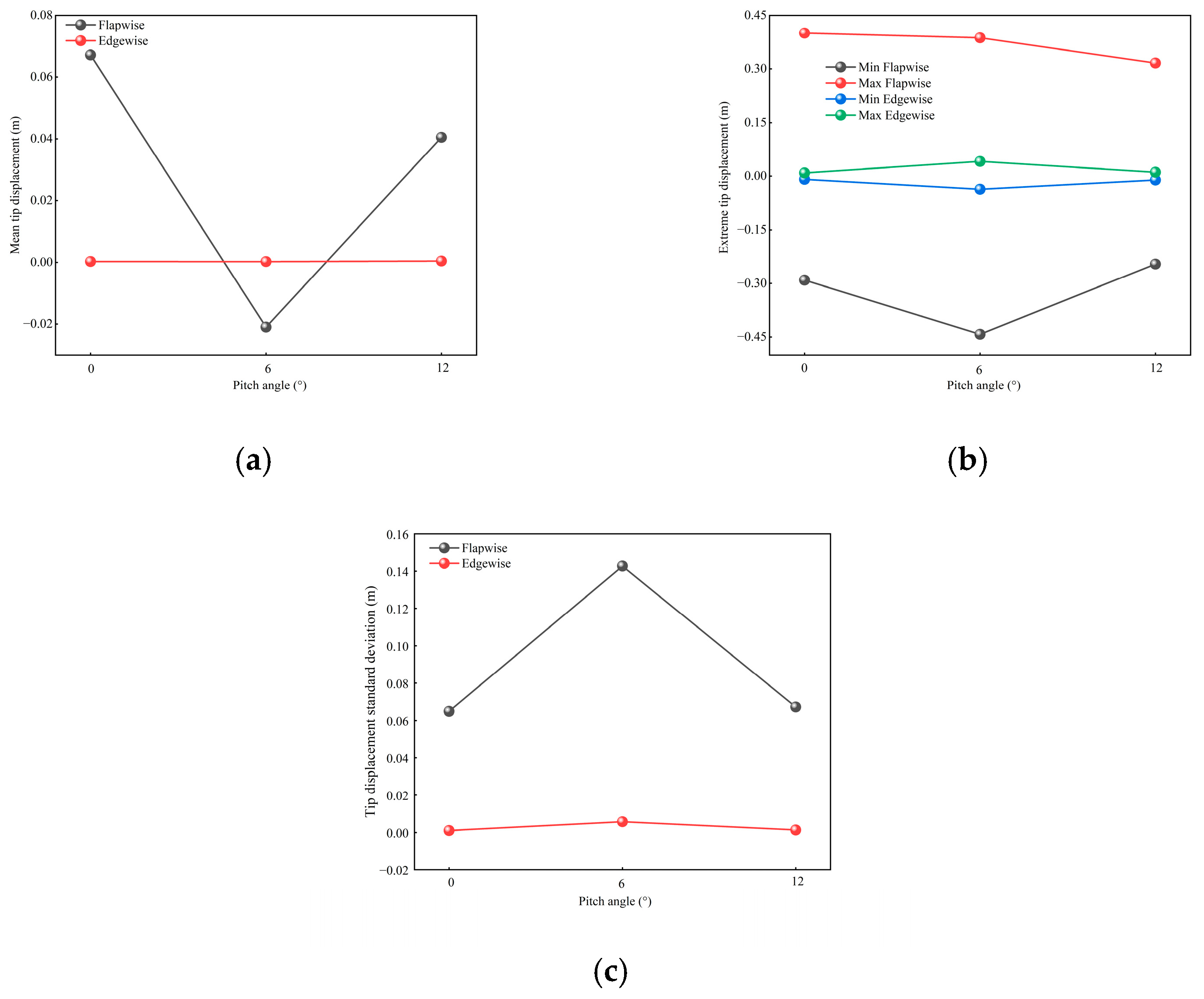
The influence of pitch angle on structural dynamic response is consistent with the trends observed in aerodynamic performance and is even more pronounced in the flapwise direction. Figure 19 shows the time histories of blade-tip displacement at different pitch angles, and Figure 20 presents the corresponding statistical characteristics. The 6° case exhibits the largest fluctuation level, especially in the flapwise direction, as reflected by the larger standard deviation and stronger extreme-response characteristics. This suggests that operation near the aerodynamically favorable pitch angle is associated with a stronger flexible response of the blade under the present operating conditions.
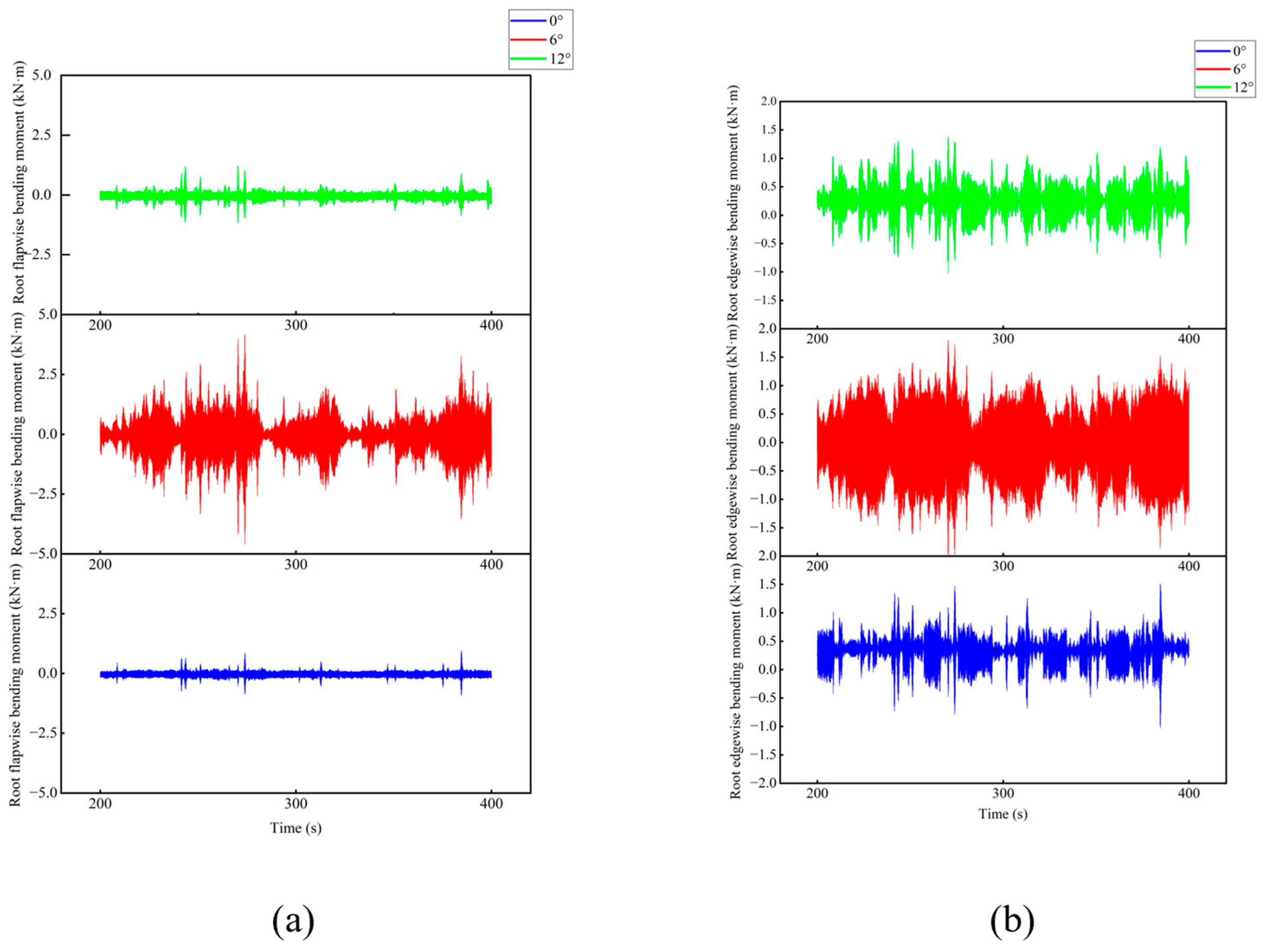
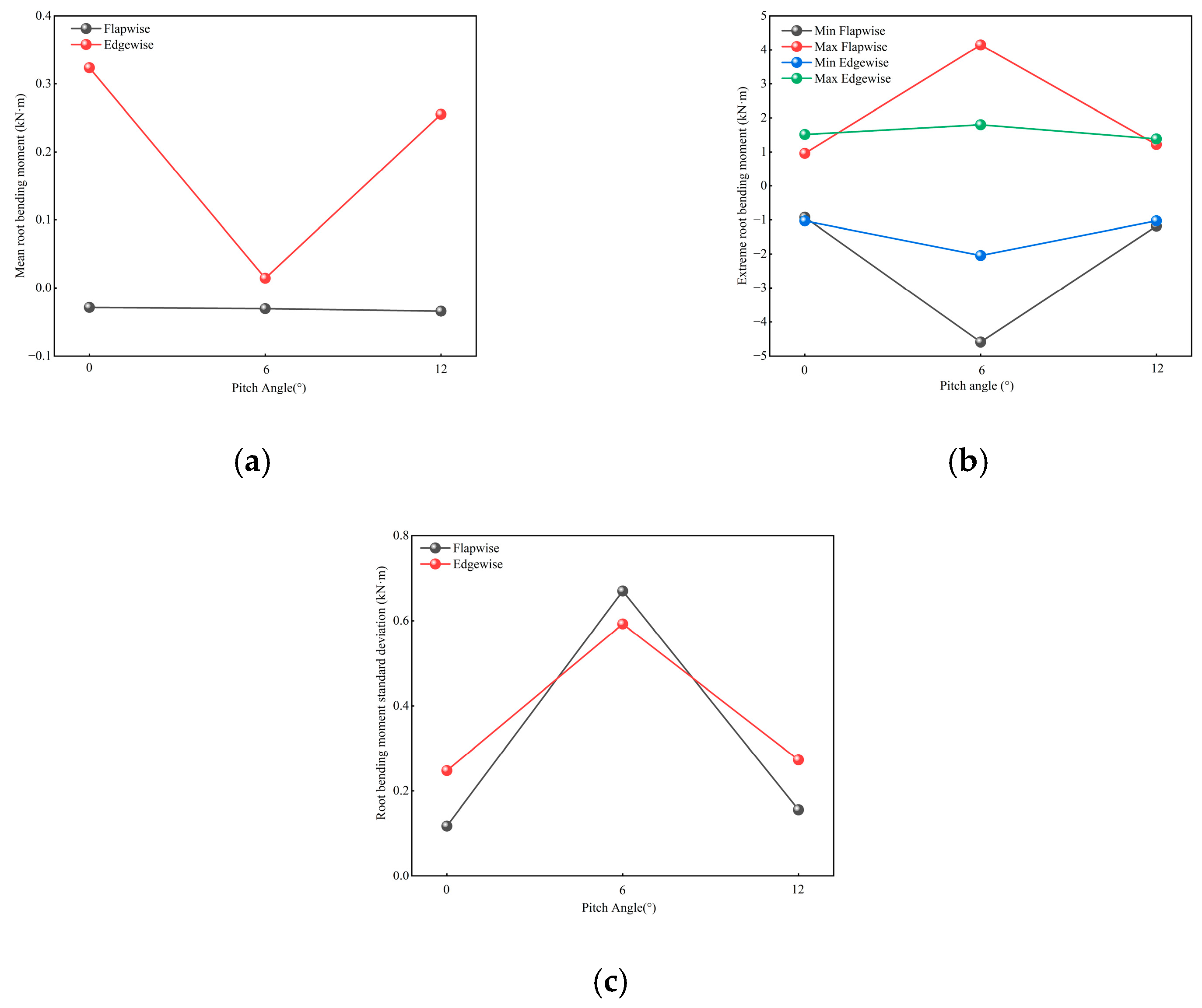
A similar pattern is observed in the blade-root load response. Figure 21 presents the time histories of root bending moment at different pitch angles, and Figure 22 summarizes the corresponding statistical characteristics. The 6° operating condition generally exhibits the highest fluctuation level and stronger extreme flapwise response, whereas the 0° and 12° cases show relatively lower load amplitudes. From the perspective of structural internal forces, these results indicate that maintaining maximum aerodynamic efficiency under turbulent wind conditions requires the structure to withstand the higher dynamic load demand and greater risk of extreme loading, which in turn promotes fatigue-damage accumulation.
Accordingly, the fatigue consequences of these pitch-angle-dependent load differences are further evaluated in the following subsection.

3.2.3. Impact on Fatigue Life

The pitch angle has a significant influence on fatigue behavior. Figure 23 shows the rainflow-count histograms of root stress amplitude at different pitch angles. Under the adopted equivalent annual operating-time assumption, the present realization set, and the comparative fatigue-assessment framework, the 6° condition is characterized by a broader stress-amplitude distribution and a higher frequency of large-amplitude cycles, which explains its larger cumulative damage and shorter estimated fatigue-life indicator than those of the 0° and 12° cases. Accordingly, the 6° condition yields the highest cumulative damage and the shortest estimated fatigue life, at 13.07 years under the selected operating conditions. By contrast, adjusting the pitch angle to 0° or 12° considerably reduces cumulative damage and extends the estimated fatigue life to 41.60 years and 34.52 years, respectively, corresponding to increases of 218.36% and 164.13% relative to the 6° case. These results suggest that, under turbulent wind conditions, shifting the pitch angle away from the maximum-efficiency operating point may provide an effective means of balancing aerodynamic efficiency and structural durability for the studied prototype.

4. Conclusions

This study clarifies the separate first-order effects of turbulence intensity and pitch angle on the studied distributed variable-pitch wind turbine within the selected operating window. The main findings are summarized below.
Turbulence intensity is a key environmental factor affecting dynamic loading and fatigue-damage accumulation. Within the tested conditions, increasing turbulence intensity from 5% to 20% leads to a pronounced rise in the extreme root flapwise bending moment and a substantial reduction in the estimated comparative fatigue life. These results highlight the importance of accounting for site turbulence characteristics in prototype-oriented structural assessment.
Pitch angle strongly influences the balance between aerodynamic performance and structural durability. Under the selected operating conditions, the 6° case yields the highest average power output, but also exhibits the largest load fluctuation level and the shortest estimated comparative fatigue life. By contrast, shifting the pitch angle to 0° or 12° reduces fatigue-related structural demand at the cost of some aerodynamic efficiency.
Taken together, these results suggest that operation of the studied distributed variable-pitch wind turbine under turbulent inflow should consider both energy capture and structural-load mitigation rather than power output alone. Although no adaptive control strategy is developed or validated in the present work, the identified trade-off provides a prototype-level comparative basis for future studies on load-aware pitch regulation.
Due to limitations in research conditions, time, and expertise, several areas warrant further exploration:
The present analysis adopts a one-factor-at-a-time framework and therefore does not fully resolve the interaction effects between turbulence intensity and pitch angle. In addition, the explored parameter matrix is limited to a selected operating window and should not be interpreted as an exhaustive multivariable design-space characterization.
The fatigue assessment is based on a simplified engineering-level framework using equivalent stress conversion, Goodman mean-stress correction, an empirical S–N relationship, and Miner’s linear cumulative damage rule. Within this framework, the relative ranking among the investigated cases is more robust than the absolute fatigue-life values reported in years, which remain sensitive to the adopted annual operating-time assumption and the simplified fatigue formulation. The main parametric matrix also employs one turbulent realization per operating condition, while the additional multi-seed analysis is limited to representative cases and should therefore be interpreted as a preliminary robustness check rather than a full stochastic convergence study.
The added PSD results provide response-based structural-dynamics information for interpreting the blade-root response, but they are not intended to replace a complete modal-identification or stability analysis of the turbine system. Moreover, because the present work focuses on a single 5 kW prototype and does not include a cross-turbine comparison, the reported quantitative results should not be interpreted as directly generalizable to other turbine configurations without further comparative investigation.
Despite these limitations, the present study provides a consistent and validated prototype-based comparative framework for understanding how turbulence intensity and pitch angle influence aerodynamic performance, structural response, and fatigue-related demand in the studied turbine. Broader future work should extend the present analysis toward wider operating conditions, multifactor interaction effects, and more systematic DOE-, response-surface-, or surrogate-based exploration.

Author Contributions

Conceptualization, D.B. and Y.C.; methodology, Y.C.; software, Y.C.; validation, Y.C. and Z.S.; formal analysis, Y.C.; investigation, Y.L., X.A. and R.C.; writing—original draft preparation, Y.C.; writing—review and editing, D.B., Z.S., Y.L., X.A. and R.C.; funding acquisition, D.B. All authors have read and agreed to the published version of the manuscript.

Funding

This research was supported by the Inner Mongolia Autonomous Region “Listed and Commanded” Project (Grant No. 2024JBGS0025).

Data Availability Statement

Data are contained within the article.

Conflicts of Interest

Author Zhongyu Shi is employed by China Petroleum Engineering & Construction Corporation Beijing Design Branch. Author Yongshui Luo is employed by Yunda Energy Technology Group Co., Ltd. Author Xiaohu Ao is employed by Inner Mongolia Yufeng Muguang Co., Ltd. The remaining authors declare that the research was conducted in the absence of any commercial or financial relationships that could be construed as a potential conflict of interest.

References

  1. Mustafa, M.K.; Imtiaz, A.; Eugene, F. Optimal Energy Management and Capacity Planning of Renewable Integrated Rural Microgrid. Environ. Sci. Pollut. Res. 2023, 30, 99176–99197. [Google Scholar] [CrossRef]
  2. Veni, V.S.; Jayachandran, J.; Malathi, S.; Prakash, R.A.; Jayavignesh, J.; Prabaharan, N. Dynamic Power Management Based on Model Predictive Control and PSO for Hybrid Microgrid. Sci. Rep. 2025, 15, 39225. [Google Scholar] [CrossRef] [PubMed]
  3. Wang, Y.; Guan, R.; Wang, L.; Lu, P. Influence of Turbulent Coherent Structures on the Performance and Wake of a Wind Turbine. Eur. J. Mech. B-Fluid. 2024, 105, 104–118. [Google Scholar] [CrossRef]
  4. Liu, Y.; Stevens, R.J. Turbulence Coherence in Wind Farms: The Role of Turbines. J. Phys. Conf. Ser. 2024, 2767, 092001. [Google Scholar] [CrossRef]
  5. Jia, Y.; Lu, J.; Zhao, Z.; Liu, Q.; Lv, S. Experimental Study on the Effects of Turbulence Intensity on the Aeroelastic Stability of Wind Turbine Airfoils. Exp. Therm. Fluid Sci. 2025, 161, 111457. [Google Scholar] [CrossRef]
  6. Bianchini, A.; Bangga, G.; Baring-Gould, I.; Croce, A.; Cruz, J.I.; Damiani, R.; Erfort, G.; Ferreira, C.S.; Infield, D.; Nayeri, C.N.; et al. Current Status and Grand Challenges for Small Wind Turbine Technology. Wind Energy Sci. 2022, 7, 2003–2037. [Google Scholar] [CrossRef]
  7. Lubitz, W.D. Impact of Ambient Turbulence on Performance of a Small Wind Turbine. Renew. Energy 2014, 61, 69–73. [Google Scholar] [CrossRef]
  8. Singh, Y.K.; Ghosh, S.K.; Maity, T. Experimental and Numerical Investigation of the Impact of Turbulence on a Small-Scale Double-Stage Savonius Vertical Axis Wind Turbine in an Open Environment Application. Therm. Sci. Eng. Prog. 2025, 61, 103540. [Google Scholar] [CrossRef]
  9. Asadi, M. Wind Farm Site Selection Considering Turbulence Intensity. Energy 2021, 236, 121480. [Google Scholar] [CrossRef]
  10. Pagnini, L.C.; Burlando, M.; Repetto, M.P. Experimental Power Curve of Small-Size Wind Turbines in Turbulent Urban Environment. Appl. Energy 2015, 154, 112–121. [Google Scholar] [CrossRef]
  11. Wen, B.; Li, Z.; Ji, Z.; Tian, X.; Dong, X.; Peng, Z. Floating Wind Turbine Power Performance Incorporating Equivalent Turbulence Intensity Induced by Floater Oscillations. Wind Energy 2022, 25, 260–280. [Google Scholar] [CrossRef]
  12. Revaz, T.; Agel, P.F. Effect of Turbulence Intensity on the Induction Factor and Power Efficiency of Wind Turbines. Wind Energy 2025, 28, e70040. [Google Scholar] [CrossRef]
  13. Liu, S.; Li, Q.; Lu, B.; He, J. Impact of Incoming Turbulence Intensity and Turbine Spacing on Output Power Density: A Study with Two 5MW Offshore Wind Turbines. Appl. Energy 2024, 371, 123648. [Google Scholar] [CrossRef]
  14. Young, D.K.; Hee, Y.K.; Suk, B.K. Changes in Wind Turbine Power Characteristics and Annual Energy Production due to Atmospheric Stability, Turbulence Intensity, and Wind Shear. Energy 2021, 214, 119051. [Google Scholar] [CrossRef]
  15. Siddiqui, S.M.; Rasheed, A.; Kvamsdal, T.; Tabib, M. Effect of Turbulence Intensity on the Performance of an Offshore Vertical Axis Wind Turbine. Energy Procedia 2015, 80, 312–320. [Google Scholar] [CrossRef]
  16. Tao, S.; Xu, Q.; Feijóo, A.; Kuenzel, S.; Bokde, N. Integrated Wind Farm Power Curve and Power Curve Distribution Function Considering the Wake Effect and Terrain Gradient. Energies 2019, 12, 2482. [Google Scholar] [CrossRef]
  17. Bangga, G.; Lutz, T. Aerodynamic Modeling of Wind Turbine Loads Exposed to Turbulent Inflow and Validation with Experimental Data. Energy 2021, 223, 120076. [Google Scholar] [CrossRef]
  18. Gao, Z.; Qian, X.; Wang, T. Spectral Partition Characteristics of Wind Turbine Load Response under Different Atmospheric Stability. Sustain. Energy Technol. Assess. 2021, 47, 101421. [Google Scholar] [CrossRef]
  19. Gao, L.; Yang, S.; Abraham, A.; Hong, J. Effects of Inflow Turbulence on Structural Response of Wind Turbine Blades. J. Wind Eng. Ind. Aerodyn. 2020, 199, 104137. [Google Scholar] [CrossRef]
  20. Li, S.; Li, Y.; Li, M.; Zeng, W.; Gu, S.; Gao, Y. The Effect of Turbulence Intensity on the Unsteady Gust Loading on a 5:1 Rectangular Cylinder. J. Wind Eng. Ind. Aerodyn. 2022, 225, 104994. [Google Scholar] [CrossRef]
  21. Chai, Y.; Wang, Y.; Zheng, J.; Zhang, J.; Ge, M. Accuracy of Kaimal Spectrum Model for Wind Turbine Load Prediction in the Hexi Corridor: The Impact of Turbulence Structure on Wind Turbine Load. Results Eng. 2025, 26, 105597. [Google Scholar] [CrossRef]
  22. Bidadi, S.; Vijayakumar, G.; Lee, B.; Sprague, M. Freestream Turbulence Effects on Unsteady Wind Turbine Loads and Wakes: An IDDES Study. J. Wind Eng. Ind. Aerodyn. 2025, 267, 106211. [Google Scholar] [CrossRef]
  23. Sarsenov, E.; Batay, S.; Baidullayeva, A.; Zhao, Y.; Wei, D.; Ng, E.Y.K. High Fidelity 2-Way Dynamic Fluid-Structure-Interaction (FSI) Simulation of Wind Turbines Based on Arbitrary Hybrid Turbulence Model (AHTM). Energies 2025, 18, 4401. [Google Scholar] [CrossRef]
  24. Zhang, D.; Zhong, X.; Wei, K.; Zheng, S.; Li, C.; Hu, G.; Zhang, J. On Structural Loads and Responses of Monopile Offshore Wind Turbines under Typhoons: Numerical Case Study of Super Typhoon Chan-hom. Case Stud. Constr. Mater. 2025, 23, e05031. [Google Scholar] [CrossRef]
  25. Liu, Z.; Hu, Y.; Li, T.; Pan, J.; Yu, Z.; Yang, Q. Numerical Investigation of Yaw-Controlled Wake Effects on Fatigue Load Distribution in Downstream Wind Turbines. Ocean Eng. 2025, 341, 122455. [Google Scholar] [CrossRef]
  26. Bao, D.; Jiang, A.; Li, C.; Shi, Z.; Han, Q.; Luo, Y.; Zhang, S. The Study of Structural Dynamic Response of Wind Turbine Blades under Different Inflow Conditions for the Novel Variable-Pitch Wind Turbine. Energies 2024, 17, 4057. [Google Scholar] [CrossRef]
  27. Wang, P.; Bao, D.; Zhao, M.; Shi, Z.; Gao, F.; Han, F. The Design, Analysis, and Optimization of a New Pitch Mechanism for Small Wind Turbines. Energies 2023, 16, 6708. [Google Scholar] [CrossRef]
  28. Bao, D.; Shi, Z.; Li, C.; Jiang, A.; Han, Q.; Luo, Y.; Zhang, S. A Study on the Influence of Different Inflow Conditions on the Output Power and Dynamic Response Characteristics of a Variable Pitch Wind Turbine Structure. Energies 2024, 17, 5818. [Google Scholar] [CrossRef]
  29. Peterson, P.; Clausen, P. Timber for High Efficiency Small Wind Turbine Blades. Wind. Eng. 2004, 28, 87–96. [Google Scholar] [CrossRef]
  30. Brown, K.; Bortolotti, P.; Branlard, E.; Chetan, M.; Dana, S.; Develder, N.; Doubrawa, P.; Hamilton, N.; Ivanov, H.; Jonkman, J.; et al. One-to-One Aeroservoelastic Validation of Operational Loads and Performance of a 2.8 MW Wind Turbine Model in OpenFAST. Wind Energy Sci. 2024, 9, 1791–1810. [Google Scholar] [CrossRef]
  31. Huang, Y.; Yang, X.; Zhao, W.; Wan, D. Aeroelastic Analysis of Wind Turbine under Diverse Inflow Conditions. Ocean Eng. 2024, 307, 118235. [Google Scholar] [CrossRef]
  32. Hassanzadeh, A.; Hassanabad, H.A.; Dadvand, A. Aerodynamic Shape Optimization and Analysis of Small Wind Turbine Blades Employing the Viterna Approach for Post-Stall Region. Alex. Eng. J. 2016, 55, 2035–2043. [Google Scholar] [CrossRef]
  33. Ronold, K.O.; Larsen, C.G. Reliability-Based Design of Wind-Turbine Rotor Blades Against Failure in Ultimate Loading. Eng. Struct. 2000, 22, 565–574. [Google Scholar] [CrossRef]
  34. Ronold, K.O.; Christensen, J.C. Optimization of a Design Code for Wind-Turbine Rotor Blades in Fatigue. Eng. Struct. 2001, 23, 993–1004. [Google Scholar] [CrossRef]
  35. IEC 61400-2; Wind Turbines—Part 2: Small Wind Turbines. International Electrotechnical Commission: Geneva, Switzerland, 2013.
Figure 1. Synchronous pitch-actuation mechanism of the studied distributed variable-pitch wind turbine prototype. Reproduced from [28] under the CC BY 4.0 license.
Energies 19 02409 g001
Figure 2. Finite element analysis for blade sectional stiffness.
Energies 19 02409 g002
Figure 3. Extrapolation of airfoil aerodynamic data to full angles of attack using the Viterna method.
Energies 19 02409 g003
Figure 4. Measured wind speed time series for model validation.
Energies 19 02409 g004
Figure 5. Comparison between measured and simulated time series of root flapwise bending moment. (a) Measured root flapwise bending moment; (b) simulated root flapwise bending moment.
Energies 19 02409 g005
Figure 6. Flowchart of the fatigue life assessment procedure.
Energies 19 02409 g006
Figure 7. Instantaneous wind speed at the hub height under different turbulence intensities. (a) 11 m/s with 5% turbulence intensity; (b) 11 m/s with 10% turbulence intensity; (c) 11 m/s with 15% turbulence intensity; (d) 11 m/s with 20% turbulence intensity. In the legend, TI denotes turbulence intensity.
Energies 19 02409 g007
Figure 8. Comparison of the simulated power spectrum with the Von Kármán spectrum. (a) Power spectrum in the U direction; (b) power spectrum in the V direction; (c) power spectrum in the W direction.
Energies 19 02409 g008
Figure 9. Time series of generator output power and axial thrust under different turbulence intensities. (a) Generator output power at 5% turbulence intensity; (b) generator output power at 10% turbulence intensity; (c) generator output power at 15% turbulence intensity; (d) generator output power at 20% turbulence intensity; (e) axial thrust at 5% turbulence intensity; (f) axial thrust at 10% turbulence intensity; (g) axial thrust at 15% turbulence intensity; (h) axial thrust at 20% turbulence intensity. In the legend, TI denotes turbulence intensity.
Energies 19 02409 g009
Figure 10. Statistical distributions of generator output power and axial thrust under different turbulence intensities. (a) Statistics of generator output power; (b) statistics of axial thrust. Error bars indicate standard deviation.
Energies 19 02409 g010
Figure 11. Time series of tip displacement under different turbulence intensities. (a) Flapwise displacement at 5% turbulence intensity; (b) flapwise displacement at 10% turbulence intensity; (c) flapwise displacement at 15% turbulence intensity; (d) flapwise displacement at 20% turbulence intensity; (e) edgewise displacement at 5% turbulence intensity; (f) edgewise displacement at 10% turbulence intensity; (g) edgewise displacement at 15% turbulence intensity; (h) edgewise displacement at 20% turbulence intensity. In the legend, TI denotes turbulence intensity.
Energies 19 02409 g011aEnergies 19 02409 g011b
Figure 12. Statistical characteristics of tip displacement under different turbulence intensities. (a) Mean tip displacement; (b) extreme tip displacement; (c) tip displacement standard deviation.
Energies 19 02409 g012
Figure 13. Time series of root bending moment under different turbulence intensities. (a) Flapwise bending moment at 5% turbulence intensity; (b) flapwise bending moment at 10% turbulence intensity; (c) flapwise bending moment at 15% turbulence intensity; (d) flapwise bending moment at 20% turbulence intensity; (e) edgewise bending moment at 5% turbulence intensity; (f) edgewise bending moment at 10% turbulence intensity; (g) edgewise bending moment at 15% turbulence intensity; (h) edgewise bending moment at 20% turbulence intensity. In the legend, TI denotes turbulence intensity.
Energies 19 02409 g013aEnergies 19 02409 g013b
Figure 14. Statistical characteristics of root bending moment under different turbulence intensities. (a) Mean root bending moment; (b) extreme root bending moment; (c) root bending moment standard deviation.
Energies 19 02409 g014
Figure 15. PSD of blade-root bending moments under different turbulence intensities: (a) Flapwise PSD, main; (b) edgewise PSD, main; (c) flapwise PSD, low; (d) edgewise PSD, low. In the legend, TI denotes turbulence intensity.
Energies 19 02409 g015
Figure 16. Rainflow-counted stress-amplitude histograms at the blade root under different turbulence intensities. (a) 5% turbulence intensity; (b) 10% turbulence intensity; (c) 15% turbulence intensity; (d) 20% turbulence intensity.
Energies 19 02409 g016
Figure 17. Time series of generator output power and axial thrust at different pitch angles. (a) Generator output power; (b) axial thrust.
Energies 19 02409 g017
Figure 18. Statistical distributions of generator output power and axial thrust at different pitch angles. (a) Statistics of generator output power; (b) statistics of axial thrust. Error bars indicate standard deviation.
Energies 19 02409 g018
Figure 19. Time series of tip displacement at different pitch angles. (a) Flapwise displacement; (b) edgewise displacement.
Energies 19 02409 g019
Figure 20. Statistical characteristics of tip displacement at different pitch angles. (a) Mean tip displacement; (b) extreme tip displacement; (c) tip displacement standard deviation.
Energies 19 02409 g020
Figure 21. Time series of root bending moment at different pitch angles. (a) Flapwise bending moment; (b) edgewise bending moment.
Energies 19 02409 g021
Figure 22. Statistical characteristics of root bending moment at different pitch angles. (a) Mean root bending moment; (b) extreme root bending moment; (c) root bending moment standard deviation.
Energies 19 02409 g022
Figure 23. Rainflow-counted root stress-amplitude histograms at different pitch angles. (a) Pitch angle = 0°; (b) pitch angle = 12°; (c) pitch angle = 6°.
Energies 19 02409 g023
Table 1. Main design parameters of the wind turbine.
ParameterValue
Rotor diameter (m)5.4
Blade length (m)2.24
Blade materialPine wood (prototype blade material)
Tower height (m)9.6
AirfoilNACA 4412
Rated power (kW)5
Rated wind speed (m/s)11
Operating wind speed range (m/s)3.5–25
Maximum wind speed (m/s)59.5
Rated rotational speed (RPM)180
System output voltage (VAC)380
Table 2. Distribution of sectional stiffness along the blade span.
Normalized Spanwise Position (-)Section Stiffness in Flapwise Direction (N·m2)Section Stiffness in Edgewise Direction (N·m2)
026,037.37152,093.9
0.062516,273.3695,058.68
0.12511,624.6770,615.21
0.187511,158.0665,094.55
0.259423.70948,592.33
0.31256458.11236,788.63
0.3754102.39529,670.62
0.43752680.50324,261.51
0.51824.98320,471.16
0.56251279.93517,886.49
0.625916.898316,270.57
0.6875671.974515,597.45
0.75513.952516,882.44
0.8125392.917718,058.29
0.875264.33112,096.35
0.9375175.14367313.851
155.454982647.658
Table 3. Comparison of key statistical metrics for root flapwise bending moment.
MetricExperimental ValueSimulation ValueRelative Error
Mean (kN·m)−0.0306−0.02943.92%
Standard deviation (kN·m)0.10220.10341.17%
Minimum (kN·m)−0.2002−0.20472.25%
Maximum (kN·m)0.14080.14815.18%
Table 4. Parameters for turbulent wind field simulation.

ParameterValue
Turbulence Spectral ModelIEC von Kármán
Wind-field grid configuration (Y × Z)13 × 16
Time step (s)0.05
Effective simulation duration (s)600
Statistical evaluation window (s)200–400
Hub-height mean wind speed (m/s)11
Turbulence intensity5%, 10%, 15%, 20%
Pitch angle (°)0°, 6°, 12°
Number of turbulent realizations per case1
Random seed12345678
Shear exponent0.2
Surface roughness0.03
Turbulence integral length scale, L (m)7
Table 5. PSD response summary.
FeatureFlapwiseEdgewise
Main band~7 Hz~7 Hz
High-frequency band15–18 Hz
Low-frequency content<0.5 Hz<0.5 Hz
Table 6. Preliminary realization-sensitivity check for representative fatigue cases.
CaseSeed 12345678Seed 13472568Seed 17843526Mean ± SDCOV
TI = 5%, pitch = 6°21.6924.2819.8721.95 ± 2.2210.10%
TI = 20%, pitch = 6°7.278.485.727.16 ± 1.3819.32%
Table 7. Sensitivity of estimated comparative fatigue life to the annual operating-time assumption.
CaseTyear = 2000 h/yearTyear = 3000 h/yearTyear = 4000 h/year
TI = 5%, pitch = 6°21.9514.6310.98
TI = 20%, pitch = 6°7.164.773.58
Disclaimer/Publisher’s Note: The statements, opinions and data contained in all publications are solely those of the individual author(s) and contributor(s) and not of MDPI and/or the editor(s). MDPI and/or the editor(s) disclaim responsibility for any injury to people or property resulting from any ideas, methods, instructions or products referred to in the content.