_Xie.png)
Current Options and Future Trends in Green Fuels Storage



Abstract
1. Introduction
- To conduct a comparative analysis, which will allow for determining the suitability of hydrogen or ammonia storage, depending on the primary purposes and features of energy storage requirements.
- To identify potential research trends, influential work, gaps, and future directions of knowledge through an absolute evaluation of the existing literature.
- To perform a systematic analysis of the simulation techniques used to analyse the performance of green hydrogen and green ammonia storage systems with a particular focus on the methodological trends and emergent best practices.
- To identify constraints, obstacles, threats, and technological issues associated with the current storage options of green hydrogen and green ammonia.
2. Review Methodology and Data Analysis
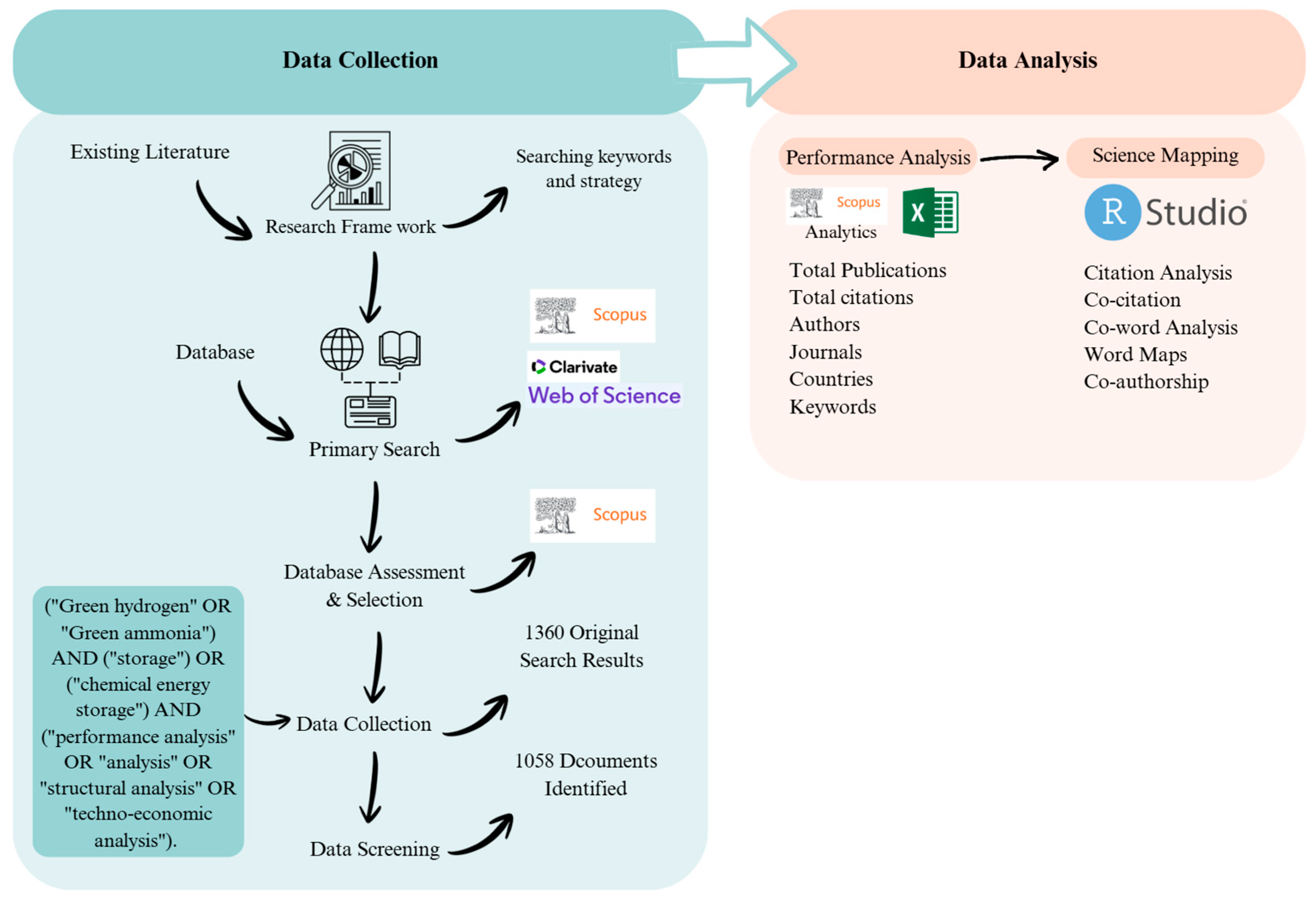
2.1. Literature Search Strategy
2.2. Search Strings/Key Words
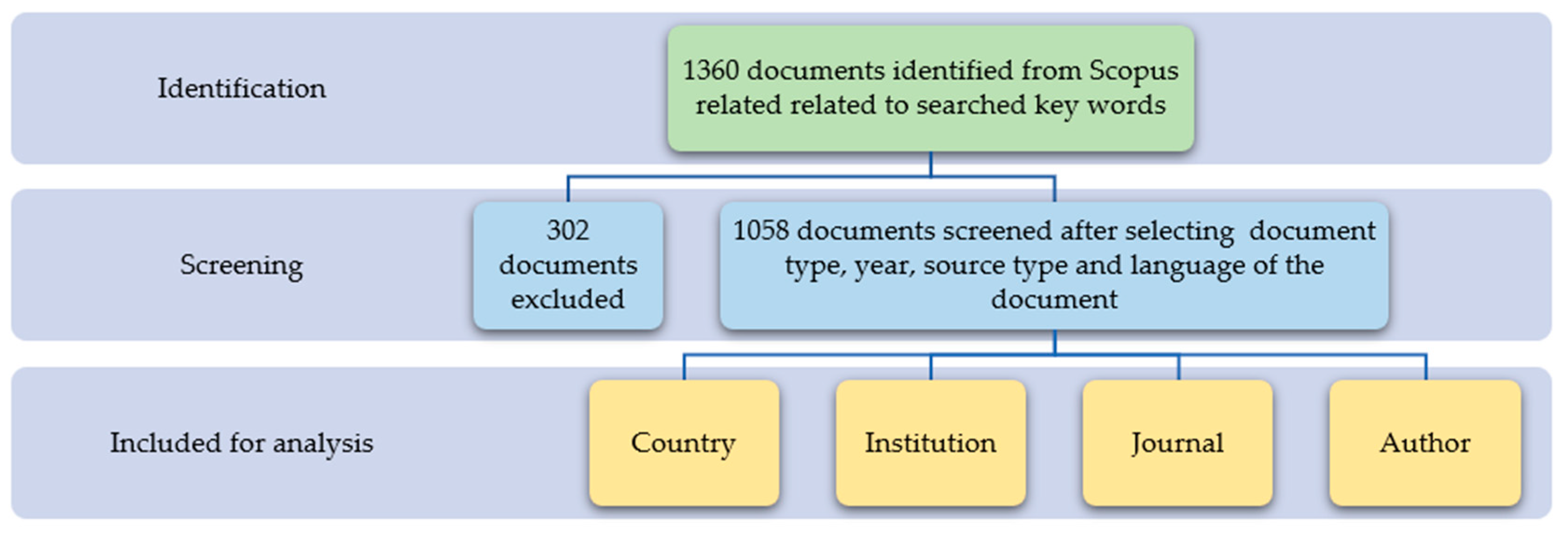
2.3. Database Selection
2.4. Study Design
- Type of the document and its language.
- Traits of the published document, e.g., total number of citations.
- Performance of the researcher/author.
- Co-citation and collaboration of the research.

2.5. Data Analysis and Interpretation
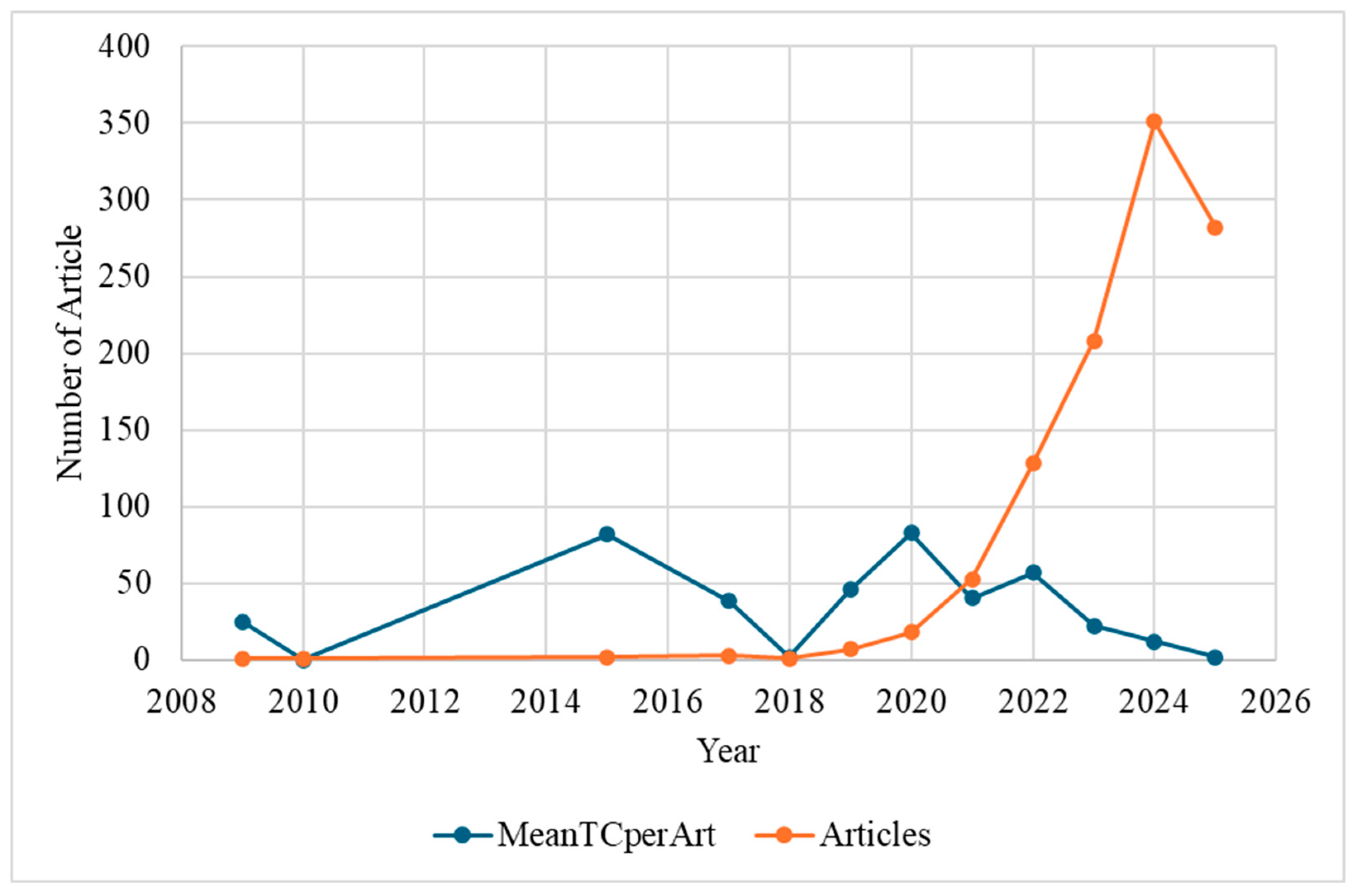
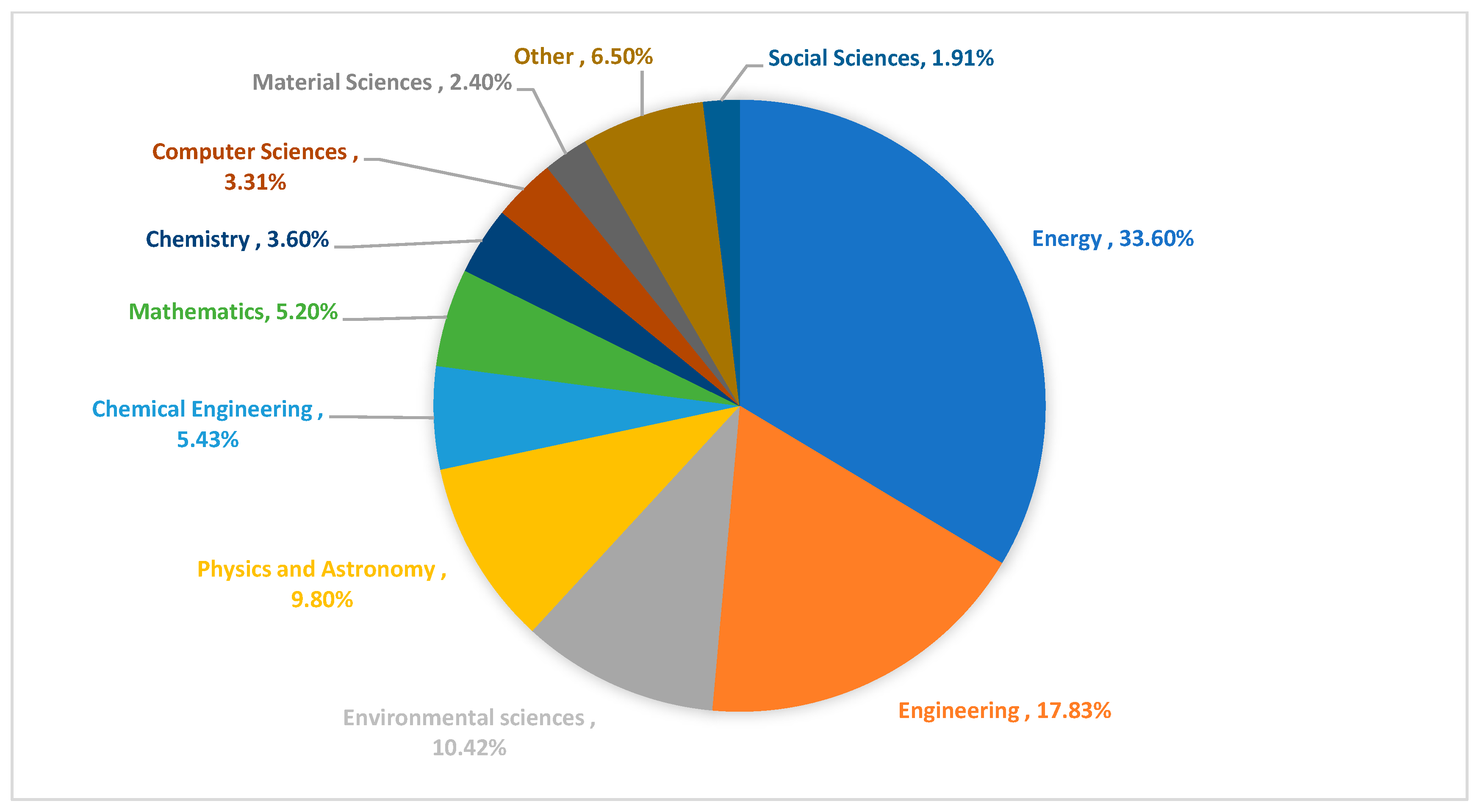
Characteristics of Published Documents
3. Distinctive Behaviour of Hydrogen and Ammonia
4. Hydrogen Storage Technologies
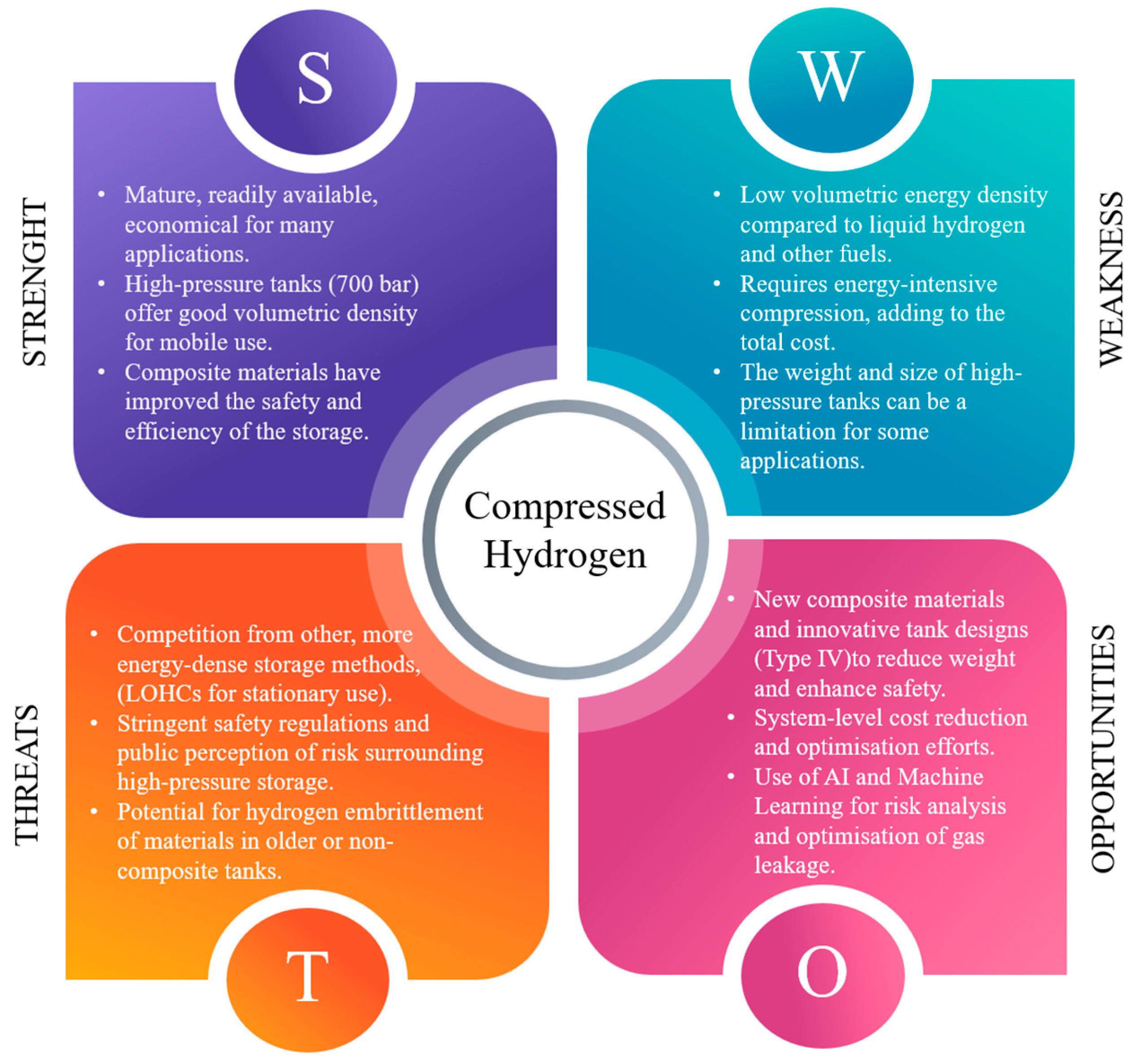
4.1. Compressed Hydrogen (CGH2)
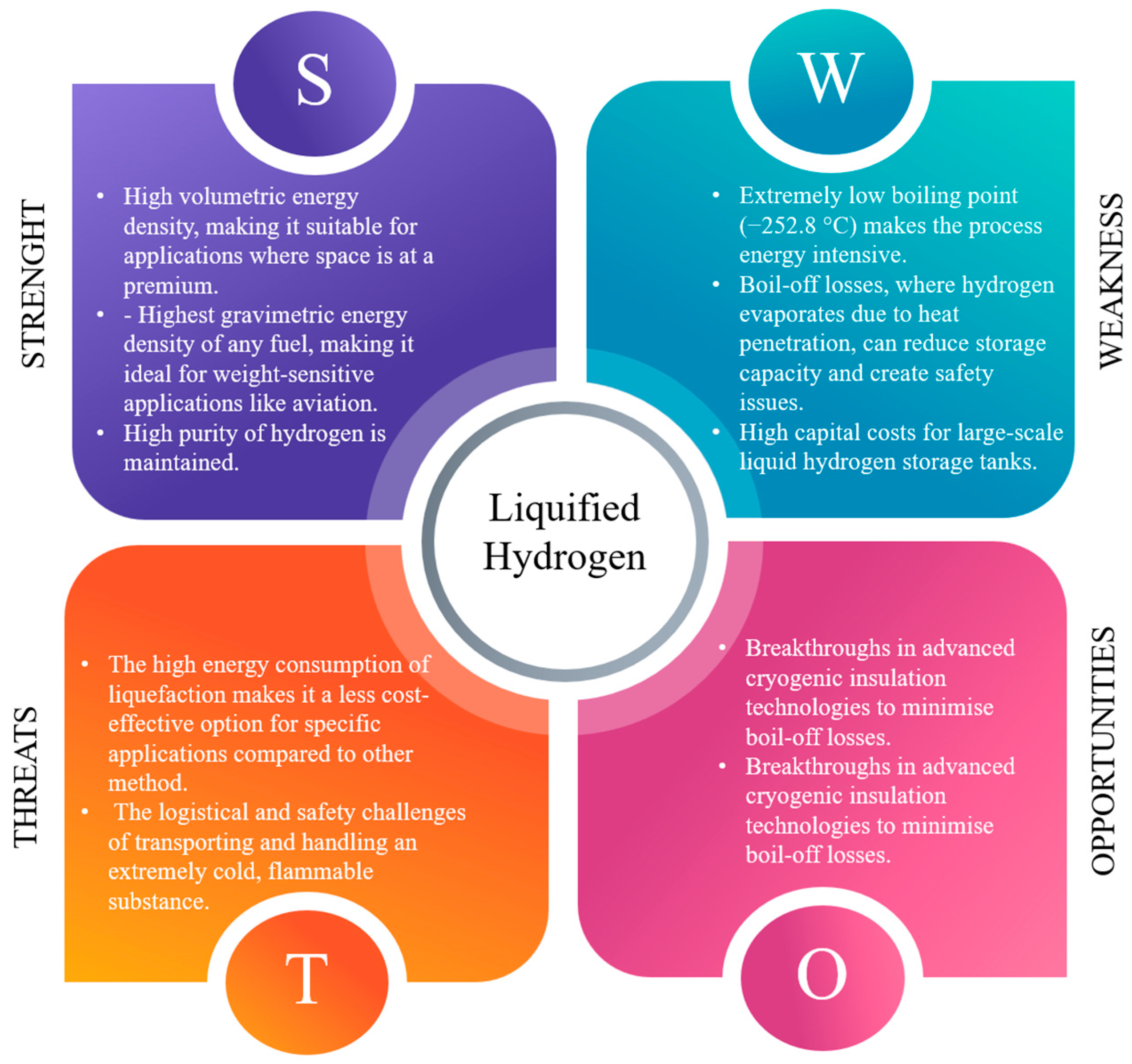
4.2. Liquid Hydrogen (LH2)
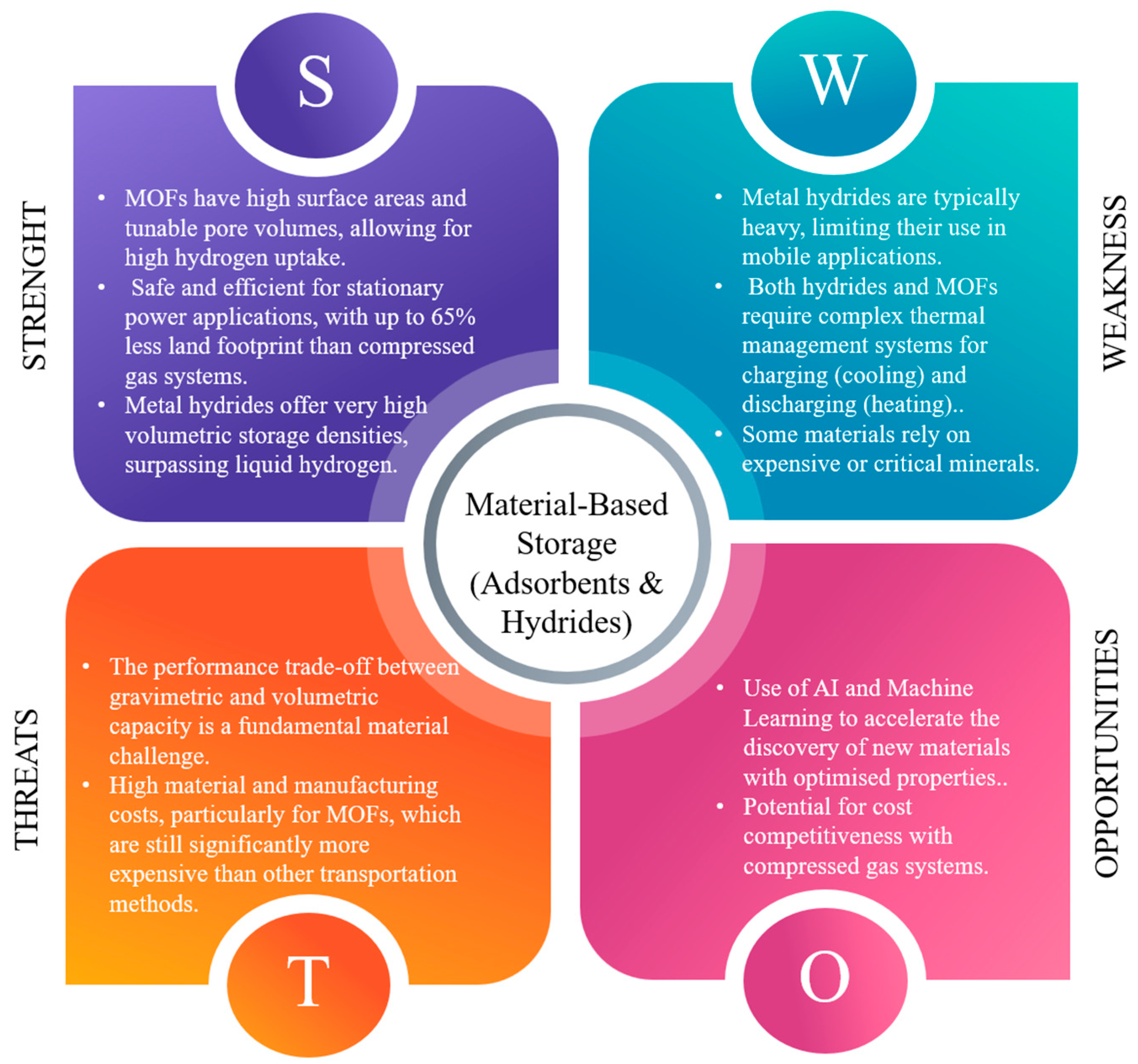
4.3. Material-Based Storage: (Absorbents and Hydrides)
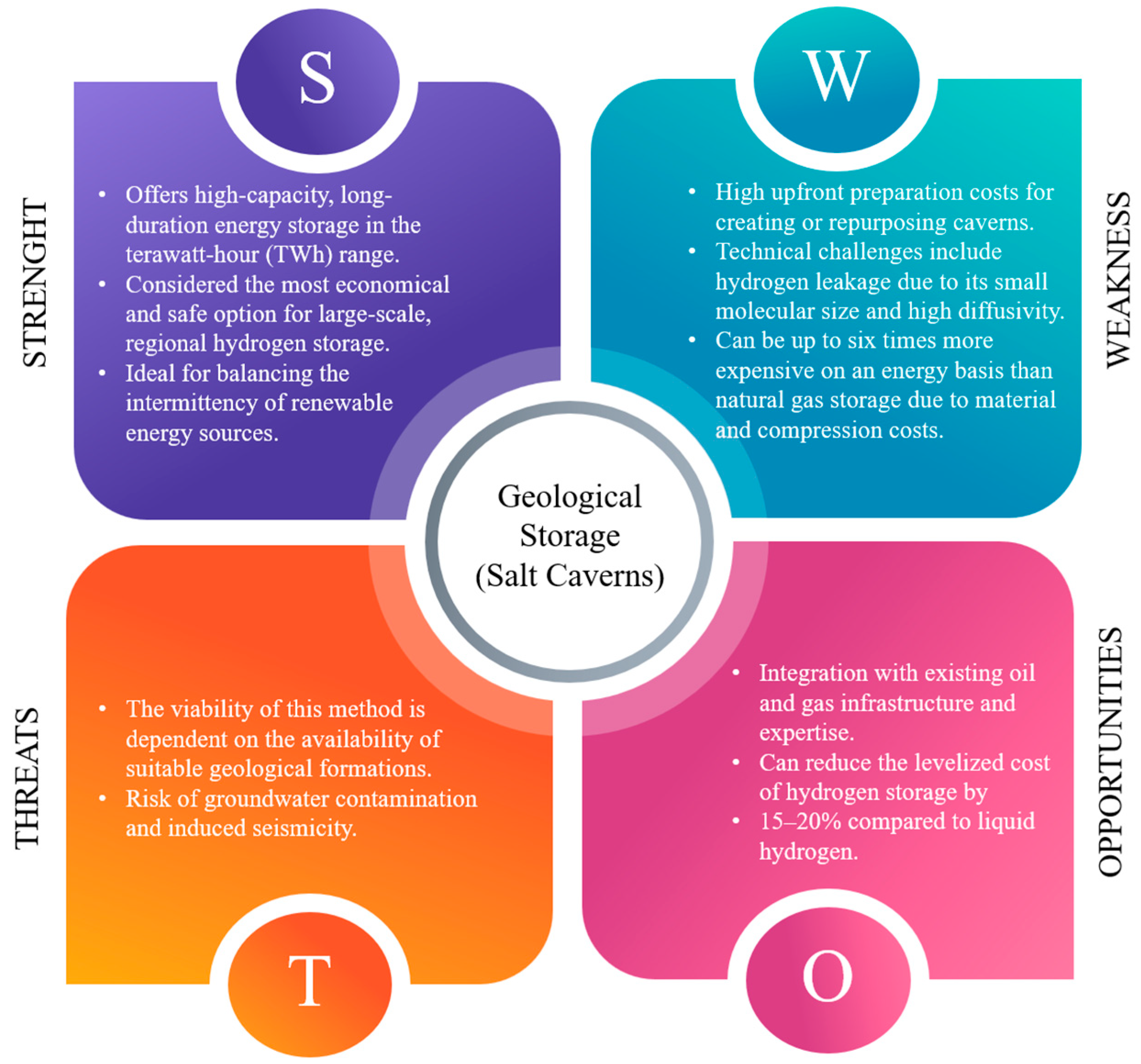
4.4. Geological Storage (Hydrogen)
4.5. Comparative Multicriteria Taxonomy of Hydrogen Storage
4.6. Risk-Mitigation Adaptability Framework for Hydrogen Storage
5. Ammonia Storage Technologies
5.1. Technical Taxonomy of Ammonia Storage
5.1.1. Pressurised Storage
5.1.2. Fully Refrigerated (Atmospheric/Cryogenic) Storage
5.1.3. Material-Based Solid-State Storage
5.1.4. Geological Storage (Ammonia)
5.2. SWOT Analysis for Ammonia Storage
5.3. Risk-Mitigation Adaptability Framework for Ammonia Storage
6. Sensitivity Assessment of Hydrogen and Ammonia Storage
7. Performance of Hydrogen and Ammonia Storage Systems
7.1. Technical Performance
7.2. Thermo-Mechanical Performance
7.3. Safety and Risk Assessment
7.4. Economic Performance
8. Discussions and Future Directions
- The development of new ideas, such as the Modular Adsorbing Tank Insert (MATI), which employs micro-channel cooling and can take advantage of fuel cell waste heat, is a step in the right direction towards the realisation of better systems.
- The creation of new composites that are more thermally stable and conductive to feature the lightweight but fragile Type 4 vessels and the heavy and thermally stable Type 1 vessels. These materials would form a new generation of vessels that can be used in more applications.
- Further studies and safety procedures need to focus on dynamic testing and modelling. Fatigue analysis should be part of the design process for high-cycle applications, with emphasis on interpreting cyclical stress amplitudes, rather than only on peak stress values.
- Multi-physics platforms are being developed to model the entire lifecycle of energy systems, including the long-term structural integrity of hydrogen and ammonia. This method, with experimental data, proved effective for fast, economical design iterations.
- The implementation of a portfolio concerning the storage solution, since neither ammonia nor hydrogen storage technology is ultimate, such as ideal high-pressure hydrogen gas and its long-distance transport, ideal liquid ammonia, ideal solid-state metal hydrides, and ideal stationary grid storage. This approach makes solutions tailored to the market requirements.
9. Conclusions
- Green hydrogen is the better option for applications where mass is the major limiting factor, such as aviation and some types of ground transportation. The contribution of hydrogen is especially significant in local, high-efficiency applications, where production is local and short-term storage can be reduced by leveraging the existing pipeline infrastructure, thereby minimising the transportation costs.
- Green ammonia’s higher volumetric energy density and reduced storage requirements make it a unique solution for transporting energy on a large scale and over long distances, especially in the maritime industry. An established, capital-efficient infrastructure with origins in the fertiliser industry is a potent route to bulk storage and power generation, enabling a quicker transition for select industries with lower capital requirements.
- This symbiotic relationship is the key to a strong energy future: ammonia is the distributor of the global energy storage of long duration and international trade, and hydrogen is the local and effective energy infrastructure.
Author Contributions
Funding
Data Availability Statement
Acknowledgments
Conflicts of Interest
Abbreviations
| H2 | Hydrogen |
| NH3 | Ammonia |
| CES | Chemical energy storage |
| SWOT | Strength, weakness, opportunity, threat |
| SCC | Stress corrosion cracking |
| CFD | Computational fluid dynamics |
| MeanTCperArt | Mean total citations per article |
| STP | Standard temperature and pressure |
| MPa | Mega Pascals |
| PSI | Pounds per square inch |
| CCH2 | Cryo-compressed hydrogen |
| MOFs | Metal–organic frameworks |
| LOHCs | Liquid organic hydrogen carriers |
| UHS | Underground hydrogen storage |
| TWh | Terawatt-hours |
| RMAF | Risk-Mitigation Adaptability framework |
| AE | Acoustic emissions |
| NDT | Non-destructive testing |
| COPV’s | Composite overwrapped pressure vessels |
| ASME | American Society of Mechanical Engineering |
| ISO | International Standards Organisation |
| OSHA | Occupational Safety and Health Administration |
| QRA | Quantitative risk assessment |
| CAPEX | Capital expenditure |
| OPEX | Operational expenditure |
| LCOH | Levelized cost of hydrogen |
| LCOA | Levelized cost of ammonia |
| LCOS | Levelized cost of storage |
| RTE | Round-trip efficiency |
| FEA | Finite element analysis |
| TEA | Techno-economic analysis |
References
- Maqbool, M.A.; Khan, J.; Hamayun, M.H.; Ahmed, F.; Hussain, M. Optimal retrofitting of MCH-Toluene dehydrogenation system: Energy and technoeconomic analysis. Energy Convers. Manag. 2023, 286, 117049. [Google Scholar] [CrossRef]
- Maqbool, M.A.; Rizvi, M.J.; Lee, Y.C.; Rosales, P.B. Technical Feasibility Analysis of Green Energy Storage Options and Hornsea Wind Farms. Energies 2025, 18, 2311. [Google Scholar] [CrossRef]
- Shi, L.; Ye, C.; Huang, H.; He, Q. A Design and Safety Analysis of the ‘Electricity-Hydrogen-Ammonia’ Energy Storage System: A Case Study of Haiyang Nuclear Power Plant. Energies 2024, 17, 5500. [Google Scholar] [CrossRef]
- Enasel, E.; Dumitrascu, G. Storage solutions for renewable energy: A review. Energy Nexus 2025, 17, 100391. [Google Scholar] [CrossRef]
- Sun, M.; Ling, Z.; Mao, J.; Zeng, X.; Yuan, D.; Liu, M. Ammonia-Based Clean Energy Systems: A Review of Recent Progress and Key Challenges. Energies 2025, 18, 2845. [Google Scholar] [CrossRef]
- Castillo, C.A.R.; Yeter, B.; Li, S.; Brennan, F.; Collu, M. A critical review of challenges and opportunities for the design and operation of offshore structures supporting renewable hydrogen production, storage, and transport. Wind Energy Sci. 2024, 9, 533. [Google Scholar] [CrossRef]
- Rasheed, T.; Shafi, S.; Anwar, M.T.; Khurshid, H.; Naveed, A.; Alshoaibi, A.; Alnaim, N.; Liu, Y.; Sherazi, T.A. Greener hydrogen production and storage revolution towards a low-carbon future: An overview of current scenarios and future prospects. Fuel 2026, 405, 136519. [Google Scholar] [CrossRef]
- Nyborg, R.; Lunde, L. Measure for Reducing SCC in Anhydrous Ammonia Storage Tanks. Process Saf. Prog. 1996, 15, 32–41. [Google Scholar] [CrossRef]
- Hu, Q.; Zhang, S.; Zhang, X.; Wang, F. Enhancing disaster prevention and structural resilience of tunnels: A study on liquid hydrogen leakage, diffusion, and explosion mitigation. Tunn. Undergr. Space Technol. 2025, 162, 106626. [Google Scholar] [CrossRef]
- Valera-Medina, A.; Vigueras-Zúñiga, M.O.; Shi, H.; Mashruk, S.; Alnajideen, M.; Alnasif, A.; Davies, J.; Wang, Y.; Zhu, X.; Yang, W.; et al. Ammonia combustion in furnaces: A review. Int. J. Hydrogen Energy 2024, 49, 1597–1618. [Google Scholar] [CrossRef]
- Häni, C.; Neftel, A.; Flechard, C.; Ammann, C.; Valach, A.; Kupper, T. Validation of a short-range dispersion and deposition model using field-scale ammonia and methane release experiments. Agric. For. Meteorol. 2024, 353, 110041. [Google Scholar] [CrossRef]
- Lyons, K.; Rattigan, W.; Moodie, K.; Atkinson, G. Hydrogen dispersion following blowdown releases into a tunnel. In Proceedings of the International Conference on Hydrogen Safety, Madrid, Spain, 19–21 September 2022. [Google Scholar]
- Hou, L.; Whalen, J.K.; Constant, P. Ecological traits of high-affinity hydrogen-oxidizing soil bacteria involved in the hydrogen cycle. Soil Biol. Biochem. 2025, 202, 109831. [Google Scholar] [CrossRef]
- Levikhin, A.A.; Boryaev, A.A. Physical properties and thermodynamic characteristics of hydrogen. Heliyon 2024, 10, e36414. [Google Scholar] [CrossRef]
- Karvounis, P.; Theotokatos, G.; Boulougouris, E. Environmental-economic sustainability of hydrogen and ammonia fuels for short sea shipping operations. Int. J. Hydrogen Energy 2024, 57, 1070–1080. [Google Scholar] [CrossRef]
- Li, J.; Pei, L.; Lu, C.; Godbole, A.; Michal, G. Hydrogen effects on the mechanical behaviour and deformation mechanisms of inclined twin boundaries. Int. J. Hydrogen Energy 2021, 46, 16127–16140. [Google Scholar] [CrossRef]
- Avcu, A.; Seyedzavvar, M.; Boga, C.; Choupani, N. Assessing the safety and reliability of type-3 high-pressure composite tanks: A comprehensive analysis of failure metrics. Sādhanā 2024, 49, 55. [Google Scholar] [CrossRef]
- Mekonnin, A.S.; Wacławiak, K.; Humayun, M.; Zhang, S.; Ullah, H. Hydrogen Storage Technology, and Its Challenges: A Review. Catalysts 2025, 15, 260. [Google Scholar] [CrossRef]
- Beyazit, N.İ. Comparative Study of Hydrogen Storage and Metal Hydride Systems: Future Energy Storage Solutions. Processes 2025, 13, 1506. [Google Scholar] [CrossRef]
- Quintos Fuentes, J.E.; Santos, D.M.F. Technical and Economic Viability of Underground Hydrogen Storage. Hydrogen 2023, 4, 975–1000. [Google Scholar] [CrossRef]
- Safety of Hydrogen Handling and Storage Guide. Available online: https://tukes.fi/en/safety-of-hydrogen-handling-and-storage (accessed on 20 November 2025).
- Rivkin, C.; Burgess, R.; Buttner, W. Hydrogen Technologies Safety Guide. 2015. Available online: www.nrel.gov/publications (accessed on 20 November 2025).
- Sustainability Directory. Hydrogen Safety Management. Available online: https://energy.sustainability-directory.com/term/hydrogen-safety-management/ (accessed on 20 November 2025).
- Hanekamp, J.C. Hydrogen Hazards and Risks-Physics, Storage, Transport and Application; University College Roosevelt: Middelburg, The Netherlands, 2023. [Google Scholar] [CrossRef]
- Viktoria Bohacikova, S.R.P. Lessons Learnt from Hydrogen Incidents. Gexcon. Available online: https://www.gexcon.com/resources/blog/lessons-learnt-from-hydrogen-incidents/ (accessed on 21 November 2025).
- Murphy, D. Case Study: Power Plant Hydrogen Explosion. WHA-International. Available online: https://wha-international.com/case-study-power-plant-hydrogen-explosion/ (accessed on 21 November 2021).
- Smith, J. Common Compressed Hydrogen Safety Concerns. Atlas Copco. Available online: https://www.atlascopco.com/en-us/compressors/wiki/compressed-air-articles/compressed-hydrogen-safety-concerns (accessed on 22 November 2025).
- Bohacikova, V.S.V. Hydrogen Fireball in a Storage Area Using EFFECTS. Gexcon. Available online: https://www.gexcon.com/resources/blog/hydrogen-fireball-in-a-storage-area-using-effects/ (accessed on 22 November 2025).
- Killingland, M. Hydrogen at Scale: Balancing Innovation and Safety. DNV. Available online: https://www.dnv.com/article/expert-viewpoint-hydrogen-at-scale-balancing-innovation-and-safety/ (accessed on 23 November 2025).
- Bjerketvedt, D.; Mjaavatten, A. A Hydrogen-Air Explosion in a Process Plant: A Case History. Available online: https://conference.ing.unipi.it/ichs2005/Papers/100096.pdf (accessed on 23 November 2025).
- Li, H.; Yazdi, M.; Adumene, S.; Goleiji, E. Integrating safety management systems in hydrogen production facilities. Int. J. Hydrogen Energy 2025, 128, 345–358. [Google Scholar] [CrossRef]
- Wang, J.; Zhao, Y. Large-scale hydrogen storage-transportation equipment safety and accident chain interruption keys for petrochemical industry. Energy Mater. 2025, 5, 500124. [Google Scholar] [CrossRef]
- Vieyra, M. Monitoring Systems for Safe Usage of Hydrogen Power. TWI-The Welding Institute. Available online: https://www.twi-global.com/who-we-are/who-we-work-with/industry-sectors/automotive/electric-and-hybrid-cars/hydrogen (accessed on 3 December 2025).
- Holum, M. Hydrogen Fuel Storage. Hexagon Purus. Available online: https://hexagonpurus.com/hydrogen-fuel-storage (accessed on 4 December 2025).
- Detek, M. Which Measurements Ensure Safety and Purity of Hydrogen Gas in Storage and Transport. DWYER OMEGA. Available online: https://hydrogen-central.com/pst-measurements-safety-purity-hydrogen-gas-storage-transport/ (accessed on 4 December 2025).
- EIGA. Gaseous Hydrogen Installations. Available online: https://www.eiga.eu/ (accessed on 4 December 2025).
- Various Hydrogen Storage Methods & Associated Safety Risks. Synergen OG. Available online: https://synergenog.com/hydrogen-storage-methods-associated-safety-risks/ (accessed on 10 December 2025).
- U.S. Department of Energy Hydrogen; Fuel Cell Technologies Office. Hydrogen and Fuel Cell Technologies Office Multi-Year Program Plan: Safety, Codes and Standards. Available online: https://www.iso.org/home.html (accessed on 10 December 2025).
- Collina, G.; Subedi, A.; Campari, A.; Thapa, B.S.; Paltrinieri, N. Lessons Learned from H2-Related Incidents: Criticality of Maintenance Operations. In Proceedings of the International Conference on Hydrogen Safety (ICHS/HAZARDS 33), Birmingham, UK, 21–23 November 2023. [Google Scholar]
- Federal Register. Federal Motor Vehicle Safety Standards; Fuel System Integrity of Hydrogen Vehicles; Compressed Hydrogen Storage System Integrity; Incorporation by Reference. The Daily Journal of the United States Government. Available online: https://www.federalregister.gov/documents/2024/04/17/2024-07116/federal-motor-vehicle-safety-standards-fuel-system-integrity-of-hydrogen-vehicles-compressed (accessed on 12 December 2025).
- The Royal Society. Ammonia: Zero-Carbon Fertiliser, Fuel and Energy Store; The Royal Society: London, UK, 2020. [Google Scholar]
- Iberdrola. Green Ammonia: The Sustainable Revolution in the Chemical Industry. Available online: https://www.iberdrola.com/about-us/our-activity/green-hydrogen/green-ammonia (accessed on 12 December 2025).
- Chung, Y.H.; Lee, W.J.; Kang, J.; Yoon, S.H. Fire Safety Evaluation of High-Pressure Ammonia Storage Systems. Energies 2022, 15, 520. [Google Scholar] [CrossRef]
- International Fertilizer Industry Association (IFA). Guidance for Inspection of Atmospheric, Refrigerated Ammonia Storage Tanks; IFA: Paris, France, 2008. [Google Scholar]
- U.S. Department of Labor. Ammonia Refrigeration; Occupational Safety and Health Administration (OSHA): Washington, DC, USA, 2024.
- Lu, W.; De Alwis Jayasinghe, D.; Schröder, M.; Yang, S. Ammonia Storage in Metal-Organic Framework Materials: Recent Developments in Design and Characterization. Acc. Mater. Res. 2024, 5, 1279–1290. [Google Scholar] [CrossRef] [PubMed]
- Underground Storage of Ammonia (NH3). Available online: https://energnet.eu/wp-content/uploads/2023/07/Underground-Storage-of-Ammonia-Review-of-possibilities-tobeuploaded-3.pdf (accessed on 3 January 2026).
- Aziz, M.; TriWijayanta, A.; Nandiyanto, A.B.D. Ammonia as effective hydrogen storage: A review on production, storage and utilization. Energies 2020, 13, 3062. [Google Scholar] [CrossRef]
- Pattabathula, V.; Nayak, R. Ammonia Storage Tanks. AmmoniaKnowHow. Available online: https://ammoniaknowhow.com/ammonia-storage-tanks/ (accessed on 3 January 2026).
- Rodriguez, G.D.; Carreño, A.P. Ammonia: A Clean Fuel for a Cleaner Future. In Proceedings of the 10th International Conference on Maritime Transport, Barcelona, Spain, 5–7 June 2024. [Google Scholar]
- Storage and Handling of Anhydrous Ammonia; Occupational Safety and Health Administration (OSHA): Washington, DC, USA, 2024.
- Benjamin, S. New Ammonia Chapter for Technical and Operational Decision Support. DNV. Available online: https://www.dnv.com/expert-story/maritime-impact/new-ammonia-chapter-for-technical-and-operational-decision-support/ (accessed on 3 January 2026).
- Cao, C.; Wen, B.; Fang, Y.; Hou, Z.; Wang, Q.; Zhang, T.; Huang, L.; Chen, Q.; Zhang, L.; Zhao, Y. A comprehensive comparison of green ammonia and green methanol from a full chain: Production, transportation, storage and utilization. Carbon Neutral Syst. 2025, 1, 8. [Google Scholar] [CrossRef]
- Tully, Z.; King, J.; Johnson, K. Hydrogen storage minimization under industrial flexibility constraints: A techno-economic analysis of off-grid green ammonia production. Int. J. Hydrogen Energy 2025, 111, 12–21. [Google Scholar] [CrossRef]
- Edmonds, L.; Liu, X.; Wu, H. A Demand-Responsive Green Ammonia Plant and its Impact on the Electricity Distribution System. In Proceedings of the IEEE Power and Energy Society General Meeting; IEEE Computer Society: Piscataway, NJ, USA, 2022. [Google Scholar] [CrossRef]
- Brown, T. Ammonia for Energy Storage: Economic and Technical Analysis. Ammonia Energy Association. Available online: https://ammoniaenergy.org/articles/ammonia-for-energy-storage-economic-and-technical-analysis/ (accessed on 4 January 2026).
- Business Research Insights. Green Ammonia from Green Hydrogen Market Size, Share, Growth, and Industry Analysis. Available online: https://www.businessresearchinsights.com/market-reports/green-ammonia-from-green-hydrogen-market-122495 (accessed on 4 January 2026).
- Mercado-Guati Rojo, A.; Valera-Medina, A. Importance of Public Perception towards an Ammonia Economy. Ammonia Energy Association. Available online: https://ammoniaenergy.org/articles/importance-of-public-perception-towards-an-ammonia-economy/ (accessed on 4 January 2026).
- Yuan, K.; Liu, Z. A structural mechanics analysis on a Type IV hydrogen storage tank during refueling and discharging. Eng. Fail. Anal. 2024, 165, 108822. [Google Scholar] [CrossRef]
- Zhou, Y.; Li, J.; Wang, H.; Zhang, X.; Chen, Y. Comparative analysis of impact damage and residual burst pressure of type III and type IV hydrogen storage cylinders. Int. J. Hydrogen Energy 2025, 98, 370–383. [Google Scholar] [CrossRef]
- De Miguel, N.; Cebolla, R.O.; Acosta, B.; Moretto, P.; Harskamp, F.; Bonato, C. Compressed hydrogen tanks for on-board application: Thermal behaviour during cycling. Int. J. Hydrogen Energy 2015, 40, 6449–6458. [Google Scholar] [CrossRef]
- Li, J.; Wang, Y.; Zhang, X.; Liu, H.; Chen, Z. Research on Temperature Rise of Type IV Composite Hydrogen Storage Cylinders in Hydrogen Fast-Filling Process. Energies 2023, 16, 2918. [Google Scholar] [CrossRef]
- Li, K.; Dong, X.; Wang, H.; Gong, M. Study on the influence factors of gravimetric hydrogen storage density of type III cryo-compressed hydrogen storage vessel. Int. J. Hydrogen Energy 2024, 96, 680–691. [Google Scholar] [CrossRef]
- Bendine, K.; Perrin, H.; Kirkayak, L.; Belouettar, S. Enhancing hydrogen storage tank integrity with optimized carbon fiber strips reinforcement: A finite element analysis. Acta Mech. 2025, 236, 4297. [Google Scholar] [CrossRef]
- Huang, S.; Chen, X.; Cheng, Y.; Li, X.; Fan, D.; Chen, Q. Structural design and mechanical property analysis of a 35MPa Type III hydrogen storage gas cylinder. J. Phys. Conf. Ser. 2025, 3064, 012027. [Google Scholar] [CrossRef]
- Wang, X.; Peng, P.; Witman, M.D.; Stavila, V.; Allendorf, M.D.; Breunig, H.M. Technoeconomic Insights into Metal Hydrides for Stationary Hydrogen Storage. Adv. Sci. 2025, 12, 2415736. [Google Scholar] [CrossRef]
- Zhang, Z.; Turap, Y.; Wang, Y.; Wang, Y.; Wang, Z.; Wang, W. Study on the impact of hydrogen storage temperature on iron-based thermochemical hydrogen storage technology. Chem. Eng. J. 2024, 490, 151536. [Google Scholar] [CrossRef]
- Hu, H.; Zhang, X.; Li, J.; Wang, Y.; Chen, Z.; Liu, H. Thermodynamic modeling and analysis of hydrogen storage systems in hydrogen refueling stations. Int. J. Hydrogen Energy 2024, 49, 12345–12358. [Google Scholar] [CrossRef]
- Sedmak, S.A.; Adžiev, G.; Sedmak, A.; Adžiev, T.; Sedmak, S. Integrity Assessment of Spherical Storage Tank See Profile Structural Integrity Assessment of Spherical Storage Tanks. Available online: https://www.researchgate.net/publication/267244282 (accessed on 7 January 2026).
- Reynaldo, A.; Pramono, H.S.; Santosa, S.P.; Aziz, M. Finite element analysis of liquefied ammonia tank for mobility vehicles employing polymers and composites. Energies 2020, 13, 5312. [Google Scholar] [CrossRef]
- Yanagimoto, F.; Shiotani, K.; Sakakibara, Y.; Wanatabe, Y.; Tada, E. Stress corrosion cracking of steels in liquid ammonia: A comprehensive literature review. Int. J. Hydrogen Energy 2025, 50, 11234–11258. [Google Scholar] [CrossRef]
- Sang-Kun, O.; Yi, K.W.; Cho, S.W. Numerical simulation of hydrogen desorption from high-density metal hydride hydrogen storage vessels. Met. Mater. Int. 2017, 23, 764–769. [Google Scholar] [CrossRef]
- Reda, R.; Ataya, S.; Ashraf, A. Finite Element Modeling of Different Types of Hydrogen Pressure Vessels Under Extreme Conditions for Space Applications. Processes 2025, 13, 1429. [Google Scholar] [CrossRef]
- Araújo, H.F.; Gómez, J.A.; Santos, D.M.F. Proton-Exchange Membrane Electrolysis for Green Hydrogen Production: Fundamentals, Cost Breakdown, and Strategies to Minimize Platinum-Group Metal Content in Hydrogen Evolution Reaction Electrocatalysts. Catalysts 2024, 14, 845. [Google Scholar] [CrossRef]
- Szabó, G.S.; Coteț, F.-A.; Ferenci, S.; Szabó, L. Advances in Materials and Manufacturing for Scalable and Decentralized Green Hydrogen Production Systems. J. Manuf. Mater. Process. 2026, 10, 28. [Google Scholar] [CrossRef]
- Xue, J.; Boukadi, F. Factors Affecting Energy Consumption in Hydrogen Liquefaction Plants. Processes 2025, 13, 2611. [Google Scholar] [CrossRef]
- Qian, X.; You, S.; Wang, R.; Yue, Y.; Liao, Q.; Dai, J.; Tian, S.; Liu, X. Underground Hydrogen Storage in Salt Cavern: A Review of Advantages, Challenges, and Prospects. Sustainability 2025, 17, 5900. [Google Scholar] [CrossRef]
- Tarkowski, R.; Uliasz-Misiak, B. Underground Hydrogen Storage: Insights for Future Development. Energies 2025, 18, 5724. [Google Scholar] [CrossRef]
- Abdin, Z.; Tang, C.; Liu, Y.; Catchpole, K. Large-scale stationary hydrogen storage via liquid organic hydrogen carriers. iScience 2021, 24, 102966. [Google Scholar] [CrossRef] [PubMed]
- Sołtysik, M.; Mucha-Kuś, K.; Kamiński, J. The New Model of Energy Cluster Management and Functioning. Energies 2022, 15, 6748. [Google Scholar] [CrossRef]



| Element | h_Index | Total Citation | No of Publications | Publication Year Start |
|---|---|---|---|---|
| International Journal of Hydrogen Energy | 41 | 6366 | 172 | 2019 |
| Applied Energy | 26 | 1896 | 43 | 2017 |
| Energy Conversion and Management | 25 | 2267 | 54 | 2021 |
| Energies | 17 | 1045 | 60 | 2019 |
| Journal of Energy Storage | 13 | 551 | 27 | 2015 |
| Fuel | 10 | 319 | 12 | 2019 |
| Energy | 9 | 291 | 29 | 2023 |
| Journal of Cleaner Production | 9 | 323 | 19 | 2022 |
| Renewable and Sustainable Energy Reviews | 9 | 781 | 15 | 2022 |
| Renewable Energy | 8 | 691 | 27 | 2022 |
| Element | h-Index | Total Citation | No of Publication | Publication Year Start |
|---|---|---|---|---|
| Dincer I | 3 | 1118 | 4 | 2021 |
| Crawford CA | 2 | 1067 | 2 | 2022 |
| Ishaq H | 2 | 1067 | 2 | 2022 |
| Gazzani M | 2 | 663 | 2 | 2020 |
| Mazzotti M | 2 | 663 | 2 | 2020 |
| Jahirul MI | 2 | 546 | 3 | 2022 |
| Rasul MGR | 2 | 546 | 3 | 2022 |
| Hazrat MA | 2 | 544 | 2 | 2022 |
| Sattar MA | 2 | 523 | 2 | 2022 |
| Shearer MJ | 1 | 521 | 1 | 2022 |
| Environment | Ammonia Behaviour and Challenge | Hydrogen Behaviour and Challenge | Novel Insights/Research Gap |
|---|---|---|---|
| Confined Space (e.g., tunnel) | Mixing ammonia with air in a confined environment will be slow, but a small amount can reach a lethal concentration [8]. | It will create a homogenous mixture in a confined space such as a tunnel, which will be highly explosive [9]. | Development of various sensor network architectures: H2 sensors must have wide coverage because of explosion hazard; NH3 sensors must be deployed at the floor level to avoid toxicity. |
| High-Temperature Environment (Combustion) | Combustion of ammonia in air leads to very high NOx emissions (without using advanced catalysts) [10]. | It will produce NOX when burned in air, a potential pollutant [10]. | Summary of current research on ultra-low NOx combustor technology for ammonia and blends of ammonia and hydrogen. This is a critical research frontier. |
| Atmospheric Leak (Open Air) | Because it is high-density compared to the air, it will form ground-hugging plumes, which are highly toxic and pose an environmental risk [11]. | There is a low risk of accumulation at ground because it will move upward rapidly, but it has a high ignition risk [12]. | Advancements in CFD models of leak dispersal for these two green fuels in urban, rural, and marine environments. Which is safer, depending upon the context? |
| Soil and Groundwater (Pipeline Leak) | Ammonia hydrolyses to ammonium and hydroxide ions, leading to a severe alkalinity spike that is devastating for soil and water biology [13]. | Minimal chemical interaction will displace oxygen, potentially harming the root system [14]. | Development of “self-healing” or “smart” pipelines designed to find and seal leaks for these two green fuels. |
| Marine Environment (Shipping) | Ammonia is well-soluble in water, so a spill would create a toxic, oxygen-depleting plume that would harm aquatic life [15]. | Boil-off gas management is complex due to its low boiling point, which requires venting or reliquification [15]. | Compare the environmental effect of an imagined NH3 spill with the GHG effect of H2 boil-off venting (if not combusted). |
| Behaviour with materials (Storage and transportation) | Liquid ammonia caused SCC by attacking high-strength steels and alloys in the presence of a trace amount of water and air [8]. | Hydrogen molecules can damage the material properties, leading to surface cracking and catastrophic brittle failure under stress [16]. | Finding the material compatibility solutions. Hydrogen in metallurgy: austenitic stainless steels, aluminium alloys, and composites. Ammonia, purity, and inhibitors are the questions: keeping anhydrous and adding chemical additives to passivate the surface. |
| Risk Category and Specific Hazard | Preventive Controls (Engineered and Procedural) | Detection and Continuous Monitoring | Corrective and Emergency Actions | Adaptability and Learning Loop | Governing Codes and Standards |
|---|---|---|---|---|---|
| Material Integrity | |||||
| Hydrogen Embrittlement in Steel Components (Piping, Valves, Type I Vessels) | Engineered: Material selection per code (e.g., austenitic stainless steels); controlled material processing to minimise residual stress. Procedural: Strict hydrogen purity specifications to limit embrittling contaminants [21]. | Acoustic emission (AE) monitoring: Real-time detection of crack initiation and growth. Periodic inspection: Non-destructive testing (NDT), such as advanced ultrasonic testing, is performed during scheduled shutdowns [22]. | Automated: Trigger alarm at pre-defined AE activity threshold. Manual: Isolate affected section; conduct detailed inspection; replace component based on condition [23]. | Analyse AE data trends to develop predictive maintenance models for component replacement. Conduct failure analysis on any cracked components to validate material selection. | ASME B31.12, ASME Boiler and Pressure Vessel Code [24] |
| Fatigue Cracking in Composite Overwrapped Pressure Vessels (COPVs) | Engineered: Vessel design validated through extensive pressure cycle testing (e.g., 5000+ cycles) and burst tests per regulations. Procedural: Adherence to specified fill rates and temperature limits to minimise stress [25]. | AE monitoring: Continuous monitoring for fibre breakage and delamination events during filling and operation. Embedded Sensors: Integration of strain gauges or fibre optics to monitor structural health [22]. | Automated: Activate vehicle dashboard warning or station alarm based on AE signal. Manual: Immediately remove the vessel from service for detailed NDT or replacement [22]. | Correlate AE data with operational history (fill cycles, pressures) to refine vessel life prediction models. Share anonymised failure data with manufacturers and standards bodies [26]. | FMVSS No. 308, ISO 19885-1 [27] |
| Operational and Component Hazards | |||||
| Leak from High-Pressure Fitting or Seal | Engineered: Use of high-integrity fittings designed for hydrogen service; minimise the number of connections. Procedural: Strict, documented assembly and torquing procedures; leak testing (e.g., with helium) after assembly [26]. | Ultrasonic gas leak detection (UGLD): “Hears” the high-frequency sound of a pressurised leak for rapid detection. Electrochemical/catalytic sensors: Detects H2 concentrations at parts-per-million (ppm) levels in targeted areas [28,29]. | Automated: Trigger emergency shutdown system to isolate source; activate ventilation systems; sound alarms. Manual: Site evacuation per emergency plan; approach from upwind [30]. | Conduct root cause analysis (RCA) on every leak, regardless of size. Use findings to refine assembly procedures, component selection, or maintenance frequency [31]. | NFPA 2, ISO 26142 [32] |
| Catastrophic Vessel Rupture (e.g., from fire impingement) | Engineered: Installation of thermally activated pressure relief device (TPRD) on vessel. Procedural: Facility layout and siting with adequate separation distances to prevent fire spread [33,34]. | UV/IR flame detectors: “Sees” the nearly invisible hydrogen flame. Thermal imaging cameras: Detect heat from fire or vessel impingement [28]. | Automated: TPRD activation vents hydrogen to prevent a burst, creating a large jet fire. Activate fire suppression (e.g., water mist) to cool adjacent structures. Manual: Evacuate to a safe distance; coordinate with emergency responders [35]. | Analyse fire test data and incident reports to validate TPRD performance and vent stack design. Use QRA to model fire scenarios and optimise facility layout [30]. | NFPA 2, FMVSS No. 308 (Fire Test) [36] |
| Systemic and Human-Factor Risks | |||||
| Incorrect Assembly or Maintenance (e.g., wrong part, improper torque) | Engineered: Use of poka-yoke (mistake-proofing) designs, such as unique fittings for different pressures. Procedural: Rigorous management of change (MOC) process; detailed work instructions with verification steps; competency assurance for technicians [37]. | Procedural: Independent verification or “double-witness” sign-off for critical assembly steps. Post-maintenance testing: Mandatory leak and function testing before returning to service [26]. | Manual: Stop work authority for any personnel who observes a procedural deviation. Isolate the system and correct the error before proceeding. | Investigate all maintenance-related near-misses and incidents. Use findings to improve training, procedures, and component design for easier, error-proof assembly [38]. | Internal Safety Management System (SMS) |
| Formation of Explosive Atmosphere in Confined Space | Engineered: Locate equipment outdoors where possible. For indoor locations, design high-rate ventilation systems (natural or forced) directed upwards. Procedural: Strict ignition source control (e.g., hazardous area classification, intrinsically safe electronics). | Point H2 sensors: Placed at high points and near potential leak sources to detect accumulation. Ventilation monitoring: Airflow sensors to confirm the ventilation system is operating correctly [29]. | Automated: At low H2 concentration (e.g., 25% of LFL), activate high-rate ventilation and alarms. At high concentration (e.g., 40% of LFL), trigger ESD and de-energise non-rated equipment [28]. | Use computational fluid dynamics (CFD) modelling to validate ventilation design and sensor placement. Review and update hazardous area classifications based on operational experience [39]. | NFPA 2, IEC 60079-10-1 [40] |
| Category | Factor | Description |
|---|---|---|
| Strengths | High Energy Density | Liquid hydrogen’s volumetric energy density (12.7 MJ/L) is higher than that of liquid hydrogen, making it an efficient carrier [48]. |
| Existing Infrastructure | Leverages a century-old global network of storage, transport, and production assets, reducing capital expenditure [49]. | |
| Manageable Storage Conditions | Requires fewer demanding conditions (−33 °C or 10 bar) than cryogenic liquid hydrogen (−253 °C) [50]. | |
| Mature Technology | Large-scale storage tanks are a mature technology with established safety standards like API 620 [51]. | |
| Weaknesses | Toxicity and Corrosiveness | Ammonia is a hazardous, toxic chemical that requires extensive safety controls and presents risks to human health and equipment integrity [52]. |
| High Costs of Storage | Ammonia storage vessels such as Horton spheres and bullets are expensive to fabricate and maintain [53]. | |
| Energy-Intensive Process | Overall efficiency from electricity to ammonia is currently low (45–55%), indicating significant energy losses [54]. | |
| Material Compatibility | Corrosive nature necessitates specific low-temperature carbon–manganese steel and careful material selection to avoid issues like stress corrosion cracking [52]. | |
| Opportunities | Policy and Regulatory Support | Governments incentivise green energy adoption through policies and grants (e.g., EU RED III, US IRA) that create a favourable investment climate [54]. |
| Decarbonisation Pressures | Growing demand for clean fuels in hard-to-abate sectors like the maritime and heavy industries creates a significant new market [55]. | |
| Grid-Scale Energy Storage | Green ammonia’s capability for long-duration storage makes it an ideal solution for balancing the intermittency of renewable energy on the grid [56]. | |
| Threats | High Capital Investment | Massive upfront capital is required for new facilities, posing a significant financial barrier to project development [57]. |
| Public Perception | Past incidents and the “dangerous gas” reputation create public opposition, which can stall projects and complicate permitting [58]. | |
| Competition | Green ammonia competes with other clean energy vectors, such as batteries, green methanol, and direct hydrogen, for limited investment and market share [50]. | |
| Fugitive Emissions | Leaks or spills can release ammonia into the environment, causing direct toxic damage to ecosystems and contributing to nitrogen pollution and soil acidification [43]. |
| Risk Category | Specific Risk | Mitigation Strategy | Adaptability Measure |
|---|---|---|---|
| Technical | Overpressure from overfilling/thermal expansion | Installation of redundant pressure/vacuum relief valves and remote shut-off valves. Use of permanent vaporisers to prevent air ingress. Strict adherence to filling density regulations. | Development of novel synthesis pathways (e.g., electrochemical, geologic) that reduce or eliminate the need for high-pressure storage and transport. |
| Vessel failure from material degradation | Use of DWDI tanks and appropriate materials (e.g., impact-tested carbon–manganese steel). Regular inspections via acoustic emission (AE) testing. Maintenance of minimum moisture levels to prevent SCC. | Technological innovation in solid-state storage materials (e.g., metal ammines, MOFs) that are non-pressurised and non-corrosive. | |
| Environmental | Fugitive emissions from leaks | Installation of continuous leak detection systems and sensors. Piped back-up systems route vented ammonia back to the storage tank or to a flare. | Proactive research and development on nitrogen pollution and its impact on biodiversity. Use of closed-loop systems to manage all fugitive emissions and by-products. |
| Spills and their ecosystem impact | Robust procedural controls, including emergency response plans and personnel training. Use of water sprays to mitigate gas clouds and contain spills. Elevated foundations and concrete bunds for containment. | Long-term strategy of decentralising production and storage via small-scale plants that can be co-located with end-users (e.g., farms) to reduce transport and logistical risks. | |
| Social | Public opposition due to safety concerns | Transparent communication and public education to address the “dangerous gas” perception. Highlighting the shift to safer DWDI tank designs and modern safety protocols. | The development of underground geologic production and storage to eliminate the visual and perceived risks of extensive, above-ground facilities. |
| Regulatory | Regulatory uncertainty and fragmentation | Adherence to and promotion of a strong regulatory framework (e.g., API 620, OSHA). Proactive engagement with policymakers to encourage the establishment of clear, harmonised global standards and mandates. | Economic adaptability through using carbon contracts for difference to bridge the cost gap between green and conventional fuels, creating a viable business case despite regulatory delays. |
| Storage Method | Operating Conditions | Gravimetric Density | Volumetric Density | Round-Trip Efficiency | Levelized Cost of Storage ($/kgH2) |
|---|---|---|---|---|---|
| Compressed Gas (CGH2) | 700 bar, Ambient | 5–6 wt% H2 | 39.8 g/L | 30–40% | ~$0.25/kg |
| Pressurised Ammonia Storage | 10–15 bar at 20 °C | 17.8 wt% | 108 g/L 20 °C. | High for short duration | $0.62–0.8/kg |
| Liquid Organic Hydrogen Carriers (LOHCs) | 30–50 bar, 150–200 °C | Different for various LOHCs (5–7 wt% H2) | Not specified. | 60–90% with heat recycling | ~$0.65–1.02/kg |
| Liquid Hydrogen (LH2) at −253 °C | ~1 bar, −253 °C | Highest gravimetric density | 70.8 g/L | 60–70% of the energy content is lost. | $1.25–1.9/kg |
| Liquified/ Refrigerated Ammonia Storage | Atmospheric pressure at (−33 °C) | 17.8 wt% | 121 g/L at −33 °C. | Low | $0.015–0.2/kg |
| Metal Hydrides | 1–10 bar, 25–300 °C | 4–8 wt% H2 | Higher than liquid H2 | N/A | ~$9–12/kg |
| Metal–Organic Frameworks (MOFs) | 10–100 bar, 25–150 °C | 9.1–12.6 wt% H2 for some MOFs | 46.6 g/L for some MOFs | Not specified. | Varies widely, can be high ($11.8–$40/kgH2) |
| Underground Geological Storage (Salt Caverns) | 50–200 bar, 10–50 °C | Not applicable, measured in TWh | Not applicable, measured in TWh | ~40% | ~$1.2/kg |
| Key Driver | Compressed H2 | Liquid H2 | LOHC | Ammonia (NH3) | Impact on Overall Conclusions |
|---|---|---|---|---|---|
| Electricity price | ✓✓✓ | ✓✓✓ | ✓✓✓ | ✓✓✓ | Dominant cost driver for all electrofuel pathways |
| Renewable capacity factor | ✓✓✓ | ✓✓✓ | ✓✓ | ✓✓✓ | Strongly affects LCOH/LCOA and asset utilisation |
| Carbon price | ✓✓ | ✓✓ | ✓✓ | ✓✓✓ | Particularly shifts ammonia vs fossil benchmarks |
| Storage duration | ✓ | ✓✓ | ✓✓✓ | ✓✓ | Favours chemical carriers for long-duration storage |
| Reconversion efficiency | ✓✓ | ✓✓ | ✓✓✓ | ✓✓✓ | Critical when electricity regeneration is required |
| Transport distance | ✓ | ✓✓✓ | ✓✓ | ✓✓✓ | Long distances favour ammonia and liquid hydrogen |
| Application | Energy Carrier | Recommended Storage Option | Dominant Constraints |
|---|---|---|---|
| Short-Duration Buffering (e.g., grid stabilisation, daily demand shifts) | Hydrogen | Liquified Hydrogen (LH2) | ✓ Safety (Cryogenic) ☐ Volumetric Density ✓ Losses (Boil-off) ✓ Cost (Liquefaction) ✓ Materials’ Compatibility |
| Ammonia | Pressurised Storage (small-to-medium) | ✓ Safety (Toxicity) ☐ Volumetric Density ☐ Losses ✓ Cost ☐ Materials’ Compatibility | |
| Seasonal Storage (e.g., long-term grid balancing, strategic reserves) | Hydrogen | Geological Storage (salt caverns, etc.) | ☐ Safety ☐ Volumetric Density ✓ Losses (Leakage/Microbial) ✓ Cost ✓ Materials’ Compatibility |
| Ammonia | Geological Storage (salt caverns, LRC) | ✓ Safety (Toxicity/Env. Safety) ☐ Volumetric Density ☐ Losses ✓ Cost ✓ Materials’ Compatibility (SCC risk) | |
| Export/Large-Scale Transport (e.g., intercontinental maritime shipping) | Hydrogen | Compressed Hydrogen (Type I–IV vessels) | ☐ Safety ✓ Volumetric Density ☐ Losses ✓ Cost ☐ Materials’ Compatibility |
| Ammonia | Fully Refrigerated Storage (−33 °C) | ✓ Safety (Toxicity) ☐ Volumetric Density ✓ Losses (Refrigeration Energy) ✓ Cost (CAPEX) ✓ Materials’ Compatibility | |
| Mobility (On-Board—Light/Heavy Duty) (e.g., FCEVs, trucks, trains) | Hydrogen | Compressed Hydrogen (Type IV, 350/700 bar) | ✓ Safety ✓ Volumetric Density ☐ Losses ✓ Cost ☐ Materials’ Compatibility |
| Ammonia | Fully Refrigerated Storage | ✓ Safety (Toxicity/Ammonia Slip) ✓ Volumetric Density ☐ Losses (Boil-off) ✓ Cost ✓ Materials’ Compatibility | |
| Industrial Feedstock (e.g., refineries, fertiliser/steel production) | Hydrogen | Geological Storage (large, steady state); Alternatively Compressed/Liquefied | ✓ (Geo) or ☐ (Comp) for Safety ☐ Volumetric Density ☐ Losses ✓ Cost ✓ Materials’ Compatibility |
| Ammonia | Fully Refrigerated (large plants) Alternatively: Pressurised (small depots) | ✓ Safety (Toxicity) ☐ Volumetric Density ✓ Losses (Boil-off) ✓ Cost (CAPEX vs. Scale) ✓ Materials’ Compatibility | |
| Niche/Specialised Applications (e.g., backup power, portable devices, “battery” replacements) | Hydrogen | Material-Based (Absorbents/Hydrides) | ☐ Safety ✓ Volumetric Density ☐ Losses ✓ Cost (Materials) ☐ Materials’ Compatibility (Note: Gravimetric Density Is a Key Additional Constraint.) |
| Ammonia | Material-Based (Metal Ammine Salts) | ✓ Safety (Reduced Vapour Pressure) ✓ Volumetric Density ☐ Losses ✓ Cost (System Complexity) ☐ Materials’ Compatibility (Note: Thermal Management Is a Key Additional Constraint.) |
| Purpose of Analysis/Ref. | Key Findings | Expert Comments/Critical Insights | Research Gaps |
|---|---|---|---|
| A structural mechanics analysis of a Type IV hydrogen storage tank to understand deformation, stress, and failure modes during charging and discharging [59]. | Cold contraction causes a large stress concentration at low temperatures (−40 °C) and may exceed the yield strength of the inner polyethylene liner. Coupled thermal and pressure loads on the aluminium alloy plugs are most prone to yielding. | The failure may be mostly due to dynamic operating conditions, specifically temperature variations. Thermal stress is not merely a high-pressure load that causes the most critical failure points; rather, it is thermal stress. | Does not experimentally validate stress predictions under dynamic impact loads or real service cycles. |
| A comparative analysis of impact damage and residual burst pressure (RBP) of Type III and Type IV cylinders [60]. | Type IV cylinder exhibited high impact resistance. The Type III and Type IV cylinders decreased the RBP by 10.6 and 6.1 percent, respectively, when impacted with 120 J. Type IV cylinders had a plastic liner that absorbed more energy, resulting in small fibre breakages and matrix fractures, whereas Type III vessels used a rigid metal liner. | The liner of the vessel does not serve the purpose of sealing but enhances the capacity to bear the stress loads. The increased plasticity of the liner provides a critical safety edge in the impact case, allowing the load-bearing composite layers to be severely damaged. | Damage thresholds under service conditions remain unestablished. Does not address long-term fatigue post-impact. |
| To study the thermal behaviour of Type III and Type IV commercial hydrogen tanks during high-pressure hydrogen cycling (filling and emptying) [61]. | The rise in the internal gas temperature during fast fill-up in Type IV tanks was, by a very large margin, greater than in Type III tanks. This is attributed to the polymer liner’s low thermal diffusivity, which makes it a thermal insulator. The high thermal diffusivity of the metallic liner in the Type III tank makes it more efficient at dissipating heat. | The material properties of the liner are directly related to the most important results of the operation. The poor thermal performance of Type IV tanks limits safe filling rates and may result in underfilled tanks (low SOC), thereby affecting vehicle range and user experience. | Likely lacks advanced structural coupling with mechanical stress analyses (dynamic analysis, internal temp cycles), given its focus on thermal behaviour. |
| To investigate pressure and temperature changes during high-pressure filling and to find strategies to suppress temperature rise [62]. | Temperature rise is caused by gas compression, conversion of kinetic energy, and the Joule–Thomson effect. Non-adiabatic conditions result in lower temperatures than adiabatic ones due to heat dissipation. A combination of pre-cooling and a controlled filling rate is an effective strategy for temperature management. | The physical mechanisms behind temperature rise and heat transfer cannot be neglected. The development of advanced thermal management strategies shall play a significant role in achieving the controlled mechanism. | The model excludes mechanical deformation, which could influence heat transfer and structural response. Does not extend to transient loading beyond filling (e.g., discharging cycles). |
| To investigate the influence of various factors (vessel volume, insulation method, pressure, temperature, and geometry) on the gravimetric hydrogen storage density of Type III cryo-compressed hydrogen storage vessels [63]. | The optimal pressure for small-volume vessels is 40 MPa, while for large-volume ships, it is 20–30 MPa. Larger volumes and lower temperatures increase the hydrogen storage density. A smaller length-to-diameter ratio and a semi-circular dome cross-section result in superior performance. Polyurethane foam had a higher hydrogen storage density than aerogel, but vacuum insulation provided longer storage times. | A multidimensional, detailed method for optimising cryo-compressed hydrogen storage provides the route towards feasible hydrogen storage. Results are viable and provide clear design parameters for use in both small and large vehicles. Comparisons of various insulation methods are particularly useful because they are not limited to one-factor analysis. The results are validated by earlier research, which further supports the conclusions. | Limited study on synergistic effects of simultaneous factors (structure, insulation, pressure, temperature). Does not integrate composite behaviour differences between Type III and Type IV vessels. |
| To evaluate a novel reinforcement technique for Type III hydrogen storage tanks that uses carbon fibre strips in axial and radial directions to mitigate stress concentrations in the dome region [64]. | Optimally sized carbon fibre strips can reduce axial stress by 29% and hoop stress by 46% around the dome. This improvement is achieved with a minimal 6.5% increase in weight. The reinforcement strips effectively withstand internal pressure and improve the tank’s overall durability and safety. | The criteria that are used by Hashin are suitable in composite failure analysis. The main lesson is that a small amount of weight can reduce stress levels. The fact that the simulation is validated against the literature gives it more credibility. The study is a viable, practical way of enhancing the safety and performance of current tank designs. | A completely numerical finite element study needs further experimental validation. |
| To design and evaluate the fatigue performance of a Type III 35 MPa onboard hydrogen storage cylinder, explicitly considering the effects of autofrettage and dome-thickening treatments [65]. | Autofrettage pressure of 74 MPa reduced the average liner stress by 18.7% and enhanced fatigue resistance. The cylinder met design specifications with a minimum fatigue life of 329,715 cycles under working pressure (35 MPa). The liner survived under burst pressure (82.25 MPa), but the composite shell failed, confirming the design’s intended failure mechanism. Stress concentrations were identified at the neck region, requiring further optimisation. | The use of autofrettage to improve fatigue resistance is a key design consideration, and the quantified 18.7% reduction in stress is a valuable result. Confirming that the cylinder’s failure mode is as intended (the liner survives, the composite fails) is a crucial safety finding. While the findings pertain to a specific cylinder, the methodology and conclusions regarding the stress concentration and autofrettage are broadly applicable. | Limited to a 35 MPa cylinder configuration; applicability to 70 MPa systems is unclear. Does not investigate dynamic loading such as impact, vibration, or fatigue cycles. Thermal effects during refuelling are not integrated with structural analysis. |
| To provide insights into material development and operational strategies for metal hydride (MH)-based long-duration hydrogen storage facilities by benchmarking them against conventional compressed gas storage systems [66]. | MH-based storage systems require up to 65% less land than 170 bar compressed gas storage. These systems can be cost-competitive with 350 bar compressed gas, with one complex MH system costing $0.38/kWh, which is lower than the $0.40/kWh for 350 bar compressed gas. The levelized cost of storage (LCOS) can be significantly reduced by extending charging times and increasing operating cycles. Reducing the cost of the MH material to $10/kg would make MH systems more economically favourable than 350 bar compressed gas storage. | A comprehensive techno-economic framework for evaluating solid-state hydrogen storage is valuable for researchers and policymakers. It highlights the crucial trade-offs between physical footprint, material costs, and operational flexibility. It anchors the technical challenges of metal hydrides within a clear market-driven context. | Limited analysis of system-level integration with renewable energy fluctuations. Does not address structural vessel design constraints compared with high-pressure storage technologies. Lifecycle environmental impacts and material recycling aspects remain insufficiently explored. |
| The study aims to investigate the influence of hydrogen storage temperature on the hydrogen consumption capacity, hydrogen release capacity, and energy consumption for iron-based thermochemical hydrogen storage technology and identify the optimal temperature range for this technology [67]. | The optimal hydrogen storage temperature is 550 °C, resulting in the lowest relative energy demand of 32.30% and a hydrogen consumption capacity that reached the theoretical maximum of 4.8%. Exceeding a temperature of 570 °C makes it “exceedingly difficult” to achieve the theoretical maximum capacity. This is because forming an intermediate phase (wüstite) creates a dense iron layer that impedes the diffusion of oxygen atoms, slowing the reaction. | A deep, multi-scale investigation into a promising thermochemical storage technology is conducted. It successfully identifies a critical temperature threshold and explains the underlying microstructural and kinetic mechanisms that dictate performance, providing a clear and actionable target for process optimisation. | Lacks system-level evaluation comparing thermochemical storage with compressed hydrogen tanks in real infrastructure. Material durability during repeated temperature cycles is not fully explored. Integration with practical storage vessels or reactors remains underdeveloped. |
| To study the hydrogen refuelling process of a cascade hydrogen storage system (CHSS) at a hydrogen refuelling station (HRS) to reduce operating costs and increase filling capacity. The aim is also to support continuous refuelling of multiple vehicles to improve the user experience [68]. | The specific energy consumption (SEC) and hydrogen utilisation rate (HUR) decrease as the ratio of the medium-pressure tank’s nominal pressure to the high-pressure tank’s increases. The lowest SEC can be found by fixing the HUR and optimising the pressure ratio. For a 600 kg total hydrogen mass and an HUR of at least 12%, the optimal pressures for each level are 50.2 MPa, 65 MPa, and 86.7 MPa. A three-stage CHSS is found to offer a high HUR. | Highly valuable research on optimising the operational parameters of a specific hydrogen infrastructure component, the refuelling station. The findings offer practical, data-driven recommendations to improve efficiency and commercial viability by fine-tuning pressure ratios in a multi-stage storage system. | Limited coupling between thermodynamic station models and detailed structural tank simulations. Does not account for ageing, degradation, or material fatigue in station storage vessels. |
| To estimate the residual strength (Fitness-for-Service, FFS) of ageing spherical ammonia tanks (St.E460 steel) that exhibited large, critical cracks in the weld heat-affected zone (HAZ) and fusion line [69]. | The structural integrity assessment concluded that the observed cracks could be tolerated up to extremely high internal pressures (42–55 bar), primarily due to small weld overmatching that forced cracks to deviate toward the more ductile base metal. | Illustrates the necessity of advanced FFS assessments (J-integral direct measurement technique) over simple prescriptive standards when dealing with large, complex defects. The inherent material properties of the weldment (mismatch/constraint) govern actual failure resistance. | Not specific to hydrogen service; hydrogen embrittlement effects and permeation risks are not addressed. Lack of integration with composite pressure vessel technologies that are widely used in hydrogen mobility. |
| To explore the technical feasibility and economic viability of producing and storing offshore green hydrogen and ammonia using energy from the UK’s Hornsea wind farms, identifying the most effective production and storage scenario [2]. | Scenario 3, which combines a direct supply of hydrogen for ammonia synthesis with a storage facility for green hydrogen, is the most appropriate strategy. The levelized cost of hydrogen (LCOH) is estimated between $5.30 and $5.97/kg. The levelized cost of ammonia (LCOA) is estimated between $984.16 and $1197.11/tonne. | This provides a crucial, macro-level perspective on the economic viability of green fuels, anchoring the technical challenges of other papers within a market-driven context. It emphasises that operational flexibility is key to profitability and resilience in the face of renewable energy intermittency. | Does not provide a deep analysis of the engineering design of hydrogen storage vessels. Limited exploration of infrastructure challenges in scaling hydrogen storage. Technoeconomic uncertainties remain for large-scale integration with offshore wind systems. |
| To develop a lightweight Type IV ammonia pressure vessel for vehicles and analyse the effects of different material combinations (PET/PP liners, CFRP/GFRP composites) and composite stacking sequences on its performance during burst and impact tests [70]. | PP-based pressure vessels generated lower stress in the liner than PET-based vessels. CFRP-based vessels showed a higher safety margin and lower stress than GFRP-based vessels. The optimal stacking sequence for a burst test was [90/±30/90]3s (for PP-CFRP) and for an impact test was [90/±θ/90]3s. | The importance of material selection and structural design at the component level is focused research. It confirms the superiority of advanced materials like CFRP and shows that simulation can be used to optimise designs for specific load cases before costly physical prototyping. | Safety implications of ammonia toxicity and leakage have not been fully explored alongside structural analysis. Limited comparison with hydrogen storage tanks under identical operational conditions. Infrastructure compatibility and refuelling considerations are not deeply studied. |
| To synthesise historical and recent findings on ammonia stress corrosion cracking (SCC) to inform design standards, especially concerning the use of modern high-strength steels in larger tanks [71]. | SCC is primarily driven by anodic dissolution (active path corrosion, APC), is strongly correlated with material hardness, and typically exhibits a critical threshold around 200 Hv. | The principles and micro-mechanisms governing film/scale formation and rupture remain ununified and insufficiently studied. This lack of fundamental knowledge directly limits the application of high-strength steel due to highly conservative design rules (e.g., the IGC code’s yield stress limit of 370 MPa without PWHT). | Lack of integrated structural modelling linking corrosion mechanisms to tank failure predictions. Limited experimental data under real operational pressures and temperatures. The interaction between ammonia corrosion and composite-reinforced structures remains unexplored. |
| To propose and verify a numerical model for designing and evaluating hydrogen storage devices using metal hydride (MH) alloys. The model is intended to overcome the challenges and high costs of direct experimentation on large-scale devices [72]. | The developed model accurately simulates hydrogen desorption behaviour by establishing a correlation where the reaction rate (R) is a function of temperature (T) and concentration. Heat management and thermal conductivity were found to be critical for system efficiency. The model was validated for various system geometries, scales, and alloy compositions. | A different storage technology (solid-state) but highlights a familiar challenge: the critical link between thermal dynamics and system performance. It reinforces that effective thermal management is a universal challenge in hydrogen storage. | Heat management during hydrogen absorption/desorption cycles requires further investigation. Scaling challenges for large storage capacities remain unresolved. |
| To assess the structural integrity and determine the thermal operating limits of Type 1, 3, and 4 hydrogen pressure vessels under extreme space conditions (absolute vacuum, extreme temperatures, vibration) to guide selection for future space missions [73]. | Type 4 PVs are the lightest (56.2 kg) with a narrow operating range (10–100 °C). Type 3 PVs are heavier (63.7 kg) with a broader range (0–145 °C). Type 1 PVs are the heaviest (106 kg) but offer superior cryogenic performance (−55 to 54 °C). An absolute vacuum has a negligible effect on performance. | An important comparative analysis that clearly spells out the trade-offs that exist between weight, material selection, and thermal stability. It provides a strategic framework for selecting the right storage solution based on application-specific constraints. | Experimental validation of extreme-condition simulations remains limited. Effects of microgravity, radiation, and repeated thermal cycling on composite vessels require further investigation. |
| Bottleneck | Measurable Targets (2030–2050) | Validation and Pilot Needs |
|---|---|---|
| Electrolyser Capital Cost and Materials | Reduce CAPEX to $250–$500/kW [74]; reduce Iridium loading by 10–100x to reach 14–520 GW capacity [75]. | Large-scale (MW-scale) demonstration of low-iridium or Ir-free catalysts in PEM systems to ensure durability under intermittent load [74]. |
| Liquefaction Energy Intensity | Reduce specific energy consumption (SEC) from the current 10–13 kWh/kg toward the theoretical limit of 3.9 kWh/kg, targeting 6–8 kWh/kg for large plants [76,77]. | Optimisation of helium refrigeration cycles and Claude cycle parameters in industrial-scale pilot plants to verify simulated energy savings [76]. |
| Geological Storage Integrity | Limit leakage to <1% of the stored volume; manage permeability in salt-cavern interlayers (must be <10−17 m2) to prevent a 45% loss over 30 years [78]. | Field monitoring at sites like HyPSTER (Etrez cavern) to validate chemical and biological stability against sulphate-reducing bacteria [78]. |
| LOHC Dehydrogenation Efficiency | Achieve hydrogen release yields of >95% at temperatures < 150 °C; extend catalyst life beyond 1500 cycles [79]. | Deployment of integrated hydrogenation/dehydrogenation units (e.g., Brunei–Japan supply chain) to test long-term catalyst stability in real-world shipping conditions [75]. |
| Hydride Gravimetric Capacity | Reach US DOE system-level targets of 5.5 wt% gravimetric and 40 kg/m3 volumetric density by 2025–2030 [75]. | Field testing of metal hydride tanks in heavy-duty transport to validate thermal management and refuelling times (<5 min) [75]. |
| Supply Chain and Infrastructure | Expand distribution networks to reduce delivery costs to <$1/kg; ensure 2–5% storage capacity relative to total installed renewables [80]. | Multi-sector “hydrogen hubs” to validate the cooperative nature of energy clusters and cross-border trade logistics [80]. |
| Scenario | Spatial Condition | Temporal Scale | Preferred Energy Source | Key Rationale |
|---|---|---|---|---|
| Grid balancing | Local/urban grid | Hours to days | Hydrogen | Fast response, good efficiency |
| Renewable curtailment (wind/solar) | Generation sites | Hours to days | Hydrogen + Ammonia | H2 for immediate use, NH3 for surplus storage |
| Seasonal energy storage | Continental | Months | Ammonia | Stable, long-duration storage |
| Offshore wind energy export | Remote offshore/coastal | Weeks to months | Ammonia | Easier transport and global trade |
| Steel production (DRI) | Inland industrial clusters | Continuous | Hydrogen | Direct reduction chemistry |
| Fertiliser production | Industrial hubs | Continuous | Ammonia | Feedstock requirement |
| Industrial heat (high temperature) | Industrial zones | Continuous | Hydrogen | Clean combustion, high reactivity |
| Maritime shipping (deep sea) | Global routes | Days to weeks | Ammonia | High energy density, easier storage |
| Short-sea shipping | Coastal regions | Hours to days | Hydrogen/Ammonia | Depends on distance and infrastructure |
| Heavy-duty transport (trucks) | Regional/national | Daily | Hydrogen | Refuelling speed, infrastructure growth |
| Rail (non-electrified) | Regional | Daily | Hydrogen | Proven fuel cell systems |
| Aviation (future fuels) | Global | Long-haul | Hydrogen/Ammonia-derived fuels | Energy density vs. synthesis pathways |
| Pipeline energy transport | Regional | Continuous | Hydrogen | Efficient short–medium distance transport |
| Intercontinental energy trade | Global | Weeks to months | Ammonia | Shipping feasibility |
| Underground bulk storage | Geological formations | Weeks to months | Hydrogen | Low-cost cavern storage |
| Tank-based storage | Anywhere | Days to months | Ammonia | No geological dependency |
| Strategic energy reserves | National | Months to years | Ammonia | Stability and scalability |
| Island energy systems | Isolated regions | Days to months | Ammonia | Transportable, long storage |
| Off-grid communities | Remote areas | Weeks | Hydrogen + Ammonia | Hybrid flexibility |
| Backup power systems | Critical infrastructure | Seconds to hours | Hydrogen | Instant response capability |
| Remote mining operations | Off-grid/remote | Days to months | Ammonia | Easy transport and storage |
| Petrochemical refining | Industrial zones | Continuous | Hydrogen | Process integration |
| Hydrogen refuelling stations | Urban/local | Immediate | Hydrogen | Direct use in mobility |
| Power plant co-firing | Grid-connected plants | Continuous | Ammonia | Easier storage and combustion |
Disclaimer/Publisher’s Note: The statements, opinions and data contained in all publications are solely those of the individual author(s) and contributor(s) and not of MDPI and/or the editor(s). MDPI and/or the editor(s) disclaim responsibility for any injury to people or property resulting from any ideas, methods, instructions or products referred to in the content. |
© 2026 by the authors. Licensee MDPI, Basel, Switzerland. This article is an open access article distributed under the terms and conditions of the Creative Commons Attribution (CC BY) license.
Share and Cite
Maqbool, M.A.; Rizvi, M.J.; Lee, Y.C.; Borja Rosales, P. Current Options and Future Trends in Green Fuels Storage. Energies 2026, 19, 2256. https://doi.org/10.3390/en19102256
Maqbool MA, Rizvi MJ, Lee YC, Borja Rosales P. Current Options and Future Trends in Green Fuels Storage. Energies. 2026; 19(10):2256. https://doi.org/10.3390/en19102256
Chicago/Turabian StyleMaqbool, Muhammad Anas, Md Jahir Rizvi, Yeaw Chu Lee, and Pablo Borja Rosales. 2026. "Current Options and Future Trends in Green Fuels Storage" Energies 19, no. 10: 2256. https://doi.org/10.3390/en19102256
APA StyleMaqbool, M. A., Rizvi, M. J., Lee, Y. C., & Borja Rosales, P. (2026). Current Options and Future Trends in Green Fuels Storage. Energies, 19(10), 2256. https://doi.org/10.3390/en19102256