1. Introduction
Energy Poverty (EP) is recognized today as a multidimensional phenomenon in which affordability, access, housing quality, thermal needs, and the households’ ability to maintain adequate living conditions converge [
1,
2,
3]. In cold climates, the thermal dimension carries greater weight, as exposure to low indoor temperatures is associated with health risks and additional burdens on health systems, with documented impacts on mortality and morbidity, especially in vulnerable populations [
4,
5,
6,
7,
8,
9]. At the same time, the energy transition requires reducing emissions from the building sector, which continues to account for a substantial fraction of end-use and associated emissions across multiple regions, reinforcing the need for strategies that not only change the energy vector but also reduce demand [
10,
11,
12,
13]. A common challenge in measuring energy poverty (EP) is that the observed consumption does not always represent the energy service received [
1,
2,
3]. In households with budgetary restrictions, lower consumption may reflect underheating, partial use of rooms, or tolerance to deficient indoor temperatures [
14]. Therefore, contemporary approaches complement cost and consumption analysis with indicators of habitability and indoor thermal performance [
15,
16].
In Punta Arenas, a southern city with a subpolar oceanic climate characterized by prolonged winters and persistently low temperatures, heating accounts for much of the residential energy consumption throughout the year [
17,
18,
19]. Historically, a high demand for heating has been managed through natural gas subsidies, which reduce the effective price households face and soften residential energy expenditure [
20,
21,
22]. However, this strategy focuses on consumption rather than on the physical cause of high consumption, namely the housing stock built before the thermal regulations from the year 2000, characterized by low-thermal-resistance envelopes and infiltration levels that increase heat losses [
23,
24,
25]. In this context, subsidizing energy can partially alleviate short-term budgetary constraints, but it leaves a dependence on heating fuels intact and does not generate a persistent reduction in demand. A policy focused on fuel subsidies is also exposed to price volatility and to increasing restrictions on fiscal and climate sustainability [
26,
27,
28]. At the same time, the recent energy transition and building performance frameworks are pushing towards instruments that reduce demand in the existing stock [
29,
30]. From a well-being perspective, although this implies that social improvement through the subsidy may be heterogeneous, in low-performing housing, part of the subsidized expenditure may still result in losses due to envelope and infiltration issues, without consistently guaranteeing suitable indoor conditions [
21,
22,
31].
Faced with this, thermal retrofitting constitutes a structural alternative that intervenes in the built asset, reduces persistent heating demand, and enables a policy transition from consumption subsidies to investments that reduce energy vulnerability and generate ongoing energy and social benefits, which can be evaluated using cost–benefit frameworks [
32,
33,
34]. International evidence suggests that deep retrofit programs, especially when targeting vulnerable households, tend to produce sustained reductions in consumption and improvements in well-being. However, their performance depends on design, targeting, and governance [
34,
35,
36]. In Chile, this transition is supported by two converging conditions: on the one hand, an energy efficiency framework that guides public action towards the structural reduction in demand in buildings, and on the other, the recent update of thermal regulations, which redefines the required performance threshold of the residential envelope [
23,
24]. This study evaluates whether the comprehensive thermal retrofitting of housing built before 2000 in Punta Arenas constitutes a technically sound, economically viable, and fiscally defensible alternative to continuing the gas subsidy. For this reason, a base scenario is compared with a retrofit scenario using calibrated energy simulations, and the joint reading of thermal comfort and economic-fiscal evaluation is scaled up to the pre-2000 housing stock [
25,
37].
The contribution of this article is not to propose a novel energy simulation methodology, but rather to combine these three dimensions into a subpolar austral case with a high dependence on subsidized gas. From that starting point, the work provides traceable evidence to support a shift in public policy from a consumption subsidy to structural interventions on the housing thermal envelope.
2. Materials and Methods
A non-experimental, comparative, and scenario-based design was carried out that combines dynamic energy simulations of the buildings, detailed from the case study [
38,
39,
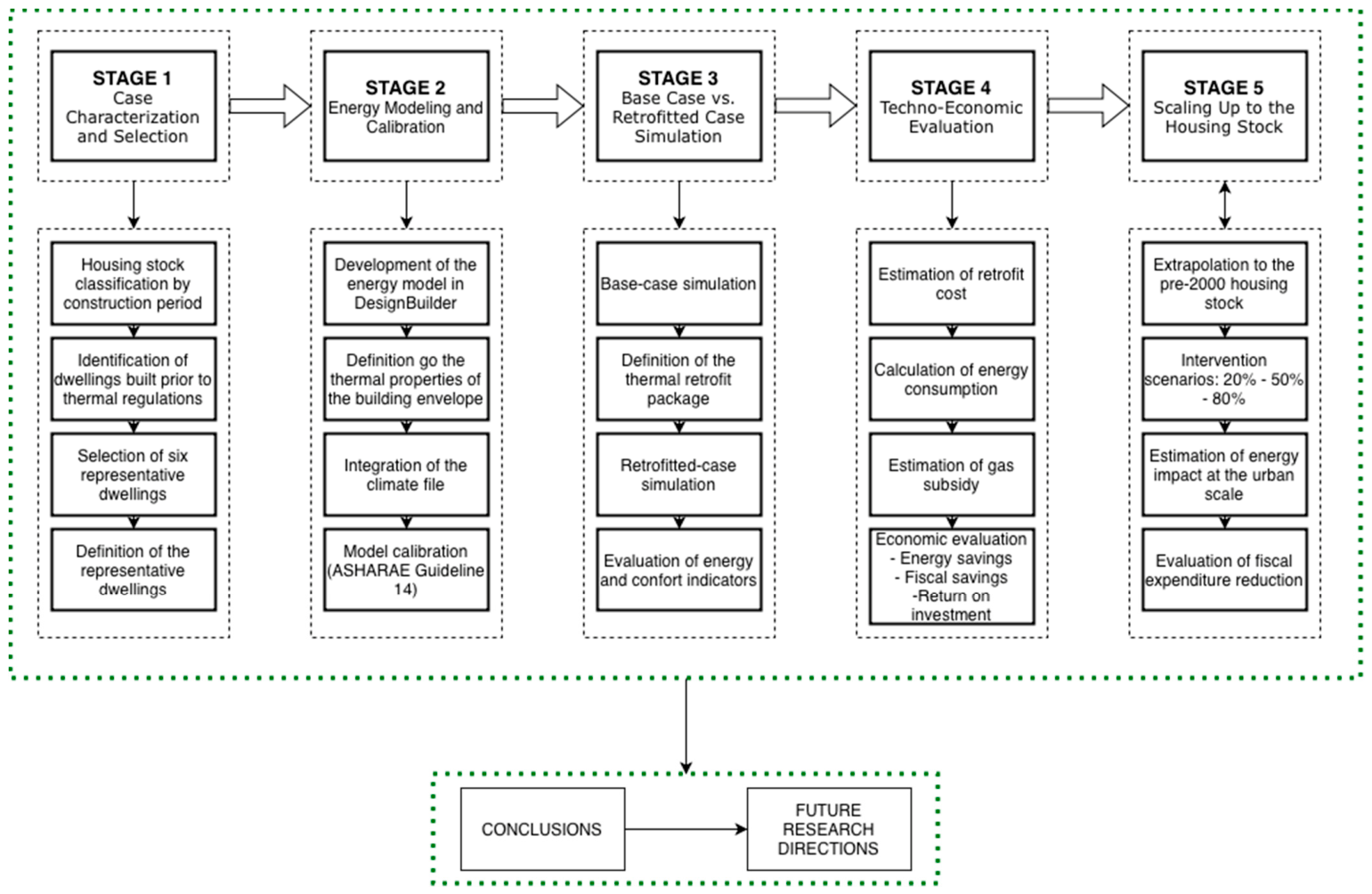
40]. The methodology comprised five stages (
Figure 1). The figure presents an analysis methodology structured into five sequential stages, moving from the initial definition of the case studies to the evaluation of their large-scale impact. In Stage 1, case characterization and selection are carried out, meaning the dwellings or situations under analysis are identified and described. In Stage 2, energy modeling in Designbuilder v7.02.006/EnergyPlus v9.4.0 and calibration are performed to accurately represent the energy behavior of those cases [
41]. Then, in Stage 3, the base case and the retrofitted scenario are compared via simulation to estimate the effects of the proposed improvements. Based on these results, Stage 4 addresses the technical-economic and fiscal analysis, evaluating costs, benefits, and economic implications. Subsequently, in Stage 5, the study is scaled up to the housing stock, and a sensitivity analysis is conducted to explore different assumptions and their influence on the results [
20,
31,
37].
2.1. Case Study and Representativeness of the Pre-Thermal Regulation Housing Stock in Punta Arenas
The case study is from Punta Arenas, a city where successive waves of construction have shaped the existing housing stock, resulting in notable heterogeneity considering age and thermal performance.
Table 1 summarizes the housing by historical period according to the 2024 Census, showing that the housing stock spans a wide temporal arc, with a significant fraction built before contemporary thermal requirements were incorporated. In particular, the universe of dwellings accumulated up unti l the turn of the century, in 2000, totals 38,605 units, out of 48,834 dwellings recorded in 2024, which supports the study’s focus on the pre-thermal-regulations stock as a relevant scale for evaluating retrofit interventions with a regional projection [
42].
Beyond age, the stock’s energy behavior is greatly affected by its construction solutions.
Table 2 presents the predominant materials used in walls, roofs, and floors in the city’s housing. A clear predominance of lined partitions on both sides as a wall solution (78.79%) and of metal roofing sheets (87.22%) is observed, along with floor finishes mostly associated with parquet/floating floors (97.26%). These features are consistent with a low-rise housing stock and with envelopes where thermal transmission and, especially, airtightness (at joints, corners, and constructive discontinuities) tend to play a determining role in the demand for heating in cold weather [
42].
The study, based on this information, incorporates empirical evidence at the domestic scale by characterizing six pre-2000 homes (1950–1999), selected because they had available technical and consumption data, to describe the stock’s observable variability and to support the choice of a standard dwelling for simulation purposes.
Table 3 summarizes the relevant attributes of the six cases (surface area, predominant materiality, window type, heating system, occupancy, and annual consumption), showing surface areas ranging from 68 to 115 m
2 and annual heating consumption from 29,395 to 74,145 kWh/year. In all cases, the heating is natural gas (stove or wall-mounted boiler), which ensures consistency between the measured consumption used for calibration and the subsequent public policy reading associated with the subsidy.
The choice of Dwelling 4 as a representative case (standard dwelling for modeling and calibration) is based on two complementary criteria. Firstly, its construction and floor plan are consistent with the predominant housing stock pattern reported by the Census, particularly the use of lined partition as the primary material, thereby avoiding basing the analysis on an exceptional case arising from the construction solution. Secondly, its annual heating consumption (48,356 kWh/year) is near the middle of the sample range, reducing the risk of selecting an outlier (very low due to partial heating in operation or very high due to atypical conditions). The
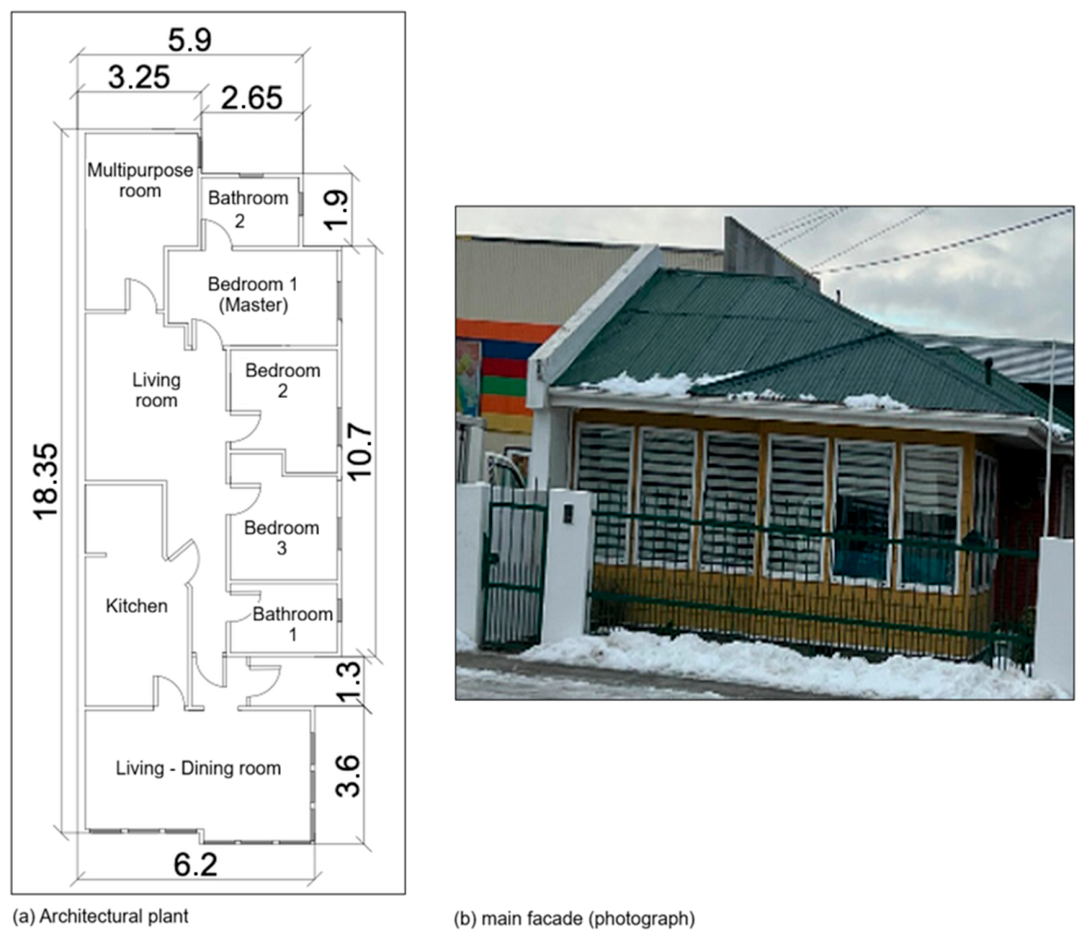
Figure 2 presents the architectural floor plan and the main facade of the selected standard housing, establishing the case study’s architectural basis and physical limits.
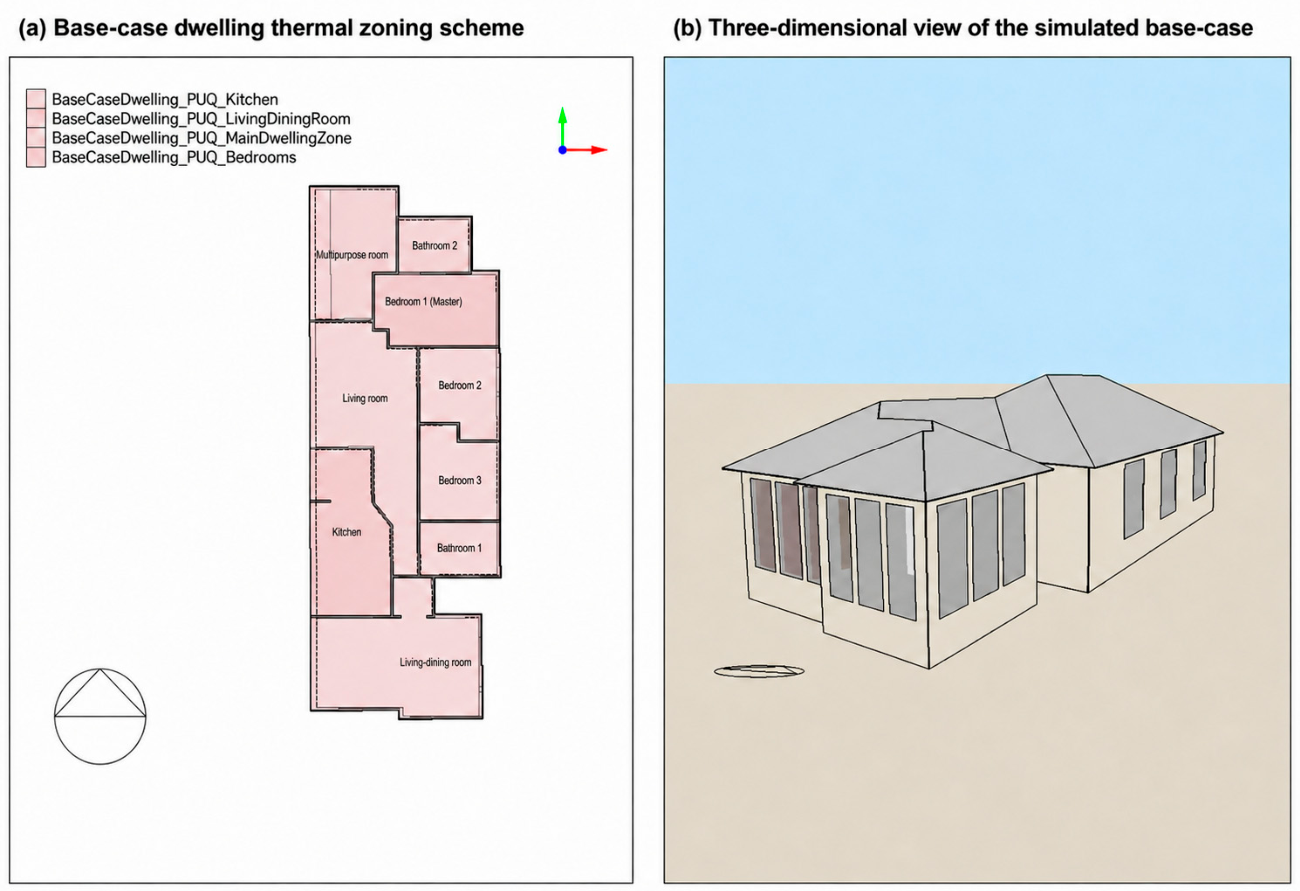
Figure 3 complements this representation by showing the configuration of the calibrated energy model of the base case, including the thermal zoning layout and a three-dimensional view of the simulated dwelling. Together, the two figures strengthen the methodological traceability between the architectural characterization of the chosen case and its translation into the energy simulation model.
2.2. Monitoring, Gas Consumption, and Climate File
The base case characterization and the calibration of the energy model used three complementary empirical inputs: (i) indoor hygrothermal and CO
2 monitoring in representative rooms, (ii) actual consumption of natural gas obtained from monthly bills, and (iii) a time climate file built specifically for the study period. This triangulation ensures temporal coherence among climate, use, and observed consumption, reduces reliance on generic assumptions, and allows assessing the model’s performance against recognized measurement and verification criteria.
Table 4 summarizes the data sources, their use, and their integration into the simulation setting.
2.3. Simulation Model and Operational Assumptions
In construction terms, the base scenario (pre-regulation) was defined through an architectural–construction review of the standard dwelling’s site, incorporating the stratigraphy and thermal properties of the opaque envelope (walls, roof, and floor) consistent with the selected case. The openings were modeled based on the observed typology (double glazing, frame material, and operable/fixed setup) and the indoor solar protection specified by the user. The dynamic simulation was run in DesignBuilder v7.02.006 with EnergyPlus v9.4.0 as the calculation engine [
38,
39,
40].
The operational assumptions were implemented using an hourly calendar by premises and season of the year, based on a brief survey of domestic use, records of the FONDECYT Regular project N°1230922, and literature on residential dwellings in cold climates. The ventilation was modeled by separating background infiltration, associated with the envelope’s airtightness, from ventilation from manual window openings. In the base scenario, an infiltration rate of 0.60–0.70 ACH was adopted, consistent with pre-regulation lightweight structured housing of southern Chile. In the bedrooms, ventilation via manual window openings was set to 30% for 2 h, with a flow rate of 0.60 L/s m
2, whereas in the living-dining room, ventilation was not established because it had fixed windows. In the retrofitted scenario, the kit included explicit airtightness measures using perimetral seals and changing openings, with a goal of n50 = 3.0 h
−1 at 50 Pa, equivalent to a mean infiltration of approximately 0.30 ACH in simulation, along with decentralized mechanical ventilation with a sensitive heat recovery (η = 0.70) under continuous operation [
39,
40,
41]. The base geometry of the model and its correspondence to the analyzed standard dwelling are shown in
Figure 2 and
Figure 3. The envelope, openings, conditions of use, and the thermal zoning used in the simulation were defined on this basis.
The improved scenario included a comprehensive retrofit package that combined opaque envelope reinforcement, replacement of openings, and infiltration control measures, along with mechanical ventilation with heat recovery, as specified in the study.
Table 5 summarizes the thermal transmittance (U) values adopted for the envelope and openings in both scenarios, underscoring the jump in physical performance that supports the subsequent variations in demand and comfort.
To interpret thermal comfort, operating temperatures were used as the primary variable, in line with ASHRAE Standard 55 and ISO 7730 [
43,
44], for residential conditions with sedentary or light activity and winter clothing. In this study, the 20–24 °C band was adopted as a fixed operational reference for winter in the main living areas, rather than as a universal compliance threshold across all premises and seasons. This decision is based on the climate context of Punta Arenas, where the AMY/EPW file used has an annual average temperature of 7.27 °C and a minimum of −3.30 °C, which leaves the analysis in a system clearly dominated by underheating. For this, the adaptive model of ASHRAE 55 was not used as the main criterion, as its outputs in DesignBuilder/Energy Plus are not valid when the outdoor mean temperature exceeds 10 °C and are primarily focused on overheating during warm periods. As a result, the 20–24 °C band was considered the best fit methodologically to compare the base case and the retrofit scenario. A slightly broader band could affect some hours near the thresholds, but would not substantially change the comparative interpretation between scenarios.
2.4. Calibration of the Model
The calibration was performed by comparing the simulated monthly final heating energy with the monthly energy taken from actual natural gas consumption for the July 2024–June 2025 period. The quantitative evaluation used NMBE and CV(RMSE) for the monthly series, following ASHRAE Guideline 14 [
41] (
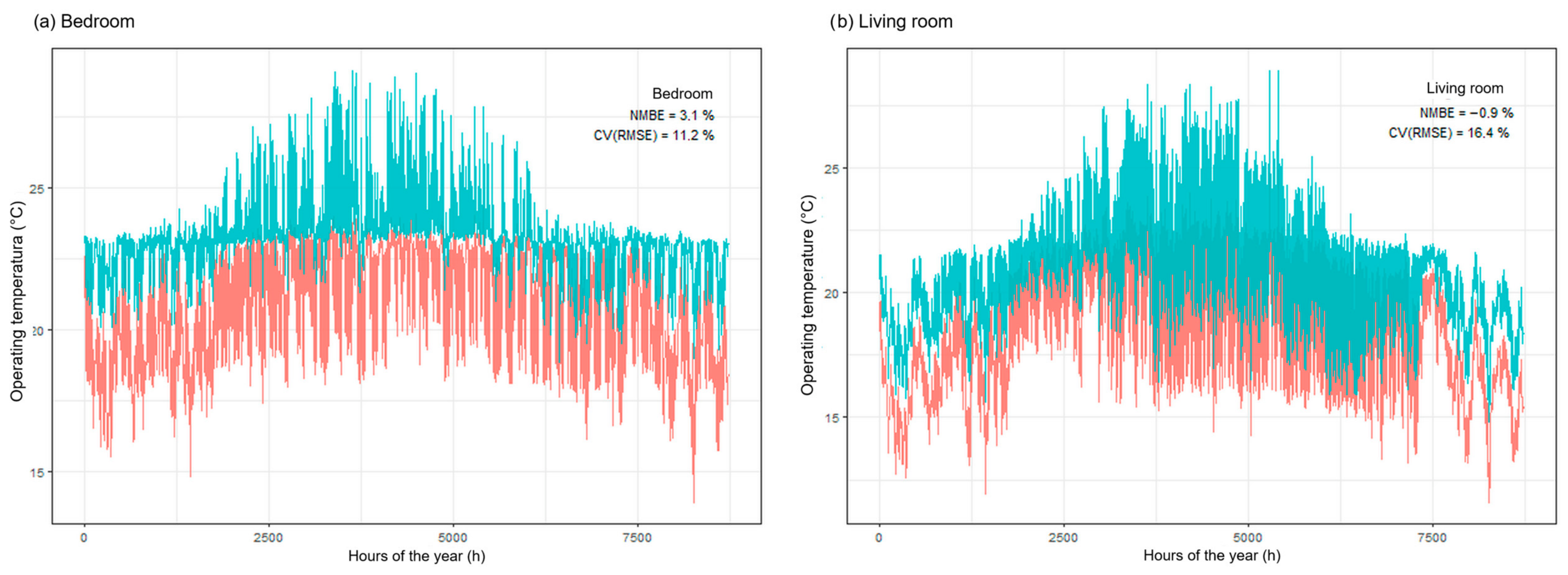
Table 6). The hourly thermal consistency was also verified by comparing measured and simulated indoor temperatures and evaluating bias and dispersion in key rooms, to reduce the risk of a coincidental adjustment of consumption without the model’s thermal coherence.
2.5. Scaling to the Housing Stock and Economic-Fiscal Assessment
The scaling to the housing stock was done by keeping the universe of the 38,605 pre-regulatory housing units constant and varying only the fraction of dwellings adopting the retrofit scenario performance of Standard Dwelling 04. Under this criterion, coverage scenarios of 0%, 20%, 50%, and 80% were evaluated, and for each, the aggregate annual heating demand of the housing stock was estimated. This procedure must be read as an extrapolation based on scenarios that transfer the energy performance of a representative dwelling to a constant habitational universe, such that the variation between scenarios is attributable exclusively to the level of retrofit adopted. As a consequence, the results do not constitute a direct measurement of the entire stock but rather an aggregate estimate of the built magnitude, based on homogeneous assumptions regarding construction, use, and climate performance.
The economic-fiscal assessment was done on two complementary levels. At the dwelling scale, the investment costs (CAPEX) associated with the retrofit package and the annual benefits from gas savings were estimated and valued using a social gas price of 1.44 US/m3, considering a 20-year analysis period and a real discount rate of 6%. At the stock level, the program’s total costs were estimated for each coverage scenario, incorporating general expenses equivalent to 15% of the direct CAPEX, and the aggregate benefits were calculated by multiplying the annual unit benefit by the number of homes intervened. The present value of benefits, the net present value, and the benefit/cost ratio were calculated on this basis.
To estimate the present value of the fiscal benefits, the temporary treatment of the energy price was explicitly incorporated. In this framework, the real energy scaling rate is defined as the annual variation in the gas price in real terms, that is, after discounting the effect of general inflation. Its consideration is methodologically relevant for medium- and long-term evaluations, since the economic savings associated with a physical reduction in consumption depend not only on the cubic meters avoided but also on the expected trajectory of that energy’s economic value over the analysis period. When this effect is not explicit, the present value of the benefits may be underestimated or overestimated, depending on the implicit assumption adopted.
The incorporation of this parameter is consistent with the social evaluation logic of public investment projects, where future flows must be represented with explicit assumptions regarding their real evolution. In the study’s basic thesis, this is done using the CITEC-UBB ECSE program, which accounts for differentiated scaling rates across regions and fuels. A real reference scaling rate of 4.5% per year is identified for natural gas in the Magallanes Region.
However, to maintain a conservative estimate and avoid overestimating the fiscal benefits attributable to the retrofit, the base evaluation scenario assumed a constant real natural gas price, i.e., 0. Under this assumption, the annual gas savings are modeled as a uniform annuity, and their present value is calculated by discounting a constant flow over the 20-year evaluation period. This criterion is consistent with the thesis formulation, where the annual fiscal savings per dwelling and per program are assumed constant in real terms in the base scenario.
As a complement, the real scaling rate of the gas price was incorporated into the sensitivity analysis as an alternative scenario to examine how the program’s fiscal benefit would change if the real energy value increased over time. In such a case, the future fiscal benefits are represented as an increasing series, and their present value is obtained using the formula for an annuity with real growth, which depends on the initial benefit, the scaling rate e, the discount rate i, and the number of years in the evaluation period. This method better captures the potential evolution of the avoided subsidy and reinforces the traceability of the economic assumptions used in comparing a consumption subsidy policy with a thermal retrofit investment policy.
Apart from the base scenario, a univariate sensitivity analysis was applied on five key parameters: social price of the gas (±20%), annual gas savings (±10%), CAPEX (±15%), actual discount rate (4%, 6%, and 8%), and actual scaling rate of the gas price (e = 0 and e = 4.5% annual). The variation in annual gas savings was used as a conservative approximation of the actual performance and behavior post-retrofit, without constituting an explicit behavioral modeling of the rebound effect.
3. Results
3.1. Calibration and Verification of the Base Case Model
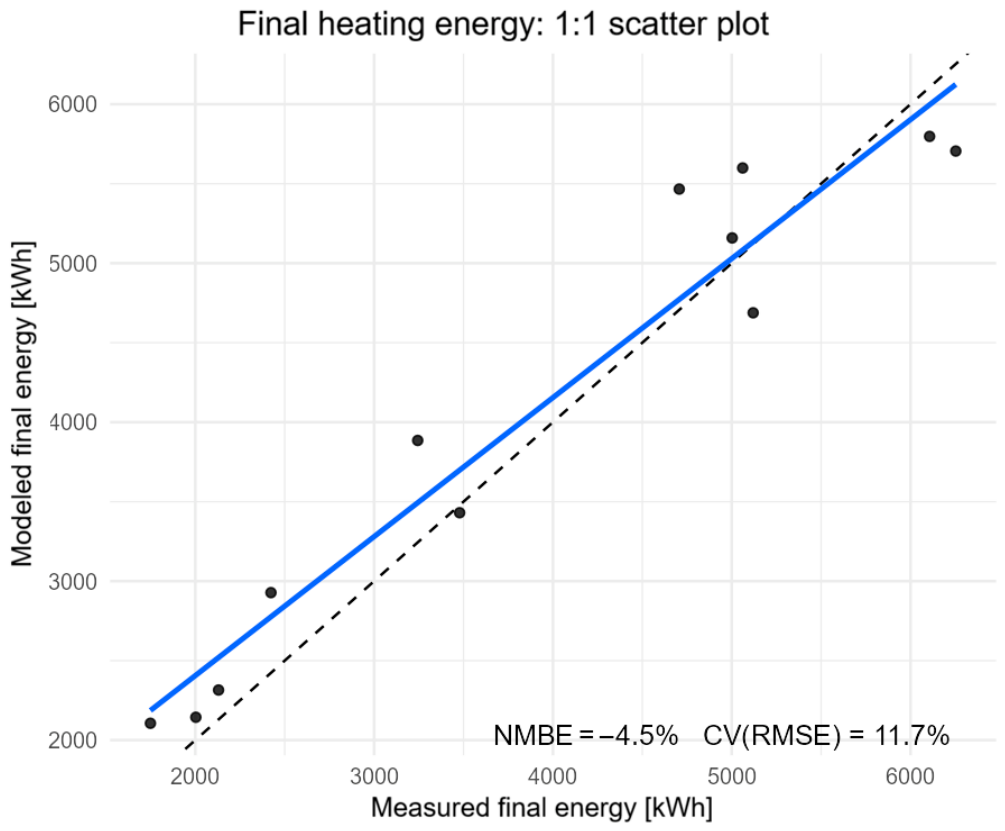
The monthly comparison between measured and modeled values, presented in
Figure 4, shows a consistent fit between observed and simulated consumption for the July 2024–June 2025 period. The calibrated model achieved an NMBE of −4.5% and a CV(RMSE) of 11.7% in the monthly series, meeting the ASHRAE Guideline 14 acceptability criteria for monthly calibration. The hourly thermal verification in the main rooms reinforces the model’s consistency, see
Figure 5, since NMBE = 3.1% and CV (RMSE) = 16.4% were obtained in the master bedroom, with centered residuals and no relevant seasonal deviation, which supports the model’s use to compare envelope and airtightness scenarios under the same climatic and operational system [
41].
3.2. Energy Impact of Thermal Retrofit on the Standard Dwelling
The absolute results by dwelling show that the annual natural gas consumption decreases from 5181.5 to 702.5 m
3/year, and the annual heating energy decreases from 49,224 to 6674 kWh/year. This is equivalent to a saving of 4479.0 m
3/year and 42,550 kWh/year, corresponding to a relative reduction of 86.4%.
Table 7 summarizes these results by distinguishing between absolute values per dwelling and specific indicators per usable area for the standard 114 m
2 dwelling.
3.3. Indoor Thermal Comfort and Joint Reading with Energy
In the results, the 20–24 °C band is interpreted as a fixed winter operating reference for comparative readings of thermal performance in the main living areas, rather than as a universal comfort threshold applicable to all spaces or all seasons.
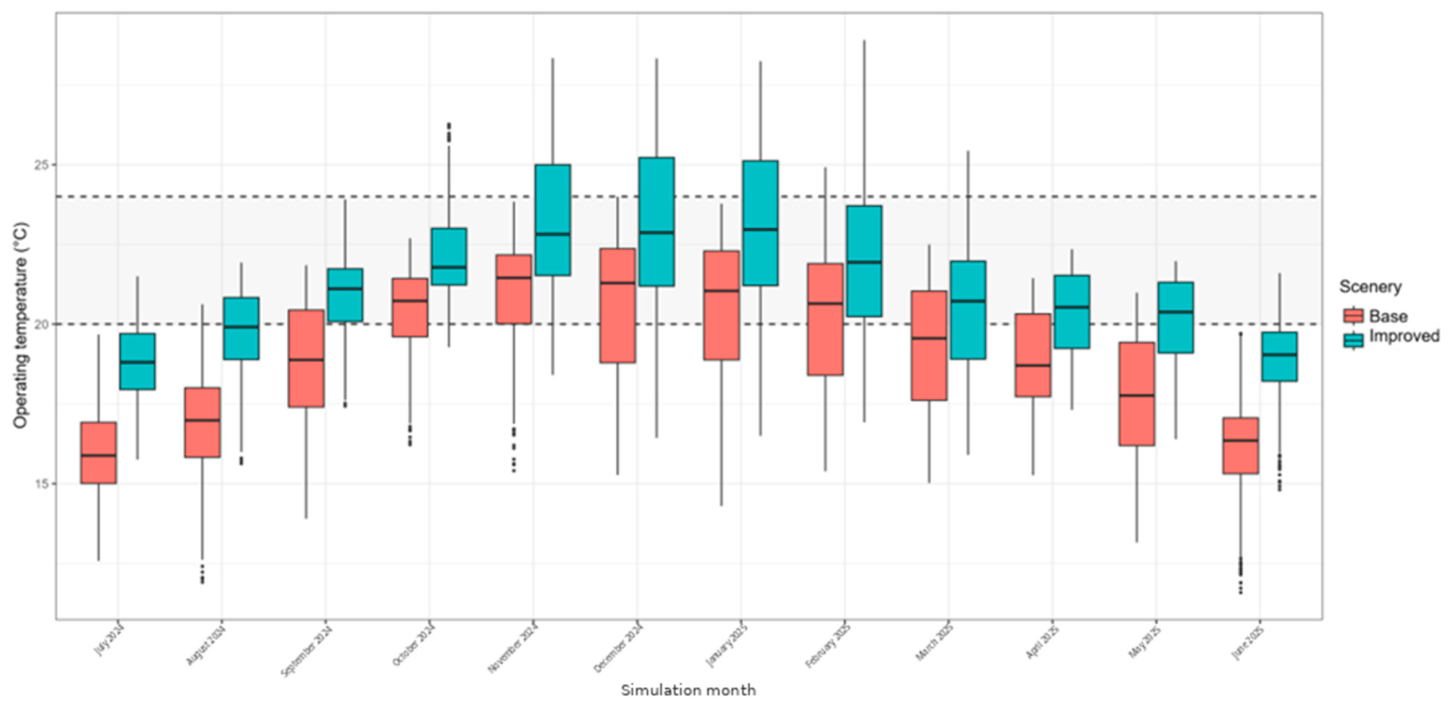
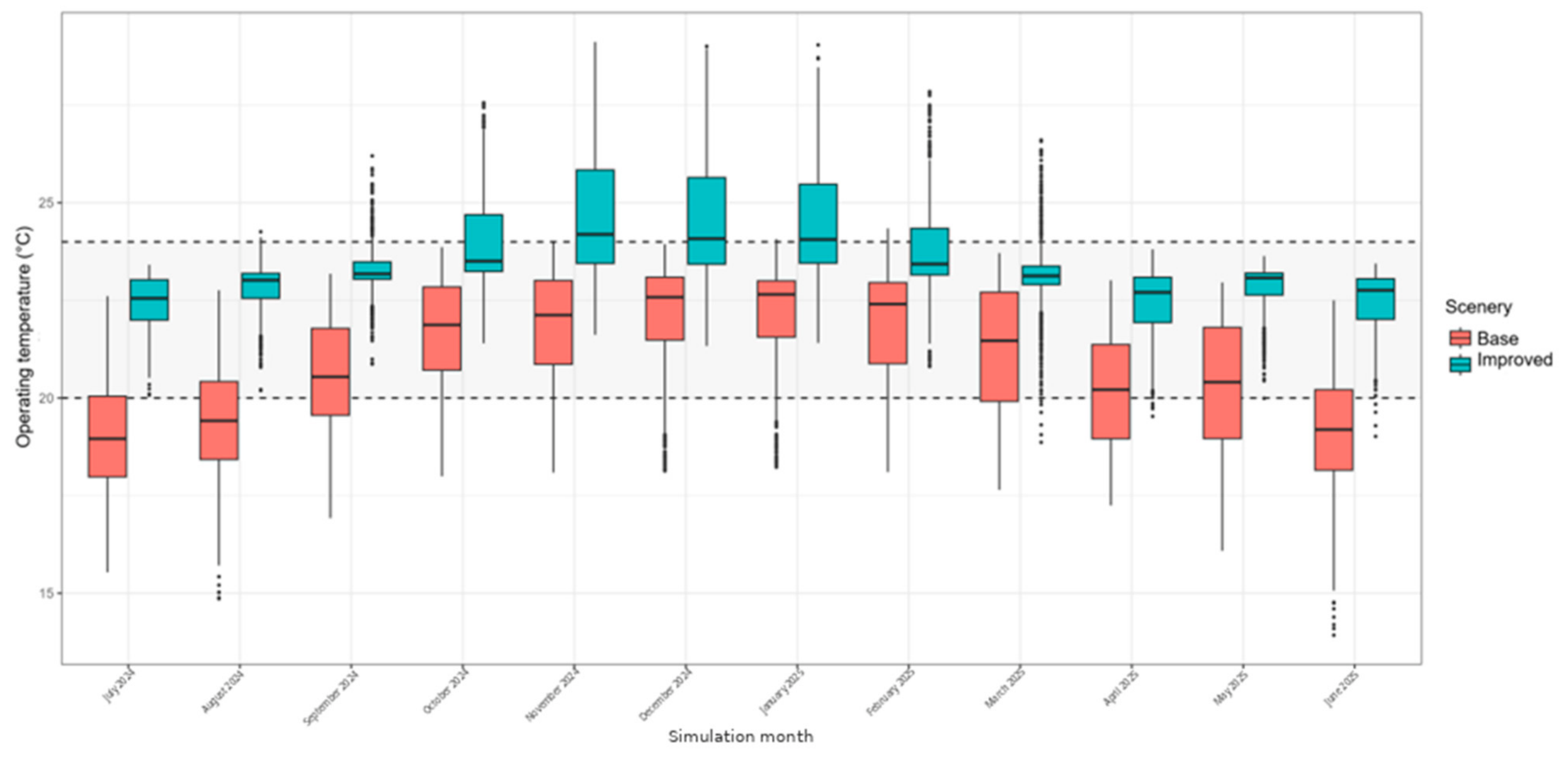
The retrofit modified the standard dwelling’s indoor thermal conditions. In both rooms analyzed, the retrofitted scenario showed a shift in the operational temperature distribution towards higher values, with fewer hours in the cold range than in the base scenario (
Figure 6 and
Figure 7).
In the bedroom during the winter months of the base scenario, the monthly medians were below 20 °C, and the interquartile range remained mostly within the comfort band. In the retrofit scenario, the monthly median fell within the 20–24 °C band for most of the year, and the interquartile range was concentrated around that interval.
A similar pattern was observed in the living-dining room. In the base scenario, the winter medians remained below 20 °C and the lower percentiles recorded temperatures close to 14–16 °C. In the retrofit scenario, the monthly distribution shifted towards higher temperatures, and the 20–24 °C band accounted for a greater proportion of annual hours.
3.4. Housing Stock Scale Heating Demand Under Coverage Scenarios
The aggregate annual heating demand of the pre-regulation housing stock of Punta Arenas was estimated by scaling the energy performance of the standard housing to the universe of 38,605 homes. To this end, the stock size was kept constant, and only the proportion of homes adopting the retrofit scenario’s energy performance was varied, at coverage levels of 0%, 20%, 50%, and 80% (
Table 8).
In the base scenario, corresponding to 0% coverage, the estimated aggregate annual demand was 1820 GWh/year. Under coverage levels of 20%, 50%, and 80%, demand decreased to 1562, 1090, and 608 GWh/year, respectively. Compared to the baseline scenario, these values represent annual savings of 258, 730, and 1212 GWh/year, equivalent to relative reductions of 14.2%, 40.1%, and 66.6%.
The value of 1820 GWh/year corresponds to an aggregate estimate derived from the scaling procedure applied to the representative standard dwelling, and not to a direct measurement of the pre-normative housing stock as a whole. Its analytical value lies in providing a consistent reference magnitude for comparing coverage scenarios within the same methodological framework. As external background information, the Regional Energy Balance of Magallanes reports a final natural gas consumption of 3289 Tcal in the commercial, public, and residential sectors for 2023, equivalent to 3822.55 GWh, while the Magallanes 2050 Energy Roadmap indicates that 80.7% of residential natural gas consumption in the region is destined to heating. In this context, the estimated magnitude of the pre-regulatory housing stock in Punta Arenas is consistent with the available regional energy background information, although it should not be interpreted as direct empirical validation of the modeled value.
3.5. Economic-Fiscal Assessment: Dwelling and Housing Stock
At an individual dwelling level, the thermal retrofitting package is associated with an estimated CAPEX of US
$25,289.00 per dwelling. The annual savings in gas consumption were valued at a social reference price of US
$1.44/m
3, adopted as an evaluation assumption based on relevant tariff and fiscal background information [
20,
22,
31]. Under that assumption, the estimated annual fiscal benefit amounts to US
$6458.54 per dwelling (
Table 9).
At the dwelling level, the direct CAPEX for the retrofit package is US$25,254.61 per dwelling. Its breakdown is concentrated in an improved ventilated floor (US$8874.24; 35.1%), perimetral walls (US$6683.87; 26.5%), change in DVH windows, insulated outer door, airtightness seals (US$5561.72; 22.0%), and an improved roof (US$4134.78; 16.4%). This breakdown makes the relative weights of the envelope components and the airtightness measures included in the kit traceable.
Considering a 20-year analysis period and a 6% discount rate, the economic indicators for an individual home indicate solid results, including a Gross Present Value (GPV) of US
$74,760.14, a Net Present Value (NPV) of US
$49,470.36, and a benefit/cost ratio of 2.96. Under these conditions, the CAPEX recovery period is approximately 3.9 years, with an Internal Rate of Return (IRR) of 25.5%, in line with the methodological assumptions [
21,
22,
31].
At the housing stock level,
Table 9 summarizes the main results of the fiscal assessment under three program coverage scenarios: 20%, 50%, and 80%, using values updated to 2025 and expressed in US
$.
The program’s total CAPEX, including general and operational costs, amounts to US$224,502.25 for 20% coverage, US$561,366.54 for 50% coverage, and US$898,230.82 for 80% coverage. In turn, the aggregate annual tax benefits reach US$49,914.04/year, US$124,674.17/year, and US$199,434.31/year, respectively.
The profitability indicators at the housing stock level show an evolution consistent with the increase in coverage. The NPV is estimated at US$347,401.70 for 20%, US$868,615.16 for 50%, and US$1,389,717.71 for 80%. In parallel, the GPV of tax benefits amounts to US$572,014.86, US$1,429,981.70, and US$2,287,837.61, respectively. The benefit-to-cost ratio remains stable at 2.55 across the three scenarios, suggesting the economic model’s robustness to different implementation scales.
4. Discussion
The results reinforce a central idea in extreme weather contexts: when energy vulnerability stems mainly from the low thermal performance of the built stock, subsidizing consumption can reduce spending but does not correct the physical mechanism that produces that load. This distinction is consistent with the discussion of Thomson et al. [
1], Bouzarovski and Petrova [
2], and Villalobos et al. [
15], who have shown that energy poverty cannot be read only from the monetary disbursement, because in vulnerable households, lower consumption can also be an expression of underheating. In Punta Arenas, this warning takes on particular relevance because of the weight of heating in the residential balance, the age of the pre-regulation housing stock, and its low envelope standards, which create a structural dependence on gas to sustain minimum living conditions [
23,
24,
25]. Under this framework, the gas subsidy works as a short-term buffer but leaves the inefficiency of the built asset intact. As the IEA [
26], Black et al. [
27], and the OECD [
28] warn, fossil fuel subsidies tend to sustain intensive consumption patterns and increase fiscal exposure when not accompanied by demand-reduction strategies. In the case of Magallanes, this criticism was raised early on by Rodríguez Grossi [
22], who questioned the structural inadequacy of the regional subsidy.
From that perspective, the magnitude of the change observed in this study is relevant because it is not a marginal improvement but a substantive modification of the dwelling’s thermal profile. The 86.4% reduction in annual heating consumption, achieved through interventions to transmittance and infiltration, indicates that thermal retrofitting can consistently alter demand rather than merely moderate it. That result is consistent with the approach reviewed by Tozer et al. [
33], who view deep retrofits as a particularly relevant strategy for households in energy poverty when the intervention targets the built asset rather than just the energy price. Similarly, Madadizadeh et al. [
34] and Liu et al. [
35] have examined the effectiveness of incentivized retrofit programs and envelope improvements as effective demand-reduction mechanisms. The contribution of this study consists of showing, with a calibrated model and a joint reading of the energy, comfort, and fiscal effects, that the thermal retrofit can be a pertinent and effective alternative in a subpolar austral context marked by a high heating demand, and by a historically consolidated system of a gas subsidy. When the effect is scaled up to the housing stock, the reductions of 258, 730, and 1212 GWh/year for 20%, 50%, and 80% coverage show that the impact quickly ceases to be domestic and becomes a matter of regional energy and fiscal policy.
The reading of thermal comfort is equally decisive because it allows avoiding an incomplete interpretation of energy savings. In energy poverty studies, a drop in consumption does not always indicate improved social performance; it may merely reflect restrictions on use or thermal resignation [
1,
16]. The opposite is true here, since the decrease in consumption is accompanied by a shift in operating temperature towards higher values and a greater concentration of hours within the target band of 20 to 24 °C. That suggests that the benefit of retrofitting is not limited to reducing gas consumption but also to improving the dwelling’s effective habitability. This aligns with the health warnings from the World Health Organization [
4], the Institute of Health Equity [
5], and Champagne et al. [
6], who link cold housing to avoidable health risks and inequalities. In other words, in the analyzed case, the demand reduction does not seem to be achieved at the expense of comfort, but together with a recovery of more suitable indoor thermal conditions. That point is especially relevant in extreme climates, where the discussion of efficiency cannot be separated from that of thermal well-being.
The reported economic benefits must be interpreted as fiscal energy results based on thermal and operational assumptions, not as an integrated evaluation of the hygrothermal performance of the construction solutions. The study did not include a hygrothermal simulation of interstitial condensation, nor a monetized estimation of the maintenance costs associated with moisture or mold. This point is relevant in cold and wet climates because higher airtightness requires analysis of thermal bridges, a suitable design of the perimeter envelope’s layer layout, and properly controlled ventilation.
The economic-fiscal assessment further expands the scope of the result. The positive indicators obtained, with benefit/cost ratios of 2.96 at the dwelling scale and 2.55 at the housing stock scale, show that retrofitting not only reduces demand but also opens a plausible route to replace current subsidy expenditure with investment in physical capital. This does not mean, of course, that fiscal savings materialize automatically or with the same speed as energy savings. The relationship between lower consumption and lower budgetary pressure depends on the instrument’s design, its focus, and how the current subsidy is reformulated or withdrawn. Even so, the result is clearly in line with recent frameworks that have tried to shift public action from compensating for expenditure to improving building performance, such as the European Social Climate Fund [
29] and the rewriting of the Energy Performance of Buildings Directive [
30]. In the Chilean case, this line is also consistent with the Energy Efficiency Law [
23], with the updating of thermal regulations [
24], and with the Local Energy Strategy of Punta Arenas [
25], all of them aimed, at different levels, at reducing the structural demand of the built stock.
However, moving from a technically promising result to an effective public policy requires quite specific implementation conditions, because retrofit programs easily fail when treated as a simple sum of constructive solutions. Schueftan et al. [
37] showed, in the Chilean case, that financing for residential retrofits faces significant barriers, while Di Rocco et al. [
36] emphasize the need for inclusive governance models to address energy poverty at the territorial scale. In a related vein, Kantamneni et al. [
45] underscore that interventions aimed at vulnerable households require implementation instruments that make retrofits viable, not merely desirable from a regulatory standpoint. In Punta Arenas, this implies at least four requirements. First, focusing on the pre-regulation housing stock with higher losses and greater vulnerability, gradually increasing coverage so as not to jeopardize implementation quality, verifying airtightness and real post-intervention performance, to reduce the gap between expected and effective savings and link the program with the current institutional framework, so that retrofitting does not operate as an isolated pilot, but as part of a systematic strategy on the existing stock. Without these conditions, the discussion can get stuck in the realm of technical potential, which is precisely where so many programs stagnate.
The limitations of the study should be read within the same interpretive framework. The evidence is built from a calibrated, representative housing sample and its extrapolation to a universe of 38,605 pre-regulatory housing units. Therefore, the heterogeneity of the housing stock is one of the main sources of uncertainty in the scaling exercise and can modify the specific aggregate magnitudes obtained in each coverage scenario. Consequently, the results should be understood as comparative estimates useful for discussing energy and fiscal impact trends, rather than as an exhaustive representation of all the constructive and operational diversity present in the real housing stock. Calibration according to ASHRAE Guideline 14 [
41] strengthens the model’s credibility for comparing scenarios but does not eliminate uncertainty associated with unobserved construction differences, variable usage patterns, or potential rebound effects following the retrofit. In addition, the economic-fiscal assessment depends on specific assumptions about prices. Similarly, the calibration and energy scenarios were built using an AMY 2024-2025 climate file, and the economic-fiscal evaluation assumed climatic seasonality over the analysis period, without considering the potential effects of climate change on heating degree days. A future reduction in climatic severity may partly reduce consumption and delay the onset of the recovery period; accordingly, the indicators, the discount rate, the analysis period, and the cost structure must be interpreted under the constant-climate hypothesis [
20,
21,
22,
31]. Therefore, the study’s main contribution is not to set a definitive figure for any future program, but to show, with traceable evidence, that in a context like Punta Arenas, the discussion of energy poverty changes in nature when it moves from subsidizing consumption to transforming the built housing stock. This displacement does not solve the implementation challenges on its own, but it does more accurately redefine where the problem lies and where it is appropriate to intervene.
5. Conclusions
The calibrated model satisfactorily reproduces the energy and thermal behavior of the base case under the analyzed climatic and operational conditions. This permitted comparison between the pre-existing and retrofit scenarios, reducing the risk of attributing differences to the intervention that were instead due to a deficient representation of the case study.
At the dwelling scale, the integrated thermal retrofit substantially reduces heating demand in the analyzed case. The estimated 86.4% reduction in annual gas consumption indicates that intervening in the building envelope and improving airtightness may fundamentally change the relationship between the dwelling and its energy requirements in an extreme climate, rather than merely yield marginal improvements.
This reduction not only implies energy savings but also indicates a shift in operating temperatures towards more favorable ranges in the main rooms, with reduced persistent exposure to the cold. The study suggests that, in the analyzed case, the improvement in energy performance does not come at the expense of habitability but is accompanied by improved indoor thermal comfort.
By extrapolating the results to the housing stock built before 2000 in Punta Arenas, the retrofit shows a significant potential to reduce both energy demand and the tax burden associated with the gas subsidy. However, this result should be interpreted as a scenario-based extrapolation derived from a calibrated representative dwelling model, not as a direct measurement of the total housing stock. Its main contribution lies in offering a comparative analytical framework for discussing public policy alternatives under explicit, traceable assumptions, recognizing that the actual heterogeneity of the stock can modify the specific aggregate magnitudes of energy and fiscal savings.
From an economic-fiscal perspective, the indicators indicate that, under the study’s explicit assumptions, thermal retrofitting can become a fiscally defensible alternative in the face of the indefinite retention of the consumption subsidy. This conclusion depends on the investment cost, the social price of gas, the discount rate, the invention’s effective performance, and the reformulation of the subsidy instrument. It should not be interpreted as an automatic or universal advantage.
The scope of the study is limited by the heterogeneity of the stock, uncertainty about post-retrofit behavior, the lack of specific hygrothermal modeling, and the assumption of a constant climate over the evaluation period. However, the evidence presented allows us to sustain that, in a context such as Punta Arenas, displacing part of public efforts from the consumption subsidy towards the thermal retrofit of the housing stock is an effective strategy to more persistently reduce energy vulnerability. Therefore, the economic results reported here should be interpreted as energy-fiscal results built under explicit thermal and operational assumptions, and not as a comprehensive evaluation of constructive durability or hygrothermal safety against moisture, mold, or interstitial condensation.






 ,
,