


Abstract
Integrated energy cyber-physical systems (IECPS) face escalating cyber-attack threats due to their deep cyber-physical coupling, while traditional resilience models relying solely on fixed resources exhibit rigidity and limited adaptability. This review investigates IECPS attack mechanisms through the lens of the confidentiality, integrity, and availability framework, revealing their cross-layer propagation characteristics. We explicitly distinguish between fixed and mobile resources. Fixed resources include energy sources, transmission and distribution network facilities, coupling and conversion devices, fixed energy storage systems, and communication and control infrastructure. Mobile resources are grouped into five categories: mobile electricity resources, mobile gas resources, mobile heat resources, mobile hydrogen resources, and mobile communication resources. Fixed resources provide geographically anchored capacity and structural redundancy, and they offer static operational flexibility. Mobile resources, in contrast, provide spatially reconfigurable and rapidly deployable support for sensing, temporary multi-energy supply, and emergency communications. Building on this distinction, this review proposes a full-cycle resilience enhancement framework that encompasses pre-event prevention, in-progress response, and post-event recovery, with a particular focus on collaborative mechanisms between fixed and mobile resources. Furthermore, this review examines the foundational theories and key supporting technologies for such coordination, including fixed-mobile resource scheduling, intelligent perception and data fusion, communication security, and collaborative scheduling optimization. Key technical gaps and challenges in fixed-mobile resource collaboration are identified. Ultimately, this review aims to provide theoretical insights and practical guidance for developing resilient, adaptive, and secure integrated energy systems in the face of evolving cyber-physical threats.
1. Introduction
1.1. Background and Motivation
The global energy system currently faces unprecedented challenges. On one hand, the imbalance between energy supply and demand remains acute; the international energy landscape is being profoundly reshaped, and energy security is becoming increasingly complex. On the other hand, frequent extreme climate events, geopolitical conflicts, and natural disasters severely test the safety and stability of energy infrastructure. Incidents such as large-scale power outages, gas supply interruptions, and heating system failures occur frequently, seriously impacting social operation and people’s livelihood security. In addressing the above-mentioned challenges, countries have actively advanced the digital transformation of energy systems and the in-depth integration of various energy sources, spawning the new-generation integrated energy systems (IES). By deeply coupling multiple energy forms, such as electricity, natural gas, heating, and cooling, IES enables multi-directional energy flow, efficient coordination, and dynamic balance. This significantly enhances energy utilization efficiency and system resilience, providing crucial support for achieving the Paris Agreement [1]. However, with the increasing complexity of the system structure and strengthened coupling, higher requirements are imposed on the system in terms of dispatching, monitoring, and security assurance. On this basis, the integrated energy cyber-physical system (IECPS) has emerged as required. It integrates perception, communication, control, and computing capabilities. By leveraging information layer technologies, IECPS achieves refined dispatching and unified management of multi-energy systems. Consequently, IECPS represents a core direction for the development of modern energy systems [2].
However, this very feature of deep cyber-physical integration also renders IECPS more vulnerable and exposes it to significant potential risks. The complex, multi-energy coupled structure is highly prone to amplifying local faults, potentially triggering cascading failures across interconnected energy systems with severe consequences [3]. For instance, in February 2021, TX, USA, was hit by extremely cold weather. Extreme low temperatures and freezing rain caused failures in the gas transmission network, cutting off gas supply to some gas generator sets and triggering a large-scale power outage. This incident resulted in a total of 23.418 million kilowatts of load shedding, making it the largest manual load shedding event in U.S. history [4]. Furthermore, in the August 15 Taiwan major power outage incident, operator mistakes led to the tripping of all six gas generator sets, thereby triggering a cascading power outage across the entire island [5]. These incidents demonstrate the vulnerabilities and risks of cascading instability of multi-energy coupling systems in extreme conditions.
In addition, the threat of cyber-attacks against IECPS is becoming increasingly severe. Intrusions into the information layer can not only cause data anomalies and compromise monitoring but also directly lead to the loss of control over physical components through the manipulation of control commands. This cross-layer interaction significantly increases the complexity of system failures and can exponentially escalate recovery challenges [6]. On 15 January 2016, the Israel Electric Corporation suffered a severe cyber-attack. This attack was executed by hackers who injected malicious code via phishing emails to conduct ransomware extortion. To prevent further spread of the malware and potential power outages, operators took a large number of infected computers offline; however, power system operations had already been severely impacted [7]. In September 2019, the Kudankulam nuclear power plant, India’s largest nuclear power plant, experienced a cyber-nuclear terrorism incident. Despite the extremely small physical losses incurred, it aroused extensive social panic [8]. These cases reflect that information layer intrusion has the characteristics of concealment, linkage, and destructiveness, which severely impact the reliability and resilience of IECPS.
More critically, in practice, cyber-attacks are seldom isolated events. Attackers frequently employ coordinated strategies that combine multiple attack vectors to achieve their objectives [9]. Malfunctions in the information layer can disrupt the transmission of dispatch instructions and compromise situational awareness (SA), thereby undermining operational transparency and control. Concurrently, critical physical infrastructure may sustain severe damage from compound impacts, leading to a sharp decline in energy supply capacity. With the superposition of multiple uncertainties, the traditional resilience guarantee model that depends solely on fixed resources has obvious limitations, including rigid deployment, restricted coverage, inadequate redundancy, and poor self-recovery capability. Consequently, such models are ill-equipped to support a full-cycle resilience guarantee spanning from planning to recovery for IECPS under complex disturbances.
By contrast, mobile resources, including mobile energy storage systems (MESSs), mobile emergency generators (MEGs), mobile gas or heat supply units, emergency communication vehicles (ECVs), and unmanned aerial vehicles (UAVs) for sensing and communication, provide spatially reconfigurable flexibility. They can be deployed to the most critical areas after an event, support islanded microgrids, restore communications, and supply critical loads, thereby offering new degrees of freedom for resilience enhancement. At the same time, the deployment of mobile resources also introduces additional cyber-physical security challenges, such as vulnerable wireless links, global positioning system (GPS) spoofing, and remote-control hijacking, which must be jointly considered with the resilience of fixed assets.
Against this background, this work focuses on the resilience of electricity–gas–heat–hydrogen IECPS under cyber-attacks. We consider both malicious cyber-attacks and physical disturbances, and examine how fixed and mobile resources can be coordinated to enhance system resilience. A full-cycle perspective is adopted, covering the prevention, response, and recovery stages of disturbances. Within this problem setting, we concentrate on modeling concepts, classification of resources, and optimization/control strategies that explicitly account for the coordinated use of fixed and mobile resources for IECPS resilience.
1.2. Existing Reviews and Our Contribution
Existing reviews: A large body of review and survey papers has investigated (i) the cybersecurity of smart grids and IECPS [10,11,12,13,14], (ii) the resilience of integrated energy systems [15,16,17,18,19], and (iii) the deployment of mobile emergency resources [20,21,22]. For cyber-physical security of smart grids and IECPS, existing reviews mainly focus on attack taxonomies, vulnerability analysis, and defense strategies at the cyber or control layer, without explicitly considering the joint role of fixed and mobile resources in system-level resilience. For integrated energy systems, most surveys emphasize multi-energy coupling, flexibility enhancement, and planning/operation under uncertainties; however, the discussion of cyber-induced contingencies and the coordinated use of mobile resources is rather limited. For mobile emergency resources, such as mobile generators, MESSs, mobile gas/heat supply, mobile communication units, and UAV-based sensing, prior reviews typically treat them as standalone options for emergency response, rather than as components that must be co-optimized together with fixed assets throughout the entire disturbance cycle.
Gap: As a result, to the best of our knowledge, there is currently no review that (i) simultaneously covers cyber-attacks and physical disturbances in IECPS, (ii) explicitly distinguishes and coordinates fixed and mobile resources, and (iii) organizes the discussion within a unified full-cycle resilience perspective (prevention–response–recovery). Existing surveys either focus on a single energy carrier, on steady-state reliability, or on individual types of mobile resources, and thus cannot provide an integrated view on how fixed and mobile resources should be jointly planned and operated to enhance IECPS resilience.
In particular, previous studies typically concentrate on one or two specific mobile assets (for example, MESSs or mobile generators), whereas they seldom treat the broader family of mobile electricity, gas, heat, hydrogen, and communication resources in a unified way. Our analysis explicitly considers coordinated scheduling of fixed and mobile resources in cyber-attack scenarios for IECPS.
Our contribution: This review addresses the above gap by providing, to the best of our knowledge, a review that treats fixed and mobile resources within a unified full-cycle resilience framework across IECPS. Specifically:
- (1)
- We propose a full-cycle resilience enhancement framework that explicitly distinguishes the roles of fixed and mobile resources in the prevention, response, and recovery/adaptation stages under cyber-physical disturbances.
- (2)
- We develop a theoretical framework for coordinated resilience of fixed-mobile resources, which highlights their coupling relationships, complementary capabilities, and operational constraints in multi-energy IECPS, including the joint representation of fixed assets and mobile units within a common state and decision space that captures capacity limits, routing and travel-time constraints, endurance, and communication availability across the three resilience stages.
- (3)
- We comprehensively classify typical fixed and mobile resources, cyber-attack pathways, and optimization/control methods, and map them to the proposed full-cycle framework, thereby revealing research gaps and future directions for coordinated resilience of IECPS.
Throughout the work, mobile resources are treated at the level of five functional categories: mobile electricity, gas, heat, hydrogen, and communication resources. Representative technologies in each category are surveyed and mapped to the proposed framework. The full-cycle resilience framework and the main conclusions are therefore formulated at the category level, rather than being tied to a single mobile asset, while still being grounded in concrete case studies from the literature.
Through this lens, our work goes beyond a descriptive compilation of existing studies and instead organizes the literature into a structured, full-cycle, fixed-mobile coordinated resilience framework that can guide future research and practical deployment.
1.3. Organization of the Work
The remainder of this work is organized as follows. Section 2 introduces the IECPS architecture, classifies typical cyber-attacks under the Confidentiality, Integrity, Availability (CIA) framework, and explains their cross-layer propagation to physical impacts. Section 3 presents a taxonomy of fixed and mobile resources and analyzes their complementary roles across pre-event prevention, in-progress response, and post-event recovery. Section 4 proposes a full-cycle resilience framework based on fixed-mobile collaboration and summarizes representative defense, operation, and scheduling strategies in each stage. Section 5 reviews key enabling technologies, including IECPS modeling and multi-timescale simulation, scheduling support for fixed and mobile resources, intelligent perception and data processing, communication security, and integrated fixed-mobile optimizations. Section 6 discusses open challenges and future research directions, and Section 7 concludes the work.
In contrast to existing reviews on smart-grid cyber-security, integrated energy system resilience, and mobile emergency resources, this work provides a unified full-cycle resilience framework that jointly considers fixed and mobile resources across IECPS, which constitutes the main contribution of this work.
2. Cyber-Attacks Impact Mechanism of IECPS
2.1. IECPS Characteristics and Vulnerabilities Analysis
IECPS arises from the deep coupling of multi-energy networks and multi-layer information infrastructures. On the physical side, electricity, gas, and heat networks are interconnected through conversion units, forming complex interactions of energy flows. On the information side, measurement devices, communication networks, and control centers enable real-time monitoring, optimization, and coordinated operation of these multi-energy systems.
Conceptually, an IECPS can be viewed as comprising three layers (Figure 1).
Figure 1.
Typical IECPS attacks and intrusion locations.
- A physical/energy layer.
- An information layer, which can be further divided into a communication sublayer and a control sublayer.
The physical layer contains generators, storage units, pipelines, heat networks, and loads. The communication sublayer is responsible for transmitting measurements and control commands between field devices and control centers via wired or wireless links. The control sublayer executes state estimation, security assessment, optimal power/energy flow, market clearing, and other decision-making functions. Across these layers, a multi-dimensional interaction mechanism of energy flows, data flows, and control flows is formed: the physical state is sensed and sent from the physical layer to the control sublayer through the communication sublayer; the control sublayer computes control decisions, which are then sent back via the communication sublayer to actuators in the physical layer for implementation.
This layered view also clarifies how cyber-attacks at the information layer propagate into quantifiable physical impacts. For example, in a false data injection attack, an adversary first compromises sensors, meters, or communication links in the communication sublayer and alters a subset of voltage, power-flow, or pressure measurements (loss of integrity). The corrupted data are processed by the state estimator and optimization modules in the control sublayer, leading to biased operating points and incorrect switching or dispatch commands [23]. These erroneous commands then act on the physical layer and may cause line or pipeline overloads, voltage or pressure violations, and increased losses or unserved energy, which can be measured by indicators such as overloaded-branch rate, curtailed load, and recovery time.
To quantitatively link information-layer intrusions to physical-layer consequences, Zhou et al. [24] developed an entropy-state model for IECPS that couples physical energy flows with information flows. On this basis, they define a power-flow entropy index that measures the fraction of energy that becomes unavailable after an attack; simulation results show that different information attacks, such as FDIA and DoS on measurement and communication channels lead to marked increases and spatial redistributions of power-flow entropy in the electric and gas networks, providing a quantitative bridge between cyber disturbances and physical performance degradation.
Precisely because of this tight multi-layer coupling, IECPS exhibits significant cyber-physical vulnerabilities. Malicious actors can target different components of the information layer, including sensors and meters, remote terminal units (RTUs), feeder terminal units (FTUs), and phasor measurement units (PMUs), communication links and routers, GPS receivers, and supervisory control and data acquisition (SCADA) or energy management systems (EMS). Common attack types include false data injection attacks (FDIAs), replay attacks (RAs), time-delay attacks (TDAs), traffic analysis attacks (TAAs), man-in-the-middle (MITM) manipulation of measurements or control commands, denial-of-service (DoS) that disrupts communication, and time synchronization attacks (TSAs) on GPS or clock signals. Once successful, such cyber-attacks can propagate through the control decisions to the physical multi-energy networks, potentially causing maloperation, overloading, loss of controllability, or large-scale energy supply disruptions. Figure 1 illustrates a simplified IECPS architecture and typical cyber-attack entry points across layers. In the following subsections, we build on this conceptual view to classify common attack types and discuss their impacts on IECPS resilience.
2.2. Cyber-Attacks
In IECPS, the energy layer, communication layer, and control layer form a deeply coupled structure of physical flow, information flow, and control flow, making information system security directly related to multi-energy coordinated dispatching and operational stability. The traditional information security field generally summarizes cybersecurity objectives into the CIA triad. Their definitions are shown in Table 1.
Table 1.
CIA triad.
From the lens of the CIA triad, this section, combined with the multi-energy cross-domain coordination characteristics of IECPS, analyzes the typical attack types and cross-layer propagation mechanisms it faces, and reveals the impact paths and instability mechanisms of different cyber-attack methods on the energy–information–physical coupled system.
2.2.1. Confidentiality Attacks
Confidentiality attacks refer to attempts by unauthorized parties to obtain information without being detected [25]. In IECPS, the targeted data are not only conventional communication payloads and user privacy, but also sensitive cyber-physical information such as network topology, multi-energy coupling logic, load and storage profiles, and dispatch strategies. Such attacks may have little immediate physical impact, but they lay the groundwork for subsequent, more destructive actions [10].
- MITM
A typical confidentiality attack is an MITM attack. In an MITM attack, the adversary invisibly inserts itself between two communicating parties, relays their messages, and can decrypt or modify them while both sides still believe they are talking directly to each other [26]. For example, by intercepting key-exchange messages and substituting its own public key, the attacker can read and re-encrypt all subsequent traffic without triggering basic protocol checks. In IECPS, MITM attacks on links between control centers and RTUs may expose detailed operating data and control logic, and can also serve as a stepping stone for later integrity attacks. Consequently, most IECPS studies treat MITM as a confidentiality breach that facilitates subsequent attacks, rather than modeling it with a dedicated mathematical formulation [12,26].
- TAA
Traffic analysis is a passive confidentiality attack in which the adversary does not modify the packets, but continuously eavesdrops on communication flows and analyzes their patterns to infer sensitive information about the system [27]. As illustrated in Figure 2, by observing packet rates, directions, and timing on the links between control centers and field devices, an attacker can identify critical control nodes, gateways between energy subnets, and typical operating patterns. This enables the construction of high-value target maps and the estimation of the real-time operating state of the IECPS without breaking encryption, which in turn provides intelligence support for subsequent, precisely timed coordinated attacks and may ultimately threaten the secure operation of the multi-energy system.
Figure 2.
Traffic analysis attack on IECPS cyber-physical communications.
2.2.2. Availability Attacks
Availability attacks prevent legitimate users or devices from obtaining data and control signals in time, thereby disrupting normal services. By degrading real-time communication and continuity of service, such attacks can invalidate key control commands, interfere with multi-energy coordination, and even cause misoperation of protection devices, which in a tightly coupled power–gas–heat environment may lead to cross-domain cascading failures and loss of reliable energy supply. Typical techniques include DoS, DDoS, and time-delay attacks.
- DoS attack
DoS attacks target the availability of communication and control services. By exploiting protocol/software vulnerabilities or generating a large volume of bogus requests, the attacker exhausts bandwidth, connection tables, or central processing unit resources so that legitimate IECPS devices cannot exchange data in time [28]. A representative example is the Transmission Control Protocol, Synchronize Sequence Numbers flood attack, where massive synchronize sequence number packets are sent without completing the three-way handshake, leaving the server with many half-open connections and preventing new legitimate sessions [29]. In IECPS, such resource-exhaustion attacks may block control commands, delay measurements, and disable protection coordination, thereby disrupting multi-energy coordination and degrading overall system resilience.
With the proliferation of high-capacity networks and Internet-connected devices, DoS attacks are often realized as distributed DoS (DDoS) attacks, in which many compromised terminals jointly generate high-rate traffic towards selected targets [30]. DDoS can appear as volume-based, protocol, or application-layer floods (e.g., user datagram protocol/internet control message protocol floods, synchronize sequence numbers floods, and amplification attacks [31]) and, in IECPS, may overload substation gateways, control centers, or wide-area measurement systems rather than only saturating raw bandwidth [32].
Existing studies mainly analyze the impact of DoS/DDoS on energy infrastructures or design attack strategies, rather than building detailed, generic mathematical models. For example, Zhang et al. [33] investigated how DoS attacks distort the economic dispatch of an electro-thermal integrated energy system by blocking part of the measurement and control signals. Their results show that even under limited attack resources, DoS attacks can drive the system away from the optimal dispatch solution and lead to a noticeable increase in total operating cost and constraint violations, thereby quantifying how information-layer disruptions propagate into physical-layer performance degradation. Demir et al. [34] showed how DDoS can be launched against distributed generators by exploiting vulnerabilities in wide-area measurement systems. Huang et al. [35] further studied DoS attacks on an electrical–thermal IES and derived optimal attack strategies under limited resources, using indicators such as operating cost increase and load-shedding to quantify the impact on system operation.
- TDA
For IECPS, whose stable operation relies heavily on real-time telemetry and control, intentional time delays in measurements or commands can be as harmful as packet loss. In a time-delay attack, the adversary does not block data but injects additional latency into the communication path so that information or control actions arrive too late to be useful. When the feedback from the production side and demand side is delayed, generators cannot track load changes in time, which may cause persistent power surplus or shortage and degrade supply quality.
Studies on load-frequency control show that delayed control commands can push the closed-loop system from a stable regime to oscillatory or even unstable behavior once the delay exceeds a critical margin, leading to growing frequency deviations and loss of controllability [36]. In demand-response programs, delayed price or control signals may produce wrong-time incentives, aggravating peak loads instead of relieving them and disturbing both market operation and physical frequency regulation [37].
Most works model time-delay attacks by adding explicit delay terms into the state-space representation of the control system, and analyze how different delay patterns affect stability margins and dynamic performance [38,39].
2.2.3. Integrity Attacks
In IECPS, integrity means that measurement data and control commands are not tampered with in transit or at rest, and that physical devices operate according to authorized settings and procedures. Integrity attacks violate this requirement by modifying data, forging commands, or interfering with equipment behavior covertly, so that altered information is still accepted as valid by routine monitoring and control mechanisms [40]. In practice, effective integrity attacks almost always build on prior reconnaissance: without detailed knowledge of system topology, operating patterns, and permissible ranges, injected data or commands are more likely to be detected as abnormal [11]. Typical integrity attacks in IECPS include FDIAs, RAs, and TSAs.
- RA
An RA is a typical integrity attack in which an adversary records legitimate sensor measurements or control commands over a period of time and later re-injects them into the system without authorization, so that the receiver acts on outdated but syntactically valid data [41]. The attacker does not need to break encryption or understand the command content, which makes RA technically simple yet highly stealthy.
RA can affect different tiers of IECPS. At the equipment-control level, replaying historical fault records can mislead distance relays and cause false tripping of circuit breakers, threatening power-system stability [42]. At the user-interaction level, replay of messages between electric vehicles (EVs) and charging stations can expose user behavior and billing information [43]. At the system-level dispatch, replayed data packets can drive multi-energy coordinated scheduling to an incorrect operating point, inducing cross-domain imbalances and reducing overall efficiency and security [44].
Figure 3 and Equation (1) illustrate a typical RA timeline: measurements are recorded during , and later replayed in shifted intervals so that the controller receives instead of the true current value, breaking the time consistency of the data stream. Defense research has focused on making control and estimation robust to such stale data. Franzè et al. [45] designed a model-predictive control architecture that exploits set-membership conditions to detect and tolerate replayed measurements without an explicit detector. Naha et al. [46] proposed watermark-based schemes that superimpose small excitation signals on control inputs so that re-injected data can be distinguished from genuine responses. These works show the main design directions, while large-scale IECPS-specific deployments are still limited.
where s represents the operational data of IECPS, n denotes the number of replays, and mod represents the modulo.
Figure 3.
Schematic diagram of the RA.
- TSA
TSA represents a class of malicious acts targeting time consistency in distributed systems. Its core objectives are to manipulate or disrupt the internal clock sources of the system (e.g., the global positioning system (GPS) [47], network time protocol [48]), resulting in data timestamp mismatches across different nodes within the system and subsequently causing malfunctions or failures in the logical sequence of data acquisition, command execution, and event response.
In integrated energy systems, numerous distributed generators and substations rely on tight clock synchronization to coordinate dispatch and protection. This is typically achieved by time-synchronized measurement devices (TSMDs), such as PMUs, which receive high-precision time signals from GPS or BeiDou and use them to calibrate local clocks [49]. However, civilian GPS signals are usually unencrypted and publicly known, which makes them vulnerable to spoofing. Practical experiments and field incidents have confirmed the feasibility of GPS spoofing attacks [47,50]. As illustrated in Figure 4, a GPS spoofer broadcasts counterfeit navigation signals over the target area; TSMDs lock onto these fake signals, their sampling oscillators are aligned to an incorrect time reference, and all subsequent measurements are time-shifted. Even small timing errors at 50/60 Hz are translated into noticeable phase-angle biases in synchrophasor data, which in turn distort state estimation and dynamic monitoring results.
Figure 4.
Schematic diagram of the TSA.
TSAs are highly stealthy because the attacker does not need to modify payload data or disrupt communication channels. In principle, applying bad data detection (BDD) to PMU-based state estimation can reveal inconsistent measurements [51], but suitably designed TSAs can keep residuals unchanged and thus evade classical BDD schemes [52]. To address this, Shereen et al. [53] combined graph signal processing with machine-learning techniques, modeling the power-system state as a low-pass graph signal, and showing that their method can detect a significantly larger portion of impactful TSAs and localize compromised PMUs more accurately than residual-based methods.
From a long-term adaptation perspective, architectural hardening of time sources is equally important. For example, China’s synchronous clock system adopts a dual-satellite architecture with GPS-Beidou collaboration and redundant master clocks, where Beidou provides independently controlled and encrypted timing signals, and the two satellite systems cross-check each other [54]. Such designs improve the robustness and anti-spoofing capability of clock synchronization at the source and effectively reduce both the success probability and potential impact of TSAs.
- FDIA
FDIA is a typical class of information-layer attacks. Attackers exploit vulnerabilities in the sensing and communication infrastructure, tamper with measurement data, and construct malicious data that can pass traditional BDD, thereby misleading state estimation and dispatch decisions [14]. Unlike random errors or noise, FDIA are highly targeted and stealthy: by using knowledge of the system topology and state-estimation algorithm, the attacker selectively modifies a subset of measurements so that the injected vector remains plausible to the estimator.
Under the framework of state estimation, the original measurement model of the power system can be expressed as:
where is the measurement vector, is the system state variable, is the nonlinear measurement function, and is the measurement error, such as Gaussian noise.
In a stealth FDIA, the attacker replaces with , and designs the attack vector as:
where is a matrix describing the relationship between measurement values and state variables, and is an arbitrary non-zero vector. In this case, the estimated state becomes , but the residual used in conventional BDD remains unchanged, so the attack is invisible to residual-based tests [55]. This embedding in the measurement subspace is the theoretical basis of stealth FDIA. In more complex nonlinear estimators, the same idea is extended by constructing attack vectors that respect power-flow and covariance constraints, further enhancing stealthiness.
From a behavioral viewpoint, FDIA can be divided into basic and stealth attacks. Basic FDIA corresponds to poorly designed attack vectors that violate observability or redundancy conditions; they typically cause a large residual and are detectable by standard BDD, so their destructiveness is limited. Stealth FDIA, in contrast, carefully exploits the unobservable subspace of the measurement model and can remain latent for a long time, driving the system towards unsafe operating points without being flagged.
In IECPS, stealth FDIA often materializes through two representative scenarios:
- Load Redistribution Attack
Load redistribution attacks (LRAs) are a special class of FDIAs in which the attacker changes the spatial pattern of loads while keeping the total load injection unchanged [56]. By increasing some nodal loads and decreasing others within permitted metering tolerances, the attacker makes the aggregate demand look normal so that power-balance constraints and residual tests remain satisfied. As a result, the control center underestimates the stress in some regions and overestimates it in others, and residual-based BDD has difficulty detecting the tampering.
As illustrated in Figure 5, the true load at remote buses is modified into (where denotes the deviation amount) while it is reported through the information and communications technology (ICT) channels. These tampered measurements are then fed into state estimation, bad-data detection and finally into the security-constrained economic dispatch module, which implements an apparently optimal but actually distorted dispatch solution. In power-system models, this is often represented by choosing the nodal load deviations so that their sum is zero and each deviation lies within a small error band; the induced line-flow changes can then be computed via power-transfer distribution factors [57].
Figure 5.
Diagram of the LRA mode of action.
Through the coupling links between electricity, gas, and heat networks, such misestimated load patterns can propagate across energy carriers. For example, coordinated false data on electrical and gas loads can drive both the power grid and gas network to sub-optimal or even insecure operating points while still respecting overall balance constraints, thereby increasing operating costs and masking critical contingencies [58].
- False Topology Attack
Unlike LRA, false topology attacks (FTAs) manipulate the system’s topological awareness by jointly tampering with branch-status measurements and protection/breaker signals. As illustrated in Figure 6, the attacker forges a virtual network configuration that is sent to the control center, while the real IECPS topology remains unchanged. Decisions on state estimation, contingency analysis, and dispatch are then made on the fabricated topology and applied to the actual multi-energy system, so that all subsequent control actions are based on an incorrect network model.
Figure 6.
Schematic diagram of the false topology attacks.
In power grids, typical false-topology attacks consist of faking transmission-line outages or breaker operations: attackers modify the status of the breakers and associated protection devices of selected branches so that the control center believes that certain lines or transformers are open, even though they are still in service [59]. Because the injected status data and corresponding power-flow measurements are carefully constructed to satisfy power-balance constraints and residual-based bad-data thresholds, such attacks can remain undetected for a long time while silently distorting the estimated network model [60].
For IECPS, an incorrect topology not only changes electrical power-flow patterns, but also propagates through electricity–gas and electricity–heat couplings, leading to misdispatch of gas compressors, combined heat-and-power units, and heat networks. This may cause unnecessary load shedding, equipment overloading, or large increases in operating cost, even though conventional bad-data detection signals indicate no anomaly. Detailed linear formulations of these attacks, based on incidence matrices and direct current (DC) power-flow models, can be found in [59] and are therefore not repeated here in order to keep the review concise.
The above subsections discuss confidentiality, availability, and integrity attacks separately. However, in practical IECPS, these attacks often coexist and interact across different cyber-physical layers.
2.3. Comparative Overview of Cyber-Attack Models in IECPS
Building on the detailed descriptions in Section 2.2, Table 2 organizes the main cyber-attack types considered in this review along three dimensions:
- The primary layer they target (physical, communication, or control).
- Their typical system-level impacts.
- Representative modeling approaches and references in the IECPS/smart-grid literature.
This compact view highlights how different attacks interfere with confidentiality, integrity, and availability in different parts of the cyber-physical system.
As summarized in Table 2, different attack types act on distinct layers of IECPS and exhibit very different levels of modeling maturity. Classical DoS/DDoS and FDIA models are relatively well-developed. For DoS/DDoS, volumetric and protocol-level models have been widely used to study bandwidth exhaustion, queue overflow, and control-channel blocking in power and gas SCADA networks, and there already exist many simulation and test-bed results quantifying cost increase, load shedding, and frequency deviation. Similarly, FDIA on state estimation has a solid mathematical foundation in linear and AC SE models, and numerous works have analyzed stealth conditions, unobservable subspaces, and their impact on congestion management and security assessment. These two families of attacks can therefore be regarded as the most mature in terms of theory and power-system applications.
Table 2.
Typical cyber-attacks in IECPS.
By contrast, several other attacks in Table 2 remain at a less mature stage, especially in the context of multi-energy IECPS. MITM and traffic-analysis attacks are well understood at the communication-network level, but quantitative models that link protocol manipulation or traffic inference directly to cross-energy dispatch errors are still scarce. Replay attacks and time-delay attacks have been formulated for specific control loops (e.g., load-frequency control), yet most studies focus on small-signal models of the power system only; their cascading impacts on coupled gas and heat networks have hardly been explored. Time-synchronization attacks on PMUs/TSMDs are emerging as a serious threat, but existing models mostly consider pure power-grid scenarios and assume GPS-based timing, while IECPS-specific architectures (e.g., dual-satellite or hybrid GPS-Beidou schemes) and their residual vulnerabilities require further study.
Even within the FDIA family, IECPS-oriented variants such as load-redistribution attacks and false topology attacks are only partially understood. Current models demonstrate how conserved-total-load LRAs or coordinated falsification of breaker status can mislead congestion management and fault location, but most works still rely on simplified DC power-flow assumptions and do not fully capture gas- and heat-network interactions or human-operator responses. In addition, almost all attack models in Table 2 consider a single attack type acting on one layer at a time, whereas practical incidents are likely to involve multi-stage, multi-vector campaigns (e.g., MITM + FDIA + DoS). Systematic modeling and defense design for such coordinated attacks remain largely open.
Overall, Table 2 indicates that the literature provides a rich set of conceptual attack models, but only a subset of them (notably DoS/DDoS and FDIA on state estimation) are mature enough to support engineering-grade risk assessment. There is still a clear gap between communication-level models and integrated IECPS-level impact analysis, as well as a lack of unified frameworks that can describe combined attacks across communication, measurement, and control layers. These gaps motivate the defense-oriented analysis in the following sections, where fixed and mobile resources are organized to enhance IECPS resilience against the different attack categories.
2.4. Coordinated Cyber-Physical Attacks
The deep coupling of the energy layer, information layer, and control layer not only supports the efficient operation of the IECPS system but also makes it exhibit more complex vulnerabilities when facing external attacks.
Physical attacks are defined as destructive behavior implemented directly against critical facilities of the energy system, whose targets encompass core nodes like substations, gas compressor stations, and heat network heat exchange stations. Traditional physical attack methods, such as graphite bombs, can release high-density carbon fiber bundles after explosion. When these conductive materials diffuse and settle in the air and adhere to the surface of insulators in power facilities, they form abnormal conductive paths, trigger short-circuit effects, and cause functional failure of equipment. In severe cases, they can lead to large-scale power grid operation paralysis [71]. In recent years, emerging resonance attacks have gradually attracted attention. Such attacks inject resonant sources with specific frequencies into loads or transmission lines, and by leveraging the inherent resonant mode characteristics of the power system, they cause abnormalities in the frequency dynamic characteristics of the control system. Resonance attacks can be implemented by tampering with the status signals of generators or loads. Since such signals typically feature low signal-to-noise ratios, conventional monitoring methods struggle to identify their abnormal changes in a timely manner [72]. Besides the aforementioned attacks, missiles, UAVs [73], and laser jamming [13] are also common physical attack methods. From a modeling perspective, such attacks can often be represented as sudden outages or capacity reductions in components in the multi-energy network models, e.g., by forcing the capacity of an attacked line or pipeline to zero or to a reduced limit. This is similar to contingencies considered in classical reliability analysis, but in IECPS, the attacked components may span multiple energy carriers and be more targeted.
More critical for IECPS resilience are coordinated cyber-physical attacks (CCPAs), where adversaries exploit cyber vulnerabilities to facilitate or conceal physical disruptions. For example, an attacker may physically disconnect a transmission line or gas pipeline while simultaneously launching a false data injection or replay attack to mask the change in measurements, delaying detection and allowing overloading or cascading failures to develop. In integrated energy systems, such coordinated attacks can propagate across multiple infrastructures through coupling devices such as combined heat-and-power units, power-to-gas facilities, electric boilers, heat pumps, and hydrogen production plants, leading to complex cross-domain impacts on energy flows and supply security.
Representative coordinated cyber-physical attack (CCPA) cases reported in the literature are summarized in Table 3, where different combinations of physical attacks and cyber intrusions in power systems and IES are listed together with their references. In Table 3, ‘√’ indicates that this type of attack is considered in the corresponding literature.
Table 3.
CCPAs cases.
3. System Resilience Phased Division and Resource Role Analysis Under Cyber-Attacks
3.1. Definition and Analysis of Resilience
The term resilience originates from the Latin root “resilire”, which means to bounce back. It was first used to describe the ability to recover after deformation under external forces [15]. The initial concept of resilience, however, was proposed by Canadian biologist Holling in 1973 to measure the ability of ecosystems to resist disturbances and maintain their original state [82]. With the proposal of the resilience concept, the definition of resilience has undergone significant evolution in various fields. For example, according to U.S. Presidential Policy Directive 21 [83], resilience is defined as the ability to prevent and adapt to environmental changes, withstand disturbances, and recover quickly. The UK Energy Research Centre interprets resilience as the ability to reduce the scope and duration of impacts from destructive events, including pre-event preparation, impact resistance, flexible adaptation, and rapid recovery capabilities [84]. In China, Ren et al. [85] defined resilience as the capacity of a system to continuously provide energy, shorten the duration of energy supply disruption, narrow the scope of energy supply disruption, and rapidly recover to normal operating status when subjected to extreme events or cascading failures. Li et al. [86] defined resilience as the ability of a system to resist the impact of disasters, maintain basic energy supply functions, and quickly recover to normal energy supply status. Although the detailed expressions vary, the aforementioned definitions of resilience overall share a consistent connotation: They encompass two core attributes of a system: resistance and recovery capacities for addressing disturbance events.
Key concepts related to resilience include sustainability, reliability, vulnerability, and robustness. The characteristics of these concepts are illustrated in Figure 7. Among these, vulnerability characterizes the susceptibility of a system to disturbances, reliability and robustness emphasize the system’s ability to maintain its functions under normal or designed operating conditions, while resilience focuses more on the adaptability and recovery process under disturbances.
Figure 7.
Concepts related to resilience.
Regarding the resilience features of IECPS under compound disturbances, including cyber-attacks, its safeguarding mechanisms should cover the full cycle of system operation, including preventive early warning prior to attacks, proactive resistance during attacks, rapid recovery after attacks, and continuous adaptation and optimization in long-term evolution.
- Pre-event prevention: By implementing measures such as planning and design, hidden hazard identification, and emergency plan preparation, researchers can reduce the probability of attack occurrence and the extent of their impacts, thereby enhancing system resilience.
- In-progress response: When an attack occurs, operators maintain the stability of the system’s core functions by implementing measures such as local isolation, state awareness, and energy dispatching, thereby preventing the spread of faults.
- Post-event recovery: Once attacks subside or are eliminated, rapidly restore system functions, shorten the recovery cycle, minimize service interruption duration, and enhance overall recovery capacity. Then, based on disturbance experience and recovery effects, continuously optimize the system architecture and regulation strategies, enhance adaptability and self-healing capabilities in the face of similar disturbances in the future, and form a positive feedback loop.
In each stage, resilience can be enhanced by exploiting both fixed resources and mobile resources. Fixed resources mainly provide structural redundancy and static flexibility, while mobile resources offer dynamic, spatial reconfiguration support. Section 3.2 further classifies these resources and analyzes their roles across the three stages, which then form the basis of the full-cycle fixed-mobile collaborative resilience framework developed in Section 4.
3.2. Taxonomy and Roles of Fixed and Mobile Resources
3.2.1. Taxonomy of Mobile Resources and Fixed Resources in IECPS
As discussed in Section 3.1, resilience enhancement of IECPS under cyber-attacks relies on both fixed infrastructure and mobile, spatially reconfigurable resources. To make the discussion concrete, this subsection provides a unified taxonomy of mobile resources considered in this work. From an IECPS perspective, mobile resources can be grouped by energy carriers, including:
- Mobile electricity supply and storage units (e.g., MESSs, MEGs, and mobile photovoltaic (PV) devices [87]).
- Mobile gas supply units (e.g., liquefied natural gas (LNG)/compressed natural gas (CNG) tank trucks).
- Mobile heat storage units, such as mobile thermal energy storage (M-TES) and mobile electric boilers.
- Mobile hydrogen supply units (e.g., hydrogen tube trailers and containerized hydrogen storage/hydrogen energy ships [88]).
- Mobile communication and sensing platforms (e.g., ECVs, UAV-based sensing, backpack base stations, and ad hoc communication).
Figure 8 schematically illustrates this taxonomy, while Table 4 summarizes the main types of mobile resources, together with their typical capacity and response time, typical deployment scenarios, and major cybersecurity issues. Illustrative resilience impacts: see Section 4.3.2.
Figure 8.
Classification of mobile resources.
Table 4.
Mobile resources for IECPS resilience: classification and main characteristics.
Table 4 shows that mobile resources cover very heterogeneous roles rather than forming a single universal solution. Truck-mounted MESSs provide fast (<20 ms) active and reactive power support with capacities in the 100 kW–10 MW range, which makes them well suited for bridging feeder outages and supporting critical loads in distribution networks. However, their strong dependence on grid ICT for dispatch and control also means that missing cyber-safeguards or compromised tele-control can turn them from stabilizing assets into new attack surfaces. MEGs are particularly effective for short-term backup of high-priority loads, and for operation under extreme weather, but fuel-logistic data leaks and remote-control hijacking create coupled cyber-risks that are still insufficiently modeled in current work.
EVs and hydrogen vehicles have much smaller individual capacities but benefit from existing charging/refueling infrastructure and high spatial flexibility. They are most effective in urban areas with mature vehicle-to-grid/vehicle-to-building interfaces, yet their resilience potential is strongly conditioned on secure charging protocols, protection of fleet-management platforms, and supply chain integrity of on-board controllers. LNG trucks, mobile gas storage, and M-TES target gas and heat networks rather than the power grid directly. They are indispensable for sustaining cogeneration, combined heat-and-power plants, district heating, and industrial gas loads during pipeline outages, but their response time is limited by transport logistics, and they introduce sensor-tampering and spoofing risks that are different from those of purely electrical resources.
Hydrogen energy ships, UAVs, and ECVs highlight another dimension: domain-specificity. Hydrogen ships are only economical and operable in port regions, where they can provide very large energy blocks but rely on secure ship-shore communication links. UAVs and ECVs contribute little to bulk energy supply, yet they are critical for situational awareness and post-event communication recovery; their main bottlenecks are endurance limits and the prevalence of unencrypted wireless links that are vulnerable to eavesdropping, MITM, and GPS spoofing. Overall, Table 4 indicates that mobile fleets must be tailored to local infrastructure and threat models: high-capacity electrical units for grid support, gas/heat carriers for network-coupled loads, and lightweight UAV/ECV units for sensing and communication. Existing studies rarely co-optimize these heterogeneous resources; a key research gap is how to design fleet composition, cybersecurity hardening, and deployment strategies in an integrated way across electricity–gas–heat–hydrogen subsystems.
Fixed resources exhibit stable deployment locations and well-defined coverage areas, typically encompassing energy sources, transmission and distribution network facilities, coupling and conversion devices, fixed energy storage systems, and communication and control infrastructure. These resources provide stable, redundant support to the system but are constrained in terms of coverage radius and scheduling flexibility. Their classification and functions are shown in Figure 9.
Figure 9.
Classification and functions of fixed resources.
Although fixed resources play a long-term and stable supporting role in IECPS, their inherent shortcomings are also obvious. Source-side facilities are limited by physical locations and construction cycles, making it difficult to timely cover new demands arising from emergencies. Although energy storage resources can buffer some impacts, their capacity and output are usually the result of pre-event prevention and lack dynamic expandability [97]. Once coupling devices and cross-domain transmission facilities are damaged, they will trigger cascading effects [98,99], and the high cost of redundant deployment prevents sufficient backup from being implemented across the entire network. Finally, although communication and monitoring systems can provide real-time information, they tend to cause an immediate decline in SA and scheduling capabilities [100].
3.2.2. Roles of Fixed and Mobile Resources Across Resilience Stages
As defined in Section 3.1, the resilience process of IECPS under cyber-physical disturbances can be divided into three stages: pre-event prevention, in-progress response, and post-event recovery. In each stage, fixed and mobile resources play complementary roles. Fixed resources provide structural redundancy and static flexibility based on long-term planning and construction, whereas mobile resources offer spatially reconfigurable and rapidly deployable support that can be directed to the locations most affected by an event.
- Pre-event prevention
In the pre-event prevention stage, fixed resources mainly enhance the inherent robustness of the system. Reinforced and redundant lines, transformers, pipelines, compressors, valves, and substations improve the tolerance of IECPS to component outages. Stationary energy storage systems, flexible generation units, and demand response increase operational margins under contingencies. Fixed information, communication, and control infrastructures (e.g., SCADA/EMS, protection, and automation devices) provide the basis for secure monitoring, anomaly detection, and preventive protection against cyber-attacks.
Mobile resources, by contrast, are used to improve preparedness and situational awareness. MESSs, MEGs, and mobile gas/heat/hydrogen supply units can be pre-positioned near critical loads or in high-risk regions according to risk assessment results. Emergency communication vehicles and UAV-based sensing platforms can be reserved and their routing and staging locations planned in advance. UAVs and other mobile inspection devices can also be employed for routine patrols of lines, pipelines, and substations, helping to identify vulnerabilities before an attack or natural hazard occurs.
- In-progress response
In the in-progress response stage, when an attack or disturbance is unfolding, fixed resources support fast fault isolation, network reconfiguration, and emergency operation. Protection and automation schemes isolate faulty components; switching devices and tie lines are used to reconfigure the topology of energy networks; stationary storage and flexible generation units provide fast active and reactive power support; and demand response resources help to shed or shift non-critical loads to preserve critical services and maintain overall system stability.
Mobile resources provide agile, location-specific support that complements these fixed capabilities. MESSs, MEGs, and mobile gas/heat/hydrogen units can be dispatched to supply islanded microgrids and critical loads in areas where normal network service is lost. ECV and UAV relays can temporarily restore communication links between field devices and control centers when fixed communication networks are damaged or under cyber-attacks, thereby supporting attack detection, situational awareness, and coordinated control. The spatial mobility and flexible deployment of these resources enable dynamic reallocation of support capacity as the affected area evolves, which is particularly important under large-scale or cascading cyber-attacks.
- Post-event recovery
In the post-event recovery stage, fixed resources are responsible for permanent repair, reconstruction, and long-term reinforcement of the infrastructure. Damaged lines, pipelines, substations, plants, and communication facilities are repaired or replaced; network configurations and protection settings are updated; and planning decisions are adjusted to incorporate lessons learned from the event and to enhance the system’s ability to withstand similar disturbances in the future.
Mobile resources provide flexible, temporary support during this reconstruction process. Emergency communication vehicles and UAV-based communication platforms can deploy temporary communication networks for substations, microgrids, and field crews, supporting the coordination of repair activities and the gradual reconnection to the main system when fixed communication infrastructure is not yet fully available. UAVs and other mobile sensing platforms facilitate post-event inspection and condition assessment, shortening fault location and repair time.
On the energy side, mobile resources such as MESSs, MEGs, and mobile gas/heat/hydrogen supply units act as a temporary energy bridge for the most affected areas. They can supply islanded microgrids and critical loads while damaged feeders, pipelines, and heat networks are being rebuilt, support staged re-energization of distribution networks, and reduce the duration and extent of service interruptions. As permanent infrastructure is restored, their output can be progressively reduced and shifted to other locations.
The recorded trajectories, loading profiles, and performance of both mobile communication and mobile energy platforms during the event provide valuable data for post-event analysis and for adapting future deployment and coordination strategies. In short, fixed resources determine the baseline resilience level of IECPS through their static structure and capacities, whereas mobile resources enhance resilience by providing dynamic, spatially reconfigurable support across the three stages and by informing long-term adaptation of planning and operation. Table 5 summarizes the main fixed-resource and mobile-resource strategies deployed at each stage of the resilience cycle.
Table 5.
Fixed and mobile resource strategies across resilience stages.
As will be discussed in Section 4, many of the fixed-side strategies in Table 5, such as structural redundancy of lines, transformers, and pipelines, network hardening and reconfiguration, emergency dispatch of stationary storage and flexible generation, and demand response, are relatively mature in current practice. They are supported by commercial tools in transmission and distribution control centers, have clear operating procedures and protection schemes, and have been tested in numerous real disturbance and restoration events. For these measures, the main challenge is not technical feasibility, but how to extend them from single-energy systems to deeply coupled IECPS and how to coordinate them with cybersecurity mechanisms.
In contrast, several mobile-resource strategies, especially those involving large fleets of MESSs, mobile gas/hydrogen/heat units, and UAV/ECV-based communication support, are still at the level of pilot projects or conceptual studies. Existing work typically considers limited system sizes, simplified operational constraints, and idealized assumptions on transportation and communication conditions. Key open issues include how to determine the economical fleet size, where and when to pre-position mobile units under multi-hazard risks, how to embed mobile dispatch into existing energy management/distribution management system architectures, and how to address the cybersecurity and safety requirements of highly mobile, heterogeneous devices. These gaps indicate that, while the role of mobile resources across the three stages is conceptually clear, their large-scale, standardized deployment in IECPS remains an important direction for future research and practice.
This stage-wise collaboration between fixed and mobile resources can also be visualized by the resilience-time curve in Figure 10. Before a cyber-attack occurs, the system maintains a normal state; when a cyber-attack occurs at time , the system’s performance drops sharply, and the system enters the response phase to prevent uncontrolled deterioration. Subsequently, the system enters the recovery phase, its performance gradually rebounds, and finally returns to a level close to the initial level at time . The area enclosed under the curve can be used to quantify resilience performance, reflecting recovery speed and recovery extent. It can be observed that the collaborative recovery effect of fixed and mobile resources shows a substantial improvement compared to traditional methods.
Figure 10.
Performance curves of IECPS.
However, the flexible scheduling and efficient utilization of mobile resources do not come naturally and require reliance on reasonable deployment strategies and cross-domain collaboration mechanisms. Based on this analysis, the next section proposes a full-cycle resilience enhancement framework for IECPS under cyber-attacks. It elaborates on the roles of mobile and fixed resources across the three phases: pre-event prevention, in-progress response, and post-event recovery.
4. IECPS Cyber-Attack Full-Cycle Resilience Framework via Fixed-Mobile Resource Collaboration
The sudden and cross-level propagation features of cyber-attacks render it difficult for defensive measures based on a single resource or link to achieve full coverage. Passive handling during an attack often fails to prevent the cascading spread of faults, while over-reliance on post-attack restoration can result in prolonged load loss and system shutdown. Therefore, it is necessary to treat pre-event prevention, in-progress response, and post-event recovery as an organic whole from the perspective of the full resilience cycle and form a resilience enhancement path covering the entire process. The pre-deployment of fixed and mobile resources in the early stage lays the foundation for protection, multi-resource collaboration in the middle stage ensures operational stability, and cross-domain scheduling and reconstruction in the later stage accelerates recovery and optimization. These three components constitute an organic closed loop, allowing the system to transition from temporary remediation to proactive defense. Based on this logic, a full-cycle resilience enhancement framework for IECPS under cyber-attacks can be constructed, and its overall idea is shown in Figure 11.
Figure 11.
Cyber-attack defense mechanisms via fixed-mobile collaboration for IECPS.
4.1. Pre-Event Prevention
In the pre-event prevention stage, the goal is to reduce both the probability of successful cyber-attacks and their impact on IECPS operation. Since IECPS tightly couples electricity, gas, heat, and hydrogen networks with transportation and communication infrastructures, prevention must be designed from a system-wide perspective rather than within a single subsystem.
Pre-event measures are grouped into three categories:
(i) Redundancy and backup of fixed resources on the physical and cyber sides; (ii) mobile sensing and pre-positioning of mobile resources; and (iii) cross-system coordinated planning, which jointly configures fixed and mobile resources across energy, transportation, and communication subsystems. Section 4.1.1, Section 4.1.2 and Section 4.1.3 discuss these three categories in turn.
4.1.1. Redundancy and Backup Allocation of Fixed Resources
In the pre-event prevention stage, redundancy allocation of fixed resources forms a fundamental line of defense against cyber-attacks. Due to the unpredictability and suddenness of such attacks, the failure of critical nodes without adequate redundancy can easily trigger cascading effects and lead to severe loss of energy supply capability. Therefore, during system planning and design, deploying an appropriate level of redundancy resources is a prerequisite for ensuring continuity of core functions and uninterrupted basic services. Redundancy resources refer to fixed facilities that may operate in an idle or low-load state during normal system operation; however, when some resources become inoperative due to faults or attacks, these facilities can be rapidly deployed to ensure the system’s basic operation. Based on their functions, they can be classified into two categories: the energy side and the network side.
Energy-side redundancy resources primarily consist of backup components that restore energy supply when critical loads experience power outages or energy supply is impaired, mainly through adding energy supply devices, energy storage devices, and other approaches. Ren et al. [101] analyzed the effect of parallel connection of multiple energy devices on the resilience improvement of integrated energy systems, and proved that this configuration could reduce fault risks and significantly enhance system resilience. Wang et al. [102] proposed a redundancy planning method for integrated energy systems based on combined cooling, heating, and power, and when a fault occurred, the failure rate of this method was close to 0. For the electricity–gas coupled system, Gharehveran et al. [103] reduced fault losses and improved system resilience by configuring additional PV panels and gas turbines. The planning and configuration of energy storage devices is also an option to improve system resilience.
Energy-side backup focuses on standby resources that are normally idle or lightly loaded and are started only when the primary supply is lost and cannot be quickly restored, in order to rebuild supply capability after a short interruption. In this sense, stationary energy storage devices and other flexible resources can be configured as backup capacity. Wang et al. [104] deployed energy storage devices and reserved capacity at multiple nodes in an electrical coupled system, reducing load curtailment and alleviating cross-system cascading effects; Zhang et al. [105] reasonably configured hydrogen energy storage (HES); under normal conditions, the electrolyzer of HES absorbed surplus wind power to produce hydrogen, and in extreme scenarios, hydrogen storage tanks released hydrogen energy to cooperate with wind power to support critical loads, reducing power outage losses. In addition, some new types of energy storage components, such as power-to-methane [106], and advanced adiabatic compressed air energy storage (CAES) [107] have begun to be applied to the resilience improvement of integrated energy systems.
On the network side, concrete redundancy and backup measures mainly include deploying redundant communication paths, redundant measurements, and redundant protection/monitoring devices. Network-side redundancy involves deploying redundant paths in communication networks and redundant measurements in physical systems, which collectively ensure the continuity and integrity of both information and energy transmission. Niyato et al. [108] proposed a redundant design scheme centered on neighborhood area network gateways, targeting the wireless communication system for smart grid demand-side management. Huang et al. [109] examined the vulnerabilities of the power distribution system and deployed PMUs at critical nodes, enhancing the system’s capability to monitor and analyze abnormal operating conditions. Ibarra et al. [110] addressed the optimal placement of PMUs: first, the study reconstructed the power distribution network using a genetic algorithm to minimize power loss, then determined the optimal PMU positions based on the non-dominated sorting genetic algorithm II. In addition, redundancy could be achieved through redundant components, such as deploying IEC 61850-based merging units in the power distribution network. Patil et al. [111] proposed a genetic algorithm-based optimal placement method for redundant sensors targeting sensor deployment positions, aiming to minimize protection blindness time and the number of redundant sensors. Furthermore, addressing the issue of protection redundancy for cyber-physical coupled devices, Li et al. [112] proposed a defender–attacker–defender framework, which provides a targeted solution. This framework explicitly incorporates distance protection relay protection into the redundancy configuration system for transmission network resilience optimization. Through a dynamic defense resource allocation strategy, it achieves collaborative redundancy between physical protection of transmission lines and network protection of relays.
Complementary to redundancy, backup focuses on copying critical data and control functions on separate storage media or standby servers so that they can be restored when the primary data or systems are lost, damaged, or compromised. In practical IECPS, this includes periodic backup of measurement and configuration databases, as well as cold- or hot-standby SCADA/industrial control systems that can take over when primary systems fail. These backup mechanisms, together with the above redundancy measures, enhance the survivability of the information layer under cyber-attacks and support rapid restoration of monitoring and control functions [113].
Although the deployment of various fixed redundancy resources can significantly enhance system resilience, redundancy planning often faces practical constraints such as long construction lead times and high investment costs. Moreover, static redundancy alone is insufficient to cope with dynamically evolving and spatially uncertain cyber-attack risks. These limitations motivate the use of preventive deployment of mobile resources as a complementary path, which will be discussed in the next subsection.
4.1.2. Preventive Mobile Resource Deployment
The fixed redundancy and backup resources described in the previous subsection provide a fundamental safety buffer for IECPS. However, their static configuration has limited ability to cope with the high uncertainty of attack targets, paths, and affected regions. By contrast, preventive deployment of mobile resources offers superior dynamic adaptability. The core idea is to pre-position key mobile resources in high-risk areas identified by risk analysis, and to exploit their plug-and-play capability so that they can be rapidly connected when an attack or disturbance occurs, thereby shortening the exposure and recovery time. The procedure for preventive resource deployment, as illustrated in Figure 12, typically comprises three steps: system data perception, risk assessment, and optimal allocation of mobile resources. This process typically occurs hours prior to an attack, with the first two components laying the foundation for the third step.
Figure 12.
Framework of preventive mobile resource deployment.
System data perception aims to collect multi-source information relevant to both threats and system states, including transportation information, historical attack cases, potential threat intelligence, geo-environmental information, status of mobile resources, and real-time operating data of energy subsystems. In addition to fixed sensors, mobile sensing platforms such as UAVs, emergency communication vehicles, and other mobile measurement units can move into threatened or data-sparse areas to acquire on-site information, forming a mobile sensing layer that complements the static monitoring infrastructure. Li et al. [114] designed an autonomous UAV inspection system for high-voltage transmission lines that integrates automatic path planning, robust flight control, and a mobile inspection scheme with automatic battery replacement and cloud-based defect detection, which greatly improves inspection efficiency and enables continuous visual monitoring of transmission corridors; such UAV systems are a typical example of mobile sensing resources that provide high-resolution line and environment data to support early warning and preventive dispatch of mobile resources. Shrivastava et al. [115] proposed a comprehensive situational awareness based on synchronous data-driven technology, integrating data such as bus voltage amplitude, bus frequency, and bus phase angle collected in real time by PMUs. Lu et al. [116] collected system state information of the power grid and the state of charge of EVs, and by integrating traffic information, developed a zonal control and restoration strategy for virtual microgrids in local energy internets. Precise weather information is crucial for mobile resource dispatching. Fang et al. [117] developed a typhoon disaster early warning method for power grids based on dynamic spatial decision boundaries. The method divides the early warning area into high-precision geographic grids and dynamically identifies high-risk transmission lines by integrating typhoon paths and wind-circle characteristics. In addition, a wind speed-sensitive outage probability model was established to implement a five-level early warning system, providing real-time decision support for wind protection dispatching of power grids.
Accurate risk assessment and early warning are critical for mobile resource dispatching. Identifying system vulnerabilities enables the optimal positioning of mobile resources. Liu et al. [118] considered the vulnerability and economy of the power system to optimize the configuration of mobile energy storage. Zhang et al. [119] simultaneously analyzed the vulnerabilities of physical systems and information networks and provided a theoretical basis for the allocation of energy, mobile resources, and communication mobile resources. Early warning systems and risk assessment can leave sufficient time for the dispatching of mobile resources; Neira et al. [120] proposed a collaborative system for predicting DDoS attacks based on early warning signals extracted from DDoS attack preparations, which could extend the time window for preventing DDoS attacks. Several scholars have employed data-driven detection approaches to predict cyber-attacks.
Given sufficient information and risk indicators, preventive deployment is formulated as an optimization problem that determines the locations, quantities, and timing of mobile resources under various constraints. Typical objectives include maximizing coverage of critical loads and infrastructures, minimizing deployment and operating costs, and satisfying response time, transportation, and resource capacity constraints. For power systems, Wang et al. [121] developed a two-stage robust optimization model targeting the minimization of mobile energy storage configuration costs and load curtailment costs to determine the quantity and locations of mobile energy storage systems. Wang et al. [122] considered the impact of typhoon disasters on distribution lines and adopted a three-layer robust optimization model to propose a pre-disaster planning scheme for mobile energy storage. For IES, He et al. [123] pre-deployed mobile gas storage and mobile distributed generators, which effectively enhanced the resilience of integrated energy systems. Beyond energy equipment, communication devices are also pre-deployed; Tian et al. [124] pre-positioned UAVs and mobile power supplies with the goal of minimizing the expected total load loss after disasters and ensuring the fastest possible initiation of recovery services post-disaster.
In addition to physical mobile assets, several studies also regard cyber-deception nodes as a form of mobile preventive resources. By leveraging software-defined networking and virtualization, honeypots or decoy servers can be dynamically instantiated and migrated across substations or edge gateways, so that suspicious traffic is transparently rerouted to these traps rather than to real market or control applications [125]. From the logical-topology viewpoint, these deception endpoints behave as mobile cyber resources that can be repositioned close to emerging attack hot-spots, support early threat reconnaissance, and harden critical services without changing the underlying physical infrastructure. Together with UAV-based physical patrol and multiple mobile sensing platforms, such movable cyber-deception nodes extend the notion of pre-event mobile resources from the physical layer to the information layer, strengthening hardening and attack surface reduction rather than only improving preparedness.
However, relying solely on the pre-deployment of mobile resources in a single energy domain or communication domain still has limitations. An IECPS is inherently a deeply coupled multi-domain entity, and the chain effects of attacks often span multiple energy media. If preventive deployment is optimized only for a specific energy subsystem, a problem may arise where local protection is adequate but new vulnerabilities are induced at the cross-domain level.
4.1.3. Cross-System Coordinated Planning
Although the pre-deployment of a single resource type can enhance the system’s emergency resilience at the local level, the strong coupling among different energy media and various subsystems means that relying solely on a single resource type struggles to prevent the cross-system transmission and cascading amplification of risks. Thus, it is imperative to further introduce a cross-system collaborative planning mechanism to develop system-level response integration and coordination based on the overall framework of multi-energy, multi-transport, and multi-communication. The core of this process involves addressing both the deployment of resources and the collaboration among different systems.
The joint planning of transportation–energy–communication is an important link in achieving efficient dispatching of mobile resources. Figure 13 illustrates the coupling mechanism between the IECPS and the transportation system. The rapid deployment of mobile resources depends on the support of the transportation network. Under normal operating conditions, EVs achieve orderly charging and reverse energy supply via vehicle-to-grid (V2G) technology, which not only mitigates the energy consumption conflict between the transportation and power systems but also enhances the power grid’s distributed regulation capability [126]. From a planning viewpoint, the locations of charging stations, depots, and ports, together with road accessibility, determine feasible corridors and staging points for mobile resources. When communication failures are anticipated under cyber-attack scenarios, coordinated planning also specifies how ECVs and UAVs will be dispatched to construct temporary communication networks and restore observability and controllability for critical substations and microgrids. In this way, cross-system coordination between fixed infrastructures and mobile resources enables IECPS to sustain core functions under extreme conditions and significantly enhance its capability to counter cyber-attacks.
Figure 13.
IECPS–transportation system coupling mechanism.
The objective of cross-system collaborative planning is to transcend the constraints of single-resource deployment, highlight the complementarity and collaboration among different energy, transportation, and communication systems, and maximize resource utilization efficiency while minimizing risk diffusion through a holistic perspective. The Shanghai Municipal Government launched a five-year plan to integrate the information–energy–transportation systems, incorporating low-carbon distributed power sources, electrified transportation, and other elements into a digital platform for energy emergency management, thereby significantly improving the IECPS’s capability to counter cyber-attacks [127]. Bacekovic et al. [128] took Varaždin County, Croatia, as their research object, with the core objective of achieving deep coupling among the three domains of electricity, heat networks, and transportation, as well as hierarchical coupling between regional systems and national systems, thereby realizing a technically and economically feasible integration of high-proportion renewable energy. In [129], a collaborative framework based on a real community transportation system was constructed to realize in-depth interaction between the transportation system (EVs and subway) and the smart grid, and to quantitatively analyze the specific efficiency of cross-system collaboration. The core data focused on the energy exchange volume of the transportation-power system, cost optimization margin, and parameter response characteristics. However, planning only provides a preliminary foundation. When cyber-attacks occur, system resilience relies more on real-time SA and multi-resource collaboration, which is the focus of the next section.
4.2. In-Progress Response
After cross-system collaborative planning has established the basic layout, the real challenge arises at the moment an attack occurs. Although the academic community has proposed a large number of detection algorithms based on data-driven or model-driven approaches to identify and block attack signals, detection itself is not sufficient to prevent the deterioration of system performance. Since attacks often trigger cascading impacts in an extremely short time, the key to maintaining critical functions is the rapid support from multiple mobile and fixed resources in a chaotic environment. This section focuses on the action paths of mobile and fixed resources in the in-progress response phase and emphasizes the analysis of their application mechanisms in multi-resource collaborative stability maintenance.
4.2.1. Situational Awareness Based on Fixed and Mobile Sensing
In emergency scenarios induced by cyber-attacks, multiple types of risks such as power line breaks, gas leaks, heat network breaches, and communication paralysis often intertwine, and traditional manual inspections and fixed monitoring devices struggle to cover the damaged areas in a timely manner. UAVs, with their attributes of rapid deployment and flexible mobility, can access the failure area as soon as an attack happens and take on the vanguard role in SA. SA refers to the process of perceiving, understanding, and predicting environmental elements within a specific spatiotemporal scope [130]. As shown in Figure 14, three levels are usually distinguished: perception of system and environment data, interpretation of their meaning, and projection of their future evolution to support decision-making. Recent advances in artificial intelligence allow these stages to be implemented in a more automated and data-driven manner, improving the speed and quality of emergency decisions [131].
Figure 14.
Three-level situational awareness model.
For IECPS, SA is formed by combining fixed monitoring infrastructures with mobile sensing platforms. On the fixed side, SCADA, PMUs, smart meters, and other field sensors provide continuous measurements of energy networks, together with the status of substations, pipelines, and communication equipment. On the mobile side, UAVs, ECVs, and other mobile sensing units can rapidly move into faulty or data-sparse areas to capture local information that is difficult to obtain with stationary devices. This fixed-mobile sensing fusion helps to cope with cyber-attack-related challenges such as compromised sensor data, partial loss of communication, and incomplete visibility of critical facilities.
In many existing studies, such fixed sensing infrastructures already play a central role in situational awareness. Shahsavari et al. [132] proposed a model-free situational awareness framework for distribution grids that exploits high-resolution micro-PMU data together with machine learning-based event detection and classification, thereby significantly enriching the SA capabilities of fixed monitoring infrastructures beyond traditional SCADA. Das and Panigrahi [133] developed a PMU-based, data-driven SA scheme that uses structure-preserving energy functions and cubature Kalman filter-based dynamic state estimation to derive event indicators for generation, load, and line faults, providing robust wide-area event detection and contributing to a more resilient transmission grid.
The core value of UAVs lies in their ability to integrate multi-source sensors for multi-dimensional perception of energy systems and environmental states: high-resolution optical imaging, thermal imaging, and infrared imaging can be used to identify structural damage such as power line breaks, pole tilt, overheating equipment, and heat network breaches. In [134], Lim et al. utilized UAV-mounted high-resolution optical cameras to patrol power lines and identify line damages; Cao et al. [135] mounted high-definition cameras and computing modules on UAVs to detect cracks in wind turbine blades.
Gas and vibration sensors can monitor gas pipeline network leaks and harmful gas diffusion in real time, and assist in delineating dangerous areas and isolation scopes. Akande et al. [136] used vibration sensors, gas sensors, and high-definition cameras of UAVs, combined with components such as Arduino Nano microcontrollers, to construct a leak detection system and inspect oil and gas pipelines; in [137], Iwaszenko et al. used ML technology to analyze measurement data, utilized laser methane sensors of UAVs, and combined GPS positioning and measurement conditions determined by manual methane source pre-experiments, inspected buried natural gas pipelines, identified spatially relevant high methane concentration areas, and determined pipeline leak locations. Light Detection and Ranging (LiDAR) and millimeter-wave radar can rapidly scan for broken lines or pipeline deformations, generate three-dimensional (3D) point cloud models, and provide a quantitative damage assessment reference for emergency repair personnel. Furthermore, UAVs can achieve continuous risk tracking during disasters via dynamic cruising and path optimization algorithms, update the scope of cascading impacts triggered by cyber-attacks in real time, and avoid information blind spots resulting from spatial and temporal lags in traditional monitoring methods.
Overall, UAV-based and other mobile sensing platforms significantly improve the observability of IECPS during attacks and provide reliable information on fault locations, risk areas, and environmental parameters in near real time. By fusing data from fixed and mobile sensors, the SA lag can be greatly reduced, and blind dispatching under incomplete information can be avoided. The perceived state information then serves as the input to the subsequent stages of in-progress response, where rapid and coordinated fault isolation and energy scheduling across coupled subsystems are carried out, as discussed in Section 4.2.2 and Section 4.2.3.
4.2.2. Fault Isolation and Multi-Energy Collaborative Scheduling with Fixed Resources
When an attack occurs, the system’s response first relies on accurate SA data. This data helps identify fault zones and lays the foundation for subsequent decision-making. Fault isolation is the first step in responding to energy system failures during disasters; by rapidly identifying and interrupting the energy flow in fault zones, fault isolation curbs the spread of faults and shields the rest of the system from further impacts. The goal of this stage is to minimize the scope of damage and ensure that other areas maintain stable operation.
In current research, fault diagnosis and isolation in power and energy systems mainly rely on fixed sensing infrastructures such as SCADA, PMUs, and field sensors. Knowledge-driven approaches based on Bayesian networks and reference models infer fault causes from observed symptoms and prior expert knowledge. For example, Bayesian-network-based frameworks have been used to represent the causal relationships between component failures and measurement anomalies and to support systematic fault identification and information processing (see Figure 15) [138,139,140,141].
Figure 15.
Schematic diagram of fault isolation.
However, such methods can be labor-intensive to construct and may lack scalability for large-scale IECPS. To overcome these limitations, data-driven approaches have been proposed. Wang et al. [142] focused on electric–thermal coupling systems and adopted the support vector machine (SVM) method for system fault classification; Li et al. [143] focused on district heating systems and presented a two-stage fault detection and isolation scheme based on the convolutional neural network. Through the upper classifier identifying system-level faults and the lower classifier identifying sub-faults, it achieved accurate fault localization and isolation. Compared with traditional Bayesian schemes, data-driven methods can better adapt to complex couplings and dynamic uncertainties when sufficient fixed sensor data are available.
Fault isolation alone can only stop the spreading of risks; whether the system can be restored to an acceptable emergency operating state depends on subsequent multi-energy emergency scheduling using the remaining fixed resources. IECPS can exploit cross-domain flexibility by coordinating electricity, gas, heat, and other energy carriers. Zhang et al. [144] utilized the line pack of natural gas pipelines together with power-to-gas units to convert surplus wind power into gas, improving the flexibility of gas grids and mitigating intermittent power shortages in the power grid; Zhang et al. [145] further considered equivalent thermal storage in district heating networks and built a scheduling framework that exploits both gas pipeline storage and heat-network storage to enhance supply side flexibility; and Zheng et al. [146] incorporated hydrogen energy into the IES, integrating new energy generation devices (e.g., wind power and PV) and multiple types of energy storage equipment, including battery energy storage, heat storage tanks, and high-pressure hydrogen storage tanks. Additionally, it incorporated dispatchable energy conversion devices such as micro gas turbines, boilers, and electrolytic hydrogen production equipment, as well as hydrogen fuel cells. The study emphasized that electrolytic hydrogen production and hydrogen fuel cells could optimize multi-energy system scheduling; Li et al. [147] regarded ice storage systems for cold energy as the core flexible regulation unit, deeply embedding it into the collaborative optimization process of electricity and cold energy, thereby enhancing power grid efficiency. Shen et al. [148] proposed a generalized energy storage model that aggregates different cold/heat/electric storage devices, which simplifies information exchange and improves dispatch efficiency. In addition to adjusting generation and storage, network reconfiguration and intentional islanding are also important fixed-resource measures. Wang et al. [149] relocated some abnormal nodes or buses to non-faulty areas in electric–thermal coupled systems, narrowing down the initial fault range, while ensuring uninterrupted power supply in non-faulty areas through distribution network reconfiguration. Ma et al. [150], by comprehensively considering network reconfiguration and islanding partitioning, enabled the coordination of islanded operation with reconfiguration operations.
In summary, fault isolation and multi-energy emergency scheduling based on fixed resources constitute the core mechanisms for maintaining IECPS stability during cyber-attacks. They enable a continuous energy supply as long as sufficient fixed redundancy and flexibility exist. However, under severe cyber-attacks or natural disasters, these fixed resources alone may still be insufficient to support rapid and wide-area recovery. This motivates the integration of mobile resources into the in-progress response, leading to fixed-mobile collaborative scheduling, which is discussed in Section 4.2.3.
4.2.3. Fixed-Mobile Collaborative Scheduling and Algorithms
Compared with fixed resources that mainly provide steady-state support, mobile resources emphasize flexibility and fast response in the in-progress stage. In practice, the two are not scheduled independently: fixed resources maintain the basic operation of the coupled energy networks, while mobile units are dispatched to cover local shortages, relieve congested elements, and restore observability and controllability in the most affected areas.
From an algorithmic perspective, fixed-mobile collaborative scheduling under cyber-attacks is typically formulated as a time-space, mixed-integer optimization problem that couples network operation variables with the routing, positioning, and power schedules of mobile units. A variety of solution paradigms have been proposed in the literature. Table 6 summarizes the main classes of methods, their typical roles in fixed-mobile scheduling, and their current maturity for practical deployment.
As summarized in Table 6, deterministic mixed-integer linear programming (MILP) formulations are currently the most mature optimization technologies for fixed-mobile resource scheduling. They have been applied to realistic case studies where generation units and control equipment are co-optimized with ECVs, MEGs, and MESSs, and can be solved by commercial solvers within an acceptable time for small- and medium-scale IECPS. Nevertheless, the time-space dimensionality still limits their direct use in very large systems and under rapidly evolving attack information, so further work is needed on problem reformulation and acceleration techniques.
Robust and stochastic optimization occupies an intermediate level of maturity. At the mathematical level, these methods are well established, but in the specific context of cyber-attack-driven fixed-mobile scheduling, existing studies mainly perform theoretical or small-scale case verification. Robust models often rely on idealized uncertainty sets and may yield conservative, high-cost schedules, whereas stochastic models require attack and failure probabilities that are difficult to estimate in practice. Metaheuristic approaches (e.g., genetic algorithm-based scheduling of EVs) provide flexible, case-specific solutions and are easy to implement, but they lack generality and optimality guarantees and are mostly validated by numerical simulations rather than utility-grade deployments.
Deep-learning-based and multi-agent reinforcement learning methods are still at a proof-of-concept stage for decision-making. Deep learning has shown good performance for perception and anomaly/fault detection, yet its use for generating secure scheduling actions for fixed and mobile resources under attacks is still exploratory, with open issues in safety, interpretability, and robustness to adversarial data. Multi-agent reinforcement learning is promising for distributed coordination of MESSs and other mobile units, but current works are limited to simulation environments and face challenges in sample efficiency, convergence, and guaranteeing constraint satisfaction in safety-critical IECPS.
Overall, Table 6 indicates a clear gap between academically rich optimization and learning methods and deployment-ready fixed-mobile scheduling tools. Key research needs include scalable algorithms that can handle large multi-energy IECPS with many mobile units; better characterization of cyber-attack uncertainties and their coupling with physical failures; tighter integration between optimization and online situational awareness; and safe, explainable learning-based schemes that can be embedded into existing EMS architectures without compromising operational security.
Table 6.
Methods for fixed-mobile resource scheduling under cyber-attacks.
4.3. Post-Event Recovery
After catastrophic cyber-attacks or extreme incidents, the operation of IECPS has transitioned from the immediate emergency phase of in-progress response to the system reconstruction phase of post-event recovery. Although the system maintains core function continuity through pre-event situational awareness, fault isolation, multi-energy collaboration, and rapid mobile resource deployment, its overall operational state remains fragile and temporarily stable. In the recovery stage, the emphasis shifts to exploiting the synergy between mobile resources and fixed facilities to gradually repair damaged infrastructure, restore network topology and service quality, and prepare the system for a transition from short-term emergency support to long-term stable and adaptive operation.
4.3.1. Communication Recovery with Mobile Resources
In IECPS, the communication network serves as the central hub for scheduling and control. Once it is subjected to attacks or damage, its recovery usually becomes the primary step in the system’s full recovery. Without reliable communication, repair crews cannot be dispatched safely, mobile energy units cannot be coordinated, and many field devices cannot be operated remotely. Therefore, post-event communication reconstruction is not only about reestablishing information flow, but also a prerequisite for orderly physical repair and energy restoration.
In recent years, UAVs and ECVs have been widely recognized as key mobile tools for communication recovery. Acting as flying or vehicle-mounted base stations, they can be rapidly deployed to damaged areas to provide temporary wireless access, restore local communication coverage, and support public-safety information transmission and the scheduling of critical energy facilities [165,166]. Typical studies optimize the siting and operation of such mobile base stations. For example, the placement of UAV base stations has been formulated as a location set covering problem to minimize the number of UAVs while covering all users [167]; Qi et al. [168] modeled the restoration of multiple UAV base stations as a Markov decision process and used multi-agent reinforcement learning to coordinate UAVs and distribution-network reconfiguration under communication constraints; Zhang et al. [169] further considered quality-of-service and capacity limits and jointly optimized UAV 3D positions, user clustering, and spectrum allocation; Fahim et al. [161] addressed dense machine-to-machine communications by upgrading from static to dynamic UAV positioning and integrating a Particle Swarm Optimization-based resource allocation scheme.
Mobile platforms can also be organized as relay networks to extend coverage into areas where fixed infrastructure remains unrepaired or ground access is difficult. As illustrated in Figure 16, a chain of relay UAVs can bridge isolated field terminals in an attacked area and an intact base station, thereby supporting remote control of switches and the coordination of line patrol and repair. Chen et al. [165] studied the optimal placement of relay UAVs to maximize communication reliability; Zhan et al. [170] improved ground-to-relay performance by controlling the heading angle of UAVs during flight; and Ullah et al. [171] proposed an algorithm for the rapid deployment of relay UAVs when ground node locations are unknown, covering the whole process from node search to positioning and link establishment.
Figure 16.
UAV-based relay network.
From a planning perspective, UAV- and ECV-based temporary links do not replace fixed redundant communication infrastructure such as fiber rings and backup backbone links. Fixed redundancy provides high-capacity, low-latency, and robust connectivity for single or limited failures and is the preferred option when additional investment is economically justified, and the assets are not exposed to large-scale physical damage. However, when cyber-attacks or natural disasters cause widespread destruction, make large regions inaccessible, or render full redundant fiber coverage prohibitively expensive, UAV-based temporary links become more suitable. They can be deployed quickly, repositioned as the affected area evolves, and concentrated on the most critical substations, microgrids, and repair crews. Their limitations in bandwidth, endurance, and weather sensitivity mean that they should be viewed as a flexible complement that is particularly valuable during the post-event recovery period, rather than as a universal substitute for fixed redundant infrastructure.
With the introduction of edge computing and encrypted transmission, these mobile communication platforms can not only relay data but also perform local data processing and security protection, reducing latency and the risk of information leakage.
Overall, mobile communication units provide a flexible communication scaffold that supports field crews, mobile energy resources, and control centers throughout post-event recovery. By reestablishing secure voice and data links in the field, they enable safe access to damaged areas, remote operation and testing of field devices, and fine-grained coordination between repair teams and the dispatch center. As permanent fiber or wireless infrastructure is progressively repaired, services can be smoothly handed over from temporary mobile platforms to fixed networks, avoiding secondary interruptions. At the same time, logs and performance data collected during these mobile deployments offer valuable feedback for improving communication-resilience planning, including where to harden fixed infrastructure, how many UAVs/ECVs to reserve, and how to design edge-computing and encryption schemes. In this way, experience from post-event communication recovery directly informs long-term adaptation of both fixed and mobile communication resources.
4.3.2. Energy Supply Recovery
Only after progressive communication restoration can the IECPS implement global scheduling and cross-domain collaboration. As the core task in the post-event recovery phase, energy recovery not only relies on the systematic reactivation and scheduling of fixed resources but also requires the support of mobile resources to deliver differentiated compensation for damaged areas. It is important to note that these flexible tools are often not used independently; instead, they work in coordination with one another and facilitate collaborative recovery with other fixed resources of the system, as presented in Table 7.
At the electricity level, mobile energy storage systems and mobile emergency generators can temporarily support key nodes or islanded areas, ensure the continuous operation of critical loads such as hospitals and data centers, and provide flexible connection points during staged network re-energization. Chen et al. [172] identified weak links of the distribution network before typhoon events, pre-deployed several mobile energy storage modules at vulnerable nodes, and then dynamically dispatched them after faults to prioritize the restoration of critical loads. Their case study shows that, compared with schemes without energy storage modules or without pre-deployment, the coordinated pre-deployment + post-disaster dynamic dispatch strategy reduces the comprehensive resilience cost (sum of energy storage investment, dispatching, and load-loss costs) from 7536.47 CNY to 4582.24 CNY, i.e., by up to 39.2%, while also shrinking the load-loss area. In the recovery stage, dynamic energy storage dispatch further lowers the 12-step cumulative recovery cost by 38.9% and 15.6% relative to strategies with only manual restoration or single-shot energy storage relocation, and achieves a higher comprehensive load-recovery ratio over time. Li et al. [173] and Xu et al. [174] optimized the routing of mobile storage by considering traffic conditions so that repair crews and mobile units can reach damaged areas in a coordinated way. Cai et al. [175] combined distribution-network reconfiguration with mobile emergency generators to co-optimize regional partitioning, restoration paths, and supply sequences. In the IEEE 37-bus case study, optimally allocating three mobile units increased the total restored load from 45.21 MW to 48.61 MW (about a 7.5% improvement) and raised the overall restoration objective value by roughly 4.4% compared with a benchmark scheme without mobile generator allocation, demonstrating a tangible enhancement in post-event recovery efficiency. In addition to storage, MEGs offer comparable capacity and wide applicability [176]. Lei et al. [177] pre-deployed MEGs before disasters and allocated them in real time after disasters to support the restoration of critical loads in islanded areas; Lei et al. [178] also comprehensively considered the dispatch of maintenance personnel and the scheduling of mobile power sources, and developed a new collaborative optimization model that couples service restoration, repair-crew routing, mobile power source logistics, and transportation-grid interaction across different time scales. Case studies on the IEEE 33-node test system show that, compared with benchmark strategies that optimize repair-crew dispatch or mobile power sources separately, the proposed co-optimization clearly increases the resilience index defined as the time-integral of priority-weighted served load, while reducing both the maximum amount of unserved load and the duration of supply interruption for critical customers (Refer to the recovery trajectory in [178]). In terms of natural gas, mobile emergency gas sources (MEGSs) can provide emergency supply for gas-fired units and residential demand when the pipeline network is damaged or under-pressurized, compensating for the gap caused by delayed pipeline restoration, and can be co-scheduled with mobile power sources in a similar way.
For gas and hydrogen systems, mobile emergency gas sources (MEGSs) can provide backup fuel to gas-fired power plants and end-users when pipelines are damaged or under-pressurized, bridging the gap until permanent infrastructure is repaired. Hao et al. [179] studied an integrated energy system with mobile emergency power sources (MEPSs) and MEGSs and built a coordinated recovery model that maximizes net recovery benefit while capturing the coupling between distribution and gas networks and the transient behavior of the gas system. In their case study, explicitly scheduling MEPSs and MEGSs increases the available restoration capacity so that, after a 3 h restoration horizon, the total net recovery income is 37.8% higher than in a benchmark scenario without mobile emergency sources and 11.6% higher than in a variant without gas-to-power flow optimization. At the same time, the scheme with mobile sources restores more critical power loads than the fixed-resource-only benchmark, illustrating the potential of mobile resources to reduce unserved energy in coupled power-gas systems. Habibi et al. [180] further incorporated railway transportation, forming a multi-vector system with P2G, MESSs, and mobile gas storage systems to support recovery over a wider region. In their IEEE-118-bus/14-node gas-network case study, the proposed system reduced the total operational cost by about 47% and cut constraint payments to wind farms by 99.8% by absorbing almost all curtailed wind energy and relieving congestion in both power lines and gas pipelines, thereby markedly enhancing supply security in heavily constrained networks. Hydrogen can be viewed as a special gas carrier: hydrogen fuel cell vehicles can directly power critical facilities, while hydrogen-powered vessels can quickly berth and recharge at ports, simultaneously supporting grid and transport operations. Hou et al. [94] proposed a two-stage distributionally robust scheduling model for a port multi-energy microgrid with mobile hydrogen storage and demonstrated that mobile hydrogen can effectively mitigate the intermittency and volatility of renewable generation. Xue et al. [181] considered the impact of wind disasters on road accessibility and designed a spatiotemporal recovery strategy for mobile hydrogen storage that explicitly accounts for transportation. On an IEEE 33-bus distribution system with a 26-node road network, they compared four restoration schemes and showed that co-optimizing mobile hydrogen electric supply vehicles with repair crews can reduce the expected energy not supplied from about 1650 MWh to 584 MWh (≈65% reduction), cut system average interruption duration index by more than half (0.41 h to 0.17 h), and increase the reliability-on-service index from 91.8% to 96.5%, illustrating the significant resilience gains achievable with mobile hydrogen resources.
The thermal system relies on mobile heat energy storage systems, as shown in Figure 17. It can maintain basic heat supply demands when regional heat network pipelines are damaged, especially ensuring residents’ life safety under severe cold conditions in winter. Guo et al. [182] elaborated on the heat storage materials and container designs needed for mobile heat storage systems (MHSSs), built a foundational theoretical framework, and defined the core development direction of mobile heat storage technology; Kuta [183] focused on the application of combining mobile heat energy storage systems with geothermal energy, and completed the full-process verification of the geothermal energy charging-transportation-residential heat release process.
Figure 17.
Mobile heat energy storage systems.
Beyond classical network reconfiguration, islanded microgrids offer another fixed-side option for post-event energy recovery. Reconfiguration mainly reshuffles the existing radial or meshed topology to reroute power, but it still assumes that bulk supply and main corridors remain available. By contrast, forming intentional islands around distributed generators, stationary storage, and controllable loads allows local areas to operate semi-autonomously when the upstream network or bulk generation is compromised. Microgrids are therefore particularly effective in zones with high distributed energy resource penetration and well-developed protection and control schemes, such as urban districts, campuses, and industrial parks. However, they require substantial prior investment in control infrastructure, protection coordination, and operating procedures; in weakly meshed rural networks with limited distributed energy resources, conventional reconfiguration and mobile resources are often more cost-effective than building full microgrid capabilities.
Within mobile resources themselves, suitability is highly scenario-dependent. MESSs mounted on trucks or trailers provide generic, plug-and-play electrical support and are well-suited for bridging medium-voltage feeder outages and supporting critical loads in urban and suburban areas. MEGs can supply large amounts of active and reactive power but rely on sufficient road access, fuel logistics, and emission constraints. Hydrogen buses and hydrogen vessels are naturally tailored to corridors and port areas, where hydrogen refueling and maritime infrastructure already exist, and are attractive for low-carbon recovery of transport hubs and coastal cities. LNG tube trailers are better suited to dispersed industrial and residential gas loads along highway corridors, where they can substitute for under-pressurized pipelines. Mobile heat storage systems, on the other hand, mainly target dense heating networks in cold regions, prioritizing life safety by maintaining minimum indoor temperatures rather than bulk energy arbitrage. These differences imply that no single mobile technology is universally optimal; fleet composition and deployment policies must be co-designed with the spatial layout of loads, existing infrastructure, and environmental/regulatory constraints.
Table 7.
Coordination between mobile and fixed resources for post-event energy recovery.
Putting these elements together, post-event recovery should be viewed as a layered combination of fixed and mobile strategies rather than a binary choice. Network reconfiguration and microgrid islanding are generally preferred as first-line responses when the underlying infrastructure is largely intact and sufficient local resources are available, because they can be executed rapidly through control commands and exploit existing assets. Mobile resources become increasingly important as damage severity, geographic extent, and access constraints grow; they can backstop areas that remain dark even after optimal reconfiguration and microgrid formation, or where upstream repairs will take days rather than hours. In that sense, fixed strategies (reconfiguration and microgrids) define the structural envelope of what can be recovered electrically, while mobile fleets fill the residual recovery gap in space and time. Designing future systems thus requires joint planning of network topology, distributed energy resources/microgrid capabilities, and heterogeneous mobile fleets, rather than optimizing each dimension in isolation.
4.3.3. Defense Assessment and Long-Term Adaptation
Following the initial recovery of communications and energy, it is essential to assess how well the fixed and mobile defense and dispatch strategies have performed. Defense assessment is not merely a post-mortem of a single event, but the starting point for systematic enhancement and long-term adaptation of IECPS resilience.
Current research indicates that defensive evaluation can be categorized into two complementary approaches: structural assessment and operational assessment. The former focuses on a static perspective, identifying potential weak links by analyzing communication protocols, system architectures, equipment configurations, and access control strategies. Huang et al. [192] analyzed the framework of wireless sensor network (WSN) security systems, and established multi-dimensional performance evaluation metrics to capture dynamic changes in network node behaviors and attack patterns, thereby providing theoretical support for optimizing WSN security defense mechanisms. Zografopoulos et al. [193] shifted their focus to the entire cyber-physical energy network, developed a holistic security analysis framework, captured changes induced by system architecture evolution through two-layer modeling, resource mapping, and dynamic interaction between the cyber domain and physical domain, established a multi-dimensional evaluation index system encompassing control performance, power grid stability, network transmission quality, and other aspects, and integrated threat modeling and risk assessment methodologies to offer theoretical support and quantitative basis for the iterative upgrading of defense systems. The latter emphasizes a dynamic perspective, focusing on the system’s response performance under specific attack scenarios, where key system response metrics include load recovery rate, degree of information integrity preservation, and cross-domain scheduling coordination. Through scenario simulation, real-time monitoring, and post-event data review, process-based assessment can identify deficiencies in the existing defense system in mitigating sudden and cascading attacks.
With the adoption of big data and artificial intelligence, defensive evaluation has progressively evolved towards hybridization and intelligence. On one hand, data-driven approaches can track the effectiveness of defensive measures in real time and detect latent failures and potential risks; on the other hand, digital twin-based experimental platforms can replay attack and defense processes in a virtual environment, enabling the operate-evaluate–optimize concurrent paradigm. These digital-twin platforms can replay complete attack–response–recovery trajectories under different scenarios and test alternative redundancy plans, mobile-resource deployment strategies, and scheduling rules before field implementation. Furthermore, periodic attack–defense exercises are emerging as a key method to enhance the effectiveness of evaluation. They not only validate the adaptability of the defensive system in diverse scenarios but also offer experimental support for optimizing resource allocation and response strategies.
Through this multi-level defense assessment framework, IECPS can gradually move from one-off post-event verification to continuous improvement. Assessment results feed back into pre-event prevention and in-progress response by informing the redesign of fixed redundancy and segmentation, the sizing and pre-positioning of mobile fleets, the configuration of situational-awareness tools, and the coordination rules between fixed and mobile resources. In this way, post-event recovery does not mark the endpoint of resilience enhancement, but closes the loop and drives the long-term adaptation of both fixed and mobile defenses against evolving cyber-threats.
5. Key Technologies for Fixed-Mobile Resilience of IECPS Under Cyber-Attacks
Building on the full-cycle resilience framework in Section 3 and Section 4, this section discusses the enabling technologies that support fixed-mobile resource collaboration at different stages of the resilience process. Under cyber-attacks, the resilient operation of IECPS relies not only on appropriate planning and dispatch strategies, but also on a set of key technologies that make redundancy, backup, mobile sensing, joint scheduling and long-term adaptation practically implementable.
From the perspective of the three stages defined in Section 3.1, these technologies can be grouped as follows. (i) Theoretical foundations and modeling tools of IECPS provide the basis for pre-event prevention, including multi-energy cyber-physical modeling, multi-timescale simulation, and vulnerability analysis for planning redundancy and backup resources. (ii) Fixed-mobile resource scheduling support technologies, together with intelligent perception and data processing, mainly serve the in-progress response stage by enabling online situational awareness, constraint-aware dispatch, and endurance management of mobile units. (iii) Communication security technologies and fixed-mobile collaborative scheduling optimization technologies underpin both in-progress response and post-event recovery, by protecting information flows, supporting attack detection and secure control, and co-optimizing long-term reinforcement of fixed infrastructure and the sizing and coordination of mobile fleets. The framework is shown in Figure 18.
Figure 18.
Key technologies.
5.1. Theoretical Foundation of IECPS
Section 3 and Section 4 have discussed pre-event prevention, in-progress response, and post-event recovery from a process perspective. To make these defense pathways and fixed-mobile collaboration strategies implementable in practice, solid foundations are first required at the levels of modeling, simulation, and theoretical analysis. In particular, the underlying models must capture the coupled evolution of physical and information layers, explicitly represent both fixed and mobile resources, and support resilience assessment across the three stages. Therefore, this subsection reviews the fundamental theories of IECPS, with emphasis on modeling approaches and multi-timescale simulation techniques. By revealing the coupling mechanisms and dynamic characteristics of IECPS under normal operation and cyber-attacks, these methods provide the basis for planning redundancy and backup in the pre-event stage, analyzing attack propagation and joint dispatch of fixed and mobile resources during in-progress response, and evaluating recovery and long-term adaptation in the post-event stage.
5.1.1. IECPS Modeling Method
The modeling method of IECPS is the foundation for conducting system analysis and designing defense strategies. Unlike traditional integrated energy systems, IECPS not only involves multi-energy subsystems such as electricity, natural gas, and thermal energy, but also is deeply coupled with information and communication networks. Therefore, its modeling needs to simultaneously reflect the interaction relationships between physical energy flows, information flows, and control flows. A reasonable modeling framework should be able to capture cross-domain coupling mechanisms and reveal the dynamic characteristics of the system under normal operation and cyber-attacks.
IECPS can be divided into the energy layer and the information layer. For the energy layer, to simplify computations, a steady-state flow model based on energy circuit theory is utilized to develop a unified energy flow equation and node power matrix for three heterogeneous energy flows, where the three energy flow models are presented in a consistent matrix form [194]. The power system is typically modeled using a direct current model to describe power flow distribution; the thermal system is analyzed using hydraulic and thermal equations of the pipeline network, with pipelines modeled as expressions consisting of impedance and controlled sources; and the natural gas system describes pressure and flow behaviors through a pipeline hydrodynamic model [195]. For the information layer, this is achieved by establishing an information communication channel matrix and an interface matrix [196]. In addition to overall system modeling, it is necessary to model the abnormal states of individual cyber-physical components and characterize the dynamic behaviors of infrastructure, energy conversion equipment, and communication control systems. This detailed characterization enables precise capture of the coupling relationships between network flows and energy flows.
Beyond accurately depicting system coupling, it is also crucial to simulate diverse cyber-attack scenarios, moving beyond single-type attacks. This requires constructing a comprehensive library of attack models. Attack models should be built by inferring attacker behavior from real cases and the IECPS operating mechanism. The resulting attack scenario library should encompass single-type cyber-attacks as well as composite scenarios, including coordinated multi-type cyber-attacks and coordinated cyber-physical attacks.
From the fixed-mobile resource perspective, modeling needs to distinguish between stationary assets and mobile units. Mobile resources can be represented as movable sources or storage units with location, state-of-charge, and endurance states, coupled with the transportation network and, where relevant, with air routes. This allows the same models to be used for pre-event siting and sizing studies, for in-progress dispatch simulations, and for post-event recovery planning.
Within the three-stage resilience framework defined in Section 3.1, these unified energy-information-control models and the associated attack-scenario library serve as the analytical basis for resilience assessment and planning. In the pre-event prevention stage, they are used to identify cross-domain vulnerabilities across electricity, gas, heat, and hydrogen subsystems, and to support redundancy planning and prepositioning of mobile resources. During the in-progress response stage, they enable analysis of cyber-physical attack propagation paths, help predict the evolution of cascading failures, and provide a consistent state description for joint dispatch of fixed and mobile resources. In the post-event recovery and adaptation stage, the same models and scenarios are employed to evaluate alternative recovery paths, reinforcement strategies, and long-term redesign of both fixed infrastructures and mobile fleets under different threat assumptions.
Yet, to convert all modeling outcomes into online defensive decisions, it is essential to resolve the trade-off between accuracy and computational efficiency; an excessively complex model with prolonged solution time will result in the loss of the critical window for attack response. Via model dimensionality reduction, parallel computing, and other approaches, while ensuring the characterization accuracy of coupling relationships and attack impacts, the computational efficiency can be notably enhanced, which ensures the output of defensive decisions within a limited time and satisfies the engineering needs of preemptive response in attack scenarios.
Regarding specific methodologies, IECPS modeling typically employs hybrid modeling frameworks, graph-theoretic and game-theoretic analyses, and integrates big data with machine learning technologies to realize cross-hierarchical, cross-temporal, and spatial integrated representation.
5.1.2. Multi-Timescale Simulation of IECPS
IECPS is a cross-domain, strongly coupled complex system encompassing processes with distinct temporal characteristics: millisecond-scale electromagnetic transients in power systems, minute-scale gas flow inertia in pipelines, multi-hour thermal lags, and high-speed data transmission in communication networks. These processes inherently possess markedly distinct time scales, resulting in the IECPS demonstrating multi-timescale dynamic characteristics both during normal operation and when subjected to attacks. Electromagnetic transients in the power system occur swiftly on the millisecond scale, while flow rate and pressure variations in natural gas pipeline networks typically occur on the minute scale, and temperature and load fluctuations in thermal networks even span several hours. Furthermore, owing to variations in their physical properties, the response speeds of various energy coupling devices are non-uniform [197], while the system planning and resource redundancy allocation must consider the long-cycle characteristics of days, months, and even years. Cyber-attacks on the information layer can become effective within milliseconds or seconds, whereas cascading failures in the physical layer may unfold over seconds to minutes, and the effects of repair, reconstruction, and planning decisions appear over hours, days, or longer. If only single-timescale simulations are used, it is difficult to capture the true interaction between attack processes, defensive actions, and the response of fixed and mobile resources.
Multi-timescale simulation technology is the key tool for capturing and analyzing this complex characteristic. By embedding fast and slow dynamics in a unified framework and solving them with suitable numerical schemes, it becomes possible to follow how short-term cyber disturbances propagate through control and communication layers into electricity, gas, heat, and hydrogen networks, and how protective schemes, network reconfiguration, and the dispatch of fixed and mobile resources modify this propagation [198]. In this way, multi-timescale simulation provides the analytical backbone for integrated studies of cyber-attacks and defense strategies.
From the viewpoint of the three resilience stages, multi-timescale simulation offers a common validation platform. On short-term scales (milliseconds to minutes), it can track the propagation path of attack impacts across cyber and physical domains and evaluate in-progress response actions such as protection operations, network reconfiguration, and the deployment of MESSs, MEGs, UAVs, and ECVs. On medium-term scales (hours to days), it supports the assessment of multi-energy collaborative scheduling, islanding schemes, and mobile-fleet routing during prolonged disturbances. On long-term scales (weeks to years), it enables the analysis of pre-event redundancy and backup planning, the siting and sizing of mobile resources, and the effectiveness of different recovery and reinforcement strategies in the post-event stage. By integrating simulation and optimization across these time horizons, IECPS operators can perform closed-loop analysis from attack-path identification, through joint scheduling of fixed and mobile resources during events, to post-event recovery and long-term adaptation of planning decisions. Multi-timescale simulation is thus both a critical method for revealing cyber-attack propagation mechanisms and a core technology that supports the transition of IECPS resilience from passive defense to proactive, full-cycle fixed-mobile coordination.
Table 8 summarizes indicative time scales and dominant dynamic constraints of key processes in electricity, gas, heat, and hydrogen subsystems. These heterogeneous dynamics motivate the multi-timescale simulation approaches reviewed in this subsection, and later the hierarchical scheduling models in Section 5.5.3.
Table 8.
Fixed resource characteristics in IECPS domains.
5.2. Fixed-Mobile Resource Scheduling Support Technology
Fixed and mobile resources are the two major pillars for enhancing IECPS resilience. Fixed resources provide geographically anchored capacity and structural robustness, whereas mobile resources offer spatial flexibility and fast response that can be directed to the locations most affected by an event. To make full-cycle fixed-mobile collaboration feasible, scheduling support technologies must provide accurate models of mobile units, capture their endurance and operational constraints, and interface them with the optimization of fixed resources.
This subsection first discusses refined modeling methods for mobile resources, which are required for pre-event siting and sizing studies, for in-progress routing and task assignment, and for post-event recovery support. It then analyzes their energy and endurance constraints during scheduling, and finally reviews fixed energy-storage technologies to clarify the characteristics of different storage systems, providing technical support for joint modeling and optimization of fixed and mobile resources.
5.2.1. Refined Modeling of Mobile Resources
Mobile resources such as UAVs, MESSs, and ECVs are characterized by strong spatiotemporal dynamics. Compared with stationary assets, their models must explicitly include position, travel time, endurance capability, communication performance, and task-execution delay, so that they can be embedded into fixed-mobile scheduling problems for resilience.
For mobile communication resources, channel modeling and antenna modeling are extremely important for describing their communication performance under different environments. Early studies often used the free-space path-loss model to reduce computational complexity [199]. However, in practical applications, the environment where communication resources are located is often more complex, requiring consideration of 3D propagation characteristics and dynamic blocking effects. To address this issue, existing studies have proposed multiple types of customized channel models, which can be roughly divided into three categories, as shown in Table 9. These models support resilience-oriented design of UAV/ECV-based temporary links by providing more accurate estimates of coverage and reliability in, for example, dense urban, suburban, or multi-user environments.
Table 9.
Channel models for mobile communication resources in IECPS resilience applications.
Antenna models are typically divided into three types. Isotropic and omnidirectional antennas are mainly used for theoretical comparison or low-cost short-range communication. Directional antenna models with fixed radiation patterns, where the gain is a deterministic function of elevation and azimuth, include 3D directional models for cellular base stations and directional models at the UAV end, and are suitable for fixed-area coverage and long-distance point-to-point links [204,205]. Multi-input multi-output array models enable dynamic beamforming and flexible pattern control, supporting high-rate and interference-resilient links while satisfying size and power constraints of UAV platforms.
Compared with UAVs, the modeling of ECVs is mainly reflected in the abstract characterization of coverage range and network docking functions. They can be regarded as ground-based high-power base stations, and the establishment of their communication channels is often considered a coverage model [96], which can form hierarchical collaboration with UAV relay networks, thereby balancing wide-area coverage and local flexibility.
For motion modeling, UAVs can directly reach targets via air trajectories, while ground energy vehicles must obey the topological constraints of the traffic network, thus requiring the adoption of special modeling methods. There are usually three models: sliding time window-based models, time-space network models, and virtual switch models. Their characteristics and application scenarios are shown in Table 10. On the basis of the sliding time window-based model [21], Wang et al. [206] introduced transition variables between parking state and driving state, constructed linear constraints between adjacent time periods, ensured that mobile resources can continue until the end of the trip after entering the driving state, avoided abrupt state changes between time windows, and improved the stability and rationality of scheduling.
In addition, models of mobile energy resources must not only represent their basic storage characteristics, such as capacity limits and charging/discharging efficiency, but also their energy consumption during movement and task execution. This is crucial for pre-event planning of fleet size and staging locations, for in-progress routing and dispatch under endurance constraints, and for post-event recovery when mobile units are used to support prolonged repair operations.
Table 10.
Mobility model for mobile resources.
5.2.2. Energy Constraints and Endurance Optimization
In the cyber-attack response and recovery of IECPS, the energy constraints of mobile resources, particularly UAV platforms, remain a critical factor influencing task continuity and spatial coverage capacity. A significant gap exists between current power technology and the high-intensity demands of recovery tasks: most UAVs rely on lithium batteries for power, whose energy density is insufficient to sustain long-endurance cruising; additionally, the need to mount various types of sensors and communication devices during missions further exacerbates energy consumption pressure. Adverse environmental conditions, including strong winds, low temperatures, or avoidance of complex terrain, also markedly increase flight energy consumption, resulting in UAVs frequently encountering the bottleneck of inadequate endurance when conducting monitoring, search and rescue, and communication support missions. Similarly, the state of charge of MESSs and MEGs, the fuel inventory of LNG and hydrogen trailers, and the thermal storage level of MHSSs directly constrain how long they can support islanded microgrids and critical loads before they must be refueled or recharged.
Research on endurance optimization to tackle this challenge has gradually developed multi-layered approaches, encompassing power system innovation, energy efficiency enhancement of intelligent hardware, and mechanisms for collaborative operation and energy supplementation. Regarding power systems, hybrid power and multi-energy-complementary architectures are emerging as key trends. The coordinated operation of fuel cells and batteries can concurrently satisfy demands for both high energy density and instantaneous high-power output, balancing long-endurance cruising with complex maneuvering. In the meantime, the auxiliary use of solar energy and supercapacitors offers new potential for energy supplementation; despite their limited independent supporting capacity, they can notably reduce the battery consumption rate in distributed disaster monitoring scenarios.
Enhancements in software and hardware energy efficiency constitute the foundational support for endurance optimization. Hardware optimization involves lightweight structural design, high-efficiency motors, and low-power sensors. Software optimization relies on intelligent energy management systems, which dynamically regulate energy distribution among subsystems by real-time monitoring of key parameters and integration with task requirements. In cases of insufficient power, priority is accorded to ensure return flight and communication; when energy is adequate, more sensor functions are enabled, thus prolonging the overall operation time and mitigating the risk of task failure.
Collaborative operation and emergency energy-supply mechanisms are also emerging as key strategies for resilience. In multi-UAV scenarios, hierarchical task partitioning and balanced workload allocation can avoid premature exhaustion of a single platform, for example, by combining fixed-wing UAVs for wide-area reconnaissance with multi-rotor UAVs for fine inspection. For mobile energy units, coordinated scheduling with fixed charging stations, temporary mobile charging trucks, or refueling depots helps maintain sufficient state-of-charge during prolonged recovery [209]. Recent studies have also explored wireless charging and mobile ground energy-supply networks, which provide additional options for sustaining UAVs and ground vehicles in hard-to-access disaster areas [210].
From the perspective of the three resilience stages, energy and endurance models support pre-event planning by determining the required size of mobile fleets and the layout of charging or refueling infrastructure; they constrain in-progress response by shaping feasible routing and task-assignment decisions under time and energy limits; and they are crucial in the post-event stage, where mobile resources must sustain repair operations and temporary supplies over extended periods. Thus, endurance optimization is a core enabler for making fixed-mobile collaboration practically effective throughout the full resilience cycle.
5.2.3. Energy Storage Technology
Energy storage is the core supporting link that connects fixed and mobile resources, and its performance directly determines the flexibility and resilience of IECPS under extreme conditions. Storage technologies can be roughly divided into mechanical, chemical, electrochemical, and thermal forms. Different technologies show significant differences in capacity range, response speed, cycle life, and typical application scenarios, which allows them to be matched to the needs of electricity, gas, and heat subsystems in a targeted way. In a resilience context, this portfolio provides fast buffering for pre-event redundancy, emergency support during in-progress response, and long-duration backup in the post-event recovery stage. Their characteristics and application scenarios are shown in Table 11 [211].
Table 11.
Technical characteristics of some energy storage.
Among them, electrochemical storage systems are currently the most widely deployed fixed storage option. They convert electrical energy into chemical energy in lead-acid, nickel-cadmium, or lithium-ion batteries. Lithium-ion batteries in particular, with round-trip efficiency around 78–88%, cycle life of several hundred to more than one thousand cycles, and relatively high energy density, are well-suited for multiple roles across the resilience cycle. Stationary battery energy storage systems at substations or dedicated storage plants can act as pre-event redundant resources for frequency regulation, peak shaving, and black-start support. The same technology, when integrated into mobile platforms such as MESSs and EV fleets, enables rapid bridging of local energy gaps during in-progress response and post-event recovery by supplying islanded microgrids and critical loads.
As a typical form of chemical energy storage, hydrogen energy storage accomplishes efficient conversion between electrical and chemical energy via the complete chain encompassing hydrogen production by electrolysis, hydrogen storage, and fuel cell power generation. Its high energy density of 400–1000 Wh/kg renders it well-suited for long-term energy storage and cross-domain transportation. In port multi-energy microgrids, mobile hydrogen energy storage vehicles can facilitate cross-regional energy supplementation by leveraging hydrogen-powered ships; when the power grid is paralyzed by cyber-attacks, hydrogen fuel cells can directly supply power to critical facilities, while simultaneously converting excess electrical energy into natural gas via P2G and injecting it into the pipeline network, thus supporting post-event recovery and long-term adaptation through cross-domain storage.
Mechanical storage technologies such as pumped hydro, compressed-air energy storage, and flywheels, as well as thermal storage systems including sensible and latent heat storage, also play complementary roles. High-power, fast-response devices (flywheels, supercapacitors, and some battery systems) are mainly used in the pre-event and in-progress stages to provide frequency regulation and inertia support during disturbances. Long-duration mechanical and thermal storage are more suitable for supporting slow restoration processes and for accommodating renewable variability in the post-event stage. When coupled with mobile heat storage systems and mobile gas or hydrogen units, they form a multi-scale storage backbone that supports both fixed infrastructures and mobile fleets.
As the integration between storage technologies and IECPS deepens, their role in enhancing disturbance resistance, optimizing energy allocation, and ensuring security will become more prominent. With continuous progress in storage efficiency, control algorithms, and interface standards, energy storage systems are expected to stabilize fluctuating renewable outputs, support real-time fixed-mobile recovery actions, and improve long-term reliability. In this sense, storage technologies constitute a central component of the fixed-mobile collaborative resilience framework, linking pre-event planning, in-progress response, and post-event recovery into a coherent whole.
5.3. Intelligent Perception and Data Processing Technologies
In IECPS, intelligent perception is a prerequisite for safe operation and effective cyber-attack response. Its core mission is to acquire state information on the environment and equipment through diverse sensors and sensing platforms, and to use advanced algorithms to transform this data into insights and predictions regarding system status. Compared with traditional single-mode sensing, intelligent perception in IECPS must not only collect multi-dimensional data from electricity, gas, heat, and hydrogen subsystems, but also exploit both fixed sensing infrastructures and mobile sensing platforms to achieve wide spatiotemporal coverage.
From a resilience perspective, intelligent perception supports all three stages. In the pre-event prevention stage, it helps to detect vulnerabilities and abnormal patterns in advance. During in-progress response, it provides real-time situational awareness for joint dispatch of fixed and mobile resources. In the post-event recovery stage, it enables rapid damage assessment and feeds back information for long-term adaptation. This subsection focuses on two critical technical routes: (i) sensors and data acquisition, and (ii) data processing and analysis technologies.
5.3.1. Sensor and Data Acquisition Technologies
Sensors are the sensory organs of IECPS, and their deployment and fusion levels directly determine the accuracy and coverage of the system’s SA. For monitoring energy systems against cyber-attacks, sensor applications have primarily followed three technical paths, which combine fixed installations with mobile sensing platforms.
WSNs and distributed sensors provide basic operational data support for energy systems. Wireless multi-functional sensors are installed on key equipment of IECPS and monitor parameters crucial to the condition of each piece of equipment. Similar sensors mounted on mobile platforms such as UAVs, inspection robots, or service vehicles can form collaborative WSNs together with fixed nodes, capturing the condition of assets before, during, and after attacks. These devices have the advantages of low cost, flexible deployment and distributed coverage, but their data integrity and communication reliability in harsh environments still pose challenges and require suitable redundancy and security mechanisms.
Visual systems have prominent advantages in identifying the state of infrastructure after disasters and attacks. By mounting multispectral cameras and infrared imaging equipment on UAVs or ground terminals, structural damages such as power line breakpoints, transmission tower inclination, gas pipeline damage, and heating pipeline leakage can be identified. In recent years, image recognition technology combining computer vision and deep learning algorithms has significantly improved the perception accuracy of visual systems, making such systems a key tool for rapid patrol during in-progress response and for post-event condition assessment.
LiDAR technology provides high-precision data support for 3D structure monitoring and terrain modeling [212,213]. In earthquake or landslide disaster scenarios, LiDAR can quickly scan terrain changes in affected areas and capture potential risks of secondary disasters. Compared with visual systems, LiDAR has stronger spatial resolution and penetration capability and is particularly suitable for SA in complex environments.
In summary, WSNs and distributed sensors ensure basic, continuous data coverage; visual systems enhance damage identification; and LiDAR strengthens three-dimensional structural and terrain perception. The complementary integration of these fixed and mobile sensing technologies forms the foundation of intelligent perception across the three resilience stages: early vulnerability monitoring before attacks, real-time state tracking and fault localization during attacks, and comprehensive damage assessment and feedback for post-event recovery and long-term adaptation.
5.3.2. Data Processing and Analysis Technologies
If sensors are the sensory organs of IECPS, then algorithms are the brain that converts raw data into situational understanding. Sensor-collected data often features large scale, heterogeneity, and uncertainty, making them unsuitable for direct use in real-time system scheduling and defense. Therefore, it is necessary to rely on intelligent data processing and analysis technologies to convert raw observation information into accurate characterization and prediction of system operating states. From a resilience perspective, these technologies support early anomaly warning in the pre-event stage, online situational awareness and joint dispatch of fixed-mobile resources during in-progress response, and damage assessment and learning-based adaptation in the post-event stage; specifically, algorithms can be roughly categorized into three types: data-driven algorithms [214,215], heuristic algorithms [216], and deep reinforcement learning [217].
Data-driven models emphasize relying on large-scale observation data for pattern recognition and state estimation, enabling the characterization of system operating states and anomaly detection without the need for complex physical modeling. In electric-gas integrated energy systems, targeting measurement vectors (e.g., voltage and gas pressure) acquired by sensors, a state estimation model is established via the weighted least squares method. Integrating the respective constraints of the electric and gas systems, noise filtering and missing data imputation are performed prior to the accurate resolution of various state vectors [214]. This data-driven approach bypasses the need to model complex physical coupling mechanisms, enabling accurate state characterization solely from data statistics. At the anomaly detection level, multivariate feature extraction and advanced statistical modeling enable efficient identification of abnormal patterns and cyber-attacks [215]. These methods are useful for pre-event vulnerability monitoring and for in-progress detection of FDIA or DoS attacks that may affect the scheduling of fixed and mobile resources.
Heuristic algorithms demonstrate advantages in scenarios involving processing complex, multi-dimensional, and noisy sensory data. They can discover potential patterns in data through iterative search without accurate models. For example, traditional filtering algorithms are susceptible to harmonic interference in power systems, while Particle Swarm Optimization can optimize the parameters of the Kalman filter’s state equation to improve situational recognition accuracy [216]. Heuristic search methods are also widely applied to path planning of mobile sensing platforms: by optimizing the patrol routes of UAVs or mobile robots, the spatial-temporal coverage and information gain of perception can be improved [218], which directly benefits in-progress response and post-event inspection.
Deep reinforcement learning further breaks through the limitations of traditional static modeling, and its core lies in realizing feature extraction and strategy learning for complex environments through the combination of deep neural networks and reinforcement learning. In multi-target monitoring of UAVs, deep reinforcement learning can dynamically adjust flight paths to maximize coverage rate [217]. In fixed-mobile scheduling problems, deep reinforcement learning and multi-agent deep reinforcement learning have been explored to coordinate the actions of multiple mobile units and fixed assets, learning dispatch policies that balance load restoration, travel cost, and safety margins under uncertain attack conditions. In multi-source information fusion, it can utilize reward and punishment mechanisms and deep network structures to gradually improve the accuracy of anomaly detection and situational prediction, thereby enhancing the robustness and generalization ability of the system in dynamic environments.
Overall, data processing and analysis technologies integrate heterogeneous data from distributed sensors, visual systems, and LiDAR into a coherent picture of IECPS operation. By providing timely estimates and predictions of system states, they support the design of pre-event preventive measures, guide in-progress coordination of fixed and mobile resources, and supply quantitative evidence for post-event evaluation and long-term adaptation of defense and scheduling strategies.
5.4. Communication Security Technologies
In the IECPS, the communication network serves not only as the hub for scheduling and control but also as the prerequisite for the collaborative operation of fixed and mobile resources. Thus, establishing a secure, trustworthy, and highly adaptable communication system is critical to IECPS for resisting deliberate attacks and ensuring operational continuity.
From the perspective of the full resilience cycle, communication security must (i) provide early warning and anomaly detection in the pre-event prevention stage, (ii) support resilient, attack-aware operation and dispatch of fixed and mobile resources during in-progress response, and (iii) record and protect data for post-event forensics and long-term adaptation. This section reviews three groups of enabling technologies: attack detection and identification methods, which form the first line of defense; trustworthiness mechanisms such as blockchain, which ensure authenticity and tamper-resistance of data; and lightweight encryption and security protocols tailored to low-bandwidth, mobile, and highly resilient environments.
5.4.1. Attack Identification Technology
In the IECPS, attackers frequently employ approaches such as DoS, FDIA, deception attacks, and replay attacks to impair the integrity and timeliness of information transmission, thereby misleading scheduling decisions and even triggering cross-domain cascading failures. Early and reliable attack identification is therefore a key requirement in the pre-event prevention and in-progress response stages. In response to these threats, researchers have developed various recognition and detection approaches, which are categorized in Table 12.
Table 12.
Cyber-attack identification approaches in IECPS: models, theoretical bases, and typical detection scenarios.
State estimation-based detection methods, such as classical bad data detection, Kalman filter-based schemes, and moving target defense, rely on residual analysis or dynamic state estimation to reveal inconsistencies between measurements and system models, and are relatively mature for detecting simple data tampering and certain classes of FDIAs. Statistical model-based detection, including generalized likelihood-ratio tests, Bayesian test models, and quickest change detection, uses likelihood ratios and hypothesis testing on time series to identify weak or slowly evolving attacks. Data-driven techniques such as support vector machines, gradient-boosted trees, deep learning, and clustering operate directly on high-dimensional data and are more suitable for complex or previously unseen attack patterns, including cross-energy coordinated cyber-attacks, but are still at an exploratory or proof-of-concept stage for safety-critical deployment.
At the engineering implementation level, these methods are typically integrated into the intrusion detection system (IDS). Centralized IDS depends on a central node to collect and aggregate traffic and logs throughout the network for integrated analysis, facilitating the recognition of complex attacks such as lateral movement or internal network infiltration. Nevertheless, it exhibits single-point vulnerability when communications are impaired or the central node is compromised. Embedded IDS extends detection capabilities to measurement equipment, RTUs, PMUs, and critical edge nodes, markedly enhancing the early detection of local anomalies and false alarm suppression. While ideal for safeguarding critical measurement sources and control endpoints, its deployment and maintenance costs are comparatively higher. A distributed IDS enables robust monitoring of large-scale heterogeneous networks through multi-node collaborative detection, information sharing, and cross-system alarm aggregation, and it can maintain overall detection performance even when some nodes are impaired.
In addition, targeting the special vulnerabilities of mobile communication platforms such as UAVs and ECVs, it is also necessary to deploy IDS to achieve active defense. Among them, rule-based IDS, as a basic defense module, mainly relies on a pre-set attack signature database to carry out defense work. Complementary to rule-based IDS is anomaly-based IDS, which places greater emphasis on combating unknown emerging attacks and covert attack behaviors. This technology models the normal communication states of UAVs or ECVs through ML algorithms, enabling anomaly-based IDS to capture in real time the degree of deviation between communication behaviors and the baseline model.
The spatial layout of IDS should be optimized by integrating risk hotspot identification and resource accessibility. Hybrid embedded-distributed protection should be prioritized for critical loads, dispatch centers, and communication hubs, while centralized or cloud-based capabilities should be reserved for wide-area monitoring and correlation analysis. Finally, the attack detection module should be interconnected with subsequent trustworthiness verification and lightweight encryption mechanisms to form a detection-verification-response closed-loop, thereby enhancing false alarm disposal efficiency and reducing response latency. This not only improves the effectiveness of pre-event monitoring and in-progress mitigation, but also preserves detailed logs for post-event forensics and for refining detection models and rules in future planning.
5.4.2. Blockchain Authentication and Tamper-Proof Technology
In the IECPS, cross-domain scheduling and multi-source information exchange impose higher demands on data trustworthiness. Conventional centralized authentication mechanisms often malfunction owing to single-point failure in attack scenarios, while blockchain technology, with its features of decentralization, immutability, and traceability, provides a novel solution for ensuring data trustworthiness.
Specifically, blockchain can serve as a distributed ledger of IECPS to record the interaction process of energy flows, information flows, and control instructions, ensuring that all nodes can verify the integrity and source of data [230]. From a resilience-stage viewpoint, blockchain can (i) provide tamper-proof logging and access control in the pre-event stage, (ii) protect the integrity and origin of critical messages during in-progress response, and (iii) support forensic analysis and policy adaptation after events. In consortium-blockchain settings, substations, control centers, edge nodes, and even mobile platforms act as permissioned nodes that jointly maintain a distributed ledger of key measurements, control actions, and configuration updates. Figure 19 illustrates a blockchain-enabled SCADA architecture: sensors in the physical layer form a distributed network via wired or wireless channels; each node signs its measurements with a private key and broadcasts them; other nodes verify the data using pre-stored public keys and address-based voting, and only data that passes consensus is packed into blocks and appended to the ledger [230,231].
Figure 19.
Structure of the blockchain-based grid data protection mechanism.
Ghiasi et al. [232] addressed the problems of FDIA detection and data exchange security by employing a consortium blockchain as a distributed ledger to record the system’s energy flow and information flow data, and by utilizing hash algorithms to ensure data integrity and traceability, thereby strengthening the security of data exchange. In addition, the smart contract mechanism further improves the system’s automated protection capability: when abnormal energy flow or suspicious data interaction is detected, the contract can trigger corresponding defense strategies to achieve quasi-real-time response.
For mobile cyber-physical platforms, blockchain and trusted-edge modules are particularly valuable when central infrastructures are degraded. Lightweight blockchain frameworks and off-chain storage schemes are being developed to cope with limited computation and bandwidth at UAVs and edge devices, allowing them to participate in secure identity management and tamper-proof logging without excessive overhead [233]. This enables secure coordination among mobile base stations, mobile energy units, and fixed control facilities even in partially disconnected networks, while the immutable ledger created during the event provides a reliable basis for post-event forensics and for refining access-control and dispatch policies in future planning.
5.4.3. Data Encryption and Processing Technology
Data encryption is a fundamental means to ensure communication security, and its function is to block attackers’ eavesdropping and tampering of sensitive information. According to differentiated requirements such as data criticality and computing time constraints, key-based data security protection technologies can be applied to system network subject identity authentication, encrypted data transmission and storage, as well as various devices and application scenarios. From a resilience perspective, encryption and key-management mechanisms support (i) hardening of critical links and devices in the pre-event stage, (ii) secure, low-latency communication during in-progress response, and (iii) safe log storage and key renewal in post-event recovery.
IECPS typically connects a large number of Internet of Things and embedded devices with limited computing power and strict energy budgets, including sensors, actuators, protection relays, and UAVs, MESSs, and ECV-based mobile base stations. Their communication environment is often characterized by low bandwidth, high dynamics, and intermittent connectivity, which calls for lightweight yet robust cryptographic and processing schemes. In practice, key-based data protection is applied to identity authentication of network entities, encryption of data transmission and storage, and protection of device firmware and configuration.
Lightweight symmetric ciphers and hash functions are commonly used on time-critical channels, for example, for real-time transmission of energy-management data or control messages to mobile units, because they offer high computational efficiency and low latency. Public-key cryptography is more suitable for authentication, digital signatures, and key exchange in cross-domain and cross-organizational communication, where messages are less frequent but stronger non-repudiation is required.
In recent years, quantum technology has been continuously developing; the core of quantum encryption technology relies on the uncertainty principle and the no-cloning theorem in quantum mechanics. In the key generation and distribution links, it can ensure the randomness of the key and the security feature of the one-time pad, which means that even if the attacker controls the transmission channel, it is difficult to accurately intercept the key. In fact, quantum communication technology has been extensively researched and applied on a small scale in production services such as distribution automation and distribution network protection [234].
Overall, data encryption and secure processing technologies form a cross-cutting defense layer that protects both fixed and mobile communication paths. Their designs must be aligned with the three-stage resilience framework: robust but implementable schemes for pre-event hardening, latency-aware and lightweight protection for in-progress coordination of fixed and mobile resources, and crypto agile mechanisms for post-event key rollover and protocol updates as threats evolve.
5.5. Fixed-Mobile Resource Collaborative Scheduling Optimization Technologies
Fixed resources and mobile resources have their own advantages in terms of functionality. Realizing the collaborative scheduling of fixed and mobile resources within a global optimization framework is therefore a key technical issue for enhancing IECPS resilience. Enhancing IECPS resilience requires not only good individual designs of these resources, but also their joint optimization within a unified scheduling and planning framework that is consistent with the three-stage resilience process.
This section reviews optimization technologies that underpin such collaboration:
- (i)
- Redundancy and emergency equipment planning, which mainly supports pre-event prevention but determines what resources will be available for later stages.
- (ii)
- Multi-agent scheduling for in-progress and post-event recovery coordination of fixed and mobile units.
- (iii)
- Integrated fixed-mobile scheduling models that span pre-event preparation, in-progress response, and post-event recovery.
In multi-energy IECPS, these collaborative scheduling models must explicitly handle the heterogeneous dynamic time scales and resource constraints of different domains. Electrical variables and mobile electrical units typically operate on second-to-minute scales and are constrained by power balance, network thermal limits, voltage and frequency bounds, and state-of-charge dynamics. Gas and hydrogen subsystems evolve on minute-to-hour scales and are subject to linepack, pressure, and compressor constraints, while heat networks exhibit even slower thermal inertia on hourly scales. In most works, this heterogeneity is addressed by hierarchical or decomposed optimization frameworks: a fast electrical and mobile subproblem with fine time steps is coordinated with slower gas, heat, and hydrogen subproblems that use coarser time discretization and quasi-steady or aggregated dynamic models. Coupling constraints on combined heat-and-power units, power-to-gas devices, hydrogen production and storage, and shared mobile units link these subproblems, so that short-term corrective actions and longer-term recovery trajectories are jointly optimized under a unified objective.
5.5.1. Redundancy and Emergency Equipment Planning
The reasonable planning of redundancy and emergency equipment is the foundation for the collaborative operation of fixed-mobile resources, and its goals are not only to improve the system’s ability to resist single-point impacts but also to shorten the recovery time during and after disasters. At the network layer, redundant configuration is usually reflected in the dual deployment of key monitoring and communication links. For example, redundant measurement units and backup channels are introduced into dispatch data links to ensure that information transmission maintains reliability and verifiability during cyber-attacks. Meanwhile, the pre-deployment of intrusion detection and data backup mechanisms provides the system with additional defense lines and traceability support.
At the physical level, redundancy is primarily manifested in the stages of energy conversion and transmission. Common methods include configuring double-circuit lines for key transmission corridors in power systems and adding bypass pipelines and backup compressors in gas and heating systems to avoid chain supply interruptions caused by a single equipment failure.
However, relying exclusively on fixed redundancy leads to very high capital cost and still struggles with multi-point, spatially extended damage. For this reason, pre-positioning of mobile emergency resources is increasingly incorporated into planning. Typical decisions include how many MEGs, MESSs, MEGSs, and MHSSs to reserve, where to locate their depots, and how many UAVs and ECVs are needed to provide temporary communication and inspection capabilities. These mobile units act as flexible resilience reserves: in the in-progress response stage, they can rapidly move to isolated or heavily damaged areas to support microgrids and field crews, and in the post-event stage, they can bridge supply gaps while permanent repairs are carried out.
Recent studies, therefore, formulate redundancy and emergency-equipment planning as a joint optimization problem. Upper-level models select the type, quantity, and location of fixed redundant assets and mobile fleets under investment and budget constraints, often using resilience metrics such as expected unserved energy, maximum outage duration, or recovery cost. Lower-level models simulate representative attack and failure scenarios, including the subsequent dispatch of fixed and mobile resources, in order to evaluate candidate plans. Such bi-level or two-stage frameworks provide a more systematic way to co-design fixed and mobile resources for the whole resilience cycle, but they also raise open questions on scenario selection, tractable metrics for cyber-attack uncertainty, and how to include long-term adaptation of resource portfolios as threats evolve.
5.5.2. Multi-Agent Collaborative Scheduling
In the in-progress response and post-event recovery stages, relying on a single mobile unit is rarely sufficient: its sensing range, task capacity, and endurance are all limited, and it cannot independently coordinate with the many fixed assets of an IECPS. Multi-agent collaborative scheduling, therefore, aims to treat fleets of mobile units together with controllable fixed resources as a team of agents that jointly perceive the system state and execute defense and recovery actions.
Multi-agent cooperation is manifested not only in the aggregation and sharing of observed data but also in enhanced precision of environmental modeling and state evaluation through multi-modal information fusion. UAV swarms can perform inspection tasks in disaster-stricken areas by combining multi-dimensional information from vision, radar, and wireless sensor networks. This enables high-precision identification of targets and anomalies, significantly enhancing the system’s perceptual robustness.
Task allocation and scheduling are then formulated as multi-agent decision problems. Two main paradigms are used. In centralized schemes, a control center collects global information and solves a joint optimization or learning problem to assign paths and power outputs to MESSs, MEGs, and controllable mobile devices. For example, Lu et al. [235] used an improved proximal policy optimization algorithm with an attention mechanism to coordinate multiple agents, where parameter sharing and joint-action factorization alleviate the curse of dimensionality. Centralized methods can approach global optimality when communication with the control center is available, and are suitable for planned pre-event drills and moderately damaged networks.
In distributed or decentralized schemes, each agent makes decisions based on local information and limited neighbor communication, often using game-theoretic rules or (deep) multi-agent reinforcement learning [236]. Such approaches are better suited to severe cyber-attack scenarios, where communication to the control center is degraded and agents must self-organize in a partially observable environment. They can, for instance, let UAVs dynamically decide which feeders to inspect while MESSs decide which islanded microgrids to support, subject to local energy and transportation constraints.
Synergy is also reflected in path planning and action execution, which aim to ensure the continuity and efficiency of cross-regional tasks in complex, uncertain environments under multi-objective constraints. By converting multi-objective tasks into trajectory optimization problems, improved intelligent optimization algorithms can effectively avoid local optima and realize real-time adjustments by combining dynamic environmental changes, enabling mobile resources to maintain the continuity and efficiency of tasks in complex environments.
In addition, multi-agent collaboration is not limited only to the horizontal linkage of homogeneous resources but also extends to the cross-platform collaboration of heterogeneous resources. UAV swarms can complete rapid inspection and communication relay in attack areas, while power supply vehicles provide energy support on the ground, forming an air–ground complementary linkage mode. This cross-platform synergy allows IECPS to have enhanced flexibility and robustness in terms of perception, communication, and energy replenishment. Open challenges include guaranteeing safety and network constraints during learning and execution, handling very large fleets and deeply coupled multi-energy networks, and ensuring that collaborative scheduling algorithms remain robust to malicious or compromised agents.
5.5.3. Fixed-Mobile Resource Integrated Scheduling Technology
While multi-agent collaborative scheduling mainly emphasizes horizontal cooperation among mobile units, the vertical integration of fixed and mobile resources is equally critical for improving IECPS resilience. Integrated scheduling seeks to place fixed assets and mobile units in a unified decision framework, so that their roles across the pre-event, in-progress, and post-event stages are co-optimized rather than designed in isolation.
The core of integrated scheduling resides in constructing a unified optimization framework that collectively integrates the capacity constraints and stability requirements of fixed resources with the mobility and timeliness of mobile resources into a single decision space. This integration creates a consistent operational representation of the system by combining the independent perception and scheduling capabilities of various agents. It thereby significantly improves the robustness and adaptability of decision-making, particularly in scenarios with complex spatiotemporal conditions and intertwined multi-source information. In practice, this framework is often constructed based on mixed-integer linear programming or stochastic dynamic programming; the upper-layer decision variables cover the output upper limits and network topologies of fixed resources, while the lower-layer depicts the path selection, endurance constraints, and access node selection of mobile resources [237]. Through the weight assignment of multi-objective functions, a globally optimal balance can be achieved among cost, response speed, and energy supply reliability.
In multi-energy IECPS, these integrated scheduling models must also explicitly handle heterogeneous dynamic time scales and resource constraints across electricity, gas, heat, and hydrogen. Electrical variables and mobile electrical units typically operate on second-to-minute scales and are constrained by power balance, network thermal limits, voltage and frequency bounds, and state-of-charge dynamics. Gas and hydrogen subsystems evolve on minute-to-hour scales and are subject to linepack, pressure, and compressor constraints, while heat networks exhibit even slower thermal inertia on hourly scales. In many studies, this heterogeneity is addressed by hierarchical or decomposed formulations: a fast electrical and mobile subproblem with fine time steps is coordinated with slower gas, heat, and hydrogen subproblems that use coarser time discretization and quasi-steady or aggregated dynamic models. Coupling constraints on combined heat-and-power units, power-to-gas devices, hydrogen production and storage, and shared mobile units link these subproblems, so that short-term corrective actions and longer-term recovery trajectories can be co-optimized under a unified objective.
However, the spatiotemporal coupling constraints of fixed and mobile resources bring significant modeling challenges. Fixed facilities constraints usually manifest as strong spatial dependence, while mobile resources are simultaneously restricted by spatial dynamics and temporal sensitivity, and the interaction between the two types of constraints often changes nonlinearly with the evolution of attack events. Lei et al. [177] employed a two-stage scenario-based stochastic optimization strategy. In the first stage, they incorporated disaster damage scenario generation into the model, integrated the spatial constraints of fixed facilities into the modeling, and identified the pre-positioning scheme of mobile emergency generators through scenario decomposition algorithms. In the second stage, relying on real-time post-disaster damage assessment data, they quantified the spatiotemporal dynamics of mobile resources using the vehicle routing module, dynamically optimized the allocation of mobile emergency generators and the formation of microgrids, and realized the collaborative adaptation between fixed constraints and mobile resources.
The complementary relationship between fixed and mobile resources permeates the entire system life cycle, extending beyond attack response. Fixed facilities can serve as access anchor points for mobile resources: energy storage vehicles achieve rapid energy replenishment via fixed charging stations, while mobile communication vehicles accomplish signal relaying through core network access. Meanwhile, mobile resources function as dynamic capacity expanders, temporarily supplementing the inadequacies of fixed facilities during peak load or maintenance periods, alleviating the demand for large-scale fixed investments, and enhancing system economic efficiency and flexibility. Furthermore, interface standardization and protocol compatibility are critical to the implementation of integrated scheduling; by unifying communication protocols and access specifications, mobile resources are ensured to be rapidly incorporated into the fixed networks and participate in collaborative control, thereby avoiding scheduling delays caused by technical barriers. Looking forward, key research needs include scalable integrated models that can capture cyber-attack uncertainties, transportation constraints, and multi-energy couplings at realistic scales, as well as control architectures that embed fixed-mobile integrated scheduling into existing EMS systems without compromising operational security.
6. Challenges for IECPS Cyber-Attack Resilience via Fixed-Mobile Resources
The fixed-mobile resource coordination mechanism provides a key path for the full-cycle resilience improvement of IECPS in responding to cyber-attacks. However, in technical implementation and actual operation, it still faces multi-dimensional and in-depth challenges. These challenges permeate core areas, including system modeling and solution, resource security, cross-resource collaborative scheduling, perception data processing, and regulatory adaptation, profoundly restricting the engineering implementation and efficiency of IECPS resilience.
6.1. Complexity of Modeling and Solving
In IECPS, the complexity of modeling and solution first arises from the high heterogeneity of the system composition. Subsystems such as power, natural gas, heating, and transportation not only exhibit significant differences in energy flow laws and dynamic characteristics but also include multiple types of flexible units such as electric vehicles, flexible loads, combined cooling, heating, and power units, and P2G equipment, with nonlinear and multi-level coupling relationships existing between these components. Different devices may exhibit completely different responses when facing the same type of attack due to differences in configuration, operating environment, or control logic, which makes it difficult for a unified modeling framework to cover their complex behaviors.
Secondly, cross-domain energy interaction introduces significant spatiotemporal correlation. Attacks often exhibit cascading effects among different subsystems, and their impacts are not only reflected in instantaneous shocks but also may accumulate and amplify across multiple time scales. Traditional steady-state models are difficult to characterize this dynamic evolution process, and simply regarding IECPS as the superposition of multiple subsystems will also ignore the nonlinear propagation characteristics in coupling. Therefore, there is an urgent need to construct a modeling method that can reflect the dynamic characteristics of multiple time scales to support more realistic attack-defense evolution simulations.
At the solution level, model complexity directly constrains defense effectiveness across all stages. During prevention, model accuracy and solution rationality determine the efficacy of redundancy and defense investments. In the response stage, detection, isolation, and scheduling rely on the model’s rapid iteration capability; insufficient accuracy or computational delays can cause defense lag and amplify attack impacts. During recovery and evaluation, the completeness of the evaluation model determines whether operational experience can be consolidated into a reusable defense knowledge base. Artificial intelligence and data-driven methods have shown potential in improving modeling flexibility and solution efficiency, but they also face problems such as insufficient interpretability and excessive data dependence, making it difficult to completely replace traditional methods driven by physical mechanisms.
How to achieve a balance between model accuracy, computational complexity, and real-time performance, and construct a multi-level modeling and solution framework suitable for different stages, is one of the primary challenges faced by current IECPS cyber-attack defense research.
6.2. Security Vulnerability of Mobile Resources
Compared with fixed facilities, mobile resources exhibit higher vulnerability in communication, positioning, data management, and network architecture. Once these weaknesses are exploited, they may lead to task failure and induce systemic risks.
From the perspective of communication dependence, UAVs, ECVs, and mobile energy storage vehicles are highly dependent on wireless links, which are extremely vulnerable to electromagnetic interference in disaster environments and face attack threats such as eavesdropping, jamming, and spoofing. Especially under the architectures of flying ad hoc networks and vehicular ad hoc networks, the collaborative operation of multiple mobile resources often forms potentially unsafe areas at topological boundaries, significantly increasing the risks of sensitive data leakage and control link interruption. Furthermore, UAVs and electric vehicles widely depend on satellite navigation signals; if encountering spoofing, issues including path deviation and task failure may arise. Although some studies improve positioning accuracy through multi-source fusion technology, distributed spoofing or misleading attacks remain difficult to completely avoid in distributed multi-agent collaborative scenarios.
In the data flow process, mobile resources are responsible for collecting, storing, and transmitting substantial amounts of heterogeneous data at attack sites. For systems composed of various mobile resources, the volume of generated data is considerable. For instance, a V2G system with 100,000 electric vehicles providing frequency regulation, collecting data every few seconds, can generate hundreds of millions of data points per hour. Simply storing such massive datasets appropriately is inherently challenging, not to mention rapidly analyzing and utilizing them to formulate rational scheduling decisions. Meanwhile, cross-platform data exchange in high-stress environments is highly prone to tampering, forgery, and privacy breaches; furthermore, the stringent low-latency requirements for cyber-attack emergency response limit the implementation of complex encryption algorithms, leaving significant gaps in lightweight yet efficient data protection mechanisms.
The innovation of network architecture also hides potential risks. New schemes such as Software-Defined Networking and Network Function Virtualization have improved the programmability and flexibility of resources, but centralized control and edge offloading have brought new potential vulnerabilities. Once control nodes or computing resources are attacked, it is likely to cause collaborative failure or insufficient security computing power.
The security vulnerability of mobile resources is not only reflected in the single device level but also may be amplified into systemic risks through collaborative operation, leading to attack response delay or hindered energy recovery. How to construct a lightweight and hierarchical security protection framework under the conditions of limited energy and computing resources has become one of the key challenges in improving the resilience of IECPS.
6.3. Insufficient Adaptability of Fixed-Mobile Resource Collaborative Scheduling
Fixed resources and mobile resources exhibit significant complementarity in IECPS. However, the fusion of the two in collaborative scheduling is not an easy task; the problem of insufficient adaptability has long existed and is particularly prominent in cyber-attack scenarios.
Regarding operational characteristics, the two resource categories display inherent differences. Fixed facilities primarily prioritize steady-state operation and long-term redundancy configurations, featuring relatively rigid constraints and emphasizing capacity, service life, and economic efficiency. In contrast, mobile resources are highly reliant on dynamic factors, such as endurance capability, travel routes, and deployment delays. This distinction between static robustness and dynamic flexibility renders a single optimization framework challenged to balance both. The lack of standardized communication protocols and interfaces further exacerbates this misalignment. Fixed facilities typically rely on centralized scheduling and standardized protocols, whereas mobile resources operate Via distributed control or self-organizing networks. This incompatibility can cause data latency or connection issues when mobile resources interface with fixed systems, hindering the full utilization of their rapid compensation capabilities.
Regarding optimization objectives, the two resource categories exhibit inherent conflicts. Decisions related to fixed facilities prioritize enhancing overall robustness and loss minimization, whereas mobile resource scheduling emphasizes short-cycle rapid response and flexible backup. Temporal discrepancies also exist: the start-up and shut-down times of fixed resources differ significantly from the scheduling time scale of mobile resources. The inconsistencies between time scales and objective functions often make it challenging to attain genuine global optimality, even when joint optimization is conducted within a unified model.
The dynamic evolution of cyber-attacks further amplifies the aforementioned problems. The failure of fixed facilities typically manifests as a chain reaction of local weakening followed by cascading diffusion, whereas the intervention of mobile resources features emergency scheduling followed by temporary compensation. Their coupling relationship exhibits strong uncertainty during event evolution, rendering traditional static or single-scenario optimization methods ineffective in addressing it. Achieving compatibility and complementarity between mobile resource mobility and fixed resource stability within a unified optimization framework remains a critical challenge for future research.
6.4. Inadequate Robustness in Perception and Data Processing
Perception and data processing constitute the foundation of situation awareness and decision-making for defense. However, due to the characteristics of multi-source heterogeneous data and the uncertainty of dynamic environments, existing methods still face significant challenges in robustness and real-time performance.
First, the issues of data alignment and fusion arising from sensor heterogeneity are especially salient. IECPS and its supported platforms, including UAVs and edge terminals, are typically equipped with various sensors. These sensors exhibit differences in output dimensions, sampling frequencies, and spatial mounting positions, leading to potential spatiotemporal misalignment of data acquired simultaneously. Without effective calibration and synchronization, the fused results are highly susceptible to errors. For example, a mere ten-millisecond time difference between LiDAR and cameras in dynamic scenarios can induce significant errors in obstacle position estimation, compromising situational awareness reliability. Meanwhile, noise and interference in complex environments diminish the reliability of data. Natural factors such as rain, snow, smoke, and variations in illumination lead to elevated LiDAR ranging errors, overexposure or blurriness of camera images, and fluctuations in WSN signals; furthermore, malicious attackers can further intensify the noise effect via data tampering or forgery. Traditional filtering and statistical methods rely on the Gaussian distribution assumption and struggle to address such non-Gaussian and abrupt interference. Although deep learning approaches exhibit a moderate level of adaptability, they are constrained by the coverage scope and annotation quality of training datasets, demonstrating a substantial accuracy reduction during scene transfer.
There exists a structural contradiction between real-time processing capabilities and the demand for high-dimensional data. Typical situation awareness tasks, such as 3D environment modeling and dynamic target tracking, entail processing million-scale point clouds and high-resolution images. Restricted by the constrained computing and storage capacities of UAVs and edge devices, existing algorithms struggle to complete fusion operations within hundreds of milliseconds, leading to delayed system feedback that impairs the timeliness of attack detection and response. Although lightweight and model compression technologies can reduce latency, they typically do so at the expense of accuracy, leaving the system challenged to strike a balance between precision and efficiency.
The characterization of uncertainty through perception and data processing remains incomplete. Different data sources exhibit differences in spatial, temporal, and credibility aspects. Existing frameworks are predominantly centered on local fusion and short-term prediction and are lacking in systematic modeling and dynamic propagation analysis of global uncertainty. This not only increases the risk of false and missed detections but also impairs the applicability of defense strategies in complex environments.
Future studies are required to make breakthroughs in the dynamic calibration of multi-source heterogeneous data, lightweight and distributed fusion algorithms, and intelligent models integrating interpretability and anti-interference performance, to achieve accurate, real-time, and reliable characterization of system operating states in complex and ever-changing environments.
6.5. Constraints of Laws and Regulations
With the continuous expansion of the application of UAVs and other mobile resources in attack emergencies and energy recovery, relevant legal and regulatory issues have gradually become prominent, serving as a key bottleneck restricting their large-scale promotion.
The rapid iteration of UAV technology has driven continuous enhancements in sensing capabilities, flight performance, and communication functions, while the supporting regulatory framework often lags in updates and struggles to promptly encompass emerging application scenarios. Significant discrepancies exist in UAV regulatory policies across countries and regions, with divergent requirements including flight altitude restrictions, airspace division, registration, and operational licenses. Following a disaster, countries typically temporarily designate no-fly zones; however, the absence of cross-border coordination mechanisms hinders international UAVs from rapidly acquiring flight permits, subjecting cross-regional collaborative deployment and international rescue efforts to policy obstacles.
In addition, the dynamic adjustment mechanisms of regulations also face implementation challenges. Although some countries have proposed emergency exemptions or rapid approval mechanisms to ensure the deployment of UAVs in extreme situations, these measures often face problems such as unclear approval processes, ambiguous division of responsibilities, and difficulties in legal recourse at the implementation level. Establishing a legal system that balances flexibility and standardization while safeguarding public safety and privacy has become a key challenge for the future application of UAVs and other mobile resources in disaster energy management.
7. Conclusions
As a complex system integrating energy, information, and physical systems, IECPS exhibits significant potential in underpinning multi-energy complementarity, efficient dispatch, and low-carbon transition. However, this deep coupling feature simultaneously amplifies the system’s vulnerability, exposing it to multi-layered security risks when facing extreme events and cyber-attacks. Especially in the context of the coordinated operation of fixed and mobile resources, the system’s structural complexity, energy flow dynamics, and communication dependence have significantly increased, making traditional single-layer defense and static optimization difficult to adapt to the dynamic threats and recovery needs under multi-domain integration conditions.
This study focuses on IECPS cyber-attack defense, dissects attack mechanisms based on the CIA triad, and establishes a full-cycle defense framework. The core logic of this framework resides in the collaboration between fixed and mobile resources.
Pre-event prevention: solidify the basic defense line through redundant configuration of fixed resources and cover high-risk areas with preventive deployment of mobile resources.
In-progress response: maintain core energy supply through multi-energy collaborative dispatch of fixed resources and curb fault spread with the dynamic response of mobile resources.
Post-event recovery: reconstruct the system framework through the repair of fixed facilities and shorten the recovery cycle with transitional support from mobile resources.
Meanwhile, this work reviews key technologies such as modeling and simulation, communication security, and multi-agent collaborative dispatch, and reveals the practical challenges of the current system in terms of the complexity of modeling and solution, the security vulnerability of mobile resources, and the adaptability of cross-system dispatch.
Compared with existing reviews that address smart-grid cyber-security, integrated energy system resilience, or mobile emergency resources in isolation, this study provides a unified perspective on IECPS resilience. It explicitly distinguishes fixed and mobile resources, analyzes their complementary roles across electricity-gas-heat-hydrogen subsystems, and organizes the literature within a full-cycle framework covering pre-event prevention, in-progress response, and post-event recovery. This fixed-mobile, full-cycle viewpoint is, to the best of our knowledge, unique among current surveys and constitutes the main contribution to this work, offering an integrated roadmap for future research and practical deployment.
Looking forward, IECPS defense research must transition from single-system protection to global collaborative resilience. To this end, researchers must overcome the outlined challenges and develop more effective defense strategies. Specifically, we need to make breakthroughs in the following aspects:
- High-precision and efficient modeling and simulation. In response to the challenge posed by modeling and solution complexity, future studies are required to develop physics-integrated and data-driven hybrid modeling methods, which preserve model interpretability while utilizing artificial intelligence to enhance computational efficiency. Meanwhile, optimize the multi-timescale joint simulation platform, improve the solution speed for large-scale scenarios through parallel computing and model dimensionality reduction, and provide real-time support for the dynamic scheduling of fixed-mobile resources.
- Reliable privacy and data security. How to leverage data value while safeguarding privacy and security is a key challenge. Future studies should investigate methods such as quantum encryption, lightweight cryptographic mechanisms, differential privacy, and federated learning, while ensuring real-time performance, to achieve robust protection of user-side and system operational data, thereby preventing secondary attacks caused by data breaches.
- Edge/fog computing and mobile resource collaboration. The distributed computing capabilities of edge/fog computing can address key bottlenecks for mobile resources in IECPS, such as computational constraints, data transmission delays, and weak security. The collaboration between the two is a key direction to improve system real-time performance and resilience. Future research may combine edge computing and fog computing architectures to design an airborne-ground-cloud distributed collaborative processing mechanism, thereby enhancing the SA and task execution capabilities of UAVs in complex environments. Additionally, lightweight security modules can be deployed locally on edge/fog nodes: equipping MESSs with edge IDS and providing fog node encrypted relays for UAV communication links. Without relying on cloud security responses, these modules can intercept attacks like eavesdropping and command modification in real-time, thereby strengthening the security resilience of mobile resources during network interactions.
- Endurance optimization and energy management. The energy constraint issue of mobile resources seriously affects their continuous operation capability. Future studies can be conducted from two dimensions: high-efficiency energy management strategies and advanced energy storage technologies. Energy consumption can be reduced through optimized path planning, energy prediction, and dynamic power distribution, while the application of new-type energy storage devices, such as hydrogen fuel cells and lightweight batteries, should be promoted to balance between capacity enhancement and equipment portability.
- Enhance the robustness of perception and data processing. In response to the critical challenge of inadequate robustness of perception and data processing, future studies should prioritize breaking through the core technologies of dynamic calibration and lightweight fusion of multi-source data. Drawing on the latest advancements in intelligent perception and data processing, the data acquisition side optimizes spatiotemporal synchronization solutions to resolve sampling misalignment issues among multiple types of sensors; the data processing side develops anti-interference fusion algorithms to mitigate the influence of noise in complex environments; additionally, utilizing edge computing to realize local lightweight processing of high-dimensional data balances accuracy and latency.
- Development of advanced equipment. Currently, the monitoring of extreme attacks and disasters in IECPS still relies on traditional sensors, exhibiting issues of sensing blind zones and inadequate environmental adaptability. Future research should develop high-precision and highly robust monitoring devices, including multimodal sensors, omnidirectional antenna arrays, and anti-interference communication modules, and integrate these with digital twins and intelligent diagnosis platforms to achieve rapid detection, precise localization, and dynamic tracking under complex scenarios. Additionally, efforts should develop multi-energy complementary mobile resources to enhance the adaptability of mobile resources to multiple energy subsystems and compensate for the limitations of single-energy mobile equipment.
- Scientific assessment system and standardized framework. Currently, IECPS lacks unified defense evaluation and quantitative performance standards. Future research should construct a system-level scientific assessment framework, encompassing dimensions including resilience metrics, energy efficiency, security defense strength, and recovery timeliness. Additionally, research should investigate a comprehensive evaluation method based on the multi-criteria analytic hierarchy process that accounts for information system losses, integrating static structural analysis and dynamic event simulation to offer theoretical support for the optimized iteration of defense strategies.
- Improvements to laws and regulations. Alongside technological advancements, existing regulations suffer from delays and inadequate cross-regional coordination. In the future, it is necessary to dynamically revise the regulatory framework: one aspect involves refining clauses for emergency scenarios; another entails establishing a cross-regional/cross-border coordination mechanism, unifying the standards for UAV airspace division and mobile resource registration, solving the problem of difficult scheduling and slow deployment of mobile resources during disasters, and providing institutional support for cross-system collaboration between fixed and mobile resources.
Author Contributions
Project administration, writing—review and editing, funding acquisition, T.Z.; writing—original draft preparation, K.H.; writing—review and editing, C.L. and L.Y.; conceptualization, L.R. and S.L.; investigation, R.S. and B.Z. All authors have read and agreed to the published version of the manuscript.
Funding
This work was supported by the National Science Foundation of China (No. 52377115, 51907097).
Data Availability Statement
No new data were created or analyzed in this study.
Conflicts of Interest
The authors declare no conflicts of interest.
Abbreviations
The following abbreviations are used in this manuscript:
| IECPS | Integrated energy cyber-physical system |
| IES | Integrated energy system |
| SA | Situational Awareness |
| CIA | Confidentiality, integrity, and availability |
| FTUs | Feeder terminal units |
| RTUs | Remote terminal units |
| PMUs | Phasor measurement units |
| DoS | Denial of Service |
| TSA | Time-synchronization attack |
| TDA | Time-delay attack |
| MITM | Man-in-the-middle |
| FDIA | False data injection attack |
| RA | Replay attack |
| TAA | Traffic analysis attack |
| ML | Machine learning |
| DDoS | Distributed Denial of Service |
| EVs | Electric vehicles |
| GPS | Global positioning system |
| TSMDs | Time synchronization measurement devices |
| BDD | Bad data detection |
| LRA | Load redistribution attack |
| UAVs | Unmanned Aerial Vehicles |
| CCPAs | Coordinated cyber-physical attacks |
| P2G | Power-to-gas |
| PV | Photovoltaic |
| LNG | Liquefied natural gas |
| CNG | Compressed natural gas |
| ECVs | Emergency communication vehicles |
| HES | Hydrogen energy storage |
| CASE | Compressed air energy storage |
| V2G | Vehicle-to-grid |
| LiDAR | Light Detection and Ranging |
| 3D | Three-dimensional |
| SVM | Support vector machine |
| HVs | Hydrogen vehicles |
| MEGs | Mobile emergency generators |
| MEGSs | Mobile emergency gas sources |
| MEPSs | Mobile emergency power sources |
| MESSs | Mobile energy storage systems |
| MGSSs | Mobile gas storage systems |
| MHSSs | Mobile heat storage systems |
| MGs | Microgrids |
| NR | Network reconfiguration |
| DG | Distributed generation |
| EB | Electric bus |
| WSNs | Wireless sensor networks |
| IDS | Intrusion detection system |
References
- Moeen, M.S.; Jupesta, J.; Hanaoka, T. Integrated energy planning: Review of global practices for energy security and Paris Agreement implementation in Pakistan. Energy Nexus 2025, 18, 100413. [Google Scholar] [CrossRef] [Scilit]
- Fan, H.; Wang, H.; Zhang, S. Hierarchical Modeling and Energy-information Flow Hybrid Calculation of Integrated Energy Cyber Physical System. Power Syst. Technol. 2022, 46, 3028–3037. [Google Scholar] [CrossRef]
- Luo, B.; Mu, Y.; Zhao, B.; Yu, X.; Jia, H.; Zhou, J. Static Sensitivity Analysis of Integrated Electricity and Gas System Based on Unified Power Flow Model. Autom. Electr. Power Syst. 2018, 42, 29–35. [Google Scholar] [CrossRef]
- Zhang, G.; Zhong, H.; Tan, Z.; Cheng, T.; Xia, Q.; Kang, C. Texas electric power crisis of 2021 warns of a new blackout mechanism. CSEE J. Power Energy Syst. 2022, 8, 1–9. [Google Scholar] [CrossRef] [Scilit]
- Lin, J. Risk Assessment of Cyber-Attacks in Integrated Energy System. Master’s Thesis, Guangxi University, Nanning, China, 2021. [Google Scholar]
- Ding, S. Cyber Attack, Defense and Recovery Analysis for Heat-Electricity Integrated Energy Systems with Integration of Cyber Physical Systems. Doctoral Dissertation, Southeast University, Nanjing, China, 2023. [Google Scholar]
- Zhao, J.; Liang, G.; Wen, F.; Dong, Y. Lessons learnt from Ukrainian blackout: Protecting power grids against false data injection attacks. Autom. Electr. Power Syst. 2016, 40, 149–151. [Google Scholar]
- Jang, K.B.; Baek, C.H.; Woo, T.H. Analysis of cyber nuclear terrorism by DTrack consequences in the civilian nuclear power plant. J. Nucl. Sci. Technol. 2022, 59, 207–215. [Google Scholar] [CrossRef] [Scilit]
- Feng, Y.; Huang, R.; Zhao, W.; Yin, P.; Li, Y. A survey on coordinated attacks against cyber–physical power systems: Attack, detection, and defense methods. Electr. Power Syst. Res. 2025, 241, 111286. [Google Scholar] [CrossRef] [Scilit]
- Ding, S.; Lu, S.; Xu, Y.; Korkali, M.; Cao, Y. Review of cybersecurity for integrated energy systems with integration of cyber-physical systems. Energy Convers. Econ. 2023, 4, 334–345. [Google Scholar] [CrossRef] [Scilit]
- Duo, W.; Zhou, M.; Abusorrah, A. A Survey of Cyber Attacks on Cyber Physical Systems: Recent Advances and Challenges. IEEE CAA J. Autom. Sin. 2022, 9, 784–800. [Google Scholar] [CrossRef] [Scilit]
- Zang, T.; Tong, X.; Li, C.; Gong, Y.; Su, R.; Zhou, B. Research and Prospect of Defense for Integrated Energy Cyber–Physical Systems Against Deliberate Attacks. Energies 2025, 18, 1479. [Google Scholar] [CrossRef] [Scilit]
- Yang, T.; Xu, Z.; Zhao, Y.; Zhai, F. Review on Research of Attack and Defense Methods for Digitalized New Power System. Autom. Electr. Power Syst. 2024, 48, 112–126. [Google Scholar] [CrossRef]
- Wang, Q.; Tai, W.; Tang, Y.; Ni, M. Review of the false data injection attack against the cyber-physical power system. IET Cyber Phys. Syst. Theory Appl. 2019, 4, 101–107. [Google Scholar] [CrossRef] [Scilit]
- Jia, H.; Wu, C.; Liu, D.; Yang, J.; Yu, T. Review on the Resilience of New Power Systems with Flexible Resources under Extreme Weather Conditions. Electr. Power Constr. 2025, 1–23. Available online: https://link.cnki.net/urlid/11.2583.TM.20250516.1057.024 (accessed on 17 December 2025).
- Shabanian-Poodeh, M.; Hooshmand, R.A.; Shafie-Khah, M.; Siano, P. Resilience Enhancement Strategies for Energy Systems in the Face of Natural Calamities and Cyber Threats: A Comprehensive Review. IEEE Access 2025, 13, 67301–67322. [Google Scholar] [CrossRef] [Scilit]
- Hu, R.; Zhou, K.; Yang, J.; Yin, H. Management of resilient urban integrated energy system: State-of-the-art and future directions. J. Environ. Manag. 2024, 363, 121318. [Google Scholar] [CrossRef] [Scilit]
- Zhou, Y. Low-carbon urban–rural modern energy systems with energy resilience under climate change and extreme events in China—A state-of-the-art review. Energy Build. 2024, 321, 114661. [Google Scholar] [CrossRef] [Scilit]
- Shafiei, K.; Zadeh, S.G.; Hagh, M.T. Robustness and resilience of energy systems to extreme events: A review of assessment methods and strategies. Energy Strategy Rev. 2025, 58, 101660. [Google Scholar] [CrossRef] [Scilit]
- Dugan, J.; Mohagheghi, S.; Kroposki, B. Application of Mobile Energy Storage for Enhancing Power Grid Resilience: A Review. Energies 2021, 14, 6476. [Google Scholar] [CrossRef] [Scilit]
- Lu, Z.; Xu, X.; Yan, Z.; Han, D.; Xia, S. Mobile Energy-Storage Technology in Power Grid: A Review of Models and Applications. Sustainability 2024, 16, 6857. [Google Scholar] [CrossRef] [Scilit]
- Oladigbolu, J.; Bakare, M.S.; Motlagh, S.G.; Mujeeb, A.; Li, L. A review on transport and power systems planning-operation integrating electric vehicles, energy storage, and other distributed energy resources. J. Energy Storage 2025, 135, 118419. [Google Scholar] [CrossRef] [Scilit]
- Cao, J.; Wang, D.; Qu, Z.; Cui, M.; Xu, P.; Xue, K.; Hu, K. A Novel False Data Injection Attack Detection Model of the Cyber-Physical Power System. IEEE Access 2020, 8, 95109–95125. [Google Scholar] [CrossRef] [Scilit]
- Zhou, B.; Sun, B.; Zang, T.; Cai, Y.; Wu, J.; Luo, H. Security Risk Assessment Approach for Distribution Network Cyber Physical Systems Considering Cyber Attack Vulnerabilities. Entropy 2023, 25, 47. [Google Scholar] [CrossRef] [Scilit]
- Wang, Q.; Li, M.; Tang, Y.; Ni, M. A Review on Research of Cyber-attacks and Defense in Cyber Physical Power Systems Part One Modelling and Evaluation. Autom. Electr. Power Syst. 2019, 43, 9–21. [Google Scholar] [CrossRef]
- Conti, M.; Dragoni, N.; Lesyk, V. A Survey of Man in The Middle Attacks. Commun. Surv. Tuts. 2016, 18, 2027–2051. [Google Scholar] [CrossRef] [Scilit]
- Luo, X.; Ji, X.; Park, M.S. Location Privacy against Traffic Analysis Attacks in Wireless Sensor Networks. In Proceedings of the 2010 International Conference on Information Science and Applications, Seoul, Republic of Korea, 21–23 April 2010. [Google Scholar]
- Lalropuia, K.C.; Gupta, V. A Bayesian game model and network availability model for small cells under denial of service (DoS) attack in 5G wireless communication network. Wirel. Netw. 2020, 26, 557–572. [Google Scholar] [CrossRef] [Scilit]
- Uddin, R.; Kumar, S.A.P.; Chamola, V. Denial of service attacks in edge computing layers: Taxonomy, vulnerabilities, threats and solutions. Ad Hoc Netw. 2024, 152, 103322. [Google Scholar] [CrossRef] [Scilit]
- De Neira, A.B.; Kantarci, B.; Nogueira, M. Distributed denial of service attack prediction: Challenges, open issues and opportunities. Comput. Netw. 2023, 222, 109553. [Google Scholar] [CrossRef] [Scilit]
- Yang, Y.S.; Lee, S.H.; Chen, W.C.; Yang, C.S.; Huang, Y.M.; Hou, T.W. Securing SCADA Energy Management System under DDos Attacks Using Token Verification Approach. Appl. Sci. 2022, 12, 530. [Google Scholar] [CrossRef] [Scilit]
- Ortega-Fernandez, I.; Liberati, F. A Review of Denial of Service Attack and Mitigation in the Smart Grid Using Reinforcement Learning. Energies 2023, 16, 635. [Google Scholar] [CrossRef] [Scilit]
- Zhang, Y.; Xie, X.; Fu, W.; Chen, X.; Hu, S.; Zhang, L.; Xia, Y. An Optimal Combining Attack Strategy Against Economic Dispatch of Integrated Energy System. IEEE Trans. Circuits Syst. II Express Br. 2023, 70, 246–250. [Google Scholar] [CrossRef] [Scilit]
- Demir, K.; Nayyer, F.; Suri, N. MPTCP-H: A DDoS attack resilient transport protocol to secure wide area measurement systems. Int. J. Crit. Infrastruct. Prot. 2019, 25, 84–101. [Google Scholar] [CrossRef] [Scilit]
- Huang, B.; Zhan, F.; Zhang, T.; Yang, C. An Optimal DoS Attack Strategy Against the Economic Dispatch for Electric-thermal Integrated Energy System. Proc. CSEE 2020, 40, 6839–6853. [Google Scholar] [CrossRef]
- Sargolzaei, A.; Yen, K.K.; Abdelghani, M.N. Preventing Time-Delay Switch Attack on Load Frequency Control in Distributed Power Systems. IEEE Trans. Smart Grid 2016, 7, 1176–1185. [Google Scholar] [CrossRef] [Scilit]
- Nutaro, J.; Protopopescu, V. The Impact of Market Clearing Time and Price Signal Delay on the Stability of Electric Power Markets. IEEE Trans. Power Syst. 2009, 24, 1337–1345. [Google Scholar] [CrossRef] [Scilit]
- Wang, J.K.; Peng, C. Analysis of Time Delay Attacks against Power Grid Stability. In Proceedings of the 2nd Workshop on Cyber-Physical Security and Resilience in Smart Grids, Pittsburgh, PA, USA, 18–21 April 2017; pp. 67–72. [Google Scholar]
- Wu, Y.; Weng, J.; Qiu, B.; Wei, Z.; Qian, F.; Deng, R.H. Random Delay Attack and Its Applications on Load Frequency Control of Power Systems. In Proceedings of the 2019 IEEE Conference on Dependable and Secure Computing, Hangzhou, China, 18–20 November 2019; pp. 1–8. [Google Scholar]
- Giani, A.; Bitar, E.; Garcia, M.; McQueen, M.; Khargonekar, P.; Poolla, K. Smart Grid Data Integrity Attacks. IEEE Trans. Smart Grid 2013, 4, 1244–1253. [Google Scholar] [CrossRef] [Scilit]
- Liu, Y.; Zheng, C.; Liu, X.; Tian, Y.; Zhang, J.; Cui, W. Forest Fire Monitoring Method Based on UAV Visual and Infrared Image Fusion. Remote Sens. 2023, 15, 3173. [Google Scholar] [CrossRef] [Scilit]
- Narang, J.K.; Bag, B. Deep learning-based integrated attack detection framework to protect distance relays against cyberattacks. Electr. Power Syst. Res. 2024, 231, 110346. [Google Scholar] [CrossRef] [Scilit]
- Arena, G.; Chub, A.; Lukianov, M.; Strzelecki, R.; Vinnikov, D.; Carne, G.D. A Comprehensive Review on DC Fast Charging Stations for Electric Vehicles: Standards, Power Conversion Technologies, Architectures, Energy Management, and Cybersecurity. IEEE Open J. Power Electron. 2024, 5, 1573–1611. [Google Scholar] [CrossRef] [Scilit]
- Huang, B.; Li, Y.; Zhan, F.; Sun, Q.; Zhang, H. A Distributed Robust Economic Dispatch Strategy for Integrated Energy System Considering Cyber-Attacks. IEEE Trans. Ind. Inform. 2022, 18, 880–890. [Google Scholar] [CrossRef] [Scilit]
- Franzè, G.; Tedesco, F.; Lucia, W. Resilient Control for Cyber-Physical Systems Subject to Replay Attacks. IEEE Control Syst. Lett. 2019, 3, 984–989. [Google Scholar] [CrossRef] [Scilit]
- Naha, A.; Teixeira, A.; Ahlén, A.; Dey, S. Sequential Detection of Replay Attacks. IEEE Trans. Autom. Control 2023, 68, 1941–1948. [Google Scholar] [CrossRef] [Scilit]
- Shereen, E.; Delcourt, M.; Barreto, S.; Dán, G.; Boudec, J.Y.L.; Paolone, M. Feasibility of Time-Synchronization Attacks Against PMU-Based State Estimation. IEEE Trans. Instrum. Meas. 2020, 69, 3412–3427. [Google Scholar] [CrossRef] [Scilit]
- Tripathi, N.; Hubballi, N. Preventing time synchronization in NTP broadcast mode. Comput. Secur. 2021, 102, 102135. [Google Scholar] [CrossRef] [Scilit]
- Liu, Y.; Sun, B.; Wu, Y.; Zhang, Y.; Yang, J.; Wang, W.; Thotakura, N.L.; Liu, Q.; Liu, Y. Time Synchronization Techniques in the Modern Smart Grid: A Comprehensive Survey. Energies 2025, 18, 1163. [Google Scholar] [CrossRef] [Scilit]
- Shepard, D.P.; Humphreys, T.E.; Fansler, A.A. Evaluation of the vulnerability of phasor measurement units to GPS spoofing attacks. Int. J. Crit. Infrastruct. Prot. 2012, 5, 146–153. [Google Scholar] [CrossRef] [Scilit]
- Chauhan, S.V.S.; Gao, G.X. Synchrophasor Data Under GPS Spoofing: Attack Detection and Mitigation Using Residuals. IEEE Trans. Smart Grid 2021, 12, 3415–3424. [Google Scholar] [CrossRef] [Scilit]
- Barreto, S.; Pignati, M.; Dán, G.; Boudec, J.Y.L.; Paolone, M. Undetectable Timing-Attack on Linear State-Estimation by Using Rank-1 Approximation. IEEE Trans. Smart Grid 2018, 9, 3530–3542. [Google Scholar] [CrossRef] [Scilit]
- Shereen, E.; Ramakrishna, R.; Dán, G. Detection and Localization of PMU Time Synchronization Attacks via Graph Signal Processing. IEEE Trans. Smart Grid 2022, 13, 3241–3254. [Google Scholar] [CrossRef] [Scilit]
- Zhao, T.; Li, Z.; Zou, B.; He, Z.; Ren, S. Wide-area Time Synchronization Method for Mutual Preparation of Satellite Clock and Network Clock. Autom. Electr. Power Syst. 2017, 41, 202–207. [Google Scholar] [CrossRef]
- Musleh, A.S.; Chen, G.; Dong, Z.Y. A Survey on the Detection Algorithms for False Data Injection Attacks in Smart Grids. IEEE Trans. Smart Grid 2020, 11, 2218–2234. [Google Scholar] [CrossRef] [Scilit]
- Yuan, Y.; Li, Z.; Ren, K. Modeling Load Redistribution Attacks in Power Systems. IEEE Trans. Smart Grid 2011, 2, 382–390. [Google Scholar] [CrossRef] [Scilit]
- Chen, F.; Shi, J.; Liu, H.; Wang, R.; Zhao, M.; Liu, D. Reliability Evaluation of Power Generation and Transmission System Considering Load Redistribution Attack and Defense of Vulnerable Line. Autom. Electr. Power Syst. 2022, 46, 65–72. [Google Scholar] [CrossRef]
- Liu, R.P.; Wang, X.; Zeng, B.; Zgheib, R. Modeling Load Redistribution Attacks in Integrated Electricity-Gas Systems. IEEE Trans. Smart Grid 2024, 15, 4115–4127. [Google Scholar] [CrossRef] [Scilit]
- Liang, G.; Weller, S.R.; Zhao, J.; Luo, F.; Dong, Z.Y. A Framework for Cyber-Topology Attacks: Line-Switching and New Attack Scenarios. IEEE Trans. Smart Grid 2019, 10, 1704–1712. [Google Scholar] [CrossRef] [Scilit]
- He, Z.; Gao, S.; Wei, X.; Zang, T.; Lei, J. Research on Offensive and Defensive Game Model of False Topology Attack Based on Collaborative Tampering with Branch and Protection. Power Syst. Technol. 2022, 46, 4346–4355. [Google Scholar] [CrossRef]
- Cetinkaya, A.; Ishii, H.; Hayakawa, T. An Overview on Denial-of-Service Attacks in Control Systems: Attack Models and Security Analyses. Entropy 2019, 21, 210. [Google Scholar] [CrossRef] [Scilit]
- Zhang, Y.; Tu, X.; Fu, W.; Gao, Y.; Chen, X.; Zhang, L. A Novel Collusion Combination Cyberattack Strategy Against Integrated Energy System. IEEE Trans. Ind. Inform. 2024, 20, 12669–12683. [Google Scholar] [CrossRef] [Scilit]
- Sakr, H.A.; Fouda, M.M.; Ashour, A.F.; Abdelhafeez, A.; El-Afifi, M.I.; Refaat Abdellah, M. Machine learning-based detection of DDoS attacks on IoT devices in multi-energy systems. Egypt. Inform. J. 2024, 28, 100540. [Google Scholar] [CrossRef] [Scilit]
- Lou, X.; Tran, C.; Tan, R.; Yau, D.K.Y.; Kalbarczyk, Z.T.; Banerjee, A.K.; Ganesh, P. Assessing and Mitigating Impact of Time Delay Attack: Case Studies for Power Grid Controls. IEEE J. Sel. Areas Commun. 2020, 38, 141–155. [Google Scholar] [CrossRef] [Scilit]
- Zhang, J.; Zhou, K.; Wang, L.; Yang, Y.; Li, Y. Detection Framework of FDIA for Smart Grid Based on Mode Decomposition and Gradient Boosting Decision. J. Electr. Eng. Technol. 2025, 20, 3601–3623. [Google Scholar] [CrossRef] [Scilit]
- Zhao, P.; Gu, C.; Huo, D. Coordinated Risk Mitigation Strategy For Integrated Energy Systems Under Cyber-Attacks. IEEE Trans. Power Syst. 2020, 35, 4014–4025. [Google Scholar] [CrossRef] [Scilit]
- Chen, B.; Lin, J. The Influence of FDIAs on Integrated power flow of the Integrated Energy System. In Proceedings of the 2021 IEEE 4th International Electrical and Energy Conference, Wuhan, China, 28–30 May 2021; pp. 1–5. [Google Scholar]
- Liang, G.; Zhao, J.; Luo, F.; Weller, S.R.; Dong, Z.Y. A Review of False Data Injection Attacks Against Modern Power Systems. IEEE Trans. Smart Grid 2017, 8, 1630–1638. [Google Scholar] [CrossRef] [Scilit]
- Chen, J.; Zhou, S.; Qiu, Y.; Xu, B. An Anomaly Detection Method of Time Series Data for Cyber-Physical Integrated Energy System Based on Time-Frequency Feature Prediction. Energies 2022, 15, 5565. [Google Scholar] [CrossRef] [Scilit]
- Kim, J.; Tong, L. On Topology Attack of a Smart Grid: Undetectable Attacks and Countermeasures. IEEE J. Sel. Areas Commun. 2013, 31, 1294–1305. [Google Scholar] [CrossRef] [Scilit]
- Cao, P.; Ji, Y.; Ding, M.; Ni, L.; Ma, Y.; Jin, L. Research on the impact of graphite fiber attached insulator. In Proceedings of the 2022 IEEE 5th International Electrical and Energy Conference, Nanjing, China, 27–28 May 2022. [Google Scholar]
- Ghiasi, M.; Niknam, T.; Wang, Z.; Mehrandezh, M.; Dehghani, M.; Ghadimi, N. A comprehensive review of cyber-attacks and defense mechanisms for improving security in smart grid energy systems: Past, present and future. Electr. Power Syst. Res. 2023, 215, 108975. [Google Scholar] [CrossRef] [Scilit]
- Zhao, A.P.; Li, S.; Huo, D.; Alhazmi, M. Unmanned aerial vehicles versus smart grids. IET Smart Grid 2025, 8, e70000. [Google Scholar] [CrossRef] [Scilit]
- Huang, Y.; He, T.; Chaudhuri, N.R.; Porta, T.F.L. Preventing Outages Under Coordinated Cyber–Physical Attack with Secured PMUs. IEEE Trans. Smart Grid 2022, 13, 3160–3173. [Google Scholar] [CrossRef] [Scilit]
- Deng, R.; Zhuang, P.; Liang, H. CCPA: Coordinated Cyber-Physical Attacks and Countermeasures in Smart Grid. IEEE Trans. Smart Grid 2017, 8, 2420–2430. [Google Scholar] [CrossRef] [Scilit]
- Yang, J.; Sun, G.; Yin, J. Coordinated cyber-physical attack considering false overload of lines. Prot. Control Mod. Power Syst. 2022, 7, 1–13. [Google Scholar] [CrossRef] [Scilit]
- Tian, J.; Wang, B.; Li, T.; Shang, F.; Cao, K. Coordinated cyber-physical attacks considering DoS attacks in power systems. Int. J. Robust Nonlinear Control. 2020, 30, 4345–4358. [Google Scholar] [CrossRef] [Scilit]
- Zhou, B.; Su, R.; Zang, T.; Li, C.; Tong, X.; Gong, V.Y. Resilience Assessment of Power-Thermal Systems Considering Coordinated Cyber and Physical Attacks. IEEE Internet Things J. 2025, 12, 40159–40175. [Google Scholar] [CrossRef] [Scilit]
- Fan, H.; Sheng, Y.; Lu, E.; Wang, H.; Zhuang, M.; Zhou, B. Integrated energy cyber–physical system fusion modeling and operation state analysis under the cooperative attack. Electr. Power Syst. Res. 2024, 234, 110466. [Google Scholar] [CrossRef] [Scilit]
- Cao, M.; Wang, L.; Hu, B.; Xie, K.; Fu, J.; Wen, L.; Zhou, P.; Fan, X.; Li, B.; Zeng, Y. Coordinated cyber-physical multi-stage attack strategy considering cascading failure of integrated electricity-natural gas system. Electr. Power Autom. Equip. 2019, 39, 128–136. [Google Scholar] [CrossRef]
- Sree Varshini, G.Y.; Latha, S. Detection and mitigation of coordinated cyber-physical attack in CPPS. Heliyon 2024, 10, e26332. [Google Scholar] [CrossRef] [Scilit]
- Holling, C.S. Resilience and stability of ecological systems. In Foundations of Socio-Environmental Research: Legacy Readings with Commentaries; Cambridge University Press: Cambridge, UK, 1973. [Google Scholar]
- Presidential Policy Directive—Critical Infrastructure Security and Resilience. Available online: https://obamawhitehouse.archives.gov/the-press-office/2013/02/12/presidential-policy-directive-critical-infrastructure-security-and-resil/ (accessed on 10 November 2025).
- Energy Research Partnership UK. Future Resilience of the UK Electricity System; Energy Research Partnership: Birmingham, UK, 2018. [Google Scholar]
- Ren, H.; Zhang, Y.; Wu, Q.; Li, Q. Research Review of Planning and Operation Dispatch of Integrated Energy System for Resilience Enhancement. Autom. Electr. Power Syst. 2025, 49, 16–31. [Google Scholar] [CrossRef]
- Li, X.; Sun, T.; Hou, K.; Jiang, T.; Chen, H.; Li, G.; Jia, H. Evaluating Resilience of Island Integrated Energy Systems with Earthquake. Proc. CSEE 2020, 40, 5476–5492. [Google Scholar] [CrossRef]
- Jankovec, M.; Brecl, K.; Bokalič, M.; Pirc, M.; Topič, M. Monitoring solar irradiance and PV module performance in mobile applications. Sol. Energy Mater. Sol. Cells 2024, 277, 113101. [Google Scholar] [CrossRef] [Scilit]
- Wen, Z.; Ren, Z.; Dong, Z.; Liang, Y. Post-Disaster Recovery Strategy for Multi-Regional Electricity-Hydrogen Integrated Energy System with Cross-Regional Resource Sharing. Trans. China Electrotech. Soc. 2025, 40, 3486–3501. [Google Scholar] [CrossRef]
- Yuan, M.; Chen, Y.; Li, B.; Shi, S. Optimal planning of mobile emergency generators of resilient distribution system. Energy Rep. 2022, 8, 1404–1413. [Google Scholar] [CrossRef] [Scilit]
- Yong, J.Y.; Ramachandaramurthy, V.K.; Tan, K.M.; Mithulananthan, N. A review on the state-of-the-art technologies of electric vehicle, its impacts and prospects. Renew. Sust. Energ. Rev. 2015, 49, 365–385. [Google Scholar] [CrossRef] [Scilit]
- Ünal, A.U.; Arıcan, O.H. Accident Risk Analysis of Gas Tankers in Maritime Transport Using an Integrated Fuzzy Approach. Appl. Sci. 2025, 15, 6008. [Google Scholar] [CrossRef] [Scilit]
- Sharafian, A.; Blomerus, P.; Mérida, W. Liquefied natural gas tanker truck-to-tank transfer for on-road transportation. Appl. Therm. Eng. 2019, 162, 114313. [Google Scholar] [CrossRef] [Scilit]
- Kuta, M.; Mlonka-Mędrala, A.; Radomska, E.; Gołdasz, A. Mobile Thermal Energy Storage—A Review and Analysis in the Context of Waste Heat Recovery. Energies 2025, 18, 4136. [Google Scholar] [CrossRef] [Scilit]
- Hou, H.; Gan, M.; Wu, X.; Zhao, B.; Zhang, L.; Wang, Z.; Xie, C. Two-stage Distributionally Robust Optimal Scheduling for Port Multi-energy Microgrid Considering Mobile Hydrogen Energy Storage. Proc. CSEE 2024, 44, 3078–3092. [Google Scholar] [CrossRef]
- Yu, A.; Kolotylo, I.; Hashim, H.A.; Eltoukhy, A.E.E. Electronic Warfare Cyberattacks, Countermeasures, and Modern Defensive Strategies of UAV Avionics: A Survey. IEEE Access 2025, 13, 68660–68681. [Google Scholar] [CrossRef] [Scilit]
- Ye, Z.; Chen, C.; Liu, R.; Wu, K.; Bie, Z.; Lou, G.; Gu, W.; Yuan, Y. Boost Distribution System Restoration with Emergency Communication Vehicles Considering Cyber-Physical Interdependence. IEEE Trans. Smart Grid 2023, 14, 1262–1275. [Google Scholar] [CrossRef] [Scilit]
- Zhang, T. Research on Scheme Optimization and Optimal Allocation Model of Hybrid Energy Storage in the New Power System. Doctoral Dissertation, North China Electric Power University, Beijing, China, 2022. [Google Scholar]
- Panteli, M.; Mancarella, P. Modeling and Evaluating the Resilience of Critical Electrical Power Infrastructure to Extreme Weather Events. IEEE Syst. J. 2017, 11, 1733–1742. [Google Scholar] [CrossRef] [Scilit]
- Lin, Y.; Bie, Z. Study on the Resilience of the Integrated Energy System. Energy Procedia 2016, 103, 171–176. [Google Scholar] [CrossRef] [Scilit]
- Liu, J.; Xiao, Y.; Li, S.; Liang, W.; Chen, C.L.P. Cyber Security and Privacy Issues in Smart Grids. IEEE Commun. Surv. Tutor. 2012, 14, 981–997. [Google Scholar] [CrossRef] [Scilit]
- Ren, B.; Wu, Q.; Qiu, B.; Cai, Q. Reliability assessment of distributed energy system. Therm. Power Gener. 2016, 45, 65–69. [Google Scholar]
- Wang, J.-J.; Fu, C.; Yang, K.; Zhang, X.-T.; Shi, G.-H.; Zhai, J. Reliability and availability analysis of redundant BCHP (building cooling, heating and power) system. Energy 2013, 61, 531–540. [Google Scholar] [CrossRef] [Scilit]
- Gharehveran, S.S.; Ghassemzadeh, S.; Rostami, N. Two-stage resilience-constrained planning of coupled multi-energy microgrids in the presence of battery energy storages. Sust. Cities Soc. 2022, 83, 103952. [Google Scholar] [CrossRef] [Scilit]
- Wang, Y.; Yang, Y.; Xu, Q. Integrated planning of natural gas and electricity distribution systems for enhancing resilience. Int. J. Electr. Power Energy Syst. 2023, 151, 109103. [Google Scholar] [CrossRef] [Scilit]
- Zhang, L.; Cheng, H.; Cai, Y.; Tang, W.; Huang, J.; Zheng, B.; Liu, Y. Configuration method of hydrogen energy storage for improving resilience of island distribution network. Electr. Power Autom. Equip. 2024, 45, 1. [Google Scholar] [CrossRef]
- Qi, F.; Shahidehpour, M.; Li, Z.; Wen, F.; Shao, C. A Chance-Constrained Decentralized Operation of Multi-Area Integrated Electricity–Natural Gas Systems with Variable Wind and Solar Energy. IEEE Trans. Sustain. Energy 2020, 11, 2230–2240. [Google Scholar] [CrossRef] [Scilit]
- Cheng, J.; Li, R.; Choobineh, F.F.; Hu, Q.; Mei, S. Dispatchable Generation of a Novel Compressed-Air Assisted Wind Turbine and Its Operation Mechanism. IEEE Trans. Sustain. Energy 2019, 10, 2201–2210. [Google Scholar] [CrossRef] [Scilit]
- Niyato, D.; Wang, P.; Hossain, E. Reliability analysis and redundancy design of smart grid wireless communications system for demand side management. IEEE Wirel. Commun. 2012, 19, 38–46. [Google Scholar] [CrossRef] [Scilit]
- Huang, C.; Hong, M.; Fu, C.; Deng, S. Distributed state estimation of active distribution network considering false data injection attack. Electr. Power Eng. Technol. 2022, 41, 22–31. [Google Scholar] [CrossRef]
- Ibarra, L.; Avilés, J.; Guillen, D.; Mayo-Maldonado, J.C.; Valdez-Resendiz, J.E.; Ponce, P. Optimal micro-PMU placement and virtualization for distribution network changing topologies. Sustain. Energy Grids Netw. 2021, 27, 100510. [Google Scholar] [CrossRef] [Scilit]
- Patil, A.D.; Ghasemi, A.; Meer, H.d. Optimal Redundant Sensor Placement for Protection Blinding in Active Distribution Grids. IEEE Trans. Netw. Serv. Manag. 2025, 22, 1409–1419. [Google Scholar] [CrossRef] [Scilit]
- Li, C.; Zang, T.; Zhou, B.; Dong, S.; Zhang, X. Residual classifier assisted robust optimization for resilience enhancement of power system against cyber attack. Reliab. Eng. Syst. Saf. 2026, 265, 111599. [Google Scholar] [CrossRef] [Scilit]
- Yamamoto, S.; Hamaguchi, T.; Jing, S.; Koshijima, I.; Hashimoto, Y. A Hot-Backup System for Backup and Restore of ICS to Recover from Cyber-Attacks. In Proceedings of the Advances in Human Factors, Software, and Systems Engineering, Cham, Switzerland, 27–31 July 2016; pp. 45–53. [Google Scholar]
- Li, Z.; Zhang, Y.; Wu, H.; Suzuki, S.; Namiki, A.; Wang, W. Design and Application of a UAV Autonomous Inspection System for High-Voltage Power Transmission Lines. Remote Sens. 2023, 15, 865. [Google Scholar] [CrossRef] [Scilit]
- Shrivastava, D.R.; Siddiqui, S.A.; Verma, K. A new synchronized data-driven-based comprehensive approach to enhance real-time situational awareness of power system. Int. Trans. Electr. Energy Syst. 2021, 31, e12887. [Google Scholar] [CrossRef] [Scilit]
- Lu, X.; Yang, L.; An, L.; Lin, Z. Multi-fault repair and recovery strategy for local energy internet integrated with transportation network. Electr. Power Autom. Equip. 2020, 40, 32–38. [Google Scholar] [CrossRef]
- Fang, S.; Fang, L.; Xiong, X.; Peng, S.; Weng, S.; Hu, H.; Wang, J. A typhoon disaster early warning method for power grid based on effective decision boundary. Power Syst. Prot. Control 2014, 42, 83–88. [Google Scholar]
- Liu, Y.; Wu, M.; Li, Y.; Yuan, Y.; Xi, Y.; Zhao, F. Disaster Resistance Enhancement Strategies for Distribution Networks Considering the Configuration and Scheduling of Mobile Energy Storage. Electr. Power 2025, 58, 10–22. [Google Scholar]
- Zhang, Y.; Liu, W.; Liu, G.; Huang, S. Modeling and Vulnerability Analysis of Electric Cyber Physical System Considering Topological Correlation and Double Coupling. Proc. CSEE 2021, 41, 5486–5499. [Google Scholar] [CrossRef]
- Neira, A.B.d.; Araujo, A.M.d.; Nogueira, M. An Intelligent System for DDoS Attack Prediction Based on Early Warning Signals. IEEE Trans. Netw. Serv. Manag. 2023, 20, 1254–1266. [Google Scholar] [CrossRef] [Scilit]
- Wang, Y.; Liu, W.; Yao, Q.; Wan, H.; He, J.; Xiong, X. Pre-layout and Dynamic Scheduling Strategy of Mobile Energy Storage for Resilience Enhancement of Distribution Network. Autom. Electr. Power Syst. 2022, 46, 37–45. [Google Scholar] [CrossRef]
- Wang, Y.; Deng, H.; Wang, X.; Jiang, C.; Fang, L.; Ma, J. Optimal Configuration and Operation Strategy of Mobile Energy Storage in Distribution Network Considering Spatial-Temporal Evolution of Typhoon. Autom. Electr. Power Syst. 2022, 46, 42–51. [Google Scholar] [CrossRef]
- He, Y.; Xiong, X.; Yu, P.; Wang, W.; Chen, H.; Wu, H. Coordinated Scheduling Strategy of Emergency Resources to Enhance Interdependent Power-Gas System Resilience Prior to Disasters. In Proceedings of the 2023 IEEE International Conference on Advanced Power System Automation and Protection, Xuchang, China, 8–12 October 2023; pp. 509–519. [Google Scholar]
- Tian, M.; Zhu, Z.; Dong, Z.; Zhao, L.; Yao, H. Resilience enhancement of cyber–physical distribution systems via mobile power sources and unmanned aerial vehicles. Reliab. Eng. Syst. Saf. 2025, 254, 110603. [Google Scholar] [CrossRef] [Scilit]
- Lygerou, I.; Srinivasa, S.; Vasilomanolakis, E.; Stergiopoulos, G.; Gritzalis, D. A decentralized honeypot for IoT Protocols based on Android devices. Int. J. Inf. Secur. 2022, 21, 1211–1222. [Google Scholar] [CrossRef] [Scilit]
- Brown, M.A.; Soni, A. Expert perceptions of enhancing grid resilience with electric vehicles in the United States. Energy Res. Soc. Sci. 2019, 57, 101241. [Google Scholar] [CrossRef] [Scilit]
- 14th Five-Year Plan for Energy in Lin-Gang Special Area. Available online: https://en.lingang.gov.cn/html/website/lg/English/about/14th/Industrial%20Development/1668586084997582850.html (accessed on 11 November 2025).
- Bačeković, I.; Østergaard, P.A. Local smart energy systems and cross-system integration. Energy 2018, 151, 812–825. [Google Scholar] [CrossRef] [Scilit]
- Jafari, M.; Kavousi-Fard, A.; Sheikh, M.; Jin, T.; Karimi, M. A copula-based secured intelligent dynamic-static energy community transportation system for smart cities. Sust. Cities Soc. 2024, 107, 105432. [Google Scholar] [CrossRef] [Scilit]
- Khan, A.; Gupta, S.; Gupta, S.K. Emerging UAV technology for disaster detection, mitigation, response, and preparedness. J. Field Robot. 2022, 39, 905–955. [Google Scholar] [CrossRef] [Scilit]
- Gao, Y.; Li, D.; Cheng, Z. UAV distributed swarm situation awareness model. J. Electron. Inf. Technol. 2018, 40, 1271–1278. [Google Scholar]
- Shahsavari, A.; Farajollahi, M.; Stewart, E.M.; Cortez, E.; Mohsenian-Rad, H. Situational Awareness in Distribution Grid Using Micro-PMU Data: A Machine Learning Approach. IEEE Trans. Smart Grid 2019, 10, 6167–6177. [Google Scholar] [CrossRef] [Scilit]
- Das, S.; Panigrahi, B.K. A PMU-Based Data-Driven Approach for Enhancing Situational Awareness in Building A Resilient Power Systems. IEEE Trans. Ind. Inform. 2022, 18, 4773–4784. [Google Scholar] [CrossRef] [Scilit]
- Lim, G.J.; Kim, S.; Cho, J.; Gong, Y.; Khodaei, A. Multi-UAV Pre-Positioning and Routing for Power Network Damage Assessment. IEEE Trans. Smart Grid 2018, 9, 3643–3651. [Google Scholar] [CrossRef] [Scilit]
- Cao, P.; Liu, Y.; Yang, C.; Xie, S.; Xie, K. MEC-Driven UAV-Enabled Routine Inspection Scheme in Wind Farm Under Wind Influence. IEEE Access 2019, 7, 179252–179265. [Google Scholar] [CrossRef] [Scilit]
- Akande, S.; Adetunla, A.; Olanrewaju, T.; Adeoye, A. UAV and Its Approach in Oil and Gas Pipeline Leakage Detection. J. Robot. 2021, 2021, 1300740. [Google Scholar] [CrossRef] [Scilit]
- Iwaszenko, S.; Kalisz, P.; Słota, M.; Rudzki, A. Detection of Natural Gas Leakages Using a Laser-Based Methane Sensor and UAV. Remote Sens. 2021, 13, 510. [Google Scholar] [CrossRef] [Scilit]
- Peng, K.; Zhang, C.; Xu, B.; Chen, Y.; Chen, J.; Zhao, X. Key Issues of Fault Analysis on Distribution System with High-density Distributed Generations. Autom. Electr. Power Syst. 2017, 41, 184–192. [Google Scholar] [CrossRef]
- Guan, A.; Zhou, S.; Gu, W.; Lu, S.; Zhang, S.; Gu, D. Cross-System Fault Propagation Mechanism in Heat-Electrical Integrated Energy Systems: Insights From Pipe Leakage. IEEE Trans. Power Syst. 2024, 39, 7216–7226. [Google Scholar] [CrossRef] [Scilit]
- Chen, Y.; Wen, J.; Pradhan, O.; Lo, L.J.; Wu, T. Using discrete Bayesian networks for diagnosing and isolating cross-level faults in HVAC systems. Appl. Energy 2022, 327, 120050. [Google Scholar] [CrossRef] [Scilit]
- Wang, Z.; Wang, L.; Tan, Y.; Yuan, J.; Li, X. Fault diagnosis using fused reference model and Bayesian network for building energy systems. J. Build. Eng. 2021, 34, 101957. [Google Scholar] [CrossRef] [Scilit]
- Wang, P.; Poovendran, P.; Manokaran, K.B. Fault detection and control in integrated energy system using machine learning. Sustain. Energy Technol. Assess. 2021, 47, 101366. [Google Scholar] [CrossRef] [Scilit]
- Li, M.; Deng, W.; Xiahou, K.; Ji, T.; Wu, Q. A Data-Driven Method for Fault Detection and Isolation of the Integrated Energy-Based District Heating System. IEEE Access 2020, 8, 23787–23801. [Google Scholar] [CrossRef] [Scilit]
- Zhang, Z.; Wang, C.; Lv, H.; Liu, F.; Sheng, H.; Yang, M. Day-Ahead Optimal Dispatch for Integrated Energy System Considering Power-to-Gas and Dynamic Pipeline Networks. IEEE Trans. Ind. Appl. 2021, 57, 3317–3328. [Google Scholar] [CrossRef] [Scilit]
- Zhang, Z.; Zhou, K.; Yang, S. A post-disaster load supply restoration model for urban integrated energy systems based on multi-energy coordination. Energy 2024, 303, 132008. [Google Scholar] [CrossRef] [Scilit]
- Zheng, W.; Xiao, H.; Liu, Z.; Pei, W.; Beshir, M. Multi-scale coordinated optimal dispatch method of electricity-thermal-hydrogen integrated energy systems. IET Energy Syst. Integr. 2023, 5, 275–289. [Google Scholar] [CrossRef] [Scilit]
- Li, Z.; Xu, Y. Optimal coordinated energy dispatch of a multi-energy microgrid in grid-connected and islanded modes. Appl. Energy 2018, 210, 974–986. [Google Scholar] [CrossRef] [Scilit]
- Shen, Y.; Liang, X.; Hu, W.; Dou, X.; Yang, F. Optimal Dispatch of Regional Integrated Energy System Based on a Generalized Energy Storage Model. IEEE Access 2021, 9, 1546–1555. [Google Scholar] [CrossRef] [Scilit]
- Wang, J.; Ge, H.; Yang, Y.; Pan, Z.; Liu, Y.; Zhao, H. Collaborative Service Restoration with Network Reconfiguration for Resilience Enhancement in Integrated Electric and Heating Systems. Electronics 2023, 12, 3792. [Google Scholar] [CrossRef] [Scilit]
- Ma, C.; Liu, Y.; Xu, L.; Zhu, J. Fault recovery operation strategy for distribution network coordinating islanding and reconfiguration. Electr. Power Constr. 2018, 39, 128–136. [Google Scholar]
- Zang, T.; Liu, Y.; Wang, S.; Xiao, Y.; Wang, Z.; Zhou, B. Multi-period maintenance and restoration collaborative strategy for cyber physical distribution system considering fault propagation effect. Electr. Power Autom. Equip. 2024, 44, 247–256. [Google Scholar] [CrossRef]
- Yang, Z.; Ghadamyari, M.; Khorramdel, H.; Seyed Alizadeh, S.M.; Pirouzi, S.; Milani, M.; Banihashemi, F.; Ghadimi, N. Robust multi-objective optimal design of islanded hybrid system with renewable and diesel sources/stationary and mobile energy storage systems. Renew. Sust. Energ. Rev. 2021, 148, 111295. [Google Scholar] [CrossRef] [Scilit]
- Prabawa, P.; Choi, D.H. Multi-Agent Framework for Service Restoration in Distribution Systems with Distributed Generators and Static/Mobile Energy Storage Systems. IEEE Access 2020, 8, 51736–51752. [Google Scholar] [CrossRef] [Scilit]
- Nazemi, M.; Dehghanian, P.; Lu, X.; Chen, C. Uncertainty-Aware Deployment of Mobile Energy Storage Systems for Distribution Grid Resilience. IEEE Trans. Smart Grid 2021, 12, 3200–3214. [Google Scholar] [CrossRef] [Scilit]
- Gao, H.; Chen, Y.; Mei, S.; Huang, S.; Xu, Y. Resilience-Oriented Pre-Hurricane Resource Allocation in Distribution Systems Considering Electric Buses. Proc. IEEE 2017, 105, 1214–1233. [Google Scholar] [CrossRef] [Scilit]
- Yang, Z.; Dehghanian, P.; Nazemi, M. Seismic-Resilient Electric Power Distribution Systems: Harnessing the Mobility of Power Sources. IEEE Trans. Ind. Appl. 2020, 56, 2304–2313. [Google Scholar] [CrossRef] [Scilit]
- Mehrjerdi, H.; Mahdavi, S.; Hemmati, R. Resilience maximization through mobile battery storage and diesel DG in integrated electrical and heating networks. Energy 2021, 237, 121195. [Google Scholar] [CrossRef] [Scilit]
- Zhao, P.; Li, S.; Hu, P.J.H.; Cao, Z.; Gu, C.; Xie, D.; Zeng, D.D. Coordinated Cyber Security Enhancement for Grid-Transportation Systems with Social Engagement. IEEE Trans. Emerg. Top. Comput. Intell. 2024, 8, 3199–3213. [Google Scholar] [CrossRef] [Scilit]
- Lei, S.; Chen, C.; Zhou, H.; Hou, Y. Routing and Scheduling of Mobile Power Sources for Distribution System Resilience Enhancement. IEEE Trans. Smart Grid 2018, 10, 5650–5662. [Google Scholar] [CrossRef] [Scilit]
- Li, R.; Ren, H.; Wu, Q.; Li, Q.; Gao, W. Cooperative economic dispatch of EV-HV coupled electric-hydrogen integrated energy system considering V2G response and carbon trading. Renew. Energy 2024, 227, 120488. [Google Scholar] [CrossRef] [Scilit]
- Zhang, G.; Zhang, F.; Zhang, X.; Wang, Z.; Meng, K.; Dong, Z.Y. Mobile Emergency Generator Planning in Resilient Distribution Systems: A Three-Stage Stochastic Model with Nonanticipativity Constraints. IEEE Trans. Smart Grid 2020, 11, 4847–4859. [Google Scholar] [CrossRef] [Scilit]
- Zhang, H.; Chen, C.; Zhong, J.; Bie, Z. UAV-Assisted Emergency Restoration Strategy for Distribution Systems with Deep Learning. In Proceedings of the 2024 IEEE 8th Conference on Energy Internet and Energy System Integration, Shenyang, China, 29 November–2 December 2024; pp. 4171–4176. [Google Scholar]
- Zou, Y.; Wang, Z.; Huang, J.; Song, J.; Xu, L. Multi-Agent Reinforcement Learning for Mobile Energy Resources Scheduling Amidst Typhoons. IEEE Trans. Ind. Appl. 2025, 61, 1683–1694. [Google Scholar] [CrossRef] [Scilit]
- Chen, D.; Chen, K.; Li, Z.; Chu, T.; Yao, R.; Qiu, F.; Lin, K. PowerNet: Multi-Agent Deep Reinforcement Learning for Scalable Powergrid Control. IEEE Trans. Power Syst. 2022, 37, 1007–1017. [Google Scholar] [CrossRef] [Scilit]
- Chen, Y.; Feng, W.; Zheng, G. Optimum Placement of UAV as Relays. IEEE Commun. Lett. 2018, 22, 248–251. [Google Scholar] [CrossRef] [Scilit]
- Chen, Y.; Zhao, N.; Ding, Z.; Alouini, M.S. Multiple UAVs as Relays: Multi-Hop Single Link Versus Multiple Dual-Hop Links. IEEE Trans. Wirel. Commun. 2018, 17, 6348–6359. [Google Scholar] [CrossRef] [Scilit]
- Liu, R.; Chen, C.; Ye, Z.; Bie, Z. Cooperative Cyber-physical Distribution System Restoration with UAV-based Emergency Communication UAV After Disasters. Power Syst. Technol. 2023, 47, 1218–1229. [Google Scholar] [CrossRef]
- Qi, X.; Chen, J.; Zhao, H.; Zhang, Y.; Sun, X.; Chen, Y. Post-Disaster Distribution System Restoration Considering UAV-Based Communication Recovery Based on Multi-Agent Reinforcement Learning. In Proceedings of the IECON 2023-49th Annual Conference of the IEEE Industrial Electronics Society, Singapore, 16–19 October 2023; pp. 1–6. [Google Scholar]
- Zhang, C.; Zhang, L.; Zhu, L.; Zhang, T.; Xiao, Z.; Xia, X.G. 3D Deployment of Multiple UAV-Mounted Base Stations for UAV Communications. IEEE Trans. Commun. 2021, 69, 2473–2488. [Google Scholar] [CrossRef] [Scilit]
- Zhan, P.; Yu, K.; Swindlehurst, A.L. Wireless Relay Communications with Unmanned Aerial Vehicles: Performance and Optimization. IEEE Trans. Aerosp. Electron. Syst. 2011, 47, 2068–2085. [Google Scholar] [CrossRef] [Scilit]
- Ullah, H.; McClean, S.; Nixon, P.; Parr, G.; Luo, C. An optimal UAV deployment algorithm for bridging communication. In Proceedings of the 2017 15th International Conference on ITS Telecommunications, Warsaw, Poland, 29–31 May 2017; pp. 1–7. [Google Scholar]
- Chen, L.; Sun, J.; Wang, J.; Liu, F.; Peng, C. Comprehensive resilience improvement method for distribution network considering differentiated dynamic dispatch under typhoon disaster. Electr. Power Autom. Equip. 2025, 45, 3. [Google Scholar] [CrossRef]
- Li, Y.; Zhou, Y.; Feng, D.; Li, H.; Shen, F. Coordinated restoration strategy of distribution network considering dynamic path guidance of mobile energy storage. Electr. Power Autom. Equip. 2025, 45, 47–55. [Google Scholar] [CrossRef]
- Xu, Y.; Wang, Y.; He, J.; Su, M.; Ni, P. Resilience-Oriented Distribution System Restoration Considering Mobile Emergency Resource Dispatch in Transportation System. IEEE Access 2019, 7, 73899–73912. [Google Scholar] [CrossRef] [Scilit]
- Cai, S.; Xie, Y.; Zhang, Y.; Jin, X.; Xiang, Z.; Wang, D. A Sequential Service Restoration Method for Microgrids Considering Optimal Allocation of Mobile Emergency Generators. Proc. CSEE 2023, 43, 2677–2688. [Google Scholar] [CrossRef]
- Pan, K.; Liu, H.; Zhao, R. A review and prospect of research on resilience enhancement technology for new distribution systems under extreme natural disasters. Autom. Electr. Power Syst. 2025, 1–18. Available online: https://link.cnki.net/urlid/32.1180.TP.20250718.0926.002 (accessed on 17 December 2025).
- Lei, S.; Wang, J.; Chen, C.; Hou, Y. Mobile Emergency Generator Pre-Positioning and Real-Time Allocation for Resilient Response to Natural Disasters. IEEE Trans. Smart Grid 2018, 9, 2030–2041. [Google Scholar] [CrossRef] [Scilit]
- Lei, S.; Chen, C.; Li, Y.; Hou, Y. Resilient Disaster Recovery Logistics of Distribution Systems: Co-Optimize Service Restoration with Repair Crew and Mobile Power Source Dispatch. IEEE Trans. Smart Grid 2019, 10, 6187–6202. [Google Scholar] [CrossRef] [Scilit]
- Hao, L.; Hu, W.; Wang, C.; Wang, G.; Sun, Y.; Chen, J.; Pan, X. Coordinated restoration optimization of power-gas integrated energy system with mobile emergency sources. Glob. Energy Interconnect. 2023, 6, 205–227. [Google Scholar] [CrossRef] [Scilit]
- Habibi, M.; Vahidinasab, V.; Mohammadi-Ivatloo, B.; Aghaei, J.; Taylor, P. Exploring Potential Gains of Mobile Sector-Coupling Energy Systems in Heavily Constrained Networks. IEEE Trans. Sustain. Energy 2022, 13, 2092–2105. [Google Scholar] [CrossRef] [Scilit]
- Xue, Y.; Yang, J.; Xu, J. Under the Typhoon Disaster Recovery Strategy Dynamically Based on Mobile Storage of Hydrogen Distribution Network. Proc. CSU-EPSA 2025, 1–10. [Google Scholar] [CrossRef]
- Guo, S.; Liu, Q.; Zhao, J.; Jin, G.; Wu, W.; Yan, J.; Li, H.; Jin, H. Mobilized thermal energy storage: Materials, containers and economic evaluation. Energy Conv. Manag. 2018, 177, 315–329. [Google Scholar] [CrossRef] [Scilit]
- Kuta, M. Mobilized thermal energy storage (M-TES) system design for cooperation with geothermal energy sources. Appl. Energy 2023, 332, 120567. [Google Scholar] [CrossRef] [Scilit]
- Xie, Y.; Hou, H.; Tang, J.; Yan, Y.; Zhang, J.; Xie, C. Load Restoration Strategy for Integrated Electricity-Gas Energy System with Mobile Hydrogen Energy Storage Under Typhoon Disasters. Autom. Electr. Power Syst. 2025, 49, 134–143. [Google Scholar] [CrossRef]
- Dong, Y.; Zheng, W.; Cao, X.; Sun, X.; He, Z. Co-planning of hydrogen-based microgrids and fuel-cell bus operation centers under low-carbon and resilience considerations. Appl. Energy 2023, 336, 120849. [Google Scholar] [CrossRef] [Scilit]
- Kavousi-Fard, A.; Wang, M.; Su, W. Stochastic Resilient Post-Hurricane Power System Recovery Based on Mobile Emergency Resources and Reconfigurable Networked Microgrids. IEEE Access 2018, 6, 72311–72326. [Google Scholar] [CrossRef] [Scilit]
- Li, B.; Chen, Y.; Wei, W.; Wang, Z.; Mei, S. Online Coordination of LNG Tube Trailer Dispatch and Resilience Restoration of Integrated Power-Gas Distribution Systems. IEEE Trans. Smart Grid 2022, 13, 1938–1951. [Google Scholar] [CrossRef] [Scilit]
- Li, B.; Chen, Y.; Wei, W.; Huang, S.; Mei, S. Resilient Restoration of Distribution Systems in Coordination with Electric Bus Scheduling. IEEE Trans. Smart Grid 2021, 12, 3314–3325. [Google Scholar] [CrossRef] [Scilit]
- Sui, Q.; Wei, F.; Wu, C.; Lin, X.; Li, Z. Self-Sustaining of Post-Disaster Pelagic Island Energy Systems with Mobile Multi-Energy Storages. IEEE Trans. Smart Grid 2023, 14, 2645–2655. [Google Scholar] [CrossRef] [Scilit]
- Liu, Q.; Xu, Z.; Liu, Z.; Chen, C. A Comprehensive Strategy involving Load Restoration and Pavement De-icing for Intelligent Connected Highways after Snow-Ice Disasters. In Proceedings of the 2024 IEEE 8th Conference on Energy Internet and Energy System Integration, Shenyang, China, 29 November–2 December 2024; pp. 1255–1260. [Google Scholar]
- Shi, H.; Xie, Y.; Hou, K.; Cai, S.; Jia, H.; Wu, H.; Sun, J. Two-stage service restoration of integrated electric and heating system with the support of mobile heat sources. Appl. Energy 2025, 379, 124899. [Google Scholar] [CrossRef] [Scilit]
- Huang, X. A Data-Driven WSN Security Threat Analysis Model Based on Cognitive Computing. J. Sens. 2022, 2022, 5013905. [Google Scholar] [CrossRef] [Scilit]
- Zografopoulos, I.; Ospina, J.; Liu, X.; Konstantinou, C. Cyber-Physical Energy Systems Security: Threat Modeling, Risk Assessment, Resources, Metrics, and Case Studies. IEEE Access 2021, 9, 29775–29818. [Google Scholar] [CrossRef] [Scilit]
- Massrur, H.R.; Niknam, T.; Aghaei, J.; Shafie-khah, M.; Catalão, J.P.S. Fast Decomposed Energy Flow in Large-Scale Integrated Electricity–Gas–Heat Energy Systems. IEEE Trans. Sustain. Energy 2018, 9, 1565–1577. [Google Scholar] [CrossRef] [Scilit]
- Chen, B.; Guo, Q.; Yin, G.; Wang, B.; Pan, Z.; Chen, Y.; Wu, W.; Sun, H. Energy-Circuit-Based Integrated Energy Management System: Theory, Implementation, and Application. Proc. IEEE 2022, 110, 1897–1926. [Google Scholar] [CrossRef] [Scilit]
- Wang, C.; Dong, X.; Sun, H.; Wang, C.; Wang, Y.; Wang, Y. Modeling Method of Power Cyber-Physical System Considering Multi-layer Coupling Characteristics. Autom. Electr. Power Syst. 2021, 45, 83–91. [Google Scholar] [CrossRef]
- Dong, F.; Meng, Z.; Chi, L.; Wang, X. A multi-timescale optimal operation strategy for an integrated energy system considering integrated demand response and equipment response time. J. Renew. Sustain. Energy 2023, 15, 045501. [Google Scholar] [CrossRef] [Scilit]
- Bao, Z.; Ye, Y.; Wu, L. Multi-timescale coordinated schedule of interdependent electricity-natural gas systems considering electricity grid steady-state and gas network dynamics. Int. J. Electr. Power Energy Syst. 2020, 118, 105763. [Google Scholar] [CrossRef] [Scilit]
- Ahmed, N.; Kanhere, S.S.; Jha, S. On the importance of link characterization for aerial wireless sensor networks. IEEE Commun. Mag. 2016, 54, 52–57. [Google Scholar] [CrossRef] [Scilit]
- Wu, Q.; Zeng, Y.; Zhang, R. Joint trajectory and communication design for multi-UAV enabled wireless networks. IEEE Trans. Wirel. Commun. 2018, 17, 2109–2121. [Google Scholar] [CrossRef] [Scilit]
- Amorim, R.; Nguyen, H.; Mogensen, P.; Kovács, I.Z.; Wigard, J.; Sørensen, T.B. Radio channel modeling for UAV communication over cellular networks. IEEE Wirel. Commun. Lett. 2017, 6, 514–517. [Google Scholar] [CrossRef] [Scilit]
- Azari, M.M.; Rosas, F.; Chen, K.-C.; Pollin, S. Ultra reliable UAV communication using altitude and cooperation diversity. IEEE Trans. Commun. 2017, 66, 330–344. [Google Scholar] [CrossRef] [Scilit]
- Al-Hourani, A.; Gomez, K. Modeling cellular-to-UAV path-loss for suburban environments. IEEE Wirel. Commun. Lett. 2017, 7, 82–85. [Google Scholar] [CrossRef] [Scilit]
- Venugopal, K.; Valenti, M.C.; Heath, R.W. Device-to-device millimeter wave communications: Interference, coverage, rate, and finite topologies. IEEE Trans. Wirel. Commun. 2016, 15, 6175–6188. [Google Scholar] [CrossRef] [Scilit]
- He, H.; Zhang, S.; Zeng, Y.; Zhang, R. Joint altitude and beamwidth optimization for UAV-enabled multiuser communications. IEEE Commun. Lett. 2017, 22, 344–347. [Google Scholar] [CrossRef] [Scilit]
- Wang, W.; Xiong, X.; Xiao, C.; Wei, B. A novel mobility model to support the routing of mobile energy resources. IEEE Trans. Smart Grid 2022, 13, 2675–2678. [Google Scholar] [CrossRef] [Scilit]
- Yao, S.; Wang, P.; Zhao, T. Transportable energy storage for more resilient distribution systems with multiple microgrids. IEEE Trans. Smart Grid 2018, 10, 3331–3341. [Google Scholar] [CrossRef] [Scilit]
- Sun, W.; Qiao, Y.; Liu, W. Economic scheduling of mobile energy storage in distribution networks based on equivalent reconfiguration method. Sustain. Energy Grids Netw. 2022, 32, 100879. [Google Scholar] [CrossRef] [Scilit]
- Jeon, S.; Choi, D.-H. Optimal Energy Management Framework for Truck-Mounted Mobile Charging Stations Considering Power Distribution System Operating Conditions. Sensors 2021, 21, 2798. [Google Scholar] [CrossRef] [Scilit]
- Chittoor, P.K.; Chokkalingam, B.; Mihet-Popa, L. A Review on UAV Wireless Charging: Fundamentals, Applications, Charging Techniques and Standards. IEEE Access 2021, 9, 69235–69266. [Google Scholar] [CrossRef] [Scilit]
- Aneke, M.; Wang, M. Energy storage technologies and real life applications—A state of the art review. Appl. Energy 2016, 179, 350–377. [Google Scholar] [CrossRef] [Scilit]
- Qin, X.; Wu, G.; Ye, X.; Huang, L.; Lei, J. A Novel Method to Reconstruct Overhead High-Voltage Power Lines Using Cable Inspection Robot LiDAR Data. Remote Sens. 2017, 9, 753. [Google Scholar] [CrossRef] [Scilit]
- Guan, H.; Sun, X.; Su, Y.; Hu, T.; Wang, H.; Wang, H.; Peng, C.; Guo, Q. UAV-lidar aids automatic intelligent powerline inspection. Int. J. Electr. Power Energy Syst. 2021, 130, 106987. [Google Scholar] [CrossRef] [Scilit]
- Lin, Z.; Jiang, F.; Luo, Y.; Liu, K.; Zhang, X. Data-driven situation awareness of electricity-gas integrated energy system considering time series features. Front. Energy Res. 2022, 10, 921296. [Google Scholar] [CrossRef] [Scilit]
- Ding, J.; Lu, C.; Li, B. A data-driven based security situational awareness framework for power systems. J. Signal Process. Syst. 2022, 94, 1159–1168. [Google Scholar] [CrossRef] [Scilit]
- Yang, J.; Cui, X.; Li, J.; Li, S.; Liu, J.; Chen, H. Particle filter algorithm optimized by genetic algorithm combined with particle swarm optimization. Proc. Comput. Sci. 2021, 187, 206–211. [Google Scholar] [CrossRef] [Scilit]
- MahmoudZadeh, S.; Yazdani, A.; Kalantari, Y.; Ciftler, B.; Aidarus, F.; Al Kadri, M.O. Holistic review of UAV-centric situational awareness: Applications, limitations, and algorithmic challenges. Robotics 2024, 13, 117. [Google Scholar] [CrossRef] [Scilit]
- Shang, Z.; Bradley, J.; Shen, Z. A co-optimal coverage path planning method for aerial scanning of complex structures. Expert Syst. Appl. 2020, 158, 113535. [Google Scholar] [CrossRef] [Scilit]
- Liu, T.; Gu, Y.; Wang, D.; Gui, Y.; Guan, X. A novel method to detect bad data injection attack in smart grid. In Proceedings of the 2013 IEEE Conference on Computer Communications Workshops, Turin, Italy, 18–22 March 2013; pp. 49–54. [Google Scholar]
- Manandhar, K.; Cao, X.; Hu, F.; Liu, Y. Detection of faults and attacks including false data injection attack in smart grid using Kalman filter. IEEE Trans. Control Netw. Syst. 2014, 1, 370–379. [Google Scholar] [CrossRef] [Scilit]
- Yao, H.; Cong, Z.; Lingyue, Z.; Weixi, Z.; Yuxian, X. Detection method against false data injection attack based on extended Kalman filter. Electr. Power 2017, 50, 35. [Google Scholar]
- Zhang, Z.; Deng, R.; Yau, D.K.; Cheng, P.; Chen, J. Analysis of moving target defense against false data injection attacks on power grid. IEEE Trans. Inf. Forensic Secur. 2019, 15, 2320–2335. [Google Scholar] [CrossRef] [Scilit]
- Kosut, O.; Jia, L.; Thomas, R.J.; Tong, L. Malicious data attacks on the smart grid. IEEE Trans. Smart Grid 2011, 2, 645–658. [Google Scholar] [CrossRef] [Scilit]
- Khan, M.A.; Nasralla, M.M.; Umar, M.M.; Khan, S.; Choudhury, N. An efficient multilevel probabilistic model for abnormal traffic detection in wireless sensor networks. Sensors 2022, 22, 410. [Google Scholar] [CrossRef] [Scilit] [PubMed]
- Huang, Y.; Li, H.; Campbell, K.A.; Han, Z. Defending false data injection attack on smart grid network using adaptive CUSUM test. In Proceedings of the 2011 45th Annual Conference on Information Sciences and Systems, Baltimore, MD, USA, 23–25 March 2011. [Google Scholar]
- Liu, F.; Zhang, S.; Ma, W.; Qu, J. Research on Attack Detection of Cyber Physical Systems Based on Improved Support Vector Machine. Mathematics 2022, 10, 2713. [Google Scholar] [CrossRef] [Scilit]
- Zhao, K.; Zhang, Z.; Choo, K.-K.R.; Zhang, Z.; Zhang, T. A Combinatorial Optimization Analysis Method for Detecting Malicious Industrial Internet Attack Behaviors. ACM Trans. Cyber-Phys. Syst. 2024, 8, 1–20. [Google Scholar] [CrossRef] [Scilit]
- Zhang, Y.; Wang, J.; Chen, B. Detecting false data injection attacks in smart grids: A semi-supervised deep learning approach. IEEE Trans. Smart Grid 2020, 12, 623–634. [Google Scholar] [CrossRef] [Scilit]
- Mohammadpourfard, M.; Sami, A.; Seifi, A.R. A statistical unsupervised method against false data injection attacks: A visualization-based approach. Expert Syst. Appl. 2017, 84, 242–261. [Google Scholar] [CrossRef] [Scilit]
- Dong, Z.; Luo, F.; Liang, G. Blockchain: A secure, decentralized, trusted cyber infrastructure solution for future energy systems. J. Mod. Power Syst. Clean Energy 2018, 6, 958–967. [Google Scholar] [CrossRef] [Scilit]
- Liang, G.; Weller, S.R.; Luo, F.; Zhao, J.; Dong, Z.Y. Distributed Blockchain-Based Data Protection Framework for Modern Power Systems Against Cyber Attacks. IEEE Trans. Smart Grid 2019, 10, 3162–3173. [Google Scholar] [CrossRef] [Scilit]
- Ghiasi, M.; Dehghani, M.; Niknam, T.; Kavousi-Fard, A.; Siano, P.; Alhelou, H.H. Cyber-Attack Detection and Cyber-Security Enhancement in Smart DC-Microgrid Based on Blockchain Technology and Hilbert Huang Transform. IEEE Access 2021, 9, 29429–29440. [Google Scholar] [CrossRef] [Scilit]
- Hawashin, D.; Nemer, M.; Gebreab, S.A.; Salah, K.; Jayaraman, R.; Khan, M.K.; Damiani, E. Blockchain applications in UAV industry: Review, opportunities, and challenges. J. Netw. Comput. Appl. 2024, 230, 103932. [Google Scholar] [CrossRef] [Scilit]
- Yan, L.; Chen, Z.; Yu, X.; Lyu, Q.; Zhu, J.; Zhao, Z. Security Interaction Framework for Electricity Service in New-type Town Based on Quantum Key Distribution. Autom. Electr. Power Syst. 2020, 44, 28–35. [Google Scholar] [CrossRef]
- Lu, C.; Bao, Q.; Xia, S.; Qu, C. Centralized reinforcement learning for multi-agent cooperative environments. Evol. Intell. 2024, 17, 267–273. [Google Scholar] [CrossRef] [Scilit]
- Guerra, A.; Guidi, F.; Dardari, D.; Djurić, P.M. Reinforcement Learning for Joint Detection and Mapping Using Dynamic UAV Networks. IEEE Trans. Aerosp. Electron. Syst. 2024, 60, 2586–2601. [Google Scholar] [CrossRef] [Scilit]
- Liu, D.; Zhong, J.; Yang, Q.; Chen, C.; Li, G.; Bie, Z. Fast Recovery Method for Distribution Network Through Cyber-Physical Collaboration Based on Vehicle to Grid and Emergency Communication. Autom. Electr. Power Syst. 2024, 48, 147–158. [Google Scholar] [CrossRef]
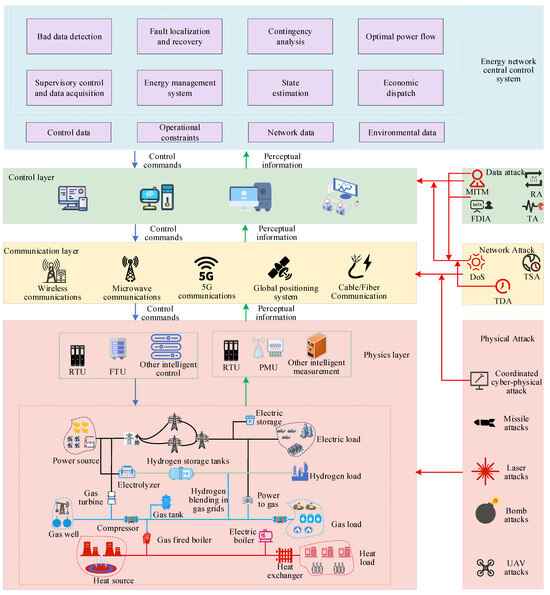
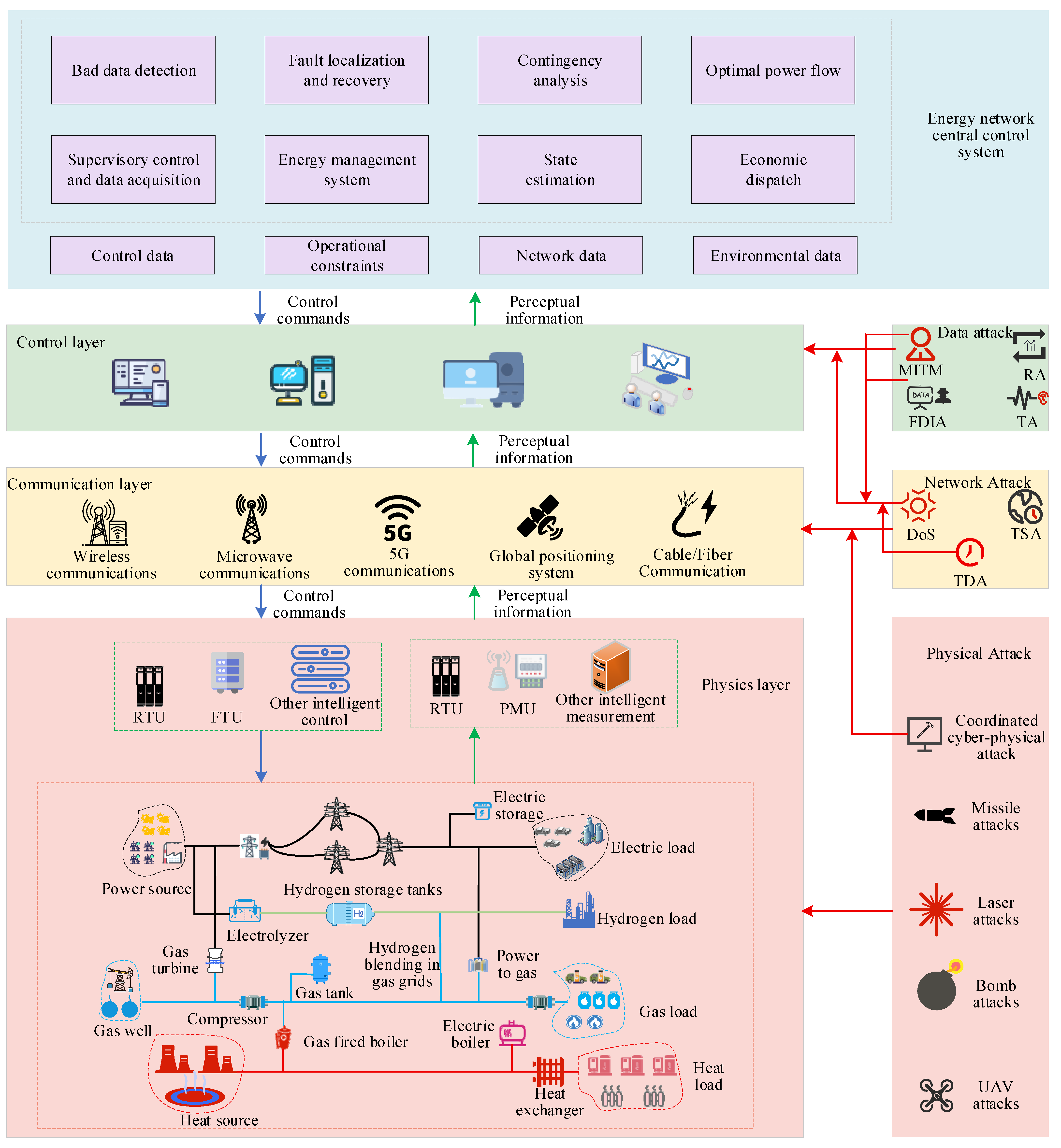
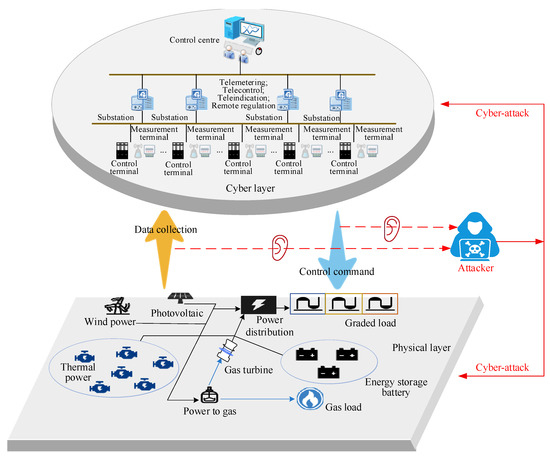
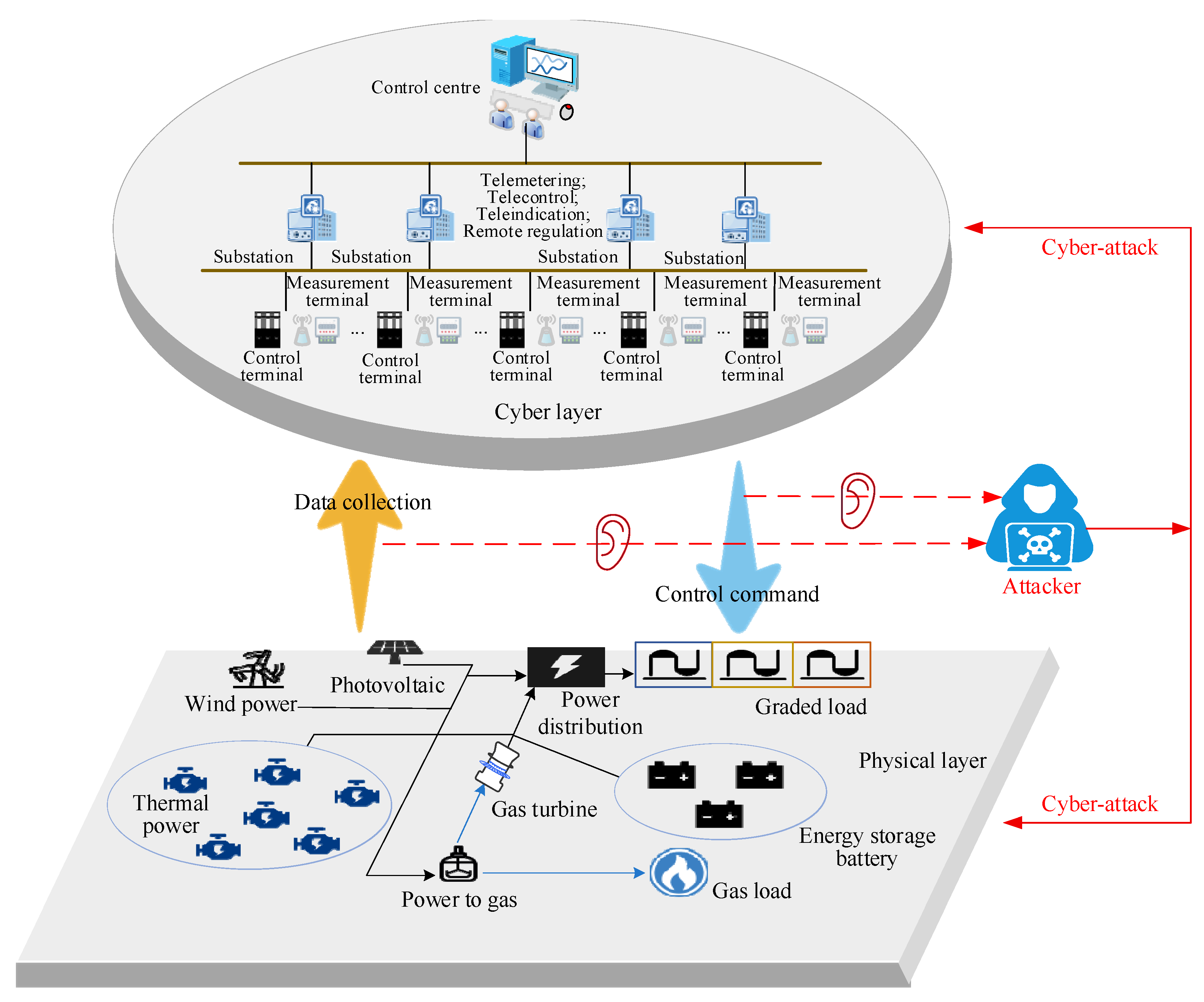
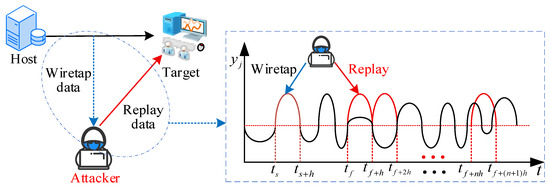
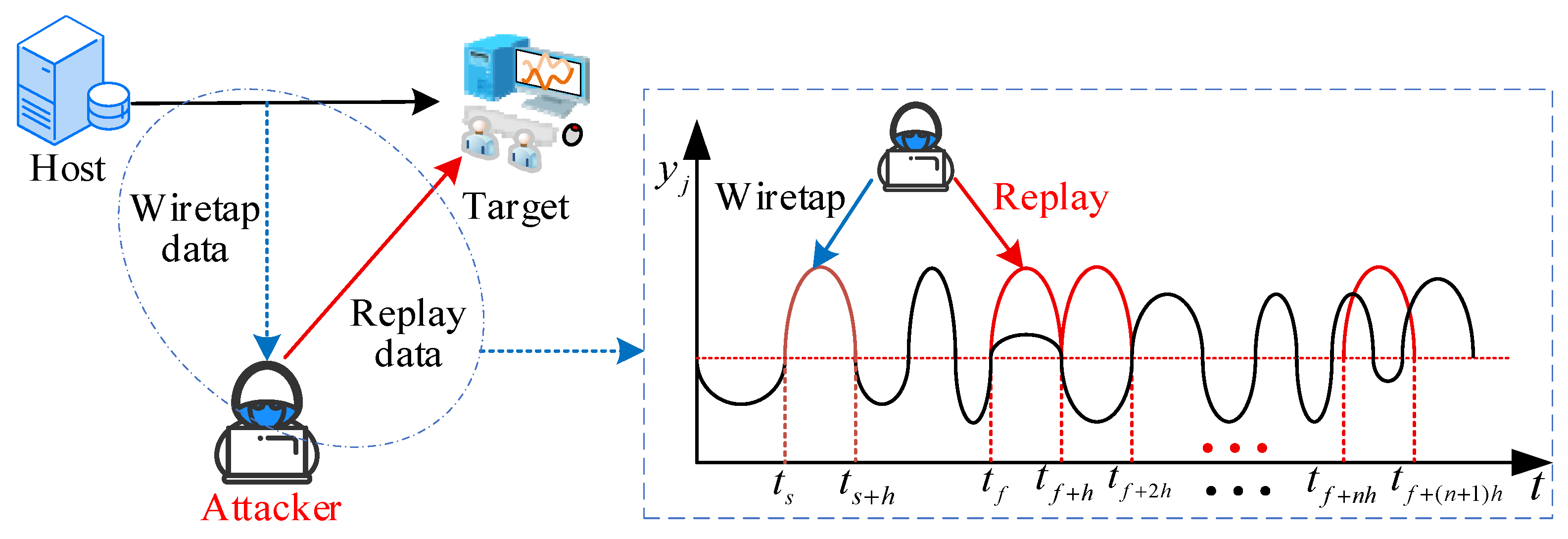
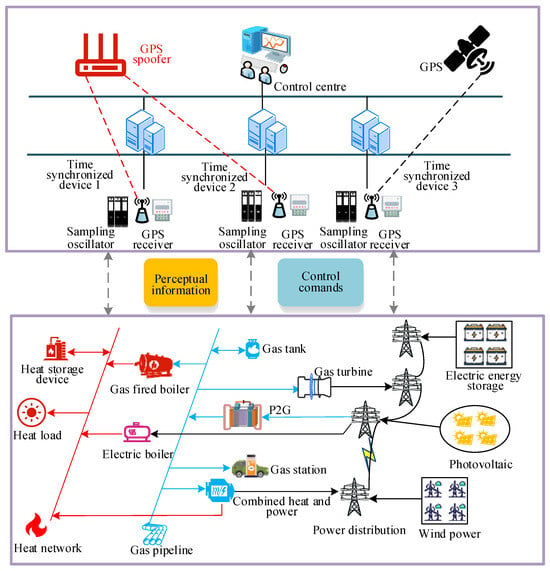
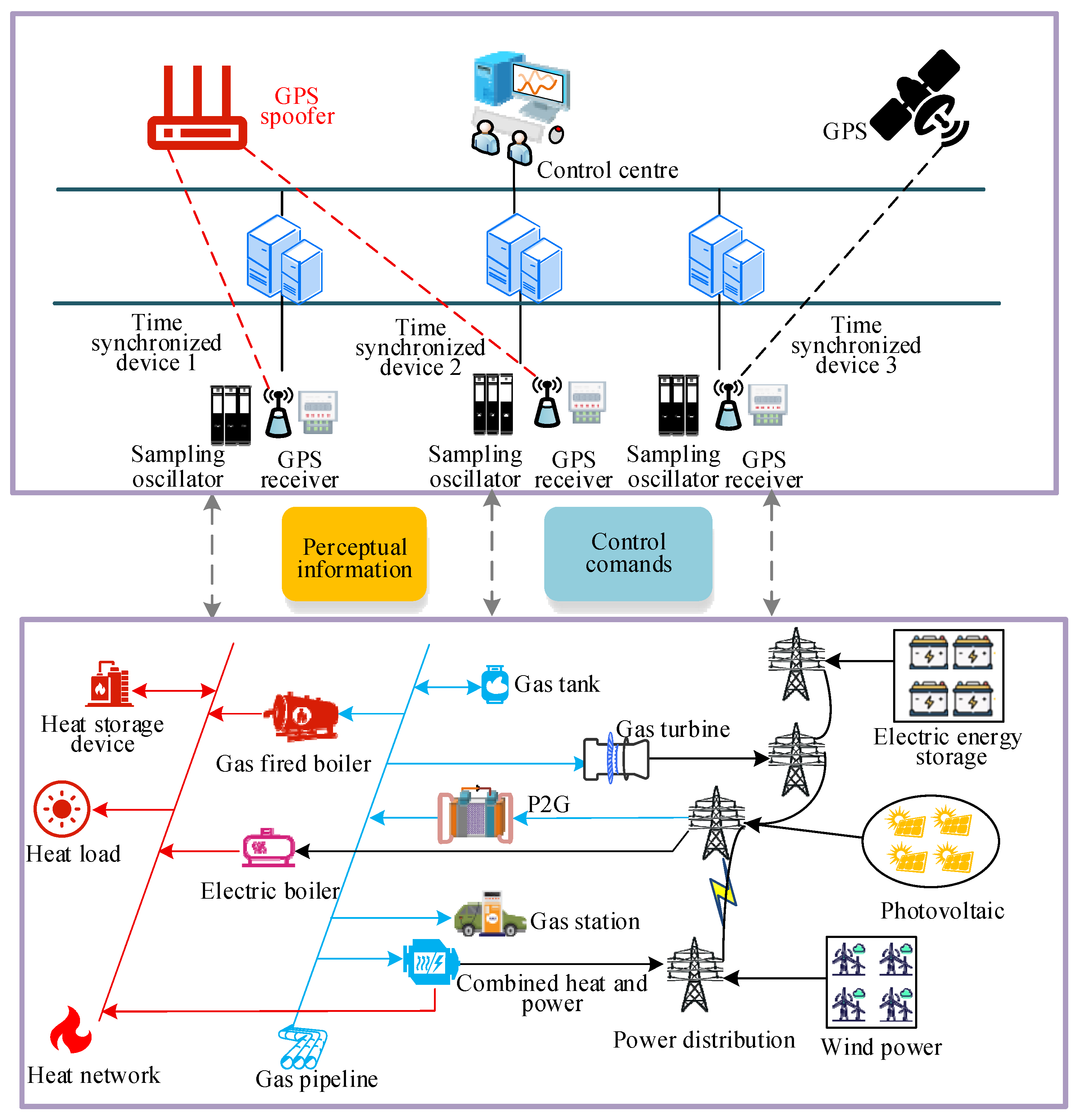
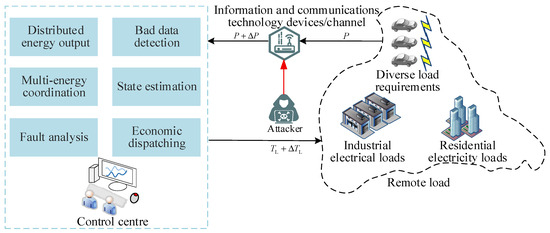
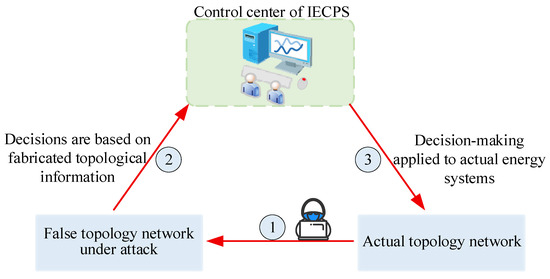
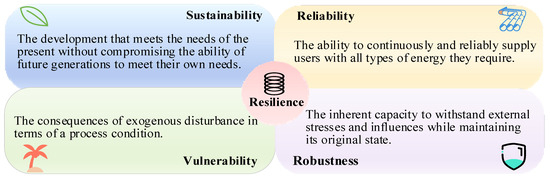
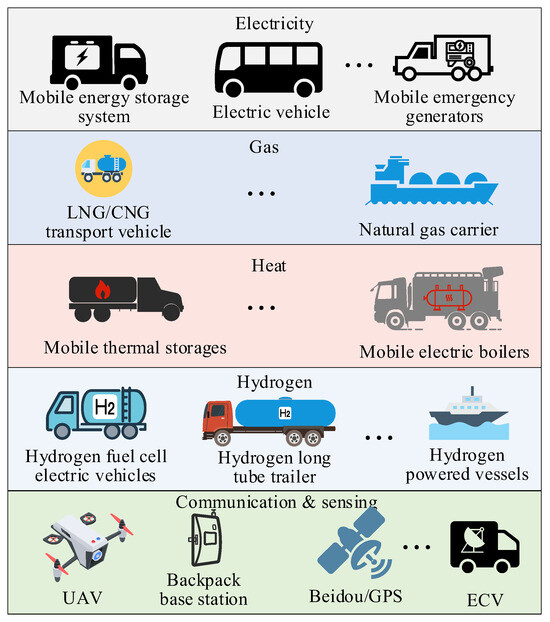
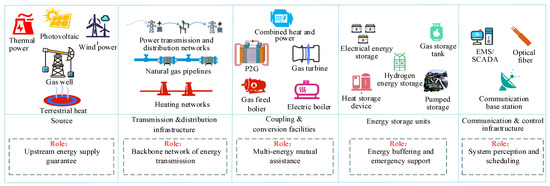
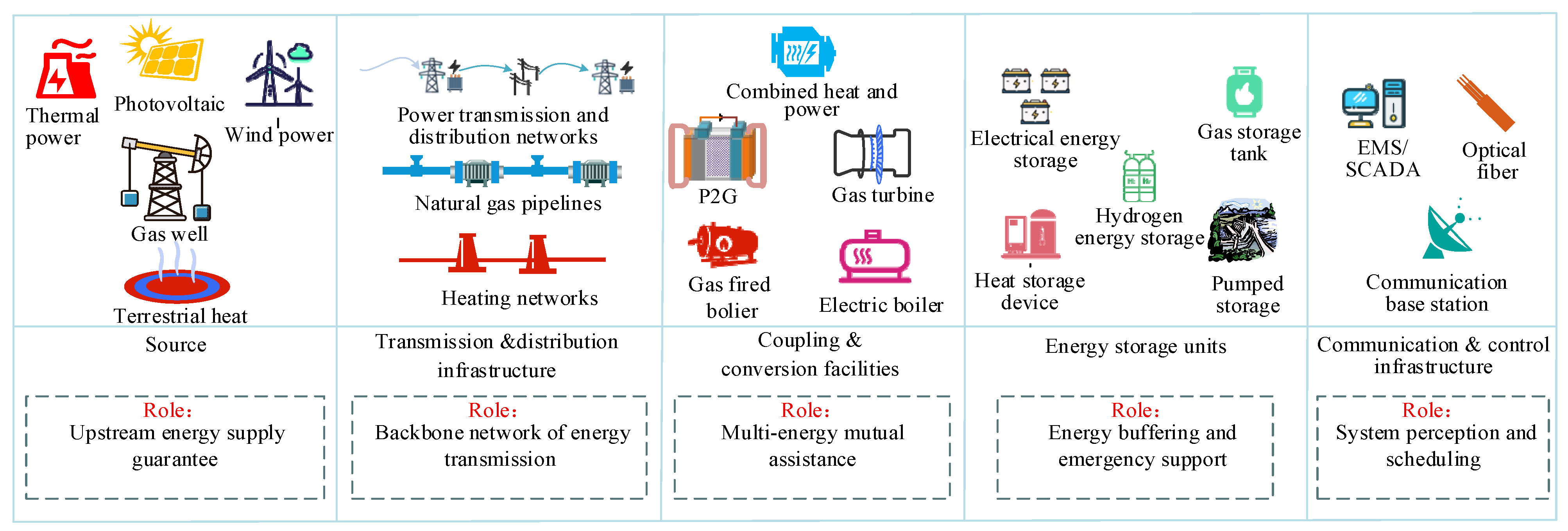
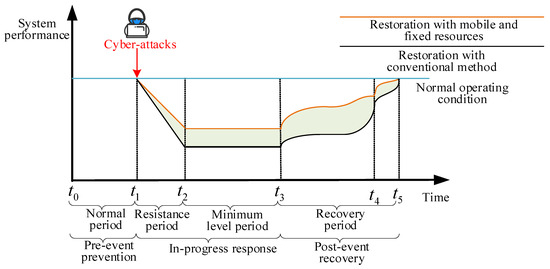
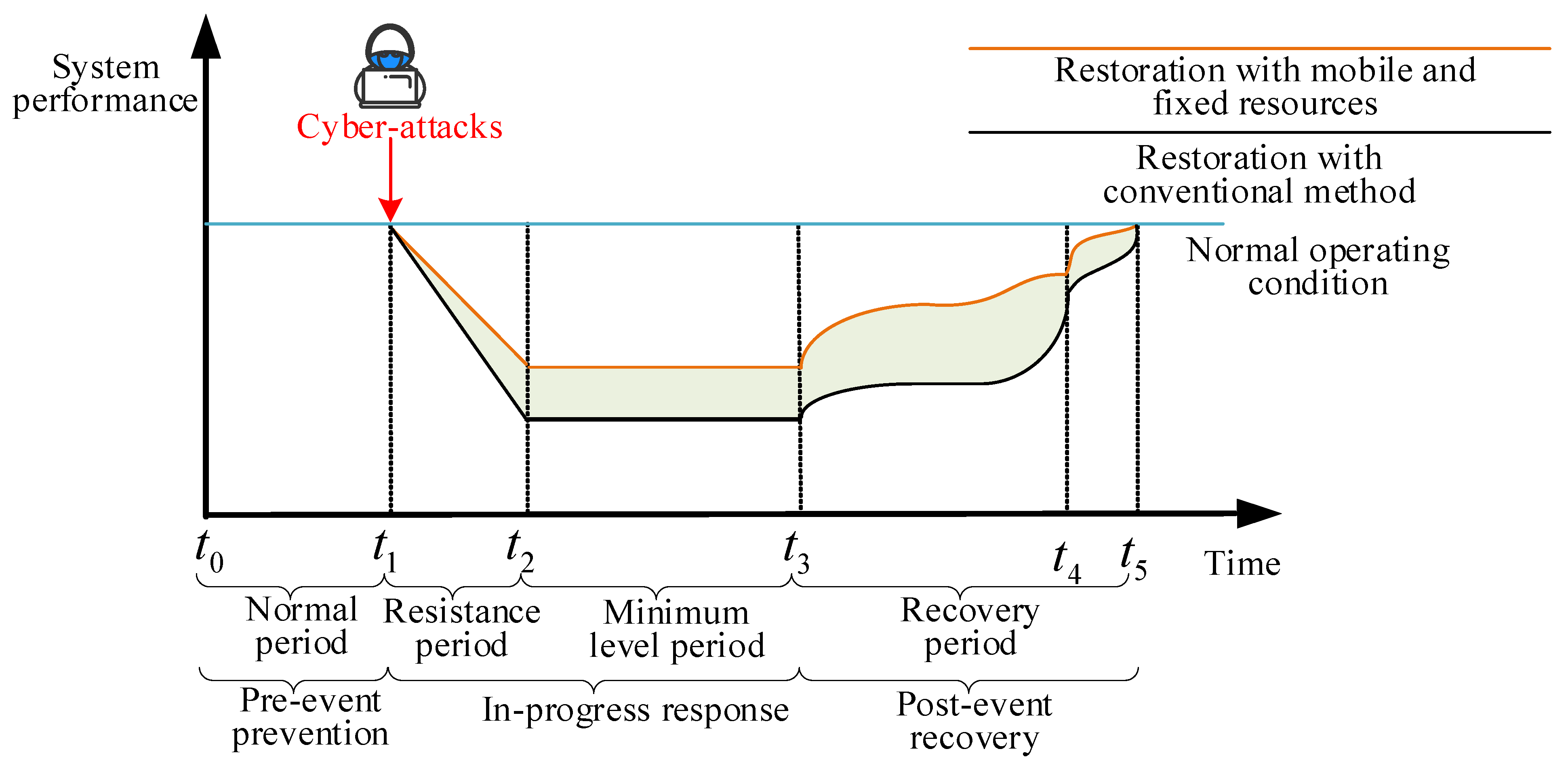
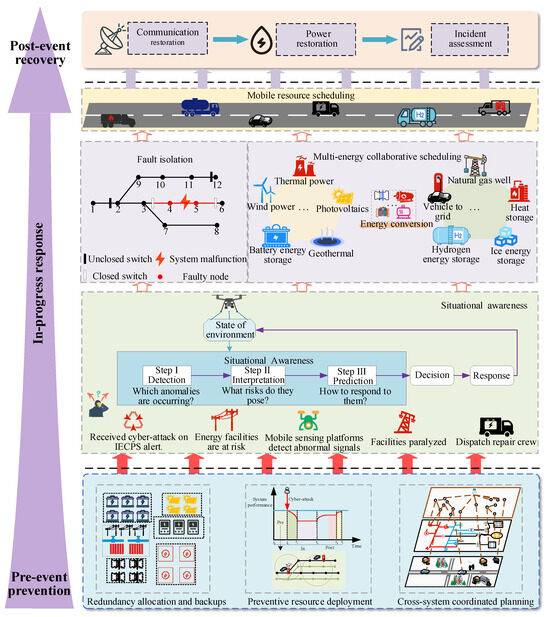
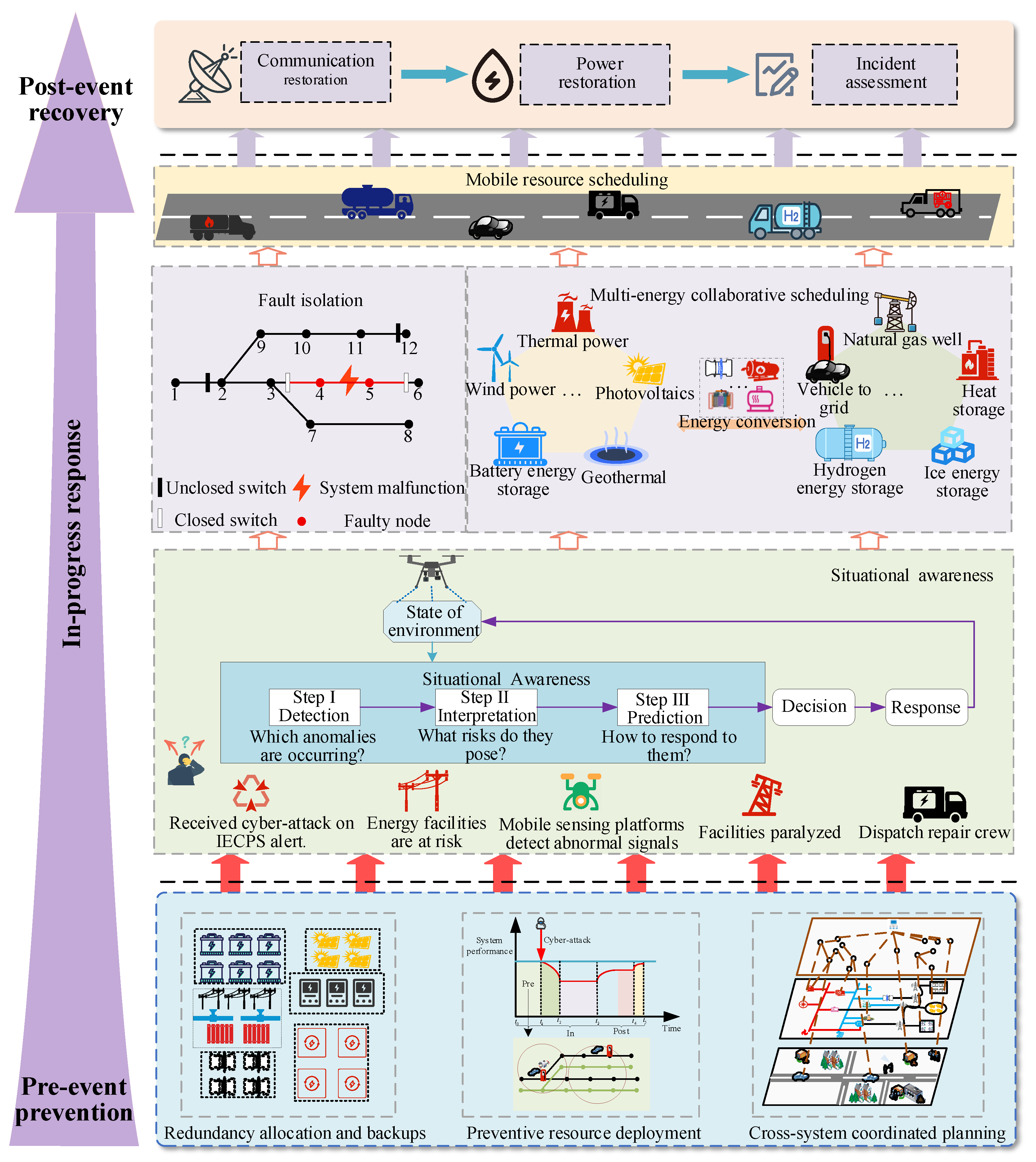
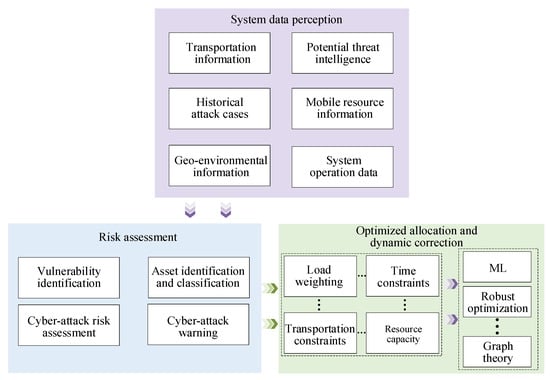
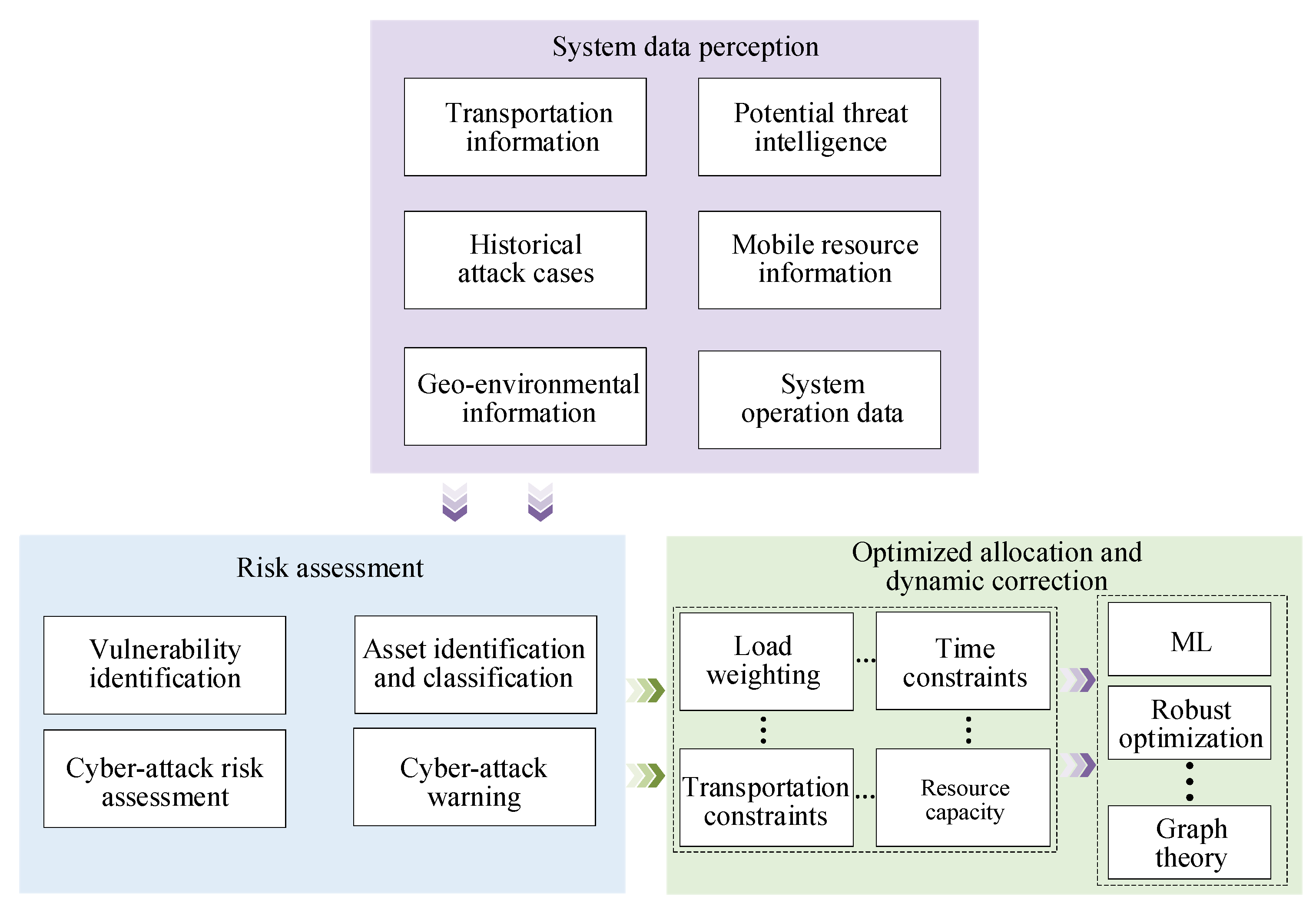
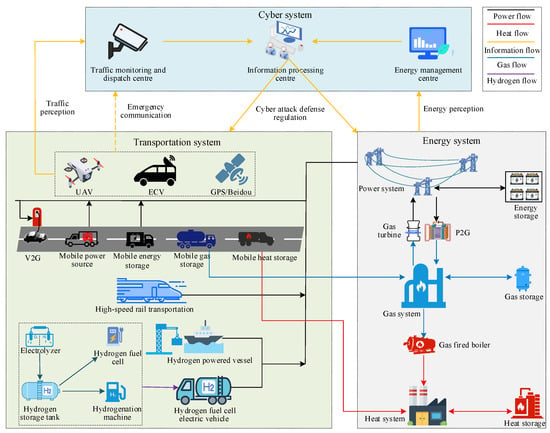
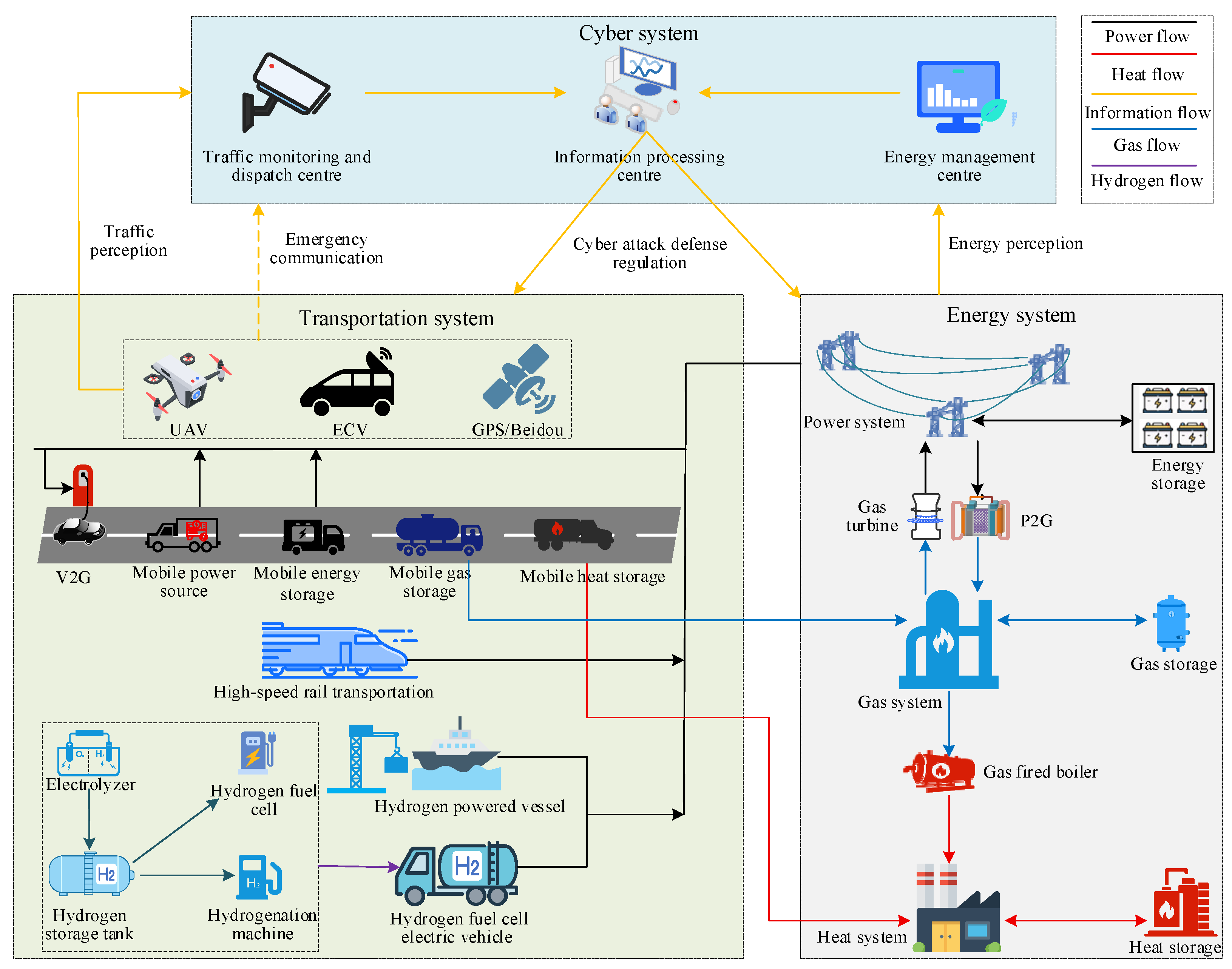
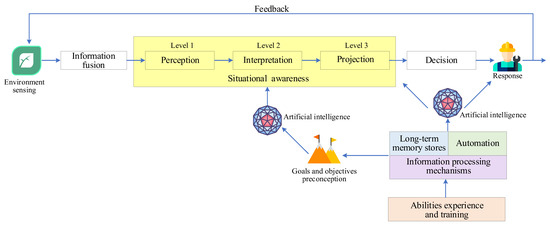
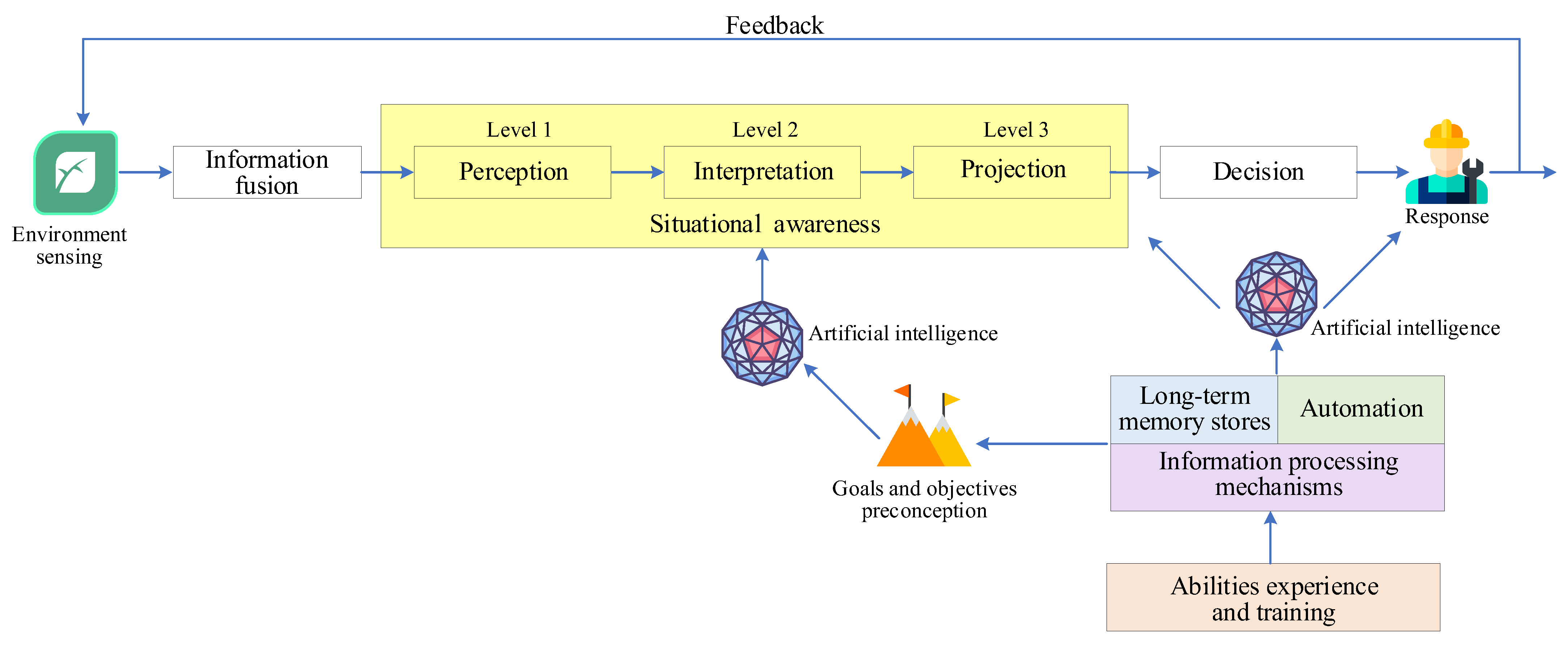
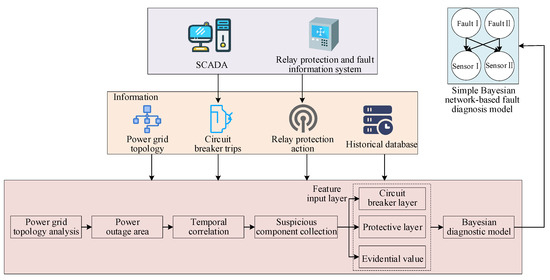
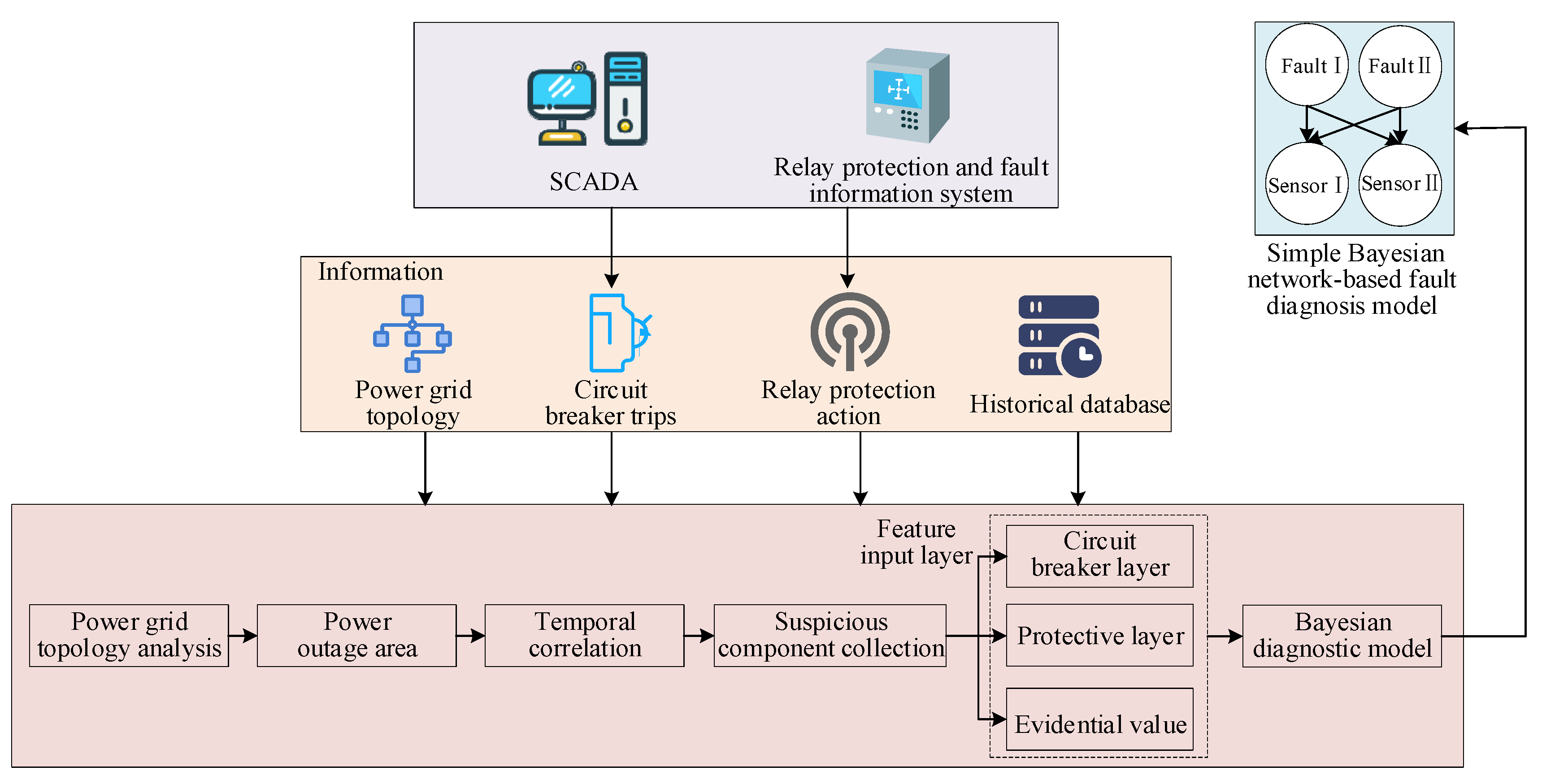
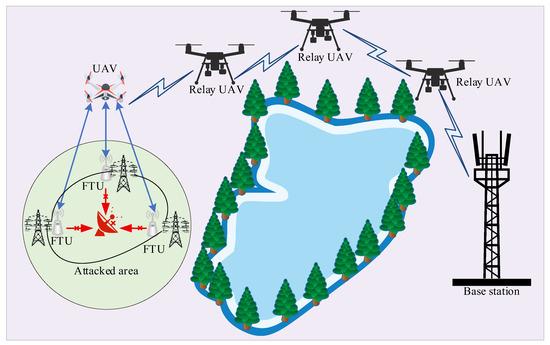
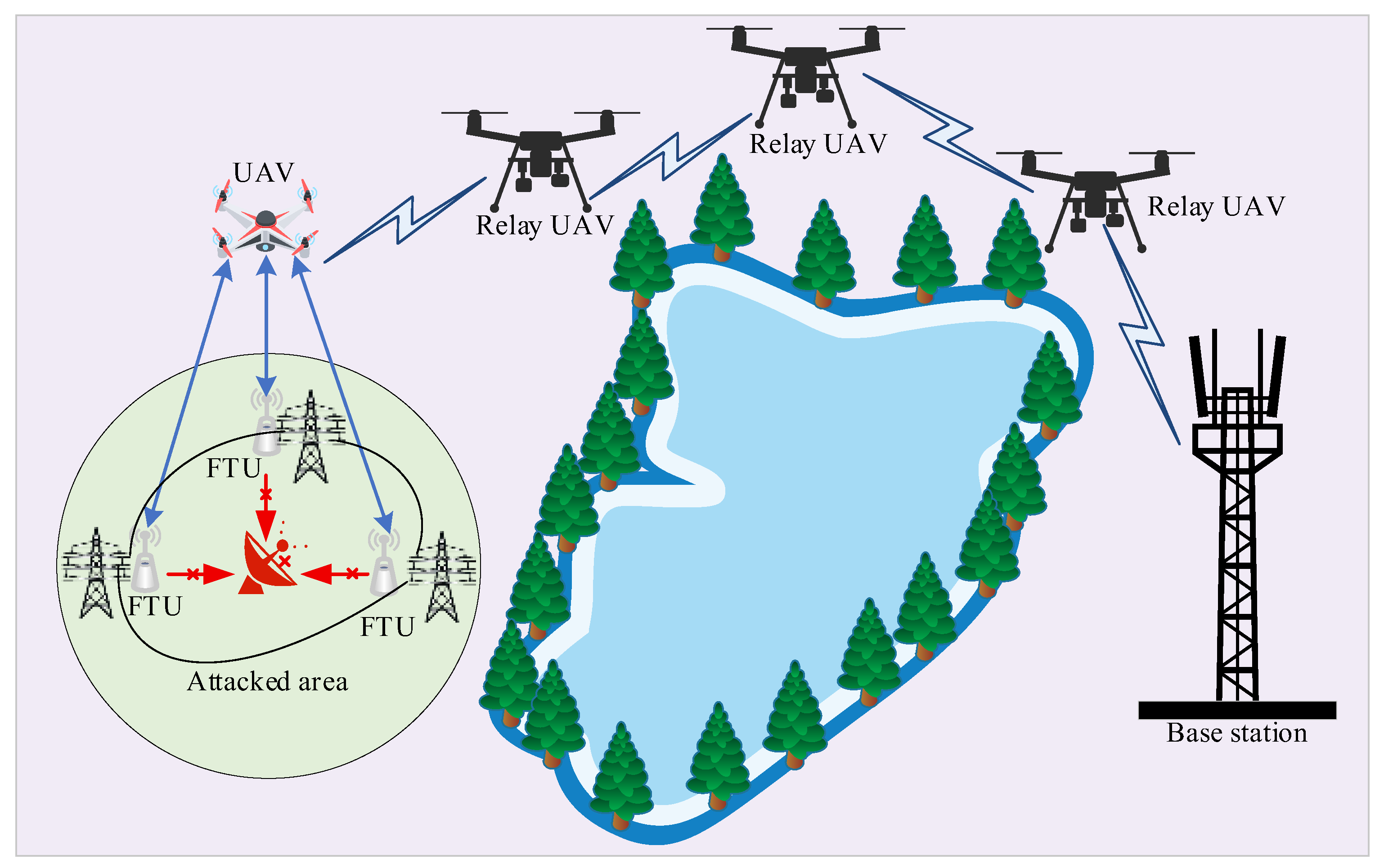
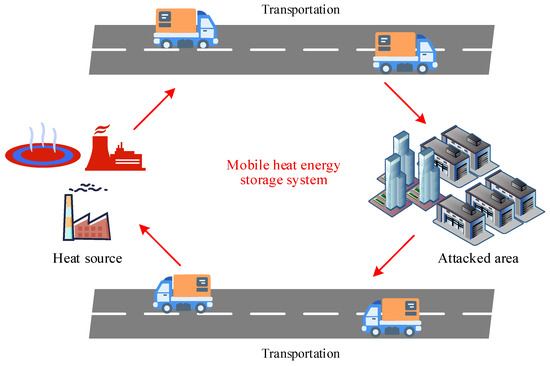
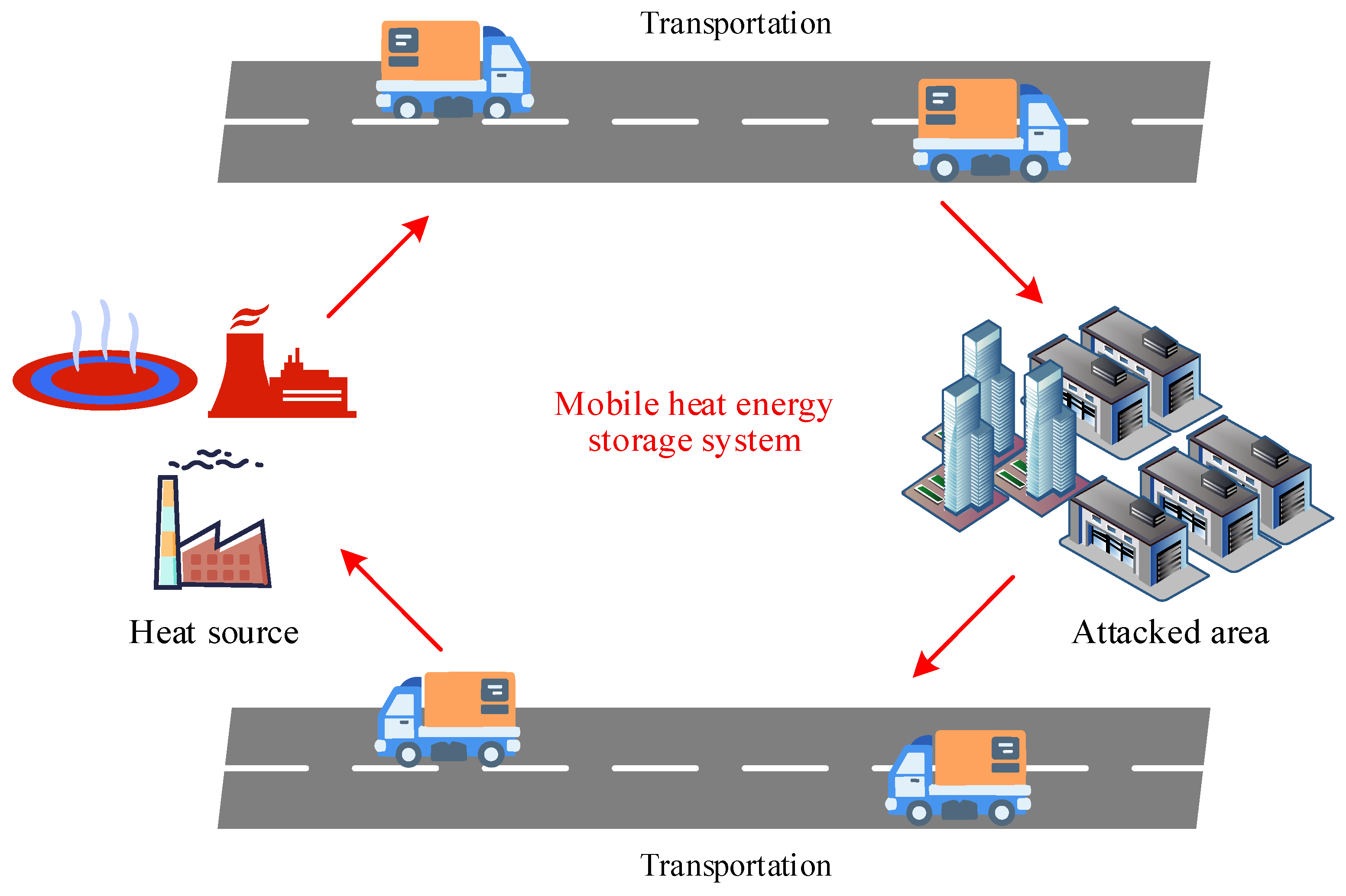
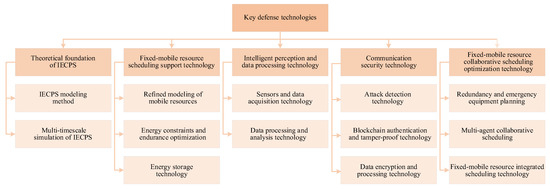
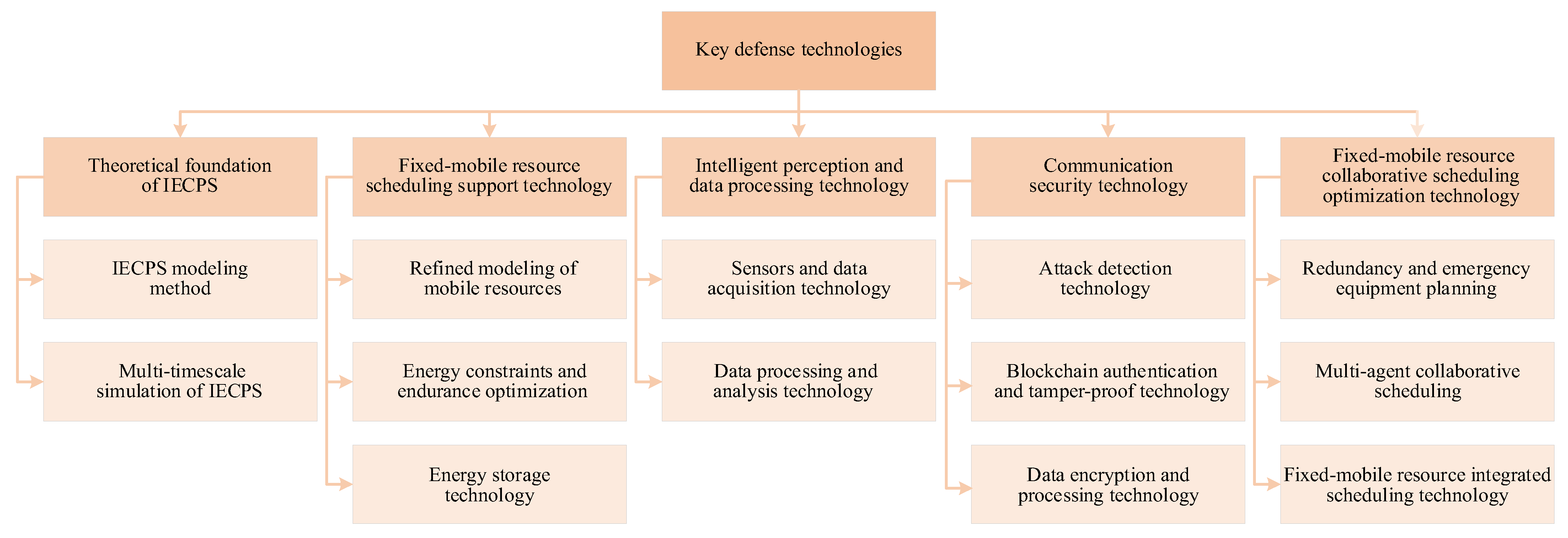
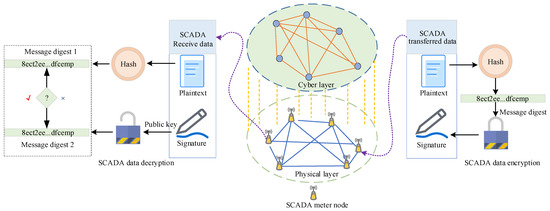
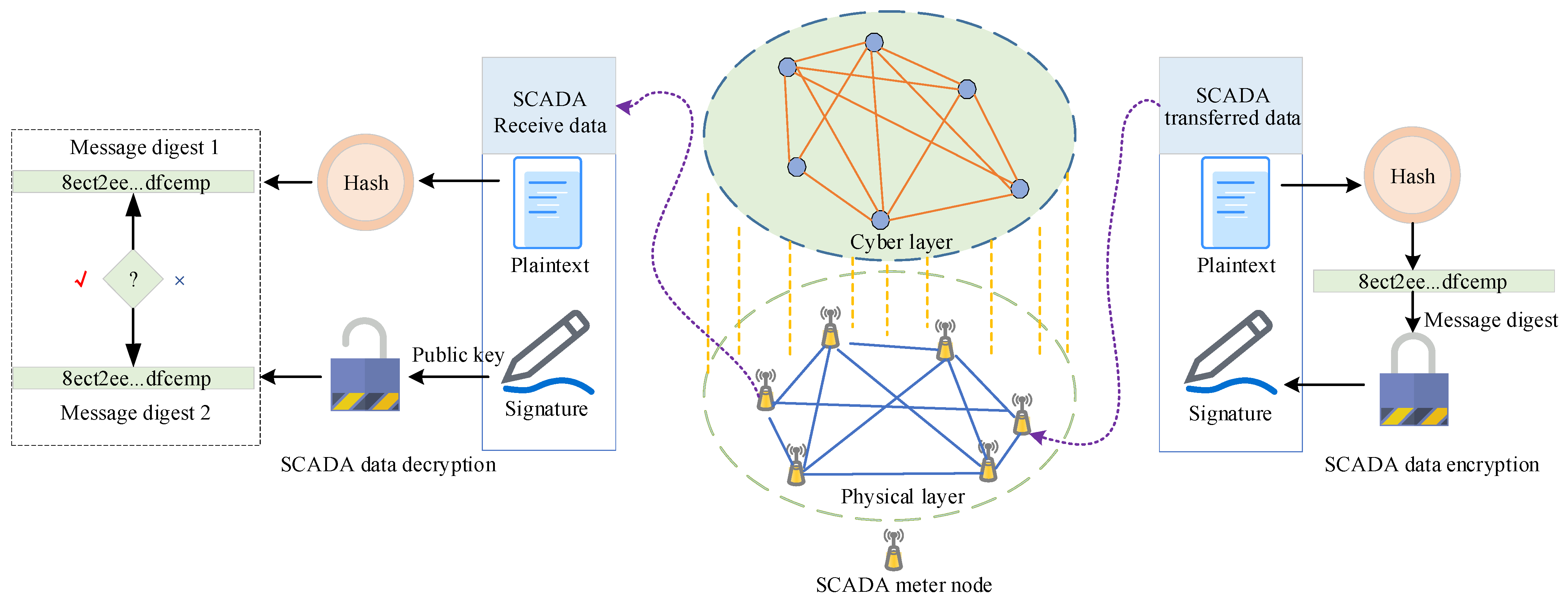

Disclaimer/Publisher’s Note: The statements, opinions and data contained in all publications are solely those of the individual author(s) and contributor(s) and not of MDPI and/or the editor(s). MDPI and/or the editor(s) disclaim responsibility for any injury to people or property resulting from any ideas, methods, instructions or products referred to in the content. |
© 2025 by the authors. Licensee MDPI, Basel, Switzerland. This article is an open access article distributed under the terms and conditions of the Creative Commons Attribution (CC BY) license.