Article

Geopolitical Shocks and the Global Energy System: Mechanisms of Spillover Transmission

by
Yun Xu
1,*,
Xiaoliang Guo
2,
Wei Jiang
2 and
Yanyu Zhang
2
1
Shandong Foreign Trade Vocational College, No. 201, Jufeng Road, Licang District, Qingdao 266100, China
2
School of Economics, Qingdao University, Qingdao 266100, China
*
Author to whom correspondence should be addressed.
Energies 2026, 19(1), 251; https://doi.org/10.3390/en19010251
Submission received: 22 October 2025 / Revised: 28 December 2025 / Accepted: 30 December 2025 / Published: 2 January 2026
(This article belongs to the Section C: Energy Economics and Policy)

Abstract

Geopolitical risks, particularly in energy-producing regions, significantly impact national economic development. This study uses the Generalized Variance Decomposition Spectrum Representation method to analyze the relationship between international energy prices (coal, oil, and natural gas) and geopolitical risks. The findings show that geopolitical risk serves as a net transmitter of risk, with a short-term effect on energy prices that diminishes over time. Oil prices are most sensitive to geopolitical risks, while coal prices are least affected. The study also identifies distinct spillover effects between geopolitical behavioral risks and threat risks, with the former contributing more to price fluctuations. The results highlight the complex interplay between energy prices and geopolitical risks, with implications for global economic stability.

1. Introduction

Over the past decade, geopolitical conflicts across the globe have been characterized by complexity and unpredictability. Hamas’s attack on Israel on 7 October 2023, and Israel’s subsequent retaliation have reignited concerns about geopolitical risks, less than two years after the outbreak of the Russia–Ukraine conflict in 2022. Events such as the strategic rivalry between China and the United States, the prolonged COVID-19 pandemic, the geopolitical tensions between Russia and NATO, the situation on the Korean Peninsula, and conflicts in the Middle East have highlighted the widespread presence of geopolitical risks. According to the Global Risk Report (2023), geopolitical risks consistently rank among the top five threats to global and regional peace, stability, and development. Their impact surpasses that of environmental risks, often occupying the foremost position among all risk factors. The ongoing accumulation and eruption of geopolitical tensions have quietly reshaped the global energy supply and demand landscape, thereby influencing the international energy order. In this study, the term international energy order refers to the global system that governs the production, trade, pricing, governance, and geopolitical interactions of energy resources. It encompasses the rules, structure, and balance of power in the international energy system, including the distribution of energy resources, the role of major producers and consumers, market mechanisms, international governance institutions, and energy security considerations. This framework provides context for understanding how geopolitical risks influence global energy dynamics.
The significance of traditional energy sources in the national development processes of countries is undeniable. Globally, traditional energy sources constitute a significant portion of energy consumption, with oil leading at 40.4%, natural gas at 16%, and coal at 9.5% (IEA, 2021). This heavy reliance on traditional energy sources highlights the vulnerability of the entire energy supply chain to geopolitical disruptions. Consequently, changes in the international energy order precipitated by geopolitical factors have exacerbated the energy crisis. The soaring prices of energy commodities, such as natural gas and oil, have had profound impacts on industrial production and consumer energy consumption. Moreover, the global economic growth rate has decelerated, spurred by various unforeseen factors that have engendered concerns regarding energy supply security. The significant and volatile fluctuations in international energy prices have exacerbated uncertainties within the global economy. The significance of traditional energy sources in the national development processes of countries is undeniable. Globally, traditional energy sources constitute a significant portion of energy consumption, with oil leading at 40.4%, natural gas at 16%, and coal at 9.5% (IEA, 2021). This heavy reliance on traditional energy sources highlights the vulnerability of the entire energy supply chain to geopolitical disruptions. Consequently, changes in the international energy order precipitated by geopolitical factors have exacerbated the energy crisis [1]. The soaring prices of energy commodities, such as natural gas and oil, have had profound impacts on industrial production and consumer energy consumption [2]. Moreover, the global economic growth rate has decelerated, spurred by various unforeseen factors that have engendered concerns regarding energy supply security. The significant and volatile fluctuations in international energy prices have exacerbated uncertainties within the global economy.
In light of the prevailing global development context, there is a consensus regarding the paramount significance of the risk transmission mechanism between geopolitical risks and international prices of traditional energy resources. Furthermore, there is a discernible trend towards the increasing financialization of energy commodities, fostering a closer interplay between commodity markets and capital markets. Consequently, this evolving dynamic engenders heightened complexity. Consequently, this study seeks to analyze the impact of geopolitical risks on global prices of traditional energy resources in the context of economic globalization. It seeks to compare how geopolitical risks affect different energy prices and explain the complex relationship between these risks and international prices of traditional energy resources. In addition, this study draws on the perspectives of resource-dependence theory and risk transmission mechanisms. Geopolitical risks—such as conflicts, sanctions, and political instability—can disrupt global energy supply chains, altering the balance between supply and demand [3]. These disruptions translate into volatility in traditional energy prices, particularly for commodities such as oil, natural gas, and coal, which are heavily traded across borders. At the same time, sharp movements in energy prices can exacerbate geopolitical risks by triggering economic pressures, social unrest, or changes in bargaining power among energy-exporting and importing countries. This bidirectional interaction suggests the existence of a feedback loop: geopolitical risks serve as transmitters of shocks to energy markets, while energy price fluctuations can reinforce or amplify geopolitical tensions. Furthermore, consistent with financialization theory, the increasing integration of energy markets with global capital markets magnifies these spillovers across short-, medium-, and long-term horizons.
At the theoretical level, although many studies examine the influence of geopolitical risks on overall energy prices and specifically on oil, there is a lack of literature focused on investigating how different types of energy uniquely impact geopolitical risks [4]. Are there disparities in the risk transmission mechanisms attributed to various causes of geopolitical risks and international energy prices? Do the dynamics of profit spillover between variables vary between the short and long term? Furthermore, while geopolitical risks influence traditional energy prices, do these prices, in turn, exacerbate geopolitical risks? In addressing these inquiries, this article utilizes the Diebold and Yilmaz generalized prediction error variance decomposition method to analyze the spillover effects of returns between traditional energy prices and geopolitical risks [5]. Additionally, the approach proposed by Baruník and Křehlík is utilized to examine changes in spillover influencing factors across high, medium, and low frequencies [6]. Empirical investigation into the relationship between energy prices and geopolitical risks across various time periods reveals their temporal and frequency domain characteristics. This enhances research methodologies for addressing such issues and provides more effective responses to and mitigation of geopolitical risks [7].
At the practical level, analyzing the various impacts of geopolitical risks on traditional energy prices from a micro perspective can assist carbon-intensive enterprises in adjusting their energy strategies promptly [8]. This analysis can help them anticipate changes in energy prices and avoid unnecessary economic losses. For investors, diversified management can be achieved through cross-price and cross-period investment strategies [9]. Dynamic investment portfolios can be constructed to mitigate geopolitical risks. Studying the short-term impact can clarify how geopolitical risks influence intraday price dynamics of energy. This is beneficial for investors as it helps prevent high-frequency trading risks. From a macro perspective, a comprehensive and systematic understanding of the interrelationship between geopolitical risks and international traditional energy prices is an essential internal requirement for stabilizing domestic energy prices. For the government, conducting a preliminary assessment of geopolitical risks can serve as a foundation for formulating more effective policies to enhance the comprehensive development of traditional energy sources. Secondly, it is beneficial for policymakers to pay attention to specific geopolitical events to better respond to the impact of various factors that contribute to increased geopolitical risks. Therefore, this study is conducive to a comprehensive and in-depth analysis of how major global geopolitical risk events impact traditional energy prices, clarifying the direction and magnitude of their impact transmission. The comprehensive information obtained can help authorities to timely and effectively avoid negative impacts during economic turbulence. It also enables them to formulate forward-looking and robust policies tailored to various economic situations.
This article investigates the contagion of risk between geopolitical factors and international traditional energy prices by applying well-established spillover frameworks in both the time and frequency domains. The contribution of this study lies not in methodological innovation, but in its comprehensive empirical application and contextual insights. First, it extends the scope of existing research by systematically examining how different crisis periods shape the connectivity between geopolitical risks and energy prices, using five major geopolitical events as sub-samples. Second, the study provides new evidence by analyzing the spillover performance of the Geopolitical Risk (GPR) sub-indices—namely, the Geopolitical Threat Index (GPT) and the Geopolitical Behavior Index (GPA)—on coal, oil, and natural gas, highlighting their heterogeneous impacts. Third, by documenting the time-varying spillover effects across short-, medium-, and long-term horizons, the paper offers practical implications for investment strategies, showing how investors can adjust cross-period allocations under heightened geopolitical risks. These contextual and empirical contributions enrich the understanding of the geopolitical–energy nexus beyond what has been documented in prior studies.
The structure of the article is summarized as follows: Section 2 provides a detailed introduction to data and methods, Section 3 discusses static spillover structures and analysis, Section 4 discusses dynamic results and analysis, Section 5 discusses spillover results and analysis in the time domain of sub-samples, and Chapter 6 presents conclusions with policy insights.

2. Literature Review

In the contemporary global geopolitical and economic landscape, characterized by frequent “black swan” events, i.e., rare and unpredictable events that have a significant impact on the market and society, and a period of upheaval in world politics, the impact of geopolitical risks is increasingly significant. Geopolitical risks, influenced by immutable geographical proximity and intricate economic and political interconnections, exert pervasive effects on nations worldwide [10,11,12]. Recognizing and analyzing these risks holds paramount importance for global economic risk mitigation and sustainable development. Scholars, both domestically and internationally, have extensively examined and debated the nature of geopolitical risks in recent years, proposing various methodologies for measurement and analysis. Bremer conducted seminal research on the impact of geopolitical risks on international trade, categorizing them into two dimensions: political risk and economic risk. He outlined specific risk events within these dimensions, providing valuable insights for future quantitative assessments of geopolitical risks [13]. Early quantitative studies often used geopolitical events as proxies for national political risk, with limited separate analysis of their quantitative aspects. Notably, financial research institutions, including The Economist Intelligence Unit (EIU), The Political Risk Services Group, and Business Monitor International (BMI), have developed their own country risk indices. Marsh (2019) advanced this field by utilizing data from BMI to create an annual global geopolitical risk map, visually illustrating the spatiotemporal evolution of geopolitical risks across over 200 countries and regions. Among the various methodologies for measuring geopolitical risk, the Geopolitical Risk Index (GPR) developed by Caldara and Iacoviello (2022) stands out as a widely utilized approach internationally [14]. The GPR index, constructed through text analysis of articles covering geopolitical events and related risks in 11 prominent international newspapers, including the Financial Times, serves as a comprehensive tool for assessing the magnitude of geopolitical risk on a global scale. By employing text analysis techniques, such as counting the frequency of relevant articles, this methodology captures the dynamic nature of geopolitical risks and their impact on global affairs [15,16].
Geopolitical risks, distinct from other risk categories, possess intricate characteristics such as complexity, variability, diverse manifestations, wide-ranging impacts, significant latent threats, and profound repercussions [17]. Researchers have extensively studied the relationship between geopolitical risks and conventional energy prices. Su et al. argue that geopolitical risk significantly impacts oil prices, suggesting that crude oil prices are affected by changes in geopolitical risk [18]. Gong and Xu analyzed energy prices and found that geopolitical risk positively affects the spread of energy prices [4]. As research and technology progress, scholars have focused more on examining how geopolitical risks affect energy prices over various time periods. Su et al.’s findings, using a rolling window-guided Granger causality test, suggest that oil prices surge during periods of warfare but exhibit delayed responsiveness during declines in geopolitical risk [19]. Ozkan et al. investigated the impact of geopolitical oil price uncertainty on traditional energy markets and related commodities [20]. Jia et al. investigated the tail risk of crude oil prices from the perspectives of EPU and geopolitical risk, and gained a deeper understanding of how geopolitical risk affects crude oil prices, emphasizing the interconnection with traditional energy markets [3]. Khan et al. suggest that geopolitical risks can lead to medium-term increases in oil prices, especially during periods of increased uncertainty [21]. Liu et al. utilized newly developed indices like the Geopolitical Threat Index and Geopolitical Action Sub-Index to determine that GPR enhances economic returns, especially during times of significant geopolitical risks. This provides valuable insights into potential oil price fluctuations and results in increased economic excess returns [22]. Furthermore, scholarly investigations have delved into the differential impacts of two distinct types of geopolitical risks, namely Geopolitical Behavioral Risk (GBR) and Geopolitical Threat Risk (GTR), on energy prices, particularly oil prices. Bouoiyour et al. reveal that due to the uncertainty caused by geopolitical behavior, oil prices show significant fluctuations, while the impact of geopolitical threats seems less pronounced. Relative to the GTR index, the GBR index exerts a more substantial influence on long-term oil futures price dynamics [23,24]. Additionally, Gong and Xu argue that geopolitical behavioral risk is the main channel through which geopolitical risk influences energy prices [4]. However, Liu et al. argue that geopolitical risk (GPR) significantly impacts energy prices through the threat of geopolitical events, challenging previous research conclusions [25]. This article utilizes the DY method to investigate this phenomenon. It shows that geopolitical behavioral risk has a significant impact, whereas geopolitical threat risk is more influenced by fluctuations in energy prices.
In addition, recognizing the significance of energy in geopolitics can provide a basis for understanding how traditional energy prices influence geopolitical risks. Swyngedouw pointed out that energy is not only a resource but also a complex network relationship intertwined in the power structure [26]. Huang et al. and Huber investigated the complex, nonlinear interactions between geopolitical risk and oil prices. Their research identified a bidirectional nonlinear Granger causality linking geopolitical risk with fluctuations in oil prices across different change components. Additionally, they observed that shocks in crude oil prices could instigate regional conflicts [27,28,29]. Korotayev et al. highlighted that a significant drop in crude oil prices heightens the risk of social and political instability in oil-exporting nations, consequently escalating geopolitical risk levels [30]. El-Gamal and Abdel-Latif developed a Global Vector Autoregressive Model (GVAR) and determined that decreased oil prices are likely to induce increased levels of geopolitical risk. [31]. The research results of Bazzi and Blattman indicate that the impact of oil price fluctuations on geopolitical risk is very weak [2].
In summary, the academic community has extensively studied the impact of geopolitical risks on the energy sector. However, there are notable shortcomings in the analysis of spillover effects. Primarily, these shortcomings manifest in two distinct areas. Firstly, the predominant focus of most scholars has been on the impact of geopolitical uncertainty on a singular energy price, overlooking the intricate interplay among multiple energy prices, which are inherently more complex than a single oil price. Secondly, while a limited number of scholars have ventured into examining the effect of geopolitical risk (GPR) on aggregate energy prices, their analyses tend to be overly generalized, failing to delve into the nuances of price variations. Furthermore, the impact of energy prices on geopolitical risks has received little attention in existing research. To address these gaps, this article utilizes the variance decomposition-based correlation measurement framework proposed by Diebold & Yilmaz, providing a comprehensive analysis of the perspectives. This approach enables a nuanced understanding of the spillover structure and its time-varying characteristics. Additionally, this study utilizes the methodology developed by Bazzi and Blattman to conduct empirical research quantifying the intensity and impacts of spillovers from geopolitical risk and international traditional energy price risks at different frequencies over a specific period.

3. Statistical Analysis and Methodology

3.1. Data

Geopolitical risk refers to the uncertainty or instability in international relations, political events, or conflicts that can affect economic, financial, and energy markets. It encompasses events such as wars, terrorism, diplomatic tensions, sanctions, and regime changes, which may disrupt trade, energy supply chains, and investment flows. Geopolitical risks can be measured using composite indices (e.g., the GPR index) that capture the frequency and intensity of such events, and they are often categorized into short-term risks (sudden conflicts or terrorist attacks) and long-term structural risks (persistent regional tensions or systemic political instability). In the context of energy markets, geopolitical risks can lead to sudden fluctuations in oil, natural gas, and coal prices by affecting supply, demand expectations, and market sentiment.
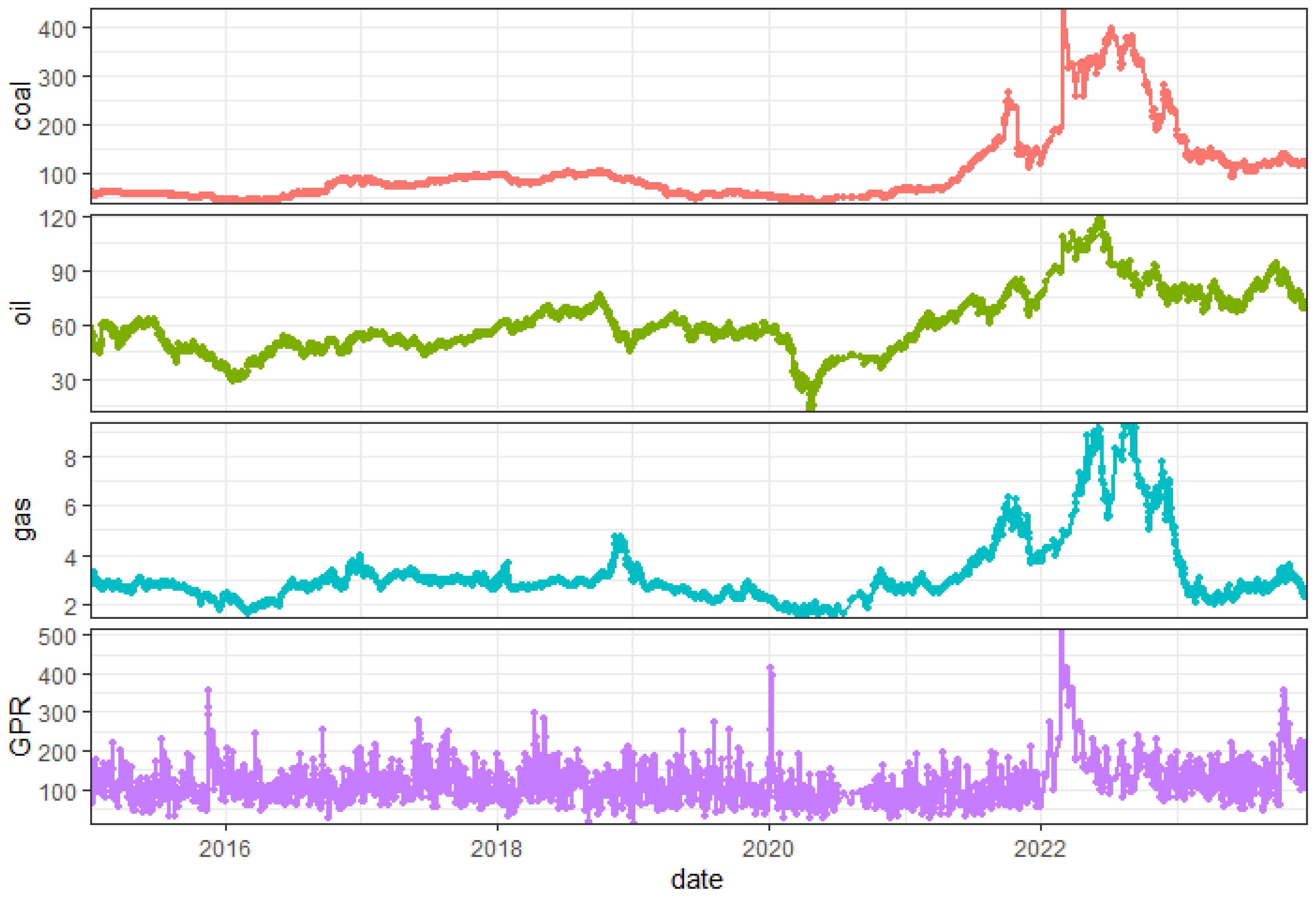
Geopolitical risks are challenging to quantify. Historically, research focused on modeling hypothetical variables related to specific events. This approach has evolved with the development of the Geopolitical Risk (GPR) index by Caldara and Iacoviello (2022), which has been widely used in empirical studies [14]. In this study, the GPR index is used to represent the magnitude of geopolitical risk. Energy prices are represented by the futures contracts of three traditional energy carriers: Rotterdam coal futures, WTI crude oil futures, and NYMEX natural gas futures, all traded on the Intercontinental Exchange (ICE). These commodities are chosen for their theoretical relevance, direct exposure to geopolitical shocks, and data availability. Collectively, coal, oil, and natural gas account for over 65% of global primary energy consumption (IEA, 2021), and their production and trade are concentrated in geopolitically sensitive regions. Reliable high-frequency daily data for these futures are available from the Wind database, ensuring comparability within the spillover analysis framework. Electricity and renewable energy are not included due to the lack of comparable daily global futures data. The sample period spans from 1 January 2015 to 18 December 2023. The starting point, 2015, marks the post-global oil crisis reversal and the availability of consistent daily data for both the GPR index and energy futures prices. The period includes major geopolitical events, such as the Sino-US trade war, COVID-19 related global supply chain disruptions, the Russia–Ukraine conflict, and the recent Palestine–Israel crisis, providing a suitable timeframe to analyze spillover dynamics. The dataset comprises 2025 daily observations for each series. All data are from the wind database; Figure 1 presents the trends of the GPR index and the three energy prices over the sample period.
As depicted in Figure 1, during the specified sample period, all variables exhibited similar fluctuations, with energy price changes typically correlating with the GPR level. For instance, from 2015 to 2016, the GPR index reached a minor peak, exceeding the value of 350. Concurrently, there were notable declines in the prices of coal, oil, and natural gas. In 2020, the GPR peak associated with the COVID-19 pandemic exceeded 400. As global governments imposed isolation measures, the demand for oil contracted by 30% [32]. Coal and natural gas prices also experienced varying levels of depreciation. Furthermore, geopolitical tensions, such as the 2018 trade frictions between China and the United States, the Russo-Ukrainian War in 2022, and the Israeli–Palestinian conflict in 2023, have escalated geopolitical risks, significantly impacting energy prices.
At this point, this article can provide a preliminary analysis of the energy price fluctuations resulting from the five periods of heightened geopolitical risks. The increase in the Global Political Risk (GPR) due to the 2015 reverse oil crisis and the COVID-19 pandemic in 2020 resulted in a decrease in energy prices. Conversely, the rise in GPR triggered by the China-US trade friction in 2018, the Russia-Ukraine conflict in 2022, and the Palestine–Israel conflict in 2023 led to an increase in energy prices [7]. That is to say, the risk spillover effects on international traditional energy prices caused by various factors leading to the increase in GPR vary, necessitating further specific analysis. Table 1 shows the descriptive statistics of all variables.

3.2. Methodology

This article draws on the method proposed by Diebold and Yilmaz (2012) to study the spillover effects of geopolitical risk and international energy prices [5]. This method relies on variance decomposition: for a set of multivariate time series, a vector autoregressive model (VAR) is constructed, H-period prediction is performed, and the variance of prediction errors from other variables accepted by each variable is decomposed. Represent θ i j H as the variance of the H-period prediction error for variables i and y . In other words, θ i j H means the proportion of the H-period prediction error variance of variable i caused by the impact of variable y to the total error variance of variable i , where i , j = 1 , N , i j . For the convenience of understanding, this article establishes a spillover measure Table 2 based on an N × N variance decomposition matrix.
This method employs the generalized variance decomposition of the VAR model to compute the spillover index and subsequently establish a connected network. Therefore, prior to calculating the spillover index in this study, it is essential to consider a covariance stationary N-variable VAR.
The model for each set of data can be written as an N-variable k-order VAR model:
x t = i = 1 p Φ i x t i + ε t
Among them, x t = x 1 t , x 2 t , , x N t is the endogenous variable vector, Φ i is an N × N dimensional parameter matrix, ε t is an independent and identically distributed error vector, and its moving average is expressed as:
x t = i = 0 A i ε t i
The N × N dimensional covariance matrix A i satisfies A i = Φ 1 A i 1 + Φ 2 A i 2 + + Φ p A i p , and A 0 is an N × N dimensional identity matrix. Where i < 0 , A i = 0 . The results of variance decomposition on the prediction error of the first H steps by θ i j g H are as follows:
θ i j g H = σ i i 1 h = 0 H 1 e i A h e j 2 h = 0 H 1 e i A h A h e i
Σ = σ i j = 1 , 2 N is the variance-covariance matrix of the error vector ε , σ i i is the error term of the i equation, the standard deviation of ε i , e i is the i element with 1, set of vectors with 0 remaining elements. To calculate the spillover index, standardize each variance decomposition matrix:
θ ˜ i j g H = θ i j g H j = 1 N θ i j g H
where j = 1 N θ ˜ i j g H = 1   i , j = 1 N θ ˜ i j g H = N .
Construct a total spillover index using the variation contribution of KPPS variance decomposition:
S g H = i , j = 1 i j N θ ˜ i j g H i , j = 1 N θ ˜ i j g H × 100 = i , j = 1 i j N θ ˜ i j g H N × 100
The total spillover index characterizes the contribution of each variable’s spillover effects to the variance of the overall prediction error in a vector.
Secondly, further decompose and represent the spillover effects and directions between variables. By standardizing the generalized variance decomposition matrix, the directional spillover effects from all other variables j accepted by variable i can be expressed as follows:
S i g H = j = 1 i j N θ ˜ i j g H j = 1 N θ ˜ i j g H × 100
In a similar way, this article measures the directed spillover passed from variable i to all other variables:
S i g H = j = 1 i j N θ ˜ j i g H j = 1 N θ ˜ j i g H × 100
The difference between the total shock transmitted to and the shock received from all other variables is defined as net spillover:
S i g H = S i g H S i g H
Net spillover provides information about the net contribution of each variable to changes in other variables. Studying net pairwise spillovers is also meaningful, and this article defines it as:
S i j g H = θ ˜ i j g H k = 1 N θ ˜ i k g H θ ˜ j i g H k = 1 N θ ˜ j k g H × 100
The net pairwise spillover between variables i and j measures the difference between the shocks transmitted from variable i to j and the shocks transmitted from j to i .
Barunik and Křehlík (2018) proposed a framework based on variance decomposition spectral representation to measure the spillover effects of variables at different frequencies [6], which is referred to as the BK spillover index method based on generalized variance decomposition spectral representation, abbreviated as BK spillover index, in authoritative domestic journal papers.
The frequency response function Ψ ( e k ω ) = h e k ω Ψ h is obtained through the Fourier transform of the coefficient Ψ h . A generalized causal spectrum at frequency ω is specified as:
f ( ω ) i , j σ j j 1 Ψ ( e k ω ) Σ i , j 2 Ψ ( ω k ω ) Σ Ψ ( e + k ω ) i , i
Among them, Ψ e k ω is the Fourier transform of the pulse response Ψ h defined above. f ω i , j represents the spectral share of the variable at a given frequency ω .
The BK method defines the generalized variance decomposition on frequency band d , and the d = a , b , a , b π , π equation is represented as follows:
( θ d ) i , j = 1 2 π d Γ i ( ω ) f ( ω ) i , j d ω
where Γ i ω represents the weight function. The scale variance decomposition on frequency band d is represented as follows:
( θ d ˜ ) i , j = ( θ d ) i , j j = 1 ( θ ) i , j
where θ i , j = 1 2 π π π Γ i ω f ω i , j d ω . The total spillover effect within the frequency band d is represented by Equation (13):
C d ω = 1 T r θ d ˜ θ d ˜ × 100
And the frequency connectivity under the frequency band d is defined as:
C d F = θ d ˜ θ ˜ T r θ d ˜ θ d ˜ × 100 = C d ω × θ d ˜ θ d ˜

4. Static Spillover Results and Analysis

4.1. Static Spillover Results and Analysis in the Time Domain

This article investigates the spillover effects of returns between international energy prices and geopolitical risks by employing the DY and BK spillover index methods, incorporating the generalized error variance decomposition technique. Table 3 shows the specific analysis results. The main diagonal value in the matrix indicates the extent to which the self-variable contributes to the variance of prediction error, demonstrating the impact of its own lag effect. The numerical values of the nondiagonal lines depict the interactions among variables in the network of volatility spillovers. Moreover, the “TO” row and the “FROM” column represent the overall spillover effect and total inflow effect of tail risk in a specific energy market, respectively.
Table 3 illustrates the spillover effect between traditional energy prices and geopolitical risk using the DY time-domain method. This article indicates that the overall connectivity is 16.47%. Overall, oil prices are the largest spillover receiver in the system (19.28%) and also the largest spillover sender among the three energy sources (16.29%), indicating the core position of oil in traditional energy. Meanwhile, the variation in coal prices exhibits the lowest correlation compared to the other two energy sources (16.03% and 15.03%, respectively), which corresponds to the relative share of coal in traditional energy consumption. There is a strong correlation between fluctuations in geopolitical risks and variations in energy returns. From the table, the spillover effect of GPR on energy price changes is observed to be 12.88%, and its impact on energy price changes is 18.43%, indicating a significant positive net spillover of 5.55%. In terms of energy types, GPR has the greatest spillover effect on oil prices (7.29%), followed by natural gas and coal prices. The ranking of the spillover effects of various energy prices on GPR remains consistent. This indicates that intense competition among international oil market giants and the fluctuations in oil prices often serve as indicators or barometers of international relations. Therefore, this article preliminarily concludes that GPR’s impact on energy prices is significantly greater than the reverse. The size of the spillover effect between energy types and GPR is ranked as follows: oil > gas > coal. This indicates that geopolitical risks affect the correlation of traditional energy prices, and this spillover effect varies among different energy prices.

4.2. Static Spillover Results and Analysis in Frequency Domain

Due to the different goals, desires, and institutional limitations of economic participants in energy prices, the connectivity of prices will change with frequency. Therefore, it is necessary to conduct research in different frequency domains. This article divides the time range into three categories: high frequency band d 1 = π 5 , π , medium frequency band d 2 = π 30 , π 5 , and low frequency band d 3 = 0 , π 30 . The high-frequency period is 1–5 days, the medium-frequency period is 5–30 days, and the low-frequency period is over 30 days. On the basis of time-domain analysis, this section employs the BK method to examine the static spillover effects across distinct frequency bands, thereby investigating the spillover phenomena at varying frequencies.
Table 4 presents an overview of the static total spillover effects between geopolitical risks (GPR) and international traditional energy prices across high, medium, and low frequencies. The total connectivity, amounting to 16.47%, includes short-term connectivity (13.82%), medium-term connectivity (2.07%), and long-term connectivity (0.58%), with short-term connectivity dominating the overall spillover dynamics. This observation underscores the heightened significance of short-term spillover effects, which are crucial for understanding the adjustment mechanisms in financial markets [33]. The spillover magnitude associated with changes in GPR is nearly equal to the total connectivity value, indicating that GPR contributes substantially to the overall spillover structure. GPR still maintains maximum positive net spillover across all frequency bands. However, in the mid-term and beyond, the influence of GPR on energy prices diminishes significantly, exhibiting a marked and drastic decline. In the long run, GPR has almost no impact on energy prices. The impact of energy price fluctuations on GPR follows a similar pattern. Therefore, this study preliminarily concludes that, overall, medium- to long-term fluctuations in geopolitical risks exert a relatively minor influence on energy prices. Conversely, the impact of energy prices on geopolitical risks is primarily concentrated in the short term.
It is noteworthy that the net spillover direction of oil prices transitions from short-term to medium-term to long-term. The negative net spillover value shows a decreasing trend as the frequency decreases, eventually converging to zero in the long run. This suggests that oil prices are more susceptible to the influence of other variables in the medium to long term. Conversely, coal prices exhibit an opposite trend, being more influenced by other variables in the medium to long term. Additionally, natural gas prices are observed to be affected by other variables in the medium to long term and exhibit the lowest susceptibility among the three energy sources. This indicates that natural gas prices may potentially diversify within traditional energy prices, as highlighted by the World Health Organization’s emphasis on their hedging potential [34,35]. Hence, geopolitical risks have a minimal impact on changes in natural gas prices, indicating that they affect traditional energy prices differently depending on the time intervals. Short-term fluctuations in traditional energy prices are more sensitive to geopolitical risk shocks (GPR shocks), which can cause rapid information transmission across markets; however, these effects gradually diminish in the medium to long term.

5. Dynamic Spillover Results and Analysis

5.1. Overall Dynamic Spillover Results and Analysis in the Time-Frequency Domain

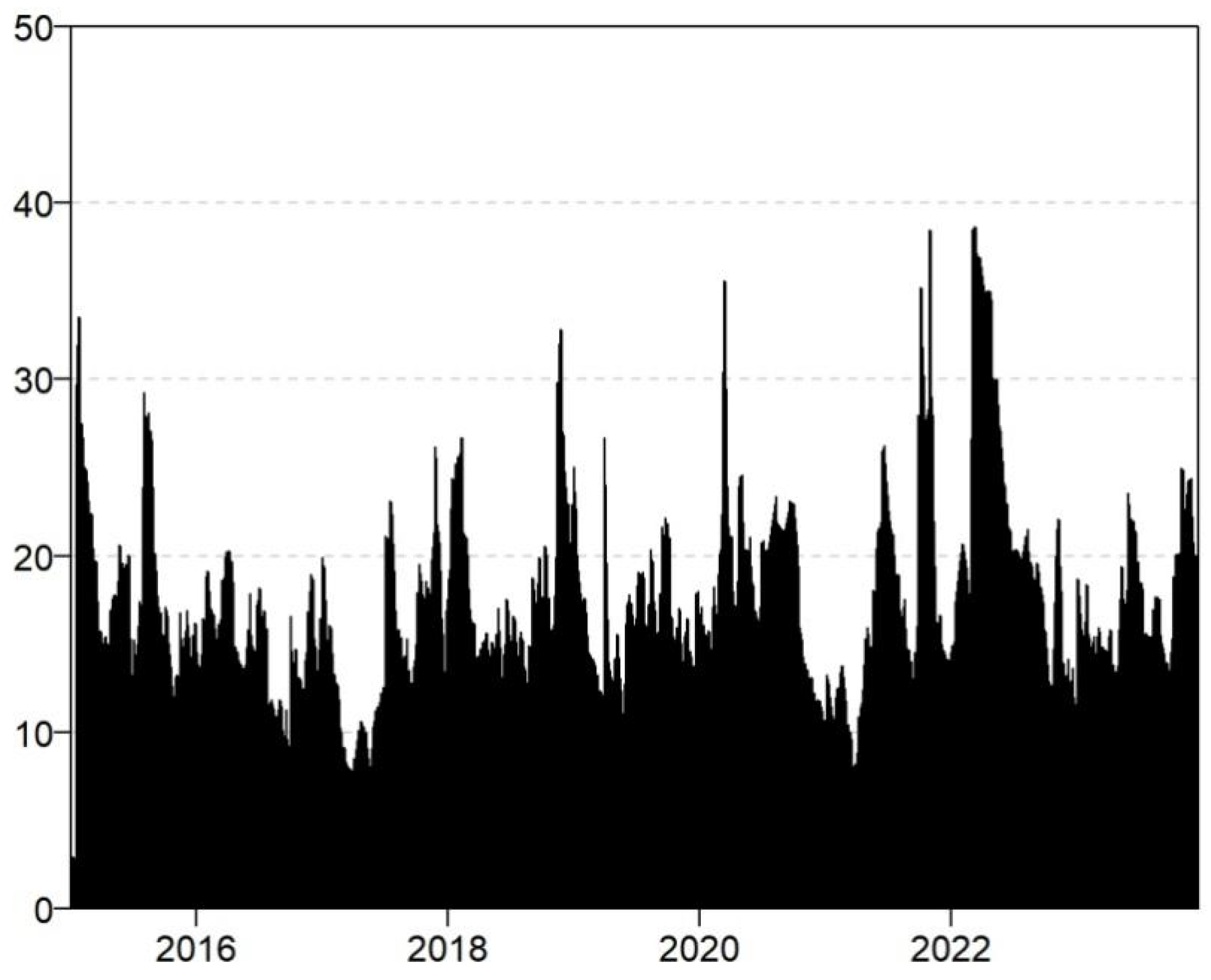
This article utilizes the DY dynamic model to analyze and explore the mechanism of dynamic information transmission. Figure 2 illustrates that the overall connectivity exhibits substantial variation, ranging from 5% to 40% throughout the entire sample period, with varying durations. Comparing the five peaks of geopolitical risk trends in Figure 1 reveals an overall increase and shift in connectivity throughout the entire sample cycle. Specifically, the COVID-19 pandemic and the reverse oil crisis exemplify two periods of global crises that potentially exert a significant influence on the risk transmission mechanisms between financial prices. Consequently, the overall connectivity between these two periods is likely to increase. However, it is important to note that the risk transmission mechanisms during these two periods are fundamentally different. The reverse oil crisis refers to a period during which fluctuations in energy prices impact geopolitical risks. Shifts in the international energy system led to fluctuations in energy prices, subsequently increasing geopolitical risks. The increase in geopolitical risks exacerbates fluctuations in energy prices. On the other hand, the COVID-19 pandemic is not directly linked to energy prices. Noteworthy geopolitical events, such as China-US trade frictions, the Russia–Ukraine conflict, and the Palestine–Israel conflict, significantly impact the connectivity of the overall framework [36].
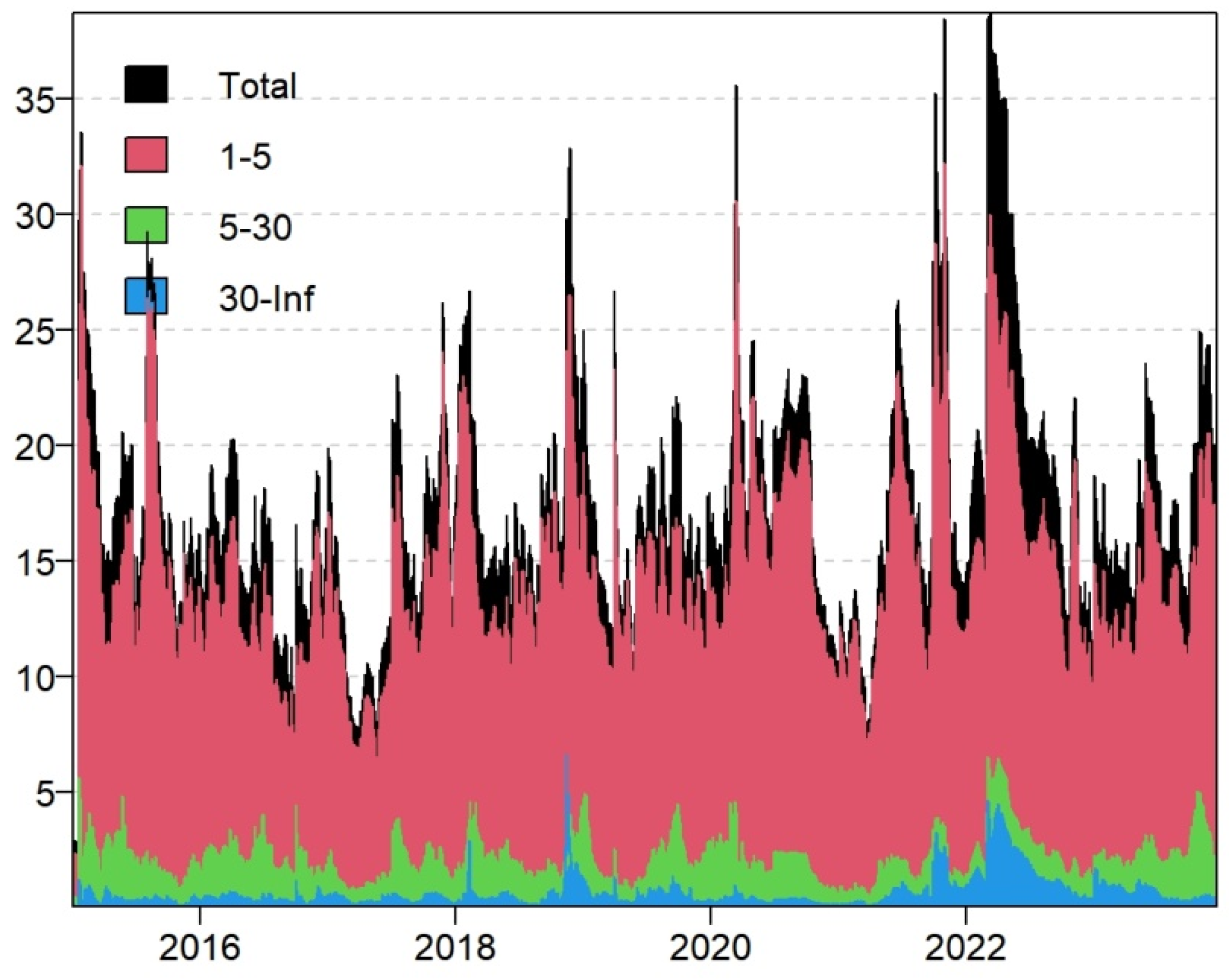
Secondly, this article divides the overall dynamic connectivity into three different frequencies, as illustrated in Figure 3. Black represents total connectivity, red represents short-term connectivity for high-frequency 1–5 days, green represents mid-term connectivity for intermediate frequency 5–30 days, and blue represents long-term connectivity for low-frequency 30 days or more. It can be observed that the dynamic overall connectivity size aligns with the static results. Specifically, connectivity is most pronounced in the short term, followed by the medium term, and is least pronounced in the long term. The shape and size of short-term connectivity and total connectivity are very similar, indicating that the research results of this article support the idea that connectivity is primarily influenced by short-term. From the graph, it can be observed that during the five periods of increased geopolitical risks mentioned above, the connectivity in the medium to long term is still much higher than that in the calm period. The mid-term connectivity changes at the beginning of 2015, 2020, and 2023 were more significant. The increase and decrease in long-term connectivity were most significant in early 2018 and early 2022. These significant events cause geopolitical risk (GPR) to peak, thereby influencing the medium- to long-term interconnectivity between variables. For example, Saudi Arabia, OPEC’s largest oil exporter, refused to reduce production at the beginning of 2015. The Sino-US trade friction officially started in March 2018. The World Health Organization declared COVID-19 a global “pandemic” in March 2020. The Russia–Ukraine war broke out in February 2022, and the Palestinian–Israeli conflict escalated in October 2023. This implies that while addressing short-term risks, it is essential to consider the influence of significant events on long-term and medium risks.

5.2. Dynamic Net Spillover Results and Analysis in Time-Frequency Domain

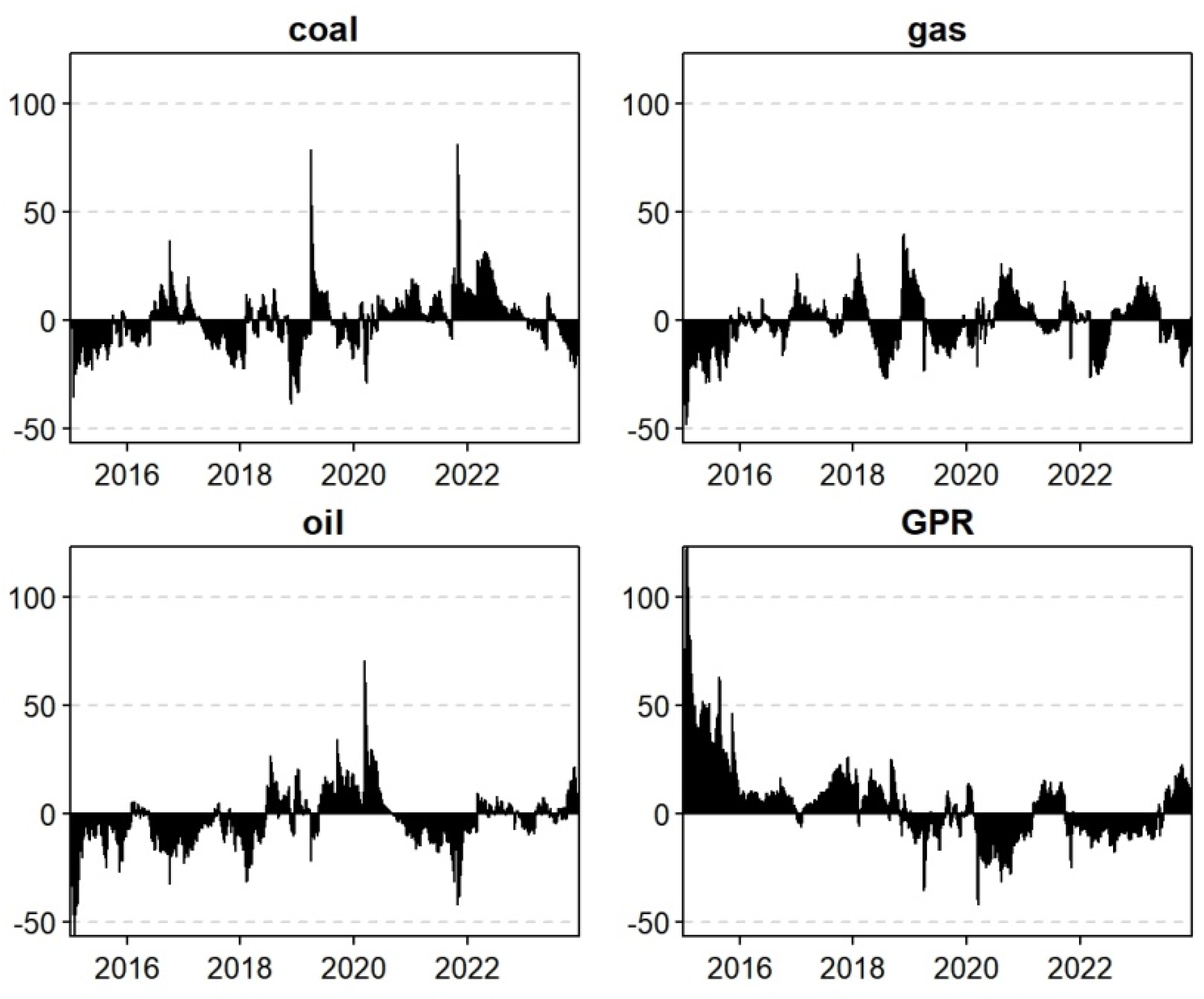
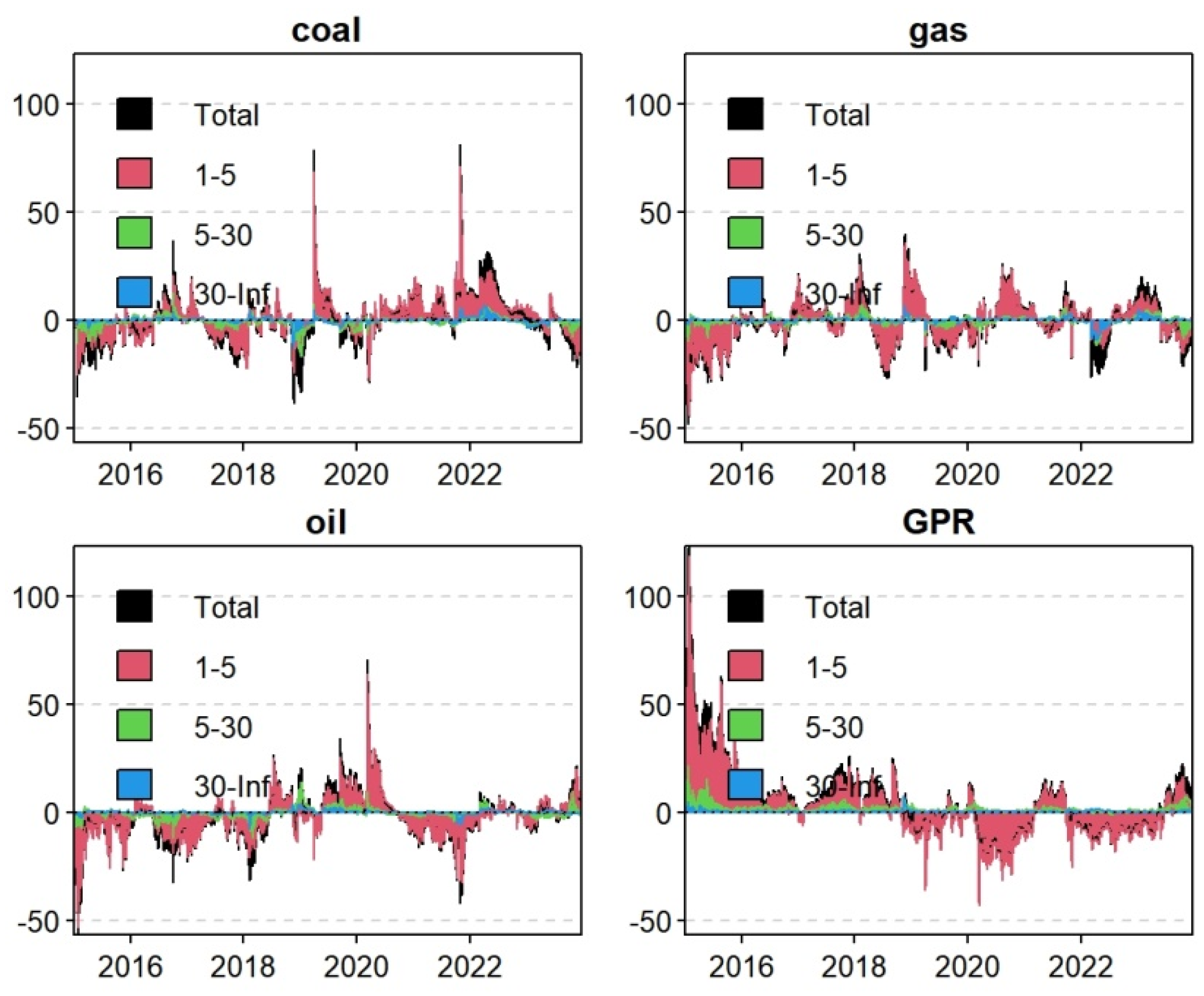
Figure 4 displays the dynamic net spillover results, illustrating specific dynamic characteristics and fluctuations. The net spillover effect of each variable oscillates between positive and negative values, with the magnitude of the change increasing during high GPR periods. Particularly, coal and oil prices exhibit significant peaks of sudden fluctuations, while the net surplus of natural gas remains relatively stable. This is consistent with the previously mentioned potential hedging effect of natural gas. Generally, the net spillover of the three energy prices is negative, indicating their vulnerability to external influences. Notably, in 2015, the negative net spillover value of the three reached −50%, while the GPR had a positive net spillover of 100%. This highlights that geopolitical risks had a significant impact on energy prices in 2015. Moreover, the net spillover graph of GPR shows that it mostly exhibits a positive net spillover. Nevertheless, the net spillover performance was negative during 2019, 2020, and 2022, implying that changes in the prices of the three energy types had a greater influence on geopolitical risks during these periods. These findings suggest that the internal information transmission effect of traditional energy prices will impact geopolitical risks, thereby amplifying them.
Figure 5 illustrates the net spillover effect across various time intervals. Notably, the net spillover values in the short term exhibit the widest range, indicating a significant spillover effect, consistent with the findings presented in Figure 3. Over the short term, the net spillover values of GPR fluctuate between negative and positive, suggesting a dynamic influence over time. Conversely, medium to long-term GPR demonstrates consistently positive net spillover, implying its role as a transmitter that exacerbates price fluctuations in other variables. The findings of Liu et al., which suggest that geopolitical risk may primarily drive long-term energy price fluctuations, align with this observation [25]. Therefore, it is important to consider the long- to medium-term impact of GPR on traditional energy prices. While there is not a noticeable significant increase in the net spillover of coal and oil prices in the medium to long term, their negative net spillover indirectly underscores the enduring influence of geopolitical risks on energy prices over extended periods.

6. Spillover Results and Analysis in Sub Sample Time Domain

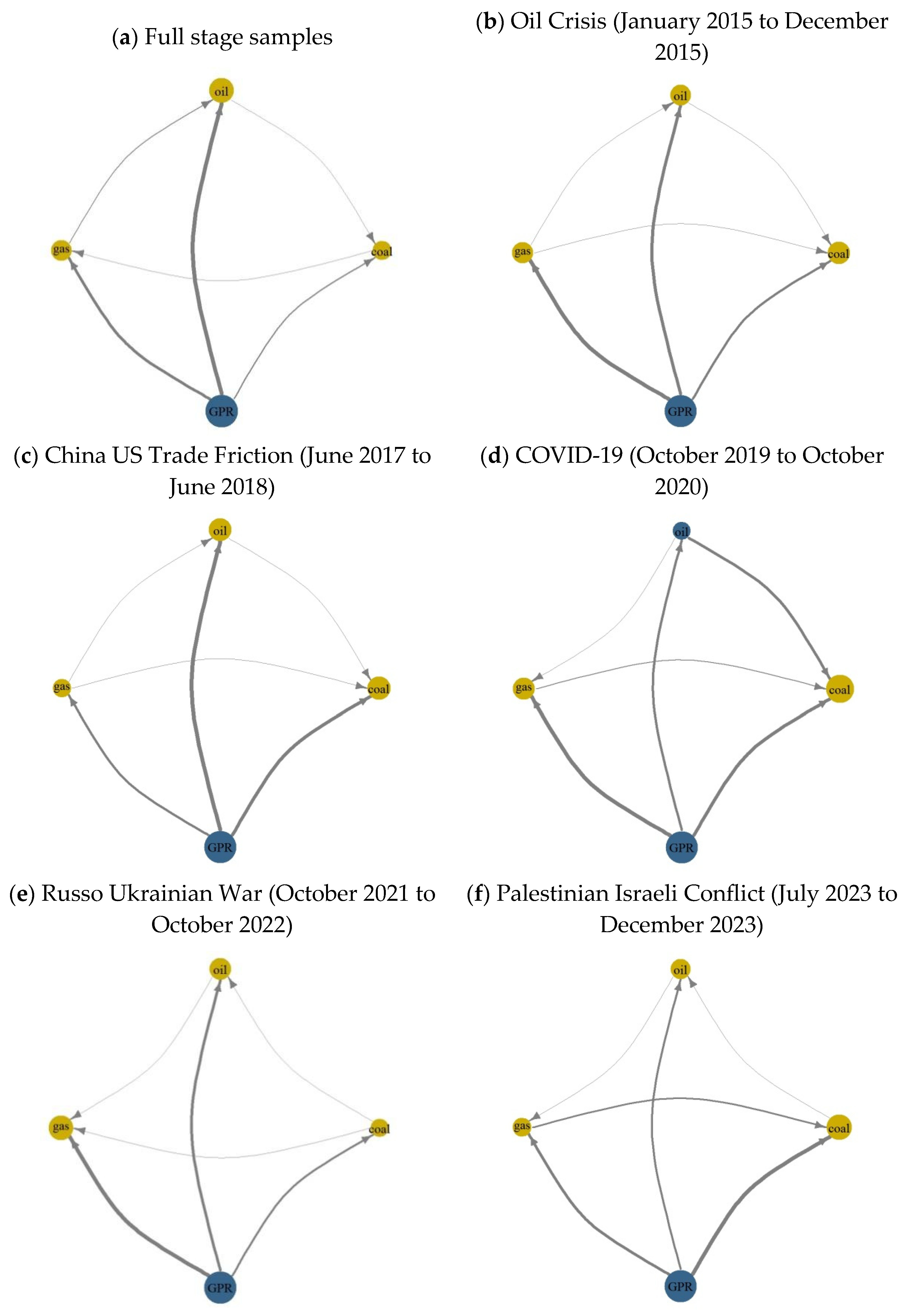
This article conducts a thorough analysis of the spillover effects between geopolitical risks and traditional energy prices, focusing on five distinct high-volatility periods: the reverse oil crisis (January 2015 to December 2015), the Sino-US trade friction (June 2017 to June 2018), the COVID-19 pandemic (October 2019 to October 2020), the Russia–Ukraine conflict (October 2021 to October 2022), and the Palestine–Israel conflict (July 2023 to December 2023). Using the DY spillover index model applied to subsample data from each period, the study examines the dynamic spillover mechanisms between these two critical variables. It specifically investigates the spillover effects of geopolitical risks on various traditional energy prices during different high-risk episodes, aiming to reveal the nonlinear and time-varying nature of their interconnectedness. This comparative static analysis facilitates cross-period interpretation of sudden changes and persistence patterns. Furthermore, directed network graphs are constructed to visualize the direction and intensity of spillovers across variables, offering an intuitive representation of transmission dynamics in each subperiod.

6.1. Comparative Static Spillover Result Analysis

Table 5 uses the DY time-domain spillover index method to illustrate the profit spillover relationship between traditional energy prices and geopolitical risk across various time periods. Upon comparing these five periods, it becomes apparent that their total spillover levels align with the changes illustrated in Figure 3. In contrast to the static spillover effect in the time domain of the entire sample, the common manifestation of spillover during the high period of the five GPR is that the positive net spillover value of GPR increases significantly, ranging from 5.55% to 41.82%, 34.33%, 20.27%, 23.38%, and 38.85%, indicating a discernible impact of geopolitical risks on energy prices. Furthermore, except for the COVID-19 epidemic period, the total spillover level during the other periods exceeds that of the entire sample period.

6.2. Directed Connectedness Network

In the empirical results presented above, this article examines the extent of spillover of total risk during each crisis period. Next, this article utilized the data from Table 4 and Table 5 to generate directional connectivity network diagrams between variables in each period. This approach was employed to facilitate a comprehensive investigation and to elucidate the direction and underlying causes of risk transmission in each period. The nodes in Table 5 represent four variables, with the size representing the total spillover level of each variable. The blue color represents the net risk spreader, and the yellow color represents the net risk receiver. Arrows show the net spillover direction between two variables, from sender to receiver. The line thickness represents the strength of their correlation.
In the aforementioned study, an initial step involves establishing a connectivity network that spans the entire sample period, as depicted in Figure 6a, serving as a foundational reference. Geopolitical risk (GPR) is a significant factor in transmitting risk across all three conventional energy prices, highlighting a strong connection between geopolitical risk and the prices of coal, oil, and natural gas. Specifically, the impact on oil prices emerges as the most substantial, followed by natural gas prices, with coal prices showing the least susceptibility to fluctuations in GPR. This hierarchy suggests that while coal prices demonstrate resilience against GPR fluctuations, oil, as the predominant and extensively utilized traditional energy resource, is inherently more vulnerable to GPR dynamics. Moreover, an intricate interplay among the prices of the three traditional energy sources is discernible from the graphical representation. Noteworthy is the completion of a closed loop signifying spillover interactions among the three energy sources. Notably, changes in oil prices have a ripple effect on coal prices, which then impact natural gas prices, creating a loop that ultimately affects oil prices again. Such dynamics can be explained by the substitution effect among energy inputs in the production process: when the price of one energy source rises, producers may switch to alternative inputs to maintain production levels, which in turn affects the prices of other energy commodities. For example, fluctuations in oil prices may lead firms to use more coal, while changes in natural gas prices may induce a shift towards oil. Similarly, part of the variation in coal prices is correlated with subsequent changes in natural gas prices.
Therefore, periods of heightened geopolitical risk (GPR) frequently coincide with global economic downturns. Acting as a source of systemic risk, GPR can inflict severe adverse effects on the world economy. Its disruptive influence on financial and economic systems undermines existing stability and alters the structure of risk spillover networks. Overall, GPR exerts a net spillover effect on international traditional energy prices, though its role varies significantly across different crisis episodes. These findings support the view that the interaction between geopolitics and energy markets is complex and context-dependent, shaped by specific national attributes and the nature of geopolitical events [37]. While the influence of geopolitical risks on traditional energy prices is clearly evident, further research is needed to explore the reverse linkage—how energy price dynamics, in turn, affect geopolitical risks.

6.3. Spillover Results and Analysis of Geopolitical Risk Sub-Indices

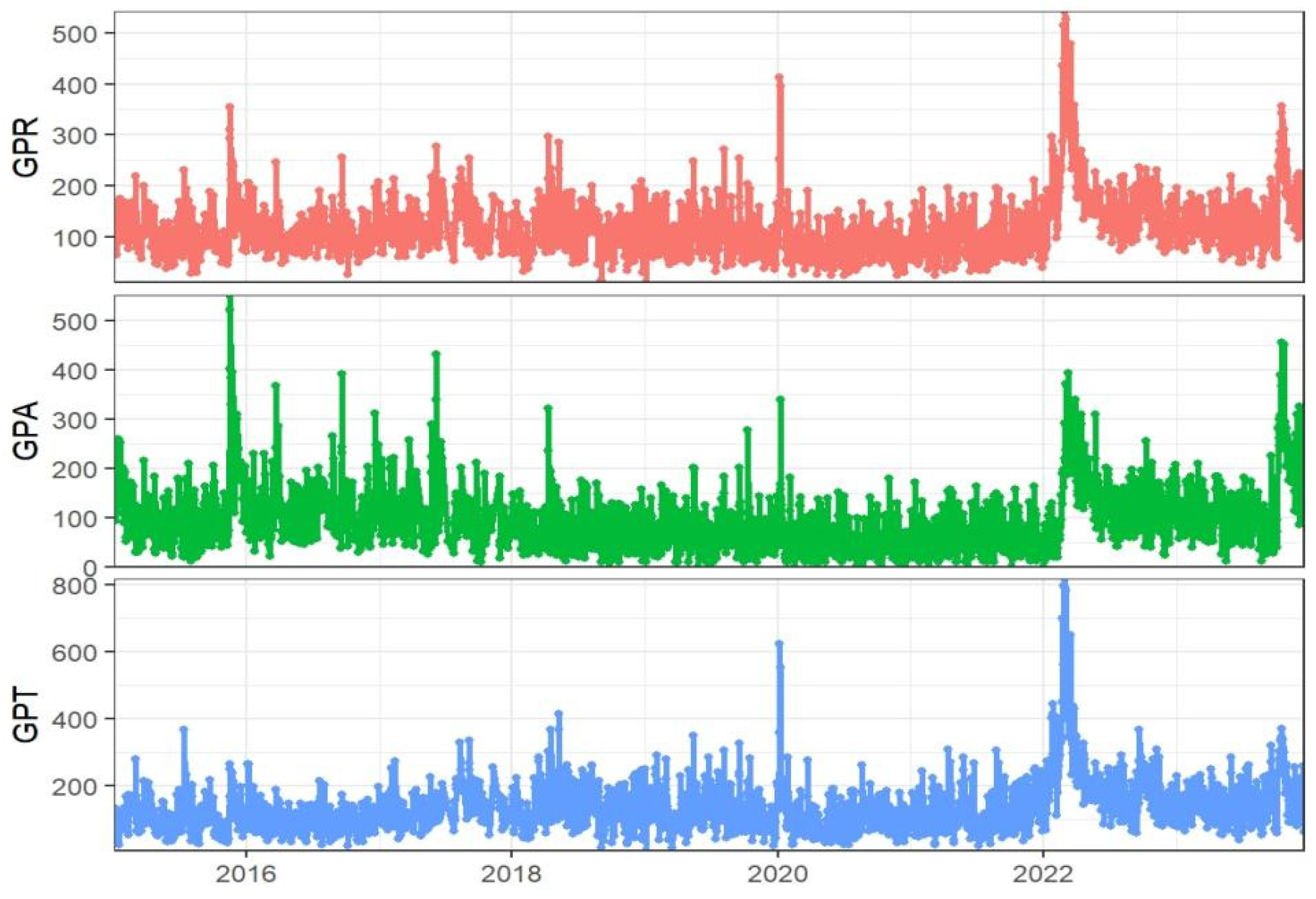
The Geopolitical Index (GPR) automatically searches eight categories during its construction process. These categories are war threat, peace threat, military assembly, nuclear threat, terrorist threat, start of war, escalation of war, and terrorist act. The GPR index is divided into two sub-indices: the Geopolitical Behavior (GPA) index, which covers the last three categories of terms, and the Geopolitical Threat (GPT) index, which includes the first five categories of terms.
Figure 7 illustrates the temporal trends of various geopolitical risk sub-indices. While the trends of the three indices generally align, there are nuances. Primarily, the GPT index exhibits more pronounced fluctuations, peaking at 800 compared to the GPA index’s peak of 550. Additionally, peak occurrences vary. Between 2015 and 2017, the Geopolitical Behavior Risk Index fluctuated sharply, reaching a peak of 550. Conversely, during the same period, the Geopolitical Threat Risk Index remained relatively stable, even showing a downward trajectory. Consequently, the overall GPR index did not experience a significant increase except for late 2015. This phenomenon may stem from abrupt geopolitical events such as the Syrian conflict, the Ukrainian crisis, South China Sea territorial disputes, and the UK Brexit referendum. These events caused frequent fluctuations in GPA due to their sudden occurrence. Furthermore, distinct patterns emerge during various crisis periods. Examining the indices’ behavior during five selected crisis periods, such as the 2015 oil crisis reversal and the 2023 Palestine–Israel conflict, reveals an increase in GPR driven by geopolitical behavioral risks. Conversely, events such as the 2018 Sino-US trade friction, the 2020 COVID-19 pandemic, and the 2022 Russia–Ukraine conflict are associated with geopolitical threats and risks. Upon closer examination, these disparities depend on the presence of temporal buffers and psychological anticipations surrounding the events. Sudden events can lead to significant fluctuations in GPA, as seen in the reversal of the oil crisis and the Palestine–Israel conflict. In contrast, events with forewarning induce anticipatory anxiety, amplifying GPT and exacerbating geopolitical risks beyond the event’s intrinsic ramifications.
This article focuses on researching the GPT and GPA sub-indices within the DY model, rather than the overall GPR index. The aim is to conduct a more detailed analysis of the spillover relationship between changes in geopolitical risk and fluctuations in traditional energy prices. Table 6 presents the comprehensive risk spillover outcomes among sub-indices and three prices. From the perspective of the total spillover index, the relationship between the GPA index and traditional energy prices seems slightly stronger than that of the GPT index, with total spillover indices of 15.68% and 15.52%, respectively. However, the difference is not statistically significant. The most significant difference in spillover values between the two sub-indices is apparent in their net spillover. Consonant with the overarching GPR index, both GPA and GPT exhibit the most substantial net spillovers in their models, acting as risk transmitters, with values of 7.04% and 4.78%, respectively. The discrepancy not only lies in the influence of the energy market on the two (10.93%, 11.95%) but also in their impact on the energy market (17.98%, 16.73%). Hence, the net spillover of GPA surpasses that of GPT. Through a comparative analysis of the net spillover of the two sub-indices, it is discernible that the GPA index exerts a more potent influence on energy prices than the GPT index. Moreover, replacing the GPA index with the GPT index results in a decrease in the negative net spillover value of the three energy prices, along with a reduction in the level of spillover reception. This observation suggests that the three energy prices demonstrate greater sensitivity to shifts in the sub-index of geopolitical behavior. In summary, when considering the impact of geopolitical risks on traditional energy prices, the influence of geopolitical behavioral risks is greater than that of geopolitical threat risks. However, geopolitical threat risks are more sensitive to fluctuations in energy prices.

7. Conclusions and Policy Implications

In recent years, the influence of geopolitical risks on national economic development has become more evident due to frequent geopolitical events. Energy, as the foundation of the industrial economy, plays a crucial role in maintaining social stability. However, it is worth noting that many global energy producers are located in regions of geopolitical instability, which makes energy a commodity with significant geopolitical attributes. Thus, any changes in international energy prices can further amplify geopolitical risks, directly affecting global energy supply situations. Therefore, analyzing the spillover effects and influencing factors between international energy and geopolitical risks prices is essential for reducing energy price risks and understanding the impact of global geopolitical uncertainty. To investigate the time-frequency connectivity between geopolitical risk and international energy prices (coal, oil, and natural gas), this article utilizes the DY method and the BK method. It explores the level and direction of variable correlation from both static and dynamic perspectives through time-domain and frequency-domain estimation analysis for the entire set of samples. Furthermore, this article analyzes the sub-samples of different periods and geopolitical risk sub-indices (GPT and GPA) to understand their impact on the spillover effect of changes. By enhancing research on the overall spillover effect of changes, this study offers more comprehensive insights into the relationship between international energy prices and geopolitical risks.
This article presents a detailed and comprehensive analysis of the time-frequency spillover effect between geopolitical risk and international traditional energy prices, offering both qualitative and quantitative insights into the risk transmission process between these variables. The main findings of this study are presented as follows: Firstly, it is observed that geopolitical risk acts as a net transmitter of risk in the overall context, with a positive net spillover. This suggests that geopolitical risk plays a significant role in transmitting risk to traditional energy prices. Moreover, the impact of short-term geopolitical risks on energy prices is found to be substantial, while the impact weakens in the medium to long term. Conversely, the influence of energy prices on GPR is primarily focused on the short term, whereas the impact in the medium to long term remains relatively stable. Secondly, the spillover effects on different types of energy vary significantly. Among these, geopolitical risks have the greatest impact on oil prices and the least impact on coal prices. It is worth noting that fluctuations in oil prices have the most significant spillover effect on geopolitical risks, while the impact of coal prices on geopolitical risks is relatively small. Thirdly, the results indicate that the period of increased geopolitical risk significantly enhances the connectivity of the overall framework. During each crisis period, the mutual influence and connectivity between geopolitical risks and international traditional energy prices undergo substantial changes due to varying national attributes and geographical event types. Lastly, the study of sub-indicators of the Geopolitical Risk (GPR) Index reveals differences in the performance of Geopolitical Behavior Risk (GPA) and Geopolitical Threat Risk (GPT) in terms of spillover effects on energy prices. Specifically, the prices of all three energy types are found to be more sensitive to changes in GPA. In summary, this study offers valuable insights into the time-frequency spillover effect between geopolitical risk and international traditional energy prices.
Despite these contributions, this study has limitations. First, it focuses only on traditional energy markets (coal, oil, gas) and does not include renewable energy sources, which are increasingly relevant in global energy dynamics. Second, the analysis relies on historical data and established indices, which may not capture all dimensions of geopolitical risk. Future research could extend the framework to renewable energy markets, explore alternative measures of geopolitical risk, and investigate potential nonlinear or asymmetric effects over longer time horizons. Additionally, cross-country or sector-specific analyses could provide more granular insights into the mechanisms of risk transmission.
Based on the research findings, we propose relevant policy recommendations. For investors, particularly those in sectors closely related to energy—to closely monitor the supply, demand, and price fluctuations of traditional energy sources. Geopolitical risks can significantly amplify price volatility, especially in extreme cases where the spillover effects are pronounced. Local geopolitical events can cause sharp increases in energy price uncertainty, which in turn affects other asset classes, leading to a potential decrease in portfolio returns. Consequently, investors must remain alert to price shocks and adapt their investment strategies promptly to incorporate risk management mechanisms. Specifically, given that geopolitical risks most strongly influence oil prices, it is critical for investors to focus on the short-term impacts of such risks on oil markets. This awareness can aid in more informed decision-making and help mitigate potential losses. For policymakers, proactive adjustments can mitigate the negative feedback loop between fluctuations in traditional energy prices and rising geopolitical risks. Such measures can prevent the formation of a vicious cycle, thus promoting greater geopolitical stability. In times of global crises, particularly when geopolitical risks escalate, energy-exporting countries may adjust energy prices to manage these risks more effectively. By doing so, governments can limit the spread of both energy-related and geopolitical risks, thereby fostering a more stable economic environment. Furthermore, policymakers should craft policies with national interests in mind. While it is essential to maintain stability in international energy cooperation to ensure long-term energy security, governments should also leverage the diverse economic interests and demands of different nations. This multi-faceted approach can help avoid excessive fluctuations in energy prices due to geopolitical factors and ensure that potential risks resulting from energy price changes are carefully monitored to prevent further diffusion across markets.

Author Contributions

Y.X.: Writing—reviewing, data curation and editing. X.G.: Conceptualization, software, data curation and writing—original draft preparation. W.J.: Proposed modification suggestions. Y.Z.: Proposed modification suggestions. All authors have read and agreed to the published version of the manuscript.

Funding

This work was supported by the National Social Science Foundation of China (No.20BJL020) and National Social Science Foundation of China (No.22&ZD117).

Institutional Review Board Statement

Not applicable.

Data Availability Statement

All data in this article are from the wind database, further inquiries can be directed to the corresponding author.

Conflicts of Interest

The authors declare that the research was conducted in the absence of any commercial or financial relationships that could be construed as a potential conflict of interest.

References

  1. Asadi, M.; Roubaud, D.; Tiwari, A.K. Volatility spillovers amid crude oil, natural gas, coal, stock, and currency markets in the US and China based on time and frequency domain connectedness. Energy Econ. 2022, 109, 105961. [Google Scholar] [CrossRef]
  2. Bazzi, S.; Blattman, C. Economic shocks and conflict: Evidence from commodity prices. Am. Econ. J. Macroecon. 2014, 6, 1–38. [Google Scholar] [CrossRef]
  3. Jia, W.; Lyu, Y.; Zhu, Z. The tail risk of crude oil Price_Based on EPU and geopolitical risk perspective. Resour. Policy 2024, 92, 105012. [Google Scholar] [CrossRef]
  4. Gong, X.; Xu, J. Geopolitical risk and dynamic connectedness between commodity markets. Energy Econ. 2022, 110, 106028. [Google Scholar] [CrossRef]
  5. Diebold, F.X.; Yilmaz, K. Better to give than to receive: Predictive directional measurement of volatility spillovers. Int. J. Forecast. 2012, 28, 57–66. [Google Scholar] [CrossRef]
  6. Baruník, J.; Křehlík, T. Measuring the frequency dynamics of financial connectedness and systemic risk. J. Financ. Econom 2018, 16, 271–296. [Google Scholar] [CrossRef]
  7. Jiang, W.; Chen, Y. The time-frequency connectedness among carbon, traditional/new energy and material markets of China in pre-and post-COVID-19 outbreak periods. Energy 2022, 246, 123320. [Google Scholar] [CrossRef]
  8. Jiang, W.; Dong, L.; Liu, X. How does COVID-19 affect the spillover effects of green finance, carbon markets, and renewable/non-renewable energy markets? Evidence from China. Energy 2023, 281, 128351. [Google Scholar] [CrossRef]
  9. Jin, J.; Han, L.; Wu, L.; Zeng, H. The hedging effect of green bonds on carbon market risk. Int. Rev. Financ. Anal. 2020, 71, 101509. [Google Scholar] [CrossRef]
  10. Terhorst, P.; Erkuş-Öztürk, H. Resilience to the global economic and Turkish (geo) political crisis compared. Tijdschr. Voor Econ. En Soc. Geogr. 2019, 110, 138–155. [Google Scholar] [CrossRef]
  11. Kostaridou, E.; Siatis, N.; Zafeiriou, E. Resource Price Interconnections and the Impact of Geopolitical Shocks Using Granger Causality: A Case Study of Ukraine–Russia Unrest. J. Risk Financ. Manag. 2024, 17, 240. [Google Scholar] [CrossRef]
  12. Lybeck, E. The Black Swan: The Impact of the Highly Improbable; Penguin Books Ltd.: London, UK, 2017. [Google Scholar]
  13. Bremer, L.P., III. Geopolitical risk assessment in times of turmoil. Tulsa J. Comp. Int’l L 1996, 4, 117. [Google Scholar]
  14. Caldara, D.; Iacoviello, M. Measuring geopolitical risk. Am. Econ. Rev. 2022, 112, 1194–1225. [Google Scholar] [CrossRef]
  15. Raza Rabbani, M.; Hassan, M.K.; Jamil, S.A.; Sahabuddin, M.; Shaik, M. Revisiting the impact of geopolitical risk on Sukuk, stocks, oil and gold markets during the crises period: Fresh evidence from wavelet-based approach. Manag. Financ. 2024, 50, 514–533. [Google Scholar] [CrossRef]
  16. Zeng, H.; Xu, W.; Lu, R. Quantile frequency connectedness between crude oil volatility, geopolitical risk and major agriculture and livestock markets. Appl. Econ. 2024, 57, 3345–3360. [Google Scholar] [CrossRef]
  17. Enamul Hoque, M.; Soo Wah, L.; Azlan Shah Zaidi, M. Oil price shocks, global economic policy uncertainty, geopolitical risk, and stock price in Malaysia: Factor augmented VAR approach. Econ. Res.-Ekon. Istraživanja 2019, 32, 3701–3733. [Google Scholar]
  18. Su, C.-W.; Khan, K.; Tao, R.; Nicoleta-Claudia, M. Does geopolitical risk strengthen or depress oil prices and financial liquidity? Evidence from Saudi Arabia. Energy 2019, 187, 116003. [Google Scholar] [CrossRef]
  19. Su, C.-W.; Qin, M.; Tao, R.; Moldovan, N.-C. Is oil political? From the perspective of geopolitical risk. Def. Peace Econ. 2021, 32, 451–467. [Google Scholar] [CrossRef]
  20. Ozkan, O.; Saleem, A.; Khan, N.; Alola, A.A. Global impact of geopolitical oil price uncertainty and associated commodity prices on clean energy stocks. Energy Environ. 2024, 36, 3501–3526. [Google Scholar] [CrossRef]
  21. Khan, K.; Su, C.-W.; Tao, R. Does oil prices cause financial liquidity crunch? Perspective from geopolitical risk. Def. Peace Econ. 2021, 32, 312–324. [Google Scholar] [CrossRef]
  22. Liu, J.; Ma, F.; Tang, Y.; Zhang, Y. Geopolitical risk and oil volatility: A new insight. Energy Econ. 2019, 84, 104548. [Google Scholar] [CrossRef]
  23. Bouoiyour, J.; Selmi, R.; Hammoudeh, S.; Wohar, M.E. What are the categories of geopolitical risks that could drive oil prices higher? Acts or threats? Energy Econ. 2019, 84, 104523. [Google Scholar] [CrossRef]
  24. Mei, D.; Ma, F.; Liao, Y.; Wang, L. Geopolitical risk uncertainty and oil future volatility: Evidence from MIDAS models. Energy Econ. 2020, 86, 104624. [Google Scholar] [CrossRef]
  25. Liu, Y.; Han, L.; Xu, Y. The impact of geopolitical uncertainty on energy volatility. Int. Rev. Financ. Anal. 2021, 75, 101743. [Google Scholar] [CrossRef]
  26. Swyngedouw, E. Globalisation or ‘glocalisation’? Networks, territories and rescaling. Camb. Rev. Int. Aff. 2004, 17, 25–48. [Google Scholar] [CrossRef]
  27. Huang, J.; Ding, Q.; Zhang, H.; Guo, Y.; Suleman, M.T. Nonlinear dynamic correlation between geopolitical risk and oil prices: A study based on high-frequency data. Res. Int. Bus. Financ. 2021, 56, 101370. [Google Scholar] [CrossRef]
  28. Huber, M.T. Enforcing scarcity: Oil, violence, and the making of the market. In The New Geographies of Energy; Routledge: London, UK, 2013; pp. 115–125. [Google Scholar]
  29. Mamman, S.O.; Iliyasu, J.; Ahmed, U.A.; Salami, F. Global uncertainties, geopolitical risks and price exuberance: Evidence from international energy market. OPEC Energy Rev. 2024, 48, 96–107. [Google Scholar] [CrossRef]
  30. Korotayev, A.; Bilyuga, S.; Belalov, I.; Goldstone, J. Oil prices, socio-political destabilization risks, and future energy technologies. Technol. Forecast. Soc. Change 2018, 128, 304–310. [Google Scholar] [CrossRef]
  31. Abdel-Latif, H.; El-Gamal, M. Antecedents of war: The geopolitics of low oil prices and decelerating financial liquidity. Appl. Econ. Lett. 2019, 26, 765–769. [Google Scholar] [CrossRef]
  32. Umar, M.; Farid, S.; Naeem, M.A. Time-frequency connectedness among clean-energy stocks and fossil fuel markets: Comparison between financial, oil and pandemic crisis. Energy 2022, 240, 122702. [Google Scholar] [CrossRef]
  33. Wang, P.; Zhang, H.; Yang, C.; Guo, Y. Time and frequency dynamics of connectedness and hedging performance in global stock markets: Bitcoin versus conventional hedges. Res. Int. Bus. Financ. 2021, 58, 101479. [Google Scholar] [CrossRef]
  34. Farid, S.; Kayani, G.M.; Naeem, M.A.; Shahzad, S.J.H. Intraday volatility transmission among precious metals, energy and stocks during the COVID-19 pandemic. Resour. Policy 2021, 72, 102101. [Google Scholar] [CrossRef]
  35. Bagheri, E.; Ebrahimi, S.B.; Mohammadi, A.; Miri, M.; Bekiros, S. The dynamic volatility connectedness structure of energy futures and global financial markets: Evidence from a novel time–frequency domain approach. Comput. Econ. 2022, 59, 1087–1111. [Google Scholar] [CrossRef]
  36. Li, Y.; Huang, J.; Gao, W.; Zhang, H. Analyzing the time-frequency connectedness among oil, gold prices and BRICS geopolitical risks. Resour. Policy 2021, 73, 102134. [Google Scholar] [CrossRef]
  37. Sun, C.; Ding, D.; Fang, X.; Zhang, H.; Li, J. How do fossil energy prices affect the stock prices of new energy companies? Evidence from Divisia energy price index in China’s market. Energy 2019, 169, 637–645. [Google Scholar] [CrossRef]
Figure 1. Time series diagram.
Energies 19 00251 g001
Figure 2. Dynamic Total Spillover Effect in Time Domain.
Energies 19 00251 g002
Figure 3. Dynamic total spillover effect in time-frequency domain.
Energies 19 00251 g003
Figure 4. Dynamic Net Spillover Effect in Time Domain.
Energies 19 00251 g004
Figure 5. Dynamic Net Spillover Effect under Different Time Frequencies.
Energies 19 00251 g005
Figure 6. Directional Connected Network Diagram.
Energies 19 00251 g006
Figure 7. Time series diagram of geopolitical risk (sub) index.
Energies 19 00251 g007
Table 1. Descriptive statistics.
MedianStandard DeviationMaxMinSkewnessKurtosisADF
coal2.80 × 10−40.030.82−0.514.31197.55−46.91 ***
oil9.51 × 10−50.030.35−0.49−1.4641.59−21.61 ***
gas6.71 × 10−50.040.28−0.220.566.99−47.87 ***
GPR−1.58 × 10−50.452.34−2.99−0.035.75−22.44 ***
Note: The ADF value represents the Augmented Dickey–Fuller unit root test for robustness, and *** represents significance at a 1% confidence level. At the significance levels of 1%, 5%, and 10%, the critical values of the unit root test are −2.57, −2.86, and −3.43, respectively.
Table 2. Spillover Measurement Table.
x 1 x 2 x N Affected by other variables
x 1 θ 11 H θ 12 H θ 1 N H j = 1 N θ i j H , j 1
x N θ N 1 H θ N 2 H θ N N H j = 1 N θ N j H , j N
Impact on other variables i = 1 N θ i 1 H , i 1 i = 1 N θ i 2 H , i 2 i = 1 N θ i N H , i N 1 N i , j = 1 N θ i j H , i j
Table 3. Static Total Spillover Effect in Time Domain.
CoalOilGasGPRFROM
coal83.975.775.404.8616.03
oil5.4880.726.517.2919.28
gas5.565.8682.316.2717.69
GPR3.994.674.2287.1212.88
TO15.0316.2916.1318.4365.87
NET−1.00−2.99−1.565.55TCI = 16.47
Table 4. Static Total Spillover Effect at Different Frequencies.
High Frequency (1 Days to 5 Days)
CoalOilGasGPRFROM
coal65.394.303.923.9112.13
oil4.2966.725.336.3715.98
gas4.414.6167.705.5514.57
GPR3.904.584.1384.8112.61
TO12.6013.4913.3715.8355.29
NET0.47−2.49−1.203.23TCI = 13.82
Intermediate frequency (5 days to 30 days)
coaloilgasGPRFROM
coal14.811.101.050.812.96
oil0.9211.420.950.782.65
gas0.810.9711.910.622.40
GPR0.080.080.092.130.26
TO1.812.162.092.218.27
NET−1.15−0.49−0.311.95TCI = 2.07
Low frequency (30 days to Inf days)
coaloilgasGPRFROM
coal3.770.360.430.140.93
oil0.282.580.230.150.65
gas0.340.282.700.090.71
GPR0.010.010.010.180.02
TO0.620.650.660.382.30
NET−0.310.00−0.050.36TCI = 0.58
Table 5. Comparison of static effects in the time domain.
CoalOilGasGPRFROM
Panel A: Oil Crisis (January 2015 to December 2015)
coal74.447.455.1512.9625.56
oil4.5675.494.2115.7424.51
gas2.513.7975.9417.7724.06
GPR2.171.291.1895.364.64
TO9.2412.5310.5446.4678.77
NET−16.32−11.98−13.5241.82TCI = 19.69
Panel B: China US Trade Friction (June 2017 to June 2018)
coal75.253.865.3615.5324.75
oil3.1776.325.4515.0623.68
gas2.914.0082.6710.4217.33
GPR3.161.571.9593.326.68
TO9.249.4212.7641.0172.44
NET−15.51−14.25−4.5734.33TCI = 18.11
Panel C: COVID-19 (October 2019 to October 2020)
coal77.268.694.979.0922.74
oil3.0685.164.237.5414.84
gas3.255.6580.9210.1819.08
GPR1.362.772.4193.466.54
TO7.6717.1011.6226.8163.20
NET−15.072.26−7.4620.27TCI = 15.80
Panel D: Russo Ukrainian War (October 2021 to October 2022)
coal78.499.864.037.6221.51
oil11.2773.844.8510.0426.16
gas5.235.9375.5113.3324.49
GPR2.132.393.0892.407.60
TO18.6318.1811.9730.9879.76
NET−2.88−7.98−12.5223.38TCI = 19.94
Panel E: Palestinian Israeli Conflict (July 2023 to December 2023)
coal70.122.3210.1517.4129.88
oil2.8177.267.0612.8822.74
gas3.547.2973.5515.6126.45
GPR1.113.252.6892.957.05
TO7.4612.8719.8945.9086.12
NET−22.42−9.88−6.5538.85TCI = 21.53
Table 6. Total Spillover Effect of Static Sub-indices in Time Domain.
CoalOilGasGPAFROM
coal83.905.635.305.1716.10
oil5.6781.965.906.4818.04
gas5.565.7482.366.3417.64
GPA3.524.033.3989.0710.93
TO14.7515.4014.5817.9862.71
NET−1.35−2.63−3.067.04TCI = 15.68
coaloilgasGPTFROM
coal84.795.525.074.6215.21
oil5.5082.286.106.1117.72
gas5.485.7182.816.0017.19
GPT3.574.643.7488.0511.95
TO14.5415.8814.9216.7362.07
NET−0.66−1.84−2.274.78TCI = 15.52
Disclaimer/Publisher’s Note: The statements, opinions and data contained in all publications are solely those of the individual author(s) and contributor(s) and not of MDPI and/or the editor(s). MDPI and/or the editor(s) disclaim responsibility for any injury to people or property resulting from any ideas, methods, instructions or products referred to in the content.