Article

Assessment of Potential for Green Hydrogen Production in a Power-to-Gas Pilot Plant Under Real Conditions in La Guajira, Colombia


by
Marlon Cordoba-Ramirez
1,*,
Marlon Bastidas-Barranco
1,
Dario Serrano-Florez
1,
Leonel Alfredo Noriega De la Cruz
1 and
Andres Adolfo Amell Arrieta
2
1
Grupo de Investigación DESTACAR, Departamento de Ingeniería Mecánica, Facultad de Ingeniería, Universidad de La Guajira, km 3 + 354 Road to Maicao, Riohacha 440001, Colombia
2
Grupo de Investigación GASURE, Departamento de Ingeniería Mecánica, Facultad de Ingeniería, Universidad de Antioquia, Calle 67 # 53-108, Medellín 050010, Colombia
*
Author to whom correspondence should be addressed.
Energies 2025, 18(24), 6631; https://doi.org/10.3390/en18246631 (registering DOI)
Submission received: 23 October 2025 / Revised: 11 December 2025 / Accepted: 13 December 2025 / Published: 18 December 2025
(This article belongs to the Section A5: Hydrogen Energy)

Abstract

This study presents the operational assessment of a pilot-scale power-to-gas (PtG) facility located in La Guajira, Colombia, which integrates a 10 kW photovoltaic array and a 5 kW wind turbine to power a system with two anion exchange membrane (AEM) electrolyzer of 4.8 kW in total for green hydrogen production. Unlike most studies that rely on simulations or short-term evaluations, this study analyzes nine months of real operating data to quantify renewable energy availability, system capacity factors, and effective hydrogen output under tropical conditions. The results show that the hybrid system generated 7111 kWh during the monitoring period. The comparison of theoretical models with real-time energy production shows a low correlation between the data. The MBE ranged from 1253 to 2988 for the solar system, from −814 to 1013 for the wind system, and from 338 to 2714 for the hybrid system. The RMSE values obtained for each evaluated month ranged from 3179 to 3811 for the solar system, from 928 to 1910 for the wind system, and from 2310 to 4327 for the hybrid system, suggesting that the theoretical models tend to overestimate the energy production of the hybrid system in general terms. From the renewable energy produced in real conditions, 92 kg of hydrogen was produced at an average rate of 9 kg/month, considering the availability of wind and solar resources. However, approximately 300 kWh/month of renewable electricity remained unused because the removable generation did not meet the operating conditions of the electrolyzers, highlighting the importance of improved energy management and storage strategies. These findings provide a real scenario of power-to-gas system performance under Caribbean climatic conditions in Colombia, demonstrate the challenges of resource intermittency and system underutilization, and underline the importance of design systems that allow these intermittencies to be managed for the more optimal production of hydrogen from renewable sources. The outcomes contribute to the understanding of small-scale PtG systems in developing regions and support decision making for future scaling and replication of hybrid renewable–hydrogen infrastructures.

1. Introduction

The inherent variability and intermittency of renewable energy sources can result in periods of surplus generation, during which electricity production exceeds the immediate demand. Hydrogen is an energy carrier that can help mitigate the challenges associated with surplus generation from renewable energy sources [1]. Hydrogen can be produced from various sources, including fossil fuels, such as coal and natural gas, without carbon capture (black and gray hydrogen) and with carbon capture (blue hydrogen), from natural reservoirs (white hydrogen), and via water electrolysis supplied with energy from renewable sources (green hydrogen) [2]. The latter is of particular interest due to its renewable origin and low emissions generated during its production process. In this context, Power-to-Gas (PtG) technology offers a strategic solution to this mismatch by converting excess renewable electricity into hydrogen via water electrolysis, thereby enabling medium–long-term energy storage and enhancing grid flexibility [3]. The produced hydrogen can be utilized through multiple pathways: it may be stored in pressurized tanks or geological formations for deferred use, injected into the natural gas distribution network under regulated blending limits [4], or subsequently combined with CO2—preferably of biogenic origin—for the synthesis of methane via catalytic methanation [5].
Consequently, considerable research has been directed toward the multidimensional evaluation of PtG systems, encompassing operational performance under dynamic boundary conditions [6,7,8], electrolysis efficiency across different electrolyzer technologies [9,10,11,12], and comprehensive techno-economic assessments of PtG deployment at various scales [13,14,15]. Comprehensive reviews have underscored the growing academic and industrial interest in PtG technologies. [16], for instance, highlights a sharp increase in PtG-related publications post-2010, with most implementations remaining within the pilot-scale range (<100 kW). Current research trends primarily focus on the development of advanced catalytic materials for methanation, optimization of process parameters across system components, and integrated design approaches that assess the technical and economic feasibility of PtG pathways for synthetic fuel production. Although these studies offer comprehensive analyses from various perspectives, they exhibit certain limitations, including the absence of long-term assessments that account the real operation scenario considering the variability of renewable sources such as wind and sun. Moreover, most lack validation under real-world operating conditions, which is essential for benchmarking model predictions against actual plant performance.
Ma et al. [17] conducted a comprehensive techno-economic analysis of a standalone hybrid solar-wind system with battery energy storage to supply electricity to a remote island. The influence of photovoltaic array size, wind turbine capacity, and battery bank configuration on system reliability and cost-effectiveness was evaluated through detailed simulations. The optimal configuration comprised a 145 kW PV array, two wind turbines, 168 batteries, and a 30 kW converter. The results indicated that 84% of the load was met by the PV system and 16% by wind generation. However, a significant portion of energy—approximately 48.6%—was curtailed due to temporal mismatches between generation and demand, highlighting the importance of incorporating energy storage or alternative valorization routes, such as hydrogen production.
The authors of [18] assessed the integration of hybrid renewable systems for supplying electricity and hydrogen to a residential dwelling in Dhahran, Saudi Arabia, including provisions for fueling a hydrogen-powered vehicle. This study applied a multi-objective optimization framework to minimize the levelized cost of electricity (LCOE) and hydrogen (LCOH) while ensuring supply reliability through metrics such as the loss of power supply probability (LPSP) and LHSP. The optimal configuration included an 18 kW PV system, two wind turbines, and 14 batteries, achieving an LCOE of $0.593/kWh and an LCOH of $36.32/kg. While the configuration met energy and hydrogen demands with zero LHSP, the study did not consider interannual climate variability, limiting the robustness of its conclusions under fluctuating meteorological conditions.
Ragab et al. [19] proposed an optimized hybrid PV–wind system for grid-connected applications, where surplus generation is redirected toward green hydrogen production via photoelectron microscopy (PEM) electrolyzers. This study aimed to maximize the grid capacity factor and ensure system stability by achieving values exceeding 80% for the power delivered to the grid. The residual fluctuating energy was dynamically allocated to hydrogen production, leveraging the flexible operational characteristics of PEM technology. Despite these advances, the work lacks integration with comprehensive Power-to-X (P2X) frameworks that account for detailed resource assessment, site-specific constraints, economic viability, and real-world operational considerations, including the transient behavior of both renewable inputs and electrolysis systems.
Fischer et al. [20] explored the application of model predictive control (MPC) in a full-scale power-to-gas plant operating in an urban environment. A linear MPC controller was implemented to optimize hydrogen production despite electrical network constraints and time-dependent electricity tariffs. Real operational data demonstrated that MPC can improve plant efficiency by adapting to dynamic boundary conditions. However, inaccuracies in input forecasts and discrepancies between model assumptions and actual plant behavior led to deviations from optimal set-point tracking. The authors emphasized the need for improved forecasting algorithms, refined control models, and expanded storage infrastructure to improve system responsiveness and reliability.
Noriega et al. [21] evaluated the energy performance of a 15 kW hybrid microgrid (wind and solar PV) designed to power a power-to-gas pilot plant at the University of La Guajira, Colombia. This study focused on determining the system’s capability to sustain continuous hydrogen production independently from the main grid. The findings showed that solar PV was the primary contributor to energy supply, while the hybrid configuration helped minimize grid dependence and generated occasional surpluses. However, the data were limited to working days and were collected on a daily basis, requiring extrapolation for periods with missing information. Additionally, the actual hydrogen production potential of the plant was not quantified, which restricts the assessment of PtG performance under real operating conditions.
Considering prior work by Noriega et al. [21], this study advances the state of knowledge by conducting a comprehensive performance assessment of a power-to-gas (PtG) pilot plant under real operating conditions over a continuous 9-month period, in order to evaluate in which periods this plant has the capacity to produce hydrogen considered of renewable origin) considering its current configuration and the conditions of the site. The main contributions of this study are as follows:
  • This study provides a comprehensive performance assessment of a power-to-gas (PtG) pilot plant powered by a hybrid wind-solar system under real operating conditions over a continuous 9-month period, going beyond short-term or purely theoretical analyses.
  • This study delivers a detailed quantification of the actual energy yield from each renewable source (wind and solar PV) and the corresponding capacity factors under site-specific resource conditions, which can be comparable with regions with tropical conditions.
  • This study integrates a temporal analysis of hydrogen production that is explicitly aligned with the dynamic operation of the electrolysis system, enabling the estimation of the real system operation state depending on the availability of renewable sources.
  • This study bridges the gap between simulation-based projections and real-world performance, providing new insights into small-scale PtG systems’ operational behavior and constraints.
  • This study establishes a realistic operational scenario for power-to-gas systems in regions with similar irradiation and wind regimes and could serve as a decision-support tool for system planning, optimization, and future upscaling.
Section 2 presents the methodology employed in this study. First, it provides a detailed description of the evaluated power-to-gas (PtG) pilot plant, including its components and subsystems. Subsequently, it describes the mathematical equations used to estimate the theoretical electricity generation (for both the PV and wind subsystems), considering the installed hybrid system characteristics. In addition, it provides a detailed description of the data acquisition scheme used to measure the hybrid system’s electricity production under real operating conditions. Finally, the method used to calculate the CP and estimate hydrogen production as a function of the operating conditions of the electrolysis system is presented.
Section 3 presents the results of this study. First, the theoretical and actual production of the hybrid system are compared for the individual sources (wind and photovoltaic) and their combined output. In addition, it presents the hourly resolved energy production for each month from June 2024 to February 2025, with the aim of identifying the time-of-day availability window of the energy supplied by the hybrid system under real operating conditions. Based on this analysis, the operating window of the electrolyzers is determined according to the operating conditions under which the green hydrogen criterion is fulfilled, considering the availability of renewable energy. The cumulative hydrogen production (in kg) over the study period is estimated from this. Finally, the monthly energy production is presented and contrasted with the hydrogen production and surplus energy that could not be used by the electrolyzers because it falls outside their effective operating range.

2. Materials and Methods

In this study, the potential for green hydrogen production (from renewable sources) under real operating conditions was evaluated in a power-to-gas pilot plant located on the Colombian Caribbean coast. The plant is equipped with a 15 kW wind–solar hybrid microgrid, an AEM electrolyzer system with a nominal hydrogen production of 1 Nm3/h, and a methanation reactor with a CH4 capacity of d std L/h of CH4. The electricity generated by the hybrid power system was monitored and compared with the theoretical production estimated from algebraic equations available in the literature. Based on this analysis, the operating dynamics of the pilot plant for green hydrogen production were determined by identifying the effective time windows during which the green hydrogen condition is satisfied, according to the availability of renewable energy. In addition, the total amount of hydrogen produced over the study period (June 2024–February 2025) and the monthly surplus (unutilized) energy were estimated, considering the fraction of energy that does not meet the electrolyzers’ operating requirements.

2.1. Pilot Plant Scheme

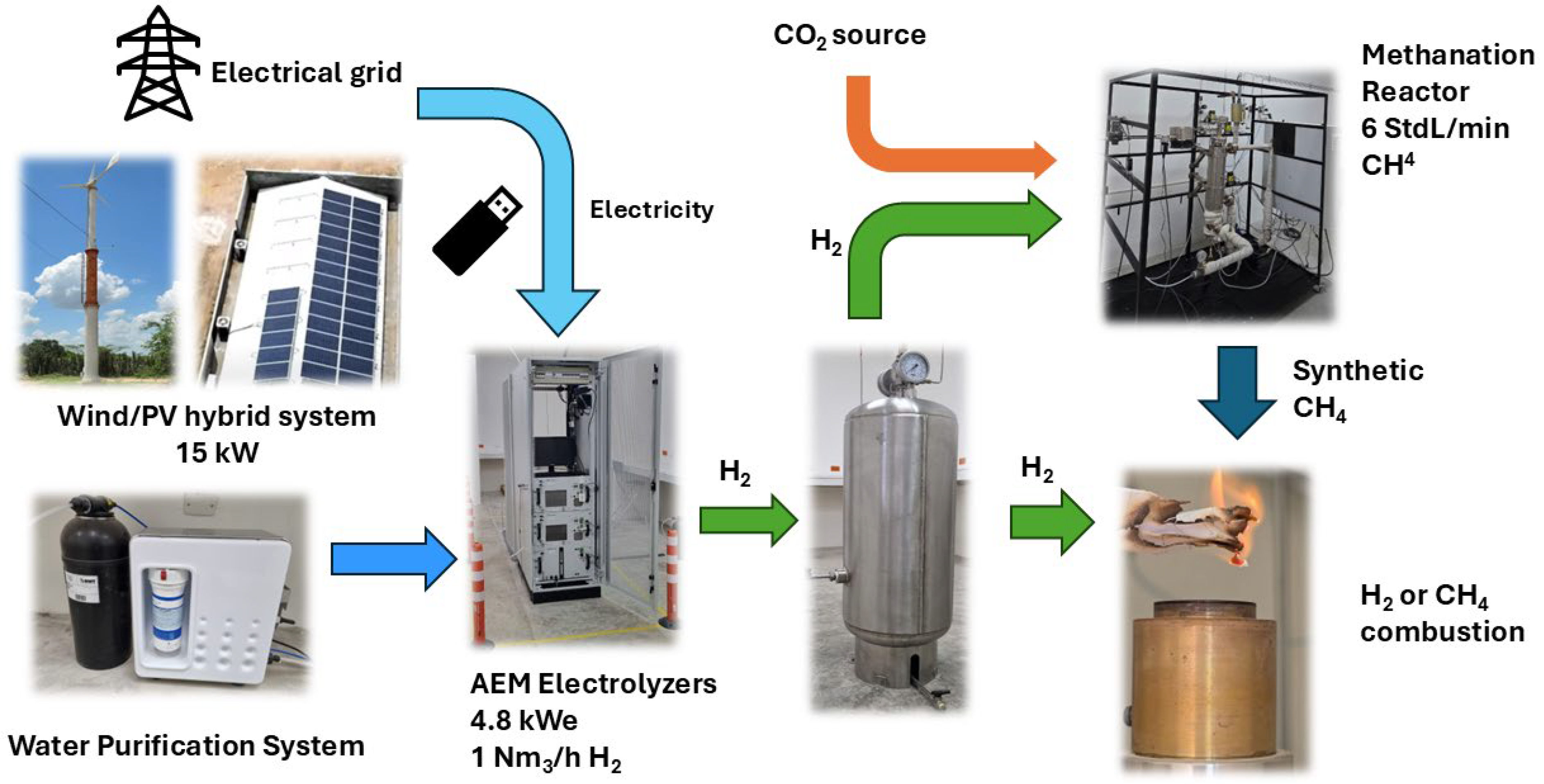
Figure 1 shows the schematic diagram of the power-to-gas pilot plant evaluated [3,22]. The system is composed of 3 main subsystems: The first subsystem is made up of wind–photovoltaic hybrid energy systems with a nominal capacity of 15 kW, of which 10 kW corresponds to a solar energy system composed of 28 polycrystalline photovoltaic panels (ZNShine ZXP6-LD72, China) connected to the pilot plant’s grid through 7 microinverters. The panels were installed with a tilt angle of 15° and an azimuth of 180° facing south. The self-shading and soiling of the solar panels were neglected for this study. The wind system was powered by an wind turbine (Aeolos—H 5 KW, China) with a nominal power of 5 kW and a rated power of 6 kW (maximum power reached in ideal conditions) connected to the pilot plant grid by an independent inverter. The energy generated by the hybrid system is injected into the electrical grid of the facility where the pilot plant is located, from which the energy demand of the critical loads (electrolysis system, water purification, methanation reactor) is supplied. When surplus energy is produced, it is exported to the university campus’s electrical grid where the plant is installed.
The second subsystem corresponds to the green hydrogen production stage, which is carried out through two AEM Enapter EL2.1 (Germany) type electrolyzers with a total consumption of 4.8 kWe between both equipment obtained from the hybrid microplant and a nominal hydrogen production capacity of 1 Nm3/h [23,24]. To avoid internal damage to the electrolyzer cells, the water required for electrolysis is obtained from the domestic system and is previously purified and deionized with a reverse osmosis system. The generated hydrogen is stored in a 100 L buffer tank at a maximum pressure of 30 bar, while the oxygen generated from the process is vented directly to the environment.
The hydrogen generated and stored is used in two different routes: the first route corresponds to direct combustion by means of a high-pressure induced air burner to be used in heating process, and the second route involves converting hydrogen into synthetic methane in a methanation reactor of its own manufacture [5,25] that operates under the Sabatier reactions by combining 16.67 Slt/min of H2 with 4.16 Slt/min of CO2 in a bed composed of a catalyst of 10% Ni supported on alumina, guaranteeing a methane production of 6 Slt/min which can later be stored or burned through the burner mentioned above. The methane conversion stage corresponds to the third subsystem. The performance evaluation of the methanation reactor included in this system is beyond the scope of the present study, as the objective of this work is limited exclusively to assessing the plant’s performance in terms of renewable-origin hydrogen production, which will subsequently be used for methanation or combustion applications.
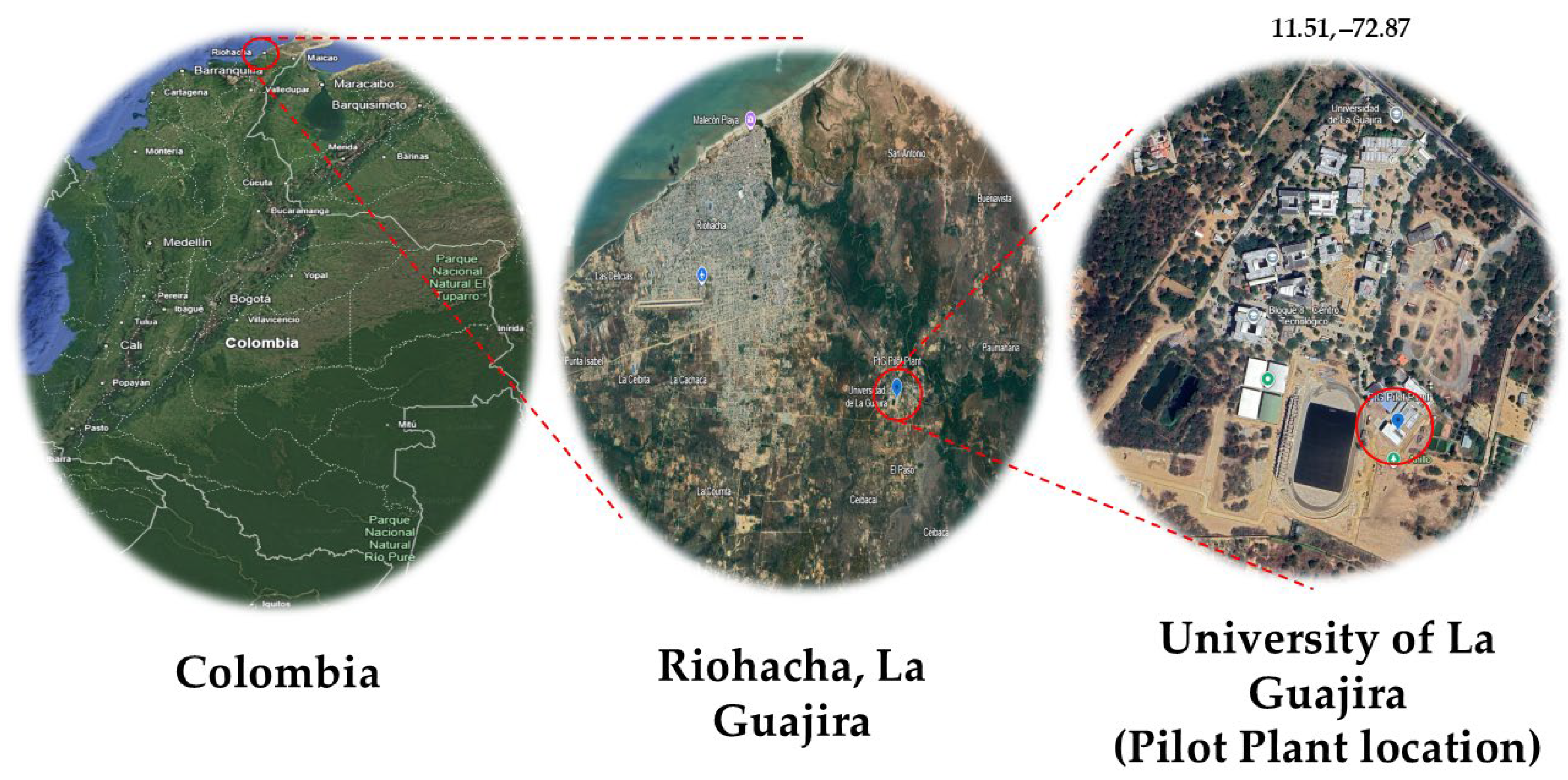
The power-to-gas pilot plant evaluated in this study is located at the University of La Guajira Campus, Riohacha, Department of La Guajira, Colombia, at coordinates 11.51, −72.87 (see Figure 2).

2.2. Calculation of the Theoretical Power of Wind and Photovoltaic Systems

Equation (1) was used to derive theoretical power outputs from the wind energy system, which is based on the fundamental principles of wind energy conversion [21]:
P W T = 1 2 ρ a i r C p A V 3 η m η g η a u x
In this equation, P W T is the total wind power output (W), ρ a i r is the air density at ambient conditions (kg/m3); C p is the turbine power coefficient, which varies with wind speed and is limited to a maximum of 0.59 according to Betz’s law. Parameter A refers to the rotor swept area (m2), V is the wind speed taken from meteorological databases (m/s); η m , η g and η a u x are the efficiencies of the mechanical drive, electrical generator, and auxiliary systems, respectively.
The theoretical power output of the photovoltaic system was estimated using algebraic models commonly found in the literature [26]. Equation (2) outlines the approach used to calculate the theoretical capacity of the PV system:
P P V = N P V η i n v P P V , r a t e d λ λ r e f [ ( 1 + α T ( T p T r e f ) ) ]
where P P V denotes the total power output of the photovoltaic system (Wp), N P V is the number of solar panels installed, η i n v represents the inverter efficiency, P P V , r a t e d is the rated power of an individual solar module (Wp), and λ refers to the hourly solar irradiance (W/m2). The reference irradiance λ r e f is 1000 W/m2 under standard test conditions. The temperature coefficient α T is 3.7 × 10 3 ( 1 ° C ) , T r e f is the reference cell temperature (25 °C), and T p is the estimated operating temperature of the PV cell (°C), calculated using Equation (3):
T p = T a m b + ( 0.0256 · λ )
Here, T a m b represents the ambient temperature (°C) at each hourly interval.
Table 1 presents the parameters used in Equations (1)–(3).
The variables of wind speed ( V ) , ambient temperature ( T a m b ) , and solar irradiance ( λ ) were retrieved from the NASA POWER Project’s Hourly 2.5.22 version [27], using hourly resolution data corresponding to the evaluated period (June 2024–February 2025). It was not validated against local meteorological measurements, because no physical weather station was available during this study.

2.3. Data Collection for Energy Production from the Hybrid System

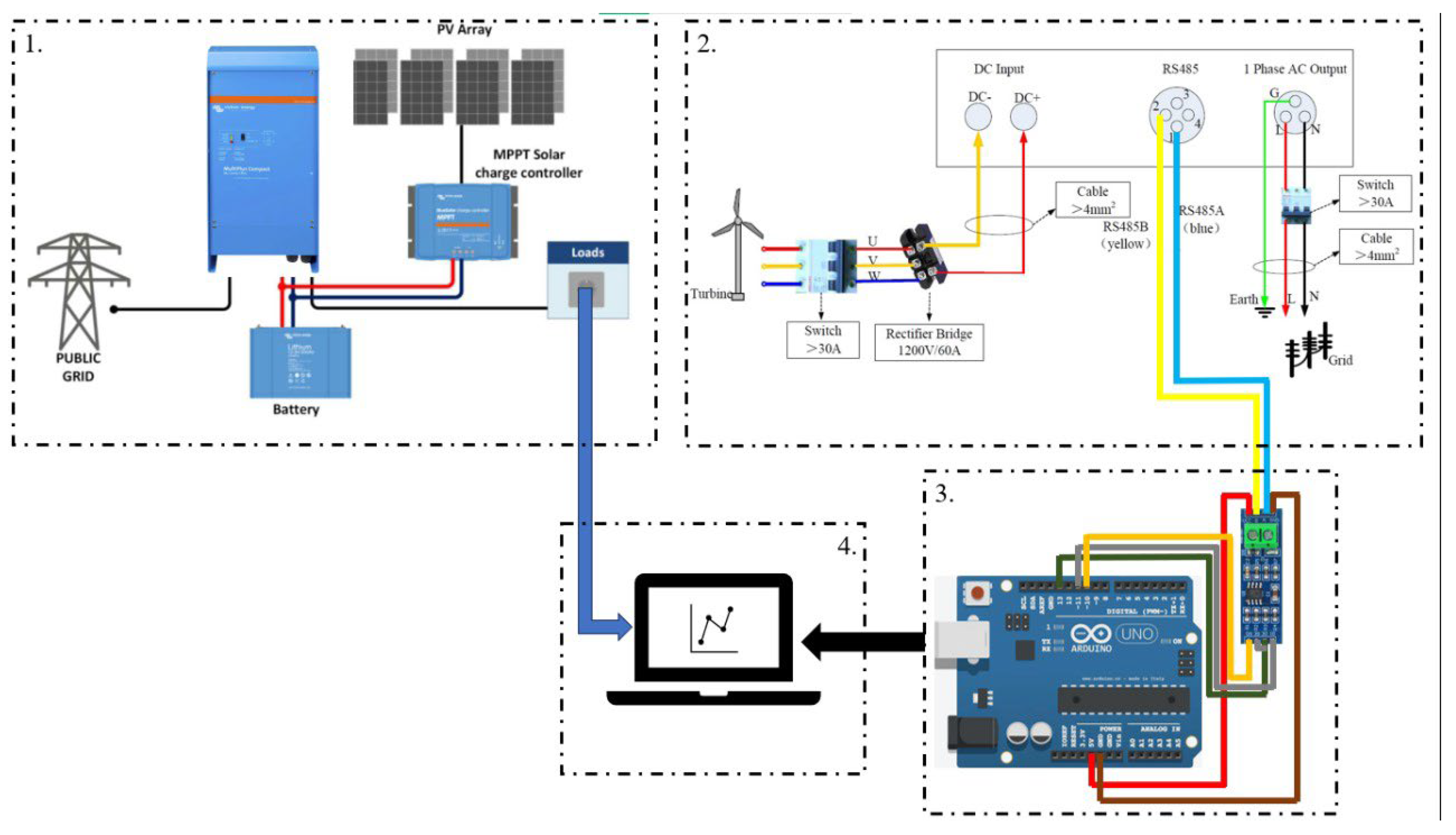
The hybrid microplant was monitored continuously over a nine-month period (June 2024–February 2025), with data from each energy source collected independently. The wind energy system was monitored using a proprietary data acquisition setup based on the Modbus RTU communication protocol over RS485 (Figure 3). This system converts wind inverter register signals to TTL using a MAX485 module, enabling the acquisition of power output data at five-minute intervals. The data are automatically captured and stored by a custom Python-based program (Phyton V3.12.3). In the case of the photovoltaic system, power generation data were obtained via the integrated data acquisition system of an APSystems ECU-C integrated to the microinverters. This system records real-time power values at five-minute intervals, facilitating the construction of daily, monthly, and annual generation curves.
Prior to the data collection campaign (June 2024–February 2025), the data acquisition system was calibrated by comparing the reading obtained against the lectures obtained by the wind system’s front panel inverter and a multimeter as a reference. The device operates at 1 Hz and computes 5 min averages from 300 one-second samples, which are stored in a 24 h circular buffer, to reduce sampling errors and aliasing. Time was synchronized using a real-time clock with periodic checks against an NTP source, aligning timestamps to 5 min boundaries and enabling seamless integration into a unified dataset with the photovoltaic log (APSystems ECU-C). The resulting calibrated and synchronized records provide a robust basis for evaluating the performance, operating envelope, and capability of the hybrid wind–solar system to supply the PtG pilot plant, while also quantifying the surplus energy exported to the power grid.

2.4. Calculation of the Capacity Factor

To evaluate the real-world performance of the hybrid wind–solar microgrid powering the Power-to-Gas (PtG) pilot plant, the capacity factor (CF) was calculated on a monthly basis for each energy source (solar PV and wind) and for the entire system. The capacity factor represents the ratio between the actual energy output over a given period and the maximum possible energy output if the system continuously operated at its nominal capacity during the same period.
The monthly capacity factor was calculated using the following expression (Equation (4)):
C F = E g e n e r a t e d P n o m i n a l × t
where E g e n e r a t e d is the measured energy production in kWh for each month, P n o m i n a l is the installed nominal power in AC of the system in kW, and t is the total number of hours each month.
Each month’s duration was considered individually to ensure accurate estimation of the capacity factors. This calculation allowed for a direct comparison between the theoretical maximum energy generation and the actual energy yield observed during the 9-month monitoring period, providing a reliable indicator of each renewable energy source’s operational efficiency and intermittency impact.

3. Results and Discussions

3.1. Pilot Plant Renewable Energy Production

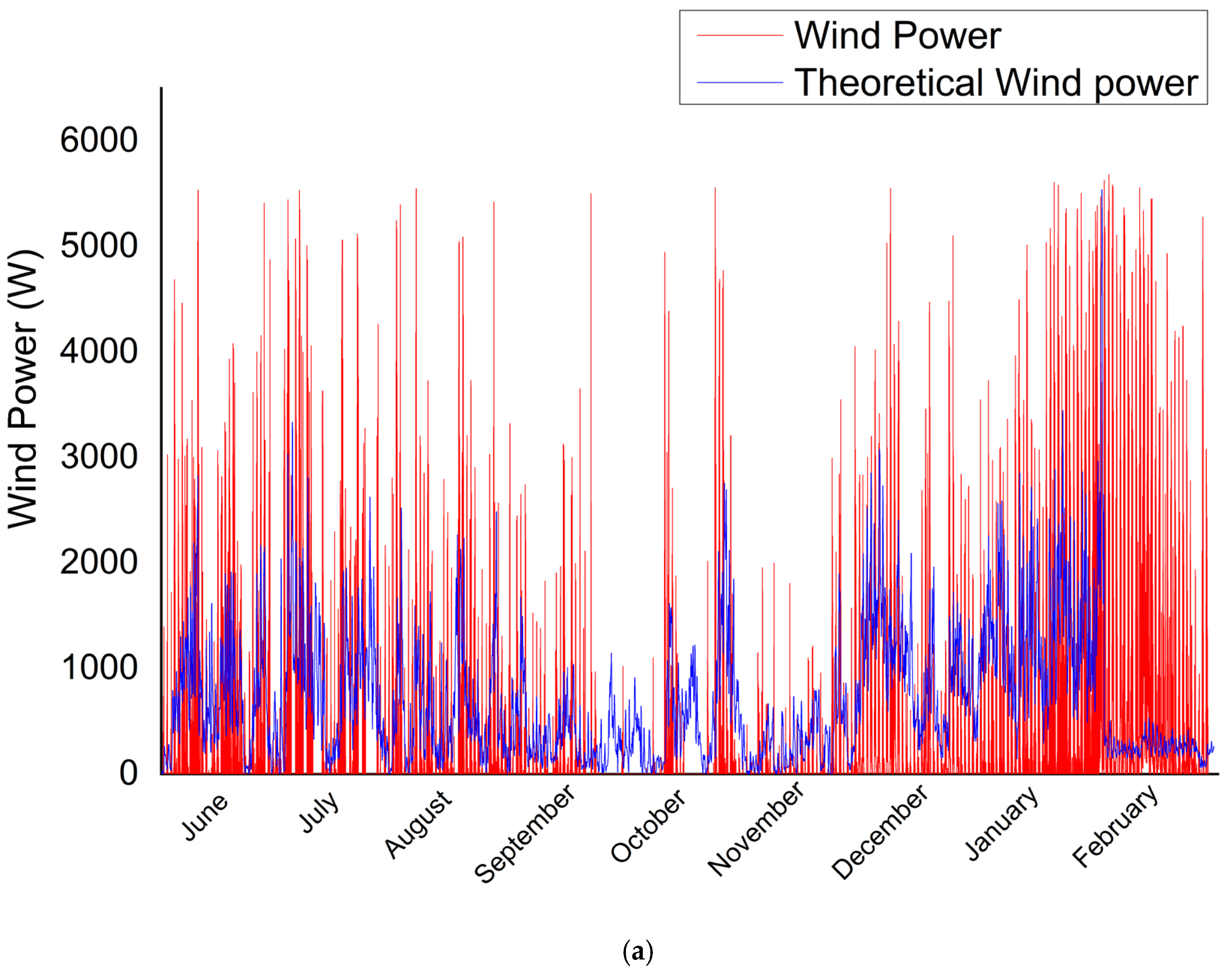
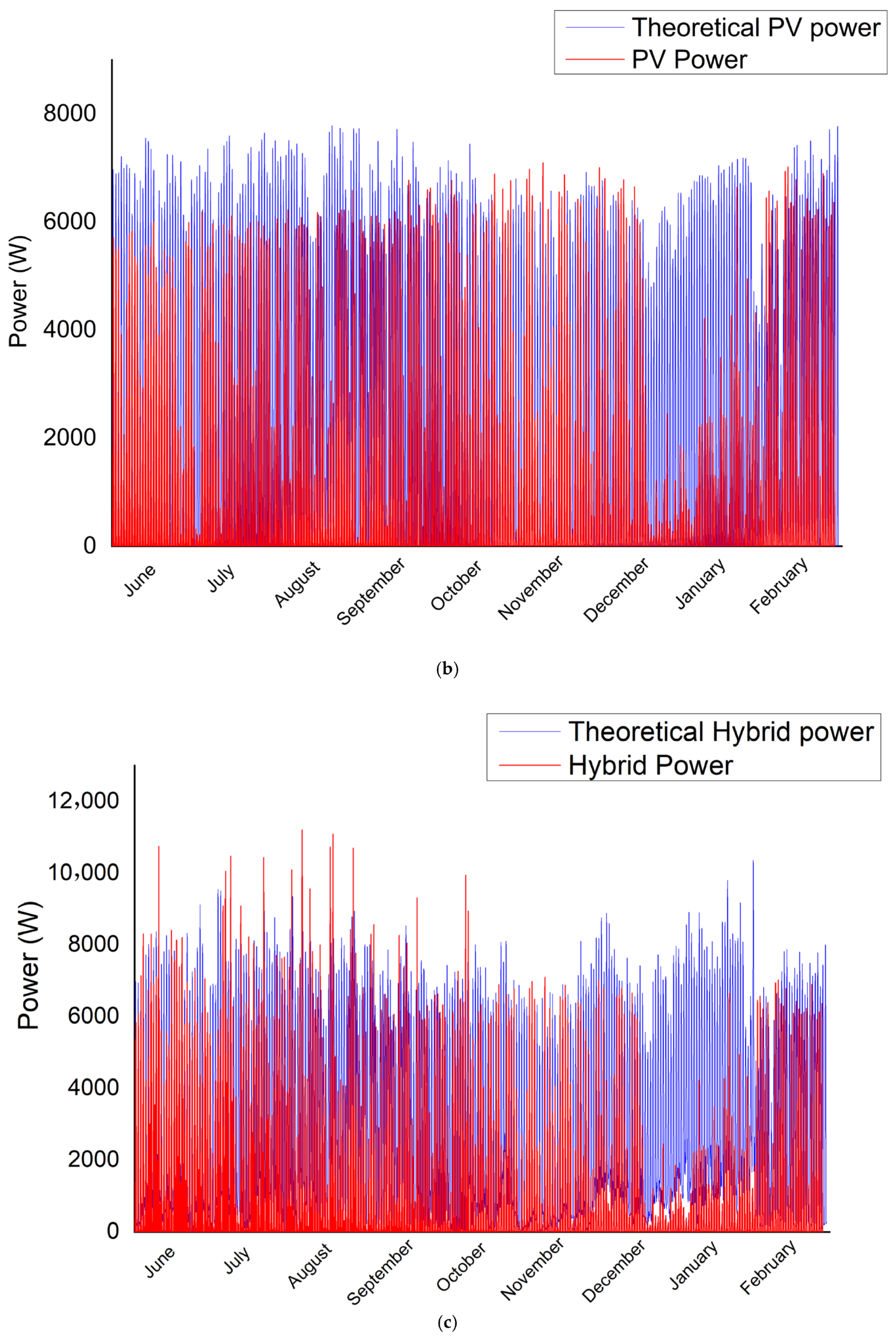
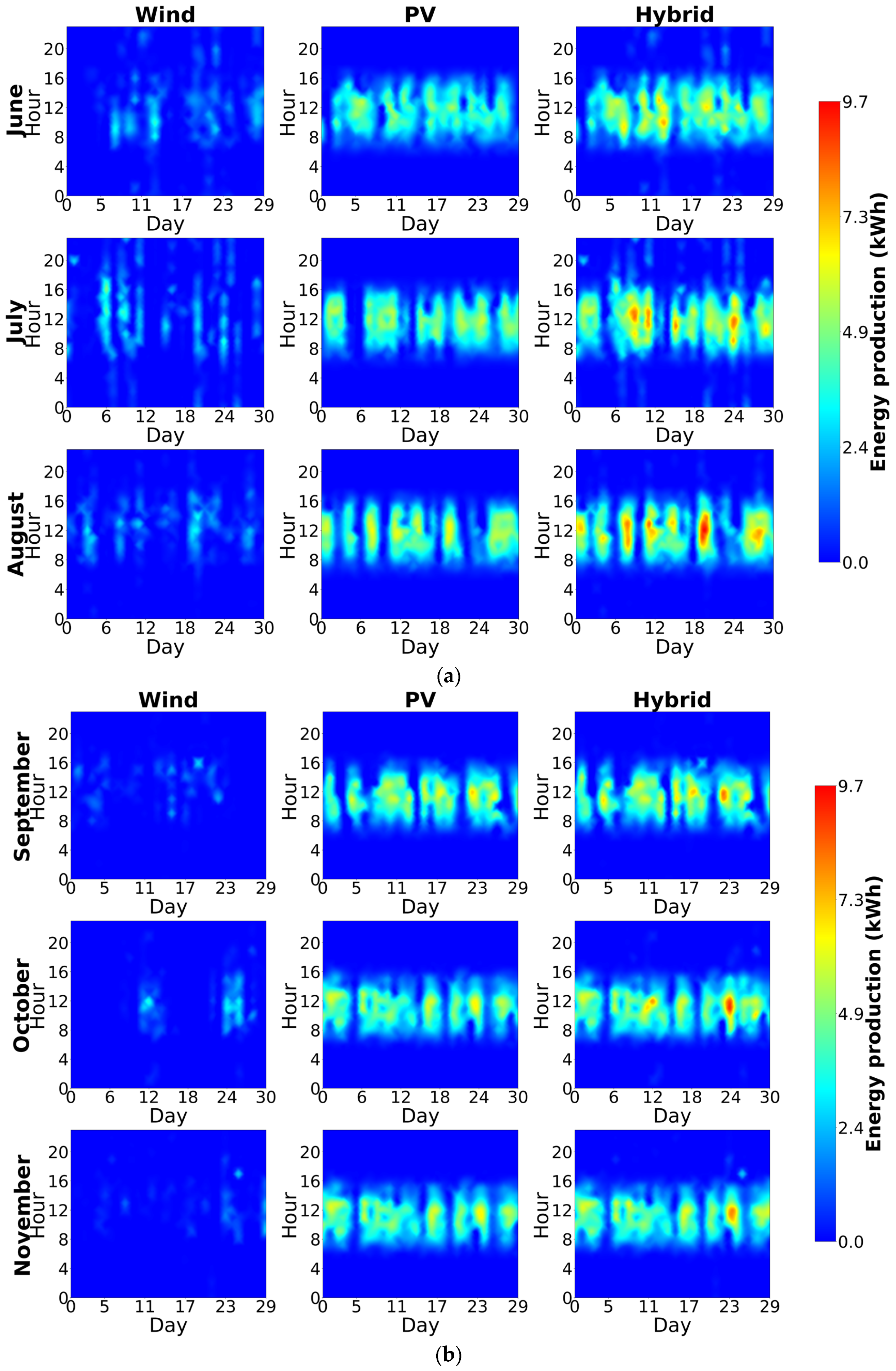
The Power-to-Gas pilot plant evaluated in this study is supplied by a 15 kWe hybrid microgrid comprising a 5 kW wind subsystem and a 10 kW solar photovoltaic subsystem. To characterize the system’s energy performance, both the theoretical renewable energy potential and the actual real-time power generation were assessed over a nine-month period (three quarters). Figure 4 presents a comparative analysis between the simulated energy potential and the measured power output for the wind (a), photovoltaic (b), and hybrid (c) systems based on site-specific meteorological data and the energy output of the wind turbine and solar panels, respectively.
For the wind subsystem (Figure 4a), a similar trend is observed between the theoretical estimates and the real operational data in terms of daily and seasonal fluctuation patterns. Both datasets reflect diurnal peaks and nocturnal lows, along with month-to-month variability. However, notable differences are evident in the magnitude of the power output: while theoretical values range from approximately 200 W during low-resource months (e.g., September) to peaks of 5000 W in January, the real data exhibit a more irregular daily profile, characterized by daytime peaks and nighttime near-zero values. These measured peaks frequently approach the rated capacity of the wind turbine (6 kW), particularly during June, July, January, and February.
The discrepancies between theoretical and actual values can be attributed to several factors, including wind resource nature, turbine performance under non-ideal conditions, and forecasting accuracy limitations. Rapid variations in wind speed introduce volatility in turbine output, which may lead to power fluctuations, decreased conversion efficiency, and potential grid stability challenges [28]. Predicting wind power generation is challenging due to wind speed forecast uncertainties. These uncertainties necessitate the use of energy storage systems to manage the discrepancies between forecasted and actual power generation [29]. Regarding the photovoltaic system, the results indicate that the PV array was capable of reaching the nominal power demand of the electrolysis system (4.8 kW) for a significant portion of the monitoring period, reaching peak outputs of up to 6 kW during the first two quarters. However, a notable decline in solar power generation was observed in the third quarter, particularly in December and January. This behavior deviates from the trend predicted by theoretical simulations. The measured power output of the photovoltaic system was consistently lower than the estimated theoretical values across the entire study period, with the most pronounced discrepancies occurring during the first and third quarters (i.e., December, January, and February).
Noriega et al. [21] indicated that some variables of the model dependent on climatic conditions can influence the final power of the panels, as is the case of the reference ambient temperature used in the calculations, which may differ in a remarkable way depending on the location site, as well as the reference solar radiation used for the testing of the panels under standard conditions. In La Guajira, Colombia (the site of the plant), these values could differ in an important way, with the ambient temperatures and average radiation being much higher than the reference values, which directly affects the real efficiency of the system. The incidence angle is another key factor influencing the efficiency of photovoltaic systems. As shown in Figure 4b, the months of December and January exhibit a marked reduction in the PV array’s power output. This decline is primarily associated with seasonal shifts in the solar angle relative to the fixed orientation of the system. During this period, the solar decline moves further south, reaching its maximum offset around the end of December and the first half of January, reducing the panels’ effective solar irradiance. This phenomenon is a consequence of the Earth’s axial tilt of approximately 23.5° relative to its orbital plane’s perpendicular plane. As a result, the angle of solar incidence—and consequently the apparent path of the sun at sunrise and sunset—varies throughout the year, affecting the availability and quality of solar radiation at a given geographic location. This change of seasons can have a negative impact on the solar power expected [30]. The results obtained from theoretical calculations consider the direct solar radiation that falls on the panels; therefore, the effects derived from the change in the angle of incidence throughout the year are not considered.
In general, the power obtained from the hybrid system (Figure 4c) depends primarily on the availability of the PV system throughout the year, considering that it is a more stable source and does not have the intermittencies typical of the wind system.
To validate the performance of the models used to compare the theoretical behavior of the solar and wind systems with their actual performance, statistical indicators such as the mean bias error (MBE), root mean square error (RMSE), and coefficient of determination (R2) were calculated. These coefficients were estimated on a monthly basis for each subsystem (solar, wind, and hybrid) and were computed considering only the intervals in which at least one of the two values (theoretical or experimental) was greater than zero. The obtained results are presented in Table 2.
Based on the statistical indicators calculated on a monthly basis (MBE, RMSE, and R2) for the theoretical and actual power obtained from the wind and solar subsystems and from the hybrid system as a whole, a differentiated behavior between technologies is observed over the evaluation period (June 2024–February 2025). In general terms, the MBE values are predominantly positive, indicating that theoretical models tend to overestimate the power recorded under real operating conditions, whereas the RMSE values reflect significant discrepancies between the modeled and measured behavior. In most cases, R2 shows a low correlation between the theoretical and experimental series.
For the wind system, MBE behavior is more variable: months with overestimation (positive MBE), such as July, December, and January, and months with underestimation (negative MBE), such as September, November, and February, are observed. The MBE values are in the order of hundreds, which may indicate a bias of lower relative magnitude compared with that obtained for the solar system. The RMSE values fall in the range of approximately 900–1900, reflecting a substantial spread between theoretical and actual power, associated with the high inherent variability of the wind resource and possible differences between the power-curve model and the actual wind regime at the turbine site. Regarding the R2 of the wind system is low in almost all months (0.01–0.09), indicating a weak temporal correlation between the theoretical series and the series obtained under real measurement conditions. In other words, the model does not accurately reproduce the real fluctuations of wind power, which is consistent with what is observed in Figure 4a.
In the case of the solar system, the monthly MBE remains positive throughout, with values in the approximate range of 1250–3000, indicating that the power generated in all months analyzed tends to be overestimated by the theoretical model. The RMSE values range between 3200 and 3800, revealing substantial discrepancies between the theoretical and experimental power profiles at an hourly scale. The R2 remains low over the evaluation period, reaching around 0.24 in February 2025 and between 0.13 and 0.14 from June to September 2024. Although the model can capture the variability of the solar resource during these periods, the overall correlation remains limited. Between July and October, the R2 values approach zero, indicating a decoupling between the temporal shape of the theoretical curve and that of the experimentally obtained curve.
When the hybrid system is analyzed (integrating the combined wind and solar contributions), the monthly MBE is always positive, with values in the approximate range of 1400–2700, confirming a general overestimation of the available microgrid power, in line with what was observed in the analysis of the individual sources. The RMSE lies between approximately 2300 and 4300. However, the R2 shows moderate values in some months, particularly in June 2024, with an R2 of 0.67, and in November, with an R2 close to 0.4. Taken together, these results indicate that although the theoretical microgrid model tends to overestimate the total available power, it can reasonably capture the overall trend and temporal variation of the generation in some months.
Considering the data source (NASA POWER), some specific studies suggest that theoretical models based on this database can closely match actual wind and solar production data [31,32]. However, other studies [33,34]. indicate that datasets of this type may lead to low correlations or significant biases between NASA-based models and actual renewable energy production, especially when no local calibration of the data is performed. Staffell et al. [33] found that NASA reanalysis models (MERRA and MERRA-2) can overestimate production in northwestern Europe by up to 50% and underestimate it in the Mediterranean by approximately 30%. The spatial correlation between simulated and historical data was low (R2 of only 0.19 for MERRA and 0.15 for MERRA-2), indicating that these models cannot adequately represent actual production without calibration.
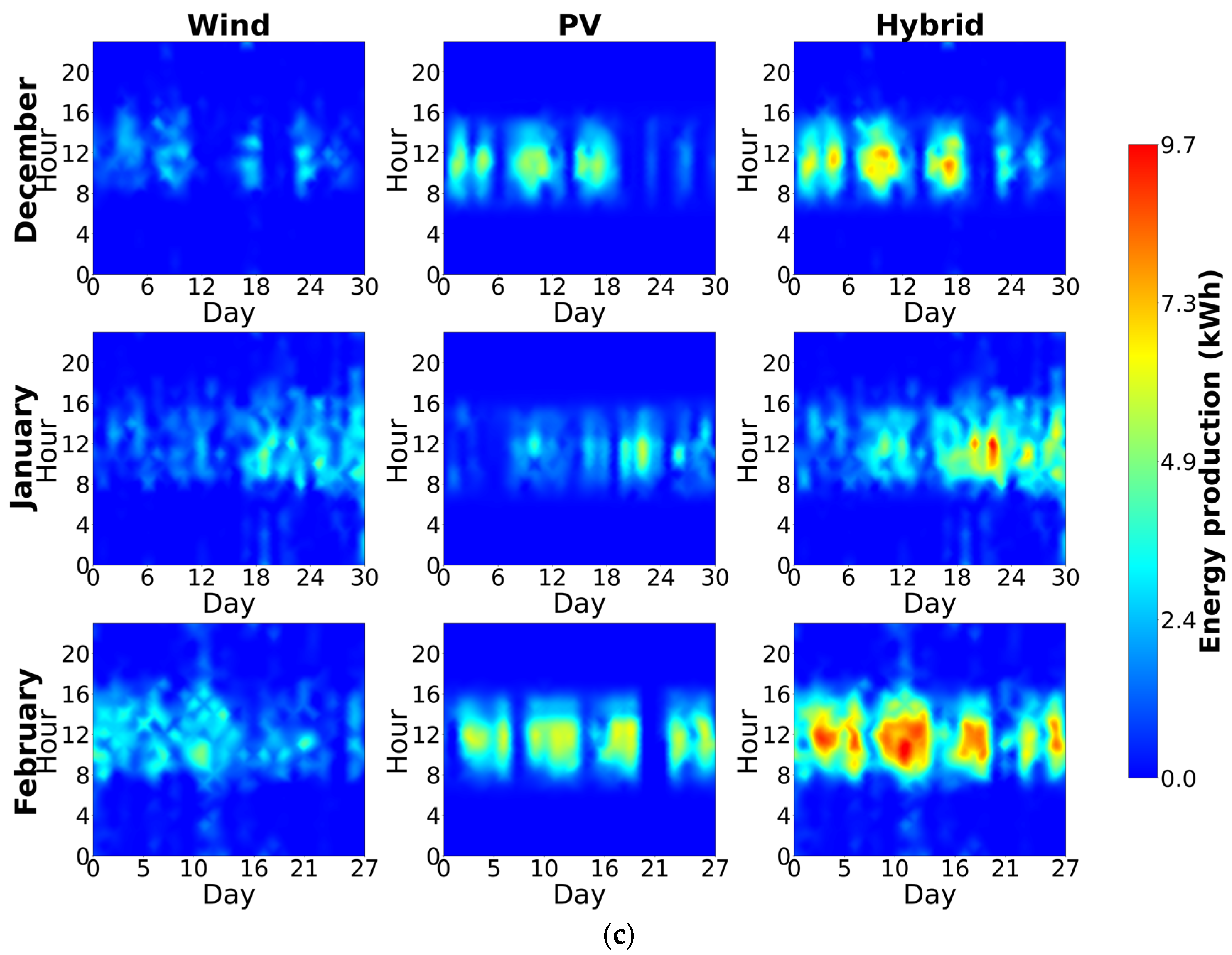
An hourly analysis of energy production (kWh) was conducted for the photovoltaic, wind, and hybrid systems over the evaluation period (June 2024 to February 2025) to assess the hourly energy availability of the pilot plant for meeting the electrolyzer demand, as shown in Figure 5. Consistent with previous findings, the PV subsystem contributed most energy throughout the day, largely defining the hybrid system’s overall behavior. This is partly due to its higher installed capacity (10 kW) compared to the wind subsystem (5 kW) and the inherently more stochastic nature of wind generation. Nevertheless, the wind subsystem exhibited a consistent operational pattern across the three analyzed quarters. It generally produced energy during similar time windows as the PV system—between 8:00 a.m. and 5:00 p.m.—with notable extensions during July and February, which also corresponded to the months with the highest total energy generation. This overlap suggests partial temporal alignment between the two sources under favorable conditions. In Colombia, previous studies [35,36] have shown that there is complementarity among the different renewable energy sources available in abundance (hydropower, wind, and solar) when considering their use for injection into the National Interconnected System (SIN). However, the evaluated sources meet this criterion when assessed at the regional (Caribbean region) and national levels. In this work, the wind and solar sources are exploited at the same location, suggesting the need for more detailed evaluations to determine the degree of complementarity between them at a single geographical site. This assessment will be conducted in a subsequent study in greater detail and over a longer time frame.
Meteorological factors strongly influence wind turbine efficiency. During daylight hours, atmospheric instability often leads to increased turbulence and vertical air movement, which reduces wake effects and enhances turbine performance. Conversely, nighttime conditions are typically more stable, limiting vertical mixing and resulting in reduced wind speeds and lower energy output due to persistent wake effects. Additionally, diurnal wind patterns—driven by topographical influences and daytime thermal gradients—tend to increase wind power density during daylight hours. Rising ambient temperatures decrease air density, which can, in turn, elevate wind speeds and improve energy capture by wind turbines during the day [37]. This behavior suggests in a qualitative form that wind and solar sources occur in simultaneous conditions throughout the year (except for the months of July and February when the wind speed is higher) and could directly impact the operating windows of the electrolyzer to produce green hydrogen considering the initial plant design.
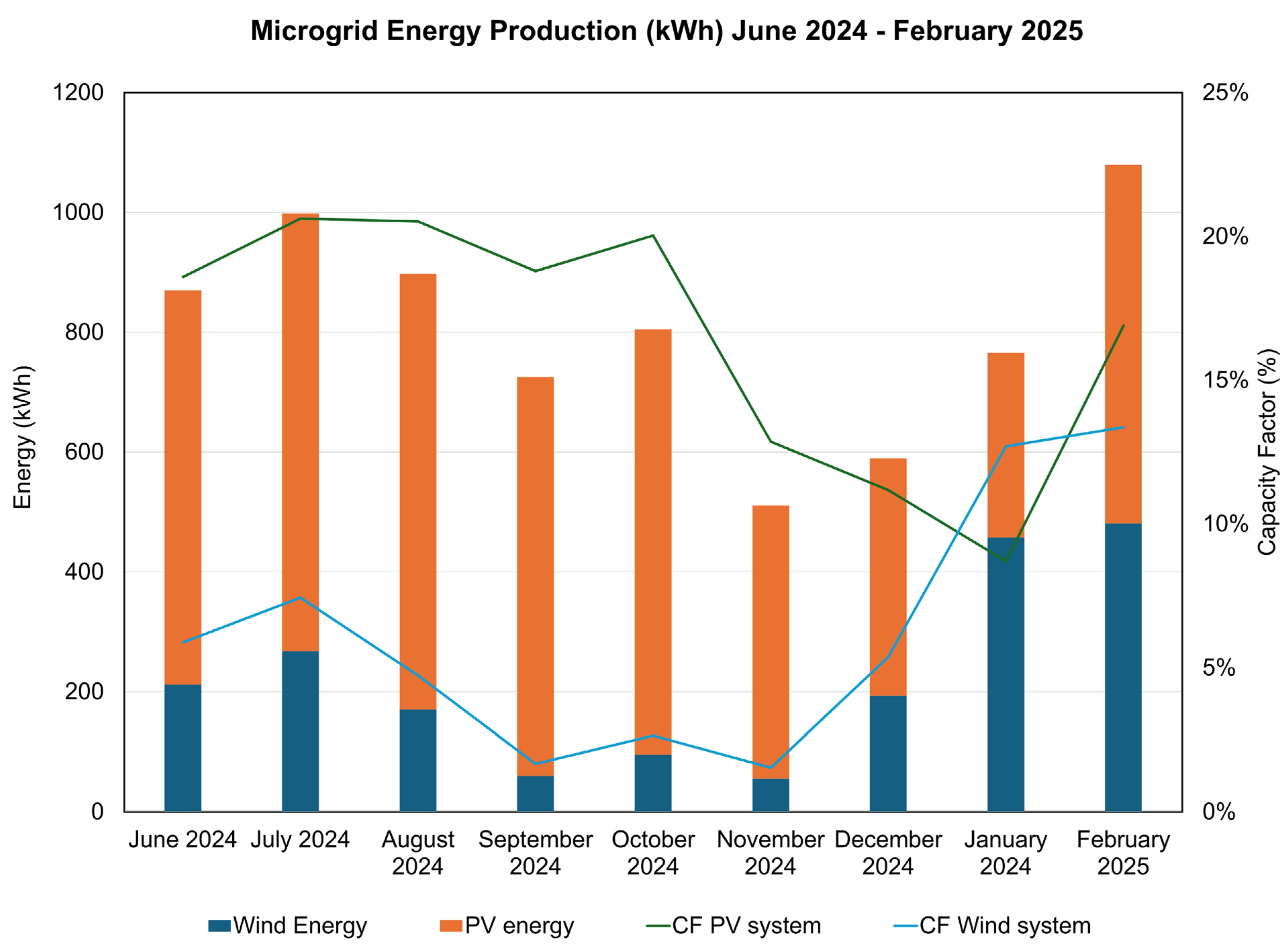
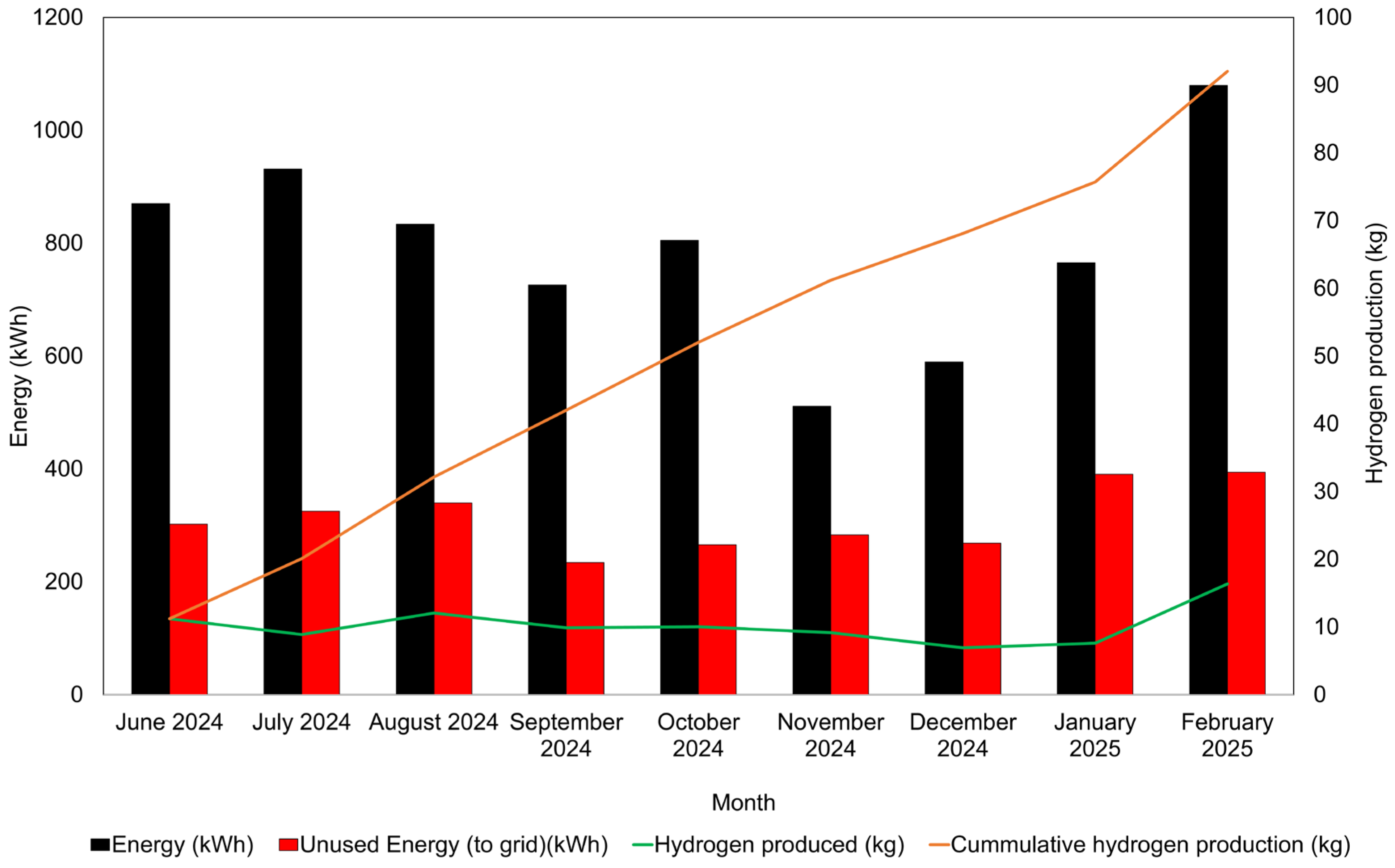
Figure 6 shows the total monthly energy production of the hybrid system. During the first quarter (June–August), the total monthly generation remained above 800 kWh, with the photovoltaic system contributing most this energy—ranging from 658 to 730 kWh per month. In the second quarter (September–November), a decline in overall energy output is observed, primarily due to a reduction in wind energy production, which dropped to approximately 500 kWh in November. This period coincides with the transition from the dry to the rainy season at the plant’s location, resulting in a gradual weakening of the wind resource due to changes in regional pressure patterns. Additionally, a notable decrease in solar contribution is recorded in November, falling to 455 kWh, associated with intensified rainfall during the peak of the rainy season.
In the third quarter (December–February), energy production gradually begins to increase, aligned with the onset of the first dry season of the year. A significant increase in wind energy contribution was observed, increasing from 267 kWh in July (one of the earlier high-output months) to 457 kWh in January and 481 kWh in February. This increase is attributed to the strong presence of northeastern trade winds, which enhance wind energy generation and corroborate the behavior previously discussed in Figure 4c.
Over the entire monitoring period (June 2024–February 2025), the hybrid system generated 7111 kWh, with 5249 kWh supplied by the photovoltaic subsystem and 1992 kWh supplied by the wind subsystem. The corresponding capacity factors varied from 9% to 21% for the PV system and from 2% to 13% for the wind system, depending on each resource’s actual availability throughout the period.

3.2. Green Hydrogen Production Potential Based on the Availability of Renewable Sources

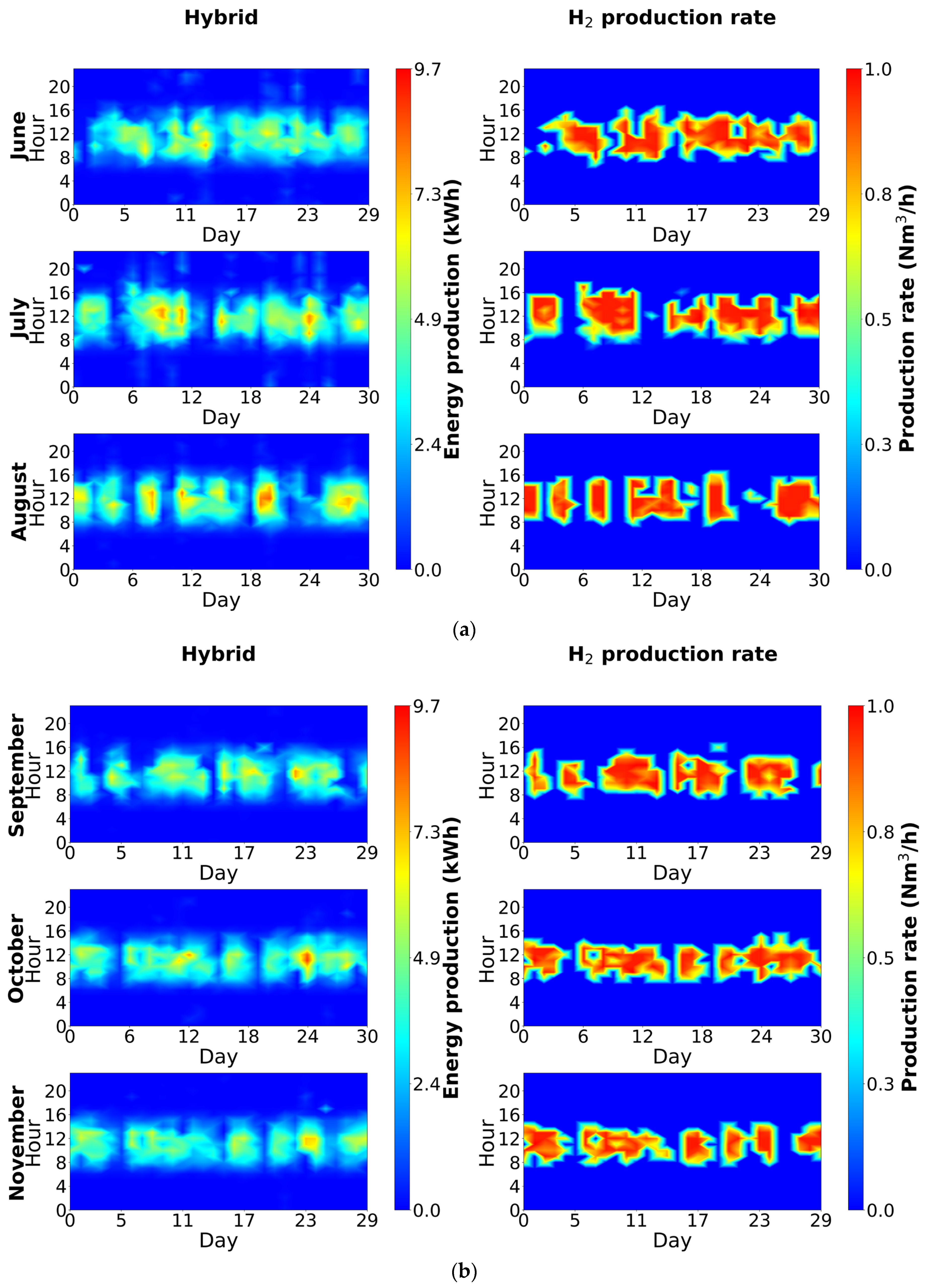
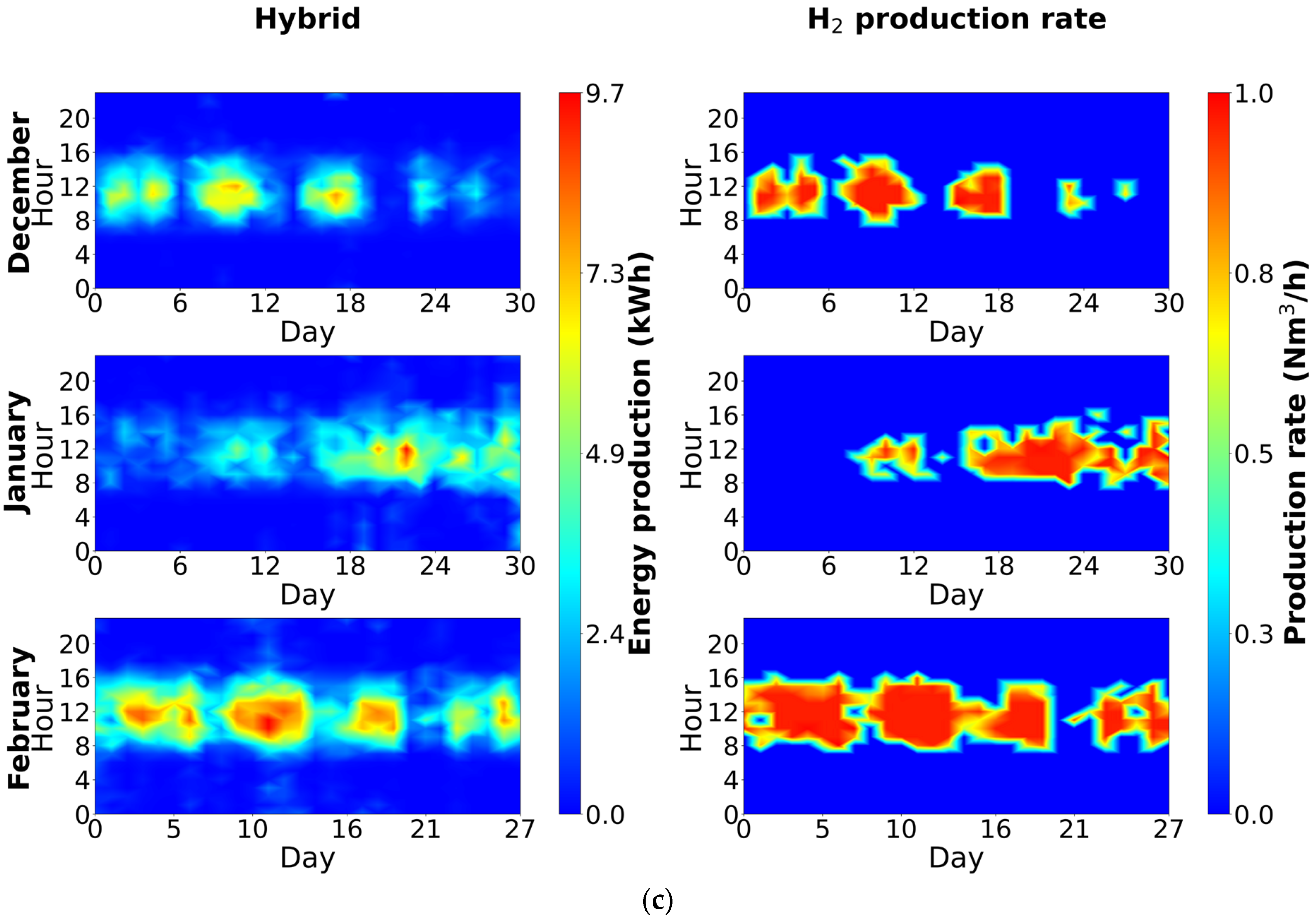
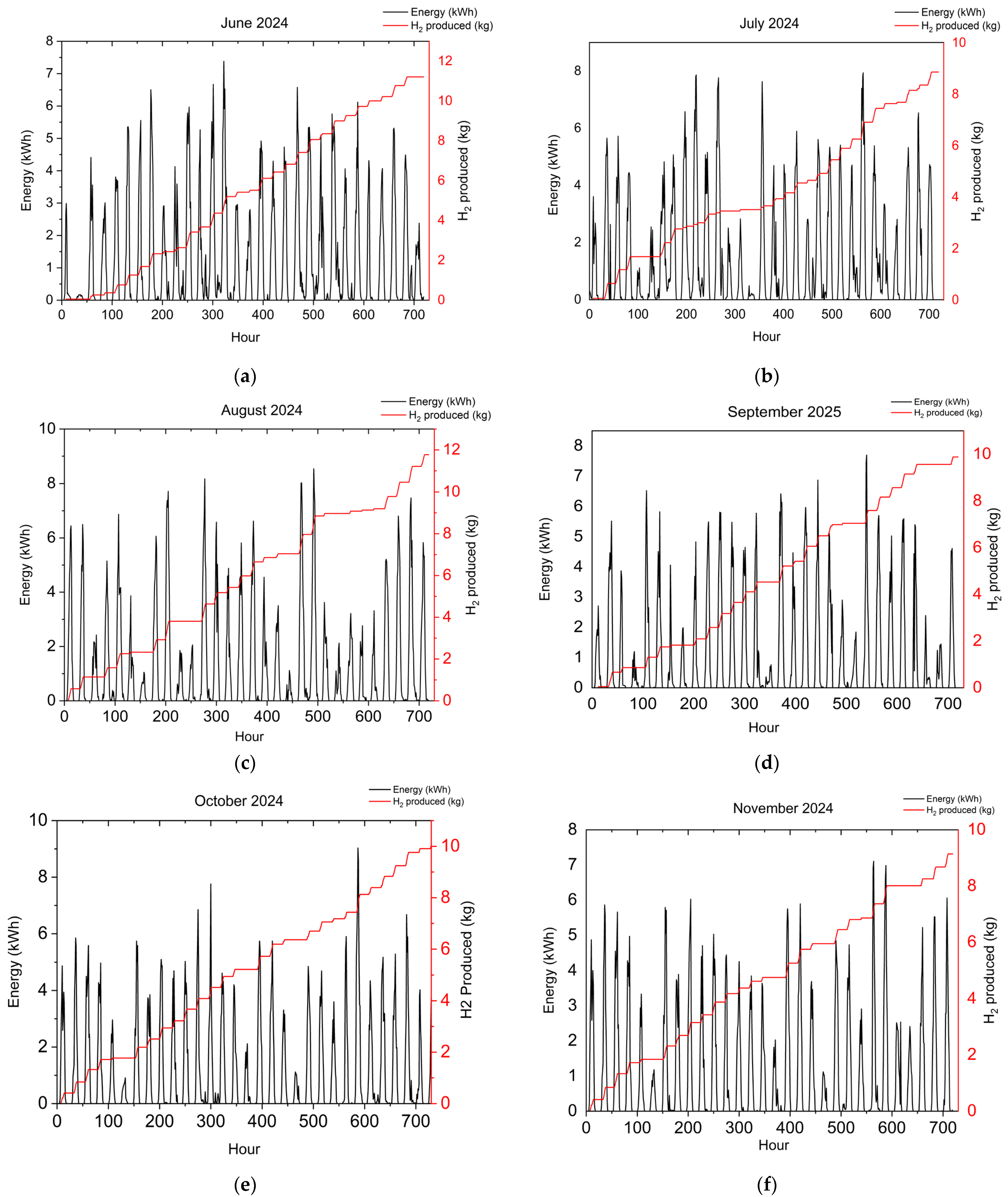
The energy valuation was presented in the previous section, which allowed us to understand the periods of energy production of the plant during the different months evaluated. From this analysis, it can be concluded that the pilot plant is capable of providing renewable energy in daytime periods ranging between 8–9 h depending on the month evaluated. However, it is important to elucidate how much of this energy is usable by the electrolysis system. Figure 7 shows the periods of time in which the microgrid is capable of supplying the minimum energy required to operate the electrolyzers. The system’s electrolyzers have an energy consumption of 4.8 kWh/h under nominal operating conditions (1 Nm3/h) and can vary their operating range up to 60% of this nominal capacity [23]. The results obtained allow us to observe that not all the energy generated in the microgrid is fully usable by the electrolysis system, appreciating periods in which there is no production of green hydrogen with the minimum operating conditions (60% of the nominal capacity) despite having energy production. In addition, there is a restriction on energy use as soon as the demand of the electrolysis system is exceeded under nominal conditions; when this happens, the surplus energy is sent to the network of the laboratory and adjacent buildings, as the system cannot fully exploit it.
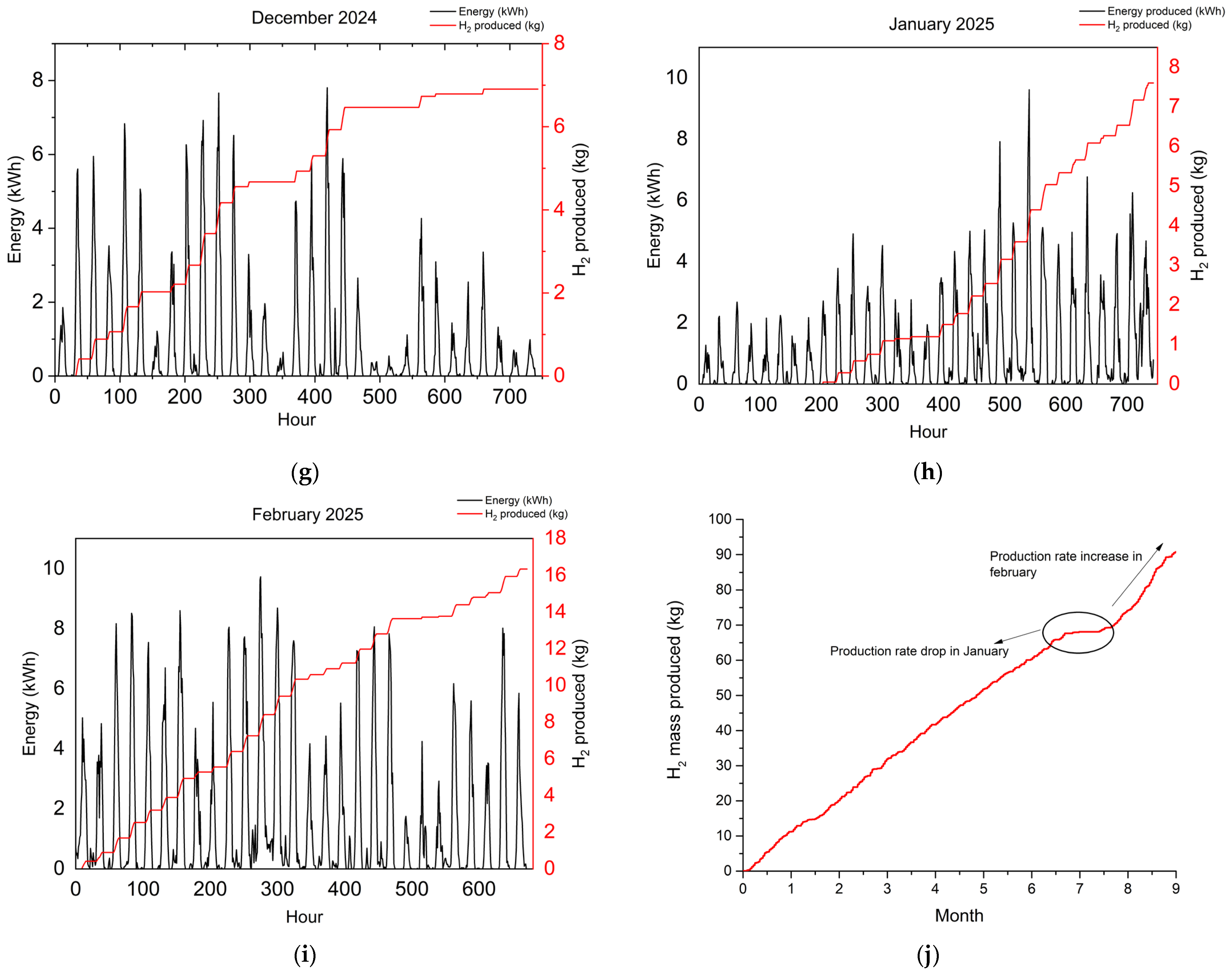
Figure 8 shows the accumulated hydrogen production (in kg) during the months evaluated (June 2024–February 2025) considering the operating hours of the electrolyzers considering its consumption range. The monthly production values range from 7 to 12 kgH2/month, with an average value between 7–11 kgH2/month, with the exception of February, in which sufficient energy is available to produce 16 kg of renewable hydrogen in 224 h of operation, considering that it was the period with maximum energy production and a large percentage of energy used for electrolysis. The results obtained allow us to observe that, despite achieving certain values of energy accumulated during the month, the distribution of this energy throughout the days plays a significant role in the amount of hydrogen that can be generated. An example of this occurs during July, a month that has days in which hydrogen production is almost zero, similar to what happened in the first days of January, despite being the second with the highest energy production. The detailed monthly hydrogen production can be seen in Figure 8a–i. In Figure 8j, the cumulative hydrogen production for the period June 2024–February 2025 is presented. Over this interval, a total of 92 kg of hydrogen was produced as a function of the available renewable energy, according to the operating parameters of the electrolyzers.
Figure 9 presents the monthly energy production vs. the total amount of green hydrogen generated during each month to observe the proportion of effective monthly energy that was used to obtain renewable hydrogen. The results obtained show that there is no direct correlation between the amount of total energy generated and the amount of hydrogen generated, being notorious examples such as the periods June–July–August, where there was a variation in the mass of hydrogen that could be generated, despite the fact that the energy production was similar, also between December and January. No significant variation was observed in the amount of hydrogen generated despite the increase in energy production. These results are supported by considering the amount of energy not used during each period, with values ranging from 234 to 393 kWh and percentages of energy use ranging from 48% (January) to 67% in September and October. Based on the above, a strategy is necessary to make an adequate management of energy to take advantage of it as much as possible within the periods of operation identified in the microgrid. These excess energies (or unusable energy) are injected into the grid. Energy is considered “usable” for green hydrogen production only when the power output from the hybrid microgrid falls within the operational range of the electrolyzers. The AEM electrolyzers in this study require a minimum input of 60% of their nominal capacity (4.8 kWh/h), equivalent to 2.88 kWh/h, to initiate and sustain hydrogen production. Any energy generated below this range is insufficient to activate the electrolyzer, while energy exceeding the nominal capacity cannot be fully utilized for direct hydrogen production; in this study, the electrical grid is a backup to the wind-solar hybrid system; therefore, the energy that does not reach the minimum operating limits is captured from the grid, and the excess energy is redirected to the laboratory’s electrical grid, resulting in partial underutilization of the renewable energy generated by the system for the green hydrogen production purpose. The operation range of the electrolyzers is described in Equation (5):
2.88   k W h     E e l e c t r o l i z e r s 4.8   k W h  
where E e l e c t r o l i z e r s represents the energy consumption of the electrolyzer system.
In power-to-gas (PtG) plants—particularly when renewable energy sources are exclusively dedicated to hydrogen production—energy surpluses frequently occur due to the inherent intermittency and variability of renewable generation, combined with the system’s technical and operational limitations. These surpluses arise primarily (as illustrated in Figure 6) because the renewable energy supply timing and magnitude often do not match the plant’s conversion and storage capacity. Previous studies have identified several underlying factors that contribute to renewable energy surpluses in PtG systems. The most significant are the temporal fluctuations of solar and wind resources—driven by meteorological and diurnal cycles—which lead to instances where renewable generation exceeds the PtG system’s nominal conversion capacity, even when the entire energy input is allocated to hydrogen production [38,39,40]. However, the decoupling between generation and demand contributes to the occurrence of renewable energy surpluses in hydrogen production due to the mismatch between generation peaks and the plant’s conversion capacity. Fan et al. [41] developed a modeling framework to optimize the sizing of centralized hydrogen systems co-located with offshore wind farms to minimize the levelized cost of hydrogen (LCOH). Using system simulations and particle swarm optimization, the framework identifies cost-effective configurations for hydrogen production, pressurization, storage, and transport to shore while meeting onshore demand efficiently. This study addresses the mismatch between hydrogen production and demand by integrating hydrogen storage and a dispatch strategy that balances intermittent offshore wind generation with variable onshore demand. The model simulates the storage of excess hydrogen during periods of high generation and its release when production is low, ensuring a consistent supply. It also maintains a balanced state of charge (SOC) across systems to enhance overall performance, highlighting the importance of storage in addressing the variability of floating offshore wind.
Based on the previous results, green hydrogen production (from renewable sources) is directly affected by the availability of renewable resources (solar and wind), which in turn depends on the study site’s climatic conditions. Reports in the literature confirm that the intermittency of these renewable sources is strongly influenced by local climatic variables such as solar irradiation, wind speed, and seasonality (where applicable) [42,43]. Studies have shown that in regions with well-defined seasons, hydrogen production in summer can be up to twice that in winter due to higher solar availability; in the case of wind energy, these fluctuations are usually more complex and prolonged [8,44].
At the location of the pilot plant considered in this study, there are two dry seasons (late December–March and June–mid-September), which coincide with the highest energy production and hydrogen generation capacity. Rainy periods with localized precipitation, high cloudiness, and low wind speeds characterize the remaining months of the year. No technical constraints of the electrolyzers are considered because their nominal operation is ensured by the electrical grid support in the evaluated power-to-gas system.

4. Conclusions

This study presents the operational assessment of a power-to-gas (PtG) pilot plant located in La Guajira, Colombia, powered by a 15 kW hybrid microgrid comprising 10 kW of solar PV and 5 kW of wind generation. Real energy production data were analyzed in conjunction with the dynamic operating characteristics of the electrolysis unit over a continuous nine-month period to evaluate the feasibility and limitations of green hydrogen production under real conditions.
The hybrid system evaluated has an energy generation of 7111 kWh during the evaluation period. The results obtained through the comparison between the theoretical models and the data from real operation show that the models tend to over-estimate the energy generation, obtaining values of R2 between 0.01 and 0.67 in some periods, MBE ranged from 1253 to 2988 for the solar system, from −814 to 1013 for the wind system, and from 338 to 2714 for the hybrid system and RMSE positives in the majority of cases. Although the hybrid system was designed on the basis of the expected complementarity between solar and wind resources, the results revealed that such complementarity was not qualitatively achieved throughout the monitoring period. The variability and intermittency of each source led to periods in which neither source could provide sufficient power to the electrolyzer, resulting in considerable energy surplus and underutilization. On average, approximately 300 kWh/month of renewable energy remained unused due to the electrolyzer’s minimum operational threshold and the absence of energy storage or smart management systems. Despite these challenges, the system can produce a total of 92 kg of green hydrogen with the contribution of renewable sources (wind and solar), allowing up to 8 h of daily electrolyzer operation during optimal months if renewable supply is considered.
These findings highlight the importance of considering real operating constraints in the design of small-scale PtG systems, particularly the need for improved energy management strategies to guarantee more green hydrogen production capacity. The insights gained from this study could provide a realistic operational benchmark for similar deployments in regions with variable solar–wind regimes and support informed decision-making for future system scaling, optimization, and replication. Future work should evaluate operating scenarios that enhance the utilization of the available renewable resource, thereby increasing the green hydrogen production capacity of this pilot plant or similar installations. In addition, the economic performance under these new operating schemes—particularly the Levelized Cost of Hydrogen (LCOH)—should be assessed.
Detailed assessment of the complementarity of renewable sources when used at the same site and quantitative determination of a metric that allows quantification of how complementary the sources can be over time must be addressed. Additionally, evaluating energy management strategies that maximize the use of renewable energy sources in contexts similar to those of the pilot plant is important to increase the production capacity of renewable hydrogen.

Author Contributions

All authors contributed to the study in the following form: Conceptualization, M.C.-R. and A.A.A.A.; Data curation, L.A.N.D.l.C.; Formal analysis, M.C.-R.; Funding acquisition, A.A.A.A.; Investigation, M.C.-R. and L.A.N.D.l.C.; Methodology, M.C.-R.; Project administration, A.A.A.A.; Supervision, M.B.-B. and A.A.A.A.; Writing—original draft, M.C.-R.; Writing—review and editing, M.B.-B., D.S.-F. and A.A.A.A. All authors have read and agreed to the published version of the manuscript.

Funding

This Research was funded by Ministerio de Ciencia, Tecnología e Innovación call No. 938-2023, Contract RC–393-2023.

Data Availability Statement

The data presented in this study are available on request from the corresponding author. The data are not publicly available due to privacy restrictions in the project.

Acknowledgments

The authors gratefully acknowledge the financial support provided by the call No. 938-2023 “Ecosistemas en energía sostenible, eficiente y asequible-2023” within the program “Incremento del Grado de Madurez Tecnológico (TRL) de Sistemas Energéticos Sostenibles y Eficientes para la Transición Energética y la Reindustrialización del País” (Contract No. RC-393-2023). The authors also thank the University of La Guajira for its support in carrying out this work and publishing this article.

Conflicts of Interest

The authors have no conflicts of interest to declare.

References

  1. Gahleitner, G. Hydrogen from Renewable Electricity: An International Review of Power-to-Gas Pilot Plants for Stationary Applications. Int. J. Hydrogen Energy 2013, 38, 2039–2061. [Google Scholar] [CrossRef]
  2. Fernández-Arias, P.; Antón-Sancho, Á.; Lampropoulos, G.; Vergara, D. On Green Hydrogen Generation Technologies: A Bibliometric Review. Appl. Sci. 2024, 14, 2524. [Google Scholar] [CrossRef]
  3. Bastidas Barranco, M.; Serrano Flórez, D.; Amell Arrieta, A.; Echeverri Uribe, C.; Colorado Granda, A.; Córdoba Ramírez, M. Desarrollo de Sistemas Power to Gas Basados En Fuentes de Energía Renovables No Convencionales Del Departamento de La Guajira. In Alianza SENECA: Impulsando la Transformación y la Sostenibilidad Energética de Colombia; Universidad de la Guajira: Riohacha, Colombia, 2023; Volume 1, ISBN 978-628-7619-95-1. [Google Scholar]
  4. Andrade, C.; Selosse, S.; Maïzi, N. The Role of Power-to-Gas in the Integration of Variable Renewables. Appl. Energy 2022, 313, 118730. [Google Scholar] [CrossRef]
  5. Mejía-Botero, C.; Echeverri-Uribe, C.; Ferrer-Ruiz, J.E.; Amell, A.A. Effect of Preheat Temperature, Pressure, and Residence Time on Methanation Performance. Energy 2023, 269, 126693. [Google Scholar] [CrossRef]
  6. Su, W.; Li, Q.; Wang, S.; Zheng, W.; Bai, Z.; Han, Y.; Yu, Z. Operating Characteristics Analysis and Capacity Configuration Optimization of Wind-Solar-Hydrogen Hybrid Multi-Energy Complementary System. Front. Energy Res. 2023, 11, 1305492. [Google Scholar] [CrossRef]
  7. Noor Azam, A.M.I.; Ragunathan, T.; Zulkefli, N.N.; Masdar, M.S.; Majlan, E.H.; Mohamad Yunus, R.; Shamsul, N.S.; Husaini, T.; Shaffee, S.N.A. Investigation of Performance of Anion Exchange Membrane (AEM) Electrolysis with Different Operating Conditions. Polymers 2023, 15, 1301. [Google Scholar] [CrossRef]
  8. Kojima, H.; Nagasawa, K.; Todoroki, N.; Ito, Y.; Matsui, T.; Nakajima, R. Influence of Renewable Energy Power Fluctuations on Water Electrolysis for Green Hydrogen Production. Int. J. Hydrogen Energy 2023, 48, 4572–4593. [Google Scholar] [CrossRef]
  9. Dobó, Z.; Palotás, Á.B. Impact of the Current Fluctuation on the Efficiency of Alkaline Water Electrolysis. Int. J. Hydrogen Energy 2017, 42, 5649–5656. [Google Scholar] [CrossRef]
  10. Nguyen, E.; Olivier, P.; Pera, M.C.; Pahon, E.; Roche, R. Impacts of Intermittency on Low-Temperature Electrolysis Technologies: A Comprehensive Review. Int. J. Hydrogen Energy 2024, 70, 474–492. [Google Scholar] [CrossRef]
  11. Li, S.; Liu, T.; Zhang, W.; Wang, M.; Zhang, H.; Qin, C.; Zhang, L.; Chen, Y.; Jiang, S.; Liu, D.; et al. Highly Efficient Anion Exchange Membrane Water Electrolyzers via Chromium-Doped Amorphous Electrocatalysts. Nat. Commun. 2024, 15, 3416. [Google Scholar] [CrossRef]
  12. Loh, A.; Li, X.; Sluijter, S.; Shirvanian, P.; Lai, Q.; Liang, Y. Design and Scale-Up of Zero-Gap AEM Water Electrolysers for Hydrogen Production. Hydrogen 2023, 4, 257–271. [Google Scholar] [CrossRef]
  13. Ferreira, M.; Pereira, R.M.M.; Pereira, A.J.C. Techno-Economic Assessment of Hydrogen Production Using Solar Energy. Renew. Energy Power Qual. J. 2022, 20, 751–756. [Google Scholar] [CrossRef]
  14. Ba-Alawi, A.H.; Nguyen, H.-T.; Aamer, H.; Yoo, C. Techno-Economic Risk-Constrained Optimization for Sustainable Green Hydrogen Energy Storage in Solar/Wind-Powered Reverse Osmosis Systems. J. Energy Storage 2024, 90, 111849. [Google Scholar] [CrossRef]
  15. Gallardo, F.I.; Monforti Ferrario, A.; Lamagna, M.; Bocci, E.; Astiaso Garcia, D.; Baeza-Jeria, T.E. A Techno-Economic Analysis of Solar Hydrogen Production by Electrolysis in the North of Chile and the Case of Exportation from Atacama Desert to Japan. Int. J. Hydrogen Energy 2021, 46, 13709–13728. [Google Scholar] [CrossRef]
  16. Barbaresi, A.; Morini, M.; Gambarotta, A. Review on the Status of the Research on Power-to-Gas Experimental Activities. Energies 2022, 15, 5942. [Google Scholar] [CrossRef]
  17. Ma, T.; Yang, H.; Lu, L. A Feasibility Study of a Stand-Alone Hybrid Solar-Wind-Battery System for a Remote Island. Appl. Energy 2014, 121, 149–158. [Google Scholar] [CrossRef]
  18. Al-Buraiki, A.S.; Al-Sharafi, A. Hydrogen Production via Using Excess Electric Energy of an Off-Grid Hybrid Solar/Wind System Based on a Novel Performance Indicator. Energy Convers. Manag. 2022, 254, 115270. [Google Scholar] [CrossRef]
  19. Ragab, R.; Hamdi, M.; El Salmawy, H.A.; Ismail, M.A. Optimized System for Combined Production of Electricity/Green Hydrogen for Multiple Energy Pathways: A Case Study of Egypt. Clean. Energy 2024, 8, 219–236. [Google Scholar] [CrossRef]
  20. Fischer, D.; Kaufmann, F.; Hollinger, R.; Voglstätter, C. Real Live Demonstration of MPC for a Power-to-Gas Plant. Appl. Energy 2018, 228, 833–842. [Google Scholar] [CrossRef]
  21. Noriega de la Cruz, L.A.; Serrano-Florez, D.; Bastidas-Barranco, M. Analysis of the Availability Curve of the 15 KW Wind–Solar Hybrid Microplant Associated with the Demand of the Power-to-Gas (PtG) Pilot Plant Located at University of La Guajira. Processes 2024, 12, 1903. [Google Scholar] [CrossRef]
  22. H2lac.org La Guajira: Un Polo En El Desarrollo Del Power-to-Gas En Colombia. Available online: https://h2lac.org/noticias/la-guajira-un-polo-en-el-desarrollo-del-power-to-gas-en-colombia/#:~:text=El%20piloto%20corresponde%20a%20un%20sistema%20tecnológico,con%20dióxido%20de%20carbono%20para%20formar%20metano.&text=Así%2C%20constituye%20una%20estrategia%20destacada%20en%20la%20transición%20energética (accessed on 21 April 2025).
  23. Enapter Aem Technology—Knowledge Base. Available online: https://handbook.enapter.com/knowledge_base/aem_technology.html (accessed on 5 April 2025).
  24. Enapter Enapter EL 2.1 Handbook. Available online: https://handbook.enapter.com/electrolyser/el21/el21.html?_x_tr_hist=true (accessed on 28 November 2025).
  25. Mejía Botero, C.; Echeverri Uribe, C.; Amell Arrieta, A.A.; Bastidas Barranco, M. Análisis del efecto de operar un reactor de metanación en cargas diferentes de las de diseño en un proceso P2G. Ing. Cienc. Tecnol. E Innovación 2022, 9, 125–134. [Google Scholar] [CrossRef]
  26. Xu, X.; Hu, W.; Cao, D.; Liu, W.; Huang, Q.; Hu, Y.; Chen, Z. Enhanced Design of an Offgrid PV-Battery-Methanation Hybrid Energy System for Power/Gas Supply. Renew. Energy 2021, 167, 440–456. [Google Scholar] [CrossRef]
  27. National Aeronautics and Space Administration (NASA) Power Data Acces Viewer. Available online: https://power.larc.nasa.gov/data-access-viewer/ (accessed on 5 April 2025).
  28. Chioncel, C.P.; Spunei, E.; Tirian, G.O. The Problem of Power Variations in Wind Turbines Operating under Variable Wind Speeds over Time and the Need for Wind Energy Storage Systems. Energies 2024, 17, 5079. [Google Scholar] [CrossRef]
  29. Oh, E.; Son, S.Y. Theoretical Energy Storage System Sizing Method and Performance Analysis for Wind Power Forecast Uncertainty Management. Renew. Energy 2020, 155, 1060–1069. [Google Scholar] [CrossRef]
  30. Farahmand, M.Z.; Nazari, M.E.; Shamlou, S.; Shafie-Khah, M. The Simultaneous Impacts of Seasonal Weather and Solar Conditions on Pv Panels Electrical Characteristics. Energies 2021, 14, 845. [Google Scholar] [CrossRef]
  31. Camilo, F.M.; Santos, P.J.; Pires, A.J. A Comparative Analysis of Real and Theoretical Data in Offshore Wind Energy Generation. e-Prime—Adv. Electr. Eng. Electron. Energy 2025, 11, 100901. [Google Scholar] [CrossRef]
  32. Zeng, Z.; Stackhouse, P.; Kim, J.H.; Muehleisen, R.T. Development of Typical Solar Years and Typical Wind Years for Efficient Assessment of Renewable Energy Systems across the U.S. Appl. Energy 2025, 377, 124698. [Google Scholar] [CrossRef]
  33. Staffell, I.; Pfenninger, S. Using Bias-Corrected Reanalysis to Simulate Current and Future Wind Power Output. Energy 2016, 114, 1224–1239. [Google Scholar] [CrossRef]
  34. Taha, A.; Nazih, N.; Makeen, P. Wind Speed Prediction Based on Variational Mode Decomposition and Advanced Machine Learning Models in Zaafarana, Egypt. Sci. Rep. 2025, 15, 15599. [Google Scholar] [CrossRef]
  35. Parra Gasca, L.M.; Gomez Pimentel, S.; Montoya Castillo, C. Complementariedad Energética Entre las Centrales Eléctricas Renovables de Colombia; Universidad ICESI: Cali, Colombia, 2020. [Google Scholar]
  36. Antonio, G.; Prado, B. Complementariedad Energética entre los Recursos Eólico y Solar para la Región Caribe Colombiana; Universidad Nacional de Colombia: Bogotá, Colombia, 2020. [Google Scholar]
  37. Yadav, H.K.; Yadav, S.; Narayan Gupta, M.; Sarkar, A.; Sarkar, J. Diurnal Variations in Wind Power Density Analysis for Optimal Wind Energy Integration in Different Indian Sites. Sustain. Energy Technol. Assess. 2024, 64, 103744. [Google Scholar] [CrossRef]
  38. Rüdisüli, M.; Mutschler, R.; Teske, S.L.; Sidler, D.; van den Heuvel, D.B.; Diamond, L.W.; Orehounig, K.; Eggimann, S. Potential of Renewable Surplus Electricity for Power-to-Gas and Geo-Methanation in Switzerland. Int. J. Hydrogen Energy 2023, 48, 14527–14542. [Google Scholar] [CrossRef]
  39. Sun, W.; Harrison, G.P.; Dodds, P.E. A Multi-Model Method to Assess the Value of Power-to-Gas Using Excess Renewable. Int. J. Hydrogen Energy 2022, 47, 9103–9114. [Google Scholar] [CrossRef]
  40. Zhang, Y.; Zhang, X.; Feng, S. Power to Gas: An Option for 2060 High Penetration Rate of Renewable Energy Scenario of China. Environ. Sci. Pollut. Res. 2022, 29, 6857–6870. [Google Scholar] [CrossRef]
  41. Fan, F.; Nwobu, J.; Campos-Gaona, D. The Co-Development of Offshore Wind and Hydrogen in the UK—A Case Study of Milford Haven South Wales. In Journal of Physics: Conference Series; Institute of Physics: Singapore, 2023; Volume 2507. [Google Scholar]
  42. Wu, H.; West, S.R. Co-Optimisation of Wind and Solar Energy and Intermittency for Renewable Generator Site Selection. Heliyon 2024, 10, e26891. [Google Scholar] [CrossRef]
  43. Sayedin, F.; Maroufmashat, A.; Sattari, S.; Elkamel, A.; Fowler, M. Optimization of Photovoltaic Electrolyzer Hybrid Systems; Taking into Account the Effect of Climate Conditions. Energy Convers. Manag. 2016, 118, 438–449. [Google Scholar] [CrossRef]
  44. Feron, S.; Cordero, R.R.; Damiani, A.; Jackson, R.B. Climate Change Extremes and Photovoltaic Power Output. Nat. Sustain. 2021, 4, 270–276. [Google Scholar] [CrossRef]
Figure 1. Schematic of the evaluated power-to-gas pilot plant [3,22].
Energies 18 06631 g001
Figure 2. Location of the Power to Gas pilot plant evaluated in this study.
Energies 18 06631 g002
Figure 3. Architecture of the hybrid microgrid monitoring and data acquisition system Block (1) shows the photovoltaic subsystem. Block (2) represents the subsystem of wind energy conversion. Block (3) illustrates the data acquisition communication interface. Block (4) shows the unit for data logging and visualization.
Energies 18 06631 g003
Figure 4. Theoretical (blue lines) and real (red lines) energy production of (a) wind, (b) PV, and (c) hybrid systems of the microgrid of the pilot plant power to gas.
Energies 18 06631 g004aEnergies 18 06631 g004b
Figure 5. Monthly hourly energy production of the photovoltaic, wind, and hybrid system of the power-to-gas pilot plant from June to February. (a) Hourly energy produced on first trimester (June–August 2024), (b) Hourly Energy produced on second trimester (September–November 2024), and (c) Hour energy produced on third trimester (December 2024–February 2025).
Energies 18 06631 g005aEnergies 18 06631 g005b
Figure 6. The monthly energy output and capacity factor of the photovoltaic and wind subsystems within the hybrid microgrid, illustrating the seasonal performance variation observed at the power–to–gas pilot plant.
Energies 18 06631 g006
Figure 7. Green hydrogen production periods in the electrolyzer operating range based on the availability of renewable energy delivered by the hybrid system during the evaluated period (June 2024–February 2025). (a) shows the first trimester (June–August 2024), (b) shows the second trimester (September–November 2024), and (c) shows the third trimester (December 2024–February 2025).
Energies 18 06631 g007aEnergies 18 06631 g007b
Figure 8. Accumulated hydrogen production (in kg) from the power-to-gas pilot plant during (a) June, (b) July, (c) August, (d) September, (e) October, (f) November, (g) December, (h) January, (i) February, (j) Cummulative Hydrogen production during the period between June 2024 and Februery 2025.
Energies 18 06631 g008aEnergies 18 06631 g008b
Figure 9. Hydrogen production performance as a function of available and unused monthly energy in the power-to-gas system.
Energies 18 06631 g009
Table 1. Parameters used in Equations (1)–(3).
ParameterValueSource
Coefficient of performance ( C p ) 0.59[21]
Swept area (A)24.6 m2Wind turbine datasheet
Mechanical drive, electrical generator, and auxiliary system efficiency ( η m η g η a u x ) 0.95Wind turbine datasheet
Number of panels ( N P V ) 28-
Inverter efficiency ( η i n v ) 0.99Inverter datasheet
Rated power of the solar panels ( P P V , r a t e d ) 330 WSolar panel datasheet.
Reference radiation ( λ r e f ) 1000 W/m2[26]
The temperature coefficient ( α T ) 3.7 × 10 3 ( 1 ° C ) [26]
Reference cell temperature ( T r e f ) 25 °C[26]
Table 2. Error assessment of theoretical models based on experimental data.
PeriodMean Bias Error (MBE)Mean Squared Error (RSME)Coefficient of Determination (R2)
PVWindHybrid SystemPVWindHybrid SystemPVWindHybrid System
June 20242755.1125.22151.83775.21009.42909.00.13520.00140.6712
July 20242782.8273.72259.83811.51111.33537.30.00050.01160.0512
August 20242423.6−3.62016.13646.01116.23830.80.13350.00940.1950
September 20242438.2−179.31788.23593.8928.43516.20.12140.00130.1854
October 20242738.2−133.21611.33667.01281.22969.90.00520.01110.0215
November 20242988.5−319.01416.03784.31278.52310.50.02300.01610.3990
December 20242268.0509.81918.13179.51206.62974.90.04220.08980.1505
January 20252057.21013.72714.33365.41440.93935.30.05400.01160.0147
February 20251253.2−814.9338.33387.61910.64327.90.23960.04420.2341
Disclaimer/Publisher’s Note: The statements, opinions and data contained in all publications are solely those of the individual author(s) and contributor(s) and not of MDPI and/or the editor(s). MDPI and/or the editor(s) disclaim responsibility for any injury to people or property resulting from any ideas, methods, instructions or products referred to in the content.