1. Introduction
With the continuous advancement of offshore wind power technology, the single-unit capacity and tower height of wind turbines have steadily increased [
1], rendering their structures more susceptible to complex multi-source excitations from wind, waves, and currents in harsh marine environments [
2]. Consequently, vibration issues in the tower and the entire turbine system have become increasingly pronounced. Frequent low-frequency vibrations not only exacerbate structural fatigue and damage [
3] shortening service life, but also induce instability in power generation systems. This instability primarily arises from torque fluctuations in the drive train and variations in rotor speed caused by vibrations of the tower-nacelle structure, which can degrade power quality and increase the risk of protective shutdowns. Therefore, effective vibration suppression, operational stability enhancement, and service life extension have become critical research topics in the structural design and vibration control of offshore wind turbines [
4].
Structural vibration control methods are typically categorized into passive, active, and semi-active control strategies [
5,
6]. Considering the severe operating conditions and maintenance challenges of offshore wind turbines, passive control—characterized by simple system architecture, high reliability, and cost-effectiveness—has become the predominant approach in engineering practice [
7,
8]. To achieve efficient vibration mitigation, it is essential first to establish a multi-degree-of-freedom (MDOF) dynamic model that balances accuracy with engineering applicability. Previous studies have developed various models: He et al. [
9] constructed a flexible multibody dynamics model using SIMPACK to investigate TMD-based vibration control; Yang et al. [
10] developed a 16-DOF aero-hydro-servo-structural coupled dynamic model to analyze offshore wind turbine vibrations comprehensively. Dai et al. [
11] established multi-coordinate structural models incorporating wind, wave, gravitational, centrifugal, and inertial loads, and employed iterative methods to solve complex motion equations. Filho et al. [
12] approximated the tower as an eight-DOF continuous beam model coupled with blade dynamics and soil-foundation interaction; Chen et al. [
13] proposed an efficient aerodynamic model based on blade element momentum theory, validated via FAST simulations.
Tuned mass dampers (TMD), noted for their simple structure, clear working principle, and low cost, have been extensively applied in civil engineering structures such as tall buildings, bridges, and wind turbine towers [
14,
15,
16,
17,
18,
19]. For instance, Chen et al. [
13] demonstrated that incorporating a TMD with a mass ratio of 1/100 in a 1.5 MW wind turbine nearly doubled the damping ratio of the tower’s first bending mode; Yang et al. [
20] optimized TMD parameters via simplified models, significantly suppressing dynamic responses and stabilizing power output. He et al. [
9] combined the Levenberg–Marquardt method with an improved artificial fish swarm algorithm (AFSA) to achieve global optimization of TMD parameters, verifying its effectiveness in vibration mitigation for floating wind turbines. Yang [
21] introduced enhanced machine learning algorithms for both single- and multi-objective TMD optimization under seismic loading, outperforming traditional particle swarm optimization approaches. Deng et al. [
22,
23] proposed a composite structure with periodic additive acoustic black holes (ABHs), which achieves efficient low-frequency vibration suppression over a broad frequency band through local resonance modes and additional damping layers, while maintaining structural integrity.
Multiple tuned mass damper (MTMD) systems, capable of distributed multi-frequency vibration suppression [
24,
25,
26], have attracted considerable attention. Iskandar et al. [
27] compared series and parallel configurations of dual-mass TMD, showing superior performance over single-mass TMDs in short-period structures. The study by Shahraki et al. [
28] combined the Park-Ang damage index with a hybrid particle swarm optimization algorithm to optimize the parameters of multiple tuned mass dampers (TMD) for seismic damage control in steel structures. Luo et al. [
29] implemented three distributed TMD arranged in an equilateral triangle within a semisubmersible platform, employing a 9-DOF multibody dynamic model and H∞ optimization to significantly reduce pitch motion; Zhang et al. [
30] developed a FAST v8-based framework coupling offshore wind turbines with multi-frequency tuned rotary inertia dampers (MRID-TMD), optimizing via intelligent algorithms to enhance robustness under wind-wave-earthquake loadings; Yang [
10] optimized dual TMDs placed on platform and nacelle under mass and stroke constraints, achieving multi-frequency coordinated vibration reduction; Lara et al. [
31] systematically evaluated multiple tuned inertia damper (TID) configurations for seismic response control in high-rise buildings using cultural algorithms, achieving up to 54% vibration reduction. Lu et al. [
32]. further proposed a two-stage self-powered nonlinear low-frequency vibration isolation system, which significantly broadens the low-frequency isolation bandwidth and enhances isolation efficiency through a high-static-low-dynamic stiffness mechanism.
Despite these advances, current research exhibits notable limitations: (1) predominantly relies on simplified or lumped-parameter models, neglecting multi-DOF coupling effects and dynamic response variations under complex conditions, with insufficient validation against real turbine data, limiting engineering transferability; (2) TMD designs primarily focus on suppressing the dominant first-order bending mode of the tower, while control of the modal responses induced by typical wind–wave excitations remains relatively limited; (3) parameter optimization heavily depends on black-box metaheuristic algorithms like genetic and particle swarm optimization, which suffer from local optima entrapment, sensitivity to initial conditions, and lack hierarchical or structure-aware optimization frameworks.
Addressing these challenges, this study develops a multi-degree-of-freedom dynamic model for the integrated offshore wind turbine system based on the lumped mass method, incorporating tower, nacelle, and foundation coupling, validated with measured vibration data. The model is reduced to a first-order linear system via modal analysis to improve frequency-domain analysis and optimization efficiency. Considering the nonstationary and broadband nature of external excitations, a bandpass filter extracts dominant frequency components, enabling linearized modeling within the primary vibration mode range. A frequency-response-based objective function is formulated via system transfer functions to guide TMD parameter optimization. Both single and multiple TMD configurations are designed and compared, and a hierarchical optimization strategy is introduced to improve convergence robustness and efficiency in high-dimensional MTMD tuning.
Unlike existing hybrid PSO approaches—which typically enhance exploration by combining operators such as crossover, mutation, or local search—and adaptive PSO variants that dynamically adjust algorithmic coefficients without leveraging the physical structure of the system, the hierarchical PSO (H-PSO) proposed in this work adopts a physics-informed design philosophy. Specifically, the method decomposes the global MTMD optimization task into sequential, mode-targeted subproblems, uses the optimized single-TMD solution as a physically consistent warm start, and applies focused local refinements to account for modal coupling. This structure-aware framework reduces the effective search dimensionality, enhances convergence stability, and provides clearer modal-level interpretability of each damper’s tuning mechanism. The results demonstrate that the proposed approach achieves a favorable balance between modeling accuracy, computational efficiency, and practical applicability, showing strong potential for engineering implementation.
This study focuses on vibration control and optimization of offshore wind turbines, contributing to improved operational reliability and extended service life of wind energy systems [
1]. These benefits align with the United Nations Sustainable Development Goals (SDGs), particularly SDG 7 “Affordable and Clean Energy” and SDG 13 “Climate Action” [
33]. By suppressing tower and overall structural vibrations, the proposed framework enhances the stability of renewable power generation, thereby supporting the wider deployment of clean energy and climate-mitigation efforts.
2. Load Modeling and Mechanism Analysis of Wind Turbines
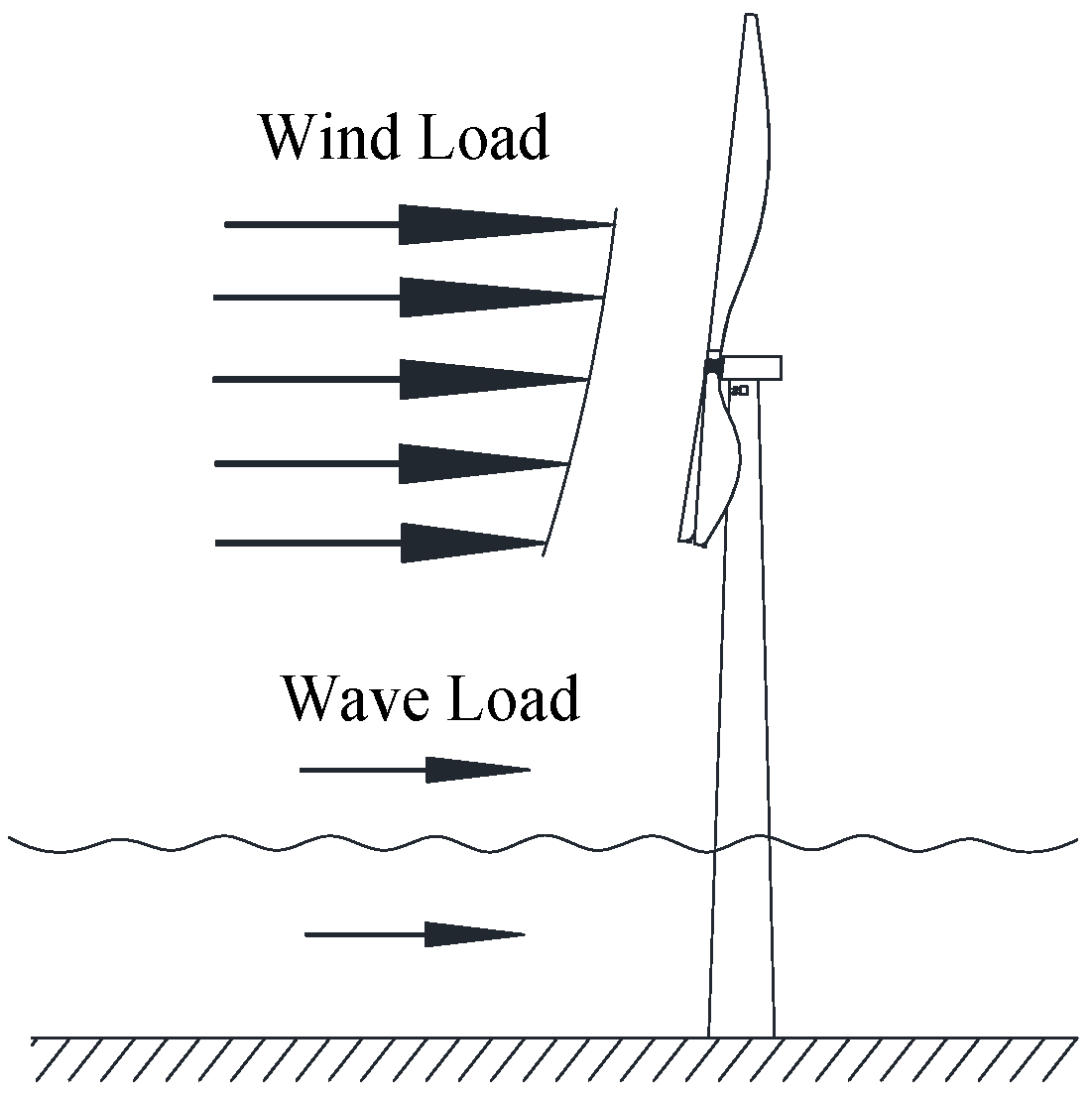
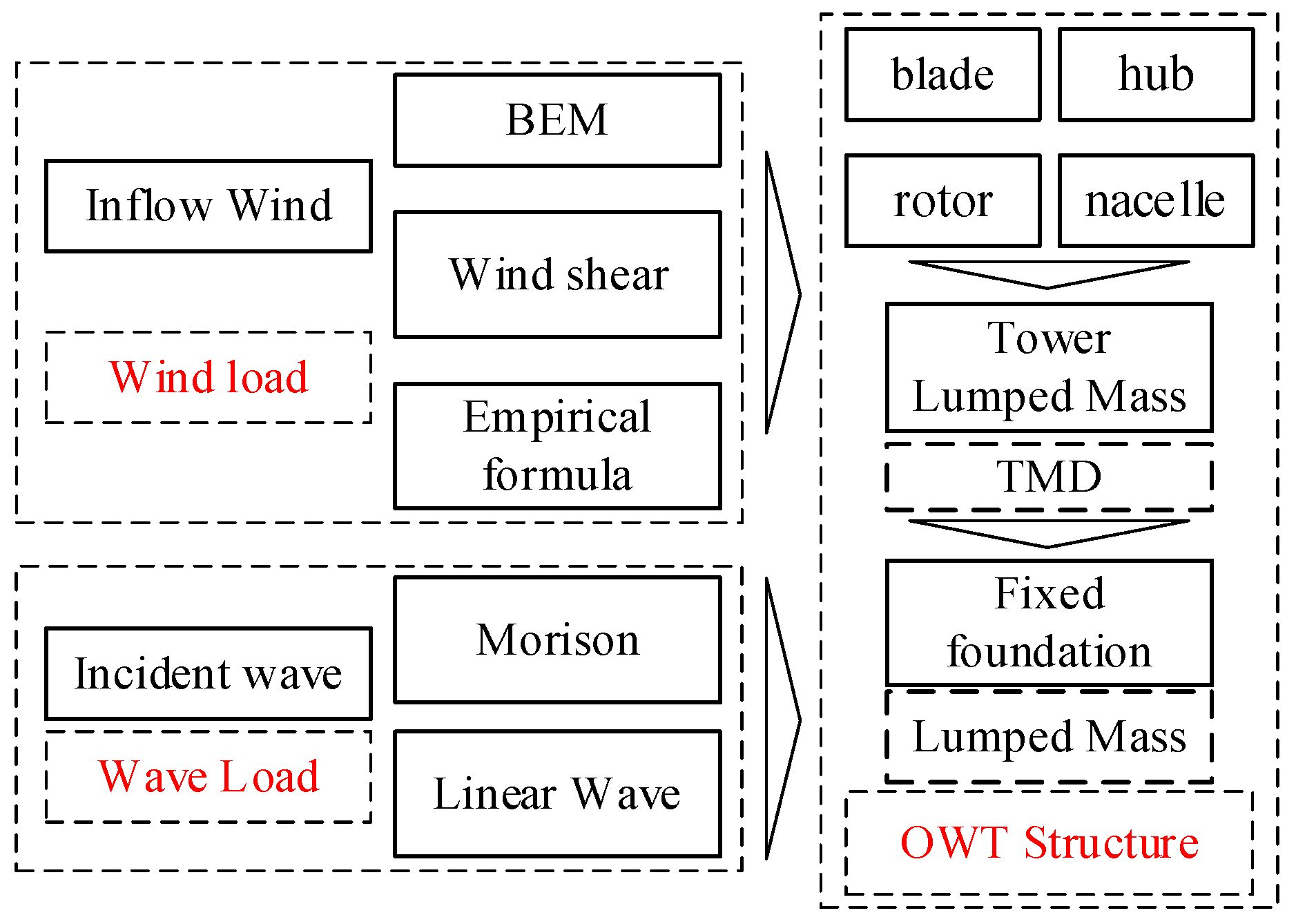
In the highly dynamic marine environment, offshore wind turbines are continuously exposed to multi-source external excitations such as wind and waves, posing significant challenges to their structural safety and operational stability. A schematic of the overall loading conditions is illustrated in
Figure 1, with reference to CRRC Wind Power (Zhuzhou, China). Accurate modeling of the wind and wave loading mechanisms serves as the foundation for analyzing the dynamic response of the turbine, optimizing structural design, and developing effective vibration control strategies. Aerodynamic loads primarily arise from the nonlinear interaction between airflow and rotor blades, which requires modeling based on aerodynamic theory. In contrast, wave-induced loads exhibit strong randomness and broadband characteristics, and are typically modeled using linear or nonlinear wave theories combined with spectral analysis techniques. Therefore, developing a load modeling framework that captures the physical essence of wind–wave excitations while maintaining engineering applicability is essential for enhancing the fidelity of dynamic simulations and the effectiveness of control-oriented design.
2.1. Aerodynamic Loads
To accurately evaluate the aerodynamic loads exerted by the rotor on the tower and nacelle under varying wind conditions, the classical Blade Element Momentum (BEM) theory is adopted in this study for rotor modeling. This method combines the principles of momentum conservation with local aerodynamic analysis of blade sections and remains one of the most widely used and physically transparent approaches for steady-state aerodynamic modeling of wind turbines.
The rotor blades are discretized into multiple radial segments, with aerodynamic forces computed individually for each segment based on local flow conditions. These segmental forces are then integrated using global momentum theory to estimate key parameters such as thrust and torque. This method provides an effective basis for determining the aerodynamic loads applied to the structural system, and its effectiveness is further validated by quantitatively comparing the simulated tower-top and nacelle responses with reference field data under representative operating conditions.
The aerodynamic thrust generated by the rotor is calculated as Equation (1) [
11]:
In this study, each blade is divided into 60 segments to calculate the aerodynamic loads, and the induction factor a1 is solved using an iterative method.
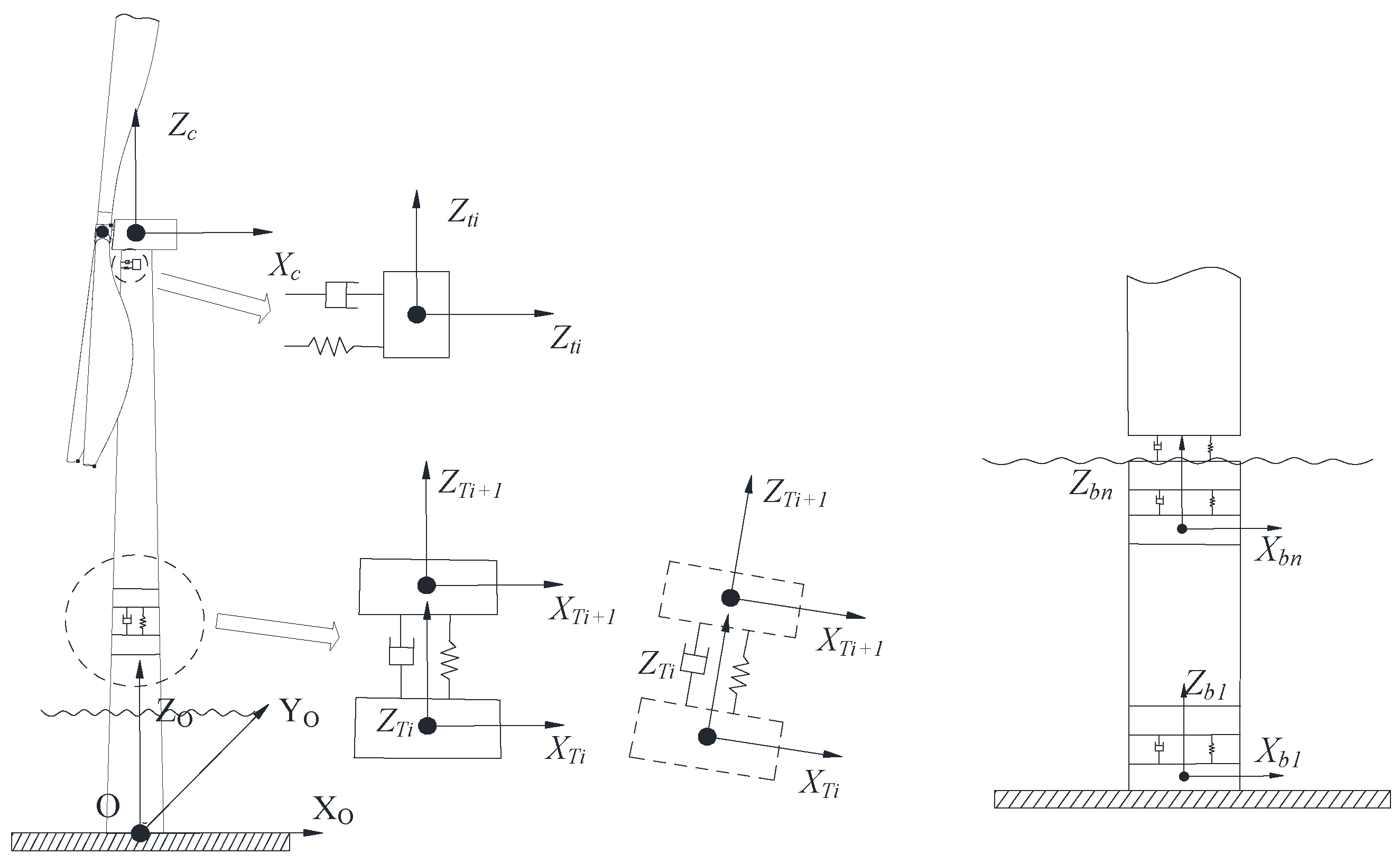
To accurately evaluate the aerodynamic load distribution on the wind turbine tower, this study develops a tower aerodynamic load model that considers fluid–structure interaction (FSI) between the wind field and the tower structure. As shown in
Figure 1, the windward side of the tower generates significant aerodynamic forces under wind excitation, primarily including drag and lift components. These forces are strongly influenced by wind velocity, projected area, attack angle, and geometric properties of the tower. An empirical drag coefficient model based on the Reynolds number is typically employed, combined with local wind speed and surface area, to compute aerodynamic forces in both the along-wind and cross-wind directions. The aerodynamic force acting on each tower segment can be described by Equation (2) [
11].
Here, denotes the air density, CfTdi is the drag coefficient, ATi represents the projected area of the i-th tower element, vTi is the incident wind velocity at the element location, and denotes the structural velocity of the tower element. This approach provides essential aerodynamic load input for the dynamic response analysis of the tower structure and plays a critical role in evaluating overall structural stability under coupled wind–wave excitations
2.2. Hydrodynamic Loads
Hydrodynamic loads in the ocean primarily consist of wave loads and current loads, with wave loads exhibiting stochastic characteristics. In this study, wave loads are modeled using linear wave theory, where random waves are represented as a linear superposition of regular waves with varying amplitudes, frequencies, and phases [
11]. The wave kinematics can be described by Equation (3) [
11].
Here,
an,
ωn,
εn,
θn and
kn denote the amplitude, angular frequency, random phase, incident angle relative to the reference direction, and wave number of the
n-th regular wave, respectively.
Hw represents the elevation of the ocean surface relative to the seabed. The random phase
εn is uniformly distributed within the range 0 to 2π. For fully developed deep-water waves, the wave number and angular frequency satisfy the dispersion relation as given in Equation (4) [
34].
The distribution of ocean wave energy can be described using the Pierson–Moskowitz (P–M) wave spectrum, as given in Equation (5) [
34].
For vertical cylindrical foundations commonly used in offshore wind turbines, the wave load is typically calculated using the Morison equation. This formulation decomposes the total force into an inertial component, and a drag component. The offshore wind turbine considered in this study features a cylindrical foundation with a diameter of approximately 4 m. Under the representative wave conditions with a wave height of 1.1 m, the resulting H/D ratio of approximately 0.275 falls within the commonly accepted range for the “small wave” assumption in engineering practice. Based on this assumption, the wave force per unit length acting at a given height on the tower or foundation can be expressed as shown in Equation (6) [
34].
where
CDbi,
CMbi,
Dbi, and
vrbi(
t) denote the drag coefficient, inertia coefficient, equivalent diameter, and fluid particle velocity at the location of the
i-th foundation element, respectively.
ρs represents the density of seawater. The total hydrodynamic load on the submerged structure can be obtained by performing coordinate transformations and integrating the hydrodynamic forces acting on the individual structural elements immersed in water.
4. Linearized Modeling of the OWT—TMD Coupled System
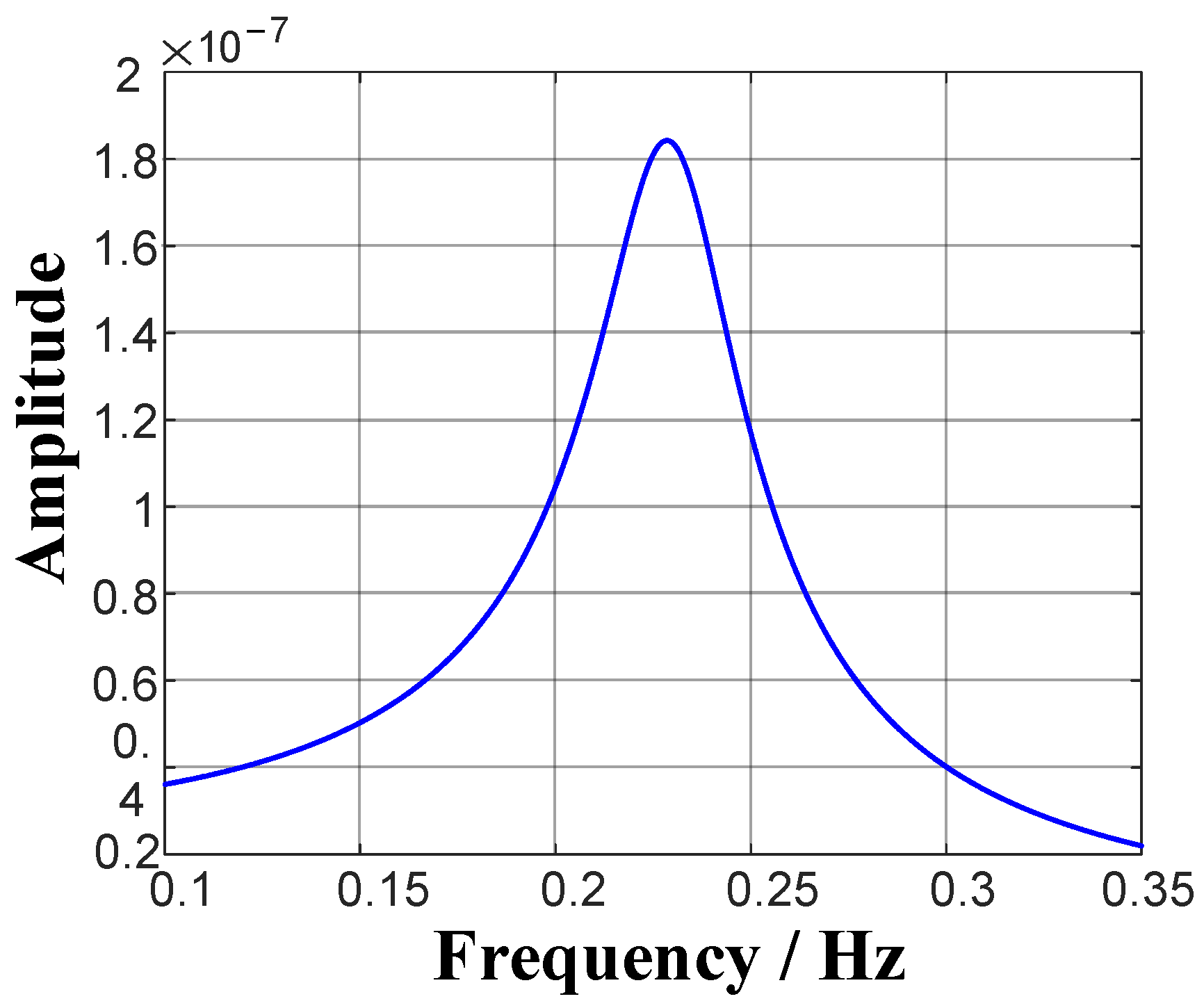
To achieve effective vibration control of offshore wind turbines, it is essential to develop a coupled dynamic model of the tower and tuned mass damper (TMD) that captures the turbine’s vibration characteristics under wind and wave loading and evaluates TMD control performance. Considering the coupling effects among the tower, rotor, and foundation, as well as the stochastic and broadband nature of wind-wave excitations, direct optimization using high-fidelity finite element models incurs prohibitively high computational costs. Therefore, this study linearizes the system while preserving its key dynamic characteristics and replaces the original time-domain model with a frequency-domain representation to significantly improve the computational efficiency of TMD parameter optimization.
4.1. Input Excitation Linearization Based on Bandpass Filtering
Wind and wave loads exhibit pronounced broadband stochastic characteristics. Direct modeling introduces numerous high-frequency and non-critical frequency components, complicating subsequent structural response analyses. To address this, a bandpass filter is applied to limit the frequency bandwidth of the input excitation, emphasizing the structure’s primary response frequency range. The excitation signal
F(
ω) after processing by the bandpass filter
Hbp(
ω) can be expressed in the frequency domain as Equation (24) [
29]:
Typically, a second-order bandpass filter
Hbp(
ω) is used for the frequency-domain transfer function, which is expressed as shown in Equation (25) [
27]:
The parameter ωni represents the target structural response frequency, while ζi denotes the damping ratio of the filter, generally ranging from 0.05 to 0.2. This filtering process effectively attenuates non-target frequency components in the excitation, enabling focused analysis within the desired frequency band.
4.2. Linear Modeling of the Tower Structure
In frequency-domain vibration control modeling [
37], although the tower structure exhibits multiple vibration modes, its dynamic response is typically dominated by the lower-order modes—particularly the first bending mode, which plays a critical role in controlling tower-top vibrations. Therefore, a model order reduction approach is adopted in this study, retaining only the primary first-order mode of the tower structure for simplification, as shown in Equation (26) [
36].
Here,
ϕ1 denotes the normalized first mode shape,
q1(
t) is the corresponding modal coordinate, and
xTs(
t) represents the approximate displacement at the tower top. The first-order modal equation of the tower structure can be expressed as a first-order linear differential equation with constant coefficients, as shown in Equation (27) [
36].
Here, ω1 represents the first modal frequency of the tower, ζ1 denotes the damping ratio of the first mode, M1 is the generalized mass, and Ffilt(t) is the equivalent force acting on this mode.
4.3. Linearized Modeling of the Coupled Offshore Wind Turbine System
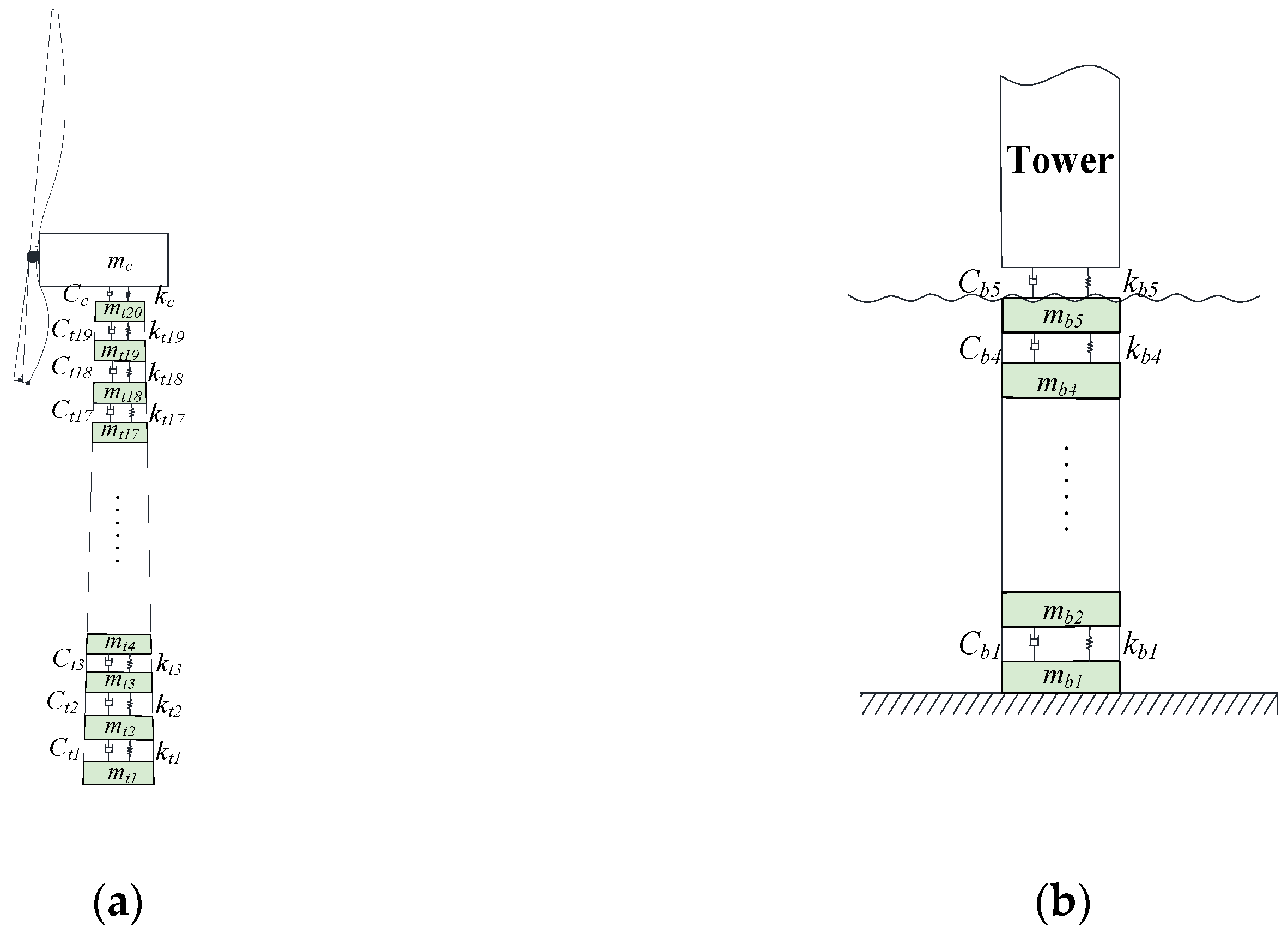
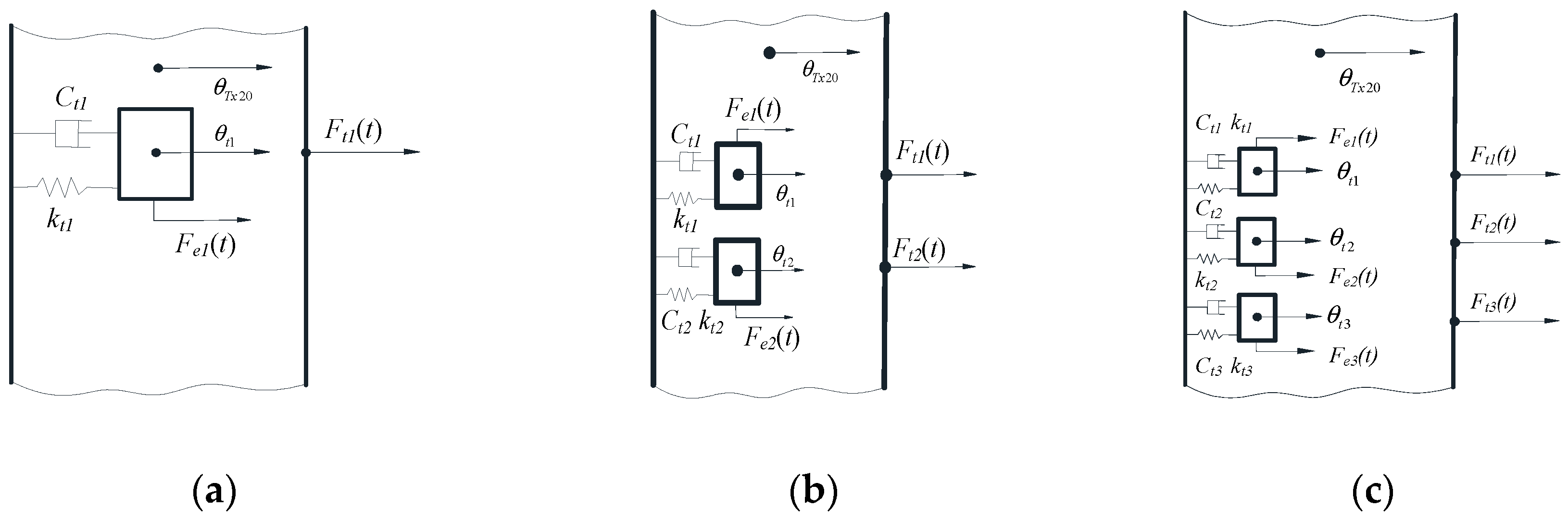
In this study, the Tuned Mass Damper (TMD) is installed at the 20-th finite element segment of the tower structure. This location corresponds closely to the peak amplitude region of the tower’s first mode shape, effectively enhancing the TMD’s ability to absorb and suppress vibrational energy at the main structure’s resonance frequency. Each TMD is modeled as a classical mass-spring-damper system, generating coupling forces through its relative displacement with respect to the main tower structure, thereby facilitating the transfer and dissipation of vibrational energy.
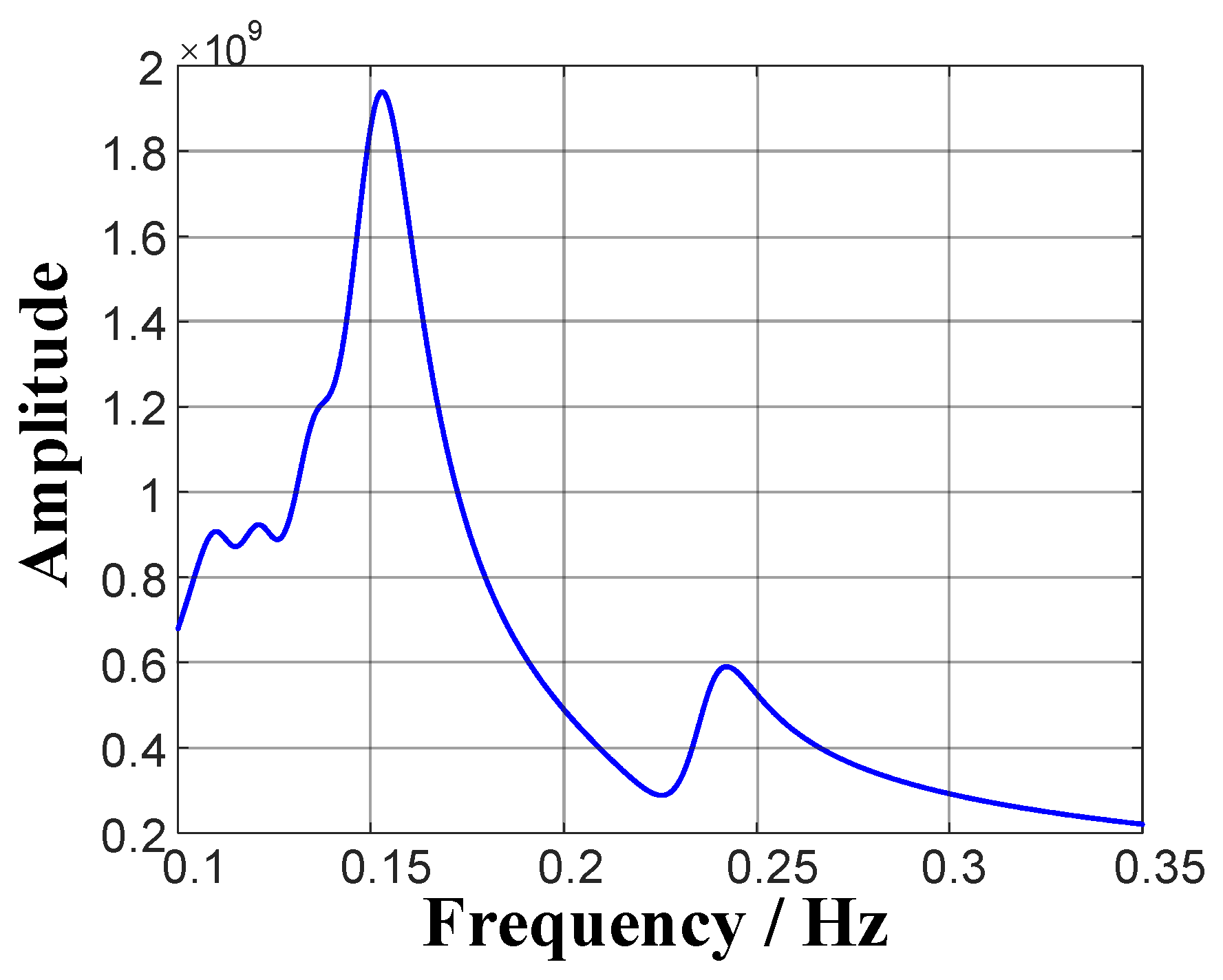
Based on these physical assumptions, the dynamic behavior of the entire Offshore Wind Turbine-Multi-Tuned Mass Damper (OWT-MTMD) system can be described by a set of linear differential equations in matrix form. This model incorporates the dynamic response of the tower as well as the coupled interactions with each TMD unit. The detailed mathematical formulation is given in Equation (28), which accounts for the system’s mass, damping, and stiffness matrices, along with the external excitations and coupling forces between the TMD and the main structure [
9].
The linear transfer function describing the dynamic response of the OWT-MTMD system is given by Equation (29) [
27].
4.4. Input Excitation Parameter Correction
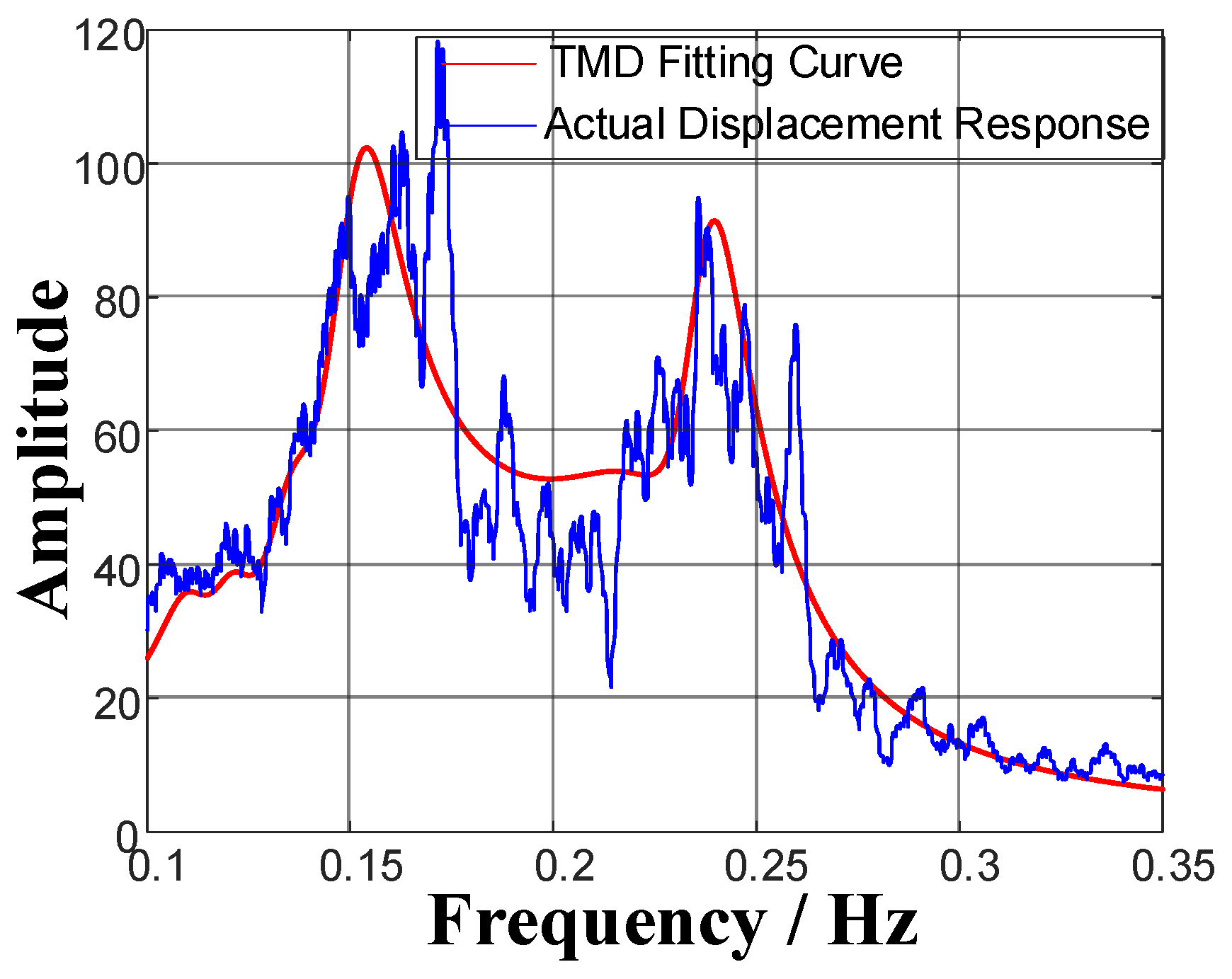
Although the applied band-pass filter effectively concentrates on the target frequency range of the structure, the spectral width of the actual excitation may still be attenuated during the modeling process. To ensure consistency between the filtered excitation energy and the original excitation energy, an equivalent energy correction factor
α is introduced. This factor adjusts the filtered excitation energy, enabling the linearized system’s frequency-domain response to more accurately represent the spectral characteristics of the actual excitation. The correction factor
α is calculated based on the integral energy ratio, as defined in Equation (30).
Here,
Fraw(
ω) represents the frequency-domain spectrum of the actual nacelle-top displacement response of the offshore wind turbine. The corrected linearized input excitation is then defined by Equation (31).
This ensures that the energy level of the input excitation and the resulting frequency-domain response remain as consistent as possible with the actual conditions during the linearization process, thereby improving the accuracy and reliability of the model.
5. MTMD Parameter Design Based on Hierarchical Particle Swarm Optimization
To effectively mitigate the structural vibration of offshore wind turbine towers under combined wind–wave excitations, a Multiple Tuned Mass Damper (MTMD) system is introduced in this study. The key parameters of the MTMD—including mass, damping ratio, and tuning frequency—are optimized to enhance vibration suppression across multiple structural modes. Given the high-dimensional design space, strong modal coupling, and nonlinear interactions within the MTMD system, traditional optimization techniques such as Genetic Algorithms (GA) and Particle Swarm Optimization (PSO) often operate as black-box methods, which are prone to local optima and sensitive to initial conditions, lacking physical interpretability and hierarchical control. To address these challenges, a hierarchical particle swarm optimization (H-PSO) framework is adopted, in which the global MTMD design task is decomposed into sequential, mode-specific optimization stages. The optimal single-TMD solution is used as a physically consistent initialization for the multi-TMD search, and each subsequent stage targets residual modal peaks left by previously tuned dampers. This structure-aware strategy reduces the effective search dimensionality, enhances convergence stability, and provides clearer modal-level interpretability compared with conventional hybrid or adaptive PSO variants. The resulting approach enables more robust and computationally efficient MTMD parameter design for offshore wind turbine vibration control.
5.1. Objective Function for Multiple Tuned Mass Dampers Parameter Optimization
The system includes different TMD deployment schemes, with 1 to 3 TMD configured. The parameters to be optimized for each TMD include mass
mtj, stiffness
ktj, and damping ratio
ζtj. Thus, the design parameter vector for each TMD is defined as in Equation (32).
Here, μj represents the mass ratio between the j-th TMD and the tower, ζj is the equivalent damping ratio of the j-th TMD, and ωtj denotes the tuning frequency of the j-th TMD.
The optimization objective is to minimize the response energy peak or the amplitude of the tower top acceleration at a specific frequency under typical operating conditions, as defined in Equation (33) [
29]:
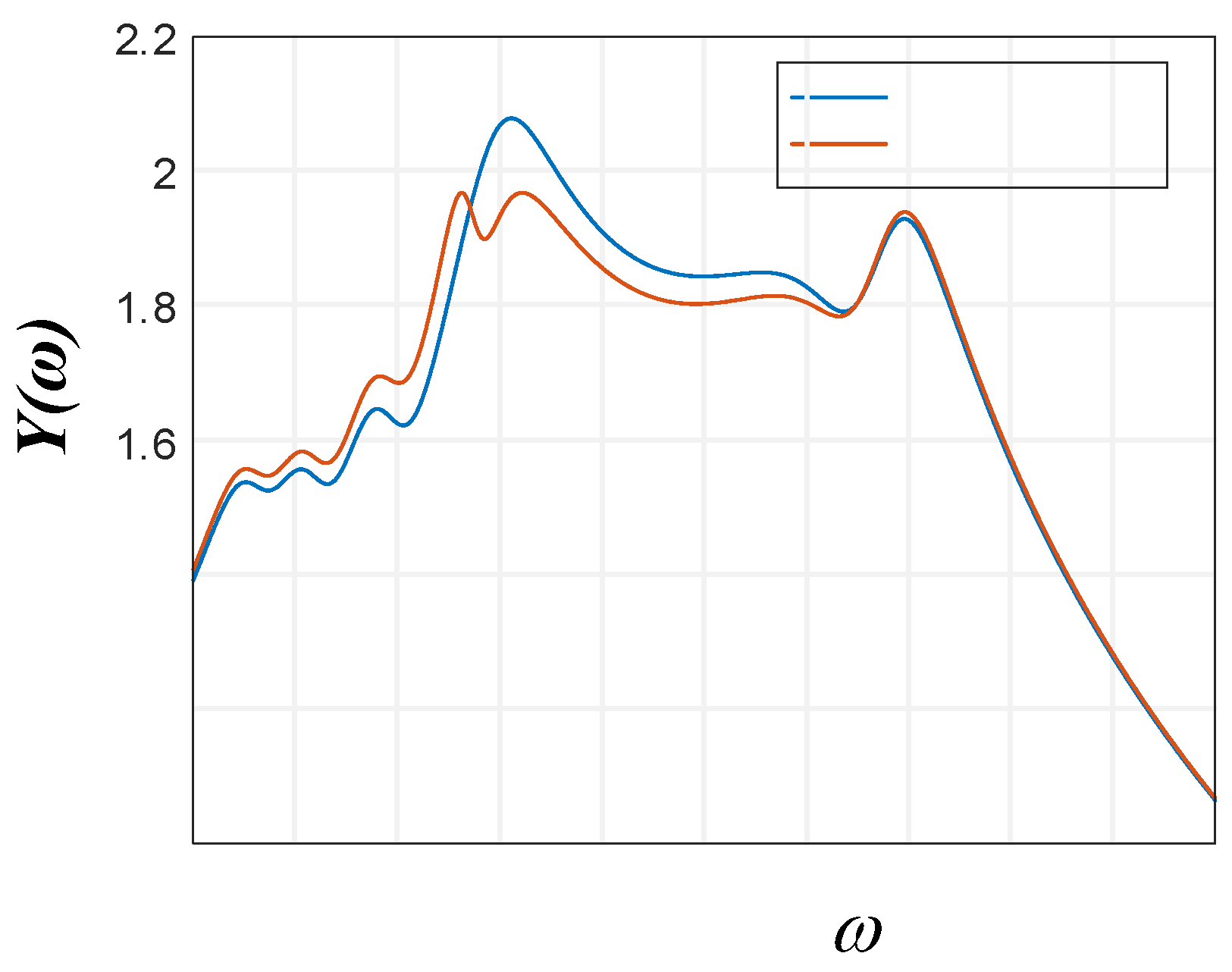
Δωn denotes the frequency bandwidth centered at a specific frequency, while H(jω) represents the system’s frequency response function as defined in Equation (29). J corresponds to the peak value of the frequency-domain response within this frequency band.
5.2. Hierarchical Particle Swarm Optimization
To address the high-dimensional search space and the complex coupling among TMD parameters, this study adopts a hierarchical optimization strategy, decomposing the overall process into two sequential layers:
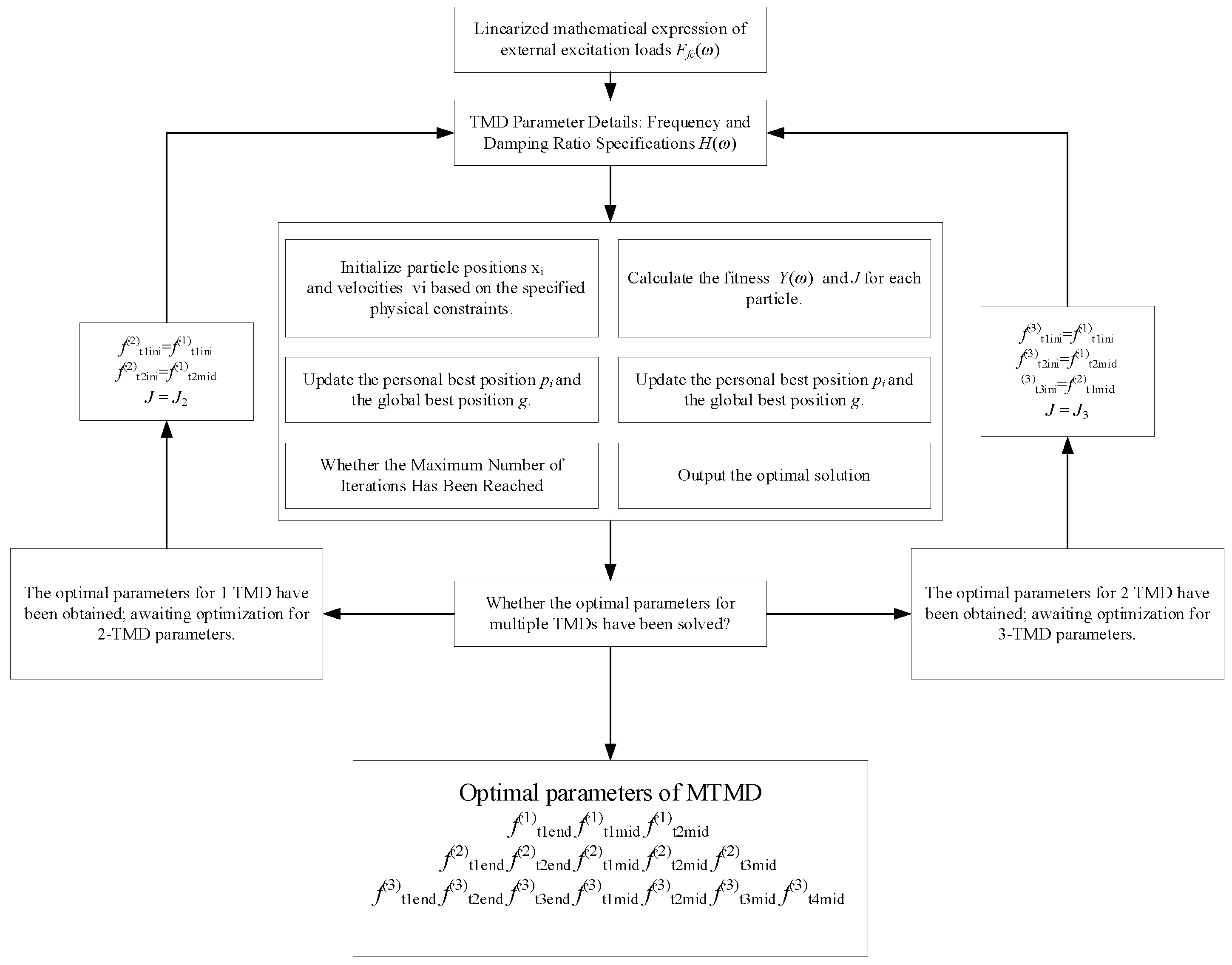
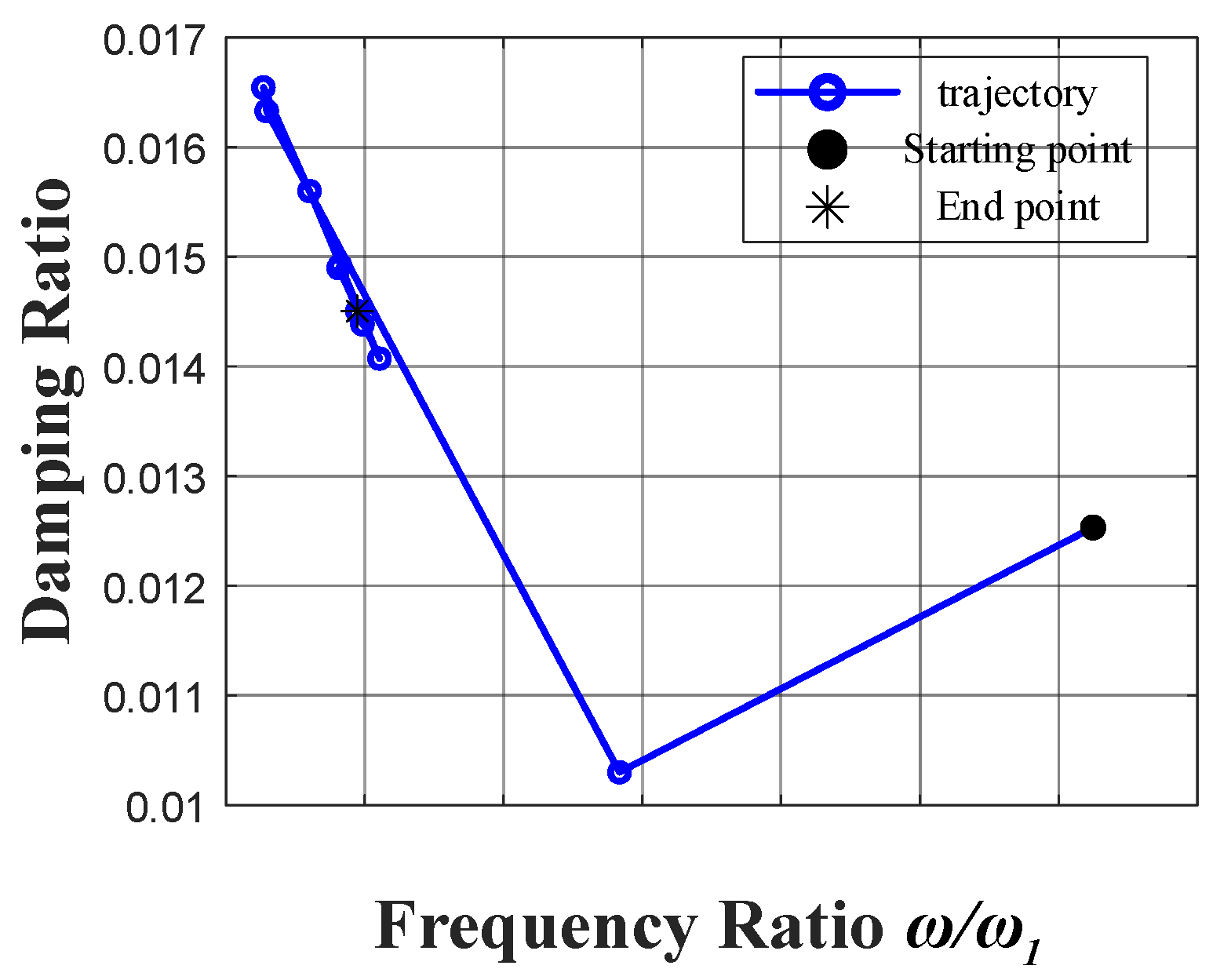
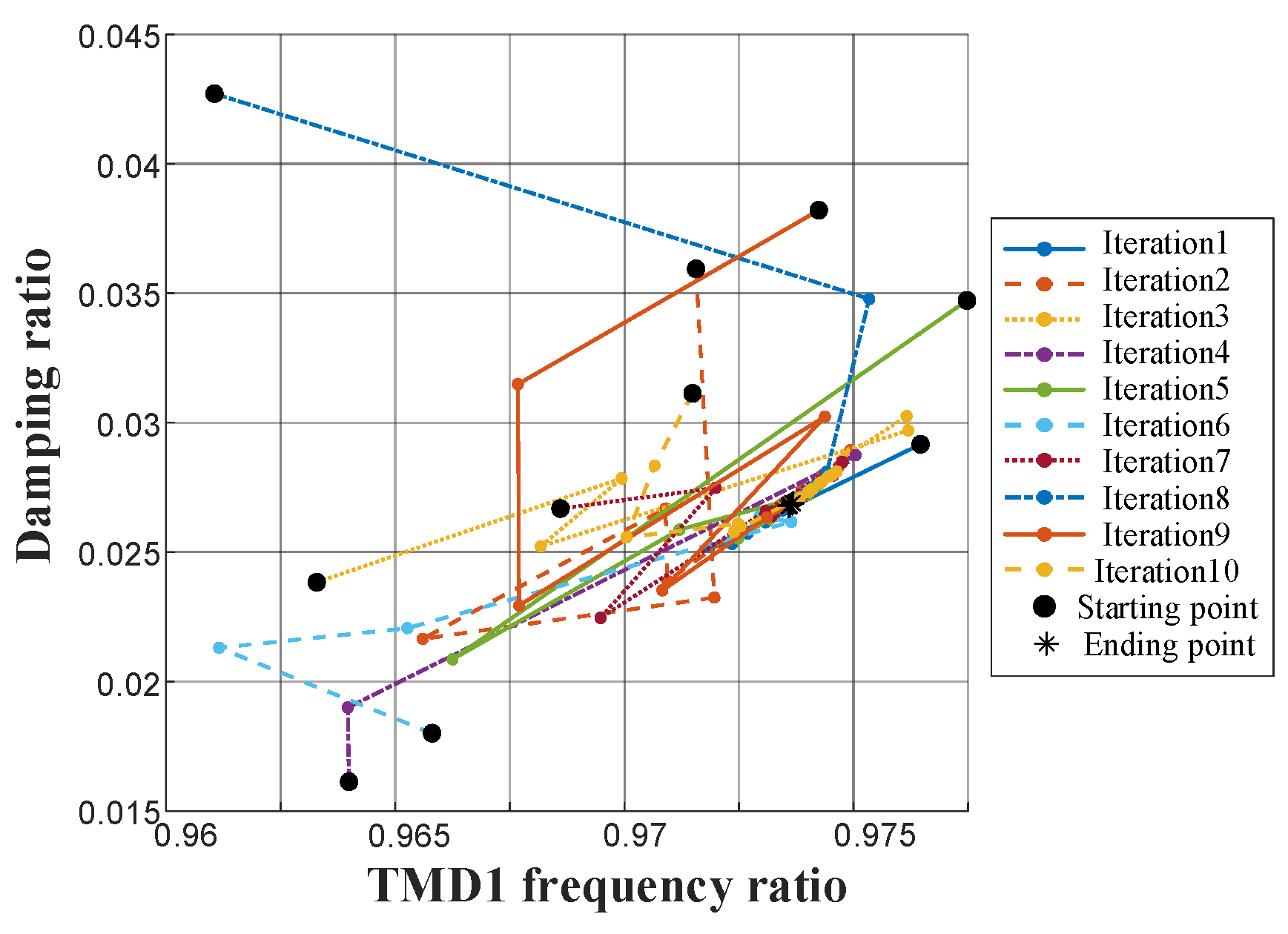
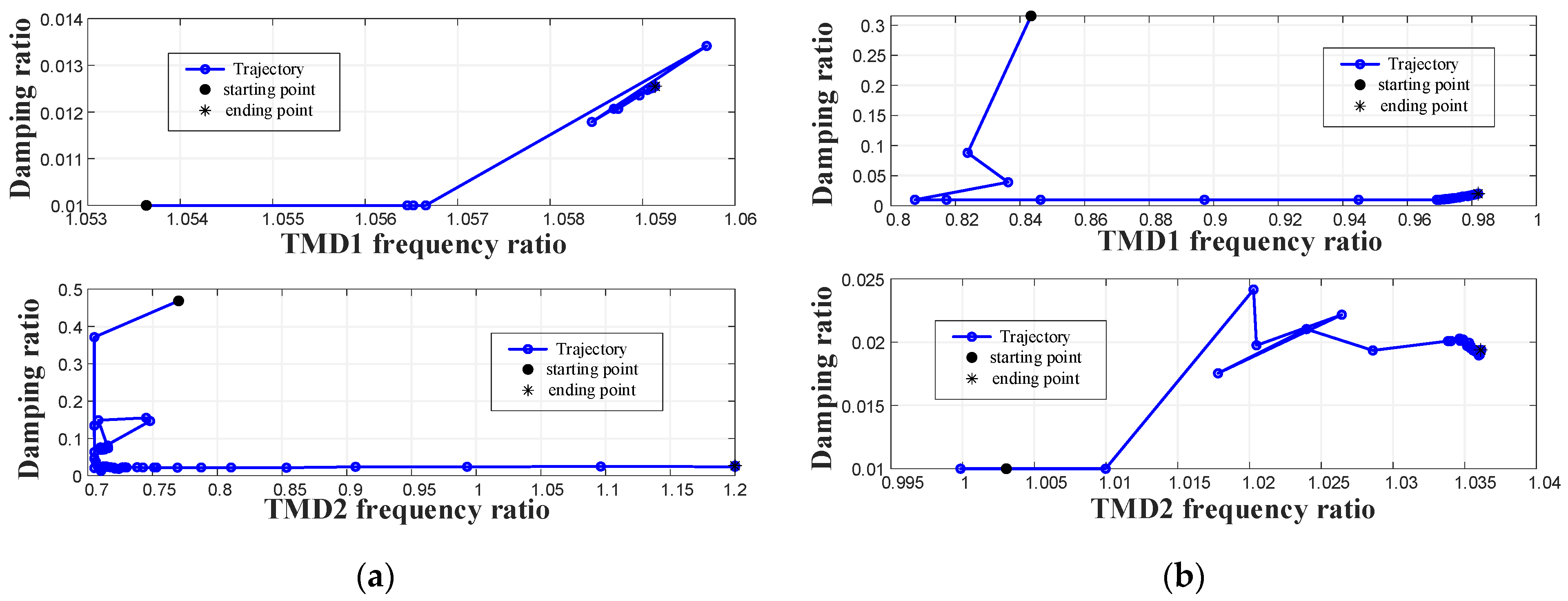
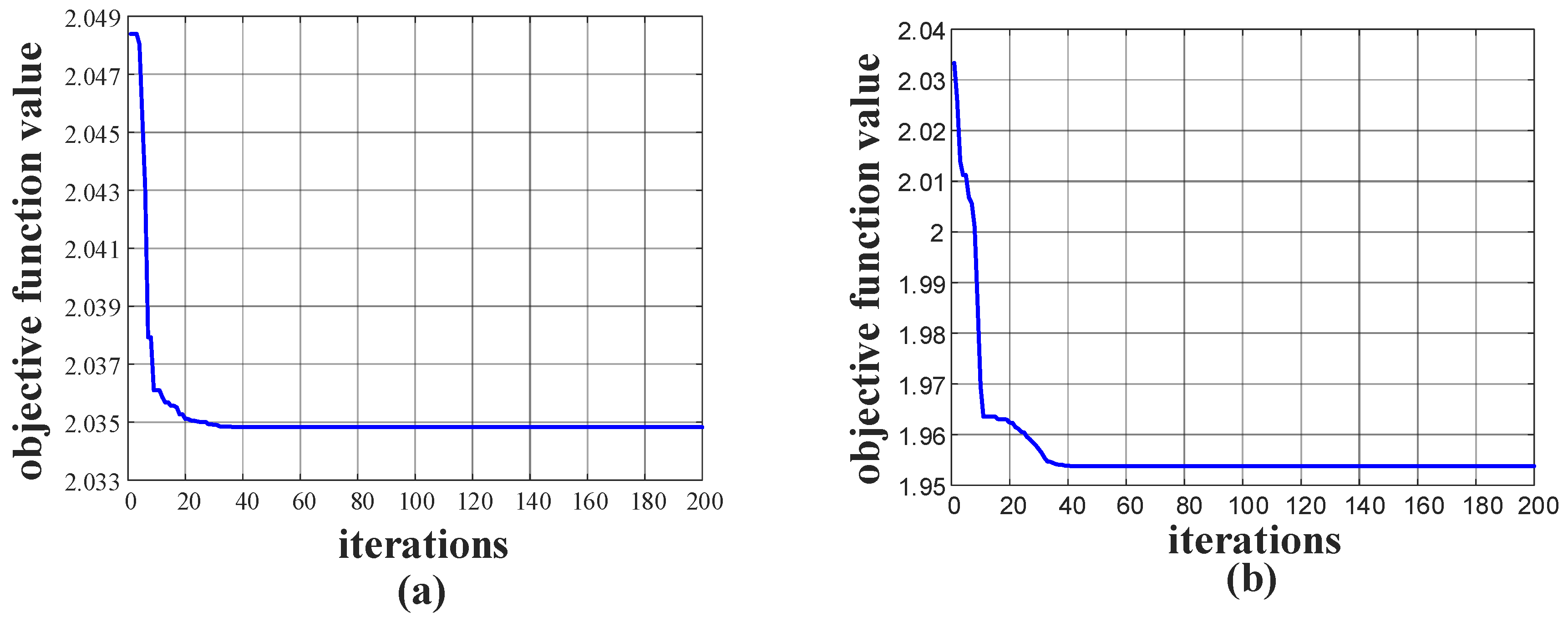
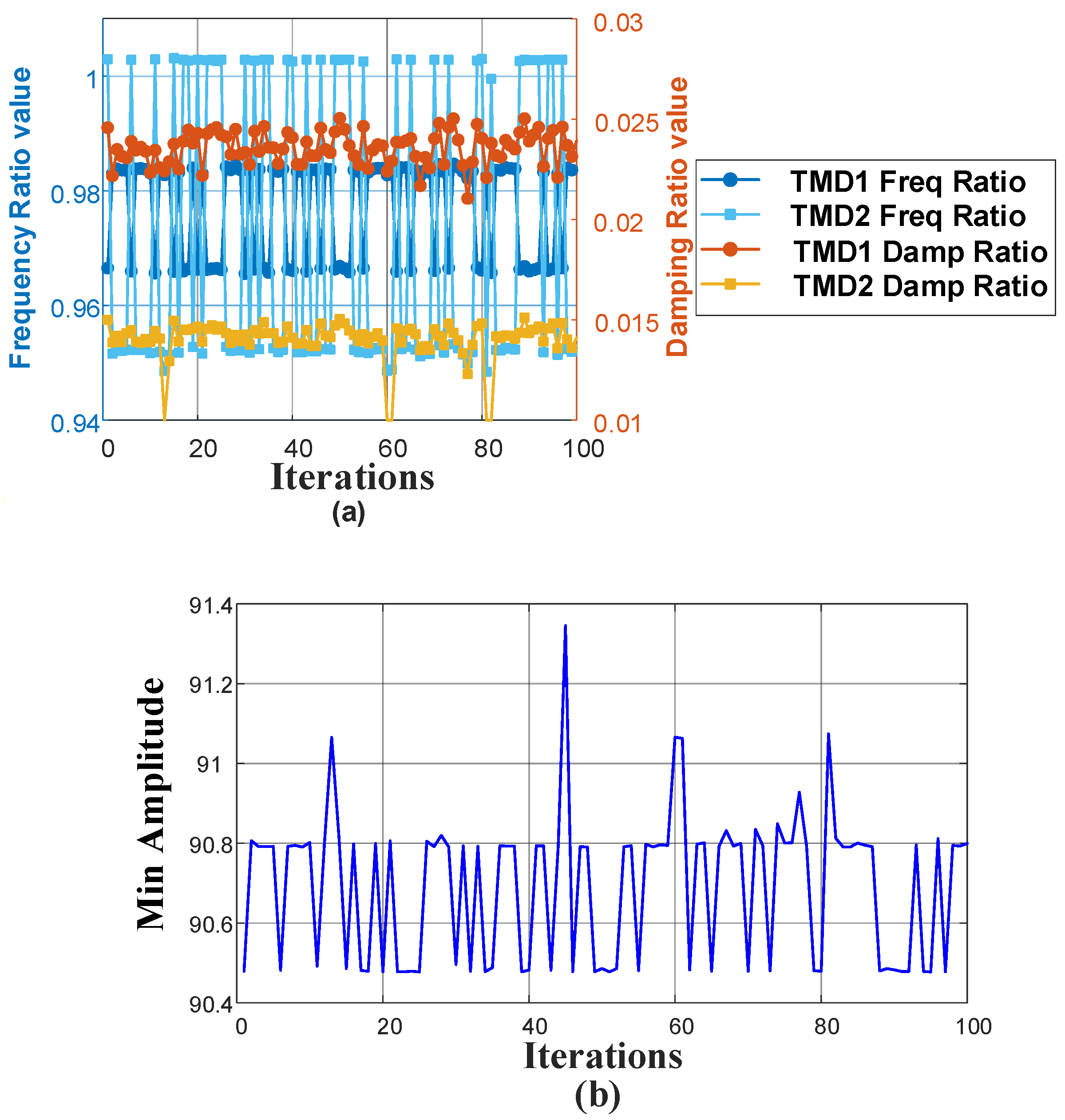
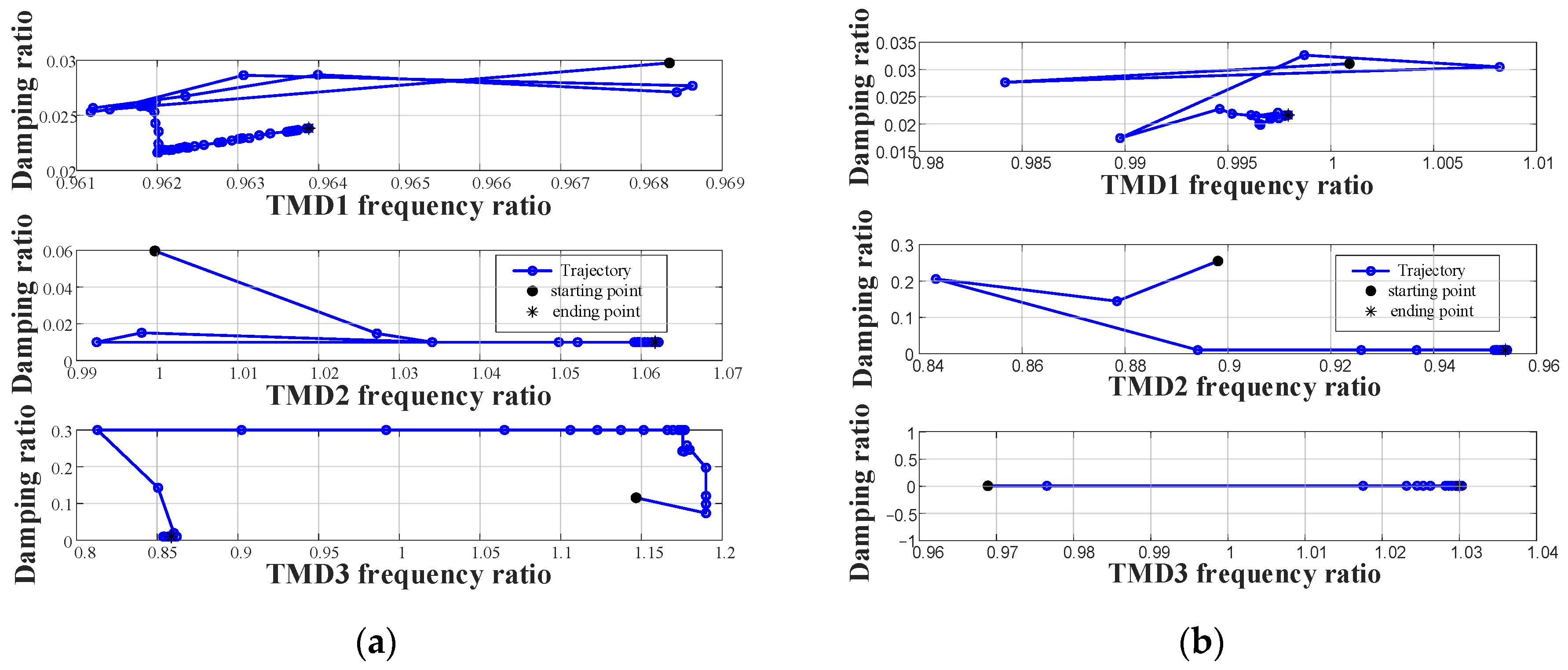
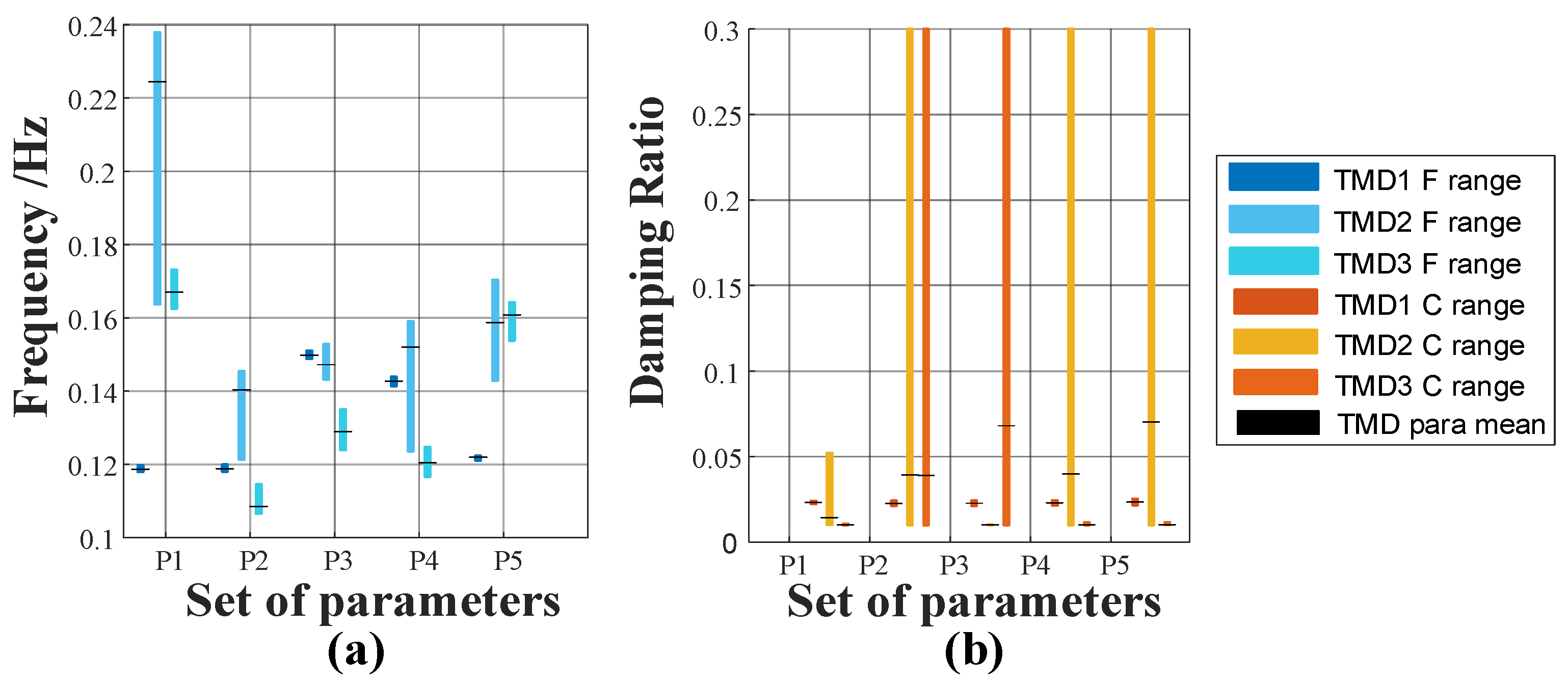
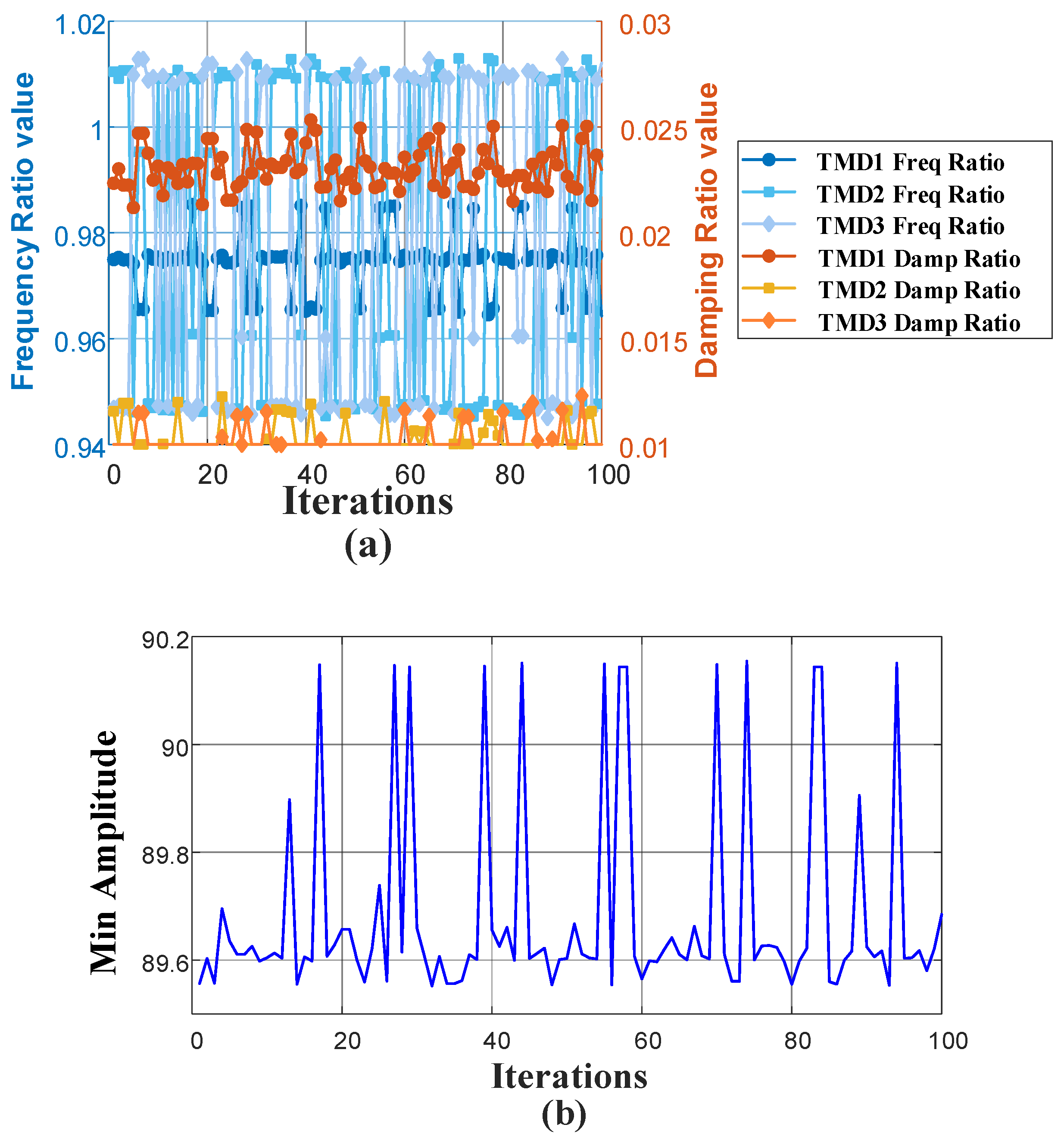
Modal Decomposition Layer: For the primary excitation modal response of the structure, the tuning frequencies of the TMDs are initially distributed around the excitation frequency (±10%). The objective is to minimize the peak of the frequency-domain response within the range of the main frequency ±20%. Standard Particle Swarm Optimization (PSO) is then employed to optimize the first TMD parameter set Pj(1). Once optimal values are obtained, the performance contribution of this TMD is recorded, and its parameters are fixed for subsequent stages.
Higher-Order Tuning Layer: The remaining TMDs are then allocated to suppress secondary response peaks introduced by the first TMD. The optimization proceeds using updated objective functions
J2,
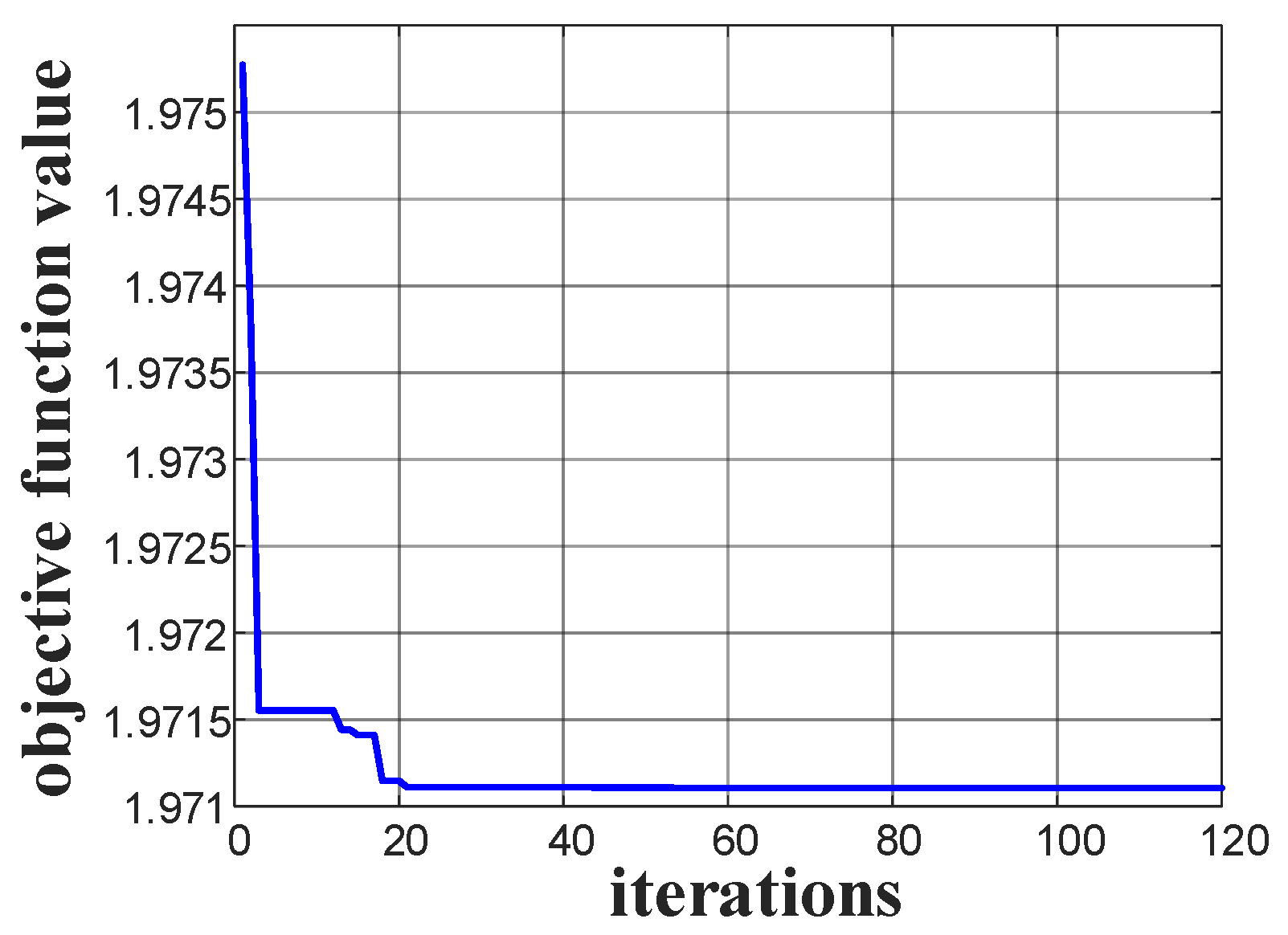
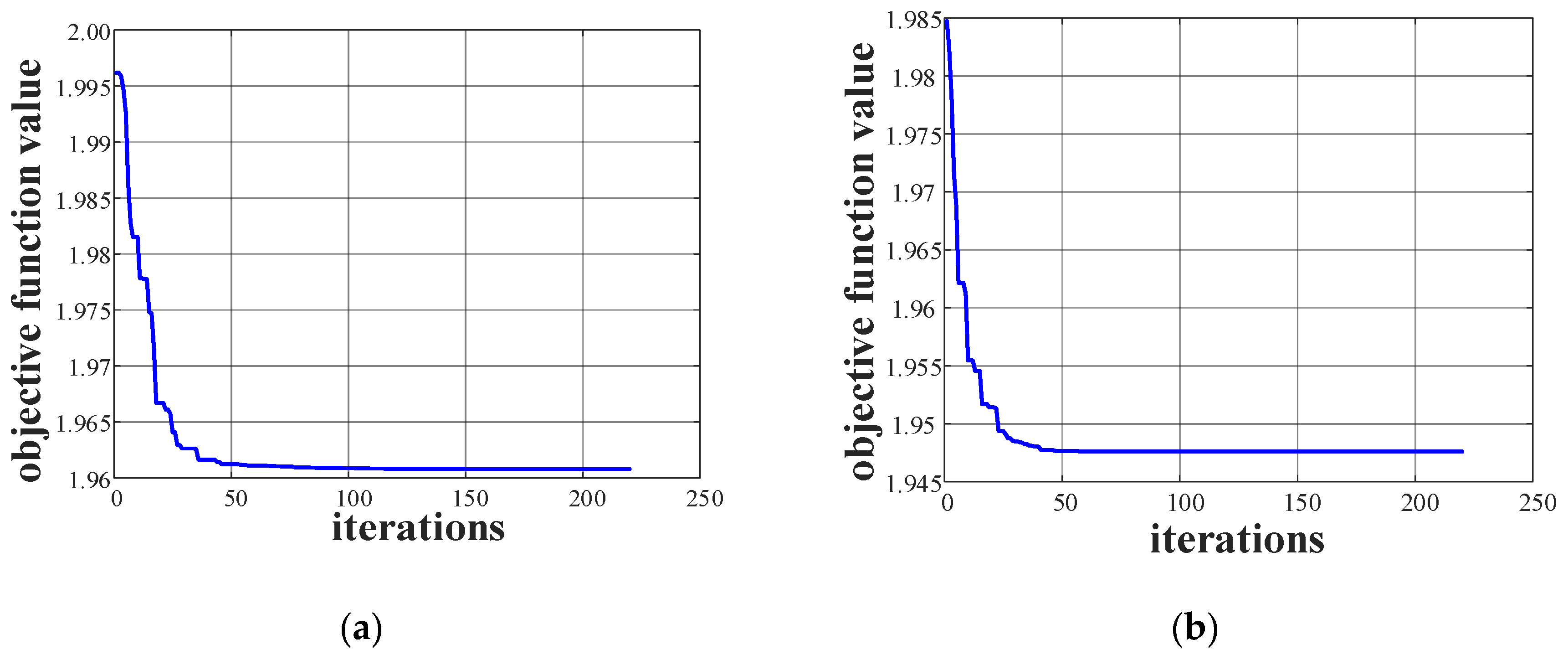
J3, each targeting different modal peaks. During each stage, previously optimized TMD parameters remain unchanged, and the algorithm iteratively approaches the global optimum. The overall optimization workflow is illustrated in
Figure 6.
The velocity and position of each particle are updated in every generation according to the standard PSO update rule, as defined by Equation (34) [
38].
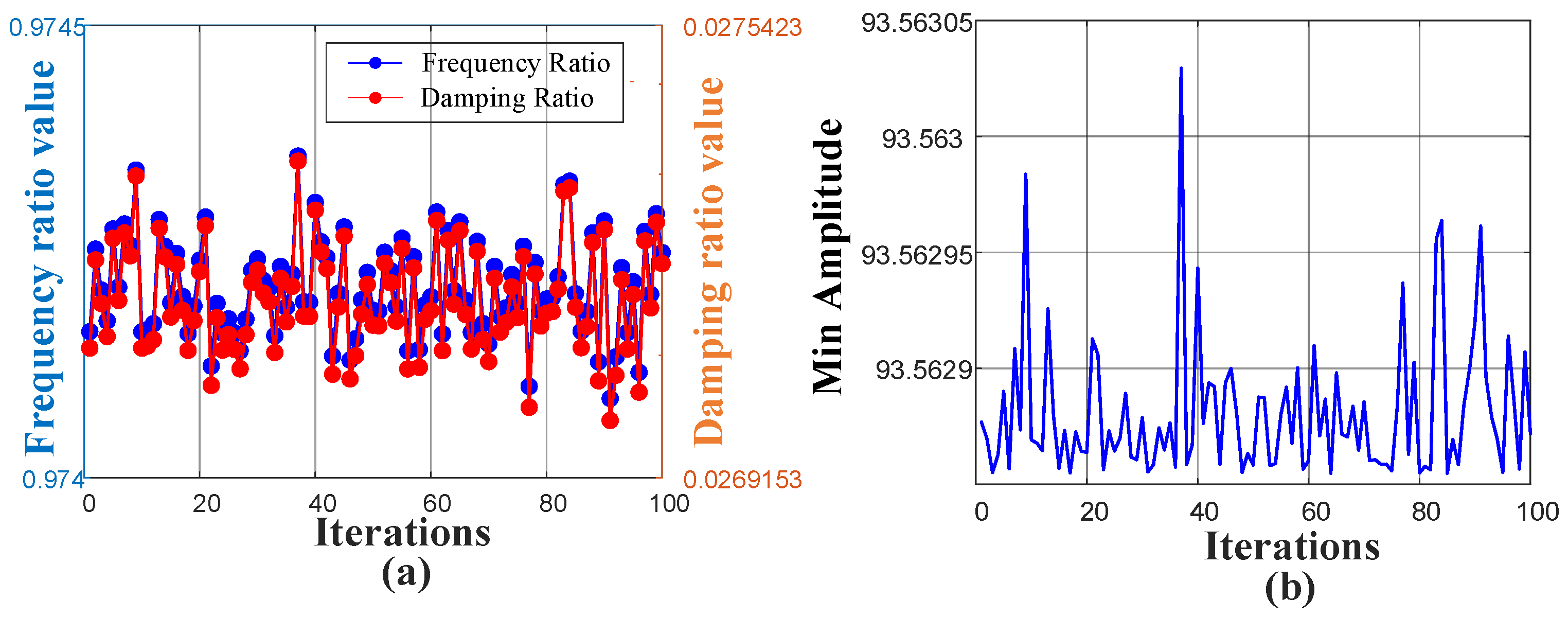
Here, xi(t) denotes the current position of the i-th particle in the t-th iteration (a candidate set of TMD parameters), and vi(t) represents its velocity vector. pibest is the historical best position found by the i-th particle (personal best), while g denotes the global best position identified by the entire swarm. The parameter ω is the inertia weight controlling the balance between exploration and exploitation. c1 is the cognitive coefficient (set to 1.5 in this study), representing the particle’s tendency to return to its own best experience, and c2 is the social coefficient (also set to 1.5), reflecting the particle’s tendency to be influenced by the global best solution.
In the hierarchical particle swarm optimization (H-PSO) algorithm, each optimization stage features a distinct objective function and parameter dimensionality, while maintaining a consistent iterative structure. The output of each stage is used as either the initial condition or boundary constraint for the subsequent stage, enabling a stepwise refinement of the solution space. To ensure the practical feasibility and structural rationality of the designed TMD system, the following physical constraints of Equation (35) are incorporated into the optimization process.
Here, μ denotes the total mass ratio, ζ represents the damping ratio, ω indicates the initial frequency range of the TMD, and Y(ω) defines the frequency range over which the optimization function searches for the maximum value. In this study, the modal frequencies are close to the first primary modal frequency, and Y(ω) is used to prevent interference with the optimization process.
7. Multiple Tuned Mass Dampers Scheme Vibration Control Analysis for the Tower
Building upon the optimized configurations of MTMD systems, this study further evaluates the vibration mitigation performance of different TMD array schemes on the tower structure. Three representative configurations are investigated: a single TMD (S1), a dual TMD system (S2), and a triple TMD system (S3). Under identical excitation conditions, comparative simulations are conducted to quantitatively assess the control efficacy of each setup.
The performance evaluation focuses on three key metrics:
- (1)
the reduction ratio of the response amplitude at the dominant modal frequency, representing the effectiveness of resonance suppression.
- (2)
the attenuation of total response energy within the primary frequency range, reflecting the energy dissipation capability of the system.
- (3)
The spectral value at the target frequency reflects the system’s effectiveness in suppressing vibrations at that specific frequency.
The simulation results are presented in
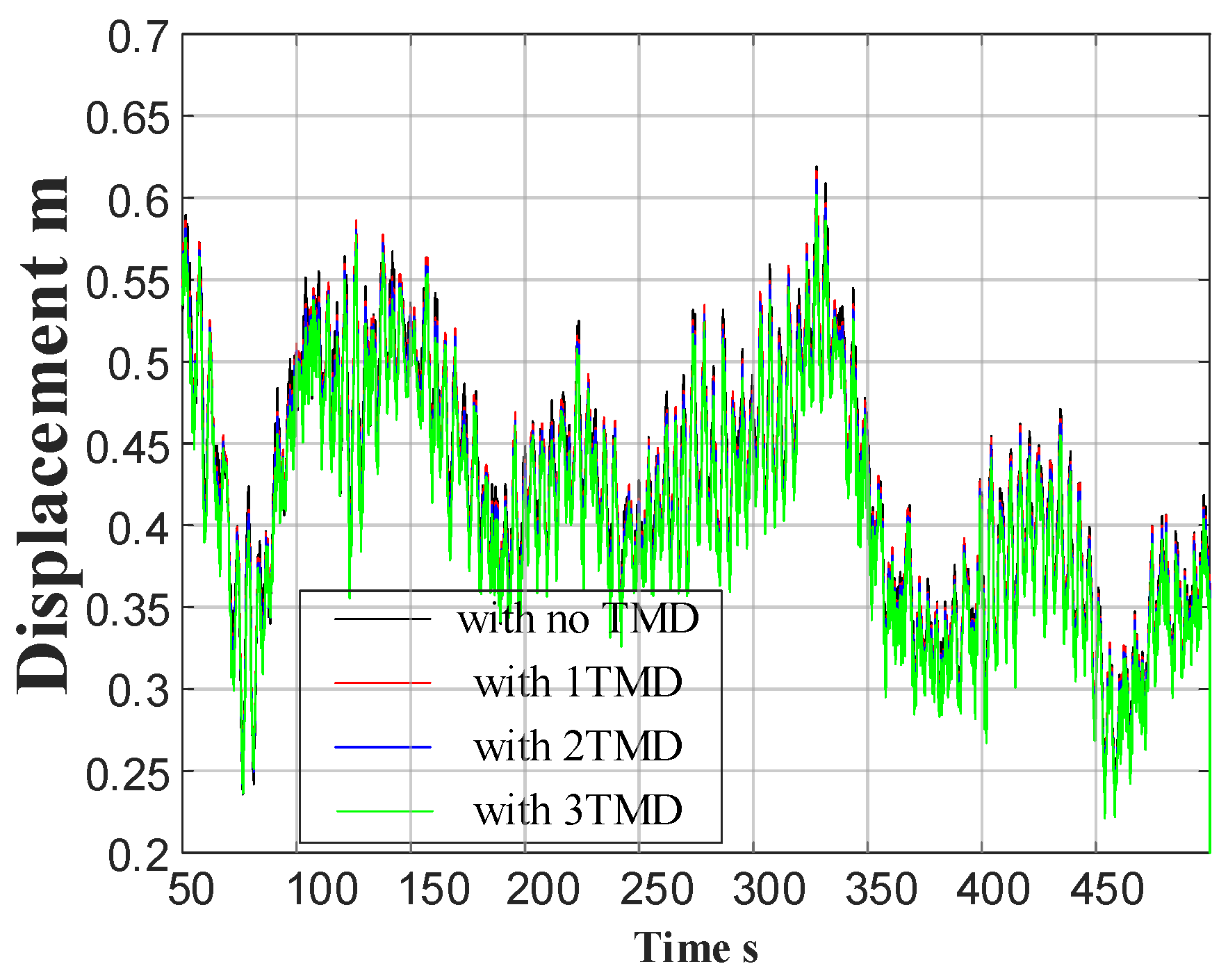
Figure 31 and
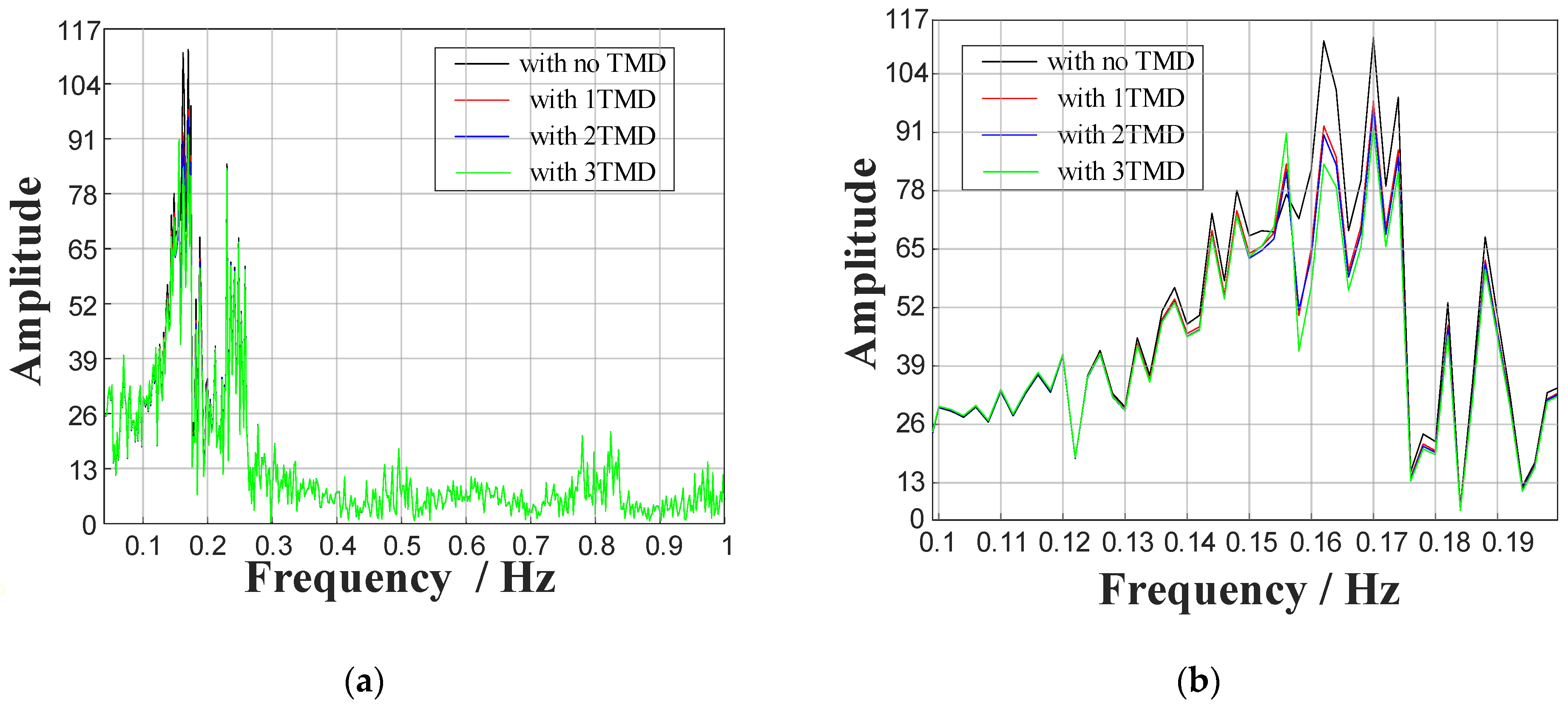
Figure 32.
Figure 31 shows the time-domain response of the tower-top displacement in the x-direction, while
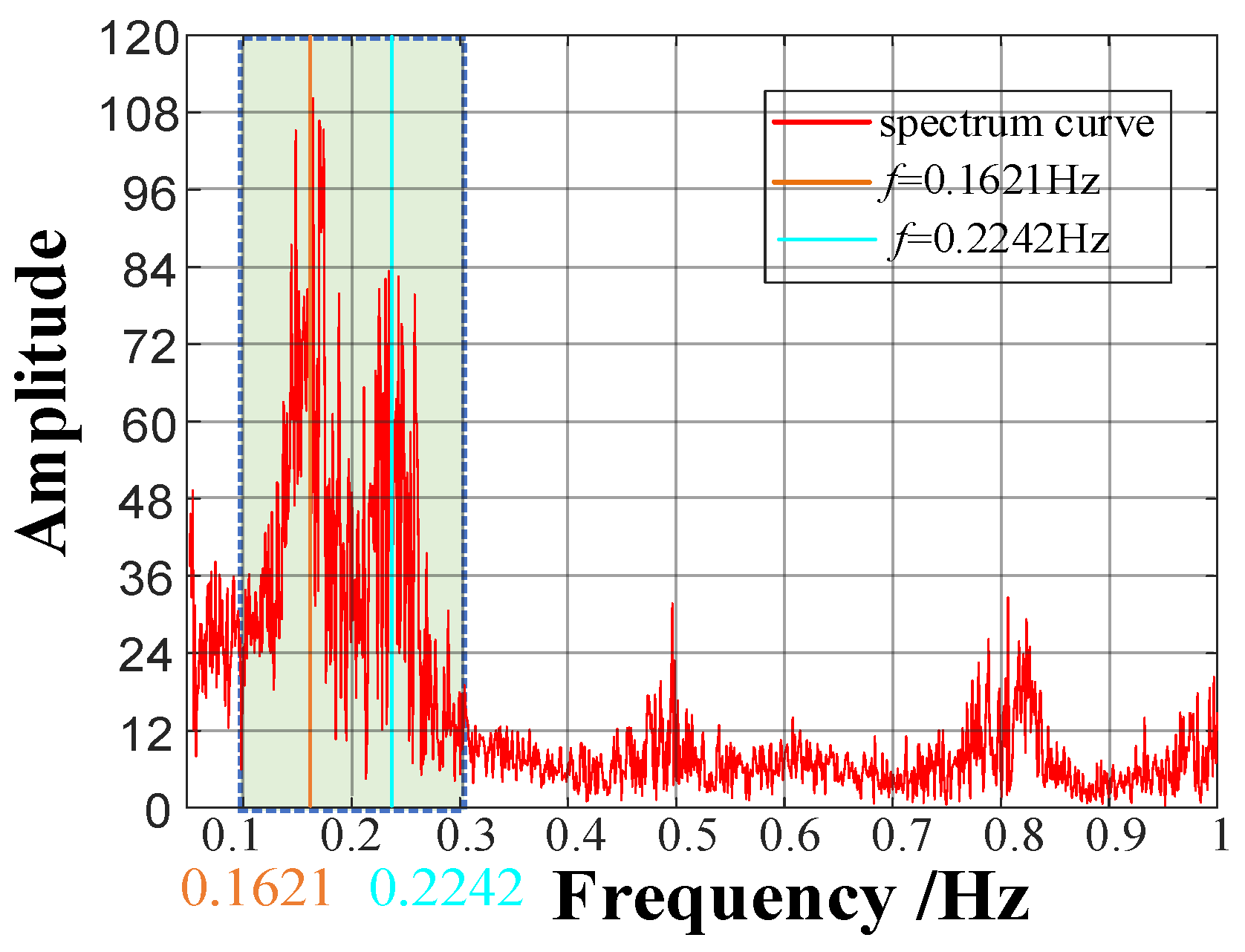
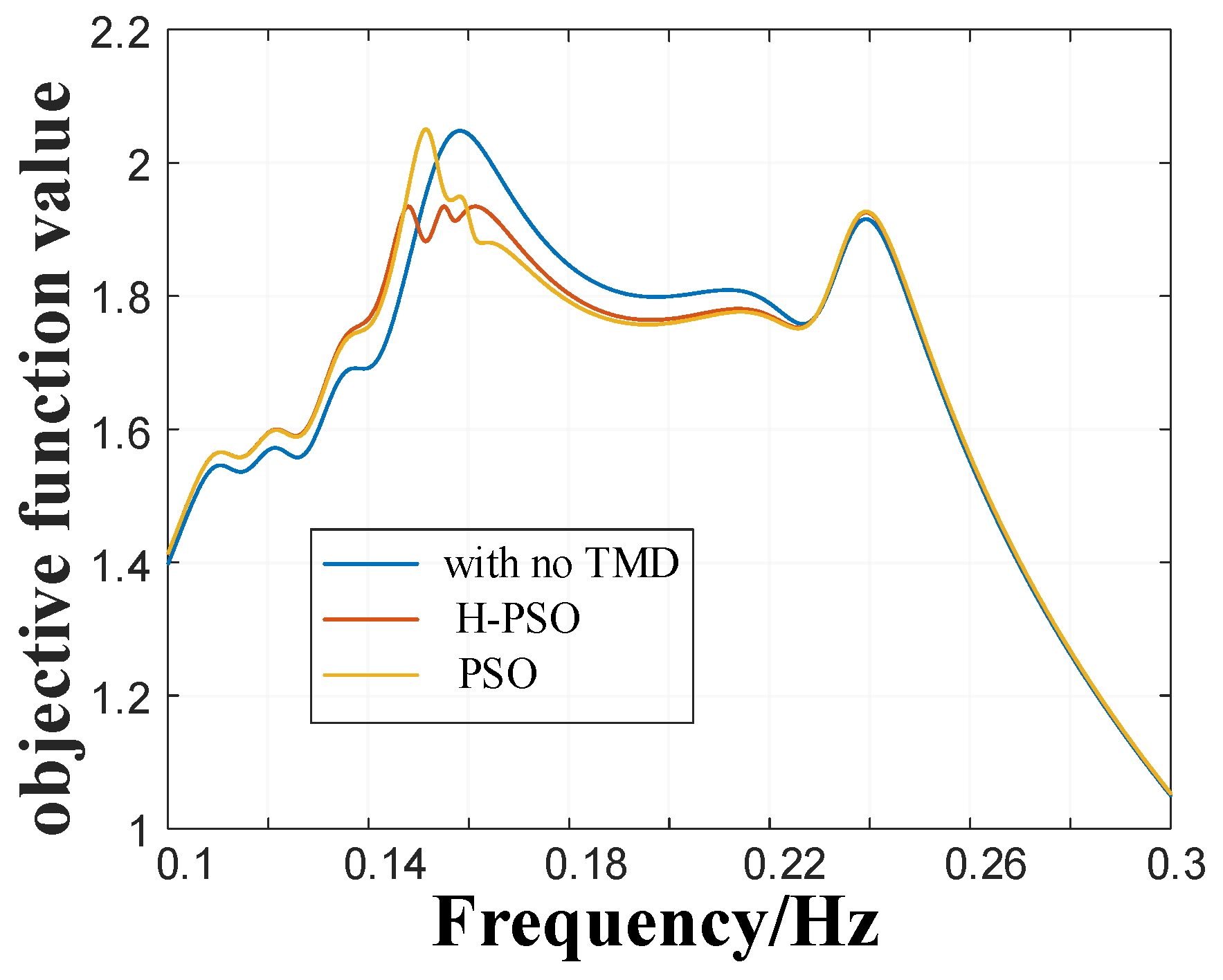
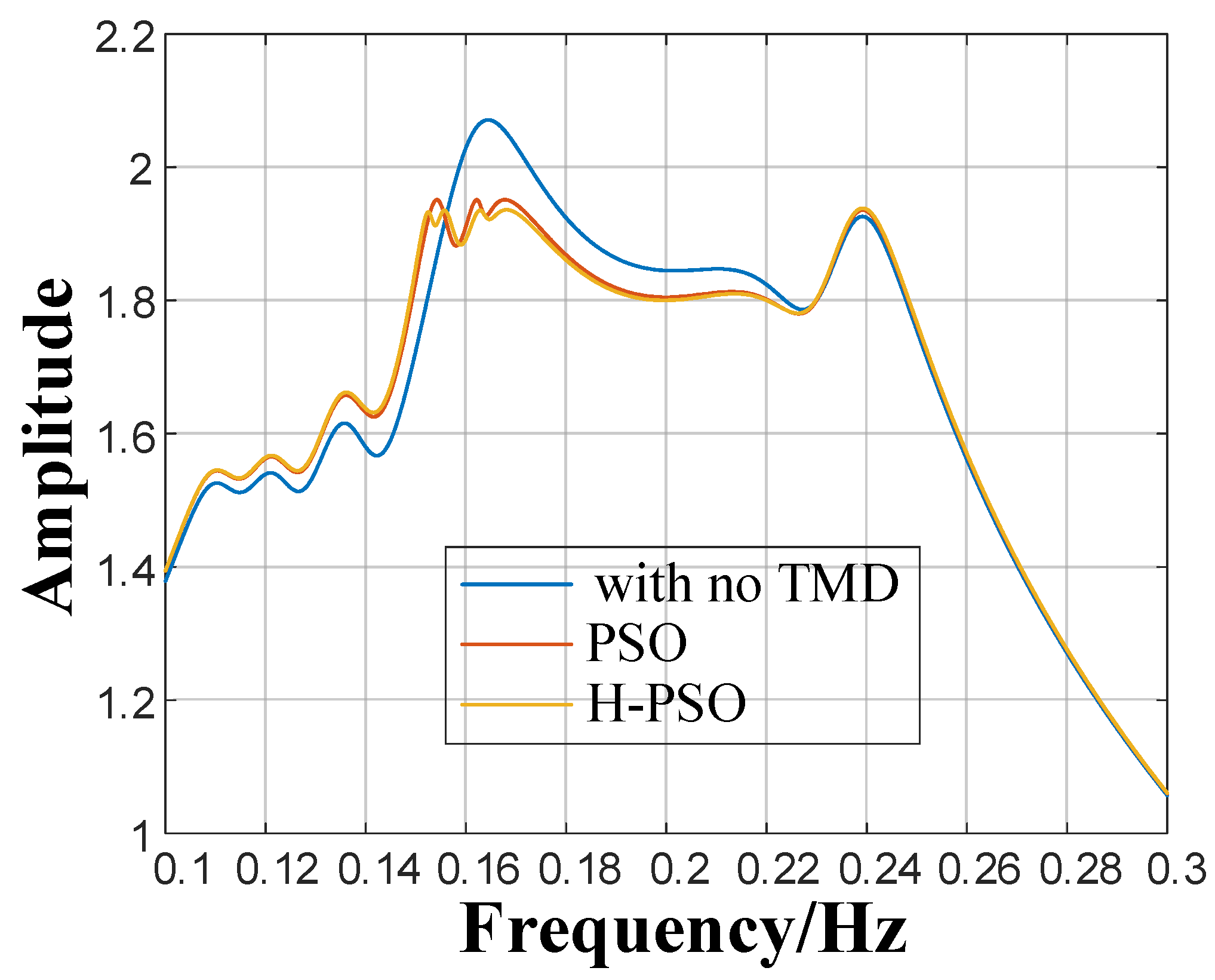
Figure 32 illustrates the corresponding frequency spectra. The results indicate that the implementation of TMDs leads to a substantial decrease in displacement amplitude, confirming the effectiveness of the control strategy. In the frequency domain, significant attenuation is observed around the primary modal frequency of 0.1621 Hz, with the most notable reduction occurring precisely at this frequency. Adjacent frequency ranges also exhibit moderate suppression, consistent with the optimization trends of the control objective function discussed earlier.
To further examine whether the observed reductions are statistically significant, a paired t-test was conducted using RMS values extracted from 20 s non-overlapping segments of the time-domain responses. Compared with the baseline case (no TMDs), all three TMD configurations exhibit highly significant vibration reduction (p < 0.01). Pairwise comparisons among S1, S2, and S3 yield p-values below 0.05, indicating statistically distinguishable—though relatively moderate—differences in performance among the TMD designs. These findings confirm that (1) the application of TMDs leads to a statistically significant reduction in tower-top vibration, and (2) the performance differences across different TMD configurations are statistically identifiable.
A summary of the key numerical results is provided in
Table 10. Compared to the baseline (no TMDs), the S1 system achieves a 12.64% reduction in peak response within the 0.1–0.2 Hz band, a 3.03% reduction in overall energy across 0.1–1 Hz, and a 17.00% reduction in amplitude at the target frequency of 0.1621 Hz. The S2 configuration further improves performance, with peak and energy reductions reaching 14.28% and 3.60%, respectively, and a 18.80% drop at the target frequency. The S3 setup demonstrates the best performance, with a 17.95% peak reduction, 4.32% total energy reduction, and a 24.62% decrease at 0.1621 Hz, indicating superior resonance suppression and broadband energy dissipation capabilities.
It is worth noting, however, that while the incremental improvements in peak reduction from S2 to S3 are evident, the marginal gains in total energy dissipation are relatively limited. This suggests that the advantages of higher-order MTMD configurations lie primarily in their ability to finely tune to specific modal frequencies, rather than offering proportional benefits across the entire frequency spectrum. Due to the concentration of structural response energy near the dominant mode, the additional TMDs mainly enhance local resonance absorption but offer diminishing returns for broadband control.
In conclusion, the S3 configuration offers the most robust vibration mitigation performance, achieving effective control in both resonance suppression and energy dissipation. The S2 system provides a balanced trade-off between control efficacy and system complexity, making it suitable for applications with stringent performance and cost requirements. The S1 setup, with its simple structure and ease of implementation, remains a practical choice where moderate control effectiveness is sufficient. Therefore, the degree of TMD configuration can be flexibly adapted to meet specific engineering demands and vibration control objectives, ensuring an optimal balance between control performance and implementation feasibility.
8. Conclusions
This study addresses the low-frequency vibration issues of offshore wind turbine towers under wind and wave excitations. To overcome limitations in existing control methods—such as inadequate adaptability to structural dynamic characteristics and low parameter optimization efficiency—a novel vibration control approach is proposed. This method integrates multi-body dynamics modeling, input excitation linearization, and Multiple Tuned Mass Damper (MTMD) parameter optimization. The effectiveness of the proposed approach is validated through numerical simulations.
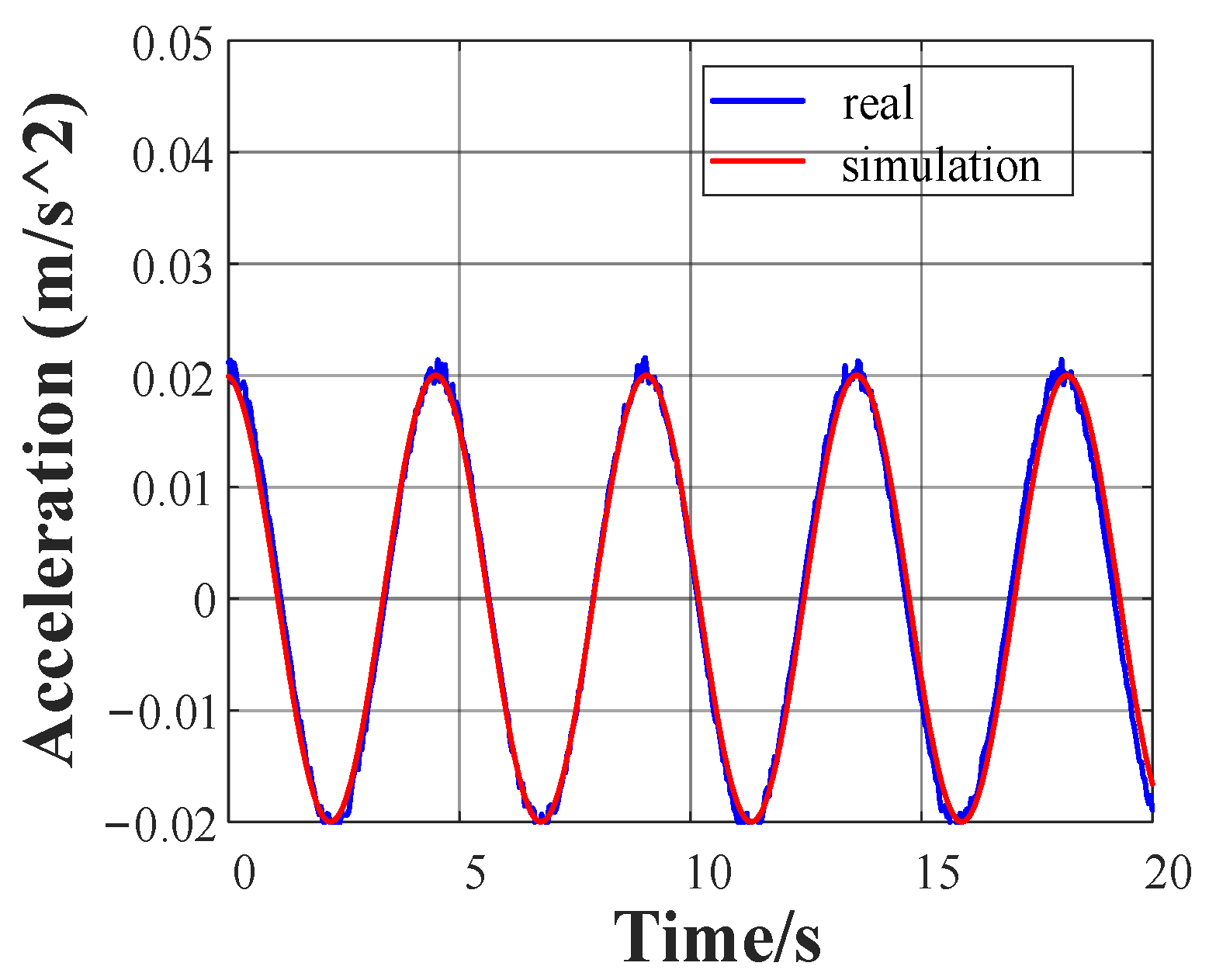
(1) A multi-degree-of-freedom dynamic model of the coupled wind turbine tower and TMD system is developed, considering the mass distribution and modal coupling of key components such as the tower, nacelle, hub, and TMDs. The model provides a practical and computationally efficient framework for evaluating structural responses and design-ing vibration control strategies. Comparison of the simulation results with measured vi-bration data from an operational offshore wind turbine demonstrates the model’s stability and reasonable accuracy. Nevertheless, the model has certain limitations: it primarily captures low-frequency excitation modes relevant to operational loads, while higher-order modes, geometric and material nonlinearities of the tower, and some three-dimensional effects are not fully resolved. These aspects will be addressed with higher-fidelity modeling approaches in future work.
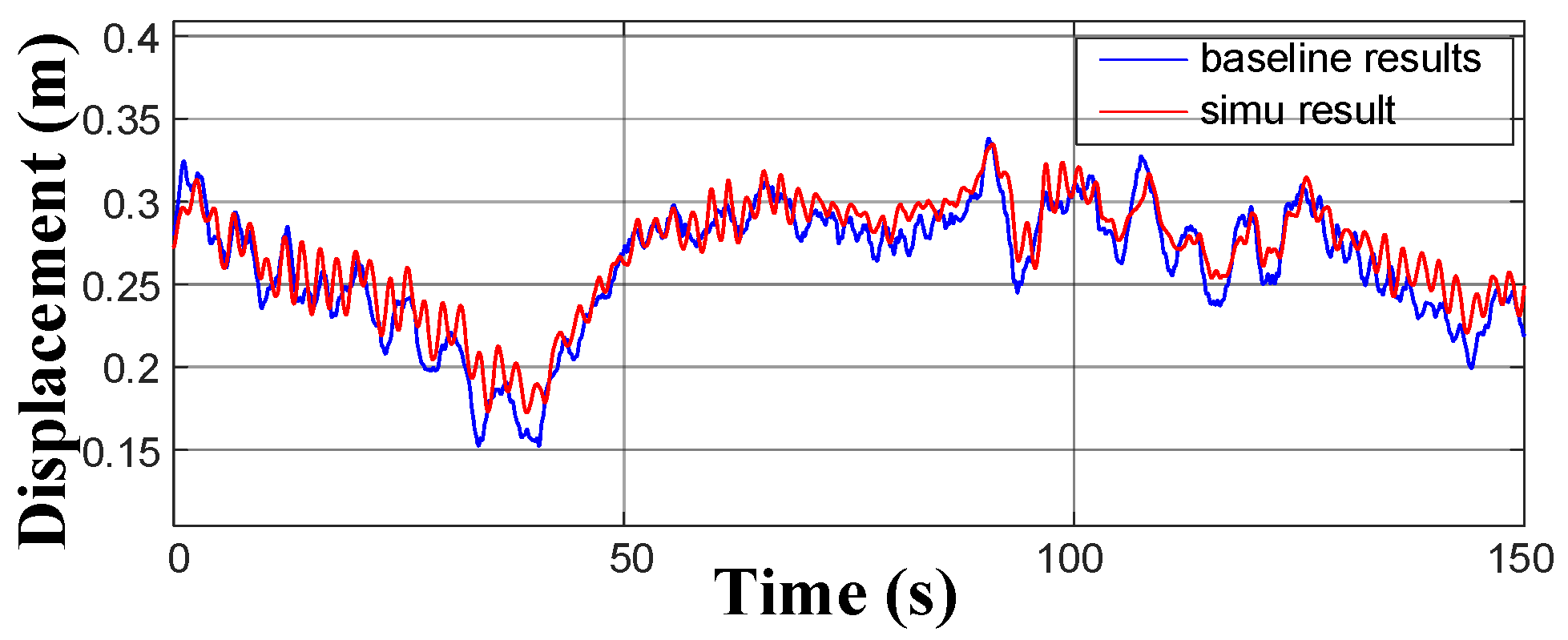
(2) To enhance the accuracy and efficiency of frequency-domain analysis, the input excitation signal is linearized by reconstructing its spectrum using a band-pass filtering strategy. This linearized input better matches the system’s transfer function response and closely fits the measured structural response spectrum. Simulation results demonstrate that the linearized excitation not only concentrates the modal energy in the dominant frequencies but also achieves high fitting precision in both frequency and time domains, providing a solid foundation for subsequent frequency-domain vibration control optimization.
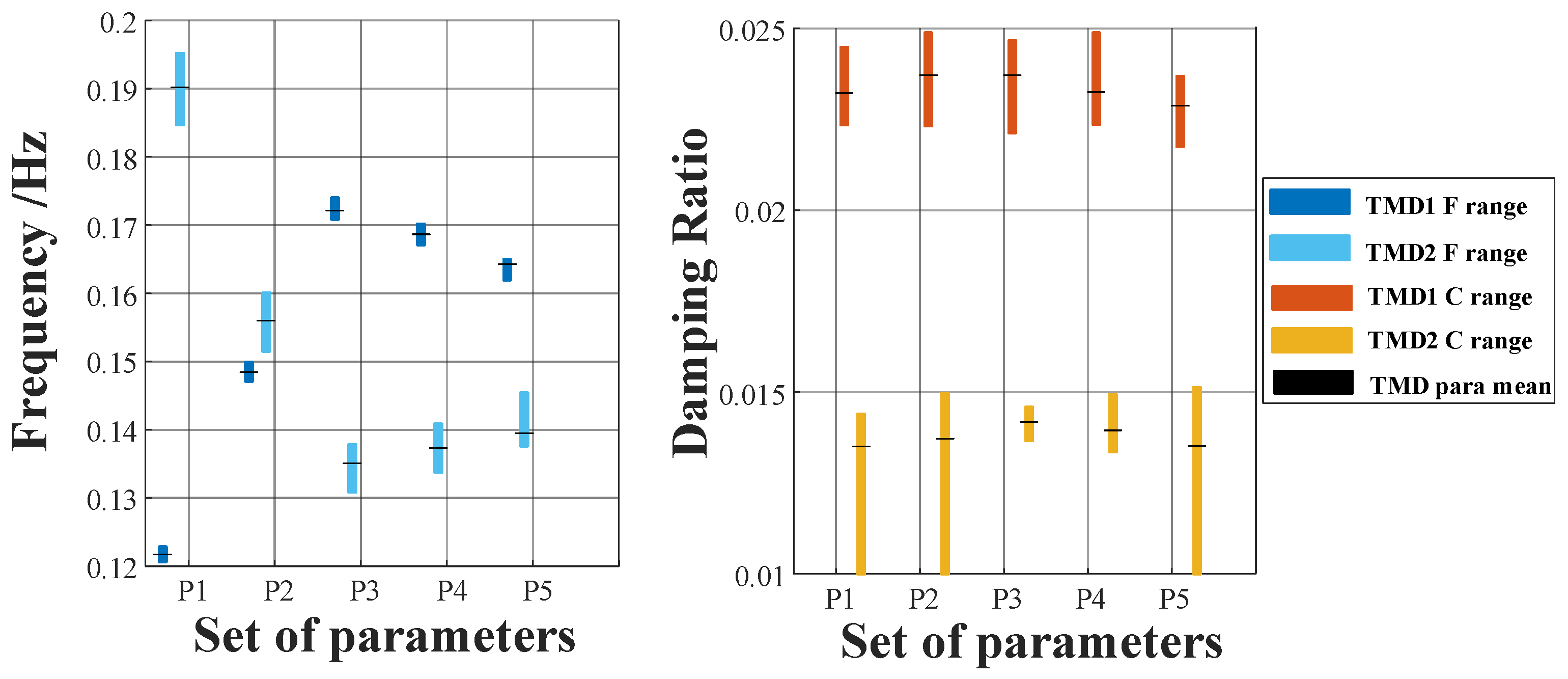
(3) Focusing on the first-order modal response of the tower, this study introduces a Hierarchical Particle Swarm Optimization (H-PSO) algorithm to jointly optimize the damping ratios and tuning frequencies of the Multiple Tuned Mass Damper (MTMD) system. An optimization framework is established with the goal of minimizing the response energy within the target frequency band. Under typical operating conditions, the three-TMD system achieves approximately an 18% reduction in peak response and a 4.32% decrease in energy within the target frequency band compared to the undamped system, demonstrating the method’s effectiveness in modal cooperative control and practical engineering applications. Furthermore, comparative experiments with the conventional Particle Swarm Optimization (PSO) algorithm using multiple sets of initial parameters show that H-PSO exhibits superior stability and generalizability.
(4) Finally, Comparative analyses of multiple TMD configurations reveal that increasing the number of TMDs significantly enhances suppression of the main structural modal frequency, although the marginal gains in overall energy attenuation diminish. Therefore, TMD configuration should balance engineering cost and control objectives.
In summary, the developed coupled tower-TMD modeling and control method effectively controls the dominant modal responses while maintaining model simplicity. This approach provides reliable technical support for vibration mitigation and structural health management of offshore wind turbines.