


Abstract
Large-scale vertical-axis wind turbines (VAWTs) have potential applications in the oceanic environment due to their ease of installation and maintenance. Most research has focused on the aerodynamic enhancement of VAWTs; however, controlling the structural vibration of a VAWT supported by a floating platform has seldom been addressed in previous work. In this paper, four optimized structures are proposed to passively mitigate the dynamic response of a 5 MW floating VAWT subjected to high wind speeds (25 m/s) and combined platform motions (pitch and surge). Computational fluid dynamics (CFD) was used to calculate the wind loads, while the wave loads were represented by accelerations applied to the bottom of the turbine. The dynamic responses of the original and optimized models were comprehensively compared. The results show that the optimized models effectively reduce vibration by shifting the blade swing and flapping modes to higher frequencies. Specifically, the model incorporating brace struts, cables, and spring-damping units demonstrates the highest damping efficiency, reaching 96.83% for the y-direction displacement at the blade tip.
1. Introduction
Wind energy (WE) is clean, sustainable, and inexhaustible. The dominant way of capturing WE is to use wind turbines, which can be categorized into horizontal-axis wind turbines (HAWTs) and vertical-axis wind turbines (VAWTs) based on the orientation of their rotational shafts. Compared with HAWTs, VAWTs have attracted increasing attention over the past decades due to their wind direction independence and installation feasibility [1].
Although most VAWTs are currently installed in urban or rural areas for domestic use, they have significant potential in offshore environments for the following reasons. First, offshore wind resources are superior to those inland because there are fewer obstacles, resulting in lower wind shear and higher wind speeds, which lead to greater power generation [2]. Second, unlike in HAWTs, the generator and gearbox of a VAWT are installed at its base, which is convenient for offshore maintenance [3]. Third, since the wake of a VAWT recovers faster than that of an HAWT [4], the distance between adjacent VAWTs can be reduced in an offshore wind farm. Therefore, more VAWTs can be installed per unit area, using valuable marine space more efficiently. Such advantages leave a huge potential for the development of offshore VAWTs.
Despite these merits, as wind turbines increase in scale, the complex marine environment and floating platform motion will induce more severe vibrations in the turbine structure, resulting in fluctuation of aerodynamic efficiency [5] and enlargement of the structural deformation [6]. To address this issue, various control strategies have been investigated, among which the simplest and most effective way is the use of passive control approaches [3]. Notably, advanced passive control technologies have demonstrated excellent performance across various engineering fields. Wang et al. [7] developed a damped single-sided pounding tuned mass damper (DSS-PTMD) that showed superior vibration control performance for pedestrian bridges under human-induced excitations, providing valuable insights for the vibration mitigation of marine structures. Similarly, Chen et al. [8] proposed a metallic torsional damper using a gear and rack mechanism (MTDGRD), which exhibits excellent energy dissipation capacity for building structures under seismic loads, demonstrating the effectiveness of motion amplification devices in vibration control. For offshore applications where space limitations exist, Wang et al. [9] optimized the pendulum-tuned mass damper (PTMD) design considering practical installation constraints, showing enhanced robustness for flexible structures under dynamic loads. Particularly relevant to VAWT systems, Wang et al. [10] introduced an enhanced torsional eddy current damper (ETECD) with gearbox amplification for rotational motion control, which effectively reduces the angular velocities of rotating bodies and prevents impact damage, offering promising solutions for VAWT rotor vibration management. These studies have greatly demonstrated the power of dampers and other passive energy absorbers in reducing vibration response for engineering structures, providing a solid foundation for their application in offshore wind turbines.
However, the literature cited above has mostly focused on vibration control for HAWTs, with few studies investigating this issue for offshore VAWTs (OVAWTs). The related studies on OVAWTs mostly concentrated on its aero-forces; for instance, Borg et al. [11] investigated the influence of platform motion on the frequency-domain aerodynamic load of a floating Darrieus VAWT, and Deng et al. [12] performed a dynamic analysis on the blades of a floating H-type VAWT, taking the rigid–flexible coupling effect into consideration. A rare example of the handful of studies on vibration control for OVAWTs is by Hand et al. [6], who focused on designing the material and structural properties of VAWT blades to minimize deflection under extreme wind loads, achieving a mid-span deformation of less than 3% of the blade span. Hence, there is a gap in the adoption of appropriate passive strategies for the vibration control of a floating VAWT.
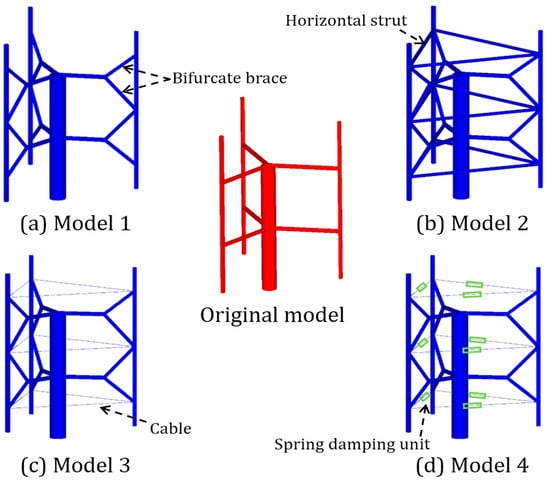
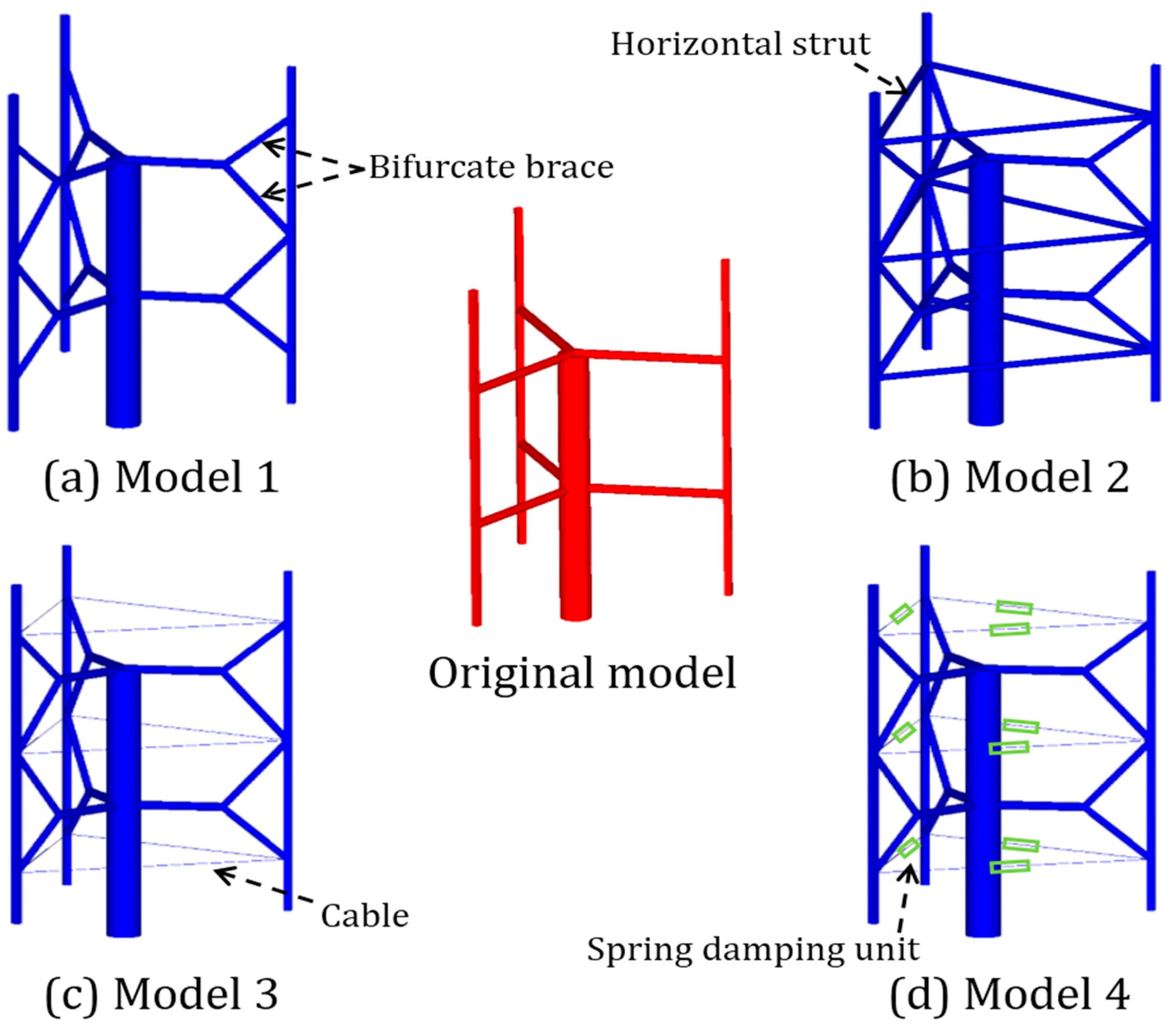
This paper proposes vibration reduction strategies for a 5 MW H-type VAWT, using it as the original model and developing four optimized variants (Figure 1). The optimization focused on progressively improving the supporting structure (i.e., struts) to enhance the blades’ stiffness. The strategies include the following: (a) adding bifurcated braces to the blades, (b) adding horizontal struts, (c) replacing the horizontal connections with cables, and (d) adding spring-damping units to the cables. The dynamic response of the rotor is analyzed, considering not only wind loads and platform motions (pitch and surge) but also the Coriolis forces [13] induced by the system’s rotation. Finally, the detailed vibration modes and the vibration-reduction performance of the proposed models are comprehensively compared.
Figure 1.
Schematic models of the original and four optimized VAWTs.
In reality, the fluid–structure interactions in an offshore environment involve numerous complex factors. This study focuses on the most significant factors for a foundational analysis: High-fidelity CFD is used for the dominant aerodynamic loads, while platform motion-induced accelerations represent the primary hydrodynamic effect. This approach allows us to isolate and understand the critical dynamics of the VAWT system under extreme conditions, providing a clear benchmark for evaluating the passive damping mechanism without the confounding variables of a fully coupled model.
The structure of this article is as follows: Section 2 presents the geometry and structural properties of the floating VAWT; Section 3 describes the platform motions and wind load conditions; in Section 4, the load diagram of the turbine is presented; in Section 5, the vibration modes of different models are provided, and their capacities in vibration control are elaborately discussed; in Section 6, solid conclusions are summarized, ending with the limitations of this work.
2. Numerical Models
In this section, the detailed configurations of the original and optimized VAWT models are presented.
2.1. Original Model
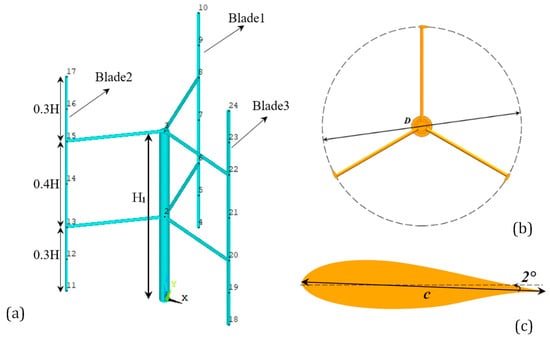
As shown in Figure 2, the original VAWT model is a 3-blade model with a specific output power of 5 MW. The prototype of this model can be found in the investigation of Hand et al. [14], and the main difference is that their design had two blades. The main parameters of the model are listed in Table 1.
Figure 2.
Configuration of original VAWT model: (a) overview; (b) top view; (c) blade airfoil of DU-06-W-200 with a pitch angle of 2°.
Table 1.
Geometrical and operating settings of the original 5 MW VAWT model.
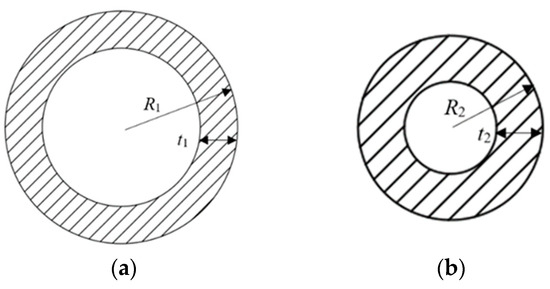
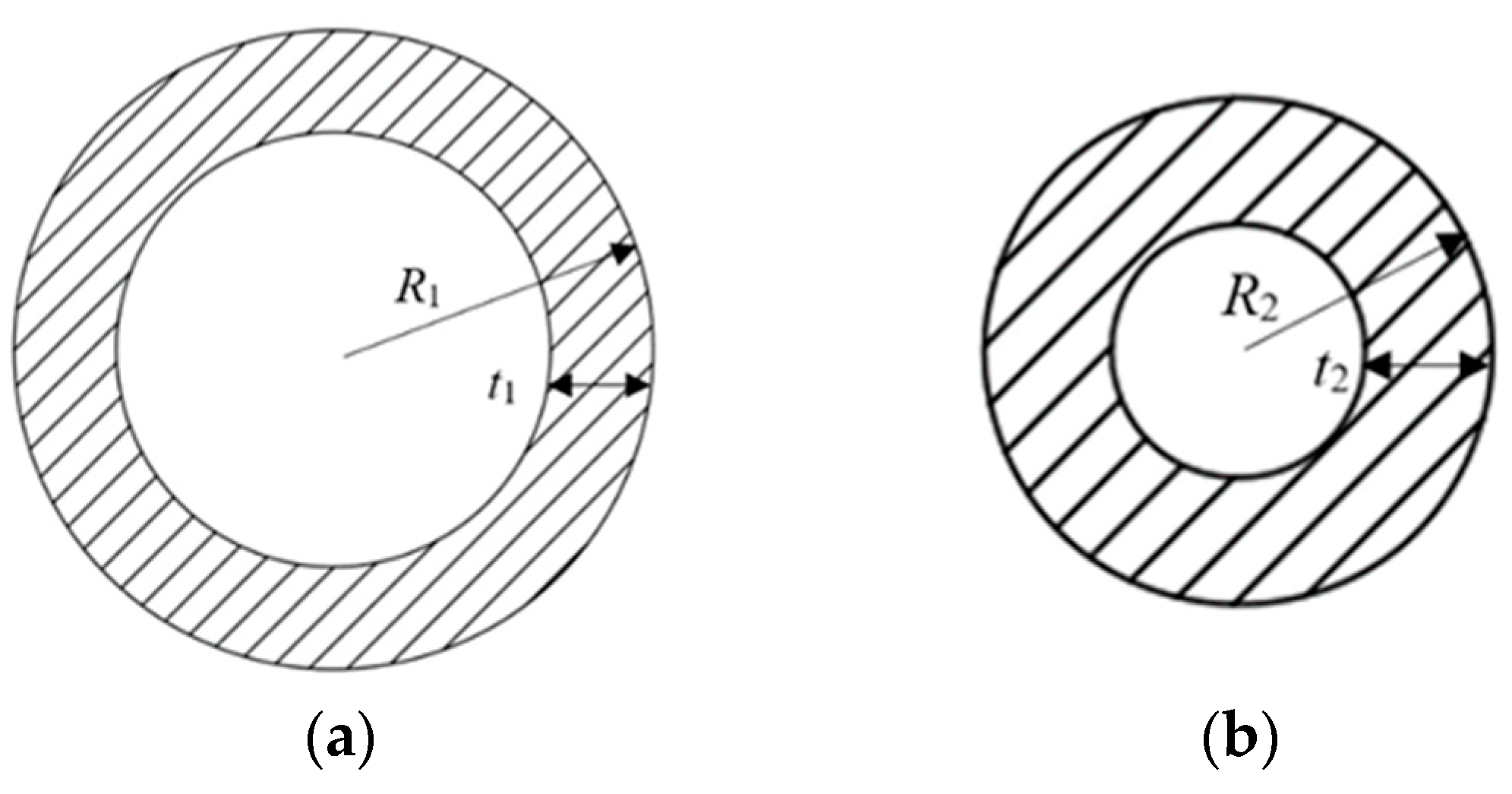
The shaft and struts are hollow (tubular); their cross-sections are shown in Figure 3.
Figure 3.
Sections of shaft and strut: (a) shaft: m, m; (b) strut: m, m.
For megawatt-scale VAWTs, the blades are typically made of composite materials, and the main structure is made of reinforced material [15]. In this work, to reduce weight while ensuring strength, the blades and struts were modeled using carbon fiber epoxy resin. The material for the shaft was 40Cr alloy steel. The mechanical properties of these two types of material are shown in Table 2.
Table 2.
Mechanical properties of VAWT materials.
2.2. Optimized Models
This section presents the four optimized models derived from the original model. An overview is provided in the Introduction (Figure 1).
In Model 1, the struts bifurcate at a distance of 0.3D from the main shaft. This design aims to reduce the effective unsupported length of the blade and improve its out-of-plane stiffness. Model 2 was developed from Model 1 by adding nine horizontal braces connecting the three blades to improve in-plane rigidity. The section of these horizontal braces was also circular, but the external diameter and the thickness were designed to be smaller, equal to 0.6 m and 0.1 m, respectively.
In Model 3, the horizontal braces of Model 2 were replaced with cables to reduce the self-weight while maintaining in-plane rigidity. The mechanical parameters of the cable are listed in Table 3.
Table 3.
Mechanical Parameters of the Cable.
Model 4 was developed from Model 3 by adding spring-damping units at the midpoints of the cables to further reduce the dynamic response. Each damping unit has translational degrees of freedom in the x, y, and z of three directions. The mass of the main structure of the turbine is 9214.4 tons. For a mass ratio of 0.005, 0.015, 0.045, and 0.09, the optimal parameters of the spring-damping unit (i.e., working as the TMD) were defined by the Den Hartog method [16], and they are listed in Table 4.
Table 4.
Optimal parameters of TMD under different mass ratios.
3. Wind Loads and Platform Motions
The patterns of the motion of the floating platform and the external loads on the VAWT system are described in this section. The upper structure was exposed to unsteady wind loads, which were calculated through a 3D CFD simulation using a turbulence model. The platform motion was induced by wave loads, for which their displacement, velocity, and acceleration were assumed as sinusoidal functions in this work.
3.1. Wind Loads
According to Hand et al. [14], to maintain optimal power output, the rotor’s rotational speed should be adjusted for different wind speeds. In this study, however, a higher wind speed was selected because the objective was to investigate structural characteristics. Accordingly, the cut-out wind speed of 25 m/s was adopted as the free-stream velocity. Thus, the tip speed ratio is set to 1.286 [14], indicating a rotational speed of rpm, and the corresponding period is .
Under these conditions, the aerodynamic loads (tangential and normal forces) were calculated using computational fluid dynamics (CFD) with Siemens Star-CCM+ 2206.
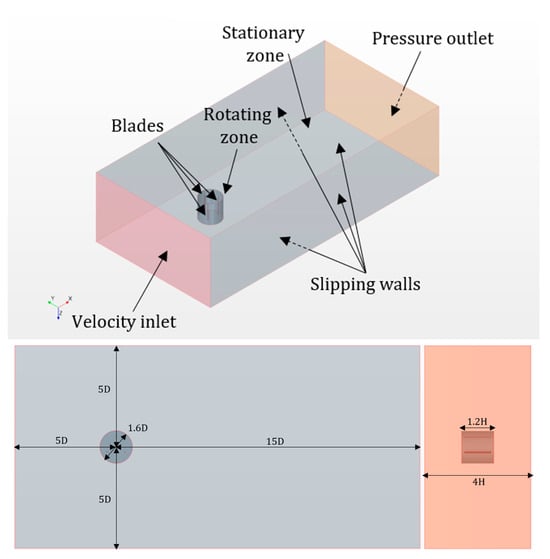
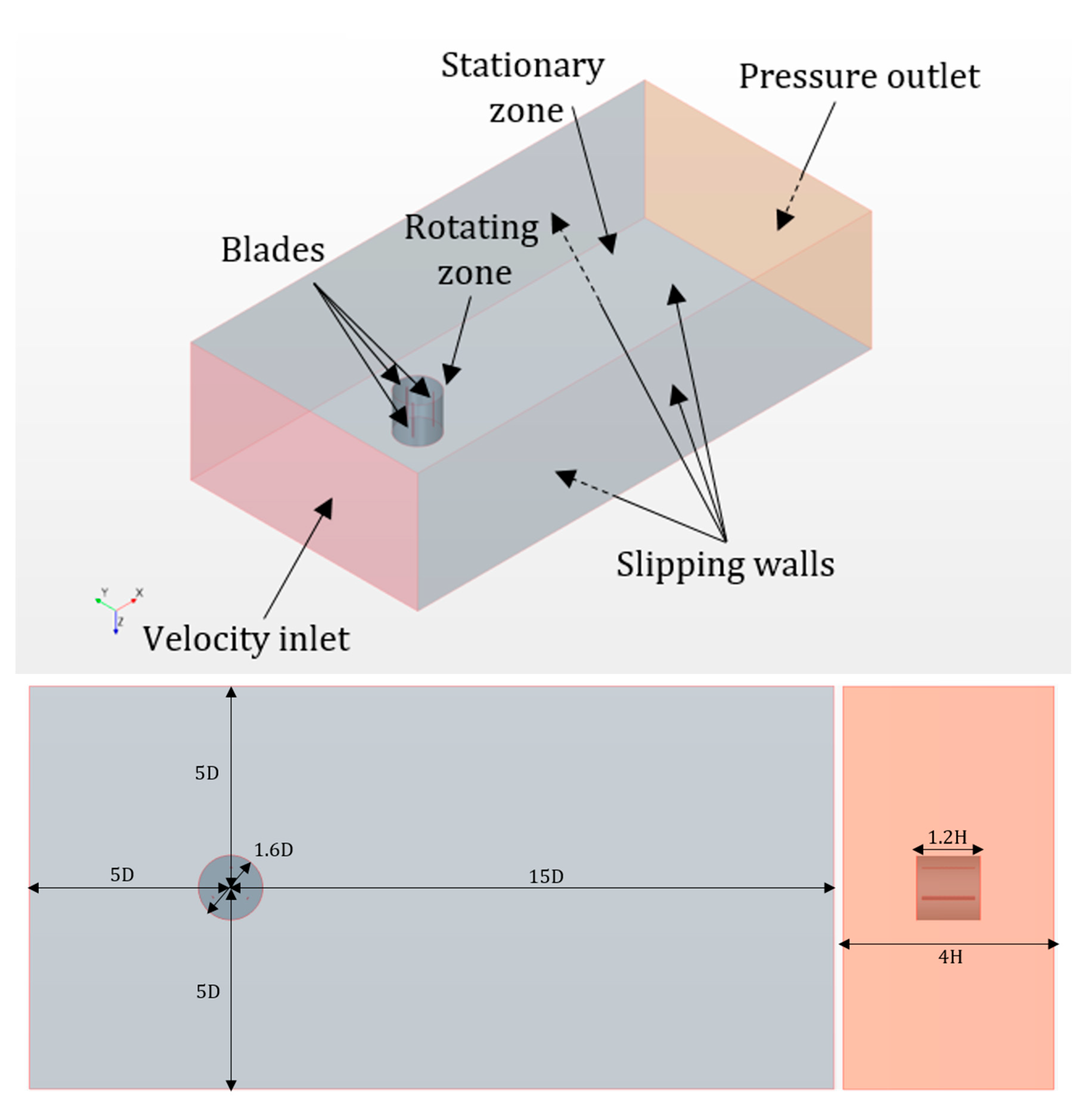
As shown in Figure 4, the 3D computational domain was divided into a rotating domain and an external stationary domain, connected by interfaces. The size of the whole block was , and the rotating cylinder had a size of . The turbine center was 5D away from the uniform velocity inlet, and the pressure outlet (0 Pa) was 15D downstream to allow the wake flow to develop fully. No-slip wall conditions were applied to the turbine blade surfaces. The side and top boundaries, located 5D and 2H from the turbine center in the width and height directions, respectively, were also set as slip walls.
Figure 4.
The layout of VAWT simulation in 3D-CFD.
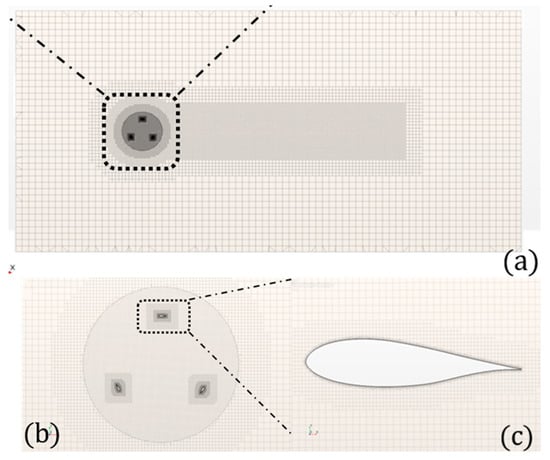
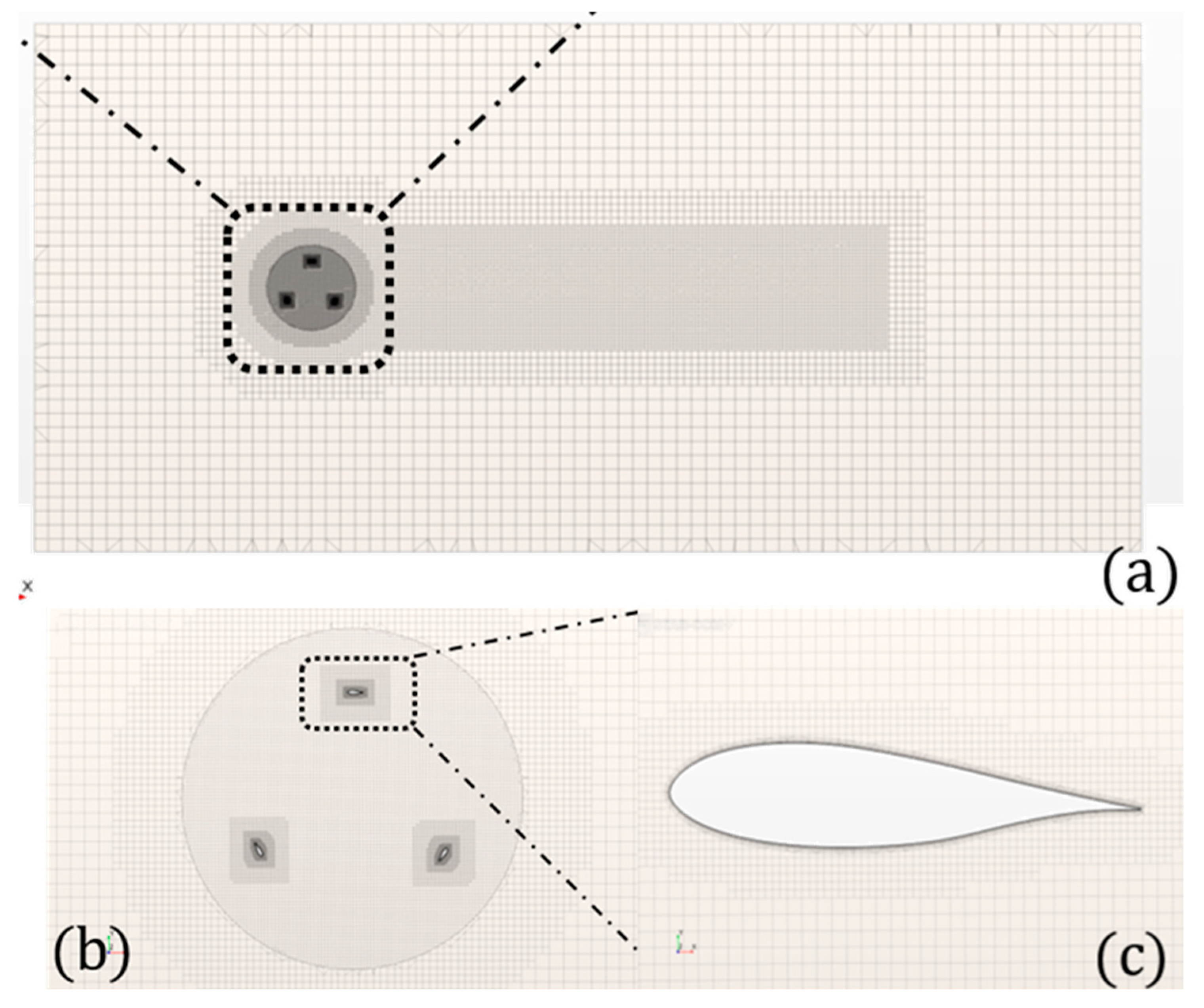
As shown in Figure 5, the sliding mesh technique was used in all domains. A refined mesh region in the stationary domain was used to capture the near-wake characteristics of the turbine blades. A total of 32 prismatic layers were adopted for the boundary layer of each blade surface, where the total thickness was 0.08 m, and the growth rate was 1.3, ensuring that y+ was less than 1. The total cell count exceeded 26,250,000, with hexahedral grids used throughout the domain.
Figure 5.
The cross-section of the mesh topology of the VAWT model: (a) whole domain; (b) rotating domain; (c) DU-06-W-200 airfoil.
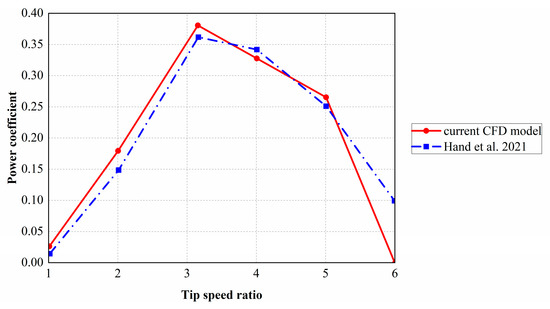
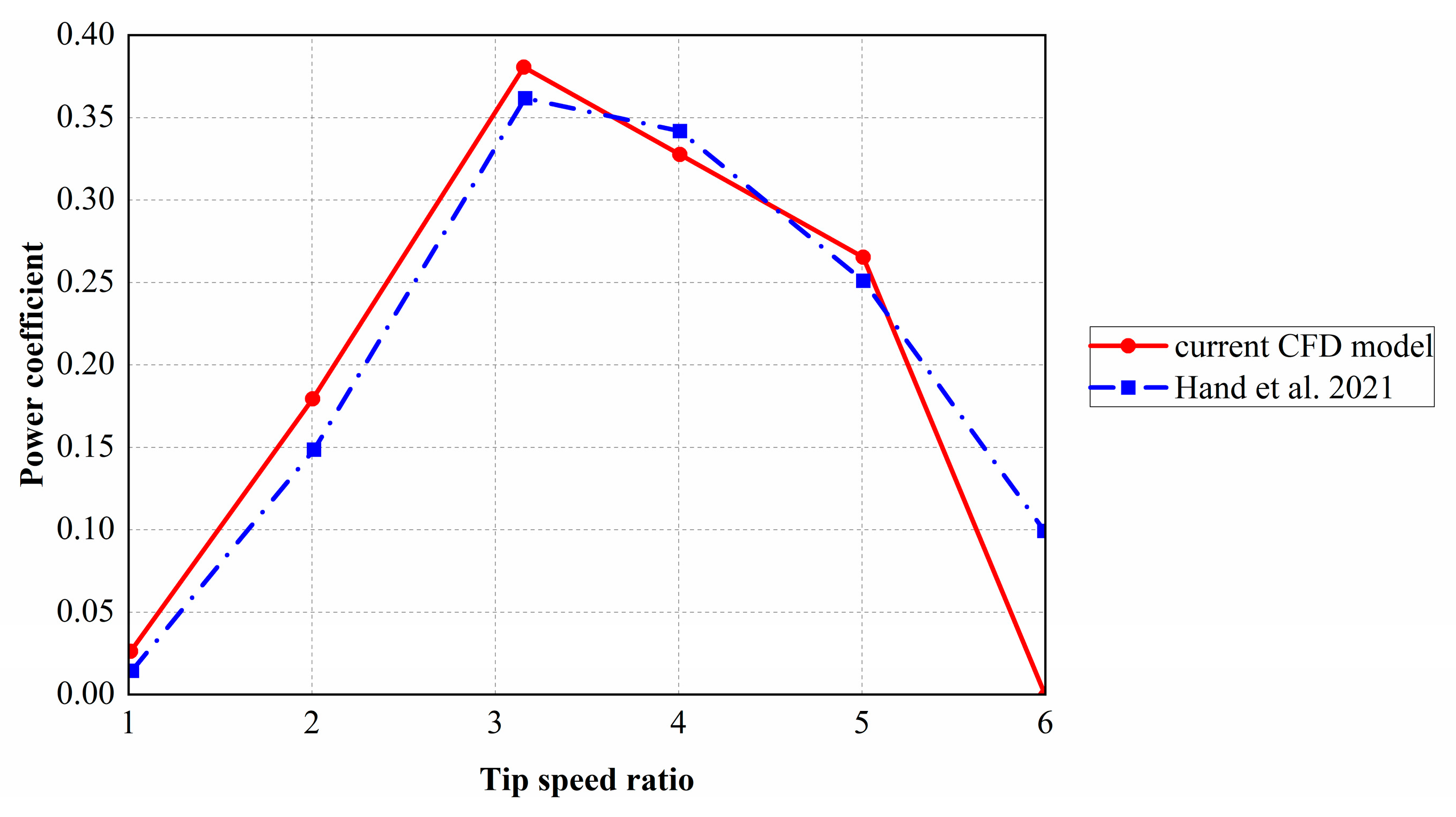
The unsteady Reynolds-averaged Navier–Stokes (RANS) equations were solved using the shear stress transport (SST) k-ω turbulence model. The hybrid second-order central-differencing scheme was adopted to discretize the convection and diffusion terms, and pressure–velocity coupling was realized through the SIMPLE algorithm. A time step corresponding to 1° of rotor rotation was used. The simulation was run for more than 10 full rotations to ensure that the flow field reached a periodic steady state. The CFD model was satisfactorily validated through a comparison of power coefficients () with respect to the study of Hand et al. [6], as shown in Figure 6.
Figure 6.
Comparison of wind energy utilization coefficient curves of the VAWT. Data from Hand et al. [6].
As can be seen, the Cp-TSR trend agrees well with the reference data, except at the highest TSR values approaching 6. This suggests that the current model can be reasonably used for aerodynamic load calculations, at least for structural analysis.
3.2. Platform Motions
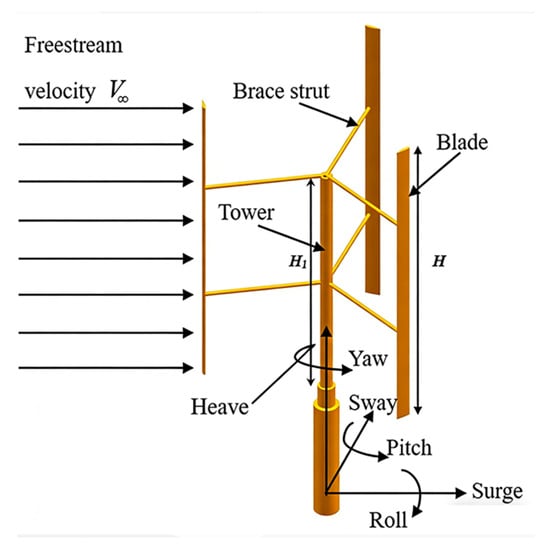
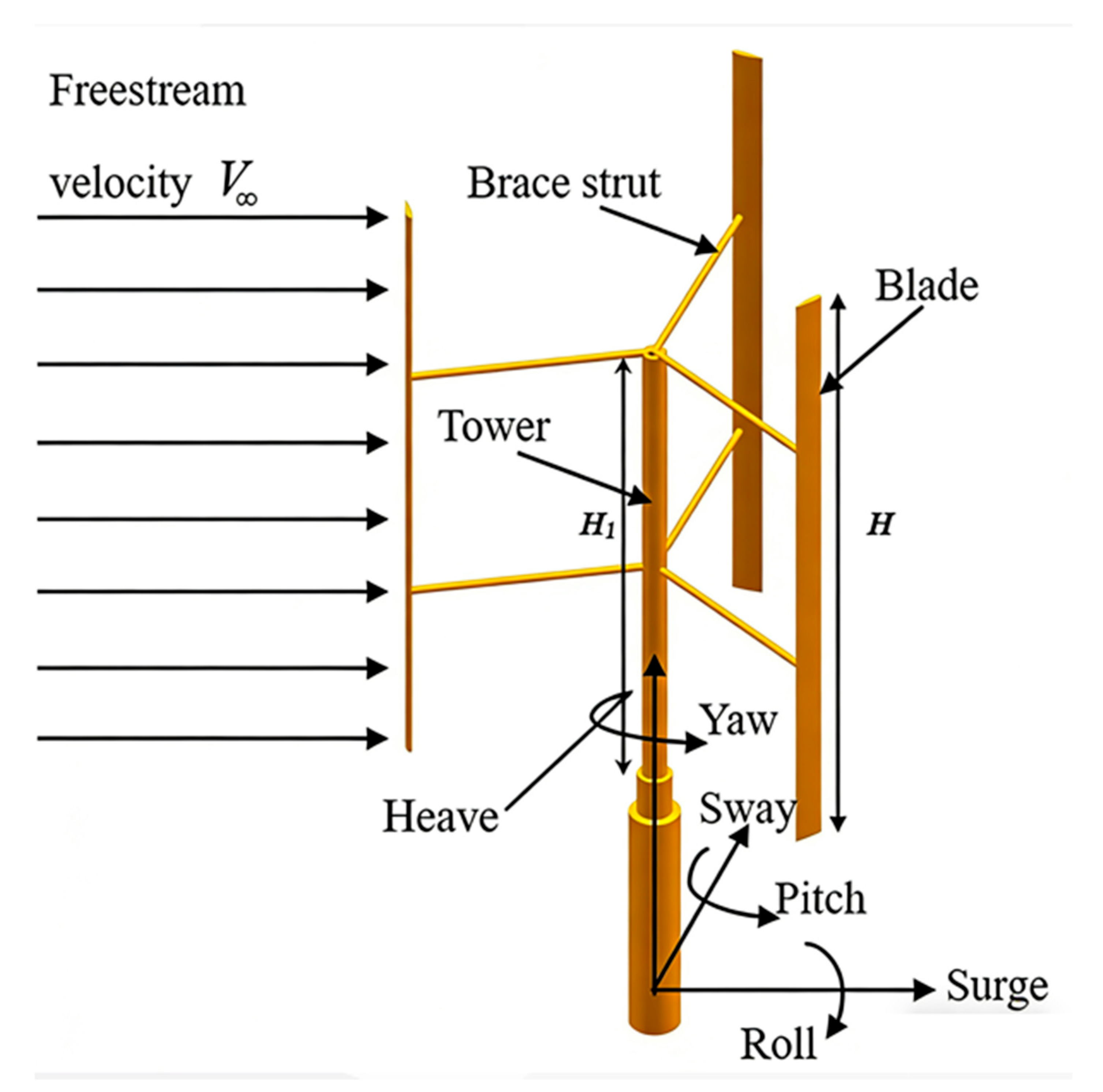
As shown in Figure 7, the platform has 6 degrees of freedom, namely, heave, yaw, sway, pitch, surge, and roll. According to Lei et al. [5,16], the greatest dynamic response of floating VAWT happens when surge and pitch motions are coupled. Therefore, the combination of these two types of motion is considered in this study.
Figure 7.
Degrees of freedom (DOF) for a floating VAWT platform.
To simplify the motion pattern, typical sinusoidal functions were used to describe the surge and pitch motions, and they are as follows:
Surge:
where denotes the amplitude of surge displacement, and is the turbine diameter. is the surge frequency, where is the frequency of the VAWT rotation.
Pitch:
where denotes the amplitude of pitch angle, and is the frequency of the pitch motion.
4. Load Diagram on Turbine
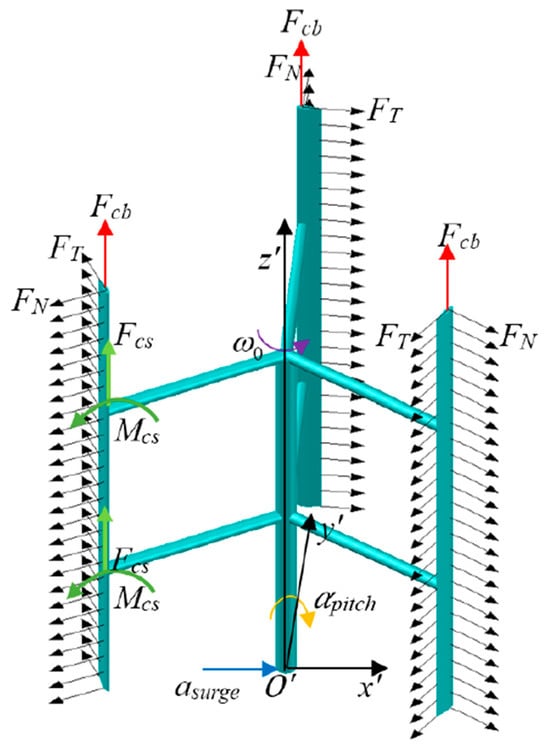
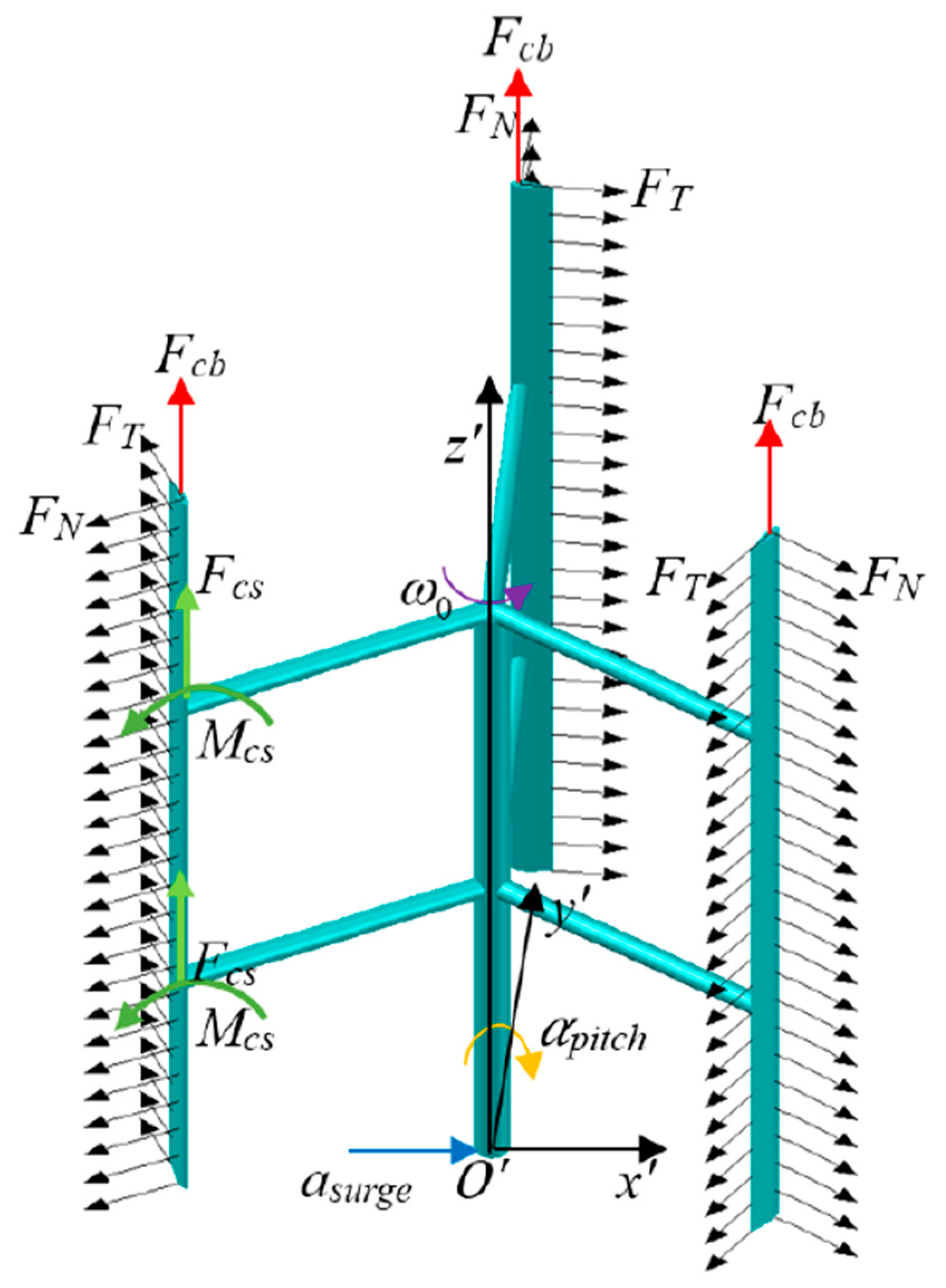
The dynamic responses of the original floating VAWT and the optimized VAWT were analyzed in ANSYS 17.0 [17]. Figure 8 illustrates the external loads applied to the VAWT, using the initial model as an example. The time-varying and are wind loads (i.e., tangential and normal forces on blades) from the CFD simulation (choosing 100 evenly spaced cross-sections from the blade’s top to bottom), and denotes the angular velocity of the VAWT. The wave load is represented in the form of acceleration on the bottom of the shaft, where and , respectively, denote the surge acceleration and angular acceleration of the pitch motion. Finally, the , , and are the Coriolis forces [13] and moments induced by the pitch angular velocity and the rotational angular velocity .
Figure 8.
Diagram of floating VAWT under loads.
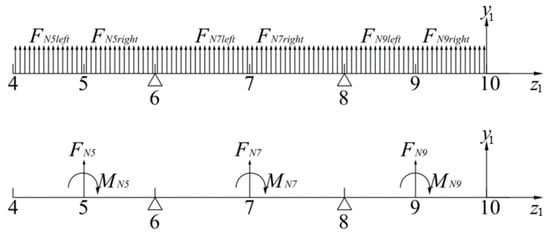
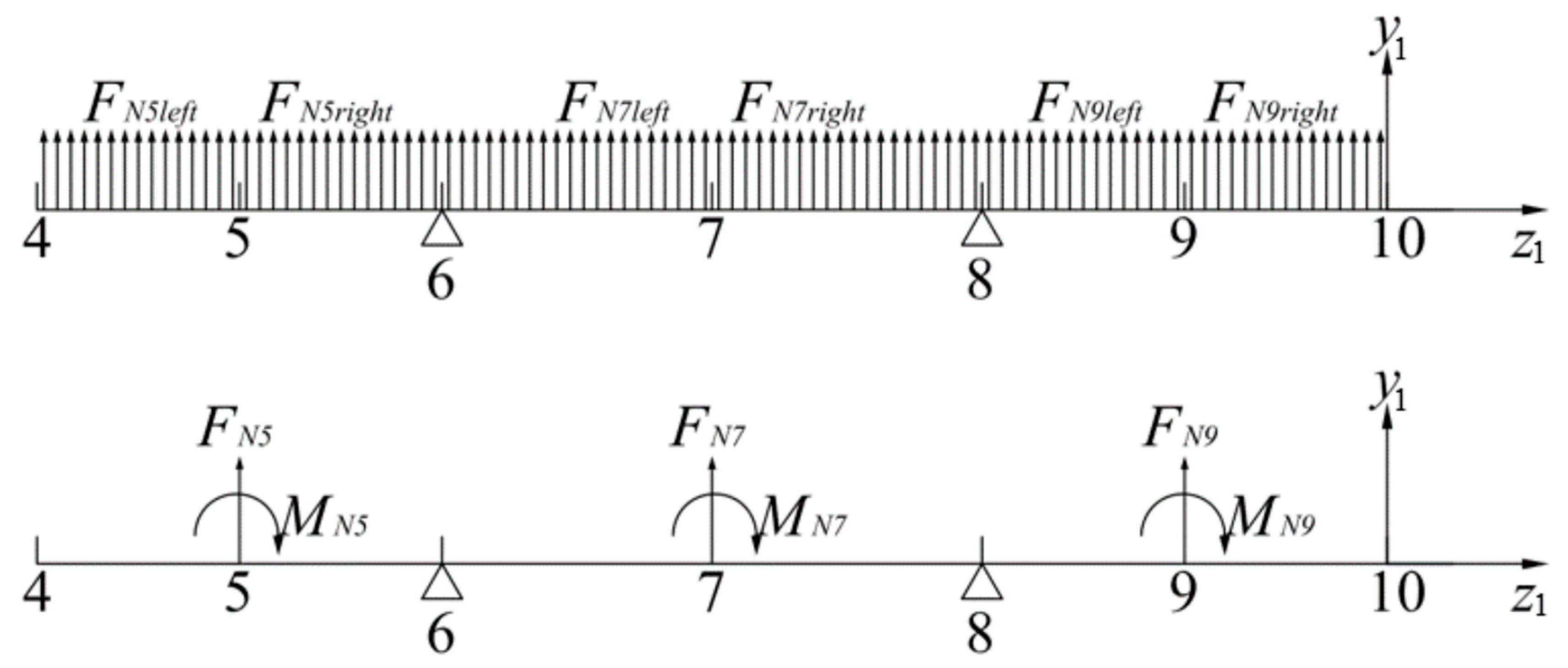
In this work, in order to conveniently load the ANSYS model, the distributed forces and were replaced by equivalent central forces and moments. The VAWT was modeled using BEAM188 elements [17]. Following the notation in Figure 2a, the conversion of the equivalent normal force for blade #1 is shown below:
Taking node 5 as an illustration, the equivalent force and moment in Figure 9 were calculated by the following equations:
where is the normal force on the left side (from node 4 to node 5) of node 5; is the normal force on the right side (from node 5 to node 6) of node 5; is the distance between each force point to the node 5.
Figure 9.
Diagram of the original normal force (upper) and equivalent blade normal force (lower) for VAWT blade #1.
The centrifugal force induced by the rotating velocity was given by the following formula:
where and are the mass and radius of the turbine.
As it was mentioned, the wave load on the floating platform was represented by the acceleration applied to the bottom of the shaft. The definition of the corresponding accelerations of surge and pitch can be found in Section 3.2
5. Results and Discussion
In this section, the dynamic response of four optimized turbine structures will be successively compared with the original VAWT. The vibration modes and response will be analyzed to show the effects of vibration control against the raw model.
5.1. Model 1 and Model 2
The configurations of Model 1 and Model 2 are shown in Figure 1a,b. The brace added here has a circular section (similar to Figure 3) with a radius of 0.6 m and a thickness of 0.1 m. The material properties of the brace are consistent with those of the original model in row 1 of Table 2.
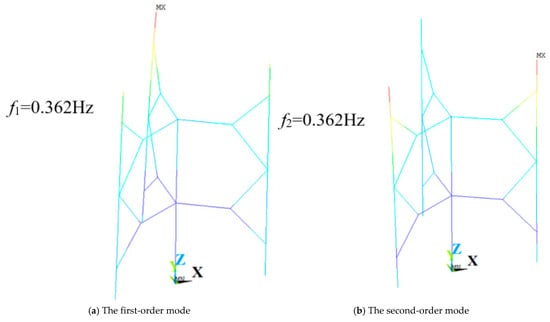
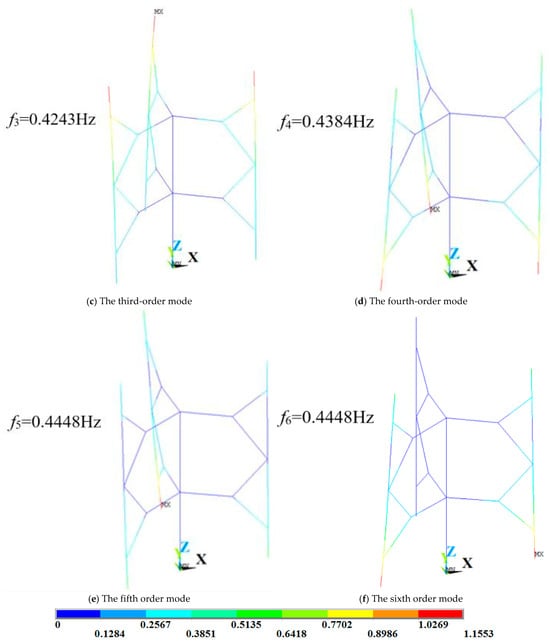
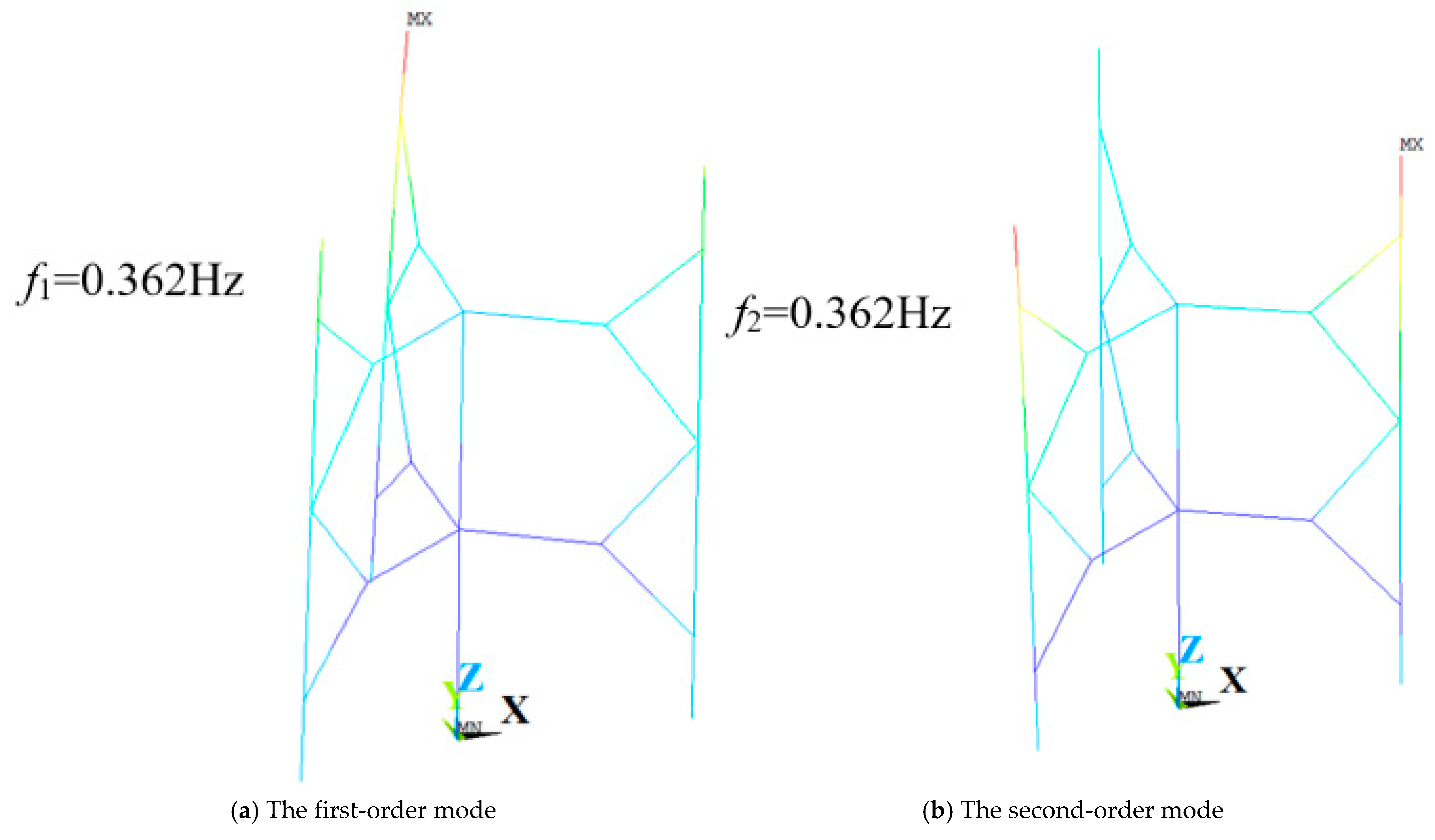
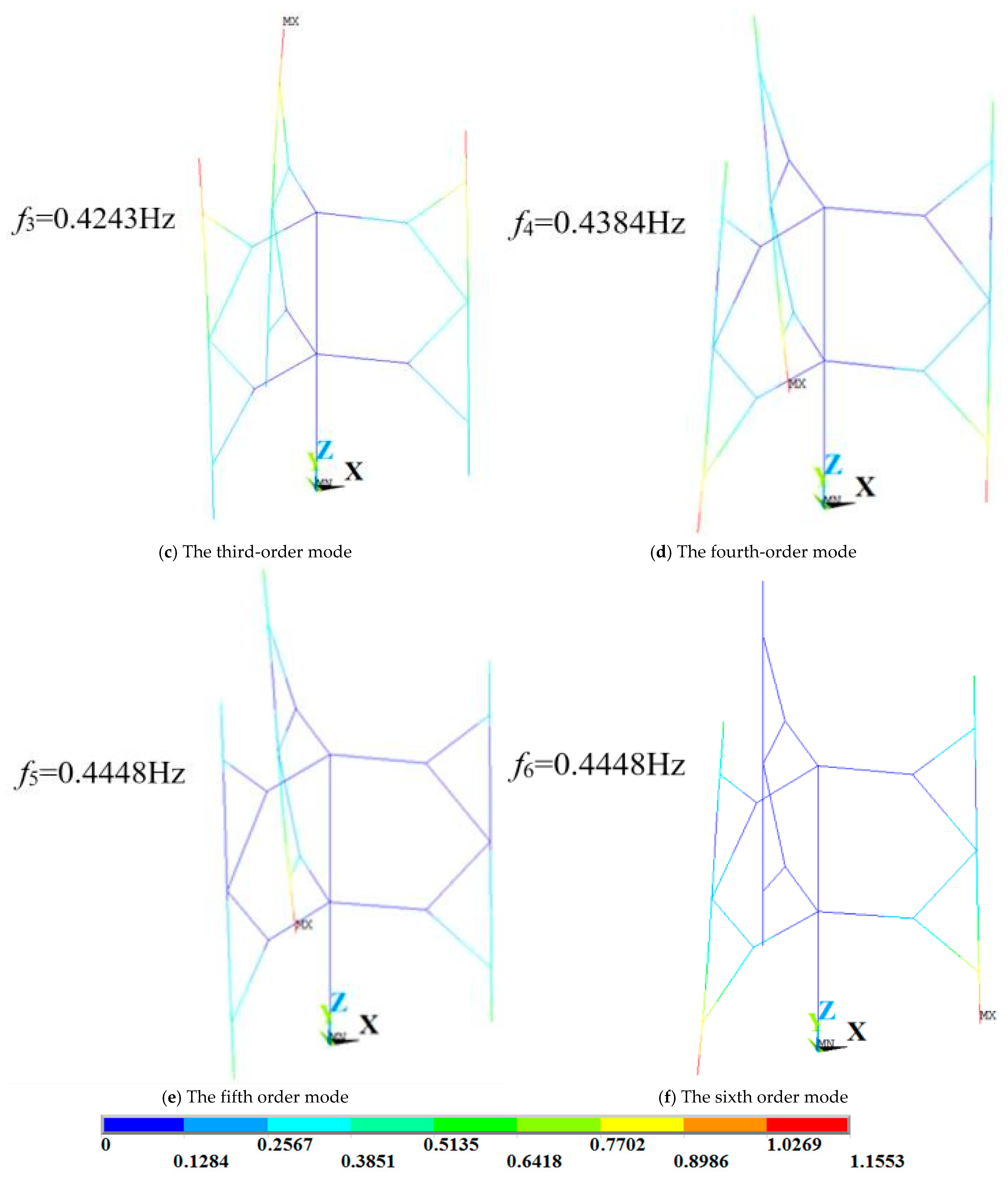
A nonlinear dynamic analysis was conducted to obtain the first ten natural frequencies of Model 1, as summarized in Table 5. The fundamental frequency of Model 1 was 0.362 Hz, which was higher than that of the original model. This shift in frequency avoided resonance by placing the fundamental frequency outside the excitation ranges of the turbine’s 1P and 3P frequencies. The first six mode shapes of Model 1 are illustrated in Figure 10. The first mode corresponds to a left–right oscillation of the entire turbine structure. The second mode is characterized by a front–back oscillation of the turbine with a slight wave deformation of the blades. The third mode primarily exhibits the torsional oscillation of the wind turbine. The fourth and fifth modes represent global oscillations of the blades, while the sixth mode indicates a local oscillation of the blades.
Table 5.
First 10 natural frequencies of Model 1.
Figure 10.
Vibration mode diagram of Model 1.
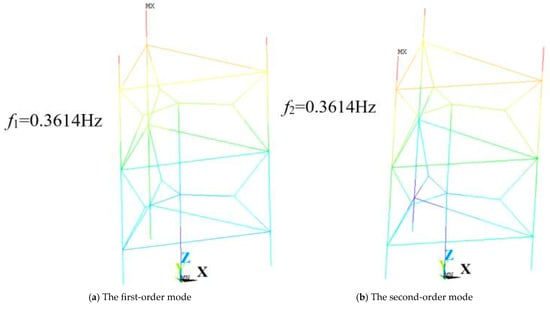
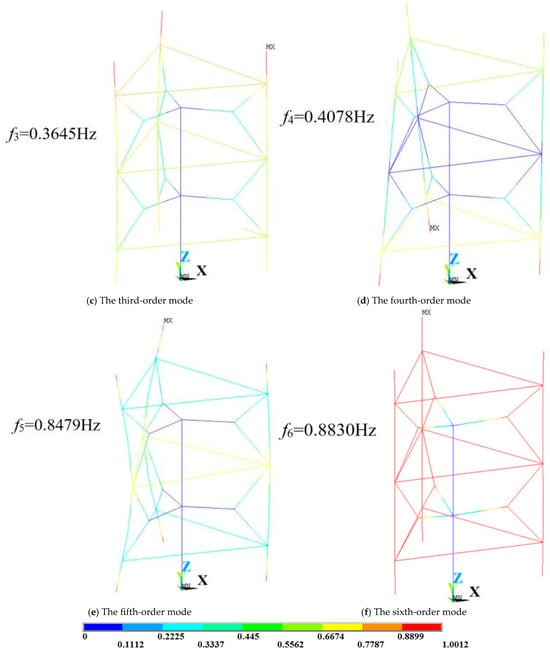
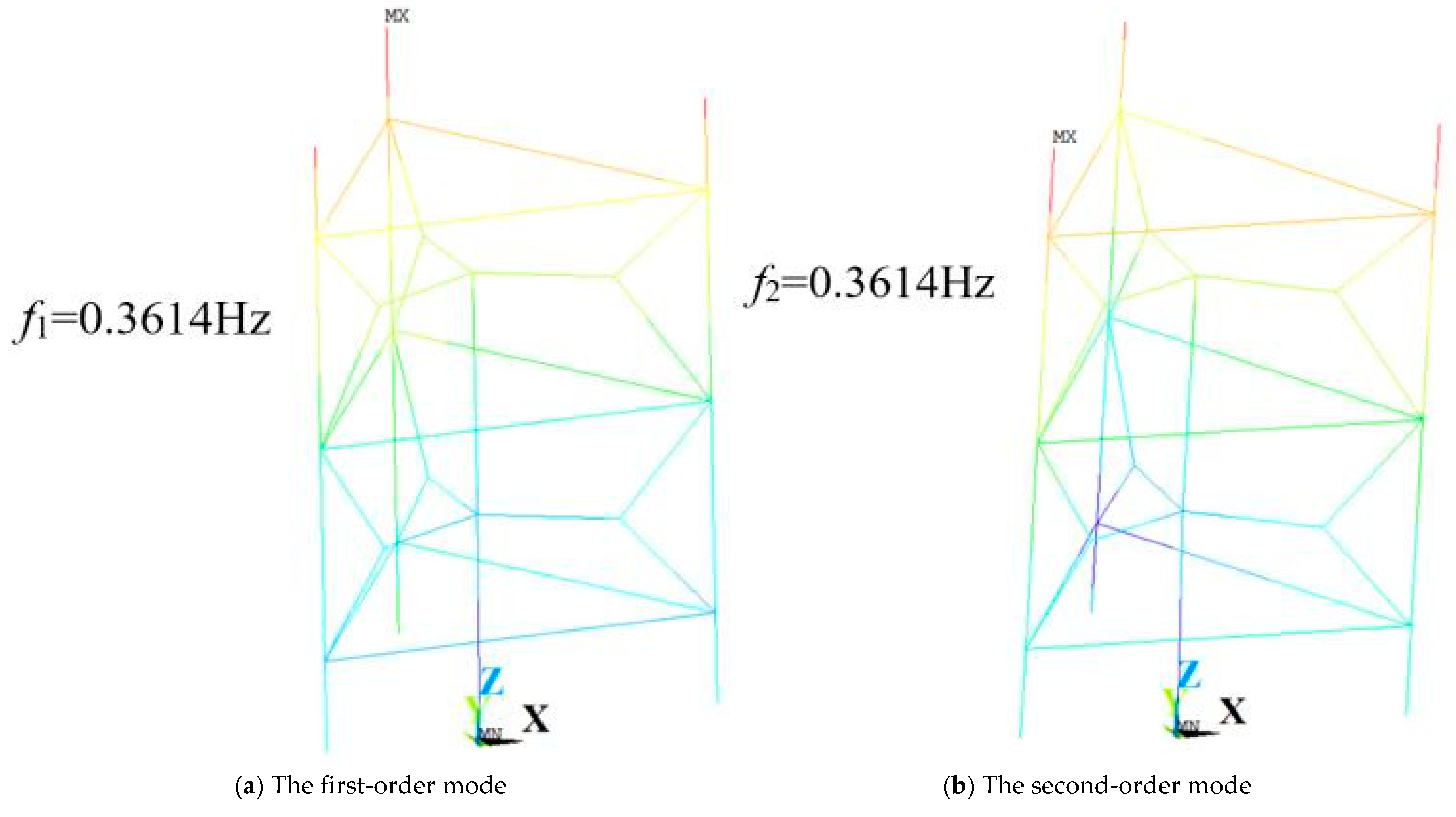
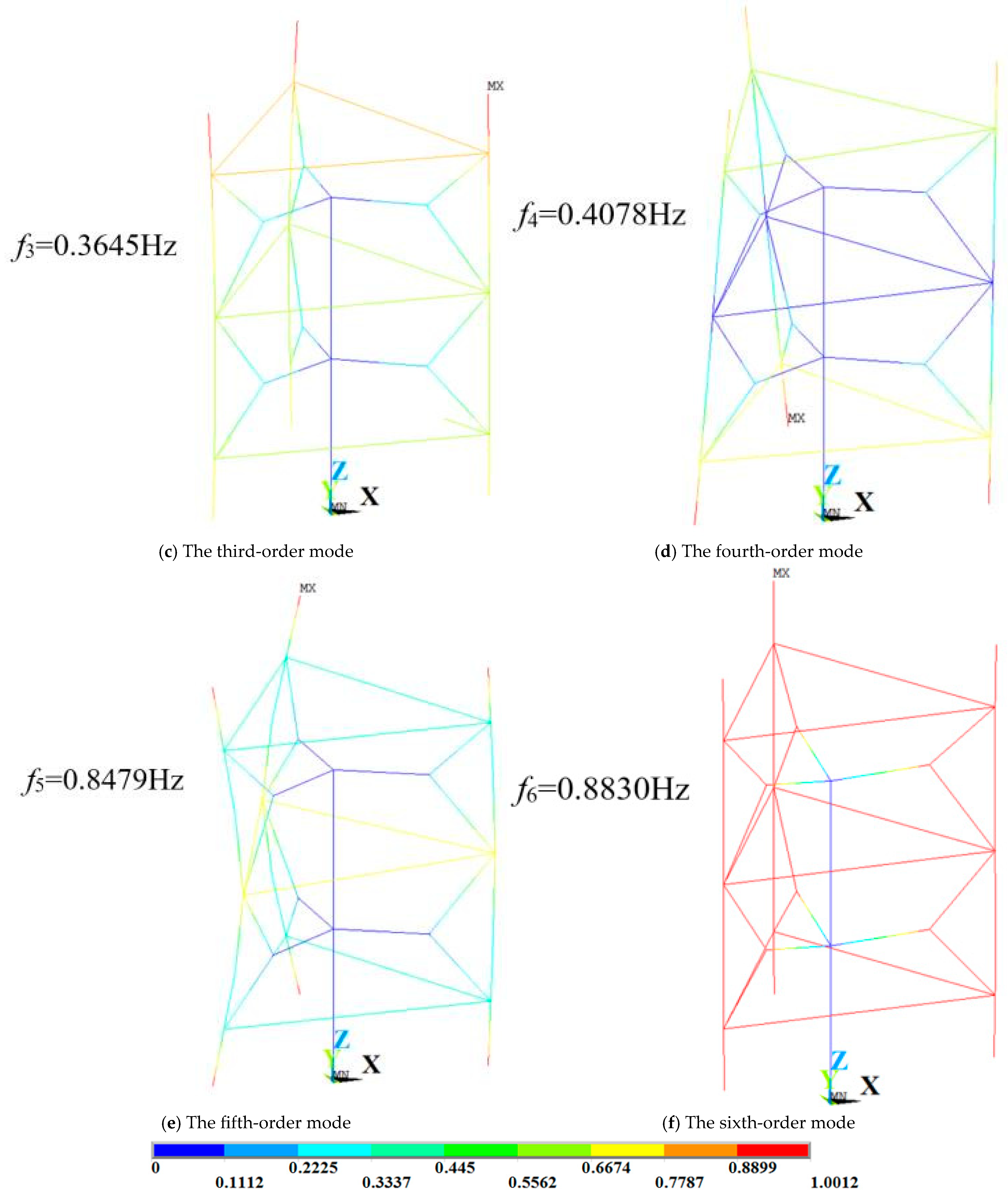
Model 2 was developed from Model 1 by incorporating horizontal braces between the three blades to enhance the in-plane stiffness. As listed in Table 5, the fundamental frequency of Model 2 was 0.361 Hz. Although this value was marginally lower (by 0.001 Hz) than that of Model 1, it still effectively avoided the 1P and 3P excitation ranges of the wind turbine, thereby preventing resonance. The first six mode shapes of Model 2 are presented in Figure 11. Distinct from Model 1, the first mode shape is characterized by the fore–aft oscillation of the turbine, while the second mode represents the side-to-side oscillation. The third mode remains a torsional oscillation of the wind turbine with minor blade participation. The fourth and fifth modes are dominated by substantial oscillations of the blades, and the sixth mode exhibits a vertical oscillation of the brace.
Figure 11.
Vibration mode diagram of Model 2.
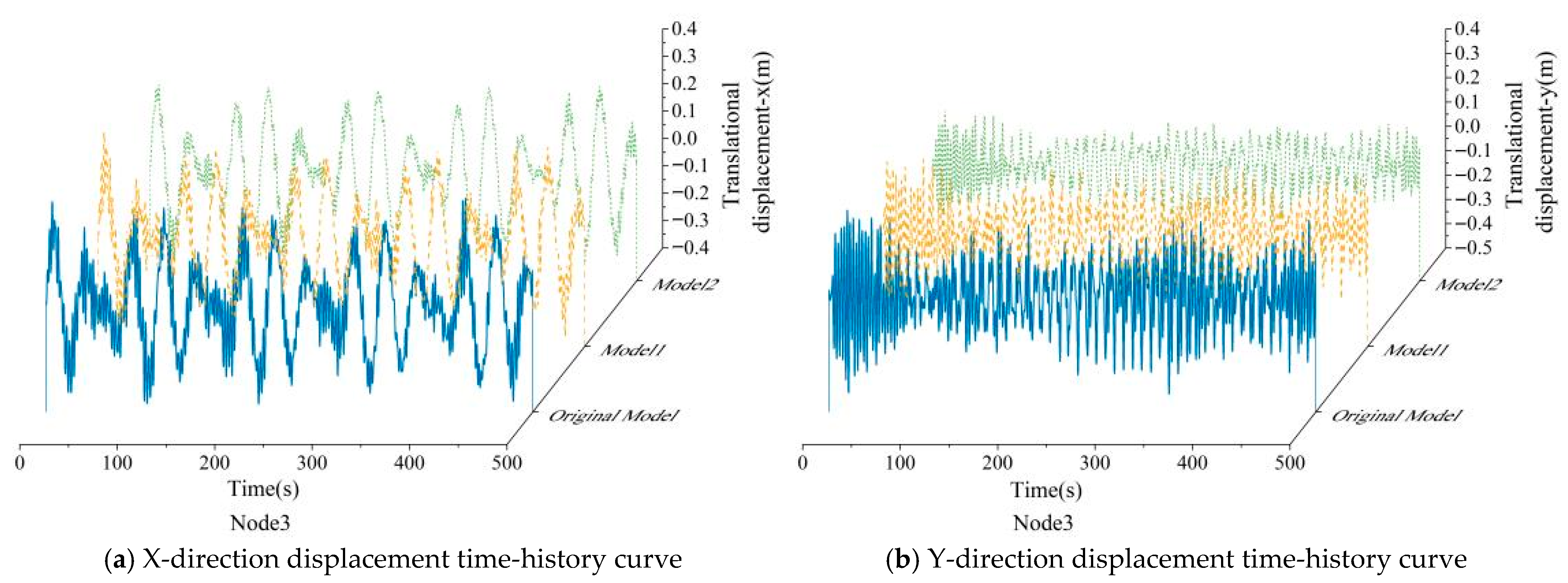
The displacement time history at Node 3 (the top of the main shaft) was compared for the original model, Model 1, and Model 2, as shown in Figure 12. The comparison shows that the vibration attenuation in the x-direction was limited for both Model 1 and Model 2. In the y-direction, however, Model 2 demonstrated a more significant damping effect compared to Model 1.
Figure 12.
Comparison of the displacement time-history curves of the VAWT tower top for the original model, Model 1, and Model 2.
Figure 13 shows the displacement curve at the blade top. The comparison revealed that the peak displacements of Model 1 and Model 2 in the x-, y-, and z-directions were smaller than those of the original model, indicating a noticeable damping effect for both models. Also, compared with Model 1, Model 2 had a better damping effect in both the x and y directions, despite the fact that there was little difference in the z direction.
Figure 13.
Comparison of the displacement time-history curves of the VAWT blade top for the original model, Model 1, and Model 2.
Table 6 shows the peak displacement comparisons of the three models, and Table 7 shows the damping efficiency comparisons of Model 1 and Model 2. The formula for calculating the damping efficiency is shown in Formula (10):
where is the peak displacement without control, and is the peak displacement under control.
Table 6.
Peak displacement comparison of both the top of the VAWT tower and the top of the VAWT blade.
Table 7.
Comparison of damping efficiencies between Model 1 and Model 2.
The original maximum displacement of the spindle tip was −0.427 m in the y direction. Through structural optimization, the displacement of Model 1 and Model 2 was reduced to −0.339 m and −0.272 m, respectively. Meanwhile, the maximum displacement of the blade tip is −5.416 m in the y direction, which was reduced to −4.137 m and −1.593 m in Models 1 and 2, respectively. By comparing the damping efficiency of Model 1 and Model 2, it can be found that, at the top of the spindle, Model 2 had a better damping effect, up to 17.19% and 39.98% in the x and y directions. Also, at the blade tip, Model 2 exhibited greater damping than Model 1. In the x, y, and z directions, the damping efficiency of Model 2 was 59.94%, 70.58%, and 64.47%, respectively. Therefore, the optimized Model 2 was superior to Model 1 in vibration control.
5.2. Model 3
In this section, Model 3 was taken as the research object. On the basis of Model 2, in order to make the whole structure lighter and, at the same time, ensure its stiffness, the horizontal braces between each blade were changed into cables (Figure 1c).
The cable is a high-strength galvanized steel wire rope with a standard tensile strength of 1670 MPa. In ANSYS [17], the cables were modeled using LINK10 elements, with prestress applied as an initial strain. The influence of the section area and pre-stress on the cable stiffness was analyzed as follows.
As shown in Table 8, the technical parameters of the cable were detailed. We assume that the initial strain of the cable is 0.001 and the pre-stress is 195 MPa. The natural frequency of the cable was calculated when the area of the wire harness was 0.5 A0, A0, 1.5 A0, and 2 A0. As shown in Table 9, for the first 10 natural frequencies of cables with different section areas, it was found that the section area had little influence on the natural frequencies of cables and hardly changed.
Table 8.
Technical parameters of the cable.
Table 9.
Frequencies of cables with different cross-sectional areas.
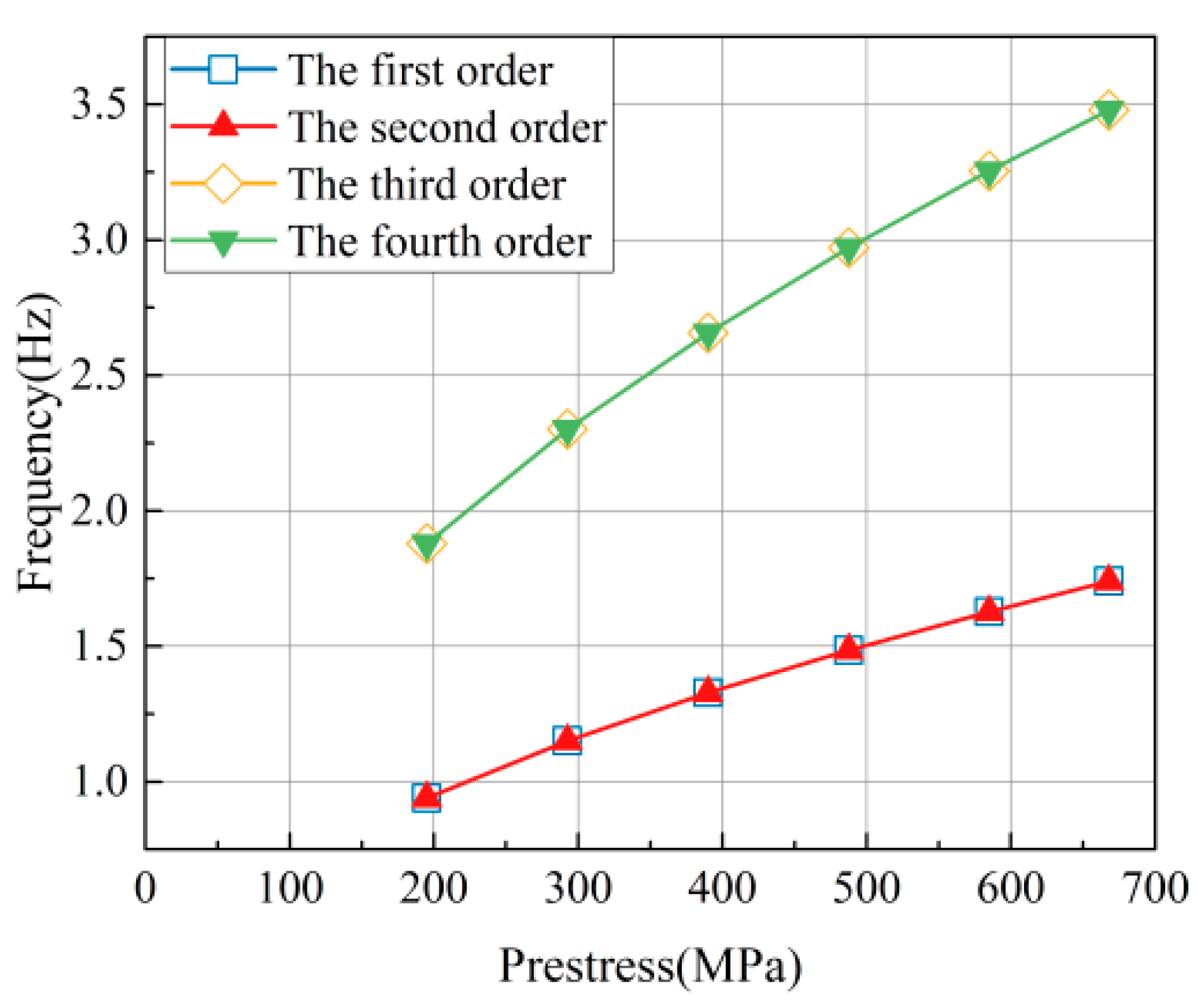
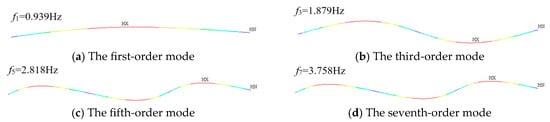
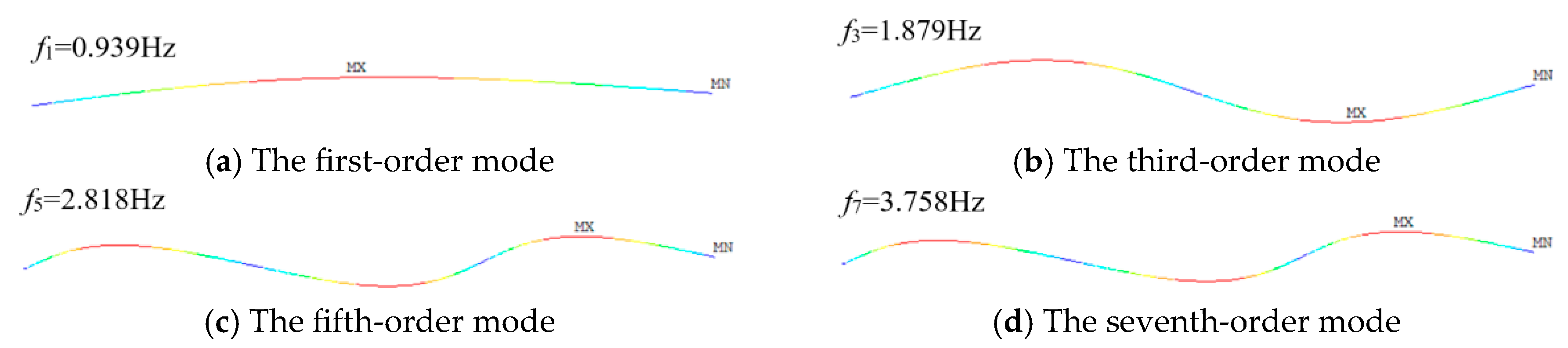
Table 10 presents the natural frequencies of the cable (with a fixed cross-sectional area of 7854 mm2) under different prestress conditions. Comparing the natural frequency of cables under different pre-stressing conditions, it can be seen that the natural frequency increases with the increase in pre-stressing force. At the same time, it was observed that the frequency and mode shapes of each order of the cables were equal, because when the cables vibrate, their two principal axis directions were symmetrical. As shown in Figure 14, for each order of frequencies under different pre-stresses, the conclusion was drawn that the nonlinearity of the natural frequency of cables increases with the increase in pre-stress. Figure 15 showed the vibration modes of cables in the first-, third-, fifth-, and seventh-order modes. The vibration modes of cables took the form of sinusoidal waves. With the increase in order, the number of waves increased while the period decreased.
Table 10.
Frequencies of cables with different initial stress.
Figure 14.
Curves of cable natural vibration frequency with different prestress.
Figure 15.
Vibration mode diagram of the cable.
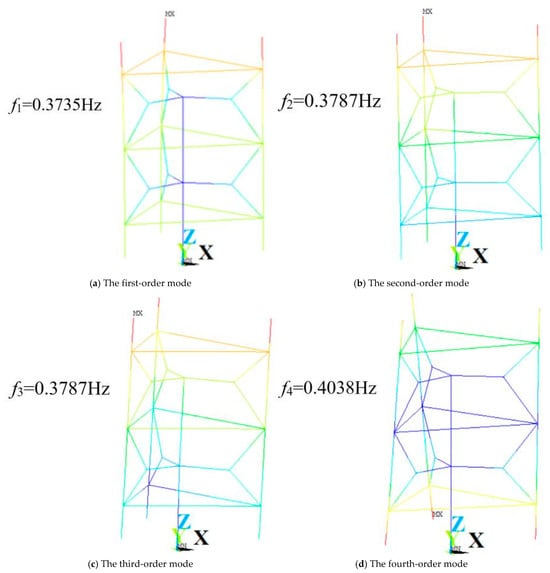
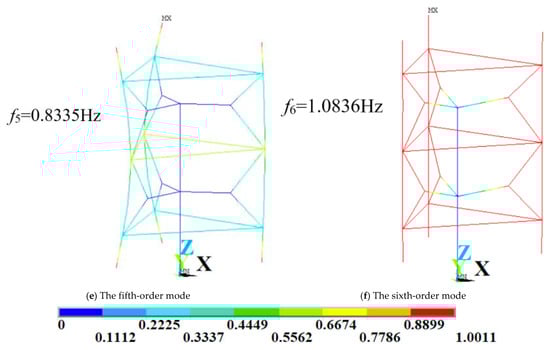
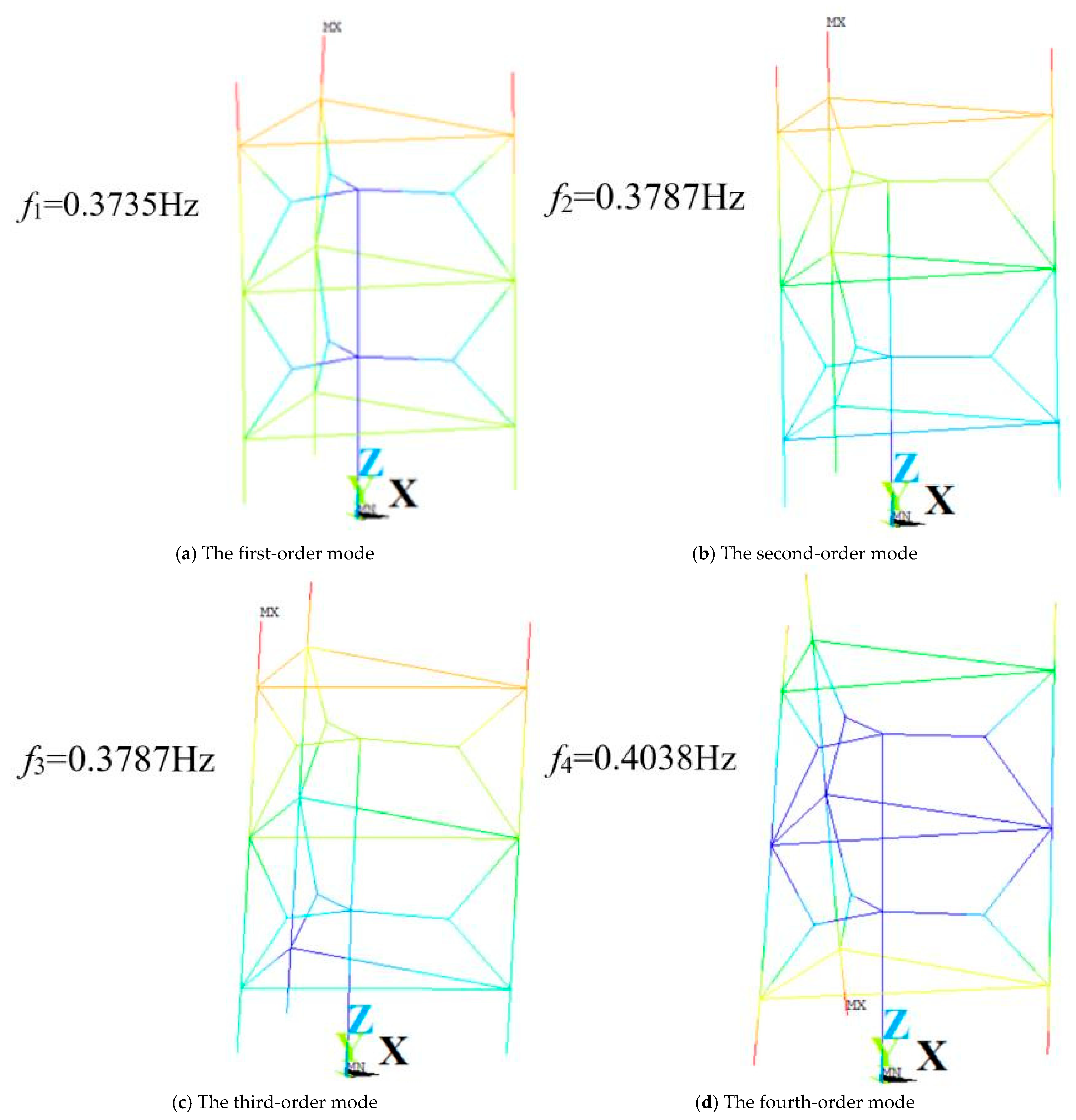
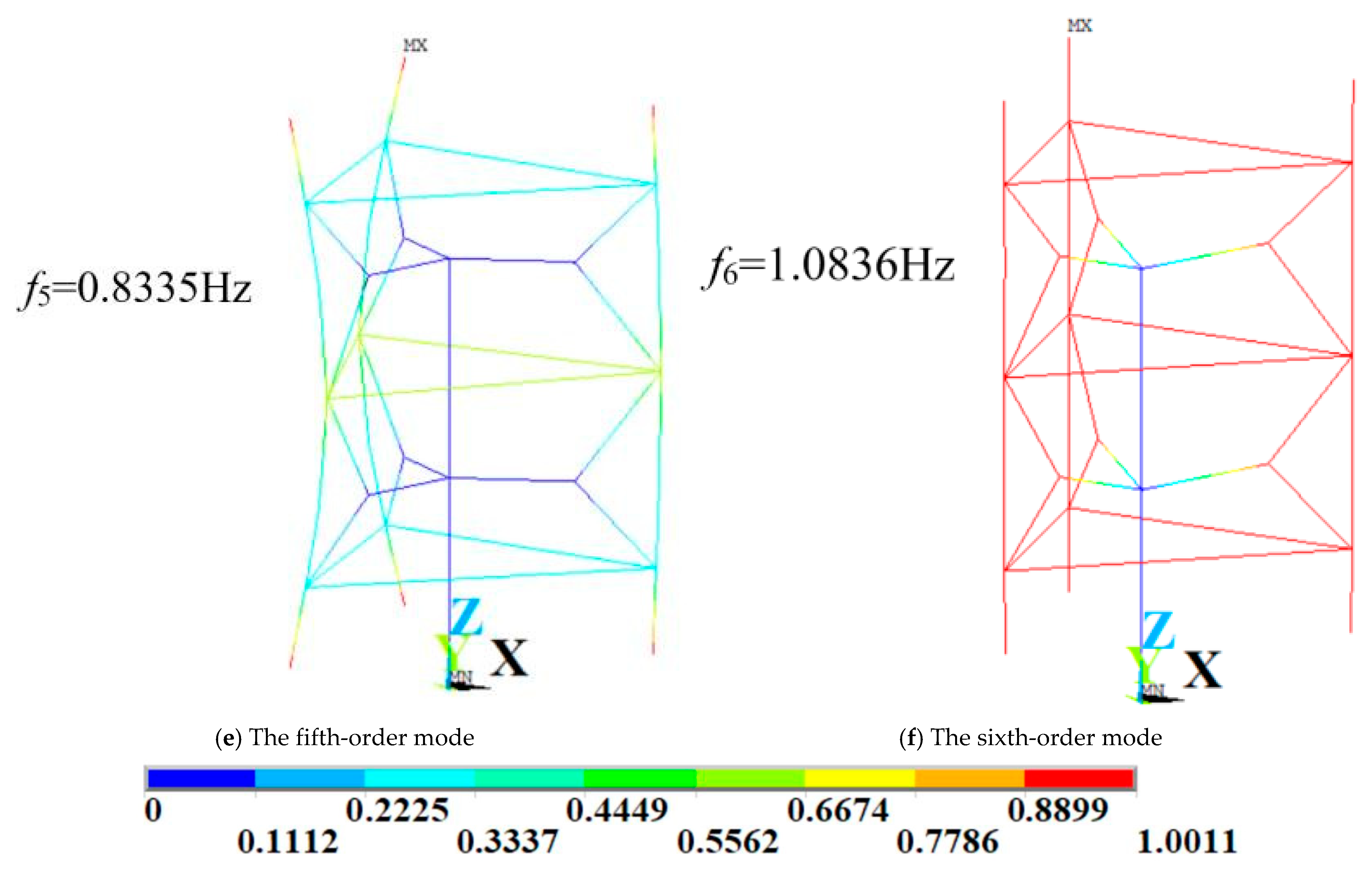
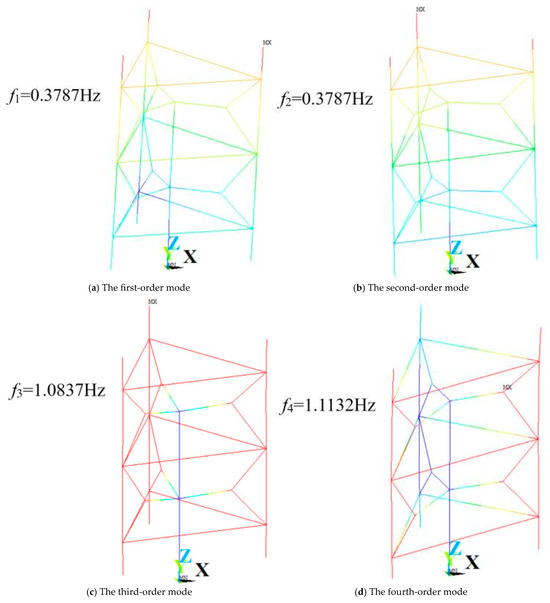
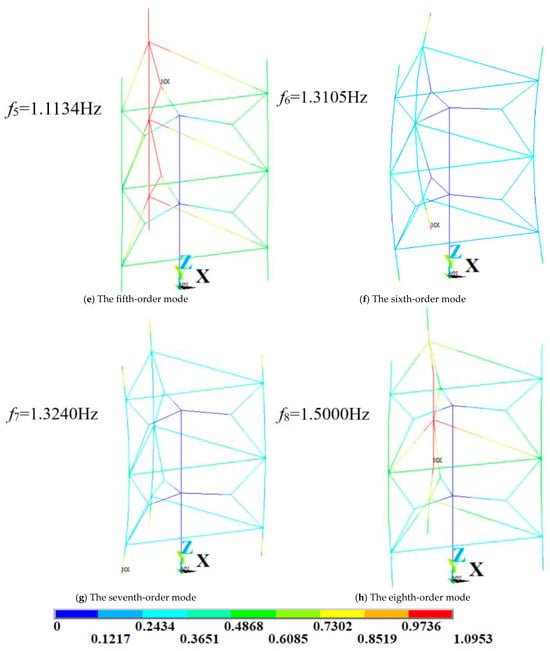
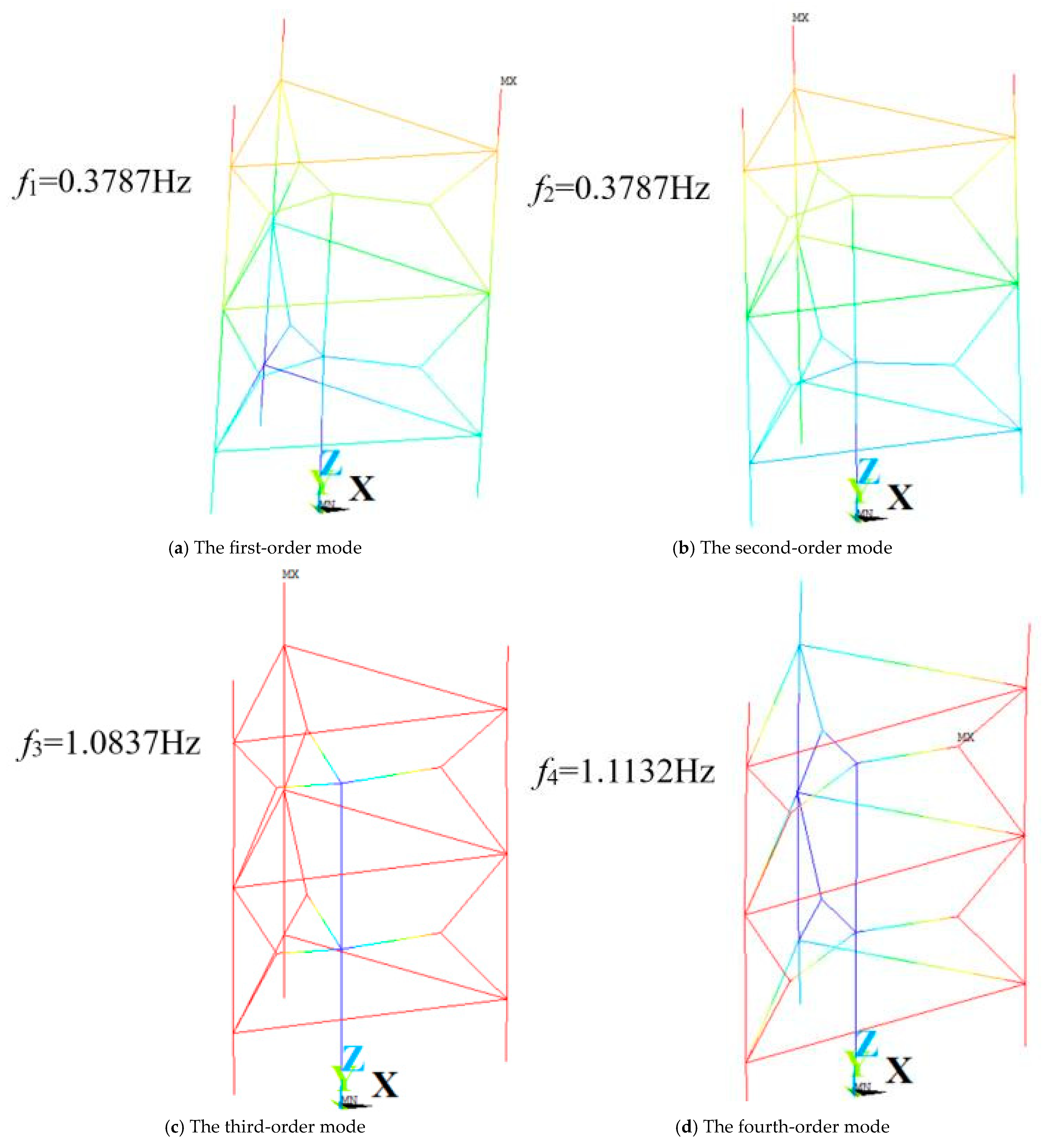
Under the above settings, Table 11 showed the natural frequency of Model 3, for which its fundamental frequency was 0.37349 Hz, higher than Models 1 and 2, which also avoided the resonance areas. Figure 16 shows the mode diagram of Model 3. The first vibration mode was the torsion of the wind turbine. The second and third orders represented the front–rear and left–right oscillations of the turbine. The fourth and fifth modes were characterized by large oscillations and waves of the blades. Lastly, the sixth-order vibration mode was the up–down oscillation of the wind turbine brace. Compared with the modes of Model 2, the first-order mode (i.e., torsional vibration) of Model 3 was similar to the third-order mode of Model 2, and the other modes were also in different orders but with similar waveforms.
Table 11.
The first 10 natural frequencies of Model 3.
Figure 16.
Vibration mode diagram of Model 3.
From Section 5.1, it can be seen that the damping effect of Model 2 was better than Mode 1. Since the geometrical form of Model 3 was the same as that of Model 2, the dynamic responses of the original model, Model 2, and Model 3 were compared, and their damping effects were further analyzed in this section.
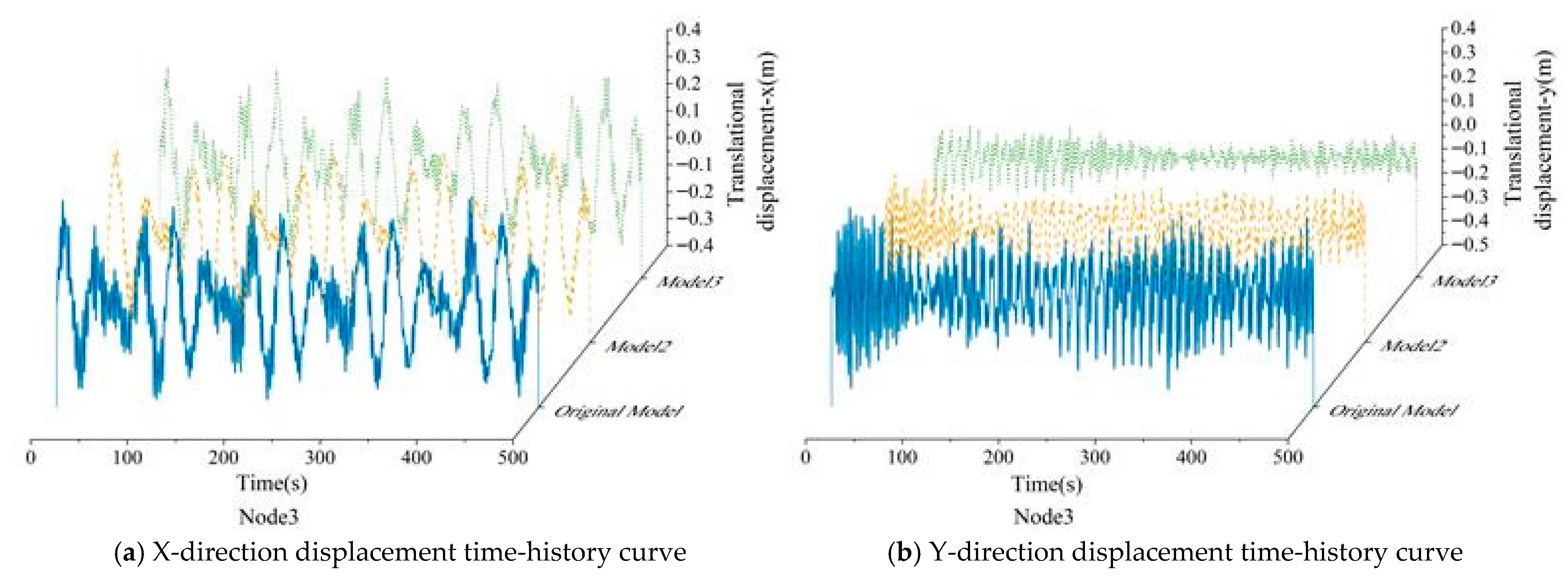
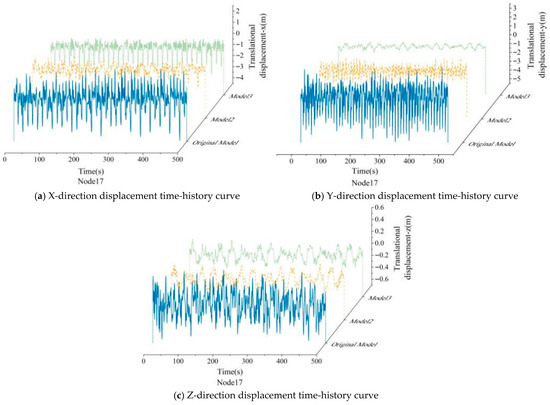
Figure 17 shows the displacement time-history curve at the top of the spindle of the original model, Model 2, and Model 3. Their peak values in the x direction and their waveforms were similar. However, the peak displacement of Model 3 in the y direction was significantly lower than that of the original model and Model 2.
Figure 17.
Comparison of the displacement time-history curves of the VAWT tower top for the original model, Model 2, and Model 3.
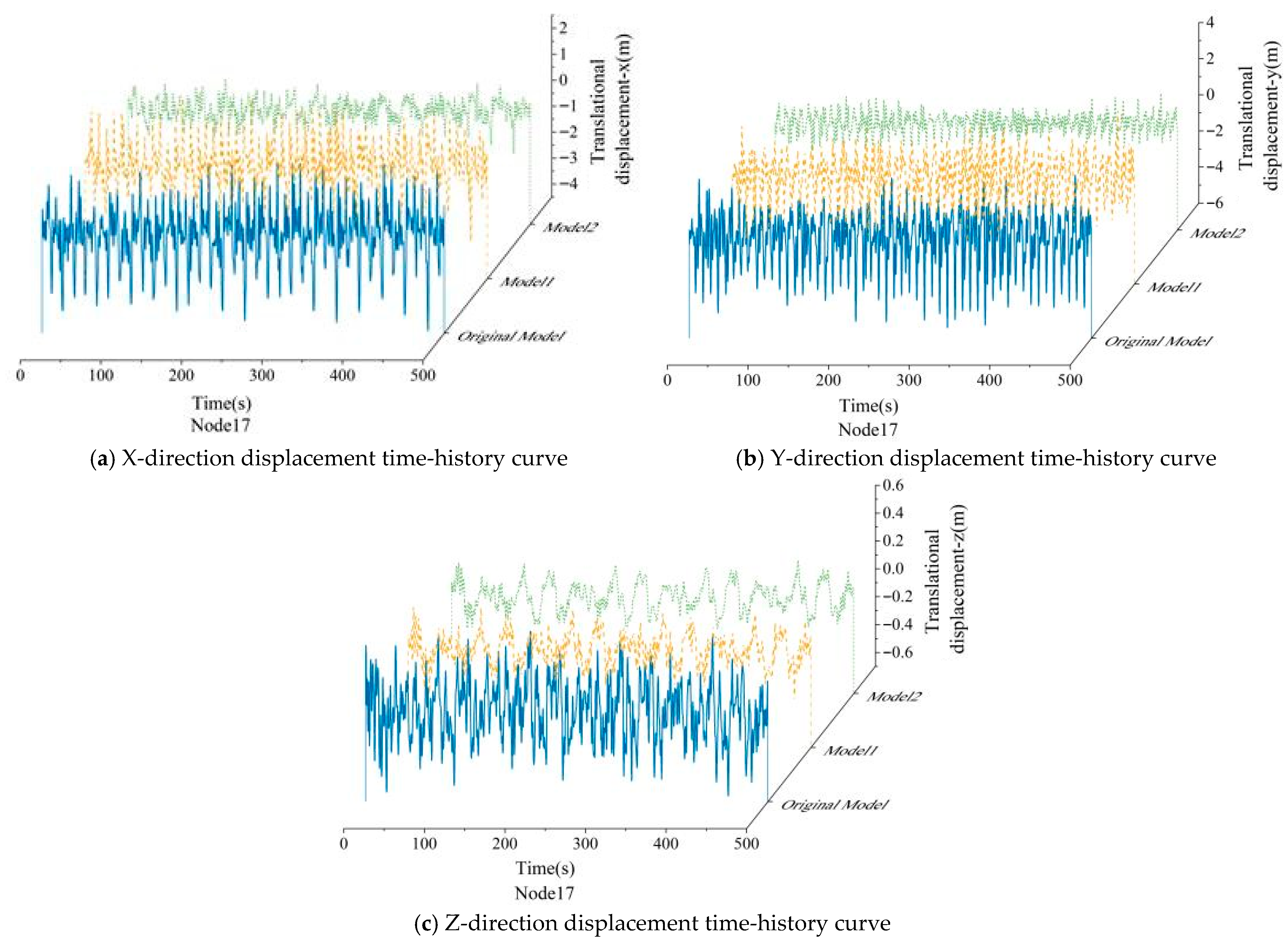
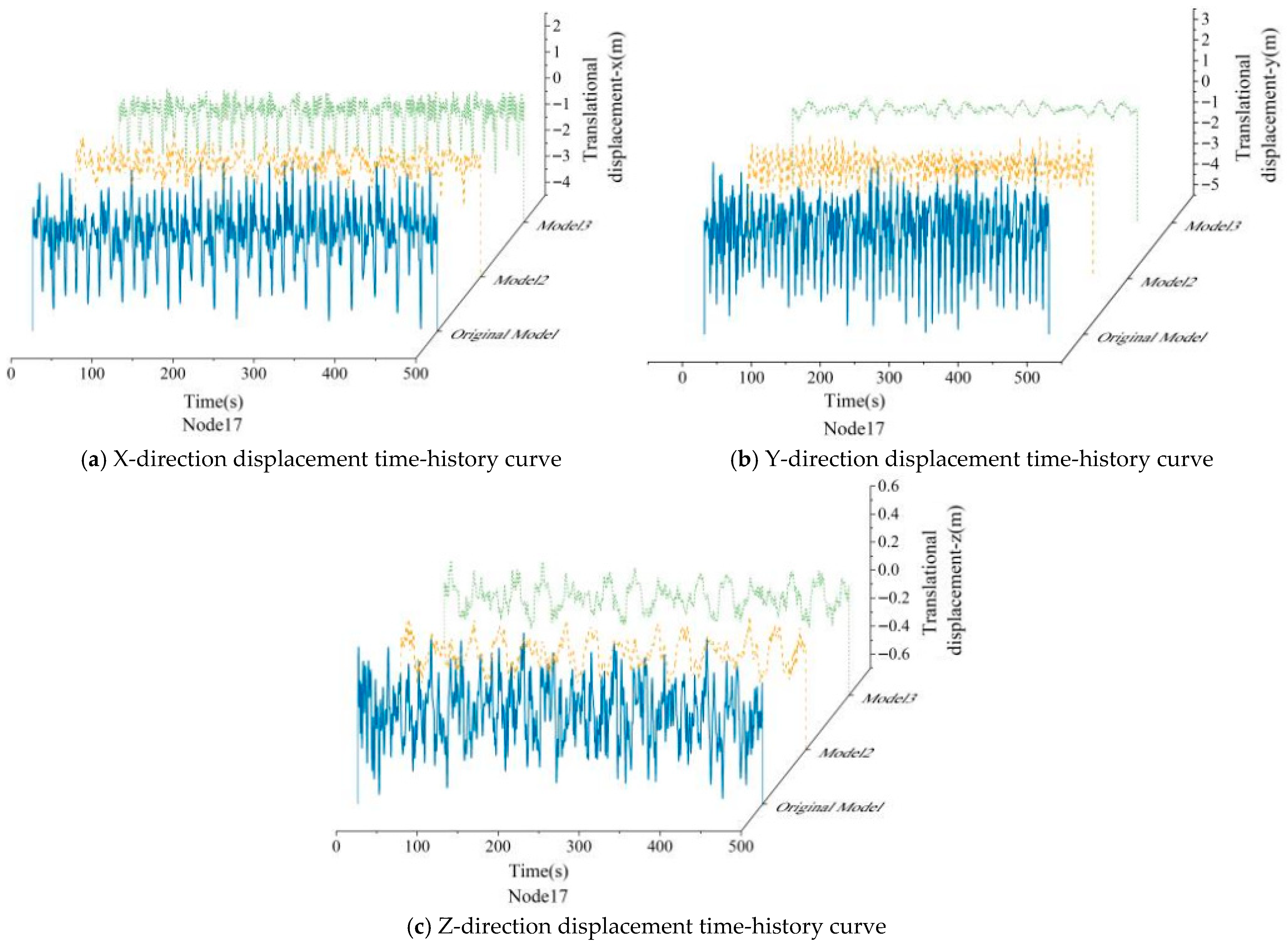
Figure 18 shows the displacement time-history curves of the blade tip of the original model, Model 2, and Model 3. In the x direction, the peak displacement of Model 3 was close to that of Model 2 and was much smaller than that of the original model. In the z direction, the waveform of Model 3 was flatter than that of Model 2 and the original model, and its peak value was significantly lower than the other models. In the z direction, the peak values of Model 3 and Model 2 were close, and their waveforms were similar, with both smaller than those of the original model.
Figure 18.
Comparison of the displacement time-history curves of the VAWT blade tip of the original model, Model 2, and Model 3.
Table 12 shows the damping efficiency of Model 3 at the top of the turbine shaft and the top of the blade. By comparing it with Model 2 in Table 6 and Table 7, it can be concluded that Model 3 was better than Model 2 in terms of damping efficiency in the y direction at the top of the spindle, reaching 60.29%. However, Model 3 was slightly lower than Model 2 in terms of damping efficiency in the x direction, which was −1.44%. In addition, at the blade tip, Model 3 was better than Model 2 in terms of the damping effect. Model 3 can reduce the peak displacement of the original model in the x, y, and z directions from 2.035 m, −5.416 m, and −0.658 m to 0.626 m, −0.690 m, and −2.20 m, where the maximum damping efficiency was 69.23%, 87.26%, and 66.61%, respectively.
Table 12.
Damping efficiencies of Model 3 at the top of the main shaft and the top of the blade.
5.3. Model 4
Model 4 (Figure 1d) was developed from Model 3 by incorporating spring-damper units at the midpoints of the cables. This modification was designed to mitigate nonlinear vibrations in the cables themselves. The dynamic response of Model 4 was analyzed in this section.
The mass of the wind turbine main structure was 9214.4 t. The mass ratios (0.005~0.1) of TMD and the wind turbine’s main structure were taken at 0.005, 0.015, 0.045, and 0.09 (Table 4). A comparison of the natural frequencies of Model 4 under different mass ratios (Table 13) indicated that its first two natural frequencies were nearly identical to the third and fourth natural frequencies of Model 3. From the third mode onward, the natural frequencies of Model 4 increased with the TMD mass ratio. Furthermore, the first five natural frequencies for mass ratios of 0.045 and 0.09 were very similar.
Table 13.
Frequencies of Model 4 under different mass ratios.
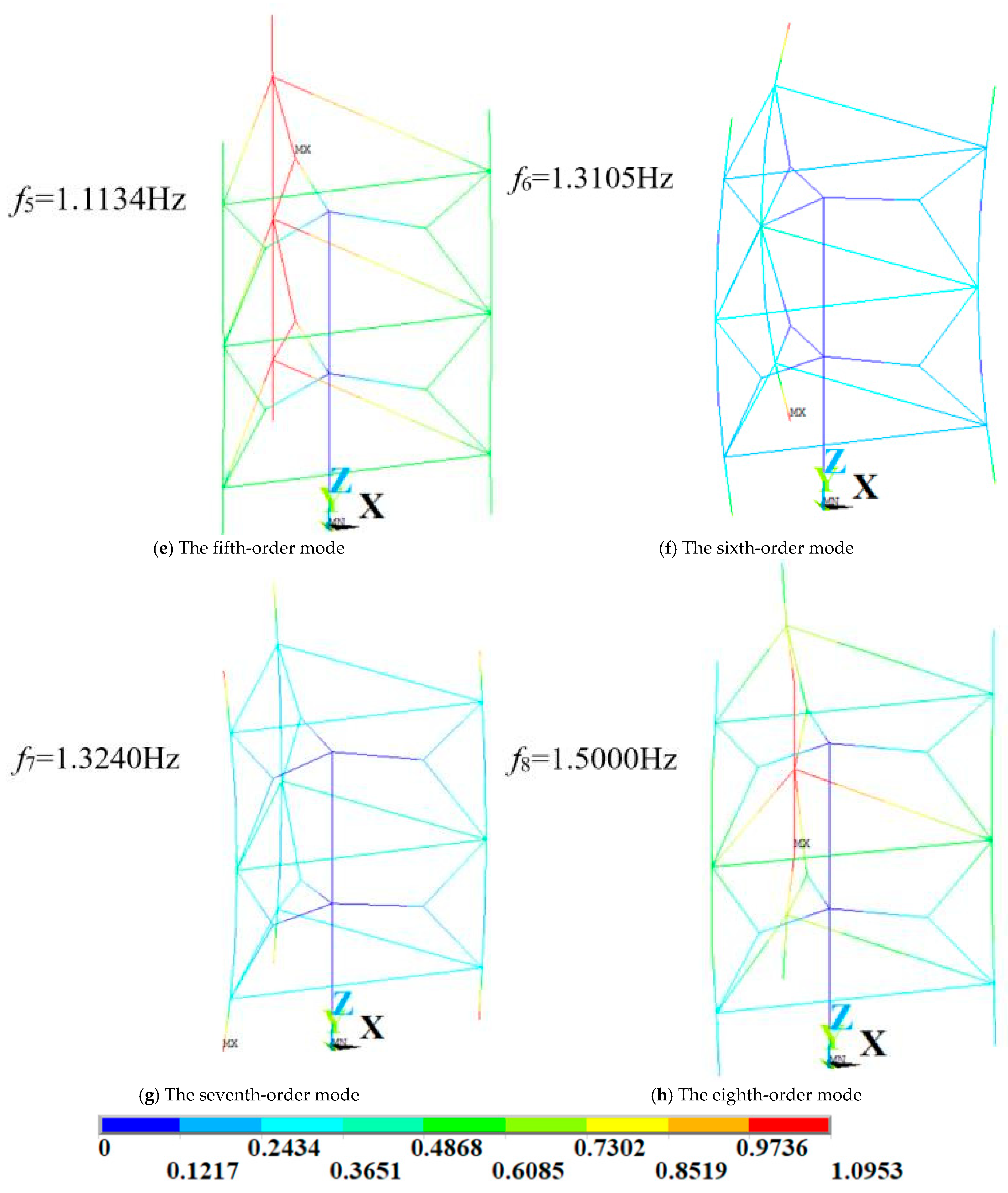
Taking the TMD mass ratio to be 0.045, the first six modes of Model 4 are shown in Figure 19. The first mode shape of Model 4 was the left–right oscillation of the turbine. The second mode showed the turbine’s swinging. The third order was the synchronous up-and-down swinging of the struts. The fourth and fifth orders denoted the local and global asynchronous up-and-down swinging of the struts. The sixth and seventh modes were the swing and shimmy of the blades. And the eighth mode was the torsional vibration of the wind turbine.
Figure 19.
Vibration mode diagram of Model 4.
Compared with the vibration mode of Model 3 shown in Figure 16, Model 4 showed the whole wind turbine’s vibration in the first two modes. The vibration mode of the strut was advanced from the third to the fifth order. The blade vibration was lagged from the sixth to the seventh, and the torsional vibration of the wind turbine was eventually delayed to the eighth mode. Compared with the original model, it can be found that Model 4 can further delay the vibration mode of the original blade.
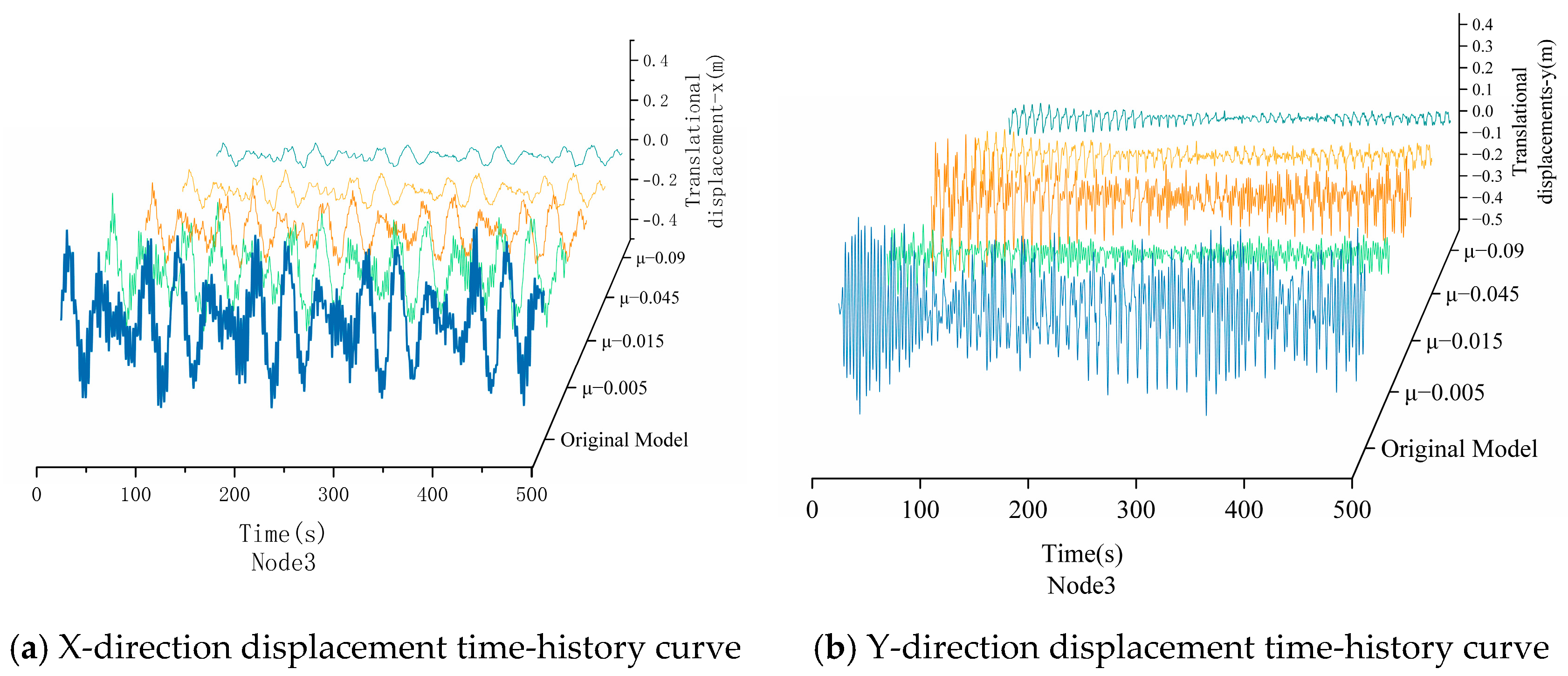
As shown in Figure 20, the time-history curve of the spindle top displacement of Model 4 under different mass ratios μ was plotted. With an increase in mass ratio, the displacement peak value of the spindle top in the x and y directions decreased.
Figure 20.
Comparison of the displacement time-history curves of the VAWT tower top between Model 4 under different mass ratios and the original model.
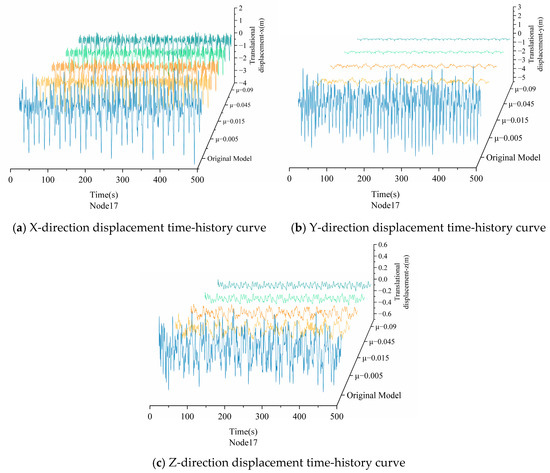
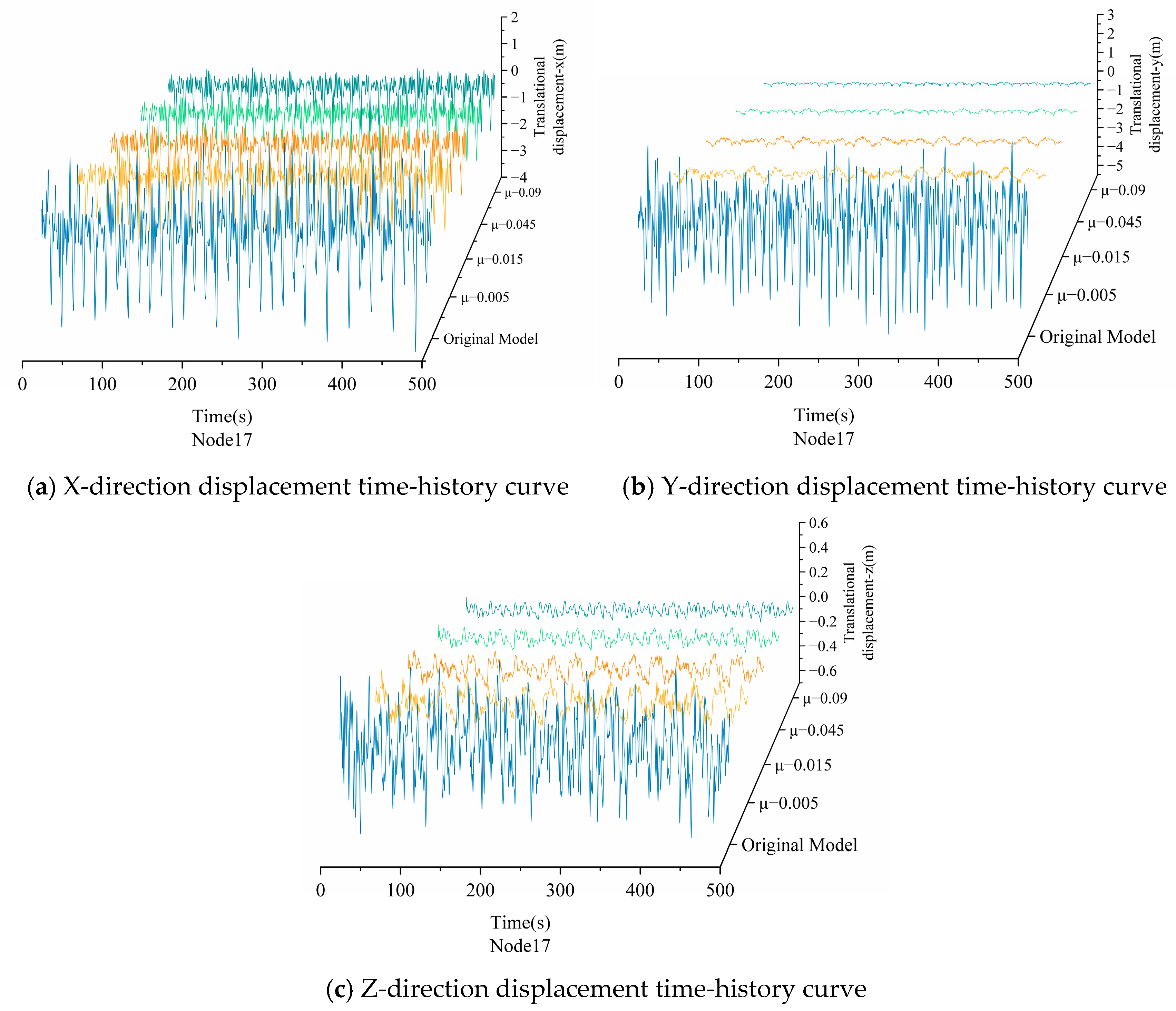
Figure 21 shows the time-history curve of the blade tip’s displacement under different mass ratios; the larger the mass ratio, the smaller the peak value of the blade tip’s displacement. When the mass ratio was 0.09, the vibration reduction effect of Model 4 reached its maximum.
Figure 21.
Comparison of the displacement time-history curves of the VAWT blade top between Model 4 under different mass ratios and the original model.
Table 14 and Table 15 show the peak displacements and vibration reduction efficiencies of the top of the main shaft and the blade of Model 4 under different TMD mass ratios. Through comparisons, it can be seen that when the mass ratio was 0.09, the vibration reduction effect of Model 4 was the best, where the maximum vibration reduction efficiency of the x and y directions at the top of the spindle can reach 84.68% and 95.21%, reducing the peak displacement of the x and y of the original model from −0.371 m and −0.247 m to −0.057 m and −0.02 m, respectively. The results also show that the maximum vibration reduction efficiency in the x, y, and z directions of the blade tip can reach 71.61%, 96.83%, and 85.19%, which can reduce the peak displacement of the original model from 2.035 m, −5.416 m, and −0.658 m to −0.578 m, −0.171 m, and −0.098 m, respectively.
Table 14.
Displacements of the top of the tower and damping efficiencies of Model 4 under different mass ratios.
Table 15.
Displacements of the top of the blade and damping efficiencies of Model 4 under different mass ratios.
The structural evolution from Model 1 to Model 4 represented a progressive optimization process aimed at enhancing blade stiffness while reducing the overall mass of the turbine. A comparative analysis of the vibration reduction efficiencies, summarized in Table 16, conclusively showed that Model 4 outperformed the other three models, achieving the highest damping efficiency across all evaluated degrees of freedom.
Table 16.
Comparison of damping efficiency of four models.
6. Conclusions
This study investigated the nonlinear dynamic response and passive vibration control of a large-scale floating vertical-axis wind turbine (VAWT) by proposing and evaluating four novel structural optimization strategies. The research was based on a 5 MW H-type VAWT. Its dynamic response was analyzed under extreme conditions comprising a 25 m/s wind speed and combined platform pitch and surge motions. Subsequently, four structural optimizations were developed. While this study demonstrated the effectiveness of the proposed passive damping mechanism under extreme wind and selective platform motions, its performance across a broader spectrum of environmental conditions—such as below-rated wind speeds, combined wave–wind excitations, and additional degrees of freedom (e.g., heave)—warranted further investigation.
To enhance the in-plane and out-of-plane stiffness of the rotor while considering economic feasibility, four progressive optimization strategies were proposed (Figure 1): (1) Model 1: incorporating bifurcated struts to reduce the effective blade length; (2) Model 2: adding horizontal braces to increase in-plane rigidity; (3) Model 3: replacing rigid braces with pre-tensioned cables to reduce weight; (4) Model 4: integrating spring-damper units into the cables for enhanced damping.
The primary objective was to mitigate vibrations by avoiding resonance through shifting structural modes to higher frequencies. The results demonstrated a progressive improvement in performance across the four models. Model 1, with bifurcated struts, enhanced out-of-plane stiffness, achieving a maximum damping efficiency of 45.42% in the vertical (z) direction at the blade tip. Model 2 further improved in-plane stiffness with horizontal braces, increasing the maximum damping efficiency to 70.58% in the transverse (y) direction. Model 3 successfully reduced the overall mass by replacing braces with cables (pre-stress: 195 MPa; cross-sectional area: 7854 mm2), while still achieving a high damping efficiency of 87.26% in the y-direction. Finally, Model 4, incorporating spring-dampers, demonstrated the superior performance. A parametric study revealed that increasing the stiffness and damping coefficients of these elements consistently improved vibration reduction, culminating in a peak damping efficiency of 96.83% in the y-direction. A key finding common to all optimized models was the systematic shifting of blade swing and flapping modes to higher natural frequencies. This modal shifting effectively decoupled the blade dynamics from the primary excitation frequencies, which was the fundamental mechanism responsible for the significant reduction in the global vibration response of the turbine. Among the four designs, Model 4—integrating struts, cables, and spring-damping elements—demonstrated unequivocal superiority, achieving the highest vibration reduction efficiency.
This study provided valuable insights and practical design strategies for the passive vibration control of large-scale floating VAWTs. The findings contributed to the development of more reliable and efficient offshore wind energy systems, potentially accelerating the commercial adoption of floating VAWT technology.
Author Contributions
Formal analysis, F.Z.; data curation, F.Z., Z.Y. and M.Y.; methodology, M.Y.; validation, Z.Y., J.C. and R.Z.; resources, Y.Z.; writing—original draft preparation, F.Z.; writing—review and editing, Z.Y., M.Y., J.C., R.Z. and Y.Z.; supervision, J.C. and Y.Z.; project administration, R.Z. All authors have read and agreed to the published version of the manuscript.
Funding
The authors gratefully acknowledge the financial support from the National Natural Science Foundation of China (No. 52471293) and the Sichuan Science and Technology Program (No. 2024NSFSC0065). The Open Fund of the State Key Laboratory of Coastal and Offshore Engineering of Dalian University of Technology (No. LP2415) is also gratefully acknowledged.
Data Availability Statement
The data supporting the findings of this study are not publicly available due to privacy and confidentiality agreements. The data also form part of an ongoing study and are available from the corresponding author upon reasonable request.
Acknowledgments
The authors gratefully acknowledge the collaborative efforts that made this work possible. The contributions were as follows: Fang Zhou led the writing of the original draft and conducted formal analysis and data curation. The corresponding authors, Zhiyuan Yao and Mengyao Yang, oversaw the research direction; Zhiyuan Yao contributed to data curation, validation, and manuscript review, while Mengyao Yang was instrumental in methodology development, data curation, and review. Jinbo Chen and Yongfei Zhang provided crucial supervision, validation, and critical review of this manuscript. Rui Zhao managed project administration and contributed to validation and editing. All authors have reviewed and approved the final manuscript.
Conflicts of Interest
F.Z., R.Z. and Y.Z. were employed by the Shandong Electric Power Engineering Consulting Institute Co., Ltd. and M.Y. was employed by the Shanghai Investigation, Design & Research Institute (Group) Co., Ltd. The remaining authors declare that the research was conducted in the absence of any commercial or financial relationships that could be construed as a potential conflict of interest.
References
- Day, H.; Ingham, D.; Ma, L.; Pourkashanian, M. Adjoint based optimisation for efficient VAWT blade aerodynamics using CFD. J. Wind Eng. Ind. Aerodyn. 2021, 208, 104431. [Google Scholar] [CrossRef] [Scilit]
- Su, J.; Li, Y.; Chen, Y.; Han, Z.; Zhou, D.; Zhao, Y.; Bao, Y. Aerodynamic performance assessment of φ-type vertical axis wind turbine under pitch motion. Energy 2021, 225, 120202. [Google Scholar] [CrossRef] [Scilit]
- Rahman, M.; Ong, Z.C.; Chong, W.T.; Julai, S.; Khoo, S.Y. Performance enhancement of wind turbine systems with vibration control: A review. Renew. Sustain. Energy Rev. 2015, 51, 43–54. [Google Scholar] [CrossRef] [Scilit]
- Erwin, E.; Surjosatyo, A.; Sulistyo, N.J.; Meurahindra, M.T.; Soemardi, T. The effect of hybrid savonius and darrieus turbine on the change of wake recovery and improvement of wind energy harvesting. J. Appl. Eng. Sci. 2018, 16, 416–423. [Google Scholar] [CrossRef] [Scilit]
- Lei, H.; Zhou, D.; Lu, J.; Chen, C.; Han, Z.; Bao, Y. The impact of pitch motion of a platform on the aerodynamic performance of a floating vertical axis wind turbine. Energy 2017, 119, 369–383. [Google Scholar] [CrossRef] [Scilit]
- Hand, B.; Kelly, G.; Cashman, A. Structural analysis of an offshore vertical axis wind turbine composite blade experiencing an extreme wind load. Mar. Struct. 2021, 75, 102858. [Google Scholar] [CrossRef] [Scilit]
- Wang, W.; Chen, B.; Hu, R.; Wen, Q.; Hua, X. Control of a Pedestrian Bridge by a Damped Single-Sided Pounding Tuned Mass Damper: Modeling, Simulation, and Field Test. J. Struct. Eng. 2025, 151, 04025046. [Google Scholar] [CrossRef] [Scilit]
- Chen, S.; Wang, W.; Liu, G.; Zhou, C.; Chen, B.; Chen, Z. Mechanical Behavior and Seismic Control Performance of a Metallic Torsional Damper for Flexible Structures. Eng. Struct. 2024, 318, 118674. [Google Scholar] [CrossRef] [Scilit]
- Wang, W.; Yu, T.; Yang, Z.; Chen, S.; Hua, X.; Yang, O. Optimum Design of Pendulum Tuned Mass Dampers Considering Control Performance Degradation from Damper Connection. J. Struct. Eng. 2023, 149, 04023163. [Google Scholar] [CrossRef] [Scilit]
- Wang, S.; Chen, Z.; Wang, W.; Yu, T.; Zhang, H.; Hua, X. A Novel Enhanced Torsional Eddy Current Damper for Fixed-Axis Rotation Control of Rigid Bodies. Struct. Control. Health Monit. 2024, 2024, 9922305. [Google Scholar] [CrossRef] [Scilit]
- Borg, M.; Collu, M. Frequency-domain characteristics of aerodynamic loads of offshore floating vertical axis wind turbines. Appl. Energy 2015, 155, 629–636. [Google Scholar] [CrossRef] [Scilit]
- Deng, W.; Yu, Y.; Liu, L.; Guo, Y.; Zhao, H. Research on the dynamical responses of H-type floating VAWT considering the rigid-flexible coupling effect. J. Sound Vib. 2020, 469, 115162. [Google Scholar] [CrossRef] [Scilit]
- Persson, A. How do we understand the coriolis force? Bull. Am. Meteorol. Soc. 1998, 79, 1373–1385. [Google Scholar] [CrossRef] [Scilit]
- Hand, B.; Cashman, A. Conceptual design of a large-scale floating offshore vertical axis wind turbine. Energy Procedia 2017, 142, 83–88. [Google Scholar] [CrossRef] [Scilit]
- Lei, H.; Zhou, D.; Bao, Y.; Chen, C.; Ma, N.; Han, Z. Numerical simulations of the unsteady aerodynamics of a floating vertical axis wind turbine in surge motion. Energy 2017, 127, 1–17. [Google Scholar] [CrossRef] [Scilit]
- Den Hartog, J.P. Mechanical vibrations; Courier Corporation, 1985. [Google Scholar]
- Lawrence, K. ANSYS Tutorial Release 2020; SDC Publications: Mission, KS, USA, 2020. [Google Scholar]

Disclaimer/Publisher’s Note: The statements, opinions and data contained in all publications are solely those of the individual author(s) and contributor(s) and not of MDPI and/or the editor(s). MDPI and/or the editor(s) disclaim responsibility for any injury to people or property resulting from any ideas, methods, instructions or products referred to in the content. |
© 2025 by the authors. Licensee MDPI, Basel, Switzerland. This article is an open access article distributed under the terms and conditions of the Creative Commons Attribution (CC BY) license (https://creativecommons.org/licenses/by/4.0/).