Article

Water Shutoff with Polymer Gels in a High-Temperature Gas Reservoir in China: A Success Story

1
State Key Laboratory of Enhanced Oil & Gas Recovery, Beijing 100083, China
2
Research Institute of Petroleum Exploration & Development (RIPED), CNPC, Beijing 100083, China
3
Key Laboratory of Oilfield Chemicals, CNPC, Beijing 100083, China
4
Tarim Oilfield Company, CNPC, Korla City 841000, China
5
Oil Field Development Department, RIPED, CNPC, Beijing 100083, China
6
Gas Field Development Department, RIPED, CNPC, Beijing 100083, China
*
Author to whom correspondence should be addressed.
Energies 2025, 18(24), 6554; https://doi.org/10.3390/en18246554
Submission received: 23 September 2025 / Revised: 27 November 2025 / Accepted: 12 December 2025 / Published: 15 December 2025
(This article belongs to the Special Issue New Advances in Oil, Gas and Geothermal Reservoirs—3rd Edition)

Abstract

Gel treatments have been widely applied to control water production in oil and gas reservoirs. However, for water shutoff in dense gas reservoirs, most gel-based treatments focus on individual wells rather than the entire reservoir, exhibiting limited treatment depth, poor durability, and inadequate repeatability Notably, formation damage is a primary consideration in treatment design—most dense gas reservoirs have a permeability of less than 1 mD, making them highly susceptible to damage by formation water, let alone viscous polymer gels. Constrained by well completion methods, gelant can only be bullheaded into deep gas wells in most scenarios. Due to the poor gas/water selective plugging capability of conventional gels, the injected gelant tends to enter both gas and water zones, simultaneously plugging fluid flow in both. Although several techniques have been developed to re-establish gas flow paths post-treatment, treating gas-producing zones remains risky when no effective barrier exists between water and gas strata. Additionally, most water/gas selective plugging materials lack sufficient thermal stability under high-temperature and high-salinity (HTHS) gas reservoir conditions, and their injectivity and field feasibility still require further optimization. To address these challenges, treatment design should be optimized using non-selective gel materials, shifting the focus from directly preventing formation water invasion into individual wells to mitigating or slowing water invasion across the entire gas reservoir. This approach can be achieved by placing large-volume gels along major water flow paths via fully watered-out wells located at structurally lower positions. Furthermore, the drainage capacity of these wells can be preserved by displacing the gel slug to the far-wellbore region, thereby dissipating water-driven energy. This study evaluates the viability of placing gels in fully watered-out wells at structurally lower positions in an edge-water drive gas reservoir to slow water invasion into structurally higher production wells interconnected via numerous microfractures and high-permeability streaks. The gel system primarily comprises polyethyleneimine (PEI), a terpolymer, and nanofibers. Key properties of the gel system are as follows: Static gelation time: 6 h; Elastic modulus of fully crosslinked gel: 8.6 Pa; Thermal stability: Stable in formation water at 130 °C for over 3 months; Injectivity: Easily placed in a 219 mD rock matrix with an injection pressure gradient of 0.8 MPa/m at an injection rate of 1 mL/min; and Plugging performance: Excellent sealing effect on microfractures, with a water breakthrough pressure gradient of 2.25 MPa/m in 0.1 mm fractures. During field implementation, cyclic gelant injections combined with over-displacement techniques were employed to push the gel slug deep into the reservoir while maintaining well drainage capacity. The total volumes of injected fluid and gelant were 2865 m3 and 1400 m3, respectively. Production data and tracer test results from adjacent wells confirmed that the water invasion rate was successfully reduced from 59 m/d to 35 m/d. The pilot test results validate that placing gels in fully watered-out wells at structurally lower positions is a viable strategy to protect the production of gas wells at structurally higher positions.

1. Introduction

Excessive water production is one of the most severe issues that affects the development of oil and gas reservoirs, especially the water drive gas reservoir [1,2]. This is because water can gradually invade gas zones due to the increasing pressure difference between the gas zones and surrounding aquifers. As water accumulates in the wellbore, high hydrostatic pressure can significantly hinder gas production. Additionally, gas saturation decreases as water invades the production zone, and the invading water can gradually trap the gas until it fully seals the gas zone, resulting in premature cessation of production. Field results have confirmed that gas production declines dramatically following the onset of water influx.
Chemical treatments such as cement squeezing, elastomer/resin placement, and gel placement are mature techniques for controlling water production in oil reservoirs [3]. This technology involves injecting chemicals into high-conductivity features such as high-permeability matrices, fractures, and void-space conduits; after plugging, the post-injected fluid is diverted to oil-rich zones. More specifically, cement squeezing refers to pumping cement slurry into the near-wellbore region under pressurized conditions, making it the most common remedial technique, similar to conventional cementing operations. The density of squeeze cement slurry typically ranges from 1380 to 1500 kg/m3, which is lower than that of conventional cement [4]. Conventional cement slurry, limited by its large particle size, has poor injectivity and limited ability to transport through the formation. To address this issue, several types of fine and ultrafine cement with an average particle size of less than 15 μm have been developed, and field application results in the Permian Basin have achieved a relatively high success rate [5]. Thermal-setting resins and elastomers possess sufficient mechanical strength and are often used to plug fractures and vugs under high temperatures. However, they are relatively expensive, and their setting time under high temperatures is short and difficult to control. Commonly used systems include novolac, epoxy, and furfuryl resins, as well as styrene-co-butadiene elastomers [6]. Inorganic gels such as silicate and aluminum gels are frequently employed for near-wellbore water shutoff [7,8,9]. These inorganic gels exhibit excellent thermal stability at high temperatures and have been applied in steam flooding and geothermal projects. Organic gels are typically formed by cross-linking linear polymer chains (e.g., polyacrylamide, PAM) through condensation or chelation [9,10,11]. The backbone of these organic polymers is composed of carbon-carbon (C-C) bonds, and the side chains contain functional groups such as -CONH2. The bond energy of C-C bonds is relatively low (~347 kJ/mol), while that of amide bonds (-CONH-) is even lower (~305 kJ/mol). At high temperatures (usually above 120 °C, especially exceeding 150 °C), the thermal kinetic energy of polymer molecules increases sharply, leading to intense segmental motion. This motion easily breaks weak intermolecular forces and labile chemical bonds, resulting in the collapse of the three-dimensional gel network. In contrast, inorganic gels are constructed based on inorganic mineral skeletons. For example, silicate gels form a rigid three-dimensional network through the condensation polymerization of silicate anions (e.g., SiO32−, Si(OH)4) via strong Si-O covalent bonds (~460 kJ/mol) [12]. Polyaluminum chloride gels rely on the hydrolysis and polymerization of Al3+ to form Al-O-Al polymeric structures, where Al-O bonds also have high bond energy (~512 kJ/mol) [13]. These high-energy inorganic covalent/ionic bonds are far more resistant to thermal disruption than the weak bonds in organic gels. Even at high temperatures, the integrity of the inorganic skeleton is barely affected, ensuring the stability of the gel structure. In addition, high temperatures not only cause physical network collapse but also trigger multiple chemical degradation reactions of organic gels, further accelerating their instability, such as hydrolysis of polymer, and oxidative degradation, and pyrolysis under ultra-high T. The core reason for the inferior thermal stability of organic gels (e.g., polyacrylamide) compared to inorganic gels (e.g., silicate, polyaluminum chloride) lies in their chemical bond nature and structural composition. Organic gels rely on low-energy C-C backbones and labile functional groups, which are prone to thermal motion, hydrolysis, oxidation, and pyrolysis at high temperatures. In contrast, inorganic gels are built with high-energy inorganic covalent/ionic bonds (Si-O, Al-O) and form rigid, chemically inert skeletons that can resist thermal stress and harsh reservoir conditions. This structural difference determines their distinct thermal stability performances in high-temperature oil and gas reservoir water shutoff applications [14]. This technology requires concentrated chemicals (typically over 10%), and gelation time is relatively short—usually less than 10 h under high temperatures [9,15]. For example, partially hydrolyzed aluminum chloride/urea was used to control water production in naturally fractured reservoirs in southeastern Mexico [16]. Only 19 barrels of aluminum gelant were injected, with plugging limited to the near-wellbore region. In the Tunu oil field, five gas wells were treated with aluminum gelant to control water production [17,18]. Two of these wells showed positive responses after treatment, while the remaining ones experienced significant declines in gas production. It should be noted that due to the relatively short gelation time, each well was treated with less than 200 barrels of gelant, and the treatment area was also confined to the near-wellbore region.
In the case of organic gels, they can be further divided into three systems, namely monomer gels, in situ gels, and particle gels, which can be deployed for both matrix and fracture plugging [19]. Table 1 summarizes the polymer gel treatment in gas wells. Compared with the aforementioned systems, organic gels have excellent injectivity, thermal stability, controllable gelation time, and relatively low cost, making them the most prominent gels in the past 30 years. However, this technology cannot be directly duplicated in gas reservoirs. Early field applications have shown that polymer gels tend to plug both water and gas zones, and gelant preferentially flushes gas zones, further reducing gas saturation in the near-wellbore region [20]. As a result, gas cannot readily re-establish a flow path past the gel plug. It is believed that polymer gels exhibit better selective plugging performance in oil/water systems than in gas/water systems [21]. Organic gel systems have not been widely applied to control water production in high-temperature gas reservoirs compared with oil reservoirs, and only a few treatment cases have been published. For example, in 1994, an anionic polyacrylamide/Cr(VI) system was used to control water production in a low-temperature gas field (58 °C) in East High Island. The treatment involved a crosslinker pre-flush, followed by the injection of 634 barrels of gelant alternating with three slugs of nitrogen. After gel treatment, gas production was restored, averaging 1.9 MMscf/day for 3 years, while water production decreased from 600 to 50 barrels/day [21]. In 1996, an organic crosslinked polyacrylamide gel system was deployed in a deep, high-temperature gas reservoir in New Mexico (5181 m, 121 °C). A total of 620 barrels of gelant was pumped into the reservoir, with the final gelant slug displaced from the wellbore using nitrogen. After treatment, gas production did not increase, but water production was reduced by 60% for eight months [22]. In 2009, an organic crosslinked polymer gel (80 barrels) was deployed in an offshore gas field in East Kalimantan, Indonesia (3600 m, 112 °C; sandstone reservoir with 350–700 mD permeability), followed by 10 barrels of preformed particle gels to improve near-wellbore conformance. After treatment, the water production rate dropped from 4000 to less than 100 barrels/day, with a significant gas gain of 4.4 Bscf over one year [23]. A high-temperature horizontal gas well (4473 m, 149 °C) in a carbonate reservoir (2–3 mD) was treated with 23 m3 of concentrated low-molecular-weight poly(acrylamide-co-tert-butyl acrylate) crosslinked with polyethyleneimine. A retarder was added to slow the gelation rate. After treatment, the water cut decreased by 42%, and the gas rate increased from 2.2 to 17 MMscf/day [24]. In 2016, a high-temperature gas well (105 °C) in the Bassein gas field was treated with 160 m3 of an organic gel composed of polyacrylamide, hexamine, and hydroquinone. After treatment, gas production was restored, water production was reduced by 90%, and the total gas gain reached 14 MMm3 over six months of production [25].
As shown in Table 1, the gelant volume used in gas reservoirs is less than 1000 bbl, which is far smaller than that employed in water shutoff/profile control operations for oil wells. Pumping large volumes of gelant into a gas reservoir—where no barrier exists between water and gas zones—carries significant risks, as gel contamination could easily seal off the gas-producing zones. For example, an early field application in the East High Island 285 gas field revealed that after gel treatment, the well failed to flow and the wellbore was found to be free of liquid; a gel breaker was subsequently applied to restore production [21]. Additionally, due to the relatively short gelation time, preflushing is required to cool the near-wellbore region [23,24].
Therefore, to safeguard gas production, water control in gas reservoirs should not be confined to individual wells. The scope of gel treatments should be extended to far-wellbore regions or deep reservoir zones. Drawing on the experience of large-volume deepwater control in oil reservoirs, the focus should shift to the entire gas reservoir, adopting a 3D water control strategy. As illustrated in Figure 1, 3D water control involves placing gels between completely and partially watered-out wells. This approach allows for the injection of large volumes of gelant without damaging gas-producing zones, while completely watered-out wells can function as water drainage wells to dissipate water-driven energy and protect production from wells in higher structural positions.

1.1. Objective

The objective of this pilot project was to examine the viability of 3-D water control—more precisely, the feasibility of slowing the water invasion rate of wells in higher positions within an edge water drive gas reservoir by placing gel in wells at lower positions. These higher and lower position wells are interconnected via numerous tiny fractures and high-permeability streaks. It is anticipated that, after gel treatment, the treated wells will continue to function as water drainage wells with no significant reduction in their drainage capacity, while the water invasion rate of higher-position wells will be slowed.

1.2. Geological Setting

The Tarim Basin is located in Xinjiang, northwestern China, bordered by the Tianshan orogenic belt to the north and the Kunlun and Altun Mountains to the south. It is the largest inland hydrocarbon-bearing basin in China. The study area, Gas Field D, is situated in the northern part of the Tarim Basin. The reservoir has a pressure coefficient ranging from 2.14 to 2.29, a temperature from 129 to 138 °C, and a geothermal gradient of 2.26 °C/100 m, classifying it as a normal-temperature, ultra-high-pressure gas reservoir [26]. Detailed information about Gas Field D is available in the Ref. [27].
Controlled by structural compression, two major north-dipping thrust faults have developed in the study area. The northern fault, striking east–west, formed during the Himalayan period and extends from the Triassic to the Neogene Jidike Formation. The southern fault, also striking east–west, originated during the Yanshan period and was finalized at the end of the Himalayan period; its fault plane extends from the Triassic to the Neogene Jidike Formation. Gas Field D is structured as a layered edge-water condensate gas reservoir, characterized by ultra-deep layers, high abundance, and large-scale high productivity, controlled by a long-axis anticline. The anticline’s axis is oriented east–west, consistent with the strike of the controlling faults. It spans approximately 30 km in the east–west direction and about 4.5 km in the north–south direction, with a long-to-short axis ratio of roughly 6.5:1. The anticline is essentially symmetrical, with a slightly steeper southern flank (dipping 13~16°) compared to the northern flank (11~14°). Additionally, the western flank of the structure has a smaller dip angle, whereas the eastern flank has a larger one.

2. Wellbore Description

Well-X is located in the easternmost and lowest part of Gas Field D, directly connected to a large aquifer. Drilled in 2012, it was completed using casing perforation. The total well depth is approximately 5100 m, with a production zone thickness of 50 m; the bottom-hole temperature is 130 °C, and the formation water salinity is 18 × 104 mg/L. Initially, the tubing pressure was 70.7 MPa, with a daily gas production rate of 60 × 104 m3. Well-X was put into production in September 2013. By December 2017, the pressure had gradually decreased to 46 MPa, with daily gas production at 45 × 104 m3. Water breakthrough occurred in 2018; following this, the pressure dropped by 33.5 MPa and daily gas production decreased by 7.3 × 10⁴ m3.
The latest production data (July 2024) shows a daily water production rate of 357 m3, with the pressure and daily gas production having dropped to 18.08 MPa and 20,651 m3, respectively. Seismic data indicates several vertical fractures in the far-wellbore region that connect adjacent wells. A tracer test between Well-X and an adjacent well revealed a tracer breakthrough time of approximately 23 days, with a calculated water invasion rate of around 59 m/day. Currently, Well-X functions as a water drainage well to dissipate water energy and protect production wells in higher positions. To inhibit water invasion into wells in higher positions, it was decided to treat Well-X with polymer gels.

3. Lab Evaluation of the Polymer Gel System

3.1. Gel System Selection

Well-X has a bottom-hole temperature of 130 °C, and its brine contains concentrated divalent cations. The production zone has a thickness of 50 m, with approximately 9 m of the lower production zone buried in sand. Due to sand precipitation, particle systems such as preformed particle gel (PPG) and re-crosslinkable PPG (RPPG) are not viable [28,29,30]. Furthermore, considering the toxicity and relatively short gelation time of Partially Hydrolyzed Polyacrylamide (HPAM)/metallic crosslinker, phenolic resin, cement, and silicate systems, the HPAM/polyethyleneimine (PEI) gel system was selected. This system is recognized as environmentally friendly, with controllable gelation time and excellent thermal stability under high-temperature conditions.
However, commonly used polymer products such as high-molecular-weight partially hydrolyzed polyacrylamide 3630, AN-905/907, and AM(acrylamide)-co-AMPS(2-Acrylamido-2-methylpropane sulfonic acid) series products (AN-125/132) are unstable under such harsh conditions. Notable products SAV-10/28/37 exhibit excellent thermal stability in brines with concentrated divalent cations at temperatures up to 140 °C, but they have compatibility issues with PEI in freshwater. This is because these polymers are copolymers of AM and AMPS with a relatively high AMPS content (>50 mol%); as a strongly anionic monomer, AMPS can complex with positively charged PEI through electrostatic interactions [28,31]. Furthermore, the crosslinking mechanism relies on transamidation between amine and amide groups, whereas these products are AMPS-rich polymers. As a result, they cannot provide sufficient efficient crosslinking sites to form gels with relatively high elastic modulus.
Thus, we turned to AM-AMPS-NVP (NVP, N-Vinyl-2-Pyrrolidinone) terpolymer products, such as SAV-225 and SAV-333. In our previous work, we found that SAV-225-based gels exhibited excellent thermal stability at 130 °C in 1% CaCl2 solution [28]. Therefore, considering the cost, thermal stability, and reactivity with PEI, we chose SAV-333 as the based polymer to gel with PEI.

3.2. Gel System Evaluation

In this section, we tested factors influencing gelation behavior, including pH, polymer concentration, and PEI concentration. It should be noted that oxygen was not removed prior to sealing to simulate the actual injection process. The gelant pH was adjusted by adding sodium carbonate, with the tested pH ranging from 8.3 to 10.8. The Sydansk gel code and rheological testing methods were used to evaluate gelation behavior, and gelation time was defined as the time when the gel code reaches Code D.
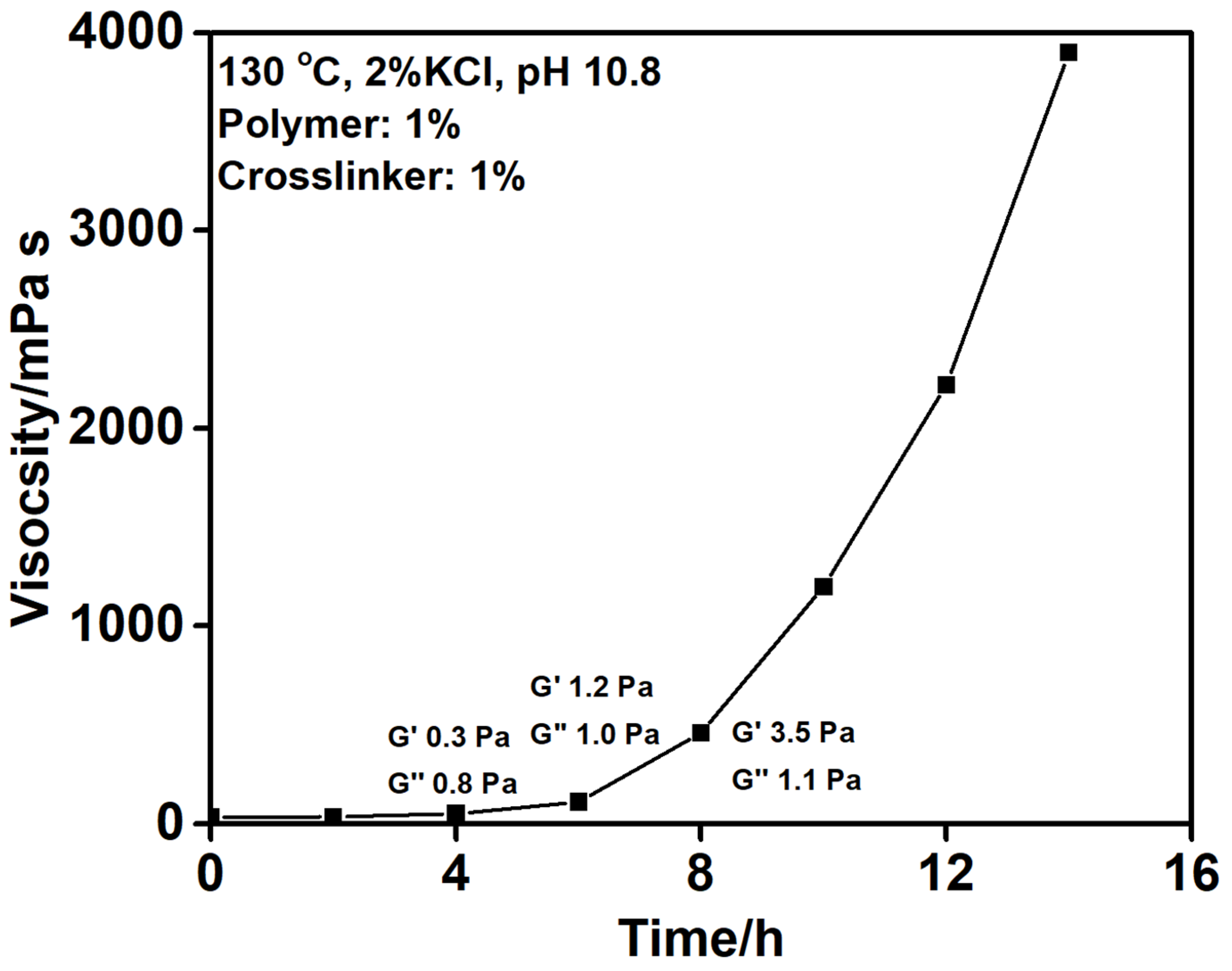
Table 2 summarizes the static gelation time under different conditions. Results indicated that gelation time increases with gelant pH but decreases as polymer concentration increases. Specifically, gelation time increased from 1 to 6 h as pH rose from 8.1 to 10.8. Additionally, gel strength increases as pH decreases: the gel code decreased from I to G as pH increased from 8.1 to 10.8. Figure 2 shows changes in viscosity, G’, and G” over time at 130 °C, with an abrupt increase in viscosity observed after 5–6 h of aging. Furthermore, a crossover of G’ and G” occurred after 6 h of aging, which further confirms the formation of a 3D network structure [32].
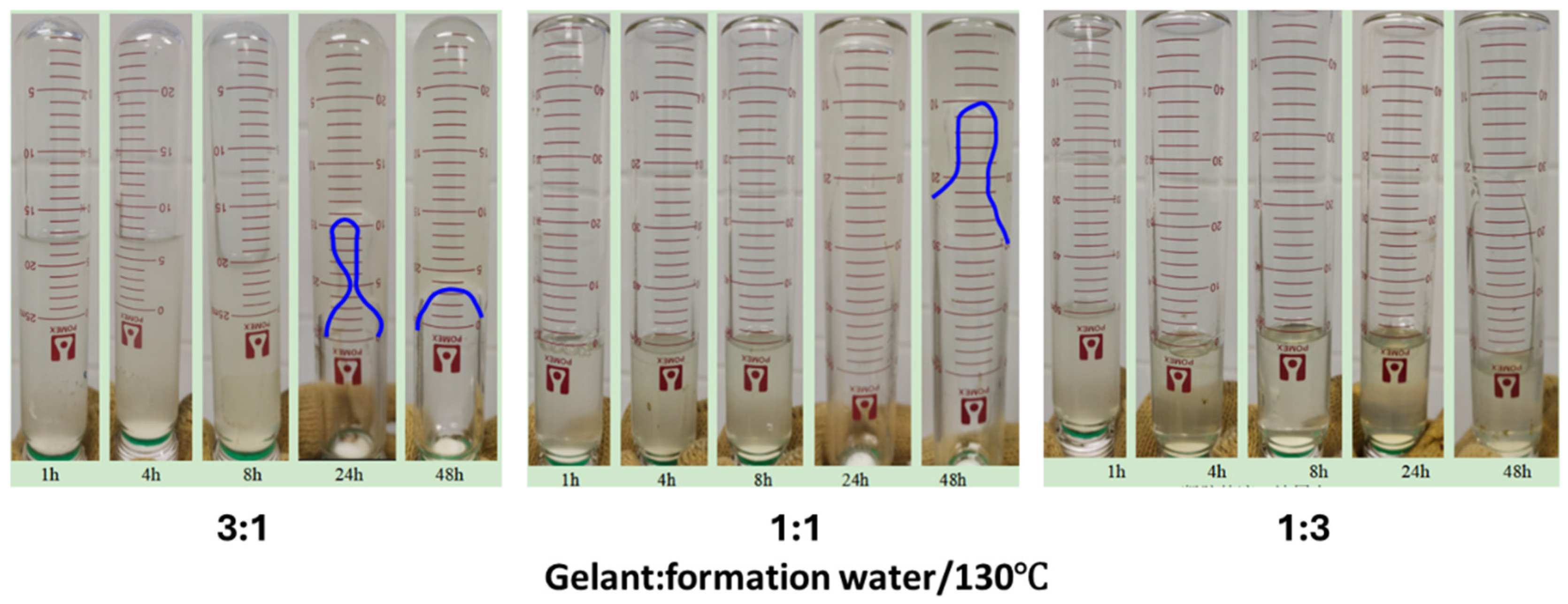
Gelant diluted to 75%, 50%, and 33.3% of its original concentration can still form gels within a reasonable time period; after 48 h of aging, the gel codes were H, F, and E, respectively, as shown in Figure 3.
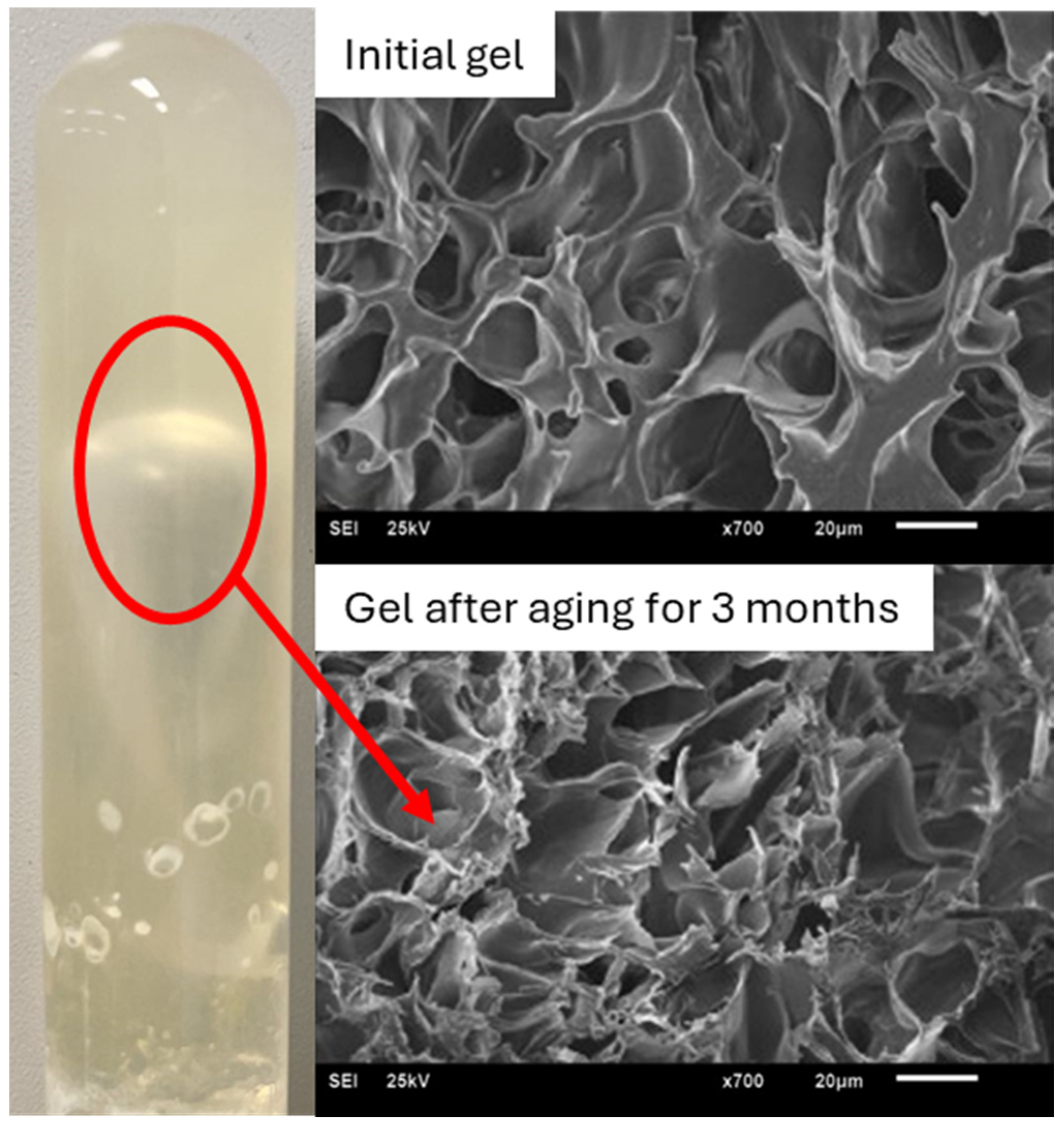
We also investigated the long-term thermal stability of the crosslinked gel (Figure 4), and results indicated that the samples remained stable at 130 °C for over 3 months, meeting the requirements of the pilot test.
Following a series of laboratory evaluations, the following formulation was developed: 1% SAV-333, 1% PEI, pH 10.8, with fresh water used to prepare the gelant.

3.3. Core Flooding Test

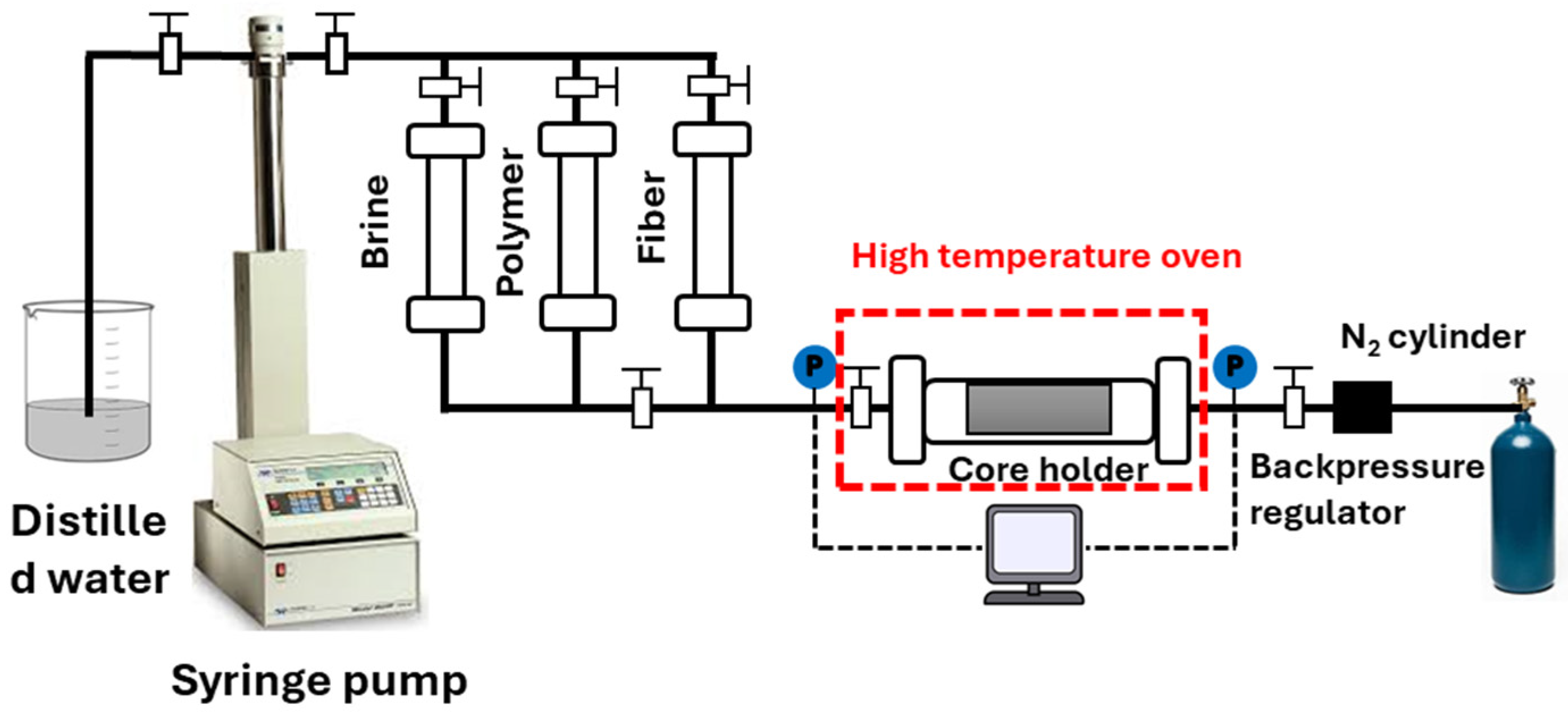
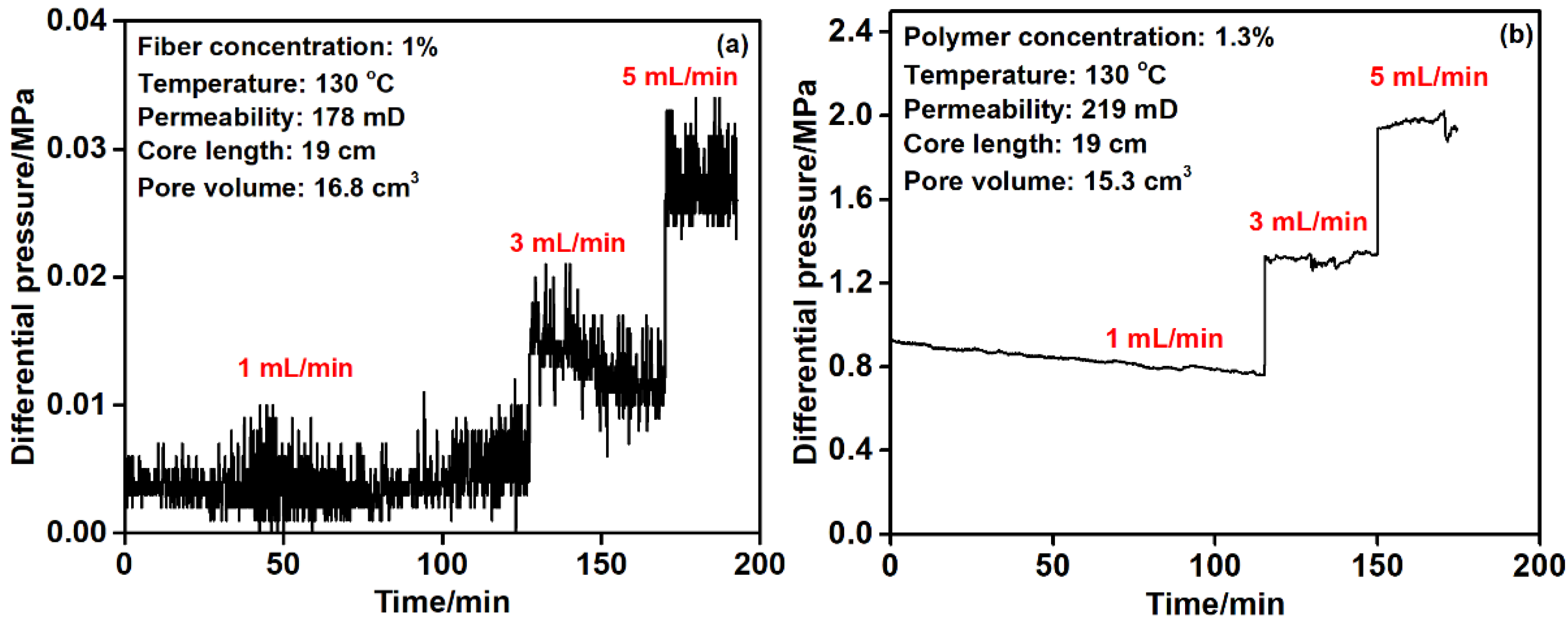
To further enhance plugging performance in tiny fractures, nanofibers were added to the gelant, thereby increasing the strength of the polymer gel. The injectivity of both fiber suspensions and polymer solutions was tested using formation sandstone cores to ensure all components could be readily transported through the reservoir without forming polymer or fiber cakes. Figure 5 illustrates the core-flooding setup. The injectivity testing procedures are as follows: (1) cores were saturated with fresh water; (2) 7 PV of 1% or 1.3% fiber/polymer solution was injected at rates of 1, 3, and 5 mL/min, with stable injection pressures recorded.
Results showed that both fibers and polymers exhibited excellent injectivity in 200 mD sandstone, with injection pressures fluctuating only within a small range, as shown in Figure 6. Additionally, no fiber or polymer cakes were observed at the core inlets. The stable injection pressure gradients for fiber and polymer solutions at an injection rate of 5 mL/min were 0.147 and 10.4 MPa/m, respectively.
We also evaluated the plugging performance of this gelant in fractures. A typical testing method is described as follows: (1) after water saturation, cores were fractured and supported by two copper sheets; (2) brine was injected into the model at 3 mL/min until pressure stabilized; (3) gelant was injected at the same rate until pressure stabilized, with the stable injection pressure recorded to calculate the resistance factor; (4) once fully filled with gelant, cores were sealed and aged at 130 °C for 24 h to fully cure the gelant; and (5) the constant flow rate breakthrough method was used to determine the water breakthrough pressure and residual resistance factor, with an injection rate of 2 mL/min.
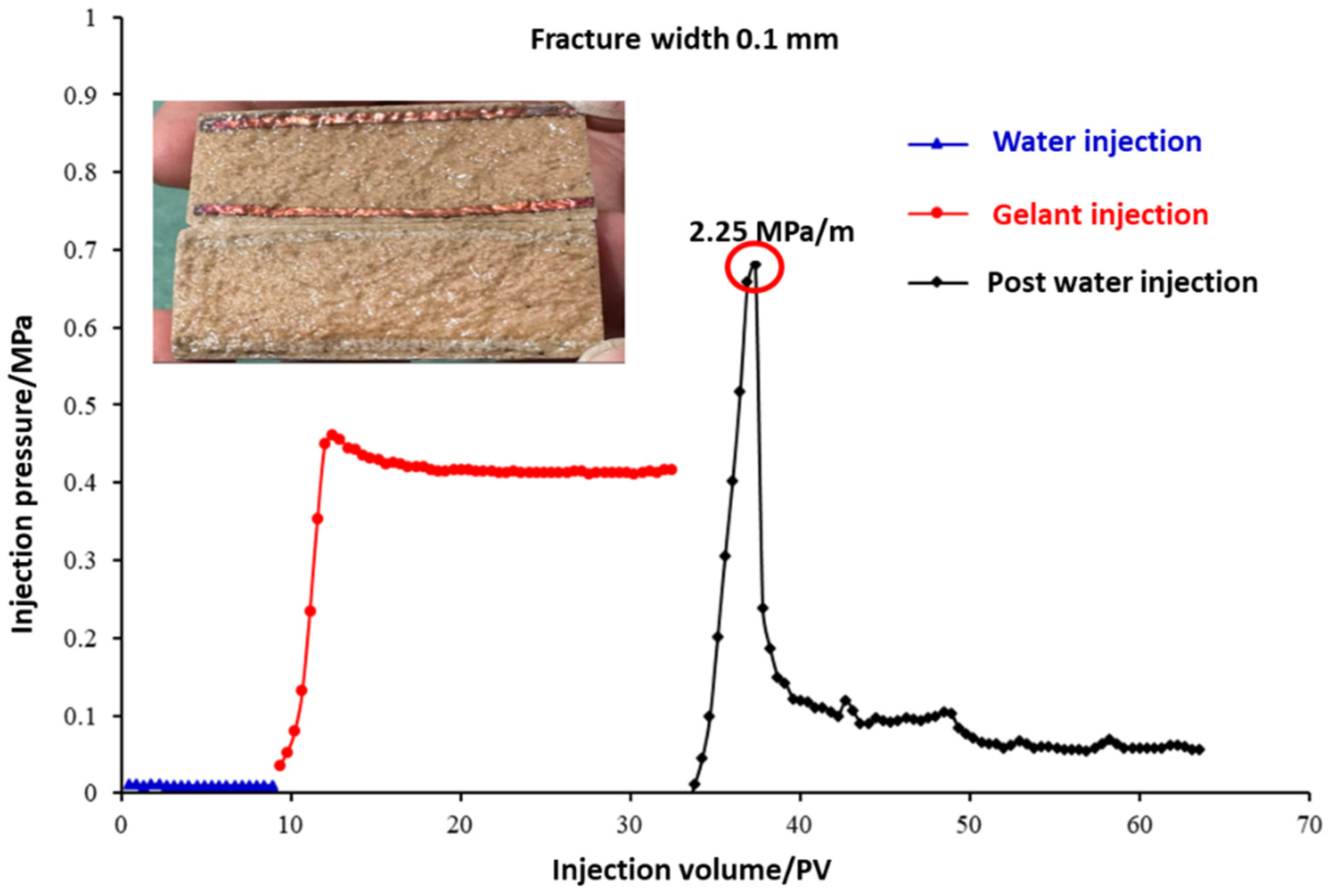
Figure 7 shows the plugging performance for 0.1 mm fractures. Water breakthrough gradients decrease as fracture width increases, with the breakthrough pressure gradient for 0.1 mm fractures measured at 2.35 MPa/m.

4. Treatment Design and Results

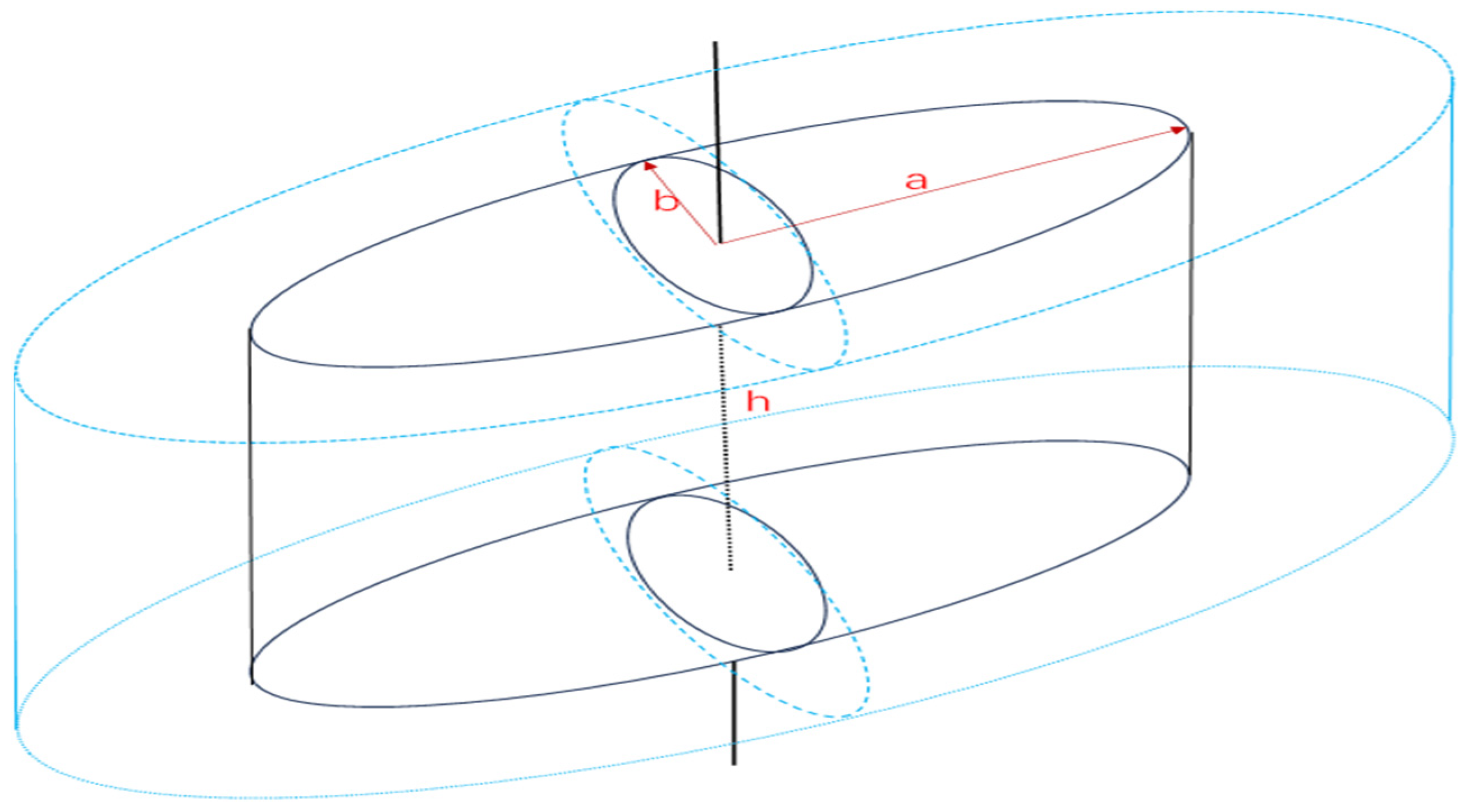
A novel model based on the storage capacity ratio was used to determine the gel volume, as shown in Equation (1) and Figure 8,
V = a b h φ  
where V is the gelant volume, a is the length along the water invasion direction, b is the length perpendicular to the water invasion direction, h is the depth of perforation zone, φ is the porosity, and is the storage capacity ratio.
In dense gas reservoirs, matrix permeability is typically <1 mD and porosity <10%, rendering matrix contribution to effective storage and fluid flow negligible. The fracture network (natural and hydraulic fractures) dominates both gas production and unwanted water invasion, making fracture characterization critical for water shutoff design. However, direct measurement of fracture geometric parameters (length, width, density) is challenging due to limited logging resolution and reservoir heterogeneity creating a key technical barrier for gel volume calculation. The storage capacity ratio addresses this challenge by indirectly quantifying the fracture volume of target intervals in dense gas reservoirs. As matrix storage is functionally irrelevant, storage capacity ratio reflects the relative size and connectivity of the fracture system by correlating the target zone’s effective storage volume to a reference (e.g., total reservoir pore volume). Derivable from conventional well logs (gamma-ray, neutron porosity, density) and dynamic production data, storage capacity ratio eliminates the need for explicit fracture geometry data in gel volume design. Leveraging storage capacity ratio, we could derive the total effective fracture volume of the target interval. This approach streamlines gel design, mitigating risks of over-injection (gel waste, gas zone damage) or under-injection (incomplete water channel sealing). By characterizing fracture volume (where matrix storage is negligible), it eliminates dependency on explicit fracture geometry data, optimizes treatment precision.
The maximum wellhead injection pressure was designed based on Equation (2),
P w h M a x = P w f M a x + P t l H m ρ w 100
where P w h M a x is the maximum injection pressure in MPa, P w f M a x is the maximum bottomhole injection flowing pressure in MPa (85% of formation fracture pressure), P t l is the friction loss in MPa, H m is the reservoir depth in m, ρ w is the liquid density in kg/m3. The friction loss of water, and gelant were 12.1 and 1.3 MPa, respectively. The injection pressure was monitored and maintained below the PwhMax to avoid creating new fractures. The injection speed was altered based on the well-headed injection pressure.
Based on reservoir data, the gelant volume was set at 1400 m3, with injection conducted in 3 cycles. After mixing, the gelant was bullheaded into the well. The maximum injection pressure was maintained below 55 MPa, which is below the formation fracture pressure. Following each injection cycle, the well was shut in for 2 days, after which pressure drawdown was performed to check for gelant contamination in the near-wellbore region.
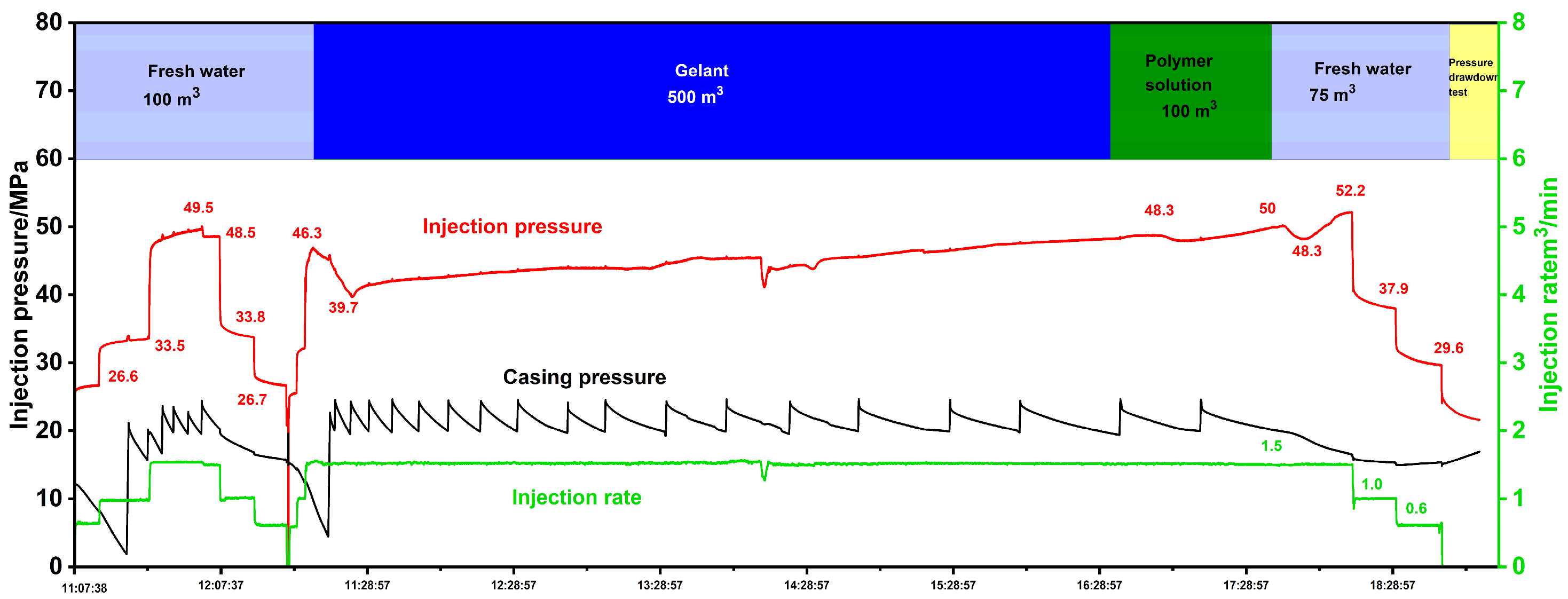
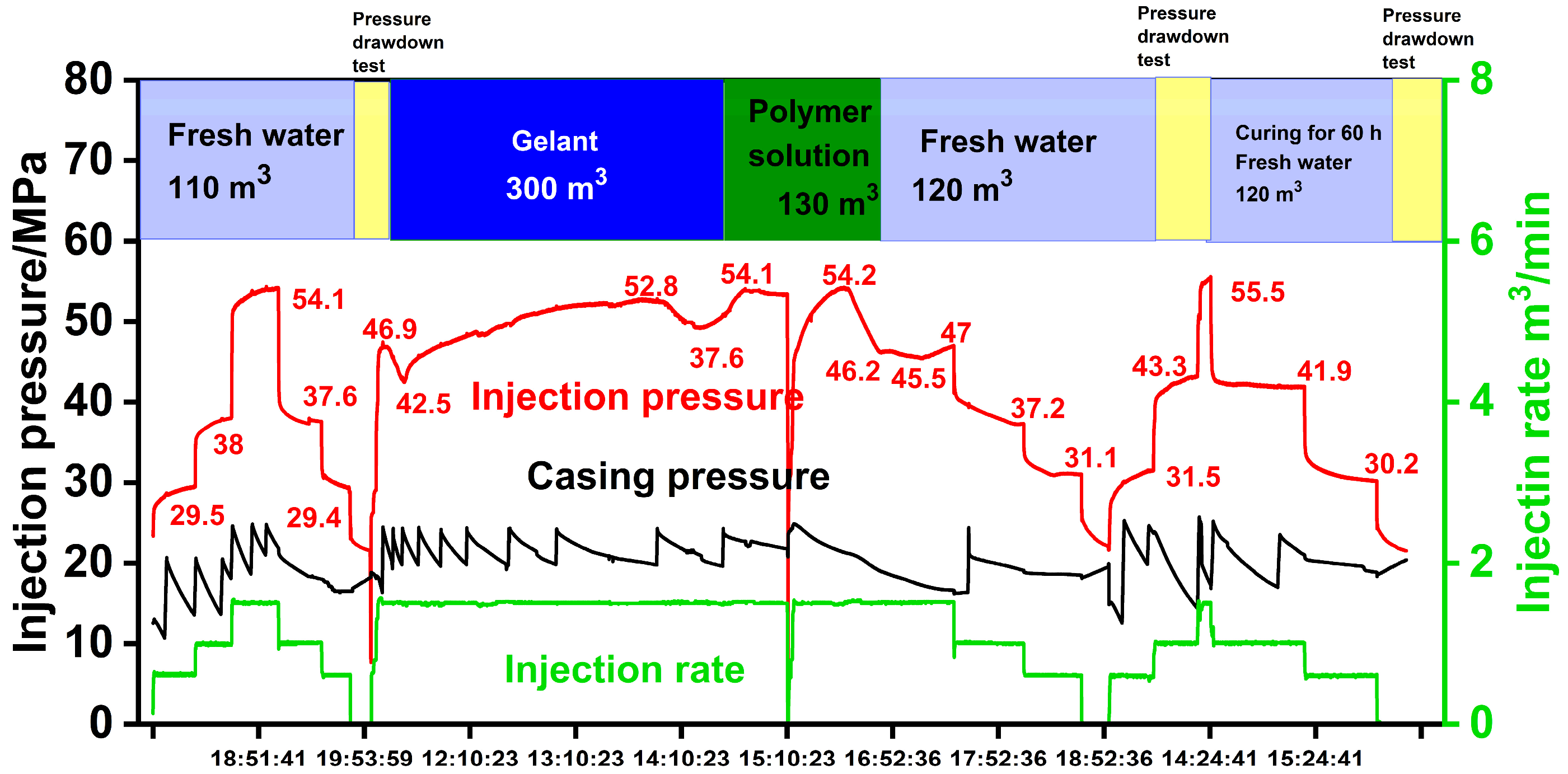
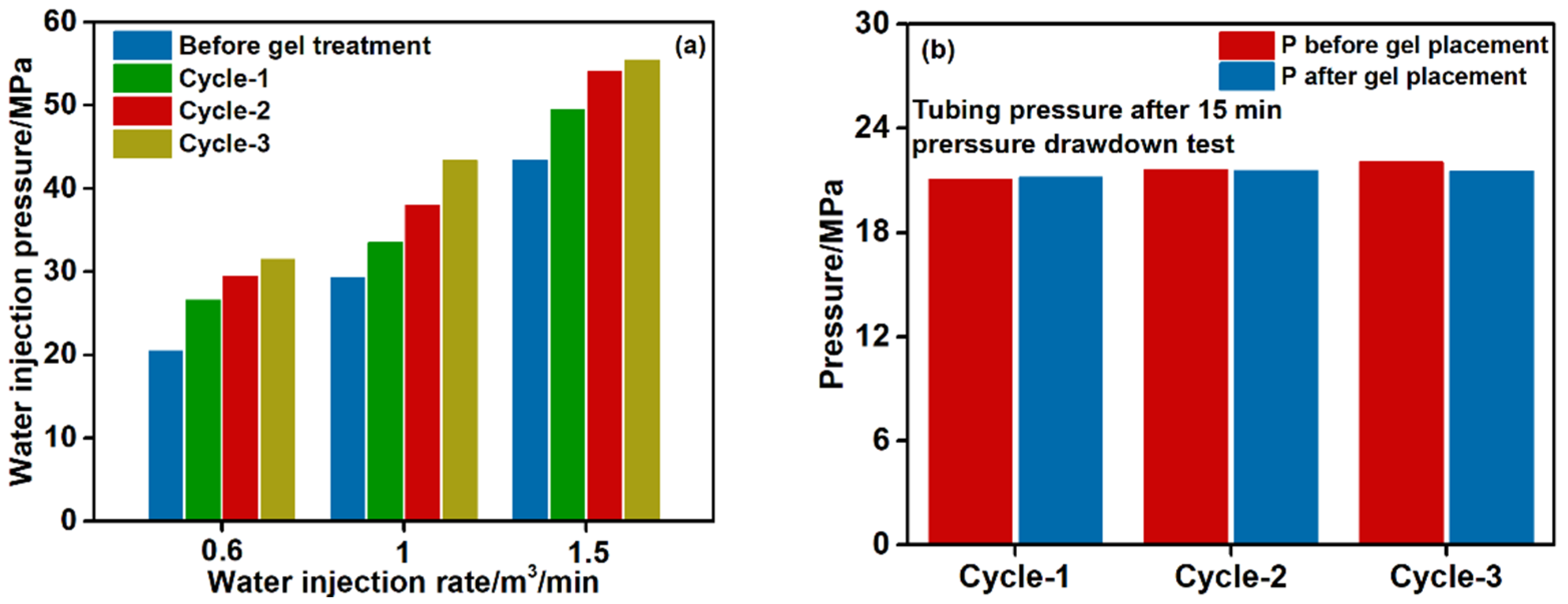
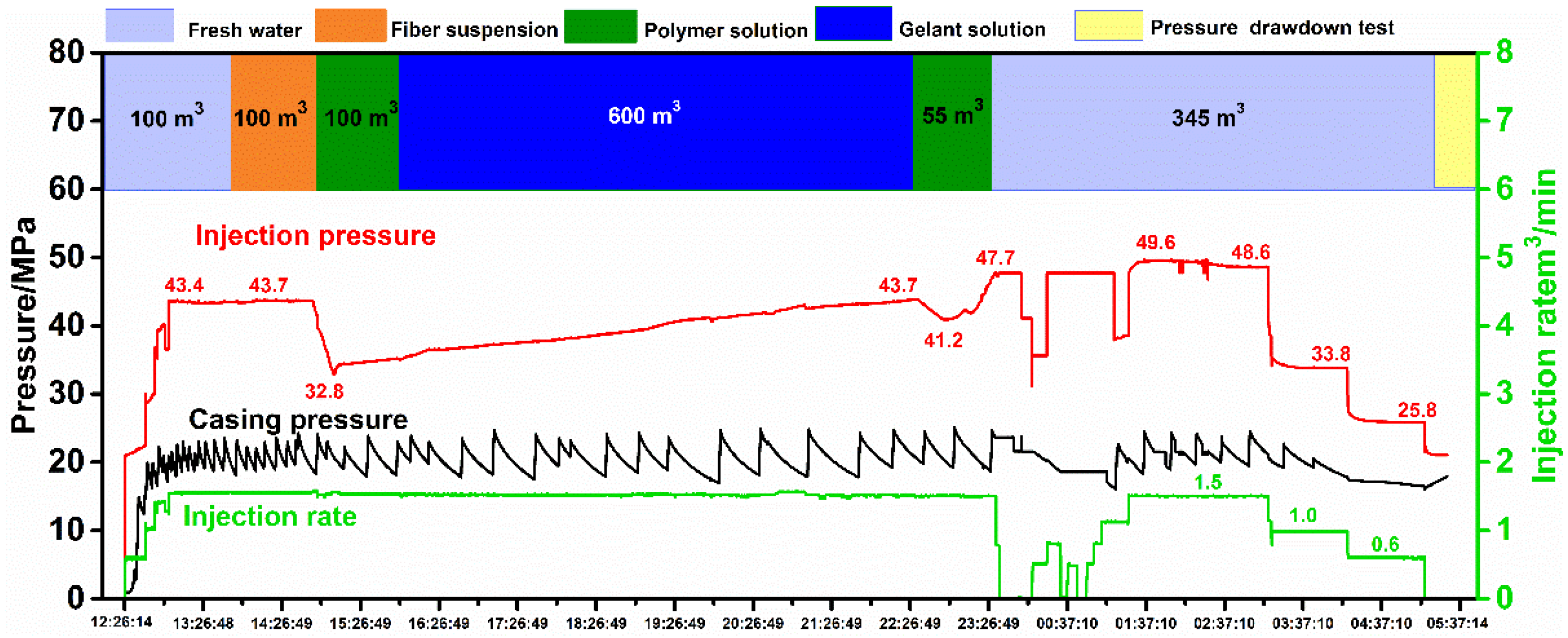
Figure 9, Figure 10 and Figure 11 illustrate the treatment process, including parameters such as injection rate, tubing pressure, casing pressure, and total injection volume. Pressures during water injection, gel placement, and post-water injection gradually increased with each treatment cycle. Cycle 1 involved a pre-flush with fresh water, fiber suspension, and polymer solution, followed by the injection of 600 m3 of gelant, and subsequent post-polymer and water injection. The first three slugs were used to test gelant injectivity. Consistent with laboratory results, both the fiber suspension and polymer solution exhibited excellent injectivity, with bottom-hole pressure remaining below the formation fracture pressure. Notably, injection pressure decreased significantly after the start of polymer and gelant injection, as SAV-333 acts as an effective friction reducer, markedly reducing tubing friction. Although injection time exceeded the gelation time, no abrupt pressure increase was observed, as gelant requires more time to gel under dynamic conditions. For water injection at a rate of 1.5 m3/min, the pressure before and after gel treatment was 43.4 MPa and 48.6 MPa, respectively. Cycle 2 involved pumping 500 m3 of gelant into the reservoir, with initial and post-water injection pressures of 48.5 MPa and 52.2 MPa, respectively. Cycle 3 placed 300 m3 of gelant; the initial water injection pressure was 54.1 MPa, and after full gelation, the tested water injection pressure was 55.5 MPa—12.1 MPa higher than the initial water injection pressure before gel treatment.
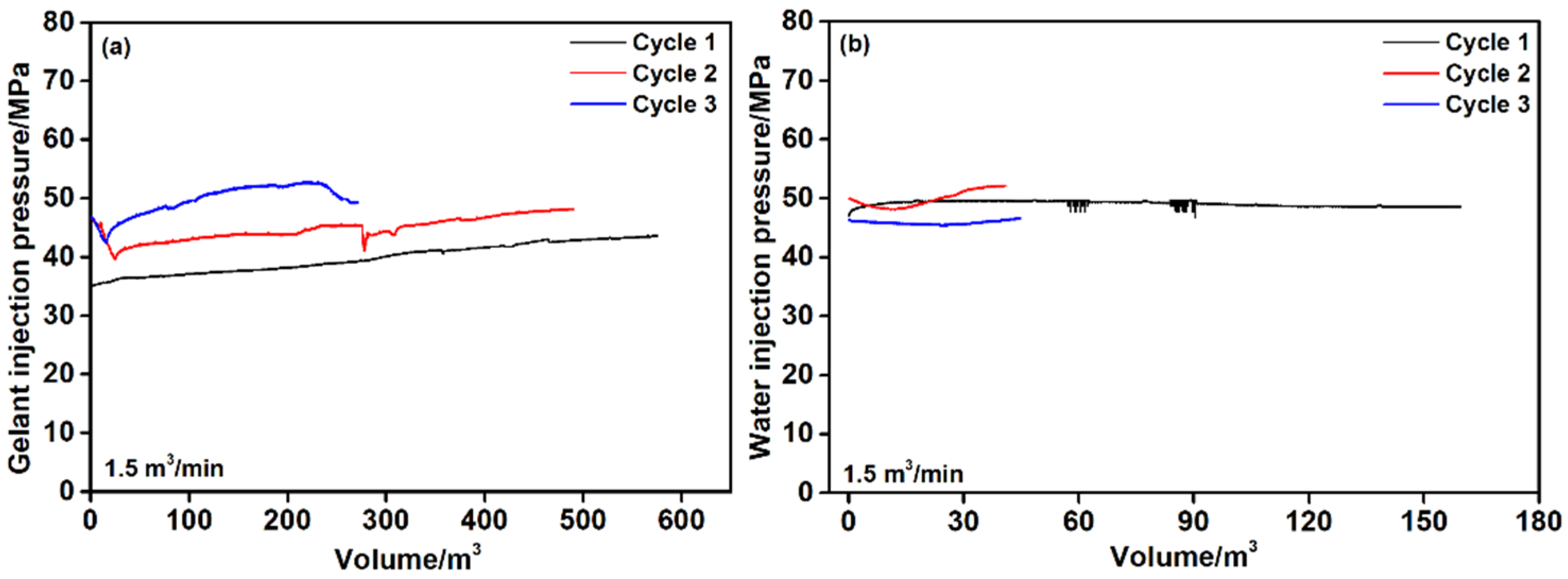
Figure 12 summarizes the injection pressures during gelant injection and post-gelant water injection. Injection pressure gradually increased with gelant volume, with no significant abrupt spikes. Additionally, post-gelant water injection pressure remained nearly stable, indicating that the gelant slug was pushed into the reservoir in a piston-like manner without significant fingering.
As depicted in Figure 13 water injection pressure before each gel treatment cycle gradually increased with injection rate and cycle number, demonstrating that the gelant had formed into a gel, effectively building up flow resistance and remaining immobile during post-injection. Pressure drawdown tests after gelant placement showed stable pressure remained nearly constant at 21 MPa with only minor fluctuations, indicating that the polymer gel had been pushed deep into the reservoir with limited near-wellbore contamination.
Operationally, slowing water invasion is quantitatively defined by the relative reduction in water invasion speed between the pre- and post-treatment periods. This speed is directly calculated using data from inter-well tracer tests, combined with dynamic production monitoring, to ensure objective and measurable evaluation. Specifically, Well X is located in the edge zone of the gas reservoir, with a confirmed east-to-west water invasion direction. Tracer tests were conducted between Well X and adjacent water drainage wells.
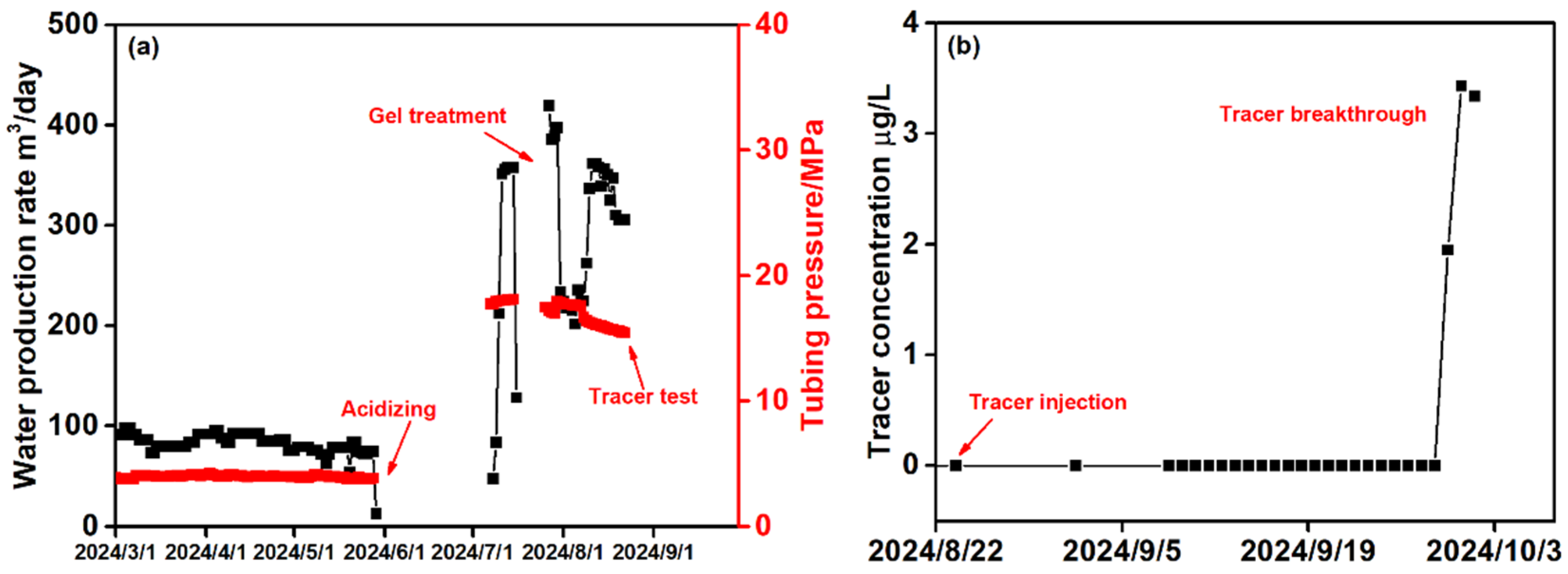
Figure 14 presents the well response after gel treatment and tracer test results. Notably, daily water production rate and tubing pressure remained nearly unchanged before and after treatment. This does not indicate a failed treatment, as one goal of the treatment was to ensure the well could still function as a water drainage well post-treatment. Given the well’s direct connection to a large aquifer, 1400 m3 of gelant is far from sufficient to form an effective subsurface barrier to restrict water invasion. The primary objective of the project was to slow water invasion between Well-X and adjacent wells. Tracer test results showed that breakthrough time increased from 23 to 39 days, confirming that the gel plugs effectively acted as a barrier to delay water invasion. The water invasion rate decreased from 59 to 35 m/d.

5. Conclusions

From the perspective of three-dimensional (3-D) water control, in edge water drive gas reservoirs, the scheme of injecting gels—composed of polyethyleneimine, terpolymer, and nanofibers—into wells at structurally lower positions (these wells are interconnected with wells at structurally higher positions via numerous tiny fractures and high-permeability streaks) has been proven feasible. This scheme adopts the technique of cyclic gelant injection combined with over-displacement to push the gel slug deep into the reservoir, which can effectively slow down water invasion from edge water to wells at structurally higher positions. Further verified by production data and tracer tests, this method has successfully reduced the water invasion rate from 59 m/d to 35 m/d, while providing a new approach to managing water invasion and enhancing gas recovery in mature gas reservoirs.

Author Contributions

Conceptualization, T.S. and P.L.; Methodology, T.S., J.W. (Junlei Wang) and J.P.; Software, M.L., J.W. (Junyi Wu), J.P. and J.W. (Junlei Wang); Validation, T.S., J.W. (Junyi Wu), C.W., J.W. (Junlei Wang), J.P. and F.W.; Formal analysis, H.W. and F.W.; Investigation, M.L., J.W. (Junyi Wu), C.W. and W.L.; Resources, H.W., J.W. (Junyi Wu), J.P. and C.W.; Data curation, M.L. and H.Z.; Writing—original draft, T.S.; Writing—review & editing, F.W.; Visualization, S.Z., B.D., W.L. and Y.Z.; Project administration, H.W., C.W. and F.W.; Funding acquisition, F.W. All authors have read and agreed to the published version of the manuscript.

Funding

This research received no external funding.

Data Availability Statement

The original contributions presented in the study are included in the article. Further inquiries can be directed to the corresponding author.

Conflicts of Interest

All authors were employed by the company CNPC. The remaining authors declare that the research was conducted in the absence of any commercial or financial relationships that could be construed as a potential conflict of interest.

References

  1. Roozshenas, A.A.; Hematpur, H.; Abdollahi, R.; Esfandyari, H. Water production problem in gas reservoirs: Concepts, challenges, and practical solutions. Math. Probl. Eng. 2021, 2021, 9075560. [Google Scholar] [CrossRef]
  2. Tugan, M.F. Deliquification techniques for conventional and unconventional gas wells: Review, field cases and lessons learned for mitigation of liquid loading. J. Nat. Gas Sci. Eng. 2020, 83, 103568. [Google Scholar] [CrossRef]
  3. Kabir, A. Chemical water & gas shutoff technology-an overview. In Proceedings of the SPE Asia Pacific Improved Oil Recovery Conference, Kuala Lumpur, Malaysia, 8–9 October 2001. [Google Scholar]
  4. Yousuf, N.; Olayiwola, O.; Guo, B.; Liu, N. A comprehensive review on the loss of wellbore integrity due to cement failure and available remedial methods. J. Pet. Sci. Eng. 2021, 207, 109123. [Google Scholar] [CrossRef]
  5. Lizak, K.F.; Zeltmann, T.A.; Crook, R.J. Permian basin operators seal casing leaks with small-particle cement. In Proceedings of the Permian Basin Oil and Gas Recovery Conference, Midland, TX, USA, 18–20 March 1992. [Google Scholar]
  6. Dovan, H.; Hutchins, R.; Sandiford, B. Delaying gelation of aqueous polymers at elevated temperatures using novel organic crosslinkers. In Proceedings of the SPE International Conference on Oilfield Chemistry, Midland, TX, USA, 18–21 February 1997. [Google Scholar]
  7. Dovan, H.T.; Hutchins, R.D. Development of a new aluminum/polymer gel system for permeability adjustment. SPE Reserv. Eng. 1987, 2, 177–183. [Google Scholar] [CrossRef]
  8. Moradi-Araghi, A.; Beardmore, D.; Stahl, G. The application of gels in enhanced oil recovery: Theory, polymers and crosslinker systems. In Water-Soluble Polymers for Petroleum Recovery; Springer: Berlin/Heidelberg, Germany, 1988; pp. 299–312. [Google Scholar]
  9. Chen, L.; Zhang, Z.; Zeng, H.; Huang, F.; Lu, X.; Sheng, W. Preparation and performance of high-temperature-resistant, degradable inorganic gel for steam applications. SPE J. 2024, 29, 4266–4281. [Google Scholar] [CrossRef]
  10. Zhu, D.; Bai, B.; Hou, J. Polymer gel systems for water management in high-temperature petroleum reservoirs: A chemical review. Energy Fuels 2017, 31, 13063–13087. [Google Scholar] [CrossRef]
  11. Bai, B.; Schuman, T.; Smith, D.; Song, T. In Lessons Learned from Laboratory Study and Field Application of Re-Crosslinkable Preformed Particle Gels RPPG for Conformance Control in Mature Oilfields with Conduits/Fractures/Fracture-Like Channels. In Proceedings of the SPE Improved Oil Recovery Conference, Tulsa, OK, USA, 22–25 April 2024. [Google Scholar]
  12. Gibbs, G. Molecules as models for bonding in silicates. Am. Mineral. 1982, 67, 421–450. [Google Scholar]
  13. Chen, W.; Li, B.; Li, Q.; Tian, J. Effect of polyaluminum chloride on the properties and hydration of slag-cement paste. Constr. Build. Mater. 2016, 124, 1019–1027. [Google Scholar] [CrossRef]
  14. Matinfar, M.; Nychka, J.A. A review of sodium silicate solutions: Structure, gelation, and syneresis. Adv. Colloid Interface Sci. 2023, 322, 103036. [Google Scholar] [CrossRef] [PubMed]
  15. Mukherjee, S.; Skrettingland, K.; Stavland, A.; Altunina, L.; Reimann, S.; Dillen, M.; Robøle, B. Validation and benchmarking of an inorganic aluminium-carbamide gel system for in-depth and near wellbore conformance control. In Proceedings of the SPE Improved Oil Recovery Conference, Tulsa, OK, USA, 31 August–4 September 2020. [Google Scholar]
  16. Fragachán, F.E.; Cázares-Robles, F.; Gutiérrez, J.J.; Herrera, G. Controlling Water Production in Naturally Fractured Reservoirs with Inorganic Gel. In Proceedings of the International Petroleum Conference and Exhibition of Mexico, Villahermosa, Mexico, 5–7 March 1996. [Google Scholar]
  17. Cheneviere, P.; Falxa, P.; Alfenore, J.; Poirault, D.; Enkababian, P.; Chan, K.S. Chemical Water Shutoff Interventions in the Tunu Gas Field: Optimisation of the Treatment Fluids, Well Interventions, and Operational Challenges. In Proceedings of the SPE European Formation Damage Conference and Exhibition, Sheveningen, The Netherlands, 25–27 May 2005. [Google Scholar]
  18. Chaabouni, H.; Enkababian, P.; Chan, K.S.; Cheneviere, P.; Falxa, P.; Urbanczyk, C.; Odeh, N. Successful innovative water-shutoff operations in low-permeability gas wells. In Proceedings of the SPE Middle East Oil and Gas Show and Conference, Cairo, Egypt, 22–24 October 2007. [Google Scholar]
  19. Bai, B.; Zhou, J.; Yin, M. A comprehensive review of polyacrylamide polymer gels for conformance control. Pet. Explor. Dev. 2015, 42, 525–532. [Google Scholar] [CrossRef]
  20. Ligthelm, D.J. Water shutoff in gas wells: Is there scope for a chemical treatment? In Proceedings of the SPE European Formation Damage Conference, The Hague, Netherlands, 21–22 May 2001. [Google Scholar]
  21. Dovan, H.T.; Hutchins, R.D. New polymer technology for water control in gas wells. SPE Prod. Facil. 1994, 9, 280–286. [Google Scholar] [CrossRef]
  22. Hutchins, R.; Dovan, H.; Sandiford, B. Field applications of high temperature organic gels for water control. In Proceedings of the SPE/DOE Improved Oil Recovery Symposium, Tulsa, OK, USA, 21–24 April 1996. [Google Scholar]
  23. Junesompitsiri, C.; Berel, A.; Curtice, R.; Riyanto, L.; Thouvenin, E.; Cheneviere, P. Selective water shutoff in gas well turns a liability into an asset: A successful case history from east kalimantan, Indonesia. In Proceedings of the Asia Pacific Oil and Gas Conference & Exhibition, Jakarta, Indonesia, 4–6 August 2009. [Google Scholar]
  24. Al-Muntasheri, G.A.; Sierra, L.; Garzon, F.; Lynn, J.D.; Izquierdo, G. Water shut-off with polymer gels in a high temperature horizontal gas well: A success story. In Proceedings of the SPE Improved Oil Recovery Symposium, Tulsa, OK, USA, 24–28 April 2010. [Google Scholar]
  25. Mattey, P.; Varshney, M.; Daksh, P.V.; Kumar, A. A successful water shut off treatment in gas well of bassein field by polymeric gel system. In Proceedings of the SPE Oil and Gas India Conference and Exhibition, Mumbai, India, 4–6 April 2017. [Google Scholar]
  26. Ma, Y.; Xie, H.; Cai, Z. Geological characteristics of Dina-2 gas field in Kuqa depression. Nat. Gas Geosci. 2003, 14, 371–374. [Google Scholar]
  27. Zhang, F.; Wang, Z.; Zhong, H.; Song, Y.; Liu, W.; Wei, C. Origin of abnormal high pressure and its relationship with hydrocarbon accumulation in the Dina 2 gas field, Kuqa depression. Pet. Res. 2016, 1, 93–102. [Google Scholar] [CrossRef]
  28. Song, T.; Tian, X.; Bai, B.; Eriyagama, Y.; Ahdaya, M.; Alotibi, A.; Schuman, T. Laboratory evaluation of high-temperature resistant lysine-based polymer gel systems for leakage control. Geoenergy Sci. Eng. 2024, 234, 212685. [Google Scholar] [CrossRef]
  29. Song, T.; Zhai, Z.; Liu, J.; Eriyagama, Y.; Ahdaya, M.; Alotibi, A.; Wang, Z.; Schuman, T.; Bai, B. Laboratory evaluation of a novel Self-healable polymer gel for CO2 leakage remediation during CO2 storage and CO2 flooding. Chem. Eng. J. 2022, 444, 136635. [Google Scholar] [CrossRef]
  30. Guo, H.; Ge, J.; Zhao, S.; Xu, Y.; Zhou, D.; Tao, Z. Performance evaluation of high-strength polyethyleneimine gels and syneresis mechanism under high-temperature and high-salinity conditions. SPE J. 2022, 27, 3630–3642. [Google Scholar] [CrossRef]
  31. Song, T.; Bai, B.; Eriyagama, Y.; Schuman, T. Lysine crosslinked polyacrylamide—A novel green polymer gel for preferential flow control. ACS Appl. Mater. Interfaces 2023, 15, 4419–4429. [Google Scholar] [CrossRef] [PubMed]
  32. Grillet, A.M.; Wyatt, N.B.; Gloe, L.M. Polymer gel rheology and adhesion. Rheology 2012, 3, 59–80. [Google Scholar]
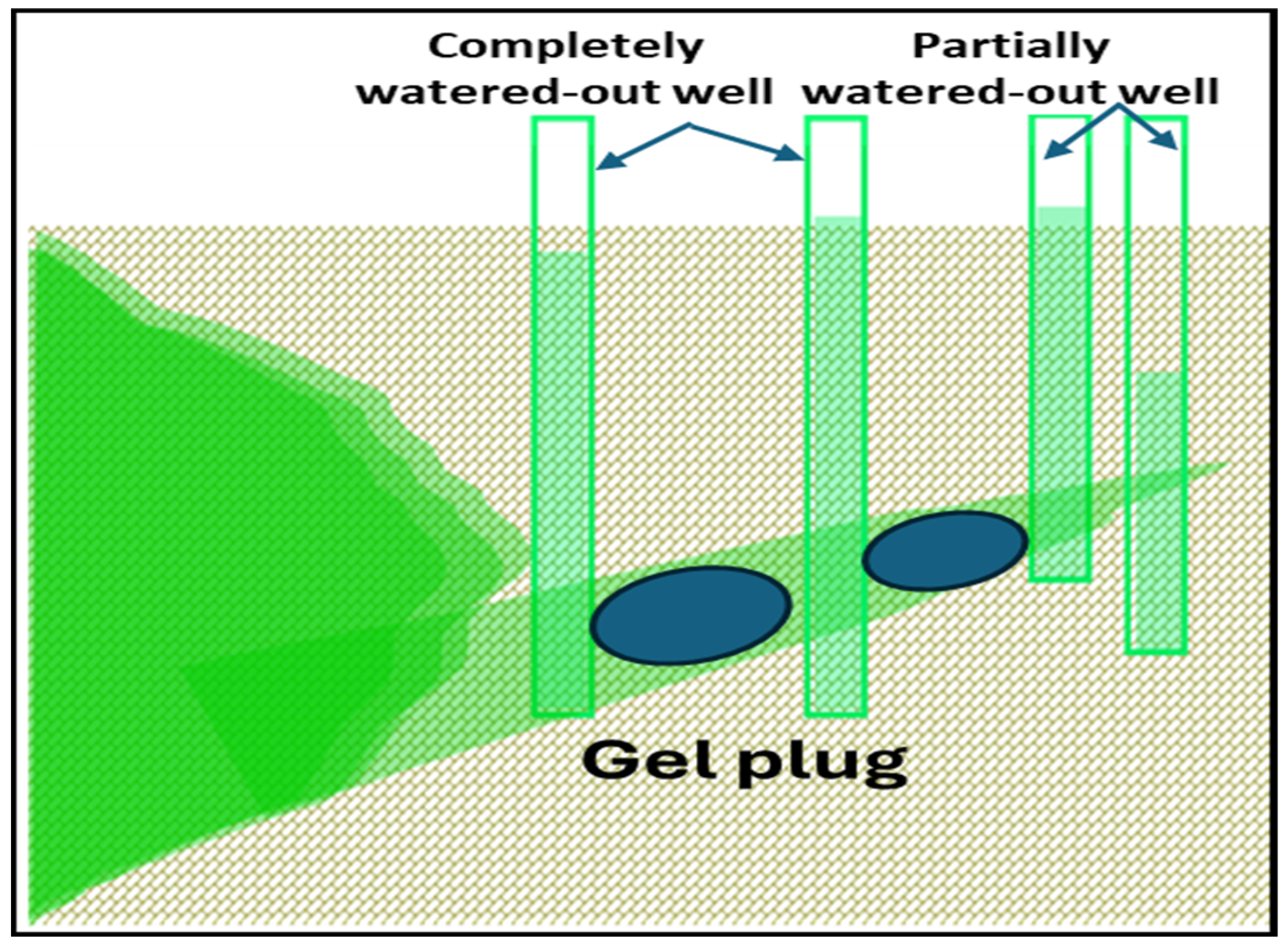
Figure 1. Three-dimensional water control in gas reservoirs (Green indicates the direction(s) of adjacent water invasion, and blue holes denote gel plugs.).
Energies 18 06554 g001
Figure 2. Viscosity, G’ and G” changes as a function of time.
Energies 18 06554 g002
Figure 3. Effect of dilution on the gelation behavior.
Energies 18 06554 g003
Figure 4. Gel sample after 3 months of aging at 130 °C.
Energies 18 06554 g004
Figure 5. Core flooding experiment setup.
Energies 18 06554 g005
Figure 6. Injectivity test of (a) fiber and (b) polymer solution.
Energies 18 06554 g006
Figure 7. Plugging performance to 0.1 mm fracture.
Energies 18 06554 g007
Figure 8. Gel volume design model.
Energies 18 06554 g008
Figure 9. Treatment cycle 1.
Energies 18 06554 g009
Figure 10. Treatment cycle 2.
Energies 18 06554 g010
Figure 11. Treatment cycle 3.
Energies 18 06554 g011
Figure 12. (a) Gelant injection process and (b) water injection after gelant injection.
Energies 18 06554 g012
Figure 13. (a) Stable water injection pressure during each cycle of gelant injection. (b) Pressure drawdown test results.
Energies 18 06554 g013
Figure 14. (a) Production cure before and after gel treatment and (b) tracer test.
Energies 18 06554 g014
Table 1. Summary of gel treatment in gas wells.
#Reservoir T/°CGel TypeGelation Time/hGelant VolumeRef.
1126–137Aluminum gel<6139 bbl[17]
258.8PAM/Cr (VI)<8634 bbl[21]
3121PAM/hydroquinone + hexame-thylenetretramine<6620 bbl[6]
4112PAM/PEI-80[23]
5149PAM/PEI1.5150[24]
6105PAM/hydroquinone + hexame-thylenetretramine-160[25]
Table 2. Effect of pH on the gelation time.
pHStatic Gelation Time/h (130 °C)Gel Code After Fully Gelation
8.12I
9.54I
10.35H
10.86G
Disclaimer/Publisher’s Note: The statements, opinions and data contained in all publications are solely those of the individual author(s) and contributor(s) and not of MDPI and/or the editor(s). MDPI and/or the editor(s) disclaim responsibility for any injury to people or property resulting from any ideas, methods, instructions or products referred to in the content.