
Review

Biogas Upgrading and Bottling Technologies: A Critical Review
by
Yolanda Mapantsela
* and
Patrick Mukumba
Department of Physics, Faculty of Science and Agriculture, University of Fort Hare, Dikeni 5700, South Africa
*
Author to whom correspondence should be addressed.
Energies 2025, 18(24), 6506; https://doi.org/10.3390/en18246506
Submission received: 2 June 2025 / Revised: 18 July 2025 / Accepted: 31 July 2025 / Published: 12 December 2025

Abstract

Biogas upgrading and bottling represent essential processes in transforming raw biogas produced via the anaerobic digestion of organic waste into high-purity biomethane (≥95% CH4), a renewable energy source suitable for applications in cooking, transportation, and electricity generation. Upgrading technologies, such as membrane separation, pressure swing adsorption (PSA), water and chemical scrubbing, and emerging methods, like cryogenic distillation and supersonic separation, play a pivotal role in removing impurities like CO2, H2S, and moisture. Membrane and hybrid systems demonstrate high methane recovery (>99.5%) with low energy consumption, whereas chemical scrubbing offers superior gas purity but is limited by high operational complexity and cost. Challenges persist around material selection, safety standards, infrastructure limitations, and environmental impacts, particularly in rural and off-grid contexts. Bottled biogas, also known as bio-compressed natural gas (CNG), presents a clean, portable alternative to fossil fuels, contributing to energy equity, greenhouse gases (GHG) reduction, and rural development. The primary aim of this research is to critically analyze and review the current state of biogas upgrading and bottling systems, assess their technological maturity, identify performance optimization challenges, and evaluate their economic and environmental viability. The research gap identified in this study demonstrates that there is no comprehensive comparison of biogas upgrading technologies in terms of energy efficiency, price, scalability, and environmental impact. Few studies directly compare these technologies across various operational contexts (e.g., rural vs. urban, small vs. large scale). Additionally, the review outlines insights into how biogas can replace fossil fuels in transport, cooking, and electricity generation, contributing to decarbonization goals. Solutions should be promoted that reduce methane emissions, lower operational costs, and optimize resource use, aligning with climate targets. This synthesis highlights the technological diversity, critical barriers to scalability, and the need for robust policy mechanisms to accelerate the deployment of biogas upgrading solutions as a central component of a low-carbon, decentralized energy future.

1. Introduction

Biogas upgrading and bottling systems convert raw biogas (from organic waste) into purified biomethane (≥95% CH4) for storage in high-pressure cylinders. This process enables renewable energy distribution for cooking, transportation, or grid injections, lowering dependency on fossil fuels and lowering emissions of methane [1].
The performance of biogas digesters, particularly when integrated with effective upgrading systems, is a critical area of research in the pursuit of sustainable energy solutions [2]. Biogas digesters convert organic waste into biogas through anaerobic digestion, a process that not only cuts down on waste but also produces renewable energy in the form of methane [3]. However, the raw biogas produced often contains impurities, primarily carbon dioxide (CO2), which must be removed to produce high-quality biomethane suitable for various applications, including injection into natural gas grids and its use as a vehicle fuel [4].
The enhanced biogas must be compressed and bottled for the convenience of distribution, storage, and commercialization [5]. A number of significant obstacles still exist, despite growing interest and developments in biogas upgrading methods, including membrane separation, chemical absorption, water scrubbing, and pressure swing adsorption (PSA). A thorough comparison of these technologies’ energy efficiency, cost-effectiveness, scalability, and environmental impact is lacking in the literature [6]. Furthermore, little scholarly attention has been paid to the bottling process, which is essential to the implementation of decentralized energy systems, especially when it comes to incorporating improved biogas into off-grid or rural energy markets [7].
For instance, modern membrane technologies can achieve over 99.5% methane recovery, ensuring that the potential energy content of biogas is fully realized. Additionally, optimizing the operational parameters of these upgrading systems can lead to substantial cost savings and reduced greenhouse gas emissions, further enhancing the environmental benefits of biogas production [8]. The integration of biogas digesters with upgrading systems represents a critical advancement in the pursuit of sustainable energy solutions. As global energy demands escalate and environmental concerns intensify, the need for efficient waste-to-energy technologies has never been more pressing.
By critically analyzing the most advanced biogas upgrading and bottling systems now in use, assessing their technological maturity, and pinpointing areas that require more research, this review seeks to fill these knowledge gaps. This study presents a comprehensive review of the technological, economic, and environmental aspects of biogas upgrading and bottling by combining results from various studies and practical operations. The objective is to lead future research and development efforts in this quickly developing field by educating researchers, policymakers, and industry stakeholders on the promise and limitations of existing solutions. The findings will contribute to a deeper understanding of biogas technology’s role in renewable energy generation and its potential impact on reducing reliance on fossil fuels.

2. Types of Biogas Upgrading Technologies

Biogas upgrading systems are essential for improving the quality of biogas by eliminating impurities and increasing the methane content, thereby producing renewable natural gas (RNG) or biomethane. Several technologies are commonly employed in biogas upgrading, each with distinct mechanisms and advantages.

2.1. Membrane Separation

Membrane separation technology utilizes selective membranes to separate methane (CH4) from carbon dioxide (CO2) and other impurities. This method is characterized by high efficiency, achieving methane recovery rates of over 99.5%. Membranes allow the CO2 to pass through while retaining the methane. This technology is compact, easily integrated into existing systems, and is suitable for various biogas sources [9]. Figure 1 below shows a schematic diagram of the membrane separation process.

2.2. Pressure Swing Adsorption (PSA)

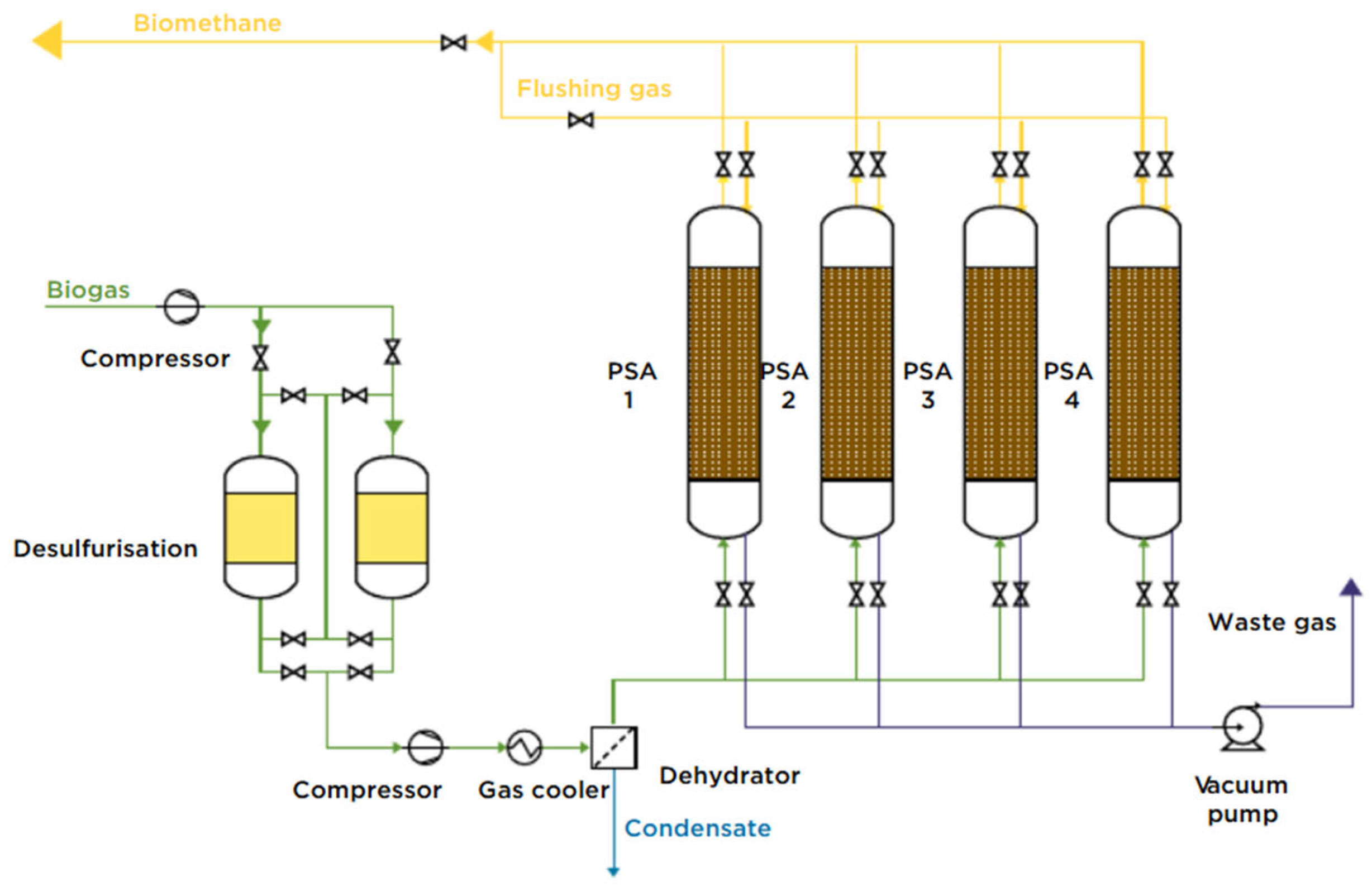
PSA is another upgrading technology that separates gases according to the size of their molecules and adsorption properties. In this procedure, biogas is passed through adsorbent materials that selectively capture CO2 and other impurities at high pressure. When the pressure is reduced, the adsorbed gases are released, allowing for the recovery of purified biomethane. PSA systems can also remove nitrogen and oxygen, making them versatile for different gas compositions [11]. The PSA process is shown in Figure 2.

2.3. Solvent-Based Biogas Upgrading

2.3.1. Water Scrubbing

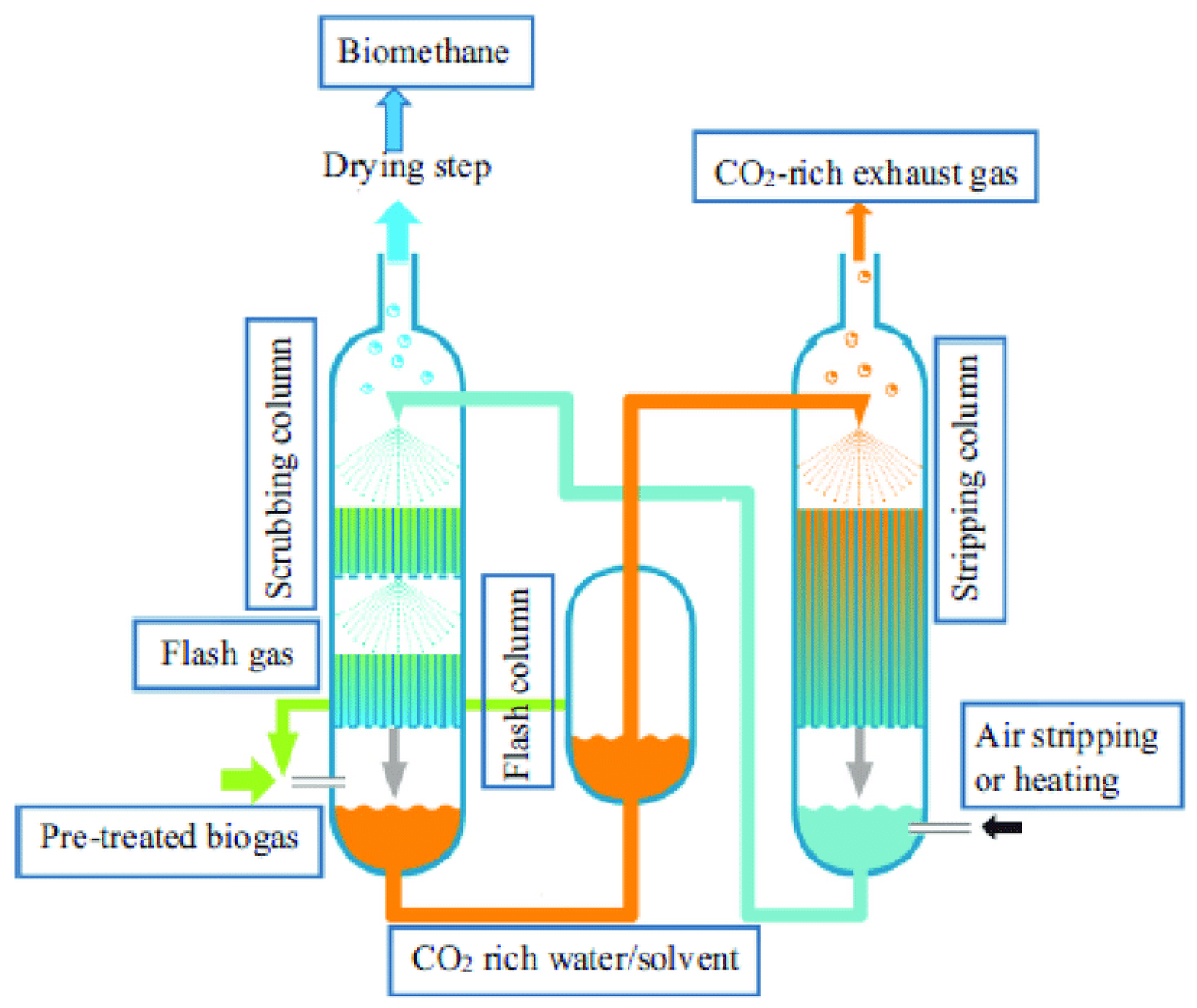
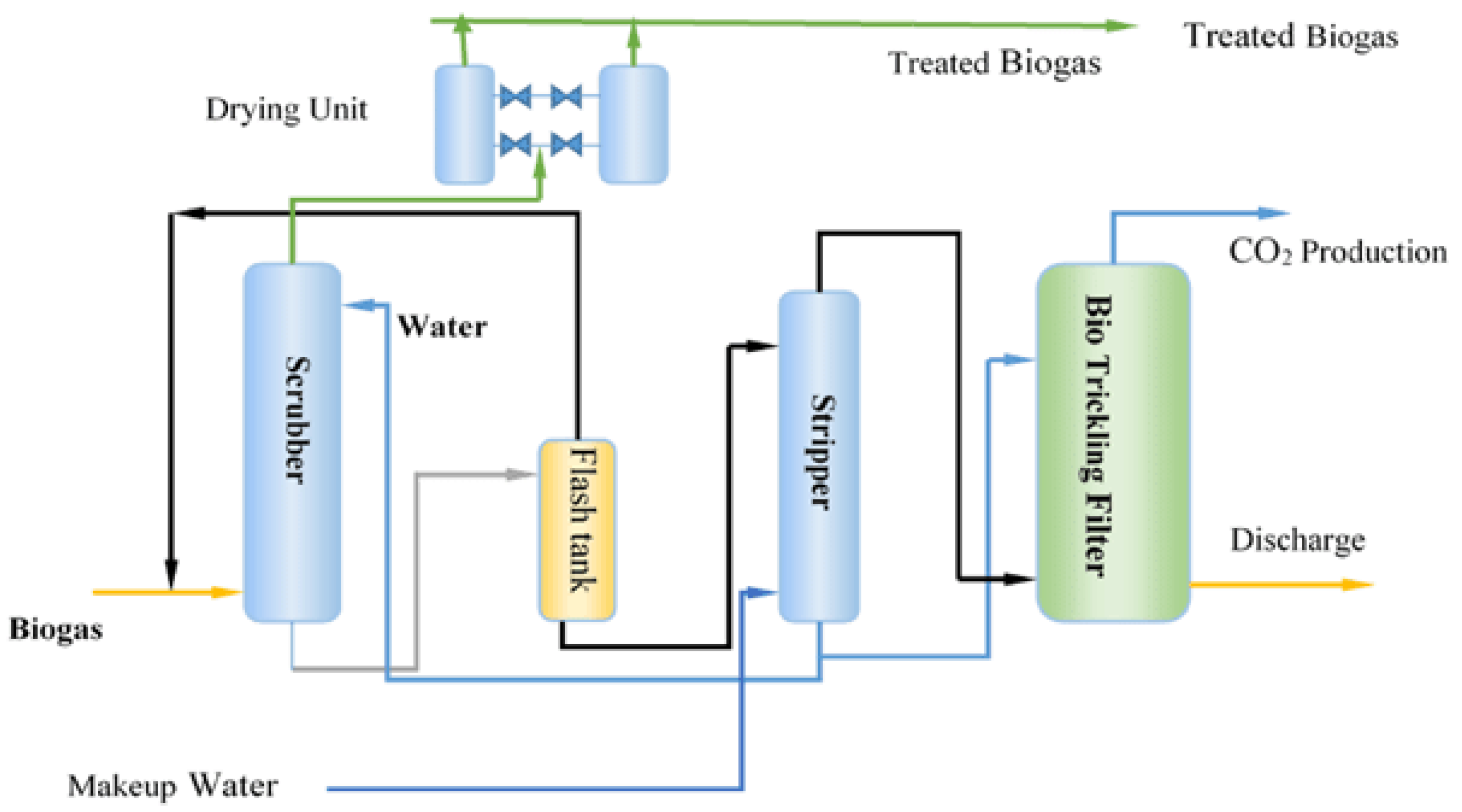
Water scrubbing uses water to dissolve CO2 from biogas while allowing the methane to pass through. The process effectively removes moisture and certain contaminants but may require further drying of the biomethane before it can be used or inserted into the gas grid. Water scrubbing systems are known for their simplicity and effectiveness in treating biogas with lower concentrations of impurities [13]. The process of water scrubbing is demonstrated in Figure 3.
Water scrubbing is based on Henry’s Law, which states that gases dissolve in liquids; it is the most widely used physical absorption technique. Compared to CH4, CO2 and H2S are far more soluble in water at room temperature. As a result of other molecules being removed from water and then regenerated to improve CH4 recovery, the gas rising from the top of the absorption column is high in methane. Although the exit biomethane is highly pure—up to 99% pure [15]—there is a significant risk of losses for several reasons.
The above study focused on bubble entrapment caused by the large pressure differential between the desorption tank and the water scrubbing column, as well as gas short-circuiting at the bottom of the column due to inadequate water sealing. In this instance, integrating a pressure vessel between the desorption tank and the scrubber unit was the solution used to prevent CH4 losses. Because of the lower water pressure, this solution showed a decrease in losses. In a different study, the same authors also suggested a flash-vessel [16], which led to an 8.46% methane recovery.

2.3.2. Physical Scrubbing

Physical scrubbing is the process of removing pollutants from biogas utilizing physical techniques like water washing. The scrubbing method depends on how soluble the H2S and CO2 are; for instance, they are more easily dissolved in water than CH4. At a temperature of 26 °C, CO2 has a 26-fold greater solubility in water than methane. This process is performed at a pressure of 6–10 bars [17].
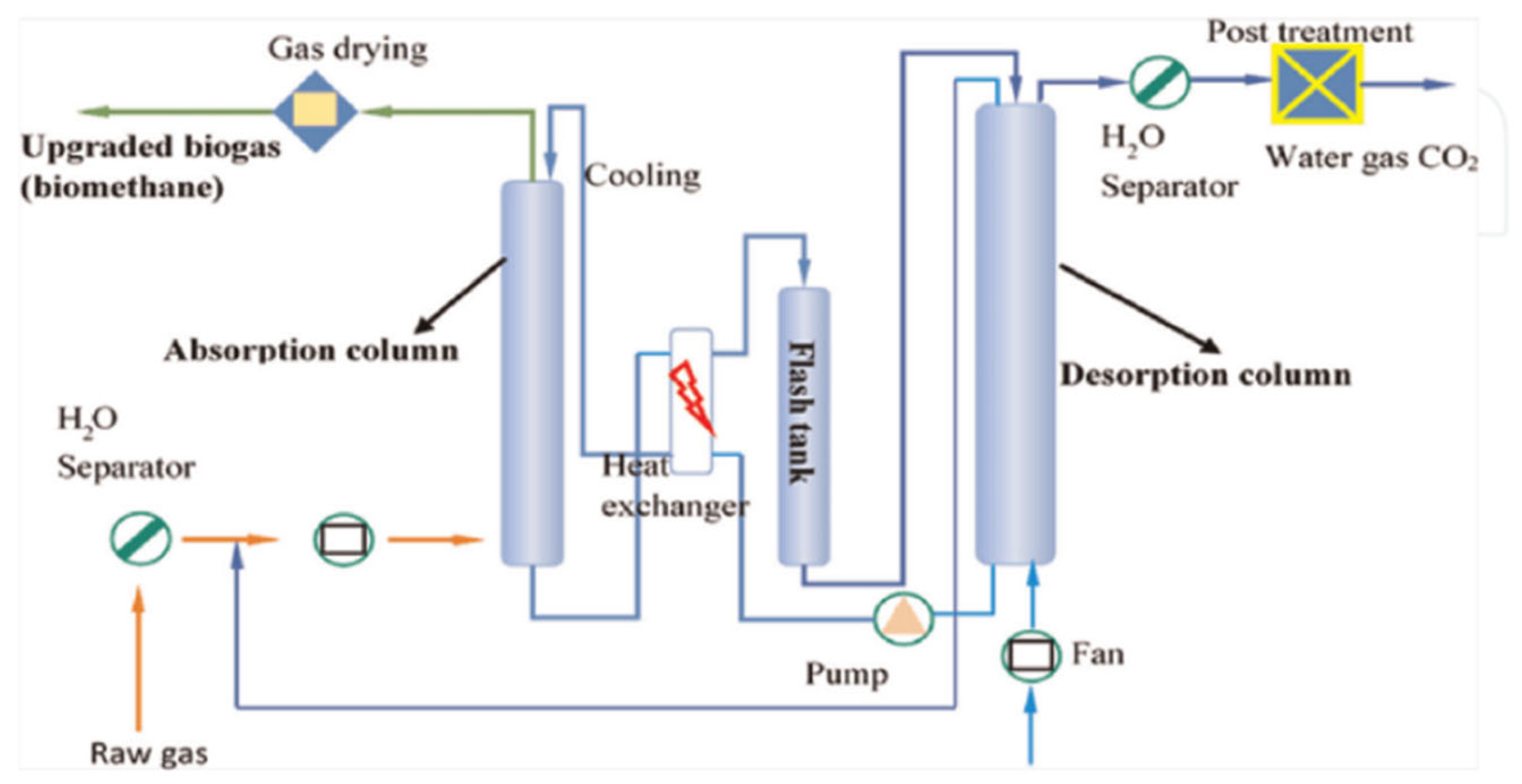
One study [18] showed that the primary components of the organic scrubbing method are a sulfur absorber, CO2 absorber, H2S concentrator, H2S stripper, stripper reboiler reflux pump, and reflux accumulator, as shown in Figure 4. When using organic physical scrubbing, the CO2 in raw biogas is absorbed in an organic solvent such as a mixture of polyethylene glycol dimethyl ethers.

2.3.3. Chemical Scrubbing

One of the oldest techniques for purging raw biogas of carbon dioxide (CO2) and other contaminants is chemical scrubbing. Alkaline chemical solvents that preferentially absorb CO2 from the gas stream, such as aqueous solutions of monoethanolamine (MEA), diethanolamine (DEA), or potassium carbonate, are commonly used in this process. The fundamental process depends on a reversible chemical reaction between the solvent and CO2, which enables the solvent to be recycled in a closed-loop system by means of a thermal desorption step [20].
Chemical scrubbing works well; however, there are a number of financial and technological obstacles that prevent it from being widely used, particularly in small- and medium-sized applications. Chemical solvent thermal regeneration uses a lot of energy, which raises operating costs and lowers system efficiency overall. If degraded solvents are not handled appropriately, their corrosive and acidic properties can harm machinery and raise questions about environmental safety [21]. Additionally, because the used solvents may be harmful, their disposal calls for caution. Chemical scrubbing is less practical for dispersed or rural setups because of its more complicated infrastructure and greater operating costs when compared to some physical upgrading procedures (such as water scrubbing).
Recent studies have concentrated on creating substitute solvents, like ionic liquids and amino acid salts, that offer greater resistance to degradation and lower regeneration energy needs. These methods still require further validation under actual biogas conditions, as they are still mostly at the experimental or pilot stages [22].
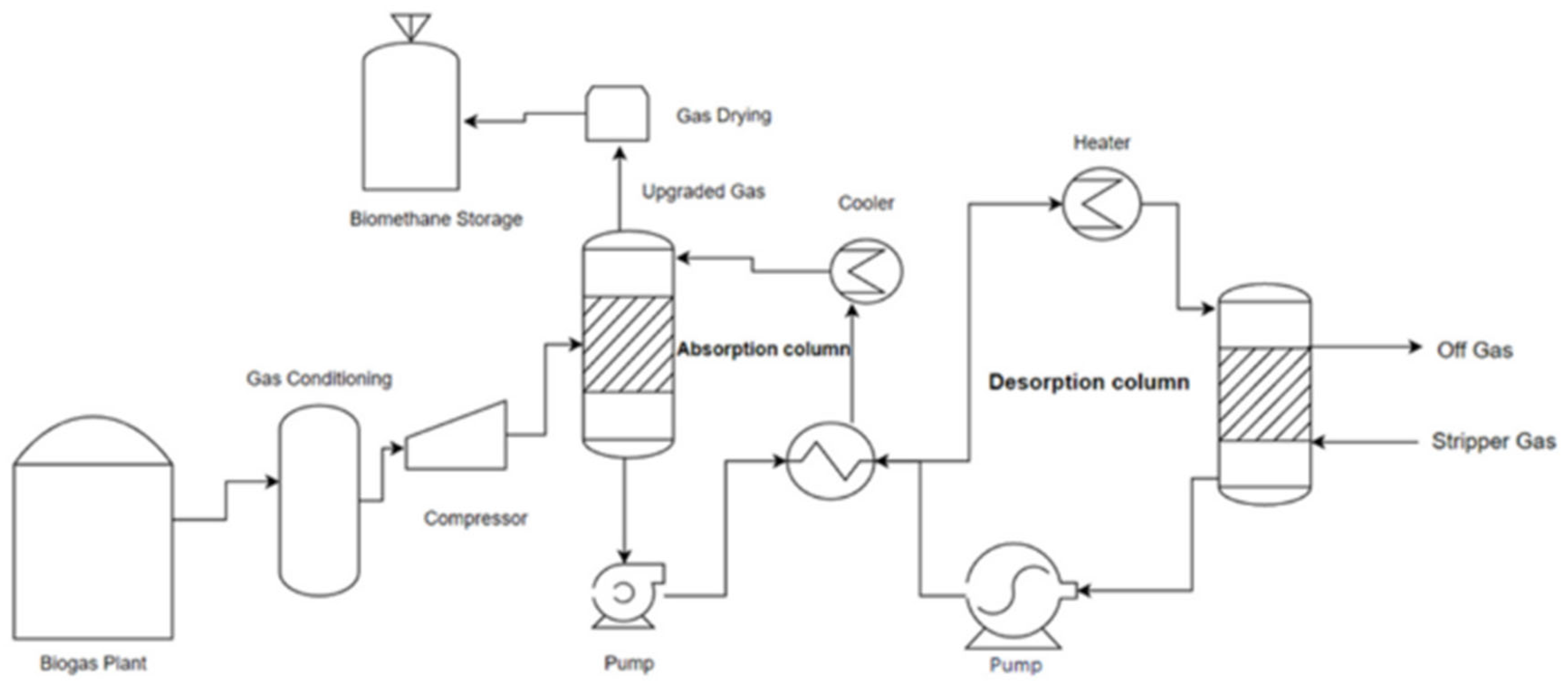
In conclusion, chemical scrubbing offers excellent gas purity and operational flexibility; however, its environmental impact and economic trade-offs must be carefully weighed. It is still a good choice for centralized or large-scale upgrade plants. Alternative low-energy upgrading technologies, however, might provide more environmentally friendly options for off-grid or decentralized biogas applications [21]. The diagram below (Figure 5) presents a physical scrubbing process.

2.4. Hybrid System

Some modern hybrid systems combine multiple technologies to optimize performance and efficiency. A hybrid approach may integrate membrane technology with PSA or water scrubbing to achieve superior purification results under varying feedstock conditions. This flexibility enables operators to tailor solutions based on specific gas qualities and operational requirements [8]. A hybrid system is shown in Figure 6.
Hybrid systems integrate two or more purifications and upgrading techniques. By combining various technologies into a single unit, CH4 losses will be decreased, capital and ongoing costs will be minimized, and the conditioning systems’ environmental impact will be decreased. It is important to remember that biogas upgrading also offers the option of storing or valuing recovered CO2 [25].
However, the choice of biogas upgrading technology depends on factors such as feedstock characteristics, desired gas quality, operational costs, and system integration capabilities. Each method offers unique benefits that can enhance the overall effectiveness of biogas production facilities, contributing to more sustainable energy solutions.

2.5. Newer Biogas Upgrading Technologies

2.5.1. Cryogenic Distillation

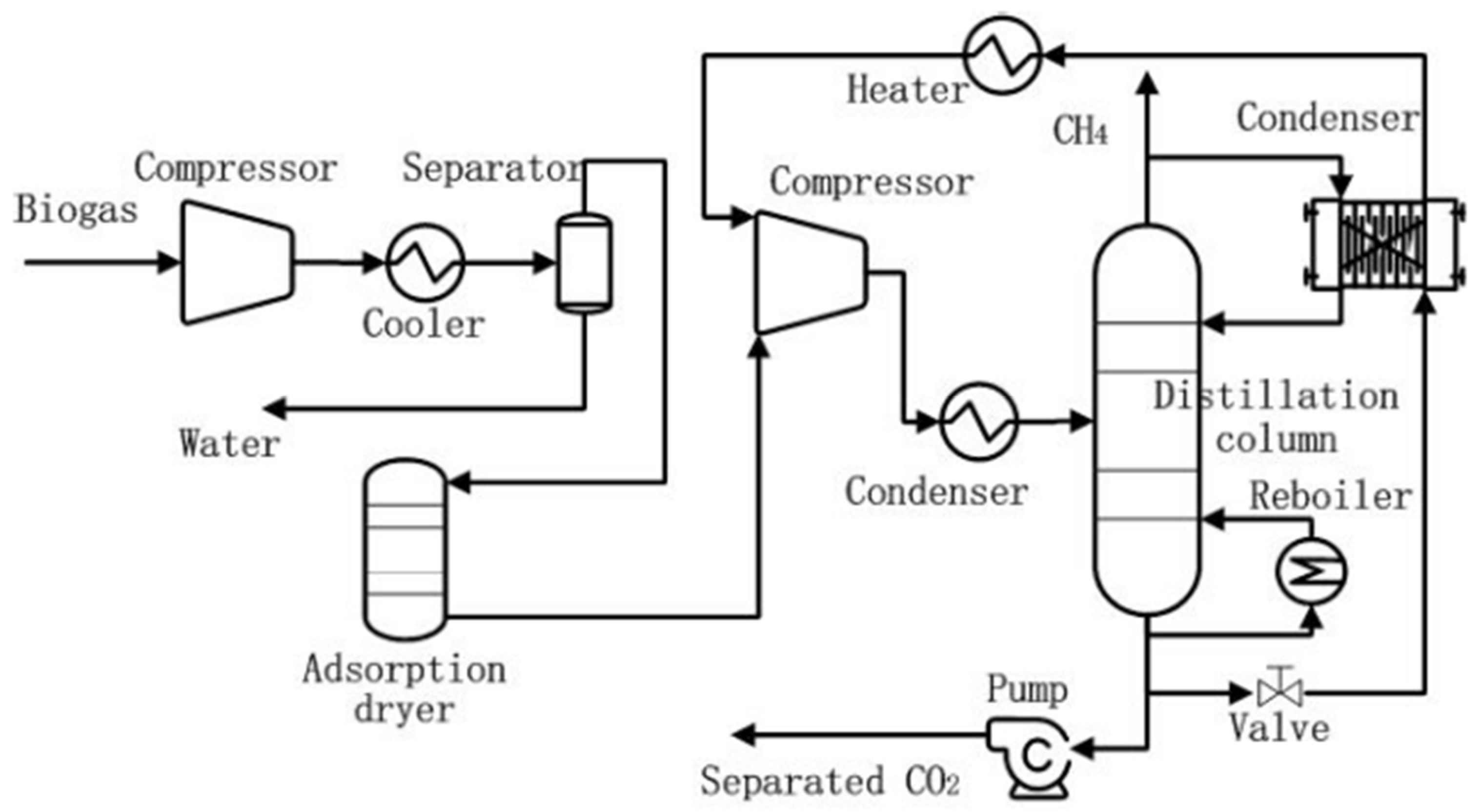
According to one study [26], a possible technique for converting biogas into biomethane is cryogenic upgrading, which makes use of the unique condensation characteristics of its constituents. The biogas is compressed to high pressures (usually 4900 kPa) and cooled to temperatures between −40 °C and −78 °C using this method. Effective separation is made possible under these circumstances because the methane (CH4) remains in the gaseous phase while carbon dioxide (CO2) liquefies.
Ref. [27] indicated that the method of cryogenic upgrading has high operating expenses since it requires a large amount of energy for cooling and compression. Because CO2 can freeze at low temperatures, obstructions and disturbances to operations may result. This can be reduced by properly managing systems to stop the development of solid CO2. Compressors, heat exchangers, distillation columns, and other equipment required for cryogenic upgrading come with high upfront costs and ongoing maintenance costs [28]. Figure 7 demonstrates a cryonic distillation upgrading system.
A high-purity biogas purification method with the added advantage of CO2 recovery is provided by cryogenic upgrading. Its high energy needs and related expenses, however, make widespread adoption difficult [4]. To maximize this approach for wider use in sustainable energy systems, more research and technical developments are needed.

2.5.2. Supersonic Separation

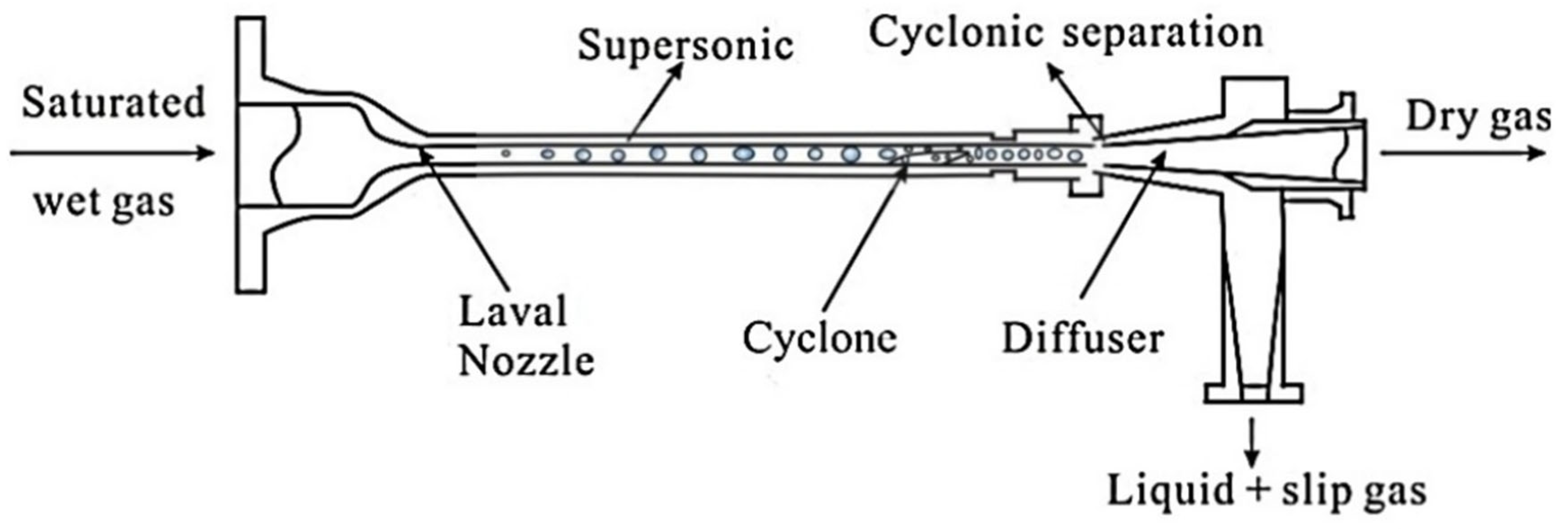
A new technique called supersonic separation uses high-velocity gas flows to effectively extract contaminants from natural gas, including water and heavy hydrocarbons. Converging–diverging nozzles are used in this technique to reach supersonic speeds, which causes rapid condensation and the separation of required components [30].
Ref. [31] suggested that impurities can be effectively removed from natural materials by using a supersonic separator, which can accomplish quick condensation and separation. The technology’s small size makes it easy to integrate into current systems without taking up a lot of room. Because supersonic separation does not require the chemicals that other conventional processes do, it has a lower environmental impact and lowers operating expenses.
The efficiency of separation may be impacted by supersonic separator performance, which is susceptible to changes in the gas flow. It is still difficult to design supersonic separators that can withstand different flow rates while maintaining high efficiency. To guarantee consistent performance across many applications, standardized designs and operational processes are required [32]. Figure 8 shows a diagram of a supersonic separation technology.
As stated by [34], supersonic separation presents a promising approach for purifying natural gas by efficiently removing impurities without the need for chemicals. While there are challenges related to flow sensitivity and design complexities, continuing investigations and technological advancements continue to improve the feasibility and effectiveness of this method. Further development and standardization are essential to fully realize the potential of supersonic separation in natural gas processing.
Supersonic separation (SS), a method that uses supersonic gas flow to separate components based on differences in their physical properties (e.g., mass, temperature, phase transition), is an innovative and energy-efficient technology. It is especially promising for the removal of water, CO2, and heavier hydrocarbons in natural gas processing without the use of chemical solvents or cryogenic systems. However, despite its advantages, there are several real-world barriers to its widespread implementation:
  • Precision Engineering: Designing supersonic nozzles and separators that reliably create, and control shock waves and phase changes require advanced CFD modeling and precision manufacturing [35];
  • Control Sensitivity: Small variations in pressure, temperature, or flow rate can significantly impact performance [36];
  • Scalability Issues: The maintenance of efficiency and performance consistency when scaling up from lab or pilot plants to industrial systems is nontrivial [30];
  • High Initial Investment: While operating costs may be lower than traditional methods, the upfront cost for designing, building, and installing supersonic separators can be high [30];
  • Retrofitting Challenges: Integrating SS units into existing facilities often requires significant modifications to pipeline layouts, compressors, and control systems;
  • Pressure Requirements: SS units require a high inlet gas pressure (often >70 bar) to generate and sustain supersonic flow, limiting their use to certain segments of the gas processing chain (e.g., upstream or midstream) [37];
  • Limited Flexibility: SS is best suited for stable, high-volume flow streams. Variable or off-spec conditions (e.g., fluctuating composition or pressure) can impair separation efficiency [38];
  • Conservatism in Industry: Operators often prefer proven technologies (like amine gas treatment or cryogenic distillation) over newer methods;
  • Demonstration Gaps: There are few full-scale commercial implementations and limited third-party data on performance under diverse operating conditions [39];
  • Competition with Established Technologies: In many cases, especially with falling gas prices or tight margins, conventional technologies remain more cost-effective in the short term;
  • Return on Investment Uncertainty: The payback period for SS can be uncertain due to fluctuating energy costs, gas composition, and market conditions [30].
Capital expenditure (CAPEX) and operational expenditure (OPEX) vary significantly across gas separation technologies, influencing their adoption based on project size, location, and processing goals. Supersonic separation (SSS) typically features lower CAPEX due to its compact, static design, with recent deployments showing skid-mounted systems costing around USD 500,000 for small-scale installations; these are substantially lower in cost than turboexpanders or amine-based systems, which can run into tens of millions of dollars for large-scale applications [30]. In contrast, chemical scrubbing is among the most capital-intensive options, requiring large absorber and stripper towers, solvent circulation equipment, and steam regeneration systems, with the CAPEX ranging from USD 10–35 million for 10 MW-scale units [40]. Cryogenic systems typically fall between these extremes, with a recent study estimating a CAPEX of approximately USD 12 million for a large gas dehydration and CO2 removal facility [41].
In terms of OPEX, supersonic separation leads, with the lowest ongoing costs, as it is a solvent-free, low-maintenance technology that passively separates components using controlled expansion and condensation. Unlike amine systems, which require substantial thermal energy for solvent regeneration and frequent solvent replacement, supersonic units consume little to no auxiliary power, resulting in minimal operating costs [42]. Amine systems continue to incur high OPEX due to their energy demands and solvent degradation, typically costing USD 45–60 per ton of CO2 captured, while advanced solvents (e.g., potassium carbonate or piperazine blends) offer ~15–25% reductions [43]. Cryogenic systems show moderate OPEX, primarily driven by electricity use rather than chemical consumption, with one case estimating an annual OPEX of ~USD 1.4 million for a mid-sized facility. Membrane separation systems also offer a low to moderate OPEX of roughly USD 25–35 per ton CO2, with costs primarily tied to electricity for compression and periodic membrane replacement [44]. Table 1 below summarizes key metrics for each technology.
Capital and operational expenditures (CAPEX/OPEX) for biogas upgrading technologies are typically expressed as indicative relative estimates, which are categorized as low, moderate, or high depending on the specific system design, plant capacity, and level of process integration. Energy requirements vary significantly across technologies and are influenced by factors such as plant configuration, operational pressure, and the need for additional processes like gas compression or cooling. Methane slip, which refers to the proportion of methane lost during upgrading, is a critical parameter, as it directly impacts both the overall efficiency of the system and its greenhouse gas emissions. Minimizing methane slip is essential to ensure high methane recovery and to enhance the climate performance of the upgrading process.

3. The Main Challenges of Optimizing Biogas Upgrade Plant Performance

3.1. Quality Control

Ref. [46] stated that biogas upgrading plants must adhere to strict quality standards for biomethane, particularly when injecting into gas grids. Ensuring that the produced gas meets these standards requires the precise control of operational parameters. Variability in feedstock composition can lead to fluctuations in gas quality, which means that it is necessary to continuously monitor and adjust the processes to maintain compliance with regulatory requirements.

3.2. Cost of Operations

Previous studies by [47] show that the costs associated with biogas upgrading can be significant, particularly due to energy consumption and the need for additives, like propane, to meet grid specifications. For instance, optimizing control settings can reduce costs related to lost methane during processing and minimize the energy required for operation. However, achieving these optimizations often requires sophisticated modeling and control systems, which can be resource-intensive to develop and implement.

3.3. Removal of Impurities

Raw biogas contains various impurities, including carbon dioxide (CO2), hydrogen sulfide (H2S), siloxanes, and other trace gases that must be effectively removed to enhance gas quality [48]. The presence of these impurities not only reduces the calorific value of the biogas but also poses risks of corrosion and operational failures in downstream equipment. Developing effective strategies for complete impurity removal while maintaining efficiency is a critical challenge.

3.4. Complexity of Proceess

The anaerobic digestion process is inherently complex, influenced by numerous physical, chemical, and biological factors such as substrate characteristics, hydraulic retention time, and temperature control. Any inefficiencies or instabilities in the digestion process can adversely affect biogas production rates and quality, complicating the optimization of upgrading systems [49].
Integrating advanced upgrading technologies (such as membrane separation or pressure swing adsorption) with existing biogas facilities can be challenging. Each technology has specific operational requirements and may necessitate modifications to existing infrastructure. Ensuring compatibility while maximizing performance often requires significant engineering effort and investment [50].
Implementing predictive control systems that utilize real-time data for continuous optimization poses challenges in data management and analysis. Developing accurate predictive models requires extensive historical data and sophisticated algorithms to interpret this data effectively. The complexity of these systems can lead to difficulties in implementation and maintenance.
Moreover, while optimizing biogas upgrading plant performance offers substantial benefits in terms of efficiency and output quality, it involves navigating a range of challenges related to quality control, operational costs, impurity removal, process complexity, technological integration, and data management. Addressing these challenges is essential for maximizing the potential of biogas as a sustainable energy source.

4. Comparison of Biogas Technologies

Supersonic gas separation (SSS) systems, such as those deployed in offshore and remote locations in Malaysia, Nigeria, and Russia, have demonstrated methane purities exceeding 95%. These systems utilize supersonic nozzles to condense and separate CO2 and water without the use of solvents or moving parts. As a result, they consume negligible energy, typically close to zero, beyond the minor pressure drops involved. Methane losses are reported to be below 0.2%; because of their compact skid-mounted design, the total costs per Nm3 of gas upgraded are estimated at approximately USD 0.05 when amortized over typical system lifespans and throughput. These performance levels make SSS particularly attractive for installations where space and energy availability are constrained [51].
In comparison, membrane separation systems, especially in two-stage configurations, can achieve methane purities of around 97.5%, with CO2 removal efficiencies of up to 99%. Pilot-scale demonstrations processing gas at 20 bars have reported specific energy consumption levels of about 0.33 kWh/Nm3, primarily due to the electricity needed for gas compression. Methane losses vary but can be as low as 0.19% in optimized designs. The capital and operational costs are relatively low, with estimates ranging between USD 0.011 and USD 0.02 per Nm3 of treated gas. Membrane systems are modular and easily scalable, making them a strong choice for distributed or mid-sized gas upgrading projects [24].
Amine absorption, using conventional MEA or advanced solvent blends, such as potassium carbonate or piperazine (PZ), is a mature technology with extensive industrial use. These systems can achieve CO2 removal efficiencies of 85–95%; in some optimized setups, the removal efficiencies are even higher. Methane purity typically exceeds 98%, with methane slip consistently below 0.1%. However, the technology is energy-intensive, with specific energy consumptions ranging from 0.9 to 1.4 kWh/Nm3, depending on the solvent used and the heat integration design. As a result, total upgrading costs tend to be higher, in the range of USD 0.10 to USD 0.15 per Nm3, making amines better suited to large-scale, centralized facilities where heat recovery and solvent management infrastructures already exist [52].
Cryogenic separation technologies, often used for deep CO2 or heavy hydrocarbon removal, offer excellent gas purity and minimal methane loss. Demonstration-scale systems have reported CO2 removal efficiencies exceeding 99% and CH4 purities of around 99%. The energy demand is moderate, at about 0.27 kWh/Nm3, and is derived mainly from the refrigeration cycle used to liquefy and separate CO2. Methane losses are generally kept below 0.5%; the estimated cost per Nm3 of upgraded gas falls between USD 0.08 and USD 0.12, depending on the scale and energy pricing. Cryogenic systems are particularly valuable when high-purity CO2 is desired as a by-product or when combined with LNG infrastructure [53]. Table 2 shows some comparisons of biogas upgrading technologies.

4.1. In-Depth Analysis of Trade-Offs

  • Methane Recovery vs. Purity: Membrane systems are flexible but require multi-stage setups for high purity, increasing costs. PSA offers high purity but lower recovery and higher operational expenses. Water and physical scrubbing balance recovery and purity but depend on water/solvent availability and regeneration [55];
  • Energy Consumption vs. Environmental Impact: Cryogenic and chemical scrubbing are energy-intensive, impacting operational costs and carbon footprint. Water scrubbing is less energy-intensive but unsustainable in water-scarce regions. Membrane and PSA systems offer moderate energy use but often require pre-treatment for contaminants [56];
  • Capital and Operational Expenditure: Hybrid and cryogenic systems require high investment and skilled operation, suitable for large, high-value projects. Membrane and water scrubbing systems have moderate costs, making them ideal for decentralized or medium-scale operations [26];
  • Feedstock and Site-Specific Constraints: Chemical and physical scrubbing tolerate variable or contaminated feedstocks, suitable for landfill or mixed-waste biogas. Membrane and PSA require cleaner feedstock to avoid fouling and adsorbent degradation [56].

4.2. Practical Operational Challenges

Each upgrading pathway presents unique operational and maintenance challenges that significantly influence their performance, cost, and scalability. Membrane separation, a widely adopted technique due to its modularity and relatively low energy demand, is notably susceptible to fouling from hydrogen sulfide (H2S), siloxanes, and particulates. These contaminants can degrade membrane performance, reduce selectivity, and shorten lifespans, thereby necessitating robust pre-treatment steps and scheduled maintenance regimes [57]. Failure to implement such pre-treatments can lead to irreversible membrane damage and increased operational costs.
Pressure swing adsorption (PSA) systems, while effective in achieving high methane purities, are limited by the adsorbent materials’ finite saturation capacity. Over time, the adsorbent beds lose efficacy and must be regenerated or replaced with an operation that disrupts the system uptime and incurs additional costs [58]. Moreover, PSA systems are sensitive to fluctuations in feed-gas composition, which can impair separation efficiency and require dynamic control strategies.
Water scrubbing, a traditional and relatively simple method, faces increasing scrutiny due to global water scarcity. The process requires substantial volumes of water and issues, such as mineral scaling and methane slip, become prominent, especially in unchilled or unrecycled systems [59]. These limitations reduce environmental sustainability and increase operational complexity, particularly in arid regions or off-grid installations.
Chemical scrubbing, often using amines or other reactive solvents, introduces another dimension of complexity. While highly selective for CO2 removal, these systems grapple with solvent degradation, toxicity, and disposal challenges. Managing these risks necessitates strict operational control, environmental compliance, and safe handling procedures [60]. The environmental trade-offs associated with solvent use pose a barrier to long-term sustainability and regulatory acceptance.
Cryogenic upgrading offers the advantage of producing high-purity methane; however, it requires sophisticated and energy-intensive refrigeration infrastructure. Ice formation in the separation units is a frequent issue that can cause blockages and equipment failure if not carefully managed. These systems are also capital-intensive and require a high degree of operational oversight, limiting their applicability to large-scale or centralized facilities [61].
Hybrid systems, which combine two or more upgrading technologies, are being explored to enhance overall process efficiency and gas quality. Nonetheless, these systems introduce complex integration, requiring advanced process control, automation, and highly trained personnel. Their success hinges on the seamless orchestration of unit operations and real-time optimization algorithms. The increased technical sophistication and cost of hybrid systems may limit their deployment in decentralized or small-scale biogas facilities [62].
Overall, while significant advances have been made in upgrading technologies, the trade-offs between operational simplicity, cost, environmental impact, and gas quality remain a central concern. Addressing these challenges requires a multidimensional approach improving material robustness, integrating renewable energy for energy-intensive operations, and developing smart control systems for dynamic plant management.

4.3. Selection of Appropriate Technologies Under Different Conditions

Selecting appropriate biogas upgrading technology requires a critical, multi-criteria assessment based on site-specific conditions, operational goals, and long-term sustainability. Key factors include the composition of raw biogas, particularly the presence of H2S, CO2, siloxanes, and moisture, which significantly influence the suitability of different technologies [63]. Membrane separation, for example, is energy-efficient and modular, making it ideal for small- to medium-scale operations with relatively clean gas streams; however, it is sensitive to fouling and may require pre-treatment. Pressure swing adsorption (PSA) tolerates more feedstock variability and provides high methane purity; however, it has higher electricity demands and requires regular adsorbent replacement. Water scrubbing is simple and effective but depends heavily on water availability and cooling to minimize methane slip, making it unsuitable in water-scarce regions [64]. Chemical scrubbing offers excellent CO2 removal but raises concerns over solvent management and environmental impacts. Cryogenic and supersonic separations, while offering the highest methane purity and recovery, are capital-intensive and suitable only for large-scale, centralized plants with skilled operators. Other crucial criteria include energy consumption, maintenance requirements, local technical capacity, regulatory standards, methane purity targets (especially for grid injections or vehicle fuel), and cost-effectiveness over time. Membrane and PSA systems generally offer lower maintenance and faster payback periods, especially in decentralized applications, whereas hybrid configurations (e.g., membrane + PSA) are optimal when both high recovery and purity are required. A decision-making framework should incorporate these technical, economic, and environmental factors to guide technology selection, ensuring compatibility with local conditions and sustainability objectives [65]. Recent studies by [66], emphasize the need for integrated, site-specific evaluations that balance operational feasibility with long-term environmental and economic performance.

5. Bottling Biogas

Biogas bottling is the process of purifying, compressing, and storing biogas (a renewable fuel mainly composed of methane) in pressurized cylinders (such as LPG cylinders) for easy transportation and utilization. This process involves removing impurities, like carbon dioxide (CO2), hydrogen sulfide (H2S), and water vapor (H2O), from raw biogas to increase its methane concentration and calorific value, making it suitable as a clean alternative to fossil fuels [67].
According to [68] this process involves:
  • Compression of purified gas (biomethane) using mechanical compressors;
  • Storage in high-pressure cylinders or adapted containers for safe and efficient use.
Particularly in rural and residential kitchens, bottled biogas that has been refined and compressed into biomethane is utilized as a clean and effective cooking fuel. In isolated, off-grid, or rural locations, bottled biogas can be utilized to power gas generators that generate electricity. It is ideal for small-scale power requirements such as pumping, lighting, or running tiny appliances. Like compressed natural gas (CNG), bottled biogas (also known as bio-CNG or biomethane) can be used as a gaseous fuel in automobiles after being purified and compressed. It provides a low-emission, renewable substitute for gasoline or diesel [69]. While compression and bottling techniques have advanced, comparative studies evaluating the techno–economic viability of alternative bottling processes under diverse operational sizes and settings (urban vs. rural, developed vs. developing countries) are conspicuously lacking [67].
Logistical and infrastructure issues continue to restrict their broad use, particularly in rural or decentralized settings. Although biogas generation and upgrading methods have been the subject of much research, the bottling of enhanced biogas (biomethane), a crucial step in facilitating its storage, transportation, and commercialization, has received relatively little attention. Globally, there is a lack of uniformity in the safety requirements, pressure vessel certifications, and transportation laws for bottled biogas. Little is known about how regulatory frameworks affect the bottling technology’s scalability and uptake, especially in low- and middle-income nations. Using conventional lifecycle assessment (LCA) techniques, the environmental impact of bottling processes has not been adequately assessed, particularly regarding energy inputs for compression, the refrigerants used, and methane leakage.

5.1. Material Used for Biogas Bottling

The materials used for biogas bottling can be categorized into components for biogas production, purification, compression, and storage. The biogas is produced from organic materials, such as cow dung and kitchen waste, which undergo anaerobic digestion to generate raw biogas [23]. For purification, methods are employed to remove moisture, carbon dioxide (CO2), and hydrogen sulfide (H2S), as these impurities reduce energy value and cause corrosion. Although not all specific purifying agents are listed, commonly used materials include water scrubbers and chemical filters. The purification process ensures that the biogas is upgraded to biomethane, increasing methane concentrations to over 95% [70].
For compression and storage, a variety of materials are used, mainly low-cost and locally available items. The compressor is constructed using PVC pipes and fittings of various sizes [71], rubber O-rings for airtight seals, rubber balls for checking valves, and lubricants, like silicone grease, to minimize friction. Metal nails or clips are used to assemble valve mechanisms [10]. Once purified and compressed, the biomethane is stored in conventional high-pressure steel cylinders (150–200 bar) The diagram below shows the typical material used to store biogas [68].

5.2. Materials and Cylinder Types for Biogas Bottling [72]

  • Steel (Type I—All-Metal);
  • Steel/Aluminum Liner + Composite Hoop Wrap (Type II);
  • Metal Liner + Full Composite Wrap (Type III);
  • Plastic/Polymer Liner + Full Composite Wrap (Type IV).

5.3. Importance of Biogas Bottling

Bottled biogas can help rural development and energy equity by reaching isolated locations without grid infrastructure. The marketability and range of applications of bottled biomethane are increased by its usage as industrial heating or as automobile fuel (Bio-CNG). By making it possible to store extra biomethane, bottling improves energy resilience and helps to balance variations in supply and demand [73].
In line with national and international climate targets, bottled biogas dramatically lowers greenhouse gas emissions when used in place of LPG or fuel. By generating jobs in operation, maintenance, and distribution, biogas bottling supports circular economy models in waste management and agriculture [74].
Addressing the above research gaps is vital to utilizing biogas to its maximum potential as a clean and portable energy solution. A review of current technologies, challenges, and innovations in biogas bottling can guide policymakers, researchers, and entrepreneurs in designing scalable and sustainable bioenergy systems for the future.

5.4. Saftey Standards for Biogas Bottling

Given the high pressures involved, typically ranging from 200 to 250 bar, biogas must be stored in pressure vessels that meet rigorous design, testing, and certification criteria to ensure operational safety and environmental compliance. Among the most widely recognized international standards, the ISO 11119 series (Parts 1–3) outlines specifications for composite gas cylinders with non-metallic liners, including fiber-reinforced types. However, while ISO 11119 expands the range of allowable materials and designs for lightweight, high-pressure cylinders, it still imposes strict performance criteria, including burst pressure, fatigue resistance, leak-before-burst behavior, and thermal stability [75]. In this context, the materials, such as polyethylene terephthalate (PET), commonly used in low-pressure liquid containers are fundamentally unsuitable for high-pressure gas storage due to their poor gas barrier properties, low tensile strength, and susceptibility to creep deformation and gas permeation under sustained loads. These shortcomings make PET unable to meet ISO standards for fatigue life, pressure cycling, and resistance to internal gas diffusion, especially in the presence of the hydrogen sulfide (H2S) and moisture commonly found in biogas [76].
As demonstrated by recent studies [77], ensuring the integrity of biogas storage systems requires continuous alignment with international standards and adaptation to evolving safety and performance criteria. Failure to do so not only compromises safety but undermines public trust and the environmental credibility of biogas as a renewable energy carrier.

5.5. Logistical Challenges

The logistical complexities of deploying biogas bottling systems in rural settings are multifaceted. First, the collection and transport of feedstock, such as agricultural waste, manure, or food residues, can be highly decentralized and seasonal, leading to inconsistent biogas production. Ensuring stable gas flow rates is essential for compression and storage; however, rural digesters often suffer from underfeeding or poor process control. In addition, inadequate road infrastructure, lack of reliable electricity for compression, and the absence of localized cylinder distribution networks make the transport and delivery of bottled biogas impractical or cost prohibitive. The maintenance of high-pressure equipment and periodic inspection of gas cylinders also pose difficulties where technical expertise and spare parts are scarce, potentially compromising safety and system longevity [78].

5.6. Economic Barriers

Biogas bottling faces significant economic barriers, notably due to high production and upfront infrastructure costs. The capital investment required for establishing biogas plants including digesters, gas cleaning equipment, compression units, and storage cylinders is substantial, making these projects financially challenging, particularly for small- to medium-scale operations [79]. Without governmental subsidies or targeted support programs, small businesses and farmers often find the initial expenses prohibitive and unattractive for investment. In addition, operating costs remain high, as the processes involved in purifying biogas and compressing them for bottling are energy-intensive. Currently, the cost of producing bottled biogas (upgrading to biomethane and subsequent bottling) can range from USD 36 to USD 108 per megawatt-hour, which is approximately five times higher than the market price of fossil natural gas, underscoring the economic disadvantage of biogas under the present conditions [80].
Compounding the problem, financing barriers further restrict sector growth. Affordable, long-term financing is limited; project developers face challenges such as a lack of bankable business models, low willingness from lenders due to perceived risks, and extended payback periods that often exceed a decade. These hurdles collectively deter the critical investment needed to expand the biogas bottling industry [81].
Market competition presents another set of challenges. Biomethane and bottled biogas struggle to compete with the low prices of conventional fossil natural gas, particularly in regions where carbon pricing and renewable energy incentives remain weak or absent. Achieving cost reductions through economies of scale is also a challenge. Smaller plants tend to have higher unit-production costs, while centralized, large-scale operations benefit from greater efficiency yet require sophisticated feedstock logistics and distribution networks. Moreover, existing infrastructure for collecting, bottling, and distributing biogas remains limited, especially in rural or developing regions, impeding market penetration where the benefits could be most pronounced [82].

5.7. Regulatory Constraints

Biogas bottling projects often encounter complex and lengthy permitting processes due to the fragmented and non-harmonized regulatory frameworks that govern construction, operation, and safety. Multiple regulatory bodies typically require separate permits addressing environmental impact assessments, health and safety standards, and equipment certification for pressurized storage, which not only extend project timelines but also increase compliance costs [83]. Additionally, many regions lack clear national technical and safety standards, particularly for handling and storing biogas in pressurized cylinders, which pose significant barriers to large-scale deployment and limit cross-border trade opportunities. Restrictive policies and legal uncertainties further complicate development; rigid legal definitions of “biogas,” “biomethane,” or “renewable gas” may limit eligible feedstock types or confine production models to on-farm or centralized facilities, thereby excluding community or cooperative initiatives. In some jurisdictions, biogas producers face restricted or prohibited third-party access to commercial natural gas pipelines and distribution networks, hindering the broader market penetration of bottled biogas [12]. Moreover, evolving compliance and testing requirements, exemplified by recent reforms like the 2025 US Renewable Fuel Standard, mandate continual updates in reporting, measurement, and quality-assurance protocols. These stringent and sometimes ambiguous regulatory demands increase administrative burdens. Simultaneously, a growing emphasis on certification, traceability, and lifecycle emissions accounting necessitates costly verification schemes and annual audits, introducing further uncertainty until international harmonization of these processes is achieved [84].

5.8. Integrated Approach and Policy Recommendations

To overcome these challenges, a multi-prolonged strategy is needed. This includes the development of low-cost, modular bottling technologies, training programs for local technicians, and financial instruments such as microcredit, cooperative models, and results-based financing to reduce upfront costs. Regulatory frameworks must be contextualized and tiered, allowing for phased compliance and offering temporary waivers for pilot systems under supervised conditions. Public–private partnerships and rural energy policies must prioritize capacity building, infrastructure co-development, and market access for bio-CNG. Without these enabling conditions, the deployment of biogas bottling systems in rural and low-income settings risks remains a theoretical solution, rather than a practical pathway to energy equity and environmental sustainability [85].
Case Study 1: 
Bio-CNG Plant in Pune District, India
In the state of Maharashtra, India, the Pune Municipal Corporation (PMC) partnered with a private firm, Mailhem-Ikos, to develop a bio-CNG plant that processes approximately 300 metric tons of organic municipal solid waste daily, producing approximately 14,000 kg/day of compressed biogas (CBG). The raw biogas, which initially contains about 55–60% CH4 and 35–40% CO2, is upgraded using a water scrubbing system coupled with activated carbon filtration to remove H2S and siloxanes. The methane-rich gas is then compressed to 220 bar and bottled in composite high-pressure cylinders compliant with ISO 11120 and local regulatory norms.
Under operational conditions, the plant achieves a CH4 purity of ~96–98%, with CO2 removal efficiency exceeding 90% and methane slip kept under 2%. The bottled gas is used to fuel PMP city buses and sold to private CNG stations, supported by India’s SATAT (Sustainable Alternative Towards Affordable Transportation) policy. Despite its success, the project faced early challenges, such as variable feedstock quality, scaling in the water scrubber, and regulatory hurdles for cylinder transport certification, which were addressed through a public–private partnership model and consistent policy support. The project demonstrates how centralized upgrading and bottling can work effectively in urban–rural fringes when logistical infrastructure and policy incentives are aligned [86].
Case Study 2: 
Community-Scale Biogas Bottling in Kisumu, Kenya
In rural western Kenya, a pilot biogas bottling initiative supported by the Kenya Biogas Program (KBP) and SNV Netherlands aimed to create a decentralized, community-managed bottling system using agricultural waste and animal manure from 40 smallholder farms. Each household contributed feedstock to a centralized digester that produced approximately 60 Nm3/day of biogas, which was upgraded using a low-cost pressure swing adsorption (PSA) unit to remove CO2 and H2S. The purified gas was compressed using a solar-powered compressor to 150 bars and stored in Type I steel cylinders.
Under real-world conditions, the system achieved methane concentrations of 93–95%, with methane slip estimated at ~4% due to fluctuating biogas input and the limitations of single-stage PSA under variable pressure. Cylinder inspections were challenging due to the lack of certified testing centers nearby; transporting high-pressure gas cylinders without clear regulatory classification slowed down distribution. Economically, the initial investment was subsidized by donor support; however, the operating cost per kilogram of the bottled biogas was still 30–40% lower than LPG, making it competitive for cooking applications [87].
This case highlights both the technical feasibility and the logistical and regulatory gaps that hinder scalability in low-income regions. It underscores the need for simplified standards, mobile inspection services, and microfinancing schemes to enable rural access to clean energy.

5.9. Key Lessons from the Case Studies

  • Technology Performance: Both water scrubbing and PSA technologies can produce high purity biomethane (>95% CH4) under field conditions when paired with adequate pre-treatment;
  • Operational Challenges: Variability in feedstock, energy supply, and system pressure can cause inconsistencies in methane purity and methane slip, especially in decentralized settings;
  • Regulatory Compliance: Success depends heavily on supportive policies, certified equipment, and clearly defined safety and transport regulations;
  • Economic Feasibility: While urban and peri-urban projects can achieve commercial viability with scale and subsidies, rural systems require donor involvement, cooperative ownership models, and cost-sharing to remain sustainable.

6. Conclusions

Biogas upgrading and bottling represent transformative solutions in the global shift toward sustainable and decentralized energy systems. As this review has demonstrated, various upgrading technologies, ranging from membrane separation and PSA to water and chemical scrubbing, offer unique advantages depending on operational needs, feedstock characteristics, and intended end-use applications. Innovations, such as hybrid systems, cryogenic distillation, and supersonic separation, are pushing the boundaries of efficiency and purity in biomethane production, although challenges related to cost, complexity, and environmental impact remain.
A key takeaway is the importance of technology selection based on specific use-case scenarios, as no single method is universally optimal. While membrane technology offers high methane recovery with low energy consumption, chemical scrubbing provides excellent gas purity at the expense of greater operational complexity and environmental risk. Moreover, newer technologies, like cryogenic and supersonic methods, although promising, require further validation and cost optimization before widespread deployment.
Equally critical but often overlooked is the bottling phase, which enables the storage, transportation, and commercialization of purified biomethane. Despite its importance, this area suffers from significant research and policy gaps, particularly concerning safety standards, material selection, infrastructure requirements, and environmental assessments. The potential for biogas bottling to empower rural communities, reduce greenhouse gas emissions, and diversify energy access is immense; however it remains constrained by regulatory inconsistencies, logistical challenges, and limited comparative analyses.
Maximizing the impact of biogas technologies necessitates a holistic approach that integrates advanced upgrading systems with efficient and scalable bottling processes. Addressing the current technical, economic, and regulatory challenges will be essential to unlocking biogas’s full potential as a clean, renewable, and portable energy source. Future research must prioritize the development of cost-effective, environmentally sustainable, and context-appropriate solutions that support the global transition to a low-carbon energy future.
Biogas upgrading and bottling are critical components in advancing sustainable and decentralized energy systems, offering viable pathways to reduce emissions and enhance energy access. This review underscores that no single upgrading technology is universally optimal; instead, solutions, like membrane separation, PSA, and water scrubbing, each present trade-offs in cost, efficiency, and scalability, with membrane technologies gaining momentum due to their modularity and low energy demand. Emerging methods, like supersonic and cryogenic separation, show promise but require further validation and cost reductions. Bottling, a vital yet under-researched phase, faces hurdles related to material safety standards, infrastructure, and regulatory incoherence, particularly in rural and low-income contexts. Future research should focus on integrated systems that combine high-efficiency upgrading with safe, scalable bottling, emphasizing low-cost, low-impact technologies. Key recommendations include enhancing standardization, investing in field trials for novel methods, and prioritizing policy frameworks that facilitate the rural deployment and commercialization of biomethane.

Author Contributions

Y.M.: conceptualization, writing—original draft preparation, reviewing, and editing. P.M.: supervision and investigation. All authors have read and agreed to the published version of the manuscript.

Funding

This research received no external funding.

Data Availability Statement

The data supporting this study’s findings are available from the corresponding author upon reasonable request.

Acknowledgments

We would like to express our sincere appreciation to the Department of Science Innovation (DSI), Technology Innovation Agency (TIA), and Research Niche Area: Renewable Energy Wind of GMRDC, University of Fort Hare, South Africa, for their support.

Conflicts of Interest

The authors declare no conflicts of interest.

References

  1. Black, M.J.; Roy, A.; Twinomunuji, E.; Kemausuor, F.; Oduro, R.; Leach, M.; Sadhukhan, J.; Murphy, R. Bottled biogas—An opportunity for clean cooking in Ghana and Uganda. Energies 2021, 14, 3856. [Google Scholar] [CrossRef]
  2. Obaideen, K.; Abdelkareem, M.A.; Wilberforce, T.; Elsaid, K.; Sayed, E.T.; Maghrabie, H.M.; Olabi, A. Biogas role in achievement of the sustainable development goals: Evaluation, Challenges, and Guidelines. J. Taiwan Inst. Chem. Eng. 2022, 131, 104207. [Google Scholar] [CrossRef]
  3. Chynoweth, D.P.; Owens, J.M.; Legrand, R. Legrand, Renewable methane from anaerobic digestion of biomass. Renew. Energy 2001, 22, 1–8. [Google Scholar] [CrossRef]
  4. Werkneh, A.A. Biogas impurities: Environmental and health implications, removal technologies and future perspectives. Heliyon 2022, 8, e10929. [Google Scholar] [CrossRef]
  5. Twinomunuji, E.; Kemausuor, F.; Black, M.; Roy, A.; Leach, M.; Sadhukhan, R.O.J.; Murphy, R. The Potential for Bottled Biogas for Clean Cooking in Africa. Available online: https://www.mecs.org.uk/working-papers/.3 (accessed on 30 July 2025).
  6. Abd, A.A.; Othman, M.R.; Helwani, Z.; Kim, J. Waste to wheels: Performance comparison between pressure swing adsorption and amine-absorption technologies for upgrading biogas containing hydrogen sulfide to fuel grade standards. Energy 2023, 272, 127060. [Google Scholar] [CrossRef]
  7. Stritzke, S.; Jain, P. The Sustainability of decentralised renewable energy projects in developing countries: Learning lessons from Zambia. Energies 2021, 14, 3757. [Google Scholar] [CrossRef]
  8. Aguilloso, G.; Arpia, K.; Khan, M.; Sapico, Z.A.; Lopez, E.C.R. Recent Advances in Membrane Technologies for Biogas Upgrading. Eng. Proc. 2024, 67, 57. [Google Scholar] [CrossRef]
  9. Rodero, M.d.R.; Muñoz, R.; González-Sánchez, A.; Ruiz, H.A.; Quijano, G. Membrane materials for biogas purification and upgrading: Fundamentals, recent advances and challenges. J. Environ. Chem. Eng. 2024, 12, 114106. [Google Scholar] [CrossRef]
  10. Katariya, H.G.; Patolia, H.P. Advances in biogas cleaning, enrichment, and utilization technologies: A way forward. Biomass Convers. Biorefin. 2023, 13, 9565–9581. [Google Scholar] [CrossRef]
  11. Wantz, E.; Lemonnier, M.; Benizri, D.; Dietrich, N.; Hébrard, G. Innovative high-pressure water scrubber for biogas upgrading at farm-scale using vacuum for water regeneration. Appl. Energy 2023, 350, 121781. [Google Scholar] [CrossRef]
  12. Mustafi, N.N.; Agarwal, A.K. Biogas for Transport Sector: Current Status, Barriers, and Path Forward for Large-Scale Adaptation. In Alternative Fuels and Their Utilization Strategies in Internal Combustion Engines; Energy, Environment, and Sustainability; Springer: Singapore, 2020; pp. 229–271. [Google Scholar] [CrossRef]
  13. Mugagga, G.R.; Omosa, I.B.; Thoruwa, T. Optimization and Analysis of a Low-Pressure Water Scrubbing Biogas Upgrading System via the Taguchi and Response Surface Methodology Approaches. Int. J. Renew. Energy Dev. 2023, 12, 99–110. [Google Scholar] [CrossRef]
  14. Nguyen, L.N.; Kumar, J.; Vu, M.T.; Mohammed, J.A.; Pathak, N.; Commault, A.S.; Sutherland, D.; Zdarta, J.; Tyagi, V.K.; Nghiem, L.D. Biomethane production from anaerobic co-digestion at wastewater treatment plants: A critical review on development and innovations in biogas upgrading techniques. Sci. Total Environ. 2021, 765, 142753. [Google Scholar] [CrossRef]
  15. Carranza-Abaid, A.; Wanderley, R.R.; Knuutila, H.K.; Jakobsen, J.P. Analysis and selection of optimal solvent-based technologies for biogas upgrading. Fuel 2021, 303, 121327. [Google Scholar] [CrossRef]
  16. Kapoor, R.; Subbarao, P.; Vijay, V.K.; Shah, G.; Sahota, S.; Singh, D.; Verma, M. Factors affecting methane loss from a water scrubbing based biogas upgrading system. Appl. Energy 2017, 208, 1379–1388. [Google Scholar] [CrossRef]
  17. Castellanos-Sánchez, J.E.; Aguilar-Aguilar, F.A.; Hernández-Altamirano, R.; Venegas, J.A.V.; Aryal, D.R. Biogas purification processes: Review and prospects. Biofuels 2024, 15, 215–227. [Google Scholar] [CrossRef]
  18. Kabeyi, M.J.B.; Olanrewaju, O.A. Biomethane Production and Applications. In Anaerobic Digestion-Biotechnology for Environmental Sustainability; IntechOpen: London, UK, 2023. [Google Scholar] [CrossRef]
  19. Ogunlude, P.; Abunumah, O.; Orakwe, I.; Shehu, H.; Muhammad-Sukki, F.; Gobina, E. Comparative evaluation of the effect of pore size and temperature on gas transport in nano-structured ceramic membranes for biogas upgrading. Weentech Proc. Energy 2019, 5, 195–205. [Google Scholar] [CrossRef]
  20. Nsair, A.; Cinar, S.O.; Alassali, A.; Abu Qdais, H.; Kuchta, K. Operational Parameters of Biogas Plants: A Review and Evaluation Study. Energies 2020, 13, 3761. [Google Scholar] [CrossRef]
  21. Mandree, P.; Thopil, G.A.; Ramchuran, S. Potential Opportunities to Convert Waste to Bio-Based Chemicals at an Industrial Scale in South Africa. Fermentation 2023, 9, 908. [Google Scholar] [CrossRef]
  22. Khan, M.U.; Usman, M.; Ashraf, M.A.; Dutta, N.; Luo, G.; Zhang, S. A review of recent advancements in pretreatment techniques of lignocellulosic materials for biogas production: Opportunities and Limitations. Chem. Eng. J. Adv. 2021, 10, 100263. [Google Scholar] [CrossRef]
  23. Naeiji, E.; Noorpoor, A.; Ghnavati, H. Increasing Biomethane Production in MSW Anaerobic Digestion Process by Chemical and Thermal Pretreatment and Process Commercialization Evaluation. Fermentation 2022, 8, 463. [Google Scholar] [CrossRef]
  24. Awe, O.W.; Zhao, Y.; Nzihou, A.; Minh, D.P.; Lyczko, N. A Review of Biogas Utilisation, Purification and Upgrading Technologies. Waste Biomass Valorization 2017, 8, 267–283. [Google Scholar] [CrossRef]
  25. Oxfam, G.B.; Africa, E. Climate change, development and energy problems in South Africa: Another world is possible. Oxfam Policy Pract. Clim. Change Resil. 2009, 5, 1–52. [Google Scholar]
  26. Mohammadpour, H.; Cheng, K.Y.; Pivrikas, A.; Ho, G. A review of biogas upgrading technologies: Key emphasis on electrochemical systems. Water Sci. Technol. 2025, 91, 93–116. [Google Scholar] [CrossRef]
  27. Font-Palma, C.; Cann, D.; Udemu, C. Review of Cryogenic Carbon Capture Innovations and Their Potential Applications. C 2021, 7, 58. [Google Scholar] [CrossRef]
  28. Ahmed, S.F.; Mofijur, M.; Tarannum, K.; Chowdhury, A.T.; Rafa, N.; Nuzhat, S.; Kumar, P.S.; Vo, D.-V.N.; Lichtfouse, E.; Mahlia, T.M.I. Biogas upgrading, economy and utilization: A review. Environ. Chem. Lett. 2021, 19, 4137–4164. [Google Scholar] [CrossRef]
  29. PG&E Gas R&D and Innovation. Cryogenic Separation Technical Analysis; PG&E Gas R&D and Innovation: San Jose, CA, USA, 2018. [Google Scholar]
  30. Lakzian, E.; Yazdani, S.; Salmani, F.; Mahian, O.; Kim, H.D.; Ghalambaz, M.; Ding, H.; Yang, Y.; Li, B.; Wen, C. Supersonic separation towards sustainable gas removal and carbon capture. Prog. Energy Combust. Sci. 2024, 103, 101158. [Google Scholar] [CrossRef]
  31. Ding, H.; Zhang, G.; Wang, S.; Zhang, Y.; Yang, Y.; Wen, C. Multi-objective optimization of supersonic separator for gas removal and carbon capture using three-field two-phase flow model and non-dominated sorting Genetic Algorithm-II (NSGA-II). Sep. Purif. Technol. 2025, 358, 130363. [Google Scholar] [CrossRef]
  32. Okoro, E.E.; Igbinedion, U.; Aimikhe, V.; Sanni, S.E.; Agwu, O.E. Evaluation of influential parameters for supersonic dehydration of natural gas: Machine learning approach. Pet. Res. 2022, 7, 372–383. [Google Scholar] [CrossRef]
  33. Cao, X.; Bian, J. Supersonic separation technology for natural gas processing: A review. Chem. Eng. Process. Process. Intensif. 2019, 136, 138–151. [Google Scholar] [CrossRef]
  34. Bârsan, D.; Prodea, L.; Chiș, T. Analysis of supersonic techniques for separating water from extracted natural gas. Int. J. Eng. Sci. 2024, 13, 50–56. [Google Scholar] [CrossRef]
  35. Capecelatro, J. Modeling high-speed gas–particle flows relevant to spacecraft landings. Int. J. Multiph. Flow 2022, 150, 104008. [Google Scholar] [CrossRef]
  36. Altam, R.A.; Lemma, T.A.; Jufar, S.R.; Sakidin, H.; Yusof, M.; Sa’Ad, N.; Ching, D.L.C.; Karim, S.A. Trends in Supersonic Separator design development. MATEC Web Conf. 2017, 131, 03006. [Google Scholar] [CrossRef]
  37. Iwuanyanwu, O.; Gil-Ozoudeh, I.; Okwandu, A.C.; Ike, C.S. Retrofitting existing buildings for sustainability: Challenges and innovations. Eng. Sci. Technol. J. 2024, 5, 2616–2631. [Google Scholar] [CrossRef]
  38. Alobaid, F.; Kuhn, A.; Vakkilainen, E.; Epple, B. Recent progress in the operational flexibility of 1 MW circulating fluidized bed combustion. Energy 2024, 306, 132287. [Google Scholar] [CrossRef]
  39. Osman, A.I.; Hefny, M.; Maksoud, M.I.A.A.; Elgarahy, A.M.; Rooney, D.W. Recent advances in carbon capture storage and utilisation technologies: A review. Environ. Chem. Lett. 2021, 19, 797–849. [Google Scholar] [CrossRef]
  40. Kiani, A.; Jiang, K.; Feron, P. Techno-Economic Assessment for CO2 Capture from Air Using a Conventional Liquid-Based Absorption Process. Front. Energy Res. 2020, 8, 92. [Google Scholar] [CrossRef]
  41. Garcia, J.A.; Villen-Guzman, M.; Rodriguez-Maroto, J.M.; Paz-Garcia, J.M. Technical analysis of CO2 capture pathways and technologies. J. Environ. Chem. Eng. 2022, 10, 108470. [Google Scholar] [CrossRef]
  42. Pauzi, M.M.M.; Azmi, N.; Lau, K.K. Emerging Solvent Regeneration Technologies for CO2 Capture through Offshore Natural Gas Purification Processes. Sustainability 2022, 14, 4350. [Google Scholar] [CrossRef]
  43. Loachamin, D.; Casierra, J.; Calva, V.; Palma-Cando, A.; Ávila, E.E.; Ricaurte, M. Amine-Based Solvents and Additives to Improve the CO2 Capture Processes: A Review. Chemengineering 2024, 8, 129. [Google Scholar] [CrossRef]
  44. Adhi, T.P.; Putra, E.P.; Haristyawan, R.B. CO2 Freezing Area Concept for Improved Cryogenic Distillation of Natural Gas. In IOP Conference Series: Materials Science and Engineering; Institute of Physics Publishing: Bristol, UK, 2019. [Google Scholar] [CrossRef]
  45. Collet, P.; Flottes, E.; Favre, A.; Raynal, L.; Pierre, H.; Capela, S.; Peregrina, C. Techno-economic and Life Cycle Assessment of methane production via biogas upgrading and power to gas technology. Appl. Energy 2017, 192, 282–295. [Google Scholar] [CrossRef]
  46. Abubakar, A.M. Biodigester and Feedstock Type: Characteristic, Selection, and Global Biogas Production. J. Eng. Res. Sci. 2022, 1, 170–187. [Google Scholar] [CrossRef]
  47. Meyer, E.L.; Overen, O.K.; Obileke, K.; Botha, J.J.; Anderson, J.J.; Koatla, T.A.; Thubela, T.; Khamkham, T.I.; Ngqeleni, V.D. Financial and economic feasibility of bio-digesters for rural residential demand-side management and sustainable development. Energy Rep. 2021, 7, 1728–1741. [Google Scholar] [CrossRef]
  48. Rawat, Y.S.; Singh, G.S.; Tekleyohannes, A.T. Optimizing the Benefits of Invasive Alien Plants Biomass in South Africa. Sustainability 2024, 16, 1876. [Google Scholar] [CrossRef]
  49. Steiniger, B.; Hupfauf, S.; Insam, H.; Schaum, C. Exploring Anaerobic Digestion from Mesophilic to Thermophilic Temperatures—Operational and Microbial Aspects. Fermentation 2023, 9, 798. [Google Scholar] [CrossRef]
  50. Farghali, M.; Osman, A.I.; Chen, Z.; Abdelhaleem, A.; Ihara, I.; Mohamed, I.M.A.; Yap, P.-S.; Rooney, D.W. Social, environmental, and economic consequences of integrating renewable energies in the electricity sector: A review. Environ. Chem. Lett. 2023, 21, 1381–1418. [Google Scholar] [CrossRef]
  51. Nwosi, H.A.; Ezeh, E.M. Application of twister supersonic gas-liquid separator for improved natural gas recovery in a process stream. Niger. J. Trop. Eng. 2024, 18, 345–369. [Google Scholar] [CrossRef]
  52. Obileke, K.C. Sustainability evaluation of current biogas upgrading techniques. In Innovations in the Global Biogas Industry: Applications of Green Principles; Woodhead Publishing: Cambridge, UK, 2025; pp. 213–244. [Google Scholar] [CrossRef]
  53. Fu, L.; Ren, Z.; Si, W.; Ma, Q.; Huang, W.; Liao, K.; Huang, Z.; Wang, Y.; Li, J.; Xu, P. Research progress on CO2 capture and utilization technology. J. CO2 Util. 2022, 66, 102260. [Google Scholar] [CrossRef]
  54. Soto, C.; Palacio, L.; Muñoz, R.; Prádanos, P.; Hernandez, A. Recent Advances in Membrane-Based Biogas and Biohydrogen Upgrading. Processes 2022, 10, 1918. [Google Scholar] [CrossRef]
  55. Golmakani, A.; Wadi, B.; Manović, V.; Nabavi, S.A. Comparative Evaluation of PSA, PVSA, and Twin PSA Processes for Biogas Upgrading: The Purity, Recovery, and Energy Consumption Dilemma. Energies 2023, 16, 6840. [Google Scholar] [CrossRef]
  56. Gkotsis, P.; Kougias, P.; Mitrakas, M.; Zouboulis, A. Biogas upgrading technologies—Recent advances in membrane-based processes. Int. J. Hydrogen Energy 2023, 48, 3965–3993. [Google Scholar] [CrossRef]
  57. Khan, M.U.; Lee, J.T.E.; Bashir, M.A.; Dissanayake, P.D.; Ok, Y.S.; Tong, Y.W.; Shariati, M.A.; Wu, S.; Ahring, B.K. Current status of biogas upgrading for direct biomethane use: A review. Renew. Sustain. Energy Rev. 2021, 149, 111343. [Google Scholar] [CrossRef]
  58. Bashir, F.I.; Porter, R.T.J.; Catalanotti, E.; Mahgerefteh, H. Performance and Cost Analysis of Pressure Swing Adsorption for Recovery of H2, CO, and CO2 from Steelworks Off-Gases. Energies 2025, 18, 2440. [Google Scholar] [CrossRef]
  59. Upadhyay, A.; Kovalev, A.A.; Zhuravleva, E.A.; Kovalev, D.A.; Litti, Y.V.; Masakapalli, S.K.; Pareek, N.; Vivekanand, V. Recent Development in Physical, Chemical, Biological and Hybrid Biogas Upgradation Techniques. Sustainability 2022, 15, 476. [Google Scholar] [CrossRef]
  60. Daneshvar, E.; Wicker, R.J.; Show, P.-L.; Bhatnagar, A. Biologically-mediated carbon capture and utilization by microalgae towards sustainable CO2 biofixation and biomass valorization—A review. Chem. Eng. J. 2022, 427, 130884. [Google Scholar] [CrossRef]
  61. Yousef, A.M.; El-Maghlany, W.M.; Eldrainy, Y.A.; Attia, A. New approach for biogas purification using cryogenic separation and distillation process for CO2 capture. Energy 2018, 156, 328–351. [Google Scholar] [CrossRef]
  62. Abo-Khalil, A.G.; Sobhy, A.; Abdelkareem, M.A.; Olabi, A. Advancements and challenges in hybrid energy storage systems: Components, control strategies, and future directions. Int. J. Thermofluids 2023, 20, 100477. [Google Scholar] [CrossRef]
  63. Jameel, M.K.; Mustafa, M.A.; Ahmed, H.S.; Mohammed, A.J.; Ghazy, H.; Shakir, M.N.; Lawas, A.M.; Mohammed, S.K.; Idan, A.H.; Mahmoud, Z.H.; et al. Biogas: Production, properties, applications, economic and challenges: A review. Results Chem. 2024, 7, 101549. [Google Scholar] [CrossRef]
  64. Gkotsis, P.; Peleka, E.; Zouboulis, A. Membrane-Based Technologies for Post-Combustion CO2 Capture from Flue Gases: Recent Progress in Commonly Employed Membrane Materials. Membranes 2023, 13, 898. [Google Scholar] [CrossRef]
  65. Galloni, M.; Di Marcoberardino, G. Biogas Upgrading Technology: Conventional Processes and Emerging Solutions Analysis. Energies 2024, 17, 2907. [Google Scholar] [CrossRef]
  66. Ji, L.; Wu, Y.; Xie, Y.; Sun, L.; Huang, G. An integrated framework for feasibility analysis and optimal management of a neighborhood-scale energy system with rooftop PV and waste-to-energy technologies. Energy Sustain. Dev. 2022, 70, 78–92. [Google Scholar] [CrossRef]
  67. Nallamothu, R.B.; Teferra, A.; Rao, B.A. Biogas purification, compression and bottling. Glob. J. Eng. Des. Technol. 2013, 2, 34–38. [Google Scholar]
  68. Srivastava, S.; Kumar, S.; dev Sharma, K. Bottling of biogas—A renewable approach. Eng. J. Appl. Scopes 2016, 1, 28–32. Available online: https://www.researchgate.net/publication/322055714 (accessed on 30 July 2025).
  69. Obileke, K.; Nwokolo, N.; Makaka, G.; Mukumba, P.; Onyeaka, H. Anaerobic digestion: Technology for biogas production as a source of renewable energy—A review. Energy Environ. 2021, 32, 191–225. [Google Scholar] [CrossRef]
  70. Erick, M.K. Adoption of Biogas Technology and Its Contribution to Livelihoods and Forest Conservation in Abogeta Division, Meru County, Kenya. Ph.D. Thesis, Kenyatta University, Nairobi, Kenya, 2018. [Google Scholar]
  71. Bhatia, A. Compressors and Compressed Air Systems Course No: M06-018 Credit: 6 PDH. Available online: www.cedengineering.com (accessed on 30 July 2025).
  72. Shonhiwa, C.; Mapantsela, Y.; Makaka, G.; Mukumba, P.; Shambira, N. Biogas Valorisation to Biomethane for Commercialisation in South Africa: A Review. Energies 2023, 16, 5272. [Google Scholar] [CrossRef]
  73. Ndunguru, E.M. Increasing Access to Clean Cooking: The Practicality of Pay-Go in Promoting Adoption of Bottled Gas in Kinondoni, Dar Es Salaam, Tanzania. Int. J. Clean Coal Energy 2021, 10, 41–58. [Google Scholar] [CrossRef]
  74. Mutungwazi, A.; Mukumba, P.; Makaka, G. Biogas digester types installed in South Africa: A review. Renew. Sustain. Energy Rev. 2018, 81, 172–180. [Google Scholar] [CrossRef]
  75. ISO 11119-1; Gas Cylinders—Gas Cylinders of Composite Construction—Specification and Test Methods—Part 1: Hoop-Wrapped Composite Gas Cylinders. International Organization for Standardization: Geneva, Switzerland, 2002.
  76. Hatinoglu, M.D.; Sanin, F.D. Fate and effects of polyethylene terephthalate (PET) microplastics during anaerobic digestion of alkaline-thermal pretreated sludge. Waste Manag. 2022, 153, 376–385. [Google Scholar] [CrossRef]
  77. Hegazy, H.; Saady, N.M.C.; Zendehboudi, S. Safety in biogas plants: An analysis based on international standards and best practices. Process. Saf. Environ. Prot. 2025, 200, 107390. [Google Scholar] [CrossRef]
  78. Wang, J. Decentralized biogas technology of anaerobic digestion and farm ecosystem: Opportunities and challenges. Front. Energy Res. 2014, 2, 10. [Google Scholar] [CrossRef]
  79. Gbadeyan, O.J.; Muthivhi, J.; Linganiso, L.Z.; Deenadayalu, N.; Alabi, O.O. Biogas production and techno-economic feasibility studies of setting up household biogas technology in Africa: A critical review. Energy Sci. Eng. 2024, 12, 4788–4806. [Google Scholar] [CrossRef]
  80. Vidigal, L.P.V.; de Souza, T.A.Z.; da Costa, R.B.R.; Roque, L.F.d.A.; Frez, G.V.; Pérez-Rangel, N.V.; Pinto, G.M.; Ferreira, D.J.S.; Cardinali, V.B.A.; de Carvalho, F.S.; et al. Biomethane as a Fuel for Energy Transition in South America: Review, Challenges, Opportunities, and Perspectives. Energies 2025, 18, 2967. [Google Scholar] [CrossRef]
  81. Gandhi, H.H.; Hoex, B.; Hallam, B.J. Strategic investment risks threatening India’s renewable energy ambition. Energy Strat. Rev. 2022, 43, 100921. [Google Scholar] [CrossRef]
  82. Thrän, D.; Adetona, A.; Borchers, M.; Cyffka, K.-F.; Daniel-Gromke, J.; Oehmichen, K. Potential contribution of biogas to net zero energy systems—A comparative study of Canada and Germany. Biomass Bioenergy 2025, 193, 107561. [Google Scholar] [CrossRef]
  83. Hegazy, H.; Saady, N.M.C.; Khan, F.; Zendehboudi, S.; Albayati, T.M. Biogas plants accidents: Analyzing occurrence, severity, and associations between 1990 and 2023. Saf. Sci. 2024, 177, 106597. [Google Scholar] [CrossRef]
  84. Zhang, Y.; Lu, X.; Liu, B.; Wu, D. Impacts of urbanization and associated factors on ecosystem services in the Beijing-Tianjin-Hebei urban agglomeration, China: Implications for land use policy. Sustainability 2018, 10, 4334. [Google Scholar] [CrossRef]
  85. Dhillon, R.; Moncur, Q. Small-Scale Farming: A Review of Challenges and Potential Opportunities Offered by Technological Advancements. Sustainability 2023, 15, 15478. [Google Scholar] [CrossRef]
  86. Virginia, D.D.; Buana, I.G.S.; Kamil, M.; Boyke, C.; Lazuardi, S.D.; Wuryaningrum, P. Biomethane-Compressed Natural Gas (Bio-CNG) Distribution Model in Support of The Liquefied Petroleum Gas (LPG) Substitution Program. In IOP Conference Series: Earth and Environmental Science; Institute of Physics: London, UK, 2025. [Google Scholar] [CrossRef]
  87. Dianati, K.; Schäfer, L.; Milner, J.; Gómez-Sanabria, A.; Gitau, H.; Hale, J.; Langmaack, H.; Kiesewetter, G.; Muindi, K.; Mberu, B.; et al. A system dynamics-based scenario analysis of residential solid waste management in Kisumu, Kenya. Sci. Total Environ. 2021, 777, 146200. [Google Scholar] [CrossRef]
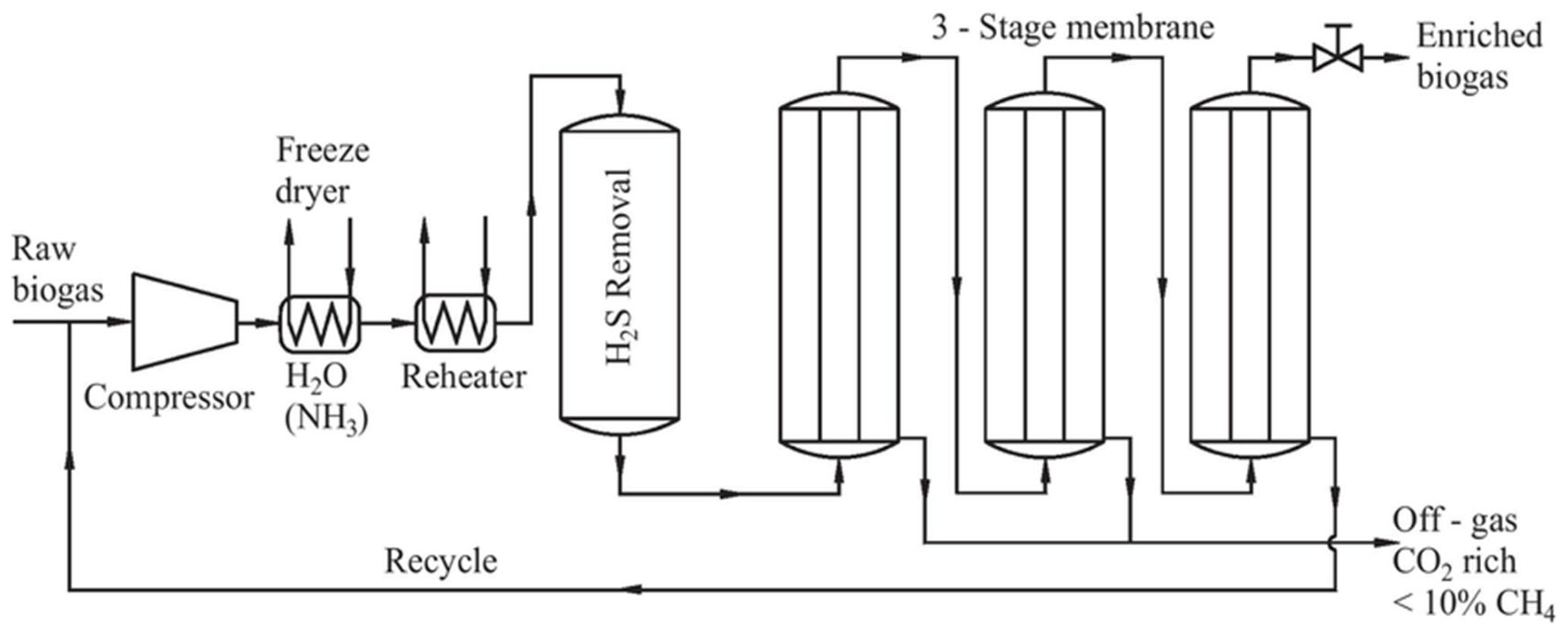
Figure 1. A schematic representation of the membrane biogas purification method [10].
Energies 18 06506 g001
Figure 2. Visual representation of PSA process [12].
Energies 18 06506 g002
Figure 3. Diagram showing water scrubbing method [14].
Energies 18 06506 g003
Figure 4. Physical scrubbing process [19].
Energies 18 06506 g004
Figure 5. Diagram showing physical scrubbing process [23].
Energies 18 06506 g005
Figure 6. Upgrading hybrid system [24].
Energies 18 06506 g006
Figure 7. Cryogenic distillation process [29].
Energies 18 06506 g007
Figure 8. The supersonic separation process [33].
Energies 18 06506 g008
Table 1. Summary of key metrics for each technology [45].
TechnologyCH4 Purity (%)CO2 Removal Efficiency (%)Methane Slip (%)Energy Requirement (kWh/Nm3)CAPEXOPEXTypical Scale
Membrane Separation95–9880–981–40.2–0.5ModerateLow to ModerateSmall to Medium (50–1000 Nm3/h)
Pressure Swing Adsorption (PSA)96–9995–990.5–20.25–0.5Moderate to HighModerateSmall to Medium (50–1500 Nm3/h)
Water Scrubbing90–9880–952–100.2–0.4Low to ModerateModerate to HighSmall to Medium (50–2000 Nm3/h)
Chemical Scrubbing97–99>99<10.3–0.6HighHighMedium to Large (>500 Nm3/h)
Cryogenic Separation>99>99<0.10.5–1.2Very HighModerate to HighLarge (>1000 Nm3/h)
Supersonic Separation98–99>99<0.50.6–1.5HighModerateLarge (>1000 Nm3/h)
Hybrid Systems>99>99<10.4–0.8Very HighModerate to HighFlexible (all scales)
Table 2. Comparison of biogas upgrading technologies [54].
MethodEnergy
Use
OPEXEnvironmental ImpactScalability
Water ScrubbingMediumMediumMediumMedium
PSAHighMedium-HighLowHigh
Chemical AbsorptionLowHighMedium-HighHigh
Membrane SeparationHighMediumLowVery High
CryogenicLowHighMediumMedium-High
SupersonicHighLow-MedVery LowMedium
Disclaimer/Publisher’s Note: The statements, opinions and data contained in all publications are solely those of the individual author(s) and contributor(s) and not of MDPI and/or the editor(s). MDPI and/or the editor(s) disclaim responsibility for any injury to people or property resulting from any ideas, methods, instructions or products referred to in the content.