Article

An Assessment of the Vulnerability of Energy Infrastructure to Flood Risks: A Case Study of Odra River Basin in Poland


by
Dorota Duda
1,
Grzegorz Kunikowski
2,*,
Witold Skomra
1,2 and
Janusz Zawiła-Niedźwiecki
2
1
Government Centre for Security, 00-583 Warsaw, Poland
2
Faculty of Management, Warsaw University of Technology, 00-661 Warsaw, Poland
*
Author to whom correspondence should be addressed.
Energies 2025, 18(24), 6453; https://doi.org/10.3390/en18246453 (registering DOI)
Submission received: 29 October 2025 / Revised: 2 December 2025 / Accepted: 4 December 2025 / Published: 10 December 2025

Abstract

The stability of modern economies relies on the uninterrupted supply of electricity, heat, and transport fuels, making the energy sector highly exposed to various risks and disruptions, including floods, which are among the major natural hazards affecting energy infrastructure in Poland. Despite risks, a scalable and integrated modelling framework for operational flood risk management in energy infrastructure is still lacking. Such a framework should account for increasing climate-related hazard dynamics, integrate robust fragility and damage models with comprehensive flood risk assessments at both asset and system levels, and explicitly consider interdependencies among energy system components and associated critical infrastructure. This integration is essential for analyzing cascading failures and their consequences, while complying with the EU CER Directive requirements for resilience and continuity of critical infrastructure services. An original three-stage spatial vulnerability analysis method was developed, involving GIS data preparation, classification of asset importance, and flood scenario modelling, demonstrated on selected rivers in the Odra River basin. The Expected Damage Factor (EDF) metric was applied to combine flood probability with infrastructure significance. The analysis enabled spatial identification of the most vulnerable components of the energy system and illustrated the dynamics of threats in time and space. The EDF coefficient allowed for quantitative vulnerability assessment, supporting more precise adaptive planning. The approach innovatively combines infrastructure criticality assessment with probabilistic flood scenarios and explicitly incorporates systemic interdependencies in accordance with the CER Directive, enhancing operational flood risk management capabilities. The method provides a practical tool for critical infrastructure protection, operational planning, and the development of adaptive strategies, thereby increasing the flood resilience of the energy system and supporting stakeholders responsible for risk management.

1. Introduction

A number of accidents and disasters in which the energy sector was directly or indirectly involved indicate the need for a detailed analysis of the interdependencies that arise in such situations. Threats related to electricity supply depend on the nature of the factor causing the threat, but also on the environment (technological and social) in which these threats can spread (Hurricane Sandy is an example) [1,2]. The selection of measures to respond to a hazard whose characteristics are variable (the strength, direction and location of a hurricane’s impact, the height, speed of movement and length of a flood wave) means that instead of static planning, it is necessary to develop tools based on dynamic data analysis [3,4]. Analysis of recent events indicates the complexity of the issue of disruption to social and economic life resulting from energy supply failures. Research indicates that disruptions in the energy system, through a cascade effect, most often affect transport, production, water supply and healthcare systems [5].
Since the end of the 19th century, human civilisation has been extremely dependent on the availability of electricity. The stability of modern economies is based on the continuity of electricity, heat and transport fuel supplies, which makes the energy sector extremely vulnerable to various risks and disruptions [6]. When disruptions occur, they are amplified in interdependent systems. The energy sector is highly dependent on and interdependent with other critical systems in terms of infrastructure [7]. Global events in recent years, including the COVID-19 pandemic, have shown how important it is to have access to skilled personnel and resilient energy supply systems [8]. In turn, the outbreak of war in Ukraine has disrupted the functioning of fuel and energy markets on a regional scale and, to a lesser extent, on a global scale. In Europe, the embargo on natural gas from Russia has disrupted the operation of gas-fired power plants (although the continuity of electricity supply has been maintained, this has come at the cost of high price increases) [9,10]. The emerging difficulties in maintaining the continuity of energy supplies have prompted decision-makers to review their approach to the energy transition. It is now believed that the energy transition must take into account the security and continuity of supply [11]. In addition, the concept of resilience, which refers in particular to extreme, unexpected and unpredictable events, is coming to the fore [12].
Regardless of geopolitical conditions, floods remain an inherent challenge to energy infrastructure security in Poland. They are caused by flooding in natural watercourses, reservoirs, canals and from the sea, excluding flooding caused by sewage systems. The southern provinces are most at risk of rainfall flooding, especially in the upper and middle Odra and Vistula river basins and their mountain tributaries. Climate change means that the so-called Genoa high-pressure systems from the Mediterranean Sea are increasingly reaching Polish territory, and when they encounter a barrier of cold air from Scandinavia or Russia, torrential rainfall occurs. Snowmelt and ice jam floods mainly affect the middle and lower sections of large lowland rivers and their tributaries, with ice jam floods mainly occurring in the provinces of Mazovia, West Pomerania and Pomerania [13].
The aim of this article is to present and apply an original method of spatial analysis of the vulnerability of energy infrastructure to flood hazards on the example of selected rivers in the Odra river basin.
Study area
The Oder is a border river. Its source is in the Czech Republic, its upper and middle reaches are within the borders of the Republic of Poland, and its lower reaches form the border with the Federal Republic of Germany. The river’s total length is approximately 854 km, of which 742 km flows into Poland. The entire river basin covers approximately 124,049 km2, of which 107,169 km2 lies within Poland (86.4% of the total), 7278 km2 lies within the Czech Republic (5.9%), and 9602 km2 lies within Germany (7.7%) [14]. From a physical and environmental perspective, the Odra Basin is characterised by significant variability in precipitation patterns, snowmelt contributions, and hydrological seasonality. The Oder River Basin is an area of significant economic and social importance. It contains a dense network of human settlements and strategic infrastructure investments, including key energy and industrial infrastructure. The population density and the presence of important industrial centres mean that floods pose a serious threat to the security and continuity of energy supplies, a fact emphasised in national and regional crisis and flood risk management plans [15].
The following sections of the article present a review of the literature, propose research methods, perform calculations and present the results.

2. Background and Literature Review

According to the national Water Law, a flood is a temporary covering of an area that is not normally covered by water, in particular caused by the swelling of water in natural watercourses, water reservoirs, canals and from the sea, excluding the covering of an area caused by the swelling of water in sewage systems [16].
The degree of risk depends on population density, terrain and infrastructure. Depending on the source, floods can be classified as: river floods, rainfall floods, groundwater floods, sea floods and floods caused by hydrotechnical structures. Depending on the mechanism, there are natural floods, floods caused by water overflowing flood defences, floods caused by the failure of flood defences or infrastructure, and barrage floods. According to the criterion of extent, floods are divided into local, regional and national [17]. In Poland, prolonged and intense rainfall in the southern part of the country, in mountainous areas and foothills, is particularly dangerous. Examples include the flood of the century in 1997 in the Odra and Nysa river basins and the flood in 2024. The second reason for dangerous floods in Poland is rapid snowmelt, when the rapid melting of snow causes rivers to swell. Flash floods are becoming increasingly dangerous, especially in urban areas [18,19].
The specific nature of flood risks in Poland is shaped by the terrain and climatic conditions, especially in the Vistula and Oder river basins, where there are both river floods (rainfall) and meltwater or ice jam floods [13]. The southern provinces of Małopolska, Podkarpackie, Śląskie, Opolskie, Świętokrzyskie and Dolnośląskie are most at risk of river floods (rainfall) caused by heavy or prolonged rainfall. Particularly at risk are the catchment areas in the Odra river basin (upper and middle Odra and its mountain tributaries (Olza, Osobłoga, Mała Panew, Nysa Kłodzka, Ślęza, Bystrzyca, Kaczawa, Bóbr, Nysa Łużycka) and in the Vistula river basin (upper and middle Vistula (up to the mouth of the Wieprz) together with mountain and foothill tributaries (Przemsza, Soła, Skawa, Raba, Dunajec, Wisłoka, Czarna Staszowska, Koprzywianka, San, Kamienna). In the case of river floods caused by snowmelt, the areas of the middle and lower Odra and the middle and lower Vistula are at risk, together with the lowland tributaries of the Odra (Barycz, Warta, Noteć), the lowland tributaries of the Vistula (Bug, Narew, Bzura, Drwęca) and rivers flowing directly into the Baltic Sea. River ice jam floods most often occur on larger lowland rivers, mainly in the provinces of Mazovia, West Pomerania and Pomerania, especially in places where they are shallow or at their mouths [13]. Experience gained from natural disasters reveals the inadequate organisational preparedness of public administration and emergency services, while at the same time highlighting the possibility of transferring business continuity management methods and standards developed in the business sector to crisis management systems in public administration [20]. The same methods and techniques used in the field of critical infrastructure continuity are applied to flood risk management [21]. They are also used in the identification and assessment of threats to national security [22,23]. Maintaining the continuity of energy infrastructure systems is part of civil planning in the public domain of crisis management [24]. Risk management plans are in place for the Odra river basin [16]. Flood risk in the plan is assessed according to the principles set out in the Floods Directive [25] and in the national Water Law [16].
Assessing the vulnerability of energy infrastructure to flood risks is an important issue both in the context of the energy sector transformation and the increasing frequency of extreme weather events and floods [26]. Flood risk management aims to reduce the potential negative impacts on property, human life and health, the natural environment, cultural heritage and technical infrastructure. In the National Crisis Management Plan, issues related to energy infrastructure are not addressed in the prevention phase, but in the response and recovery phases [13,17]. The inclusion of this issue in the task modules of the response phase means that rapid response and effective recovery after potential damage are of key importance. In recent years, resilience has become increasingly important. In the context of security, resilience requires an interdisciplinary approach combining technical, organisational and social elements [27]. “Thinking about resilience” as key to a more holistic approach to the development of sustainable energy systems. Reference [28] researched the vulnerability of energy systems to extreme weather events, in particular wind turbines, and presented risk mitigation strategies. Other scholars show that the continuity of energy supply is fundamental to the functioning of other sectors in developed economies [29,30]. The interdependence of systems is a key element of resilience, which has been taken into account in the CER Directive, which sets out requirements for strengthening the protection and resilience of critical infrastructure in the European Union [31]. Resilience can be considered in three dimensions: structural, diversification and redundancy. The structural dimension concerns the flexibility of the system, the diversification dimension covers the diversification of energy sources and suppliers, and the redundancy dimension is related to the identification of key elements of the system [32] and the maintenance of reserves [33]. A systemic definition of resilience focused on environmental threats, which takes into account indicators, was proposed by [34]. The model is an extension of the “R4” framework approach dedicated to critical infrastructure, which consists of four indicators: robustness, redundancy, resourcefulness and rapidity [35].
In energy security research, the concept of “resilience” is widely used, especially in relation to the system’s resistance to unforeseen disruptions. A classification framework for an interdisciplinary approach to the transformation of energy systems with an emphasis on resilience was proposed [36]. The author adapted the approach to resilience in 7 principles [37,38]. This perspective is becoming increasingly important in the era of accelerating energy transition, which in many countries—including Poland—involves the phasing out of fossil fuels in favour of low-carbon technologies.
A sustainable future requires the transformation of current energy systems through radical improvements in energy efficiency and a greater share of renewable energy and advanced technologies with carbon capture. On the other hand, while increasing the share of renewable energy reduces dependence on fossil fuel supplies, its weather-related variability introduces new challenges in terms of system balancing and resilience to disruptions [33]. Large investments and appropriate support policies are key to enabling a safe and effective energy transition by 2050 [39]. The World Energy Council introduces security as one of the dimensions of the Trilemma Dimensions in the context of the energy transition process, alongside “Energy Equity” and “Environmental Sustainability”. It defines security as the management of primary energy supply from domestic and external sources, the reliability of energy infrastructure, and the ability to meet current and future demand [40]. Energy security is a key issue for the economic and social stability of a country. Poland’s energy policy until 2040 defines three pillars that form the framework for the development of the fuel and energy sector: just transition, zero-emission energy system and good air quality [41]. Energy security in the context of natural hazards, including floods, is widely discussed in the literature on power infrastructure [42]. The National Power System is designed to operate under typical conditions, but extreme weather events can lead to network failures, especially in areas with a high risk of flooding.
The energy transition is also a key element of the European Green Deal. As a result of recent events, the pandemic and the war, concerns about energy security and the continuity of raw material supplies have increased. These challenges are addressed by the assumptions of the PEP 2040 update, which introduces the term “energy sovereignty”, i.e., independence, which is intended to increase the resilience of the national fuel and energy system [43]. Technological trends related to the transition include the development of renewable energy sources, electricity storage, electromobility, and the implementation of digital economy solutions in the sector [44,45]. The importance of infrastructure for the continuity of energy supply goes beyond prosperity and comfort, as it is the foundation for the functioning of other services, such as power supply to hospitals, traffic lights, lifts in buildings and lighting. The national power system operator in Poland (PSA), is responsible for the operation and security of the Polish Power System, assesses that in the medium and long term, technological trends related primarily to the decarbonisation of the sector–coal exit and the phasing out of natural gas–will play a key role in the evolution of the power system and its environment and the development of nuclear energy. The renewable energy, energy storage and electromobility sectors continued to develop intensively, and the process of introducing new metering technologies is ongoing, opening up opportunities to use high-frequency data (HFD) and [46].
Geographic information systems (GISs) are playing an increasingly important role in risk management, serving not only to monitor and coordinate operational management activities during the response phase. GISs are also useful in other stages of crisis management, i.e., in planning and mitigating the effects of disasters and monitoring threats at the central level. In the preparation phase, they enable multi-criteria spatial analyses, which are helpful in risk assessment and planning at the local level. In the context of floods, publicly available risk maps are useful. In Poland, the National Water Management Authority [17] is responsible for preparing and updating flood risk maps. GIS spatial analyses are characterised by scalability and interoperability, while data availability and the development of intelligent processing methods multiply analytical and operational capabilities. GISs are used to support energy planning at the local level [47,48]. One example of combining multi-criteria decision analysis with GIS (GIS-based MCDA) is the work [49]. The authors applied multi-criteria GIS analysis for energy companies to assess locations for power plants, taking into account social and environmental factors as well as hazards. Examples of vulnerability assessments for flood hazards [50,51,52]. It is worth mentioning the works [53,54]. In the first authors analyse the vulnerability of integrated energy and transport systems to extreme weather events, highlighting the complexity of interdependencies and their impact on the resilience of critical infrastructure. The authors use risk modelling and vulnerability analysis methods, pointing to the need to integrate adaptive infrastructure management strategies in the face of climate change. The second researchers’ team [54] assess the vulnerability and interdependencies of critical infrastructures in the context of climate change adaptation and flood mitigation. The study indicates that taking into account the interdependencies between systems such as energy, transport and water management is crucial for resilience. In turn, the report [55], based on analyses of flash floods, discusses the preparedness of cities for floods and flooding caused by heavy rainfall in order to protect critical infrastructure.
Disruptions to critical infrastructure due to flooding can trigger a cascade effect. Also known as the domino effect, it refers to a situation where one adverse event causes a series of subsequent adverse events, each resulting from the other. This term is usually used in relation to violent, destructive processes that are impossible to control once they have been initiated. The presence of secondary objects can cause this effect to occur. The impact of the domino effect is characterised by an increased likelihood of a given scenario occurring. [22].
In this context, researchers present concepts for integrating flood risks with infrastructure resilience [56]. The presented methods take into account the criteria of the time needed to rebuild infrastructure [57]. Due to the complexity of the dynamics, it is proposed to create domino effect scenarios with the participation of experts [58]. It is proposed to use advanced analytical methods, such as Bayesian networks [59], the use of network technologies and social networks to increase situational awareness [60], or big data sets in monitoring and prediction [61]. Other authors assess flood risk by integrating critical infrastructure, including transport, energy, ICT, and water supply [62]. The authors emphasise the need to integrate critical systems into operational planning that takes into account the dynamics of threats and cost trade-offs [63]. Modelling flood dynamics on the Oder River is described in the literature [64]. The author mapped the sequential spread of the flood wave over a distance of approximately. 600 km and an area of approx. 5700 km2 using 2D cascade models (e.g., MIKE21).
In the authors’ opinion, the literature review confirms that there is a justified need to create models that take into account the interaction between objects and critical infrastructure systems in the context of flood hazards and to model the domino effect.
However, despite identified needs, a scalable and integrated modelling framework to support operational planning for flood risk management in energy infrastructure is still lacking. Such a framework should account for the increasing dynamics of climate-related hazards, integrate robust fragility and damage models with comprehensive flood risk assessments, both at the asset and system scale, and explicitly consider the interdependencies between different energy system components and associated critical infrastructure. This integration is essential for analysing cascading failures and their consequences. Furthermore, such an approach should be consistent with the requirements of the CER Directive, which mandates that critical infrastructure operators ensure the resilience and continuity of essential services in the face of various hazards, including floods.

3. Materials and Methods

The aim of this article is to present an original method for the spatial analysis of the vulnerability of energy infrastructure to flood hazards. We presented the method using the example of its application to selected rivers in the Odra river basin. The method consists of three stages, as in Figure 1:
  • Data preparation;
  • Classification of the importance of energy infrastructure;
  • Modelling of flood scenarios.
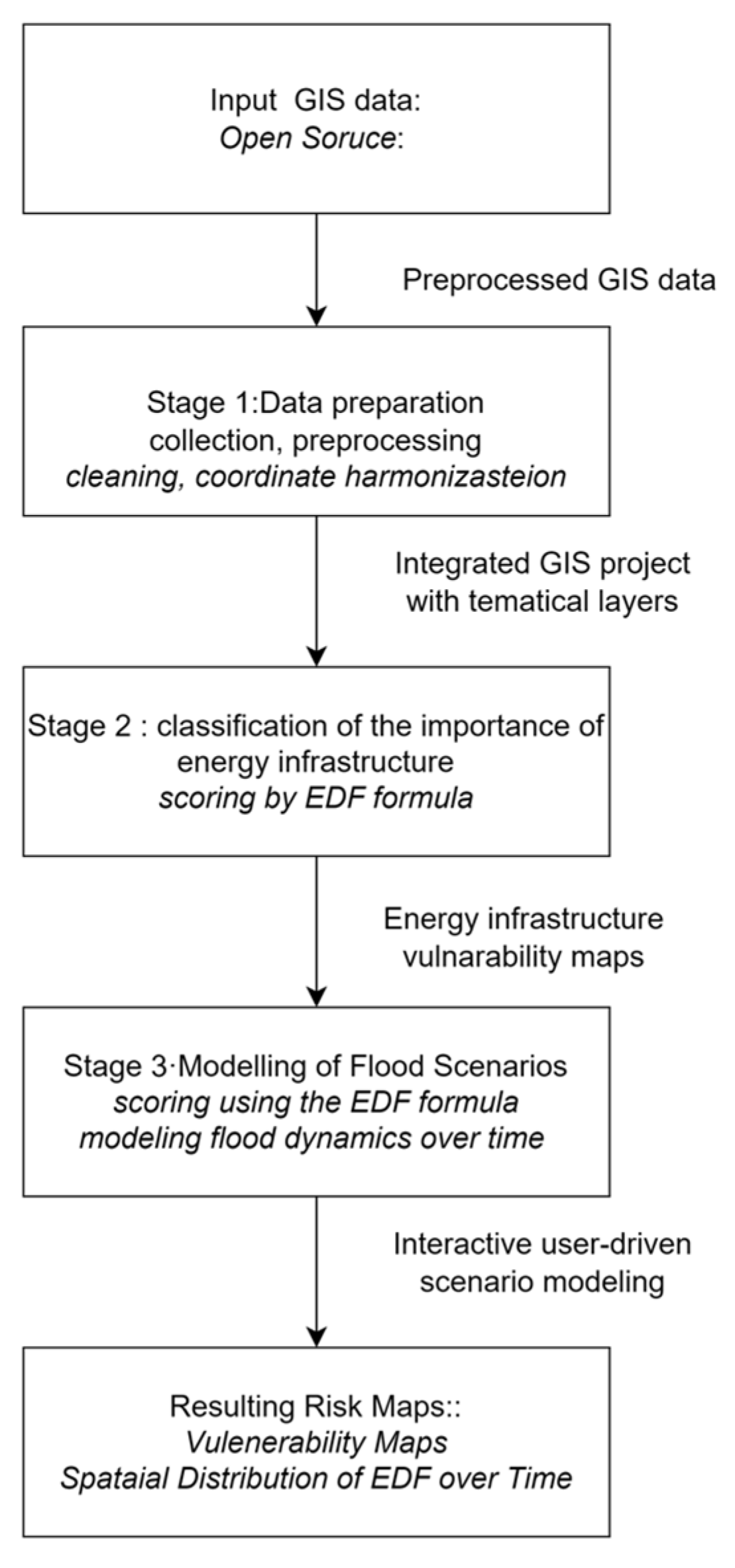
The data flow diagram in Figure 2 illustrates the detailed sequence of the analysis steps.
Data preparation
The analyses used only publicly available data from open sources. Appendix A contains data characteristics (Table A1). The data was integrated into a GIS project developed in QGIS 3.34.1-Prizren. Available general geographical maps and flood risk maps were used, as well as geolocated energy infrastructure facilities.
Classification of Energy Infrastructure Importance
To assess the risks to energy infrastructure, a 5-point scale of importance was adopted, to which the analysed point (spot) objects (e.g., power plants, CHP) and linear objects (power grids) were assigned. The scale takes into account the importance for the functioning of the national energy system and the spatial extent of the effects of disruptions to its operation (Table 1). The following classes of facility importance have been identified: (A) resilient (replaceable, insignificant); (B) auxiliary (significant to a limited extent); (C) supporting (important on a local scale); (D) significant (important on a local and systemic scale); (E) critical (important for system stability).
The analysed energy infrastructure facilities, both point (spot) and linear, were classified into the above classes and assigned weights (Table 2). The facilities are spatially summed into a regular value grid with dimensions of 5 × 5 km according to Equation (1). The model is assumed to be a scalable solution and, in the application, should dynamically adapt the spatial grid size to the specific characteristics of the analysed area, data availability, and decision-maker requirements. In the presented case studies, a 5 × 5 km grid size was chosen as an acceptable compromise between the detail of vulnerability analysis and computational efficiency, while also utilising publicly available GIS data sources.
The significance values presented in Table 2 were assumed based on a uniform power distribution for point objects. The assumed power threshold values refer to analytical studies. Next, flood hazard maps with probabilities of 10%, 1%, 0.2% and the risk of flood embankment failure were used. Their characteristics are presented in Table A2.
Flood scenario modelling
Flood scenarios are derived from flood risk maps for given probabilities. Modelling consists of:
  • Identifying energy infrastructure facilities located in flood risk areas with assigned probabilities of occurrence and then assessing the effects of disruption.
  • Mapping energy infrastructure and flood-prone areas on a grid of a specified size (5 × 5 km).
  • For each grid element, calculate the dimensionless Expected Damage Factor (EDF), which refers to the EAD (Expected Annual Damage) parameter used in flood damage estimation [65].
Modelling is performed in a GIS system. Point objects located in flood zones are identified, and the basic parameters are power and significance class. In the case of linear objects, i.e., power grids, the lengths of the grids in flooded areas, expressed in kilometers, are assessed. As previously mentioned, the analysis is conducted on 5 × 5 km grids, and the Expected Damage Factor (EDF) is calculated for each grid element.
The following symbols are used in the EDF parameter calculations:
  • x—flood scenario;
  • c—importance class of the energy infrastructure facility;
  • i—spot type of energy infrastructure;
  • j—linear type of energy infrastructure;
  • Q—flood scenario, expressed as the probability of its occurrence;
  • P—facility power in MW;
  • L—length of the facility in kilometres;
  • E—facility significance factor.
The Expected Damage Factor (EDF), dimensionless indicator, is calculated according to Equation (1):
E D F = x i j Q x E i c P i + E j c L j
It should be added that the analyses used spatial analysis methods and techniques, referred to as spatial algebra, using advanced algorithms for processing [66]. Equation (1) was implemented according to the functionality of the so-called field calculator in the QGIS 3.34.1-Prizren.
Model assumptions and limitations
The model relies exclusively on data from publicly available open sources. Data integration is implemented in a GIS environment using general geographic maps and flood risk maps. The model employs a five-level classification of energy infrastructure importance, encompassing both point and linear objects, which are assigned a scale of importance ranging from replaceable to critical. Flood scenario modelling is based on flood hazard maps for various probabilities of occurrence (10%, 1%, 0.2%). Spatial analysis is conducted on 5 × 5 km grids, representing an arbitrarily chosen degree of spatial aggregation. In the model implementation, the grid can be dynamically adjusted by the user to maintain model scalability. The assessment of the degree of loss (EDF) is based on the facility’s power parameters, length, importance class, and the percentage of flooded area within the analysed cell.
Significant limitations of the model include its dependence on the quality and completeness of open data, which varies in precision and timeliness, potentially impacting the accuracy and detail of the results. The model does not account for the complexities of crisis management, such as infrastructure repair time or its resilience in emergency situations, nor does it utilise operational data provided by operators. Analysis on a 5 × 5 km grid does not reflect local micro-threats or the precise locations of infrastructure elements. The severity classification and weighting are subjective and simplified. Furthermore, unlike the EAD (Expected Annual Damage) coefficient, the EDF coefficient is a relative indicator that does not reflect the real valuation of financial or social losses, relying solely on severity categories and the capacities and lengths of facilities. The model utilises static flood risk maps, overlooking dynamic phenomena such as seasonality and the effects of climate change. It also does not account for system redundancy, i.e., the network’s ability to compensate for losses through alternative sources or connections. Furthermore, spatial aggregation limits the resolution of the analysis, potentially masking local differences in risk. Selected elements of energy infrastructure were analysed without extension to other critical sectors.

4. Results

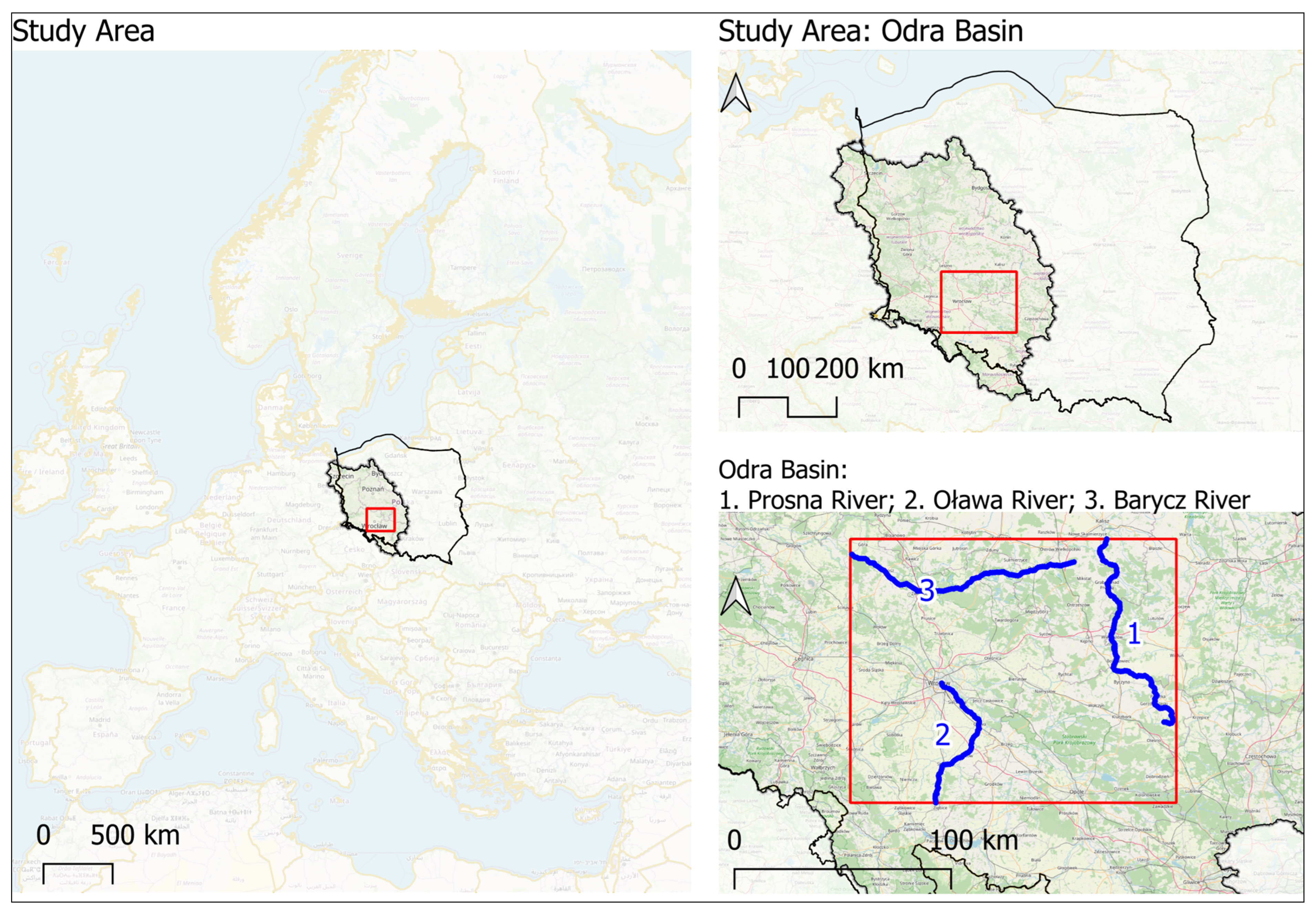
The analysis was carried out for the lower Odra river basin (Figure 3). The area of the middle Odra selected for analysis has been increasingly affected by floods in recent years (floods in 1997, 2010, 2024).
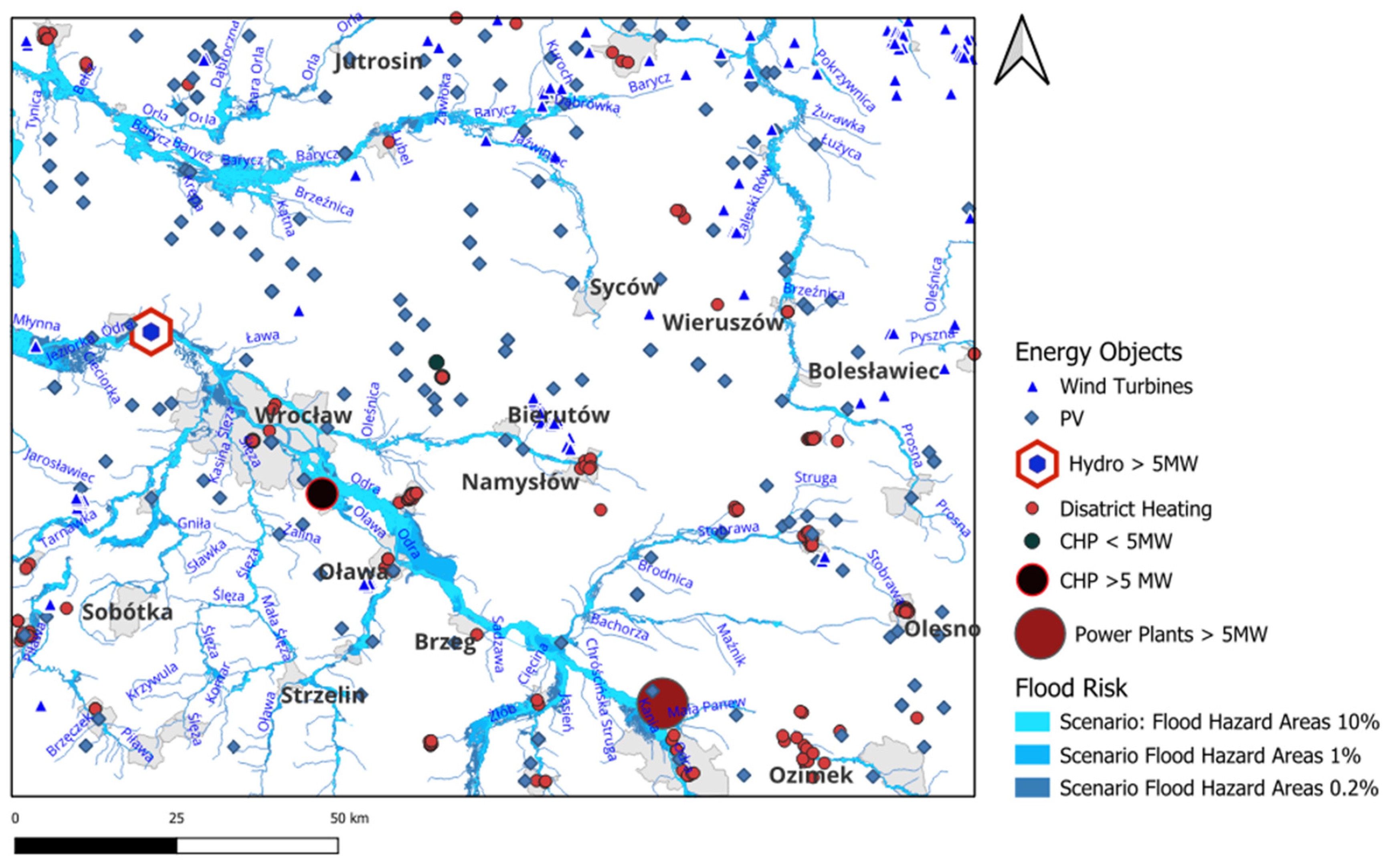
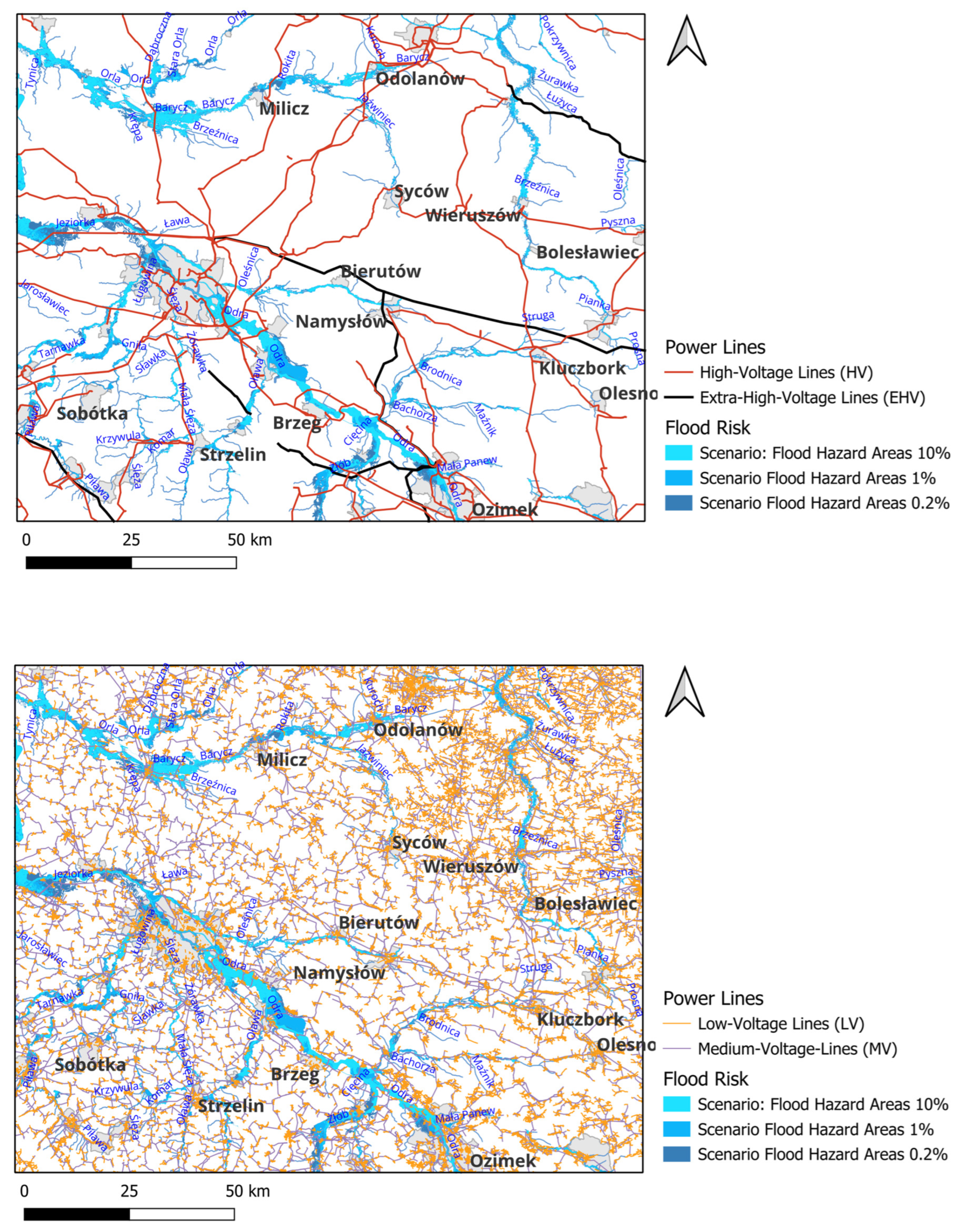
The area has population centres in cities and energy infrastructure (Figure 4 and Figure 5). The area is characterised by spatial and technological diversity. There is a high concentration of energy infrastructure, including a hydroelectric power plant, numerous renewable energy installations, and a dense network of power lines.
Figure 4. Study area—“Spots” energy facilities. Source: Author’s own work using data from the Topographic Objects Database (BDOT) and the General Geographic Objects Database (BGOG) [69,70].
Energies 18 06453 g004
Figure 5. Study area—linear energy facilities (selected lines, excluding medium voltage and distribution—for clarity). Source: Author’s own work using data from the Topographic Objects Database (BDOT) and the General Geographic Objects Database (BGOG) [69,70].
Energies 18 06453 g005
The diversity of the infrastructure’s facilities and networks enables the complex systemic analysis and testing of the concept of the aggregated EDF coefficient. In turn, spatial diversity (population centres, industrial centres) is an interesting subject for research on the interdependence of critical infrastructure systems. The choice of the analysis area was also influenced by the availability of spatial data and current planning documents [15].
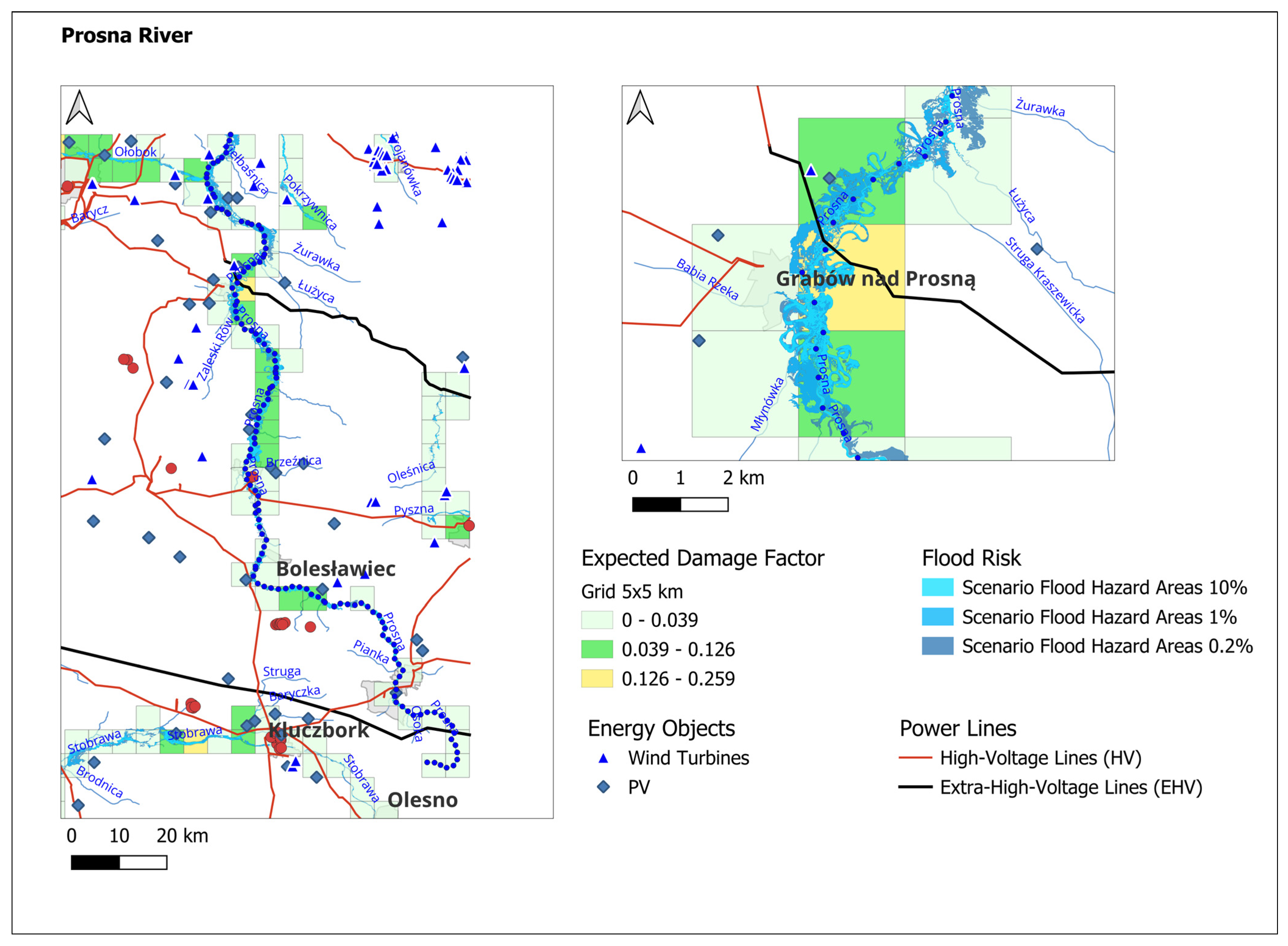
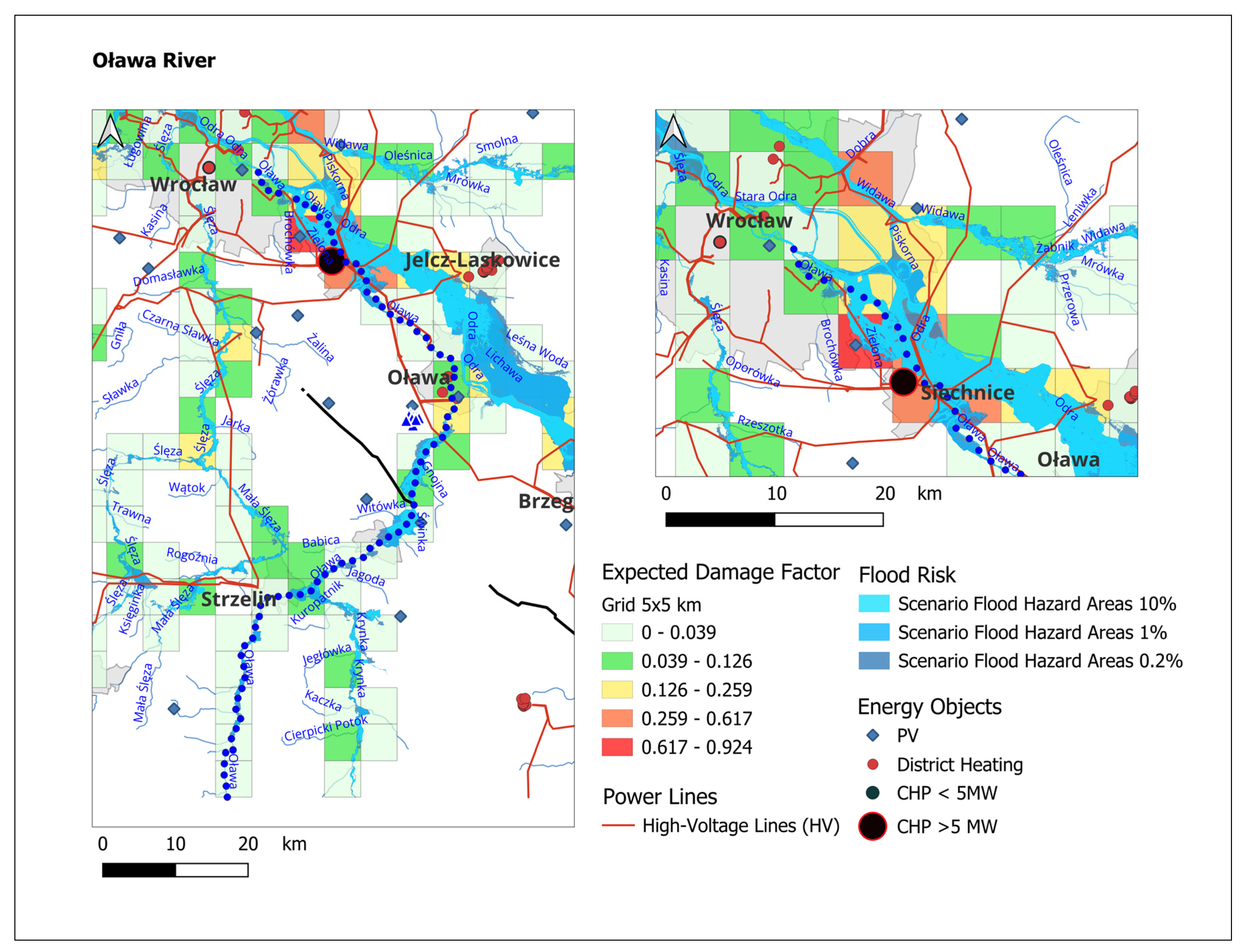
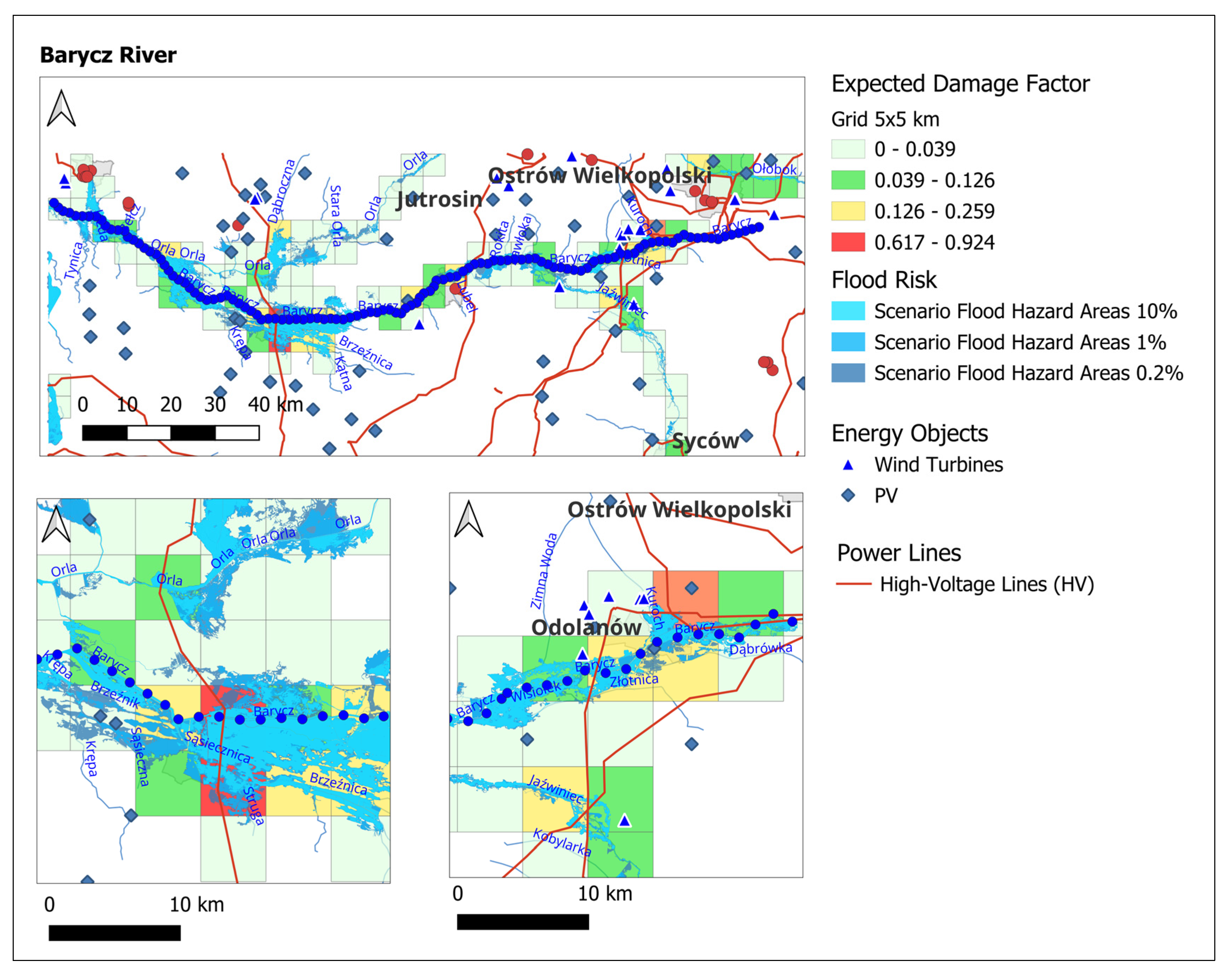
The Prosna (Figure 6), Oława (Figure 7) and Barycz (Figure 8) rivers were selected to illustrate the application of the method. The Barycz and Prosna rivers are classified in the flood risk management plan as posing the greatest risk of river flooding in the Odra river basin [15]. The Oława River (Figure 7) drains water from the Sudeten Foothills to the heavily urbanised Wrocław hub, where multiple threats accumulate.
The Barycz River (Figure 8) is a right tributary of the Odra River with a length of 133 km (Ligenza et al., 2021, [14], p. 18). Located in a valley with small slopes, it causes the flood wave to spread. Regular flooding and waterlogging of land are reported [71]. The Prosna River is the left tributary of the Warta River with a length of 229 km and a catchment area of 4924 km2. There are plans to build a retention reservoir on the river called “Wielowieś Klasztorna” [15]. The Oława is a 92 km long left-bank tributary of the Oder; the catchment area covers 1135 km2 [14].
Figure 6. Prosna River—case study: the detailed inset shows regions with elevated EDF values. Source: Author’s own work using data from the Topographic Objects Database (BDOT) and the General Geographic Objects Database (BGOG) [69,70].
Energies 18 06453 g006
Figure 7. Oława River—case study: the detailed inset shows regions with elevated EDF values. Source: Author’s own work using data from the Topographic Objects Database (BDOT) and the General Geographic Objects Database (BGOG) [69,72].
Energies 18 06453 g007
Figure 8. Barycz River—case study: the detailed inset shows regions with elevated EDF values. Source: Author’s own work using data from the Topographic Objects Database (BDOT) and the General Geographic Objects Database (BGOG) [69,72].
Energies 18 06453 g008
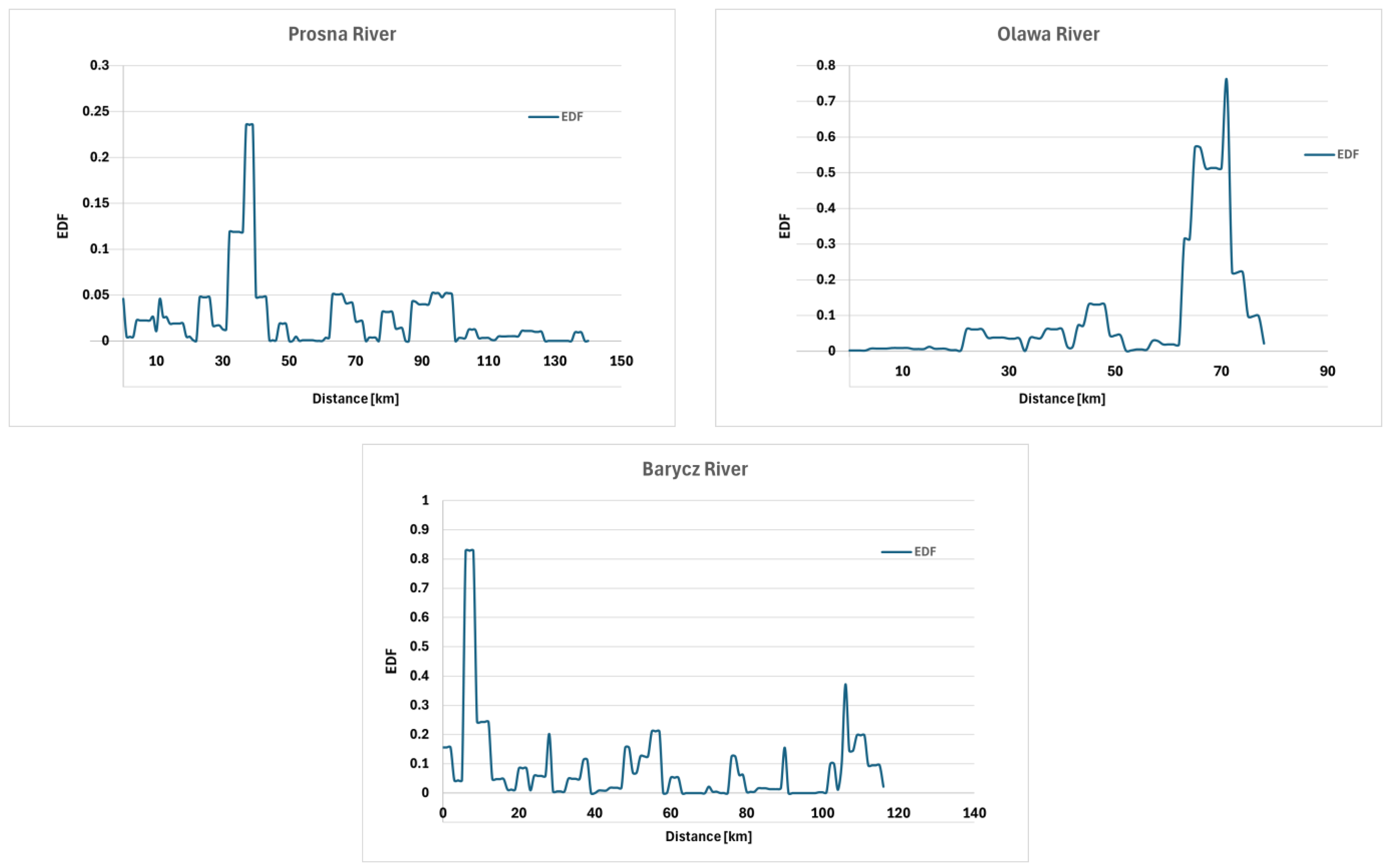
For each river analysed, flood-prone areas are presented, along with a graph illustrating the dynamics of threats to energy infrastructure, assessed on the basis of the EDF value of the moving flood wave (Figure 9).
Areas where the EDF value is elevated have been enlarged, allowing for a preliminary assessment of the proximity of population centers. In the analysed cases, threats to power lines predominate.
Table 3 presents a comparison of the results for the analysed rivers.
A total of 333 grid cells showed elevated EDF levels, primarily near linear infrastructure. The largest concentrations of high values are observed in the Oława River).
In the case of the Prosna River (Figure 6), locally elevated EDF values occur along a 37–39 km section. Along the Oława River (Figure 7), higher values are concentrated in the Wrocław city area, near the river’s confluence with the Oder River. The EDF value of 0.77 reflects the accumulation of linear and point-of-use power infrastructure (CHP facility > 5 MW) in more urbanised zones.
The Barycz River (Figure 8) shows a high EDF value (0.82) along a 6–8 km section. This elevated value results from the exposure of high-voltage power lines, which are at risk in each of the three flood risk scenarios analysed.

5. Discussion and Conclusions

The aim of the presented method was to conduct a spatial analysis of the vulnerability of energy infrastructure to flood hazards. In theoretical terms, particular attention was paid to the introduction of energy facility significance coefficients into the assessment and the importance of selecting their values. In the national flood risk assessment method contained in the Water Law [16], in accordance with the Floods Directive [25], the basic unit of reference is the number of objects per km2. The proposed approach, however, suggests taking into account the significance coefficient of individual infrastructure elements. The method also complements approaches based on the Expected Annual Damage (EAD) indicator [65,72], offering a vulnerability-oriented metric that can be easily applied in spatial analyses using publicly available GIS data. Despite its relative simplicity, the method remains transparent, reproducible, and can be integrated with more advanced risk-modelling frameworks. It fills a gap between approaches that focus solely on the value of assets and those based primarily on population exposure. Moreover, the EDF coefficient can be continuously calibrated using historical data and further developed through machine-learning techniques and climate-forecasting models, paving the way for improved risk assessment under dynamically changing climate-related hazards.
The approach presented by [73] integrates critical infrastructure networks with flood risk management, where the main criterion for impact assessment is the impact on the human population. However, their analysis is cross-sectional and does not focus on the specifics of energy infrastructure. In contrast, our approach focuses on point and linear elements of the energy system, integrating the assessment of infrastructure significance with the probability of flood hazard occurrence. The proposed EDF enables linking the physical exposure of facilities to hazards with their criticality, thereby creating a practical and operational tool that supports risk management at both facility and system levels.
The key challenge, however, remains estimating it. In the authors’ opinion, an expert approach, supported by heuristic methods, is recommended. However, in practical applications of operational risk management, it is recommended to extend the analytical module with historical databases and machine learning algorithms, which will enable the automation of calculations and increase the precision of flood risk assessment for energy infrastructure. The complexity of the links between infrastructure elements and the diversity of individual facilities’ characteristics makes it difficult to develop a uniform and easy-to-use algorithm. Similar methodological challenges are associated with modelling the cascade effect [58] (pp. 660–661).
The analyses carried out clearly indicate that the selection of weights has a significant impact on the classification of the importance of energy objects. A single high-power facility or a concentration of linear facilities can dominate the assessment, reducing the resolution of the classification and marginalising the importance of facilities that are one or two orders of magnitude smaller. For example, a 3408 MW power plant influences the scale of the analysis and influences the classification results. The question remains open as to whether, in such cases, analytical techniques (e.g., logarithmic transformation, quantile division) should be used or whether an alternative approach to the classification procedure should be developed.
The proposed method, thanks to the integration of GIS data with the classification of energy facility importance, enables the identification of areas particularly vulnerable to disruptions in energy supply. In the context of crisis management, this method can support: the planning of preventive measures, the location of response resources, or the prioritisation of investments in infrastructure security. In addition, the use of a spatial grid allows the results to be aggregated in a way that is clear to decision-makers and energy system operators.
The analysis enabled the spatial identification of the most vulnerable elements of energy infrastructure, while taking into account the dynamics of threats over time. The spread of a flood wave depends not only on the characteristics of the river course, but also on local geomorphological conditions and existing hydrotechnical safeguards. Modelling of this process is well established in hydrology (e.g., results for the Odra river basin were presented by [64]), but extending it to include the perspective of infrastructure security allows for a more in-depth interpretation of the results. Covering the entire catchment area makes the analysis a useful tool for operational planning, including the preparation and synchronisation of protective measures at a higher level of coordination. Aggregating results on this scale also allows for earlier prediction of potential cascade effects and better preparation of forces and resources to mitigate systemic risk.
In the context of modelling the domino effect, the method can be extended to analyse interdependencies between sectors—e.g., the impact of energy supply disruptions on the functioning of hospitals, transport or telecommunications systems. However, this approach requires the use of more advanced analytical tools, such as Bayesian networks or agent-based models.
Compared to classical flood risk assessment methods, which focus mainly on the number of objects in hazard zones, this approach brings significant added value by: taking into account the importance coefficient of objects (weight depending on their role in the system), the possibility of modelling the domino effect and interdependencies between sectors, and the use of a synthetic EDF coefficient that combines data on power, network length and flood probability. This enables more accurate forecasting of the effects of disruptions and better preparation of contingency plans.
Despite its advantages, the method has certain limitations:
  • Subjectivity in weight assignment—the classification of the importance of objects is based on expert assumptions, which may vary depending on the local context.
  • Dominance of high-power objects—individual power plants can dominate the analysis, which requires the use of normalisation techniques (e.g., logarithmisation).
  • Lack of consideration of system redundancy—currently, the method does not analyse the system’s ability to compensate for losses (e.g., through reserve networks).
  • Limited time dynamics—flood scenarios are static and do not take into account variability over time (e.g., seasonality, climate change).
The proposed method for assessing the vulnerability of energy infrastructure to flood hazards fits into the broader context of critical infrastructure protection, in accordance with the requirements of the CER Directive [31]. The presented method can be treated as a tool supporting the implementation of obligations under the CER Directive, especially in the areas of: identification of high-risk areas, assessment of the impact of disruptions on the functioning of critical systems, planning of preventive and adaptive measures, and support for the process of reporting and documenting resilience.
The introduction of the EDF coefficient allows for a quantitative assessment of vulnerability, which can be used in the risk analyses required by the CER. Furthermore, taking into account the interdependencies between energy infrastructure facilities (e.g., transmission networks, power plants, renewable energy sources) responds to the need for a systemic approach to resilience, as postulated in the directive.
It is also worth noting that the method can support business continuity planning and crisis management processes in the energy sector, which is in line with the requirements for critical entities to prepare resilience plans.
In the context of critical infrastructure management, the presented method can be used in many aspects:
  • Planning for the protection of critical infrastructure should take into account the location of facilities in flood risk areas and their systemic importance.
  • Infrastructure operators should implement technical and organisational measures to increase resilience, e.g., raising the level of installations, creating backup power sources, network segmentation.
  • Public authorities can use the results of the analyses to update their crisis management plans, critical infrastructure protection plans and reports required by the CER Directive.
  • Cross-sector cooperation (e.g., energy–transport–health) is essential for effective systemic risk management.
The practical application of the proposed approach may be reflected in infrastructure protection plans in areas at high risk of flooding. In Poland, the cyclical flooding of the Oder River is of particular importance. The following research is recommended:
  • An application of the presented approach to a dynamic decision support environment, in which the model and data architecture enable the user to dynamically model ad hoc scenarios, taking into account real-time changes in the importance parameters.
  • Extending the scope of data to include other elements of critical infrastructure of social importance (e.g., water supply and telecommunications networks), which will also allow for comprehensive modelling of cascade effects.
  • Modelling flash floods, whose dynamics and local nature pose different challenges.
  • Integration with early warning systems–enabling dynamic risk updates.
  • Development of methods integrating vulnerability assessment with potential loss costs and adaptation investment planning.
  • International comparisons to verify the scalability of the proposed method.
  • In the context of energy transition and the growing share of renewable energy sources, it is necessary to take into account new types of risks related to their variability and location. The method can be adapted to assess the vulnerability of wind farms, PV installations and energy storage facilities.
  • In the context of the CER Directive, further research on the integration of the method with risk and resilience management systems, including national critical infrastructure protection plans and GISs used by public administration.

Author Contributions

Methodology and conceptualisation, G.K. and W.S.; data processing and visualisation, G.K.; writing—review and editing, D.D., G.K., W.S. and J.Z.-N. All authors have read and agreed to the published version of the manuscript.

Funding

This research was funded by the Discipline Council of Management and Quality Sciences, Warsaw University of Technology, grant number 3/2024/RND NoZiJ.

Data Availability Statement

The data presented in this study are available on request from the corresponding author due to some of these data required additional preparation, which is part of other ongoing research work, and their correct use requires clarification of their origin and the specific processing procedures.

Conflicts of Interest

The authors declare no conflicts of interest.

Abbreviations

The following abbreviations are used in this manuscript:
BDOTTopographic Objects Database
BDOGGeneral Geographic Objects Database
CERCritical Entities Resilience
EADExpected Annual Damage
EDFExpected Damage Factor
GISGeographic Information System

Appendix A. Description of Data Sources and Processing

Table A1. Characteristics of data sources and processing in the study.
Input/Source DataDescriptionKey Data Processing StepsFinal Output
Grid–Study AreaPolygon/5 × 5 km Grid GenerationGrid 5 × 5 km
Flood Hazard Areas In Case of Embankment DestructionVector/Polygon Open Data Service (BDOT/BDOG) [69,70]QGIS, reprojection, layer mergingFlood Risk Map
Flood Hazard Areas 10%as aboveas aboveas above
Flood Hazard Areas 1%as aboveas aboveas above
Flood Hazard Areas 0.2%as aboveas abovess above
Extra-High-Voltage Lines (EHV)Vector/Lines Open Data Service [69]Join attributes by location, Field CalculatorInfrastructure density in km per grid
High-Voltage Lines (HV)as aboveas aboveas above
Medium-Voltage-Lines (MV)as aboveas aboveas above
Low-Voltage Lines (LV)as aboveas aboveas above
Power Plants Vector/Points Own study, based on [74]Join attributes by location, Field Calculator Infrastructure density in MW installed capacity per grid
Hydro Pointsas aboveas above
Wind Turbinesas aboveas aboveGrid with number of installations and total installed capacity (MW)
CHP Vector/Points Own study based Energy Regulatory Office registeras aboveas above
District Heatingas aboveas aboveas above
Heating-Other 1as aboveas aboveas above
PV (50 kW−1 MW) (own elaboration based on statisticsas aboveas aboveas above
EDFUsing Equation (1) in the Area CalculatorSelection, Field calculator Grid with EDF values
EDF–case studiesCartographic visualization Combining layers, selecting, reclassifying, exporting result dataMulti-layer visualization
1 Thermal Waste Treatment Plants, Reserve and Peak Installations.

Appendix B. Flood Risk Characteristics

The characteristics were adapted based on the guidelines of the Government Security Centre [22].
Table A2. Flood risk characteristics.
ScaleProbabilityDescription
1Very LowOccurs in exceptional circumstances.
2Low, 500-year flood (0.02%)Not expected to occur and/or not documented at all, does not exist in people’s accounts and/or events have not occurred in similar organisations, devices, communities and/or there is little chance, reason or other circumstances for events to occur. They may occur once every five hundred years.
3Moderate, 100-year flood (1%)May occur within a specified time frame and/or few, rarely documented events, or partially transmitted orally and/or very few events, and/or there is a certain chance, reason or device causing the event to occur.
4High, 10-year flood (10%)It is likely to occur in most circumstances. Floods are systematically documented and communicated in the form of It may occur once every ten years. Due to the increasing frequency of extreme weather events, it has been assumed that the probability is higher than historical data suggest.
5Extreme (100%)Expected to occur in most circumstances and/or these events are very well documented and/or are known among residents and communicated orally. May occur once a year or more often.

References

  1. Kanno, T.; Koike, S.; Suzuki, T.; Furuta, K. Human-Centered Modeling Framework of Multiple Interdependency in Urban Systems for Simulation of Post-Disaster Recovery Processes. Cogn. Technol. Work. 2019, 21, 301–316. [Google Scholar] [CrossRef]
  2. Skomra, W.; Wiśniewski, M. Logistics Services as an Element of Critical Infrastructure. Przem. Chem. 2019, 98, 1018–1021. (In Polish) [Google Scholar]
  3. Baubion, C. OECD Risk Management: Strategic Crisis Management; OECD Working Papers on Public Governance; OECD Publishing: Paris, France, 2013; No. 23. [Google Scholar] [CrossRef]
  4. Ouyang, M. Review on Modeling and Simulation of Interdependent Critical Infrastructure Systems. Reliab. Eng. Syst. Saf. 2014, 121, 43–60. [Google Scholar] [CrossRef]
  5. Gong, S.; Ye, Y.; Gao, X.; Chen, L.; Wang, T. Empirical Patterns of Interdependencies among Critical Infrastructures in Cascading Disasters: Evidence from a Comprehensive Multi-Case Analysis. Int. J. Disaster Risk Reduct. 2023, 95, 103862. [Google Scholar] [CrossRef]
  6. Rong, M.; Han, C.; Liu, L. Critical Infrastructure Failure Interdependencies in the 2008 Chinese Winter Storms. In Proceedings of the 2010 International Conference on Management and Service Science, Wuhan, China, 24–26 August 2010; pp. 1–4. [Google Scholar] [CrossRef]
  7. Rinaldi, S.M.; Peerenboom, J.P.; Kelly, T.K. Identifying, Understanding, and Analyzing Critical Infrastructure Interdependencies. IEEE Control Syst. Mag. 2001, 21, 11–25. [Google Scholar] [CrossRef]
  8. Rostek, K.; Wiśniewski, M.; Skomra, W. Analysis and Evaluation of Business Continuity Measures Employed in Critical Infrastructure during the COVID-19 Pandemic. Sustainability 2022, 14, 15388. [Google Scholar] [CrossRef]
  9. Lagoeiro, H.; Davies, G.; Marques, C.; Maidment, G. Heat Recovery Opportunities from Electrical Substation Transformers. Energy Rep. 2023, 10, 2931–2943. [Google Scholar] [CrossRef]
  10. Zhou, C.; Zhu, B.; Halff, A.; Davis, S.J.; Liu, Z.; Bowring, S.; Arous, S.B.; Ciais, P. Europe’s Adaptation to the Energy Crisis: Reshaped Gas Supply–Transmission–Consumption Structures and Driving Factors from 2022 to 2024. Earth Syst. Sci. Data 2025, 17, 3431–3446. [Google Scholar] [CrossRef]
  11. Rodríguez-Fernández, L.; Carvajal, A.B.F.; De Tejada, V.F. Improving the Concept of Energy Security in an Energy Transition Environment: Application to the Gas Sector in the European Union. Extr. Ind. Soc. 2022, 9, 101045. [Google Scholar] [CrossRef]
  12. Jesse, B.-J.; Heinrichs, H.U.; Kuckshinrichs, W. Adapting the Theory of Resilience to Energy Systems: A Review and Outlook. Energy Sustain. Soc. 2019, 9, 27. [Google Scholar] [CrossRef]
  13. RCB. National Crisis Management Plan—Part B; Government Center for Security (RCB): Warsaw, Poland, 2022.
  14. Ligenza, P.; Tokarczyk, T.; Adynkiewicz-Piragas, M. (Eds.) Course and Effects of Selected Floods in the Odra River Basin from the 19th Century to the Present; Seria publikacji naukowo-badawczych IMGW–PIB; Institute of Meteorology and Water Management—National Research Institute (IMGW–PIB): Warsaw, Poland, 2021; ISBN 978-83-64979-45-3. [Google Scholar]
  15. Ministry of Infrastructure. Journal of Law 2022, Item 2714. Regulation of 26 October 2022 on the Adoption of the Flood Risk Management Plan for the Odra River Basin District 2022. Available online: https://dziennikustaw.gov.pl/DU/2022/2714 (accessed on 10 August 2025).
  16. Journal of Laws 2017, Item 1566, as Amended the Act of 20 July 2017, Water Law. Available online: https://isap.sejm.gov.pl/isap.nsf/DocDetails.xsp?id=WDU20170001566 (accessed on 10 August 2025).
  17. RCB. National Crisis Management Plan—Part A; Government Center for Security (RCB): Warsaw, Poland, 2022. (In Polish)
  18. Ashley, S.T.; Ashley, W.S. Flood Fatalities in the United States. J. Appl. Meteorol. Climatol. 2008, 47, 805–818. [Google Scholar] [CrossRef]
  19. Paprotny, D.; Sebastian, A.; Morales-Nápoles, O.; Jonkman, S.N. Trends in Flood Losses in Europe over the Past 150 Years. Nat. Commun. 2018, 9, 1985. [Google Scholar] [CrossRef]
  20. Zawiła-Niedźwiecki, J. Operational Risk as a Problematic Triad: Risk, Resource Security, Business Continuity; Edu-Libri: Kraków, Poland, 2014; ISBN 978-83-63804-42-8. [Google Scholar]
  21. Skomra, W.; Abramowicz, A.; Wróblewski, D.; Duda, D.; Szufnara, P.; Mizera, M.; Pukacka, M.; Pudzianowski, J.; Marczyński, D. (Eds.) Standards and Good Practices to Ensure Efficient Functioning and Continuity of Critical Infrastructure; War Studies University: Warsaw, Poland, 2023; ISBN 978-83-8263-366-5. [Google Scholar]
  22. RCB. Procedure for the Preparation of a Partial Report. An Integral Part with a Spreadsheet for the Report on National Security Threats; Government Centre for Security (RCB): Warsaw, Poland, 2010.
  23. Skomra, W. (Ed.) Risk Assessment Methodology for the Needs of the Crisis Management System of the Republic of Poland; Fire University; BEL Studio: Warsaw, Poland, 2015; ISBN 978-83-7798-165-8. [Google Scholar]
  24. Zawiła-Niedźwiecki, J.; Kisilowski, M.; Kunikowski, G.; Skomra, W.; Wiśniewski, M. Introduction to Public Crisis Management: Collective Work; Warsaw University Press: Warsaw, Poland, 2020; ISBN 978-83-8156-105-1. [Google Scholar]
  25. Directive 2007/60/EC of the European Parliament and of the Council of 23 October 2007 on the Assessment and Management of Flood Risks; Official Journal of the European Union L288 on 6.11.2007; European Union: Brussels, Belgium, 2007; pp. 27–34.
  26. Nik, V.M.; Perera, A.T.D.; Chen, D. Towards Climate Resilient Urban Energy Systems: A Review. Natl. Sci. Rev. 2021, 8, nwaa134. [Google Scholar] [CrossRef]
  27. Sienkiewicz-Małyjurek, K. Effective Crisis Management; Difin: Warsaw, Poland, 2015; ISBN 978-83-7930-616-9. [Google Scholar]
  28. Gonçalves, A.C.R.; Costoya, X.; Nieto, R.; Liberato, M.L.R. Extreme Weather Events on Energy Systems: A Comprehensive Review on Impacts, Mitigation, and Adaptation Measures. Sustain. Energy Res. 2024, 11, 4. [Google Scholar] [CrossRef]
  29. Gritzalis, D.; Stergiopoulos, G.; Theocharidou, M. (Eds.) Critical Infrastructure Security and Resilience: Theories, Methods, Tools and Technologies. In Advanced Sciences and Technologies for Security Applications, 1st ed.; Springer International Publishing Imprint: Cham, Switzerland, 2019; ISBN 978-3-030-00024-0. [Google Scholar]
  30. Rinaldi, S.M.; Peerenboom, J.P.; Kelly, T.K. Identifying Critical Infrastructure Sectors and Their Dependencies: An Indian Scenario. Int. J. Crit. Infrastruct. Prot. 2014, 7, 71–85. [Google Scholar] [CrossRef]
  31. EC Directive (EU) 2022/2557 of the European Parliament and of the Council of 14 December 2022 on the Resilience of Critical Entities and Repealing Council Directive 2008/114/EC 2022; European Union: Brussels, Belgium, 2022.
  32. Wiśniewski, M. Method of Eliminating Interdependencies of Essential Services Raising the Risk of Loss of Business Continuity. IEEE Access 2025, 13, 159380–159399. [Google Scholar] [CrossRef]
  33. Kunikowski, G. The Resilience of the Energy Supply System in the Example of the Heating System. NSZ 2024, 19, 55–74. (In Polish) [Google Scholar] [CrossRef]
  34. Ayyub, B.M. Systems Resilience for Multihazard Environments: Definition, Metrics, and Valuation for Decision Making. Risk Anal. 2014, 34, 340–355. [Google Scholar] [CrossRef] [PubMed]
  35. Tierney, K.; Bruneau, M. Conceptualizing and Measuring Resilience: A Key to Disaster Loss Reduction; TR News; Transportation Research Board: Washington, DC, USA, 2007. [Google Scholar]
  36. Wiese, F. Resilience Thinking as an Interdisciplinary Guiding Principle for Energy System Transitions. Resources 2016, 5, 30. [Google Scholar] [CrossRef]
  37. Simonsen, S.H.; Biggs, R.; Schlüter, M.; Schoon, M.; Bohensky, E.; Cundill, G.; Dakos, V.; Daw, T.; Kotschy, K.; Leitch, A.; et al. Applying Resilience Thinking: Seven Principles for Building Resilience in Social-Ecological Systems; Stockholm Resilience Centre: Stockholm, Sweden, 2015. [Google Scholar]
  38. Biggs, R.; Schlüter, M.; Schoon, M.L. Principles for Building Resilience: Sustaining Ecosystem Services in Social-Ecological Systems; Cambridge University Press: Cambridge, UK, 2015; ISBN 978-1-107-08265-6. [Google Scholar]
  39. Johansson, T.B.; Nakicenovic, N.; Patwardhan, A.; Gomez-Echeverri, L. (Eds.) Global Energy Assessment (GEA): Toward a Sustainable Future; Cambridge University Press: Cambridge, UK, 2012; ISBN 978-0-511-79367-7. [Google Scholar]
  40. WEC. Energy Transition Toolkit User Guide; World Energy Council: London, UK, 2019. [Google Scholar]
  41. MkiŚ. Poland’s Energy Policy Until 2040. Annex to Resolution No. 22/2021 of the Council of Ministers of 2 February 2021; Ministry of Climate and Environment (MKiŚ): Warsaw, Poland, 2021.
  42. Dołęga, W. National Grid Electrical Infrastructure—Threats and Challenges 2023. Polityka Energetyczna–Energy Policy J. 2018, 21, 89–103. [Google Scholar] [CrossRef]
  43. MkiŚ. Assumptions for the Update of Poland’s Energy Policy Until 2040; Ministry of Climate and Environment (MKiŚ): Warsaw, Poland, 2023.
  44. Kunikowski, G. Energy Security—Assessment, Trends and the Need to Raise Awareness of the Social Dimension. In Contemporary Needs and Requirements for Education in Security; Kunikowski, J., Araucz-Boruc, A., Wierzbicki, G., Eds.; Siedlce University of Natural Sciences and Humanities Publishing House: Siedlce, Poland, 2018; pp. 427–442. ISBN 978-83-946062-0-6. (In Polish) [Google Scholar]
  45. Kunikowski, G.; Zawiła-Niedźwiecki, J. Current Trends in the Development of Energy Technologies in the Context of the National Critical Infrastructure Security—Identification and Evaluation of the Relationship between Energy Technologies and the Level of Security of Critical Infrastructure Subsystem (Energy). In Current Trends in Management: Business and Public Administration; Świrska, A., Ed.; Siedlce University of Natural Sciences and Humanities Publishing House: Siedlce, Poland, 2015; pp. 132–143. [Google Scholar]
  46. PSE. Integrated Impact Report 2023; Polskie Sieci Elektroenergetyczne: Konstancin-Jeziorna, Poland, 2024. [Google Scholar]
  47. Janowicz, L.; Kunikowski, G. Assessment of Renewable Resources Based on Geographic Information Systems (GIS). Inżynieria Rol. 2008, 4, 329–335. (In Polish) [Google Scholar]
  48. Wang, Q.; M’Ikiugu, M.; Kinoshita, I. A GIS-Based Approach in Support of Spatial Planning for Renewable Energy: A Case Study of Fukushima, Japan. Sustainability 2014, 6, 2087–2117. [Google Scholar] [CrossRef]
  49. Omitaomu, O.A.; Blevins, B.R.; Jochem, W.C.; Mays, G.T.; Belles, R.; Hadley, S.W.; Harrison, T.J.; Bhaduri, B.L.; Neish, B.S.; Rose, A.N. Adapting a GIS-Based Multicriteria Decision Analysis Approach for Evaluating New Power Generating Sites. Appl. Energy 2012, 96, 292–301. [Google Scholar] [CrossRef]
  50. Baky, M.A.A.; Islam, M.; Paul, S. Flood Hazard, Vulnerability and Risk Assessment for Different Land Use Classes Using a Flow Model. Earth Syst. Environ. 2020, 4, 225–244. [Google Scholar] [CrossRef]
  51. Ibrahim, M.; Huo, A.; Ullah, W.; Ullah, S.; Ahmad, A.; Zhong, F. Flood Vulnerability Assessment in the Flood Prone Area of Khyber Pakhtunkhwa, Pakistan. Front. Environ. Sci. 2024, 12, 1303976. [Google Scholar] [CrossRef]
  52. Schwarz, I.; Kuleshov, Y. Flood Vulnerability Assessment and Mapping: A Case Study for Australia’s Hawkesbury-Nepean Catchment. Remote Sens. 2022, 14, 4894. [Google Scholar] [CrossRef]
  53. Wang, J.; Guo, Q.; Sun, H. Risk and Vulnerability Assessment of Energy-Transportation Infrastructure Systems to Extreme Weather. arXiv 2025. [Google Scholar] [CrossRef]
  54. Espada, R.J.; Apan, A.; McDougall, K. Vulnerability Assessment and Interdependency Analysis of Critical Infrastructures for Climate Adaptation and Flood Mitigation. Int. J. Disaster Resil. Built Environ. 2015, 6, 313–346. [Google Scholar] [CrossRef]
  55. Sweco. Expect the Unexpected: Floods and Critical Infrastructure; Sweco: Warsaw, Poland, 2024. [Google Scholar]
  56. Fekete, A. Critical Infrastructure and Flood Resilience: Cascading Effects beyond Water. WIREs Water 2019, 6, e1370. [Google Scholar] [CrossRef]
  57. Guimarães, L.F.; Battemarco, B.P.; Oliveira, A.K.B.; Miguez, M.G. A New Approach to Assess Cascading Effects of Urban Floods. Energy Rep. 2021, 7, 8357–8367. [Google Scholar] [CrossRef]
  58. Arvidsson, B.; Guldåker, N.; Johansson, J. A Methodological Approach for Mapping and Analysing Cascading Effects of Flooding Events. Int. J. River Basin Manag. 2023, 21, 659–671. [Google Scholar] [CrossRef]
  59. Schneider, M.; Priesmeier, P.; Fekete, A.; Lichte, D.; Fiedrich, F. Cascading Effects of Critical Infrastructures in a Flood Scenario: A Case Study in the City of Cologne. In Proceedings of the 21st International ISCRAM Conference (ISCRAM 2024), Münster, Germany, 25–29 May 2024; Volume 21. [Google Scholar] [CrossRef]
  60. Yan, P.; Zhang, F.; Zhang, F.; Geng, L. A Systematic Review and Conceptual Framework of Urban Infrastructure Cascading Disasters Using Scientometric Methods. Buildings 2025, 15, 1011. [Google Scholar] [CrossRef]
  61. Yuan, F.; Fan, C.; Farahmand, H.; Coleman, N.; Esmalian, A.; Lee, C.-C.; Patrascu, F.I.; Zhang, C.; Dong, S.; Mostafavi, A. Smart Flood Resilience: Harnessing Community-Scale Big Data for Predictive Flood Risk Monitoring, Rapid Impact Assessment, and Situational Awareness. Environ. Res. Infrastruct. Sustain. 2022, 2, 025006. [Google Scholar] [CrossRef]
  62. Pant, R.; Thacker, S.; Hall, J.W.; Alderson, D.; Barr, S. Critical Infrastructure Impact Assessment Due to Flood Exposure. J. Flood Risk Manag. 2018, 11, 22–33. [Google Scholar] [CrossRef]
  63. Schmitz, R.; Flachsbarth, F.; Plaga, L.S.; Braun, M.; Härtel, P. Energy Security and Resilience: Reviewing Concepts and Advancing Planning Perspectives for Transforming Integrated Energy Systems. arXiv 2025, arXiv:2504.18396. [Google Scholar] [CrossRef]
  64. Banasiak, R. Large-Scale Two-Dimensional Cascade Modeling of the Odra River for Flood Hazard Management. Water 2023, 16, 39. [Google Scholar] [CrossRef]
  65. Olsen, A.; Zhou, Q.; Linde, J.; Arnbjerg-Nielsen, K. Comparing Methods of Calculating Expected Annual Damage in Urban Pluvial Flood Risk Assessments. Water 2015, 7, 255–270. [Google Scholar] [CrossRef]
  66. Ładysz, J. GIS Technology in Security Engineering; General Tadeusz Kościuszko Military University of Land Forces: Wrocław, Poland, 2015; ISBN 978-83-63900-23-6. [Google Scholar]
  67. European Environment Agency. CORINE Land Cover 2018 (Vector), Europe, 6-Yearly—Version 2020_20u1, May 2020; European Environment Agency: Copenhagen, Denmark, 2020.
  68. European Environment Agency (EEA). European Catchments and Rivers Network System (ECRINS), Natural Sub-Basins of EUROPE–Version 0. Dec. 2011. EEA Geospatial Data Catalogue. Available online: https://www.eea.europa.eu/en/datahub/datahubitem-view/a9844d0c-6dfb-4c0c-a693-7d991cc82e6e?activeAccordion=814%2C1273 (accessed on 8 October 2025).
  69. KPRM Central Public Data Portal. 2025. Available online: https://dane.gov.pl/pl (accessed on 10 September 2025).
  70. Journal of Laws 2021, Item 1412 Regulation of the Minister of Development, Labour and Technology of 27 July 2021, on the Database of Topographic Objects and the Database of General Geographic Objects, as Well as Standard Cartographic Studies. Available online: https://isap.sejm.gov.pl/isap.nsf/DocDetails.xsp?id=WDU20210001412 (accessed on 11 September 2025).
  71. Wielkopolska Chamber of Agriculture the Barycz River Keeps Flooding. Available online: https://wir.org.pl/asp/barycz-ciagle-wylewa,1,artykul,1,1006 (accessed on 10 September 2025). (In Polish).
  72. Viavattene, C.; Fadipe, D.; Old, J.; Thompson, V.; Thorburn, K. Estimation of Scottish Pluvial Flooding Expected Annual Damages Using Interpolation Techniques. Water 2022, 14, 308. [Google Scholar] [CrossRef]
  73. Schotten, R.; Bachmann, D. Integrating Critical Infrastructure Networks into Flood Risk Management. Sustainability 2023, 15, 5475. [Google Scholar] [CrossRef]
  74. Przedlacki, W.; Charkowska, Z.; Kubiczek, P.; Swoczyna, B.; Żelisko, W.; Borowczyk, Z.; Siwiński, P. Database of Thermal Power Plants and Combined Heat and Power Plants in Poland; Fundacja Instrat: Warsaw, Poland, 2025. [Google Scholar]
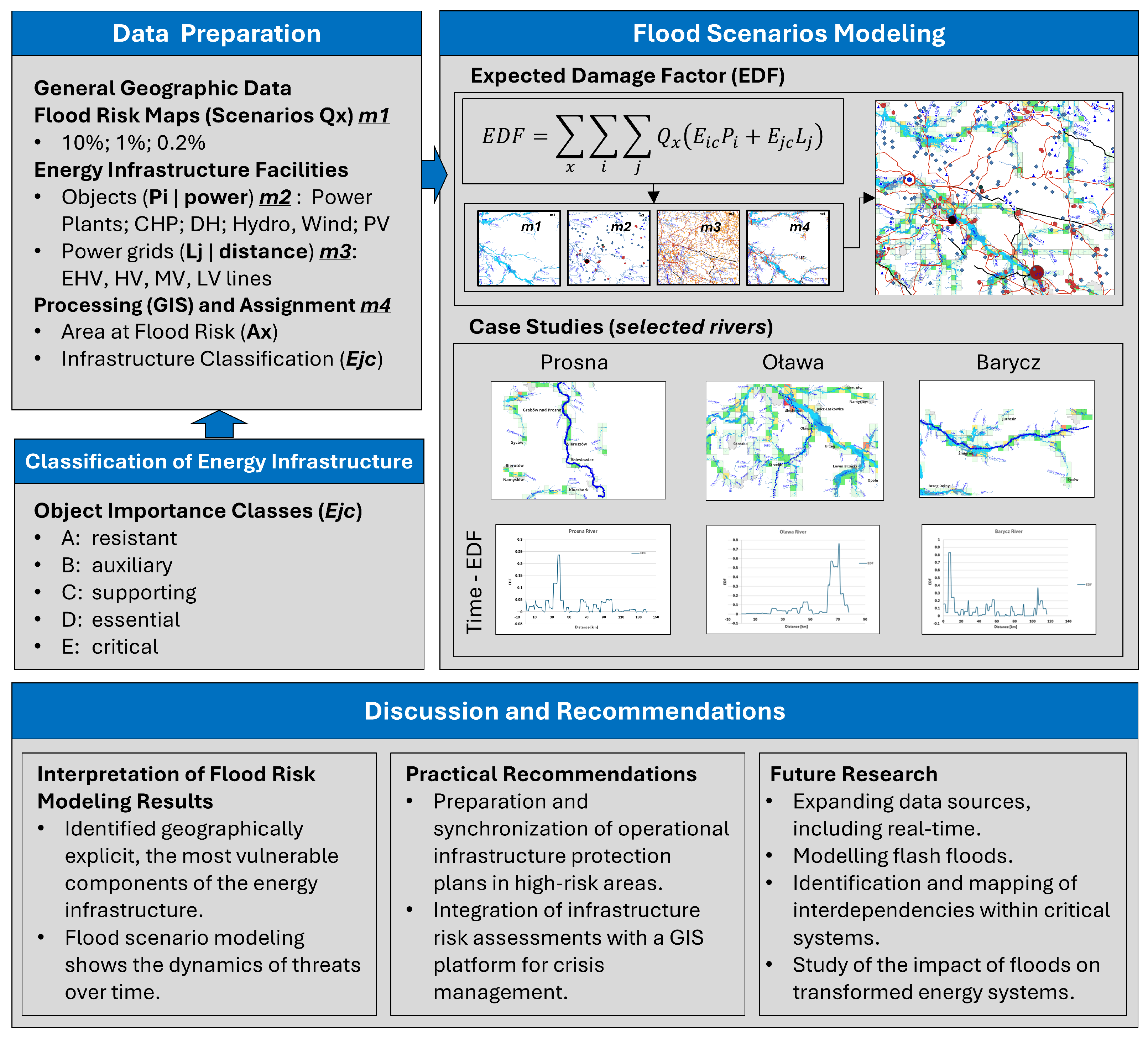
Figure 1. Diagram of the assessment of the vulnerability of energy infrastructure to flood hazards. Source: Own work.
Energies 18 06453 g001
Figure 2. Data flow diagram. Source: Own work.
Energies 18 06453 g002
Figure 3. Study area—scope of analysis. Source: Author’s work. Basemaps: OpenStreetMap contributors (ODbL); EEA [67,68].
Energies 18 06453 g003
Figure 9. EDF variation along river distance (km) for Prosna, Oława, and Barycz. Source: Author’s work.
Energies 18 06453 g009
Table 1. Classification of impacts and characteristics of energy supply risks.
ScaleEffectsValueDescriptionRelated Facilities
AResistant (replaceable, insignificant)0.2They serve a supplementary function and do not affect everyday functioning.Spots 1: Resources such as power generators, Fuel reserves.
Lines 2: none
BAuxiliary (relevant to a limited extent)0.4Only local impact, to a limited extent Spots:
Local heating plants with a capacity of up to 0.5 MW; Auxiliary equipment
Linear: none
CSupporting (important on a local scale)0.6Auxiliary facilities that affect quality of life but do not directly threaten life or cause major damage. Continuity of operation can be restored within 12 h (facilities have reserve capacity/redundancy).Spots: Local CHP up to 5 MW capacity; Local heating plants.
Linear: Distribution lines
DSignificant (important on a local and system scale)0.8They do not affect the continuity of supply at the national level.Spots: Medium CHP (5–20 MWel), heating plants; Wind farms
Linear: Low and medium voltage lines.
ECritical (important for system stability)1.0They cause local disruptions to energy supply, affect quality, and cause temporary interruptions in supply. Spots: System power plants and combined heat and power plants
Linear: Extra-high voltage transmission lines; High-voltage transmission lines.
1 Spots: objects represented in GIS as single points, such as wind farm, power plant. 2 Liner: elements represented in GIS as lines, e.g., power lines, rivers.
Table 2. The importance of the analysed energy infrastructure facilities.
NoNameSymbolUnitClassWeight
1Power Plants < 5 MWPowerPlant1MWD0.8
2Power Plants > 5 MWPowerPlant2MWE1
3CHP < 5 MWCHP1MWD0.8
4CHP > 5 MWCHP2MWE1
5Hydroelectric power plants < 5 MWHydro1MWB0.4
6Hydroelectric power plants > 5 MWHydro2MWE1.0
7PVPVMWB0.4
8WindWNDMWC0.6
9District HeatingDHMWC0.6
10Heat OtherHMWB0.4
11Extra High Voltage LinesEHV kmE1.0
12High voltage linesHVkmD0.8
13Medium Voltage LinesMVkmC0.6
14Low Voltage Lines (distribution)LVkmB0.4
Table 3. Comparison of the results of the analysed rives.
RiverThreatsInfrastructureEDF
Prosnadiffuse threat; river runs through low-population areasa large share of HV and EHV transmission lines, fewer point facilitiesmax 0.24
37–39 km
Oławariver flowing into Wrocław, where threats accumulate, lines, and urbanised areasshare of HV and EHV transmission lines, short distances between the river and highly urbanised areasmax 0.77
71 km
Baryczriver floods in a wide valley, lower infrastructure intensityLong section of HV line in floodplain for flood risk scenarios 10% 1%, 0.02%max 0.82
6–8 km
Disclaimer/Publisher’s Note: The statements, opinions and data contained in all publications are solely those of the individual author(s) and contributor(s) and not of MDPI and/or the editor(s). MDPI and/or the editor(s) disclaim responsibility for any injury to people or property resulting from any ideas, methods, instructions or products referred to in the content.