Article

Water–Energy Co-Production by Coupling Photothermal Membrane Distillation with Thermal-Osmotic Energy Conversion

1
China Energy Engineering Group Guangdong Electric Power Design Institute Co., Ltd., Guangzhou 510663, China
2
Institute of Thermal Science and Power Engineering, Wuhan Institute of Technology, Wuhan 430205, China
3
School of Mechanical & Electrical Engineering, Wuhan Institute of Technology, Wuhan 430205, China
4
State Key Laboratory of Hydraulics and Mountain River Engineering, College of Water Resource & Hydropower, Sichuan University, Chengdu 610065, China
5
Research Institute of Tsinghua University in Shenzhen, Shenzhen 518057, China
*
Authors to whom correspondence should be addressed.
These authors contributed equally to this work.
Energies 2025, 18(23), 6297; https://doi.org/10.3390/en18236297 (registering DOI)
Submission received: 20 October 2025 / Revised: 16 November 2025 / Accepted: 28 November 2025 / Published: 29 November 2025

Abstract

The shortage of freshwater resources and the depletion of fossil fuels have emerged as two pivotal challenges confronting global development. Photothermal membrane distillation (PMD) technology, a technique that harnesses solar energy for seawater desalination, not only produces freshwater but also mitigates the pressure of energy depletion. However, its sole focus on freshwater production no longer meets the demands of the energy market. Based on this, this study proposes a power–water cogeneration system based on PMD and thermal-osmotic energy conversion (TOEC) technology. The system achieves power–water cogeneration by changing the supply side heat source structure of TOEC technology and coupling it with traditional PMD technology. The experimental results showed that under the illumination condition of solar intensity of 4 kW·m−2 for 3.5 h, the fresh water production and water production rate of the system reached 2.23 g and 1.39 kg·m−2·h−1, respectively. Meanwhile, the fresh water output pressure reached 0.91 bar, and the output power density was 0.0456 W·m−2. This system is expected to provide a new solution to address the global shortage of freshwater resources and the depletion of fossil fuels.

1. Introduction

With the rapid expansion of the global economy and the continuous increase in population, the issue of water scarcity is becoming increasingly severe, posing a significant challenge that threatens the sustainable development of humanity [1]. Therefore, alleviating the pressure of freshwater scarcity is urgent. Although the Earth is covered by water over 71% of its surface, only 2.5% of the water is directly usable as freshwater [2]. If freshwater resources can be obtained through seawater desalination, it will effectively alleviate the pressure of freshwater scarcity [3]. Traditional seawater desalination methods rely on burning fossil fuels to provide the evaporation driving force [4,5]. However, the global reserves of fossil fuels are limited, and the crisis of fossil fuel depletion is becoming increasingly evident [6,7,8]. Therefore, there is an urgent need for a transformation in the energy structure on the supply side of seawater desalination technology [9]. With the continuous advancement of technology, people have begun to extensively use various clean and renewable energy sources to gradually replace fossil fuels for seawater desalination [10,11,12,13], which greatly helps alleviate the pressure of fossil fuel depletion [14].
Currently, membrane distillation (MD) technology is considered one of the mainstream technologies in seawater desalination [15,16]. Traditional membrane distillation technology utilizes low-grade industrial waste heat as the heat source for seawater desalination. This technology is limited by the location of the factories that provide industrial waste heat [17]. In recent years, a solar-driven PMD seawater desalination technology has gradually matured [18,19]. This technology utilizes clean and renewable solar energy as the thermal driving force. By introducing photothermal materials into traditional MD systems, it efficiently utilizes solar energy for distillation and water production [20]. Jawed et al. [21] enhanced the performance of the membrane by incorporating octylamine-functionalized copper oxide nanoparticles (Octy-Cu NP) into the membrane material. When the Octy-Cu NP loading in the membrane was 10 wt.%, the membrane exhibited optimal performance, achieving a vapor flux of 0.253 kg m−2 h−1 under a solar intensity of 1 sun. Yu et al. [22] designed a CuMOF-PVDF photothermal membrane for PMD. By reducing the enthalpy of water evaporation, the performance of the CuMOF photothermal layer was comprehensively enhanced, achieving a water evaporation rate of 1.55 kg m−2 h−1 under one sun illumination. Furthermore, the structure of the photothermal membrane distillation system is lightweight and simple, which has great potential for developing highly integrated and portable equipment that can be applied in remote off-grid areas [23,24,25].
However, with globally escalating requirements for energy utilization efficiency, the singular freshwater yield can no longer meet the demands of the energy market, leaving substantial amounts of unused energy discarded as low-grade waste heat [26,27]. Therefore, a TOEC technology [28] that utilizes low-grade waste heat as the thermal driving force has emerged. TOEC technology can utilize the liquid thermal infiltration effect to generate thermal infiltration pressure on the low-temperature side for thermal-power conversion, representing a novel low-grade thermal energy recovery technology [29,30,31,32]. Scholars both domestically and internationally have made certain research progress in the theoretical and experimental studies of TOEC systems [33,34,35,36]. Zhao et al. [37] proposed a stacked TOEC cogeneration system, using a PTFE hydrophobic membrane with a pore size of 0.1 μm. Under the conditions of a high-temperature-side heating temperature of 80 °C and a condensation end hydraulic pressure of 1.5 bar, one square meter of permeator stack can simultaneously produce about 188 L of freshwater and 27.8 kJ of volumetric work per day. The current drawback of this technology is that its heat source comes from low-grade industrial waste heat, which cannot be effectively coupled with the new generation of solar thermal membrane distillation for seawater desalination. To address this limitation, this paper proposes changing the structure of the technology’s supply-side heat source, which is expected to overcome the bottleneck of single freshwater output in existing desalination technologies and the reliance of thermal permeation energy conversion technology on industrial waste heat.
This study proposes a novel power–water cogeneration technology that combines photothermal membrane distillation technology with thermal osmosis energy conversion technology, and designs a novel solar-driven power–water cogeneration device based on TOEC technology. The front end of the device is assembled from a seawater evaporation chamber and a freshwater condensation chamber, with a commercial polytetrafluoroethylene (PTFE) hydrophobic membrane serving as the base membrane component for membrane distillation. A solution prepared by mixing multi-walled carbon nanotubes (CNT) powder with anhydrous ethanol is in situ compounded onto the PTFE membrane through vacuum filtration to form a photothermal active layer. The prepared composite membrane exhibits excellent visible light absorption performance and hydrophobicity. This feature not only improves the photothermal conversion efficiency of the device but also enhances the anti-wetting ability of the membrane. Consequently, its service life is extended, and its stability under operating conditions is improved. The back end of the device is connected to a needle valve with a certain flow resistance, which effectively stores pressure in the fresh water produced by the photothermal membrane distillation section. The high-pressure fresh water after pressure storage in the fresh water condensation chamber can be used to do work, thus achieving the goal of combined production of power and water. The innovation of this device lies in the fact that it is the first to combine photothermal membrane distillation technology with thermal osmosis energy conversion technology, utilizing abundant and widespread clean renewable energy for seawater desalination while simultaneously achieving additional energy output. The device is compact and portable, not reliant on terrain constraints, and is expected to alleviate the shortage of freshwater resources and energy scarcity in remote mountainous areas and offshore islands.

2. Experimental Procedure

2.1. Design Concept

The basic principle of a novel solar-driven power and water cogeneration system based on thermal osmosis energy conversion technology is illustrated in Figure 1. The entire device requires exhaust treatment before operation. Specifically, the evaporation chamber is first filled with seawater, followed by filling the condensation chamber with deionized water (DI water). The evaporation and condensation chambers are secured together using bolts to ensure the device’s airtightness. The fluid power generator at the rear end of the condensation chamber is connected via a rubber hose, and a fresh water collection tank is provided at the outlet of the fluid power generator. When sunlight with a certain heat flux density shines into the seawater evaporation chamber, the thermal osmosis membrane at the bottom of the evaporation chamber facilitates the photothermal conversion and heat and mass transfer processes of gas–liquid phase change. The heat-permeable membrane prepared in this paper utilizes a commercial PTFE membrane as the substrate, and is coated with a photothermal active layer (CNT powder) on its upper surface in situ. This coating can efficiently absorb the input light energy with high light absorption rate and convert it into heat. This heat provides the driving force for the evaporation of seawater in the evaporation chamber. The seawater absorbs heat and vaporizes on the surface of the heat-permeable membrane, and the water vapor enters the freshwater condensation chamber through the heat-permeable membrane under the influence of osmotic pressure difference and condenses into liquid water. Since a needle valve with a rated flow resistance is connected to the lower end of the condensation chamber, the flow resistance of the rear needle valve can stabilize the pressure of the fresh water in the condensation chamber during the continuous process of photothermal membrane distillation. The high-pressure fresh water generated can be used to perform external work, thus achieving the cogeneration of power and water.

2.2. Experimental Device Construction and Testing

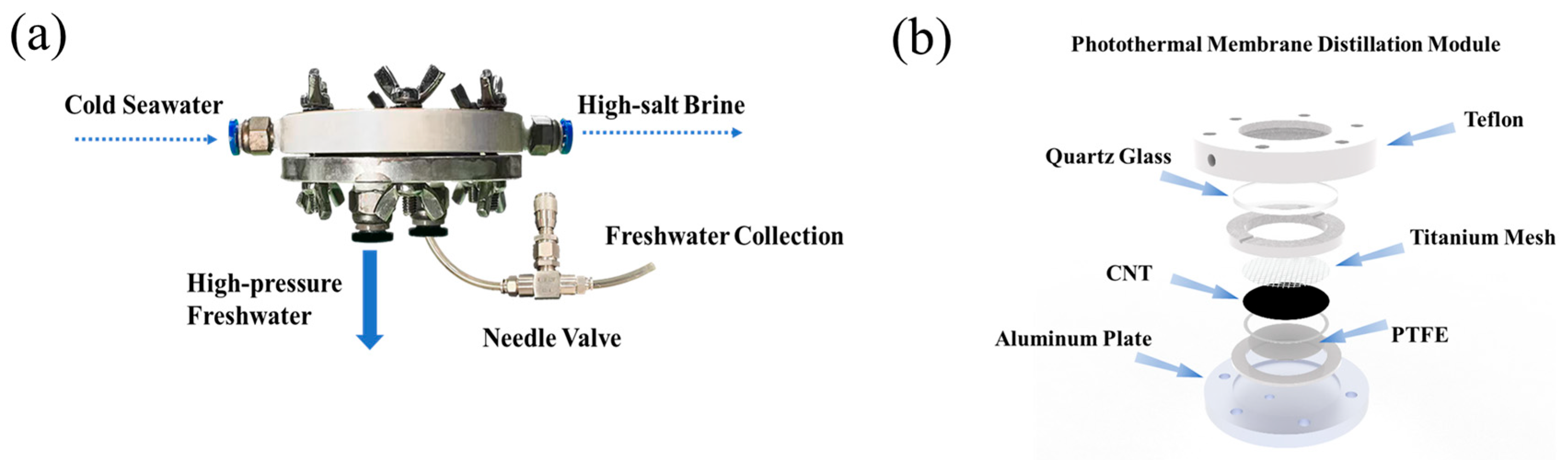
The system consists of two major components: a photothermal membrane distillation module and a flow resistance and pressure storage mechanism, as shown in Figure 2. The photothermal membrane distillation module serves as the front-end device for generating condensed fresh water. It comprises two chambers, an upper and a lower, separated by a heat-permeable membrane and tightly sealed with bolts and nuts. The upper chamber is the seawater evaporation chamber, with a diameter of 46 mm and a depth of 5 mm. The top is sealed with a transparent acrylic plate, 35 mm in diameter and 2 mm thickness. The lower chamber serves as a freshwater condensation chamber, with a diameter of 32 mm and a depth of 2 mm. At the bottom, there are two drainage holes with a diameter of 2 mm. One hole is connected to a needle valve, while the other is connected to a pressure sensor. The flow resistance accumulator, as a backend device, plays two important roles. Firstly, it utilizes its own flow resistance to store pressure for the freshwater in the front condensation chamber. Secondly, it uses the high-pressure freshwater in this part to perform work externally. The core component in the system that facilitates the photothermal membrane distillation process and the thermal permeation energy conversion process is the thermal permeable membrane. The substrate of the thermal permeable membrane is a commercial PTFE hydrophobic membrane with a diameter of 47 mm and a pore size of 0.22 μm. The upper surface of the substrate membrane is covered in situ with a photothermal active layer with a diameter of 32 mm. The thermal permeable membrane and the upper and lower chambers are sealed with rubber gaskets measuring 32 mm × 46 mm × 0.8 mm in size.
The experiment utilized a xenon lamp light source system to provide simulated solar light. The output heat flux density of the simulated solar light was controlled by adjusting the current of the xenon lamp light source system. An infrared thermal imager was used to monitor the temperature of the heat-permeable membrane surface at regular intervals. A pressure sensor was employed to monitor the hydraulic pressure of the generated high-pressure fresh water in real time, and a high-precision electronic balance was used to measure the mass of fresh water produced in real time. The xenon lamp light source system was adjusted to test the experimental setup under operating conditions with input heat flux densities ranging from 1000 to 4000 W·m−2 (1–4 sun).

2.3. Preparation and Characterization of Experimental Materials

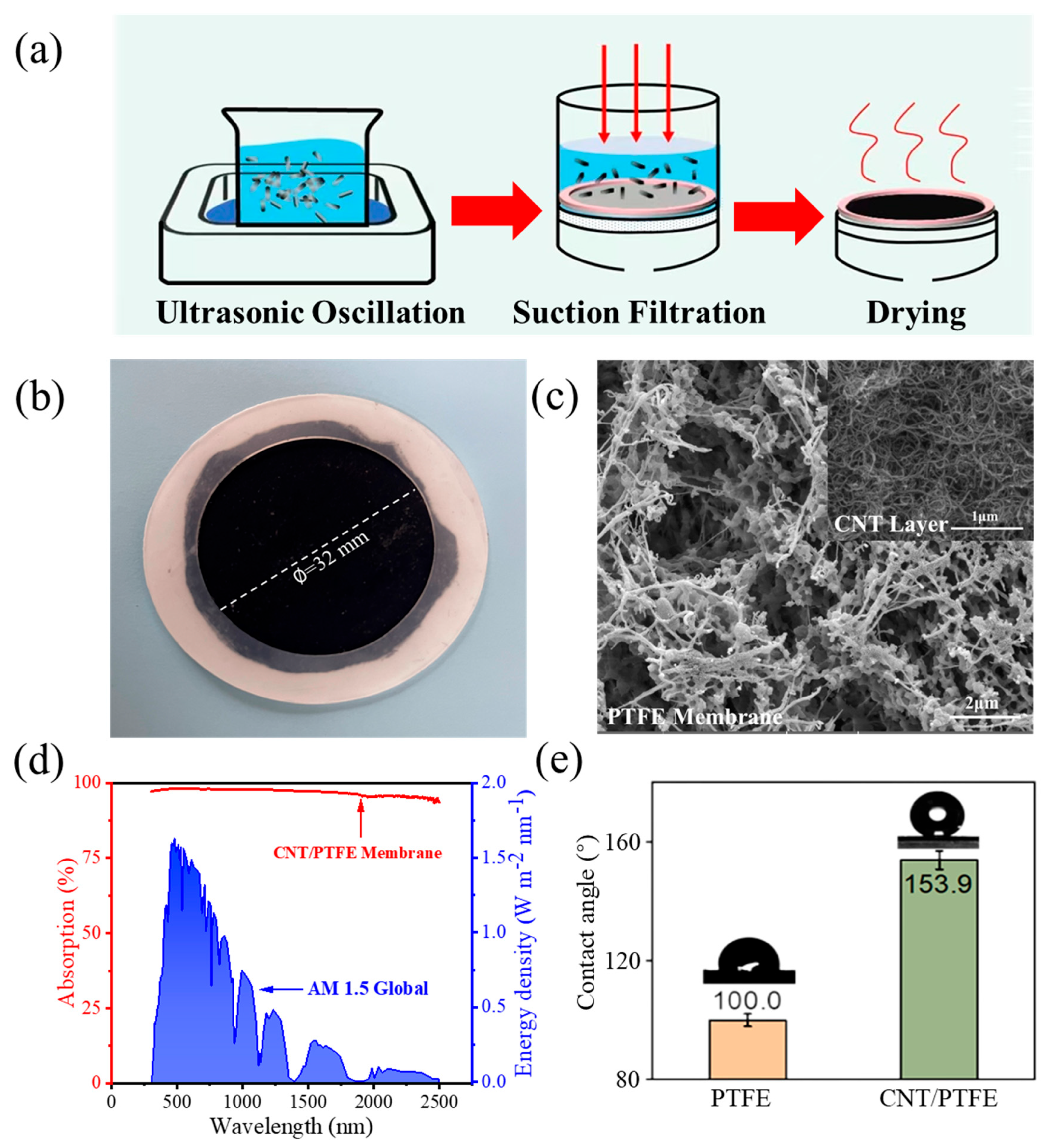
The preparation process of the heat-permeable membrane is shown in Figure 3a. First, CNT powder is fully dissolved in anhydrous ethanol and then oscillated for 4 h using an ultrasonic cell disruptor until the CNT powder is fully dispersed in the solution. Afterwards, an appropriate amount of the mixed solution is taken out and evenly dripped onto a PTFE hydrophobic membrane. The CNT powder is then adsorbed onto the upper surface of the hydrophobic membrane using a vacuum filtration machine. After forming a uniform and dense photothermal active layer, the CNT-PTFE heat-permeable membrane is obtained, as shown in Figure 3b. Figure 3c shows the microstructure of the heat-permeable membrane observed under a scanning electron microscope. It can be seen from Figure S2 that the structure of the CNT photothermal active layer is very dense, with a pore size of about 0.1 μm. The pore size of the PTFE hydrophobic membrane is about 2 μm, which is much larger than that of the active layer. Figure 3d illustrates the light absorption performance of the heat-permeable membrane, where the addition of the CNT photothermal active layer significantly enhances the photothermal conversion performance of the heat-permeable membrane. The figure shows that the light absorption rate of the heat-permeable membrane can reach 97.8% within the wavelength range of 500–2500 nm, with the highest energy density occurring within the wavelength range of 500–600 nm. Figure 3e presents the contact angle test results of the heat-permeable membrane, revealing that the contact angle of the CNT/PTFE membrane is 153.9°, whereas the contact angle of the ordinary PTFE hydrophobic membrane is only 100°, indicating that the CNT/PTFE membrane exhibits superior hydrophobicity compared to the ordinary PTFE hydrophobic membrane.

3. Results and Discussion

3.1. Experimental Results and Performance Evaluation

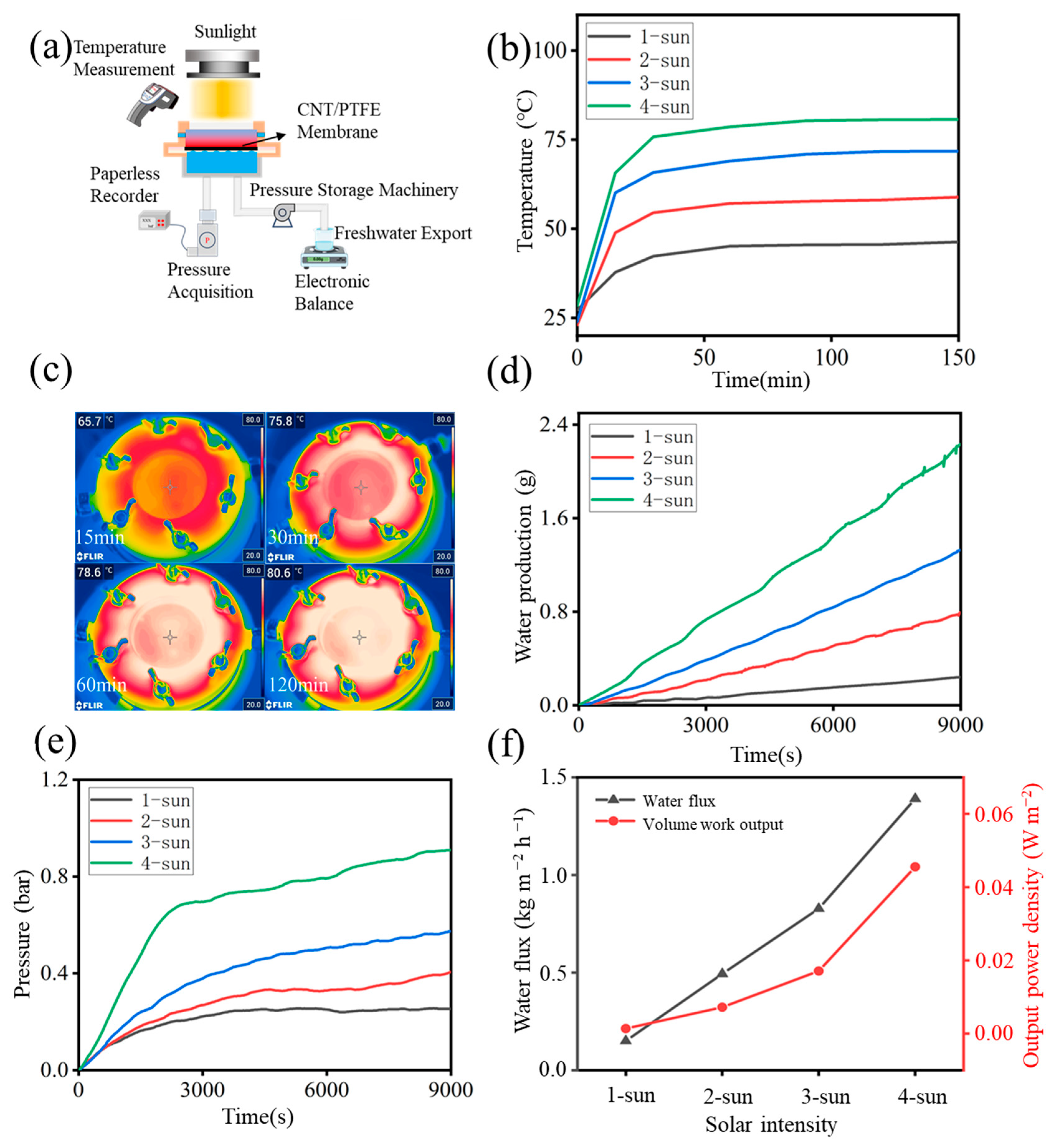
To investigate the performance of the power–water cogeneration system, an experimental setup as shown in Figure 4a was established. The physical diagram of the experimental measurement system is shown in Figure S1. The errors of the experimental instruments and the uncertainties of the measurement data are shown in Supplementary Materials SI-3. Figure 4b shows the variation of the temperature of the heat-permeable membrane surface over time during 3.5 h of operation under four different solar intensities. It can be seen from the figure that the temperature of the heat-permeable membrane surface increases with the increase in light intensity, and tends to stabilize after about 0.5 h, indicating that the heat-permeable membrane has excellent photothermal conversion performance. Thermal imaging was used to photograph and monitor the surface of the heat-permeable membrane during system operation under 4 sun conditions at different time intervals. The test results are shown in Figure 4c.
The device was placed under four different solar intensities to test the freshwater production of the system. As shown in Figure 4d, with the increase in solar intensity, the water production of the system increased sequentially. Since the increase in solar intensity raises the input heat of the membrane distillation system and accelerates the evaporation rate of the feed solution, it consequently increases the amount of vapor passing through the membrane and ultimately enhances the water production. After operating under 1–4 solar intensity for 3.5 h, the final water yields were 0.24 g, 0.79 g, 1.33 g, and 2.23 g, respectively. The corresponding freshwater outlet pressures are shown in Figure 4e. Before 0.5 h, the freshwater outlet pressure was continuously increasing at an accelerating rate. From 0.5 to 3.5 h, the growth of the freshwater outlet pressure gradually slowed and tended to stabilize. This is because, once the pressure in the condensation chamber rises to a certain level, the driving force for mass transfer across the membrane weakens until it matches the release rate corresponding to the needle valve opening, after which the pressure no longer rises. The freshwater outlet pressures corresponding to operating the system for 3.5 h under 1–4 solar intensities were 0.25 bar, 0.41 bar, 0.57 bar, and 0.91 bar, respectively. As shown in Figure 4f, the average freshwater production rates corresponding to the system under 1–4 solar intensities were 0.1502 kg·m−2·h−1, 0.4938 kg·m−2·h−1, 0.8272 kg·m−2·h−1, and 1.3903 kg·m−2·h−1, respectively. The output power densities were 0.0014 W·m−2, 0.0072 W·m−2, 0.0171 W·m−2, and 0.0456 W·m−2, respectively. The experimental results indicate that the solar-driven TOEC system, which achieves combined power and water production, can stably produce water under different solar intensities and output stable hydraulic pressure. Furthermore, with the increase in input heat flux density, both the water production and freshwater outlet pressure of the system improve. Table S2 compares the novel water–power cogeneration system in this study with other systems.

3.2. Analysis of Theoretical Calculation Results

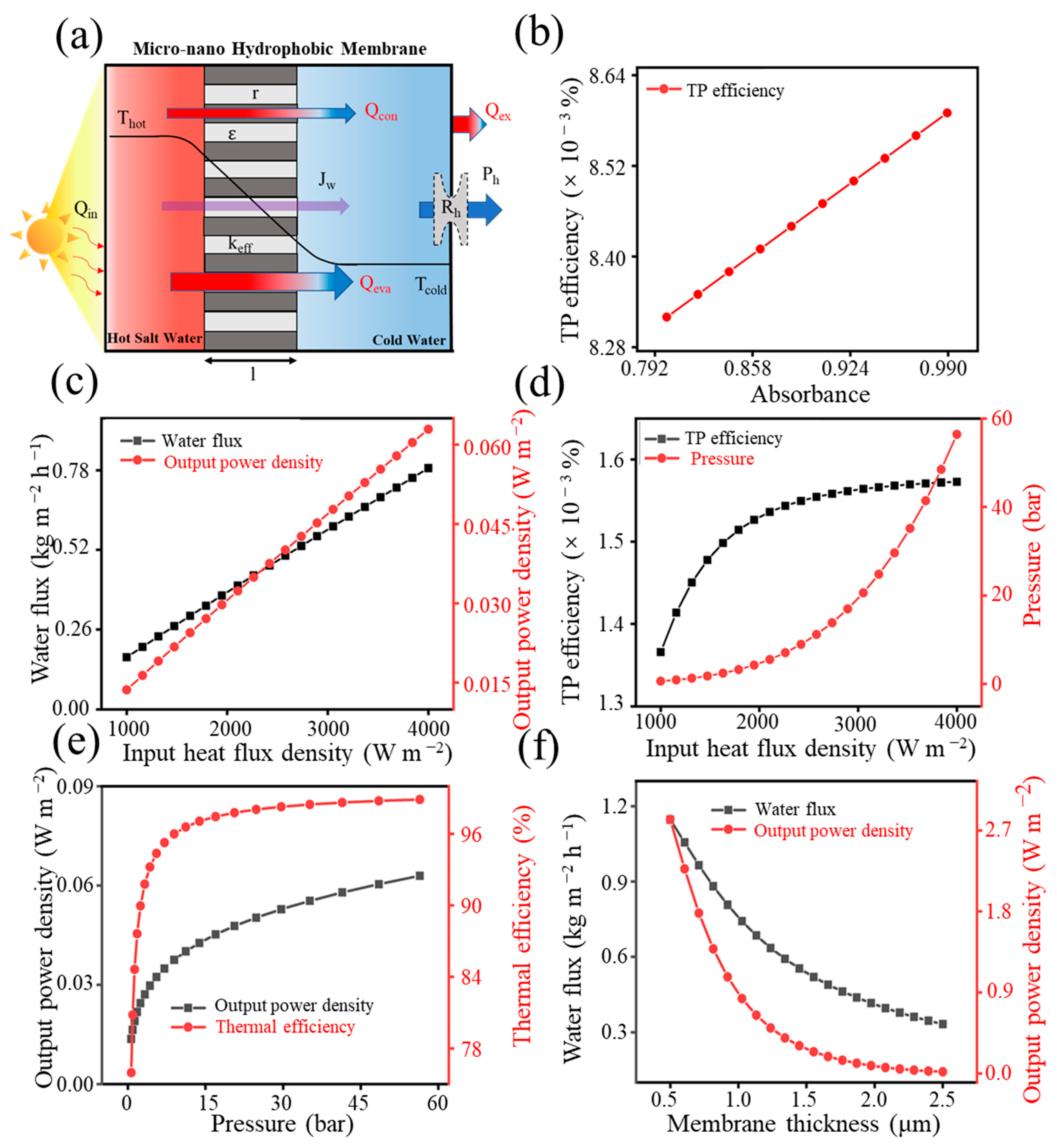
To theoretically verify the experimental test results, a theoretical model of the solar-driven TOEC system for combined power and water production was established, and simulation software was used to calculate and analyze its theoretical combined power and water production performance and thermal to power (TP) efficiency. The relevant theories and equations used in the theoretical model analysis can be found in Supplementary Materials SI-4. A corresponding heat and mass transfer model was established based on the steady-state energy and mass balance diagram of the thermal-osmotic energy conversion system shown in Figure 5a. The energy transfer between the evaporator and the condenser includes the latent heat of phase change (Qeva) carried away by water evaporation on the high-temperature side of the composite membrane, and the heat conducted through the solid part of the membrane (Qcon). These mainly depend on the system input heat flux density (Qin), effective thermal conductivity of PTFE membrane (keff), thickness (l), porosity (εm), tortuosity (τ), and pore size (r), as well as the heat dissipation on the condensation side (Qex). Meanwhile, different heat dissipation forms on the condensation wall surface determine the heat dissipation Qex, directly affecting the condensation thermal resistance and vapor diffusion resistance of the thermal-osmotic system, as well as the additional consumed pump power. The hydraulic pressure (Ph) at the low-temperature condensation end depends on the ratio of vapor flux (Jw) to hydraulic mechanical flow resistance (Rh).
The theoretical calculations were performed using MATLAB (R2024a). After specifying the parameters of the heat-permeable membrane and the rated flow resistance, the single-variable method was applied to analyze the trend of the system’s thermal-to-power efficiency as a function of the light absorption rate of the heat-permeable membrane. As shown in Figure 5b, the thermal-to-power efficiency of the system exhibits a linear increase with the light absorption rate of the heat-permeable membrane. When the light absorption rate is 80%, the thermal-to-power efficiency of the system is 0.00832%. As the light absorption rate increases to 99%, the thermal-to-power conversion efficiency rises to 0.0086%. Figure 5c illustrates the curves showing how the theoretical water production rate and power density generated by the system vary with the input heat flux density. The graph demonstrates that both the water production rate and output power density increase with the increase in input heat flux density, and the trend aligns with the experimental test results. Under four different solar intensities, the theoretical water production rate is 0.7868 kg·m−2·h−1, and the theoretical output power density is 0.0629 W·m−2. Figure 5d presents the curves showing how the theoretical thermal efficiency and the hydraulic pressure of the produced fresh water vary with the input heat flux density. The graph reveals that the thermal-to-power efficiency and the fresh water outlet pressure exhibit an upward convex curve growth and a downward concave curve growth, respectively. Under four different solar intensities, the theoretical thermal-to-power conversion efficiency of the system is 0.0016%, and the theoretical fresh water outlet pressure is 56.4077 bar. The calculation results indicate that the theoretical water–power cogeneration performance, fresh water outlet pressure, and thermal-to-power conversion efficiency of the system are positively correlated with the input heat flux density, suggesting that the system exhibits optimal water–power cogeneration performance under four different solar intensities.
Figure 5e illustrates the curves of theoretical output power density and thermal efficiency varying with the fresh water outlet pressure under an input heat flux density of 4000 W·m−2. The graph reveals that as the fresh water outlet pressure of the system increases from 0.5 to approximately 10 bar, both the output power density and thermal efficiency experience a rapid growth, with the output power density surging from 0.0136 W·m−2 to 0.0400 W·m−2 and the thermal efficiency climbing from 74.89% to 96.579%. Conversely, when the fresh water outlet pressure generated by the system increases within the range of 10–50 bar, the output power density increases from 0.0400 W·m−2 to 0.0629 W·m−2, and the thermal efficiency climbs from 96.579% to 98.88%. Figure 5f displays the curves of theoretical water production rate and output power density varying with membrane thickness. Evidently from Figure 5f, the theoretical water production rate and output power density of the system diminish as the thickness of the heat-permeable membrane increases. Specifically, when the membrane thickness is 0.5 μm, the theoretical water production rate stands at 1.1463 kg·m−2·h−1 and the output power density is 2.8216 W·m−2; however, as the membrane thickness increases to 2.5 μm, the theoretical water production rate decreases to 0.3316 kg·m−2·h−1, and the output power density reduces to 0.0183 W·m−2. The computational results indicate a positive correlation between the theoretical output power density and thermal efficiency of the system and the fresh water outlet pressure, aligning with the experimental findings.

4. Conclusions

This study successfully developed a novel solar-driven cogeneration system of power and water based on photothermal membrane distillation and thermal osmosis energy conversion technology. Through an innovative multilayer structural design and effective energy management strategy, the system achieves synergistic production of power and water under solar energy. Experimental results show that the device exhibits an ultrahigh solar absorption rate of 97.8%, which enables it to produce 2.23 g of freshwater and a water production rate of 1.3903 kg·m−2·h−1 after 3.5 h of illumination under 4 sun conditions. At the same time, the system generates a freshwater output pressure of 0.91 bar, achieving a power density output of 0.0456 W·m−2. This accomplishment not only overcomes the bottleneck of single freshwater production in conventional PMD technology but also addresses the inherent drawback of TOEC technology’s dependence on industrial waste heat. MATLAB simulation analysis verifies that the cogeneration performance and thermal-to-power efficiency are in close agreement with the experimental results, confirming the rationality of the system design and the feasibility of engineering applications. At the same time, membrane fouling is a key challenge in solar thermal membrane distillation systems. In future experimental work, we plan to design a hydrogel with good mechanical properties and salt resistance, and graft it onto existing CNT/PTFE membranes to address the problem of membrane fouling in high-concentration brine. This research provides new insights for developing sustainable seawater desalination and renewable energy cogeneration technologies and is expected to promote the practical application of next-generation integrated energy–water systems.

Supplementary Materials

The following supporting information can be downloaded at: https://www.mdpi.com/article/10.3390/en18236297/s1, Figure S1: Physical diagram of the experimental measurement system; Figure S2: SEM image of CNT layer: (a) SEM MAG:500×; (b) SEM MAG:40000×; Table S1: List of uncertainties; Table S2: Comparison with other systems.

Author Contributions

Conceptualization, R.G., J.W., L.H. and X.H.; methodology, R.G., Y.Z., H.H., X.Y., S.L. and B.H.; software, J.P.; investigation, J.W.; writing—original draft preparation, R.G. and J.W.; writing—review and editing, L.H. and X.H.; supervision, L.H. All authors have read and agreed to the published version of the manuscript.

Funding

This research was funded by Natural Science Foundation of Hubei Province grant number (No. 2023AFB078).

Data Availability Statement

The original contributions presented in this study are included in the article/Supplementary Material. Further inquiries can be directed to the corresponding authors.

Conflicts of Interest

Author Ruiying Gao, Ying Zhang, Hanhua He, Xinxing Yin, Shan Luo, Baolin Huang were employed by the company China Energy Engineering Group Guangdong Electric Power Design Institute Co., Ltd. The remaining authors declare that the research was conducted in the absence of any commercial or financial relationships that could be construed as a potential conflict of interest.

References

  1. Li, H.; Ma, J.; Chen, H.; Hong, W.; Lan, J.; Chang, Y.; Zhang, H.; Zhang, L.; Niu, X.; Li, Y.; et al. Interfacial photothermal membrane distillation for direct solar water production. Adv. Funct. Mater. 2025, e15845. [Google Scholar] [CrossRef]
  2. Huang, J.; Zheng, H.; Kong, H. Key pathways for efficient solar thermal desalination. Energy Convers. Manag. 2024, 299, 117806. [Google Scholar] [CrossRef]
  3. Shannon, M.A.; Bohn, P.W.; Elimelech, M.; Georgiadis, J.G.; Mariñas, B.J.; Mayes, A.M. Science and technology for water purification in the coming decades. Nature 2008, 452, 301–310. [Google Scholar] [CrossRef]
  4. Al-Othman, A.; Darwish, N.N.; Qasim, M.; Tawalbeh, M.; Darwish, N.A.; Hilal, N. Nuclear desalination: A state-of-the-art review. Desalination 2019, 457, 39–61. [Google Scholar] [CrossRef]
  5. Ghazi, Z.M.; Rizvi, S.W.F.; Shahid, W.M.; Abdulhameed, A.M.; Saleem, H.; Zaidi, S.J. An overview of water desalination systems integrated with renewable energy sources. Desalination 2022, 542, 116063. [Google Scholar] [CrossRef]
  6. Zhao, Y.; Li, M.; Long, R.; Liu, Z.; Liu, W. Review of osmotic heat engines for low-grade heat harvesting. Desalination 2022, 527, 115571. [Google Scholar] [CrossRef]
  7. Long, R.; Zhao, Y.; Li, M.; Pan, Y.; Liu, Z.; Liu, W. Evaluations of adsorbents and salt-methanol solutions for low-grade heat driven osmotic heat engines. Energy 2021, 229, 120798. [Google Scholar] [CrossRef]
  8. Zhao, Y.; Li, M.; Long, R.; Liu, Z.; Liu, W. Dynamic modeling and analysis of an advanced adsorption-based osmotic heat engines to harvest solar energy. Renew. Energy 2021, 175, 638–649. [Google Scholar] [CrossRef]
  9. Kalogirou, S.A. Seawater desalination using renewable energy sources. Prog. Energy Combust. Sci. 2005, 31, 242–281. [Google Scholar] [CrossRef]
  10. Ginsberg, M.; Zhang, Z.; Atia, A.A.; Venkatraman, M.; Esposito, D.V.; Fthenakis, V.M. Integrating solar energy, desalination, and electrolysis. Sol. RRL 2022, 6, 2100732. [Google Scholar] [CrossRef]
  11. Elbarbary, S.; Zaher, M.A.; Saibi, H.; Fowler, A.-R.; Saibi, K. Geothermal renewable energy prospects of the African continent using GIS. Geotherm. Energy 2022, 10, 8. [Google Scholar] [CrossRef]
  12. Drożdż, W.; Bilan, Y.; Rabe, M.; Streimikiene, D.; Pilecki, B. Optimizing biomass energy production at the municipal level to move to low-carbon energy. Sustain. Cities Soc. 2022, 76, 103417. [Google Scholar] [CrossRef]
  13. Lecompte, S.; Huisseune, H.; Van Den Broek, M.; Vanslambrouck, B.; De Paepe, M. Review of organic Rankine cycle (ORC) architectures for waste heat recovery. Renew. Sustain. Energy Rev. 2015, 47, 448–461. [Google Scholar] [CrossRef]
  14. Li, G.; Ying, J.; Zheng, Y.; Guo, W.; Tang, Y.; Ye, C. Analytical design model for waste heat thermoelectric generator and experimental verification. Energy Convers. Manag. 2022, 252, 115034. [Google Scholar] [CrossRef]
  15. Liao, Y.; Wang, R.; Fane, A.G. Fabrication of bioinspired composite nanofiber membranes with robust super hydrophobicity for direct contact membrane distillation. Environ. Sci. Technol. 2014, 48, 6335–6341. [Google Scholar] [CrossRef]
  16. Zhao, S.; Jiang, C.; Fan, J.; Hong, S.; Mei, P.; Yao, R.; Liu, Y.; Zhang, S.; Li, H.; Zhang, H.; et al. Hydrophilicity gradient in covalent organic frameworks for membrane distillation. Nat. Mater. 2021, 20, 1551–1558. [Google Scholar] [CrossRef]
  17. Razaqpur, A.G.; Wang, Y.; Liao, X.; Liao, Y.; Wang, R. Progress of photothermal membrane distillation for decentralized desalination: A review. Water Res. 2021, 201, 117299. [Google Scholar] [CrossRef]
  18. Guo, A.; Ming, X.; Fu, Y.; Wang, G.; Wang, X. Fiber-based, double-sided, reduced graphene oxide films for efficient solar vapor generation. ACS Appl. Mater. Interfaces 2017, 9, 29958–29964. [Google Scholar] [CrossRef]
  19. Wang, W.; Shi, Y.; Zhang, C.; Hong, S.; Shi, L.; Chang, J.; Li, R.; Jin, Y.; Ong, C.; Zhuo, S.; et al. Simultaneous production of fresh water and electricity via multistage solar photovoltaic membrane distillation. Nat. Commun. 2019, 10, 3012. [Google Scholar] [CrossRef]
  20. Wu, X.; Cao, S.; Ghim, D.; Jiang, Q.; Singamaneni, S.; Jun, Y.-S. A thermally engineered polydopamine and bacterial nanocellulose bilayer membrane for photothermal membrane distillation with bactericidal capability. Nano Energy 2021, 79, 105353. [Google Scholar] [CrossRef]
  21. Jawed, A.S.; Hegab, H.M.; Kharraz, J.; Banat, F.; Al Marzooqi, F.; Hasan, S.W. Enhancement of photothermal membrane distillation efficiency with octylamine-functionalized copper oxide nanoparticles. Sep. Purif. Technol. 2025, 375, 133801. [Google Scholar] [CrossRef]
  22. Yu, J.; Sun, D.; Yue, D.; Li, B.; Zhu, T.; Liu, P. CuMOF-functionalized PVDF membrane with hierarchical structure for photothermal vacuum membrane distillation. J. Membr. Sci. 2024, 706, 122967. [Google Scholar] [CrossRef]
  23. Deshmukh, A.; Boo, C.; Karanikola, V.; Lin, S.; Straub, A.P.; Tong, T.; Warsinger, D.M.; Elimelech, M. Membrane distillation at the water-energy nexus: Limits, opportunities, and challenges. Energy Environ. Sci. 2018, 11, 1177–1196. [Google Scholar] [CrossRef]
  24. Wang, Z.; Horseman, T.; Straub, A.P.; Yip, N.Y.; Li, D.; Elimelech, M.; Lin, S. Pathways and challenges for efficient solar-thermal desalination. Sci. Adv. 2019, 5, eaax0763. [Google Scholar] [CrossRef]
  25. Jun, Y.S.; Wu, X.; Ghim, D.; Jiang, Q.; Cao, S.; Singamaneni, S. Photothermal membrane water treatment for two worlds. Acc. Chem. Res. 2019, 52, 1215–1225. [Google Scholar] [CrossRef]
  26. Lu, H.; Price, L.; Zhang, Q. Capturing the invisible resource: Analysis of waste heat potential in Chinese industry. Appl. Energy 2016, 161, 497–511. [Google Scholar] [CrossRef]
  27. Zuo, X.; Zhu, C.; Xian, W.; Meng, Q.; Guo, Q.; Zhu, X.; Wang, S.; Wang, Y.; Ma, S.; Sun, Q. Thermo-osmotic energy conversion enabled by Covalent-Organic-Framework membranes with record output power density. Angew. Chem. Int. Ed. 2022, 61, e202116910. [Google Scholar] [CrossRef] [PubMed]
  28. Straub, A.P.; Yip, N.Y.; Lin, S.; Lee, J.; Elimelech, M. Harvesting low-grade heat energy using thermo-osmotic vapour transport through nanoporous membranes. Nat. Energy 2016, 1, 16090. [Google Scholar] [CrossRef]
  29. Brogioli, D.; La Mantia, F. Innovative technologies for energy production from low temperature heat sources: Critical literature review and thermodynamic analysis. Energy Environ. Sci. 2021, 14, 1057–1082. [Google Scholar] [CrossRef]
  30. Fu, L.; Merabia, S.; Joly, L. Understanding fast and robust thermo-osmotic flows through carbon nanotube membranes: Thermodynamics meets hydrodynamics. J. Phys. Chem. Lett. 2018, 9, 2086–2092. [Google Scholar] [CrossRef]
  31. Marbach, S.; Bocquet, L. Osmosis, from molecular insights to large-scale applications. Chem. Soc. Rev. 2019, 48, 3102–3144. [Google Scholar] [CrossRef]
  32. Park, K.; Kim, D.Y.; Yang, D.R. Theoretical Analysis of Pressure Retarded Membrane Distillation (PRMD) Process for Simultaneous Production of Water and Electricity. Ind. Eng. Chem. Res. 2017, 56, 14888–14901. [Google Scholar] [CrossRef]
  33. Li, J.; Zhang, Z.; Zhao, R.; Zhang, B.; Liang, Y.; Long, R.; Liu, W.; Liu, Z. Stack thermo-osmotic system for low-grade thermal energy conversion. ACS Appl. Mater. Interfaces 2021, 13, 21371–21378. [Google Scholar] [CrossRef]
  34. Xiao, T.; Lin, Z.; Liu, C.; Liu, L.; Li, Q. Integration of desalination and energy conversion in a thermo-osmotic system using low-grade heat: Performance analysis and techno-economic evaluation. Appl. Therm. Eng. 2023, 223, 120039. [Google Scholar] [CrossRef]
  35. Rahimi, M.; Straub, A.P.; Zhang, F.; Zhu, X.; Elimelech, M.; Gorski, C.A.; Logan, B.E. Emerging electrochemical and membrane-based systems to convert low-grade heat to electricity. Energy Environ. Sci. 2018, 11, 276–285. [Google Scholar] [CrossRef]
  36. Yuan, Z.; Wei, L.; Afroze, J.D.; Goh, K.; Chen, Y.; Yu, Y.; She, Q.; Chen, Y. Pressure-retarded membrane distillation for low-grade heat recovery: The critical roles of pressure-induced membrane deformation. J. Membr. Sci. 2019, 579, 90–101. [Google Scholar] [CrossRef]
  37. Zhao, R.; Li, J.; Zhang, Z.K.; Long, R.; Liu, W.; Liu, Z. Harvesting net power and desalinating water by pressure-retarded membrane distillation. Sci. China Technol. Sci. 2022, 65, 214–220. [Google Scholar] [CrossRef]
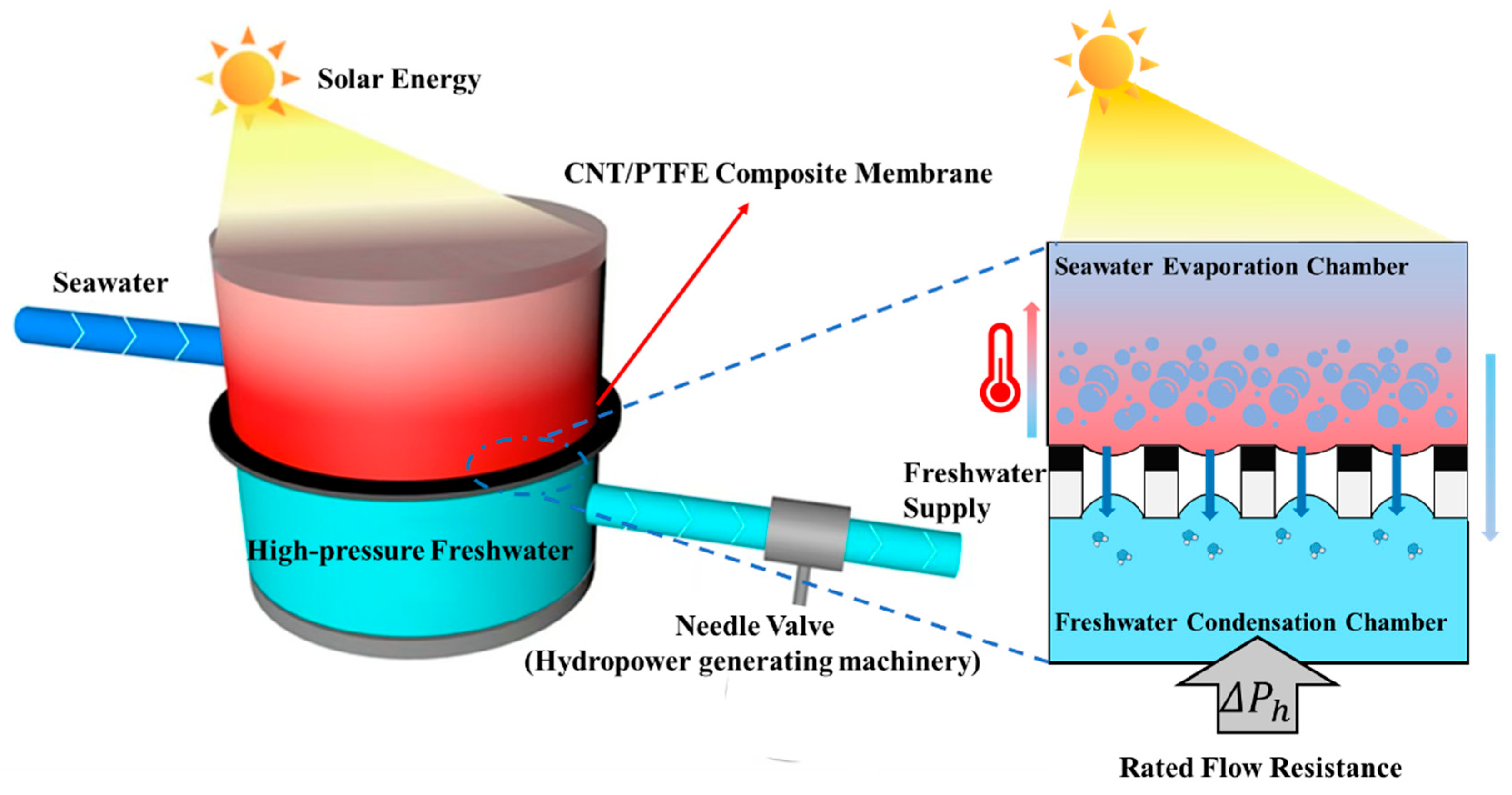
Figure 1. Schematic diagram of a novel solar-driven thermal infiltration energy conversion device.
Energies 18 06297 g001
Figure 2. Design of a novel thermal infiltration energy conversion device driven by solar energy: (a) Physical diagram of the device; (b) 3D exploded view.
Energies 18 06297 g002
Figure 3. Preparation and characterization of the heat-permeable membrane: (a) Flowchart of hot permeation membrane preparation; (b) Physical image of the heat-permeable membrane; (c) SEM image of the micro-pores of the heat-permeable membrane; (d) Absorbance test diagram of the heat-permeable membrane surface; (e) Contact angle test diagram of the heat-permeable membrane surface.
Energies 18 06297 g003
Figure 4. Experimental testing system and experimental data diagram: (a) Schematic diagram of the system’s testing principle; (b) Curve diagram of temperature changes on the surface of the heat-permeable membrane under four different solar intensities; (c) Infrared temperature diagram of the heat-permeable membrane surface under four different solar intensities; (d) Curve diagram of water production rate of the system under four different solar intensities; (e) Fresh water outlet pressure of the system under four different solar intensities; (f) Power–water cogeneration performance of the system under different light intensities.
Energies 18 06297 g004
Figure 5. Theoretical calculation results: (a) Physical model of heat and mass transfer; (b) Curve of the system’s thermal-to-power efficiency versus absorptance; (c) Curves of water flux and output power density versus input heat flux density; (d) Curves of system thermal-to-power efficiency and hydraulic pressure for freshwater generation versus input heat flux density; (e) Curves of system output power density and thermal efficiency versus hydraulic pressure for freshwater generation; (f) Curves of system water flux and output power density versus membrane thickness.
Energies 18 06297 g005
Disclaimer/Publisher’s Note: The statements, opinions and data contained in all publications are solely those of the individual author(s) and contributor(s) and not of MDPI and/or the editor(s). MDPI and/or the editor(s) disclaim responsibility for any injury to people or property resulting from any ideas, methods, instructions or products referred to in the content.