1. Introduction
As a core driver in promoting the development of green renewable energy, the photovoltaic industry holds a pivotal position in the global energy structure transition [
1]. Photovoltaic encapsulation, as the core manufacturing process of photovoltaic modules, directly determines their photoelectric conversion performance, service life, and long-term operational reliability [
2]. The lamination process, as the crucial forming step in photovoltaic encapsulation, achieves permanent bonding and integrated molding of multiple heterogeneous materials—including glass, encapsulation film, photovoltaic cells, and backsheet—through precise control of high-temperature and -pressure environments. The stability of this process is fundamental to ensuring that photovoltaic modules achieve their designed lifespan. The photovoltaic laminator, being the sole equipment executing the lamination process, directly determines the parameter accuracy, production efficiency, and final module quality consistency through its temperature control precision [
3], pressure distribution uniformity, and vacuum control capability. It is a key piece of equipment in the photovoltaic encapsulation stage that affects module yield rate and mass production capacity.
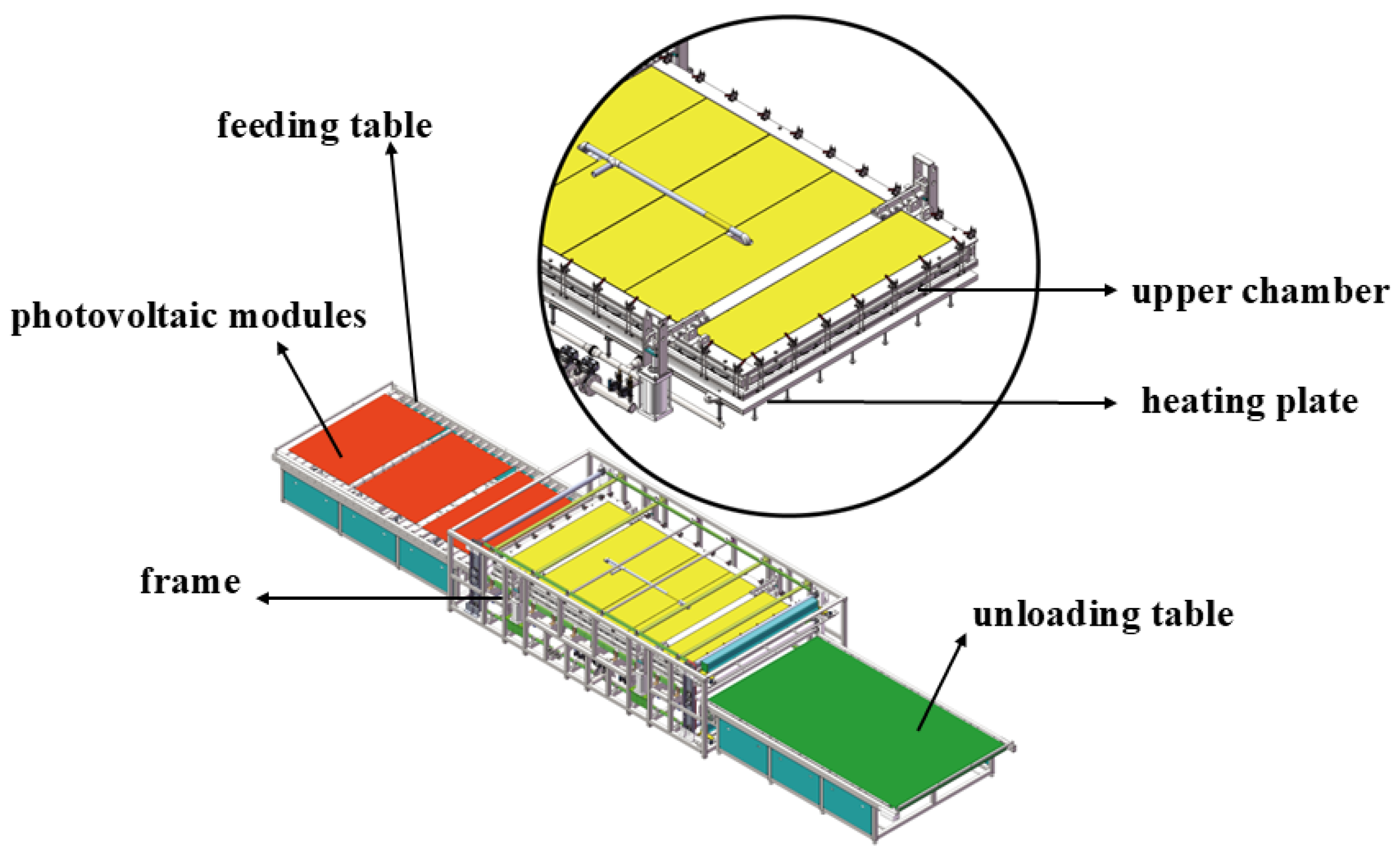
Figure 1 shows a schematic of a typical photovoltaic laminator. During operation, the photovoltaic module is conveyed via the feeding table into the lamination chamber, where the high-temperature and high-pressure lamination process is completed through the collaborative action of components such as the upper chamber and heating plate. The module is then discharged through the unloading table, ultimately achieving the integrated molding of the multiple material layers.
The heating plate serves as the core component of photovoltaic laminators [
4], with its primary functions including (1) providing a stable and uniform heat source to ensure lamination temperature precision [
5] and facilitate homogeneous melting and curing of the encapsulation film; (2) uniformly transmitting lamination pressure [
6,
7] to optimize structural consistency of the module; and (3) directly influencing lamination efficiency and energy consumption through its thermal response speed and temperature control performance. Heating methods for photovoltaic laminator plates have evolved from oil heating and resistance heating to the current stage of electromagnetic heating. Conventional thermal oil heating and resistance heating systems, which remain widely used, suffer from inherent drawbacks such as large thermal inertia and slow heating rates, often leading to localized curing defects during the module lamination process. Electromagnetic induction heating technology demonstrates significant potential due to its non-contact energy transfer, high energy conversion efficiency, and inherently rapid response characteristics. This rapid response primarily stems from its low thermal inertia and high power adjustment rate, which establishes a foundation for precise temperature regulation. This presents a marked contrast to the slower thermal response of conventional thermal oil systems [
8,
9]. The principle of electromagnetic induction heating involves utilizing an alternating magnetic field to generate eddy currents within the conductor (heating plate), thereby achieving internal heat generation through the Joule effect. This technology has been successfully implemented across various fields including metal heat treatment, food processing, and welding, and is progressively expanding into broader industrial applications such as advanced manufacturing, energy and petrochemical industries, and aerospace [
10].
In the photovoltaic lamination process, the temperature uniformity of the heating plate directly determines the consistency of encapsulation film melting and the bonding integrity of the multilayer materials. Non-uniform temperature distribution may, in minor cases, lead to insufficient cross-linking and curing of the local encapsulation film, causing poor interfacial adhesion in the module. In severe scenarios, localized overheating can induce microcracks in the cells, significantly compromising the power generation efficiency and designed service life of the photovoltaic module [
11,
12,
13]. Therefore, although electromagnetic heating technology has demonstrated clear advantages over conventional heating methods, further optimization of its magnetic field distribution and coil configuration to achieve more precise full-area temperature uniformity control has become a core research objective for enhancing the performance of photovoltaic laminators and ensuring high-quality module production.
In the study of electromagnetic heating processes for heating plates, traditional experimental methods require repeated fabrication of heating plate samples with different coil layouts and structures. This approach is not only costly and time-consuming but also struggles to accurately capture the coupled dynamic processes of magnetic and temperature fields, making it difficult to determine optimal control parameters precisely. Particularly with the current trend toward larger laminators, the challenges associated with traditional experiments increase exponentially. In contrast, numerical simulation methods enable dynamic analysis across full domains and multiple parameters, avoiding the material consumption and time constraints of physical experiments, and efficiently identifying key parameters affecting temperature uniformity [
14]. Although no reports currently exist on numerical simulations of the heating process specifically for photovoltaic laminator heating plates, electromagnetic heating technology has been extensively applied in other industries, providing valuable references for this research. However, a comprehensive analysis of existing literature reveals that the research focus and solutions in these fields differ significantly from the specific requirements of photovoltaic laminators. In terms of uniformity improvement, existing research presents diverse strategies. For instance, Gao Bin et al. [
15] addressed the non-uniform temperature distribution in titanium plates during electromagnetic induction heating by proposing an innovative coil structure designed to enhance the induced eddy current density at the plate center. Through the implementation of moving induction heating, they achieved uniform temperature distribution across the entire plate width. However, this method is challenging to adapt to laminators with fixed structures, as such dynamic heating may introduce temperature fluctuations during the lamination process, adversely affecting the curing consistency of the encapsulation film. In contrast, this study focuses on static flat-plate scenarios and directly optimizes the magnetic field distribution through “center-edge symmetric compensation” (Scheme 3). This approach requires no additional moving components, better aligning with the stability requirements of the photovoltaic lamination process. Xue Ping et al. [
16] demonstrated that strategically segmenting solid conductors can actively regulate eddy current paths, thereby significantly mitigating the weak heating zone phenomenon at the center of plate induction heating systems. Nevertheless, this approach alters the fundamental structure of the heating plate itself. Huang Mingxian et al. [
17] and Plumed et al. [
18] employed multilayer coils and secondary coils, respectively, to improve uniformity. However, such methods involve considerable complexity in coil arrangement, installation, and precise control, further increasing the overall system complexity while significantly raising equipment investment and operational maintenance costs. In terms of applicability to the research object, most studies focus on non-plate components or localized heating. For example, Gu Yunfei et al. [
19] investigated CFRP-wound circular tubes, revealing the heating advantages of annular coils. Shi Xiaona et al. [
20] analyzed the dynamic induction heating process of marine diesel engine camshafts. Xie et al. [
21] optimized the temperature field in a tire vulcanizer using a “12-slot double-layer coil + magnesium-aluminum alloy pad” configuration, yet without incorporating active temperature control strategies, resulting in a steady-state temperature difference remaining above 5 °C. Building upon the approach of “coil structure optimization”, this study further integrates “on-off control (to suppress temperature overshoot) + 30 mm insulation cotton (to reduce edge heat loss)” to form a synergistic solution. Compared to the single structural optimization by Xie et al., this study reduces the steady-state temperature difference from above 5 °C to below 4 °C, ultimately meeting the process requirement of 150 ± 2 °C. Moreover, the optimization measures are low cost and easily implementable in engineering, offering greater value for industrial applications. Although De Wit et al. [
22] established a 3D electromagnetic–thermal coupled finite element model for thermoplastic CFRP cross-ply laminates and validated the model reliability experimentally, their core objective was addressing heating issues in aerospace composite welding rather than achieving full-area uniform heating of large fixed plates. Consequently, their technical solutions cannot be directly adapted to photovoltaic laminator requirements. Gariépy and D’Amours [
23] developed an LS-Dyna electromagnetic-thermal coupling model for the induction heating process of AA7075 aluminum alloy irregular sheets for hot stamping, improving local temperature uniformity by optimizing coil height and spacing. However, their research target was achieving a specific temperature window (460–490 °C) tailored to aluminum alloy sheet hot stamping, focusing on localized heating control of irregular small components. This does not align with the requirement for full-area uniform heating of large fixed plates in photovoltaic laminators. Moreover, their coil design requires customization according to sheet geometry, making it difficult to transfer to standardized laminator heating plate scenarios. The electromagnetic field distribution characteristics and heating objectives in these studies differ fundamentally from the requirements of large flat heating plates in photovoltaic laminators, making their technical solutions and conclusions challenging to directly transplant. However, in the specific application context of photovoltaic module laminators, there remains a notable lack of systematic and engineering-implementable plate-type induction heating temperature control solutions, including dynamic regulation strategies and experimental validation covering the entire process cycle. Achieving higher precision and efficiency in both static and dynamic temperature field control necessitates combining structural optimization with advanced thermal management control strategies and system-level optimization algorithms. Indeed, in the pursuit of high-precision and high-efficiency thermal management systems, the academic frontier has shown a trend shifting from relying on “passive uniformity” in hardware design toward system optimization incorporating “active control”. This trend is reflected in the growing number of studies dedicated to deeply integrating accurate physical models with advanced “thermal management control” strategies and “system optimization algorithms”. For example, the research by Wang Tianhu et al. [
24] is a typical representation. They employed a multi-objective genetic algorithm (NSGA-II) to perform “unconstrained” optimization of the pulse current waveform for thermoelectric coolers, finding a Pareto optimal solution set between the conflicting objectives of effective cooling range and temperature overshoot, significantly enhancing transient supercooling performance. Tifktisis et al. [
25] developed an active control tool integrating finite element models with real-time monitoring data. By combining model prediction with PID control, they achieved online optimization during composite material curing, reducing process time by approximately 70% while keeping temperature overshoot within allowable limits. Seo et al. [
26] addressed injection mold systems by using a neural network (NARX model) for nonlinear system identification and designing fuzzy logic controllers and neural network-based self-tuning PID controllers, effectively tackling challenges posed by variable production cycles and uncertain dynamic characteristics. These advanced methods demonstrate the broad prospects of intelligent control for electromagnetic heating. However, before successfully applying these methods to large plate heating systems like photovoltaic laminators, an indispensable prerequisite is establishing a physical model that accurately reflects the system characteristics and, based on this, building a stable and reliable temperature control benchmark. This study focuses precisely on this foundational step. It aims to first address the core engineering issue of temperature uniformity under static heating conditions by establishing a high-precision electromagnetic–thermal coupling model and optimizing the coil structure and thermal environment. This effort lays a solid model foundation and provides a performance reference for the subsequent introduction and implementation of higher-level intelligent control algorithms.
In summary, while existing studies provide foundational approaches for optimizing the uniformity of electromagnetic heating, they still exhibit significant inadequacies in addressing the core requirements of photovoltaic laminators—“large-area, static heating, and strict temperature uniformity of 150 ± 2 °C”. Building on the premise that “numerical simulation methods can effectively optimize the electromagnetic heating parameters of heating plates”, this study specifically introduces this approach into the field of photovoltaic laminators, achieving breakthroughs and supplements to prior research. Specifically, based on the COMSOL Multiphysics simulation platform, this study focuses on the electromagnetic heating plate of a small-scale laminator, quantitatively analyzing the influence of key parameters such as current intensity, operating frequency, and coil-to-heating plate gap on the temperature field. It clarifies the priority of these parameters and, in line with the characteristics of photovoltaic laminators, implements an integrated strategy combining “coil optimization, addition of insulation cotton to suppress edge heat loss, and adoption of on-off control to mitigate temperature overshoot”. This enables precise regulation of the heating plate temperature. Furthermore, a small-scale experimental platform was constructed to validate the optimized solution, ultimately resolving the challenge of temperature difference control in the heating plate. The study provides a targeted and engineering-valuable technical pathway for enhancing the production quality and efficiency of photovoltaic modules.
4. Results and Analysis
4.1. Current Intensity
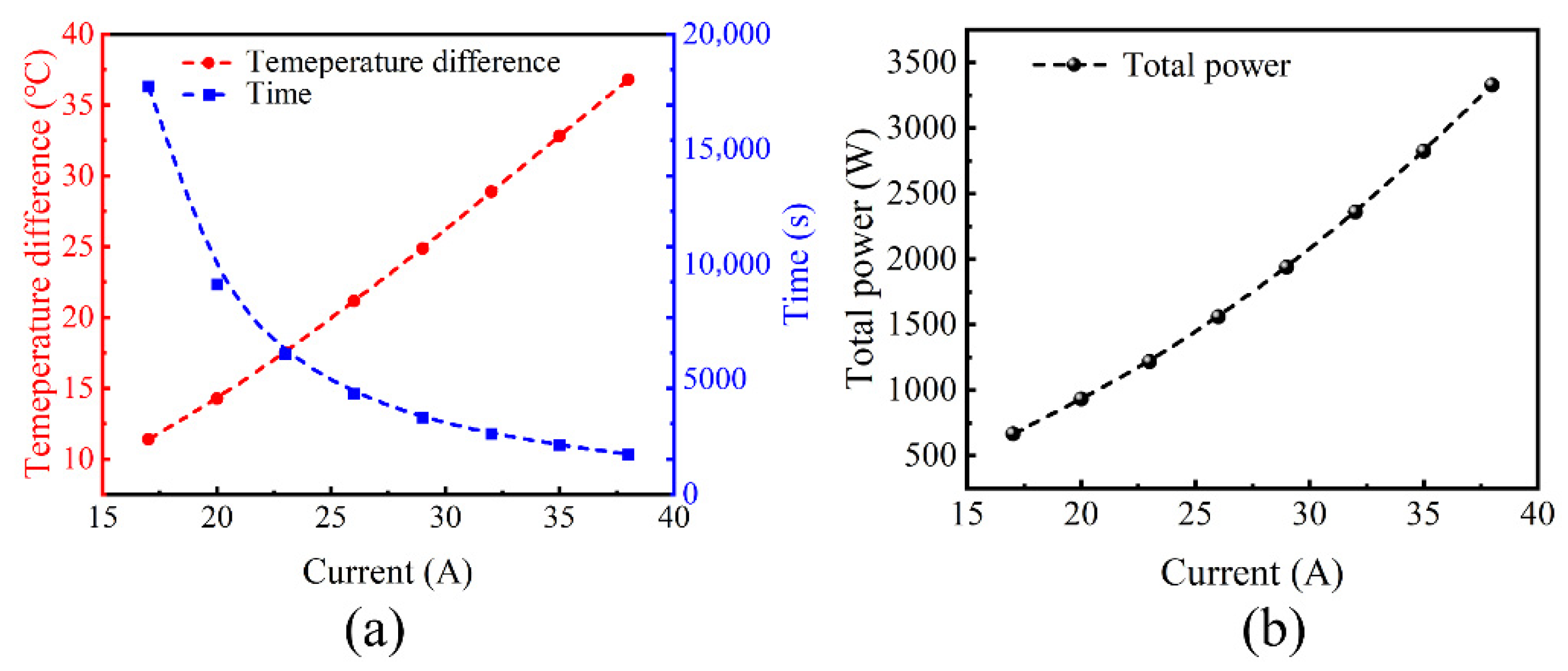
In the study of heat transfer characteristics of the electromagnetic induction heating system, a multiphysics coupling model was established under the conditions of 15 kHz frequency and 16 mm coil-to-plate gap to investigate the influence of excitation current intensity on the temperature field of the working surface. A parameterized comparative analysis was conducted by varying the current across eight levels: 17 A, 20 A, 23 A, 26 A, 29 A, 32 A, 35 A, and 38 A, with the heating plate surface heated to approximately 150 °C in each case. The numerical results (as shown in
Figure 6) demonstrate that as the current increases from 17 A to 38 A, the maximum temperature difference rises from 11.41 °C to 36.8 °C. While the heating rate improves, the temperature uniformity across the heating plate surface deteriorates significantly.
Analysis of
Figure 8a reveals that the maximum temperature difference across the heating plate increases with higher current intensities, indicating that stronger currents exacerbate temperature non-uniformity. The time required to reach the target temperature demonstrates an inversely proportional relationship with current intensity. Due to natural convective heat dissipation between the heating plate and the surrounding environment, it can be inferred that below a certain current threshold, the heating plate temperature will never reach the target value regardless of heating duration. As shown in
Figure 8b, the heating power of the plate increases progressively with rising current intensity.
Therefore, while adjusting the excitation current intensity effectively modulates the temperature field distribution characteristics in electromagnetic induction heating systems, an optimal compromise between heating efficiency and temperature uniformity must be achieved. In engineering applications, appropriate current parameters should be carefully selected—excessively low currents lead to slow heating or failure to reach the target temperature, while excessively high currents cause large temperature differentials. Both scenarios would adversely affect the lamination quality of photovoltaic modules.
4.2. Operating Frequency
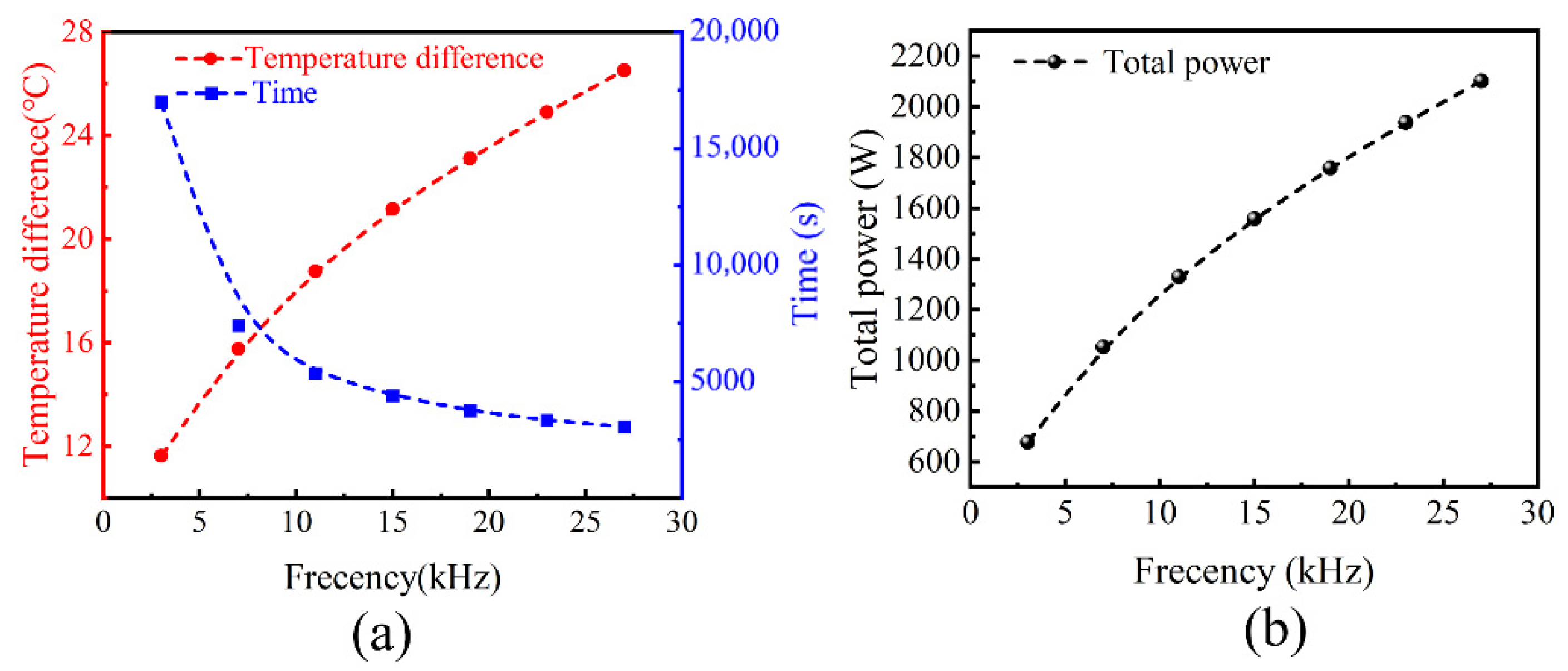
In the investigation of heat transfer characteristics of the electromagnetic induction heating system, a multiphysics coupling model was established under fixed conditions of 26 A excitation current and 16 mm coil-to-plate gap to study the influence of operating frequency on the temperature field of the heating plate surface. A parametric analysis was conducted by varying the frequency across seven levels: 3, 7, 11, 15, 19, 23, and 27 kHz, while heating the plate surface to approximately 150 °C. This approach enabled the examination of the relationship between the eddy current skin effect and the spatial distribution of the heat source under different frequencies [
33]. The numerical results indicate that as the frequency increases from 3 to 27 kHz, the maximum temperature difference rises from 11.63 °C to 26.51 °C. This trend demonstrates that while higher frequencies improve the heating rate, they simultaneously degrade the temperature uniformity of the heating plate.
Analysis of
Figure 9a reveals that the maximum temperature difference across the heating plate increases with rising frequency, indicating that elevated frequencies exacerbate temperature non-uniformity and intensify thermal differentials. As shown in
Figure 9b, the total power exhibits a positive correlation with frequency, increasing from 677.64 W at 3 kHz to 2102.8 W at 27 kHz. Higher operating frequencies enhance electromagnetic induction intensity, consequently increasing energy consumption during induction heating and further amplifying temperature variations. Simultaneously, the heating time decreases correspondingly with increasing frequency, demonstrating improved heating efficiency at higher frequencies. However, beyond 10 kHz, the reduction in heating time becomes gradual as frequency continues to rise. Therefore, practical production processes require careful balancing of temperature uniformity against heating efficiency to select an appropriate operating frequency.
4.3. Coil-to-Plate Gap
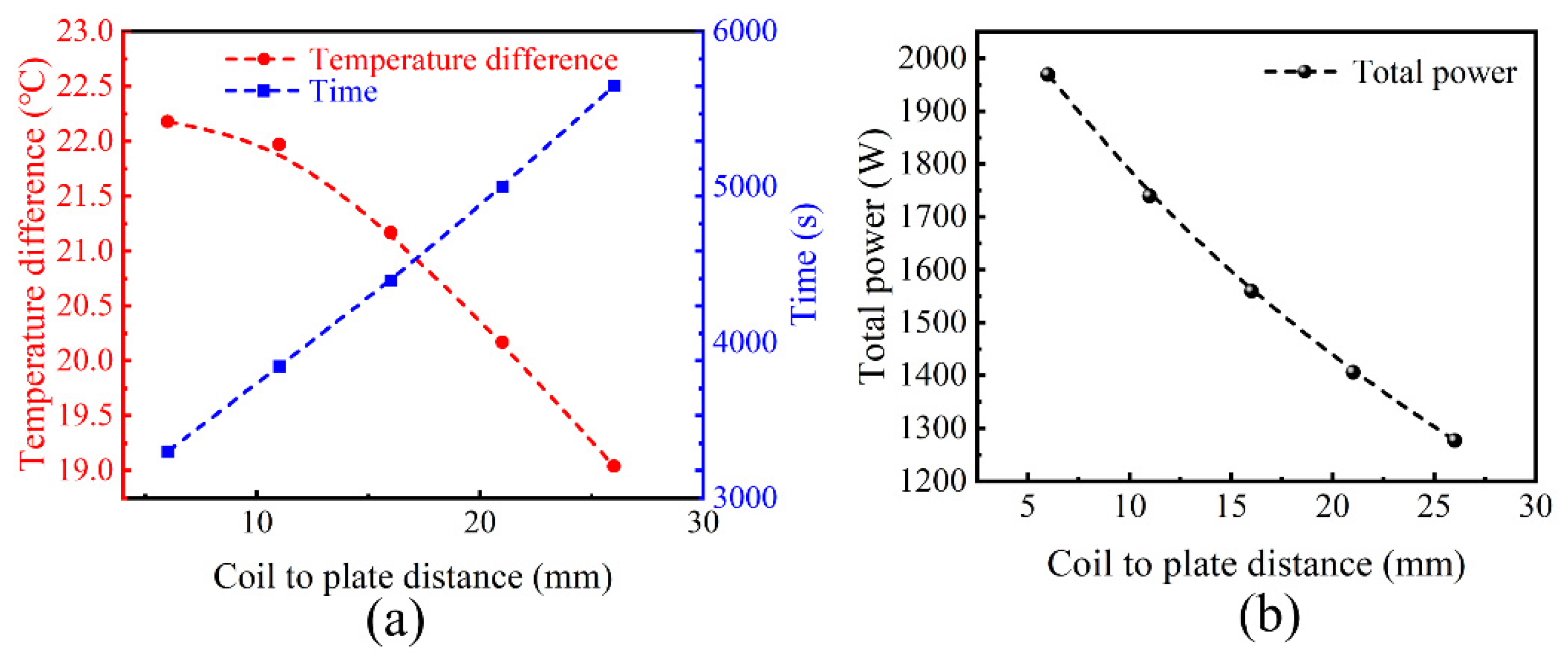
During the investigation of heat transfer characteristics in the electromagnetic induction heating system, an electromagnetic–thermal multiphysics coupling model was established under fixed conditions of 26 A excitation current and 15 kHz operating frequency to systematically examine the influence of coil-to-heating plate gap variation on the temperature field distribution of the working surface. The gap parameter was varied across five levels: 6 mm, 11 mm, 16 mm, 21 mm, and 26 mm. Under each condition, the working surface of the heating plate was heated to the target temperature of 150 °C to analyze the effect of gap variation on magnetic coupling efficiency and temperature uniformity. The numerical simulation results indicate that as the gap increases from 6 mm to 26 mm, the heating time required to reach 150 °C is prolonged. The extended heating duration provides sufficient conditions for dynamic redistribution of the temperature field, allowing the hotspot differences present during the transient stage to be smoothed out by the thermal diffusion process during steady-state operation, ultimately resulting in relatively minor variations in the maximum temperature difference.
Figure 10a illustrates the variations in temperature difference, time, and total power when the heating plate reaches approximately 150 °C under different coil-to-plate gaps. It can be observed that as the gap continuously increases, the temperature difference across the heating plate gradually decreases, albeit at a slow rate. This indicates that larger gaps lead to better temperature uniformity on the heating plate, although their influence is less pronounced compared to the previous two factors. The heating time progressively increases from 3300 s at a 6 mm gap to 5650 s at a 26 mm gap. Meanwhile, as shown in
Figure 10b, the heating power decreases as the gap increases. These findings demonstrate that increasing the coil-to-heating plate gap contributes to improved temperature uniformity, prolongs the heating time, and reduces the heating power. Therefore, a reasonable gap should be determined based on specific engineering requirements.
In summary, the current intensity directly determines the magnetic field strength generated by the coil, and adjusting the current represents the fastest and most direct method to modify the heating effect. The frequency regulates the distribution characteristics of the heating region by influencing the eddy current penetration depth and skin effect. Increasing the gap weakens the coupling efficiency but facilitates thermal stress alleviation and promotes temperature field uniformity. Comparing the three influencing factors reveals that the current intensity has the most significant impact on the temperature field, followed by the frequency, while the gap exhibits the relatively smallest influence. In practical applications, priority should be given to adjusting the current intensity to achieve rapid temperature control.
4.4. Coil Turns Distribution Optimization
Building upon the established understanding of how current, frequency, and gap affect heating performance, this section further investigates the regulatory effect of coil turns distribution on temperature uniformity [
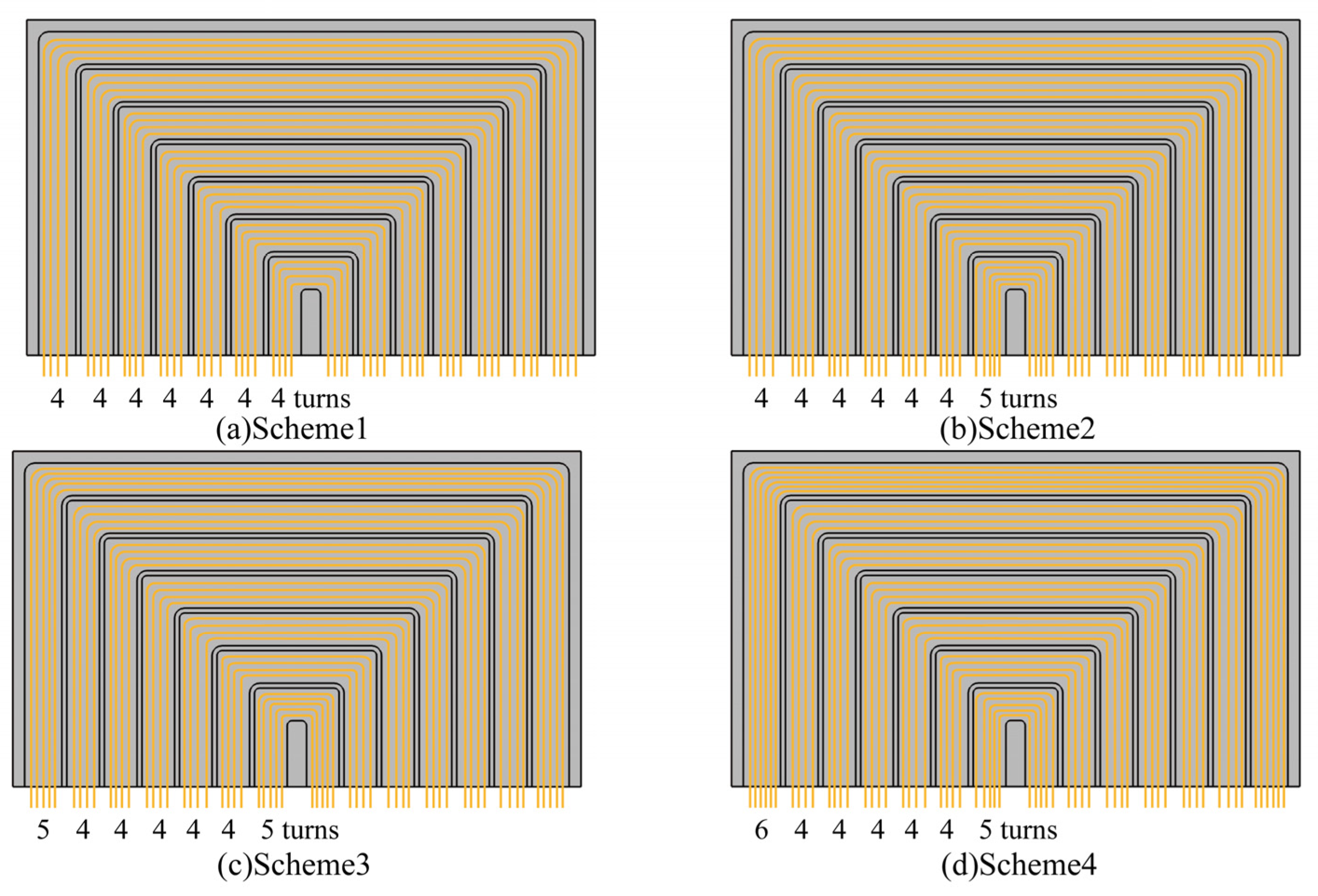
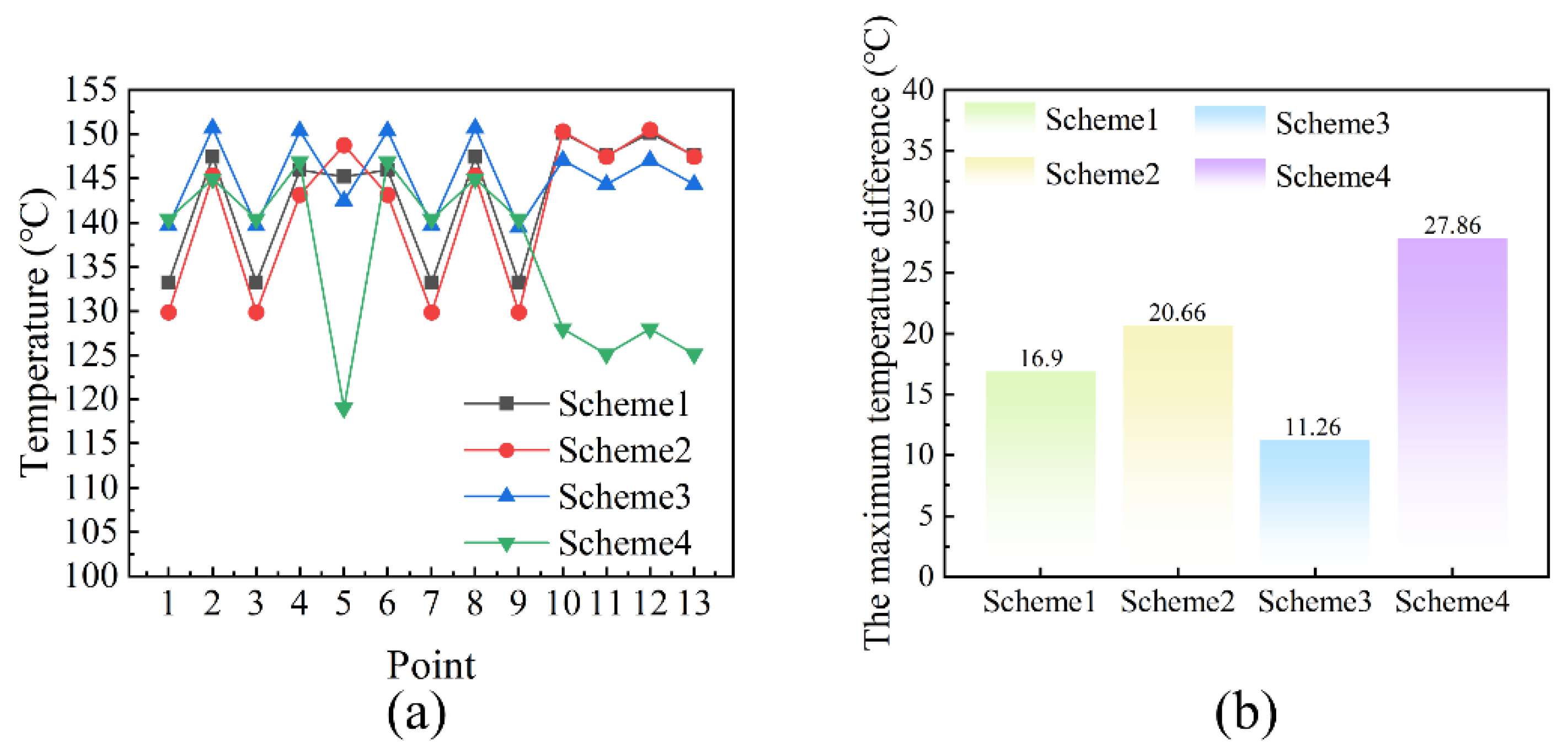
34]. To study the influence of different coil configurations, various turns distributions were designed across seven equally segmented regions of the coil. Maintaining constant operational parameters at 26 A current and 15 kHz frequency, based on the previously determined optimal influencing factors, four distinct turns distribution schemes were developed, as illustrated in
Figure 11. The specific turns configurations from the inner to outer regions for each scheme are as follows: Scheme 1: 4-4-4-4-4-4-4 (uniform distribution); Scheme 2: 5-4-4-4-4-4-4 (center-enhanced); Scheme 3: 5-4-4-4-4-4-5 (center and edge symmetric compensation); Scheme 4: 5-4-4-4-4-4-6 (excessive edge compensation).
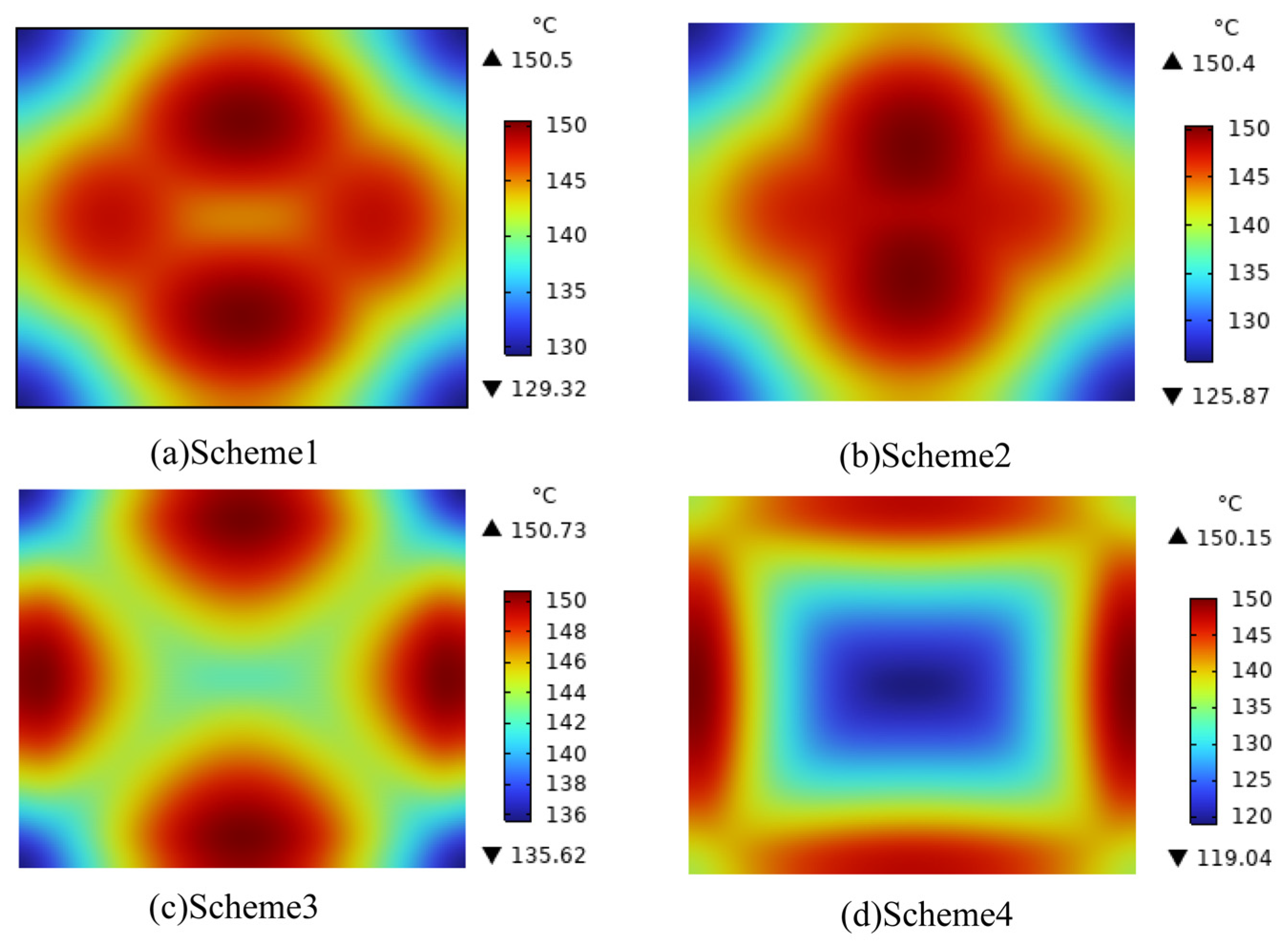
The maximum temperature difference across 13 measurement points was selected to quantitatively evaluate temperature distribution uniformity. The temperature field nephograms shown in
Figure 12 demonstrate that different turns distributions significantly alter the heating plate’s temperature distribution pattern. Both Scheme 1 and Scheme 2 exhibit a distinct “petal-shaped” non-uniform temperature distribution, indicating that either uniform distribution or simple center enhancement leads to localized overheating. In contrast, Scheme 3 demonstrates superior temperature uniformity, with high-temperature zones evenly distributed along the periphery and no significant hotspots observed along the diagonal directions. However, Scheme 4, due to excessive edge compensation, results in concentrated heat accumulation in the outer regions while forming a distinct low-temperature zone in the central area.
Further quantitative analysis results in
Figure 13 demonstrate that Scheme 3 exhibits optimal temperature uniformity among all configurations. The maximum temperature differences for each scheme when the peak temperature approached 150 °C were as follows: Scheme 1: 16.9 °C, Scheme 2: 20.66 °C, Scheme 3: 11.26 °C, and Scheme 4: 27.86 °C. Scheme 3 significantly reduces the maximum temperature difference to 11.26 °C, representing an approximately 59.6% improvement compared to the poorest-performing scheme (Scheme 4). This confirms that its turns distribution effectively balances heat input between the center and edge regions.
The distribution of coil turns directly influences the spatial configuration of the electromagnetic field, consequently affecting the intensity of eddy current-induced heat generation. The edge-symmetric compensation design adopted in Scheme 3 effectively counteracts heat dissipation losses in both the edge and central regions, thereby establishing a more uniform temperature field overall.
Based on these findings, Scheme 3 has been identified as the optimal coil turns distribution configuration and will be employed in subsequent temperature control strategy investigations.
4.5. Temperature Control
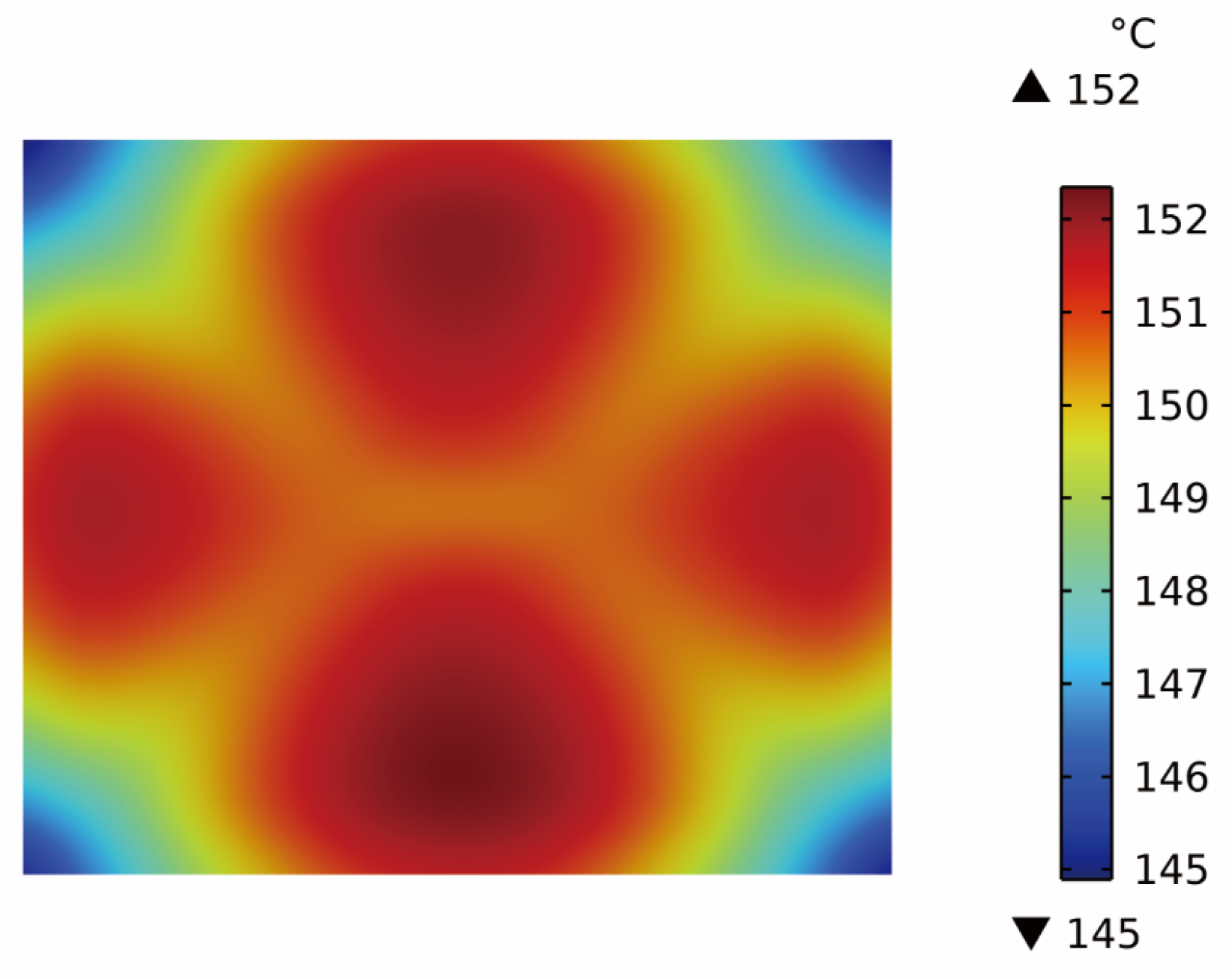
Although preliminary research and optimization of temperature uniformity across the heating plate working surface have been conducted in previous sections, the results still fall short of meeting the stringent temperature uniformity requirements of the photovoltaic module lamination process. To achieve precise temperature regulation of the heating plate, a temperature monitoring point was established at the center of the working surface, and an on-off control strategy was implemented. The specific control strategy is as follows: when the temperature at the monitoring point reaches the upper setpoint, the system automatically cuts off the induction current, entering a heating suspension phase; when the temperature drops below the lower setpoint, the current is reapplied to resume heating. This control method effectively suppresses temperature overshoot, ensures a stable and controlled heating process, and maintains the temperature within the designated range. As shown in
Figure 14, which presents the temperature nephogram of the heating plate after introducing the on-off control strategy into the numerical simulation, the application of control further improves the temperature uniformity of the working surface compared to the previous stage. The maximum temperature difference within the effective working area is reduced from 11.26 °C to approximately 4.9 °C, preliminarily validating the effectiveness of this control strategy in enhancing temperature uniformity.
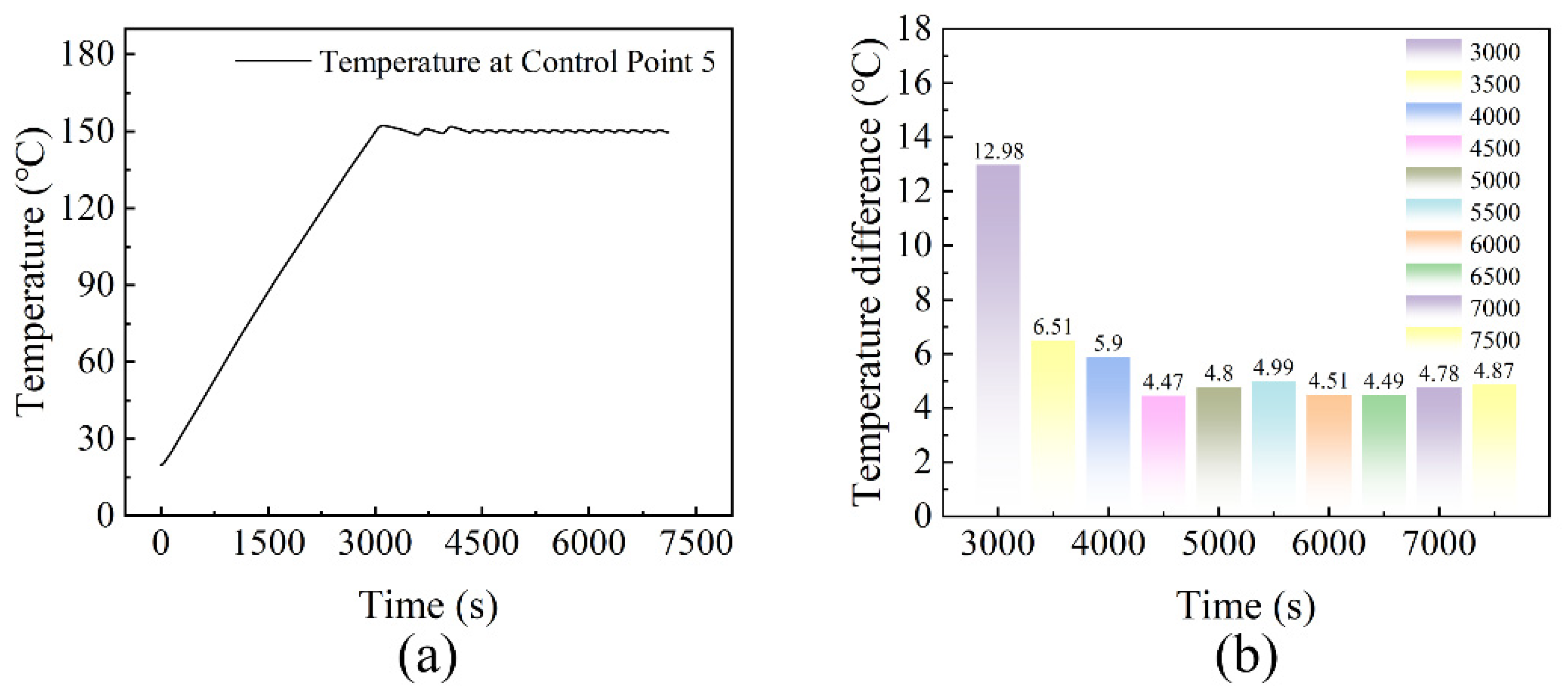
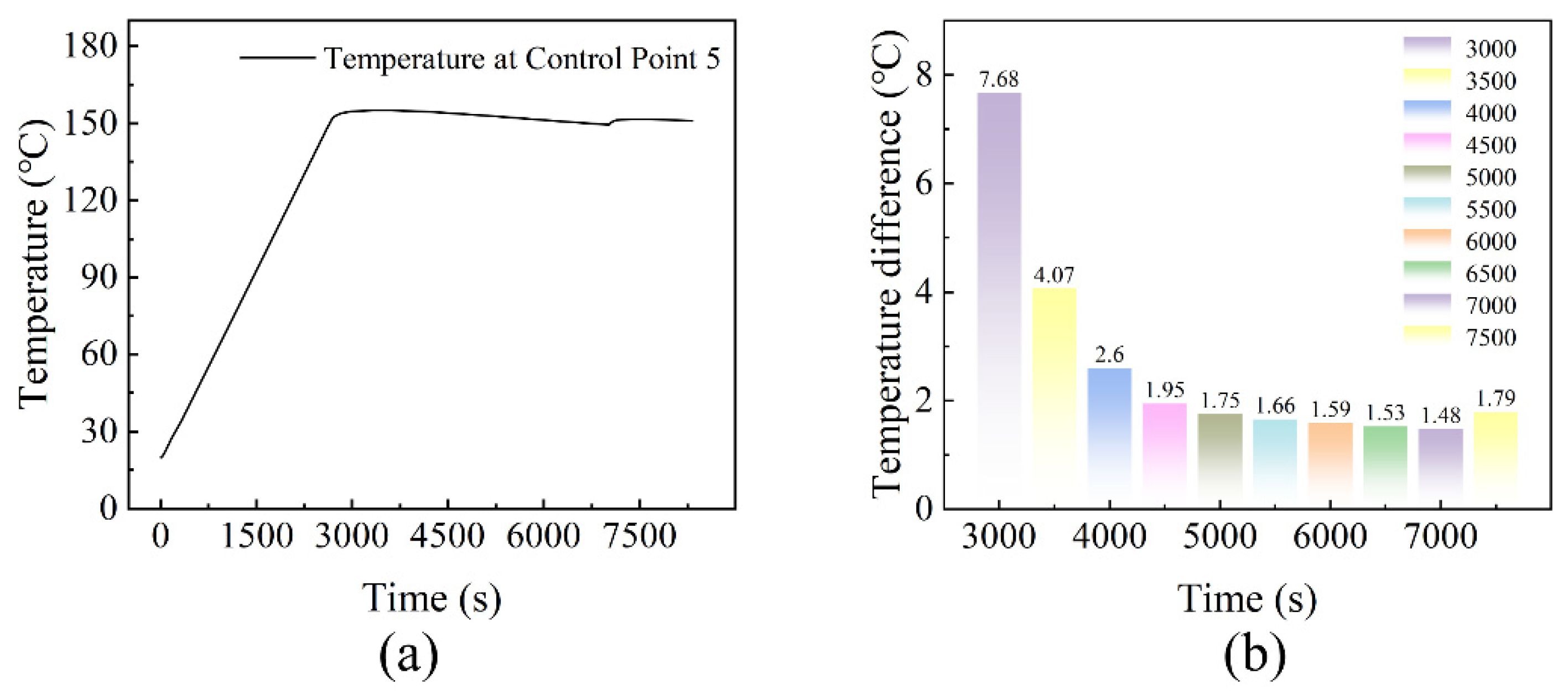
To validate the effectiveness of the temperature control strategy during steady-state operation, this study selected 10 key time points from 3000 s to 7500 s to evaluate the long-term thermal stability of the system. During this period, the temperature uniformity of the heating plate working surface was quantified by the maximum temperature difference among the 13 probe points, an indicator that directly reflects the control precision and temperature uniformity.
Figure 15a shows the temperature profiles at the control point under the thermal condition without insulation. In contrast,
Figure 15b presents the corresponding variations in the uniformity index.
As shown in
Figure 15a, the temperature curve at the control point demonstrates that after implementing the on-off control strategy, the heating plate reaches 150 °C at approximately 3000 s, exhibiting a slight overshoot due to the inherent hysteresis of induction heating. The system subsequently stabilizes after about 4500 s, with temperature fluctuations effectively confined within the set range. This result confirms that the on-off control strategy achieves fundamental tracking of the target temperature. However, analysis of the maximum temperature difference across all probe points at different time instances in
Figure 15b reveals that although the control point temperature stabilizes, the overall temperature uniformity across the entire heating plate working surface still fails to meet the 150 °C ± 2 °C range required by the lamination process. The primary reason is that under steady-state operating conditions, the edge regions of the working surface continuously dissipate heat to the surrounding environment, creating significant convective heat loss that leads to noticeably lower temperatures in these areas and causes the overall temperature field uniformity to exceed the allowable tolerance.
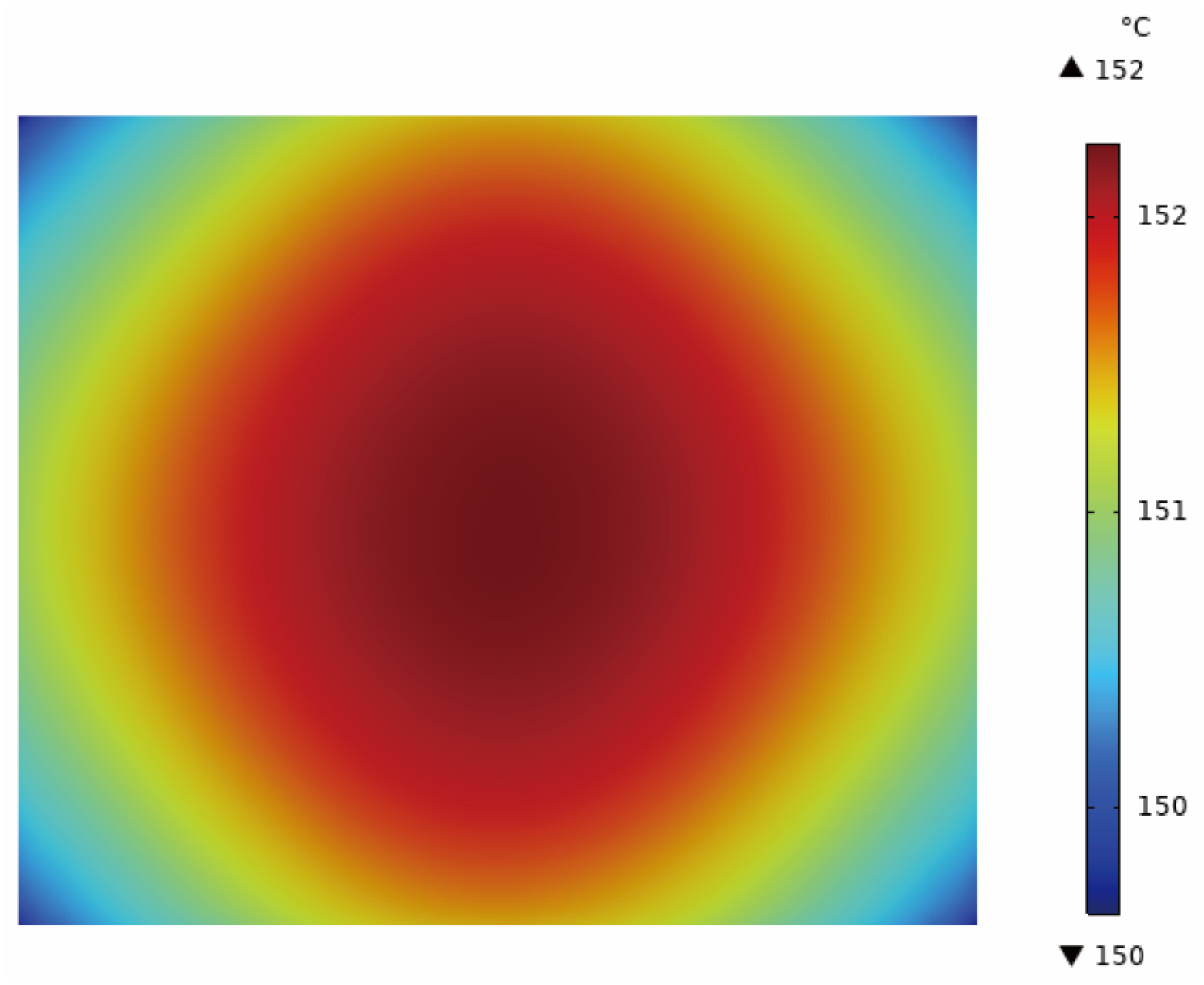
To overcome this heat loss issue and further improve temperature uniformity, based on the previously optimized electromagnetic parameters and coil structure, a 30 mm thick layer of insulation cotton was added around the heating plate. This insulation layer aims to significantly reduce heat dissipation from the system to the surrounding environment and effectively suppress temperature drop in the edge regions. As shown in
Figure 16, the temperature distribution nephogram after adding the insulation layer to the on-off control system demonstrates clear improvement in the working surface temperature uniformity compared to the scenario without insulation cotton.
To systematically evaluate the practical effectiveness of the insulation measure and maintain consistency with the preceding analysis, ten equally spaced time points from 3000 s to 7500 s were selected, with the maximum temperature difference among the 13 probe points employed as the key indicator for assessing temperature uniformity.
Figure 17a shows the temperature profiles at the control point under the thermal condition with insulation. In contrast,
Figure 17b presents the corresponding variations in the uniformity index.
Analysis of the temperature profile at the control point shown in
Figure 17a reveals comprehensive improvement in the system’s thermal performance after adding the insulation layer: the heating phase is significantly accelerated, reaching the set temperature of 150 °C at approximately 2700 s; during steady-state operation, the temperature decline rate slows, and the switching frequency of the control system decreases substantially. This not only contributes to energy conservation but also reduces thermal cycling stress, thereby extending the equipment’s service life. Furthermore, the insulation layer effectively promotes internal heat redistribution across the working surface, enabling more sufficient heat transfer from high-temperature zones to low-temperature areas, thus improving overall temperature uniformity. Comparative data between
Figure 15b and
Figure 17b further demonstrate that during the steady-state phase after adding the insulation layer, the maximum temperature difference at each key time point is significantly reduced. Ultimately, the temperature uniformity across the entire working surface is stably controlled within 150 °C ± 2 °C.
The integrated temperature control scheme proposed in this study, combining on-off control with insulation structure, successfully meets the stringent temperature uniformity requirements of the photovoltaic lamination process, validating its effectiveness and practical applicability in engineering applications.
4.6. Experimental Analysis
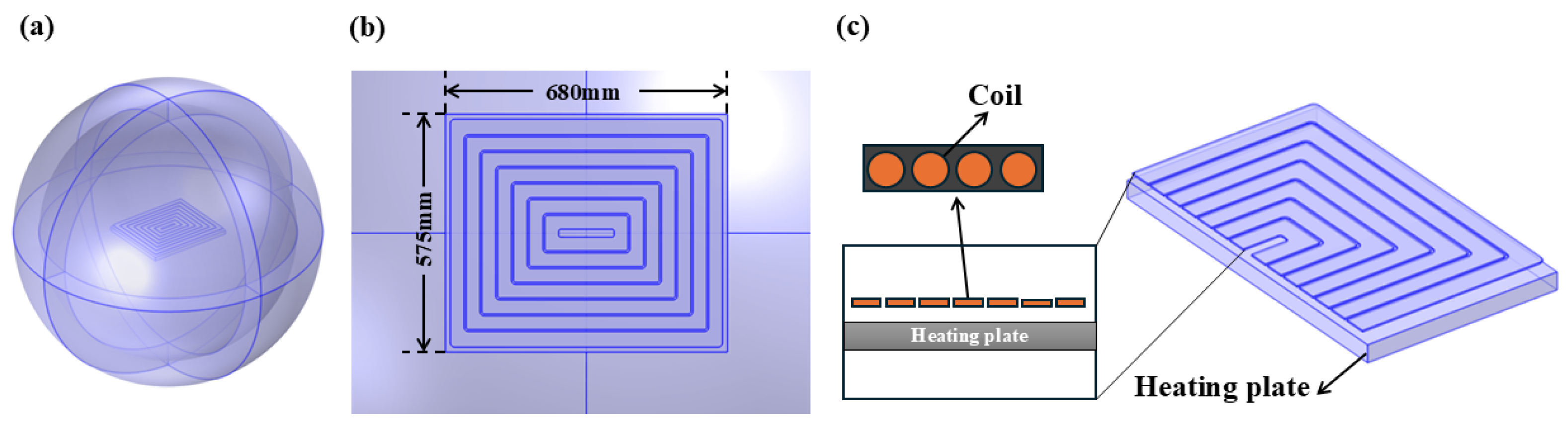
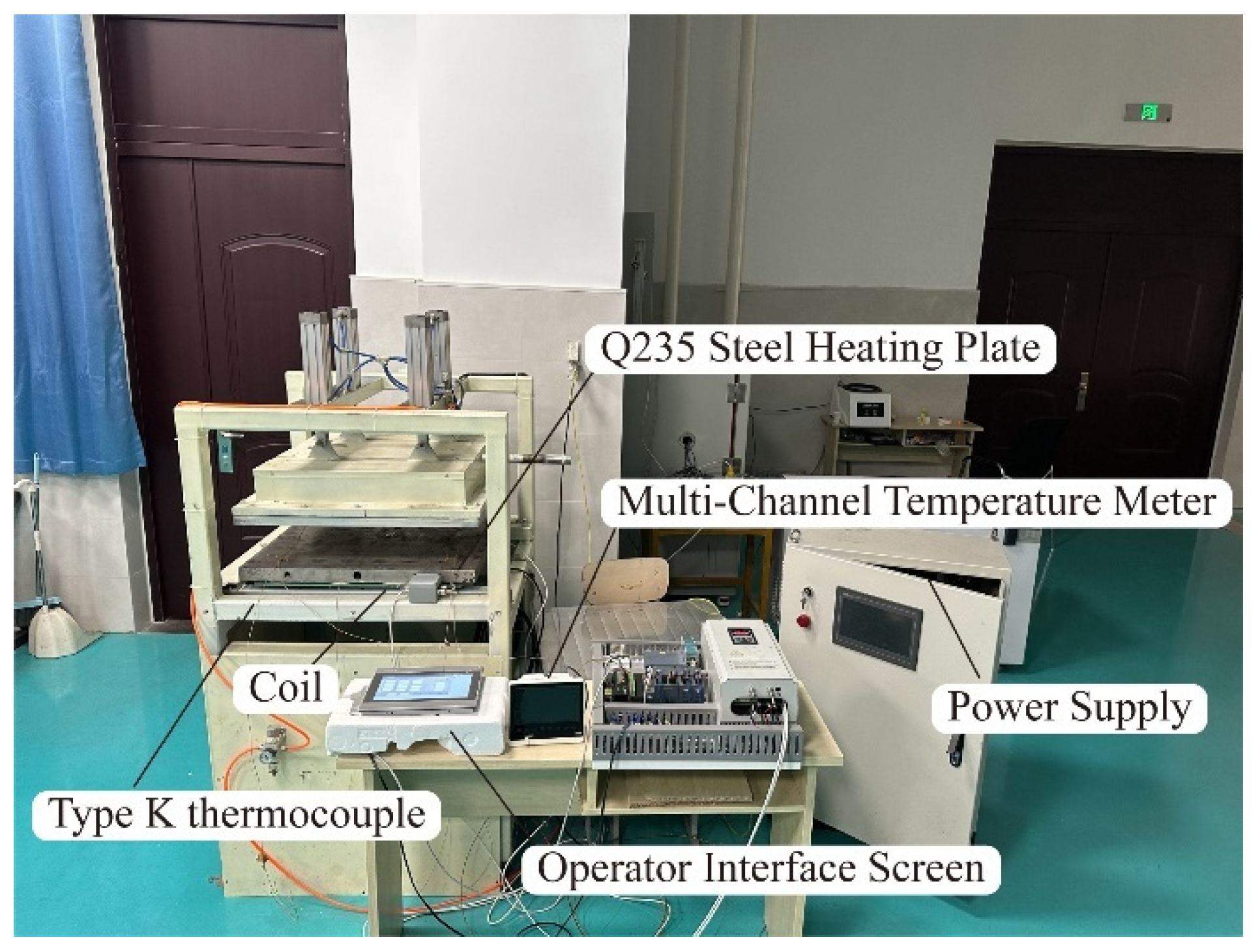
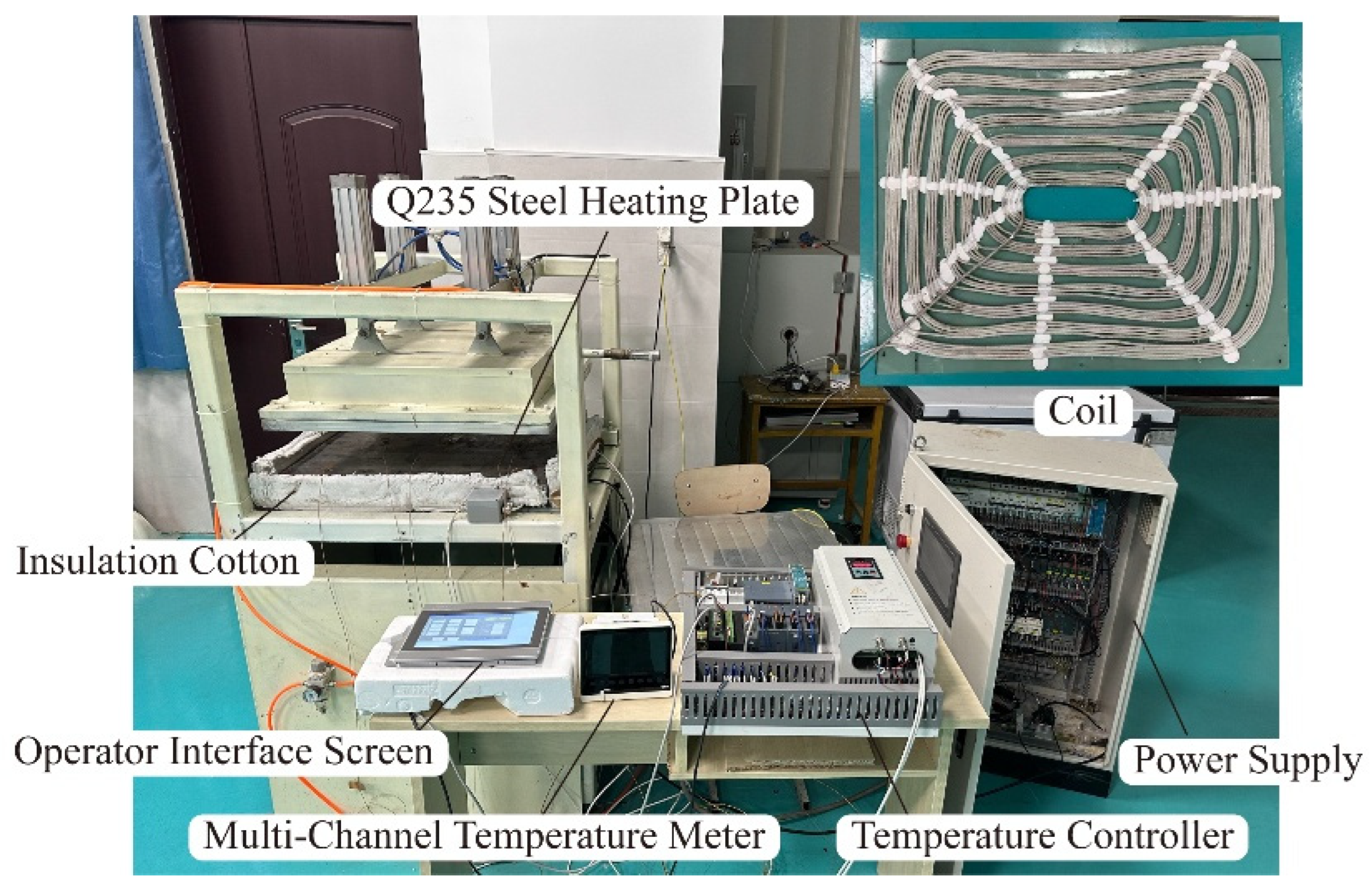
To precisely validate the effectiveness of the previously established electromagnetic–thermal coupling model and optimization scheme, this study constructed a small-scale electromagnetic induction heating experimental platform geometrically consistent with the simulation model, based on the “single-zone equivalence” principle. This platform simulates a typical region within an array of eight independent heating zones found in industrial laminators. By validating the behavior of this representative region, it provides a reliable basis for predicting the performance of the full-scale system. The experimental heating plate is made of Q235 steel with geometric dimensions of 680 mm × 575 mm × 30 mm, exactly corresponding to the COMSOL 3D model to eliminate potential validation deviations caused by geometric inconsistencies. The experimental system adopts the key parameters determined through prior optimization: coil turns distribution of Scheme 3, excitation current of 26 A, operating frequency of 15 kHz, and coil-to-heating plate gap of 16 mm. The operating frequency of 15 kHz was selected to ensure that the skin depth in the experiment is comparable in magnitude to that under typical frequencies in industrial applications, thereby guaranteeing core physical similarity in eddy current distribution and heat generation mechanisms. To suppress edge heat dissipation, a 30 mm thick insulation cotton layer was wrapped around the heating plate periphery. The main components of the experimental platform include a power supply, temperature controller, coil, Q235 steel heating plate, insulation cotton, K-type thermocouples, a multi-channel temperature recorder, and an operator interface. The overall setup is shown in
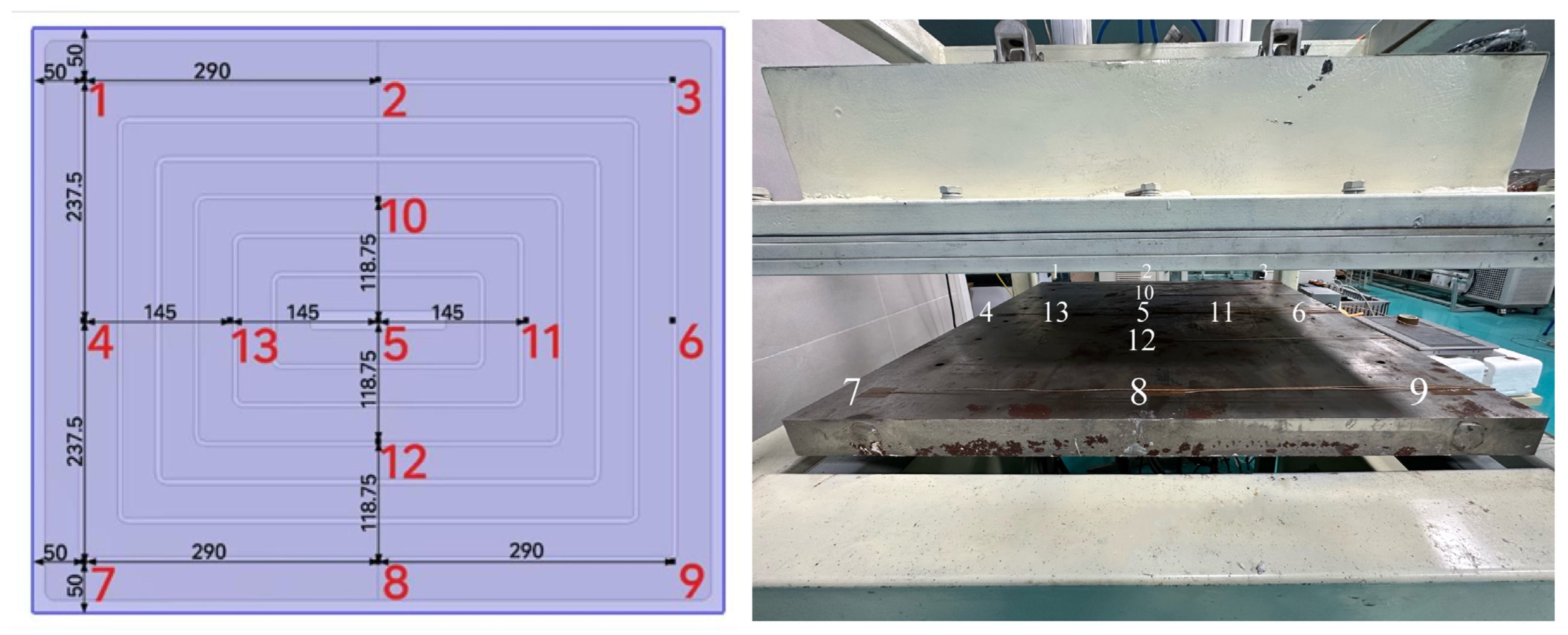
Figure 18. The temperature measurement system employs 13 K-type thermocouples arranged on the working surface of the heating plate at positions exactly corresponding to the 13 monitoring points defined in the simulation model. Their spatial distribution covers key areas including the central zone, edge regions, and diagonal directions, with the specific layout illustrated in
Figure 6. To ensure measurement accuracy, the thermocouple sensing ends were securely fixed using high-temperature resistant tape, achieving direct and reliable thermal contact with the heating plate surface to minimize the influence of contact thermal resistance on measurement results. Temperature data were acquired in real-time via the multi-channel temperature recorder. For the 13 monitoring points distributed across the working surface, temperature data were recorded at 10 key time points selected at 500 s intervals during the period from 3000 s to 7500 s. The evaluation and analysis of temperature measurement uniformity were ultimately conducted based on the maximum temperature difference among these 13 monitoring points.
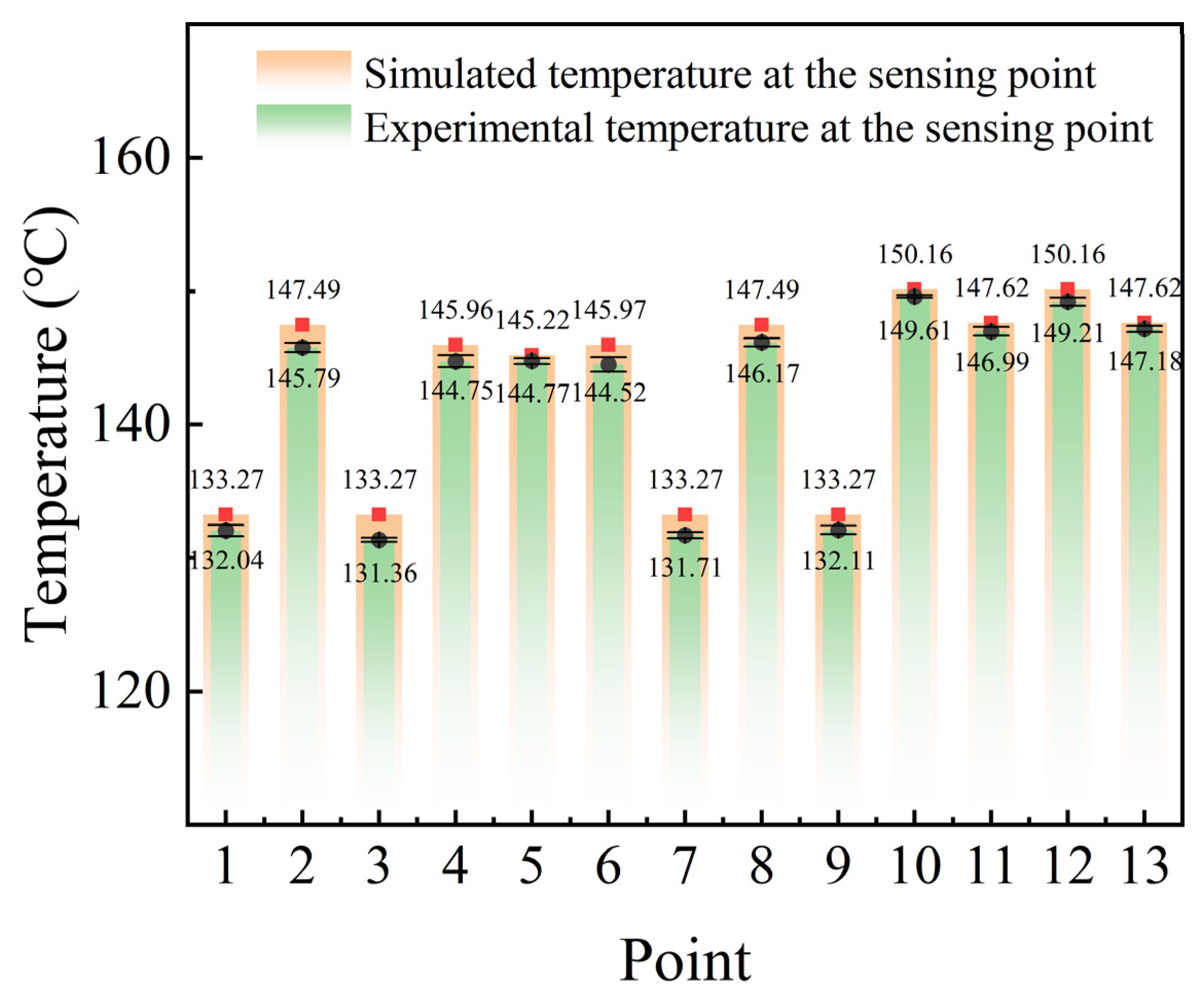
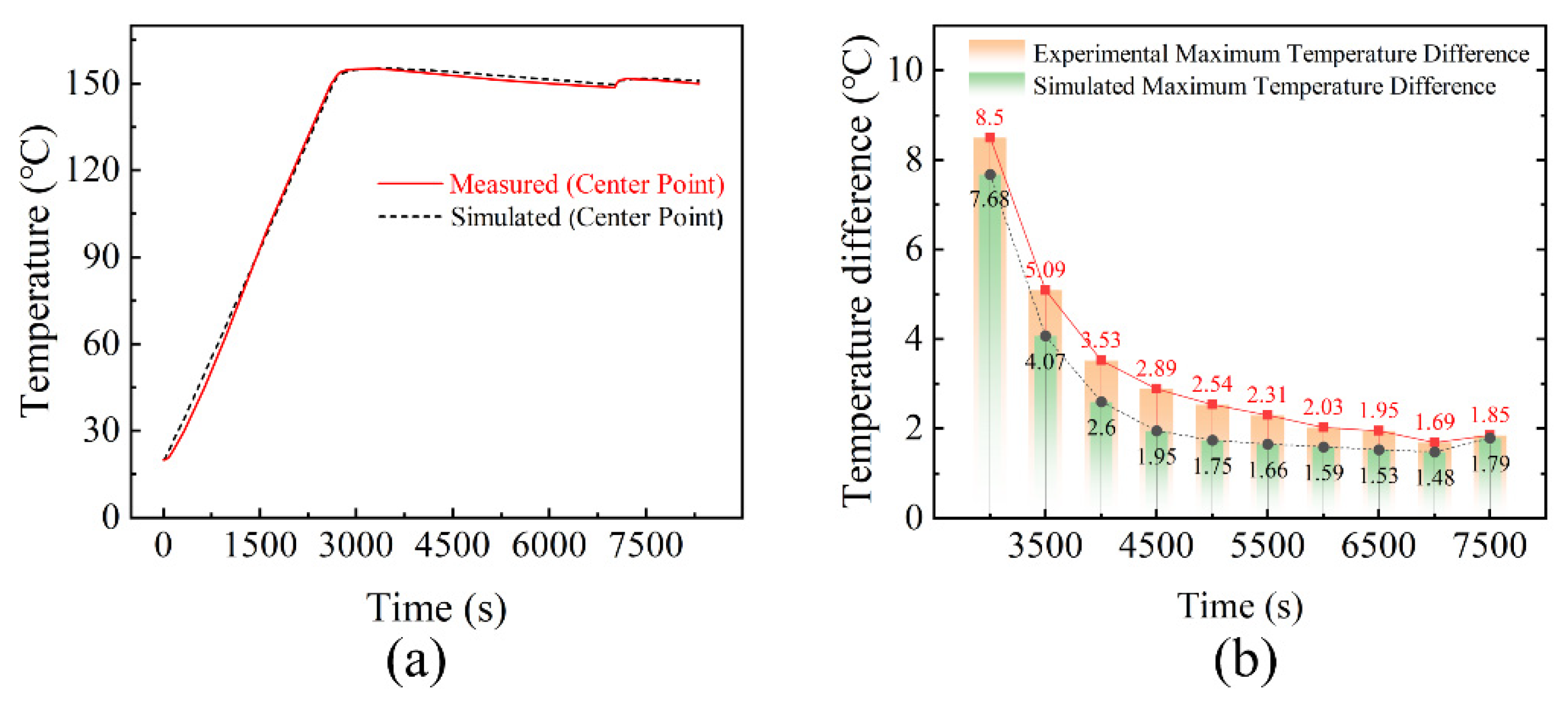
Figure 19a demonstrates the comparison between experimentally measured and numerically simulated temperature profiles at the central control point of the heating plate over time. The two curves exhibit strong consistency throughout the entire heating process. During the heating phase, the experimental and simulated temperature trends show fundamental agreement. The experimental system stabilized at approximately 5400 s with a temperature fluctuation range of 150 ± 2 °C, showing a relative error of about 1.82% compared to the simulation’s stabilization time of 5500 s. In the steady-state phase, the experimental system’s temperature fluctuation range matched the simulation results. Notably, the temperature decline rate in the experimental curve was slightly higher than the simulated value during steady-state operation, primarily attributable to additional heat losses in the actual environment, including deviations in air convection coefficients and interfacial contact thermal resistance. Meanwhile, the control switching frequency observed in the experimental system showed high consistency with the simulated prediction, further validating the feasibility of the on-off control strategy in practical applications.
Figure 19b provides further comparison of temperature uniformity between experiment and simulation during steady-state operation. The maximum temperature differences at ten key time points between 3000 s and 7500 s were measured experimentally across the 13 monitoring points on the working surface. Analysis results indicate that throughout the observation period, the experimental and simulation data show highly consistent trends: the maximum temperature difference decreases significantly as the heating process progresses and eventually stabilizes at a low level. Specifically, the experimentally measured maximum temperature difference decreased from 8.5 °C at 3000 s to 1.69 °C at 7000 s, while the corresponding simulated values decreased from 7.68 °C to 1.48 °C, demonstrating remarkable agreement in dynamic evolution patterns. Quantitatively, the average relative error between experimental and simulated values is 27.57%. It is worth noting that this error was relatively large at 3000 s (10.68%) but gradually decreased as the system approached thermal steady state. After 5500 s, the absolute deviation between experimental and simulated maximum temperature differences was reduced to within approximately 0.7 °C. These discrepancies mainly originate from unavoidable fluctuations in heat loss and measurement uncertainties in the actual environment.
The minor discrepancies between experimental and simulation results primarily originate from deviations between actual environmental convective heat transfer coefficients and the idealized values used in simulations, simplifications in material parameter characterization, and uncertainties inherent in thermocouple measurement systems.
Nevertheless, the strong agreement between experimental data and simulation predictions across key performance indicators fully validates the reliability of the electromagnetic–thermal coupling model established in this study and the effectiveness of the proposed optimization strategy. Experimental verification confirms that the electromagnetic induction heating solution—incorporating optimized coil design, insulation measures, and on-off control—successfully meets the stringent requirements of photovoltaic lamination processes for temperature control precision (150 ± 2 °C) and uniformity, while demonstrating significant energy-saving potential. This provides a reliable technical pathway for industrial applications.
5. Conclusions
(1) An electromagnetic–thermal coupling model of the heating plate for photovoltaic laminators was established using COMSOL Multiphysics to analyze the effects of excitation current intensity, frequency, and coil-to-heating plate gap. The results demonstrate that the priority of their influence on temperature uniformity follows the order current intensity > frequency > gap. Current intensity predominantly determines heating efficiency and temperature difference, frequency alters heat source distribution through the skin effect, while the gap gradually affects uniformity. These findings provide a basis for parameter optimization.
(2) Four coil turn distribution schemes were designed and compared via simulation. The center-edge symmetric compensation scheme achieved optimal temperature uniformity by balancing heat dissipation between the center and edges, reducing the maximum temperature difference by approximately 59.6% compared to the excessive edge compensation scheme, thereby establishing a foundation for structural optimization.
(3) An on-off control strategy was introduced to suppress temperature overshoot, and 30 mm thick insulation cotton was added to reduce edge heat loss. Ultimately, the effective working surface of the heating plate stabilized within 150 ± 2 °C after 5500 s, fully meeting the temperature precision requirements of the photovoltaic lamination process, while simultaneously providing energy-saving benefits and extending equipment service life.
(4) An experimental platform was constructed (26 A current, 15 kHz frequency, 16 mm gap, 30 mm insulation cotton). The experimental results showed strong agreement with simulations: the central control point stabilized at 150 ± 2 °C at approximately 5400 s (5500 s in simulation), and the variation trend of the maximum temperature difference during steady-state operation was consistent, validating the model’s accuracy and the engineering feasibility of the proposed solution.
(5) Addressing the poor temperature uniformity of traditional heating systems, a systematic methodology of “model construction-parameter analysis-structural optimization-control implementation-experimental validation” was developed. This provides both theoretical and engineering support for enhancing lamination quality and reducing energy consumption in large-scale photovoltaic module production.
6. Future Work
This study has successfully validated the effectiveness of electromagnetic induction heating combined with an integrated temperature control strategy in enhancing the heating performance of photovoltaic module laminators. Although the current research has achieved significant results, several directions warrant further investigation to fully unlock the potential of this technology:
The implementation of advanced control algorithms, such as adaptive PID control, fuzzy logic control, or model predictive control, is expected to enable smoother and more predictive regulation of heating power. This could further reduce energy consumption and shorten process cycle times while maintaining temperature uniformity.
Exploring transient pulsed current excitation modes to actively regulate heat source distribution, thereby seeking breakthroughs in uniformity limitations.
Future research should expand to encompass energy consumption and economic analysis of the entire laminator system. Developing an intelligent operational maintenance system based on digital twin technology would facilitate real-time monitoring and predictive maintenance of equipment status. This advancement will promote the transition of this technology from laboratory-scale validation to large-scale industrial application, ultimately providing crucial technical support for the intelligent and sustainable transformation of photovoltaic manufacturing.