Article

Optical Analysis of a Hydrogen Direct-Injection-Spark-Ignition-Engine Using Lateral or Central Injection

by
Hermann Sebastian Rottengruber
*,
Dmitrij Wintergoller
,
Maikel Ebert
and
Aristidis Dafis
Institute for Engineering of Products and Systems, Otto-von-Guericke University, 39016 Magdeburg, Germany
*
Author to whom correspondence should be addressed.
Energies 2025, 18(22), 5972; https://doi.org/10.3390/en18225972
Submission received: 15 September 2025 / Revised: 17 October 2025 / Accepted: 31 October 2025 / Published: 13 November 2025
(This article belongs to the Special Issue Innovative Technologies for Sustainable Internal Combustion Engines)

Abstract

This paper investigates the abnormal combustion behavior—specifically knock and pre-ignition—of a hydrogen direct-injection (H2-DI) engine operated under stoichiometric conditions. Two different cylinder head configurations with central and lateral injector placement are analyzed using thermodynamic measurements, CFD simulations, and the optical diagnostic system VISIOLution®. The results show that combustion stability and knock tendency are significantly influenced by injector positioning, injection pressure, and ignition timing. Controlled mixture formation and high turbulence during the compression phase are key to achieving both high power density and thermal efficiency in hydrogen-fueled engines.

1. Introduction

Hydrogen is a carbon-free fuel and therefore eliminates CO2 emissions. As a result, nitrogen oxides (NOx) become the primary pollutants of concern. To minimize NOx formation while maintaining high thermal efficiency, a tailored operating strategy is applied. This strategy leverages ultra-lean combustion—utilizing mixtures leaner than λ = 2.2—for part-load operation, effectively reducing peak combustion temperatures and suppressing NOx generation. As engine load increases, a transition is made to stoichiometric operation (λ = 1). This shift not only maintains engine performance but also enables the efficient application of conventional exhaust aftertreatment technologies like three-way catalysts.
A comprehensive approach to minimizing NOx emissions in hydrogen-fueled engines focuses on optimizing combustion strategies and using advanced aftertreatment technologies. Cooled high-pressure exhaust gas recirculation (EGR) combined with lean-burn operation effectively reduces peak combustion temperatures, leading to low NOx formation—often below measurable levels—without loss of engine performance. This method introduces inert species such as water vapor and nitrogen into the intake mixture, further suppressing NOx production and decreasing knock sensitivity, which enables higher compression ratios and improved efficiency at partial loads [1]. Simultaneously, the use of NOx absorption three-way catalysts has proven exceptionally effective in practice: applying a small upstream hydrogen injection to the catalyst bed can decrease NOx emissions by more than 90%, especially given the absence of sulfur in hydrogen which prolongs catalyst life and maintains intensive NOx conversion rates over time. These combined technologies position hydrogen engines for zero-impact mobility, coupling high efficiency and power with robust NOx mitigation [2].
Through an adapted approach to charge exchange and fuel injection, the engine can be operated with a stoichiometric mixture over the full load and speed range [3,4,5].
Maintaining λ = 1 enables the development of combustion concepts that combine high power density with very low emission levels [4,6,7].
However, external mixture formation has the drawback of reducing cylinder filling, as the gaseous hydrogen displaces a portion of the intake air. Even under stoichiometric conditions, this leads to an approximate 20% loss in power output compared with a gasoline-fueled spark-ignition engine. Consequently, a naturally aspirated hydrogen engine with external mixture formation and λ = 1 achieves only about 84% of the theoretical power potential of its gasoline counterpart. This limitation can be mitigated either by applying boost pressure with external mixture formation or by injecting hydrogen directly after the intake valve has closed [8].
Through the implementation of an optimized charge exchange and injection strategy, it is feasible to operate a hydrogen-fueled engine with a homogeneous stoichiometric mixture across the entire operating range [3,4,5]. Operating at λ = 1 enables the development of combustion concepts that deliver high power densities while maintaining exceptionally low exhaust emissions at the tailpipe [4,6,7].
Simulation studies have shown that port-injected hydrogen at λ = 1 can displace up to 29% of the intake air, markedly reducing volumetric efficiency and leading to a proportional decrease in available charge mass [9]. This reduction in charge mass correlates closely with the roughly 20% power penalty observed when comparing port-fuel-injected hydrogen operation to a comparable gasoline engine under stoichiometric conditions.
This drawback can be mitigated either by employing pressure charging in conjunction with external mixture formation or by transitioning to direct hydrogen injection after intake-valve closure. The latter strategy—internal mixture formation—requires elevated injection pressures but offers significant performance benefits. Specifically, a naturally aspirated hydrogen engine with direct injection and operation at λ = 1 can achieve a power output potential, based on the calorific value of the in-cylinder mixture, of approximately 120% relative to a naturally aspirated gasoline engine with external mixture formation (see Figure 1) [8,10].
Reliable full-load optimization of a stoichiometrically operated hydrogen direct-injection (H2-DI) engine can only be achieved through the application of tailored diagnostic and mitigation strategies that target combustion anomalies.
In principle, two primary types of abnormal combustion can be distinguished in H2-DI engines, namely knock and pre-ignition, with the latter including instances of low-speed pre-ignition (LSPI) and spontaneous auto-ignition phenomena. Misfire, as another form of combustion anomaly, is not considered within the scope of this paper. This phenomenon is predominantly associated with part-load operation in hydrogen-fueled internal combustion engines and is therefore not of primary relevance in the present context.

1.1. Engine Knock

A key factor influencing knock tendency is the flame travel time (tF), defined as the time required for the flame front to propagate from the spark plug to the combustion chamber wall. For symmetric combustion chamber geometries, tF can be estimated using the following relation [11]:
t F = L w f
where
  • w F : Flame velocity;
  • L: Radius of the combustion chamber.
According to [12], knock occurs if the following is true:
t F t S Z
where
  • t F : Flame duration, which refers to the time required for the flame front to propagate from the ignition source (spark plug) to the outer boundary of the combustion chamber.
  • t S Z : Duration of apparent ignition lag, which refers to the time required for the air-fuel mixture to undergo the self-ignition process.
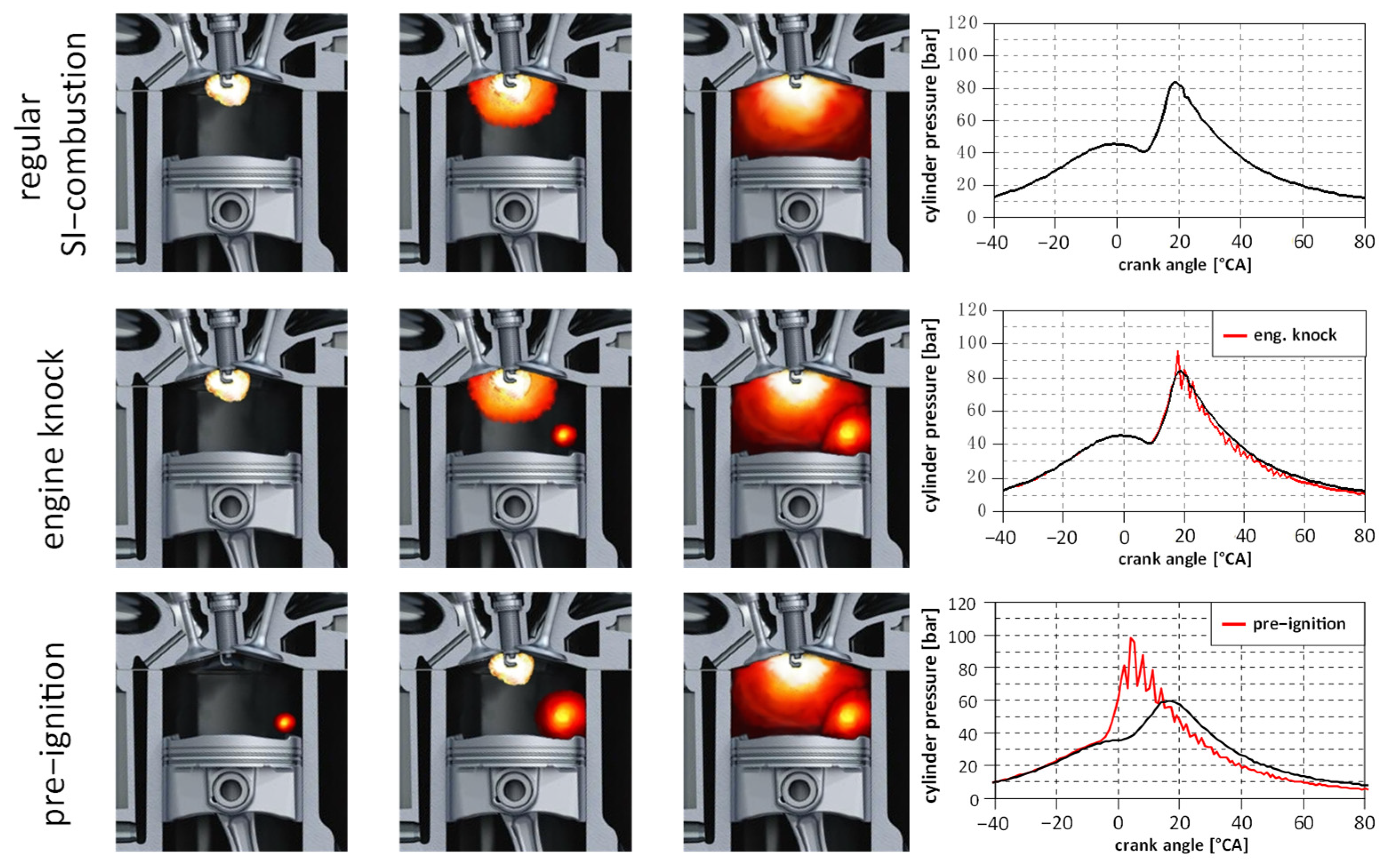
Once combustion is initiated, pressure and temperature within the combustion chamber increase rapidly. Under these conditions, highly reactive radicals are formed in the end-gas regions of the unburned mixture, following reaction pathways as described in reference [12]. These intermediate species can trigger auto-ignition before the primary flame front reaches these zones. As illustrated in Figure 2, the result is a steep pressure rise in the combustion chamber, caused by the abrupt combustion of the remaining mixture.
Compared to conventional fossil fuels, hydrogen combustion is characterized by a high flame speed, a wide flammability range, and a very low minimum ignition energy.
These properties increase the susceptibility to abnormal combustion phenomena, particularly knock and pre-ignition. The associated high-frequency pressure oscillations, which occur when these waves impinge on the cylinder walls, are perceived acoustically as a metallic knocking sound. Knock events impose significant mechanical and thermal stress on engine components.
Between these operational strategies, reliable knock detection is essential to prevent engine damage and optimize performance. Recent studies have applied multiple sensing modalities—such as in-cylinder pressure transducers, block-engine accelerometers, and acoustic microphones—to identify high-frequency pressure oscillations characteristic of knock. For instance, Diéguez et al. demonstrated that spectral analysis of in-cylinder pressure and block acceleration signals, using Fourier-based decomposition, reliably detects knocking cycles in hydrogen-fueled engines by isolating oscillations above 20 times the engine speed [14]. Complementarily, Perini et al. showed that combining in-cylinder pressure analysis with a control-oriented combustion model and advanced filtering increases knock detection sensitivity by over 30% in direct-injection piston engines, enabling early identification of abnormal combustion under both stoichiometric and ultra-lean conditions [15]. These approaches are directly integrated with test-bench indexing methods by deriving knock indicators from the cylinder pressure signal, forming the basis for real-time detection and control of knock in stoichiometric hydrogen direct-injection engines. Reliable full-load optimization of a stoichiometrically operated hydrogen direct-injection (H2-DI) engine requires dedicated methodologies for the detection, analysis, and suppression of combustion anomalies. Fundamentally, two main types of abnormal combustion phenomena can be identified in H2-DI engines, namely knock and pre-ignition, with the latter including spontaneous auto-ignition phenomena such as low-speed pre-ignition (LSPI).
Due to the inherently faster combustion rates of stoichiometric hydrogen-air mixtures compared to gasoline-air mixtures, the fresh charge burns more rapidly, thereby reducing the window for auto-ignition phenomena. However, the ignition delay time for hydrogen/air mixtures at stoichiometric conditions is significantly shorter, which increases knock tendency relative to gasoline engines. To mitigate this, ignition timing is typically retarded, with ignition initiated after top dead center (ATDC). To further suppress knock, it is necessary either to minimize the combustion duration or to maximize the ignition delay time. These objectives can be achieved through appropriate adjustment of the following parameters (see Table 1):
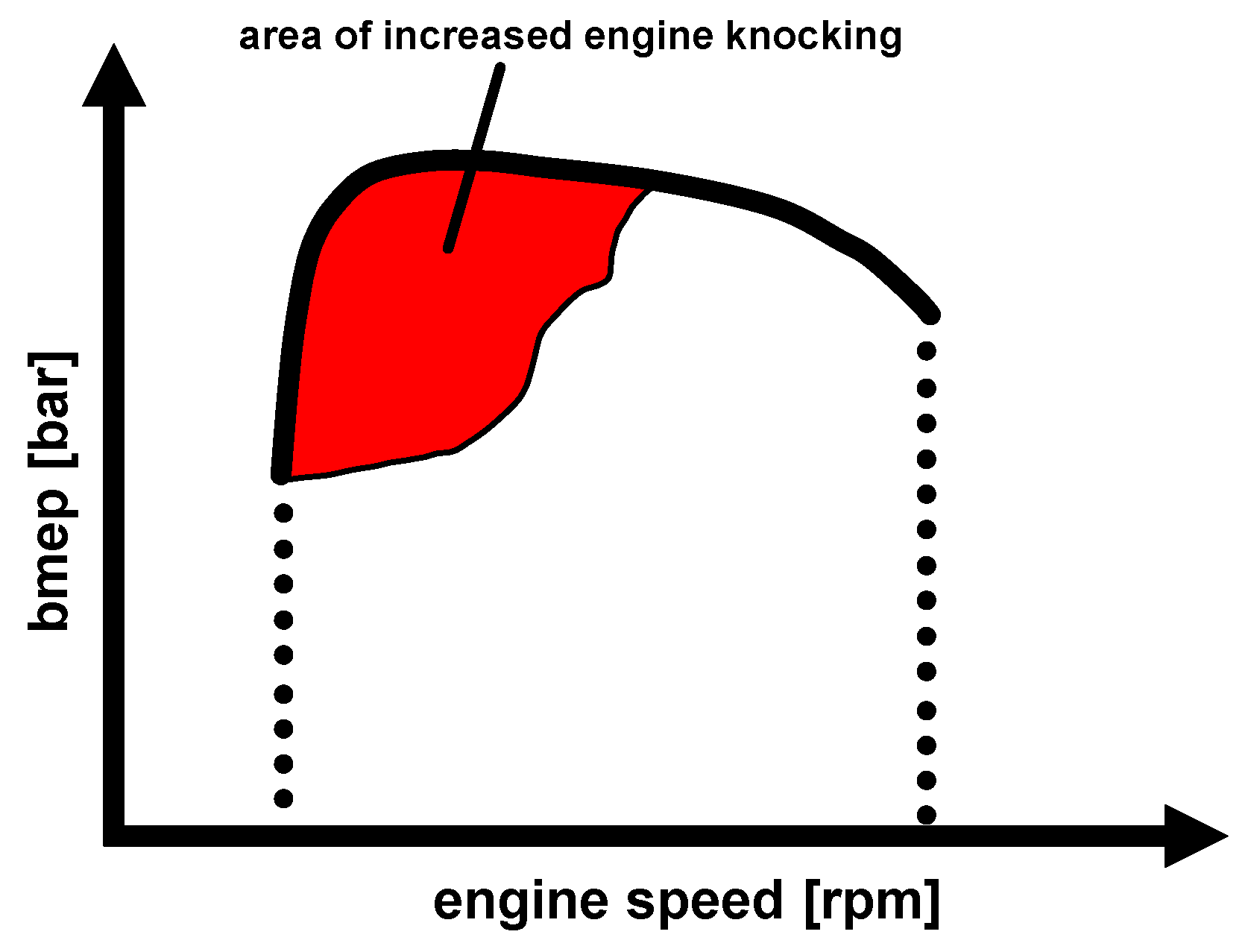
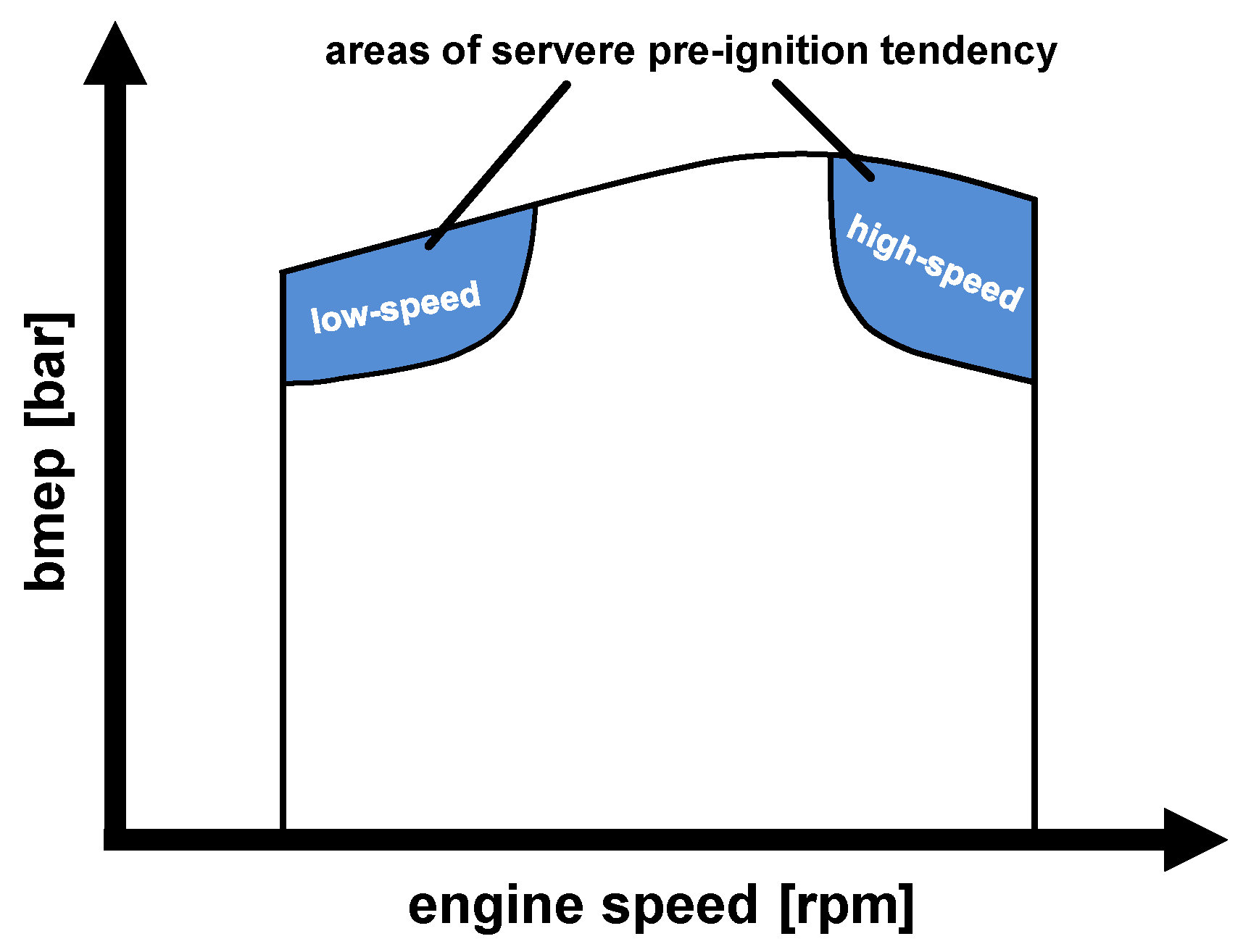
A particularly high knock tendency is prevalent at high loads and low engine speeds because of the time dependency (see Figure 3).
The time-dependent nature of knock phenomena, as described, indicates that knock initiation is most likely to occur near the periphery of the combustion chamber. Given that the spark plug is centrally located in the cylinder in the engine concepts investigated, the flame front propagation distance—and thus the propagation time—is maximized in this region.

1.2. Auto-Ignition—Pre-Ignition

The occurrence of pre-ignition is influenced by several factors, including the temperature, surface quality and size of hot components, combustion chamber pressure, charge motion, fuel properties, and local fuel concentration. These parameters affect the formation of reactive radicals, which can subsequently promote auto-ignition events. Auto-ignition can occur in two basic forms, as described in [12]:
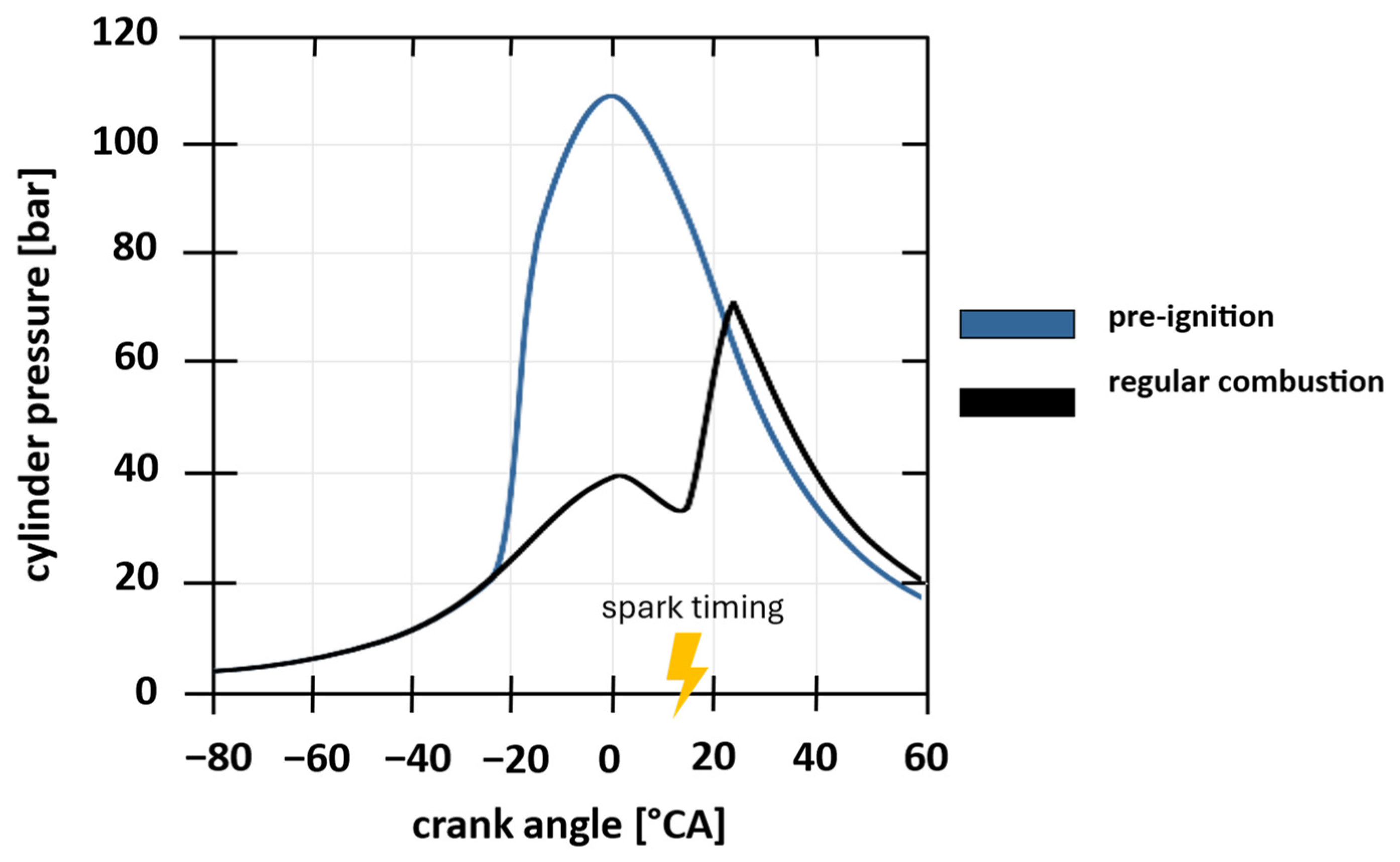
  • Combustion may initiate prematurely during the compression phase, well before top dead center (BTDC). Early ignition may originate from locally overheated surfaces such as exhaust valves, spark plugs, or quench edges within the cylinder head. In addition, it can be triggered by particles, including oil droplets or oil evaporated from the cylinder walls and combustion chamber deposits, as well as within pockets of hot residual gases. The result is a rapid pressure rise, typically without the superimposed pressure oscillations that are characteristic of knocking combustion (see Figure 4).
  • Backfire represents an extreme form of pre-ignition, where combustion is initiated during the charge cycle. However, this phenomenon is effectively prevented with the injection strategy employed in the hydrogen direct-injection (DI) engine, as hydrogen injection does not commence until after the intake valve closed.

1.3. Knocking Auto-Ignition

This type of combustion anomaly initially progresses similarly to an auto-ignition event triggered by reactive radicals near top dead center (TDC). Factors such as an excessively high compression ratio, low charge motion, elevated residual gas fractions, and inadequate engine thermal management can promote the onset of this phenomenon.
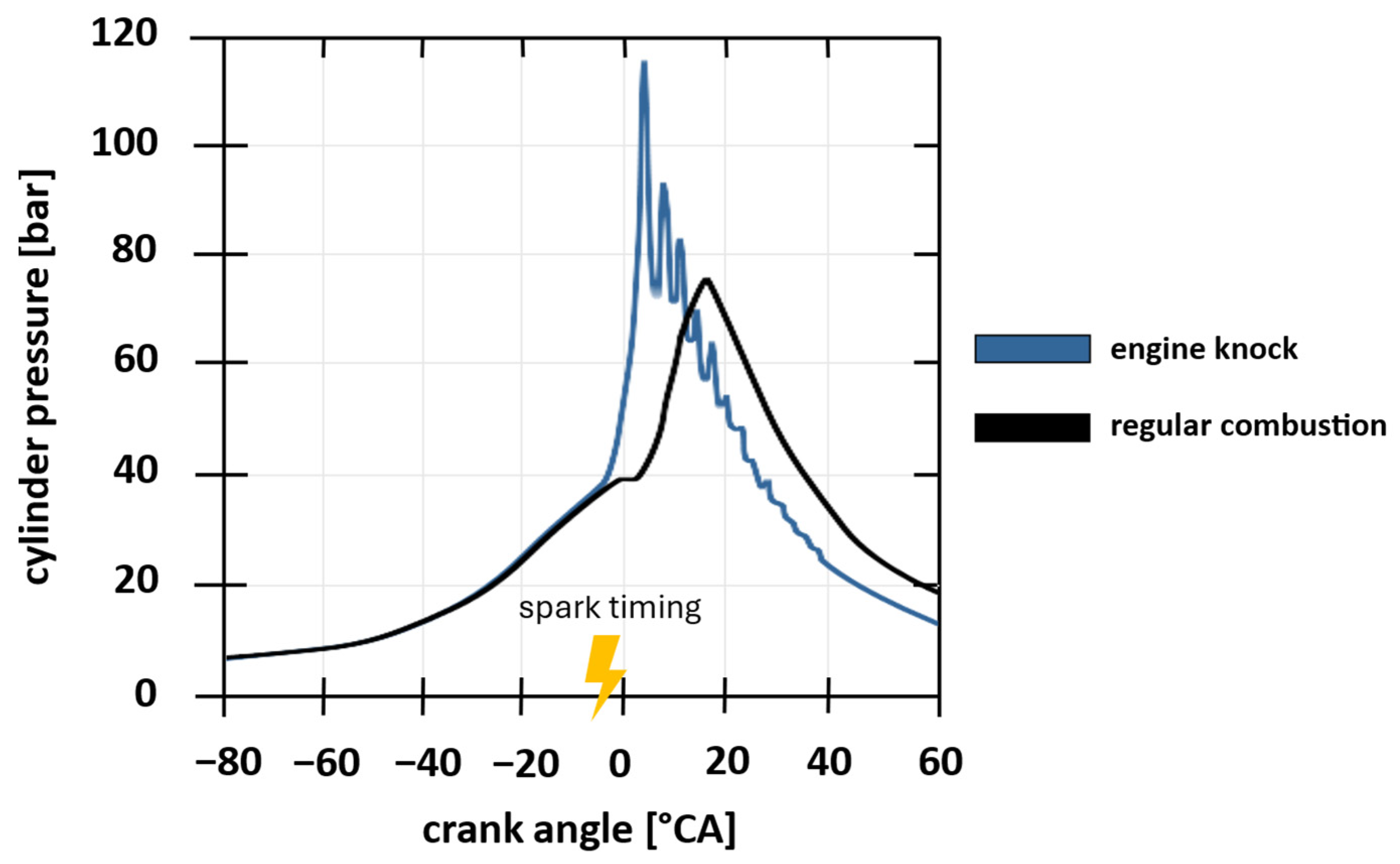
As the combustion chamber temperature rises due to early combustion, the start of combustion in subsequent cycles shifts progressively earlier. This leads to the superposition of knocking combustion events onto the initial pre-ignition phenomena. The result is the occurrence of extreme pressure peaks, as illustrated in Figure 5.
In hydrogen engines, the piston rings and piston top lands are particularly critical locations for the occurrence of auto-ignition, as the monovalent hydrogen direct-injection engine (H2-DI ICE) lacks the charge-cooling effect typically provided by gasoline. In contrast, the risk of hot spot formation at the spark plug is lower in hydrogen engines than in gasoline engines, due to the reduced formation of deposits and combustion residues.
Nevertheless, it remains essential to select a spark plug with the highest possible heat range to withstand the severe thermal stress imposed by the rapid combustion and elevated process temperatures characteristic of hydrogen operation.
Moreover, it is imperative to avoid the use of spark plugs with platinum electrodes. Platinum, as well as other catalytically active metals and coatings, can significantly increase the auto-ignition propensity of hydrogen/air mixtures due to their catalytic effect.
The auto-ignition accompanied by knock phenomenon predominantly manifests at high loads and elevated engine speeds (see Figure 6). Under these conditions, the associated thermal and mechanical stresses on the engine components can become severe, potentially leading to significant damage in engine hardware.

2. Experimental Setup

2.1. Hardware Selection for Measurements

The experimental tests were carried out on a single-cylinder engine, which is particularly suitable for the detailed analysis of the thermodynamic engine process due to its design.
A RICARDO Hydra MK4® single-cylinder research engine, whose components were based on BMW’s well-established and robust N5x engine series in terms of design and geometry, served as the test apparatus. The specific technical data of the engine used can be found in the following Table 2.
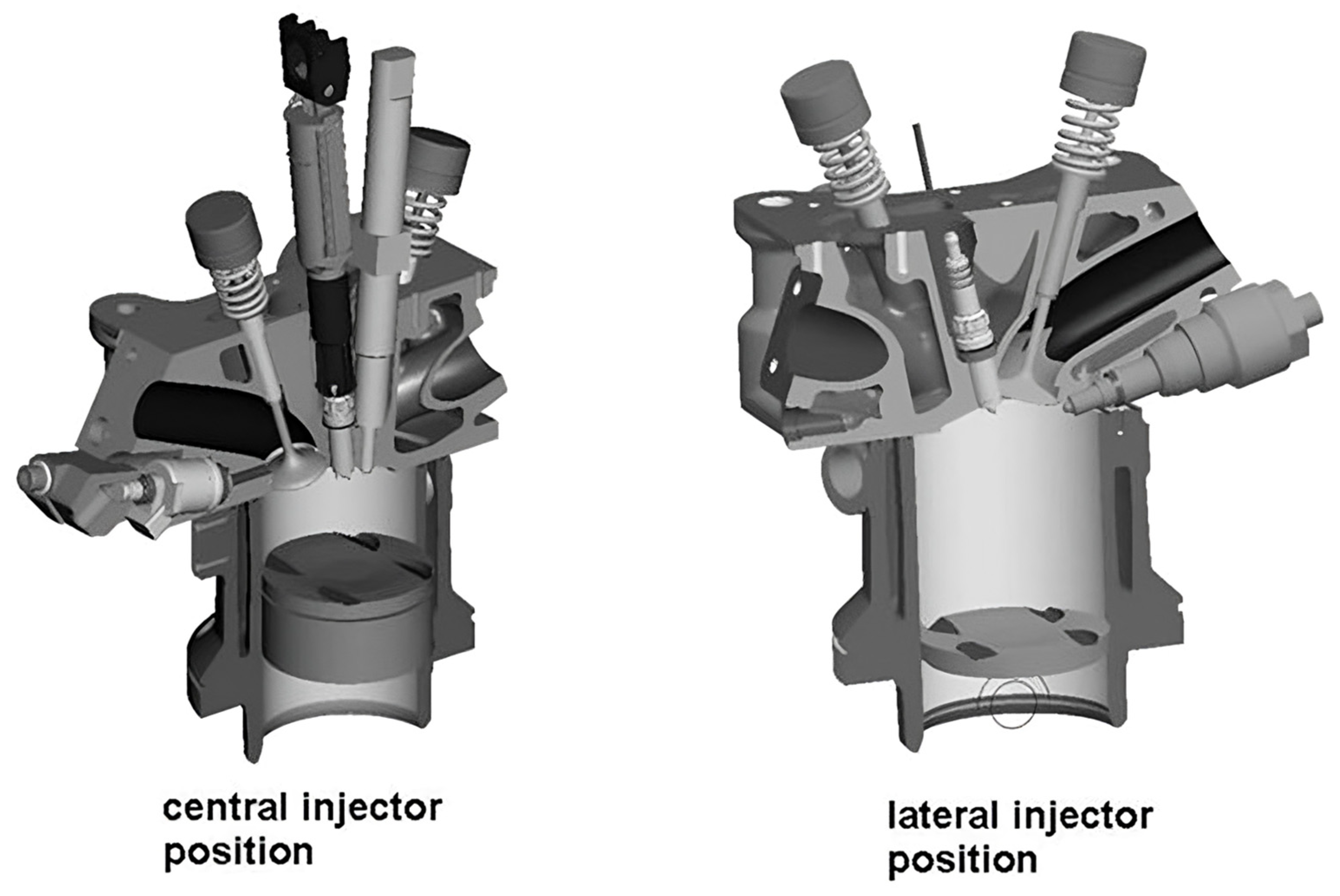
For optical investigations of the mixture formation processes, an optically accessible single-cylinder engine with the same geometric configuration was used. Two cylinder head variants were analyzed as part of the presented investigations (see Figure 7). In both cases, these are 4-valve cylinder heads with two overhead camshafts. Stepless valve timing control within a valve spread range of 80 to 160 °CA (in relation to the respective maximum valve lift) was realized by using a variable valve control system. The two variants differ primarily in the position of the hydrogen injection nozzle:
  • In variant 1 (central arrangement), the injection nozzle is positioned centrally between the valves.
  • In variant 2 (lateral arrangement), the injector is located below the intake ducts, which slightly restricts the design freedom in the geometry of the ducts.
Hydrogen was injected in a supercritical state at pressures between 40 and 150 bar during the compression stroke. The injector employed is an inward-opening solenoid type derived from the Bosch HDEV series. It features a single-cylindrical, one-hole nozzle configuration aligned with the needle axis. Consequently, the static flow rate is constrained, and the present investigation was therefore limited to stoichiometric, naturally aspirated engine operation. The injectors were designed for a nominal pressure of 150 bar. However, due to flow rate limitations and dynamic behavior of the electromagnetic actuators, preliminary tests were performed to assess operation at reduced injection pressures. In addition to the thermodynamic assessment of the hydrogen direct-injection (H2-DI) combustion process, which included the acquisition of global parameters such as static temperatures, pressures, and exhaust gas composition, both high- and low-pressure indication were carried out. The pressure data served as the foundation for process evaluation and numerical modeling, including one-dimensional gas exchange simulations and thermodynamic loss analyses [4,7,16,17].
As previously reported in the literature [2,3,4], the maximum pressure rise rate (PPRR) is considerably higher during stoichiometric hydrogen combustion in a gasoline engine compared to lean operation. In the present investigations, PPRR values at low engine speeds were observed to be up to three to four times higher than those under lean conditions (λ = 2), which are comparable to conventional gasoline combustion in this regard. At elevated engine speeds, the measured PPRR on the test engine decreased to approximately 4 bar/°CA, such that the differences between lean and stoichiometric operation became less pronounced. No discernible difference between lateral and central ignition positions was detected under the examined test configuration.
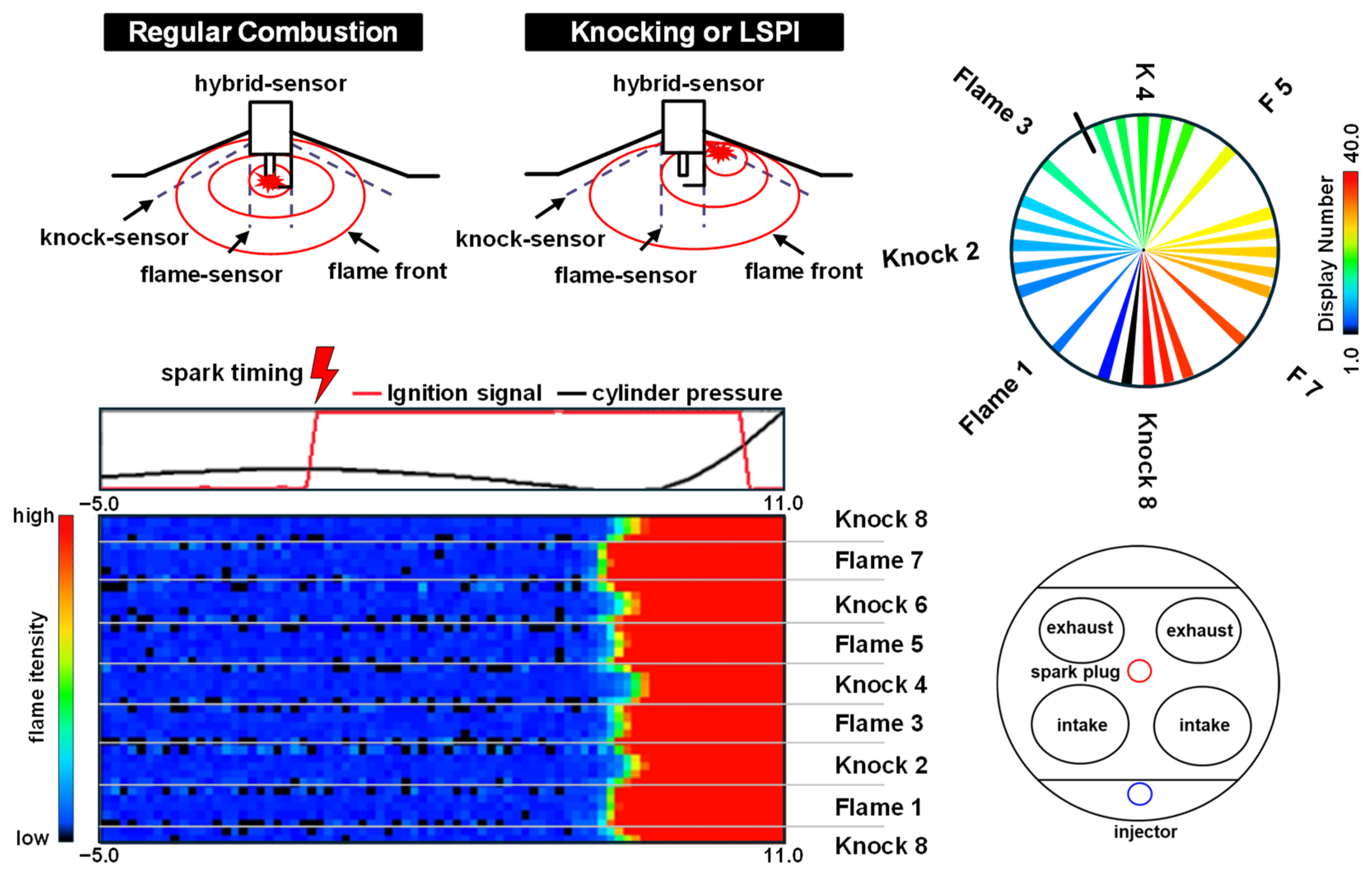
To enable a more detailed examination of ignition and knock phenomena, the VISIOLution® optical diagnostic system from AVL was employed. This system, utilizing spark plugs integrated with optical fibers, facilitated the non-intrusive visualization of flame propagation. In addition, the onset and location of knock events and auto-ignition were identified. The measurement technique was based on high time-resolution detection of light intensity during combustion using photodiodes. Further details regarding the optical measurement setup and underlying physical principles are provided in [18]. Two distinct diagnostic methods were applied in the course of the investigation:
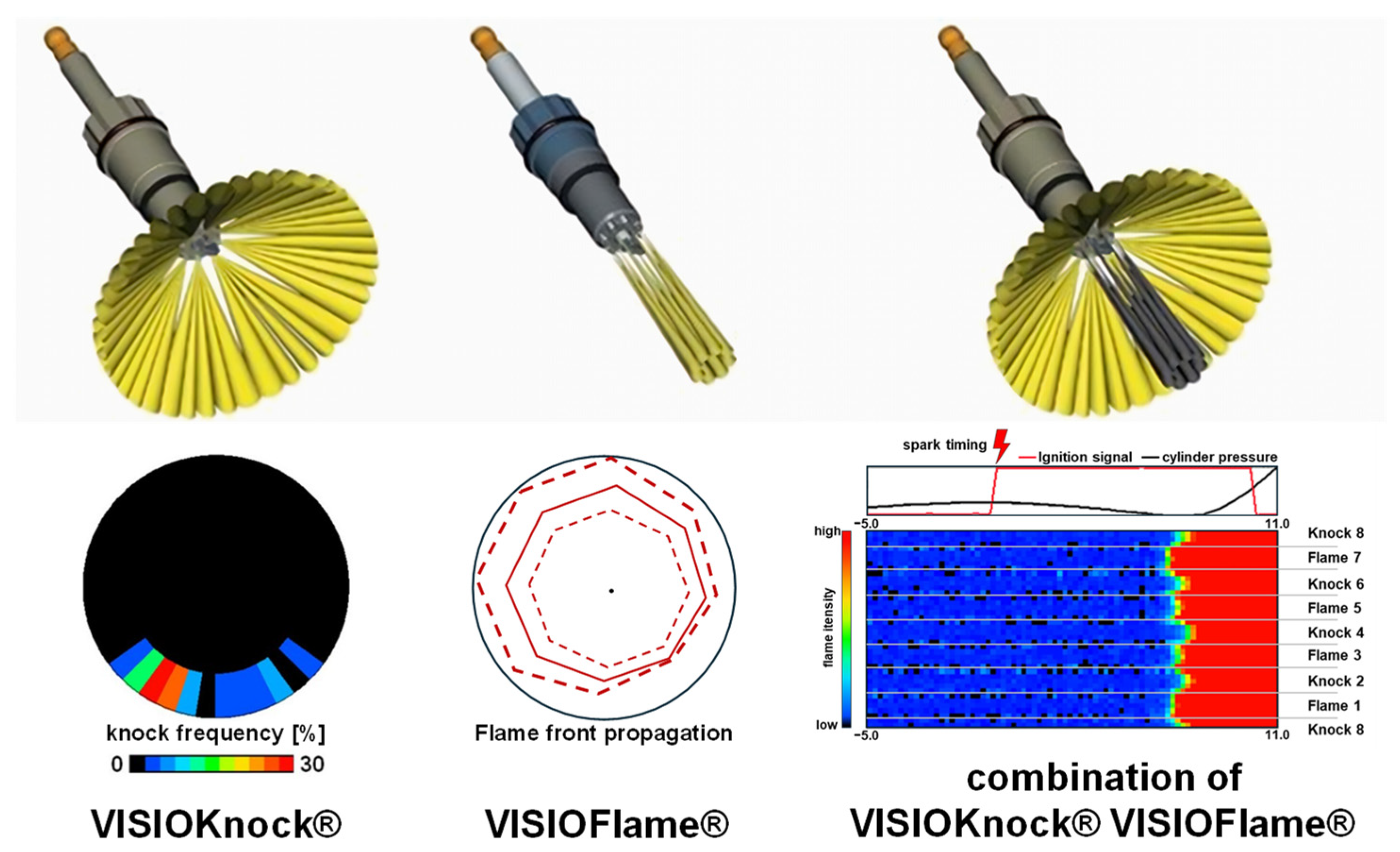
  • The VISIOFlame® spark plug sensor utilizes a spark plug with downward-facing fiber optic sensors oriented toward the piston crown (see Figure 8). This configuration enables the determination of flame kernel development and combustion speed under real engine conditions.
  • The VISIOKnock® spark plug sensor is equipped with conically arranged sensors directed outward. This setup allows for the detection and spatial localization of knock events and other combustion anomalies.
A hybrid spark plug sensor, combining both VISIOFlame® and VISIOKnock® sensor configurations, was also employed to enable identification of auto-ignition centers. In this configuration, part of the sensor array is oriented toward the piston crown, while the remaining sensors monitor combustion phenomena near the cylinder wall (see Figure 8). This approach enables a detailed analysis of combustion anomalies with respect to both origin and location.

2.2. Preselection Injector Position

The challenge of thermal load under stoichiometric conditions in hydrogen combustion engines is particularly pronounced due to hydrogen’s unique combustion characteristics. The notably low quenching distance [19] of hydrogen promotes increased heat transfer to engine surfaces and exacerbates injector thermal stress. Additionally, hydrogen combustion is essentially soot-free and can yield flame temperatures near 2250 °C under stoichiometric conditions, with local peak values potentially exceeding 2500 °C. This imposes a considerable thermal load on components situated close to the combustion center, notably the injector.
A central injector position, located adjacent to the spark plug, maintains continuous exposure to the core combustion zone throughout the process. Under these conditions, shifts in reaction equilibrium at elevated temperatures can result in delayed energy release during expansion, further increasing thermal stress on the H2-DI injector. In contrast, locating the injector laterally, beneath the inlet valves, mitigates direct thermal exposure and partially addresses the aforementioned thermal challenges.
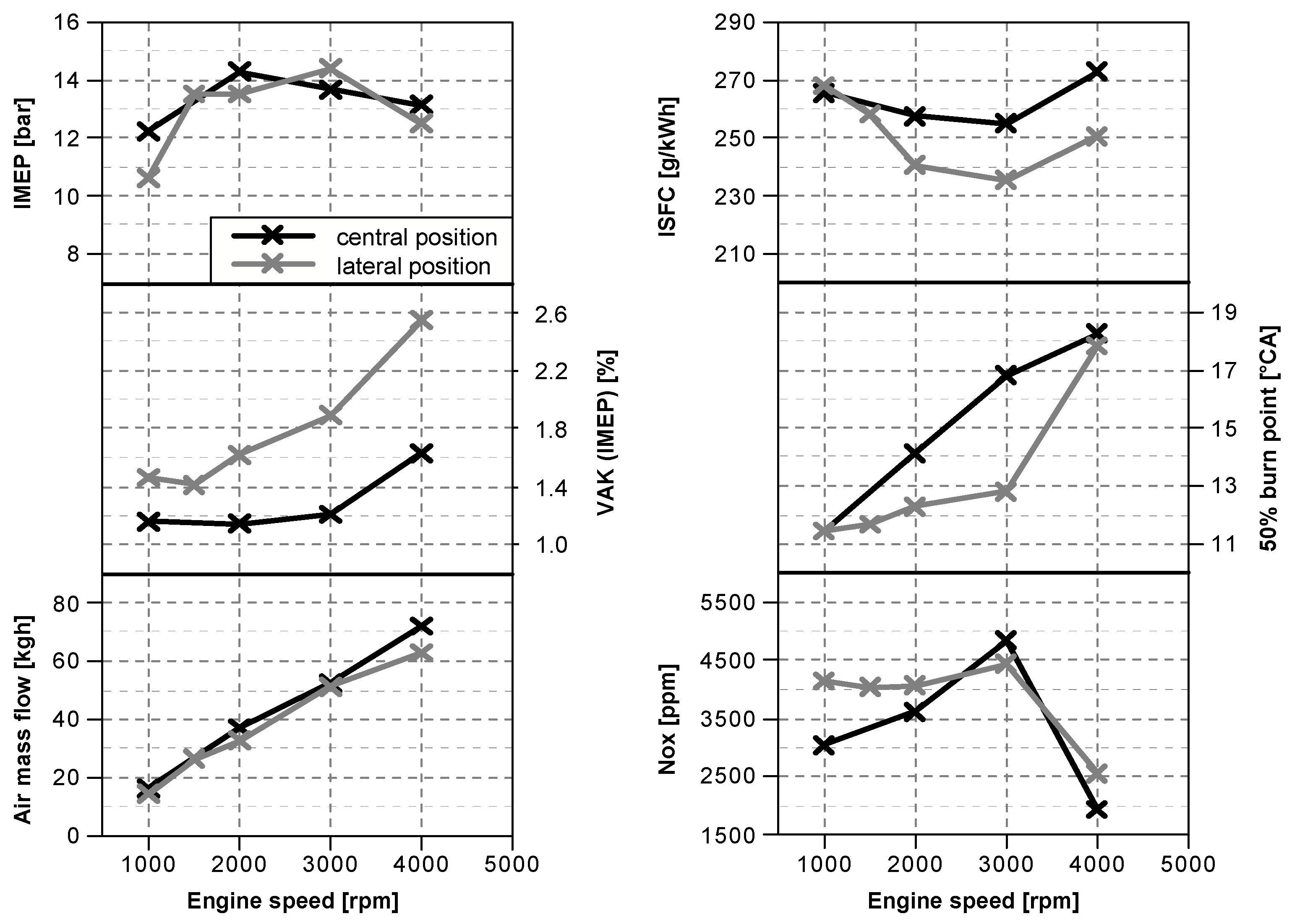
The comparative evaluation of central and lateral injector positions with respect to indicated mean pressure, specific fuel consumption, and emissions is thus essential. The results from full-load engine bench testing (see Figure 9) provide valuable insights into the impact of injector placement on performance variables.
The injection strategy employed, characterized by premixing during the compression phase, yields a comparable hydrogen–air mixture quality for both injector positions. The attainable indicated mean pressure is marginally higher with the central injector, while specific indicated fuel consumption remains at a similar level. This outcome is partially ascribed to a greater isentropic flow cross-section afforded by the cylinder head design with centrally positioned injector, as previously described. However, for operational stability, ignition timing and thus the combustion center were retarded compared to the lateral injector configuration, implying latent optimization potential for the central setup.
From a combustion stability perspective, central injector positioning offers advantages, manifested in reduced coefficient of variation for indicated mean pressure, contributing to improved engine smoothness. Sensitivity to abnormal combustion phenomena, such as pre-ignition and knock, was comparable for both arrangements; injection and charge exchange parameters could be modulated within similar boundaries.
Subsequent investigations reveal that intervention in injection parameters more substantially influences combustion behavior in the lateral injector configuration. This is attributed to the angled hydrogen injection traversing a greater distance within the combustion chamber. As a result, mixture formation exhibits increased dependence on injection timing, pressure, and piston location—a characteristic that permits targeted optimization of mixture preparation and combustion.
Based on these findings, the lateral injector position was selected for the ongoing study. In the subsequent sections of this investigation, results and analysis refer explicitly to this configuration, ensuring methodological consistency and a focused approach to addressing the inherent challenges of hydrogen direct-injection combustion.

3. Analysis of Knock and Auto-Ignition Behavior

3.1. Methodology

The VISIOLution® system was employed to analyze knock and auto-ignition phenomena. This system allows for the correlation of light emissions from combustion with the cylinder pressure curve, enabling detailed monitoring of the combustion process. With high time resolution, it is possible to precisely identify the locations within the combustion chamber where uncontrolled combustion events occur. As illustrated in Figure 10, measurements are conducted using a hybrid spark plug equipped with fiber-optic sensors, combining the VISIOFlame® and VISIOKnock® technologies. By strategically positioning the fiber-optic sensors according to the combustion chamber geometry, it is also possible to differentiate between various combustion anomalies.
By utilizing the VISIOLution® hybrid sensor system, it is possible to induce and characterize controlled auto-ignition events through systematic variation in the following parameters:
  • Residual gas content, influenced by variable valve timing;
  • End of injection (EOI);
  • Spark timing (ignition timing).
Figure 10 illustrates the flame front propagation during an auto-ignition event, as captured by the individual measurement channels of the VISIOLution® sensor. In the example shown, and consistent across all documented events, the initial signal is detected near the cylinder center—originating at the spark plug. This observation is attributed to the vertically oriented sensors integrated into the VISIOLution® instrumented spark plug, which registers the earliest signal onset.

3.2. Knock Location Determination

A key characteristic distinguishing hydrogen direct-injection engines from conventional spark-ignition gasoline engines is the significantly accelerated combustion process. This rapid combustion leads to high pressure rise rates and pronounced pressure oscillations, which require a different analytical approach than those observed in gasoline-fueled spark-ignition engines. While similar oscillatory pressure phenomena are known in gasoline engines, in hydrogen DI applications, such events can occur even at comparatively low engine speeds.
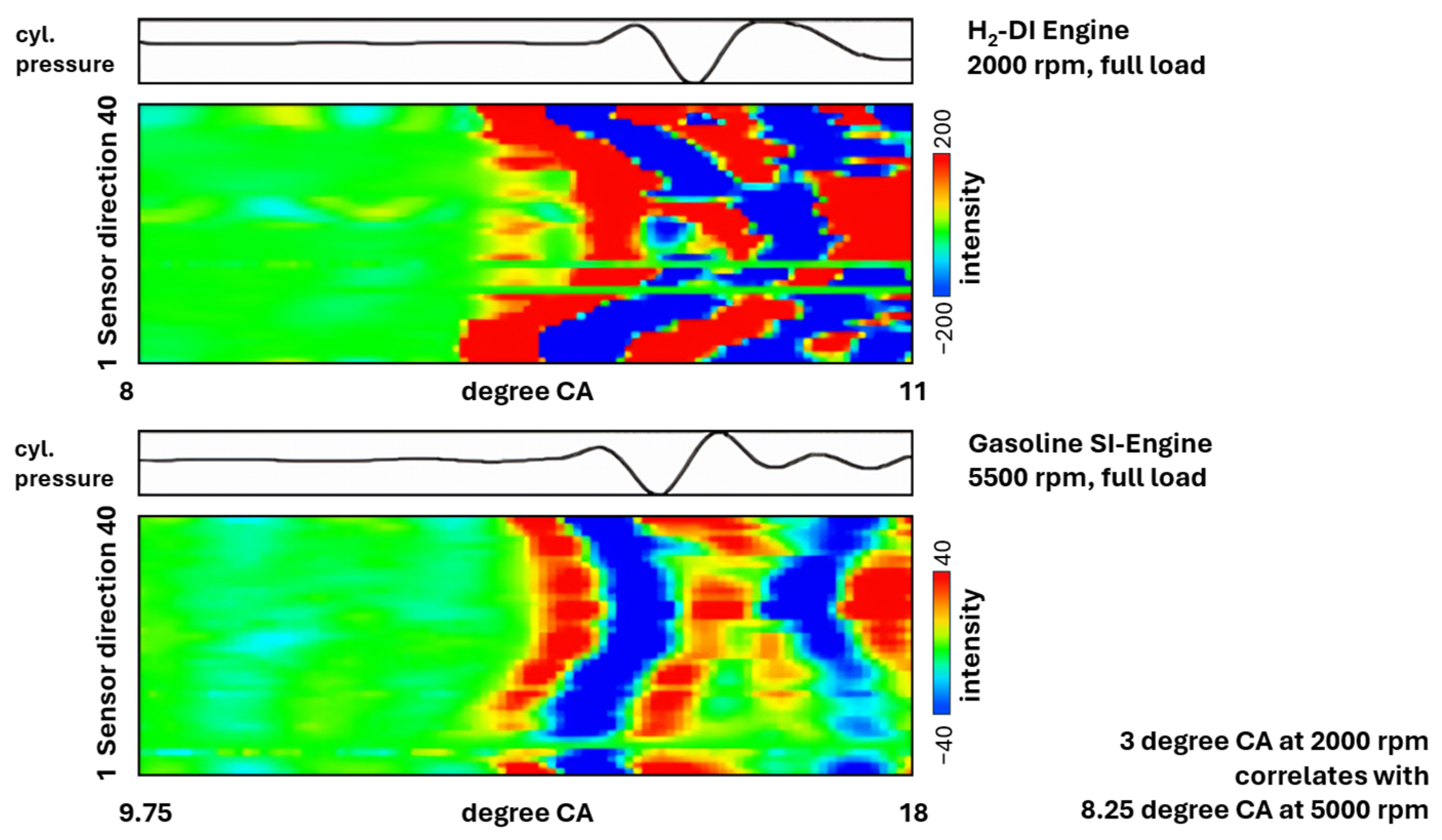
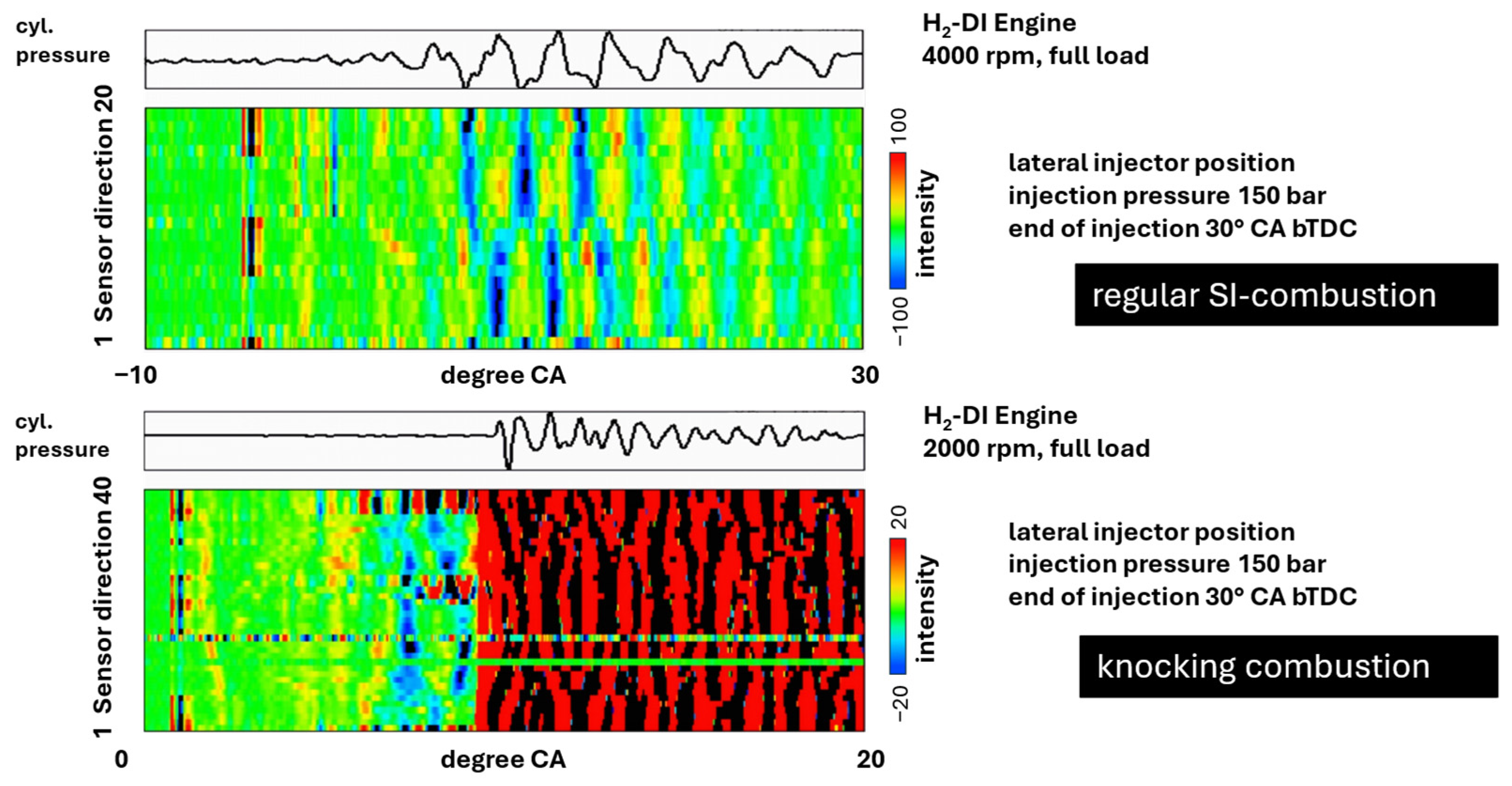
The intensity distribution and pressure fluctuation profiles shown in Figure 11 reveal a notable similarity between gasoline operation at 5500 rpm and hydrogen direct-injection operation at 2000 rpm. As already mentioned, the high rate of combustion characterizing hydrogen direct-injection operation leads to the occurrence of pressure fluctuations at comparatively low engine speeds, typically between 1000 and 2000 rpm. Without advanced signal analysis, these oscillations may easily be misinterpreted as knock events, since pressure oscillations induced by knock and those resulting from normal combustion exhibit similar frequency ranges. The distinction lies in the temporal progression of the oscillation amplitude. As illustrated in the lower section of Figure 12, the amplitude of a knock-induced pressure oscillation decreases from a distinct peak, commonly referred to as the “significant event” [18]. In contrast, the upper portion of Figure 12 demonstrates that, during regular combustion, the oscillation amplitude gradually increases over time.

3.3. Influence of Combustion Center Location on Knock and Efficiency

The positioning of the combustion center CA50 significantly influences combustion characteristics. When the ignition timing is optimized, maximum thermodynamic efficiency can be achieved. Subsequent investigations have shown that, under real operating conditions, engines equipped with side-mounted injectors exhibit heightened sensitivity to changes in injection parameters. This sensitivity is attributed to the angled trajectory of hydrogen injection, which spans a considerable distance across the combustion chamber. Consequently, mixture formation becomes highly dependent on injection timing, injection pressure, and piston position. This sensitivity can be strategically exploited to influence and optimize mixture formation and, thus, combustion behavior. Engine efficiency is strongly correlated with the location of the combustion center. According to multiple studies [11,16,20] optimal efficiency is typically achieved when CA50 is positioned between 6° and 10° CA after top dead center (ATDC). However, due to the knock tendency and the potential for auto-ignition superimposed by knock, as discussed earlier, this optimal combustion phasing cannot be attained at all operating points.
Using the VISIOKnock® methodology, detailed investigations into the mechanisms leading to knock in a hydrogen DI engine with a side-mounted injector were conducted. To identify the knock boundary, spark timing was incrementally advanced until clear knock signatures were recorded. Across the engine speed range examined using a single-cylinder test engine, specific combustion center locations were identified where knock did not occur—even at spark-timings earlier than the theoretical optimum.

3.4. Analysis of Knock Event Origin

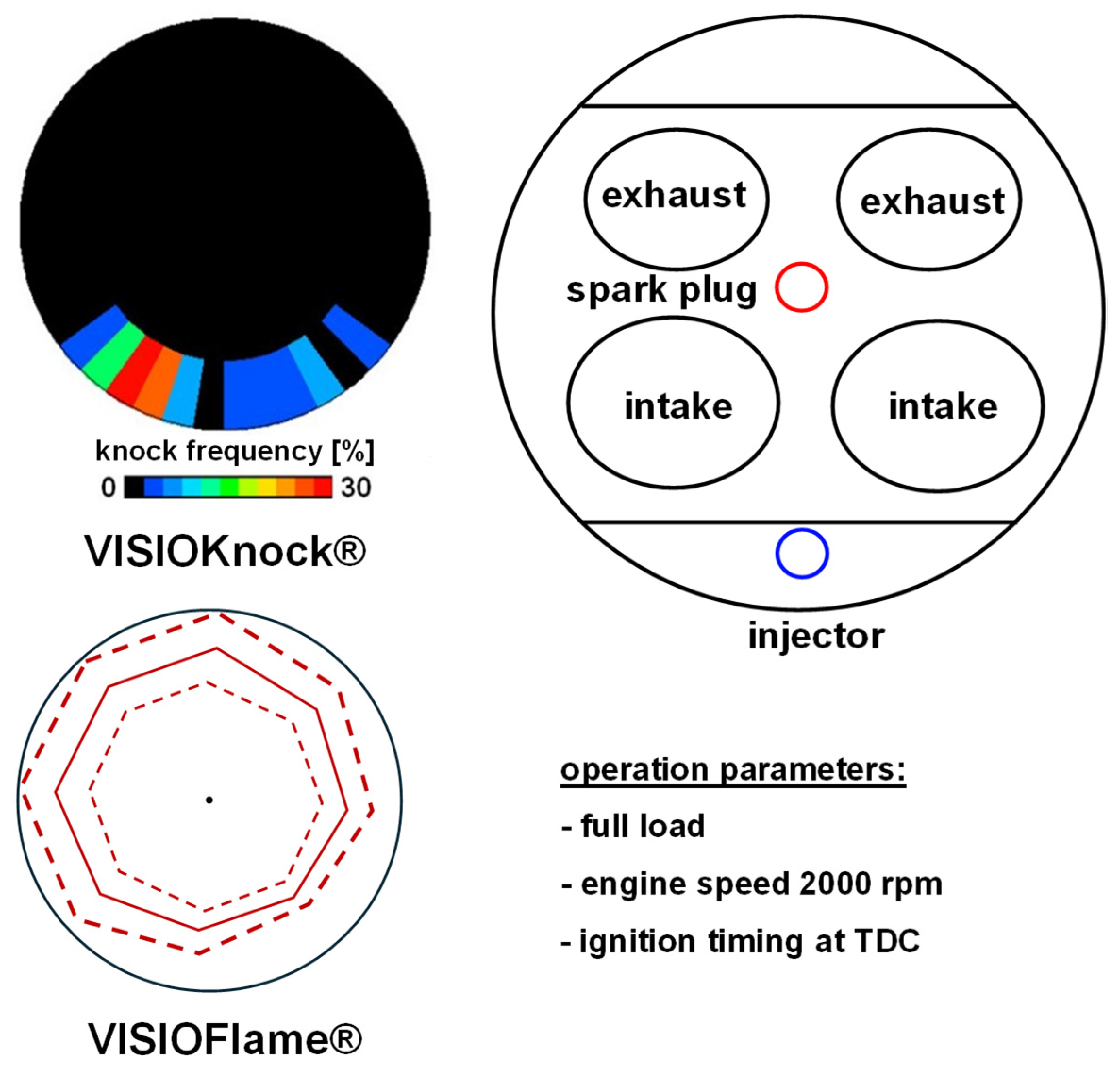
Figure 13 presents an example of a static evaluation of knock occurrences recorded during steady-state engine operation at 2000 rpm. The data indicate that the majority of knock events originate in the region of the intake valves. This trend is attributable to the angular hydrogen injection strategy, which causes the flame kernel to propagate preferentially toward the exhaust side. As a result, the intake valve region is the last to be reached by the advancing flame front, thereby increasing the likelihood of knock initiation in this area.
The VISIOKnock® analysis further reveals that the onset of knock is not primarily driven by localized temperature gradients—such as those associated with hot exhaust valves—but is instead governed by in-cylinder mixture formation and charge motion dynamics. These findings underscore the ability of the H2-DI engine to operate at thermodynamically optimal ignition timings. This is particularly evident when incorporating insights from the VISIOKnock® methodology, which enables a reliable differentiation between pressure oscillations due to combustion dynamics and true knock events.

3.5. Influence of Injection Pressure on Combustion Stability and Efficiency

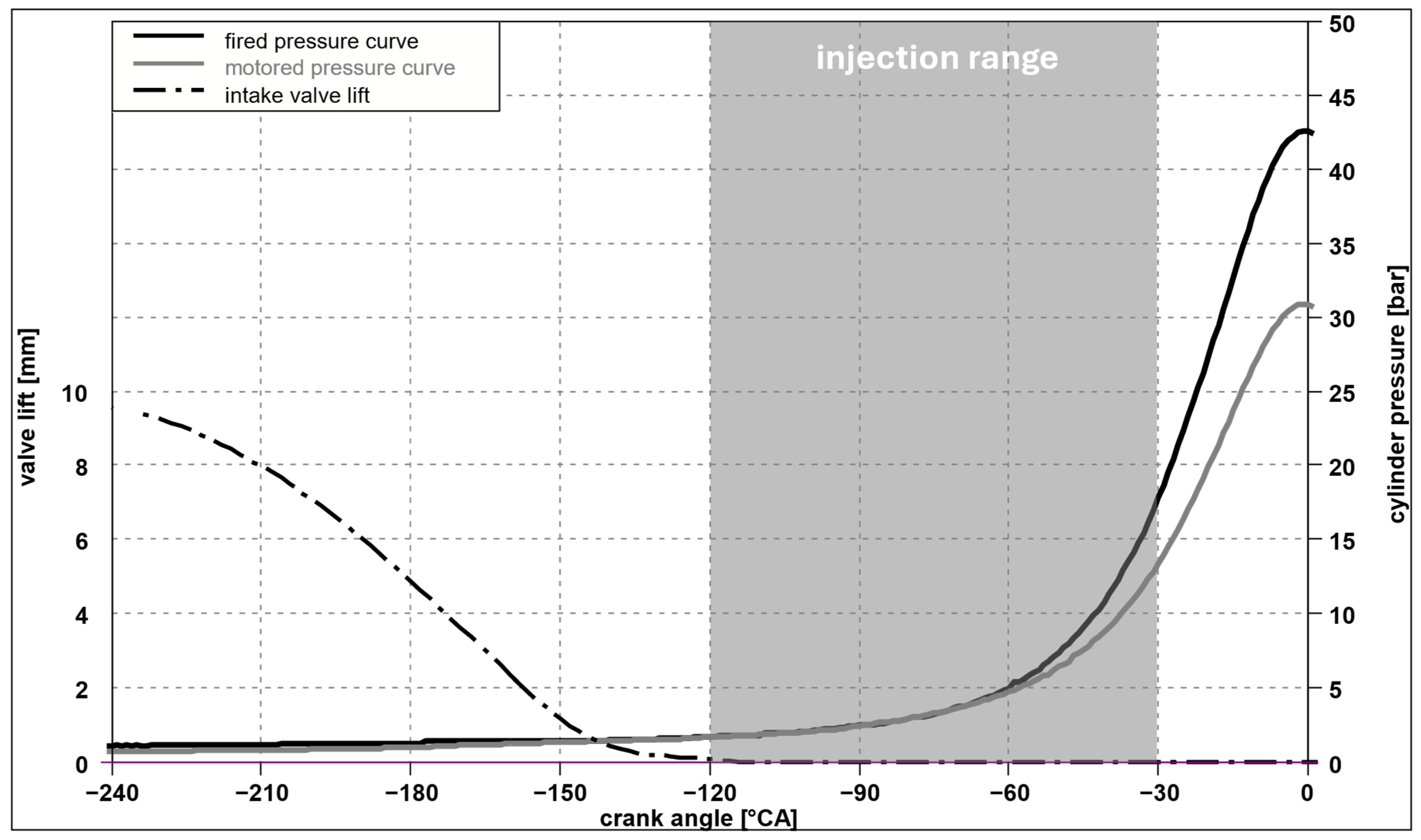
As demonstrated in the preceding section, the start of injection (SOI) and injection duration parameters play a critical role in shaping the combustion behavior of hydrogen direct-injection (DI) engines. Injection pressure is intrinsically linked to both variables and significantly affects fuel-air mixing, combustion stability, and engine efficiency. However, when defining the injection pressure strategy for a hydrogen DI engine, several conflicting design objectives must be considered. Achieving high specific power density necessitates the complete injection of the fuel mass between intake valve closure (IVC) and spark timing. High injection pressures, such as 150 bar, enable complete fuel injection within the short time window between intake valve closure and ignition. They also improve fuel metering accuracy, even at very short injection durations. On the downside, the implementation of high-pressure systems introduces increased mechanical and thermal demands. Specifically, the effort required to maintain injector sealing integrity and ensure reliable system operation increases with higher injection pressures. A minimum injection pressure of pH2 ≥ 40 bar has been found to be sufficient for achieving supercritical hydrogen injection throughout the entire compression stroke (see Figure 14).
This threshold ensures favorable mixture formation and supports robust combustion, particularly under part-load conditions. Reducing the injection pressure offers practical advantages for vehicle integration, as it lowers the system demands for generating and maintaining high pressure levels. Conversely, sufficient hydrogen delivery—particularly at higher engine speeds—requires a high static mass flow rate.
Achieving this necessitates an increase in the injector’s effective flow area. At lower injection pressures, however, the start of injection (SOI)—a key parameter for charge homogenization and controlling pre-ignition tendency—is constrained due to the longer required injection durations.
The influence of injection pressure on the full-load behavior of the hydrogen DI combustion process is examined in detail in the following section. Since the available injector was originally designed for 150 bar operation, tests were conducted at 2000 rpm—an engine speed at which stoichiometric full-load operation remains feasible even at injection pressures as low as 40 bar. The selected engine configuration employed a side-mounted injector, consistent with previous VISIOLution® investigations. In general, increased injection pressure yields improvements in both fuel economy and power output (Figure 15).
These benefits result from enhanced charge homogenization and the resulting ability to better control combustion dynamics. Additionally, as verified in [21,22], careful selection of the end of injection (EOI) can help minimize thermodynamic losses associated with the injection process. The use of 150 bar injection pressure enables shorter injection durations, allowing the EOI to be shifted toward the end of the compression stroke without encroaching upon the intake phase.
To compensate for the reduced mass flow rate at lower hydrogen pressures, injection duration was extended during testing. Specifically, for pressures above 60 bar, the EOI was retarded from 40 °CA BTDC to 30 °CA BTDC to ensure sufficient fuel delivery for stoichiometric operation within the defined injection window.
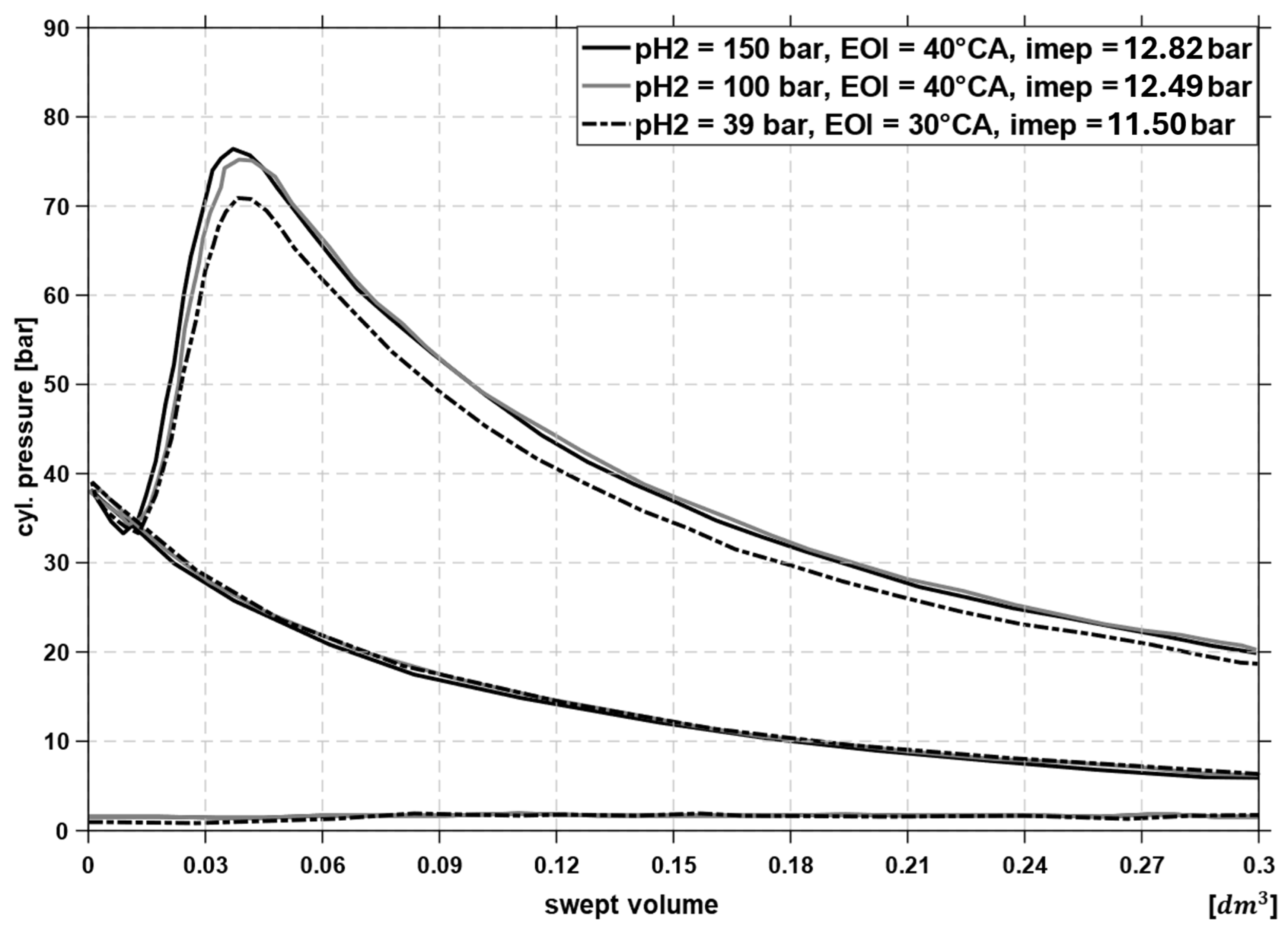
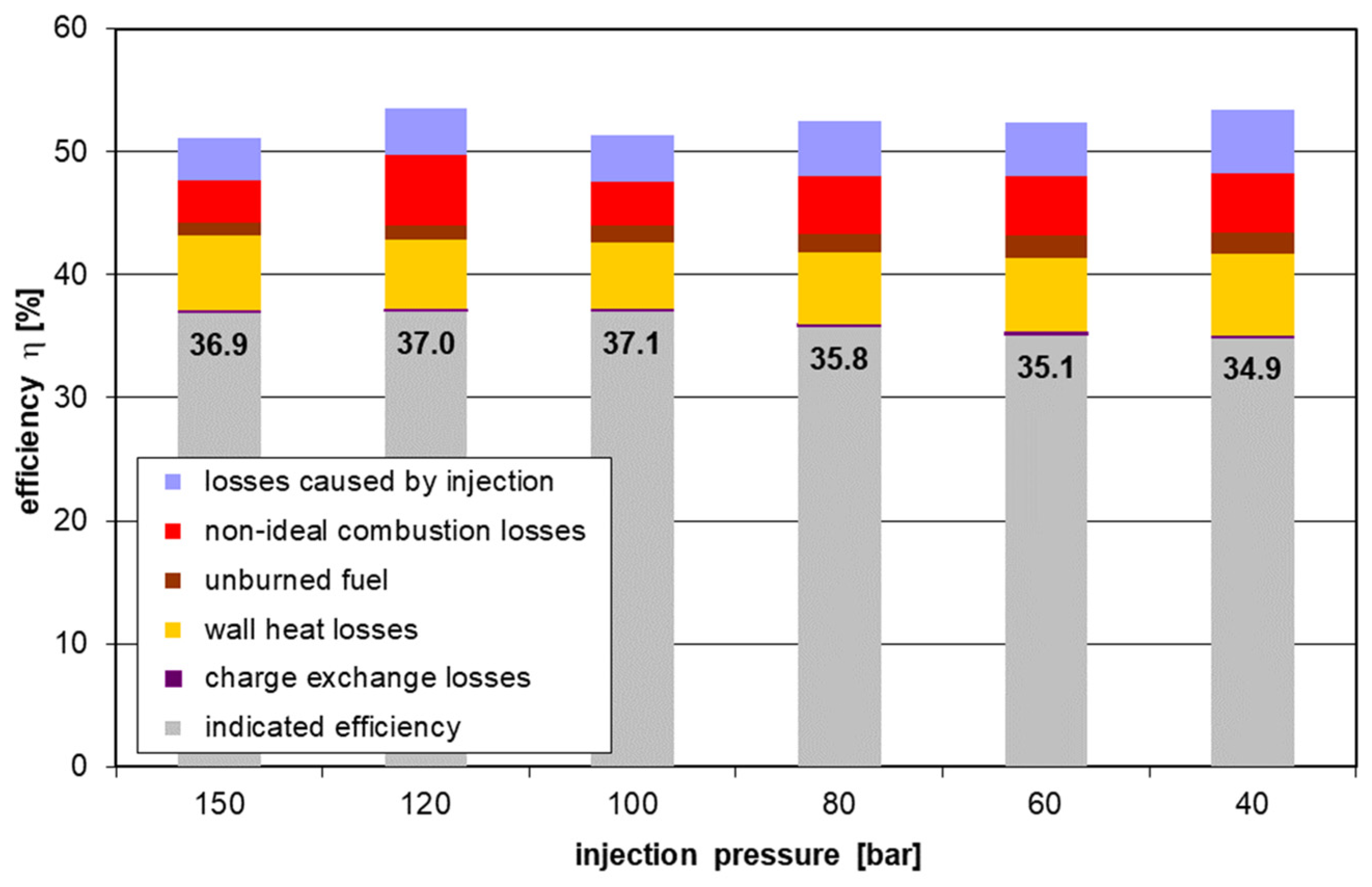
The results demonstrate that an increase in injection pressure from 40 bar to 100 bar leads to an improvement of approximately 12% in the maximum achievable indicated mean effective pressure (IMEP) for the tested engine configuration. This improvement is attributed to enhanced mixture quality and faster combustion rates. However, further increasing the injection pressure to 150 bar did not produce any additional gain in mean effective pressure, indicating a saturation effect beyond 100 bar under the tested conditions Potential beneficial effects may arise with alternative engine geometries, which should be addressed in future investigations. When analyzing the influence of hydrogen injection pressure variation using the pressure-volume (p-V) diagram (Figure 15) and thermodynamic loss analysis (Figure 16), it becomes evident that injection-related losses increase as the injection pressure decreases. The thermodynamic loss analysis for H2-DI engines was conducted based on in-cylinder pressure trace measurements, following the methodology described by Klepatz [23].
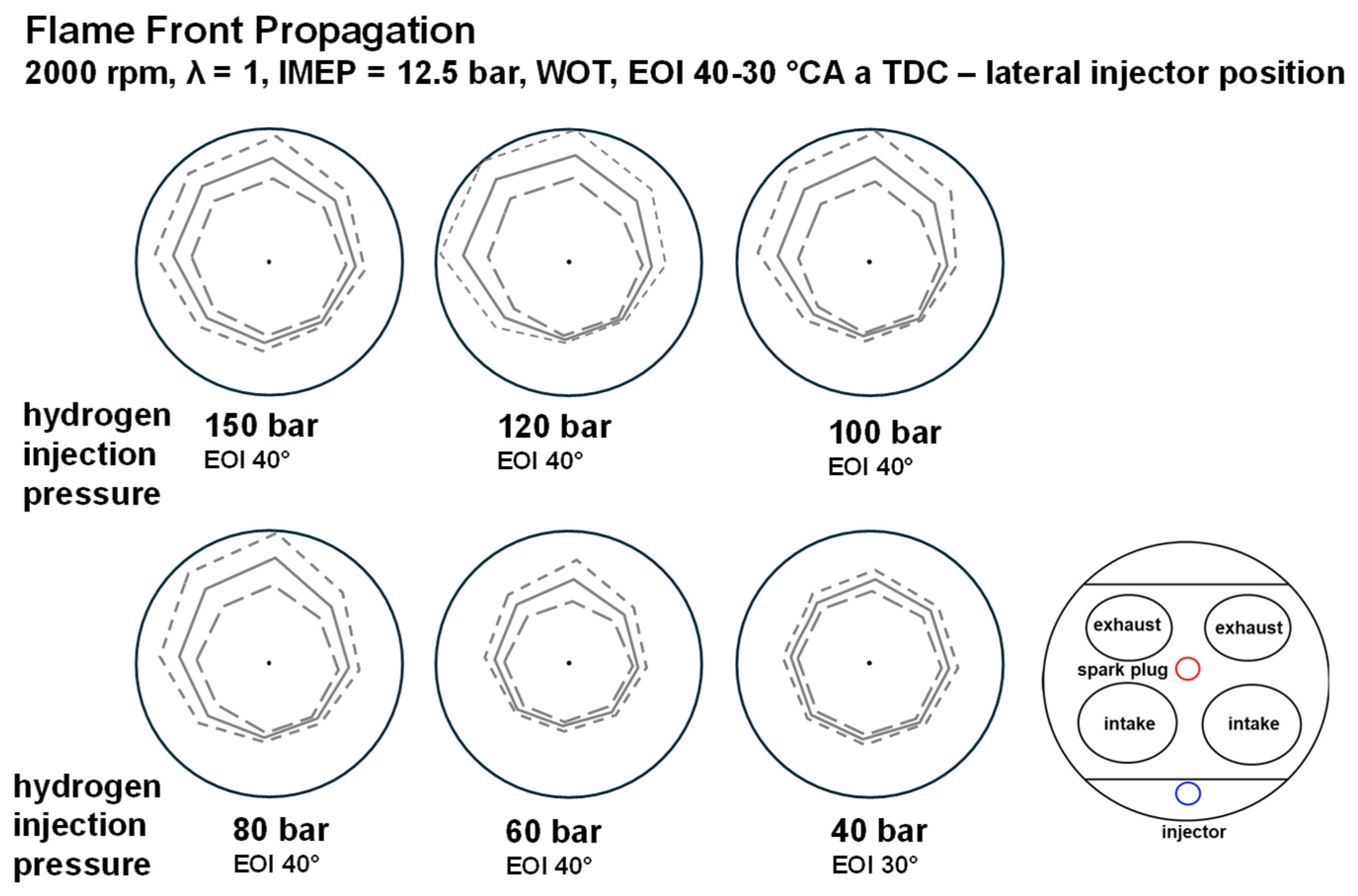
The combustion rate, evaluated in terms of the pressure rise rate, is significantly enhanced at higher injection pressures. However, at hydrogen injection pressures of 100 bar and above, this effect becomes less pronounced, and losses attributable to deviations from ideal constant-volume combustion are substantially reduced. These findings are corroborated by VISIOFlame® diagnostics conducted in parallel with the thermodynamic measurements (Figure 17).
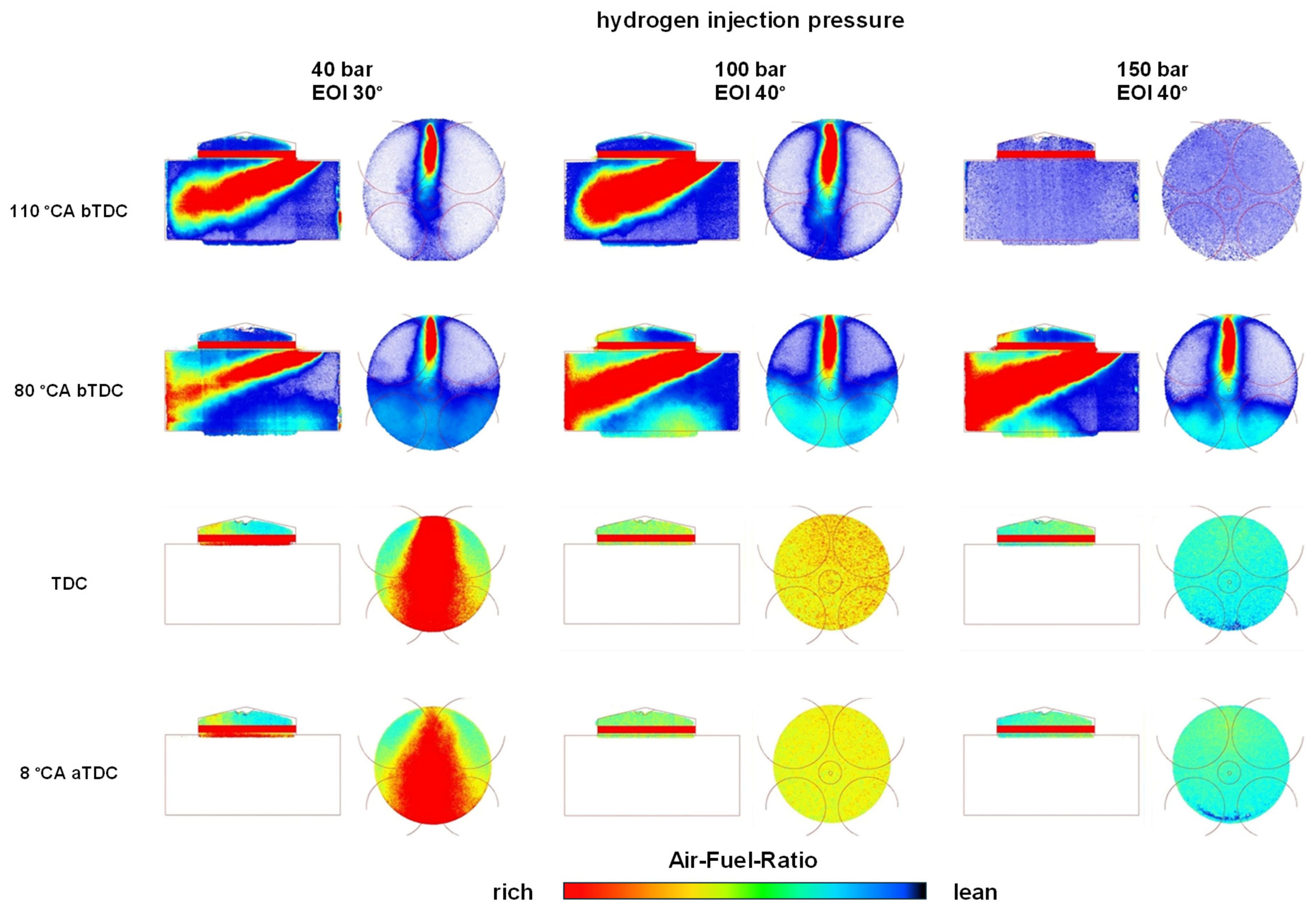
As illustrated Figure 17, flame propagation under low injection pressure conditions exhibits a high degree of symmetry. With increasing injection pressure, the initial flame kernel migrates toward the exhaust valves. Additionally, a 10% increase in flame propagation velocity is observed—based on VISIOFlame® data—when the injection pressure is raised from 40 to 150 bar. The observed shift in flame propagation toward the exhaust side at elevated pressures is attributed to the orientation of the injector’s spray targeting. The symmetrical yet comparatively slower flame development at low injection pressures, combined with extended injection durations, indicates a locally lean but homogeneous hydrogen-air mixture near the spark plug. This phenomenon is consistently reflected in the mixture formation results obtained from optical engine investigations (Figure 18). The optical results of the mixture formation process, shown in Figure 18, were obtained during motored engine operation at 2000 rpm using helium seeded with a TEA tracer. The experimental methodology and apparatus are described in detail in [24].
As observed in the results of the VISIOLution® measurement series, a clear trend emerges—particularly at higher injection pressures–toward increased homogenization of the cylinder charge and greater hydrogen spray penetration depth, both of which correlate positively with injection pressure.
At the specified ignition timing of 8° crank angle (CA) after top dead center (ATDC), improved charge homogenization is evident at elevated injection pressures. Consistent with the VISIOFlame® measurements, the observed shift in the flame front toward the exhaust valves at high injection pressures suggests that injection events occurring during the compression phase have a significant influence on the resulting combustion characteristics.
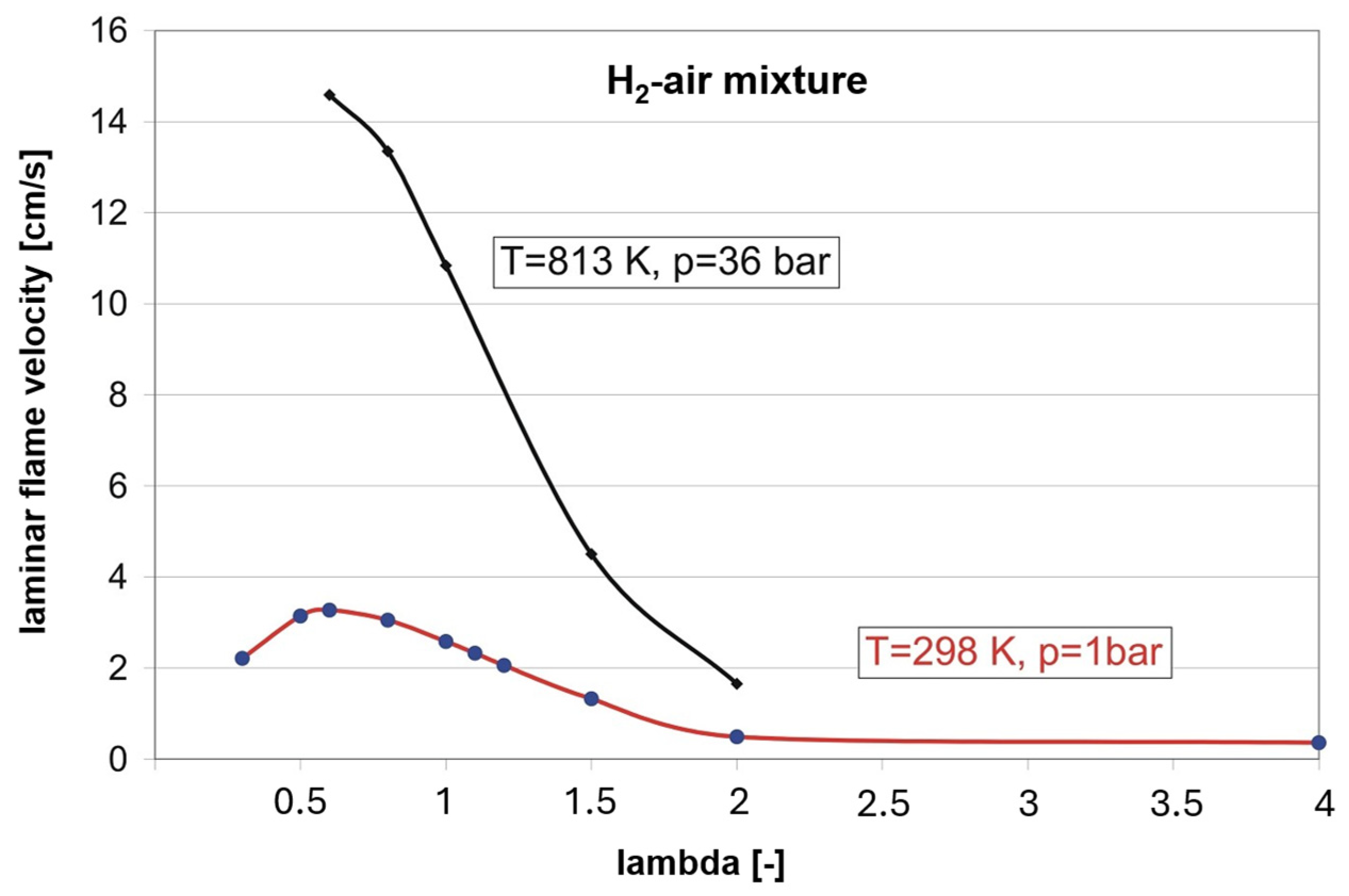
In addition to the temperature increase resulting from compression, mixture formation—and consequently the combustion rate—significantly influences the occurrence of combustion anomalies such as low-speed pre-ignition (LSPI). This relationship is illustrated in Figure 19 and is consistent with the findings reported by Drell [25].
As shown in [12,27], the laminar flame speed reaches its maximum under fuel-rich conditions (e.g., λ = 0.5) and decreases sharply as the mixture becomes leaner beyond approximately λ = 1. This behavior is characteristic of hydrogen–air combustion and plays a critical role in abnormal combustion phenomena. Higher laminar flame front velocities can be attributed to enhanced mixing effects—such as tubular flow structures—during the mixture formation process. These mixing dynamics promote homogeneity, thereby reducing the presence of locally rich zones that are prone to pre-ignition. Such hydrogen-rich pockets exhibit a higher tendency toward auto ignition under in-cylinder conditions, as also suggested by the correlations presented in [16].

4. Conclusions

The presented investigation demonstrates the high potential of stoichiometrically operated hydrogen direct-injection (H2-DI) engines in terms of both power density and indicated efficiency of up to 37% at natural aspirated full load up to 13 bar IMEP. Full-load operation comparable to conventional naturally aspirated gasoline engines was achieved, confirming the viability of hydrogen as a zero-carbon fuel. Due to restrictions in injector flow rate, only naturally aspirated stoichiometric operation could be investigated in previous studies.
Optical and thermodynamic analyses using the fiber optic system VISIOLution® enabled detailed identification of knock and pre-ignition phenomena. It was shown that knock tendency is strongly influenced by mixture formation, flame propagation characteristics, and the positioning of the injector. Auto-ignition events were found to be less sensitive to local hot spots and more dependent on global charge motion and residual gas behavior.
Increasing injection pressure up to 100 bar led to improved charge homogenization and faster combustion, resulting in higher indicated mean effective pressure (IMEP). However, a saturation effect was observed beyond 100 bar. This finding highlights the importance of optimizing the pressure range rather than maximizing it.
A comparison between central and side-mounted injectors revealed that the centrally mounted configuration enables slightly higher loads due to more favorable intake flow. In contrast, the side-mounted injector exhibited greater sensitivity to injection parameters such as timing and pressure. This sensitivity offers additional potential for optimization, provided that injection events are tailored to piston motion and in-cylinder flow fields.
Overall, the findings underline the importance of high turbulence during compression, late and compact injection timing, and adaptive injector strategies for achieving efficient and knock-robust hydrogen combustion under high-load conditions.

Author Contributions

Conceptualization, H.S.R.; methodology, H.S.R.; validation, H.S.R.; formal analysis, D.W. and M.E.; investigation, H.S.R.; writing—original draft preparation, H.S.R.; writing—review and editing, D.W., A.D. and M.E.; visualization, H.S.R., D.W. and M.E.; supervision, H.S.R. All authors have read and agreed to the published version of the manuscript.

Funding

This research received no external financial funding; test engine hardware was donated by BMW Group for research purposes.

Data Availability Statement

The original contributions presented in this study are included in the article. Further inquiries can be directed to the corresponding author.

Conflicts of Interest

The authors declare no conflicts of interest.

Abbreviations

The following abbreviations are used in this manuscript:
ATDCAfter top dead center
biIndicated specific consumption
BTDCBefore top dead center
CACrank angle
CA50Center of combustion, 50% mass fraction burned
dBore
DIDirect Injection (internal mixture formation)
EOIEnd of Injection
IVCIntake valve closure point
H2Hydrogen
nEngine speed
NOxNitrogen Oxides
PFIPort Fuel Injection (external mixture formation)
pH2Hydrogen pressure
pmiMean indicated pressure
sStroke
SOIStart of Injection
TDCTop dead center
tiDuration of injection
VAKVariation coefficient
VANOSVariable camshaft valve timing
VHDisplacement
YStandard deviation, density distribution in combustion chamber
WOTWide open Throttle
ΦEquivalence ratio, equals 1/λ)
εCompression ratio
ηiIndicated efficiency
λAir/fuel ratio (equals 1/Φ)

References

  1. Thomas Koch, D.; Sousa, A.; Bertram, D. H2-Engine Operation with EGR Achieving High Power and High Efficiency Emission-Free Combustion. In SAE Technical Paper Series, Proceedings of the 2019 JSAE/SAE Powertrains, Fuels and Lubricants, Kyoto, Japan, 26–29 August 2019; Thomas Koch, D., Sousa, A., Bertram, D., Eds.; SAE International400 Commonwealth Drive: Warrendale, PA, USA, 2019. [Google Scholar]
  2. Fujita, T. Performance of NOx Absorption 3-Way Catalysis Applied to a Hydrogen Fueled Engine. In Proceedings of the 15th Word Hydrogen Energy Conference (2004), Yokohama, Japan, 27 June–2 July 2004. [Google Scholar]
  3. Rottengruber, H.; Berckmueller, M.; Elsaesser, G.; Brehm, N.; Schwarz, C. A high-efficient combustion concept for direct injection hydrogen internal combustion engines. In Proceedings of the 15th World Hydrogen Energy Conference, Yokohama, Japan, 27 June–2 July 2004; pp. 1–13. [Google Scholar]
  4. Berckmüller, M.; Rottengruber, H.; Eder, A.; Brehm, N.; Elsässer, G.; Müller-Alander, G.; Schwarz, C. Potentials of a Charged SI-Hydrogen Engine. In SAE Technical Paper Series, Proceedings of the SAE Powertrain & Fluid Systems Conference & Exhibition, Pittsburgh, PA, USA, 27–30 October 2003; SAE International400 Commonwealth Drive: Warrendale, PA, USA, 2003. [Google Scholar]
  5. Goyal, H.; Jones, P.; Bajwa, A.; Parsons, D.; Akehurst, S.; Davy, M.H.; Leach, F.C.; Esposito, S. Design trends and challenges in hydrogen direct injection (H2DI) internal combustion engines—A review. Int. J. Hydrogen Energy 2024, 86, 1179–1194. [Google Scholar] [CrossRef]
  6. Klell, M.; Eichlseder, H.; Trattner, A. Wasserstoff in der Fahrzeugtechnik; Springer Fachmedien Wiesbaden: Wiesbaden, Germany, 2018; ISBN 978-3-658-20446-4. [Google Scholar]
  7. Rottengruber, H.; Berckmüller, M.; Elsässer, G.; Brehm, N.; Schwarz, C. Direct-Injection Hydrogen SI-Engine—Operation Strategy and Power Density Potentials. In SAE Technical Paper Series, Proceedings of the 2004 Powertrain & Fluid Systems Conference & Exhibition, Tampa, FL, USA, 25–28 October 2004; SAE International400 Commonwealth Drive: Warrendale, PA, USA, 2004. [Google Scholar]
  8. Rottengruber, H.; Wintergoller, D. Wasserstoff als Kraftstoff. Gießtechnik im Motorenbau 2021; VDI Verlag: Düsseldorf, Germany, 2021; pp. 35–50. ISBN 9783181023860. [Google Scholar]
  9. Dennis, P.A.; Dingli, R.J.; Abbasi Atibeh, P.; Watson, H.C.; Brear, M.J.; Voice, G. Performance of a Port Fuel Injected, Spark Ignition Engine Optimised for Hydrogen Fuel. In SAE 2012 World Congress & Exhibition; SAE International: Warrendale PA, USA, 2012; ISBN 2688-3627. [Google Scholar]
  10. Yip, H.L.; Srna, A.; Yuen, A.C.Y.; Kook, S.; Taylor, R.A.; Yeoh, G.H.; Medwell, P.R.; Chan, Q.N. A Review of Hydrogen Direct Injection for Internal Combustion Engines: Towards Carbon-Free Combustion. Appl. Sci. 2019, 9, 4842. [Google Scholar] [CrossRef]
  11. Woschni, G. Verbrennungsmotoren. Vorlesungsskript; Technische Universität München: München, Germany, 1988. [Google Scholar]
  12. van Basshuysen, R. (Ed.) Handbuch Verbrennungsmotor: Grundlagen, Komponenten, Systeme, Perspektiven; 3., vollst. überarb. und erw. Aufl.; Vieweg: Wiesbaden, Germany, 2005; ISBN 3528239336. [Google Scholar]
  13. Rottengruber, H.; Todsen, E.C. (Eds.) Knocking in Gasoline Engines: Potentials and Limits of Downsizing. In Proceedings of the 4th International Conference, Berlin, Germany, 25–28 April 2013. [Google Scholar]
  14. Diéguez, P.M.; Urroz, J.C.; Sáinz, D.; Machin, J.; Arana, M.; Gandía, L.M. Characterization of combustion anomalies in a hydrogen-fueled 1.4 L commercial spark-ignition engine by means of in-cylinder pressure, block-engine vibration, and acoustic measurements. Energy Convers. Manag. 2018, 172, 67–80. [Google Scholar] [CrossRef]
  15. Pla, B.; Bares, P.; Jimenez, I.; Guardiola, C. Increasing knock detection sensitivity by combining knock sensor signal with a control oriented combustion model. Mech. Syst. Signal Process. 2022, 168, 108665. [Google Scholar] [CrossRef]
  16. Eichlseder, H.; Pischinger, R.; Wallner, T.; Wimmer, A.; Pirker, G.; Ringler, J. (Eds.) Thermodynamic Analysis of Spark-Ignition Engine Combustion Processes and Fuels and Their Potential; Symposium on Development Trends in Spark-Ignition Engines: Esslingen, Germany, 2002. [Google Scholar]
  17. Maio, G.; Boberic, A.; Giarracca, L.; Aubagnac-Karkar, D.; Colin, O.; Duffour, F.; Deppenkemper, K.; Virnich, L.; Pischinger, S. Experimental and numerical investigation of a direct injection spark ignition hydrogen engine for heavy-duty applications. Int. J. Hydrogen Energy 2022, 47, 29069–29084. [Google Scholar] [CrossRef]
  18. Winklhofer, E.; Beidl, C.; Philipp, H.; Piock, W. Optical combustion diagnostics with easy to use sensor systems. MTZ Mot. Z. 2001, 62, 644–651. [Google Scholar] [CrossRef]
  19. Dabireau, F.; Cuenot, B.; Vermorel, O.; Poinsot, T. Interaction of flames of H2 + O2 with inert walls. Combust. Flame 2003, 135, 123–133. [Google Scholar] [CrossRef]
  20. Bargende, M. Schwerpunkt-Kriterium und automatische Klingelerkennung. MTZ Mot. Z. 1995, 56, 623. [Google Scholar]
  21. Balmelli, M.; Merotto, L.; Wright, Y.; Bleiner, D.; Biela, J.; Soltic, P. Optical and thermodynamic investigation of jet-guided spark ignited hydrogen combustion. Int. J. Hydrogen Energy 2024, 78, 1316–1331. [Google Scholar] [CrossRef]
  22. Verhelst, S.; Wallner, T. Hydrogen-fueled internal combustion engines. Prog. Energy Combust. Sci. 2009, 35, 490–527. [Google Scholar] [CrossRef]
  23. Klepatz, K.; Rottengruber, H.; Zeilinga, S.; Koch, D.; Prümm, W. Loss Analysis of a Direct-Injection Hydrogen Combustion Engine. In SAE Technical Paper Series, Proceedings of the International Powertrains, Fuels & Lubricants Meeting, Heidelberg, Germany, 17–19 September 2018; SAE International400 Commonwealth Drive: Warrendale, PA, USA, 2018. [Google Scholar]
  24. Blotevogel, T.; Goldlücke, J.; Egermann, J.; Leipertz, A.; Hartmann, M.; Rottengruber, H. Untersuchung der Gemischbildung von Gasmotoren mit Hilfe laseroptischer Messverfahren. In Der Arbeitsprozess des Verbrennungsmotors (10. Tagung); Verlag der Technischen Universität Graz: Graz, Austria, 2005; pp. 139–166. [Google Scholar]
  25. Drell, I.; Belles, F. Survey of Hydrogen Combustion Properties. Available online: https://ntrs.nasa.gov/citations/19930091021 (accessed on 14 September 2025).
  26. ANSYS Inc. ANSYS CHEMKIN Theory Manual 17.0: (15151); ANSYS Inc.: San Diego, CA, USA, 2015. [Google Scholar]
  27. Maas, U.; Warnatz, J. Ignition processes in hydrogen–oxygen mixtures. Combust. Flame 1988, 74, 53–69. [Google Scholar] [CrossRef]
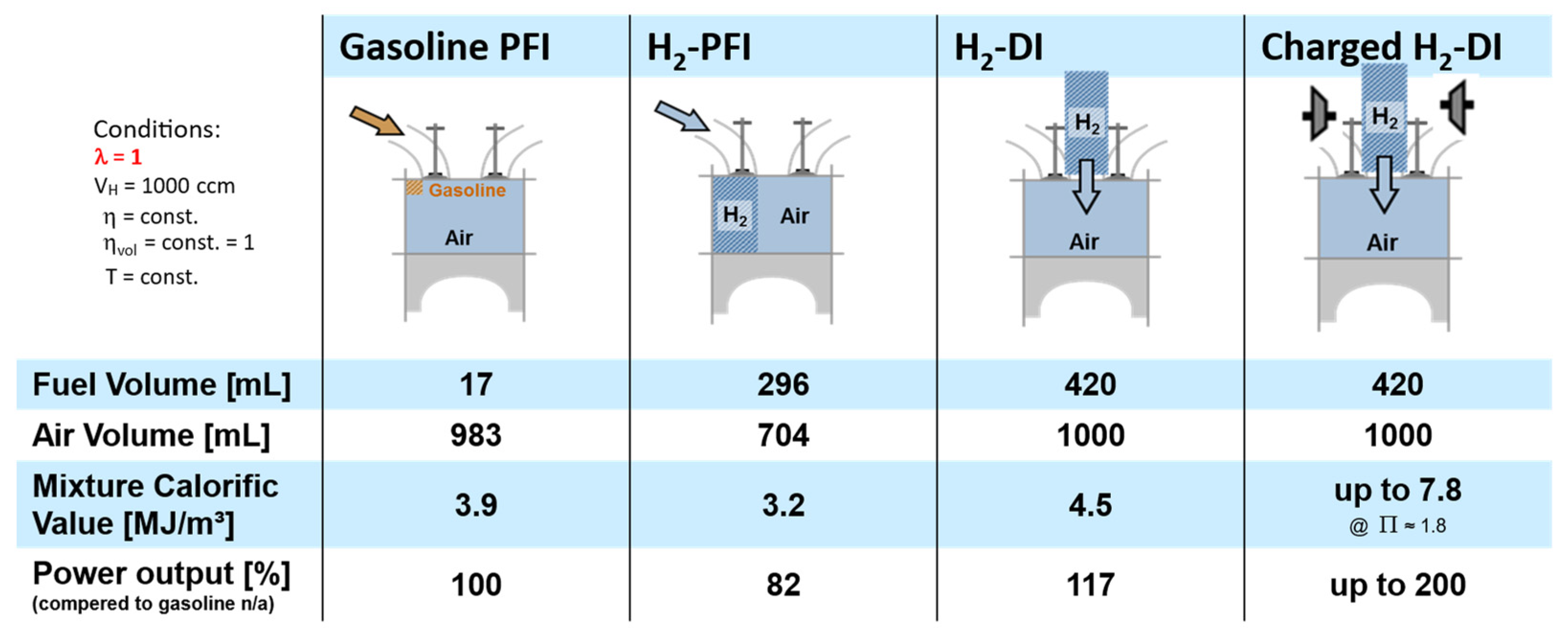
Figure 1. Calorific values of mixtures for different engine concepts.
Energies 18 05972 g001
Figure 2. Pressure curves measured for regular combustion and irregular combustion such as engine knock and pre-ignition [13].
Energies 18 05972 g002
Figure 3. Range of increased knock tendency in the engine map.
Energies 18 05972 g003
Figure 4. Pressure curves measured for regular combustion and a pre-ignition event—exemplary representation based on own measurements (2000 rpm, WOT, λ = 1 and spark timing, adjusted to the knock limit).
Energies 18 05972 g004
Figure 5. Pressure curves measured for regular combustion and combustion with knocking auto-ignition—exemplary representation based on own measurements (2000 rpm, WOT, λ = 1 and spark timing, adjusted to the knock limit).
Energies 18 05972 g005
Figure 6. Engine map indicating regions of increased knock tendency; areas marked in blue denote conditions under which abnormal combustion may occur.
Energies 18 05972 g006
Figure 7. Layout of cylinder heads for central and lateral injector position.
Energies 18 05972 g007
Figure 8. Different fiber optical sensor layouts for the AVL VISIOLution® systems used for investigations.
Energies 18 05972 g008
Figure 9. Comparison of full-load performance with optimized timing.
Energies 18 05972 g009
Figure 10. VISIOLution® measuring system—methodology for determining the ignition location.
Energies 18 05972 g010
Figure 11. Qualitative comparison of flame intensities at full load in stoichiometric H2-DI operation and gasoline operation while operation-analyzed using VISIOKnock®.
Energies 18 05972 g011
Figure 12. VISIOKnock® analysis—a qualitative comparison of pressure oscillations during normal combustion and combustion knock under stoichiometric conditions.
Energies 18 05972 g012
Figure 13. VISIOLution® analysis of Flame propagation and knock location distribution at 2000 rpm, full load.
Energies 18 05972 g013
Figure 14. Estimation of the minimum required injection pressure using measured cylinder pressure curves.
Energies 18 05972 g014
Figure 15. Effect of Hydrogen Injection Pressure on the High-Pressure Loop in the Pressure-Volume (p-V) Diagram for stoichiometric conditions.
Energies 18 05972 g015
Figure 16. Thermodynamic losses while steady-state, wide open throttle (WOT @ IMEP 12.5 bar, λ = 1), naturally aspirated engine operation at 2000 rpm for varying hydrogen injection pressures.
Energies 18 05972 g016
Figure 17. VISIOFlame® analysis of injection pressure variation at 2000 rpm, full load (WOT @ IMEP 12.5 bar, λ = 1).
Energies 18 05972 g017
Figure 18. Laser induced fluorescence visualization (LIF) of mixture formation for various injection pressures on the optical engine at 2000 rpm (WOT) with a single jet injector in lateral position.
Energies 18 05972 g018
Figure 19. Reaction kinetic simulation of the laminar burning velocity for a hydrogen–air mixture under ambient conditions and at in-cylinder conditions at spark timing, performed using CHEMKIN [26].
Energies 18 05972 g019
Table 1. Influence of various parameters on knock tendency in spark-ignition engines.
ParameterAdjustment/InfluenceEffect on Combustion/
Ignition
Impact on Knock Tendency
Pressure at spark timingLower compression ratio
(ε ↓)
p ↓
ignition delay ↑
Knock tendency ↓
Temperature at spark timingLower compression ratio
(ε ↓)
T ↓
ignition delay ↑
Knock tendency ↓
Spark timingRetarded ignition timingT ↓ at spark timingKnock tendency ↓
Number of ignition sourcesIncrease number of ignition pointsFaster flame propagationKnock tendency ↓
Combustion chamber shapeShorter/less fissured chamberMore compact and faster combustionKnock tendency ↓
increase = ↑, decrease = ↓.
Table 2. Research engine technical data.
ParametersValue
DisplacementVH = 0.5 dm3
Strokes = 90 mm
Bored = 84 mm
Compression ratioε = 12:1
Piston shapeFlat, with a light lens-shaped bowl
Number of valves4 DOHC
Valve phasing variable
Hydrogen injection pressure40–150 bar
engine speed rangen = 700 to 4000 rpm
mass balancingpartial mass balancing of the first order using counterweights
max. combustion chamber pressure120 bar
Disclaimer/Publisher’s Note: The statements, opinions and data contained in all publications are solely those of the individual author(s) and contributor(s) and not of MDPI and/or the editor(s). MDPI and/or the editor(s) disclaim responsibility for any injury to people or property resulting from any ideas, methods, instructions or products referred to in the content.