Configuration Optimization of a Plate Fin Precooler Based on Multi-Objective Grey Wolf Optimizer


Abstract
1. Introduction
1.1. Influences on Performance Prediction
1.2. Structural Design Optimization
1.3. Multi-Objective Optimization
2. Performance Calculation Modeling
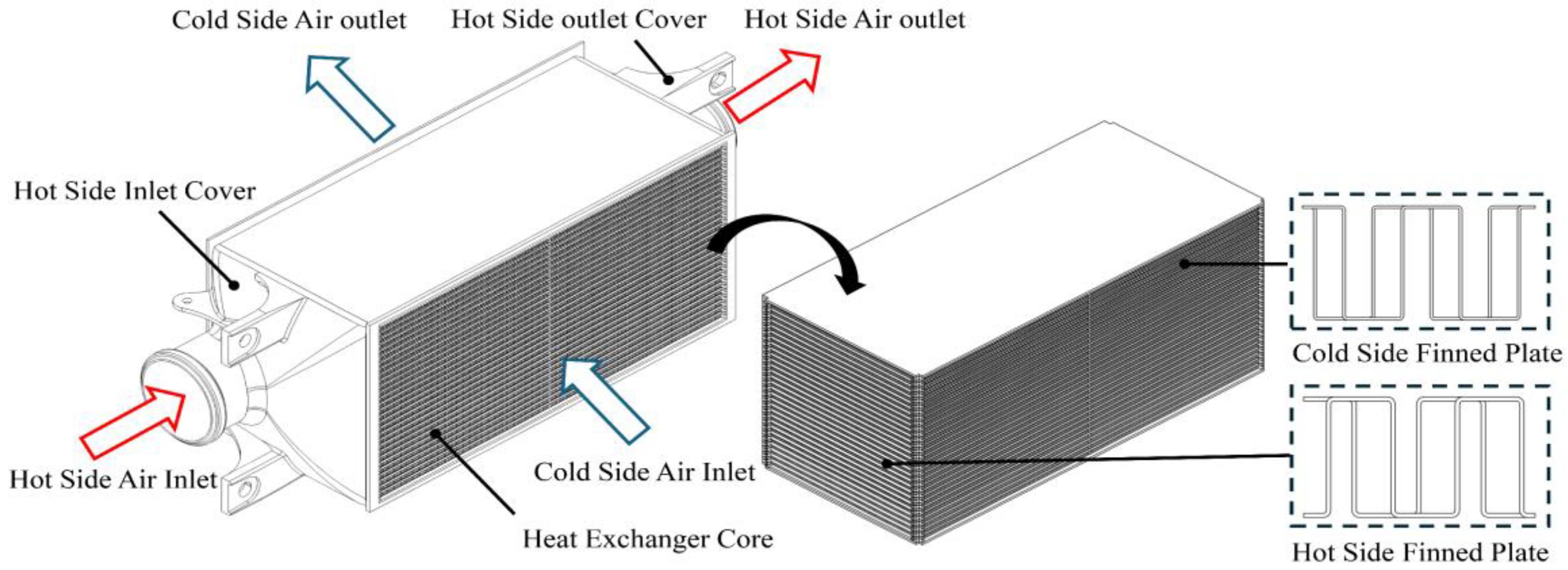
2.1. PFP Configuration
2.2. Performance Prediction Model
2.2.1. Performance Calculation Equations
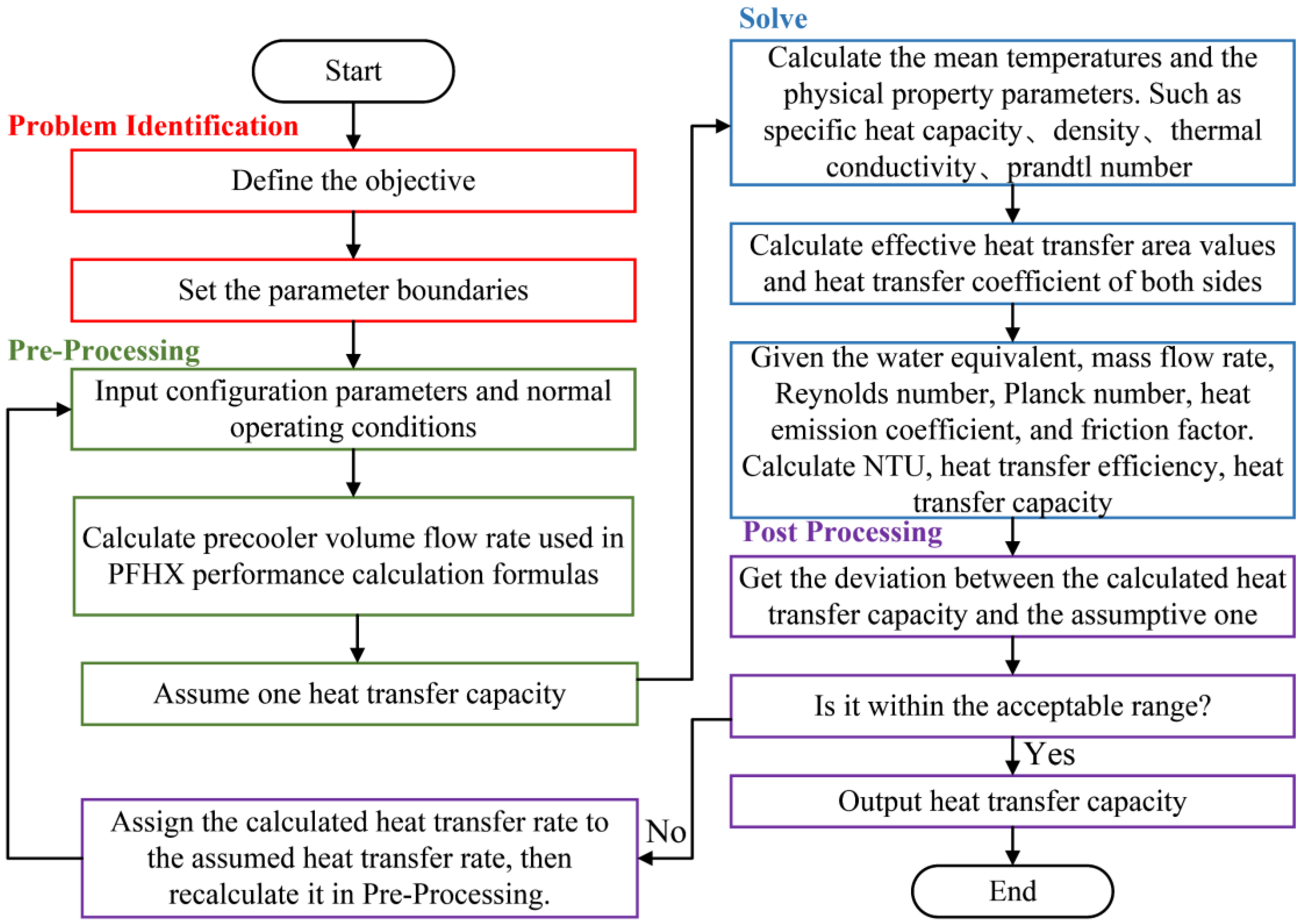
2.2.2. Model Calculation Procedures
- (1)
- The flow in the channels exhibits a uniformly distributed mass velocity because PFP typically features regular, symmetric channel structures with fins that promote flow homogenization. In well-designed precoolers, flow maldistribution is minimal under nominal operating conditions, and this simplification of the computational domain does not significantly compromise accuracy, as local velocity variations have a negligible impact on the overall heat transfer trend being predicted.
- (2)
- The fluid at the precooler outlet achieves a well-mixed condition, as fluids converge in the outlet header after passing through the finned channels, where turbulent mixing naturally occurs to create uniform temperature and composition. It simplifies the outlet boundary condition in the model, ensuring clear and stable closure for thermodynamic calculations.
- (3)
- The fluid’s axial heat transfer is omitted. Since the medium of the precooler is air–air, the main heat transfer mechanism is the convective heat transfer between air and solid fins and solid walls. Axial conduction in the fluid is negligible compared to convective heat transfer, especially under typical high-flow-rate operating conditions, and this simplification reduces the complexity of the energy equation without distorting the key heat exchange characteristics.
- (4)
- The precooler’s internal heat conduction is omitted. This omission is justified, especially given that the precooler uses air–air as the working fluid. For air–air systems, the solid heat conduction within the precooler structure has a far smaller impact than this primary fluid–solid convective heat transfer; therefore, neglecting solid heat conduction simplifies the model while still retaining the critical physical processes governing the precooler’s heat transfer performance.
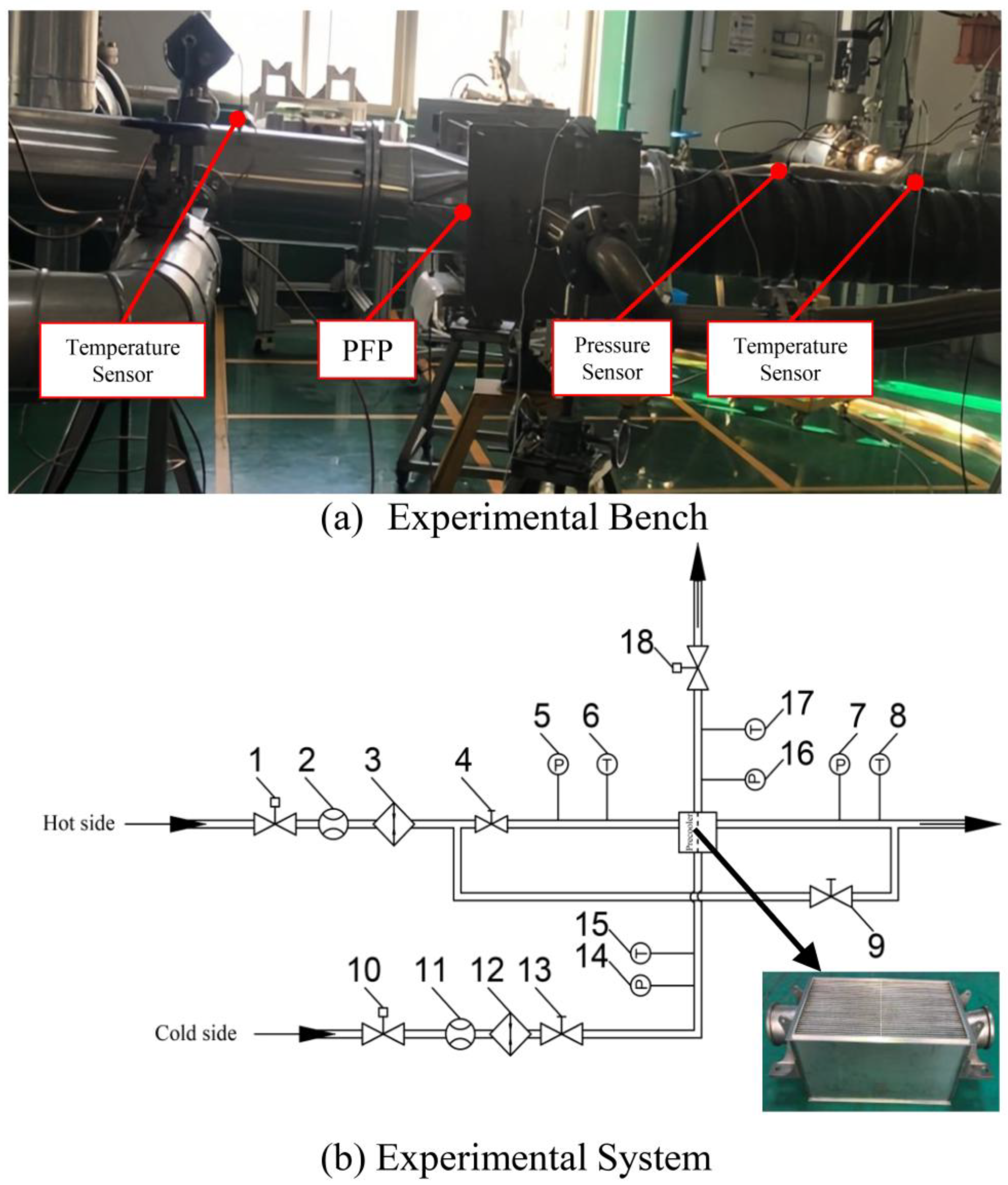
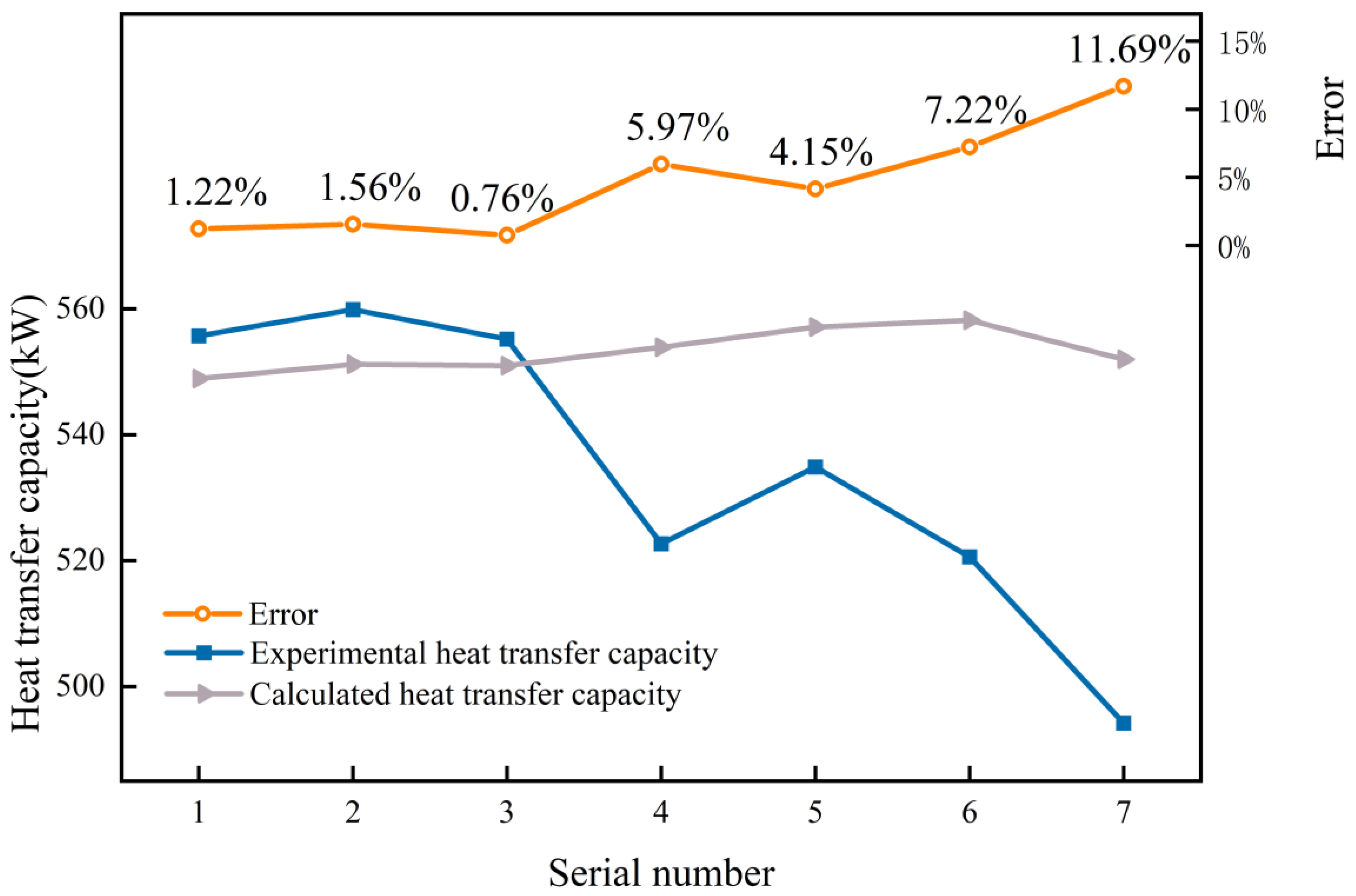
2.3. Model Validation
3. Configuration Parameter Effect Analysis
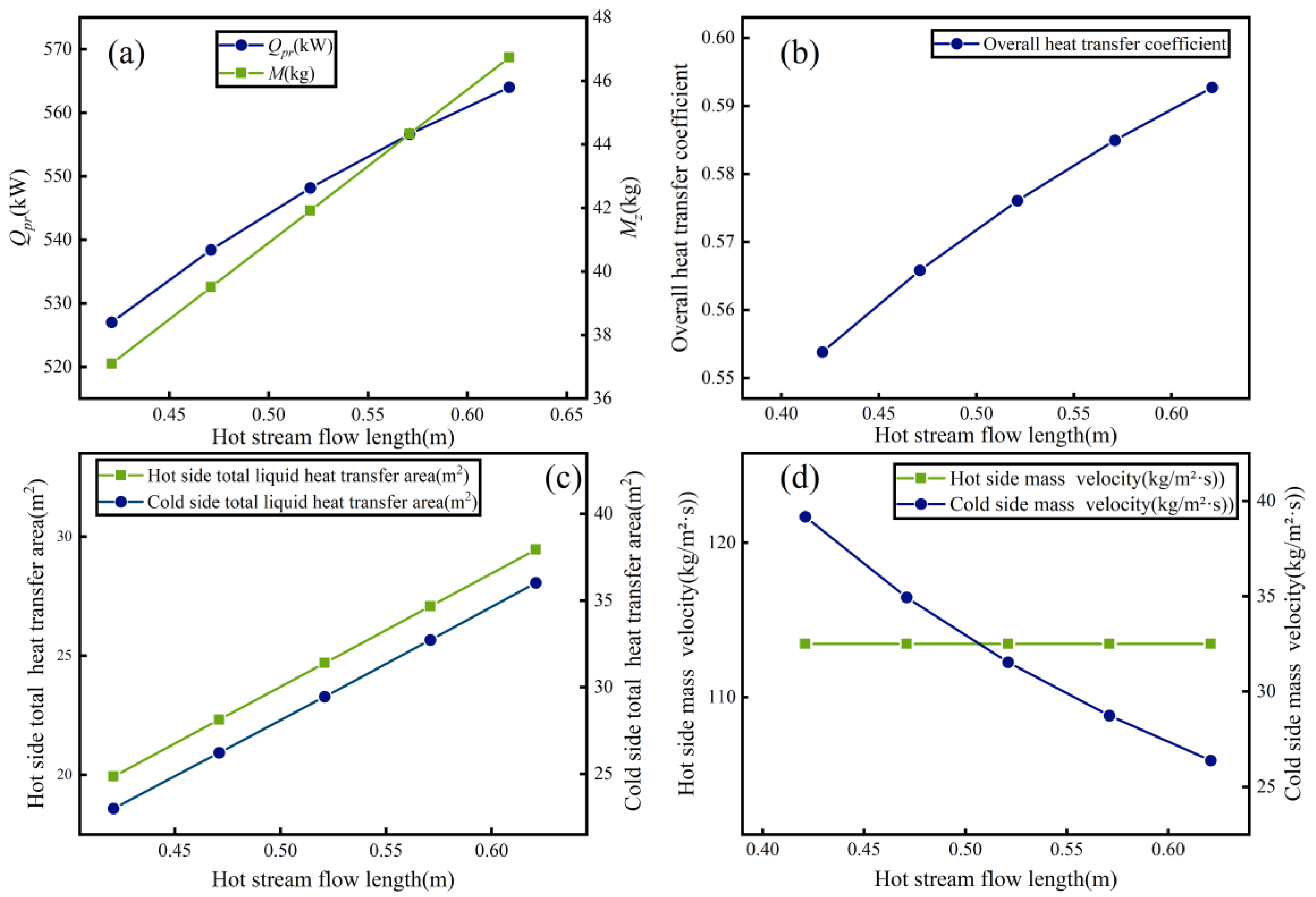
3.1. Effects of L1
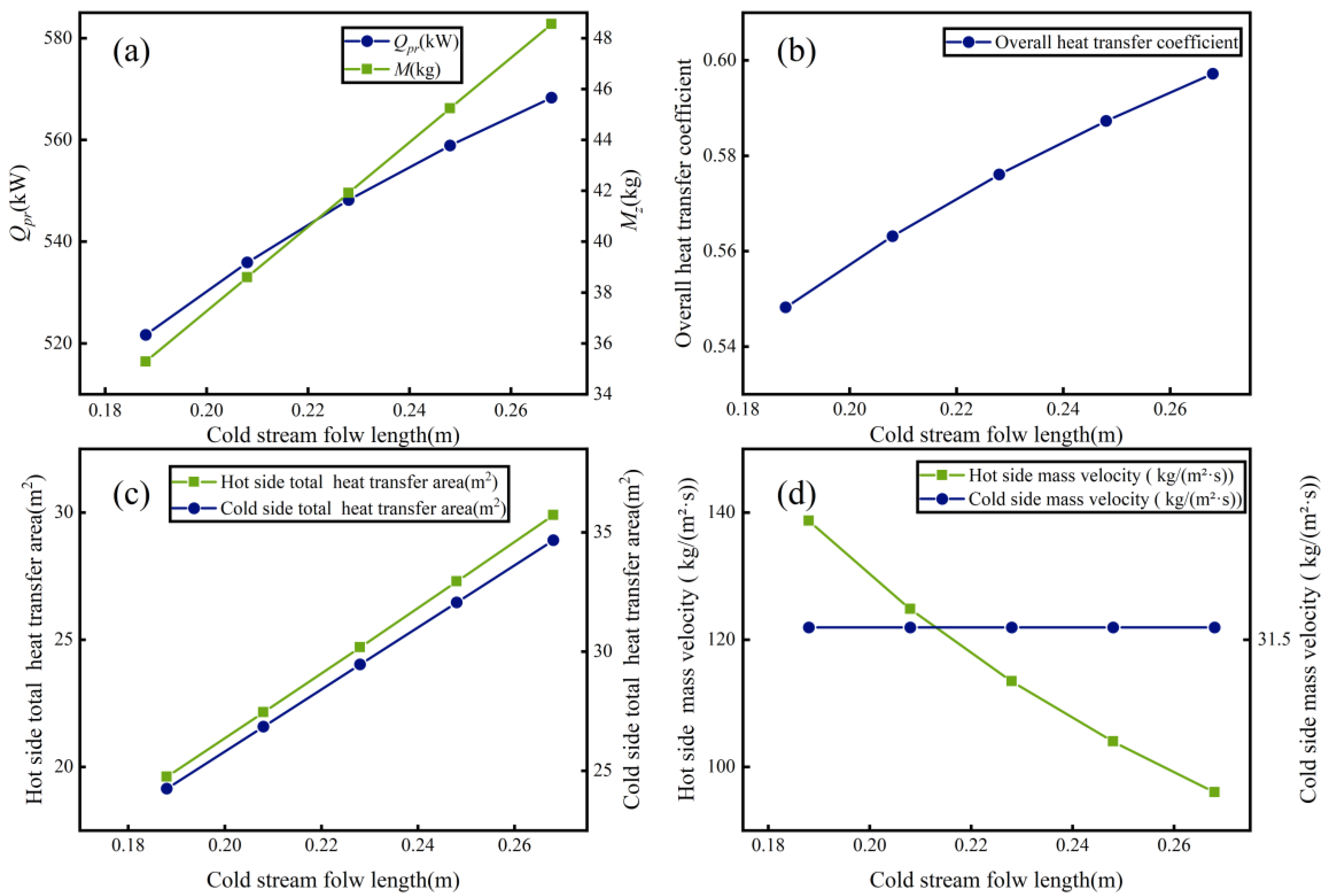
3.2. Effects of L2
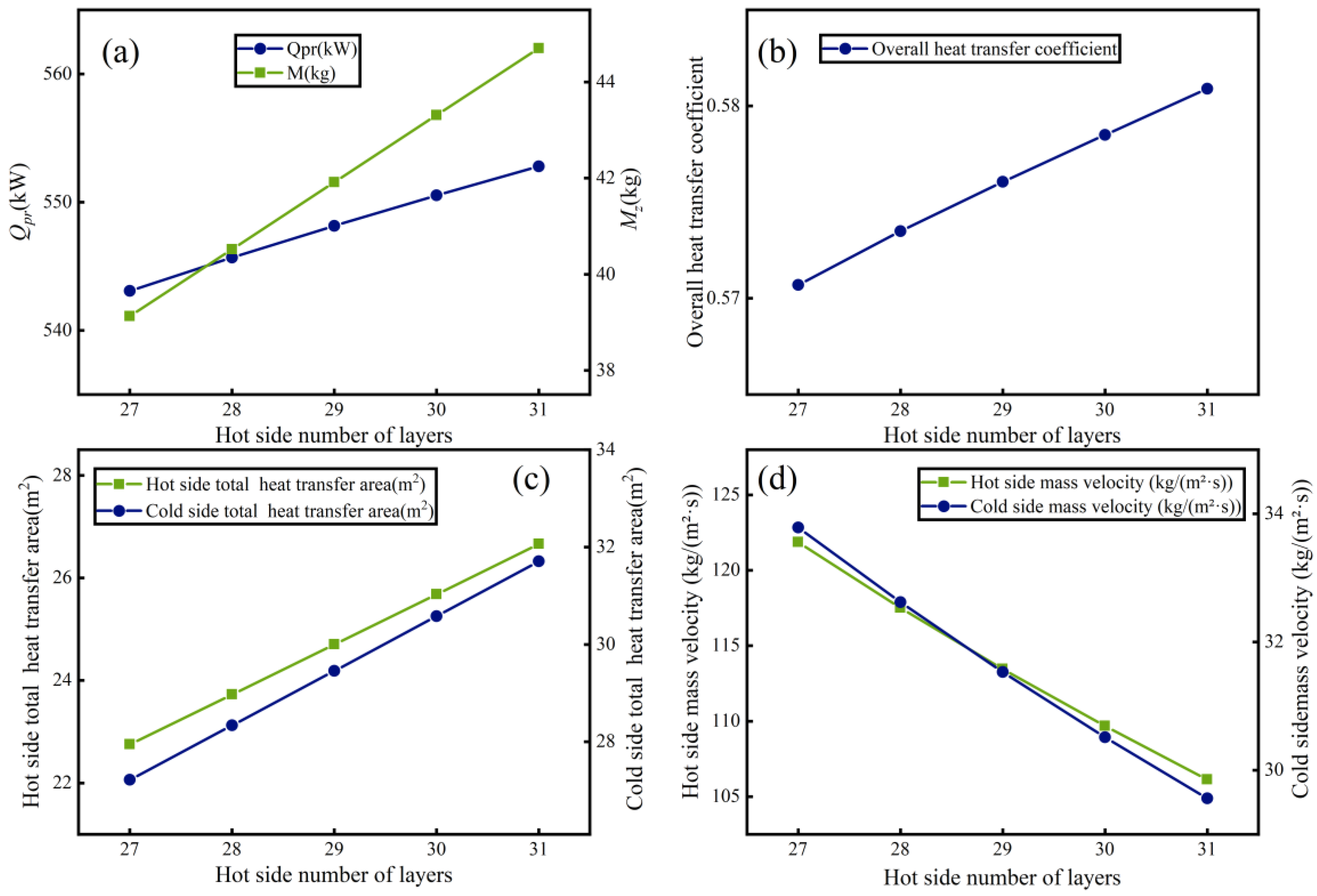
3.3. Effects of N1
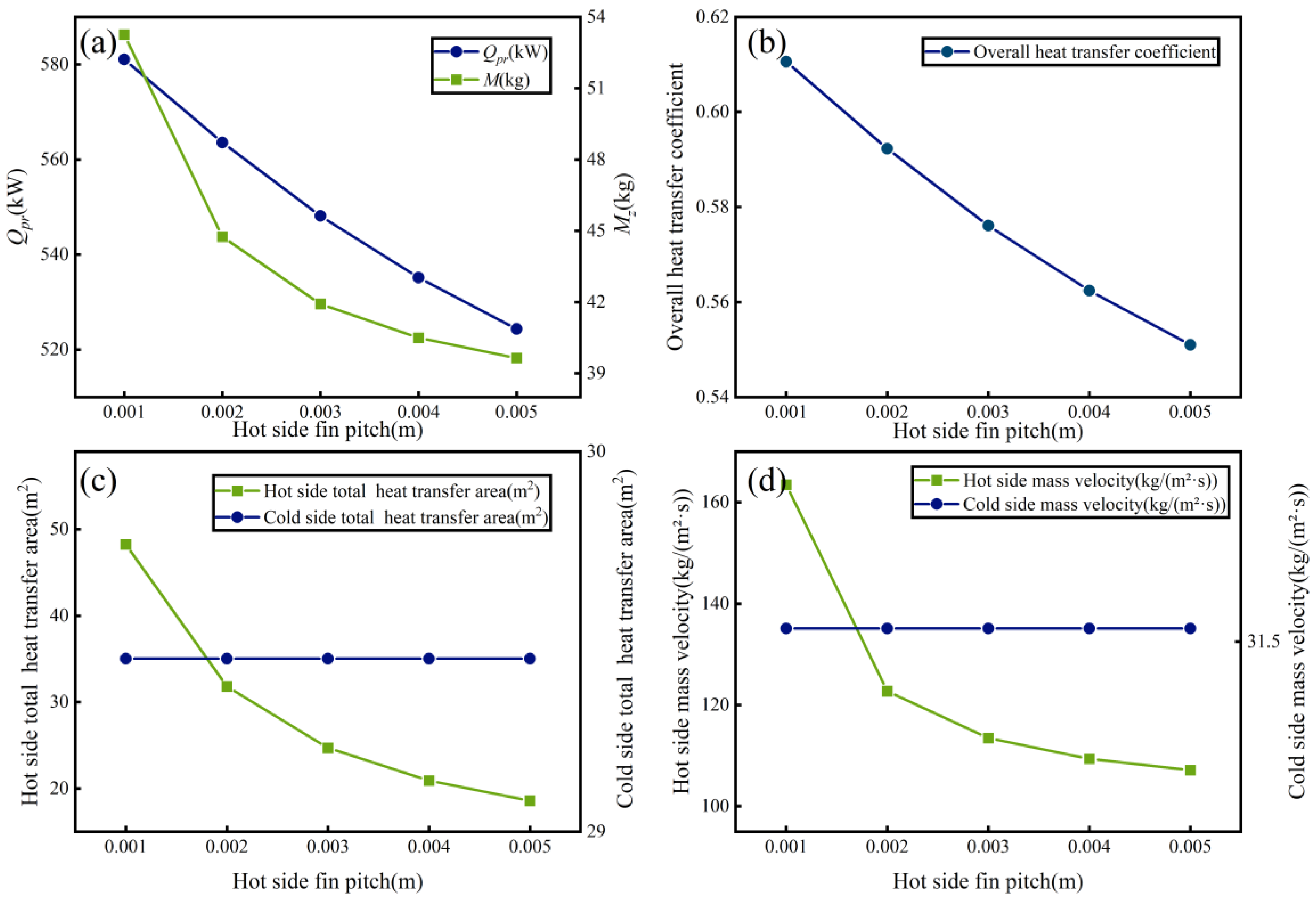
3.4. Effects of Sfh
4. Configuration Optimization
4.1. MOGWO Optimization Method
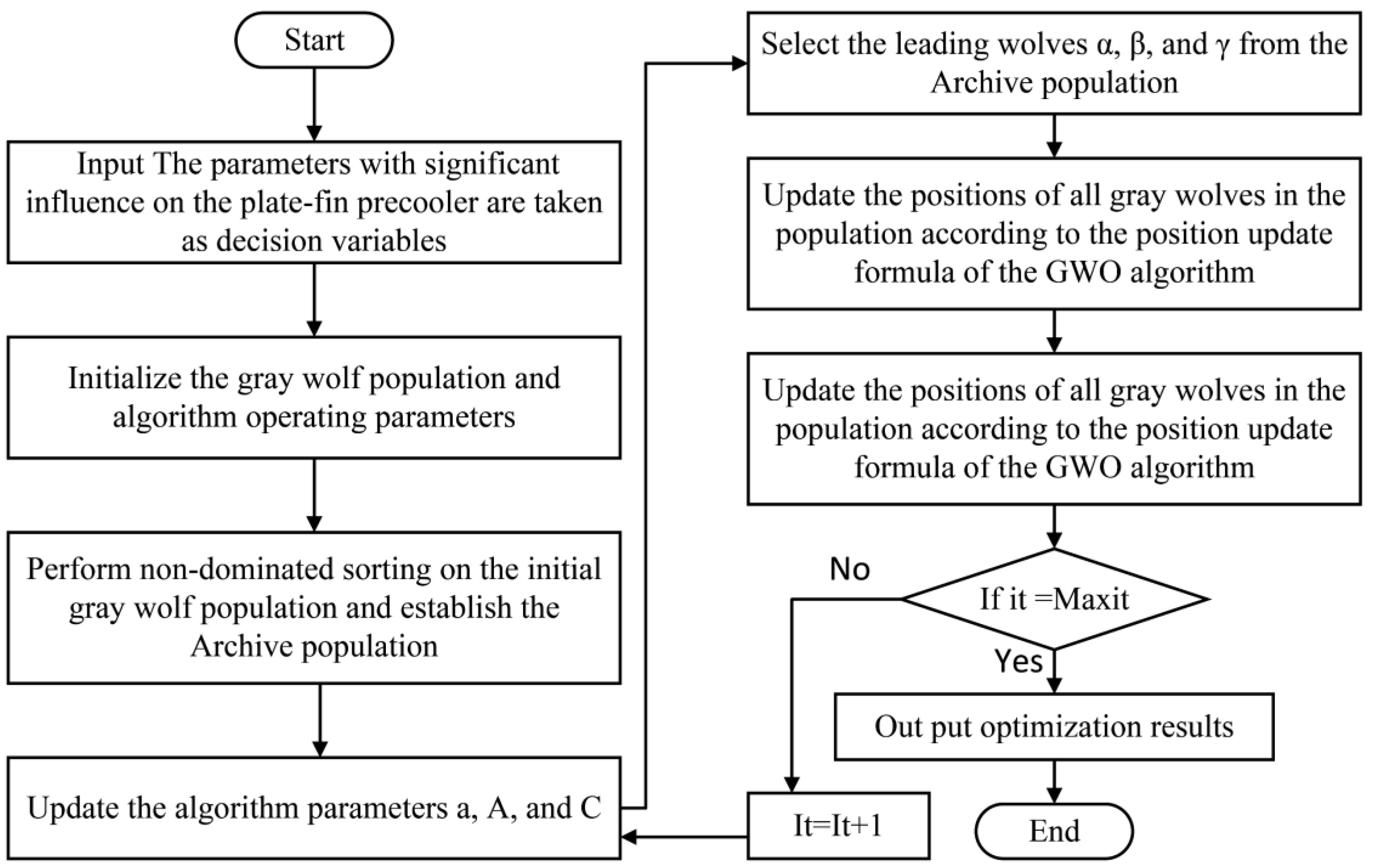
- 1.
- Select the highly influential design parameters L1, L2, N1, and Sfh as decision variables.
- 2.
- Set the parameters of the MOGWO algorithm.
- 3.
- The specific steps to use the MOGWO are as follows:
- (i)
- Initialize the grey wolf population and algorithm operating parameters;
- (ii)
- Perform non-dominated sorting on the initial grey wolf population and establish the Archive population;
- (iii)
- Update the algorithm parameters a, A, and C;
- (iv)
- Select the leading wolves α, β, and γ from the Archive population;
- (v)
- All grey wolves’ positions in the population are updated based on the GWO algorithm’s position update formula;
- (vi)
- Calculate the fitness of each updated grey wolf individual, perform non-dominated sorting again, and update the Archive population;
- (vii)
- Determine if the algorithm has reached the maximum number of cycles.
- 4.
- Output the solution set of the Pareto frontier.
4.2. Optimization Results
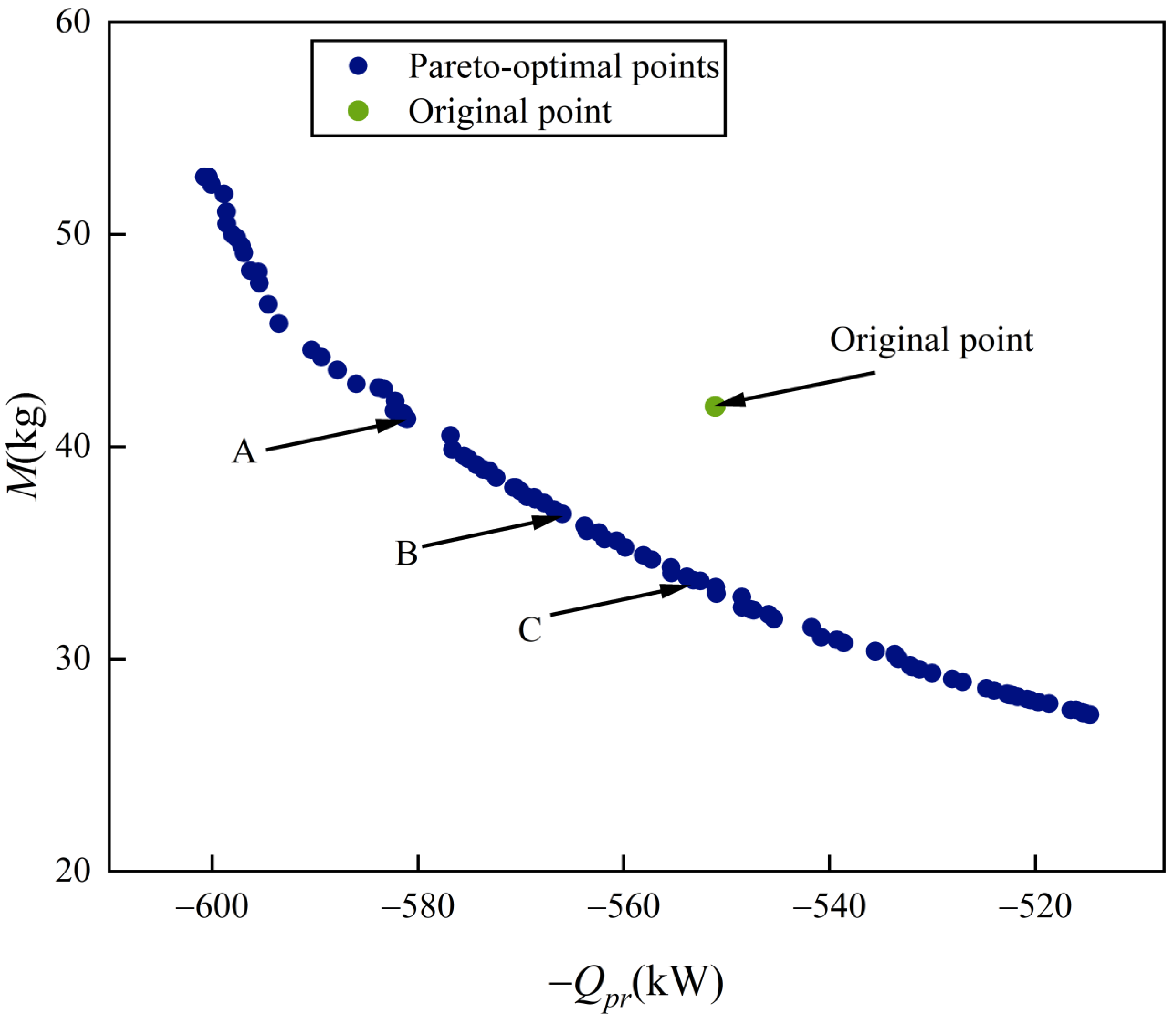
- At Point A, a marked reduction in −Qpr contrasts with a modest decrease in Mz relative to the original point.
- At Point C, −Qpr is slightly smaller than that of the original point, whereas Mz is significantly smaller than that of the original point.
- Point B is selected between Point A and Point C, and it is a relatively intermediate point.
4.3. Algorithm Comparison
5. Conclusion and Prospect
5.1. Conclusion
- (1)
- Validation of the PFP model confirms its accuracy. The error in Qpr predictions is low, with a maximum of 11.69%, a minimum of 0.76%, and a mean of 4.65% compared to Qex. The Mz weighing result is 41.9 kg, which is consistent with the predicted result, proving the model’s reliability.
- (2)
- The parameter influence analysis results indicate that Qpr and Mz exhibit distinct correlative trends with the variation of key parameters. Specifically, as L1 increases from 0.421 m to 0.621 m, Qpr rises from 527.01 kW to 563.98 kW, while Mz simultaneously increases from 37.09 kg to 46.73 kg. When L2 is elevated from 0.188 m to 0.268 m, Qpr correspondingly increases from 521.65 kW to 568.30 kW, and Mz shows a significant increase from 35.27 kg to 48.55 kg. As for N1, with an increase from 27 layers to 31 layers, Qpr presents a slight upward trend, rising from 543.08 kW to 552.80 kW, and Mz also increases accordingly from 39.12 kg to 44.7 kg. In contrast, when Sfh increases from 0.001 m to 0.005 m, both Qpr and Mz exhibit a decreasing trend, declining from 581.08 kW to 524.32 kW and from 53.25 kg to 39.64 kg, respectively. In summary, the increase in L1, L2, and N1 can promote the elevation of Qpr and Mz, whereas the increase in Sfh exerts an inhibitory effect on both parameters.
- (3)
- The optimal configurations obtained via the MOGWO algorithm achieve a significant performance improvement: compared to the original design, Qpr increases by an average of 2.95%, while Mz decreases by an average of 10.7%. This validates the reasonableness of the configuration optimization and provides a solid basis for the design of PFP systems.
5.2. Prospect
Author Contributions
Funding
Data Availability Statement
Acknowledgments
Conflicts of Interest
Nomenclature
| ε | effectiveness | A2 | PFP surface area of hot side (m2) |
| C * | ratio between Cmin and Cmax | AHT | PFP surface area (m2) |
| Cmax | maximum of Ch and Cc (W/K) | m | mass flow rate (kg/(m2·s)) |
| Cmin | minimum of Ch and Cc (W/K) | T | temperature (K) |
| NTU | number of transfer units | Q | heat duty (kW) |
| Atot | free flow area (m2) | Mz | total mass (kg) |
| U | overall heat transfer coefficient (W/m2·K) | Mg | plate total mass (kg) |
| h | convection heat transfer coefficient (W/m2·K) | Mf | seal strip total mass (kg) |
| j | Colburn factor | Mc | fin total mass (kg) |
| Gm | mass flux (kg/m2·s) | Mq | other total mass (kg) |
| Cp | specific heat capacity (J/(kg·K)) | To | inlet temperature of hot side air (K) |
| Pr | Prandtl number | To′ | outlet temperature of hot side air (K) |
| Sf | fin pitch (m) | ρ | density (kg/m3) |
| L1 | hot stream flow length (m) | qo | flow rate of hot side air (kg/(m2·s)) |
| L2 | cold stream flow length (m) | daca | calculation data |
| L3 | height of the PFP (m) | daex | experimental data |
| Aff | free flow area (m2) | Qex | experimental heat exchange capacity (kW) |
| H | height of fin (m) | Qpr | predicted heat exchange capacity (kW) |
| N | fin layers | Subscripts | |
| n | fin frequency | c | cold |
| A1 | PFP surface area of cold side (m2) | h | hot |
References
- Liang, T.; Ye, W.; Song, J.; Zhang, D.; Xu, W. Numerical investigation on the heat transfer and pressure loss characteristics of precooler under negative pressure. Appl. Therm. Eng. 2025, 259, 124894. [Google Scholar] [CrossRef]
- Liang, T.; Xu, W.; Ye, W.; Li, Z.; Zhang, Z.; Zhang, S. Study on the heat transfer characteristics of a plate-fin-typed precooler considering cooling fluid phase change. Case Stud. Therm. Eng. 2023, 47, 103073. [Google Scholar] [CrossRef]
- Liang, T.; Xu, W.; Ye, W.; Zhang, Z.; Li, Z. Numerical investigation of heat transfer and pressure drop characteristics on the hot fluid side of the plate-fin precooler under negative pressure conditions. Int. Commun. Heat Mass Transf. 2023, 148, 107005. [Google Scholar] [CrossRef]
- Liang, T.; Wang, Y.; Xu, W.; Li, Z.; Zhang, S.; Ye, W.; Zhang, D. Performance of an additive-manufactured precooler under high-temperature and negative pressure environment. Int. J. Heat Fluid Flow 2024, 109, 109553. [Google Scholar] [CrossRef]
- Taler, D.; Taler, J.; Wrona, K. New analytical-numerical method for modelling of tube cross-flow heat exchangers with complex flow systems. Energy 2021, 228, 13. [Google Scholar] [CrossRef]
- Yang, H.Z.; Wen, J.; Gu, X.; Liu, Y.C.; Wang, S.M.; Cai, W.J.; Li, Y.Z. A mathematical model for flow maldistribution study in a parallel plate-fin heat exchanger. Appl. Therm. Eng. 2017, 121, 462–472. [Google Scholar] [CrossRef]
- Liu, Y.C.; Li, K.; Wen, J.; Wang, S.M. Thermodynamic characteristics of counter flow and cross flow plate fin heat exchanger based on distributed parameter model. Appl. Therm. Eng. 2023, 219, 119542. [Google Scholar] [CrossRef]
- Liu, J.; Ai, M. Structural optimization design and heat transfer characteristics of air-to-air cooled high voltage motor heat exchanger. Case Stud. Therm. Eng. 2022, 40, 102532. [Google Scholar] [CrossRef]
- Hu, W.; Jia, P.; Nie, J.; Gao, Y.; Zhang, Q. A Fast Prediction Model for Heat Transfer of Hot-Wall Heat Exchanger Based on Analytical Solution. Appl. Sci. 2018, 9, 72. [Google Scholar] [CrossRef]
- Anibal, J.L.; Martins, J.R.R.A. Adjoint-based shape optimization of a plate-fin heat exchanger using CFD. Appl. Therm. Eng. 2024, 252, 123570. [Google Scholar] [CrossRef]
- Gupta, P.K.; Sharma, R.K.; Raghavendra, S. Design optimization study of cryogenic counter-flow plate fin heat exchangers. Cryogenics 2025, 148, 104063. [Google Scholar] [CrossRef]
- Ye, W.; Yan, Y.; Liu, Y.; Ye, W.; Liu, Y. Effect of plate-fin heat exchanger structural parameters on the performance of a cascade refrigeration system. Case Stud. Therm. Eng. 2024, 61, 104998. [Google Scholar] [CrossRef]
- Kedam, N.; Dmitry, A.U.; Evgeniy, V.B.; Alexey, A.G. Heat transfer factor j and friction factor f correlations for offset strip fin and wavy fin of compact plate-fin heat-exchangers. Case Stud. Therm. Eng. 2021, 28, 101552. [Google Scholar] [CrossRef]
- Nagarajan, V.; Chen, Y.; Wang, Q.; Ma, T. Hydraulic and thermal performances of a novel configuration of high temperature ceramic plate-fin heat exchanger. Appl. Energy 2014, 113, 589–602. [Google Scholar] [CrossRef]
- Song, K.; Xi, Z.; Su, M.; Wang, L.; Wu, X.; Wang, L. Effect of geometric size of curved delta winglet vortex generators and tube pitch on heat transfer characteristics of fin-tube heat exchanger. Exp. Therm. Fluid Sci. 2017, 82, 8–18. [Google Scholar] [CrossRef]
- Yicong, L.; Chunyu, S.; Wei, L.; Zhichun, L. Structural parameter design of welded plate heat exchanger based on multi-objective optimization algorithm. Int. Commun. Heat Mass Transf. 2023, 146, 106900. [Google Scholar] [CrossRef]
- Buyruk, E.; Karabulut, K. Research of Heat Transfer Augmentation in Plate Fin Heat. Exchangers Having Different Fin Types. J. Eng. Thermophys. 2020, 29, 316–330. [Google Scholar] [CrossRef]
- Jirandeh, R.R.; Ghazi, M.; Sotoodeh, A.F.; Nikian, M. Plate-fin heat exchanger network modeling, design and optimization—A novel and comprehensive algorithm. J. Eng. Des. Technol. 2021, 19, 1017–1043. [Google Scholar]
- Zarea, H.; Kashkooli, F.M.; Soltani, M.; Rezaeian, M. A novel single and multi-objective optimization approach based on Bees Algorithm Hybrid with Particle Swarm Optimization (BAHPSO): Application to thermal-economic design of plate fin heat exchangers. Int. J. Therm. Sci. 2018, 129, 552–564. [Google Scholar] [CrossRef]
- Mohapatra, S.; Das, D.K.; Singh, A.K. An optimal plate-fin heat exchanger design using opposition-based Orthogonal Learning Kho-Kho Optimization algorithm. Prog. Nucl. Energy 2024, 177, 105416. [Google Scholar] [CrossRef]
- Wen, J.; Yang, H.; Tong, X.; Li, K.; Wang, S.; Li, Y. Configuration parameters design and optimization for plate-fin heat exchangers with serrated fin by multi-objective genetic algorithm. Energy Conv. Manag. 2016, 117, 482–489. [Google Scholar] [CrossRef]
- Hajabdollahi, H. Multi-objective optimization of plate fin heat exchanger using constructal theory. Int. Commun. Heat Mass Transf. 2019, 108, 104283. [Google Scholar] [CrossRef]
- Li, S.C.; Deng, Z.X.; Liu, J.; Liu, D.F. Multi-Objective Optimization of Plate-Fin Heat Exchangers via Non-Dominated Sequencing Genetic Algorithm (NSGA-II). Appl. Sci. 2022, 12, 11719. [Google Scholar] [CrossRef]
- Li, K.; Wen, J.; Wang, S.; Li, Y. Multi-parameter optimization of serrated fins in plate-fin heat exchanger based on fluid-structure interaction. Appl. Therm. Eng. 2020, 176, 115357. [Google Scholar] [CrossRef]
- Guan, Y.; Wang, L.; Cui, H. Optimization Analysis of Thermodynamic Characteristics of Serrated Plate-Fin Heat Exchanger. Sensors 2023, 23, 4158. [Google Scholar] [CrossRef] [PubMed]
- Wang, T.; Song, K.; Ma, L.; Zhu, H.; Zhang, Z.; Gu, B.; Zhang, Q.; Wu, X. Multi-objective performance optimization of pillow plate heat exchanger by response surface methodology and NSGA-Ⅱ genetic algorithm. Case Stud. Therm. Eng. 2025, 74, 106765. [Google Scholar] [CrossRef]
- Sanaye, S.; Hajabdollahi, H. Thermal-economic multi-objective optimization of plate fin heat exchanger using genetic algorithm. Appl. Energy 2010, 87, 1893–1902. [Google Scholar] [CrossRef]
- Wang, Z.; Li, Y.Z. Irreversibility analysis for optimization design of plate fin heat exchangers using a multi-objective cuckoo search algorithm. Energy Conv. Manag. 2015, 101, 126–135. [Google Scholar] [CrossRef]
- Khan, T.A.; Li, W. Optimal design of plate-fin heat exchanger by combining multi-objective algorithms. Int. J. Heat Mass Transf. 2017, 108, 1560–1572. [Google Scholar] [CrossRef]
- Arora, A.; Pathak, A.; Juneja, A.; Shakkarwal, P.; Kumar, R.J.M.T.P. Design & analysis of progressive die using SOLIDWORKS. Mater. Today Proc. 2022, 51, 956–960. [Google Scholar]
- Makhadmeh, S.N.; Alomari, O.A.; Mirjalili, S.; Al-Betar, M.A.; Elnagar, A. Recent advances in multi-objective grey wolf optimizer, its versions and applications. Neural Comput. Appl. 2022, 34, 19723–19749. [Google Scholar] [CrossRef]
- Mirjalili, S.; Saremi, S.; Mirjalili, S.M.; Coelho, L.D. Multi-objective grey wolf optimizer: A novel algorithm for multi-criterion optimization. Expert Syst. Appl. 2016, 47, 106–119. [Google Scholar] [CrossRef]



| Algorithm | Advantages | Typical Application Fields |
|---|---|---|
| Multi-Objective Genetic Algorithm (MOGA) [21] |
| Engineering structural design |
| Non-Dominated Sorting Genetic Algorithm II (NSGA-II) [26] |
| Automotive multi-performance optimization |
| Multi-Objective Particle Swarm Optimization (MOPSO) [22] |
| Traffic flow scheduling |
| Parameter | Value | Parameter | Value |
|---|---|---|---|
| Hot stream flow length L1 | 521 × 10−3 m | Coldstream flow length L2 | 228 × 10−3 m |
| Heat exchanger height L3 | 251 × 10−3 m | Side plate thickness | 3 × 10⁻³ m |
| Hot side fin pitch Sfh | 3 × 10⁻³ m | Separator thickness | 0.3 × 10⁻³ m |
| Cold side fin pitch Sfc | 4 × 10⁻³ m | Hot side plate spacing | 4.5 × 10⁻³ m |
| Hot side number of layers N1 | 29 | Cold side plate spacing | 3 × 10⁻³ m |
| Working Condition | Value |
|---|---|
| Mass flow rate of hot side | 1.873 kg/s |
| Inlet temperature of hot side | 754.15 K |
| Mass flow rate of cold side | 1.96 kg/s |
| Inlet temperature of cold side | 293.15 K |
| Parameter | Equation | No. |
|---|---|---|
| PFP Heat transfer efficiency | (1) | |
| Heat capacity ratio | (2) | |
| Number of transfer units | (3) | |
| Convection heat transfer coefficient | (4) | |
| Mass flux | (5) | |
| Free flow area of hot side | (6) | |
| Free flow area of cold side | (7) | |
| PFP area of hot side | (8) | |
| PFP area of cold side | (9) | |
| Heat exchanger area | (10) | |
| PFP heat transfer capacity | (11) | |
| Total mass | (12) |
| Operating Conditions | Hot Side Parameter | Cold Side Parameter | |||||
|---|---|---|---|---|---|---|---|
| Number | Inlet Mass Flow Rate/kg·s−1 | Inlet Temperature/K | Inlet Pressure/Mpa | Inlet Mass Flow Rate/kg·s−1 | Inlet Temperature/K | Inlet Pressure/Mpa | |
| 1 | 1.901 | 754.35 | 0.366 | 1.933 | 292.25 | 0.0616 | |
| 2 | 1.872 | 755.85 | 0.361 | 1.978 | 292.75 | 0.0616 | |
| 3 | 1.835 | 756.5 | 0.347 | 1.974 | 293.15 | 0.0623 | |
| 4 | 1.653 | 765.45 | 0.364 | 1.832 | 294.35 | 0.0533 | |
| 5 | 1.606 | 766.95 | 0.369 | 1.985 | 295.75 | 0.0612 | |
| 6 | 1.53 | 769.15 | 0.371 | 1.929 | 295.75 | 0.0579 | |
| 7 | 1.504 | 769.45 | 0.368 | 1.744 | 295.75 | 0.049 | |
| Parameters | Q (kW) | M (kg) |
|---|---|---|
| Original point | 551.1 | 41.9 |
| Optimal point A | 581.4 | 41.37 |
| Optimal point B | 566.79 | 37.03 |
| Optimal point C | 553.84 | 33.85 |
| Conversion | 2.95% | 10.7% |
| Hot Stream Flow Length (L1) | Cold Stream Flow Length (L2) | Hot Side Number of Layers (N1) | Hot Side Fin Pitch (Sfh) | |
|---|---|---|---|---|
| Original point | 0.521 m | 0.228 m | 29 | 0.003 m |
| Optimal point A | 0.621 m | 0.241 m | 27 | 0.001 m |
| Optimal point B | 0.559 m | 0.228 m | 27 | 0.001 m |
| Optimal point C | 0.544 m | 0.210 m | 27 | 0.001 m |
Disclaimer/Publisher’s Note: The statements, opinions and data contained in all publications are solely those of the individual author(s) and contributor(s) and not of MDPI and/or the editor(s). MDPI and/or the editor(s) disclaim responsibility for any injury to people or property resulting from any ideas, methods, instructions or products referred to in the content. |
© 2025 by the authors. Licensee MDPI, Basel, Switzerland. This article is an open access article distributed under the terms and conditions of the Creative Commons Attribution (CC BY) license (https://creativecommons.org/licenses/by/4.0/).
Share and Cite
Zhao, C.; Xu, Z.; Ning, X.; Wang, M.; Jiang, P. Configuration Optimization of a Plate Fin Precooler Based on Multi-Objective Grey Wolf Optimizer. Energies 2025, 18, 5952. https://doi.org/10.3390/en18225952
Zhao C, Xu Z, Ning X, Wang M, Jiang P. Configuration Optimization of a Plate Fin Precooler Based on Multi-Objective Grey Wolf Optimizer. Energies. 2025; 18(22):5952. https://doi.org/10.3390/en18225952
Chicago/Turabian StyleZhao, Changyin, Zhe Xu, Xin Ning, Min Wang, and Pengyu Jiang. 2025. "Configuration Optimization of a Plate Fin Precooler Based on Multi-Objective Grey Wolf Optimizer" Energies 18, no. 22: 5952. https://doi.org/10.3390/en18225952
APA StyleZhao, C., Xu, Z., Ning, X., Wang, M., & Jiang, P. (2025). Configuration Optimization of a Plate Fin Precooler Based on Multi-Objective Grey Wolf Optimizer. Energies, 18(22), 5952. https://doi.org/10.3390/en18225952