
Abstract
This paper presents a cascaded control strategy for neutral-point-clamped three-level (NPC-3L) inverter-fed permanent magnet synchronous motors (PMSMs), integrating continuous-control-set model-predictive control (CCS-MPC) with mid-point voltage regulation and an online Lyapunov-stable neural-network (NN) disturbance observer. The outer CCS-MPC loop optimizes voltage vector application for accurate current tracking and harmonic suppression, while the inner loop balances mid-point voltage by adjusting the dwell times of P/N small-voltage vectors (VVs). The NN-based disturbance observer compensates parameter mismatches in real time, reducing steady-state dq-axis current errors. To validate the effectiveness of the proposed strategy, experiments are conducted using a three-phase PMSM fed by three-phase NPC-3L inverters. Experimental results demonstrate substantial improvements in mid-point voltage balance, current quality, and robustness against model uncertainties.
1. Introduction
Permanent magnet synchronous motors (PMSMs) have been increasingly adopted in high-power applications due to their high efficiency, high power density, low torque ripples, and small volume and weight [1,2,3,4]. In parallel, multilevel inverters, particularly the neutral-point-clamped three-level (NPC-3L) topology, have emerged as a cornerstone technology for medium-voltage, high-power motor drives, as they reduce both current and voltage stress on power devices, mitigate torque ripple, and enhance fault-tolerant capability [5]. Nevertheless, the NPC-3L inherently suffers from mid-point voltage imbalance in its dual-capacitor DClink, which significantly constrains the inverter’s ability to generate a symmetric AC voltage and thus degrades overall drive performance and reliability. To address the strong nonlinearities of PMSM systems, model-predictive control (MPC) has garnered substantial academic and industrial interest because of its intuitive control structure, design flexibility, and fast transient response [6,7,8,9]. Within the MPC framework, finite-control-set MPC (FCS-MPC) and continuous-control-set MPC (CCS-MPC) each offer distinct benefits. FCS-MPC is simpler to implement but generates considerable current harmonics [10], whereas CCS-MPC can synthesize a complete voltage vector, resulting in superior harmonic suppression and thereby enhancing steady-state performance [11]. Despite these advantages, both FCS-MPC and CCS-MPC depend heavily on accurate motor model parameters. In practice, PMSM parameters such as stator inductance and flux linkage vary with temperature and operating conditions, and cannot be measured directly in real time [12,13]. Consequently, parameter mismatches degrade MPC drive performance, causing higher steady-state current error or torque ripple [14]. Therefore, mitigating or compensating for MPC’s sensitivity to model inaccuracies remains the primary technical challenge for practical CCS-MPC implementation [15,16].
Prior research has addressed key challenges in NPC-3L-fed PMSM drives, yet significant limitations remain [17]. Refs. [18,19] implemented a model-predictive torque control (MPTC) scheme incorporating constraints for torque tracking and mid-point voltage balancing within a cost function; however, the adjustment of weighting coefficients in this approach proves cumbersome. While carrier-based PWM methods effectively inject zero-sequence voltage to counteract mid-point current fluctuations and achieve voltage balance [20,21], they nonetheless risk introducing unbalanced line voltages that can degrade overall system performance. Regarding parametric sensitivity, disturbance observers, such as Luenberger [22] and sliding-mode observers [23], compensate for motor parameter mismatches by estimating disturbances, and an Extended Kalman Filter observer [24] has been shown to reduce steady-state tracking errors. Although these observers enhance robustness to parameter variations through flexible estimation, they critically rely entirely on precise knowledge of the system dynamics and require manual gain tuning.
To overcome these limitations, this paper proposes a cascaded CCS-MPC strategy augmented with an online Lyapunov-stable neural-network disturbance observer and mid-point voltage regulation for NPC-3L-fed PMSMs. More precisely, the contribution consists of the following key elements:
- (1)
- Cascaded CCS-MPC with Mid-Point Voltage Control—The outer CCS-MPC loop formulates a quadratic program based solely on voltage–vector dwell times to minimize torque ripple and achieve precise current tracking. The inner loop dynamically balances the NPC-3L DC-link mid-point by adjusting P- and N-type small-vector dwell times.
- (2)
- Neural-Network Disturbance Observer—An online weight-tuning law derived via Lyapunov stability theory enables the NN-based disturbance observer to estimate and compensate parametric mismatches in real time. Experimental results demonstrate that this adaptive approach achieves substantially improved current tracking accuracy while requiring no offline gain tuning.
2. Mathematical Models
2.1. Model of Three-Phase PMSMs
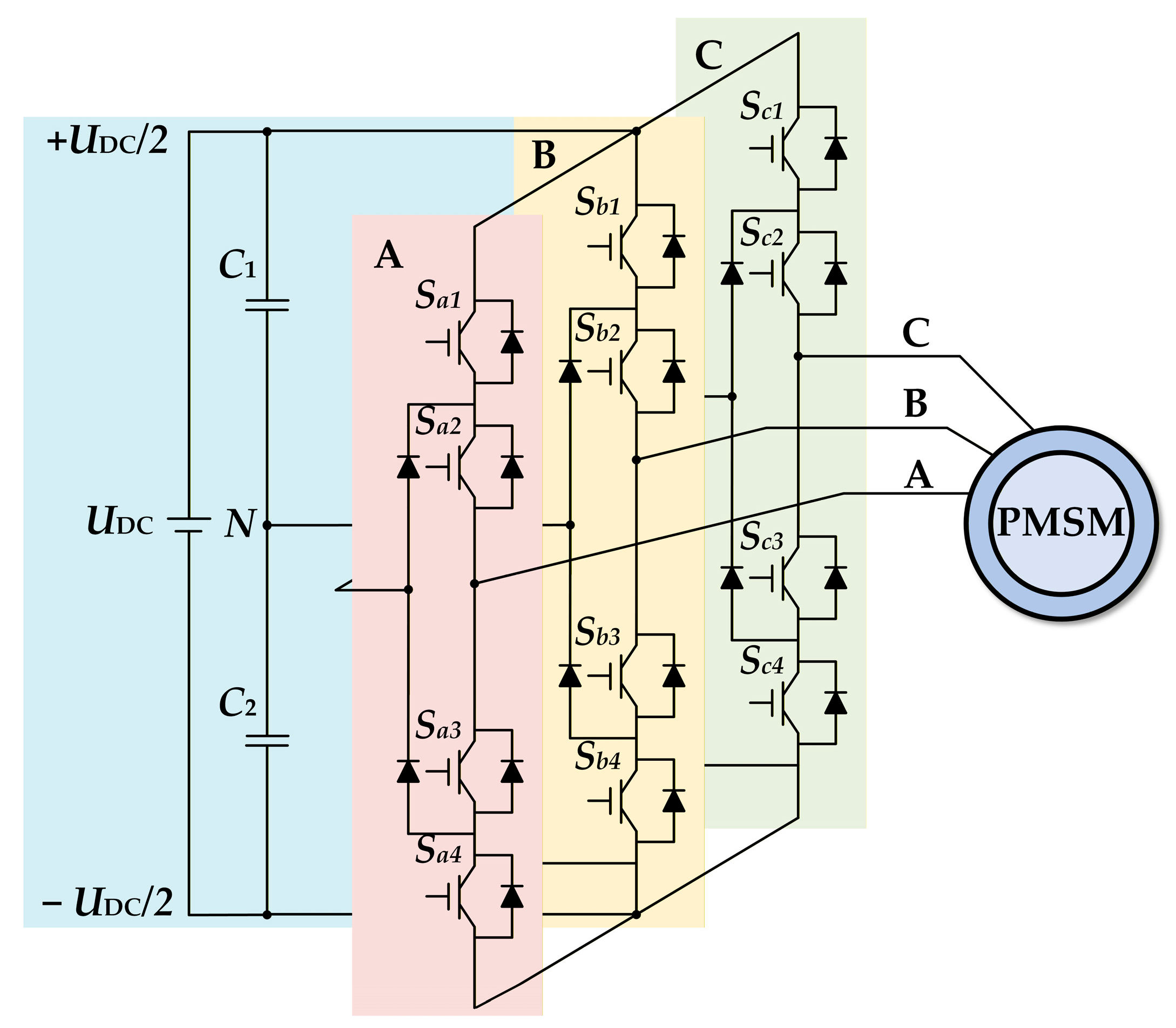
Figure 1 illustrates the configuration of the NPC-3L inverter-fed three-phase PMSM drive system. By decomposing the 3-D space into the αβ subspace, which is subsequently transformed into the synchronous dq frame, the dynamics of the three-phase PMSM are described as
where i, u, and D0 are the vector of stator current, voltage, and back electromotive force, respectively. It is important to highlight that E0 from parameter mismatches and other disturbances can be estimated with an NN-based disturbance observer, proposed in Section 4. The vectors above are described as
where id and iq are the dq-axis stator currents, ud and uq are the dq-axis stator voltages, ωe is the electrical angular velocity, and ψf is the stator flux. The state matrix F and the input matrix G in Equation (1) are given by
where Rs is the stator resistance, Ld is the d-axis inductance, and Lq is the q-axis inductance. Based on Equations (1) and (3), the discrete-time state-space model of the PMSM is deduced as
where the matrices are calculated via forward Euler of the form , , , and , with Ts as the sampling interval. The state matrix A, input matrix B, and the back electromotive force matrix D are given by
Figure 1.
Configuration of three-phase PMSM drives fed by NPC-3L inverter.
2.2. NPC-3L Inverters and Output Voltage Vectors
The NPC-3L inverter circuit studied in this paper is shown in Figure 1. The DC side of the inverter is divided by capacitors C1 and C2 and clamped by diodes. Compared with the neutral point, each of phase A, B, and C can output three voltages Vdc/2, 0, − Vdc/2, namely P-, O-, and N-level operation.
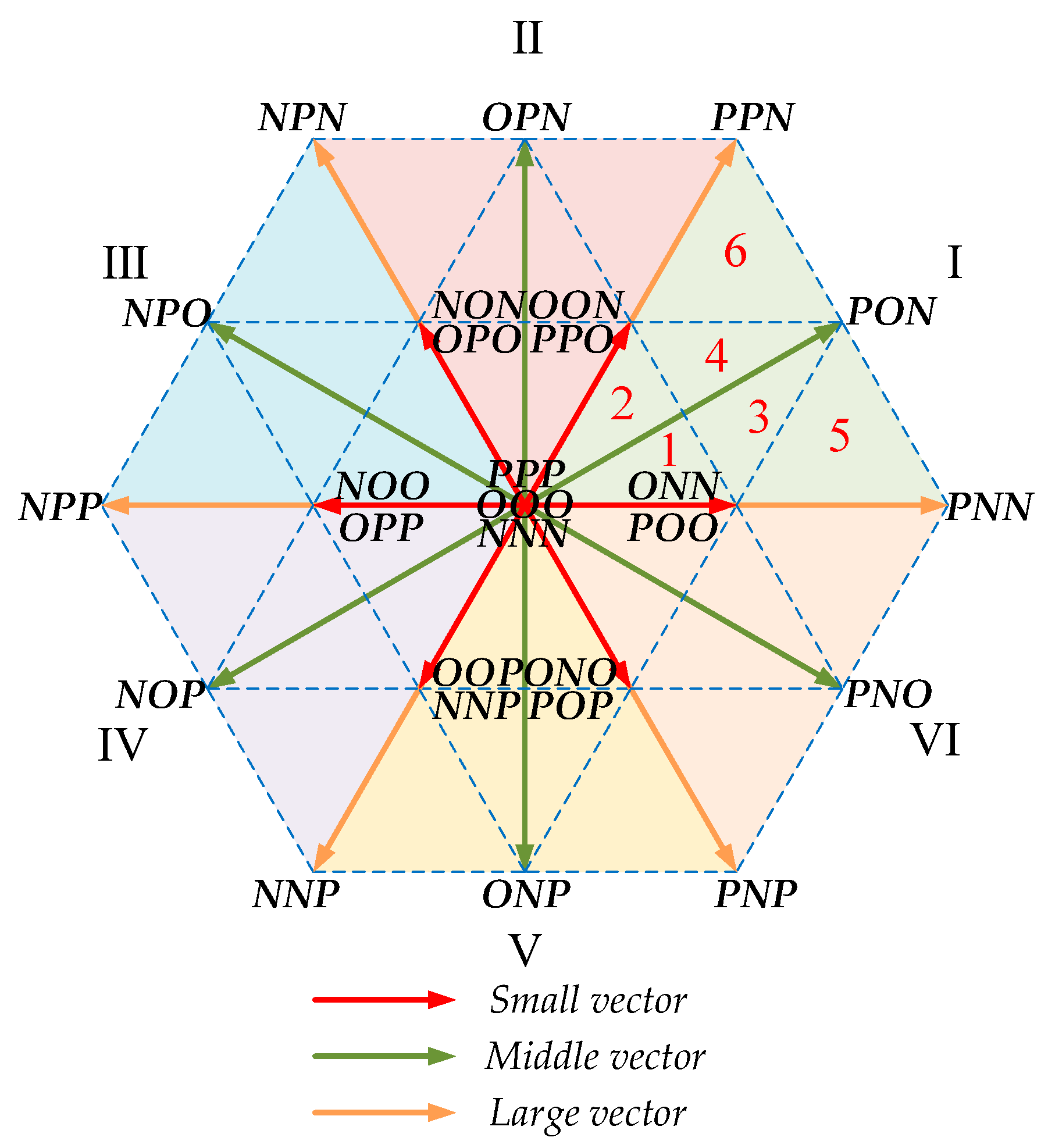
As shown in Figure 1, each phase of this inverter has three switching states, and can generate 33 = 27 VVs, as shown in Figure 2. The switching function is accordingly defined as
where Sx is the switch function of phase x, S1, S2, S3, and S4 are the four switches in one leg of the NPC-3L inverter, respectively, as shown in Figure 2.
Figure 2.
VVs of an NPC-3L inverter.
The output voltage vector vα−β in fundamental subspace can be presented as
All the 27 vectors can be categorized into four layers based on their magnitudes: zero vectors, small vectors, medium vectors, and large vectors, as shown in Table 1.
Table 1.
Four basic voltage vector magnitudes.
The α-β space is divided by these VVs into six large sectors, with each large sector further subdivided into six smaller sectors (marked by red numbers), as shown in Figure 2.
It is important to highlight that the mid-point voltage balancing issues should be considered during the modulation for this NPC-3-L inverter. The zero vectors and large vectors do not affect the mid-point voltage. The impact of the medium vectors on the mid-point voltage is uncertain, and the small vectors can be further divided into P-type and N-type small vectors, which exert opposite effects on the mid-point voltage deviation. Therefore, in the subsequent switching sequence allocation, the effect of the mid-point voltage deviation can be controlled by adjusting the dwell time of P-type and N-type small vectors.
The definition of the mid-point voltage Vnp in the DC-link is shown in Equation (8):
where UC1 and UC2 are the voltages of capacitors C1 and C2, separately. The equation of Vnp is presented in Equation (9):
where C is the capacitance of C1 and C2, ix is the stator current in phase x, and io is the current flowing into or out of the neutral point. The positive direction of stator current is specified to be from the inverter side toward the machine side.
3. Cascaded Structure with CCS-MPC and Mid-Point Voltage Control
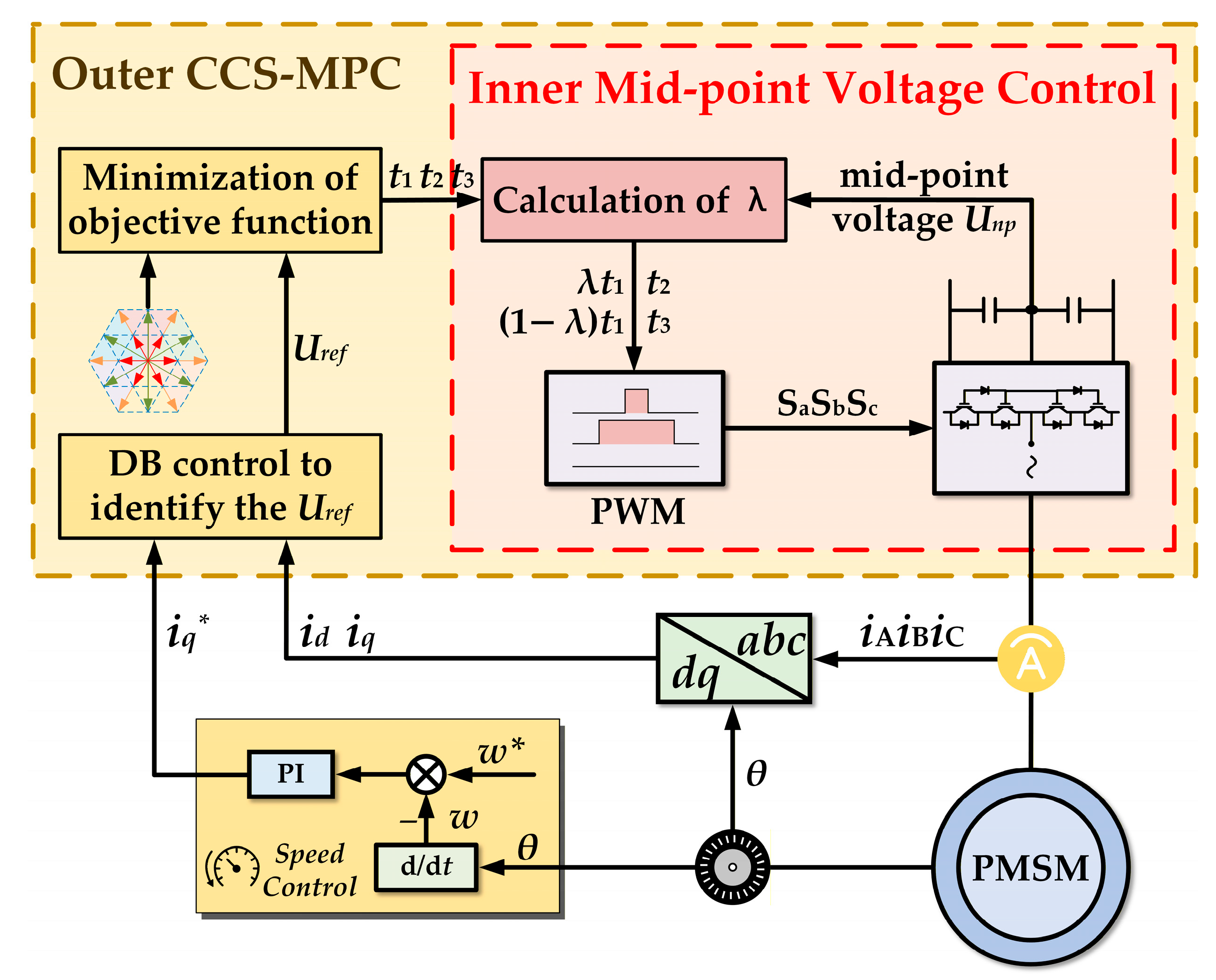
As shown in Figure 3, the proposed control method is a cascaded structure, with the outer loop being CCS-MPC and the inner loop for mid-point voltage control. The reference of iq is given by the speed controller which regulates the angular speed ω to its reference ω*.
Figure 3.
CCS-MPC Strategy with mid-point voltage regulation for PMSMs.
3.1. Outer CCS-MPC
The outer loop CCS-MPC consists of two main steps: sector selection, and the formulation and solution of the optimization problem to determine the (constrained) application time of the VVs.
- Sector Selection
This process employs deadbeat (DB) control to achieve zero current tracking error at the k + 1 step, as
By determining the rotational angle of vref from Equation (10), the corresponding large sector can be identified and subsequently, the small sector can be determined according to the specified boundary lines. Then, the three basic VVs corresponding to the vertices of the triangular sector can be determined to synthesize vref.
- Objective Function
In the proposed CCS-MPC method, the control variable is the duration of the switching states, an additional transformation matrix Tsvm which represents the magnitude matrix of VVs, given by Table 2. To calculate the application time t(k) of the VVs within the selected sector, the prediction model is modified accordingly, as
where Tpark is the matrix of Park transformation.
Table 2.
Magnitude matrix Tsvm of VVs.
Given the new prediction model, Equation (11), the objective function that accounts for the stator current tracking error is defined as
Considering the formulation of i(k + 1), function Equation (12) can be described as
This can further be transformed into solving an optimization problem, as
where r is Ai(k) + D − i*(k + 1), and M is BTparkTsvm.
The solution to this optimization problem is the activation times t1, t2, and t3 of the three VVs.
3.2. Inner Mid-Point Voltage Control
The inner loop aims to regulate the mid-point voltage deviation. As mentioned in Section 2.2, the P-type and N-type small vectors exert opposite effects on the mid-point voltage deviation. Therefore, the mid-point voltage deviation can be controlled by adjusting the dwell time of P-type and N-type small vectors in the subsequent switching sequence allocation. The inner loop achieves this regulation by solving λ, which adjusts the dwell time of the small vector.
Based on Equations (8) and (9), the discrete-time state-space equation for the mid-point voltage Vnp(k + 1) of the NPC-3L is shown in Equation (15)
where Unp is the measured mid-point voltage.
According to the above equation, by setting the mid-point voltage Vnp(k + 1) at the next time step to zero, it can be obtained that io = 2Unp×C/Ts. For each sector, there always exists a λ such that the current io flowing into the neutral point satisfies the above equation, thereby ensuring that the mid-point voltage at the next time step is zero, i.e.:
where i1+, i1−, i2 and i3 are the currents generated by the corresponding VVs utilized to synthesize vref. Here, i1+ and i1− represent the currents flowing into or out of the neutral point under the influence of the P-type and N-type small vectors, respectively, and it holds that i1+ = i1−. Meanwhile, i2 and i3 represent the influence of the other two vectors.
Thus, λ can be determined as
where λ = 0.5 indicates equal dwell times for P- and N-type small vectors, while λ ≠ 0.5 introduces asymmetry to compensate for voltage deviation.
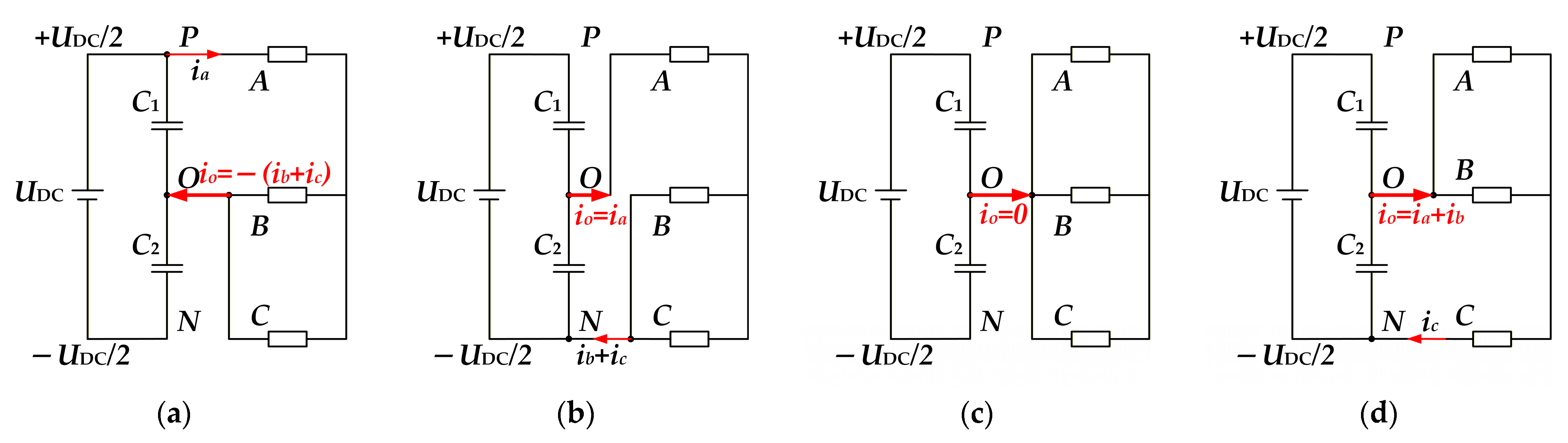
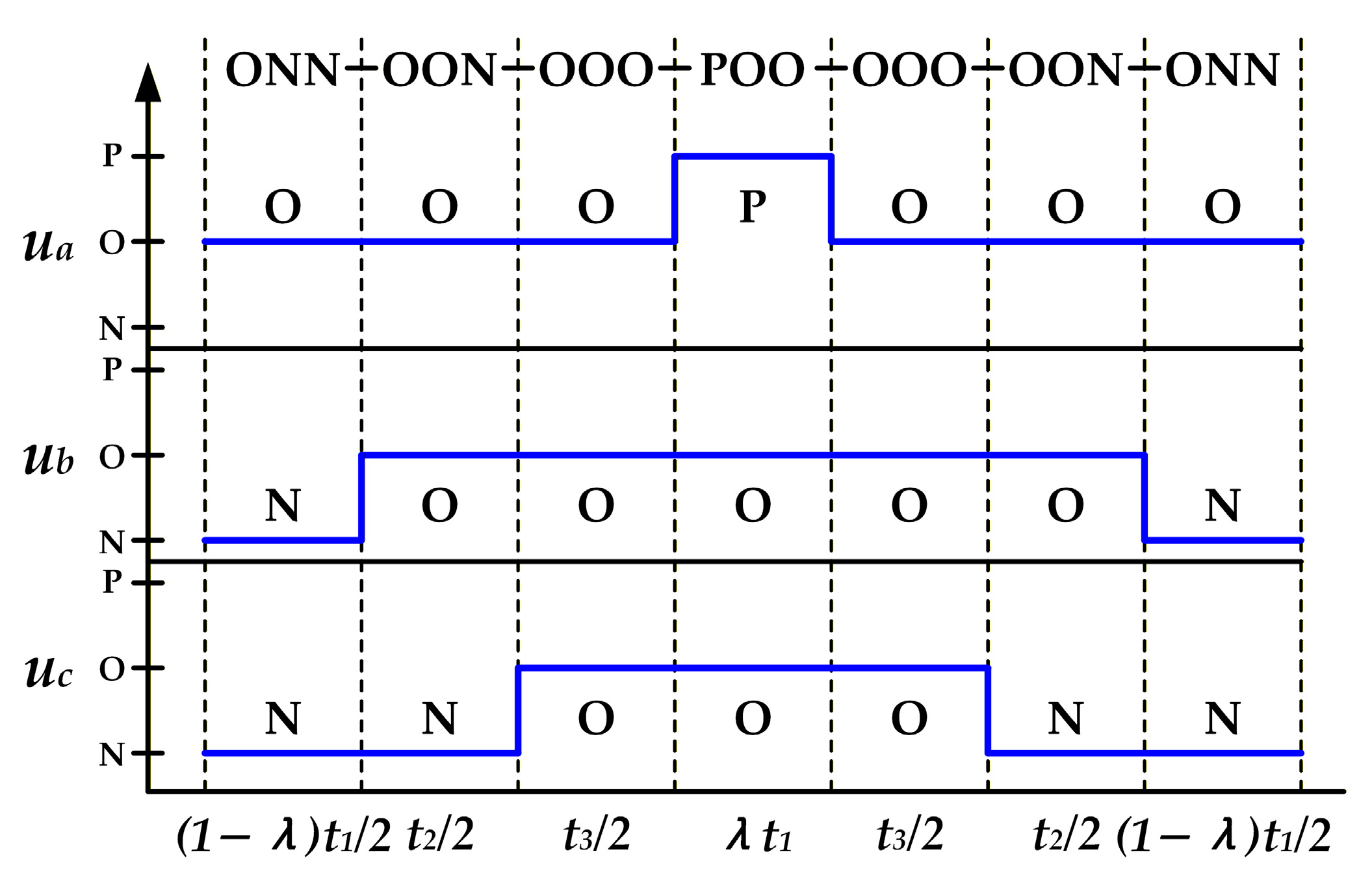
For example, when the vref falls into Sector I-1, the participating vectors are the zero vector OOO, and small vectors POO, ONN, and OON, where POO and ONN are redundant small vectors. Their effects on the mid-point voltage are shown in Figure 4.
Figure 4.
The effect of the VVs synthesizing vref on the mid-point voltage in Sector I-1. (a) Small VVs POO; (b) small VVs ONN; (c) zero VVs OOO; (d) small VVs OON.
The λ that ensures the mid-point voltage is zero in Sector I-1 is given by
where ia, ib and ic are the phase current measured by the current sensor.
Then, the dwell times of the vectors POO, ONN, OON, and OOO are λt1, (1 − λ)t1, t2 and t3, respectively. The pattern of switch positions in sector I-1 is shown in Figure 5.
Figure 5.
Pattern of three-phase switch positions in sector I-1.
4. Adaptive Weight NN-Based Disturbance Observer
The aforementioned CCS-MPC is a model-based method, and as seen from Equations (4) and (10), its control performance heavily relies on the accuracy of the motor model, particularly the precision of the model parameters. However, there inevitably exists a deviation between the parameters in the prediction model and the actual motor parameters. The parameters that most significantly affect the accuracy of the prediction model include the stator resistance Rs, stator inductance L, and stator flux ψf.
The motor model including parameter mismatch can be expressed as Equation (4). Where E represents the lumped error term, which can be specifically expressed as
where , , , , and Rs0, Ld0, Lq0 and are the actual motor stator resistance, dq-axis inductance and stator flux, respectively. , are the unmodeled disturbance excluding parameter mismatch.
The NN-based disturbance observer model for Equation (1) is given by
where and are and , respectively. K is the observer gain. According to the Weierstrass higher-order approximation theorem, the lumped error term E can be approximated by the following NN:
where is the input of the NN, and , are the unknown ideal weight matrix of the NN, and n is the number of neurons in the hidden layer neurons. And is the NN activation function. According to NN approximation property, and are bounded such that , for some positive constants , .
To enhance the expressive and approximation capability of the NN, the constant term iconst is introduced into the input vector. This constant input acts similarly to a bias neuron, allowing the network to approximate not only the nonlinear mapping between the system states (id, iq) and the lumped disturbances but also to capture static biases and unmodeled constant disturbances that are independent of the state variables.
According to the Weierstrass higher-order approximation theorem, there exists an ideal weight matrix for the NN. Since the ideal weight matrix is unknown, Equation (21) can be rewritten as
where and are the estimates of the lumped error term and the actual weights of the NN, respectively. The NN-based disturbance observer dynamic of Equation (20) can be rewritten as
where K is the observer gain.
Then, the observer estimation error can be obtained by subtracting Equations (23) and (1)
where , and , respectively.
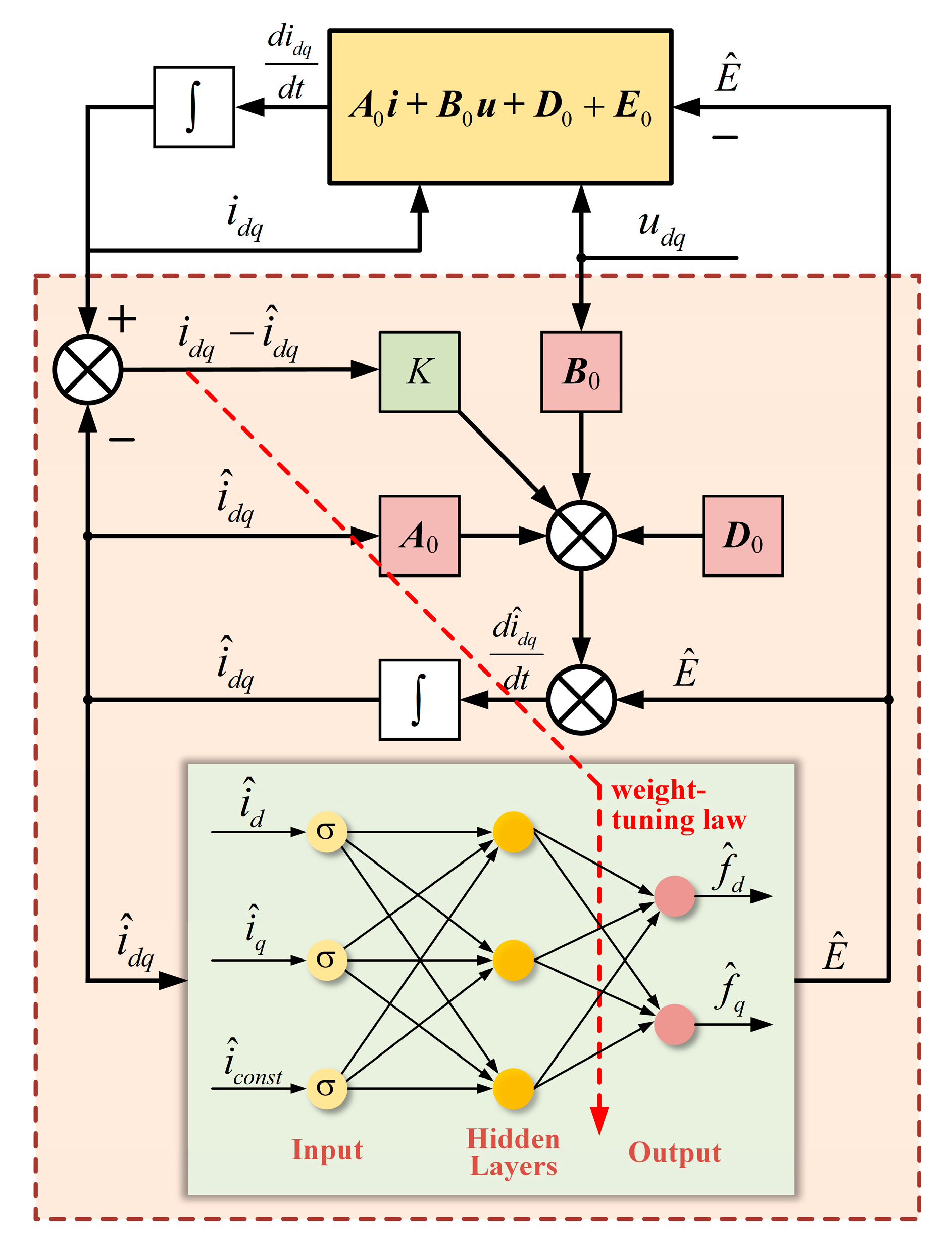
To guarantee → , the NN weight-tuning law has to be designed. Furthermore, the stability of the NN-observer needs to be ensured in the online update process. We propose a structural diagram of the NN-observer scheme in Figure 6. Then, we design and analysis the stability of an online NN parameter update law for the scheme.
Figure 6.
Structure diagram of the NN-based disturbance observer scheme.
Theorem 1.
Consider the PMSM model Equation (4) and the NN-based disturbance observer model Equation (23). Let the NN weight-tuning law be designed as
where are the update rate and P is a positive definite solution of the following Lyapunov equation for some positive definite matrices Q:
Then, according to Lyapunov theorem, the state estimation error and the weight estimation error are ultimately uniformly bounded under the designed weight adaptation law, ensuring the stability of the observer.
Proof of Theorem 1.
Select the Lyapunov function candidate:
By differentiating the above Equation (27) and using Equation (25), one will obtain
Equation (28) can be simplified to yield
Considering , Equation (29) can be rewritten as follows:
where is the minimum eigenvalue of the matrix Q.
Considering , , and , Equation (30) can be rewritten as follows:
The negative semidefiniteness of is guaranteed if either of the following conditions holds:
or
It can be concluded that there exists a compact set such that when the state estimation error or the weight estimation error lies outside this set, the Lyapunov function is negative semidefinite. Consequently, the state estimation error will continuously decrease until it is attracted into the set. Under the constraints of Equation (32) or Equation (33), both the state estimation error and the weight estimation error are ultimately uniformly bounded, indicating that the adaptive weight NN-based disturbance observer is stable. □
In real-time implementation, the optimal update rates δ and φ are selected as 0.005 and 1000, respectively. These values are acquired by trial and error. The initial weight matrix is
which is generated randomly.
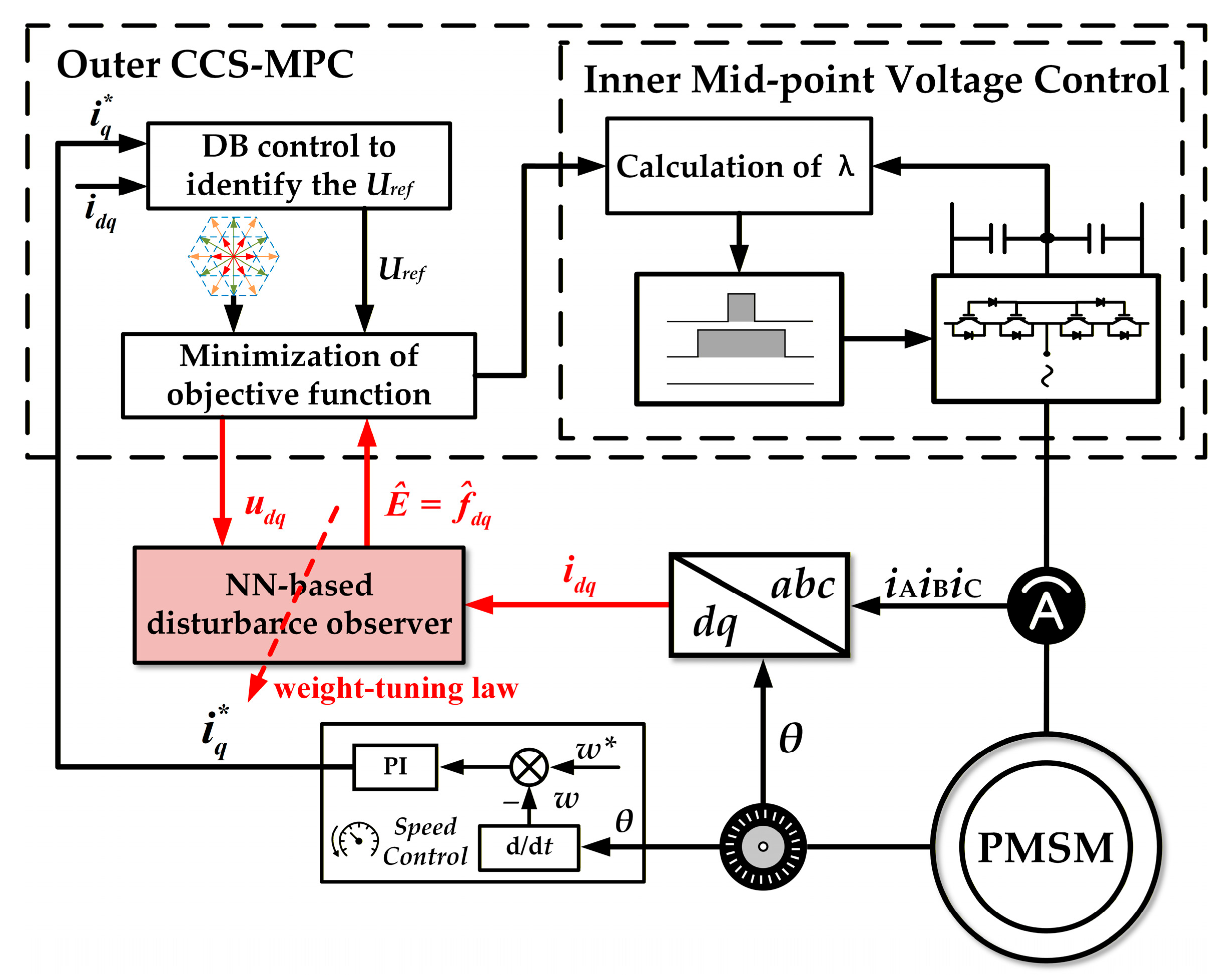
Figure 7 illustrates the model-predictive control structure incorporating the adaptive weight NN-based disturbance observer. The CCS-MPC and mid-point voltage control components are consistent with those described in the previous section.
Figure 7.
CCS-MPC with mid-point voltage regulation using the adaptive weight NN-based disturbance observer for PMSMs.
5. Experiment
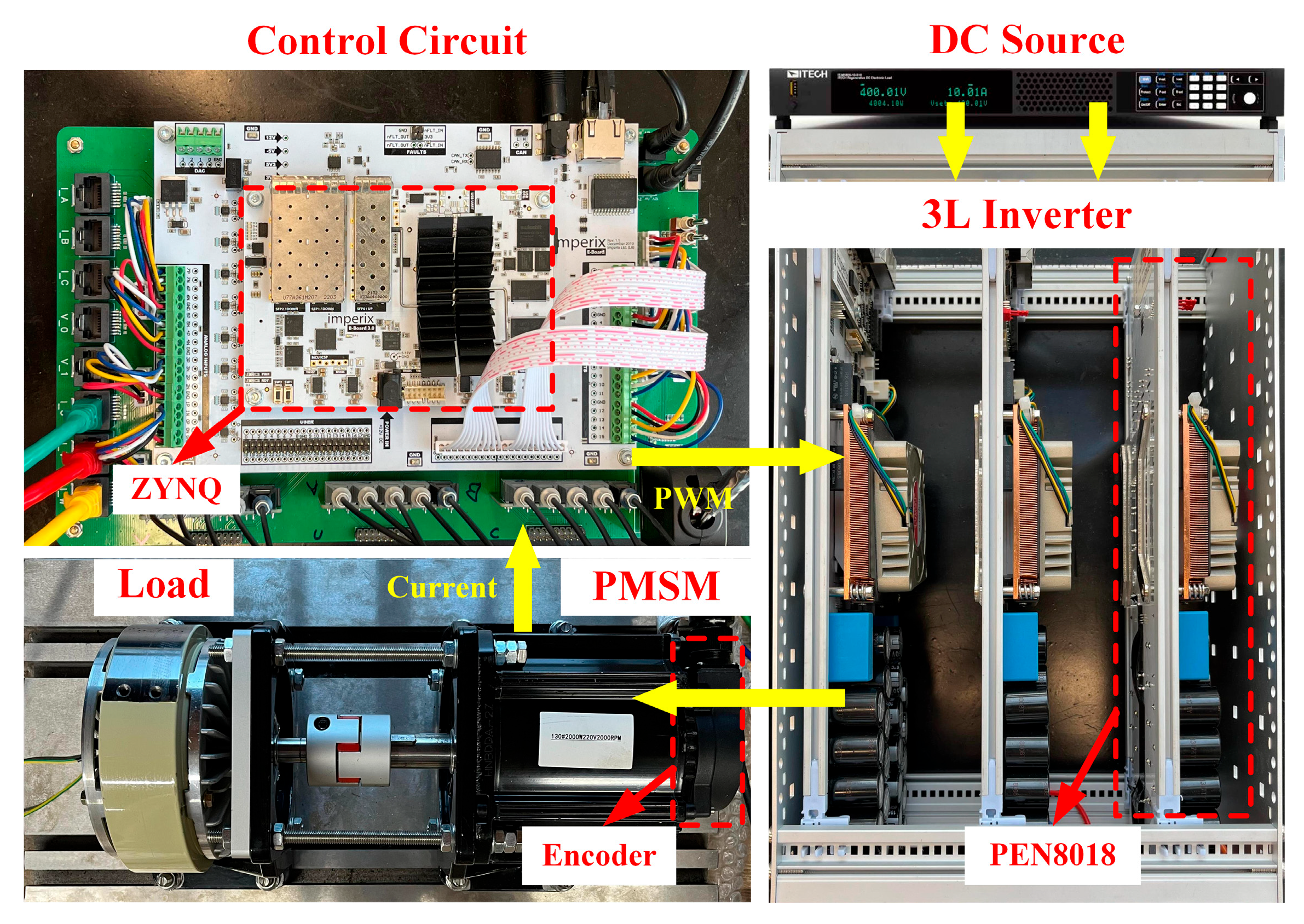
The proposed scheme is implemented on a three-phase PMSM supplied by NPC-3L VSIs to examine the steady and transient state performances. The experimental setup is shown in Figure 8. In the experiment, the NPC-3L inverter circuit is composed of the Imperix PEN8018 modules. All of these are powered by a DC source with a DC-link voltage of 100 V. The B-Board PRO of imperix is adopted to carry out the control algorithm and to generate the PWM signals. A magnetic powder brake provides the electrical load. The switching frequency of the inverter is kept as fsw = 10 kHz. The parameters of the PMSM are given in Table 3.
Figure 8.
Electric drive experimental platform.
Table 3.
Parameters of the PMSM.
5.1. Performance of Cascaded Structure with CCS-MPC and Mid-Point Voltage Control
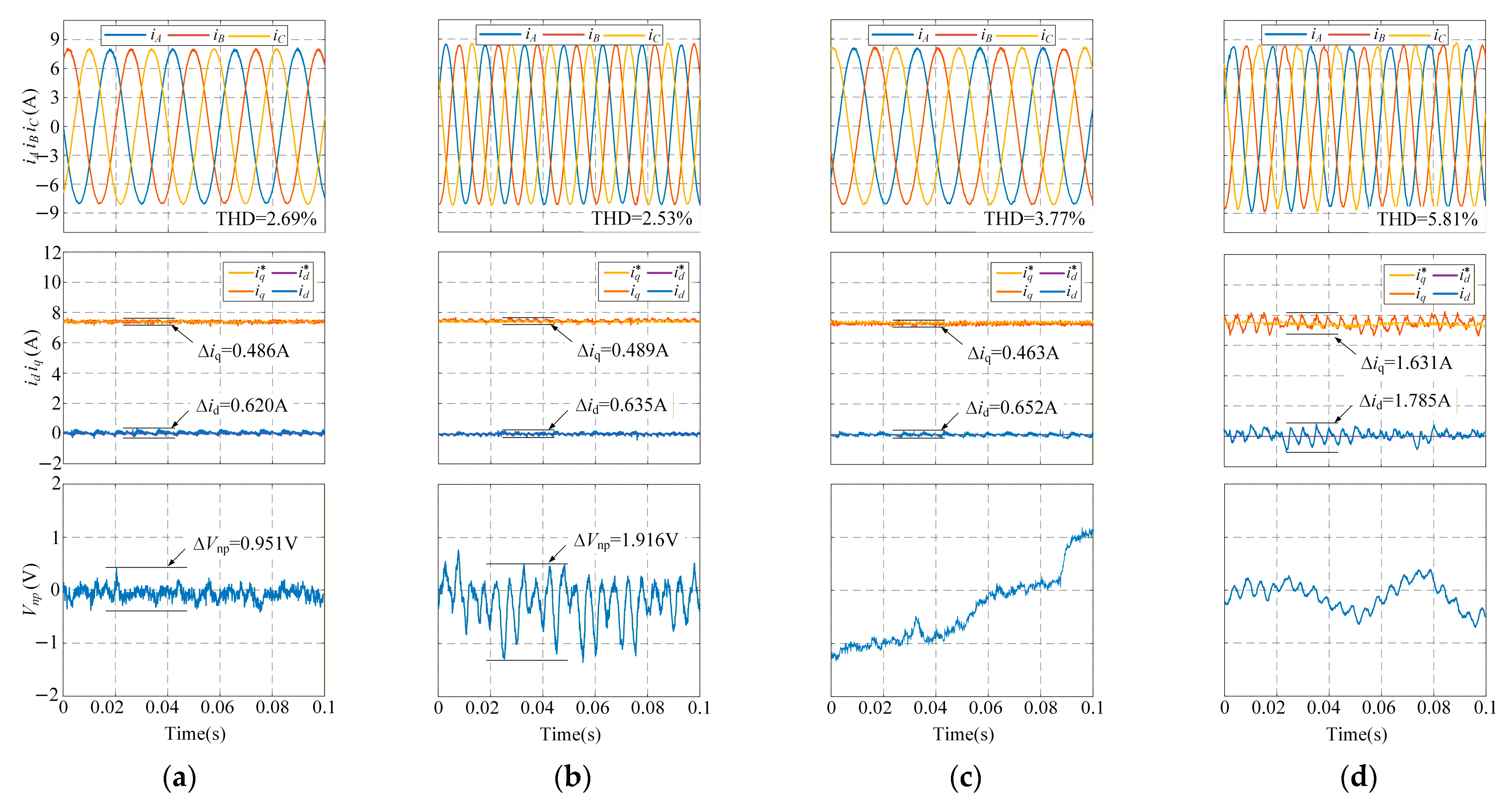
Figure 9 compares the steady-state performance of CCS-MPC with active (with dynamic calculation of λ) and passive (with λ fixed at 0.5) mid-point voltage control at motor speeds of 500 rpm and 800 rpm, with a load torque of 4 N·m. The figure presents the waveforms of phase current, dq-axis currents, and mid-point voltage.
Figure 9.
The steady-state performance of CCS-MPC with active control (dynamic calculation of λ) and passive control (λ fixed at 0.5) of mid-point voltage. (a) Active control under 500 rpm; (b) active control under 800 rpm; (c) passive control under 500 rpm; (d) passive control under 800 rpm.
As shown in Figure 9, under CCS-MPC cascade control of the mid-point voltage, the total harmonic distortion (THD) values of currents in phases A at motor speeds of 500 rpm and 800 rpm are 2.69% and 2.53%, respectively. The d-axis current ripples amplitudes are 0.620 A and 0.635 A, while the q-axis current ripples amplitudes are 0.486 A and 0.489 A, respectively. Compared with the passive control (with λ fixed at 0.5) of the mid-point voltage, the mid-point voltage ripple is significantly reduced under active control, with peak-to-peak ripple values of 0.9 V and 1.8 V at 500 rpm and 800 rpm, respectively. In contrast, passive control leads to a substantial deviation in the mid-point voltage, which subsequently increases the phase current THD and the dq-axis current ripples to a certain extent.
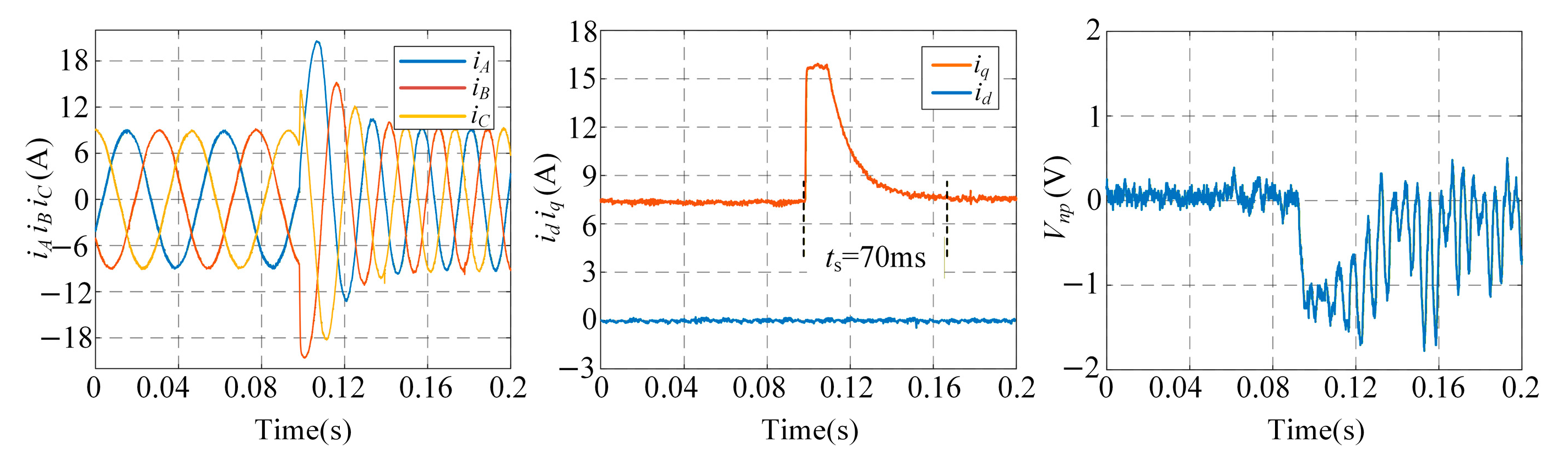
Figure 10 illustrates the transient performance of cascaded structure with CCS-MPC and mid-point voltage control under a step change in motor speed from 500 rpm to 800 rpm, exhibiting a dynamic adjustment time of 70 ms, during which the q-axis current rapidly reaches its peak to deliver maximum acceleration.
Figure 10.
The transient performance of cascaded structure with CCS-MPC and mid-point voltage control.
In summary, both the steady-state and transient experimental results confirm that the proposed cascaded structure with CCS-MPC and mid-point voltage control effectively suppresses mid-point voltage deviation and reduces current distortion.
5.2. Performance of Adaptive Weight NN-Based Disturbance Observer
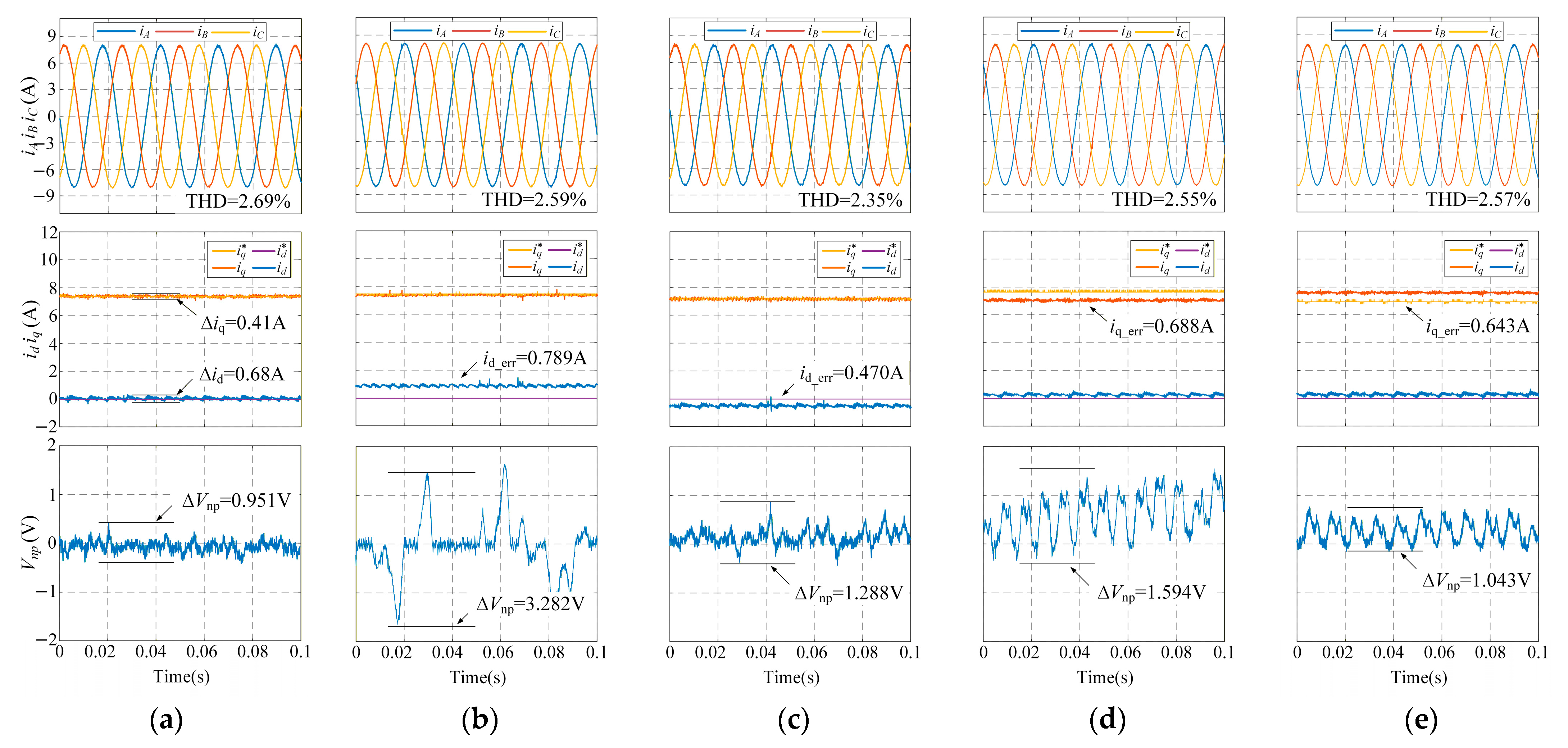
To verify the influence of parameter mismatch on CCS-MPC, Figure 11 presents steady-state experiments under different parameter mismatch conditions. The parameter mismatch cases include no mismatch, L = 0.6L0, L = 1.4L0, ψf = 0.6ψf0, and ψf = 1.4ψf0.
Figure 11.
The steady-state performance of CCS-MPC under different parameter mismatch conditions. (a) No parameter mismatch; (b) L = 0.6L0; (c) L = 1.4L0; (d) ψf = 0.6ψf0; (e) ψf = 1.4ψf0.
Figure 11 illustrates the impact of inductance and flux linkage parameter mismatch on the steady-state performance of the motor. Under no parameter mismatch, the d-axis current remains stable around 0 A with a ripple of 0.68 A, while the q-axis current stabilizes around 7.2 A with a ripple of 0.41 A. The dq-axis currents closely track their reference values, indicating that CCS-MPC achieves excellent steady-state performance. Inductance mismatch primarily affects the d-axis current, while the q-axis current remains largely unaffected. When the inductance in the prediction model is set to 0.6 and 1.4 times the actual motor inductance, the resulting d-axis steady-state current errors are approximately 0.789 A and 0.47 A, respectively, and flux linkage mismatch predominantly affects the q-axis current, with minimal impact on the d-axis. When the flux linkage in the prediction model is set to 0.6 and 1.4 times the actual motor flux linkage, the resulting q-axis steady-state current errors are 0.688 A and 0.643 A, respectively, while the d-axis current error remains negligible.
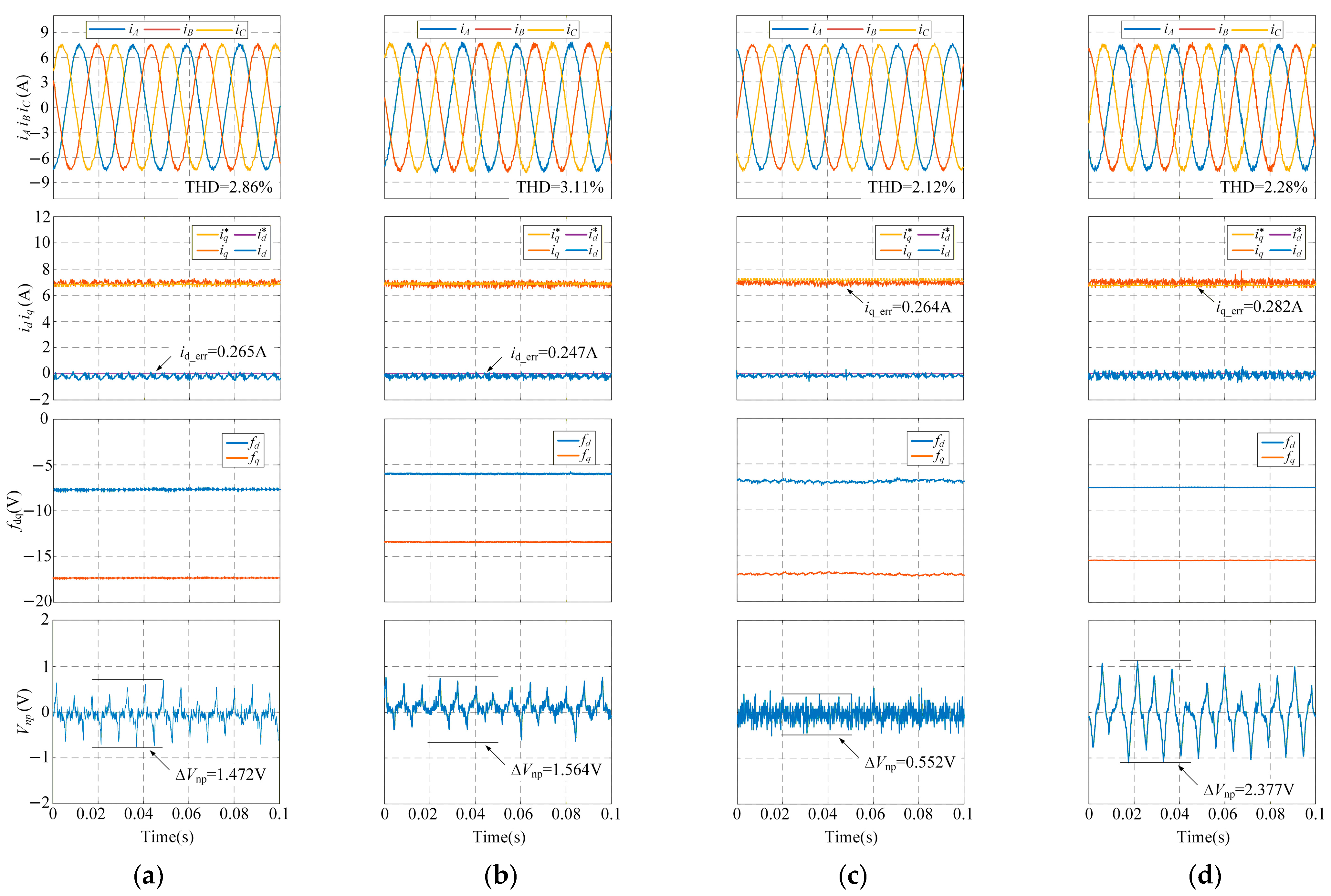
To verify the influence of parameter mismatch on CCS-MPC with adaptive weight NN-based disturbance observer, Figure 12 presents steady-state experiments under different parameter mismatch conditions. The parameter mismatch cases include L = 0.6L0, L = 1.4L0, ψf = 0.6ψf0, and ψf = 1.4ψf0. The NN weights were initialized randomly and updated online via the Lyapunov-based adaptation law Equation (25).
Figure 12.
The steady-state performance of CCS-MPC with adaptive weight NN-based disturbance observer under different parameter mismatch conditions (a) L = 0.6L0; (b) L = 1.4L0; (c) ψf = 0.6ψf0; (d) ψf = 1.4ψf0.
As shown in Figure 12, when L = 0.6L0, the steady-state error of the d-axis current decreases from 0.789 A to 0.265 A, with the lumped error terms fd and fq stabilizing at −7.8 V and −17.4 V, respectively. When L = 1.4L0, the steady-state error of the d-axis current reduces from 0.470 A to 0.247 A, and fd and fq stabilize at −11 V and −18.1 V, respectively. When ψf = 0.6ψf0, the steady-state error of the q-axis current decreases from 0.688 A to 0.264 A, with fd and fq stabilizing at −18.7 V and −22.8 V, respectively. When ψf = 1.4ψf0, the steady-state error of the q-axis current decreases from 0.643 A to 0.282 A, with fd and fq stabilizing at −2.9 V and −12.5 V, respectively.
Overall, the results in Figure 12 demonstrate that the proposed adaptive weight NN-based disturbance observer exhibits superior capability in compensating for steady-state errors in dq-axis currents, achieving significantly better current tracking ability under parameter mismatch compared to uncompensated cases. This highlights the effectiveness and robustness of the proposed approach in enhancing the steady-state performance of the system.
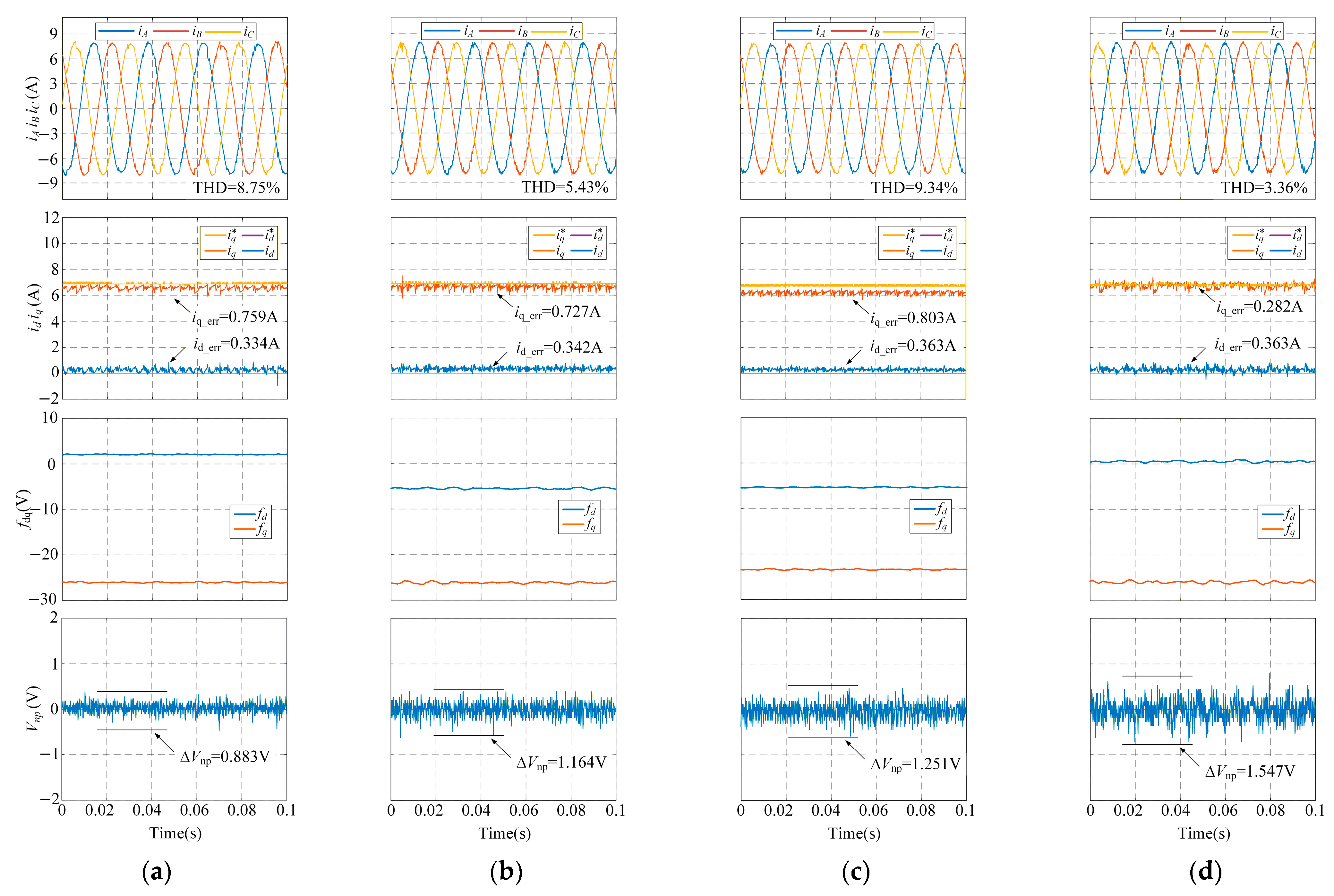
As a comparison, the steady-state performance of the sliding mode disturbance observer is depicted in Figure 13. In the inductance mismatch cases of L = 0.6L0 and L = 1.4L0, the sliding mode observer yields the steady-state errors of the q-axis current of 0.759A and 0.727A, respectively. As for the flux mismatch cases, the steady-state errors of the q-axis current are 0.803A and 0.282A, respectively. These results validate that the proposed adaptive weight NN-based disturbance observer outperforms the sliding mode disturbance observer by more accurate current tracking in such a NPC-fed drive system.
Figure 13.
The steady-state performance of CCS-MPC with sliding mode disturbance observer under different parameter mismatch conditions (a) L = 0.6L0; (b) L = 1.4L0; (c) ψf = 0.6ψf0; (d) ψf = 1.4ψf0.
6. Conclusions
This paper proposes a cascaded control strategy that integrates CCS-MPC with mid-point voltage regulation, in conjunction with an adaptive weight NN-based disturbance observer, for NPC-3L inverter-fed PMSMs. The fluctuation in mid-point voltage keeps within 2% of the DC-link voltage while the dynamic performance of CCS-MPC is not weakened. In the cases of parameter mismatch, the Lyapunov-stable observer reduces the current tracking errors by 60%. Accordingly, the proposed weight-adaptive observer effectively improves the robustness of the cascaded CCS-MPC strategy. The comparative experimental results show that the intelligent disturbance observer is more suitable to be applied in NPC-3L inverter-fed systems.
Author Contributions
Conceptualization, Z.L.; Methodology, Z.L.; Software, Z.L.; Validation, Z.L. and Y.W.; Formal analysis, Z.L.; Investigation, Z.L.; Resources, J.W. and Z.Z.; Data curation, Z.L. and Y.W.; Writing—original draft, Z.L.; Writing—review & editing, Y.W. and Z.Z.; Supervision, J.W. and Z.Z.; Project administration, J.W. All authors have read and agreed to the published version of the manuscript.
Funding
This research received no external funding.
Data Availability Statement
The raw data supporting the conclusions of this article will be made available by the authors on request.
Conflicts of Interest
The authors declare no conflict of interest.
References
- Zhu, Z.; Wei, X.; Han, R.; Liu, C.; Zhang, Z. Double-Vector Model-Free Predictive Current Control for PMSMs with Influence Rejection of DC Voltage Mismatch. IEEE Trans. Transp. Electrif. 2016, 11, 6143–6153. [Google Scholar] [CrossRef]
- Bala, M.; Bahri, I.; Mercier, A.; Khanchoul, M.; Krebs, G. Speed PMSM Control Technique using a Single Current Sensor with Random SVPWM. In Proceedings of the 2020 IEEE 29th International Symposium on Industrial Electronics (ISIE), Delft, The Netherlands, 17–19 June 2020; pp. 1547–1552. [Google Scholar]
- Chen, Y.; Liu, C.; Liu, S.; Song, Z. A New Cascaded Adaptive Deadbeat Control Method for PMSM Drive. IEEE Trans. Ind. Electron. 2023, 70, 3384–3393. [Google Scholar] [CrossRef]
- Kakouche, K.; Oubelaid, A.; Mezani, S.; Rekioua, D.; Rekioua, T. Different Control Techniques of Permanent Magnet Synchronous Motor with Fuzzy Logic for Electric Vehicles: Analysis, Modelling, and Comparison. Energies 2023, 16, 3116. [Google Scholar] [CrossRef]
- Wang, X.; Wang, Z.; Xu, Z.; Cheng, M.; Wang, W.; Hu, Y. Comprehensive Diagnosis and Tolerance Strategies for Electrical Faults and Sensor Faults in Dual Three-Phase PMSM Drives. IEEE Trans. Power Electron. 2019, 34, 6669–6684. [Google Scholar] [CrossRef]
- Levi, E. Advances in Converter Control and Innovative Exploitation of Additional Degrees of Freedom for Multiphase Machines. IEEE Trans. Ind. Electron. 2016, 63, 433–448. [Google Scholar] [CrossRef]
- Rodriguez, J.; Kennel, R.M.; Espinoza, J.R.; Trincado, M.; Silva, C.A.; Rojas, C.A. High-Performance Control Strategies for Electrical Drives: An Experimental Assessment. IEEE Trans. Ind. Electron. 2012, 59, 812–820. [Google Scholar] [CrossRef]
- Vazquez, S.; Rodriguez, J.; Rivera, M.; Franquelo, L.G.; Norambuena, M. Model Predictive Control for Power Converters and Drives: Advances and Trends. IEEE Trans. Ind. Electron. 2017, 64, 935–947. [Google Scholar] [CrossRef]
- Zhu, Z.; Wei, X.; Yu, F.; Zhang, Z. Overmodulatable Parameter-Free Predictive Current Control for PMSMs. IEEE Trans. Power Electron. 2025, 40, 1774–1786. [Google Scholar] [CrossRef]
- Dong, H.; Zhang, Y. A Low-Complexity Double Vector Model Predictive Current Control for Permanent Magnet Synchronous Motors. Energies 2024, 17, 147. [Google Scholar] [CrossRef]
- Luo, Y.; Niu, S. Predictive Current Control for Six-Phase PMSM Motor with Multi-Step Synthesis Based Virtual Vectors. IEEE Trans. Energy Convers. 2023, 38, 134–146. [Google Scholar] [CrossRef]
- Lin, X.; Liu, J.; Liu, Z.; Gao, Y.; Peretti, L.; Wu, L. Model-Free Current Predictive Control for PMSMs with Ultralocal Model Employing Fixed-Time Observer and Extremum-Seeking Method. IEEE Trans. Power Electron. 2025, 40, 10682–10693. [Google Scholar] [CrossRef]
- Lin, X.; Wu, C.; Yao, W.; Liu, Z.; Shen, X.; Xu, R.; Sun, G.; Liu, J. Observer-Based Fixed-Time Control for Permanent-Magnet Synchronous Motors with Parameter Uncertainties. IEEE Trans. Power Electron. 2023, 38, 433–4344. [Google Scholar] [CrossRef]
- Xu, R.; Shen, X.; Lin, X.; Liu, Z.; Xu, D.; Liu, J. Robust Model Predictive Control of Position Sensorless-Driven IPMSM Based on Cascaded EKF-LESO. IEEE Trans. Transp. Electrif. 2025, 11, 8824–8832. [Google Scholar] [CrossRef]
- Lin, X.; Xu, R.; Yao, W.; Gao, Y.; Sun, G.; Liu, J.; Peretti, L.; Wu, L. Observer-Based Prescribed Performance Speed Control for PMSMs: A Data-Driven RBF Neural Network Approach. IEEE Trans. Ind. Informat. 2024, 20, 7502–7512. [Google Scholar] [CrossRef]
- Kang, Z.; Lin, X.; Shen, X.; Liu, Z.; Gao, Y.; Liu, J. Event-Triggered Generalized Super-Twisting Sliding Mode Control for Position Tracking of PMSMs. IEEE Trans. Ind. Informat. 2025, 21, 5701–5711. [Google Scholar] [CrossRef]
- Abu-Ali, M.; Berkel, F.; Manderla, M.; Reimann, S.; Kennel, R.; Abdelrahem, M. Deep Learning-Based Long-Horizon MPC: Robust, High Performing, and Computationally Efficient Control for PMSM Drives. IEEE Trans. Power Electron. 2022, 37, 12486–12501. [Google Scholar] [CrossRef]
- Habibullah, M.; Lu, D.D.-C.; Xiao, D.; Rahman, M.F. Finite-State Predictive Torque Control of Induction Motor Supplied from a Three-Level NPC Voltage Source Inverter. IEEE Trans. Power Electron. 2017, 32, 479–489. [Google Scholar] [CrossRef]
- Habibullah, M.; Lu, D.D.-C.; Xiao, D.; Osman, I.; Rahman, M.F. Selected Prediction Vectors Based FS-PTC for 3L-NPC Inverter Fed Motor Drives. IEEE Trans. Ind. Appl. 2017, 53, 3588–3597. [Google Scholar] [CrossRef]
- Wang, G.; Li, P.; Wang, Y. Non-Weighted Two-Stage Model Predictive Control Strategy Based on Three-Level NPC Inverter. Energies 2024, 17, 1813. [Google Scholar] [CrossRef]
- Chen, X.; Huang, S.; Jiang, D.; Li, B. Fast Voltage-Balancing Scheme for a Carrier-Based Modulation in Three-Phase and Single-Phase NPC Three-Level Inverters. J. Electr. Eng. Technol. 2018, 13, 1986–1995. [Google Scholar]
- Sriprang, S.; Nahid-Mobarakeh, B.; Pierfederici, S.; Takorabet, N.; Bizon, N.; Kumam, P.; Mungporn, P.; Thounthong, P. Robust Flatness-based Control with State Observer-Based Parameter Estimation for PMSM Drive. In Proceedings of the 2018 IEEE International Conference on Electrical Systems for Aircraft, Railway, Ship Propulsion and Road Vehicles & In-ternational Transportation Electrification Conference (ESARS-ITEC), Nottingham, UK, 7–9 November 2018; pp. 1–6. [Google Scholar]
- Chalanga, A.; Kamal, S.; Fridman, L.M.; Bandyopadhyay, B.; Moreno, J.A. Implementation of Super-Twisting Control: Super-Twisting and Higher Order Sliding-Mode Observer-Based Approaches. IEEE Trans. Ind. Electron. 2016, 63, 3677–3685. [Google Scholar] [CrossRef]
- Wu, Y.; Zhang, Z.; Yang, Q.; Tian, W.; Karamanakos, P.; Heldwein, M.L.; Kennel, R. A Direct Model Predictive Control Strategy With an Implicit Modulator for Six-Phase PMSMs. IEEE J. Emerg. Sel. Top. Power Electron. 2023, 11, 1291–1304. [Google Scholar] [CrossRef]
Disclaimer/Publisher’s Note: The statements, opinions and data contained in all publications are solely those of the individual author(s) and contributor(s) and not of MDPI and/or the editor(s). MDPI and/or the editor(s) disclaim responsibility for any injury to people or property resulting from any ideas, methods, instructions or products referred to in the content. |
© 2025 by the authors. Licensee MDPI, Basel, Switzerland. This article is an open access article distributed under the terms and conditions of the Creative Commons Attribution (CC BY) license (https://creativecommons.org/licenses/by/4.0/).