Multi-Timescale Coordinated Planning of Wind, Solar, and Energy Storage Considering Generalized Adequacy

 ,
, 
Abstract
1. Introduction
- (1)
- Building upon conventional adequacy theories, this study introduces a generalized adequacy framework that integrates power and energy adequacy, flexibility adequacy, and inertia adequacy. To align with the evolving requirements of grid planning, seven generalized adequacy indicators are identified and employed for evaluation.
- (2)
- A novel grid planning methodology based on generalized adequacy is proposed, enabling the coordinated optimization of wind power, photovoltaic power, short-term and long-term energy storage, and transmission infrastructure. This approach effectively enhances the system’s generalized adequacy, ensuring a balanced and resilient power system design.
- (3)
- A planning scheme comparison framework incorporating generalized adequacy is developed, facilitating a systematic evaluation of alternative planning schemes. The proposed method enables a comparative analysis based on economic efficiency, generalized adequacy, renewable energy accommodation capacity, and carbon reduction effectiveness, ultimately guiding the selection of the optimal planning scheme.
2. Generalized Adequacy Theory and Its Evaluation Metrics
2.1. Transition from Traditional Adequacy to Generalized Adequacy
- (1)
- Adequacy across all dimensions manifests externally as the ability of supply to meet system-wide demand.
- (2)
- Future system requirements must be addressed through the planned allocation of specific resources, as control-based measures alone cannot provide additional supply capacity to meet operational demands.
- (3)
- The dynamic matching of supply and demand is fundamentally realized through the transmission of electrical energy. While traditional adequacy ensures that total energy supply meets demand, flexibility adequacy fundamentally requires that the ramping capabilities of various resources are sufficient to track fluctuations in load-side demand. In terms of inertia adequacy, although the inertia support capability of thermal power units is independent of energy transfer, the virtual inertia effect provided by new resources such as renewables and energy storage depends on their energy output. Consequently, the realization of power and energy adequacy, flexibility adequacy, and inertia adequacy fundamentally relies on the effective transmission of electrical energy within the system.
2.2. Generalized Adequacy Evaluation Metrics and Quantification Methods
2.2.1. Power and Energy Adequacy Metrics
2.2.2. Flexibility Adequacy Metrics
- (1)
- The selected metrics should reflect the matching relationship between flexibility demand and supply.
- (2)
- In the planning process, the use of negative indicators, such as margin-based metrics, is more effective in highlighting existing system deficiencies and identifying gaps in flexibility regulation, thereby underscoring the necessity of resource planning.
- (3)
- Unlike power and energy adequacy, which primarily assess static capacity sufficiency, flexibility adequacy emphasizes the continuous matching of supply and demand at every moment. Therefore, it is essential to account for both the alignment between resource ramping rates and net load fluctuation rates across adjacent time intervals, as well as the consistency between ramping capacity and the overall range of net load variations.
2.2.3. Inertia Adequacy Metrics
- (1)
- RoCoF constraint (Initial rate of change of frequency)
- (2)
- Nadir constraint (Frequency nadir)
3. Comprehensive Power Grid Planning and Planning Scheme Selection Method Considering Generalized Adequacy
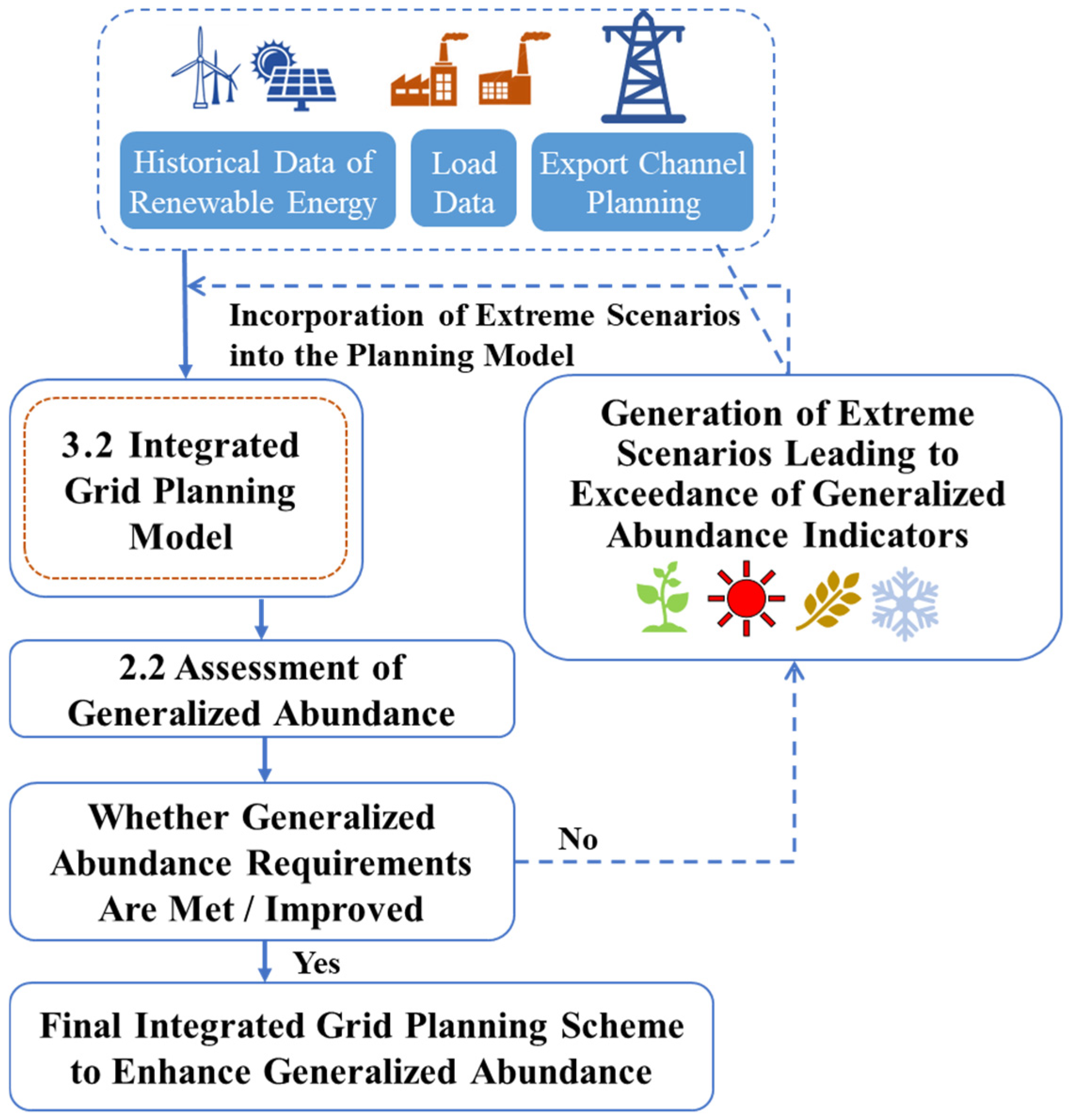
3.1. Comprehensive Power Grid Planning Framework Based on Generalized Adequacy
3.2. Integrated Power Grid Planning Model
3.2.1. Objective Function
3.2.2. Constraints
- (1)
- Planning Constraints
- (2)
- Short-Term Operation Constraints
3.3. Planning Scheme Selection Method Considering Generalized Adequacy
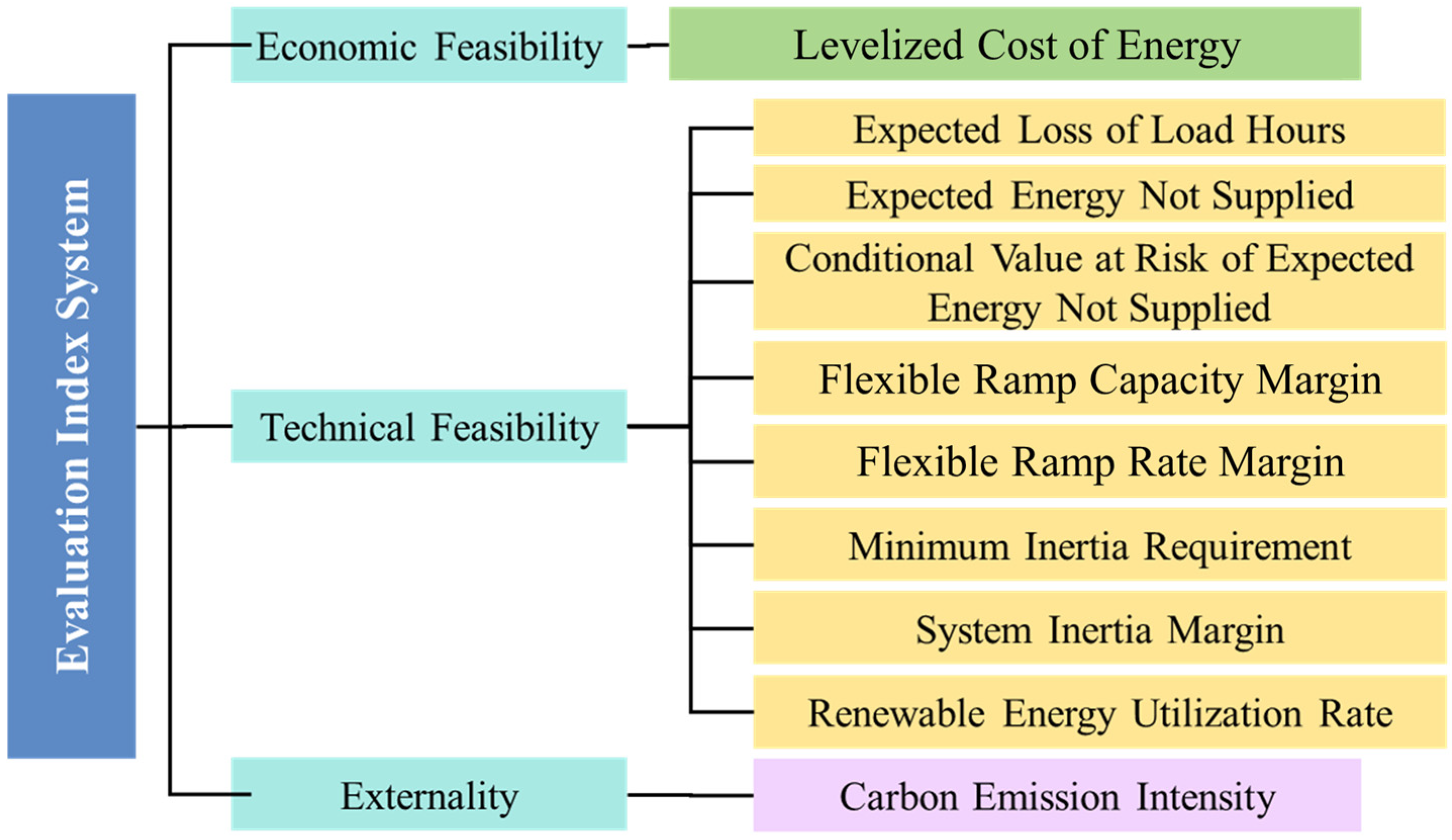
3.3.1. Scheme Evaluation Index System
3.3.2. Scheme Comparison Method
- (1)
- Calculating the deviation function between schemes.
- (2)
- Constructing the Preference Index
- (3)
- Calculating the Net Flow of Each Scheme
- (4)
- Scheme Ranking
4. Case Study
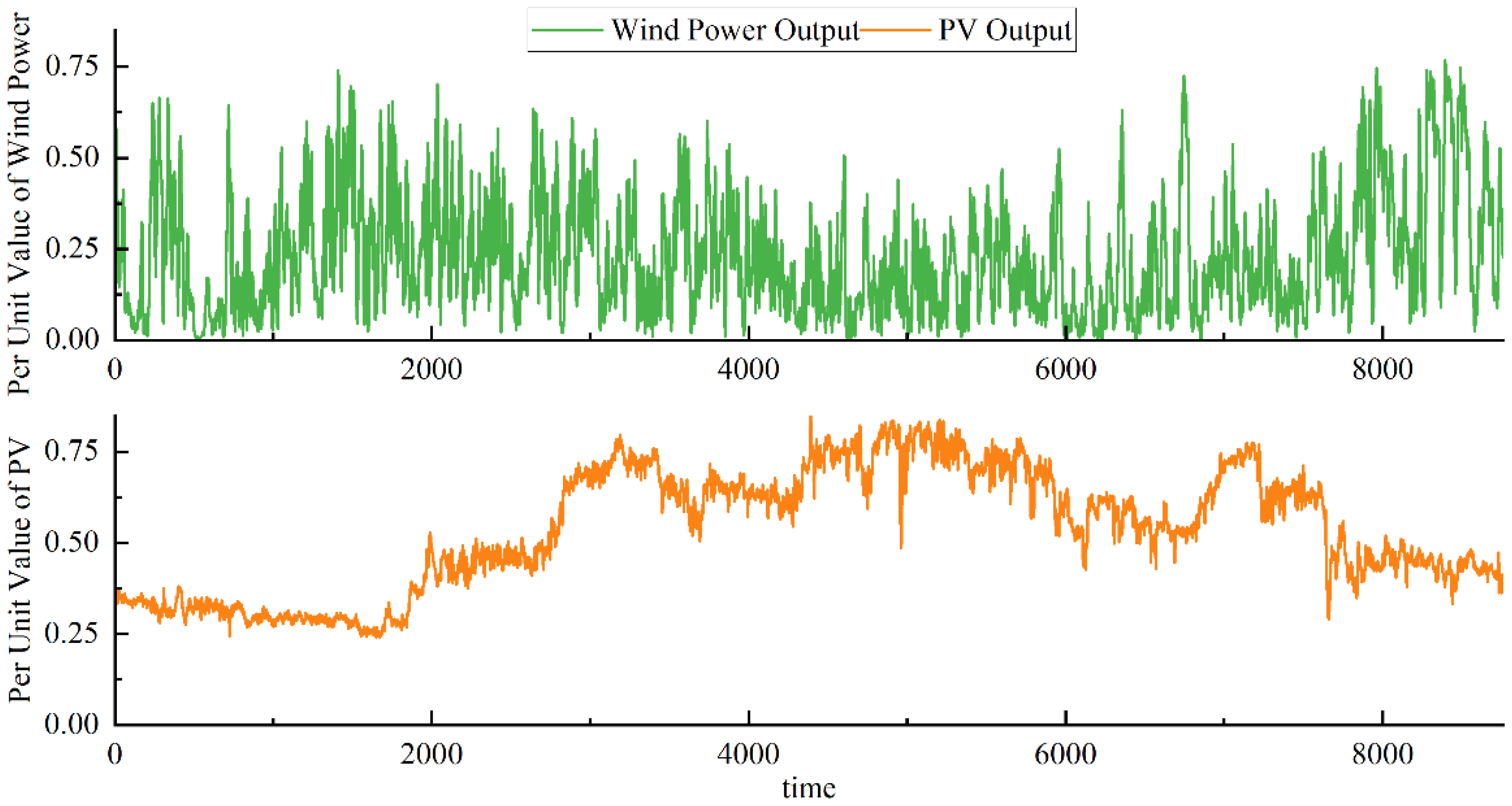
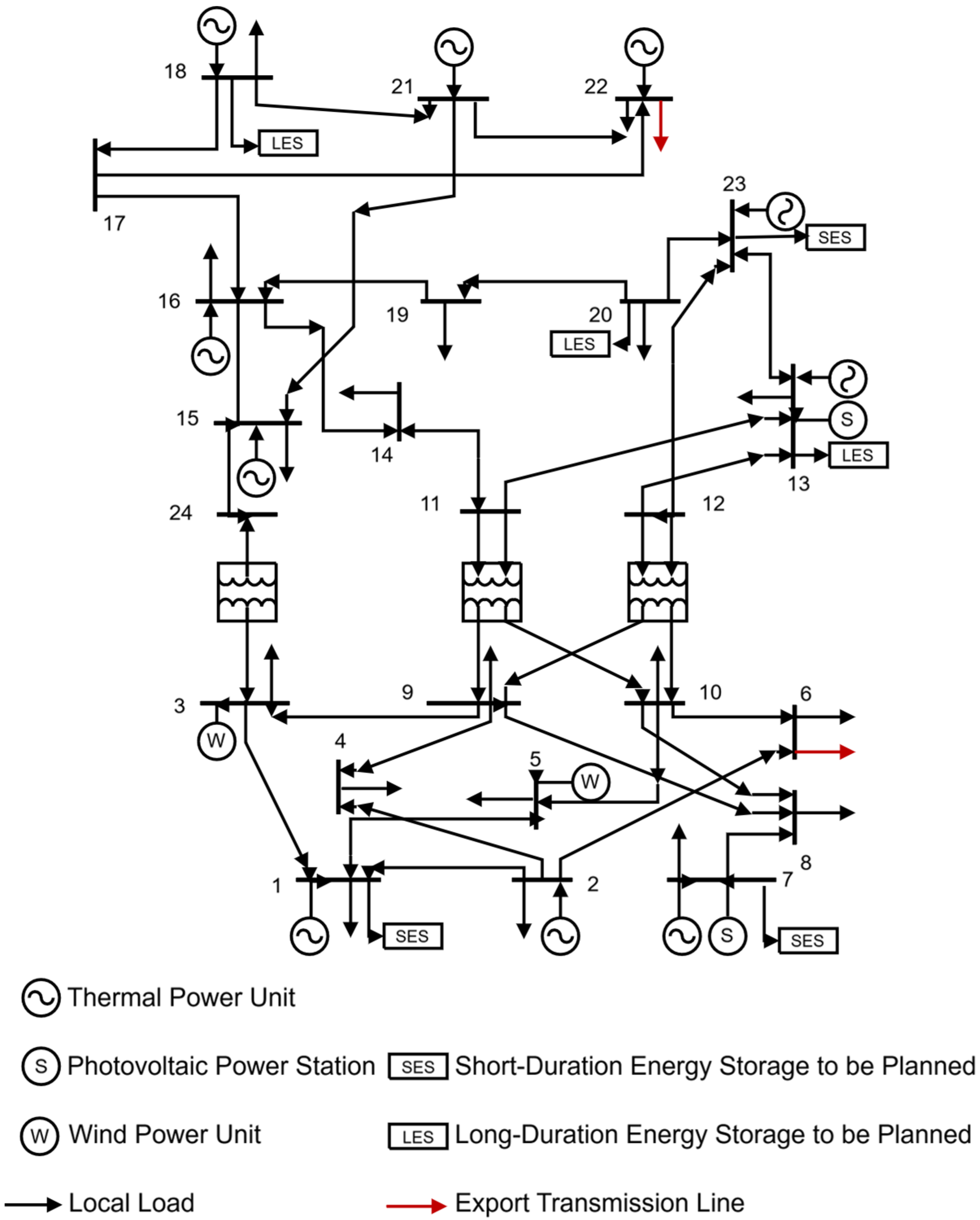
4.1. Case Study Setup
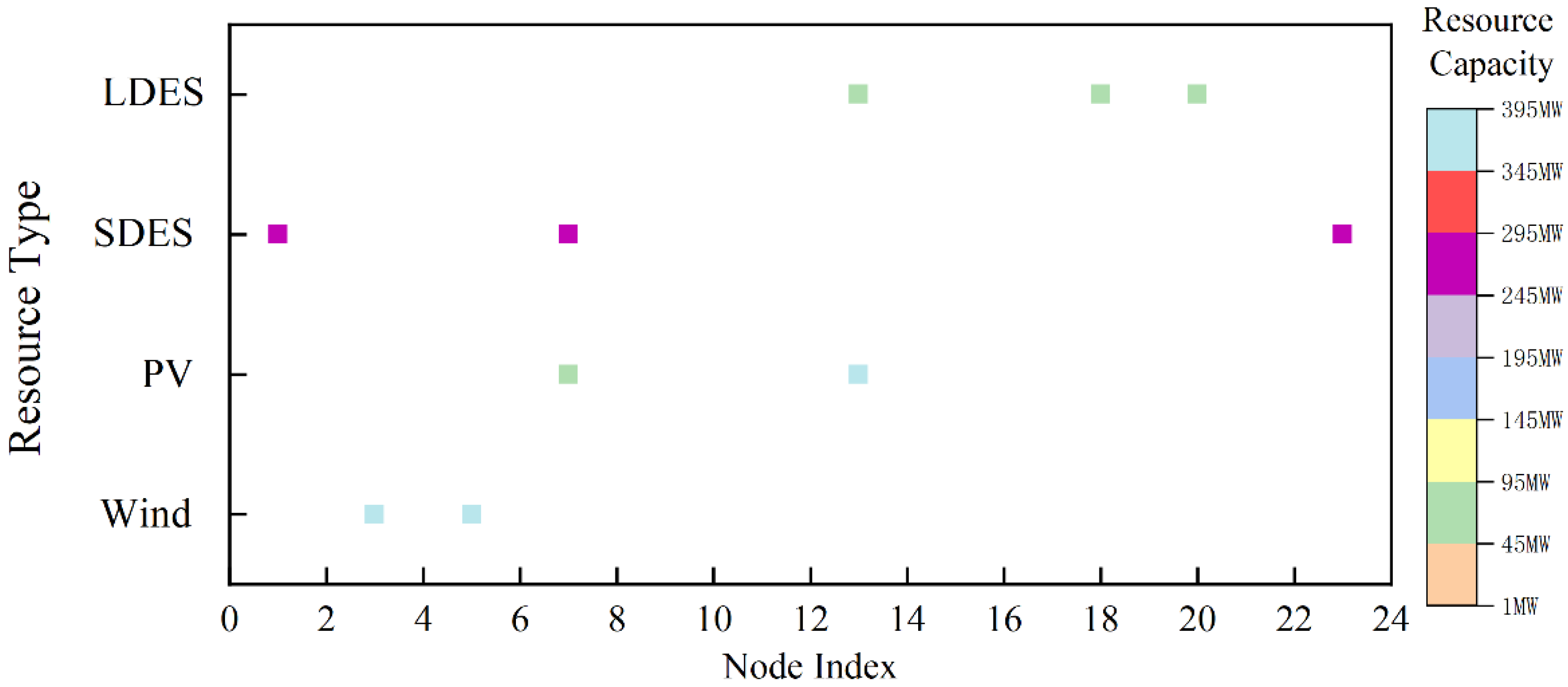
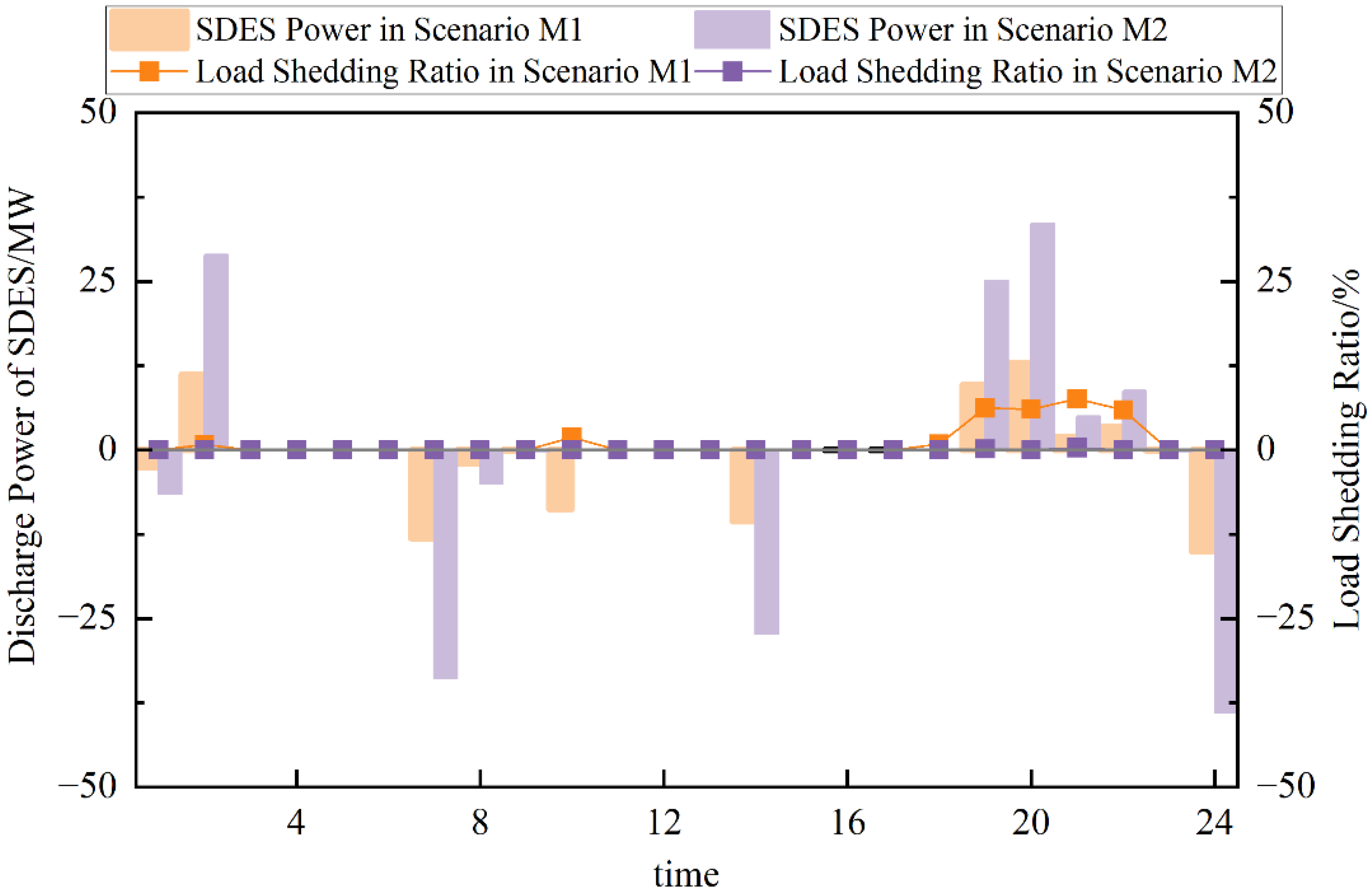
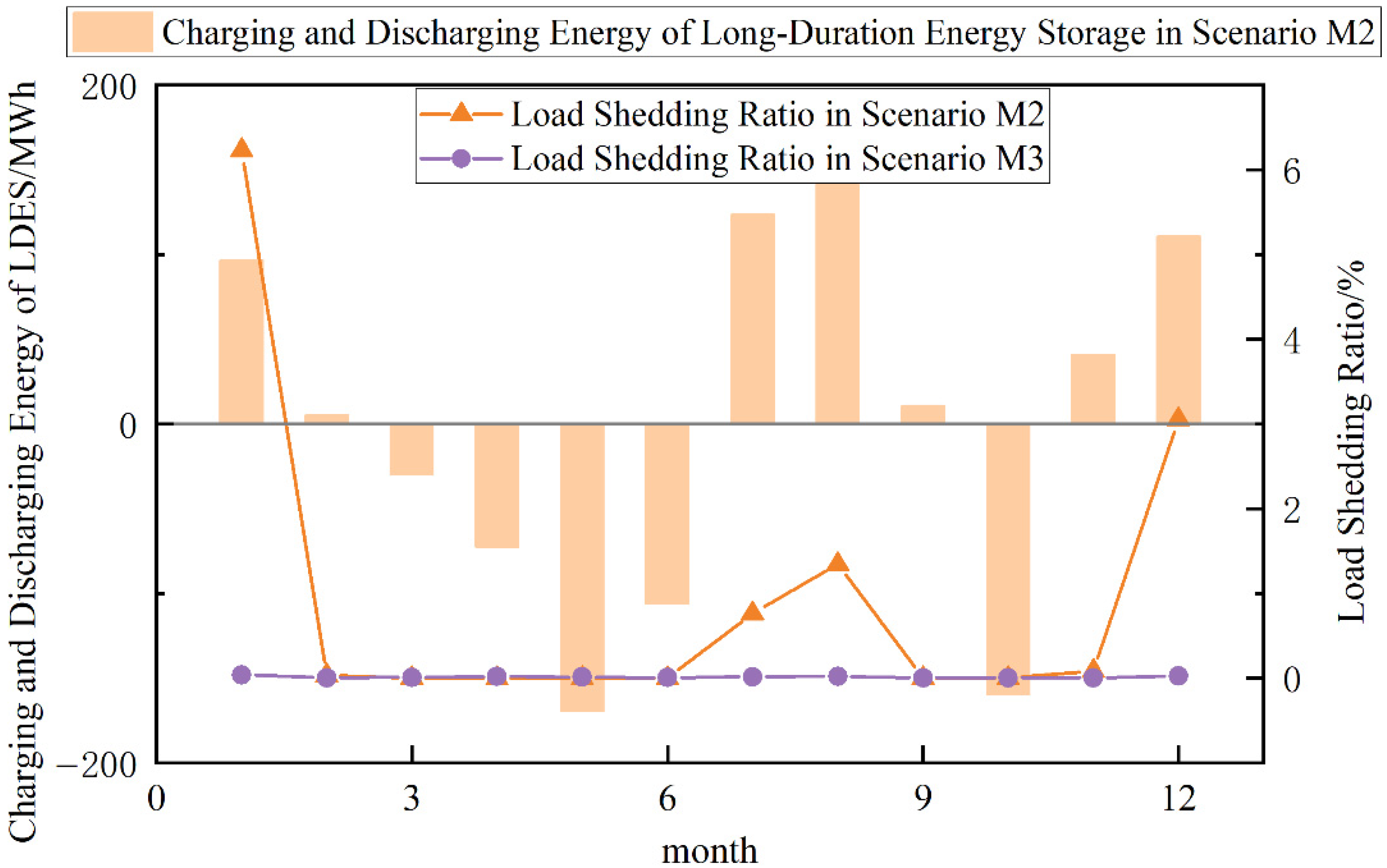
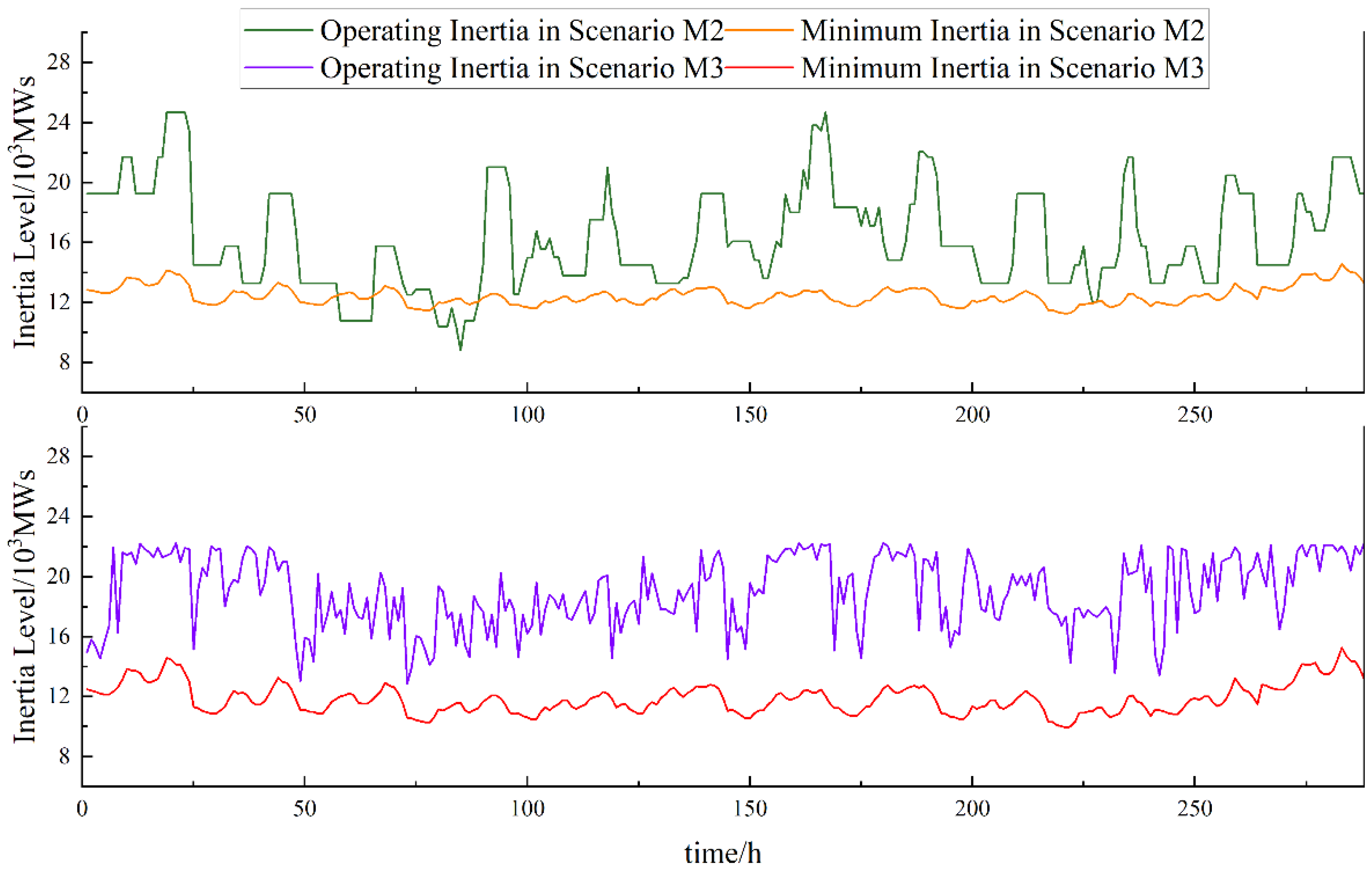
4.2. Analysis of the Synergistic Effects of Multi-Type Resources
4.3. Quantitative Assessment of System Generalized Adequacy Improvement
4.4. Planning Scheme Comparison
5. Conclusions
- (1)
- Systematically comparing various families of standard preference functions (e.g., linear, Gaussian, etc.) and conducting parameter sensitivity analyses to comprehensively examine the robustness of scheme rankings under different functional forms and threshold settings, thereby improving the generalizability and scalability of the methodology.
- (2)
- Further investigating the evolutionary trends of adequacy requirements and designing quantitative assessment methods for system adequacy under compound extreme events, with the aim of enhancing the resilience and security of power systems in the face of such events.
- (3)
- Investigating the diversified applications of demand response and thoroughly analyzing its synergistic mechanisms with renewable energy and energy storage, in order to support the enhancement of multi-dimensional adequacy in power systems.
Supplementary Materials
Author Contributions
Funding
Data Availability Statement
Conflicts of Interest
References
- Chen, L.; Wang, C.; Wu, Z. Reinforcement Learning-Based Time of Use Pricing Design Toward Distributed Energy Integration in Low Carbon Power System. IEEE Trans. Netw. Sci. Eng. 2025, 12, 997–1010. [Google Scholar] [CrossRef]
- Hansen, K.; Mathiesen, B.V.; Skov, I.R. Full energy system transition towards 100% renewable energy in Germany in 2050. Renew. Sustain. Energy Rev. 2019, 102, 1–13. [Google Scholar] [CrossRef]
- Chang, X.; Wu, Z.; Wang, J.; Zhang, X.; Zhou, M.; Yu, T.; Wang, Y. The coupling effect of carbon emission trading and tradable green certificates under electricity marketization in China. Renew. Sustain. Energy Rev. 2023, 187, 113750. [Google Scholar] [CrossRef]
- Borasio, M.; Moret, S. Deep decarbonisation of regional energy systems: A novel modelling approach and its application to the Italian energy transition. Renew. Sustain. Energy Rev. 2022, 153, 111730. [Google Scholar] [CrossRef]
- Liu, Y.; Singh, A.K.; Zhao, J.; Meliopoulos, A.S.; Pal, B.; bin Mohd Ariff, M.A.; Van Cutsem, T.; Glavic, M.; Huang, Z.; Kamwa, I.; et al. Dynamic state estimation for power system control and protection. IEEE Trans. Power Syst. 2021, 36, 5909–5921. [Google Scholar] [CrossRef]
- Shuai, H.; Li, F.; Zhu, J.; Tingen Ii, W.J.; Mukherjee, S. Modeling the impact of extreme summer drought on conventional and renewable generation capacity: Methods and a case study on the Eastern U.S. power system. Appl. Energy 2024, 363, 122977. [Google Scholar] [CrossRef]
- Stenclik, D. New Resource Adequacy Criteria for the Energy Transition: Modernizing Reliability Requirements; Energy Systems Integration Group: Reston, VA, USA, 2024. [Google Scholar] [CrossRef]
- Shariatkhah, M.-H.; Haghifam, M.-R.; Chicco, G.; Parsa-Moghaddam, M. Adequacy modeling and evaluation of multi-carrier energy systems to supply energy services from different infrastructures. Energy 2016, 109, 1095–1106. [Google Scholar] [CrossRef]
- Gong, Y.; Chung, C.Y.; Mall, R.S. Power System Operational Adequacy Evaluation With Wind Power Ramp Limits. IEEE Trans. Power Syst. 2018, 33, 2706–2716. [Google Scholar] [CrossRef]
- Lu, Z.; Li, H.; Qiao, Y. Probabilistic Flexibility Evaluation for Power System Planning Considering Its Association With Renewable Power Curtailment. IEEE Trans. Power Syst. 2018, 33, 3285–3295. [Google Scholar] [CrossRef]
- Lannoye, E.; Flynn, D.; Malley, M.O. Transmission, Variable Generation, and Power System Flexibility. IEEE Trans. Power Syst. 2015, 30, 57–66. [Google Scholar] [CrossRef]
- Lin, X.; Wen, Y.; Yang, W. Inertia Security Region: Concept, Characteristics, and Assessment Method. Proc. CSEE 2021, 41, 3065–3079. [Google Scholar] [CrossRef]
- Ju, P.; Zheng, Y.; Jin, Y.; Qin, C.; Jiang, Y.; Cao, L. Analytic assessment of the power system frequency security. IET Gener. Transm. Distrib. 2021, 15, 2215–2225. [Google Scholar] [CrossRef]
- Xu, T.; Shao, C.; Shahidehpour, M.; Wang, X. Coordinated planning strategies of power systems and energy transportation networks for resilience enhancement. IEEE Trans. Sustain. Energy 2022, 14, 1217–1229. [Google Scholar] [CrossRef]
- Shafiei, K.; Zadeh, S.G.; Hagh, M.T. Planning for a network system with renewable resources and battery energy storage, focused on enhancing resilience. J. Energy Storage 2024, 87, 111339. [Google Scholar] [CrossRef]
- Becerik, G.; Karatepe, E. Stochastic chance constrained transmission expansion decisions for different investment budgets. In Proceedings of the 2018 6th International Istanbul Smart Grids and Cities Congress and Fair (ICSG), Istanbul, Turkey, 25–26 April 2018; pp. 76–80. [Google Scholar] [CrossRef]
- Hu, J.; Xu, X.; Ma, H.; Yan, Z. Distributionally Robust Co-optimization of Transmission Network Expansion Planning and Penetration Level of Renewable Generation. J. Mod. Power Syst. Clean Energy 2022, 10, 577–587. [Google Scholar] [CrossRef]
- Yin, X.; Chen, H.; Liang, Z.; Zhu, Y. A Flexibility-oriented robust transmission expansion planning approach under high renewable energy resource penetration. Appl. Energy 2023, 351, 121786. [Google Scholar] [CrossRef]
- García-Mercado, J.I.; Gutiérrez-Alcaraz, G.; Gonzalez-Cabrera, N. Improved binary particle swarm optimization for the deterministic security-constrained transmission network expansion planning problem. Int. J. Electr. Power Energy Syst. 2023, 150, 109110. [Google Scholar] [CrossRef]
- Li, Z.; Luo, Z.; Wang, Y.; Fan, G.; Zhang, J. Suitability evaluation system for the shallow geothermal energy implementation in region by Entropy Weight Method and TOPSIS method. Renew. Energy 2022, 184, 564–576. [Google Scholar] [CrossRef]
- Xin, A.; Junhan, Q.; Huanyu, H.; Zhidong, W.; Dong, P.; Lang, Z. Comprehensive Evaluation of Power Grid Security and Benefit Based on BWM Entropy Weight TOPSIS Method. Mod. Electr. Power 2021, 38, 60–68. [Google Scholar]
- Zhang, Y.-J.; Zhang, X.-T.; Li, Q.-H.; Ran, L.; Cai, Z.-X. Gray theory based energy saving potential evaluation and planning for distribution networks. Int. J. Electr. Power Energy Syst. 2014, 57, 298–303. [Google Scholar] [CrossRef]
- Borbáth, T.; Van Hertem, D. Appropriate transmission grid representation for European resource adequacy assessments. Appl. Energy 2024, 355, 122378. [Google Scholar] [CrossRef]
- Grijalva, S.; Visnesky, A.M. The effect of generation on network security: Spatial representation, metrics, and policy. IEEE Trans. Power Syst. 2006, 21, 1388–1395. [Google Scholar] [CrossRef]
- Bazmi, A.A.; Zahedi, G. Sustainable energy systems: Role of optimization modeling techniques in power generation and supply—A review. Renew. Sustain. Energy Rev. 2011, 15, 3480–3500. [Google Scholar] [CrossRef]
- Jebaraj, S.; Iniyan, S. A review of energy models. Renew. Sustain. Energy Rev. 2006, 10, 281–311. [Google Scholar] [CrossRef]
- Department for Energy Security and Net Zero. Exploring Reliability Standard Metrics in a Net Zero Transition. The U.K. Government: 2023. Available online: https://assets.publishing.service.gov.uk/media/65e3a3323f694514a3035fbe/5-exploring-reliability-standard-metrics-in-net-zero-transition.pdf (accessed on 19 September 2025).
- Amarasinghe, P.A.G.M.; Abeygunawardane, S.K.; Singh, C. Kernel Density Estimation Based Time-Dependent Approach for Analyzing the Impact of Increasing Renewables on Generation System Adequacy. IEEE Access 2020, 8, 138661–138672. [Google Scholar] [CrossRef]
- Guihong, Z.; Fei, L.; Shibin, W.; Jitai, L. Inertia Requirement Analysis of Frequency Stability of Renewable-dominant Power System. Proc. CSU-EPSA 2022, 34, 81–87. [Google Scholar] [CrossRef]
- Jiang, H.; Du, E.; Zhang, N.; Zhuo, Z.; Wang, P.; Wang, Z.; Zhang, Y. Renewable Electric Energy System Planning Considering Seasonal Electricity Imbalance Risk. IEEE Trans. Power Syst. 2023, 38, 5432–5444. [Google Scholar] [CrossRef]
- Liang, Y.; Liu, H.; Zhao, C.; Zhou, M.; Sun, G.; Wu, Z. An Integrated Grid Planning Approach Considering System Adequacy: A Case Study of Shanxi Province. In Proceedings of the 2024 IEEE 8th Conference on Energy Internet and Energy System Integration (EI2), Shenyang, China, 29 November–2 December, 2024; pp. 1772–1777. [Google Scholar] [CrossRef]
- Twitchell, J.; DeSomber, K.; Bhatnagar, D. Defining long duration energy storage. J. Energy Storage 2023, 60, 105787. [Google Scholar] [CrossRef]
- Ahmadi, H.; Ghasemi, H. Security-Constrained Unit Commitment with Linearized System Frequency Limit Constraints. IEEE Trans. Power Syst. 2014, 29, 1536–1545. [Google Scholar] [CrossRef]
- Chen, Z.; Wu, Z.; Wei, L.; Yang, L.; Yuan, B.; Zhou, M. Understanding the synergy of energy storage and renewables in decarbonization via random forest-based explainable AI. Appl. Energy 2025, 390, 125891. [Google Scholar] [CrossRef]



| Extreme Scenario | Scenario Configuration Method | Proportion of Total Scenarios |
|---|---|---|
| Extreme heat with no wind | Randomly select a period during summer in the scenario year, where wind power output significantly decreases to nearly zero, and load demand rapidly increases by approximately 10%. | 0.01 |
| Extreme cold with no sun | Randomly select a period during winter in the scenario year, where photovoltaic output significantly decreases to nearly zero, and load demand rapidly increases by approximately 10%. | |
| Severe drought | Randomly select a period during summer in the scenario year, where hydropower output significantly decreases to nearly zero, and load demand rapidly increases by approximately 10%. |
| Indicator Symbol | Indicator Definitions | Indicator Symbol | Indicator Definitions |
|---|---|---|---|
| Loss of load expectation (LOLE) | Loss of load hours (LOLH) | ||
| Expected energy not served (EENS) | / | Conditional value at risk (CVaR) | |
| The CVaR value of EENS | RoCoF | Rate of change of frequency | |
| The flexibility ramping capacity margin | The flexibility ramping rate margin | ||
| The minimum system inertia | The system inertia margin | ||
| The system equivalent inertia | Levelized cost of energy (LCOE) | ||
| The renewable energy utilization rate | The carbon emission intensity |
| Scenario | New Energy, Short-Term Energy Storage, Transmission Lines | Long-Term Energy Storage | Dynamic Frequency Security Constraint | Consideration of Generalized Adequacy |
|---|---|---|---|---|
| M1 | √ | |||
| M2 | √ | √ | ||
| M3 | √ | √ | √ | |
| M4 | √ | √ | √ | √ |
| Scenario | Wind Power (MW) | Photovoltaic (MW) | Short-Term Energy Storage (MW) | Long-Term Energy Storage (MW) | Transmission Lines (Number) |
|---|---|---|---|---|---|
| M1 | 926.99 | 337.36 | 15.00 | 0.00 | 5 |
| M2 | 669.00 | 459.00 | 38.80 | 150/150 | 3 |
| M3 | 722.36 | 415.51 | 389.70 | 116.65/143.35 | 2 |
| M4 | 750.00 | 585.76 | 750.00 | 69.10/146.64 | 2 |
| Indicator | M1 | M2 | M3 | M4 |
|---|---|---|---|---|
| Expected Loss of Load Hours (h) | 6.15 | 4.68 | 3.14 | 2.91 |
| Expected Energy Not Supplied (MWh) | 1175.31 | 940.78 | 602.28 | 291.48 |
| Conditional Value at Risk of Expected Energy Not Supplied (MWh) | 7987.50 | 6783.61 | 1512.18 | 1316.64 |
| Flexible Ramp Capacity Margin (MW) | −356.34 | −432.78 | −600.62 | −441.81 |
| Flexible Ramp Rate Margin (MW/h) | 9.21 | −50.23 | −285.17 | −126.36 |
| System Inertia Margin (%) | −19.25 | −17.31 | 2.90 | 10.26 |
| Minimum Inertia Requirement (MW·s) | 1.46 × 10⁴ | 1.45 × 10⁴ | 1.52 × 10⁴ | 1.54 × 10⁴ |
| Indicator | M1 | M2 | M3 | M4 |
|---|---|---|---|---|
| Expected Loss of Load Hours (h) | 5.603 | 4.264 | 2.86 | 2.652 |
| Expected Energy Not Supplied (MWh) | 916.75 | 733.81 | 469.78 | 227.356 |
| Conditional Value at Risk of Expected Energy Not Supplied (MWh) | 6390 | 5426.90 | 1209.74 | 1053.31 |
| Flexible Ramp Capacity Margin (MW) | −509.6 | −618.93 | −858.91 | −631.8 |
| Flexible Ramp Rate Margin (MW/h) | 5.993 | −71.83 | −407.80 | −180.7 |
| System Inertia Margin (%) | −22.1 | −20.41 | 4.55 | 14.3 |
| Minimum Inertia Requirement (MW·s) | 1.56 × 10⁴ | 1.55 × 10⁴ | 1.62 × 10⁴ | 1.64 × 10⁴ |
| Indicator | M1 | M2 | M3 | M4 | Evaluation Indicator Combination Weight |
|---|---|---|---|---|---|
| Levelized Cost of Energy ($/kWh) | 1.92 | 1.69 | 1.61 | 1.30 | 0.22 |
| Expected Loss of Load Hours (h) | 6.15 | 4.68 | 3.54 | 2.91 | 0.16 |
| Expected Energy Not Supplied (MWh) | 1175.31 | 940.78 | 602.28 | 291.48 | 0.13 |
| Conditional Value at Risk of Expected Energy Not Supplied (MWh) | 7987.50 | 6783.61 | 1512.18 | 1316.64 | 0.09 |
| Flexible Ramp Capacity Margin (MW) | −356.34 | −432.78 | −600.62 | −441.81 | 0.04 |
| Flexible Ramp Rate Margin (MW/h) | 9.21 | −50.23 | −285.17 | −126.36 | 0.04 |
| System Inertia Margin (%) | −19.25 | −17.31 | 2.90 | 10.26 | 0.08 |
| Minimum Inertia Requirement (MW·s) | 1.46 × 10⁴ | 1.45 × 10⁴ | 1.52 × 10⁴ | 1.54 × 10⁴ | 0.06 |
| Renewable Energy Utilization Rate (%) | 95.10 | 94.81 | 96.13 | 96.00 | 0.03 |
| Carbon Emission Intensity (t/MWh) | 1.48 × 10⁻² | 1.46 × 10⁻² | 1.21 × 10⁻² | 1.30 × 10⁻² | 0.15 |
| Scenario | Net Flow | Rank |
|---|---|---|
| M1 | −2.26 | 4 |
| M2 | −0.68 | 3 |
| M3 | 0.94 | 2 |
| M4 | 2.00 | 1 |
Disclaimer/Publisher’s Note: The statements, opinions and data contained in all publications are solely those of the individual author(s) and contributor(s) and not of MDPI and/or the editor(s). MDPI and/or the editor(s) disclaim responsibility for any injury to people or property resulting from any ideas, methods, instructions or products referred to in the content. |
© 2025 by the authors. Licensee MDPI, Basel, Switzerland. This article is an open access article distributed under the terms and conditions of the Creative Commons Attribution (CC BY) license (https://creativecommons.org/licenses/by/4.0/).
Share and Cite
Yin, J.; Fu, L.; Xiao, L.; Meng, Z.; Luo, Y.; Chen, Z.; Wu, Z. Multi-Timescale Coordinated Planning of Wind, Solar, and Energy Storage Considering Generalized Adequacy. Energies 2025, 18, 5024. https://doi.org/10.3390/en18185024
Yin J, Fu L, Xiao L, Meng Z, Luo Y, Chen Z, Wu Z. Multi-Timescale Coordinated Planning of Wind, Solar, and Energy Storage Considering Generalized Adequacy. Energies. 2025; 18(18):5024. https://doi.org/10.3390/en18185024
Chicago/Turabian StyleYin, Jian, Lixiang Fu, Liming Xiao, Zijian Meng, Yuejun Luo, Zili Chen, and Zhaoyuan Wu. 2025. "Multi-Timescale Coordinated Planning of Wind, Solar, and Energy Storage Considering Generalized Adequacy" Energies 18, no. 18: 5024. https://doi.org/10.3390/en18185024
APA StyleYin, J., Fu, L., Xiao, L., Meng, Z., Luo, Y., Chen, Z., & Wu, Z. (2025). Multi-Timescale Coordinated Planning of Wind, Solar, and Energy Storage Considering Generalized Adequacy. Energies, 18(18), 5024. https://doi.org/10.3390/en18185024