1. Introduction
Beyond ITER’s mission to demonstrate the feasibility of large-scale fusion reactions, the EU DEMO aims to become the first fusion-powered facility capable of delivering a consistent net energy output at the level of a commercial power plant [
1,
2,
3].
The conventional design of the EU DEMO is derived from ITER, as both adopt the tokamak concept, which is considered the most viable configuration, although alternative approaches remain possible [
4]. In this design, D-shaped toroidal field (TF) coils are arranged in a circular pattern, with the central solenoid (CS) positioned in the bore along the machine’s axis and surrounded by poloidal field (PF) coils. Each TF coil is subjected to both in-plane and out-of-plane electromagnetic (EM) loads. The in-plane loads result from mutual interactions among TF coils, generating an unbalanced centripetal force that is counteracted by wedging in the inboard regions. Meanwhile, out-of-plane loads arise from the interplay between TF and PF coils, inducing a torque on each TF coil. This torque is balanced by external inter-coil structures and frictional forces at the sides of the inboard regions. Consequently, the stress levels in the inner leg regions involved in wedging are substantial, necessitating a thick steel “nose.” In 2016, the EU DEMO was designed to have the same peak magnetic field as ITER (~13 T) at the TF coils, requiring a larger overall size than ITER to generate greater energy output [
5].
Increasing the magnetic field strength in a tokamak has the potential to reduce its size, as higher fields can confine plasma within a smaller volume. This could, in theory, pave the way for more compact fusion reactors. In this context, the Tokamak with Reactor Technologies (TRT) [
6], developed under the federal project “Development of Controlled Fusion Technologies and Innovative Plasma Technologies” [
7], represents an intriguing hybrid (fusion–fission) reactor experiment. Its exceptionally compact size (R
0 = 2.15 m) is made possible by the application of a high magnetic field (B
0 = 8 T). However, stronger magnetic fields also generate higher structural loads, demanding more robust mechanical solutions. While high-performance steel, such as the high-strength cryogenic steel used in ITER, is already incorporated into the current design, further increasing the TF coil size would lead to prohibitive costs and manufacturing challenges, ultimately negating the benefits of a higher magnetic field for compactness. Consequently, innovative and unconventional engineering solutions are required to harness the advantages of stronger magnetic fields effectively.
The structural scheme of TF coils resisting EM forces through the central vault of juxtaposed inboard legs and hoops formed by outer inter-coil structures (OISs), without external support structures, is not novel. This configuration has been previously adopted in ITER and JT-60SA [
8]. However, this design necessitates significant material in the machine’s central region, where space is constrained, and around the poloidal perimeter, where access ports are located. Alternative structural concepts aim to redistribute part of the EM loads from TF casings to the CS or other external structures [
9]. In IGNITOR [
10], an external preloading system, powered by a hydraulic assembly, applies force to both the TF coils and the CS [
11], with two large support rings positioned at the top and bottom to manage EM loads. JET [
12] employed a purely bucked scheme, where the TF coils were mechanically and magnetically pressed against the CS. The bucked-and-wedged concept, explored for IGNITOR and Fusion Nuclear Science Facility (FNSF) [
13], sought to combine the advantages of both load redistribution approaches.
Structural resistance criteria for ductile materials, such as the Von Mises and Tresca theories, involve calculating equivalent stress, where normal stresses are subtracted from each other. These criteria suggest that a hydrostatic stress state (either tensile or compressive) is beneficial for structural integrity, whereas deviatoric stresses contribute to structural failure. In the conventional wedged scheme, the steel nose experiences compression at the sides, where it interacts with adjacent coils, and at the plasma-facing side due to the bursting force on the winding pack (WP). However, the side facing the CS is traction-free, deviating from an ideal hydrostatic state. The bucked-and-wedged approach seeks to improve structural integrity by shifting the TF coils inward toward the CS while maintaining wedging between inboard regions. Through contact, the inner surfaces of the legs experience compression. If additional vertical pre-compression is applied externally, the stress distribution in the nose approaches a hydrostatic state, enhancing structural robustness. Nevertheless, despite its theoretical advantages, the bucked-and-wedged configuration presents significant challenges. The large number of simultaneous contact points introduces uncertainties in load distribution, which can be highly sensitive to geometric and bearing tolerances, necessitating strict control over manufacturing precision.
This study builds on the work presented in [
14], which explored the feasibility of exceeding the 13 T magnetic field limit for the EU DEMO. That work examined several engineering approaches to withstand the additional loads associated with stronger magnetic fields and ultimately concluded that the bucked-and-wedged configuration was unsuitable for a DEMO-scale tokamak. In particular, the bucked-and-wedged concept was evaluated alongside other potential strategies, including the C-clamp concept, the use of tensioners through the CS bore, TF pre-compression with steel cables, and the simply bucked TF coil concept. The conclusions in [
14] regarding the technical inapplicability of the bucked-and-wedged scheme to a machine of EU DEMO’s size anticipated our findings and are consistent with our assessment. However, since the authors of [
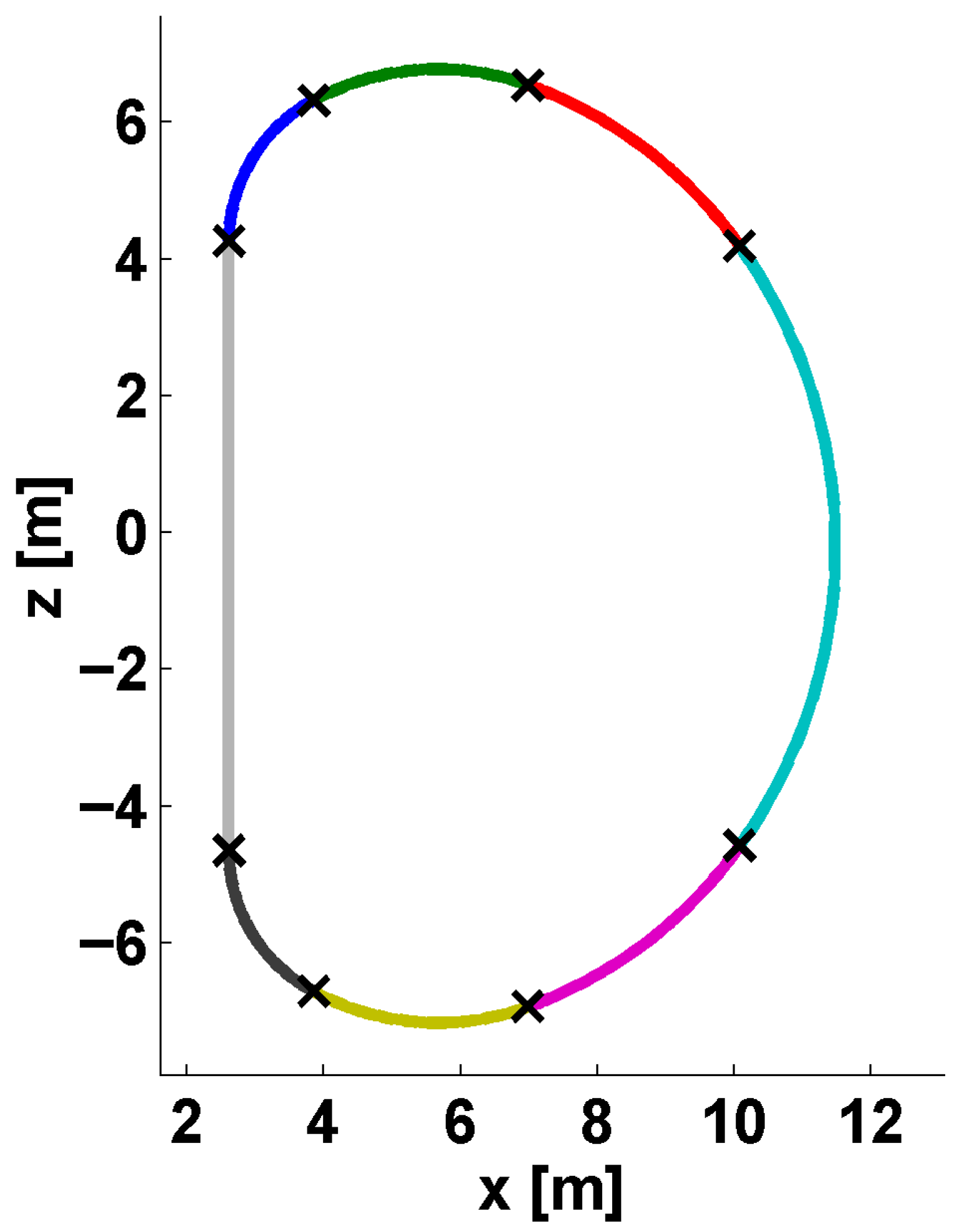
14] considered multiple concepts without focusing in depth on any single one, they did not provide a systematic, dedicated analysis of the bucked-and-wedged configuration. Our work advances this line of research by carrying out such an analysis, presenting both pre- and post-processing details, along with quantitative data and technical aspects intended to support replication and further development for the EU DEMO or other fusion reactors. Specifically, we examine the case of a tokamak with an aspect ratio of A = 3.3, a major radius of R
0 = 6.5 m, and a peak TF coil field of B
max = 16.5 T, to assess the feasibility of the bucked-and-wedged scheme under these conditions. The shape here considered is based on the iso-stress profile, theoretically derived from the condition of a filamentary coil resisting in-plane loads solely through membrane stresses [
15]. However, in practical applications, where the coil has a finite cross-section and the inner leg is not infinitely rigid, the iso-stress profile cannot entirely eliminate in-plane bending moments. Nevertheless, it remains a structurally favorable design [
16].
A gap is present between TF fronts and CS before operation, and it is closed during magnetization. By widening this gap, a greater part of the load can be transferred from bucking to wedging, up to a completely wedged configuration for large values of the gap. In this work, we considered four values of the gap: 1 mm, 3 mm, 5 mm, and 15 mm. For the last value, contact between TF and CS does not occur.
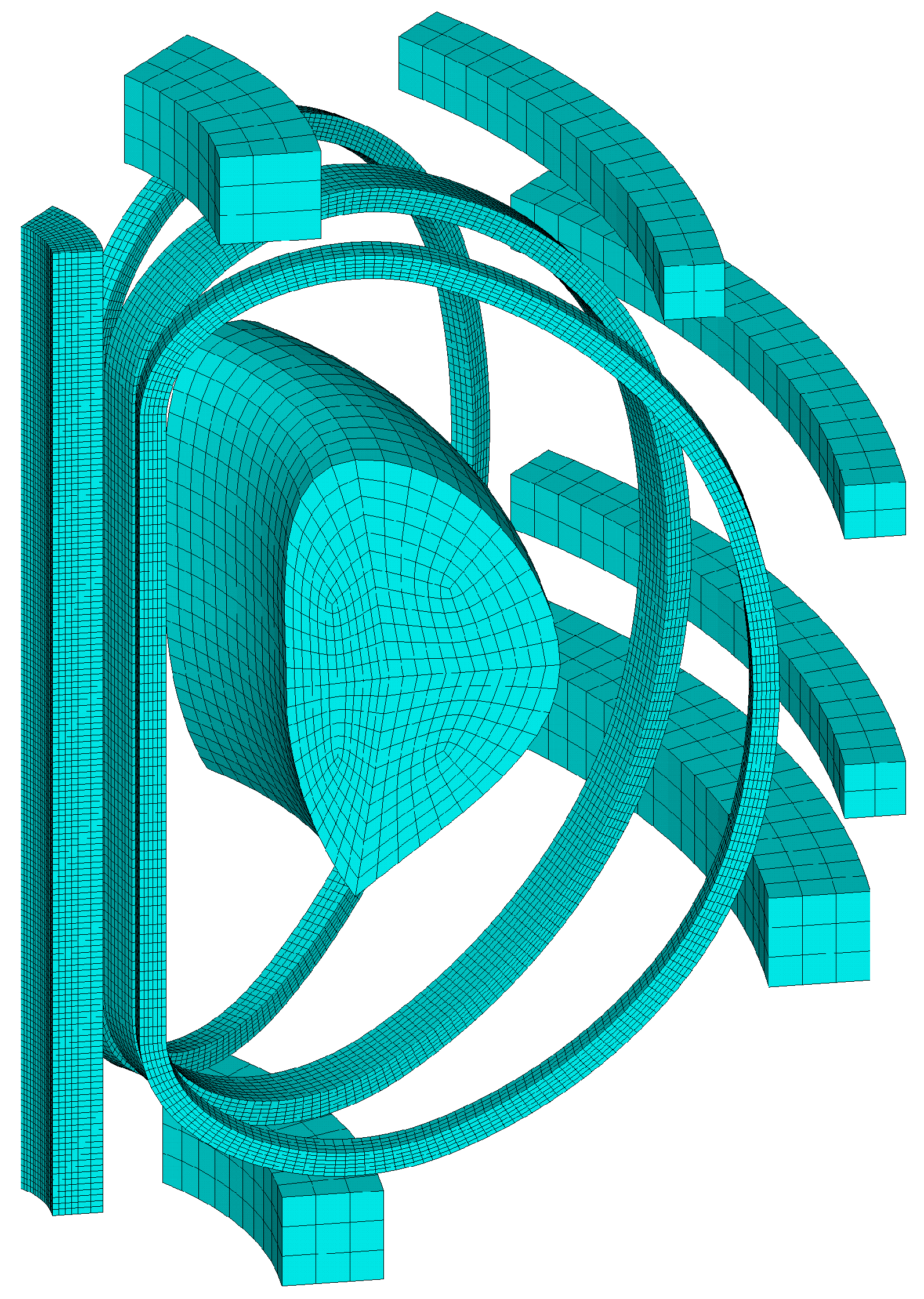
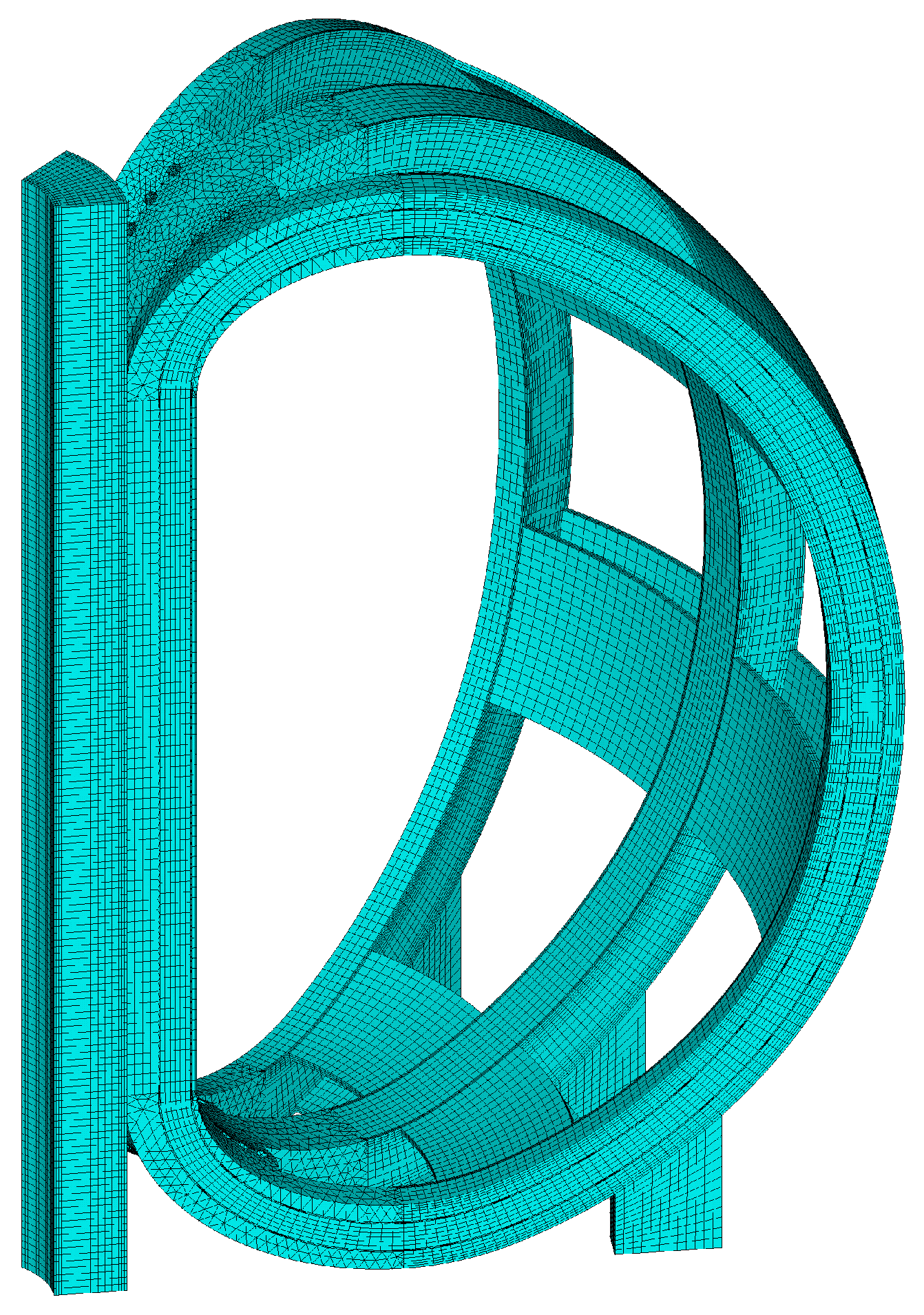
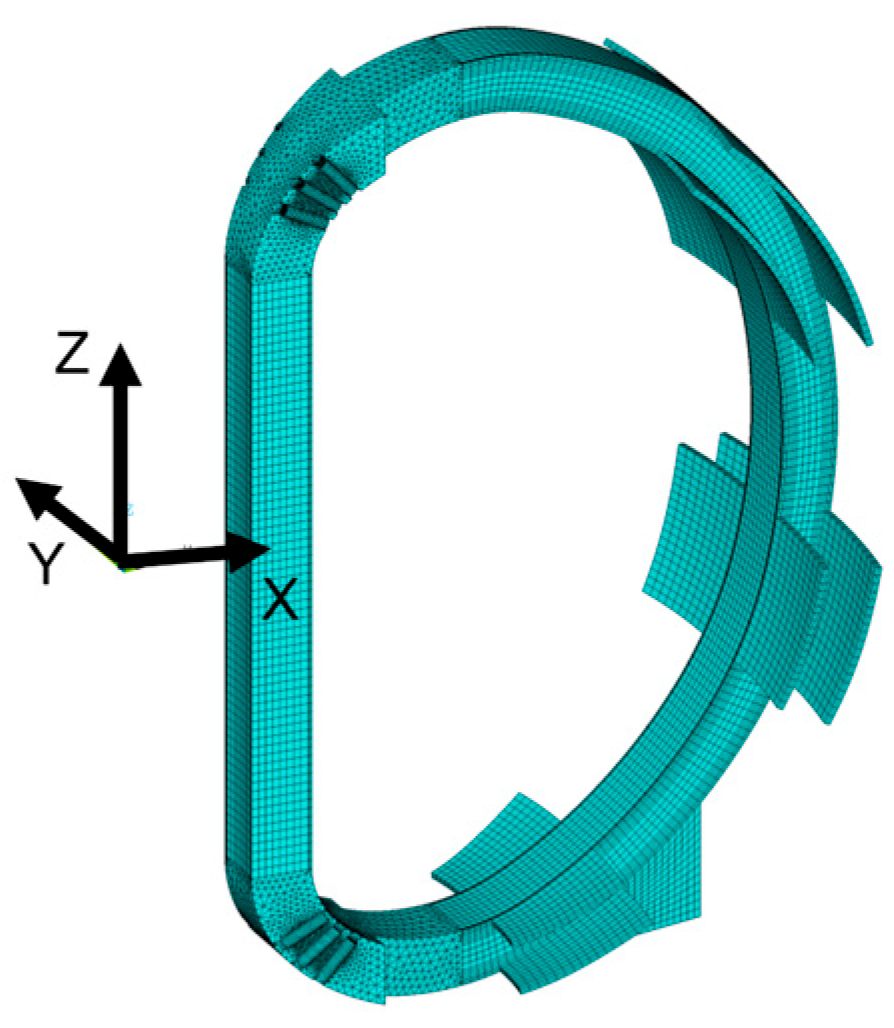
Given the complexity introduced by multiple contact areas, friction, orthotropic materials, high-magnitude loads, and intricate boundary conditions, we employ finite element modelling (FEM) as the most appropriate tool for obtaining reliable results. Our analyses include the EM calculation of Lorentz forces acting on each conductor and a structural evaluation of their effects on the steel casings and mechanical supports.
The remainder of this paper is structured as follows:
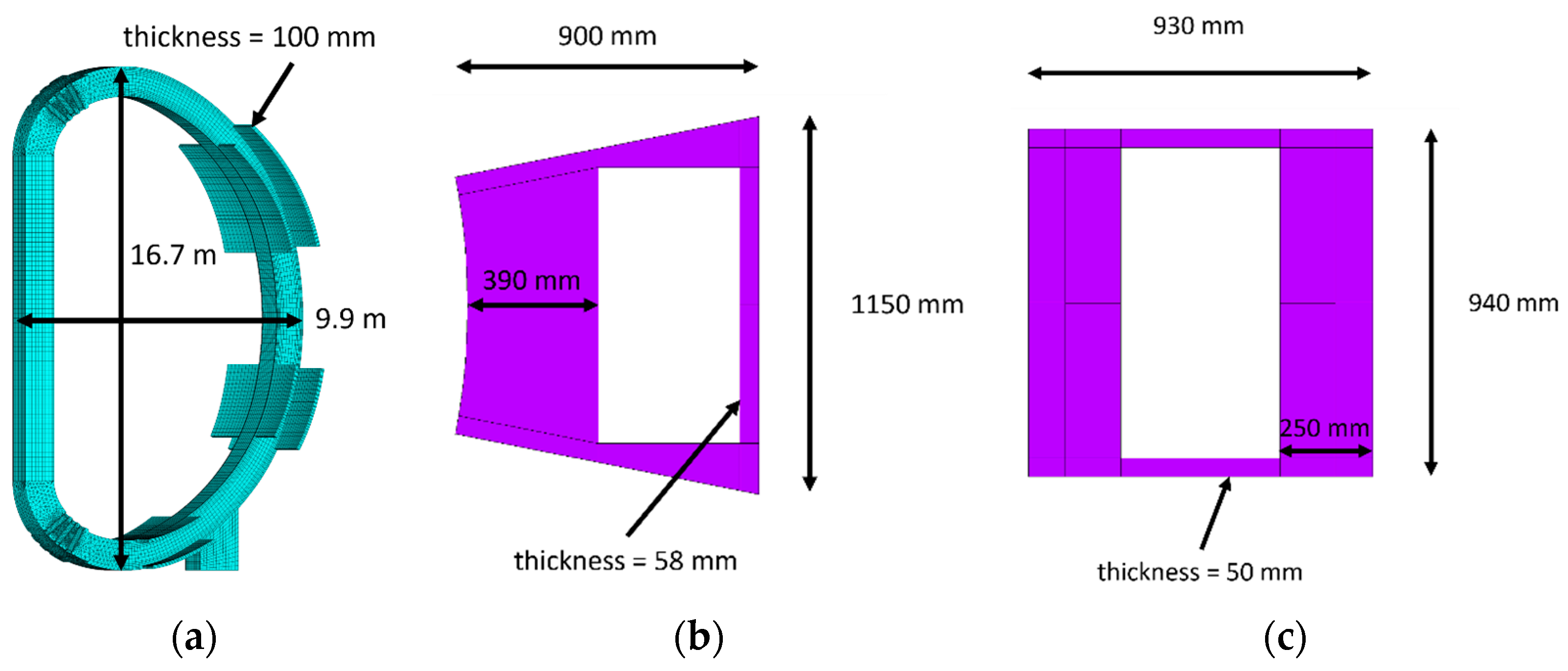
Section 2 describes the EM modeling approach and key results, followed by a detailed explanation of the structural model, including its underlying assumptions and simplifications.
Section 3 presents and discusses the structural evaluation results, and
Section 4 summarizes the conclusions of the study.
3. Results and Discussion
The pre-loading of the coils (50 + 50 MN per coil) induces toroidal compression of the wedges, primarily concentrated in the shear key regions. At this stage, no contact occurs between TF and CS.
During TFmag, the TF coils are energized and expand due to the burst force, tending toward a circular shape. The gap between TF and CS closes for gap values below 15 mm.
At Premag, out-of-plane forces act on the TF coils in addition to the in-plane burst forces.
At SoF, out-of-plane forces reach their peak magnitude, making this the most structurally demanding load case.
The structural components react to the electromagnetic forces in a manner that depends on the gap size.
Table 7,
Table 8,
Table 9 and
Table 10 summarize the distribution of the centering inward force across different structural elements. The reaction forces are expressed as percentages of the total radial force acting on one TF coil—100 MN during pre-compression and 1190 MN in other stages.
At pre-compression, the TF and CS remain separated, and load distribution is identical across all cases. From the second stage onward, the OIS experience traction rather than compression (negative values in
Table 7,
Table 8,
Table 9 and
Table 10) due to TF coil deformation under the burst force, pulling the casing in the same direction as the EM load. The gap size significantly influences the force distribution: for a 3 mm gap, the inward load is nearly evenly distributed between wedging and bucking.
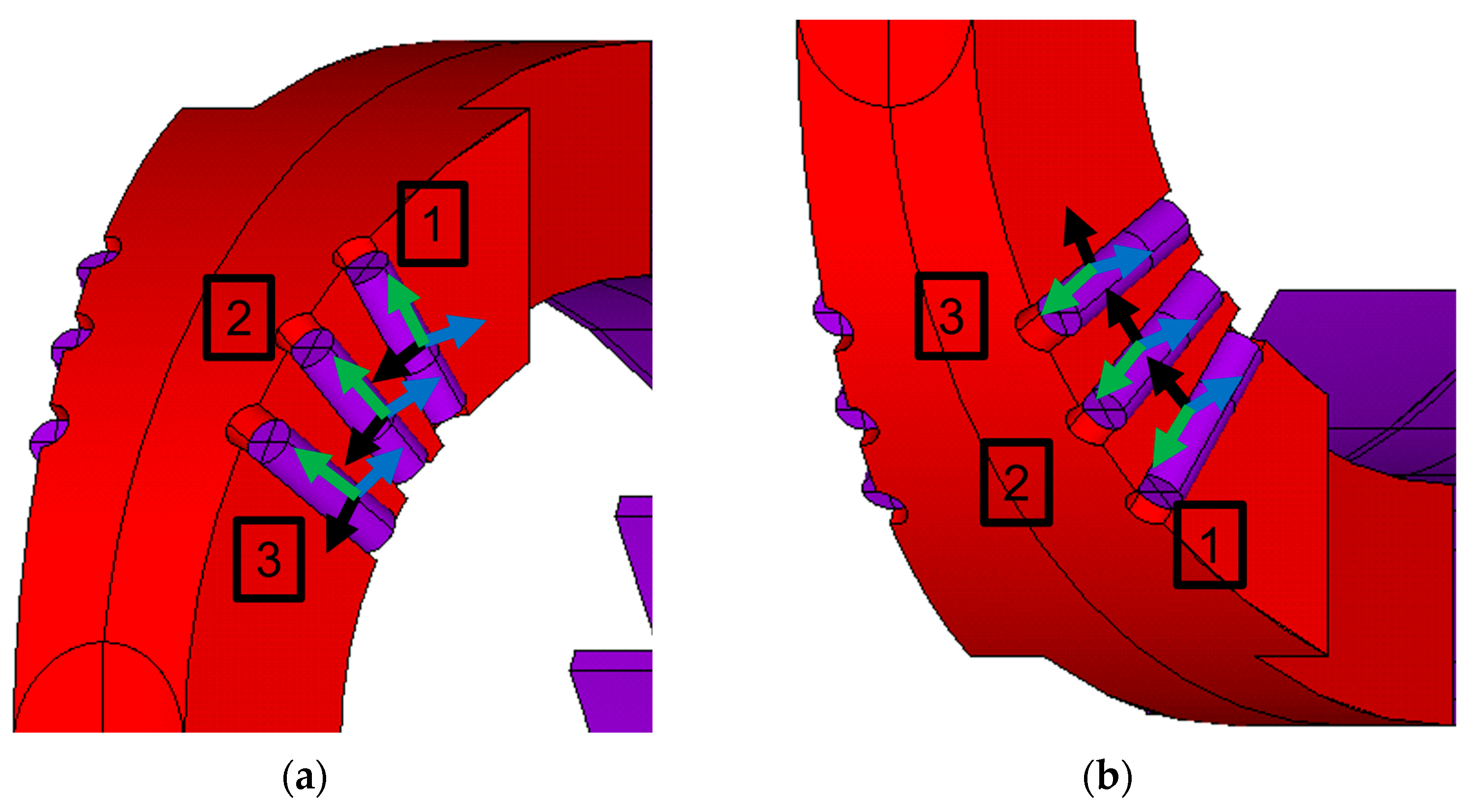
Table 11 presents the components of the forces exchanged at the interface between adjacent inner legs at SoF, based on the reference system in
Figure 5.
FY represents the total compression force.
FZ corresponds to the friction shear force.
FX, orthogonal to the other two, is negligible.
The compression force, as well as the friction shear force decrease with the gap value.
The shear keys transmit shear forces between coils, preventing slippage at the inner leg interface.
Table 12,
Table 13,
Table 14,
Table 15,
Table 16,
Table 17,
Table 18 and
Table 19 list the force components acting on the pins due to their interaction with the central coil at SoF, according to the local reference systems in
Figure 6a,b. Shear forces transmitted through the pins appear unaffected by the gap size. A further point of concern is the magnitude of the transmitted shear forces. An estimate of the maximum transferrable shear force per pin yields considering the shear stress
τ for a rectangular cross-section
A and the relation between the uniaxial and shear yielding stresses
σy and
τy given by the Von Mises criterion, respectively:
With
σy = 700 MPa,
Fshear = 58 MN. According to this rough calculation, the stress level of the pin #1 installed in the lower curved region is always beyond the allowable stress limit. With respect to this aspect, it is worth noting that the highest performance steels developed and used for ITER exhibit significantly enhanced mechanical properties, with reported yield strengths of about 900 MPa [
23] and up to 950 MPa [
24]. Taking the latter value as the stress limit, the maximum shear force a pin could theoretically withstand increases to approximately 79 MN, which would be sufficient to carry the shear loads acting even on the most heavily loaded pins. It is interesting to note that, as regards upper pins, pin #3 transmits a low value of the shear force for all the analyzed cases, due to its proximity to the point where shear forces exerted between adjacent coils invert their sign, identifying a null point.
The CS contributes to supporting the centering force acting on the TF coils, which benefits the stress distribution in both components. However, if contact includes friction, the CS experiences torsional shear stresses. This has two opposing effects:
Positive: It helps the TF coils resist out-of-plane torsion.
Negative: It induces additional stresses in the CS, which can be detrimental.
The contact pressure between the TF and CS influences the CS’s deformation behavior, with effects dependent on gap size. This pressure reduces hoop stress amplitudes during load cycling, enhancing the CS’s fatigue life.
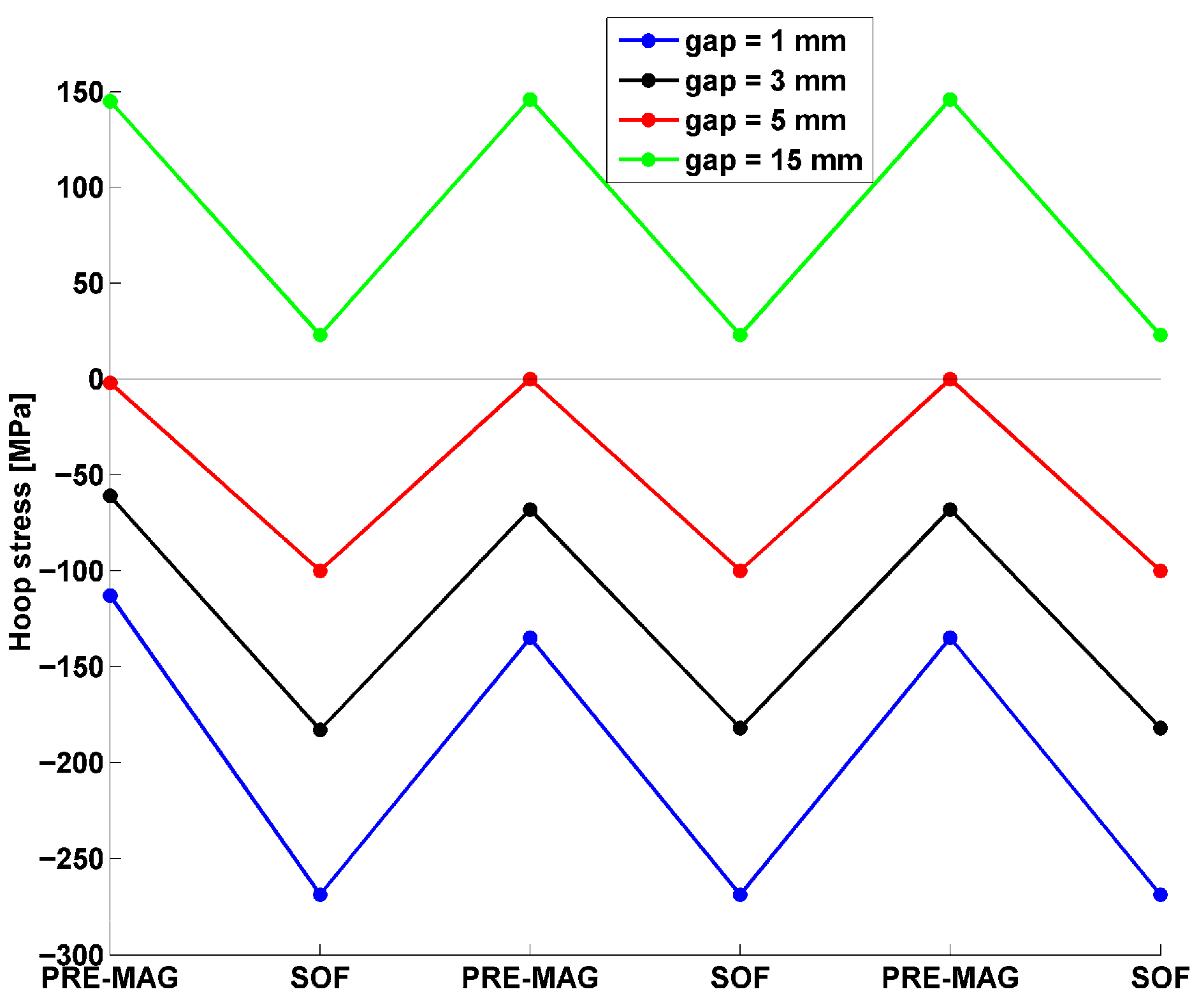
Figure 7 illustrates the variation in hoop stress over cycling for different gap sizes, captured at the locations where the stress variation amplitude is highest in each case. Maximum hoop stress amplitudes for different gap sizes are:
1 mm: 156 MPa
3 mm: 114 MPa
5 mm: 100 MPa
15 mm: 123 MPa
For a 15 mm gap (no contact between TF and CS), the hoop stress cycle alternates between positive values. In contrast, for smaller gaps, the cycle remains fully compressive, which is generally favorable for fatigue life. However, further considerations on fatigue cannot be made in this study, as the WP within the CS is modeled as a homogenized material. It is well established that a realistic evaluation of fatigue requires a detailed component-by-component analysis of the WP assembly to capture local stress concentrations and hot spots [
25]. Moreover, a reliable fatigue assessment must also account for residual stresses introduced during welding and manufacturing processes [
26].
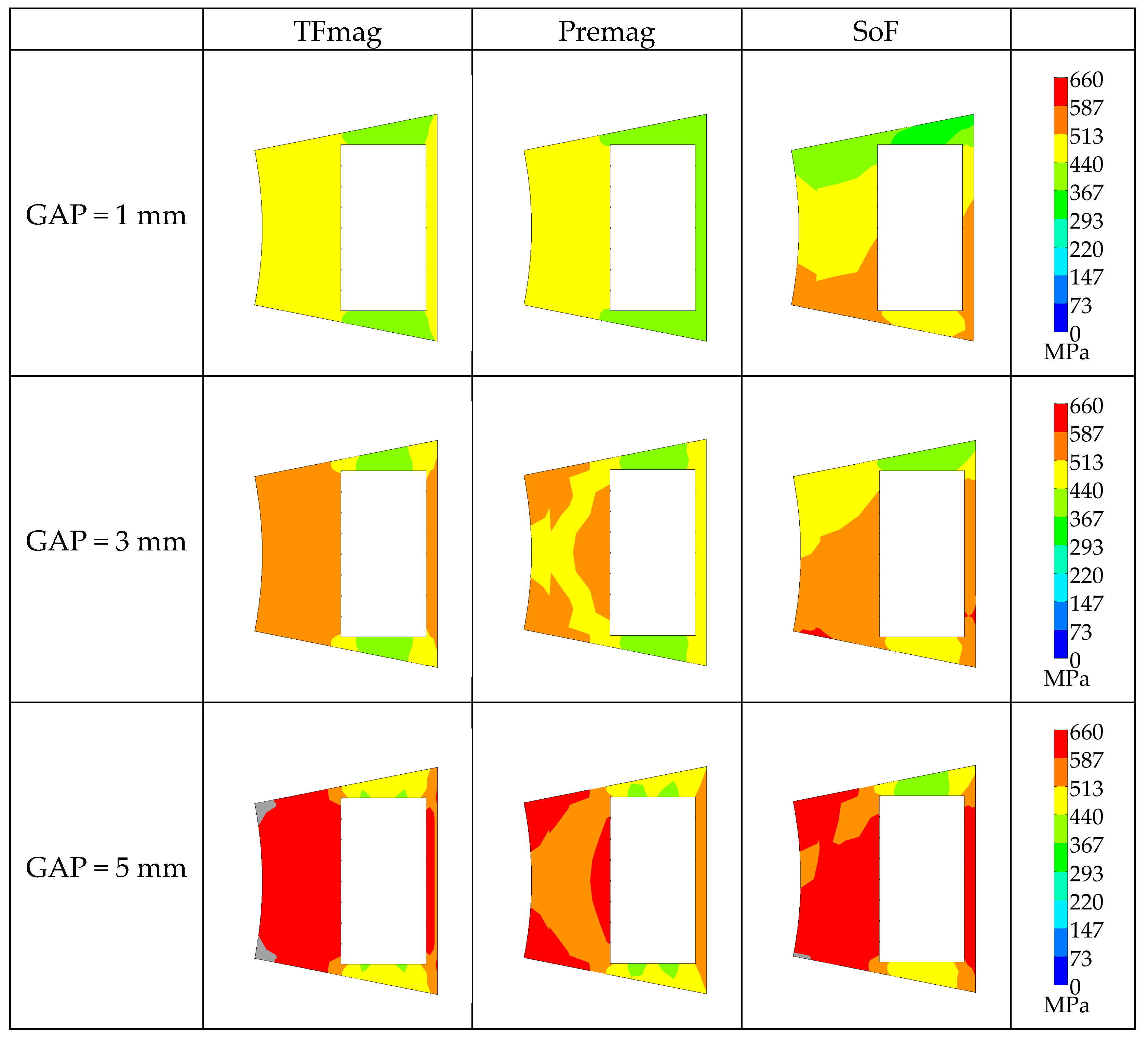
The beneficial effect of bucking on the inner leg is evident when analyzing Von Mises stress (
Figure 8). At the equatorial plane, the inner leg nose experiences compression at its sides (due to wedging) and at the WP interface (due to burst forces). When bucking occurs, compression also appears at the nose’s inner radius, bringing the stress state closer to a fully hydrostatic condition. This condition is optimal for material strength, leading to the lowest Von Mises stresses for a 1 mm gap.
However, this beneficial effect deteriorates rapidly with increasing gap size, as even a small increase significantly reduces stress relief. This suggests that a meaningful structural advantage from bucking would only be achieved with gap sizes ≤ 2 mm. Achieving such precision in TF-CS surface coupling over a multi-meter structure, however, appears impractical. This statement warrants further contextualization. Taking ITER as a reference, several studies provide quantitative insights into achievable tolerances. In [
23], ITER is reported to have achieved overall dimensional tolerances within a few millimeters. According to [
27], the required radial positional accuracy of the coils is better than 3.5 mm. In [
28], it is specified that, at the final assembly stage, each TF coil pair must comply with a cumulative radial tolerance of ±2 mm. More recently, [
29] reported dimensional accuracies of ITER TF coils on the order of 1 mm. Taken together, these results suggest that when both positioning and dimensional uncertainties are considered, a nominal interspace of 2 mm between the TF and CS coils implies an error margin comparable to the clearance itself. Given the sensitivity of the stress state to the gap width, this introduces the possibility of significant deviations in load distribution and stress patterns, thereby adding uncertainty to the structural integrity and mechanical behavior of the assembly.
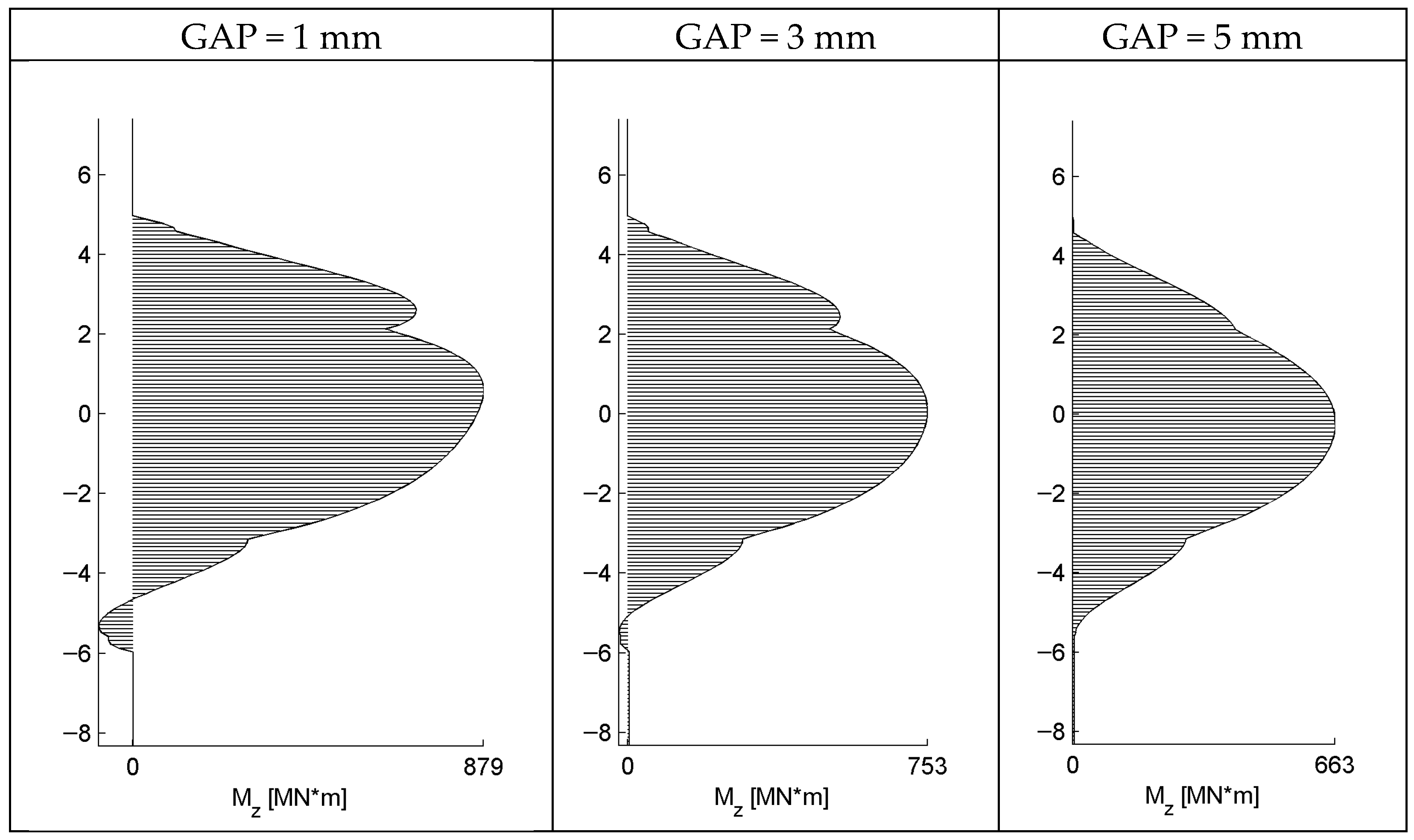
With frictional coupling, the CS also shares part of the torsional load acting on the TF.
Figure 9 presents the torsional moment M
Z acting on the CS due to frictional contact with the TF at SoF for different gap values. The M
Z value at a given vertical location represents the cumulative torque moment acting on the section above, which must be balanced by internal stresses. At the base of the CS, M
Z is zero in all cases, as the CS is globally free from external moments.
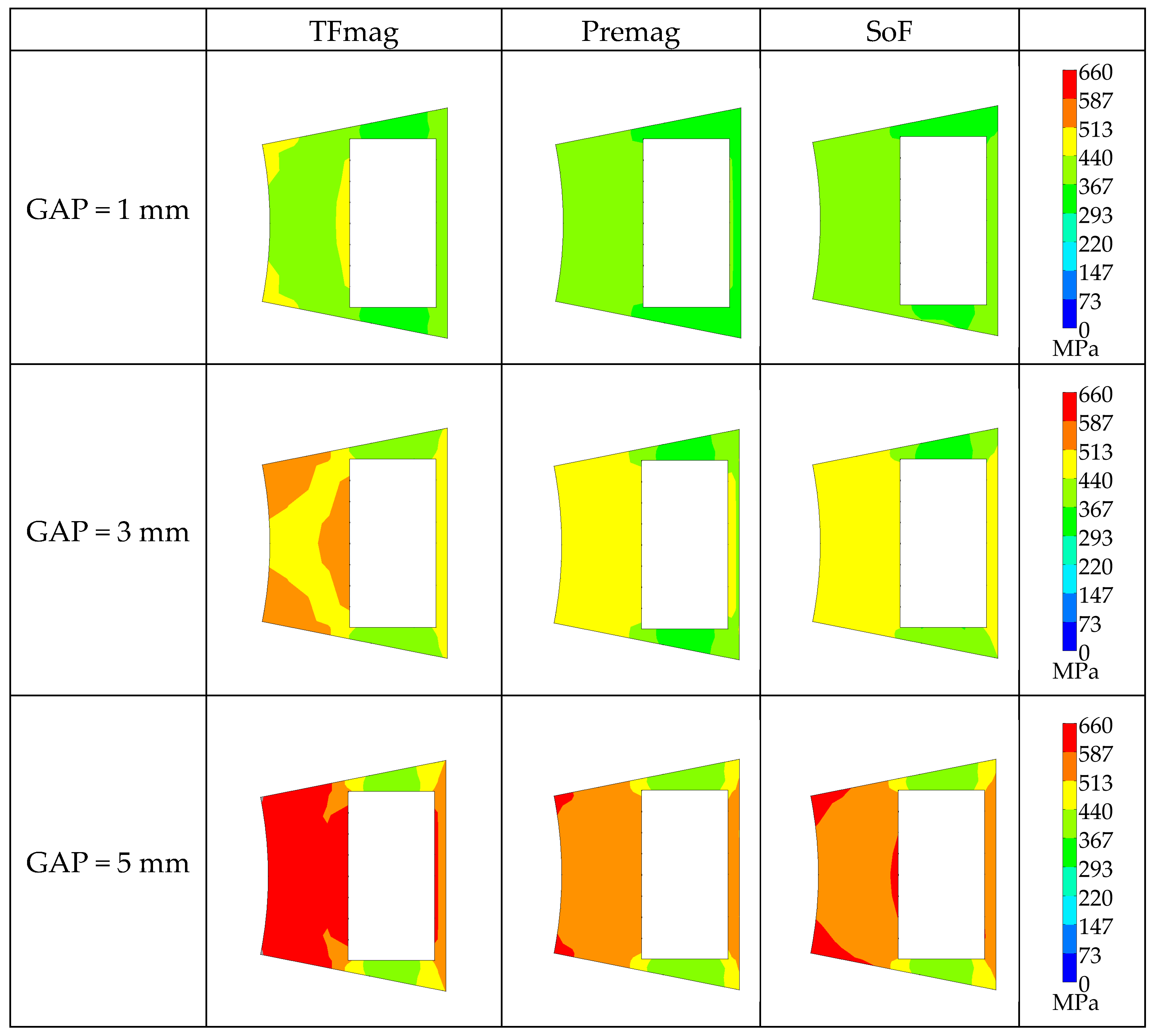
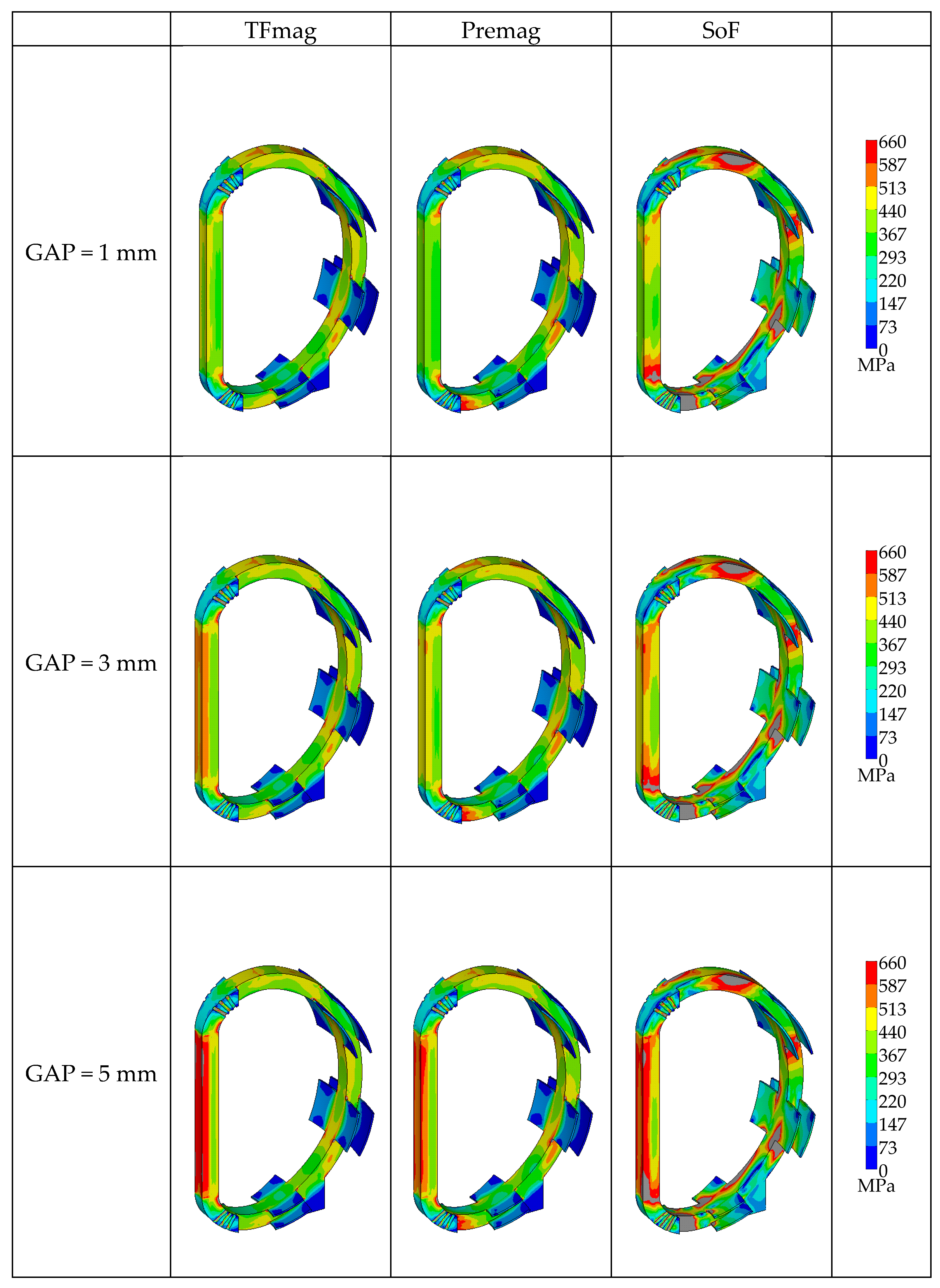
Figure 10 illustrates the Von Mises stress distribution in the TF casing for different gap values and load stages, within a 0–660 MPa range. Observations from
Figure 10 indicate that bucking primarily affects the triaxial stress state of the inner leg, while stresses in the outboard section remain largely unchanged across different gap scenarios. Wide regions of the casing exceed 660 MPa, suggesting that stress levels remain high for all gap sizes, posing a potential structural concern.
The above analyses are repeated for the frictionless case between the TF and CS. A key consequence of removing friction is the increase in tensile stress on the inner leg, as the friction-induced containing effect on the inboard segment is lost.
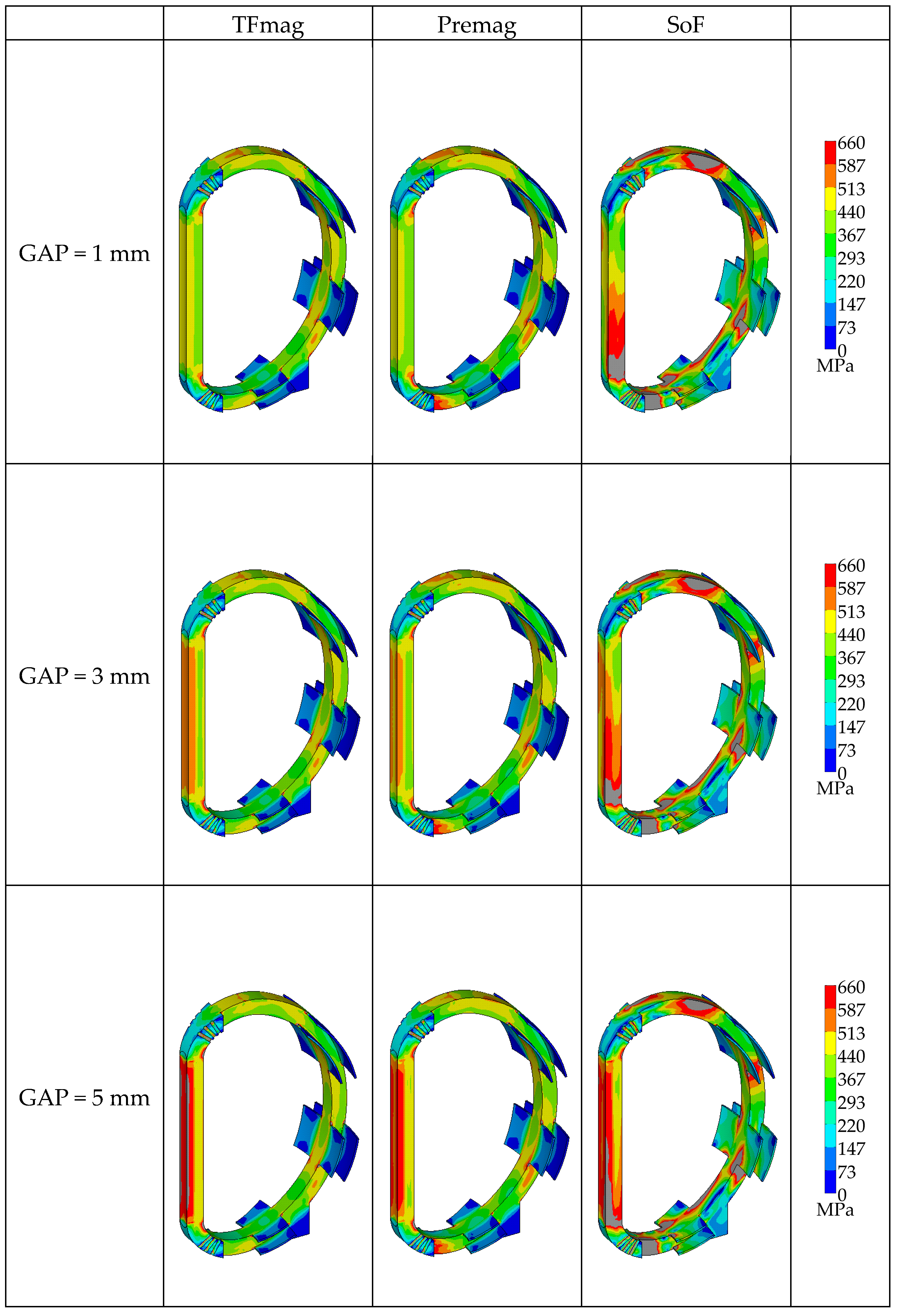
The absence of structural support from the CS, after the removal of friction forces, significantly alters the triaxial stress state of the inner leg. As shown in
Figure 11, the expected beneficial effect of bucking is barely noticeable when the friction against the CS is removed. This is primarily due to two factors:
Increased tensile stress in the inboard leg, which disrupts the desired hydrostatic compression state.
Excessive out-of-plane bending of the inner leg at SoF, resulting from inadequate shear force transmission at the wedge sides. Without friction, these forces are not sufficiently counteracted by the CS.
The combined impact of these factors almost entirely negates the positive effect of bucking, leading to high Von Mises stresses even for a 1 mm gap size.
Figure 12 highlights severe out-of-plane bending moment affecting the lower half of the inboard side at SoF, due to the lack of supporting action of the CS. The stress level appears unacceptable over wide areas of the casing.
4. Conclusions
This study investigated the bucked-and-wedged configuration for the EU DEMO, operating at a magnetic field peak of 16.5 T. Using finite element simulations, the structure was subjected to multiple magnetic loading scenarios, experiencing both in-plane and out-of-plane forces.
From a theoretical perspective, the benefits of the bucked-and-wedged scheme were evident. The interaction between the CS and TF helped establish a hydrostatic-like stress state in the inboard region of the TF coil casing, significantly reducing equivalent stress levels. Simultaneously, the CS experienced fatigue cycles entirely in compression, which is favorable for structural integrity.
However, these advantages are contingent on the CS playing a structural role, particularly in balancing the torque induced by out-of-plane loads. This role becomes even more critical given the reduced bearing capacity of the inner vault formed by the sequence of inner legs, as bucking relieves part of the compressive force on the inboard sides.
Simulations with frictionless contact between the TF and CS further confirmed that, in the absence of CS structural support, not only is the benefit of bucking lost, but the entire structure rapidly approaches collapse.
Ultimately, the bucked-and-wedged configuration demands exceptional precision in surface bearing, as its benefits are only realized within a narrow range of gap values between the CS and TF. Additionally, it requires a fundamental redefinition of the CS’s role, assigning it a structural function beyond its conventional design. Given these challenges, the bucked-and-wedged approach appears impractical for a machine of DEMO’s scale.