2. Theoretical Background
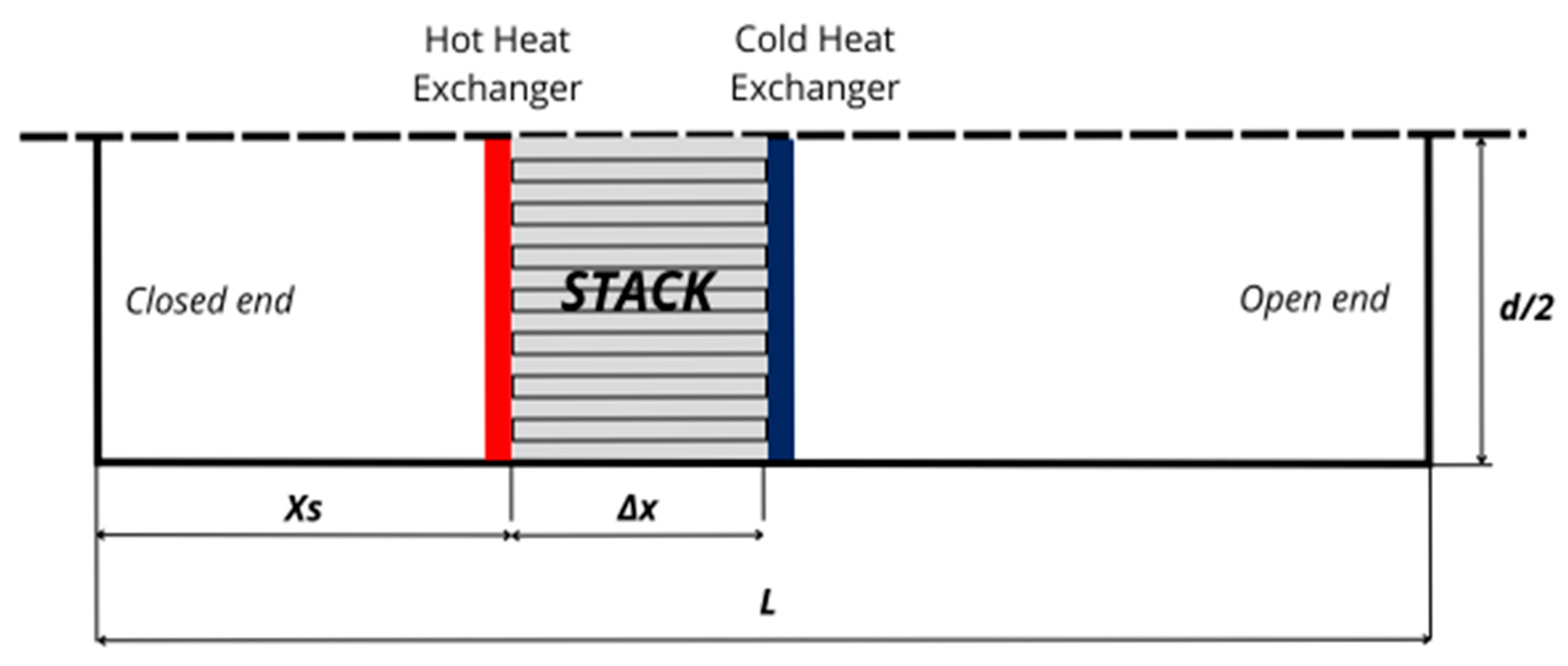
The thermoacoustic engine is made by a pipe in which an acoustic resonance occurs, induced by the transfer of the heat energy to the acoustic wave. The pipe holds a stack that keeps the thermal gradient by means of a constant hot temperature on the closed side of the pipe and a constant cold temperature on the open side of the pipe.
In the following, we describe the geometrical parameters and the prediction of the main scales at which physical phenomena occur, such as the thickness of the thermal the viscous layers and the resonance frequency.
The length of the cylindrical resonator pipe is
, with λ the pressure and velocity wavelengths of the fluid travelling into the domain. The fluid oscillations of the working fluid are induced by a critical temperature gradient enforced by the stack. The fluid shows a resonance frequency, providing maximum pressure at the closed edge of the resonator, whereas the maximum velocity is located at the open outflow [
21].
Therefore, the fluid pressure and velocity could be written as functions of the streamwise coordinate x as follows:
where
a is the speed of sound,
is the static pressure,
is the fluid density,
is the angular frequency,
is the resonance frequency, and
is the wave number according to the following equations:
The travelling wave develops streamwise (x direction), with a fluctuating temperature, , and pressure, , which evolve according to adiabatic compression and expansion.
The flow particle at the stack gets a constant temperature, and its dynamics is an isothermal process in both expansion and compression cases. For this reason, non-acoustic energy gets collected in the travelling wave. The fluid in contact with the stack gets the maximum acoustic energy coming from the thermal energy, which shows in the highest gradient in that region. Moreover, the compression and expansion exhibit a time delay in the modification of the temperature field. Under this condition, the compression work,
, is less than the expansion work,
, so that the wave assumes a net higher energy in terms of pressure and velocity. The fluid particle far away from the stack is not influenced by the thermal field and undergoes adiabatic expansion or compression [
21]. The layer thickness in which the thermal phenomena occur,
can be predicted according to the following equation:
where
is the thermal conductivity,
the density,
the specific heat capacity, and
the acoustic wave frequency. The resonator is more and more efficient for increasing the heat transfer and the thermal layer
. According to G. W. Swift, the gap into the stack,
, should be proportional to the thermal layer
, with a factor ranging between 2–4.
The thickness of the viscous layer,
, can be estimated by the following equation:
With the dynamic viscosity, , the kinematic viscosity, Within the viscous layer, the viscosity dissipates the acoustic energy of the acoustic wave; for this reason, the value of should be the minimum.
The interaction of the viscous and thermal layer is controlled by the Prandtl number,
:
The thermoacoustic phenomenon is enhanced in the case of a fluid with a lower Prandtl number.
In the solid region of the stack, the thermal layer,
also develops, and similarly, we have the following relation:
in which
is the thermal conductivity,
is the density, and
is the specific heat capacity of the stack. The specific heat capacity of the stack has to be higher than that of the fluid,
; with this assumption, the stack temperature is not affected by the fluid temperature.
The thermal conductivity of the stack should be as low as possible in order to enforce a constant temperature at the stack boundaries, killing the heat transfer into the stack. In this way, thermal energy is efficiently collected in the acoustic wave. For this purpose, the thickness of the stack fins and/or plates is recommended to be one order higher than the thermal layer
The acoustic wave in the free domain is defined as follows:
With the thermal expansion coefficient .
In the region with the stack, the temperature depends on the normal distance from the stack plates,
. The temperature function,
has been proposed by Swift [
4]:
The fluid close to the stack boundaries, with , is characterised by an isothermal process in which = 0, while in the region far away from the stack, adiabatic expansion and compression occur, with = 1.
The previous equation includes two competing terms. The temperature fluctuations induced by the pressure oscillations are described by:
whereas the temperature fluctuations induced by the fluid motion because of the thermal gradient are taken into account as follows:
Finally, the fluid close to the stack boundaries, with , is characterised by an isothermal process in which = 0; in the case far away from the stack, the adiabatic expansion and compression occur, with = 1.
The equilibrium between the described sources makes the critical thermal gradient,
:
The critical thermal gradient includes the pressure and velocity due to the acoustic wave, and under ideal gas conditions, the equation reads:
where
is the polytropic coefficient, and for an ideal gas,
approaches 1.
The dimensionless thermal gradient is:
The thermoacoustic engine is for , and the thermoacoustic refrigerator is for .
In this context, the device functions as a thermoacoustic engine.
The heat flux,
, and the acoustic power,
, are written according to Swift [
4] as follows:
The efficiency,
, reads as the ratio between the acoustic power,
, and the thermoacoustic heat flux
:
3. Materials and Methods
The resonator is a cylindrical pipe made of Pyrex, with length, L, and diameter, d. The stack is an array of coaxial cylindrical fins, with length developed along the streamwise direction, x, thickness,
, and gap between the fins,
, (see
Figure 1). The blockage ratio BR (porosity index) is estimated by the ratio of the free streamwise area,
and the crosswise area of the stack,
In the following analysis, the stack is modelled enforcing the constant hot temperature, and the constant cold temperature, , at the edges of the stack along the streamwise direction.
The acoustic power depends on the average pressure and the speed of sound in the working fluid [
22]. For this reason, helium exhibits favourable physical properties regarding the efficiency of the resonator due to its speed of sound and thermal conductivity.
The acoustic power is dissipated as the resonator length increases, and the design of the optimum value is a crucial issue [
23]. The acoustic power increases with the diameter; nevertheless, dissipation effects could be relevant. The first-order approximation in resonator design is suggested by Swift, in [
4], who recommends that the resonator length be equal to one order of magnitude compared to the stack length. The strategy for resonator design involves the stack position, too. Specifically, the stack located close to the closed boundary enhances the acoustic pressure [
24,
25].
In numerical simulations, the current problem has been introduced by applying the principles of fluid dynamics, heat flow, and structural mechanics, with all the domains being interconnected. The numerical simulations are performed using FEM in Comsol Multiphysics 6.2. The numerical model is governed by Navier-Stokes Equations (1) and (2), energy conservation Equations (3) and (4), and the governing equation of continuum mechanics (5).
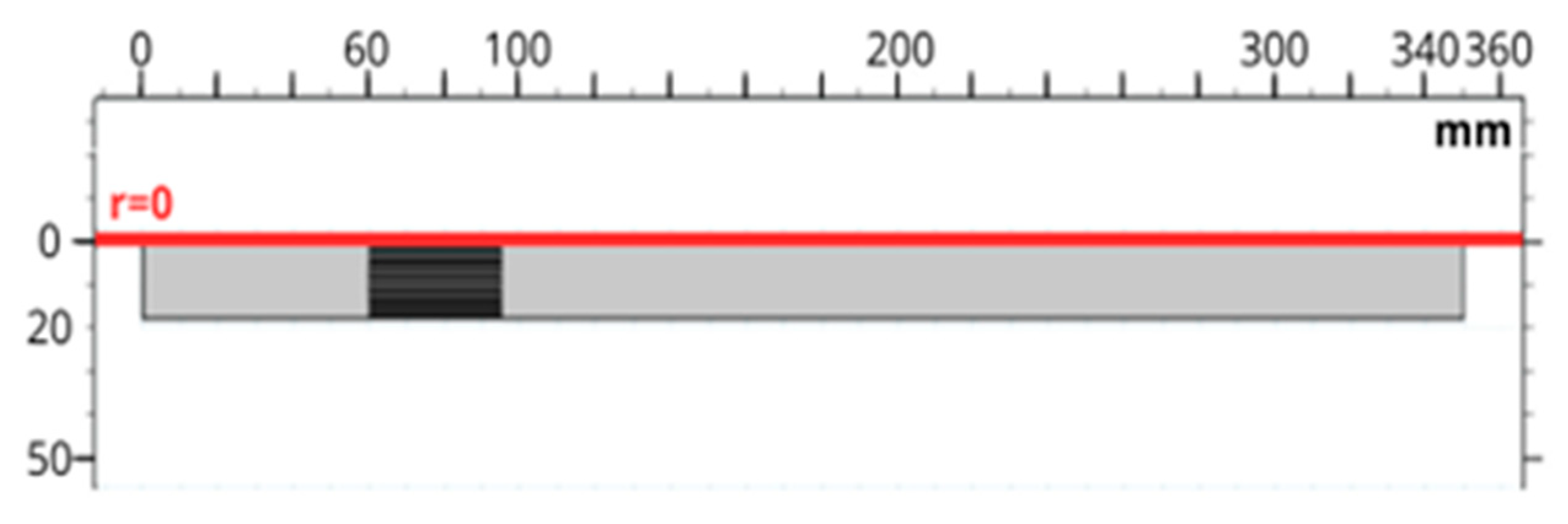
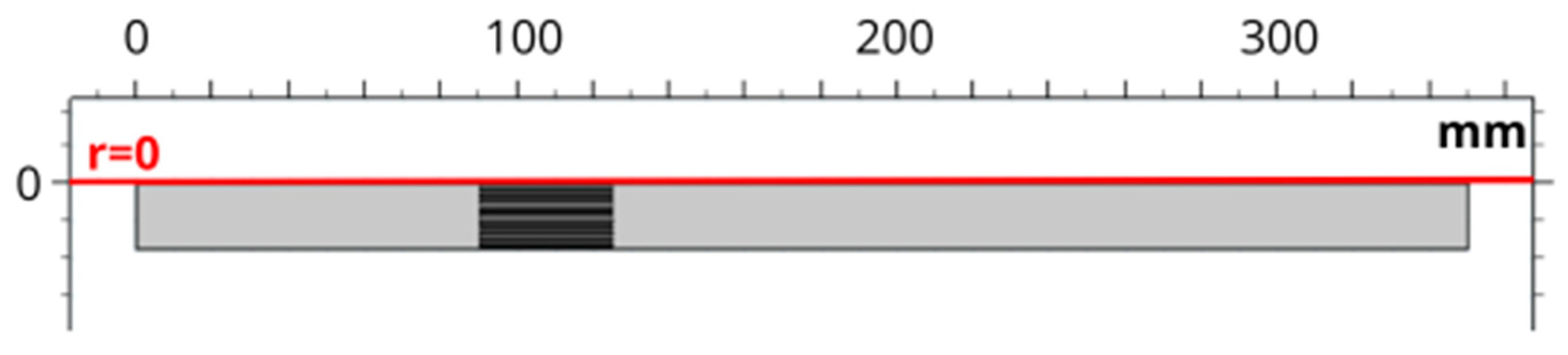
We refer to a resonator with length
and diameter
, filled with air at 20 °C and ambient pressure (
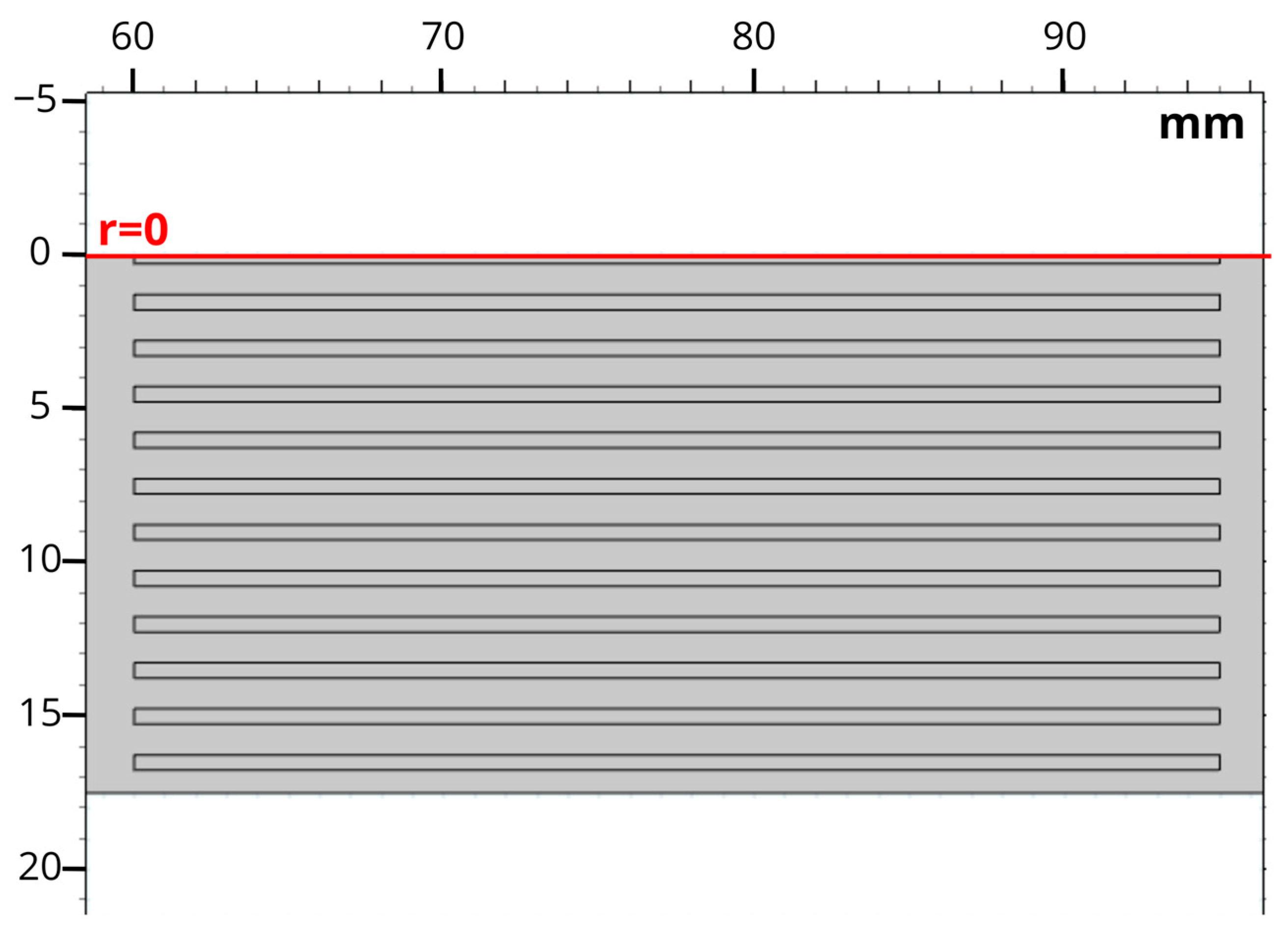
Figure 2 and
Figure 3).
The stack position has been investigated at 3/35 L, 6/35 L and 9/35 L. Moreover, the scaling law has been described with a numerical simulation in double dimensions. In the previous setup, the working fluid is air, and the Prandtl number effects are taken into account in the numerical results using helium.
Table 1 and
Table 2 show the characteristic parameters of air and helium useful for the comparison analysis of the fluids chosen as working fluids.
The present simulations were carried out using a pressure-based segregated solver, which proved effective in resolving thermoacoustic phenomena. The adequacy of this approach is supported by the high-fidelity results obtained using the PyFR solver by Blanc et al. [
26], which provided accurate predictions of pressure and velocity fields in standing-wave engines.
The gap between the cylindrical fins in the stack is estimated as follows:
This prediction leads to fixing the gap at the value .
The stack is made of Kapton, with the physical properties shown on the
Table 3.
The minimum thickness of the fins is predicted as:
and in the numerical setup it is fixed at
.
With the described geometrical parameters, the Blockage Ratio (porosity index) is:
Finally, the stack length is equal to:
Under these conditions, the critical thermal gradient is equal to:
The critical temperature difference reads:
The maximum temperature difference equal to 350 K is far from the critical value in order to promote the acoustic phenomenon. Specifically, the constant cold temperature is , and the constant hot temperature is .
The dimensionless thermal gradient is:
The stack is located at
, and the main parameters of the geometry are shown in the
Table 4.
The numerical model considers the fluid flow as laminar, and the heat transfer between the fluid and the solid is coupled.
The initial conditions are: air at a temperature equal to and ambient pressure. The boundary conditions are: ambient pressure at the outflow, slip condition at the inflow, and adiabatic boundaries. The stack is kept with constant temperature and .
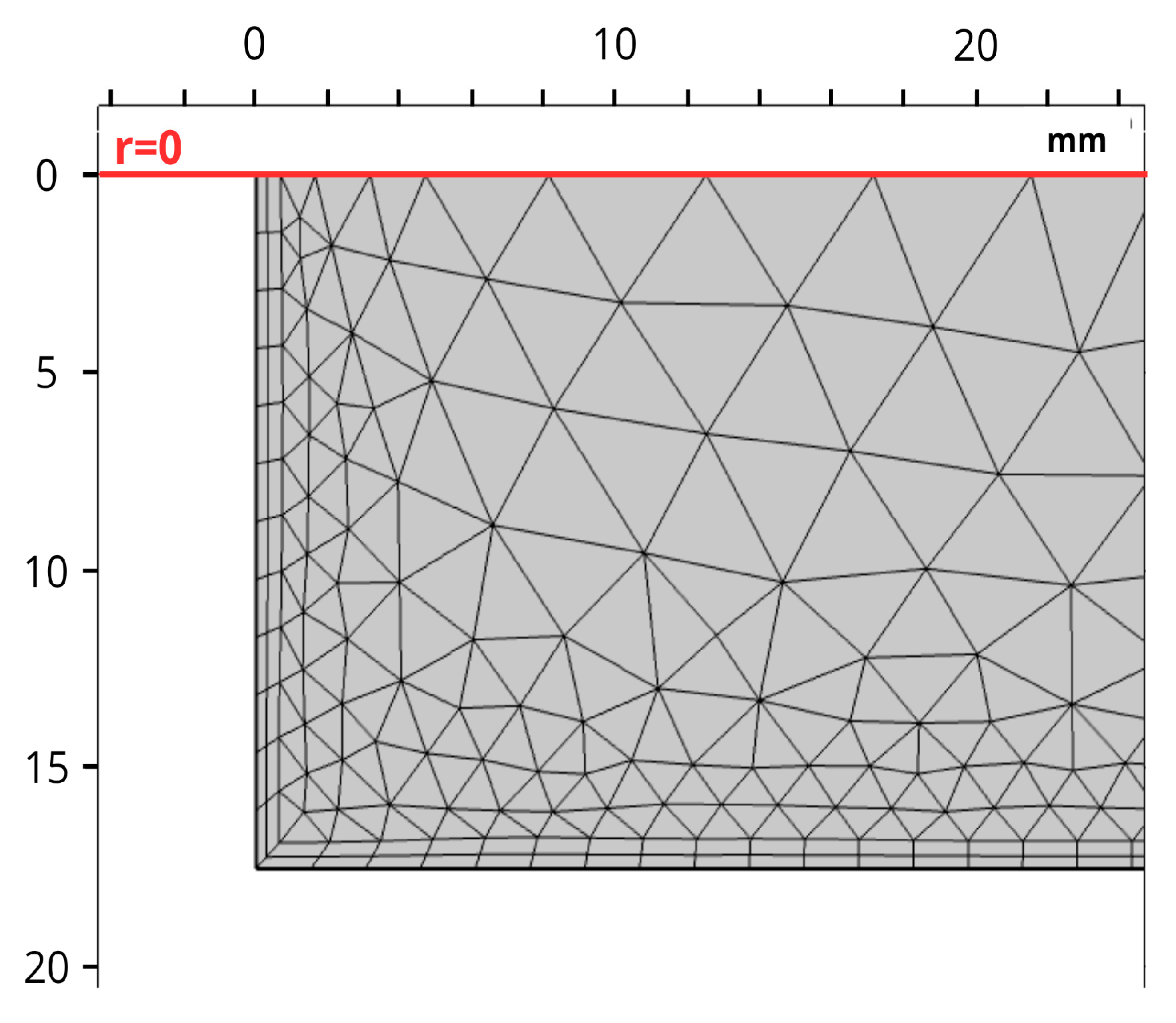
In this study, the computational domain was discretised using a non-uniform mesh generated in COMSOL Multiphysics. Quadratic (P2) Lagrange elements were used for velocity and temperature fields, and linear (P1) elements for pressure. A segregated solver approach was adopted to handle the pressure-velocity coupling. Time integration was carried out using the Backward Differentiation Formula (BDF), suitable for transient and oscillatory problems. The linear systems were solved using the PARDISO direct solver, and convergence was achieved with a relative tolerance of and a maximum of 50 iterations per time step. The time step (0.001 s) was chosen to ensure stability and accurate resolution of acoustic oscillations.
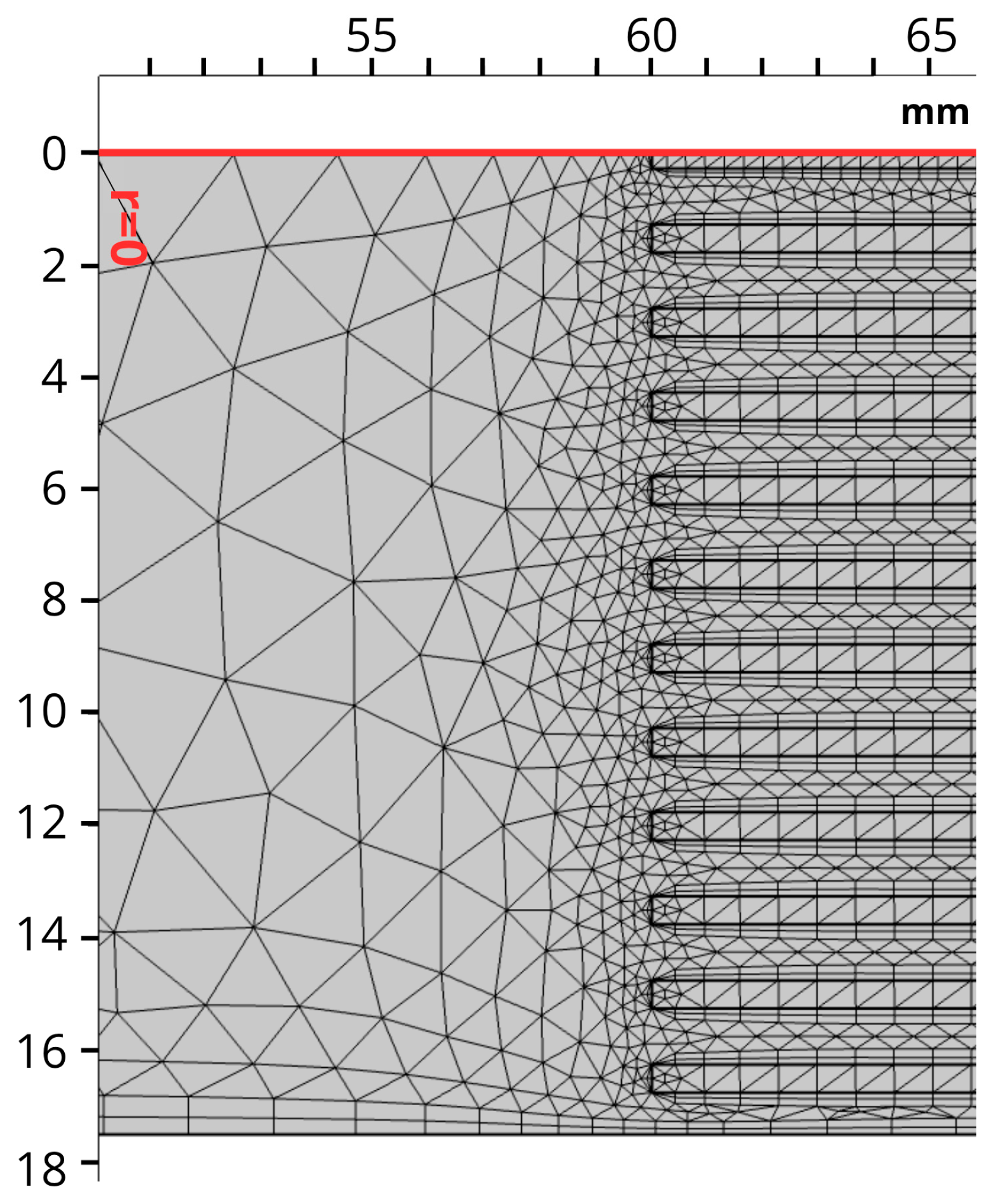
A coarse mesh (
Figure 4) was employed throughout the majority of the domain to reduce computational cost, while a locally refined mesh was applied to a small subregion where significant spatial and temporal variations in acoustic pressure were anticipated. This targeted refinement ensures accurate resolution of the dynamic acoustic field in the critical area, capturing rapid pressure fluctuations without compromising overall simulation efficiency.
The simulation time is equal to 7 s with a time step of 0.001 s. The time step is designed according to Nyquist-Shannon theorem: the sampling frequency is twice the acoustic frequency.
In detail, we have taken several steps to ensure the robustness and reliability of our numerical results:
The mesh was refined in regions exhibiting steep gradients in temperature and pressure, particularly near the stack and resonator boundaries (see
Figure 5 and
Figure 6). This ensures accurate resolution of thermal-acoustic interactions, which dominate the system’s dynamics.
- 2.
Temporal and Spatial Accuracy:
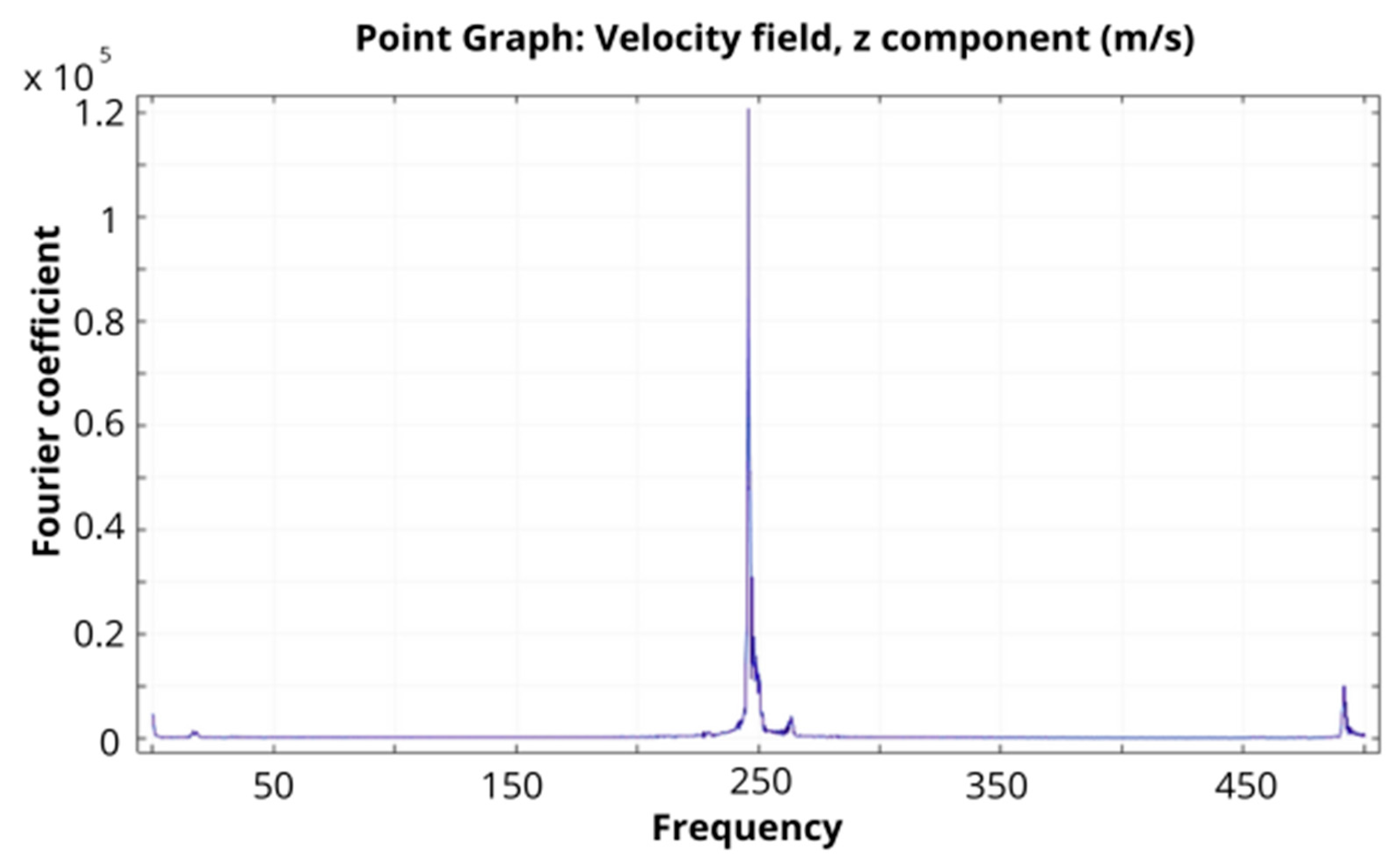
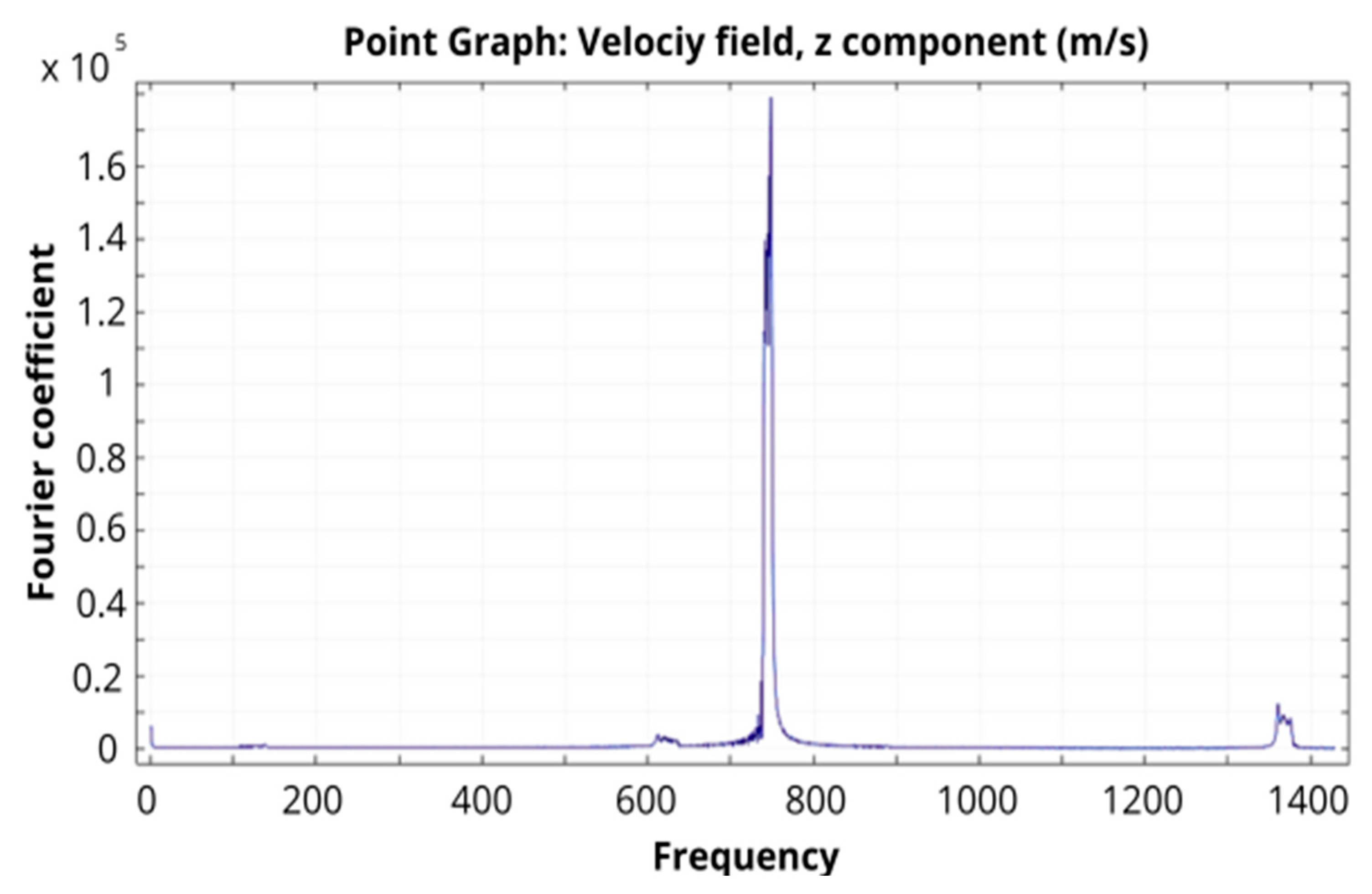
The time step was set according to the Nyquist–Shannon sampling theorem to resolve the dominant frequency components, confirmed by the spectral analysis (
Figure 7 resonance at 245 Hz).
This minimises numerical dispersion errors.
- 3.
Physical Consistency:
Across all simulations, the solution converged toward a single dominant harmonic mode when the stack was optimally positioned. Deviations from this regime (e.g., stack near boundaries) consistently induced expected multi-modal behaviour. These outcomes agree with thermoacoustic theory and prior literature [
4].
- 4.
Mesh Density Estimation:
The chosen mesh contains approximately 300,000 elements, corresponding to an average cell size of 0.025 mm in the stack region. Given the thermal and viscous penetration depths (
≈ 0.128 mm), the local mesh resolves each boundary layer with at least 5 elements, satisfying the commonly accepted criterion for capturing boundary layer dynamics (see [
23]).
- 5.
Convergence of Key Quantities:
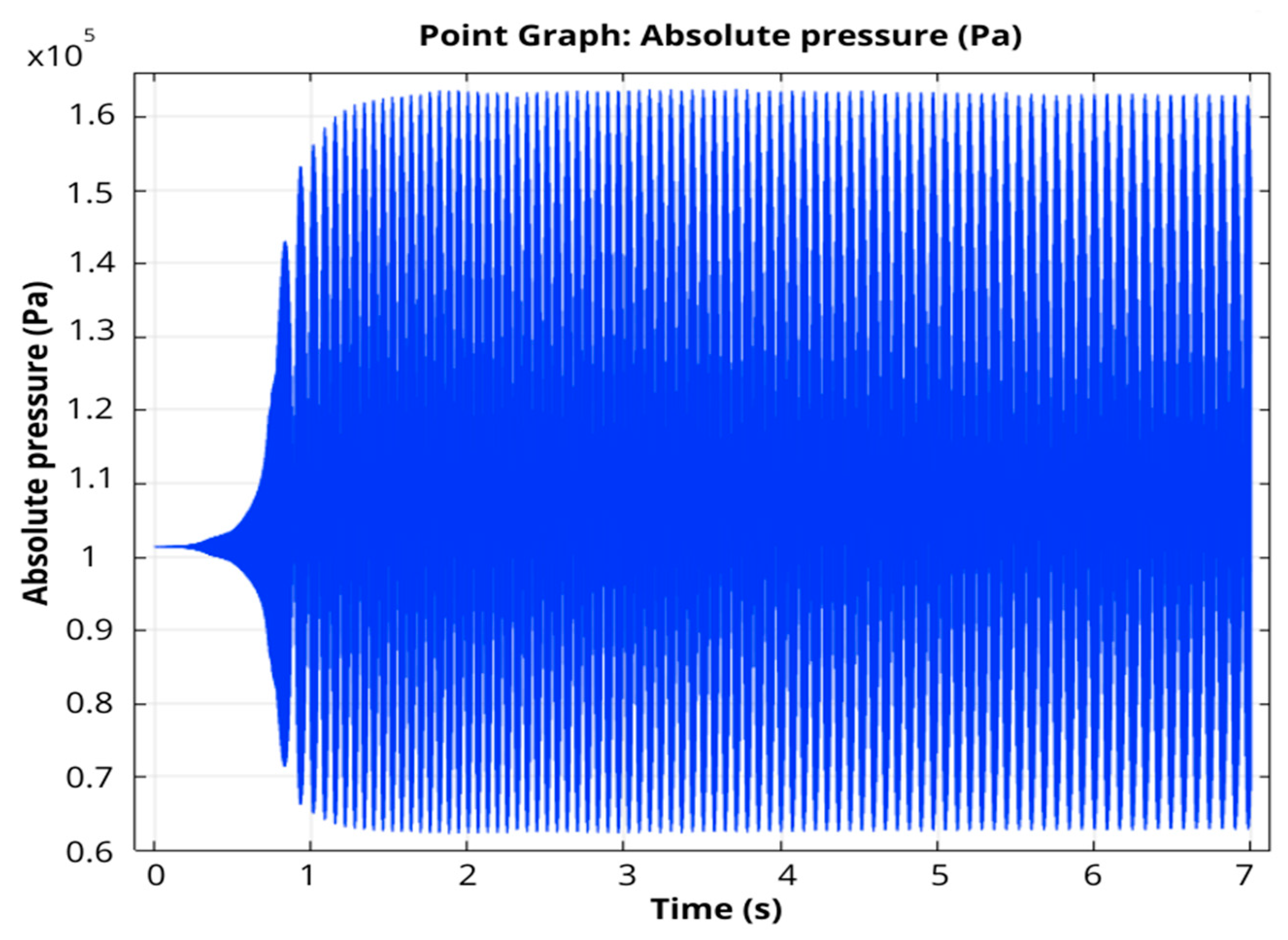
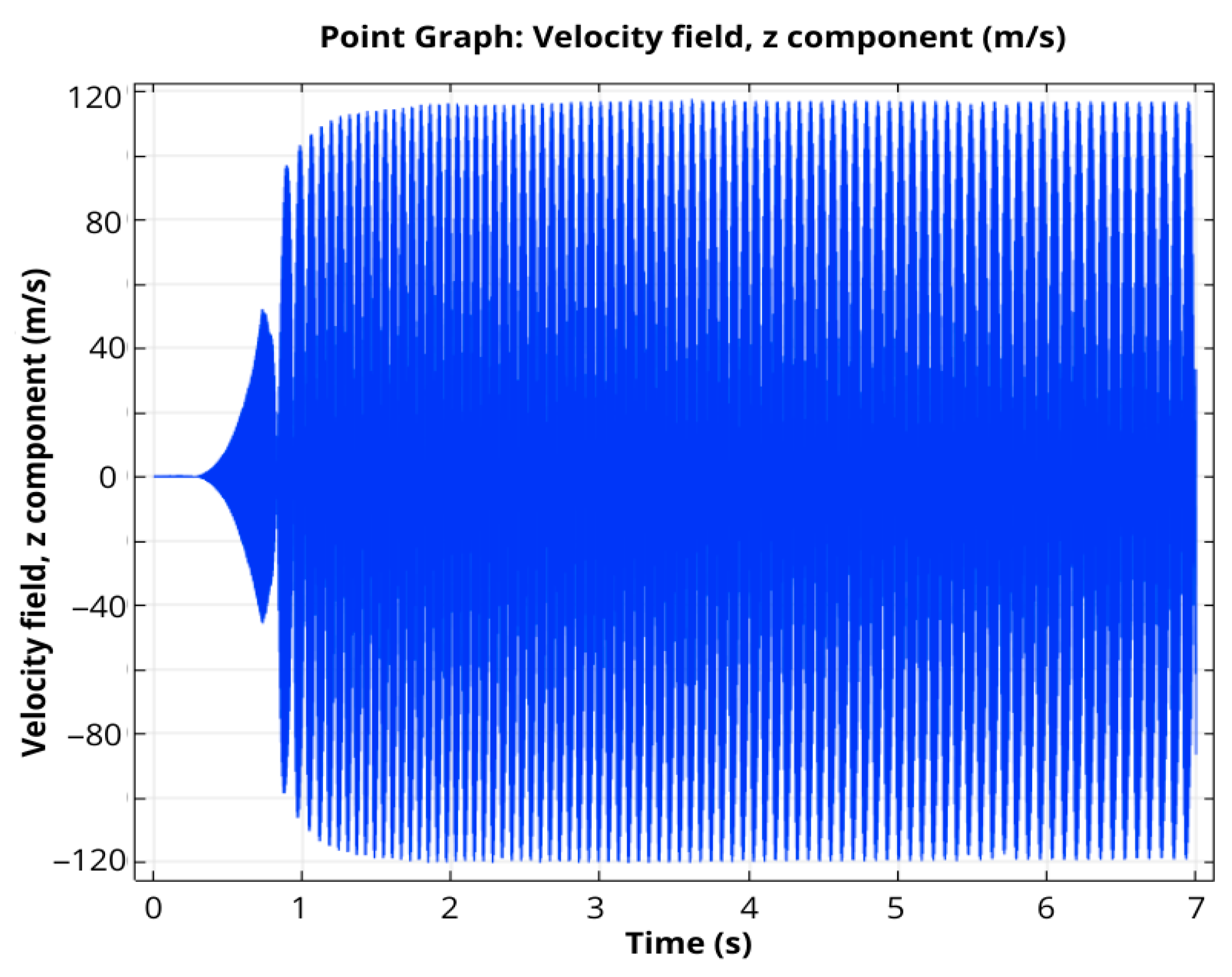
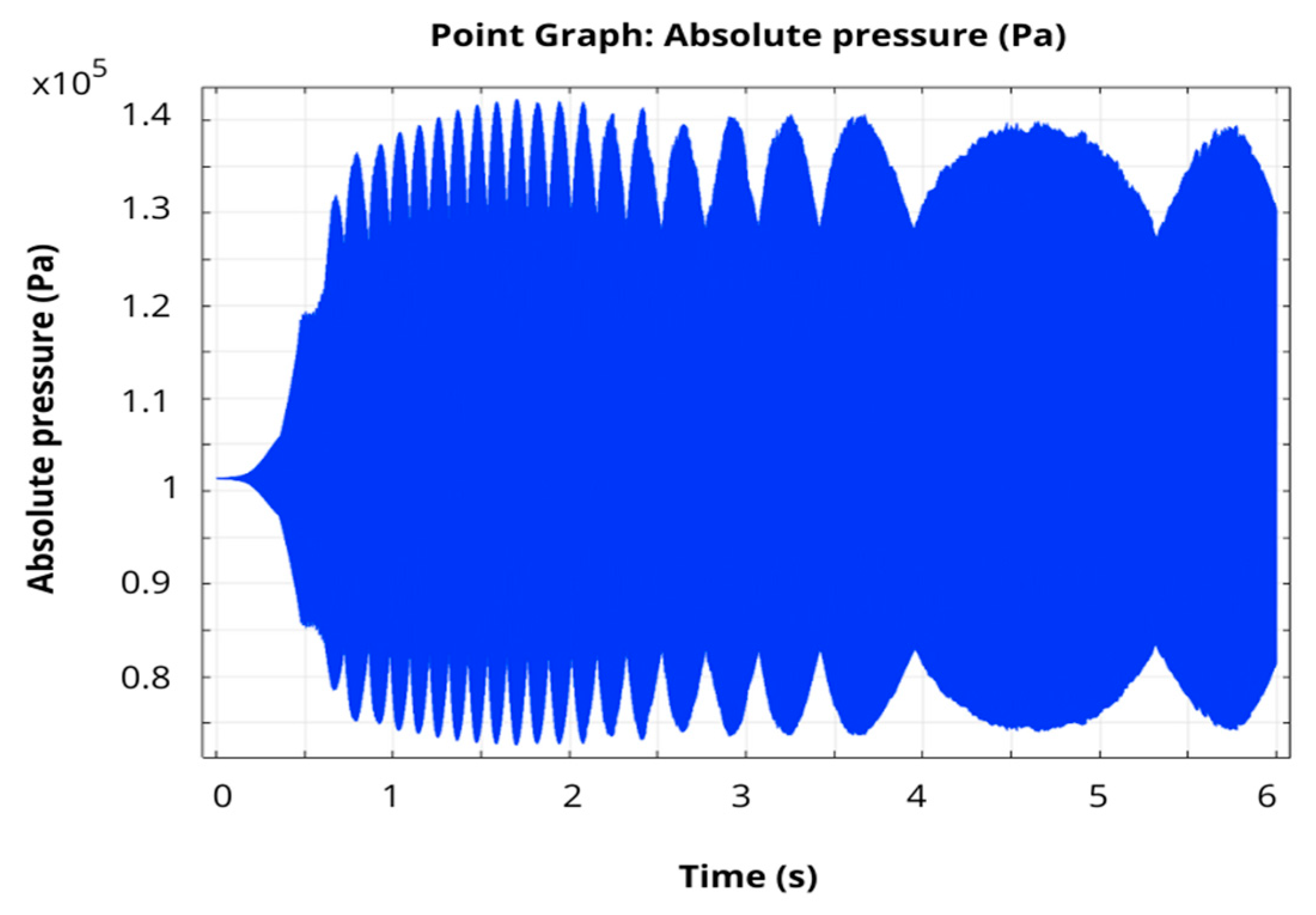
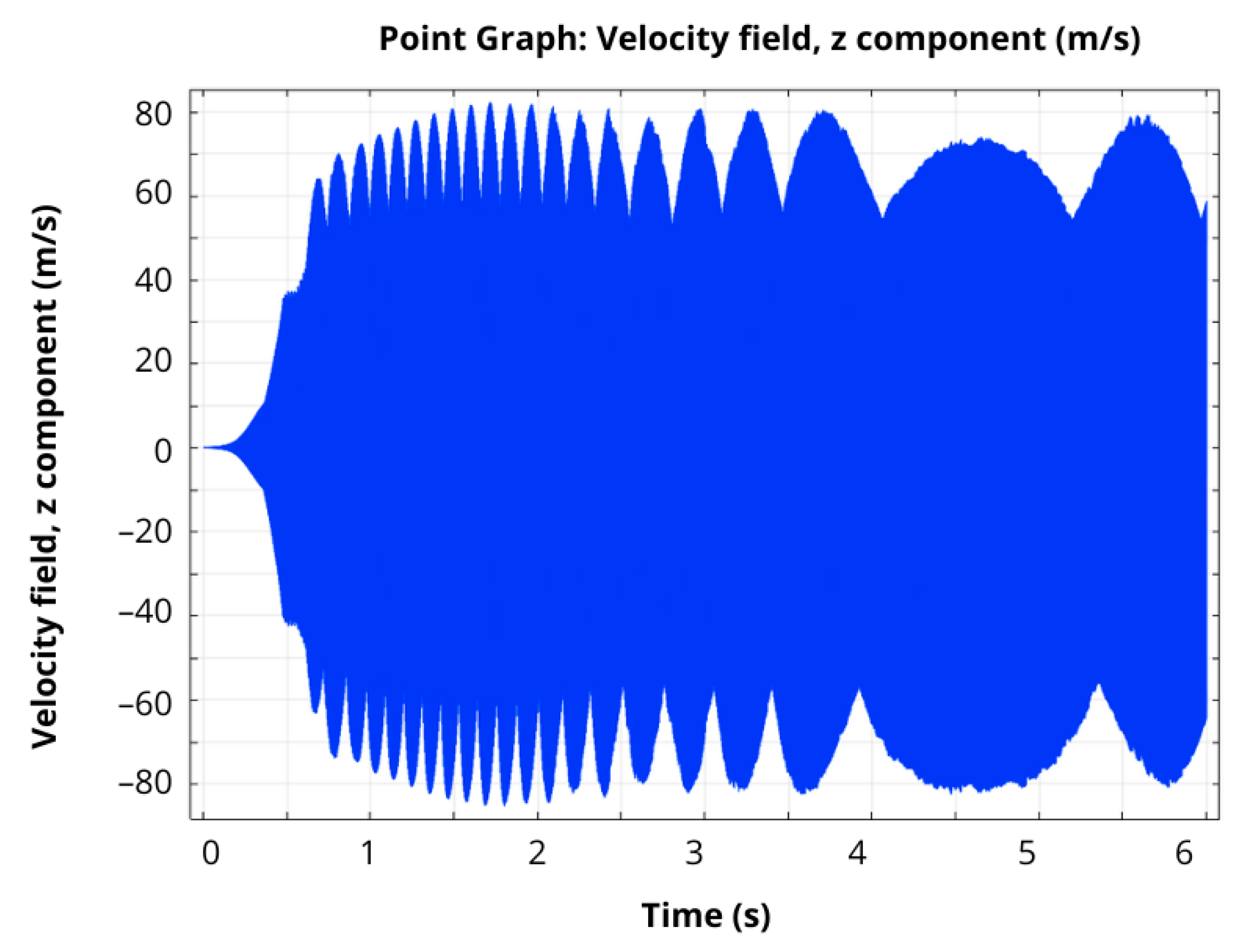
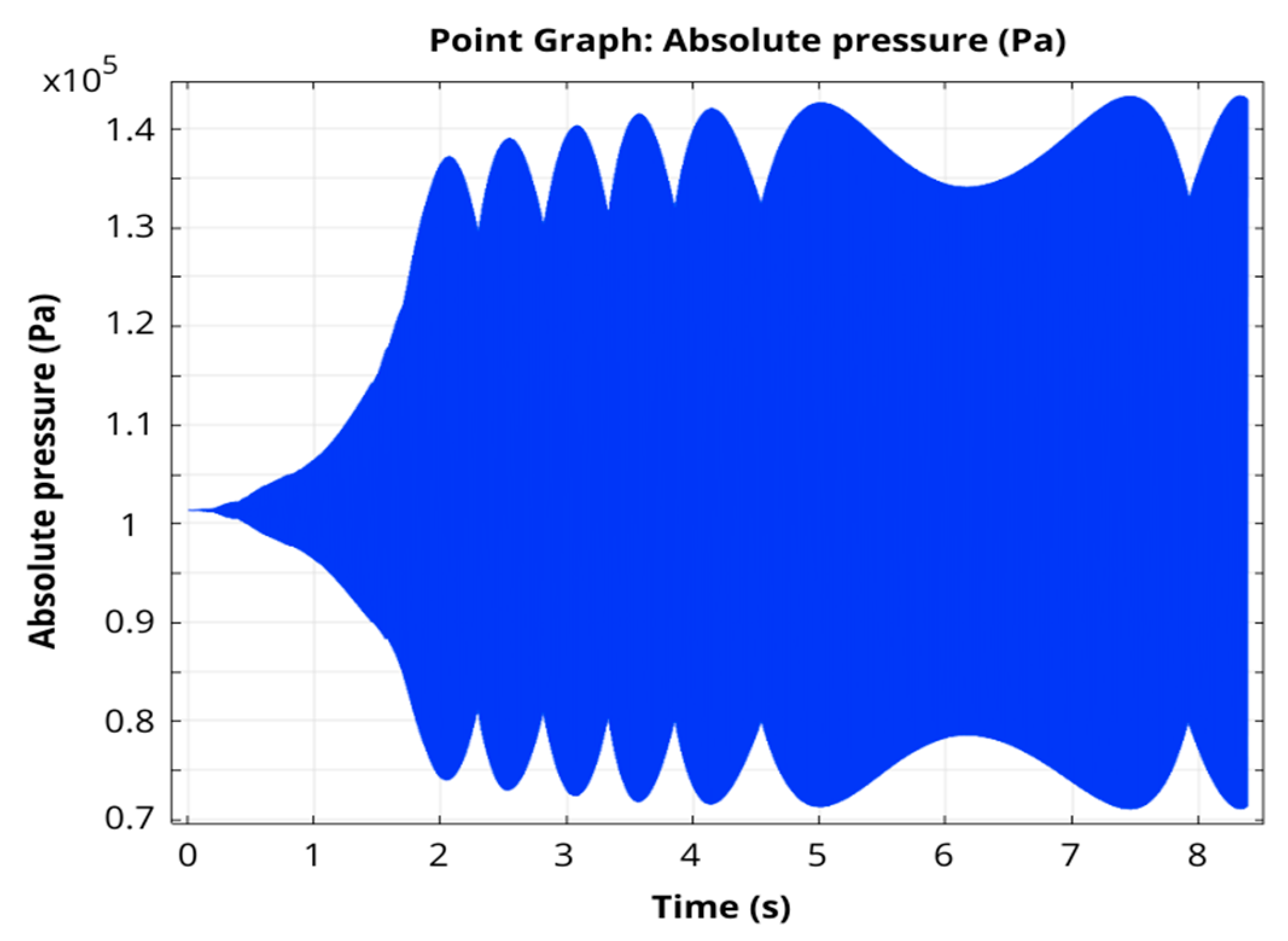
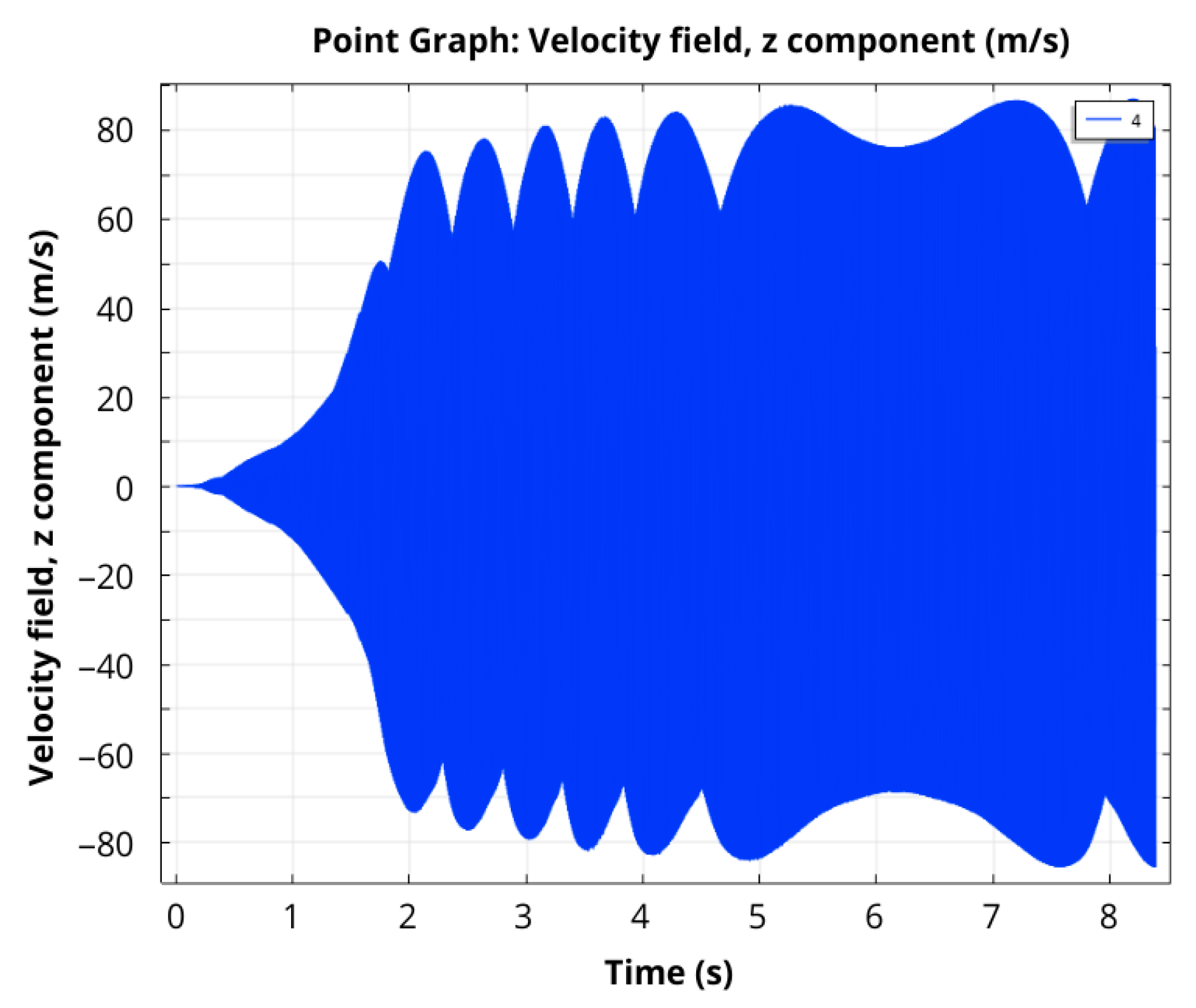
The pressure and velocity waveforms stabilise after
s and show consistent harmonic amplitude and frequency for the remainder of the simulation time (
Figure 8 and
Figure 9), indicating numerical stability and convergence under the chosen mesh.
While a formal grid convergence index (GCI) was not computed, the combination of local refinement, time resolution, and physical validation through signal behaviour and frequency content suggests that the chosen mesh is sufficiently accurate for capturing the relevant thermoacoustic phenomena.
The numerical model relies on the following assumptions, which are physically justified given the nature and operating conditions of the thermoacoustic engine.
- -
Laminar flow regime: due to the small dimensions of the resonator and the low Mach number of the acoustic oscillations, the flow is assumed to remain laminar throughout the domain. This is consistent with previous studies and allows for accurate resolution of the thermal and viscous boundary layers.
- -
Adiabatic walls: the outer boundaries of the resonator are considered thermally insulated, except for the stack region. This assumption simplifies the model and focuses the heat exchange exclusively within the stack, where the thermoacoustic conversion occurs.
- -
Isothermal stack boundaries: the hot and cold ends of the stack are maintained at constant temperatures, representing ideal heat exchangers. This facilitates the formation of a stable thermal gradient and mimics a continuous heat supply/removal condition.
- -
No moving parts: the system is entirely solid-state, with no pistons or mechanical elements. Oscillatory behaviour emerges solely from the interaction between the thermal gradient and compressible fluid dynamics.
- -
Neglect of gravity and body forces: due to the dominant role of acoustic phenomena and the small vertical scale of the system, gravitational effects are neglected.
- -
Time-dependent unsteady regime: The simulations are performed in the time domain to capture the transient evolution of pressure and velocity fields and to observe the emergence of self-sustained oscillations.
These assumptions are commonly adopted in thermoacoustic CFD literature [
5,
6,
25,
26,
27,
28] and provide a computationally efficient yet physically representative framework for evaluating the influence of key design parameters on engine performance.
The time step-size used in our simulations was carefully selected based on theoretical criteria to ensure both temporal resolution and numerical stability, with specific attention to the dominant acoustic phenomena under investigation.
- -
Nyquist–Shannon Criterion Compliance: The resonance frequency of the system, as identified in the simulations (e.g., for air), informed our time step selection. To resolve this frequency with sufficient temporal fidelity, we applied the Nyquist–Shannon sampling theorem, setting the time step.
- -
Stability and Physical Consistency:
Although a formal time step sensitivity study was not performed, the choice of was validated by observing:
- -
Converged pressure and velocity waveforms after an initial transient (
Figure 8 and
Figure 9).
- -
Frequency domain analysis showing clean harmonic structure (
Figure 7).
- -
Physically consistent phase relationships between pressure and velocity in line with thermoacoustic theory.
No signs of numerical instability or spurious oscillations throughout the 7 s simulation period.
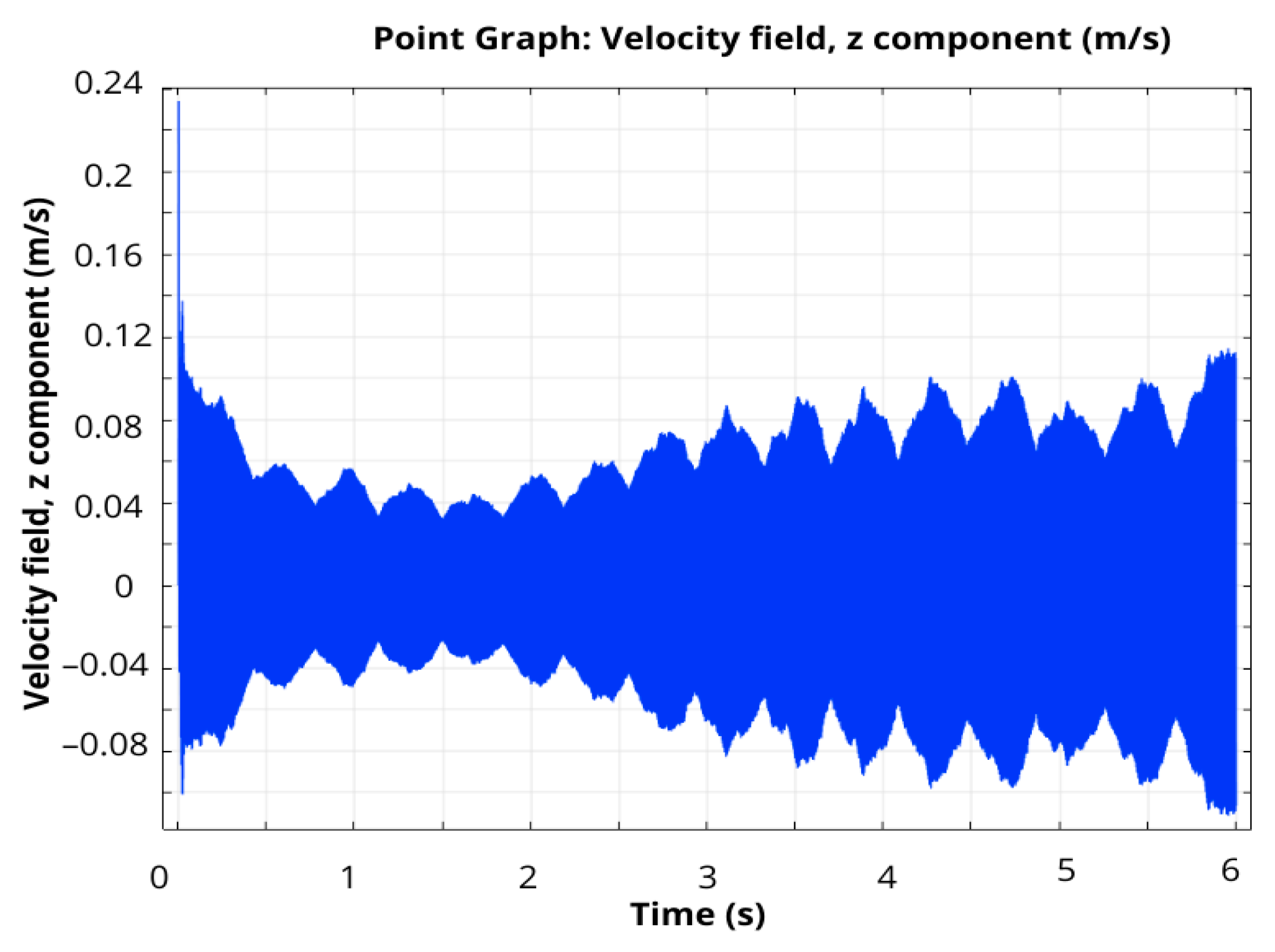
Although the total simulation time was limited to 7 s to contain computational cost—particularly given the high mesh resolution required to resolve viscous and thermal boundary layers—the temporal analysis shows that both pressure and velocity signals stabilise in amplitude and frequency after approximately 1 s. This early attainment of a quasi-steady oscillatory regime, confirmed by the consistent harmonic patterns in
Figure 7,
Figure 8 and
Figure 9, ensures that the remaining simulation time is physically representative for performance evaluation. This approach is consistent with previous high-fidelity CFD studies (e.g., refs. [
26,
27]), where efficiency and other performance metrics were extracted once the dominant acoustic mode was stabilised.
Comparison with Literature Practices:
Our approach follows best practices in time-domain thermoacoustic simulations (e.g., ref. [
5]), where time steps are typically chosen to be significantly smaller than the acoustic period to capture harmonic structure and transient growth accurately.
- -
Safety Margin for Working Fluid Variability:
For helium-based simulations (resonance ~), the time step was correspondingly adjusted to maintain accuracy, ensuring a minimum of time steps per acoustic cycle, which is sufficient for resolving waveforms even during transient regimes.
4. Discussion
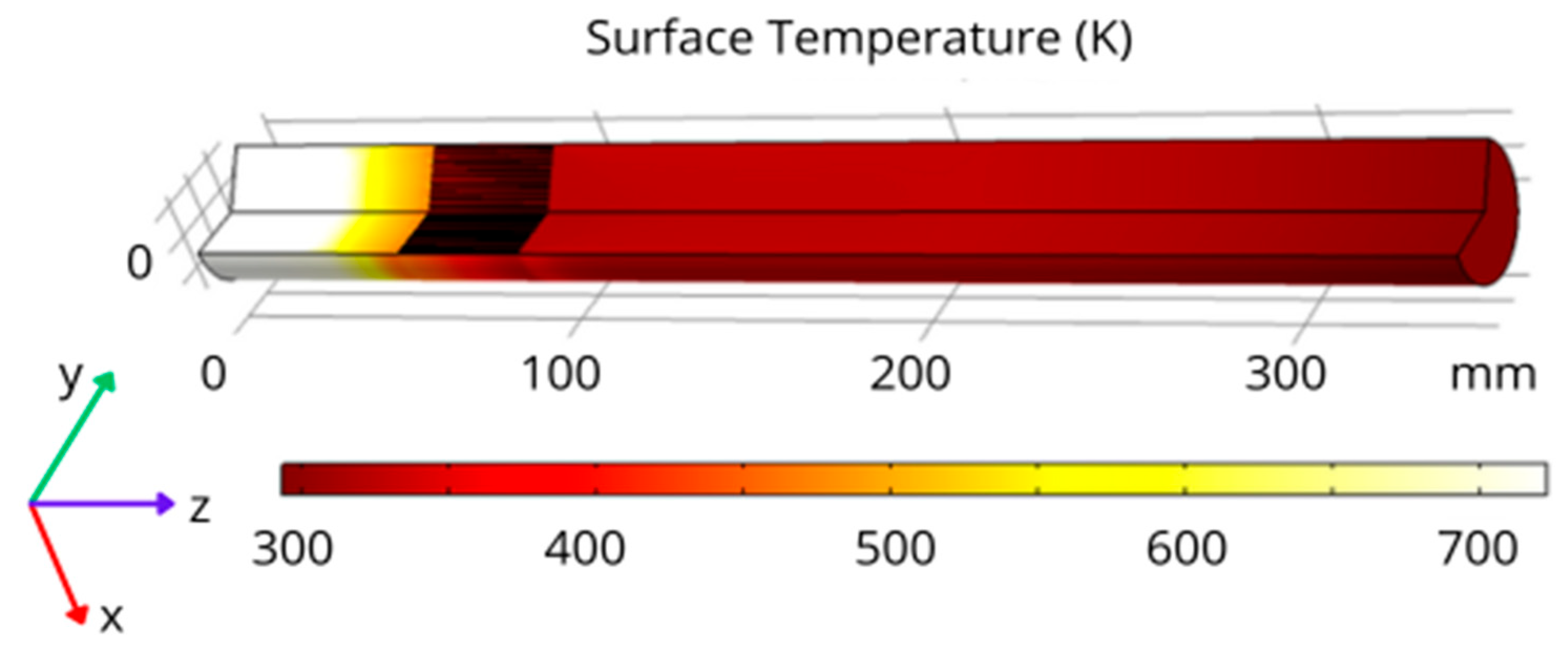
The temperature distribution as a function of the axial coordinate of the resonator is shown in
Figure 10. The temperature gradients are located close to the stack, so they are mainly developed in the domain region between the inflow and the stack. In contrast, the temperature fluctuations are negligible in the larger region from the stack up to the outflow.
The pressure as a function of time has been measured on the centreline of the stack at the edge, where the temperature is high. As shown in
Figure 8, the pressure shows a transient with a characteristic time of about
. After this period, the pressure exhibits a stable harmonic oscillation throughout the entire simulated duration. The observed time of
is significantly longer than the transition time of
, which allows for the analysis of the main feature of the acoustic phenomenon.
Furthermore, both pressure and velocity signals show a clear stabilisation of amplitude and frequency after an initial transient of about
(
Figure 8 and
Figure 9). The following 6 s of simulation demonstrate consistent harmonic oscillations dominated by the resonance frequency, as confirmed by the spectral analysis in
Figure 7, which displays a single sharp peak with negligible secondary components. This behaviour indicates that the system has reached a quasi-steady oscillatory regime, physically representative of the intended analysis of stack position, resonator scaling, and working fluid effects.
The pressure quickly increases in the transition time of up to the value of , and then it shows a harmonic time-dependent behaviour with an amplitude of . The average pressure at the non-slip inflow is slightly higher with respect to the outflow pressure.
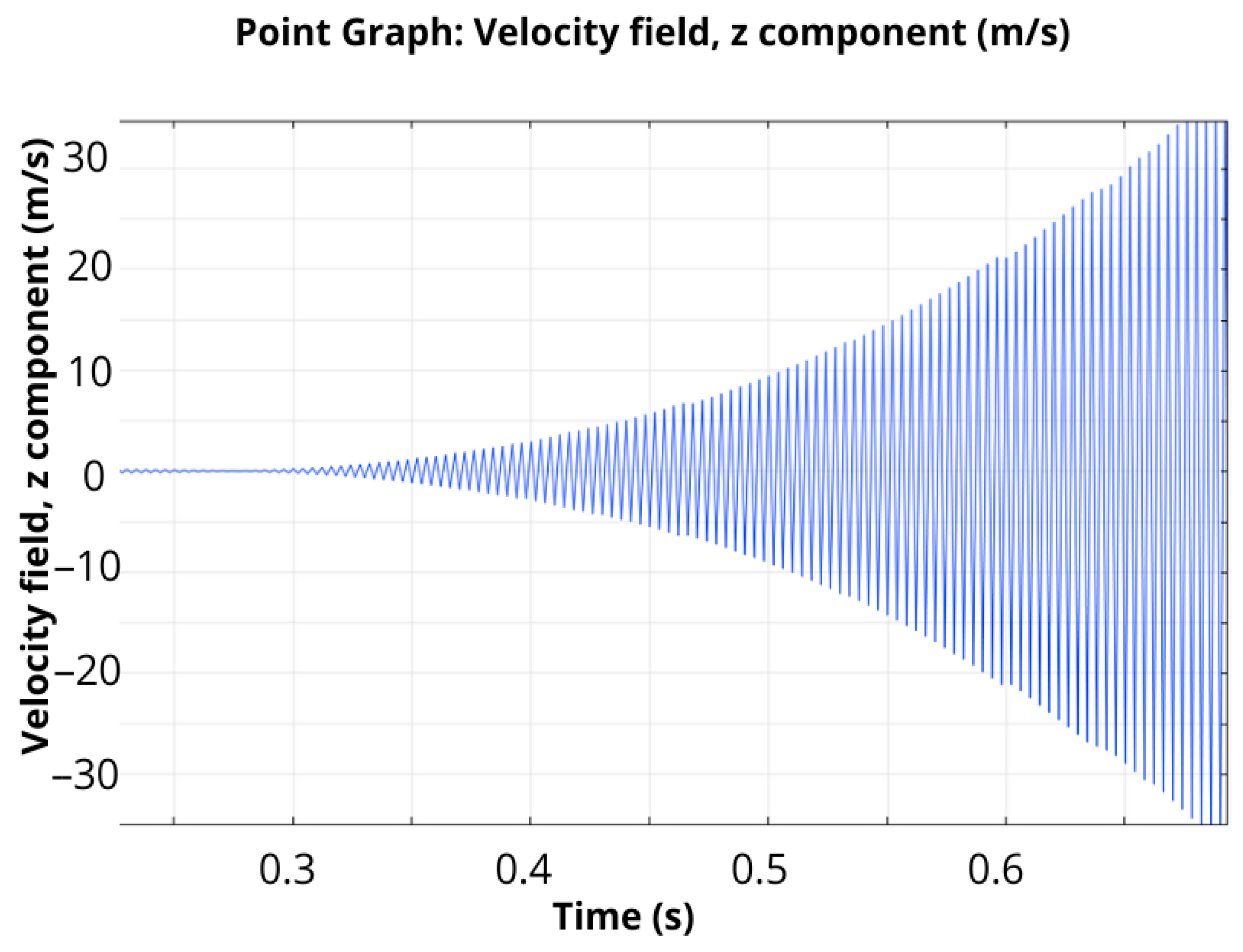
The acoustic wave propagates, making a corresponding velocity field with a maximum value at the axial position of the stack, and it is measured on the edge with constant cold temperature. The velocity shows the same pattern as the pressure on the other side of the stack, with a characteristic time of s, and a harmonic velocity as a function of time.
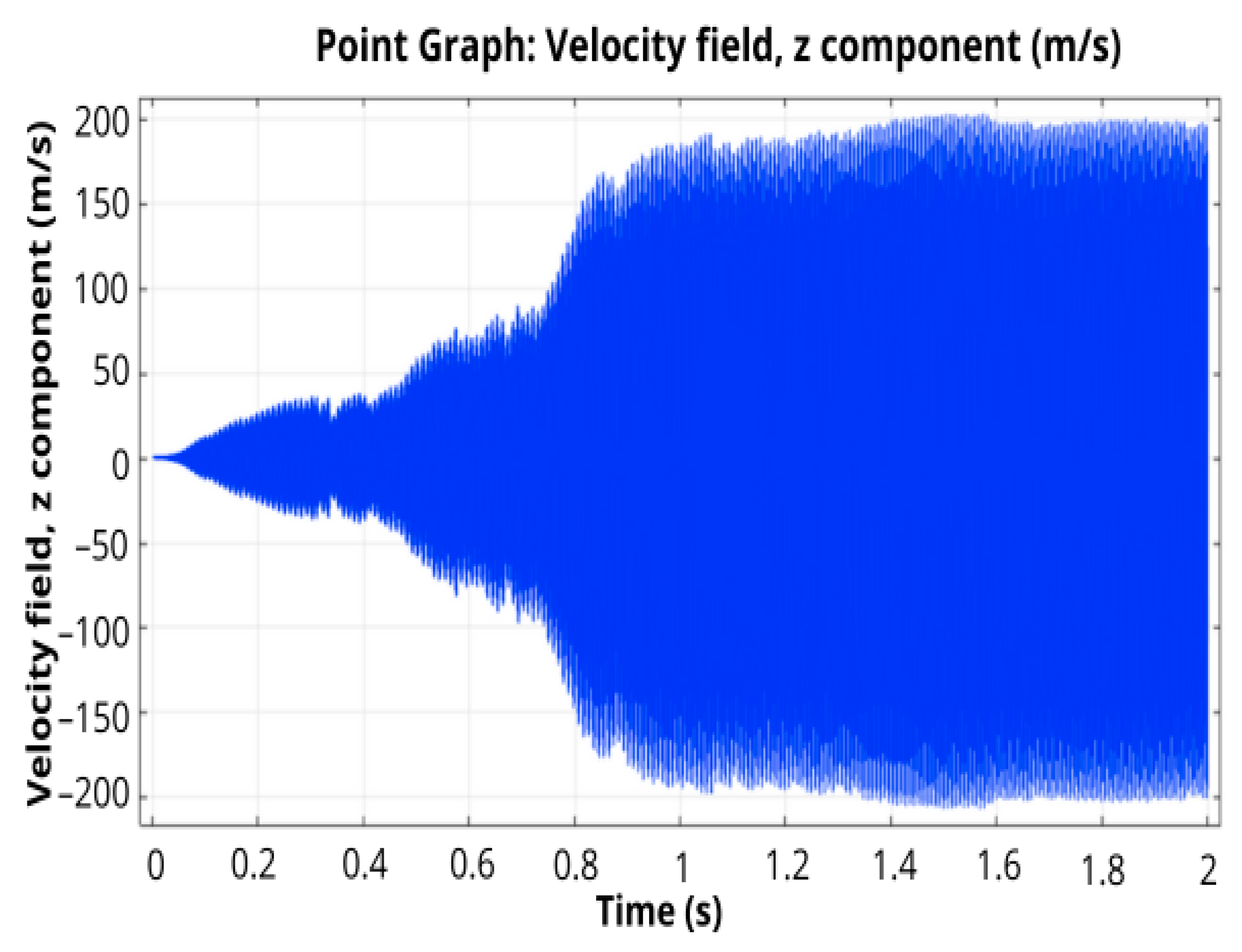
The velocity displays a detailed instability process with exponential growth of amplitude following the exponential trend, with a response time equal to tau, which is 1 s. Therefore, the velocity amplitude increases to 40 m/s in 0.5 s, and then it reaches a stable amplitude of 120 m/s over a period of 2 s.
The initial exponential rise in pressure and velocity (
Figure 8 and
Figure 9) indicates energy input from the thermal gradient into the acoustic wave, a hallmark of thermoacoustic instability.
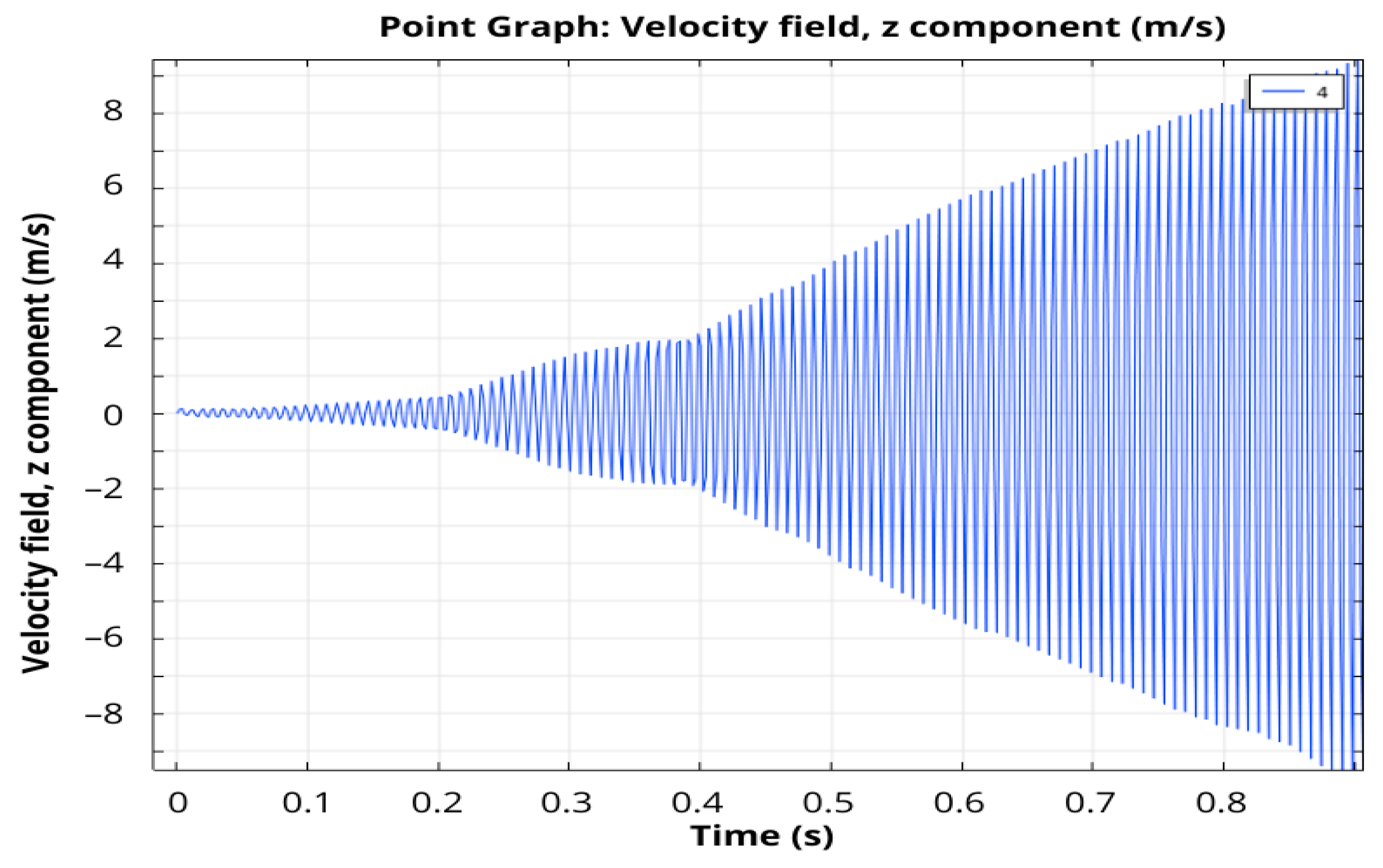
Figure 11 explains the velocity behaviour at the initial instants. When the stack is optimally placed (e.g., 60 mm), a dominant single harmonic emerges, ensuring efficient energy conversion.
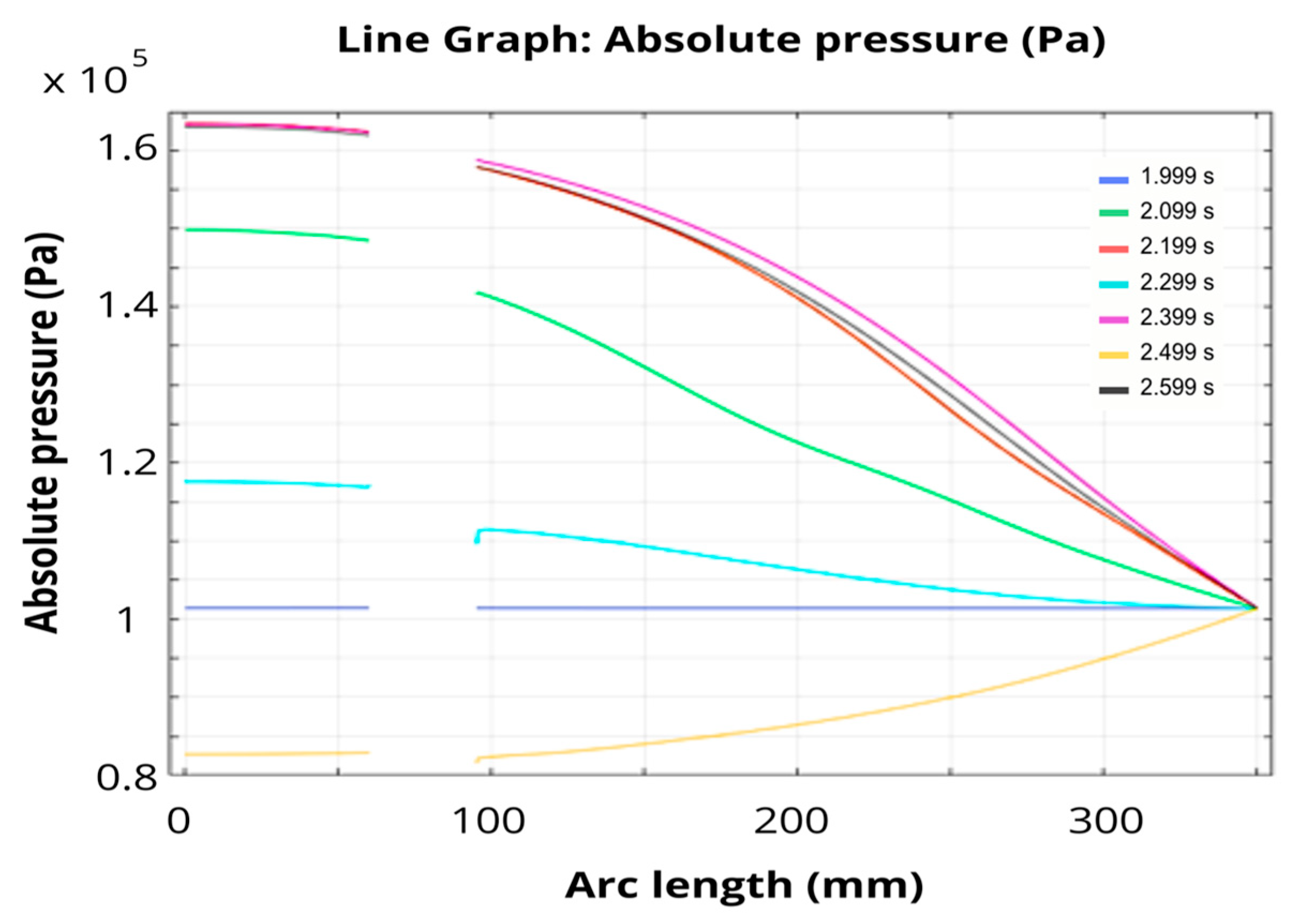
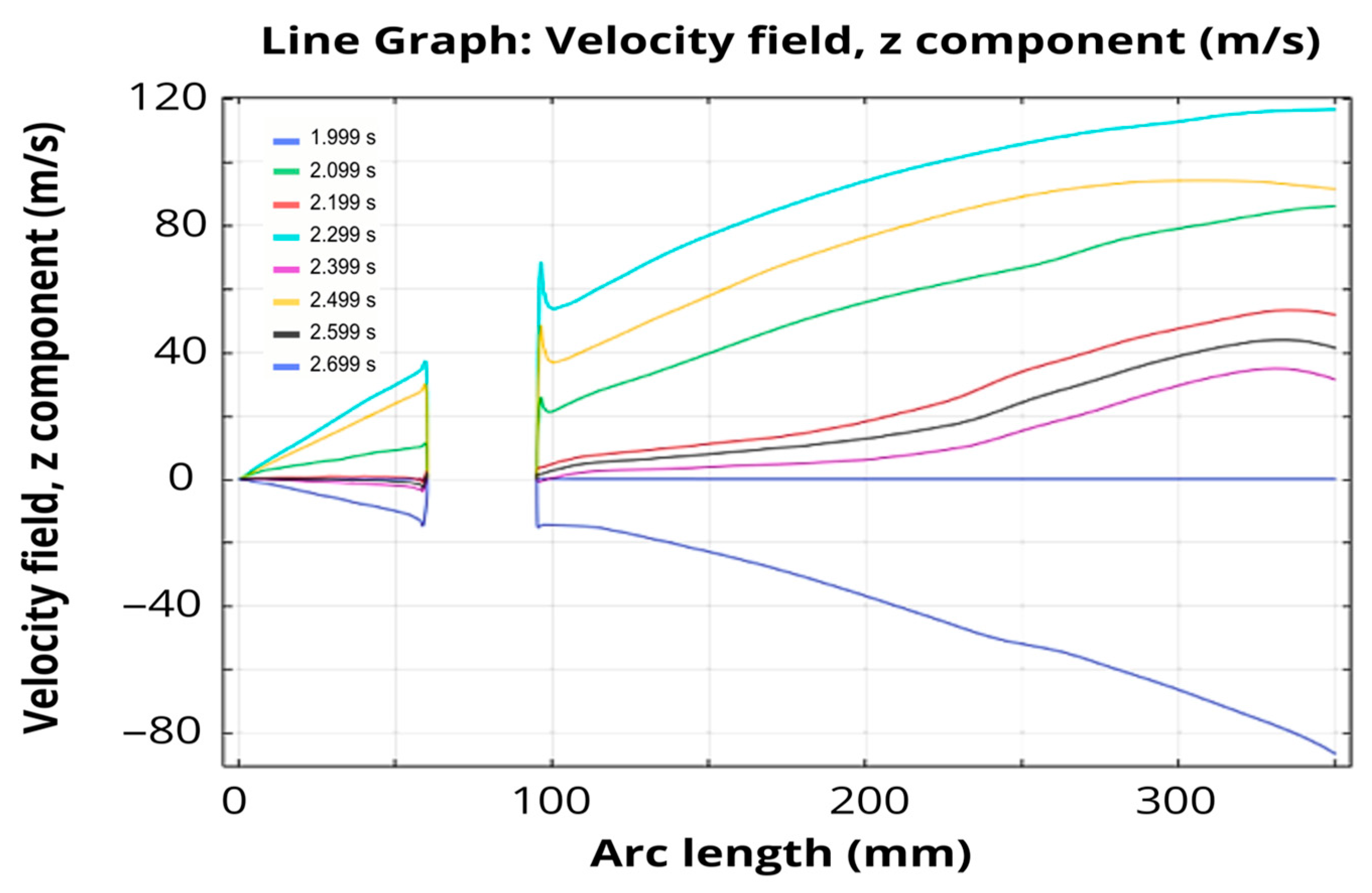
The pressure and the velocity flow oscillate with a difference of the phase time, for which the maximum pressure is logged at the stack and the minimum at the open outflow; the opposite phenomenon leads to the velocity spatial profile (see
Figure 12 and
Figure 13).
The spectra analysis of the velocity profile depicts that the physics is controlled by a single main harmonic with the resonance frequency of . There is a negligible secondary effect with an amplitude close to .
The acoustic power, the thermal power, and the efficiency are estimated according to Swift, using the value of the pressure at the axial point
and at the time of
, for which the simulation is quit.
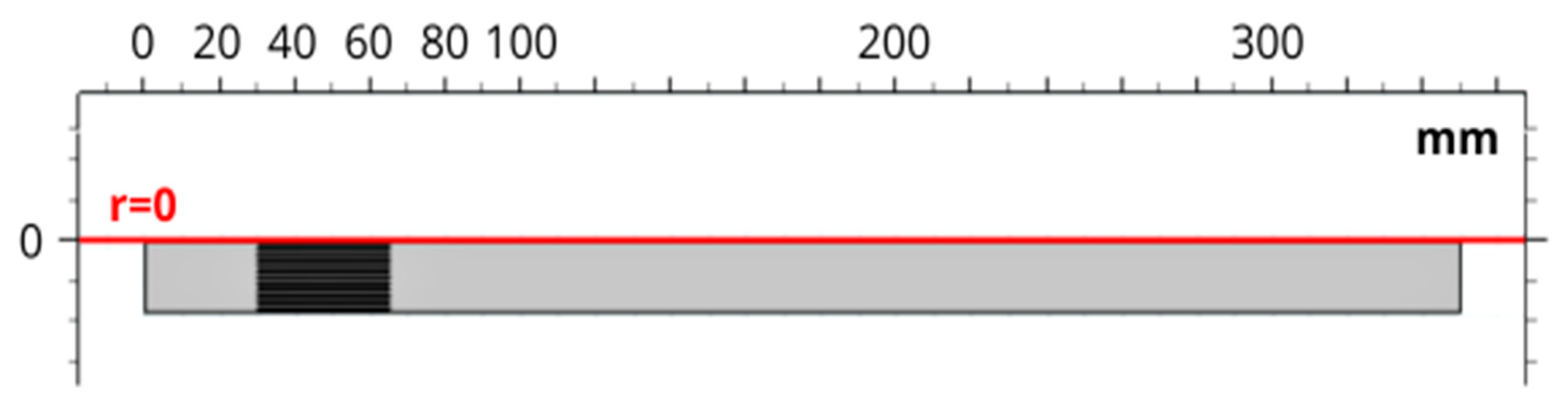
We carried out a test with the stack located at
and with the other control parameters unchanged, such as the temperature boundary conditions. The main parameters of the simulated geometry are shown in
Table 5.
Table 5.
Geometric data of the second simulation (shown in
Figure 14).
Table 5.
Geometric data of the second simulation (shown in
Figure 14).
| STACK | RESONATOR |
|---|
| Length | 35 mm | Length | 350 mm |
| Thickness | 0.5 mm | Diameter | 35 mm |
| Spacing | 1 mm | |
| Position | 30 mm | |
Figure 14.
Geometric model of the second simulation.
Figure 14.
Geometric model of the second simulation.
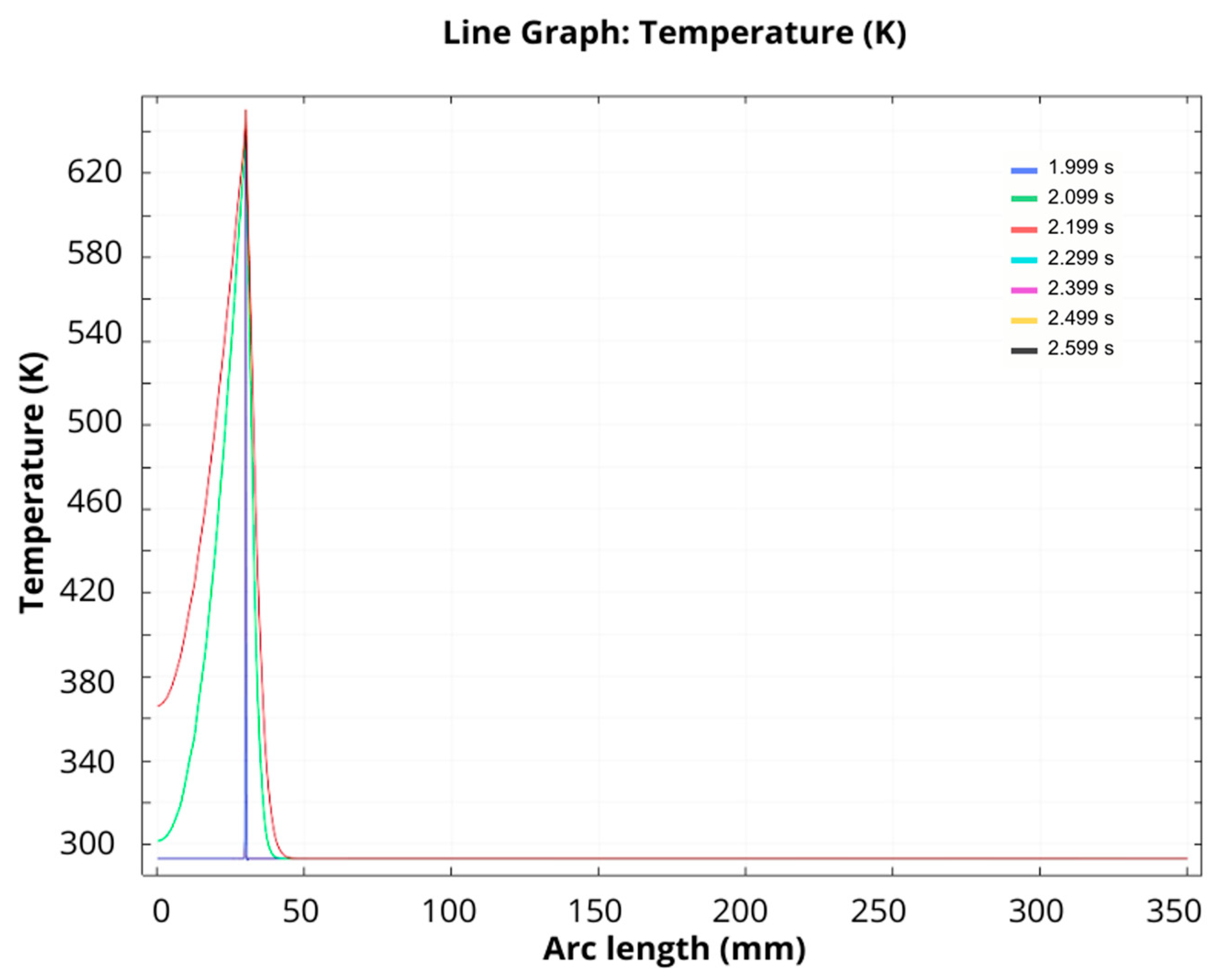
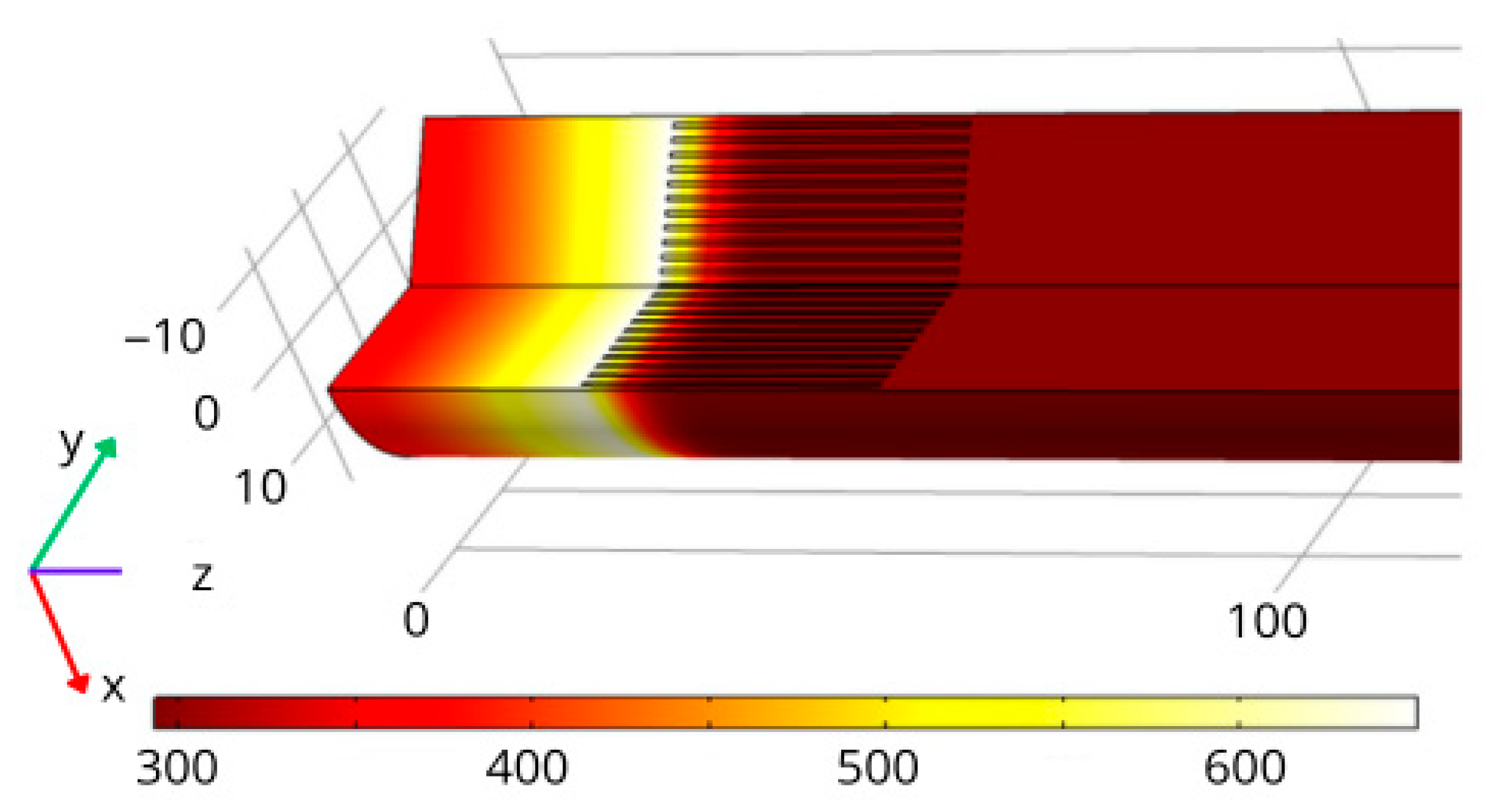
In this case, the fluid in the first stage of the resonators close to the closed boundary has the smallest enhancement of the temperature, with a maximum value equal to
. The temperature profile is shown in
Figure 15 as a function of the axial coordinate for several instants of time. The three-dimensional distribution of temperature is provided in
Figure 16.
Placing the stack near boundaries (
or
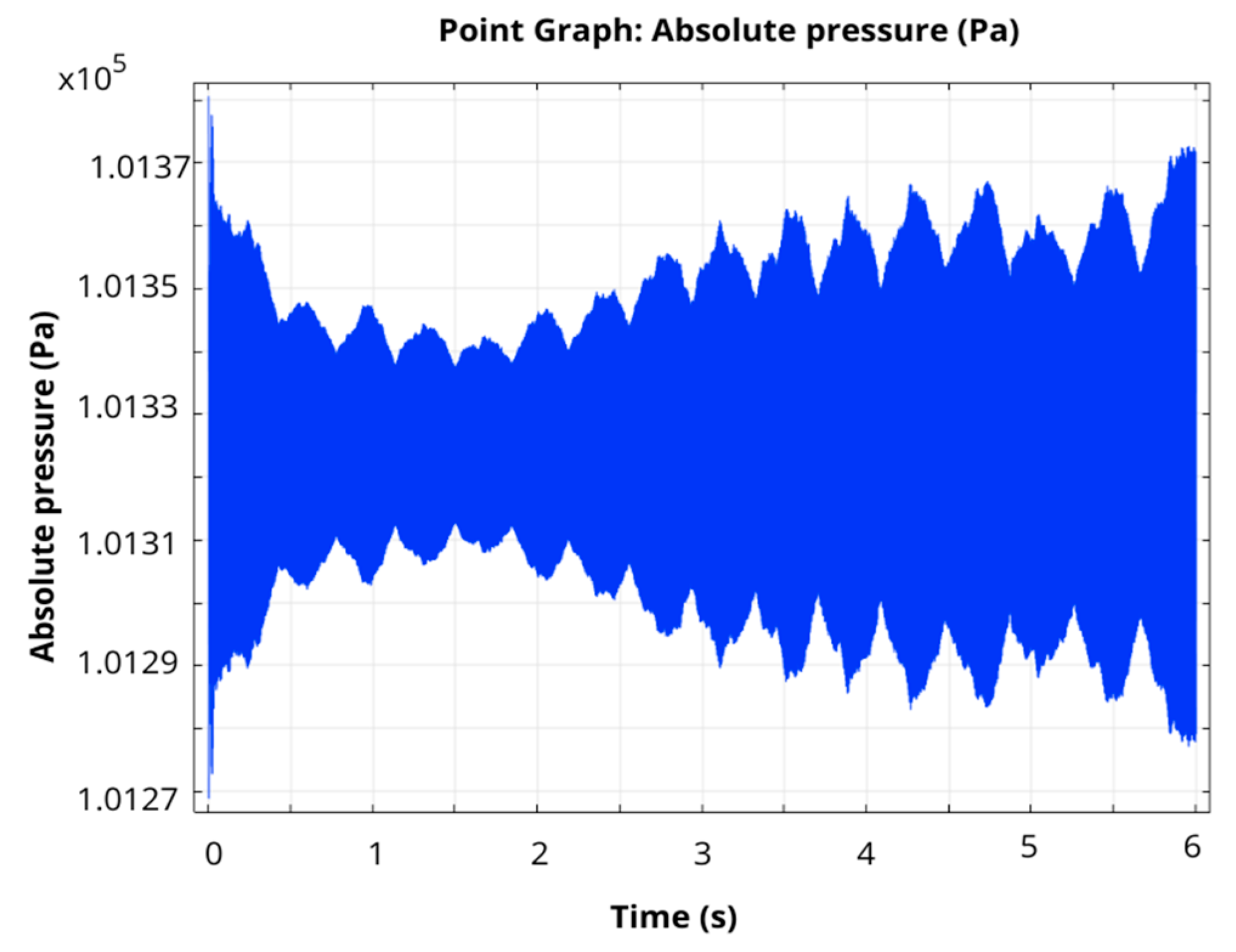
) introduces wave interference and secondary harmonics, as shown in
Figure 17,
Figure 18,
Figure 19,
Figure 20 and
Figure 21, leading to energy dispersion and reduced efficiency. The pressure and velocity fields here evolve according to a lower amplitude of the wave, and a main harmonic makes the fluctuations with the superposition of a secondary frequency.
The simulated pressure and velocity signals under non-optimal conditions show amplitude modulation and frequency beating, which are indicative of dynamic instabilities and transient mode interactions. Similar transient behaviours were investigated by Chen et al. [
27] through Large-Eddy Simulations, which highlighted the role of thermal startup in triggering oscillatory flow and competing acoustic modes.
This scenario gives insight that the resonator is mainly dominated by the region between the closed no-slip inflow and the stack. This region leads to effects on the coldest region of the resonator and, therefore, on the efficiency and the acoustic power produced. The acoustic power, the heat production, and the efficiency are estimated at the axial streamwise coordinate
with the pressure and velocity equal to:
The acoustic power is decreased compared to the previous case with the stack located at
The third simulation has been carried out with a new stack position at the axial coordinate
. In this configuration, the stack is placed closer to the open outflow, making more space in the region between the closed no-slip inflow and the stack. The parameters of the third configuration are shown in
Table 6.
The results show that the pressure amplitude increases up to , as does the velocity amplitude, with a value equal to . The patterns of the pressure and velocity signals as a function of time are very irregular, with the high frequency dominating the early stage of thermoacoustic physics. They become smoother as time increases.
The evaluation of the sound power, the heat transfer, and efficiency is carried out at the axial location
with the pressure and velocity amplitudes as follows:
The simulations carried out suggest that the stack location plays a crucial role in the thermoacoustic phenomenon. Among the simulations carried out, the efficiency decreases for both cases in which the stack position moves towards the closed inlet no-slip edge and towards the open outflow edge. Nevertheless, in the latter configuration, the acoustic energy is depleted less with respect to the former case. The maximum value of the acoustic response of the resonator is related to the first simulation with the stack placed at the axial coordinate . In this case, the pressure and velocity amplitudes as functions of time show a single harmonic only. In the other cases, the signal shows a superposition of the main harmonic and a secondary harmonic with a lower frequency. In these cases, efficiency decreases because a certain amount of the energy is not transported by the acoustic wave but is instead used to create secondary harmonics.
To investigate this detail about the mechanisms leading to the change of efficiency as a function of the stack position, we carried out a simulation keeping the diameter of the resonator and changing its length to twice the value,
.
Table 7 shows the calculations of the thermal and viscous penetration depths.
With this setup, the gap between the cylindrical fins of the stack is estimated as follows:
Under this condition, we keep the value of the gap equal to as we did in the other simulations.
According to Swift, the stack length changes, and its value reads:
The stack is placed at the streamwise position so that the position scales with the new length of the resonator concerning the first simulation with the stack position at .
The critical thermal gradient is equal to:
And the critical temperature difference is equal to:
Whereas the dimensionless thermal gradient
does not change with respect to the other simulations, with the hot temperature
and the cold temperature
at the edge of the stack:
The parameters of the fourth configuration are shown in the following
Table 8.
The geometry obtained is shown in the image of
Figure 22.
The resonator is dominated by a frequency of
and is characterised by the following data computed at a location of
in the axial streamwise direction. The pressure amplitude resembles a perturbation wave since it is equal to
, and the magnitude of the velocity is roughly
.
The efficiency has the same magnitude as the first case, and this insight suggests that the domain with elongated aspect ratio is not a key control parameter in resonator design.
The parameters of the fifth simulated configuration are shown in
Table 9.
We investigated the case using helium as the working fluid. In this case, the resonance frequency is higher compared to the case with air because of the physical properties, such as the speed of sound (
Table 10 and
Table 11).
The simulation with helium preserves the geometrical setup of the first test case.
Specifically, the critical gap between the cylindrical fins of the stack is:
For this reason, the setup value equal to is kept.
The critical thermal gradient and the critical temperature difference at the stack are computed as follows:
The reference temperature at the stack is the hot temperature
, and the cold temperature
The dimensionless thermal gradient
reads:
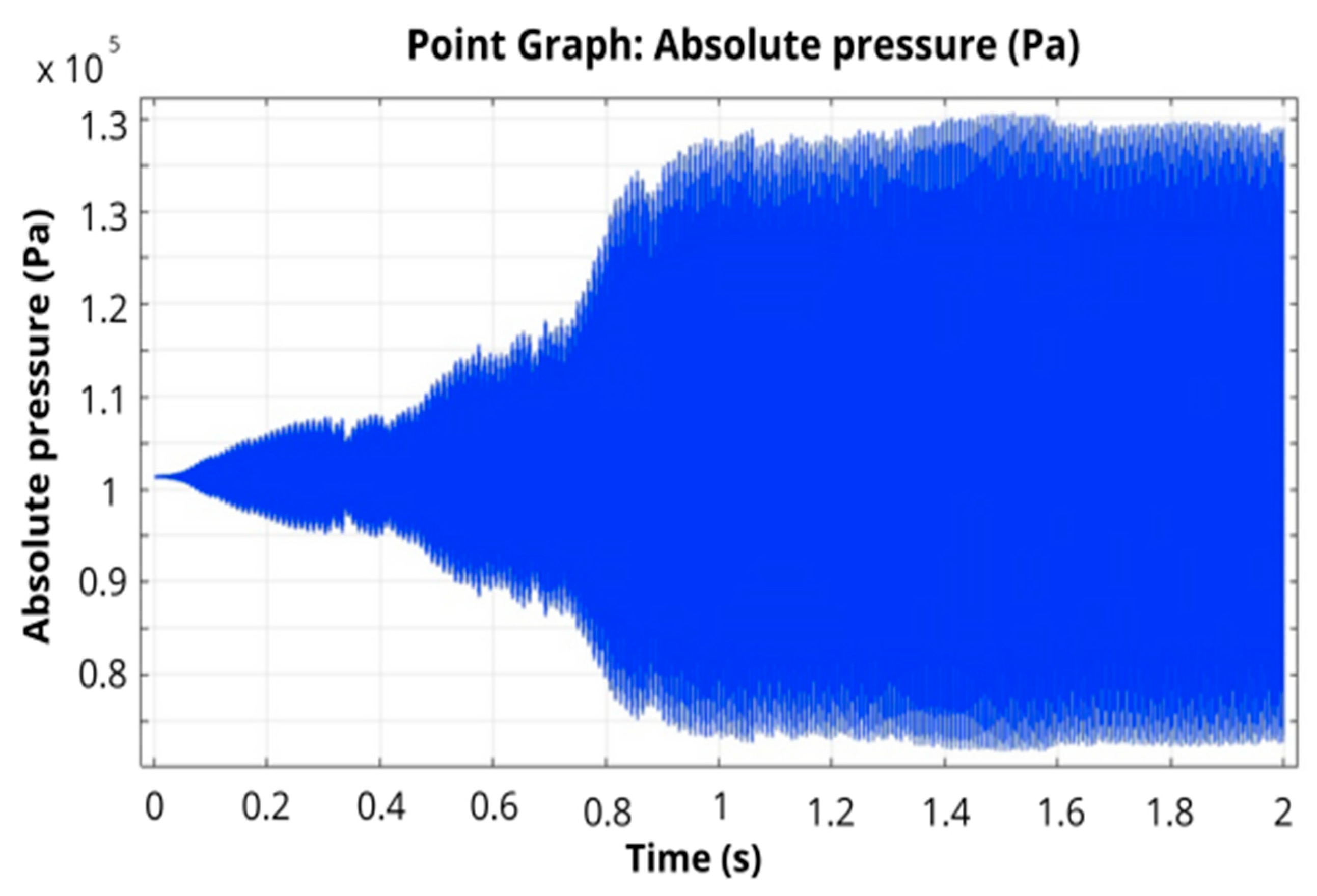
In the following figures, the trends of both pressure and velocity as functions of time are shown. The transition occurs in 1s, as in the case of air, but the patterns are different. In the case of air, the amplitude of both pressure and velocity followed the exponential law with regular growth. In this case, the amplitude shows a choked path at , and a kind of over-expansion for . The transient leads the pressure and velocity signals to a coherent harmonic oscillation with a higher frequency and a pressure amplitude equal to and velocity of .
The resonance frequency of the acoustic wave is equal to and is higher by a factor of 3 compared to the case with air.
The pressure amplitude, the velocity amplitude, the acoustic power W, the thermal heat Q, and the efficiency are computed at the axial coordinate
, as follows:
The following values of acoustic power, heat flux, and efficiency are obtained:
In the scaled resonator (
Figure 23,
Figure 24 and
Figure 25), halving the frequency is consistent with the doubled length, but efficiency remains stable because acoustic phase relationships are preserved. With helium (
Figure 26,
Figure 27 and
Figure 28), higher frequency and improved efficiency arise from its high sound speed and low Prandtl number, which enhance thermal penetration and reduce viscous damping. The clean spectral peak in the optimal setup (
Figure 7) confirms that maximum efficiency is achieved when wave energy is concentrated in a single acoustic mode.
The selection of control parameters—namely, the stack position and resonator length—was guided by physical reasoning and previous thermoacoustic literature. The stack was positioned at three distinct streamwise locations:
and
, corresponding to non-dimensional positions of approximately
,
, and
along the
resonator. These locations were chosen to capture the effect of proximity to the pressure antinode (near the closed end), the velocity antinode (near the open end), and a central position where acoustic pressure and velocity profiles are balanced. Previous studies (e.g., Swift [
4], Hariharan et al. [
16], Bouramdane et al. [
28]) have indicated that stack performance is highly sensitive to its location relative to these nodal points.
The resonator length was initially set to
to match typical quarter-wavelength acoustic configurations for air at room temperature. A second test with doubled length (
) was introduced to investigate geometric scaling effects and assess whether performance is preserved across different aspect ratios. This approach follows design guidelines proposed in the literature (e.g., Alcock et al. [
23], Di Meglio & Massarotti [
18]), which emphasise the relevance of resonator scaling in adapting thermoacoustic engines to different applications and power outputs.
These choices allow a systematic investigation of both local (stack position) and global (resonator length) geometric effects on acoustic energy conversion.
The results show that the higher frequency has a small effect in increasing the pressure amplitude, but plays a crucial role in the efficiency, mainly induced by the transformation of the thermal energy into kinetic energy.
The degradation in efficiency due to stack proximity to resonator boundaries and the emergence of secondary harmonics align with the findings of Agarwal in [
24] and Steiner et al. [
7], who reported that non-central stack placements induce multi-modal behaviour that impairs acoustic coherence.
Our observation that helium significantly enhances energy conversion efficiency is consistent with Ali et al. [
11] and Elshabrawy et al. [
20], who demonstrated that high sound speed and thermal conductivity in helium improve acoustic coupling and reduce entropy generation.
The simulations reveal that positioning the stack away from both ends of the resonator promotes a more stable oscillation at the fundamental frequency and mitigates the onset of higher-order harmonics. Similar conclusions were drawn by Chen et al. [
27], who performed full-scale 3D CFD simulations and demonstrated that specific stack geometries—such as circular-pore and pin-array designs—can effectively suppress secondary modes and stabilise the acoustic resonance.
5. Conclusions
The thermoacoustic engine is made by a pipe in which an acoustic resonance occurs, induced by the transfer of heat energy to the acoustic wave. The pipe holds a stack that keeps the thermal gradient by means of a constant hot temperature on the closed side of the pipe and a constant cold temperature on the open side of the pipe.
The pressure wave shows a main harmonic in the case in which the stack is located in a position in which the interaction with the boundary in the mainstream is neglected.
When the stack is positioned in such a way that its interaction with boundary effects is minimised, the system operates in a stable resonant regime, dominated by a single acoustic mode. This is particularly evident when the stack is placed at an intermediate position sufficiently distant from both the closed and open ends of the resonator, as observed in the first simulation with Xs = 60 mm. Under these conditions, the thermoacoustic system efficiently converts the thermal gradient into acoustic power, minimising the influence of boundary layer disturbances and suppressing the generation of higher-order harmonics, which would otherwise dissipate part of the thermal energy into non-productive oscillatory modes, thereby reducing the overall efficiency.
When the stack position deviates from this optimal region, either approaching the closed end (e.g., , as seen in the second simulation) or the open end (, as in the third simulation), the system shows increased sensitivity to boundary effects. This leads to the development of multi-modal oscillations and secondary harmonics, reducing both pressure amplitude and acoustic power, and consequently decreasing the system’s efficiency.
The analysis also shows that scaling the resonator length, while proportionally adjusting the stack dimensions and position, preserves the efficiency of the thermoacoustic process, as confirmed by the fourth and fifth simulations, which involved doubling the resonator length (). This suggests that the resonator aspect ratio can be considered a flexible design parameter, allowing thermoacoustic devices to be adapted to different operational scales without compromising performance.
The appearance of secondary harmonics in configurations with suboptimal stack placement indicates the presence of nonlinear acoustic effects. As emphasised by Di Meglio and Massarotti [
18], such nonlinearities become significant at elevated pressure amplitudes and must be accurately captured using CFD approaches that account for viscous and thermal interactions.
A decisive influence on performance was also observed regarding the choice of working fluid (e.g., sixth simulation). The superior thermophysical properties of helium, such as its high speed of sound, low density, and higher thermal conductivity, promote more effective coupling between thermal and acoustic processes. As a result, the system achieves higher resonance frequencies, increased acoustic power generation, and significantly improved energy conversion efficiency compared to configurations using air.
The parametric analysis confirms that using helium as the working fluid increases the resonance frequency and enhances acoustic power output. These findings are consistent with the optimisation study by Bouramdane et al. [
28], who examined how geometric parameters and gas properties interact to influence the performance of standing-wave thermoacoustic engines.
In summary, this systematic investigation has clarified the combined effects of stack positioning, resonator scaling, and working fluid properties on thermoacoustic engine performance. The findings provide solid design guidelines for optimising thermoacoustic systems to enhance efficiency, stability, and sustainability, contributing to the development of environmentally sustainable energy conversion technologies.
These results, supported by recent advances in thermoacoustic research [
9,
10], emphasise the importance of precision design in stack geometry and positioning for efficient operation. The scalability observed in our simulations also aligns with trends in modular thermoacoustic system development [
6,
12].
In conclusion, the stack should be positioned at an intermediate location along the resonator—such as 60 mm from the closed end in a 350 mm tube—to ensure efficient energy conversion and avoid the generation of secondary harmonics caused by proximity to acoustic boundaries. The results also show that resonator length can be scaled proportionally with the stack dimensions and position without compromising efficiency, providing flexibility in adapting device size to different applications. Furthermore, the use of helium as a working fluid significantly improves performance compared to air, due to its higher sound speed, thermal conductivity, and lower Prandtl number, which enhance the coupling between thermal and acoustic energy.
Future work will focus on experimental validation of these results, particularly the dynamic behaviour of pressure and velocity fields concerning stack placement. Additional studies will explore variations in stack geometry, including fin spacing and porosity, and will consider the application of optimisation methods—such as parametric analysis or machine learning—to further improve performance across a range of operating conditions. Finally, the insights from this study open the way for applying thermoacoustic systems in areas such as low-grade waste heat recovery and compact, environmentally friendly cooling technologies.





 ,
,