Review

Advancing Fast Frequency Response Ancillary Services in Renewable-Heavy Grids: A Global Review of Energy Storage-Based Solutions and Market Dynamics

School of Engineering and Physical Sciences, Heriot-Watt University, Dubai P.O. Box 38103, United Arab Emirates
*
Author to whom correspondence should be addressed.
Energies 2024, 17(15), 3737; https://doi.org/10.3390/en17153737
Submission received: 14 June 2024 / Revised: 22 July 2024 / Accepted: 26 July 2024 / Published: 29 July 2024
(This article belongs to the Special Issue Demand Response and Optimization Decisions for Energy Systems)

Abstract

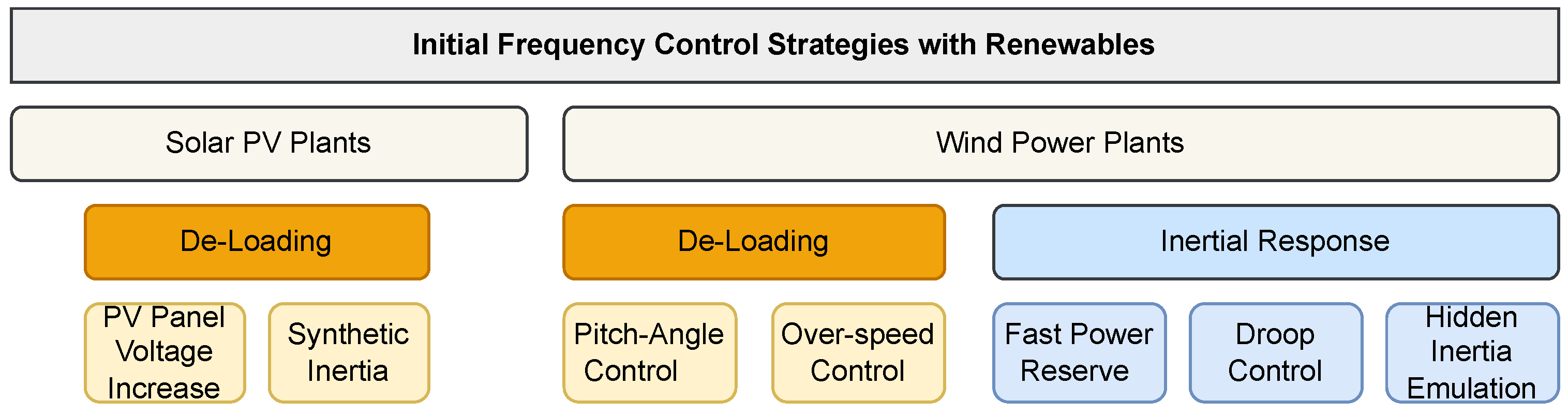
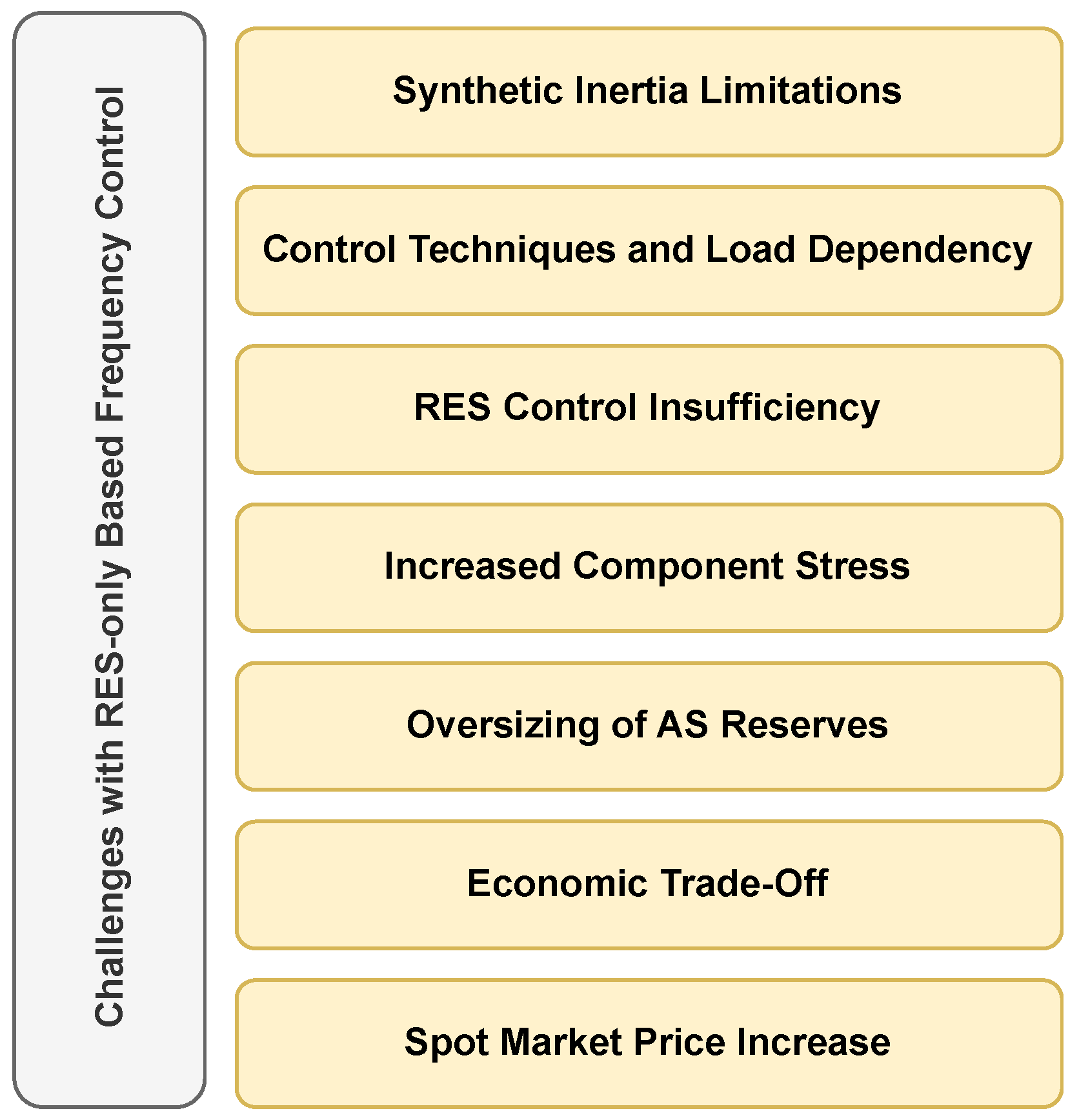
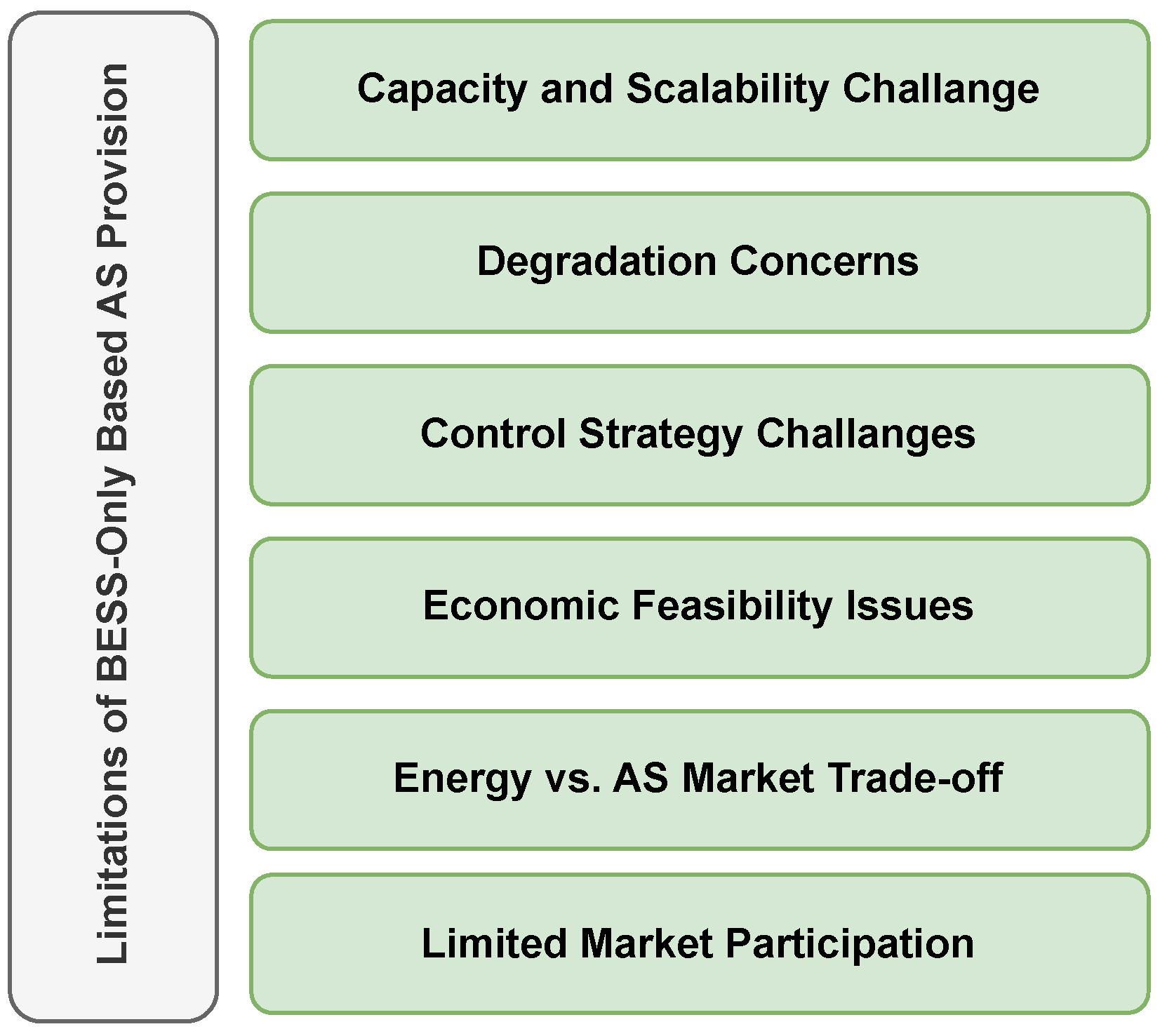
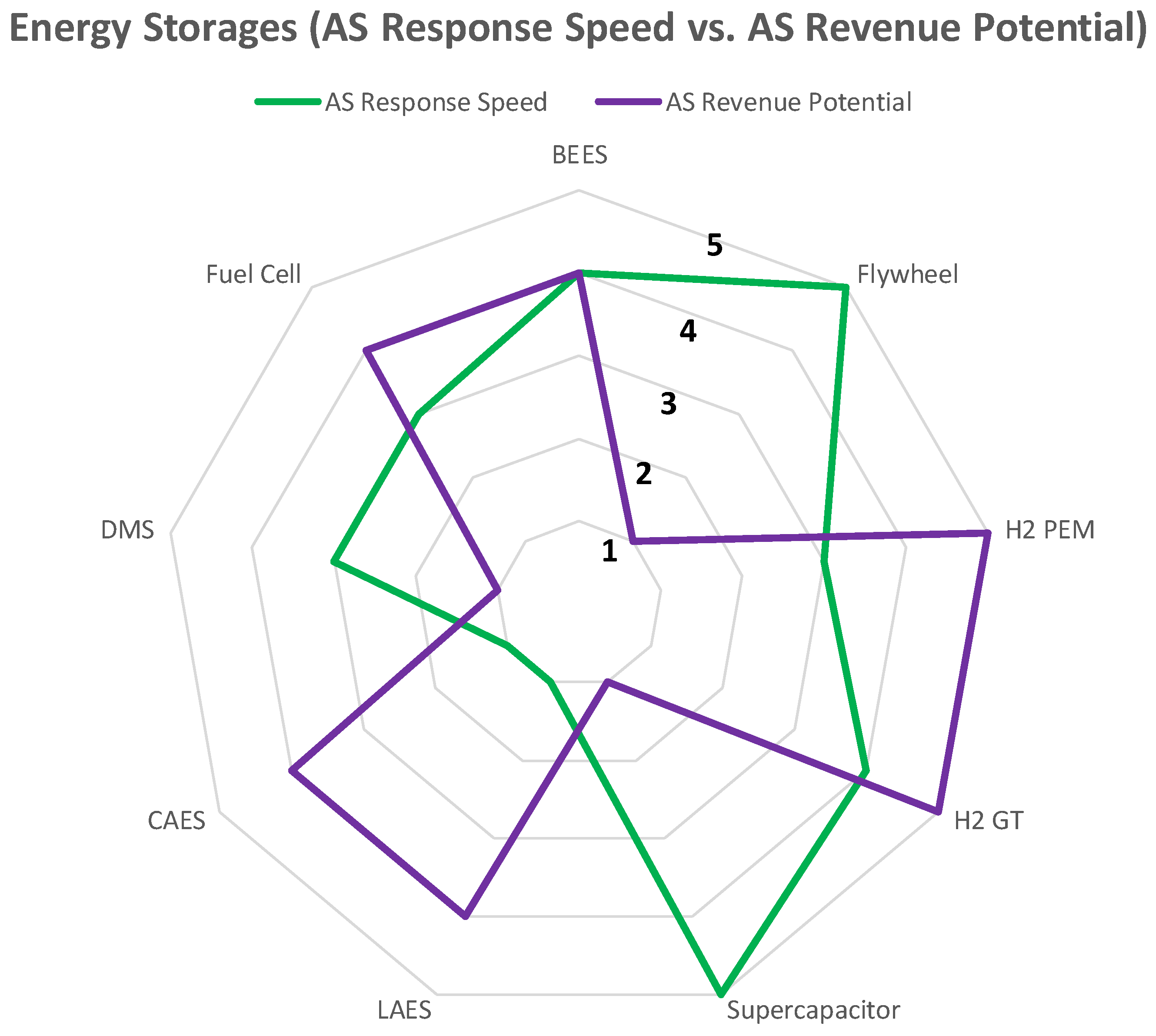
This paper addresses the growing challenges and developments in frequency control within power systems influenced by the increasing penetration of renewable energy sources. It evaluates the advancements and limitations of renewable-based control technologies and explores the critical role of diverse energy storage technologies in providing fast frequency response ancillary services. Through a comprehensive analysis of the global literature, this paper categorises energy storage solutions according to their efficacy in meeting fast frequency response demands and potential for revenue generation. It reveals significant gaps in the current research, which predominantly focuses on battery energy storage systems and microgrid applications, with insufficient attention to grid-scale storage solutions and innovative energy storage technologies. This analysis identifies a lack of detailed technical simulations and hybrid storage models for frequency control, as well as a minimal exploration of the environmental benefits, particularly in terms of carbon dioxide emission reductions, associated with deploying new energy storage technologies in ancillary service markets. The paper concludes by emphasising the urgent need for further research incorporating detailed techno-economic evaluations and the carbon dioxide reduction potential of modular, scalable energy storage technologies, which should be facilitated by advanced network simulation models and comprehensive market analysis to drive future advancements in the field.
Keywords: fast frequency ancillary services; renewable energy sources; grid stability; market dynamics; energy storage and techno-economic analysis fast frequency ancillary services; renewable energy sources; grid stability; market dynamics; energy storage and techno-economic analysis