Article

An Ultra-Short-Term PV Power Forecasting Method for Changeable Weather Based on Clustering and Signal Decomposition

1
State Key Laboratory of Reliability and Intelligence of Electrical Equipment, Hebei University of Technology, Tianjin 300401, China
2
School of Electrical Engineering, Hebei University of Technology, Tianjin 300401, China
3
State Grid Tianjin Wuqing Electric Power Supply Company, Tianjin 301700, China
*
Authors to whom correspondence should be addressed.
Energies 2023, 16(7), 3092; https://doi.org/10.3390/en16073092
Submission received: 4 March 2023 / Revised: 24 March 2023 / Accepted: 27 March 2023 / Published: 28 March 2023

Abstract

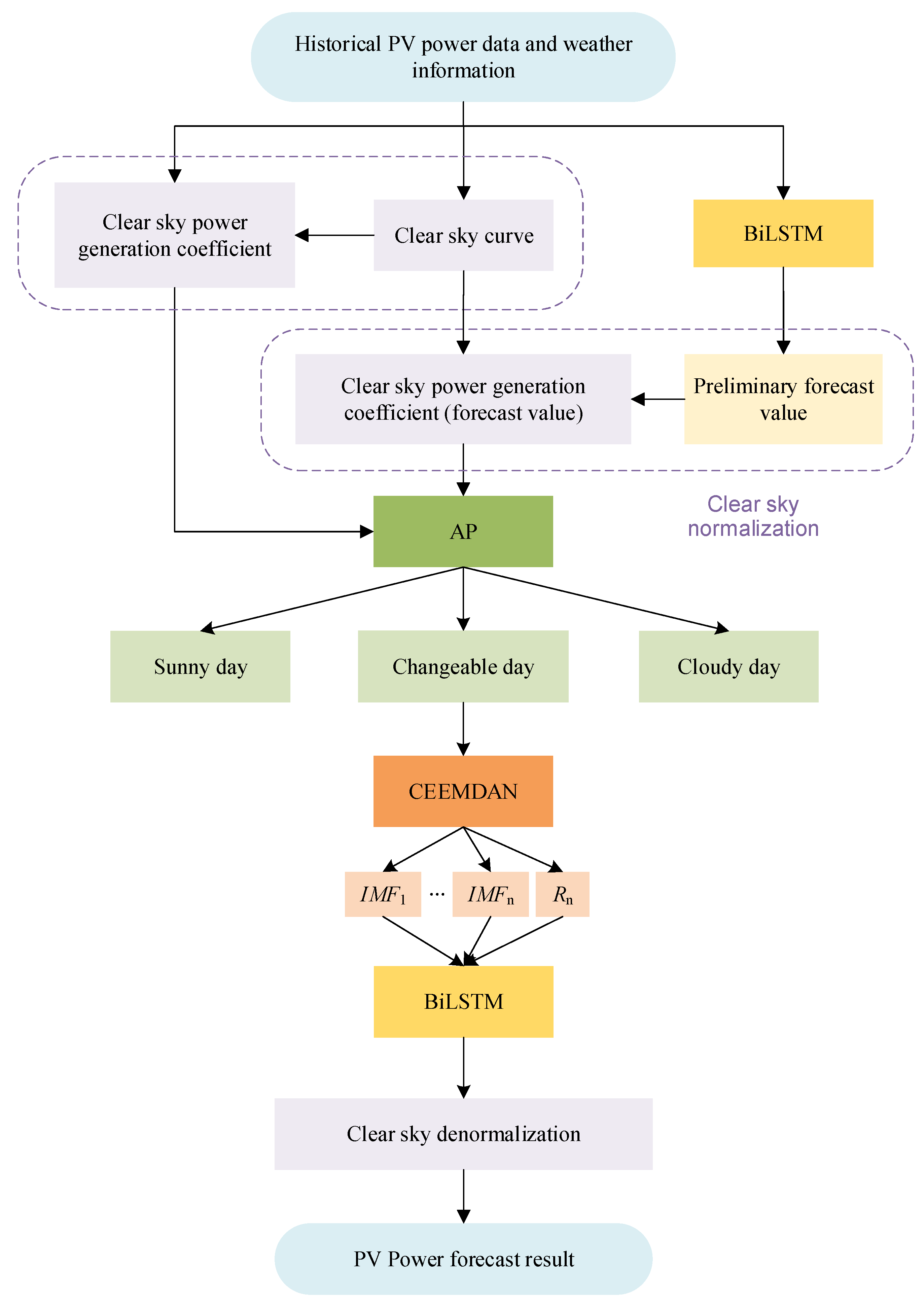
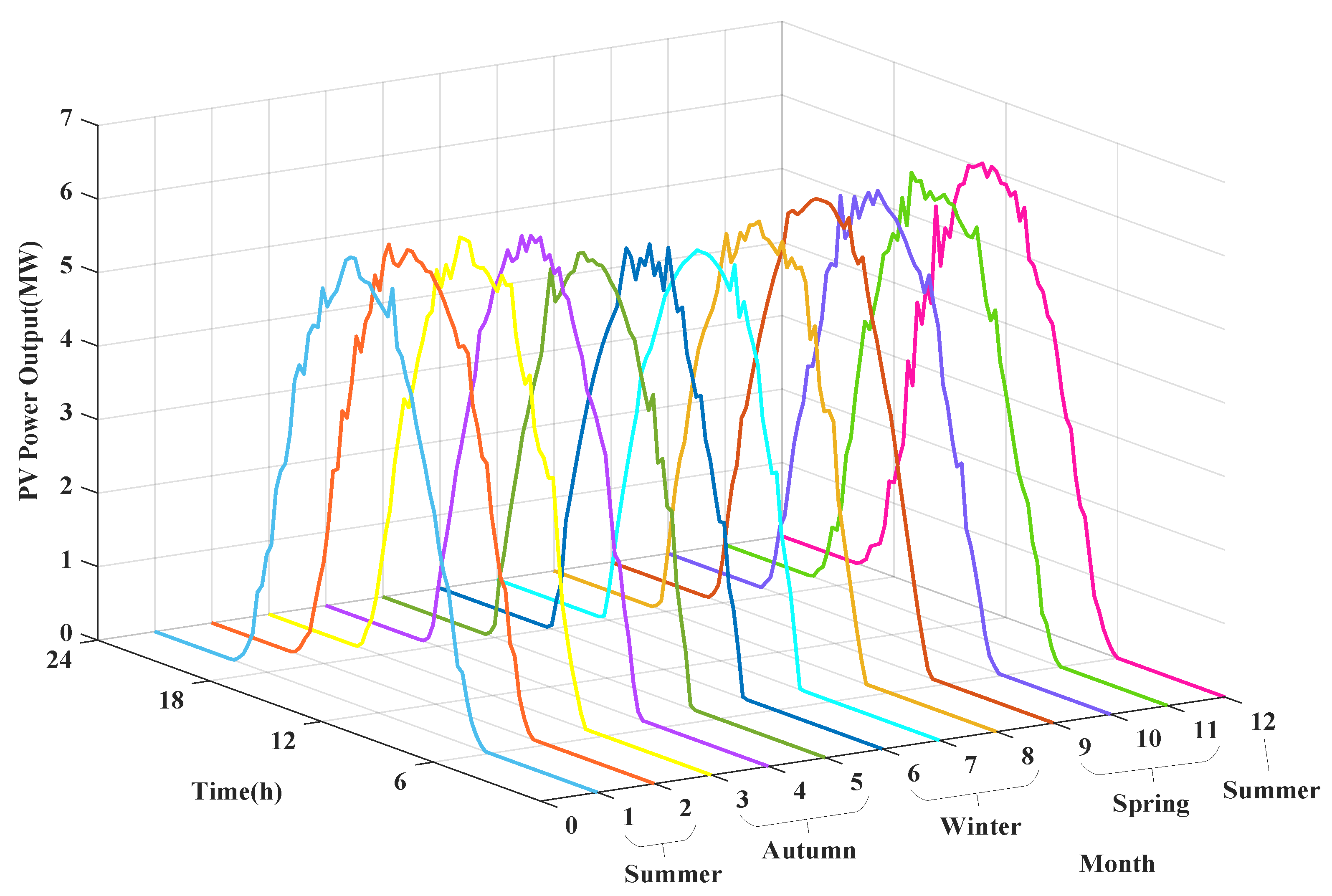
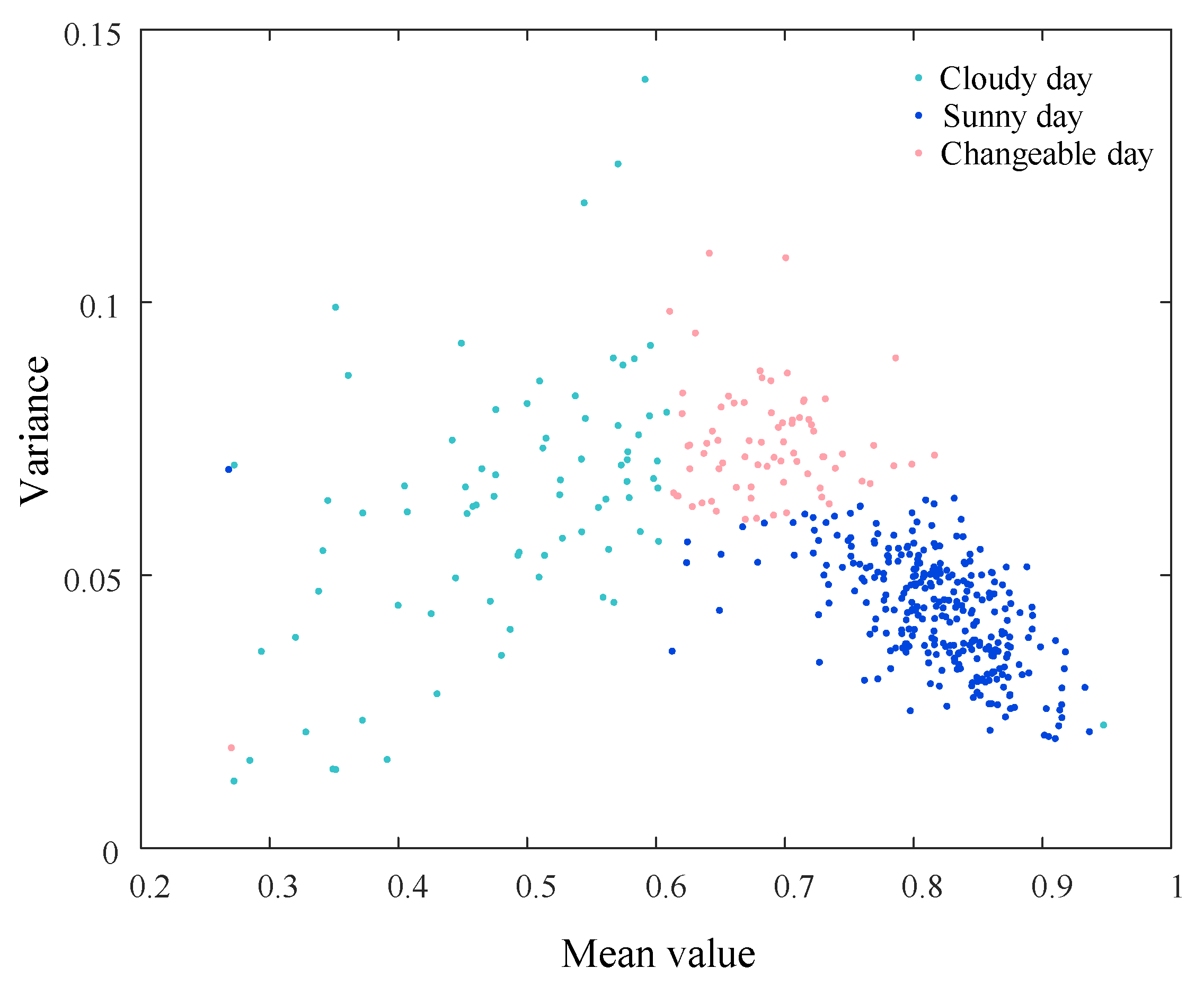
Photovoltaic (PV) power shows different fluctuation characteristics under different weather types as well as strong randomness and uncertainty in changeable weather such as sunny to cloudy, cloudy to rain, and so on, resulting in low forecasting accuracy. For the changeable type of weather, an ultra-short-term photovoltaic power forecasting method is proposed based on affinity propagation (AP) clustering, complete ensemble empirical mode decomposition with an adaptive noise algorithm (CEEMDAN), and bi-directional long and short-term memory network (BiLSTM). First, the PV power output curve of the standard clear-sky day was extracted monthly from the historical data, and the photovoltaic power was normalized according to it. Second, the changeable days were extracted from various weather types based on the AP clustering algorithm and the Euclidean distance by considering the mean and variance of the clear-sky power coefficient (CSPC). Third, the CEEMDAN algorithm was further used to decompose the data of changeable days to reduce its overall non-stationarity, and each component was forecasted based on the BiLSTM network, so as to obtain the PV forecasting value in changeable weather. Using the PV dataset obtained from Alice Springs, Australia, the presented method was verified by comparative experiments with the BP, BiLSTM, and CEEMDAN-BiLSTM models, and the MAPE of the proposed method was 2.771%, which was better than the other methods.
Keywords: photovoltaic power forecasting; weather classification; signal decomposition; deep learning model; hybrid models photovoltaic power forecasting; weather classification; signal decomposition; deep learning model; hybrid models