Article

Quantitative Evaluation of the Effects of Heat Island on Building Energy Simulation: A Case Study in Wuhan, China


Mines Paris, PSL University, Centre for Energy Efficiency of Systems (CES), 75006 Paris, France
*
Author to whom correspondence should be addressed.
Energies 2023, 16(7), 3032; https://doi.org/10.3390/en16073032
Submission received: 22 February 2023 / Revised: 22 March 2023 / Accepted: 23 March 2023 / Published: 26 March 2023
(This article belongs to the Special Issue Solutions towards Zero Carbon Buildings)

Abstract

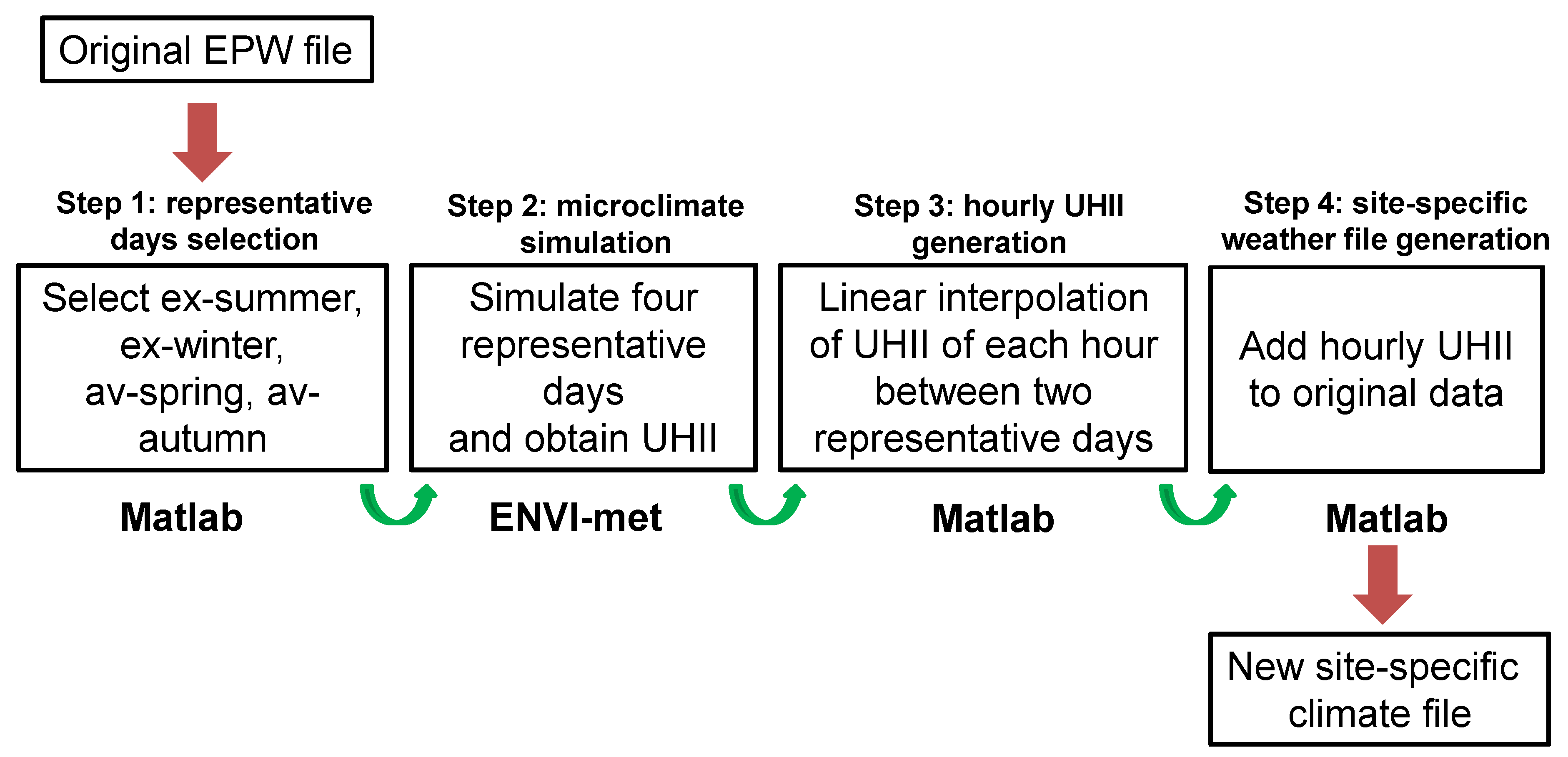
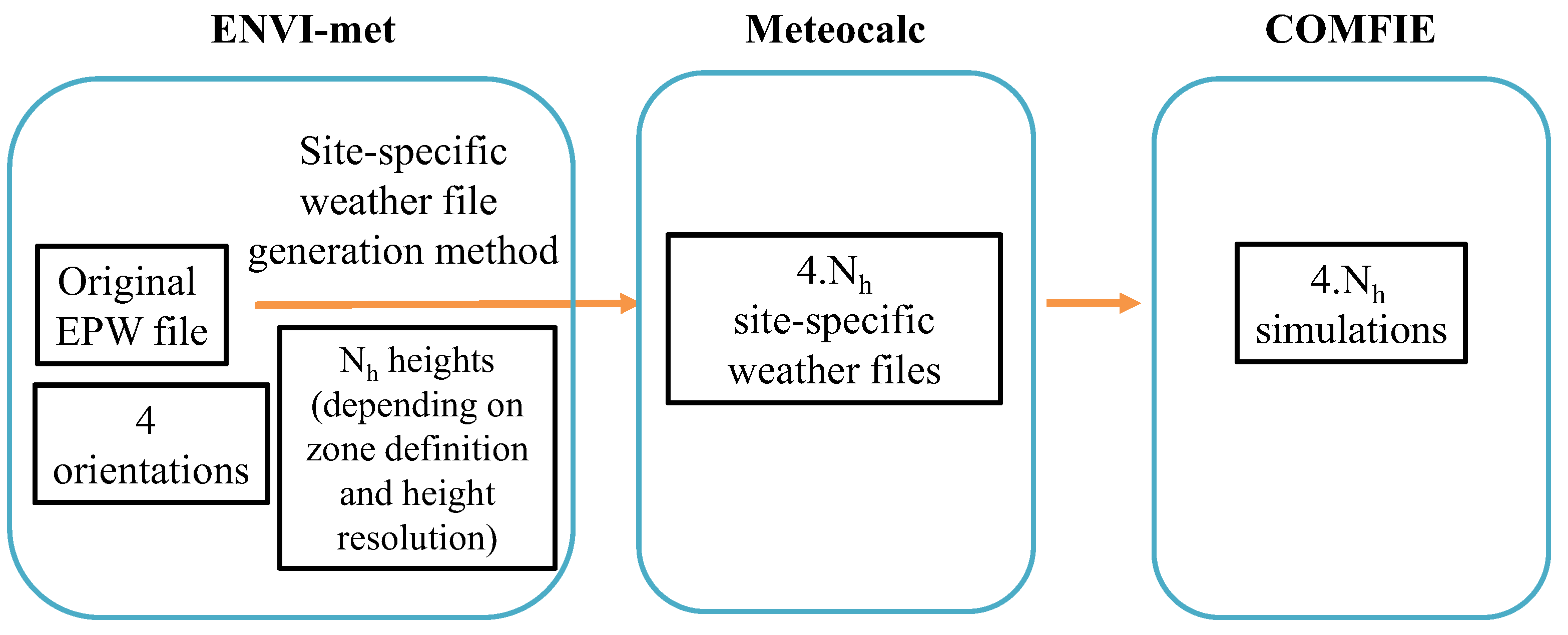
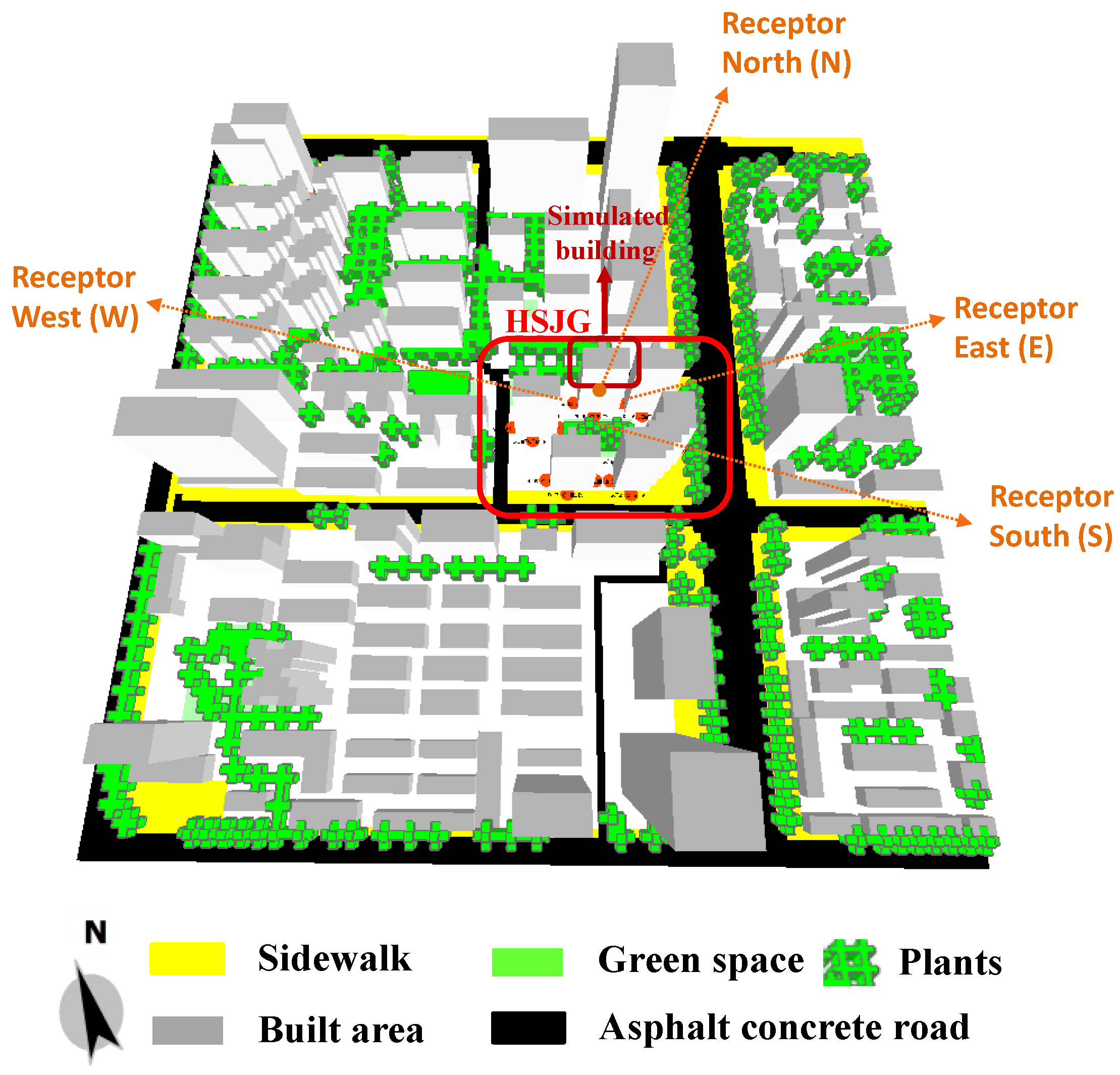
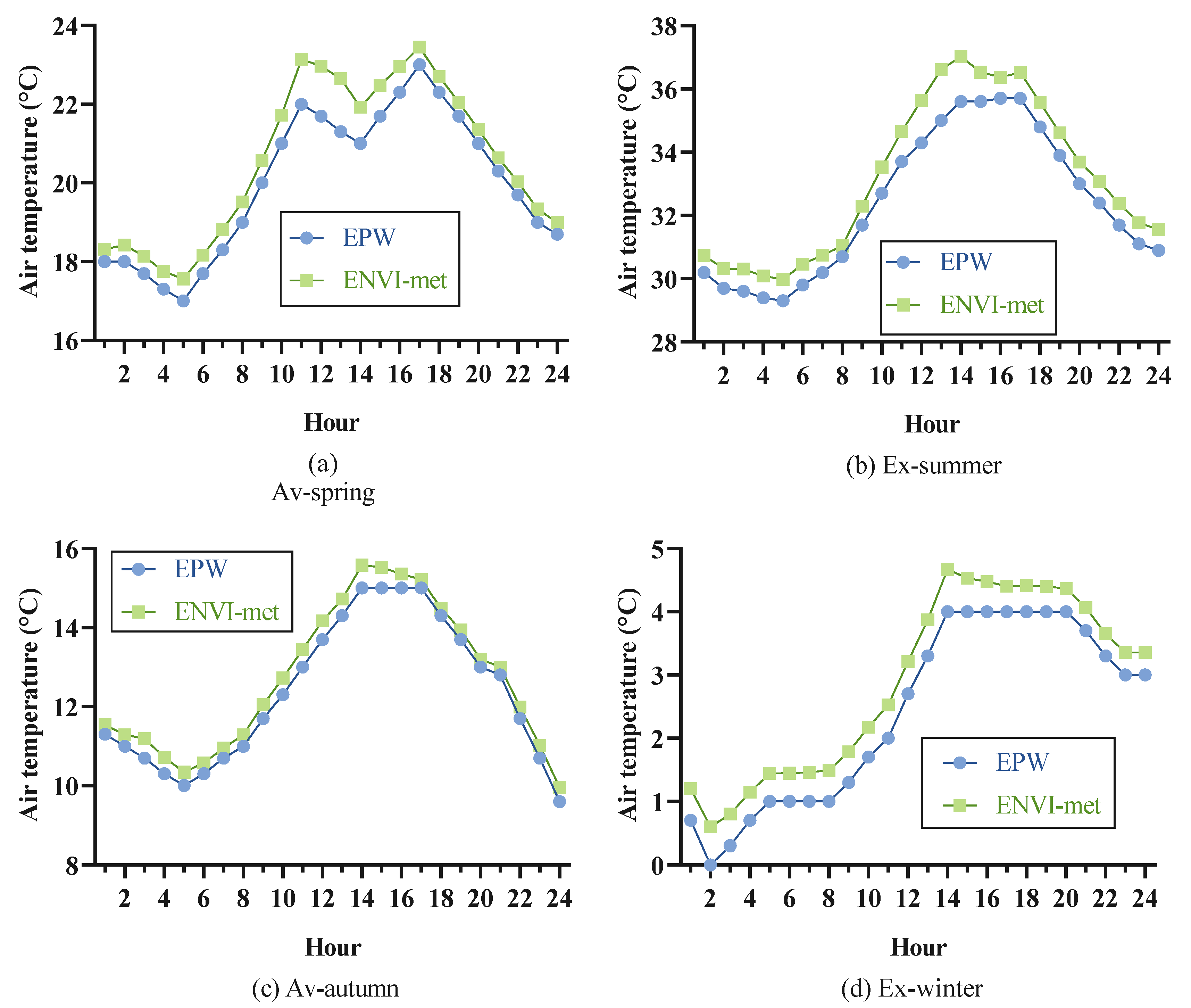
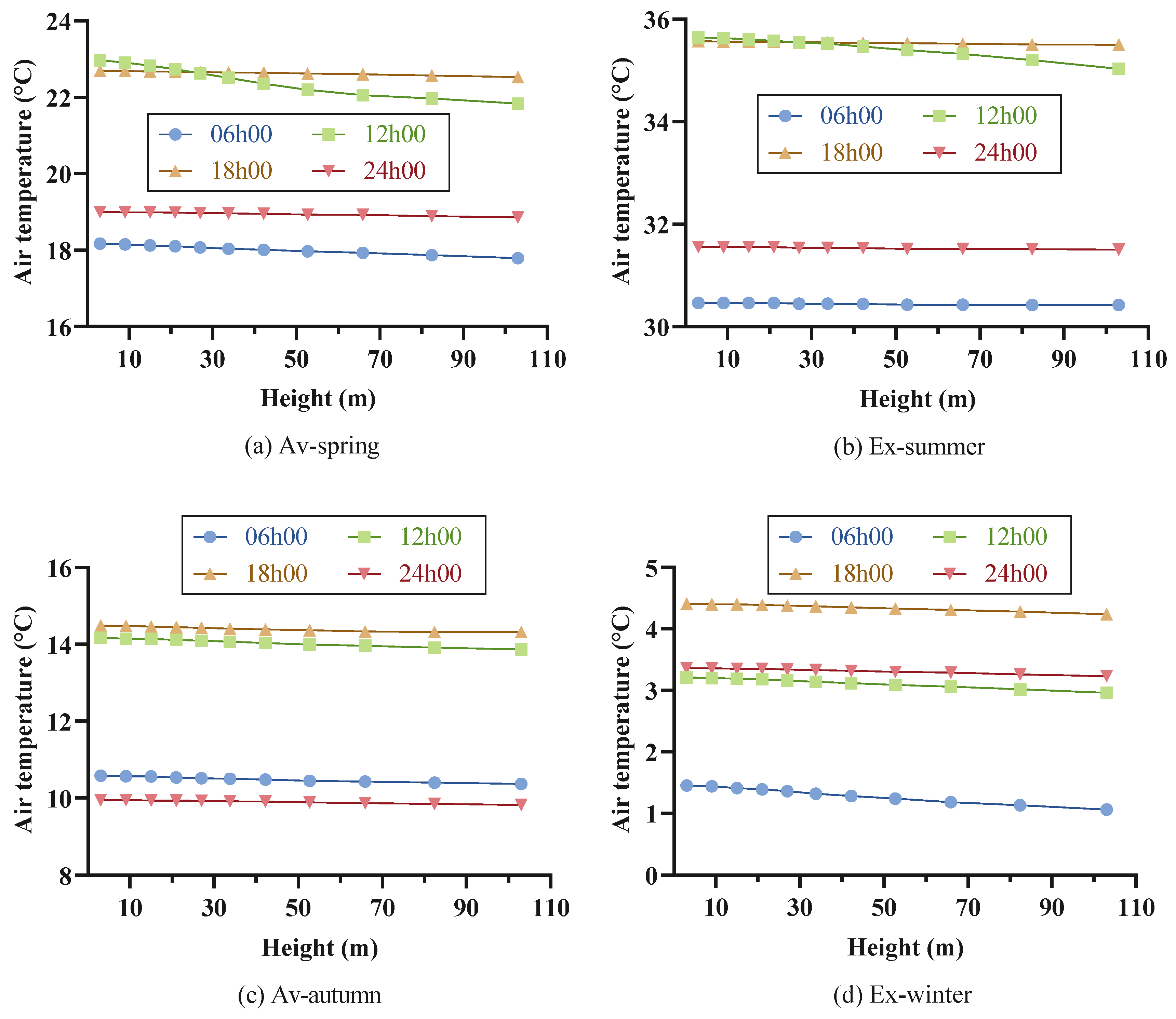
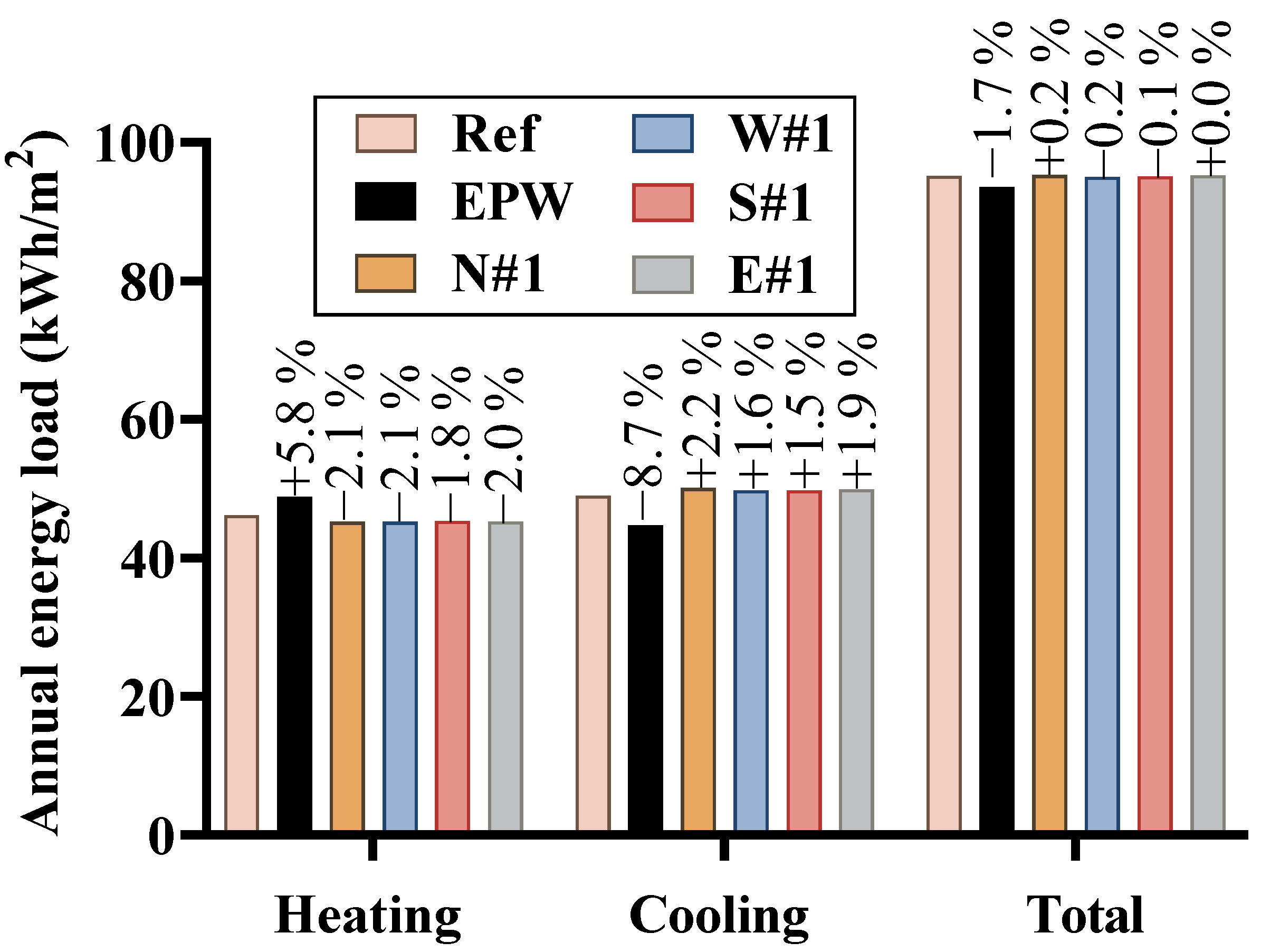
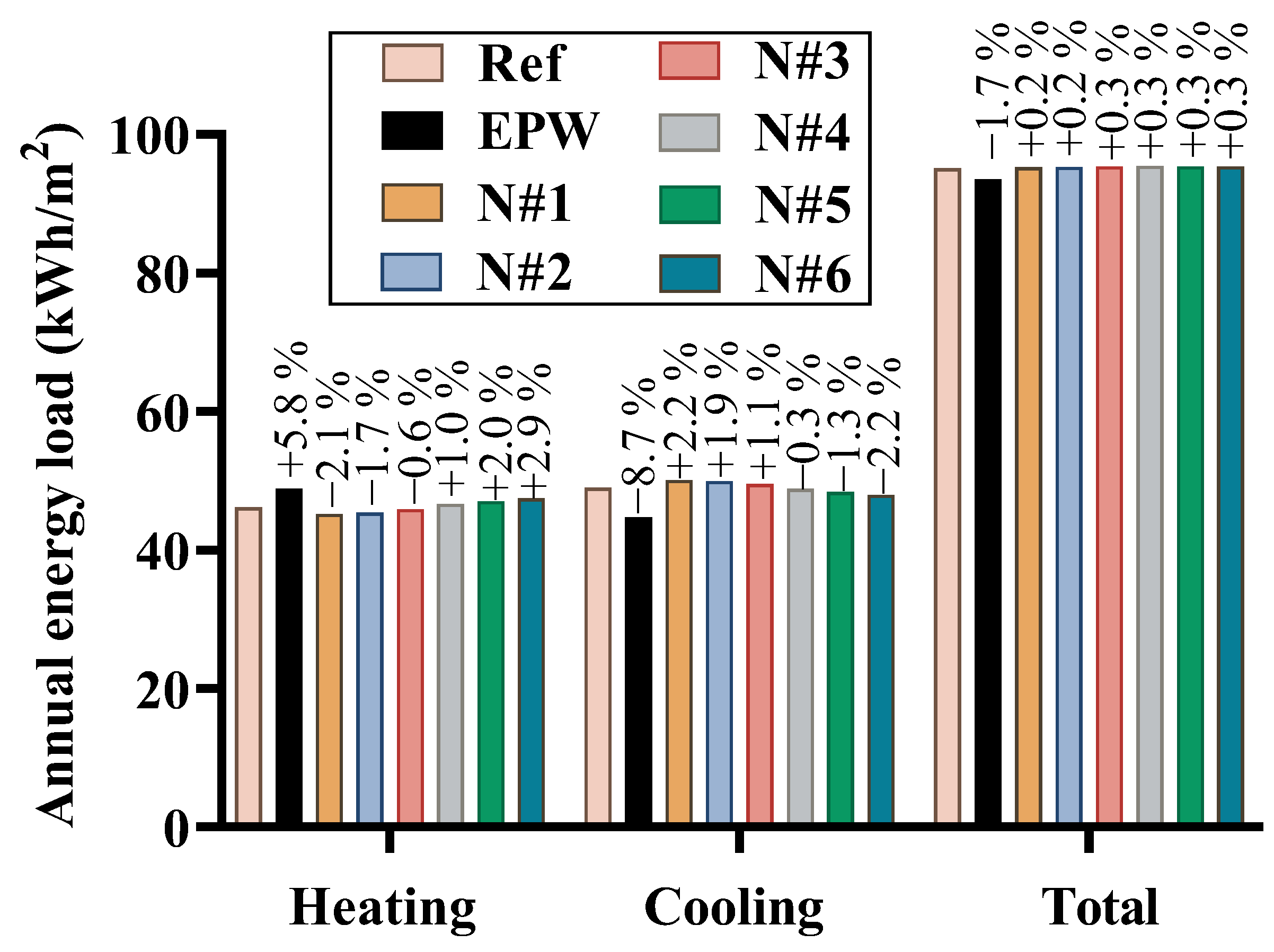
The climate data used for dynamic energy simulation of buildings located in urban regions are usually collected in meteorological stations situated in rural areas, which do not accurately represent the urban microclimate (e.g., urban heat island effect), and this might affect the simulation accuracy. This paper aims at quantitatively evaluating the effects of heat island on a high-rise building’s energy performance based on the microclimate simulation tool ENVI-met and the building energy simulation tool COMFIE. However, the computation of microclimate models is time consuming; it is not possible to simulate every day of a year in a reasonable time. This paper proposes a method that generates hourly “site-specific climate data” to avoid long microclimate simulation times. A coupling method of ENVI-met and COMFIE was developed for more precise building energy simulation, accounting for the heat island effect. It was applied to a high-rise building in Wuhan, China. The results showed that the yearly average urban heat island effect intensity at the height of 3 m was estimated to be 0.55 °C and decreased with height. Compared to the simulation considering the outdoor temperature variation with the height and orientation, using the original climate data collected in rural areas led to an overestimation of the heating load by around 5.8% and an underestimation of the cooling load by around 8.7%. Compared to the weather file at the height of 3 m near the north facade neglecting the temperature variation along the height, the heating load was overestimated by 8.2% and the cooling load was underestimated by 10.8%. The methods proposed in this paper can be used for the more precise application of urban building energy simulation.
Keywords: heat island effect; high-rise building; building energy simulation; microclimate simulation heat island effect; high-rise building; building energy simulation; microclimate simulation