Article

Combined Heat and Power Economic Dispatching within Energy Network using Hybrid Metaheuristic Technique


by
Paramjeet Kaur
1,
Krishna Teerth Chaturvedi
1 and
Mohan Lal Kolhe
2,*
1
Department of Electrical & Electronics Engineering, University Institute of Technology, Rajiv Gandhi Proudyogiki Vishwavidyalaya, Bhopal 462033, India
2
Faculty of Engineering and Science, University of Agder, P.O. Box 422, 4604 Kristiansand, Norway
*
Author to whom correspondence should be addressed.
Energies 2023, 16(3), 1221; https://doi.org/10.3390/en16031221
Submission received: 16 December 2022 / Revised: 17 January 2023 / Accepted: 20 January 2023 / Published: 22 January 2023
(This article belongs to the Special Issue Markets and Distributed Resources for Modern Power Systems)

Abstract

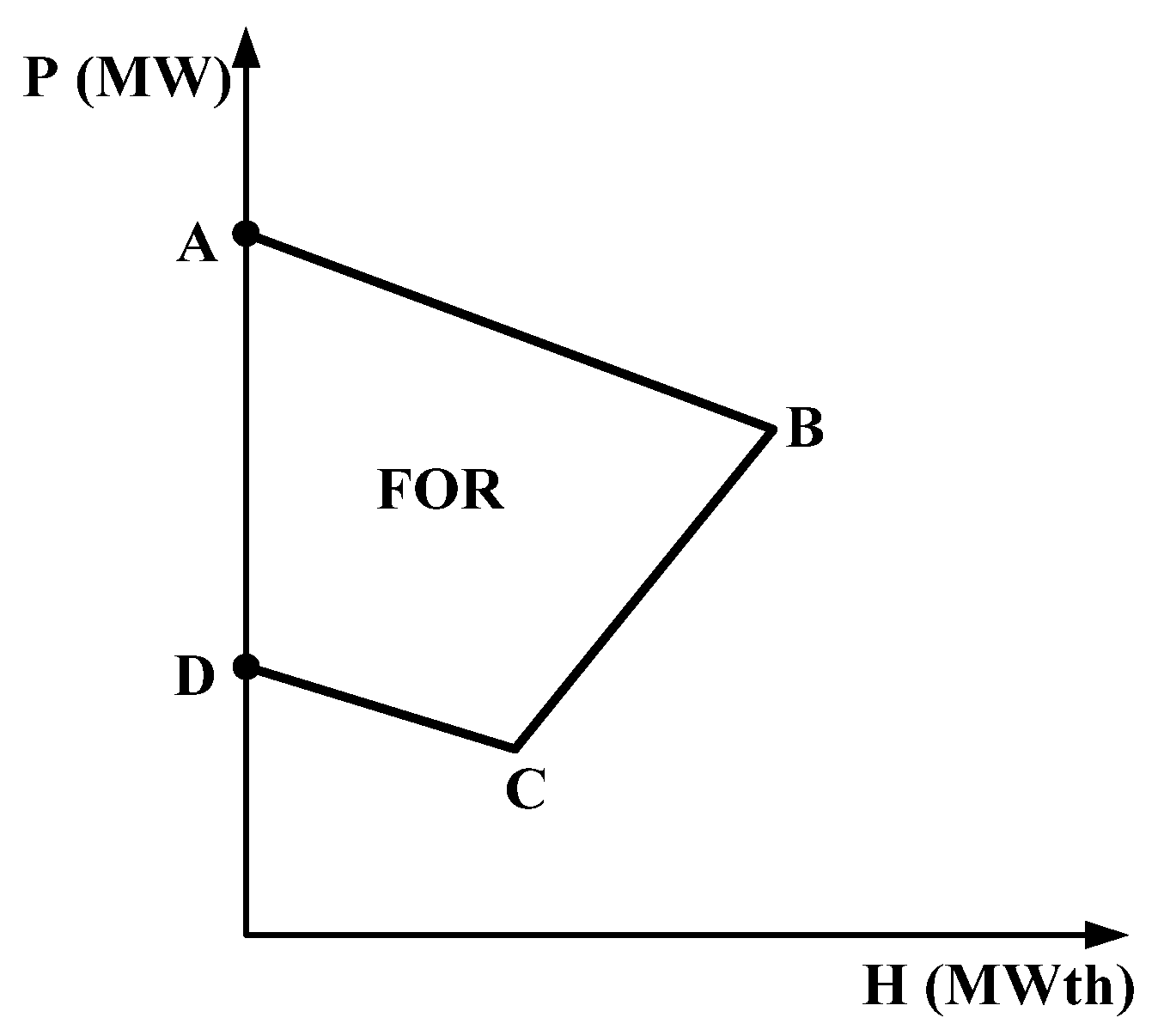
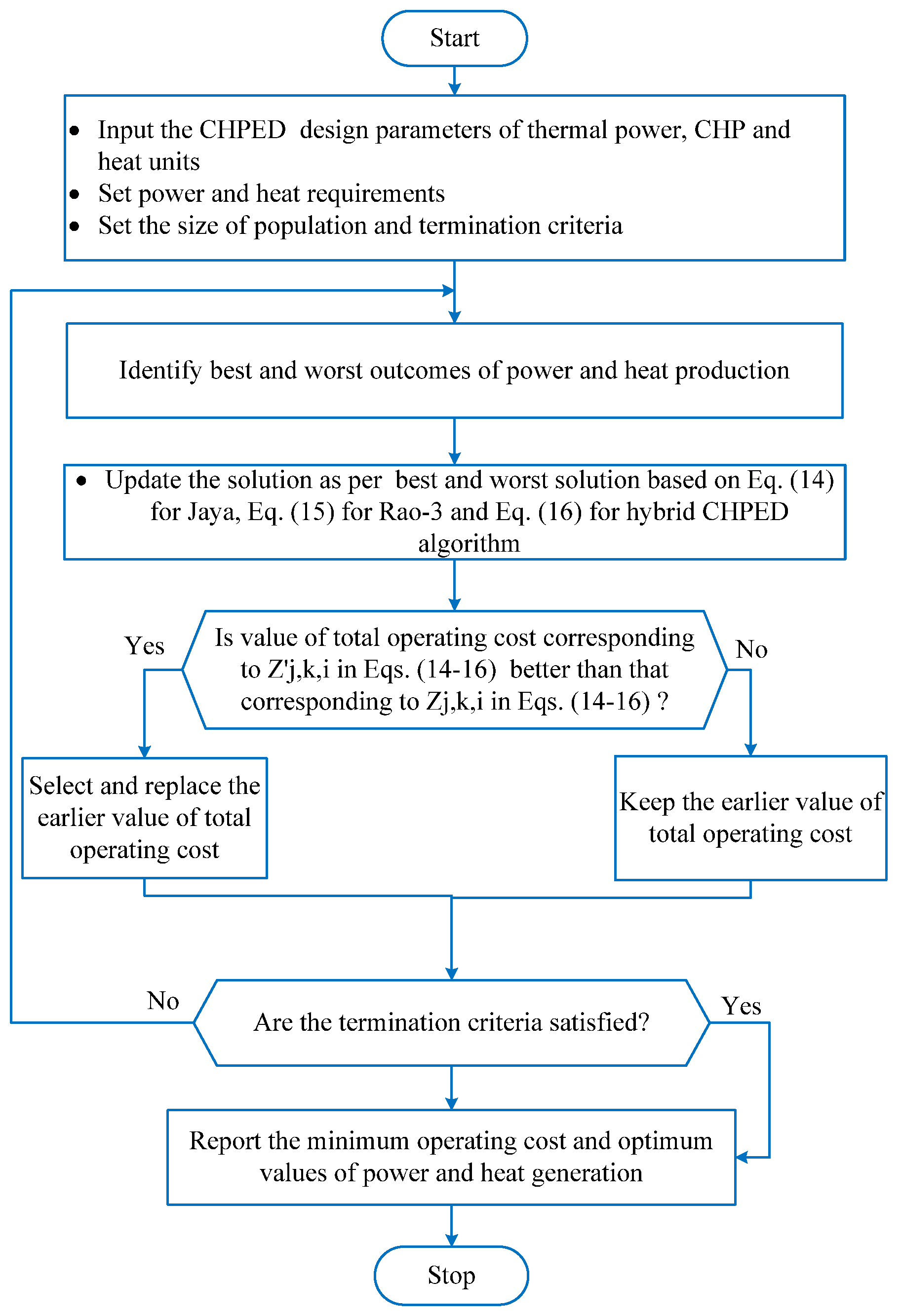
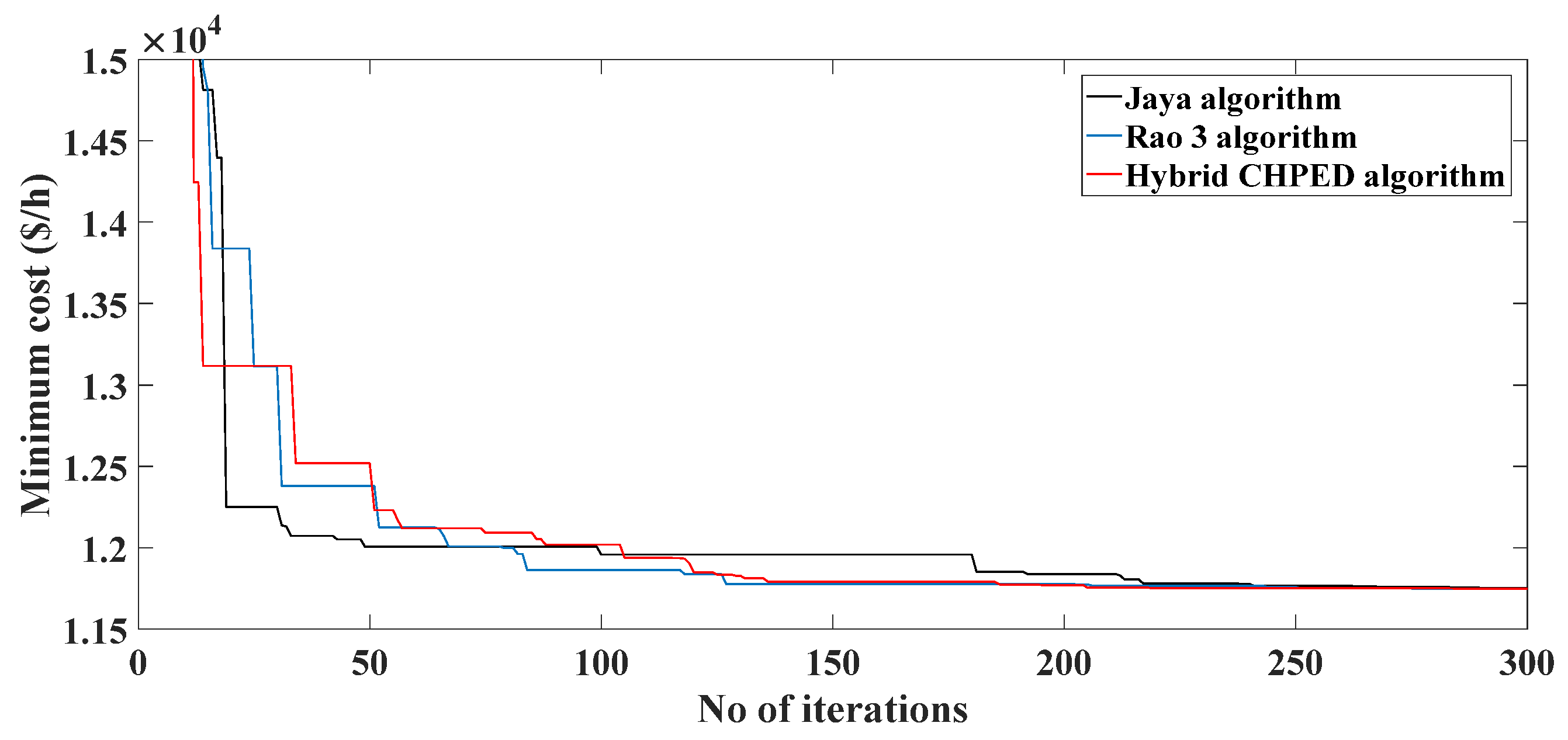
Combined heat and power (CHP) plants have opportunities to work as distributed power generation for providing heat and power demand. Furthermore, CHP plants contribute effectively to overcoming the intermittence of renewable energy sources as well as load dynamics. CHP plants need optimal solution(s) for providing electrical and heat energy demand simultaneously within the smart network environment. CHP or cogeneration plant operations need appropriate techno-economic dispatching of combined heat and power with minimising produced energy cost. The interrelationship between heat and power development in a CHP unit, the valve point loading effect, and forbidden working regions of a thermal power plant make the CHP economic dispatch’s (CHPED) objective function discontinuous. It adds complexity in the CHPED optimisation process. The key objective of the CHPED is operating cost minimisation while meeting the desired power and heat demand. To optimise the dispatch operation, three different algorithms, like Jaya algorithm, Rao 3 algorithm, and hybrid CHPED algorithm (based on first two) are adopted containing different equality and inequality restrictions of generating units. The hybrid CHPED algorithm is developed by the authors, and it can handle all of the constraints. The success of the suggested algorithms is assessed on two test systems; 5-units and 24-unit power plants.
Keywords: combined heat and power economic dispatch (CHP-ED); CHPED optimisation; heat and power dispatching; CHP plants; hybrid CHPED algorithm combined heat and power economic dispatch (CHP-ED); CHPED optimisation; heat and power dispatching; CHP plants; hybrid CHPED algorithm