Article

Developing a Comprehensive Mathematical Model for Aluminium Production in a Soderberg Electrolyser


by
Yury Valeryevich Ilyushin
1,* and
Ekaterina Ivanovna Kapostey
2
1
Dean of the Economics Department, Saint Petersburg Mining University, 199106 Saint Petersburg, Russia
2
System Analysis and Control, Saint Petersburg Mining University, 199106 Saint Petersburg, Russia
*
Author to whom correspondence should be addressed.
Energies 2023, 16(17), 6313; https://doi.org/10.3390/en16176313
Submission received: 1 August 2023 / Revised: 17 August 2023 / Accepted: 25 August 2023 / Published: 30 August 2023
(This article belongs to the Special Issue Data Driven Approaches for Environmental Sustainability 2023)

Abstract

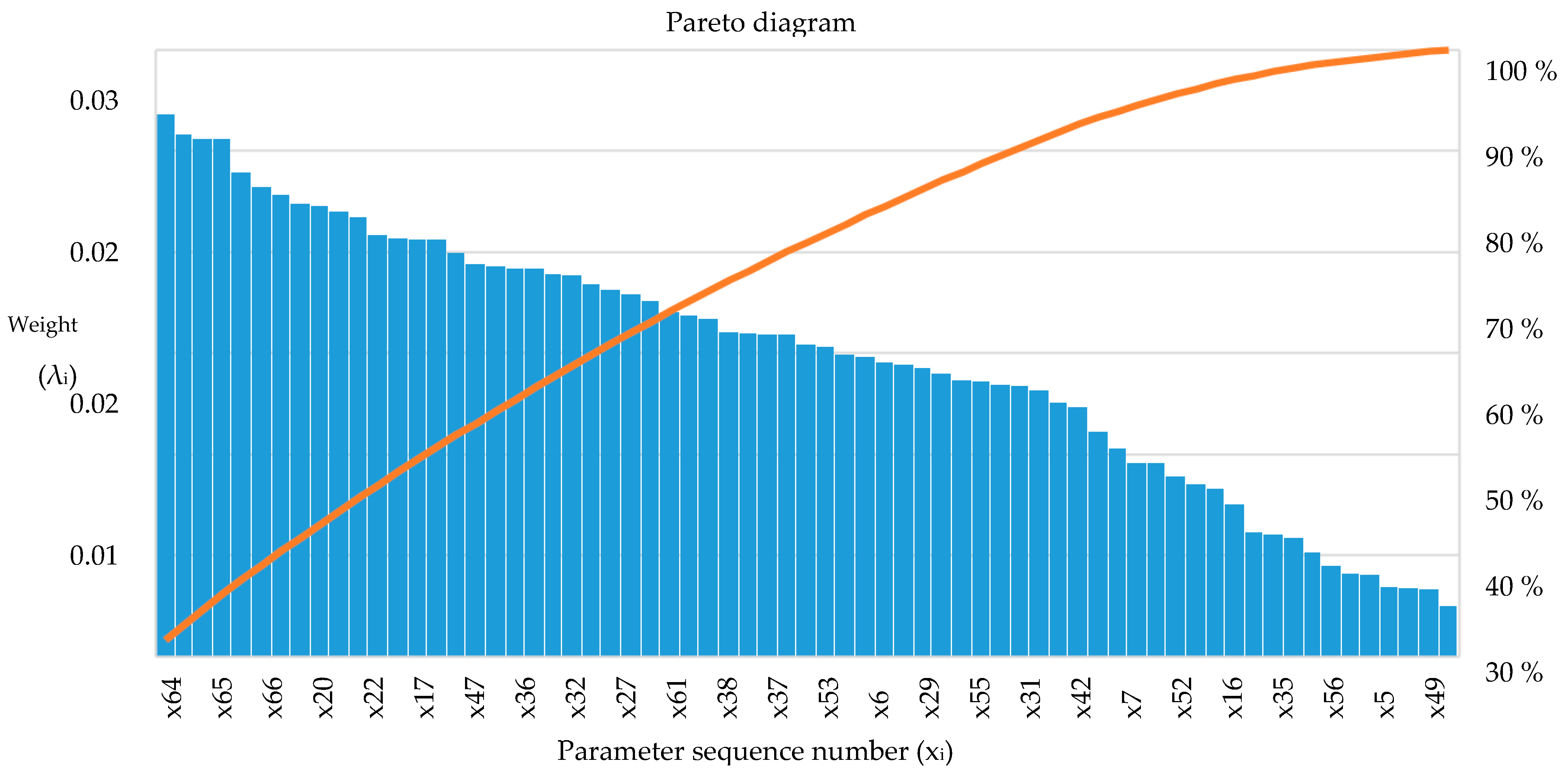
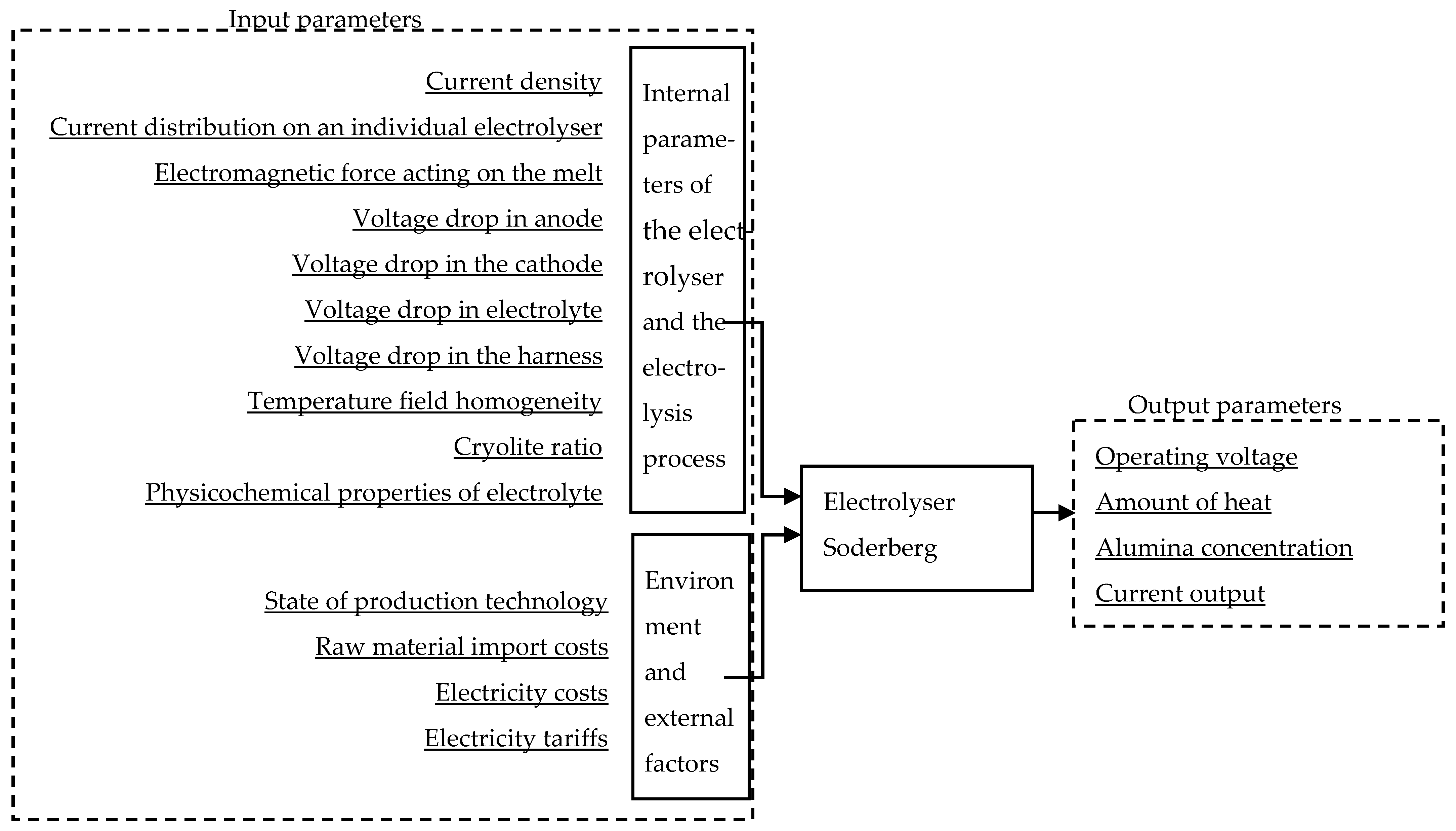
The technological process of aluminium electrolysis is a complex scientific and technical task. This is due to a large number of internal, external and resultant factors. The aim of this work is to analyse these factors, assess them and their influence on the technological process of electrolysis and develop a comprehensive and mathematical model of aluminium production in the Soderberg electrolyser. The work analyses the technological process of primary aluminium production on the basis of the Bayer method and then on the basis of the Hall–Eru method. The existing methods and technologies for computer modelling of the technological process are analysed. The modern methods of analysis for thermal and electromagnetic fields in electrolysers are considered. On the basis of an in-depth analysis, a number of factors influencing the process of primary aluminium production are identified. Using the methods of system analysis to analyse the identified factors, a ranked list of factors according to the degree of influence is obtained. Using the Pareto diagram, we obtain a list of factors with maximum impact. A conceptual model of the technological process is derived. Based on the obtained conceptual model, the mathematical model of the technological process is derived. The conducted research may be useful to specialists in the field of metallurgy for the analysis of the technological processes of primary aluminium production.
Keywords: mathematical model; Soderberg electrolyser; conceptual model of aluminium production; correlation analysis; expert judgement mathematical model; Soderberg electrolyser; conceptual model of aluminium production; correlation analysis; expert judgement