Article

Experimental Study on the Effects of Applied Electric Field on Liquid Infiltration into Hydrophobic Zeolite


1
College of Mechanical Engineering, Xi’an Shiyou University, Xi’an 710065, China
2
Xi’an Key Laboratory of Integrity Evaluation of Highly Difficult and Complex Oil and Gas Wells, Xi’an 710065, China
3
Xi’an Thermal Power Research Institute Co., Ltd., Xi’an 710032, China
*
Authors to whom correspondence should be addressed.
Energies 2023, 16(13), 5065; https://doi.org/10.3390/en16135065
Submission received: 22 May 2023 / Revised: 12 June 2023 / Accepted: 27 June 2023 / Published: 30 June 2023
(This article belongs to the Special Issue Nanomaterials for Advanced Energy Storage and Conversion)

Abstract

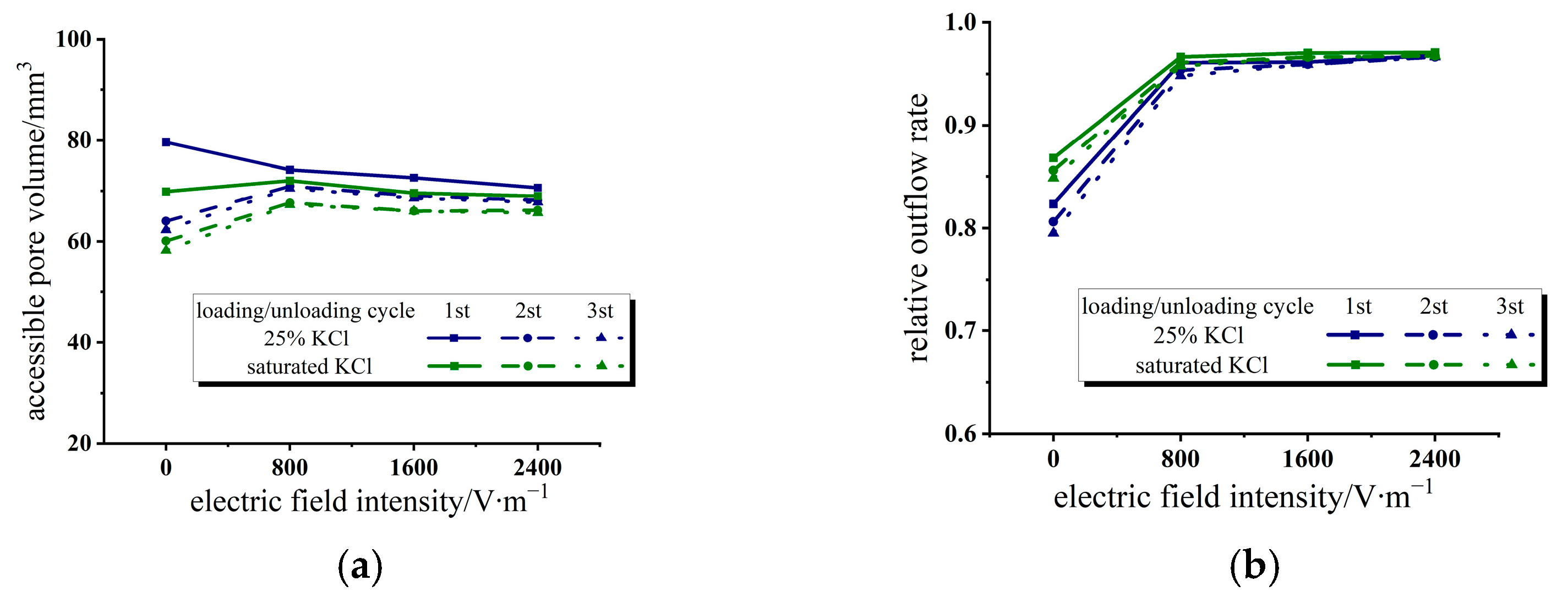
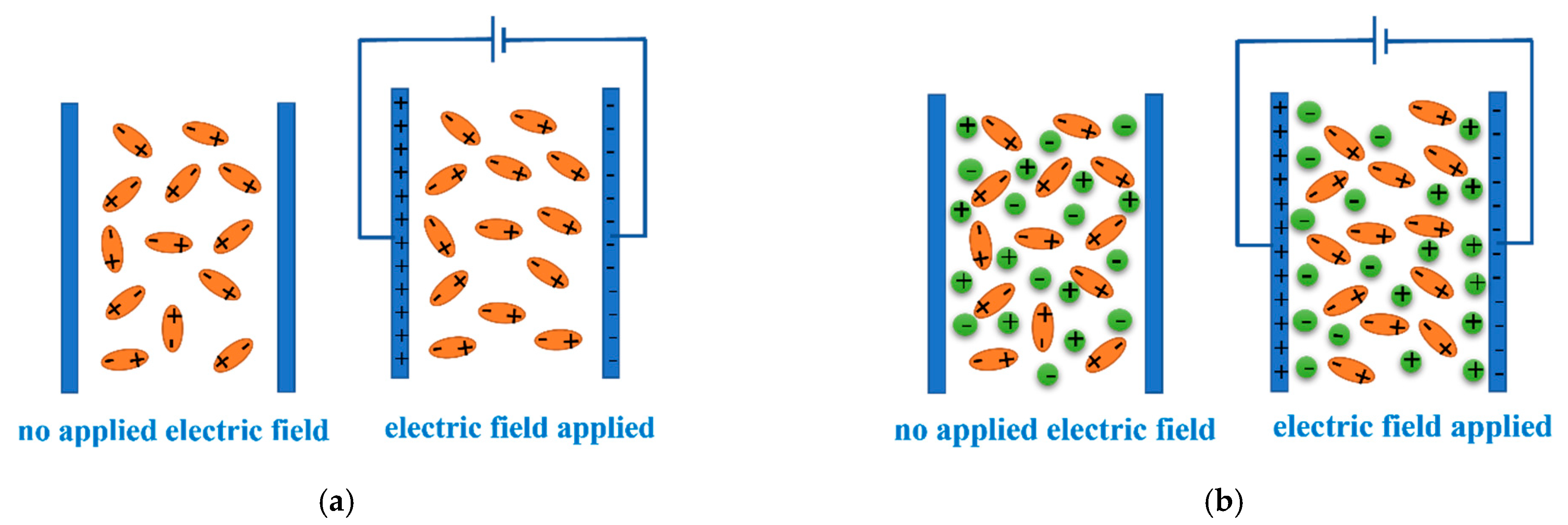
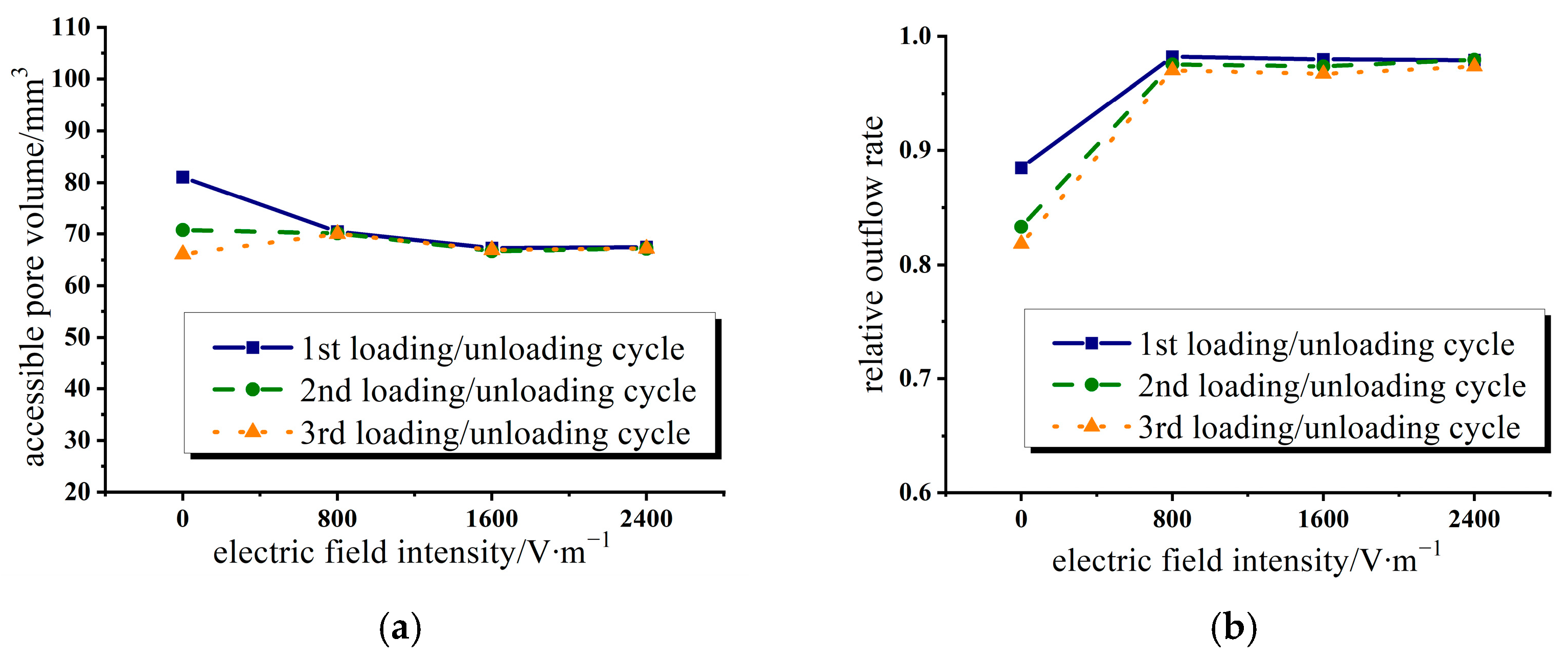
A nanofluidic energy absorption system (NEAS) is composed of nanoporous material and functional liquid with high energy absorption density. Applying an electric field to adjust the energy absorption characteristics of a nanofluidic system will open broader prospects for its application. In the current work, ZSM-5 zeolite was adopted as the nanoporous material and water, a 25% KCl solution, and a saturated KCl solution were adopted as functional liquids to configure NEASs. Pressure-induced infiltration experiments were carried out to study the infiltration and defiltration characteristics of the NEASs under the action of an applied electric field. The results show that the introduction of an applied electric field can weaken the hydrogen bonds between molecules, thus reducing the equivalent surface tension and contact angle, changing the infiltrability of liquid molecules into the nanopores, and reducing the infiltration pressure of the system. In an electrolyte solution/zeolite system, the anions and cations move close to the two plate electrodes under the action of an external electric field, and the fluid properties in the central zone of the pressure chamber are close to the water/zeolite system. For both an ultra-low conductivity liquid and an electrolyte solution/zeolite system, applying an electric field can effectively improve the relative outflow rate of liquid, thus improving the reusability of the system.
Keywords: nanofluidic energy absorption system (NEAS); ZSM-5 zeolite; electrolyte solution; electric field; infiltration pressure nanofluidic energy absorption system (NEAS); ZSM-5 zeolite; electrolyte solution; electric field; infiltration pressure