Article

Multi-Crack Dynamic Interaction Effect on Oil and Gas Pipeline Weld Joints Based on VCCT
1
School of Energy and Power Engineering, University of Shanghai for Science and Technology, Shanghai 200093, China
2
School of Mechanical and Aerospace Engineering, Nanyang Technological University, 50 Nanyang Avenue, Singapore 639798, Singapore
3
School of Mechanical Science and Engineering, Northeast Petroleum University, Daqing 163318, China
4
School of Mechanical and Electrical Engineering, Wenzhou University, Wenzhou 325035, China
*
Authors to whom correspondence should be addressed.
Energies 2022, 15(8), 2812; https://doi.org/10.3390/en15082812
Submission received: 17 March 2022 / Revised: 5 April 2022 / Accepted: 8 April 2022 / Published: 12 April 2022

Abstract

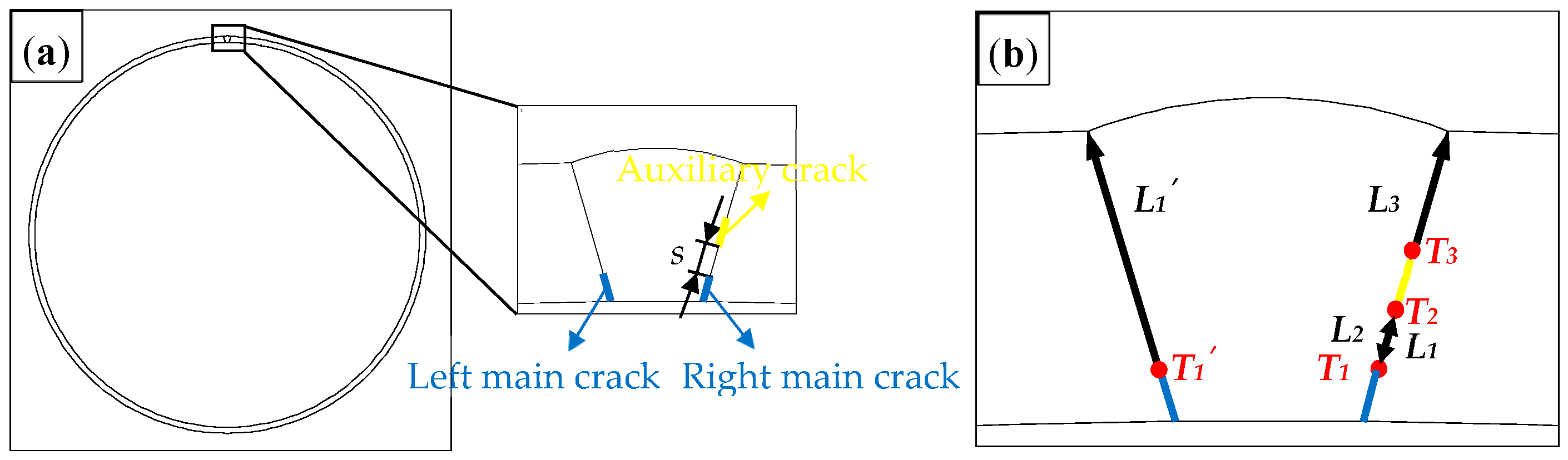
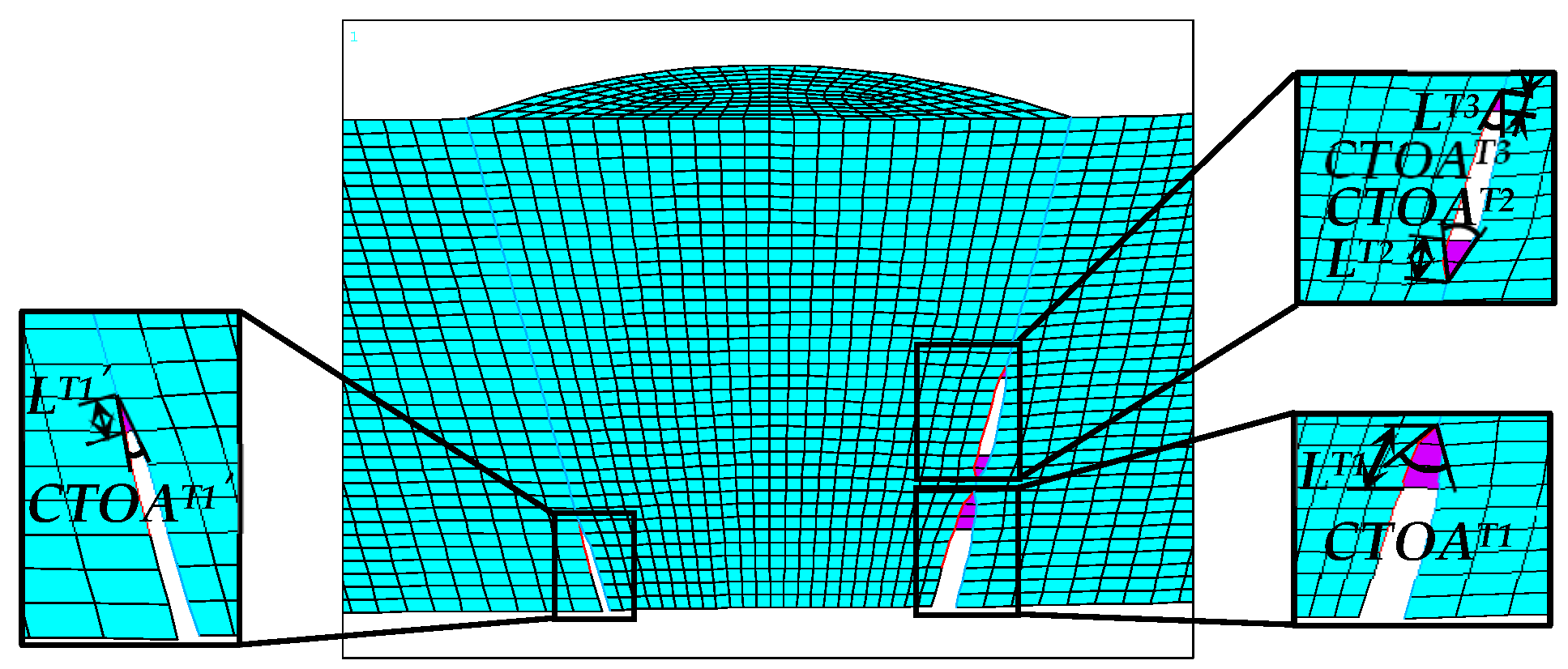
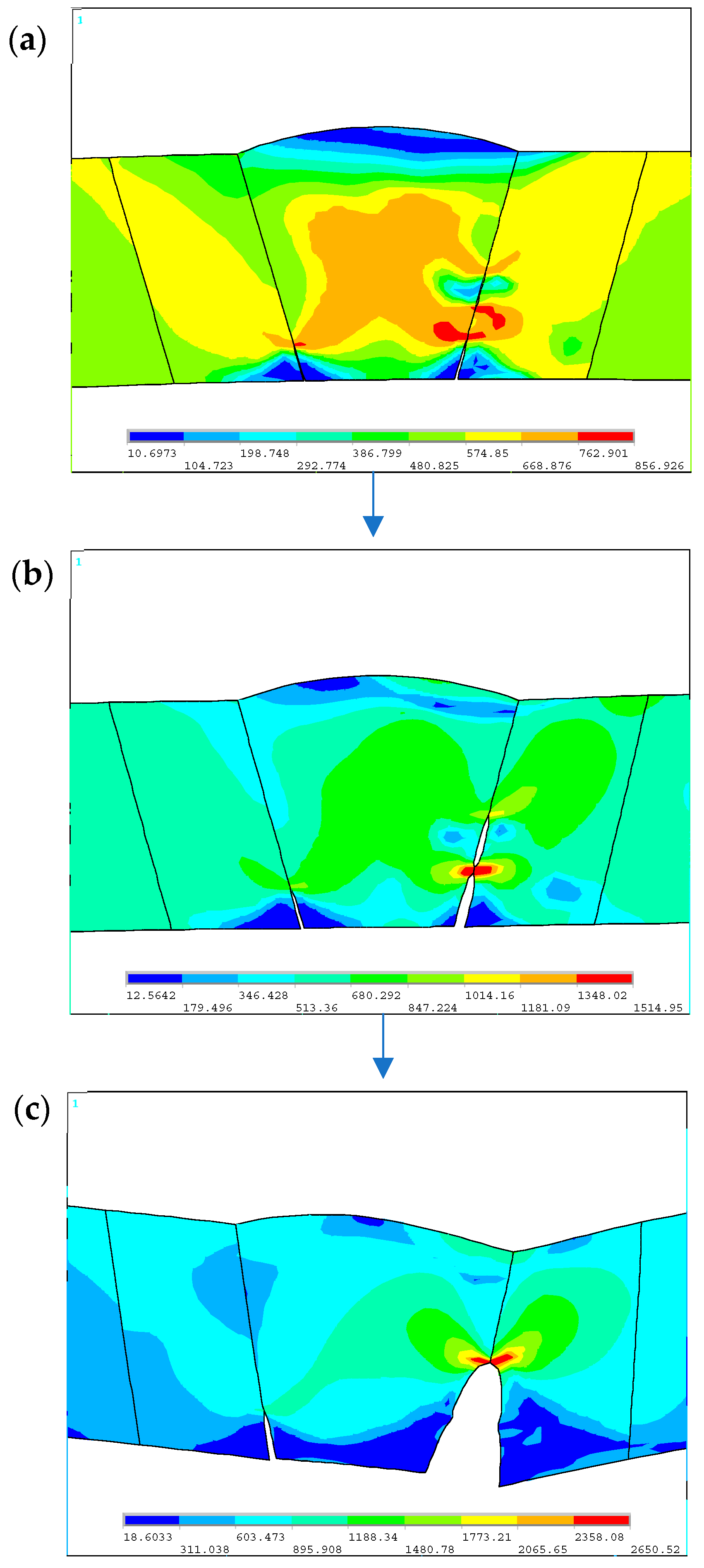
In pipelines for transporting oil and gas, multiple cracks often exist in weld joints. The interaction among the cracks should be considered as it directly affects the life span of the pipeline structures. In the current investigation, based on the fluid–solid magnetic coupling model, the virtual crack-closure technique (VCCT) is applied to systematically study the multi-crack dynamic interaction effect on pipeline welds during the crack propagation process. The results show that the existence of an auxiliary crack accelerates the main crack’s propagation. When the auxiliary crack is nearer to the main crack tip, the enhancement effect of the auxiliary crack on the main crack increases. Further, when the initial length of the auxiliary crack increases, the main crack becomes easier to propagate. Two important parameters, the distance between the two interacting crack tips and the initial size of the auxiliary crack, are studied in detail. Their interference effect on the main crack has been quantified, which is very user-friendly for engineers to conduct failure assessment and prevention for oil and gas pipes with multiple cracks at weld joints.
Keywords: crack propagation; virtual crack-closure technique; magnetic flux leakage method; dynamic interference effect crack propagation; virtual crack-closure technique; magnetic flux leakage method; dynamic interference effect