Article

Differences of Carbon Emission Efficiency in the Belt and Road Initiative Countries
School of Economics and Management, Beijing University of Technology, Beijing 100124, China
*
Author to whom correspondence should be addressed.
Energies 2022, 15(4), 1576; https://doi.org/10.3390/en15041576
Submission received: 20 January 2022 / Revised: 10 February 2022 / Accepted: 17 February 2022 / Published: 21 February 2022
(This article belongs to the Collection Energy Transition Towards Carbon Neutrality)

Abstract

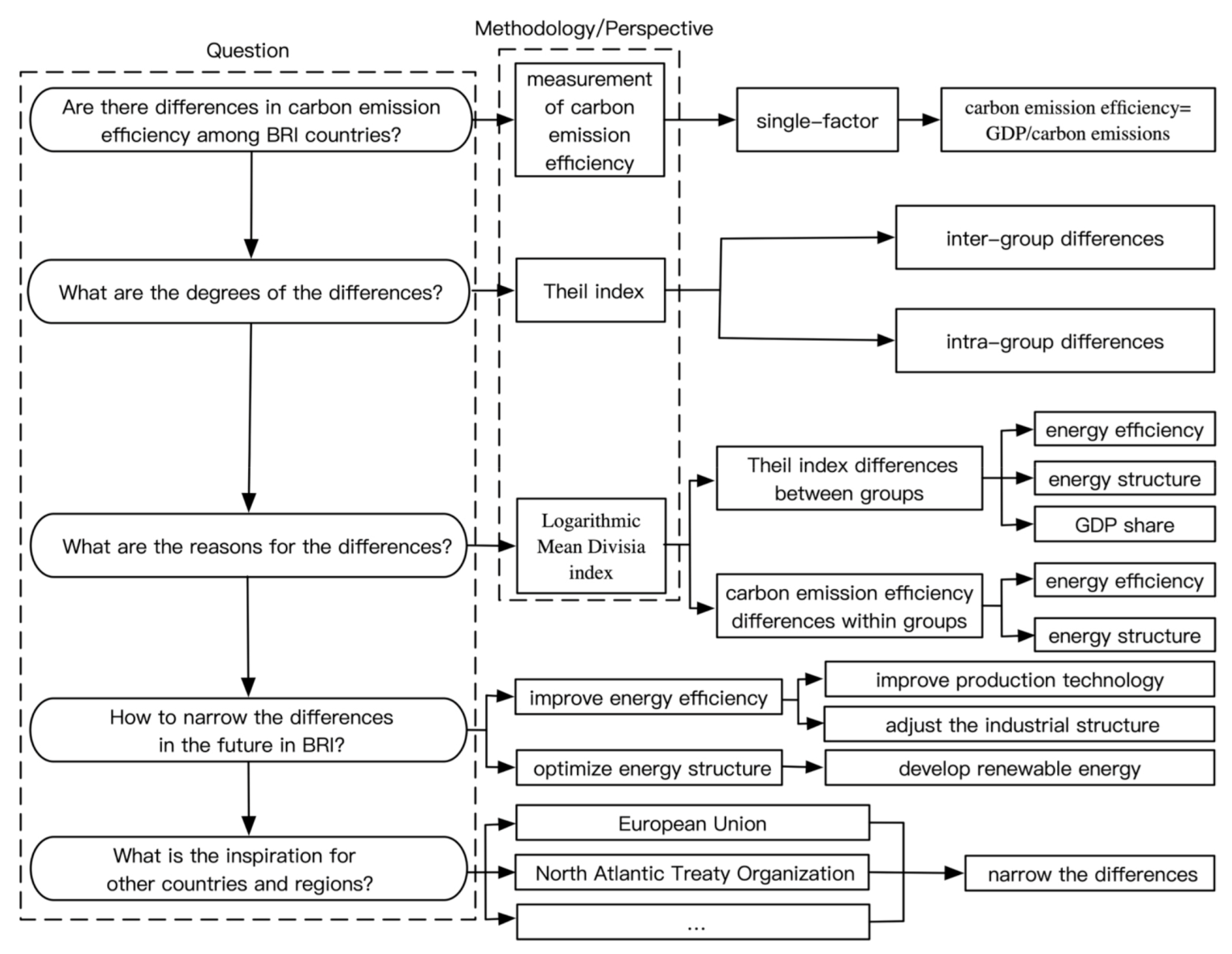
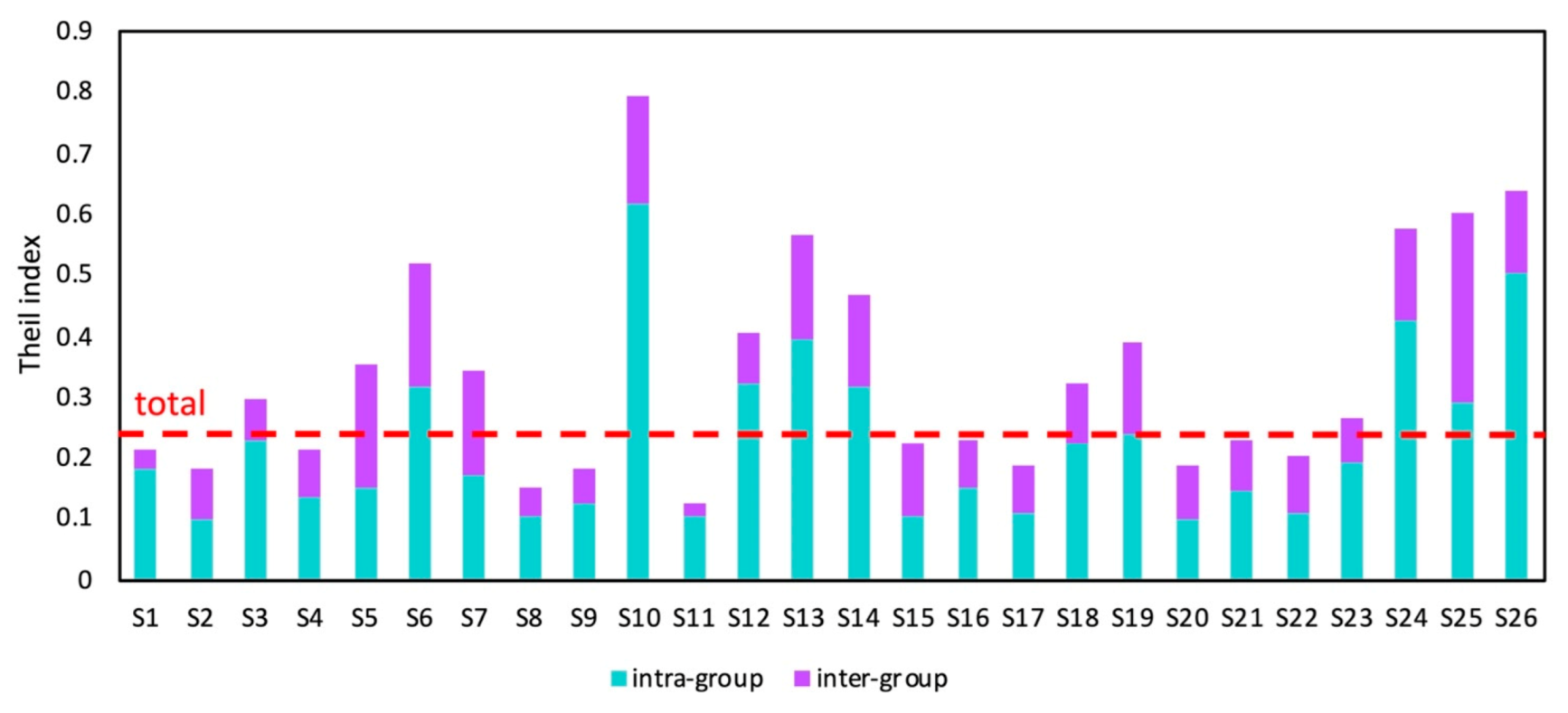
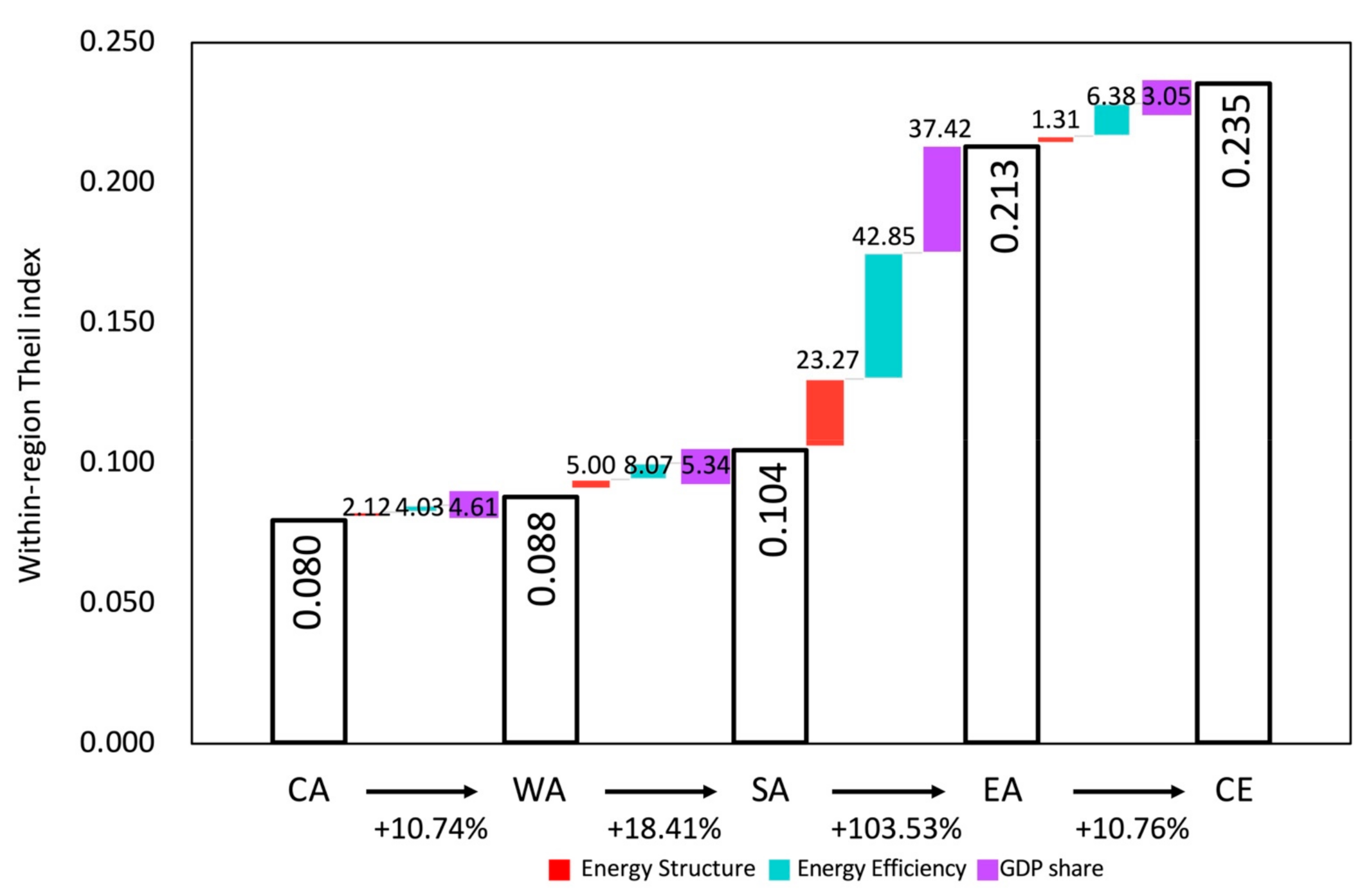
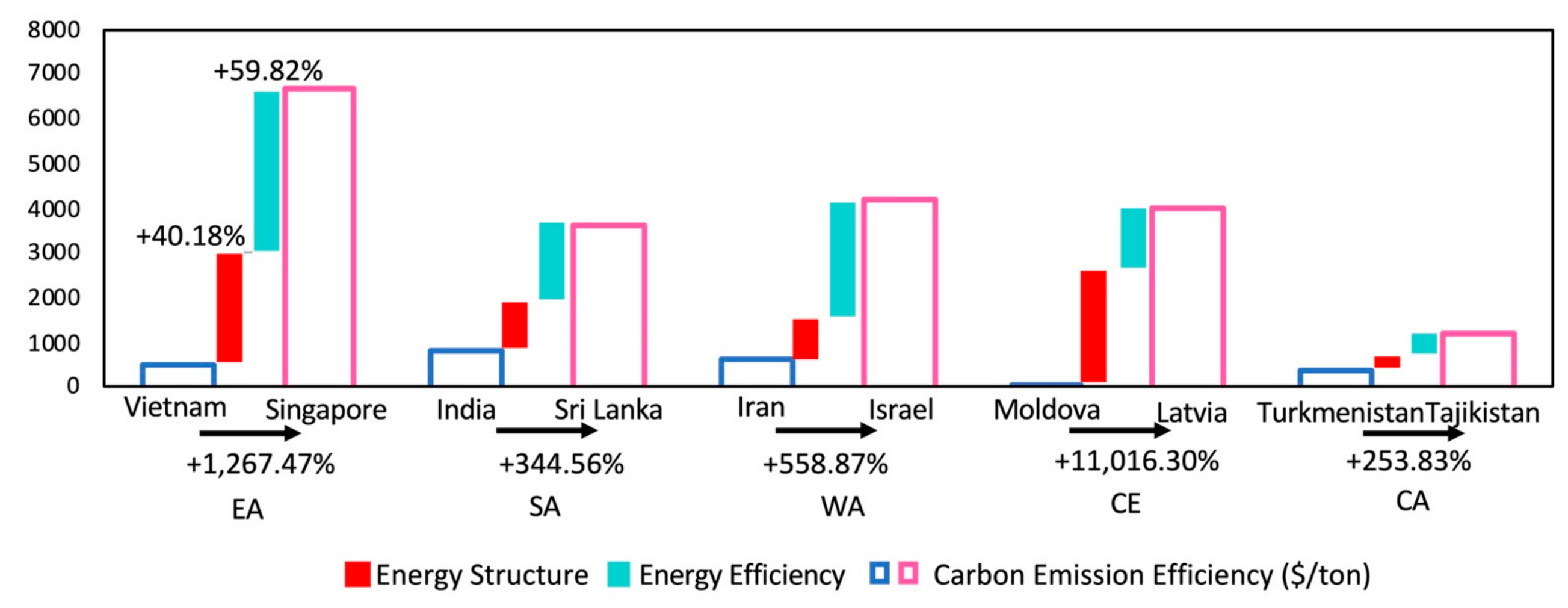
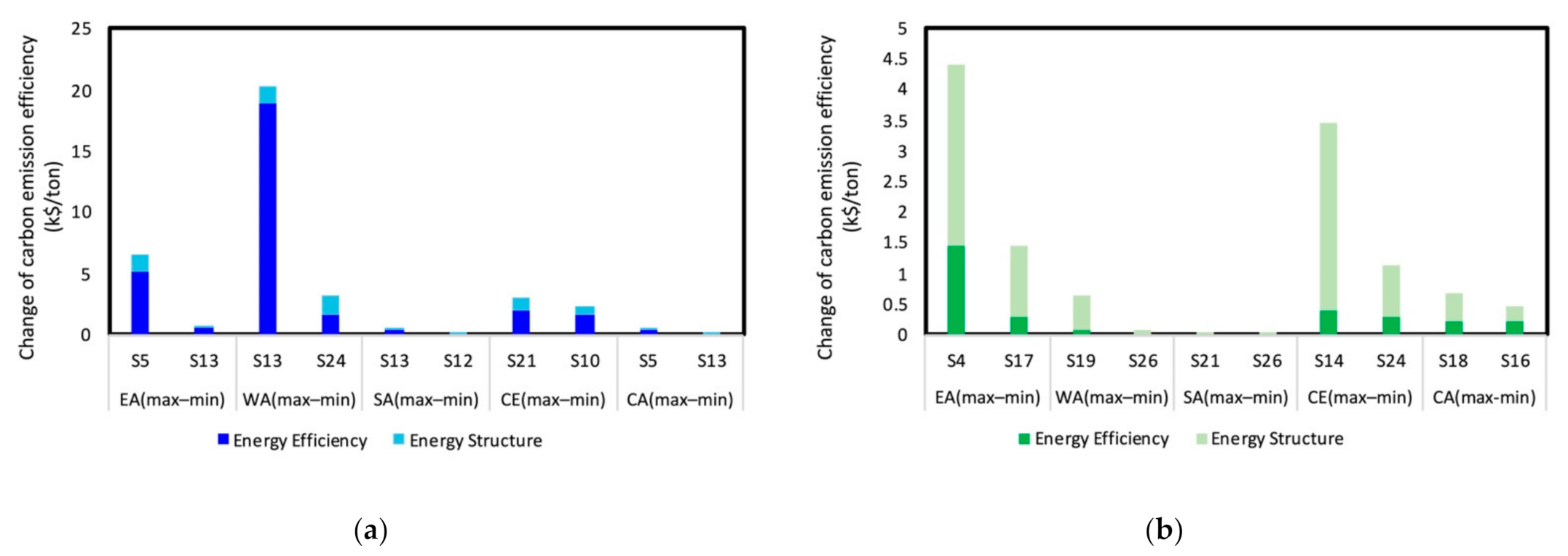
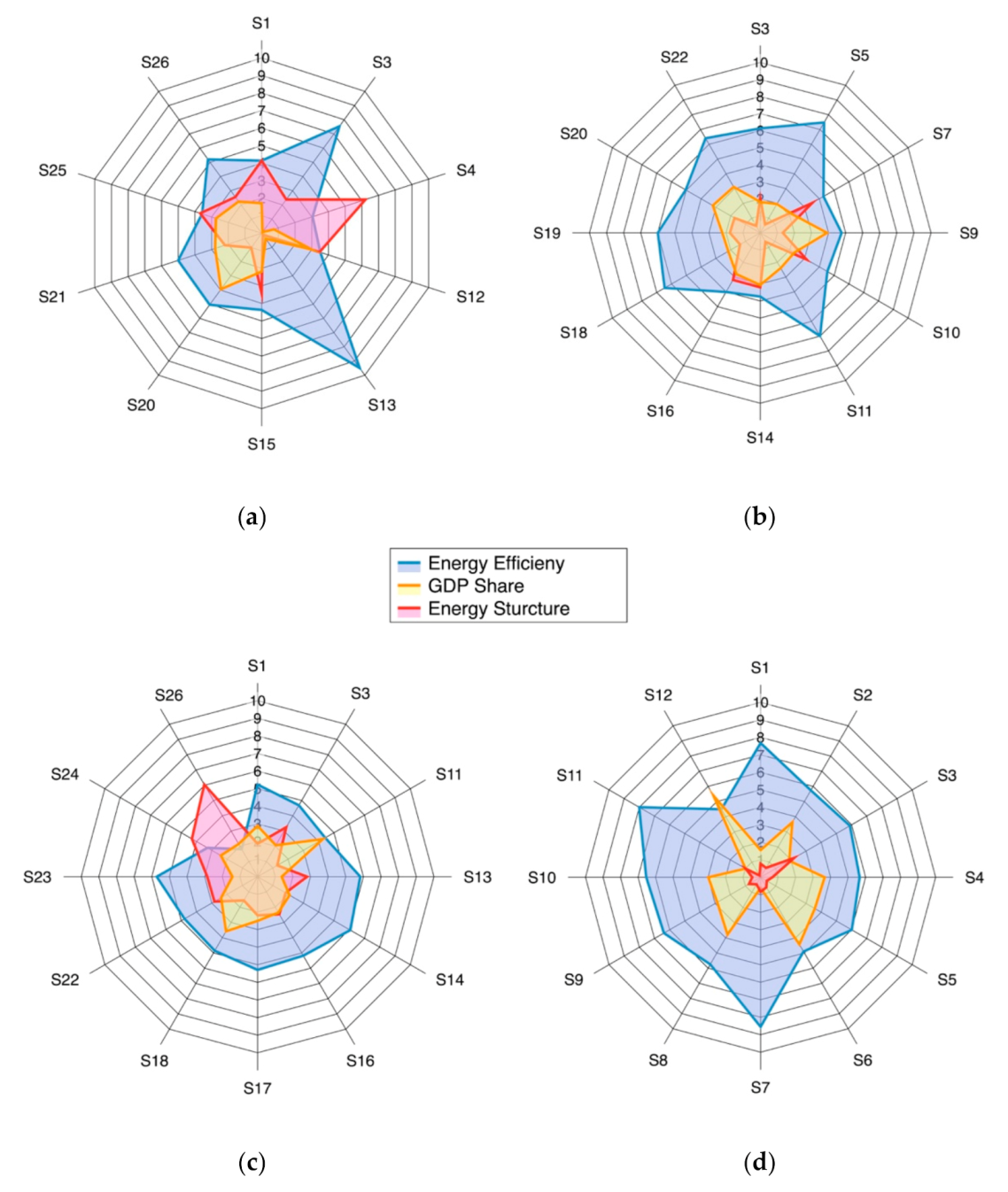
Carbon emission efficiency, which is mainly affected by economic output, energy efficiency and energy structure, is the effect of carbon emissions generated in economic activities. Improving carbon emission efficiency and narrowing regional differences are very important for green development in Belt and Road Initiative regions with developing countries as the main body. The existing literature mostly uses the Theil index to study the temporal differences in carbon emission efficiency, but spatial differences and the reasons for the differences have rarely been examined. This paper measures the differences of carbon emission efficiency using the Theil index and examines the reasons based on the Logarithmic Mean Divisia index (LMDI) method in five groups of 60 Belt and Road Initiative countries. The results show that the Theil index of carbon emission efficiency in these countries is 0.196, with an intra-group difference of 0.165 and an inter-group difference of 0.031. Between most of the groups, energy efficiency is the dominant factor affecting carbon emission efficiency differences, especially between East Asia and Central and Eastern Europe, South Asia and East Asia. Between most of the countries with the highest and lowest carbon emission efficiency in the same group, such as Singapore and Vietnam in East Asia, energy efficiency is still the primary factor affecting the differences. Only some differences between a few groups, countries and sectors have been caused mainly by energy structures. Therefore, improving energy efficiency is the first way for those countries with low carbon emission efficiency to catch up other countries with high carbon emission efficiency, followed by improving the energy structure.
Keywords: differences; carbon emission efficiency; the Theil index; the Logarithmic Mean Divisia index; the Belt and Road Initiative differences; carbon emission efficiency; the Theil index; the Logarithmic Mean Divisia index; the Belt and Road Initiative