Article

Clustering Techniques for Secondary Substations Siting
1
Department of Energy, Politecnico di Milano, 20156 Milano, Italy
2
Dipartimento Ambiente Costruzioni e Design, SUPSI, 6952 Canobbio, Switzerland
*
Author to whom correspondence should be addressed.
Energies 2021, 14(4), 1028; https://doi.org/10.3390/en14041028
Submission received: 13 January 2021 / Revised: 2 February 2021 / Accepted: 8 February 2021 / Published: 16 February 2021

Abstract

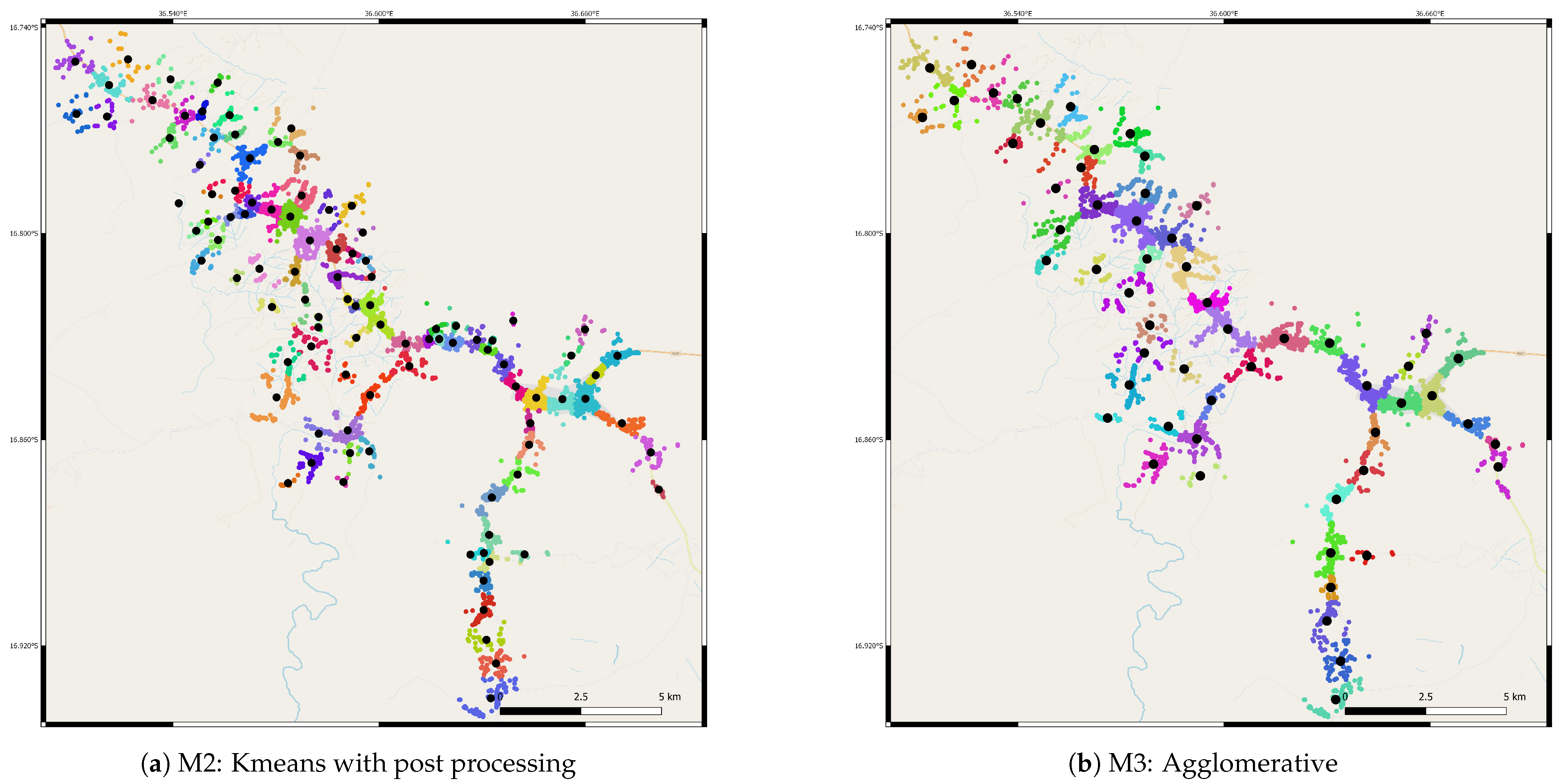
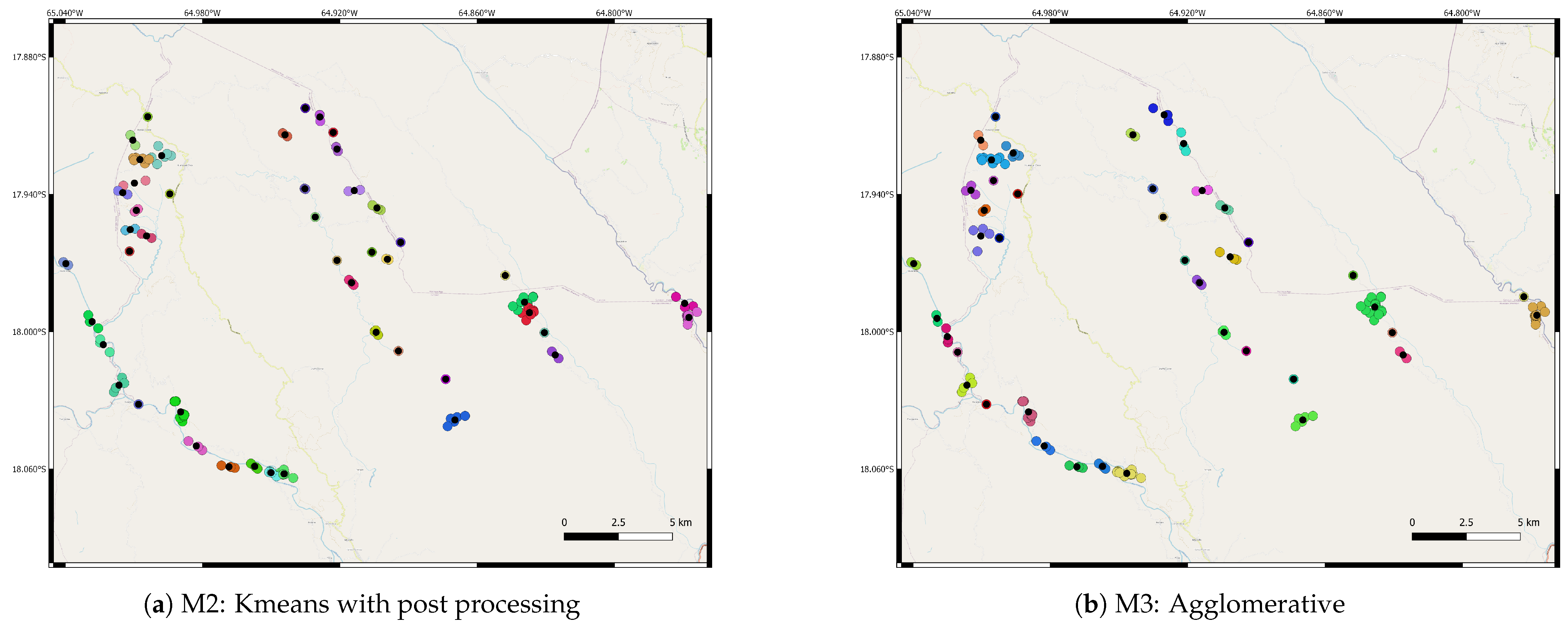
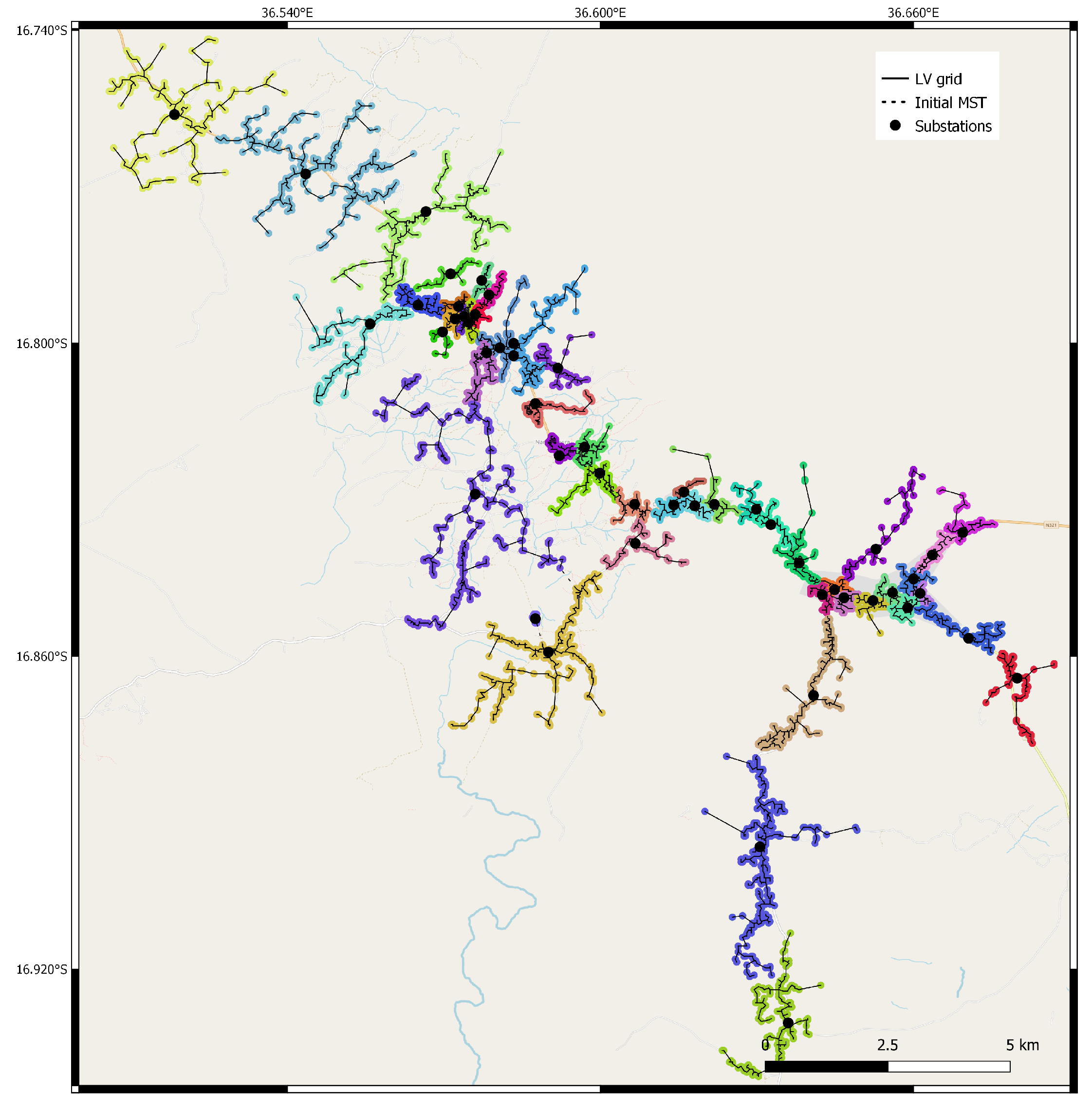
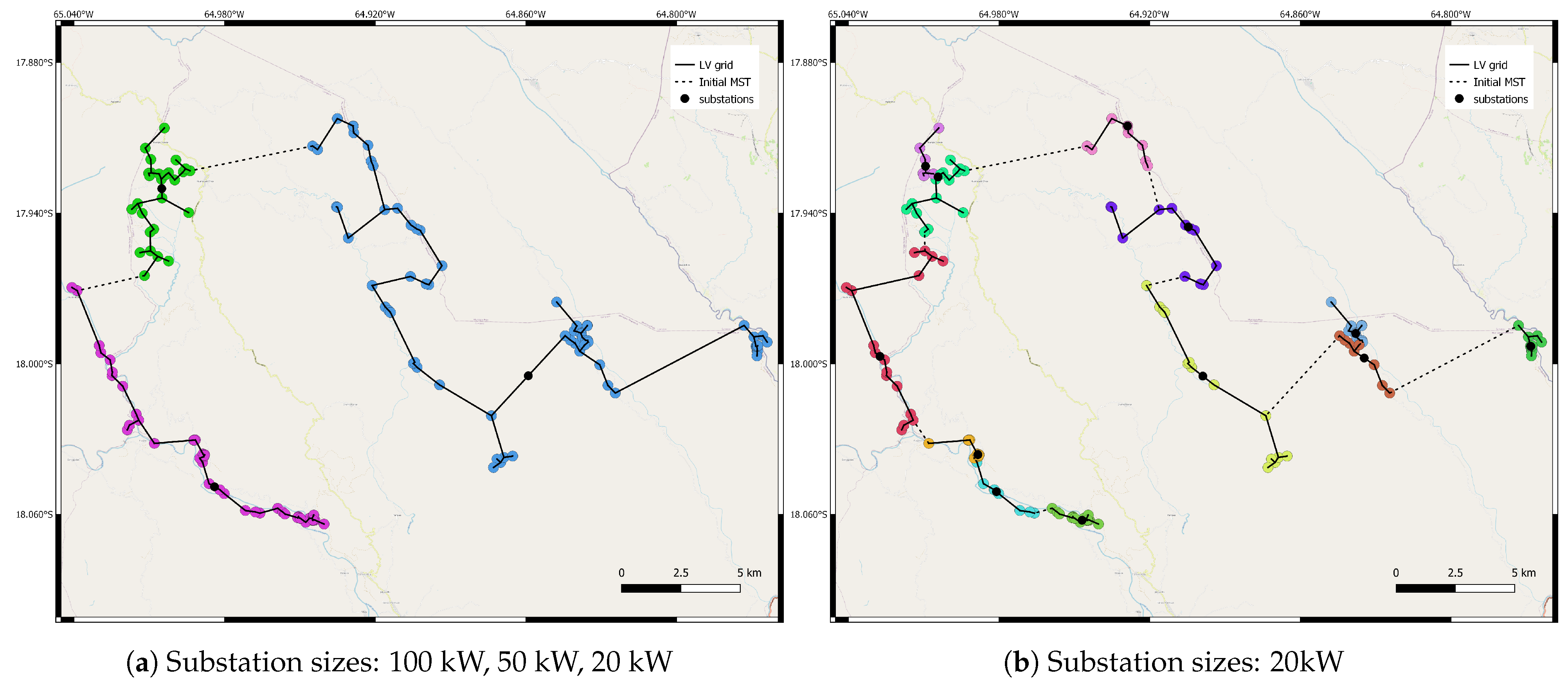
The scientific community is active in developing new models and methods to help reach the ambitious target set by UN SDGs7: universal access to electricity by 2030. Efficient planning of distribution networks is a complex and multivariate task, which is usually split into multiple subproblems to reduce the number of variables. The present work addresses the problem of optimal secondary substation siting, by means of different clustering techniques. In contrast with the majority of approaches found in the literature, which are devoted to the planning of MV grids in already electrified urban areas, this work focuses on greenfield planning in rural areas. K-means algorithm, hierarchical agglomerative clustering, and a method based on optimal weighted tree partitioning are adapted to the problem and run on two real case studies, with different population densities. The algorithms are compared in terms of different indicators useful to assess the feasibility of the solutions found. The algorithms have proven to be effective in addressing some of the crucial aspects of substations siting and to constitute relevant improvements to the classic K-means approach found in the literature. However, it is found that it is very challenging to conjugate an acceptable geographical span of the area served by a single substation with a substation power high enough to justify the installation when the load density is very low. In other words, well known standards adopted in industrialized countries do not fit with developing countries’ requirements.
Keywords: rural electrification; secondary substations; clustering; sustainable development; optimization rural electrification; secondary substations; clustering; sustainable development; optimization