Effect of P2G on Flexibility in Integrated Power-Natural Gas-Heating Energy Systems with Gas Storage


Abstract
1. Introduction
2. Optimal Operation Model of Integrated Power-Natural Gas-Heating Energy Systems with P2G and Gas Storage
2.1. Gas Supplied for Heating and Gas Turbines
2.2. Gas Flowing out of P2G
2.3. Relationship between Gas Flow of Pipelines and Gas Pressure of Gas Nodes
2.4. Gas Consumed by Compressors
2.5. Optimal Economic/Environmental Dispatch of Integrated Power-Natural Gas-Heating Energy Systems with P2G and Gas Storage
2.5.1. Objectives
2.5.2. Constraints
3. Flexibility Assessment Model of Integrated Power-Natural Gas-Heating Energy Systems with P2G and Gas Storage
3.1. Flexibility Metric
3.1.1. Case 1: Only Gas Demand/Heating Demand at Pipeline k
3.1.2. Case 2: Only Gas Storage at Pipeline k
3.1.3. Case 3: Only Gas Turbine at Pipeline k
3.1.4. Case 4: Gas Demand/Heating Demand and Gas Storage at Pipeline k
3.1.5. Case 5: Gas Demand/Heating Demand and Gas Turbine at Pipeline k
3.1.6. Case 6: Gas Storage and Gas Turbine at Pipeline k
3.1.7. Case 7: Gas Demand/Heating Demand, Gas Storage and Gas Turbine at Pipeline k
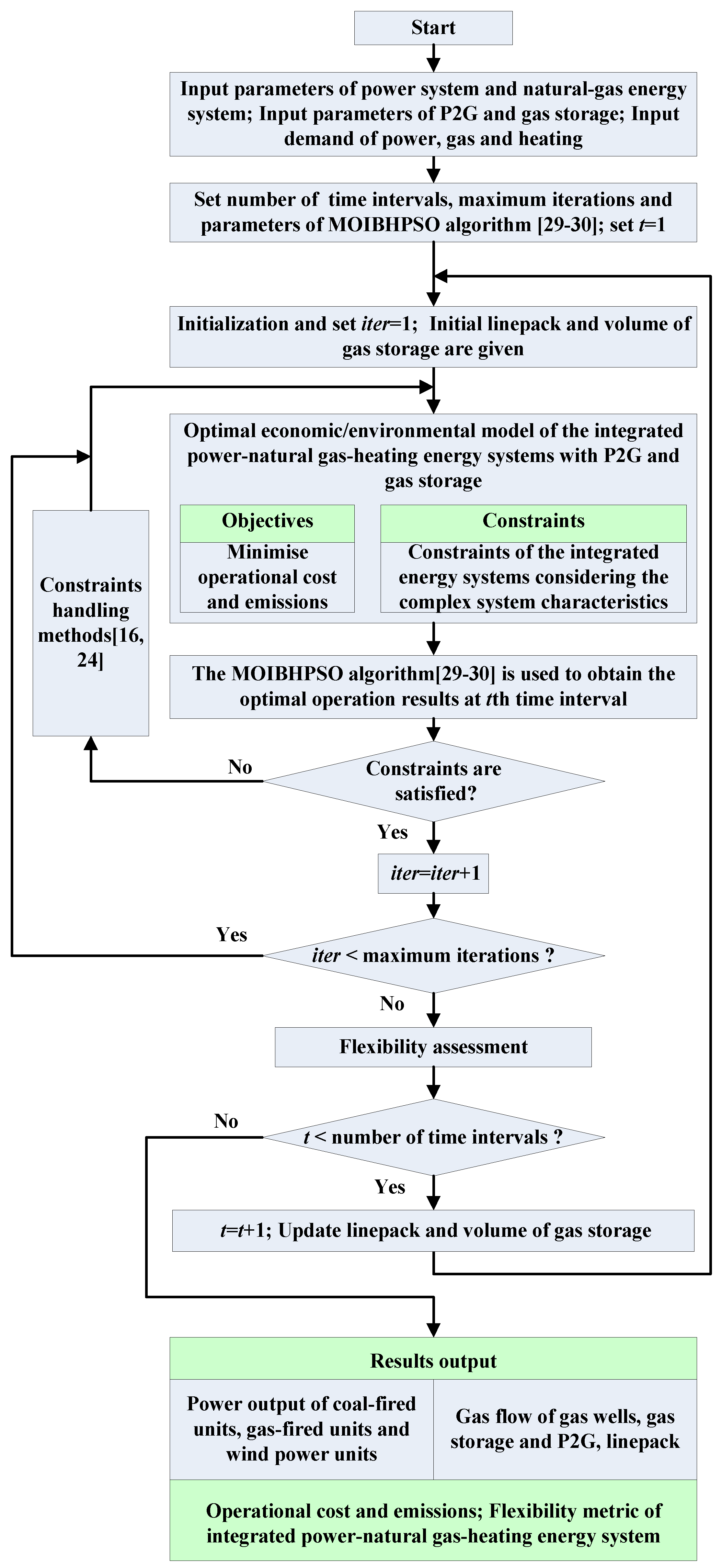
3.2. Flow Chart
4. Case Studies
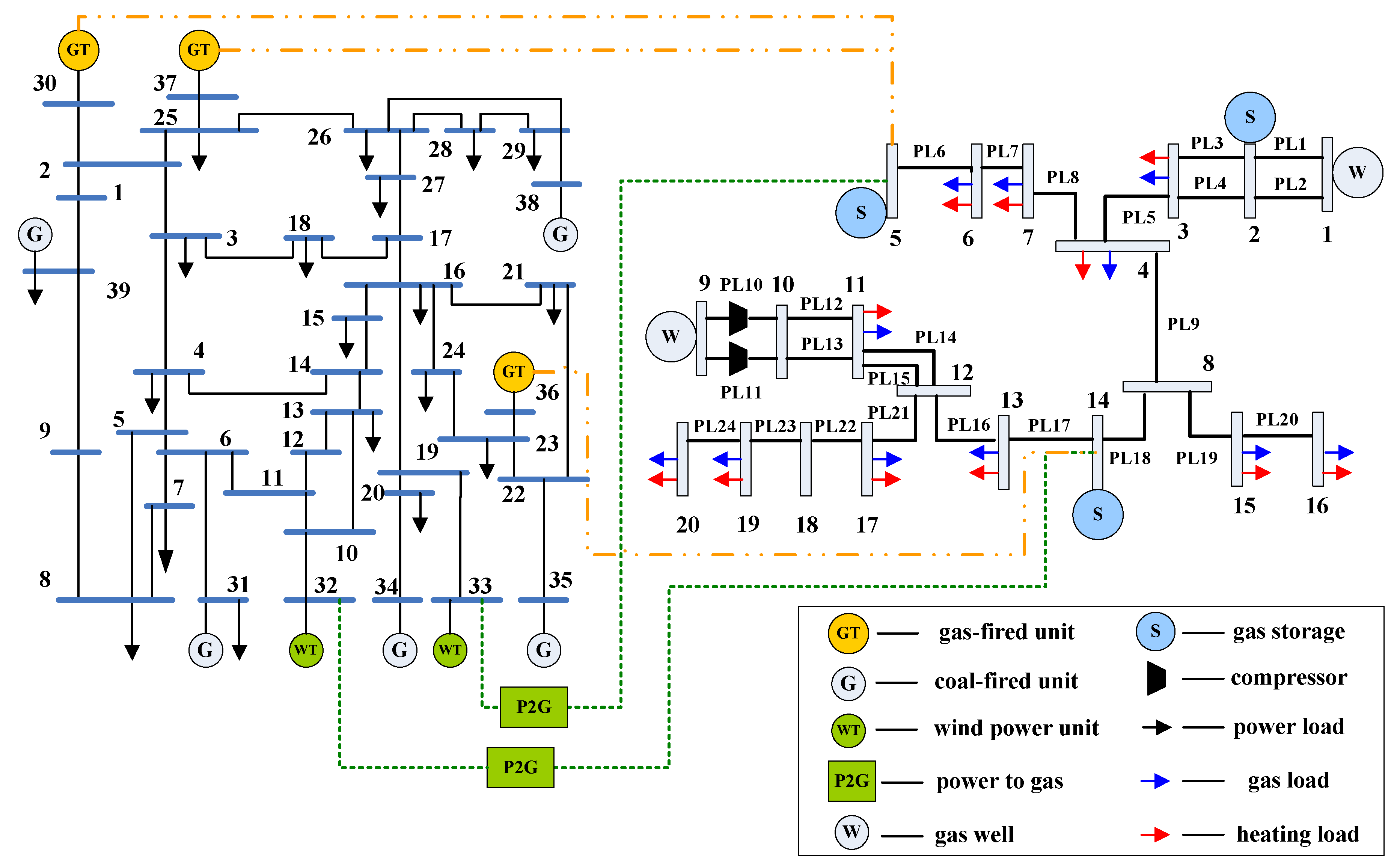
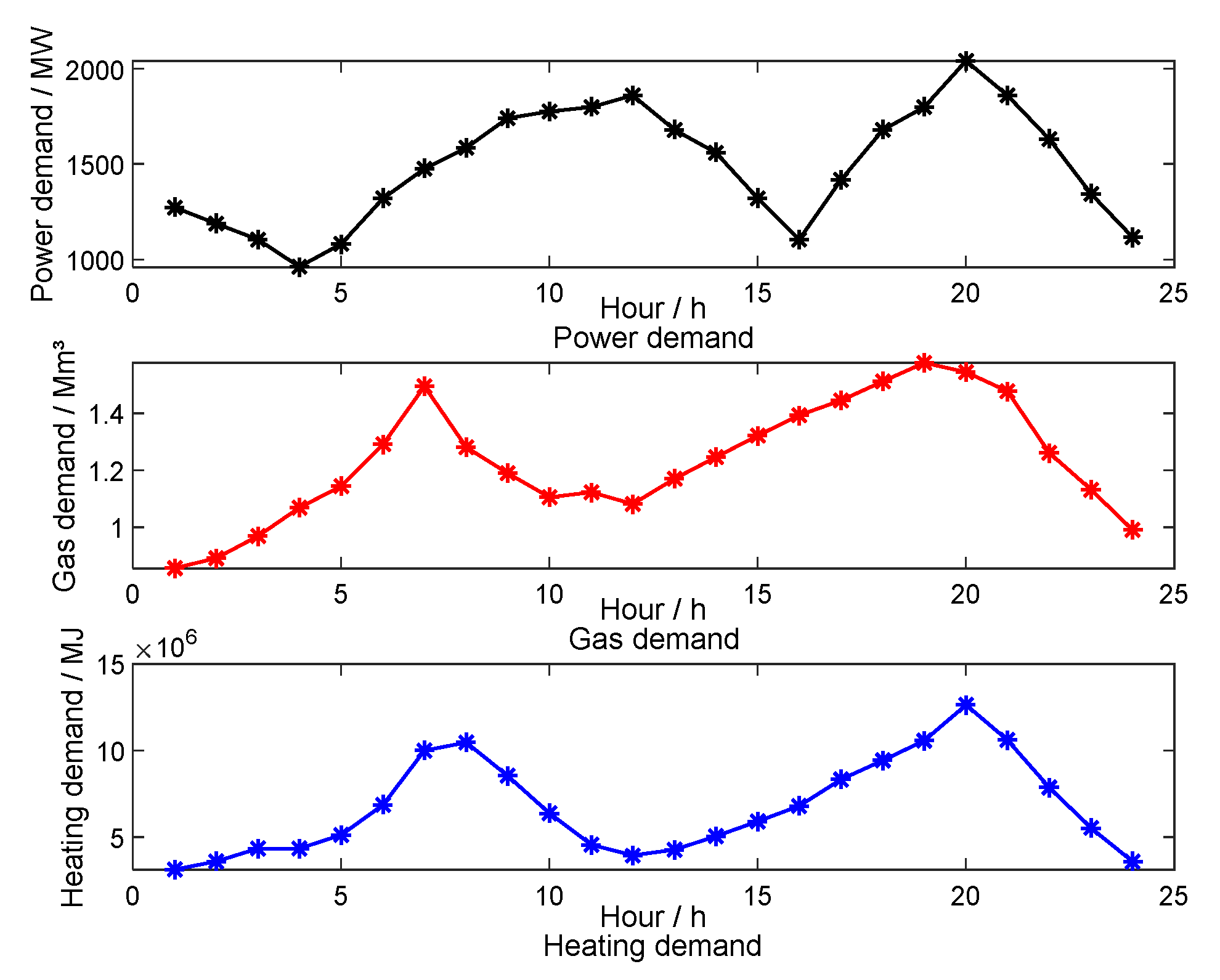
4.1. Description of Case Studies
4.2. Analysis of Simulation Results
4.2.1. Effects of P2G on Operation of Integrated Power-Natural Gas-Heating Energy Systems
- (1)
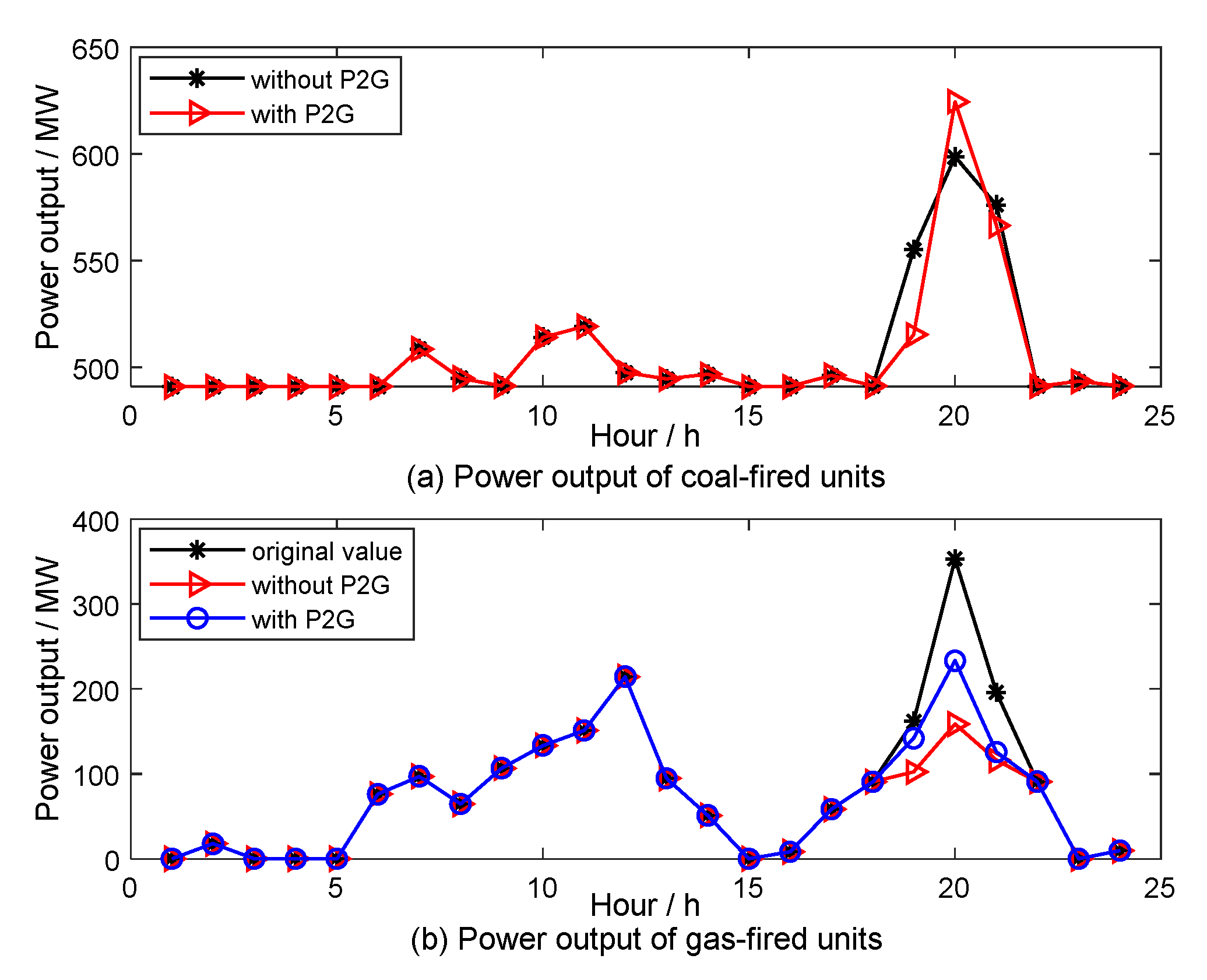
- The total operational cost declined by $7000 and SOx emissions decreased by 790 kg. The main reasons for the decrease in operational cost are the injection of gas produced by P2G to gas network and thus the reduction of gas from gas wells. The main reason for the reduction of SOx emissions is the decrease of power output of coal-fired units. More specifically, the power output of coal-fired units is increased by 25.895MW at 20:00 but decreased by 39.938 MW and 9.760 MW at 19:00 and 21:00, respectively. In general, the power output of coal-fired units is declined when P2G is taken into account and thus SOx emissions are decreased accordingly.
- (2)
- CO2 is reduced by 620 ton due to the reduction of gas flow of gas wells and absorption of CO2 by methanation process.
- (3)
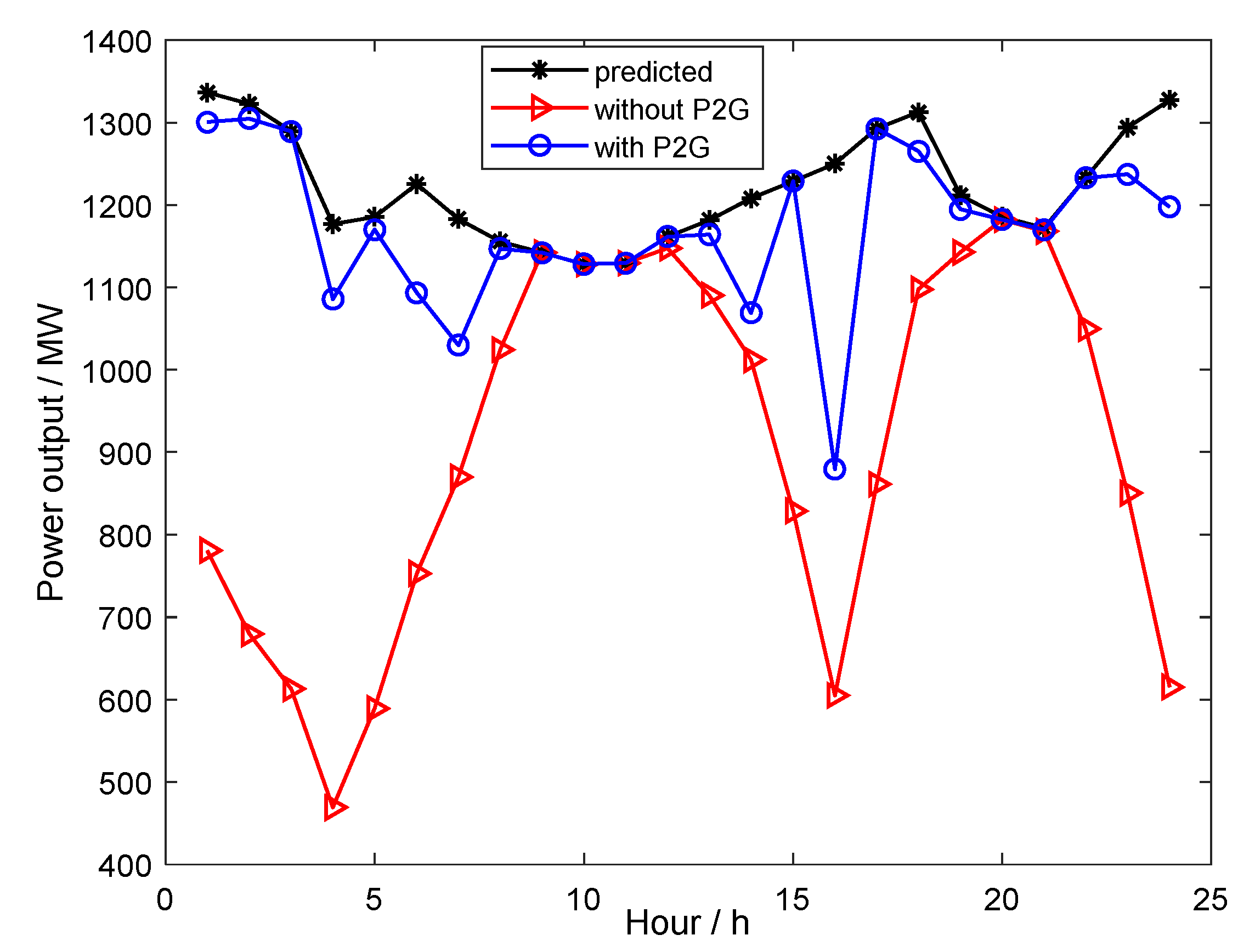
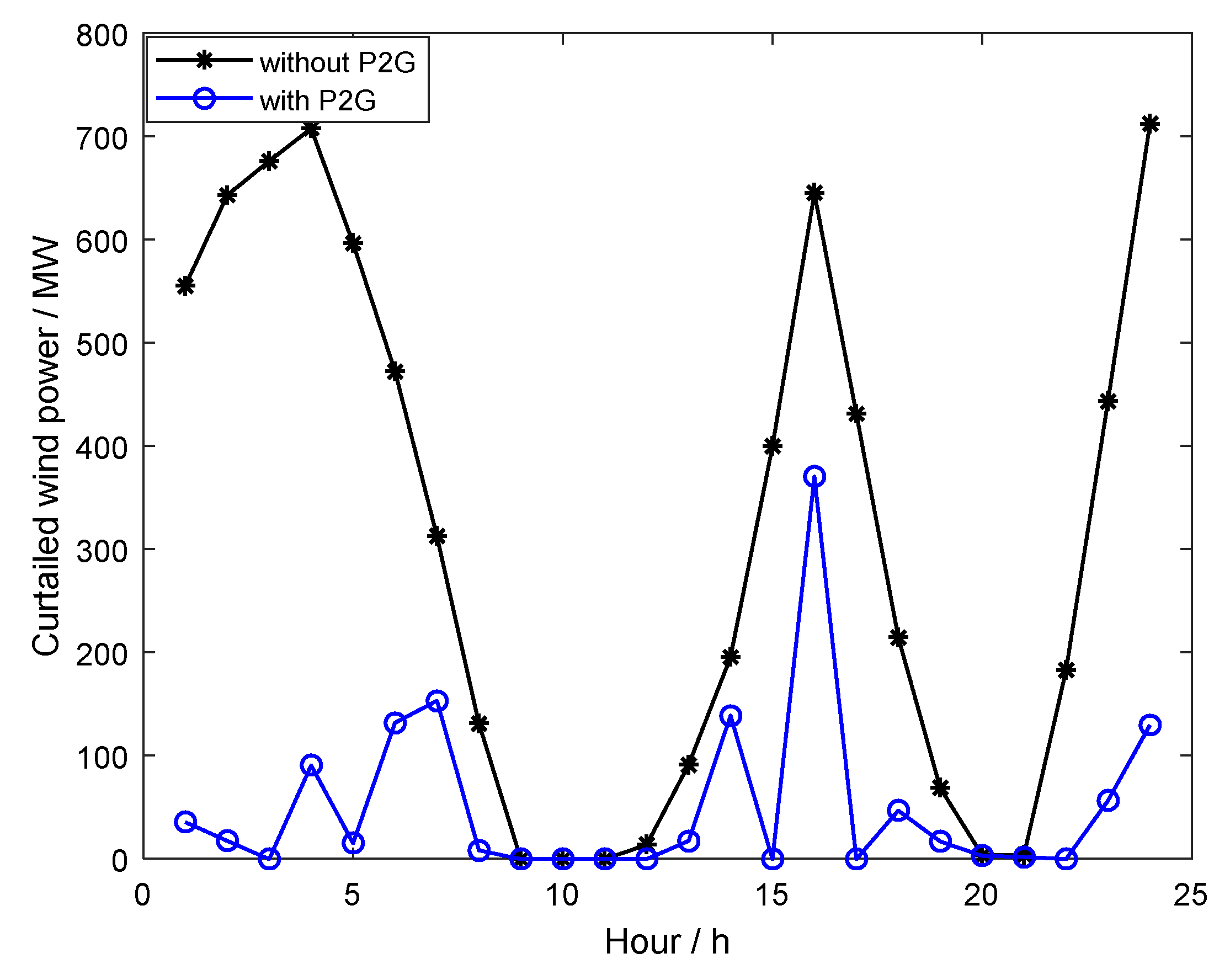
- Wind power output is increased by 6266.742 MWh as well as the rate of wind power accommodation is raised from 74.42% to 95.78%. It is noted that increased wind power is converted to methane to be stored in natural gas network which can be used to supply peak gas load or heating load later.
- (4)
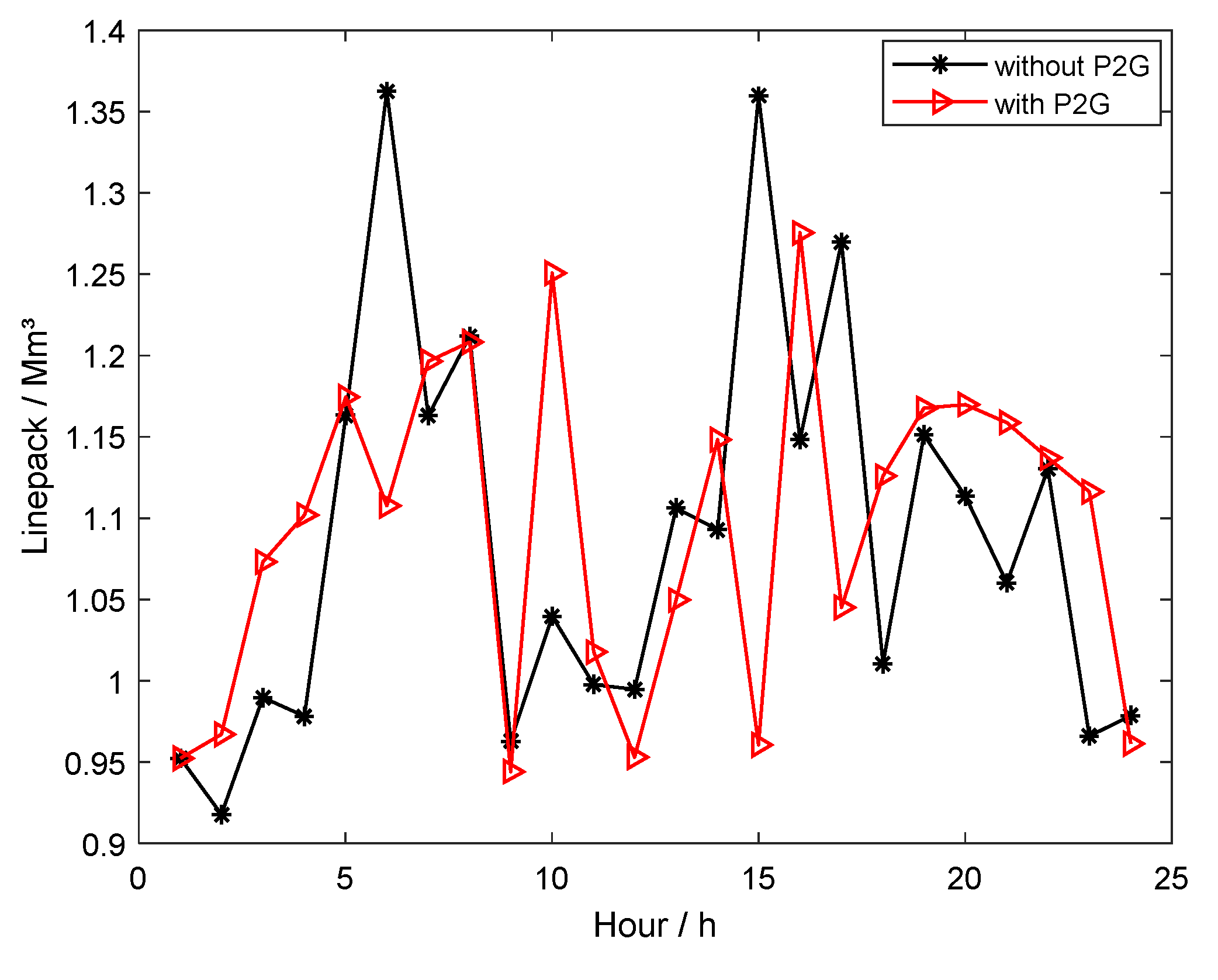
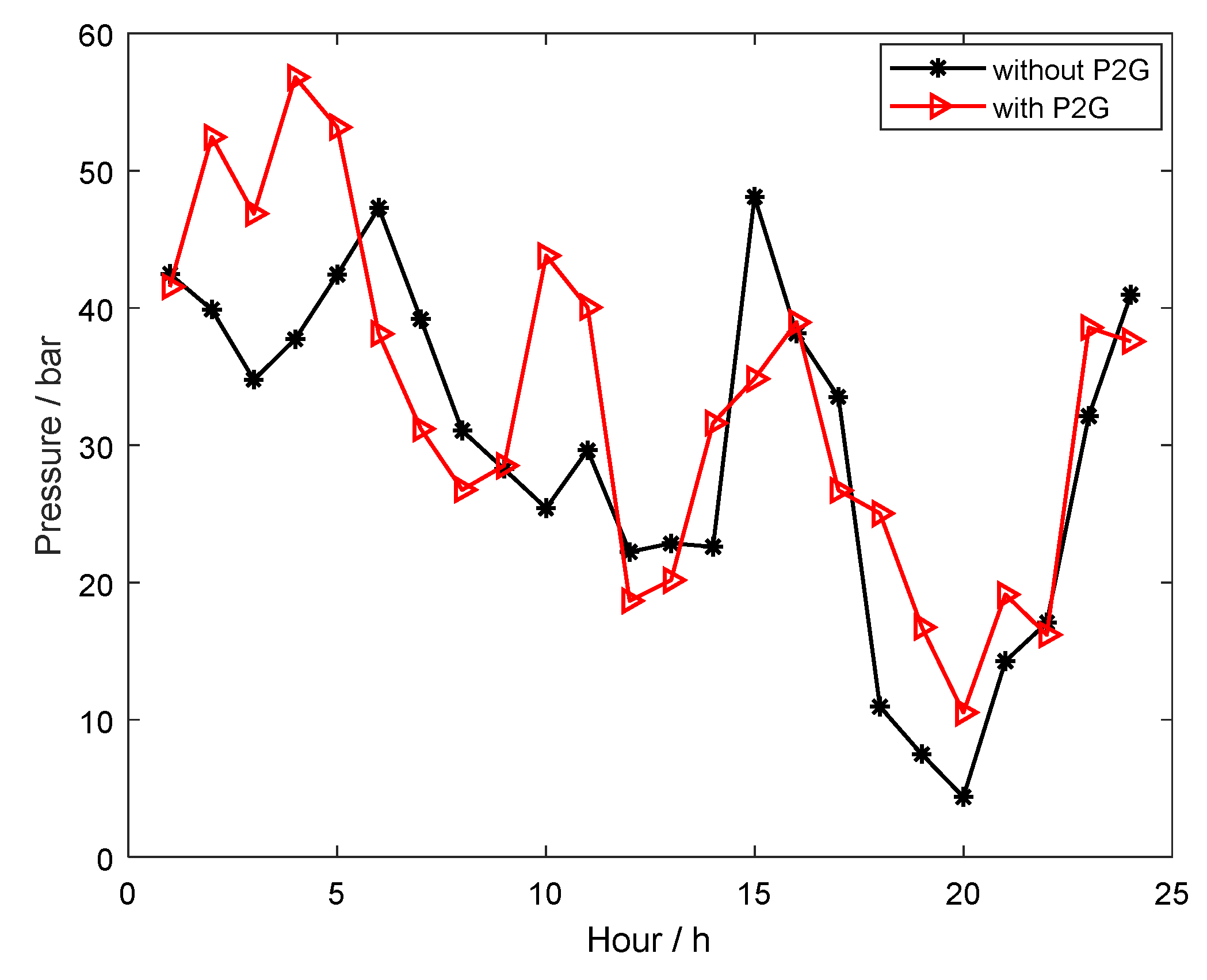
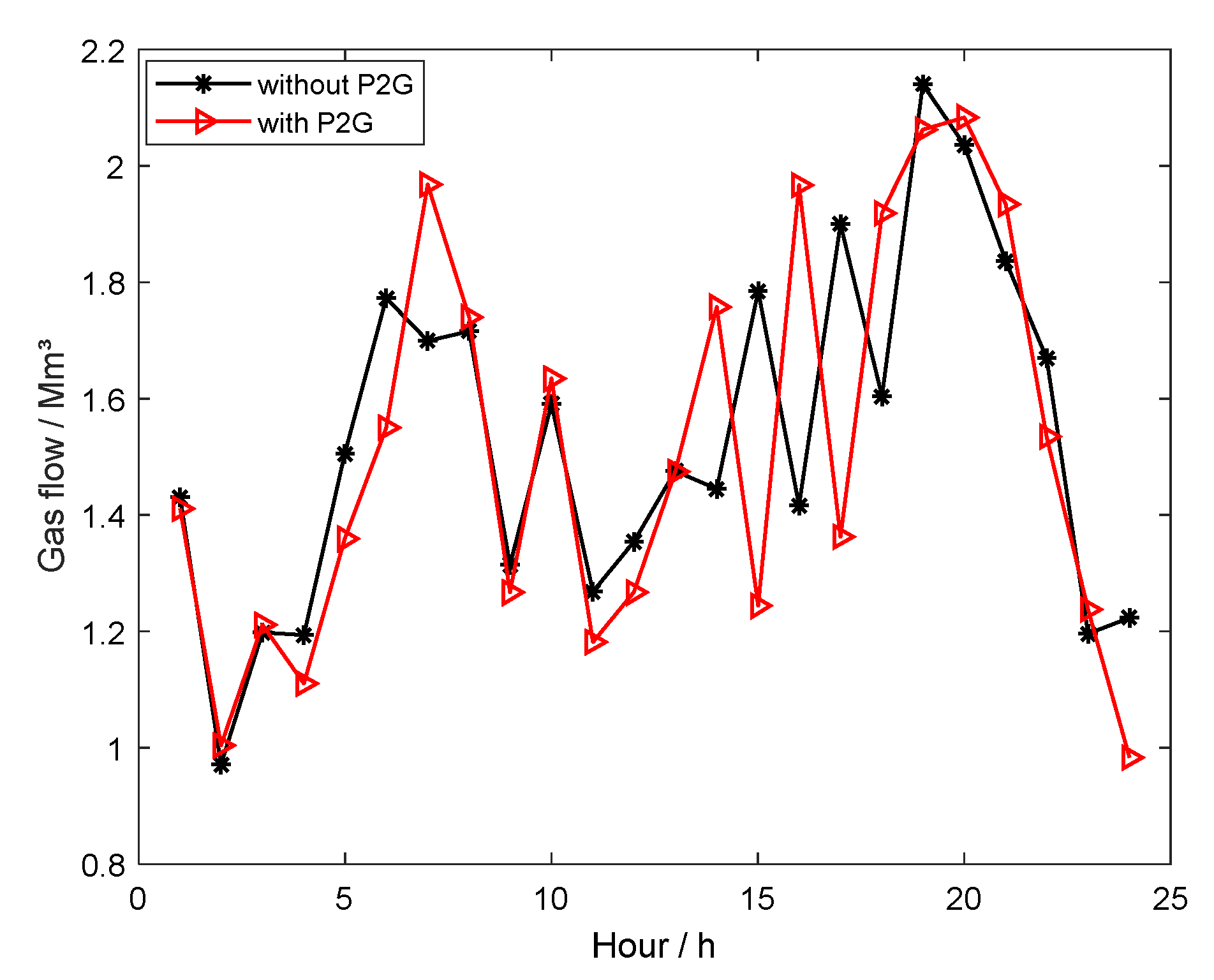
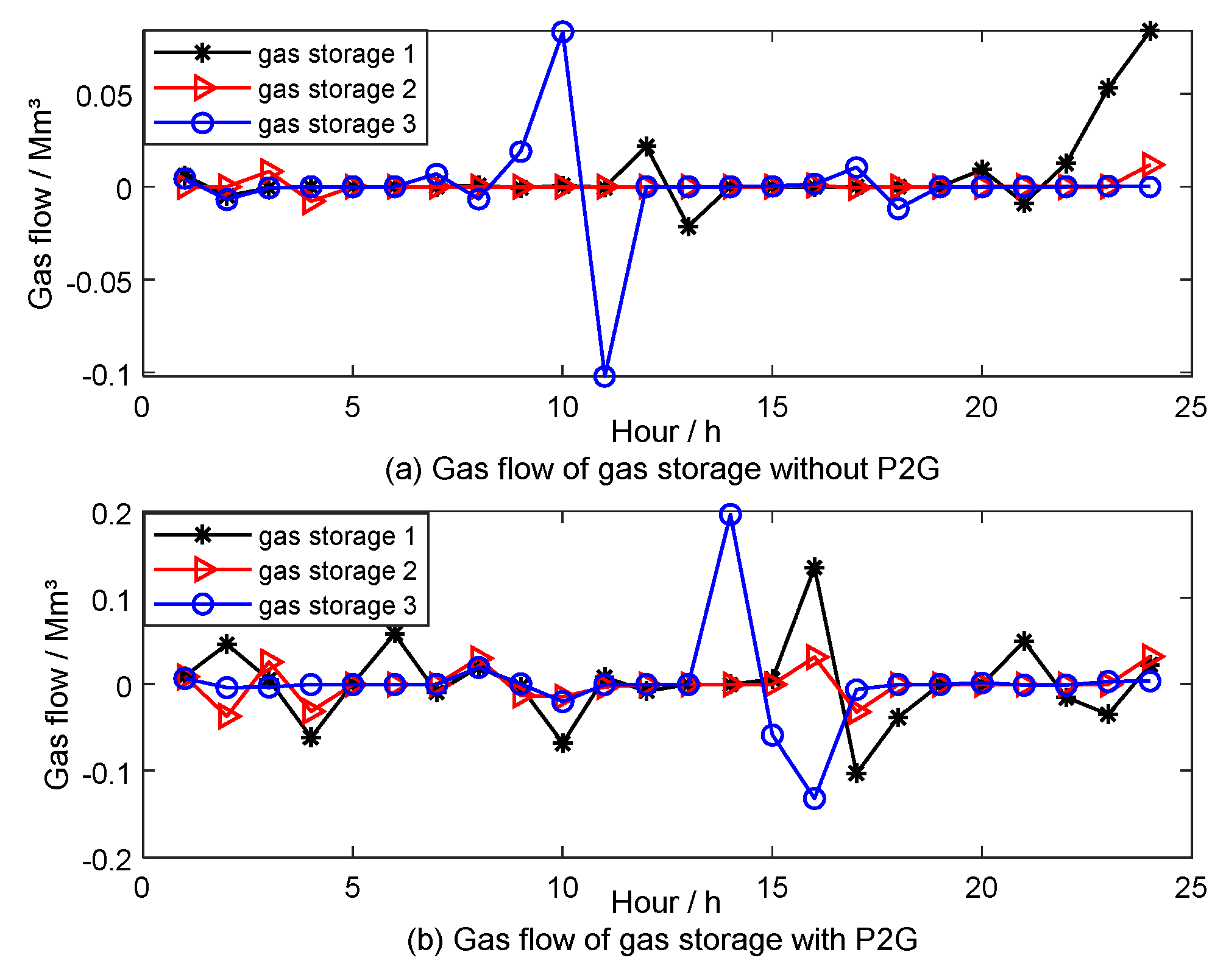
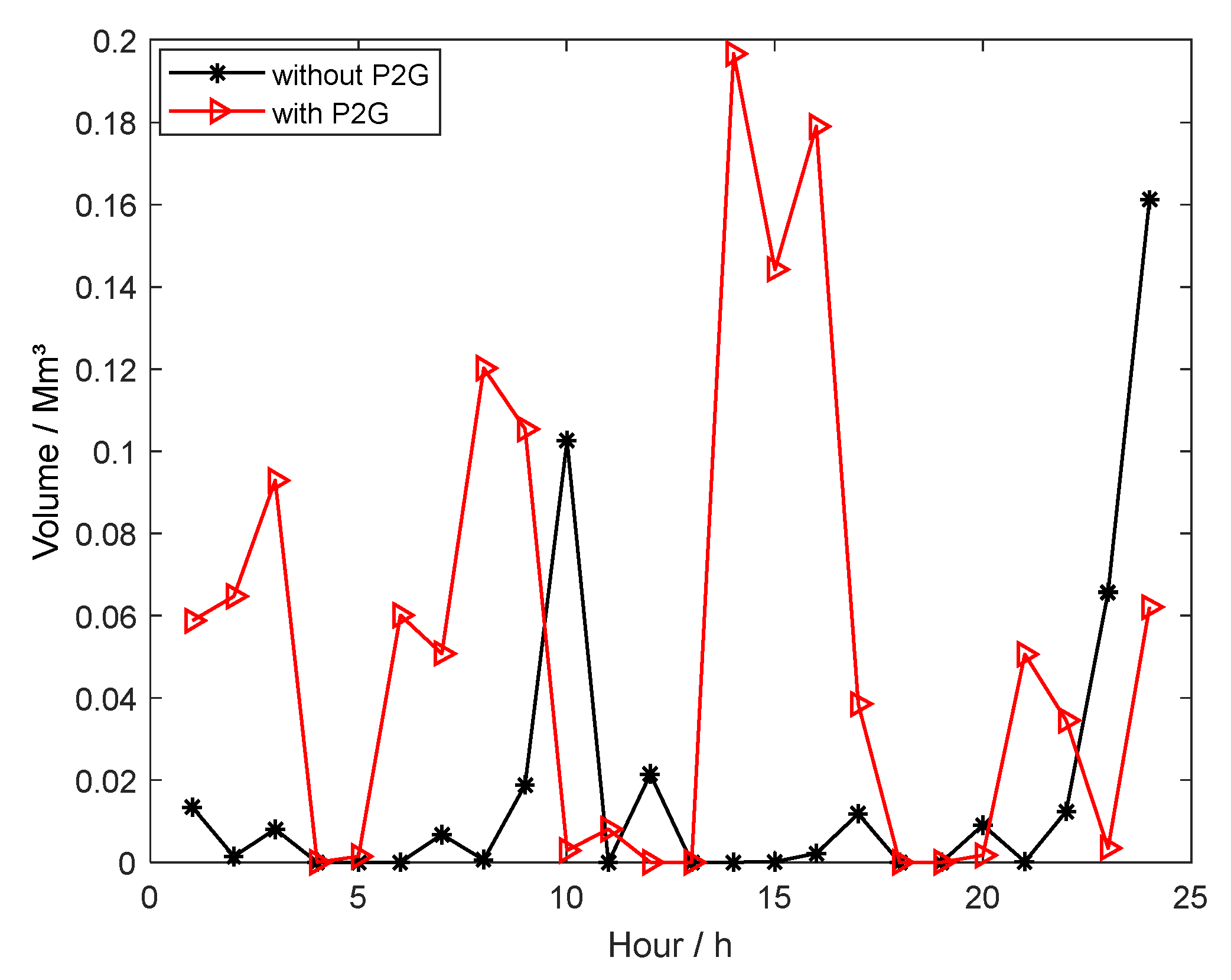
- As both gas load and heating load are peaked at 20:00, linepack is not sufficient at the time and gas pressure of gas node (for example node 6) may below its minimum pressure which will affect normal operation of natural gas network. In order to solve this problem, gas consumption for gas-fired units is decreased and accordingly power output of coal-fired units is also adjusted, which can be seen from Figure 6. Due to gas produced from P2G inflowing to natural gas network, linepack as well as node pressure are increased significantly which can be found from Figure 7 and Figure 8.
- (5)
4.2.2. Effects of P2G on Flexibility of Integrated Power-Natural Gas-Heating Energy Systems
5. Conclusions
Author Contributions
Funding
Institutional Review Board Statement
Informed Consent Statement
Data Availability Statement
Conflicts of Interest
Nomenclature
| Parameters | |
| T | Time intervals |
| τ | Constant value related to the variability index of the compressor |
| Cij | Constant value related to physical parameters and compressibility factor of pipeline ij |
| βcs | Energy conversion coefficient of compressor s |
| ωk | Constant related to parameters of pipeline k |
| ηheat, ηGT, ηcs | Heating efficiency of natural gas, efficiency of gas turbines, efficiency of compressor s |
| ηP2G | Efficiency of P2G which indicates the total conversion efficiency of electricity (i.e. curtailed renewable energies) to gas (i.e. methane) |
| Eheat | Heating demand (MJ) |
| LHV, HHV | Lower heating value and higher heating value of natural gas (MJ/m3) |
| NG, Nw, Ngs, NP2G, Npl | Number of thermal units, gas wells, gas storage, P2G and pipelines |
| ai, bi, ci, di, ei | Coefficient of the fuel cost of thermal units |
| αi, βi, γi, δi, λi | Coefficient of the pollutant emissions |
| PD | Power demand (MW) |
| QGD, QHD | Gas demand, gas flow supplied for heating demand (MSm3/h) |
| Minimum Linepack of pipeline k (MSm3) | |
| Minimum pressure of gas node i and gas node j (bar) | |
| Maximum power output of the gas turbine (MW) | |
| Minimum power output of ith thermal unit (MW) | |
| Maximum gas flow of gas storage (MSm3/h) | |
| Maximum volume of the gas storage (MSm3) | |
| , | Minimum and maximum value of the pth state variable |
| Sets and Variables | |
| t | Time t (h) |
| Set_I(i) | The set of pipeline ij which lets gas node i as the input node |
| Set_O(i) | The set of pipeline ij which lets gas node i as the output node |
| C | Operational cost ($) |
| E | Emissions (lb or kg) |
| Fuel cost of ith thermal unit, gas cost of the jth gas well ($) | |
| Operational cost of mth gas storage, operational cost of kth P2G ($) | |
| F | Flexibility metric |
| Fpk | Redundancy of gas in pipeline k and gas storage (MSm3) |
| LPij, LPk | Linepack of pipeline ij and pipeline k (MSm3) |
| Mi, Mj | Gas pressure of gas node i and gas node j (bar) |
| Mos, Mis | Gas pressure of output node and input node connected with compressor s (bar) |
| PGT | Power output of the gas turbine (MW) |
| PP2G, Pcs | Power consumed by P2G and compressor s (MW) |
| PGi | Power output of ith thermal unit (MW) |
| QGT, QP2G | Gas flow of gas turbines, gas flow of P2G (MSm3/h) |
| , Qcs | Gas consumed by compressor s, gas flowing through compressor s (MSm3/h) |
| Qwj, Qgs,m | Gas flow of gas well j, gas flow of gas storage m (MSm3/h) |
| Qij | Gas flow of the pipeline ij (MSm3/h) |
| , | Injection and withdrawal gas flow of pipeline ij (MSm3/h) |
| Vgs | Volume of gas storage (MSm3) |
| Xp | The pth state variable |
References
- Impram, S.; Nese, S.V.; Oral, B. Challenges of renewable energy penetration on power system flexibility: A survey. Energy Strategy Rev. 2020, 31, 100539. [Google Scholar] [CrossRef]
- Baldick, R. Flexibility and availability: Can the natural gas supply support these needs? IEEE Trans. Power Energy Mag. 2014, 12, 100–104. [Google Scholar] [CrossRef]
- Keyaerts, N.; Delarue, E.; Rombauts, Y.; D’haeseleer, W. Impact of unpredictable renewables on gas-balancing design in Europe. Appl. Energy 2014, 119, 266–277. [Google Scholar] [CrossRef]
- Clegg, S. Integrated electrical and gas network flexibility assessment in low-carbon multi-energy systems. IEEE Trans. Sustain. Energy 2016, 7, 718–731. [Google Scholar] [CrossRef]
- Lannoye, E.; Flynn, D.; O’Malley, M. Evaluation of power system flexibility. IEEE Trans. Power Syst. 2012, 27, 922–931. [Google Scholar] [CrossRef]
- Guo, Z.Y.; Zheng, Y.N.; Li, G.Y. Power system flexibility quantitative evaluation based on improved universal generating function method: A case study of Zhangjiakou. Energy 2020, 205, 117963. [Google Scholar] [CrossRef]
- Xu, X.D.; Lyu, Q.; Qadrdan, M.; Wu, J.Z. Quantification of Flexibility of a District Heating System for the Power Grid. IEEE Trans. Sustain. Energy 2020, 11, 2617–2630. [Google Scholar] [CrossRef]
- Huo, Y.C.; Bouffard, F.; Joos, G. Spatio-Temporal Flexibility Management in Low-Carbon Power Systems. IEEE Trans. Sustain. Energy 2020, 11, 2593–2605. [Google Scholar] [CrossRef]
- Correa-Posada, C.M.; Sánchez-Martín, P. Integrated power and natural gas model for energy adequacy in short-term operation. IEEE Trans. Power Syst. 2015, 30, 3347–3355. [Google Scholar] [CrossRef]
- Schiebahn, S.; Grube, T.; Robinius, M.; Tietze, V.; Kumar, B.; Stolten, D. Power to gas: Technological overview, systems analysis and economic assessment for a case study in Germany. Int. J. Hydrogen Energy 2015, 40, 4285–4294. [Google Scholar] [CrossRef]
- Gotz, M.; Lefebvre, J.; Mors, F.; Koch, A.M.; Graf, F.; Bajohr, S.; Reimert, R.; Kolb, T. Renewable power-to-gas: A technological and economic review. Renew. Energy 2016, 85, 1371–1390. [Google Scholar] [CrossRef]
- Maroufmashat, A.; Fowler, M. Transition of future energy system infrastructure: Through power-to-gas pathways. Energies 2017, 10, 1089. [Google Scholar] [CrossRef]
- Mukherjee, U.; Maroufmashat, A.; Narayan, A.; Elkamel, A.; Fowler, M. A stochastic programming approach for the planning and operation of a power to gas energy hub with multiple energy recovery pathways. Energies 2017, 10, 868. [Google Scholar] [CrossRef]
- He, C.; Liu, T.Q.; Wu, L.; Shahidepour, M. Robust coordination of interdependent electricity and natural gas systems in day-ahead scheduling for facilitating volatile renewable generations via power-to-gas technology. J. Modern Power Syst. Clean Energy 2017, 5, 375–388. [Google Scholar] [CrossRef]
- Hassan, A.; Patel, M.K.; Parra, D. An assessment of the impacts of renewable and conventional electricity supply on the cost and value of power-to-gas. Int. J. Hydrogen Energy 2019, 44, 9577–9593. [Google Scholar] [CrossRef]
- Liu, J.; Sun, W.; Harrison, G.P. Optimal Low-Carbon Economic Environmental Dispatch of Hybrid Electricity-Natural Gas Energy Systems Considering P2G. Energies 2019, 12, 1355. [Google Scholar] [CrossRef]
- Clegg, S.; Mancarella, P. Integrated modelling and assessment of the operational impact of power-to-gas (P2G) on electrical and gas transmission networks. IEEE Trans. Sustain. Energy 2015, 6, 1234–1244. [Google Scholar] [CrossRef]
- Li, Y.; Liu, W.J.; Zhao, J.H.; Wen, F.S.; Dong, C.Y.; Zheng, Y.; Zhang, R. Optimal dispatch of combined electricity-gas-heat energy systems with power-to-gas devices and benefit analysis of wind power accommodation. Power Syst. Technol. 2016, 40, 3680–3688. [Google Scholar] [CrossRef]
- Ye, J.; Yuan, R.X. Integrated natural gas, heat, and power dispatch considering wind power and power-to-gas. Sustainability 2017, 9, 602. [Google Scholar] [CrossRef]
- Li, G.Q.; Zhang, R.F.; Jiang, T. Security-constrained bi-level economic dispatch model for integrated natural gas and electricity systems considering wind power and power-to-gas process. Appl. Energy 2017, 194, 696–704. [Google Scholar] [CrossRef]
- Guandalini, G.; Campanari, S.; Romano, M.C. Power-to-gas plants and gas turbines for improved wind energy dispatchability: Energy and economic assessment. Appl. Energy 2015, 147, 117–130. [Google Scholar] [CrossRef]
- Chen, Z.Y.; Wang, D.; Jia, H.J.; Wang, W.L.; Guo, B.Q.; Qu, B.; Fan, M.H. Research on optimal day-ahead economic dispatching strategy for microgrid considering P2G and multi-source energy storage system. Proc. CSEE 2017, 37, 3067–3077. [Google Scholar] [CrossRef]
- Wei, Z.N.; Zhang, S.D.; Sun, G.Q.; Zang, H.Y.; Chen, S.; Chen, S. Power-to-gas considered peak load shifting research for integrated electricity and natural-gas energy systems. Proc. CSEE 2017, 37, 4601–4609. [Google Scholar] [CrossRef]
- Liu, J.; Sun, W.; Harrison, G.P. The economic and environmental impact of power to hydrogen/power to methane facilities on the hybrid power-natural gas energy systems. Int. J. Hydrog. Energy 2020, 45, 20200–20209. [Google Scholar] [CrossRef]
- Ameli, H.; Qadrdan, M.; Strbac, G. Value of gas network infrastructure flexibility in supporting cost effective operation of power systems. Appl. Energy 2017, 202, 571–580. [Google Scholar] [CrossRef]
- Clegg, S.; Mancarella, P. Integrated electricity-heat-gas modelling and assessment, with applications to the Great Britain system. Part II: Transmission network analysis and low carbon technology and resilience case studies. Energy 2019, 184, 191–203. [Google Scholar] [CrossRef]
- Clegg, S.; Mancarella, P. Integrated electricity-heat-gas modelling and assessment, with applications to the Great Britain system. Part I: High-resolution spatial and temporal heat demand modelling. Energy 2019, 184, 180–190. [Google Scholar] [CrossRef]
- Chicco, G.; Riaz, S.; Mazza, A. Flexibility from distributed multienergy systems. Proc. IEEE 2020, 108, 1496–1517. [Google Scholar] [CrossRef]
- Liu, J.; Luo, X.J. Short-term optimal environmental economic hydrothermal scheduling based on handling complicated constraints of multi-chain cascaded hydropower station. Proc. CSEE 2012, 32, 27–35. [Google Scholar] [CrossRef]
- Liu, J.; Luo, X.J. Environmental economic dispatching adopting multi-objective random black-hole particle swarm optimization algorithm. Proc. CSEE 2010, 30, 105–111. [Google Scholar] [CrossRef]



| Unit No. | a/(103 $/h) | b/(103 $/(MW∙h)) | c/($/(MW2∙h)) | d/(103 $/h) | e/MW−1 |
|---|---|---|---|---|---|
| Coal-fired unit 1 | 0.786 | 0.038 | 0.152 | 0.45 | 0.041 |
| Coal-fired unit 2 | 0.451 | 0.046 | 0.106 | 0.6 | 0.036 |
| Coal-fired unit 3 | 1.05 | 0.041 | 0.028 | 0.32 | 0.028 |
| Coal-fired unit 4 | 1.244 | 0.038 | 0.035 | 0.26 | 0.052 |
| Coal-fired unit 5 | 1.658 | 0.036 | 0.021 | 0.28 | 0.063 |
| Gas-fired unit 1 | 2.713 | 0.076 | 0.036 | / | / |
| Gas-fired unit 2 | 2.801 | 0.074 | 0.028 | / | / |
| Gas-fired unit 3 | 2.904 | 0.073 | 0.024 | / | / |
| Unit No. | α/(103lb/h) | β/(lb/(MW∙h)) | γ/(lb/(MW2∙h)) | δ/(lb/h) | λ/MW−1 |
|---|---|---|---|---|---|
| Coal-fired unit 1 | 0.103 | −2.444 | 0.031 | 0.504 | 0.021 |
| Coal-fired unit 2 | 0.103 | −2.444 | 0.031 | 0.504 | 0.021 |
| Coal-fired unit 3 | 0.3 | −4.07 | 0.051 | 0.497 | 0.02 |
| Coal-fired unit 4 | 0.3 | −4.07 | 0.051 | 0.497 | 0.02 |
| Coal-fired unit 5 | 0.32 | −3.813 | 0.034 | 0.497 | 0.02 |
| Gas-fired unit 1 | 0.103 | −3.902 | 0.015 | 0.163 | 0.02 |
| Gas-fired unit 2 | 0.11 | −3.902 | 0.016 | 0.172 | 0.021 |
| Gas-fired unit 3 | 0.11 | −3.902 | 0.016 | 0.172 | 0.021 |
| Items | Cost |
|---|---|
| Gas price of gas well 1/(M$/MSm3) | 0.036 |
| Gas price of gas well 2/(M$/MSm3) | 0.043 |
| Storage cost of gas storage 1/(M$/MSm3) | 0.034 |
| Storage cost of gas storage 2/(M$/MSm3) | 0.03 |
| Storage cost of gas storage 3/(M$/MSm3) | 0.03 |
| Operational cost of P2G 1/(M$/MW) | 35.55 |
| Operational cost of P2G 2/(M$/MW) | 35.55 |
| Cost /M$ | SOx Emissions /ton | CO2/104 ton | Rate of Abandoned Wind Power | Increased Wind Power by P2G/MWh | |
|---|---|---|---|---|---|
| Without P2G | 2.510 | 18.811 | 6.286 | 25.58% | 0 |
| With P2G | 2.503 | 18.021 | 6.224 | 4.22% | 6266.742 |
| Gas Redundancy/Mm3 | Flexibility Metric | |
|---|---|---|
| Without P2G | 10.267 | 0.244 |
| With P2G | 11.749 | 0.419 |
| Time/h | 1 | 2 | 3 | 4 | 5 | 6 | 7 | 8 | 9 | 10 | 11 | 12 |
| Without P2G | 0.0137 | 0.0063 | 0.0051 | 0.0052 | 0.0066 | 0.0081 | 0.0086 | 0.0062 | 0.0172 | 0.0835 | 0.0048 | 0.0057 |
| With P2G | 0.0131 | 0.0091 | 0.0070 | 0.0068 | 0.0068 | 0.0054 | 0.0052 | 0.0183 | 0.0177 | 0.0078 | 0.0052 | 0.0046 |
| Time/h | 13 | 14 | 15 | 16 | 17 | 18 | 19 | 20 | 21 | 22 | 23 | 24 |
| Without P2G | 0.0062 | 0.0055 | 0.0081 | 0.0063 | 0.0132 | 0.0040 | 0.0047 | 0.0044 | 0.0043 | 0.0061 | 0.0050 | 0.0057 |
| With P2G | 0.0059 | 0.1460 | 0.0962 | 0.0107 | 0.0044 | 0.0047 | 0.0047 | 0.0057 | 0.0056 | 0.0062 | 0.0095 | 0.0125 |
Publisher’s Note: MDPI stays neutral with regard to jurisdictional claims in published maps and institutional affiliations. |
© 2021 by the authors. Licensee MDPI, Basel, Switzerland. This article is an open access article distributed under the terms and conditions of the Creative Commons Attribution (CC BY) license (http://creativecommons.org/licenses/by/4.0/).
Share and Cite
Liu, J.; Sun, W.; Yan, J. Effect of P2G on Flexibility in Integrated Power-Natural Gas-Heating Energy Systems with Gas Storage. Energies 2021, 14, 196. https://doi.org/10.3390/en14010196
Liu J, Sun W, Yan J. Effect of P2G on Flexibility in Integrated Power-Natural Gas-Heating Energy Systems with Gas Storage. Energies. 2021; 14(1):196. https://doi.org/10.3390/en14010196
Chicago/Turabian StyleLiu, Jing, Wei Sun, and Jinghao Yan. 2021. "Effect of P2G on Flexibility in Integrated Power-Natural Gas-Heating Energy Systems with Gas Storage" Energies 14, no. 1: 196. https://doi.org/10.3390/en14010196
APA StyleLiu, J., Sun, W., & Yan, J. (2021). Effect of P2G on Flexibility in Integrated Power-Natural Gas-Heating Energy Systems with Gas Storage. Energies, 14(1), 196. https://doi.org/10.3390/en14010196