Article

Voltage Modulated DPC Strategy of DFIG Using Extended Power Theory under Unbalanced Grid Voltage Conditions


1
China Institute of Energy and Transportation Integrated Development, North China Electric Power University, Beijing 102206, China
2
Department of Energy Technology, Aalborg University, DK 9220 Aalborg, Denmark
3
State Key Laboratory of Operation and Control of Renewable Energy & Storage Systems, China Electric Power Research Institute, Beijing 100192, China
*
Author to whom correspondence should be addressed.
Energies 2020, 13(22), 6077; https://doi.org/10.3390/en13226077
Submission received: 14 September 2020 / Revised: 15 November 2020 / Accepted: 17 November 2020 / Published: 20 November 2020
(This article belongs to the Section A3: Wind, Wave and Tidal Energy)

Abstract

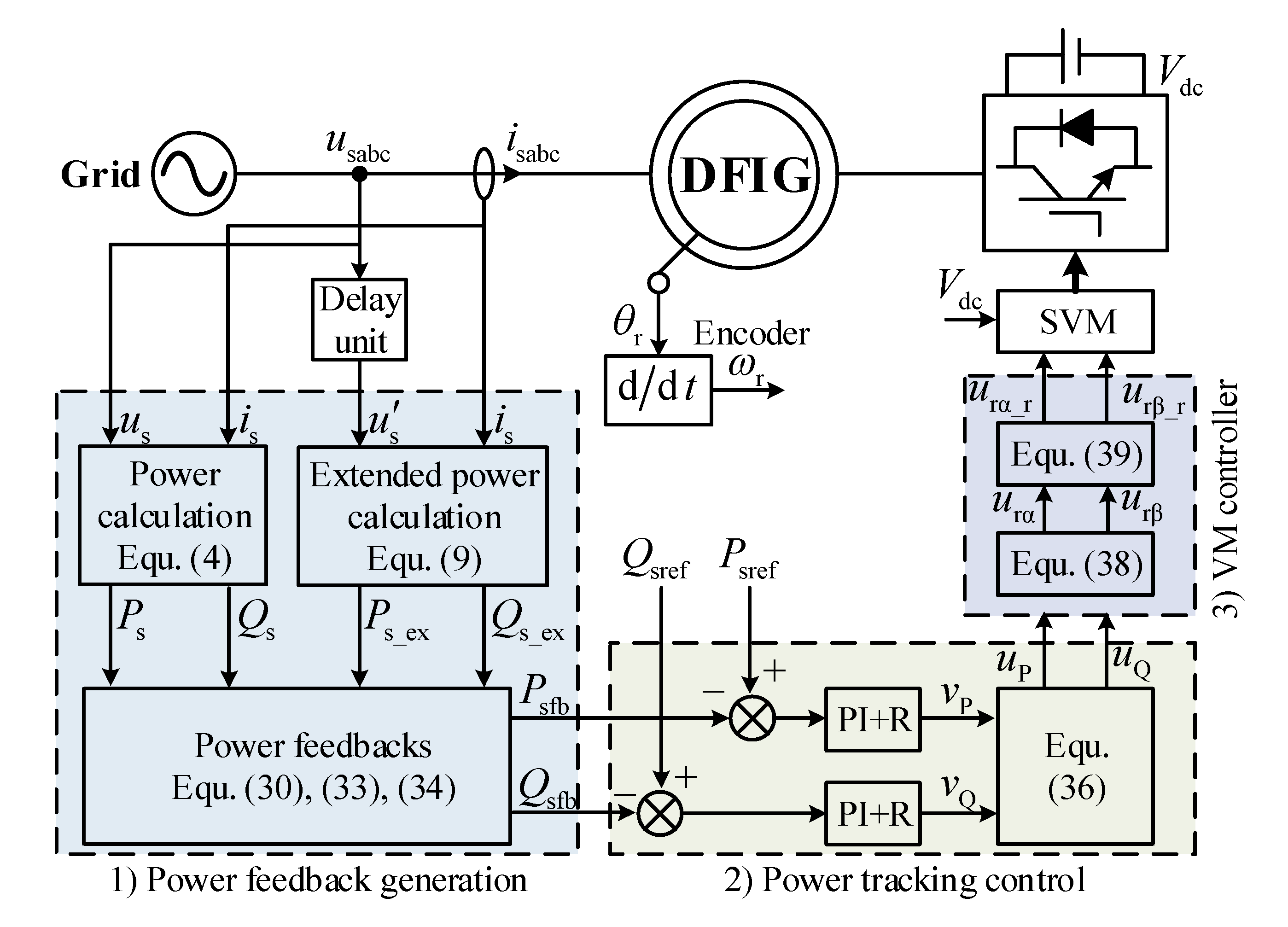
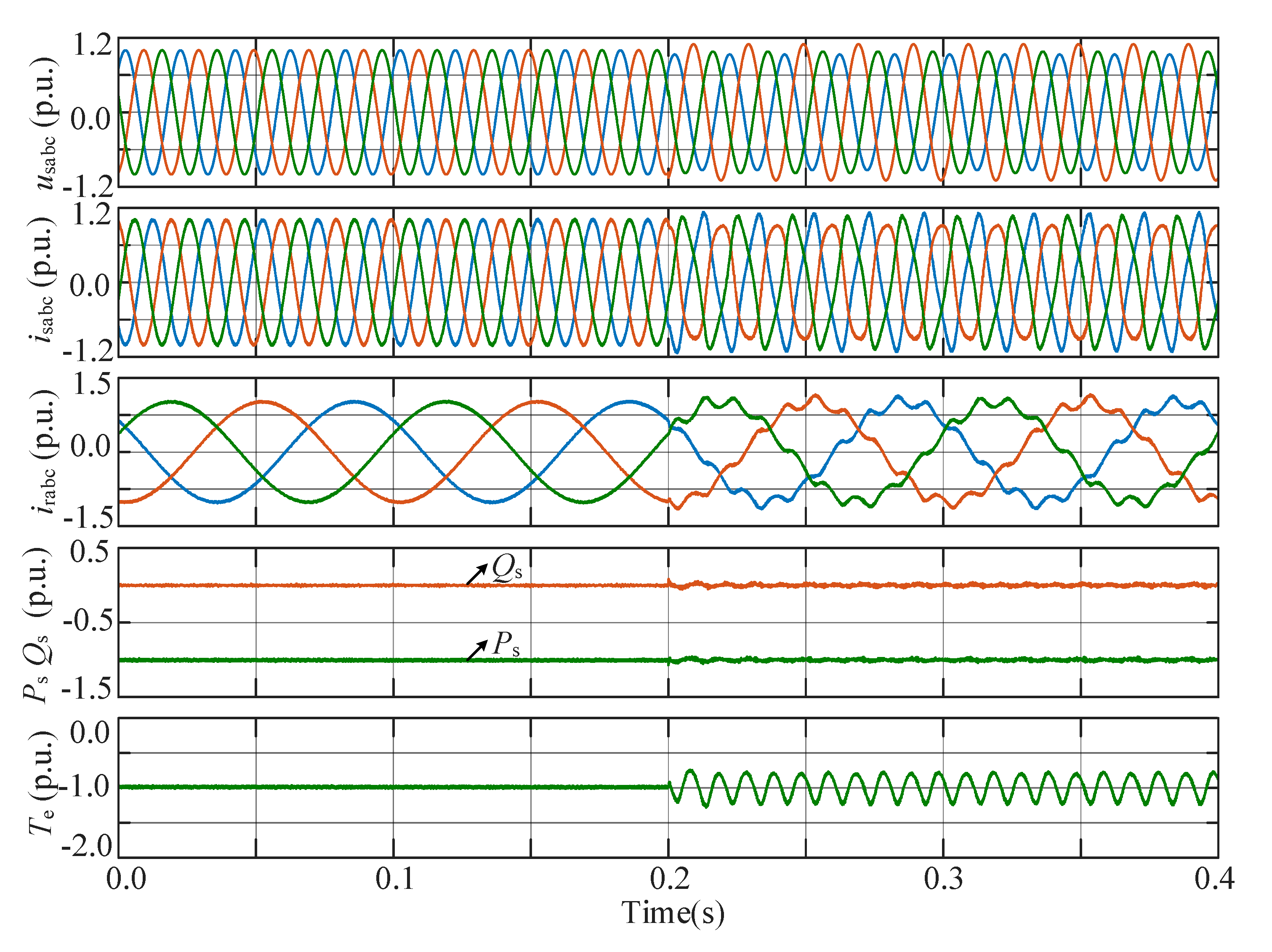
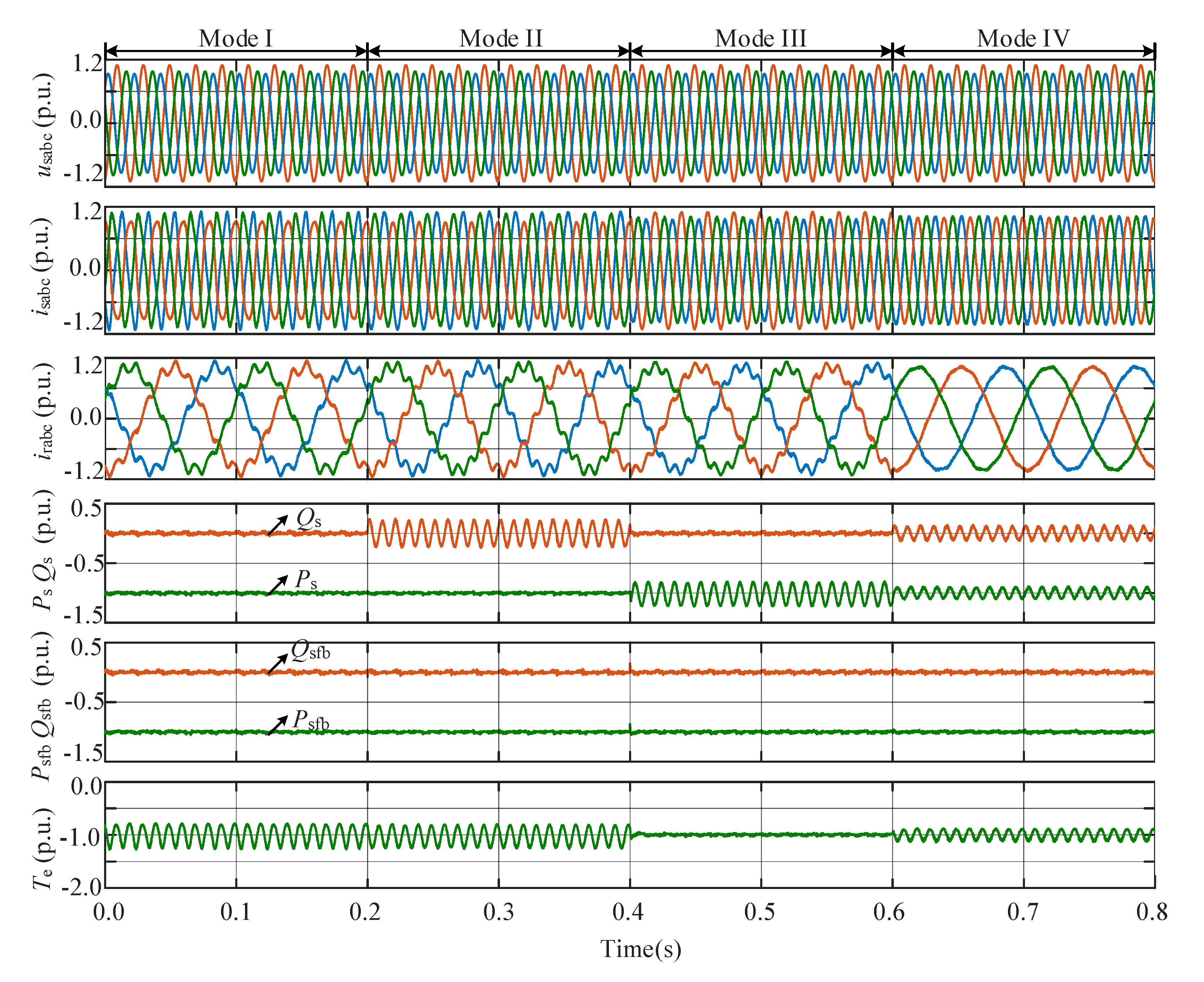
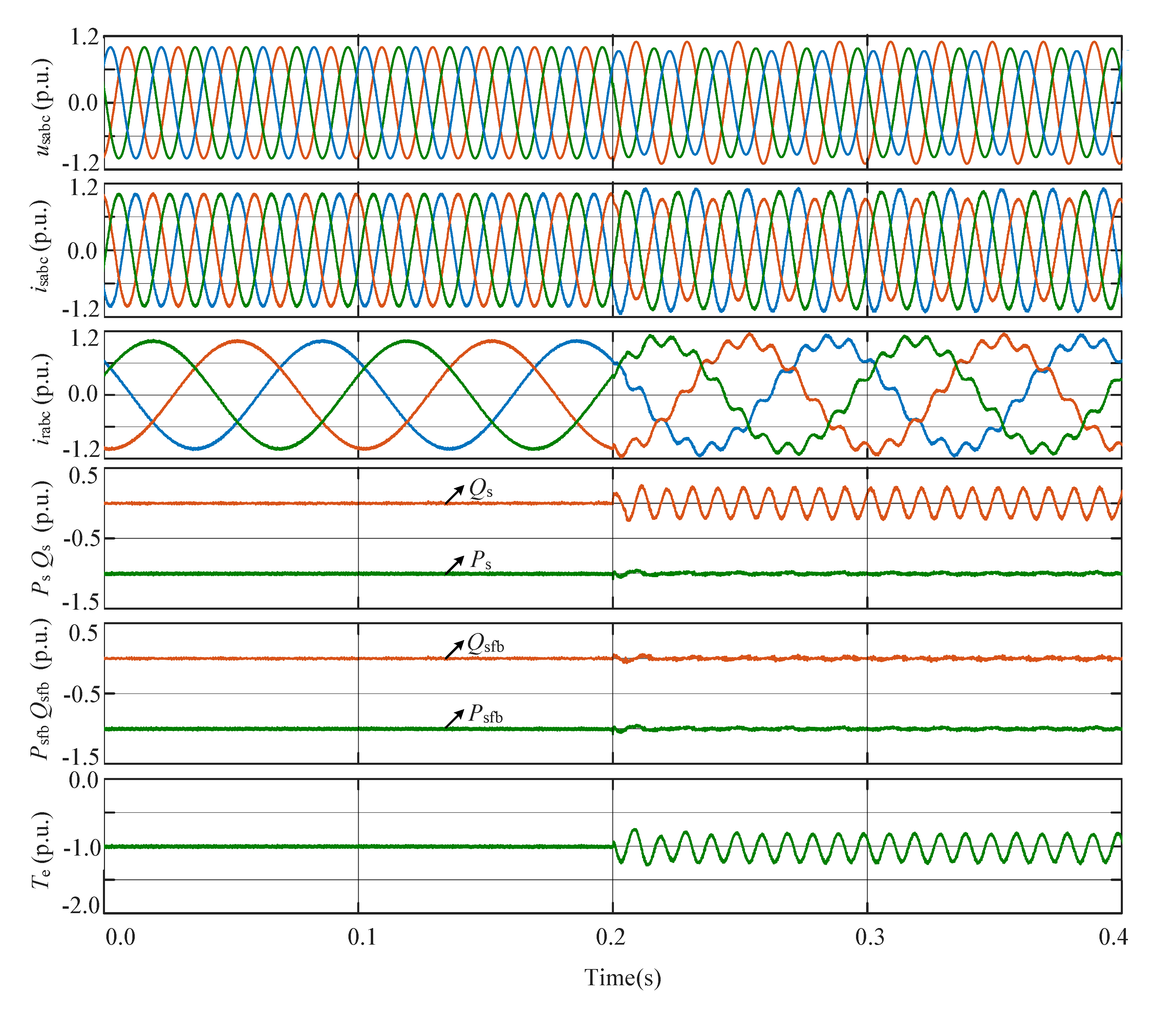
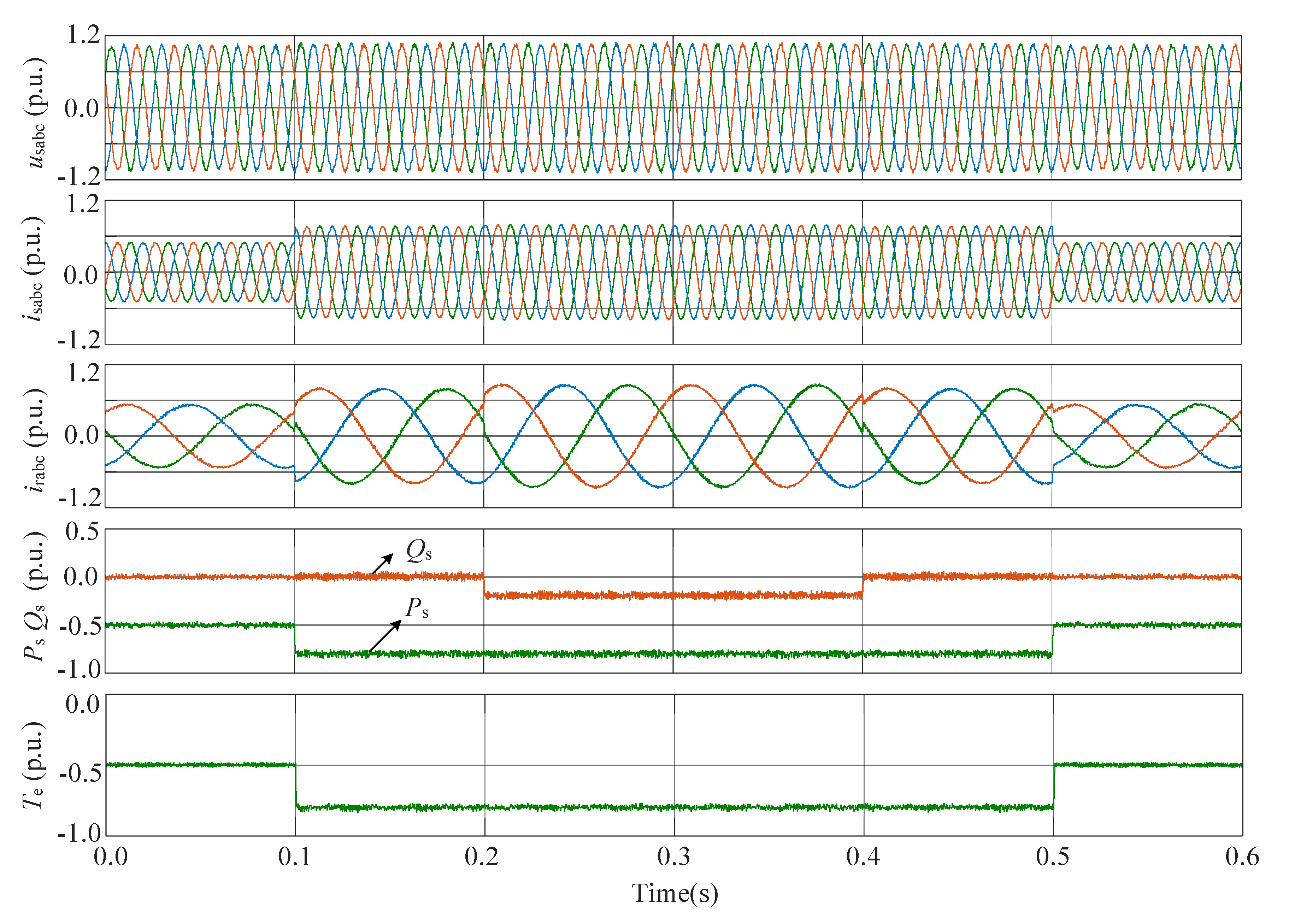
This paper develops a voltage modulated direct power control (VM-DPC) strategy of a doubly fed induction generator (DFIG) using extended power theory under unbalanced grid voltage conditions. By introducing the modulated voltage of the active and reactive powers and the non-linear VM controller, the proposed VM-DPC strategy enables the generator dynamics to change from the time-varying differential equations into the time-invariant ones. Then, in order to deal with the voltage unbalance, three available power feedbacks, a combination of real active power and extended reactive power, a combination of extended active power and real reactive power, a combination of extended active power and extended reactive power, are developed. Together with a conventional controller (PI + R and feedforwards) and a non-linear VM controller, the power feedbacks are well controlled to track their references with the achievement of the constant active power, the constant reactive power and the balanced stator current. The main advantage of the VM-DPC strategy is the introduction of the modulated voltage and the non-linear VM controller making the generator dynamics time-invariant, which is easy for applying various control methods. Furthermore, the application of extended power can avoid the sequence extractions and the power compensations under unbalanced grid voltage. Finally, the simulation results demonstrate the effectiveness of the developed VM-DPC strategy.
Keywords: direct power control; doubly fed induction generator; extended power theory; voltage modulated; unbalanced grid voltage direct power control; doubly fed induction generator; extended power theory; voltage modulated; unbalanced grid voltage