Article

CFD-DEM Simulation for the Distribution and Motion Feature of Solid Particles in Single-Channel Pump


1
Graduate School of Mechanical Engineering, Sungkyunkwan University, Suwon 16419, Korea
2
School of Mechanical Engineering, Sungkyunkwan University, Suwon 16419, Korea
*
Author to whom correspondence should be addressed.
Energies 2020, 13(19), 4988; https://doi.org/10.3390/en13194988
Submission received: 14 August 2020 / Revised: 11 September 2020 / Accepted: 18 September 2020 / Published: 23 September 2020
(This article belongs to the Special Issue Mathematical Modelling of Energy Systems and Fluid Machinery)

Abstract

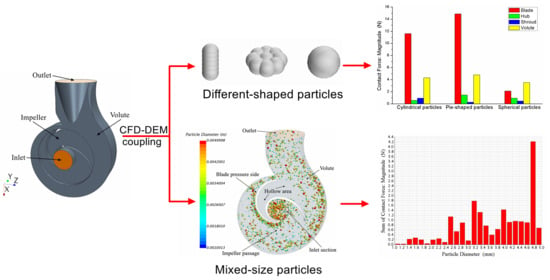
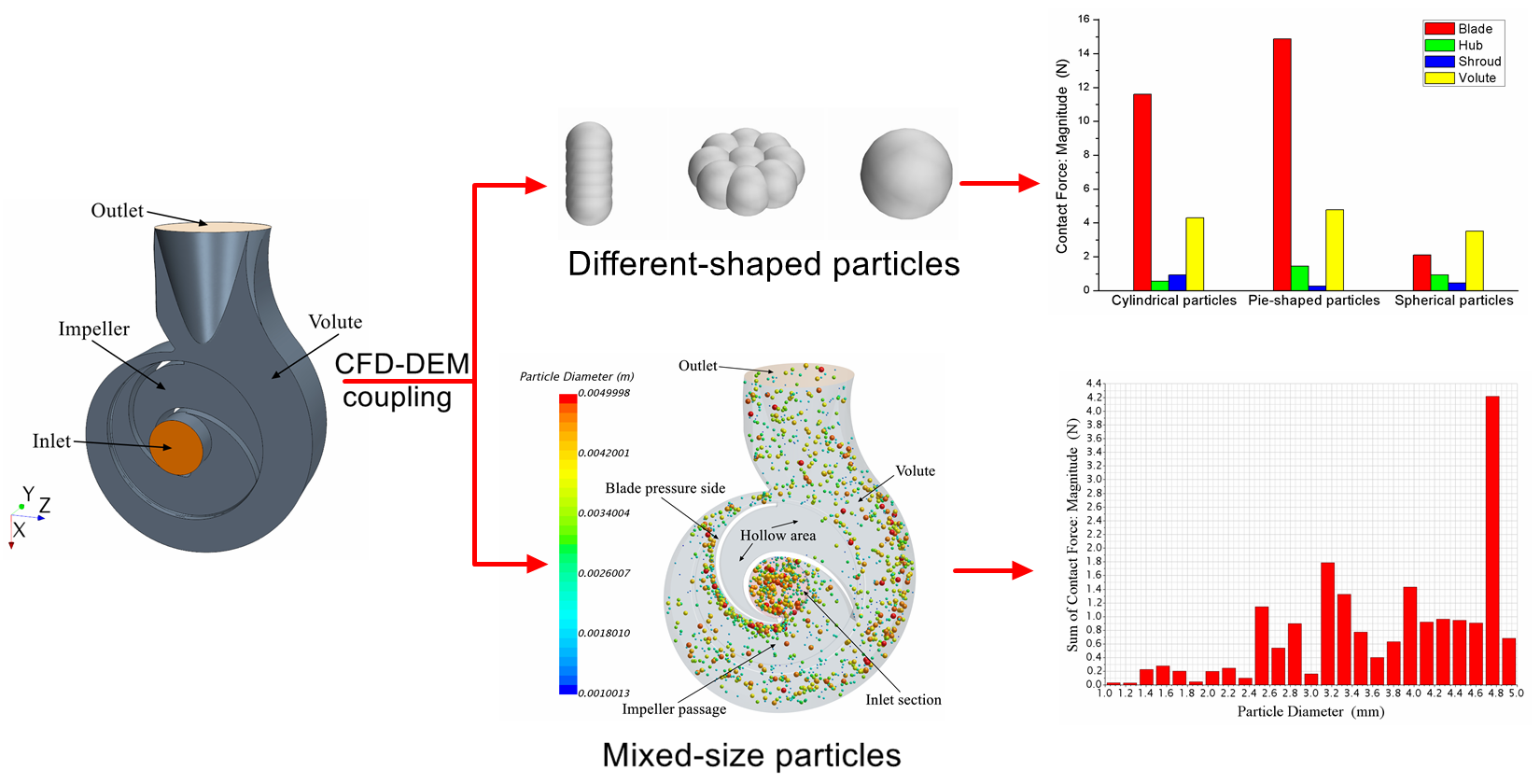
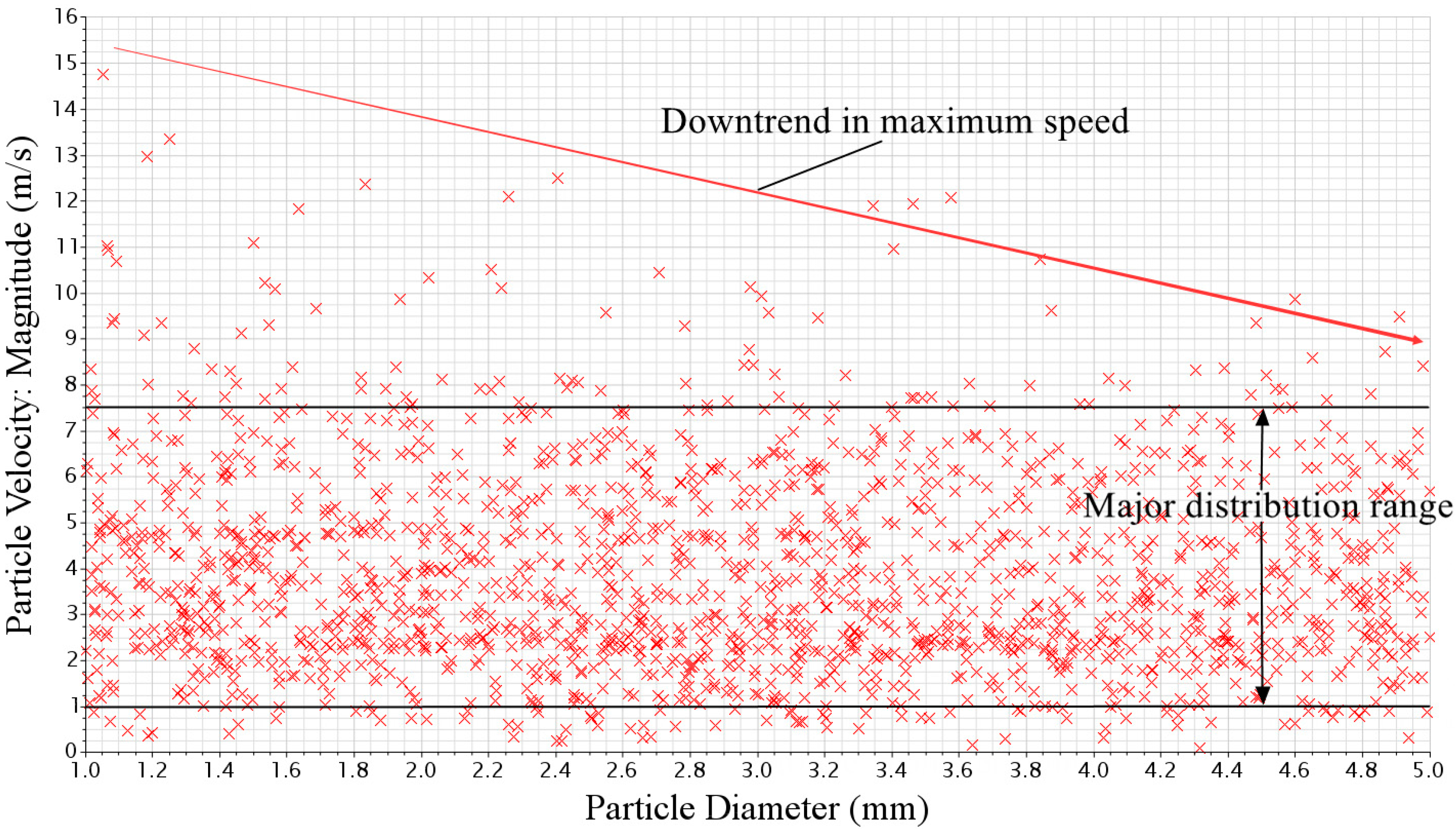
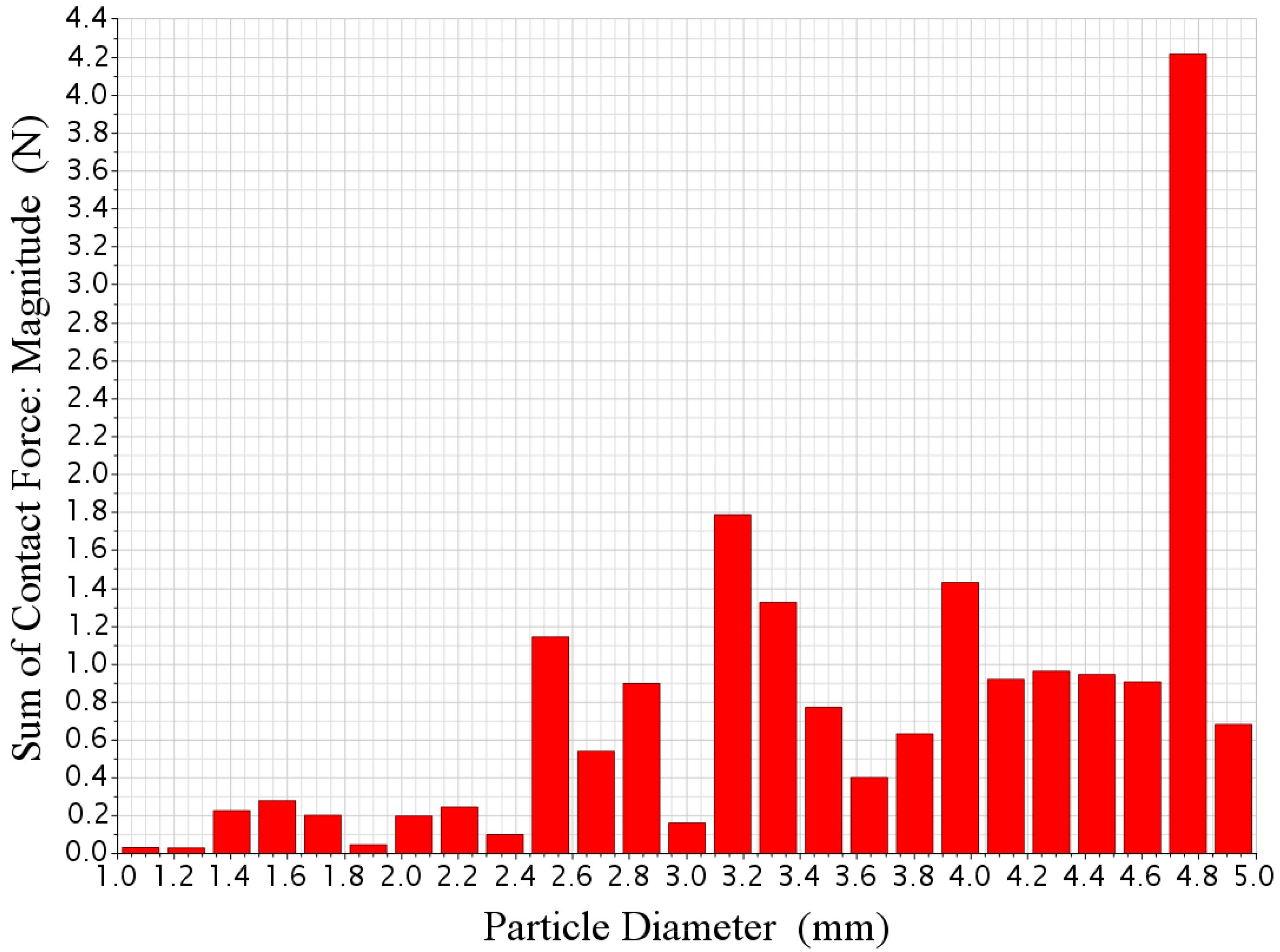
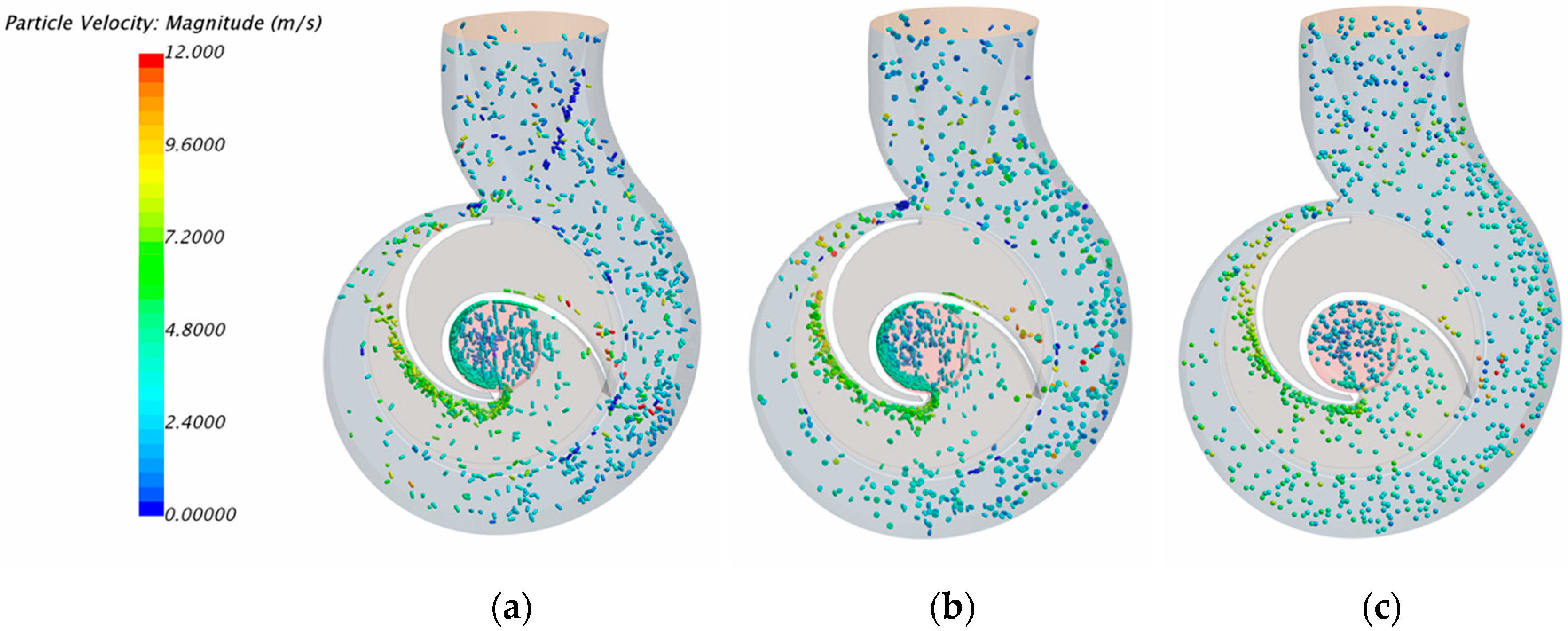
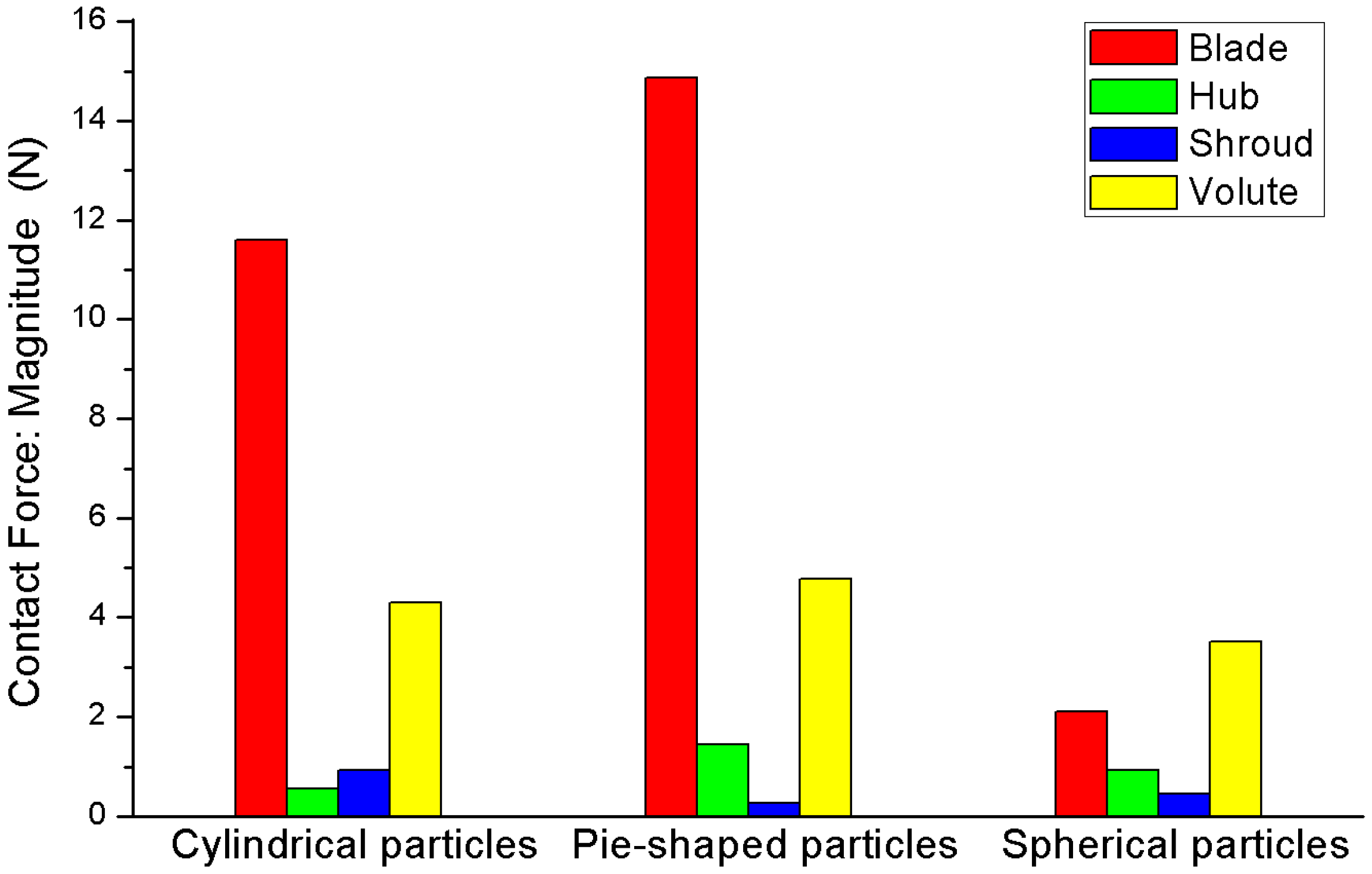
Since various foreign bodies can cause clogging and wear in single-channel pumps, considerable attention has been focused on the numerical study of solid-liquid flows in the single-channel pump. However, conventional numerical simulation cannot responsibly assess the significant effect of the particle material properties, inter-particle collision, and size on the pump. In consideration of the particle features and behaviors, the Computational Fluid Dynamics (CFD)-Discrete Element Method (DEM) coupling method was applied for the first time to simulate the solid-liquid flows in a single-channel pump. The results showed that the smaller particles possessed a wider velocity distribution range and velocity peak, while the larger particles exerted a greater contact force. Additionally, the pie-shaped particles had the most severe collisions, and spherical particles had the least in total. Furthermore, the hub and shroud wall suffered a minor contact force, but the blade and volute wall both sustained a considerable contact force. This paper could present some supply data for future research on the optimization of a single-channel pump.
Keywords: single-channel pump; CFD-DEM coupling method; particle features and behaviors; solid-liquid two-phase flows single-channel pump; CFD-DEM coupling method; particle features and behaviors; solid-liquid two-phase flows
Graphical Abstract