Review

Origin, Impact and Control of Lignocellulosic Inhibitors in Bioethanol Production—A Review

Institute of Technology, Estonian University of Life Sciences, Kreutzwaldi 56/1, EE51006 Tartu, Estonia
*
Author to whom correspondence should be addressed.
Energies 2020, 13(18), 4751; https://doi.org/10.3390/en13184751
Submission received: 11 August 2020 / Revised: 1 September 2020 / Accepted: 8 September 2020 / Published: 11 September 2020
(This article belongs to the Special Issue Renewable Energy Solutions for Baltic-Nordic Region 2020)

Abstract

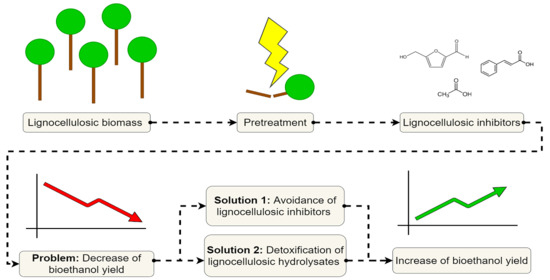
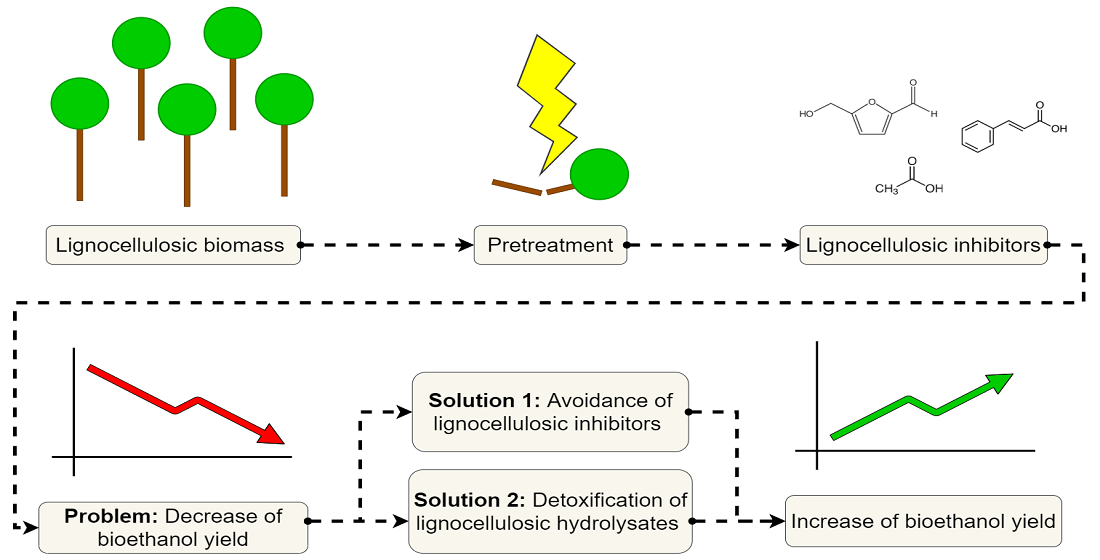
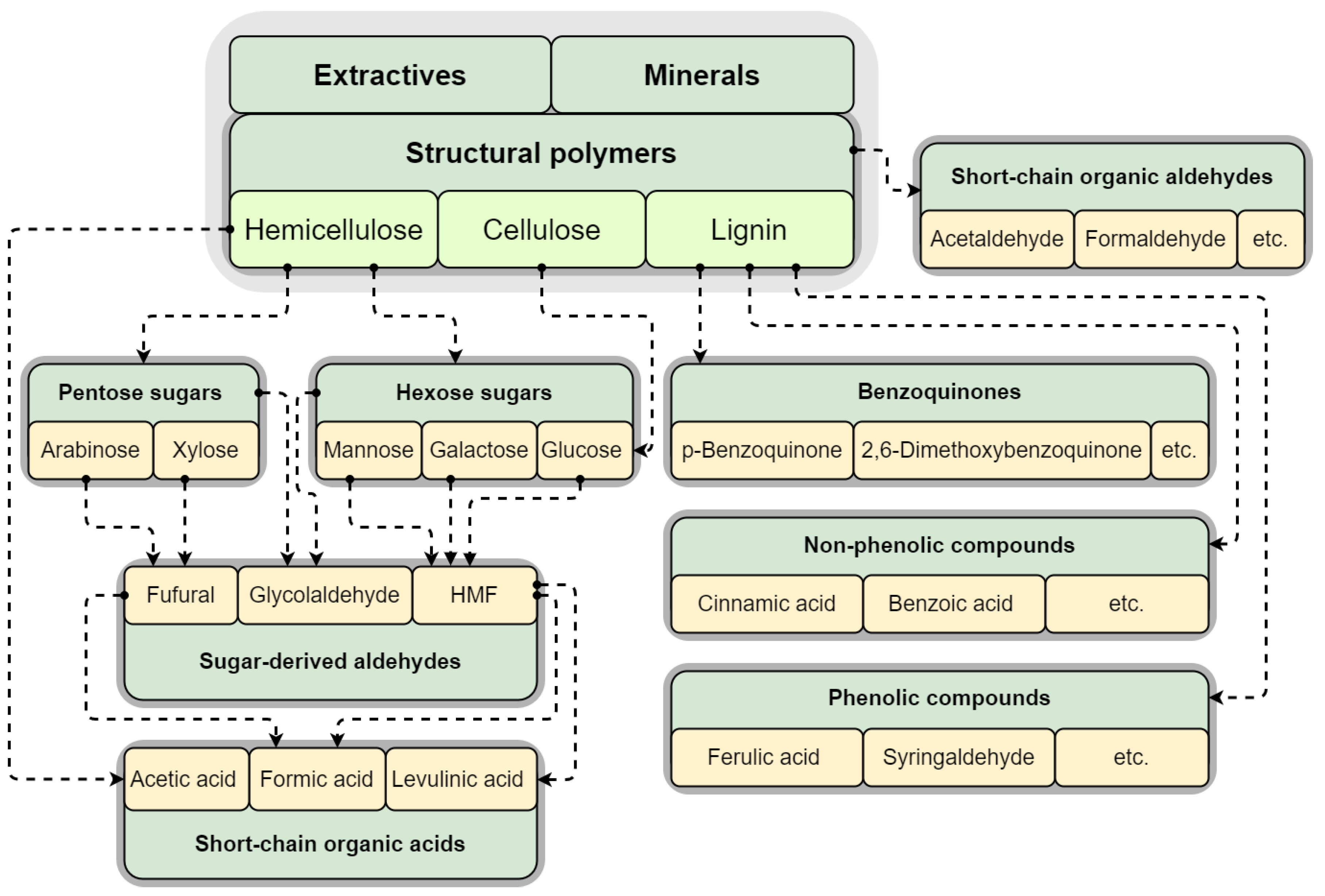
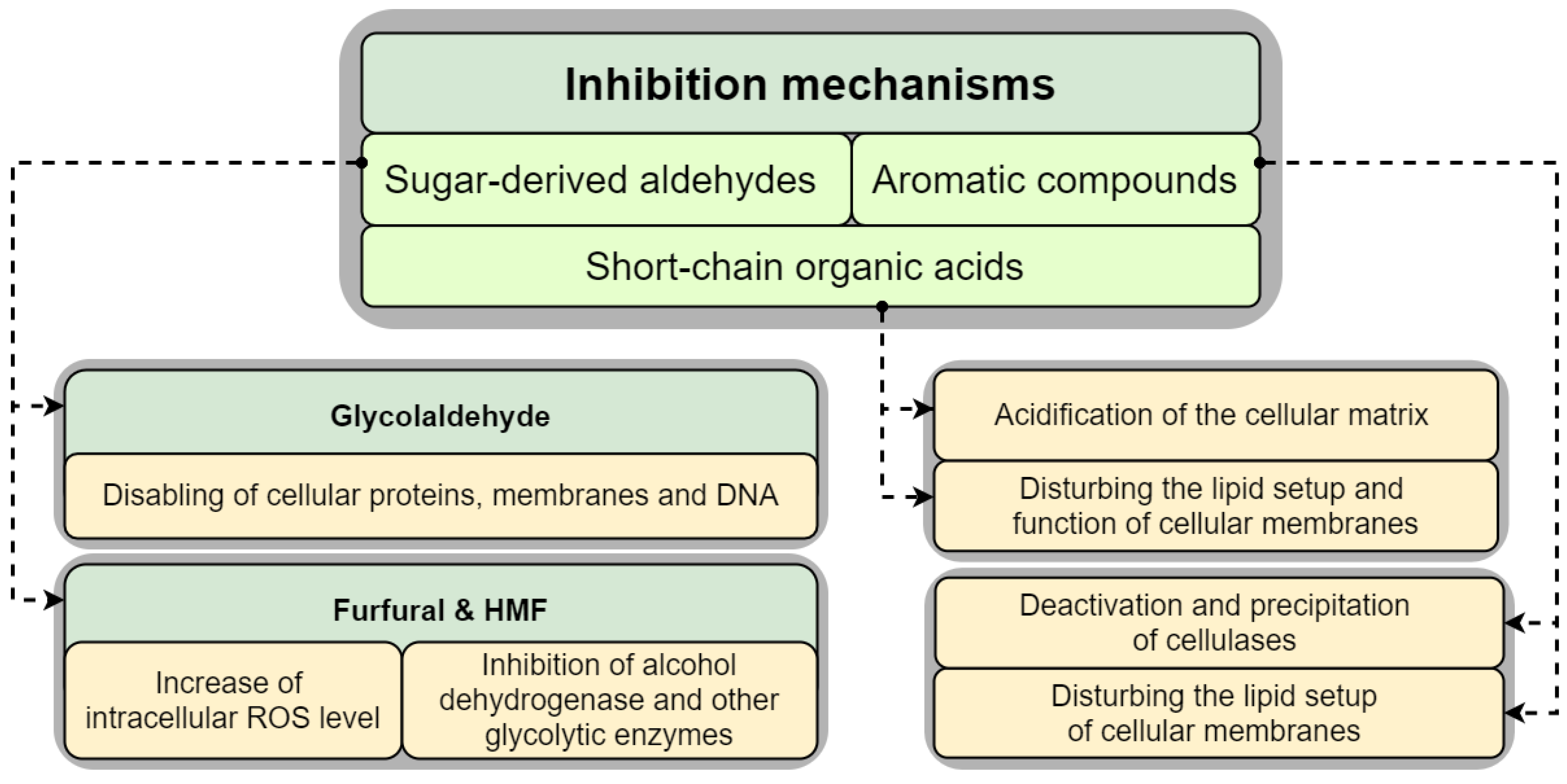
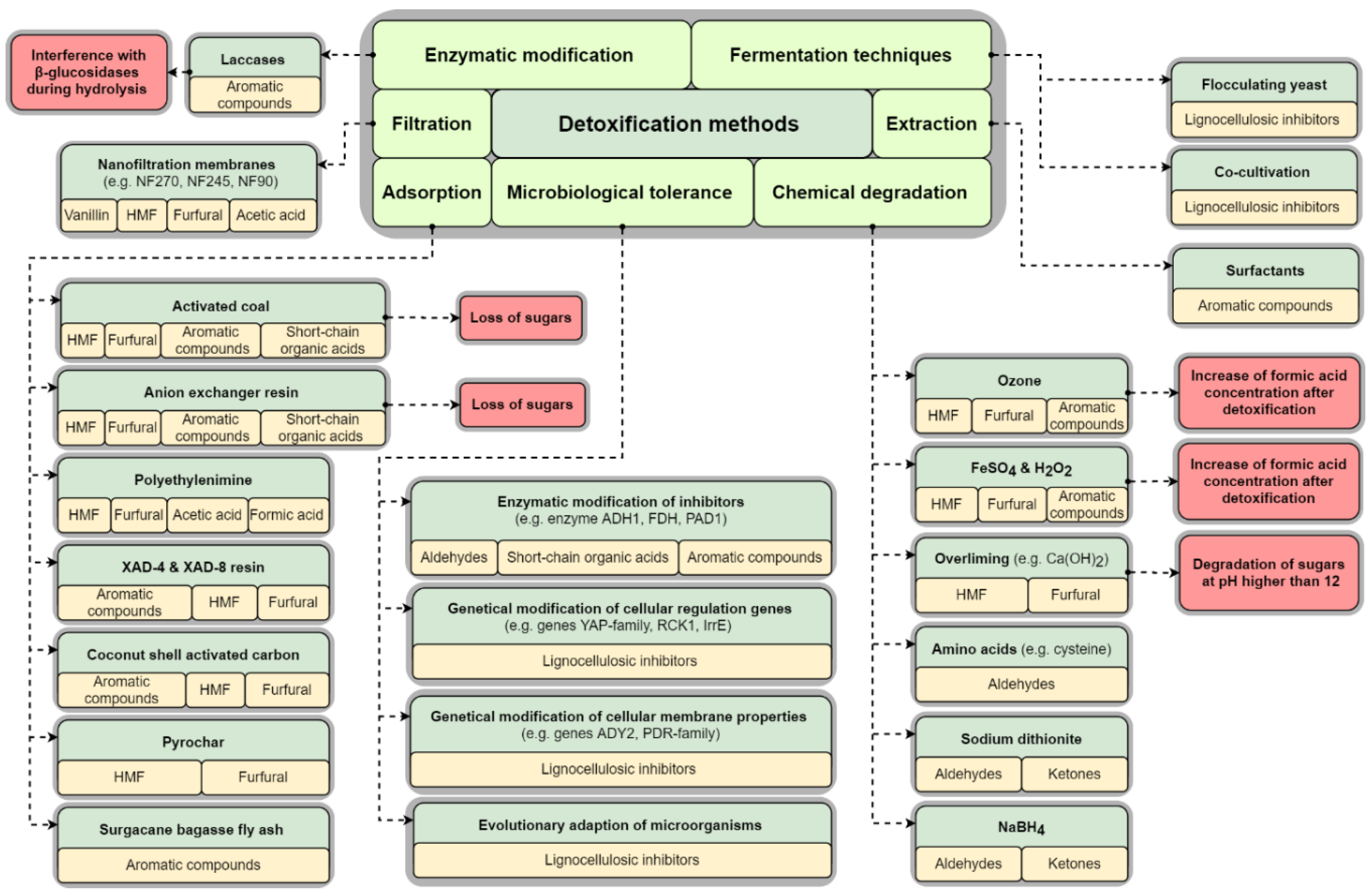
Bioethanol production from lignocellulosic biomass is still struggling with many obstacles. One of them is lignocellulosic inhibitors. The aim of this review is to discuss the most known inhibitors. Additionally, the review addresses different detoxification methods to degrade or to remove inhibitors from lignocellulosic hydrolysates. Inhibitors are formed during the pretreatment of biomass. They derive from the structural polymers-cellulose, hemicellulose and lignin. The formation of inhibitors depends on the pretreatment conditions. Inhibitors can have a negative influence on both the enzymatic hydrolysis and fermentation of lignocellulosic hydrolysates. The inhibition mechanisms can be, for example, deactivation of enzymes or impairment of vital cell structures. The toxicity of each inhibitor depends on its chemical and physical properties. To decrease the negative effects of inhibitors, different detoxification methods have been researched. Those methods focus on the chemical modification of inhibitors into less toxic forms or on the separation of inhibitors from lignocellulosic hydrolysates. Each detoxification method has its limitations on the removal of certain inhibitors. To choose a suitable detoxification method, a deep molecular understanding of the inhibition mechanism and the inhibitor formation is necessary.
Keywords: bioethanol; detoxification; hydrolysates; lignocellulosic inhibitors; pretreatment; saccharomyces cerevisiae; yeast bioethanol; detoxification; hydrolysates; lignocellulosic inhibitors; pretreatment; saccharomyces cerevisiae; yeast
Graphical Abstract