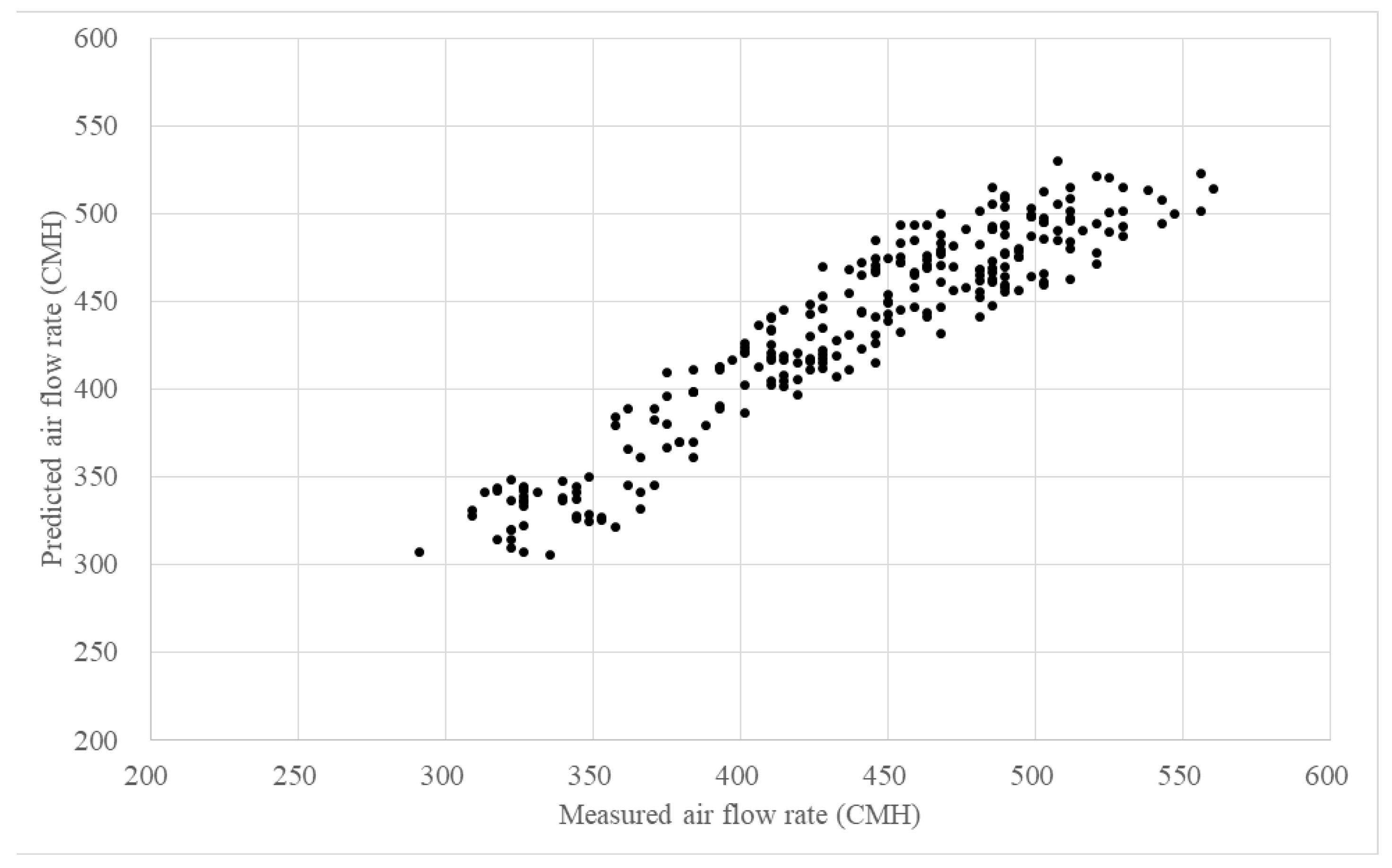
Development of Air Flow Rate Prediction Model Using Multiple Regression in VAV Terminal Unit


Abstract
Share and Cite
Kim, H.-J.; Shin, J.-H.; Jo, J.H.; Cho, Y.-H. Development of Air Flow Rate Prediction Model Using Multiple Regression in VAV Terminal Unit. Energies 2020, 13, 2667. https://doi.org/10.3390/en13102667
Kim H-J, Shin J-H, Jo JH, Cho Y-H. Development of Air Flow Rate Prediction Model Using Multiple Regression in VAV Terminal Unit. Energies. 2020; 13(10):2667. https://doi.org/10.3390/en13102667
Chicago/Turabian StyleKim, Hyo-Jun, Ji-Hyun Shin, Jae Hun Jo, and Young-Hum Cho. 2020. "Development of Air Flow Rate Prediction Model Using Multiple Regression in VAV Terminal Unit" Energies 13, no. 10: 2667. https://doi.org/10.3390/en13102667
APA StyleKim, H.-J., Shin, J.-H., Jo, J. H., & Cho, Y.-H. (2020). Development of Air Flow Rate Prediction Model Using Multiple Regression in VAV Terminal Unit. Energies, 13(10), 2667. https://doi.org/10.3390/en13102667