1. Introduction
A group of plants called
Coffea L. (
Rubiaceae family) bears the coffee cherries and contains more than 70 specific species. Nevertheless, only two of them are purposely cultivated as agriculture crops, namely,
Coffea arabica (75% of the world’s production) and
Coffea canephora (syn.
Coffea robusta) (25% of the world’s production) [
1,
2]. Coffee beverages have been produced and consumed for more than 1000 years. Currently, 400 billion cups of coffee are consumed every year [
3]. Consequently, coffee represents one of the most valuable commodities in the world and the second-largest traded commodity after petroleum [
4]. Its production has a significant influence on international relationships, economics, politics, and the trade of many developing countries. The coffee production industry, i.e., plant cultivation, cherries harvest, bean processing, product packaging, sale marketing, and final product transportation, offers job opportunities for millions of people [
5].
Brazil belongs to the top countries in coffee production, as well as Vietnam, Indonesia, and Colombia. Together those countries generate more than 50% of the world’s coffee production. Specific statistical data provided by the Food and Agriculture Organization of the United Nations (FAO) and by the International Coffee Organization (ICO) related to the coffee industry in the last years are expressed in
Table 1.
As shown above, the coffee industry contributes to the global market a great deal. Unfortunately, the inevitable result of such large-scale coffee production generates large quantities of agriculture residuals (in liquid and solid form), which results in serious environmental pollution. Those are produced mainly during the treatment of the coffee beans (coffee cherries skin, pulp, husk), as well as the coffee beverage preparation itself, specifically, a spent coffee ground (SCG) [
4,
5].
SCG can be generated in small-scale within the individuals or small gastronomy units, but also on a large-scale within the manufactories of the coffee industry. Reports displayed that 1 kg of produced coffee beans in a large-scale industry offers approximately 400 g of instant coffee and the rest of the material (600 g) represents the SCG [
8]. Fortunately, large-scale manufactories have developed awareness about waste management of their own residues, invest into residues subsequent reusing, thus, adapt the functioning of the manufactory processes within such an idea. Knowledge about proper waste management leads to the awareness, that the residues are not waste materials but raw commodity which can be valorized and can cause manufactory’s economical increase within the fuel and energy production issue [
5].
Focused on the SCG, its subsequent reusing within the environmental life cycle (small-scale production) or within the economic savings as a replacement of purchased fuel (large-scale production) represent its specific treatment. Prior investigations have proven the SCGs contain specific degradable organic materials that are hardly efficient. Such degradation results in the consummation of a great amount of oxygen. Thus, it is highly inadequate to discharge it into landfills due to its putrefaction [
9,
10]. Such knowledge also supports the idea of SCG sustainable treatment necessity within the proper waste management issue.
Previous studies have reported several suitable treatment methods of SCG within its subsequent purpose utilization. SCG can be converted into biofuels of different forms (liquid, solid, gaseous) as biodiesel, bioether, biochar, bio-oil, or biogas by using of advanced biotechnological and chemical treatment processes [
11,
12]. Its utilization for production of other value-added products, such as H
2 or ethanol, was also reported with satisfactory results due to its high content of residual oil (approximately 15%) [
13,
14]. Moreover, SCG is a valuable resource of fatty acids, polyphenols, amino acids, polysaccharides and minerals suitable for further utilization [
15]. Several studies also dealt with the suitability of SCG as an animal feed. Nevertheless, regarding its high content of residual oil, caffeine, and lignin (approximately 25%) such investigations did not prove suitable results [
5,
8,
14,
16,
17,
18,
19].
SCG can compete with other agro-industrial residues while used as a heating fuel in the industrial boilers due to its high heating potential related to its high content of residual oil [
20,
21]. On the contrary, the combustion suitability of SCG was discussed by other authors because of its negative effect on the air quality [
22].
Within the solid biofuel production, the high content of lignin in SCG indicates its advantage within the densification process because lignin is a natural binder. Such an advantage was investigated in research focused on the production of pellets from SCG mixed with wood sawdust [
14,
23,
24].
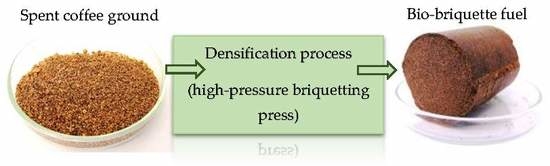
Regarding the available literature review, the main aim of performed investigations was to state the suitability of SCG to produce bio-briquette fuel in large-scale within its sustainable and environmentally friendly valorization. The investigation using high-pressure briquetting press simulates the large-scale production of bio-briquette fuel in the commercial sector and reflects the practice. Investigation using SCG and commercial conditions of bio-briquette fuel production is nowadays missing. To achieve such a major aim, several minor aims were developed. Primarily, a chemical analysis of SCG was investigated to determine its suitability for the process of direct combustion and energy generation. Secondary, the SCG was used as a feedstock material to produce solid biofuels, specifically, of bio-briquettes. Within the SCG solid biofuel production issue, two main topics were investigated:
2. Materials and Methods
The present chapter describes all characteristics of performed research. It starts with the investigated waste materials, their origin and parameters, followed by the description of used chemical experimental measurements, up to the bio-briquette samples production and testing procedures.
2.1. Investigated Materials
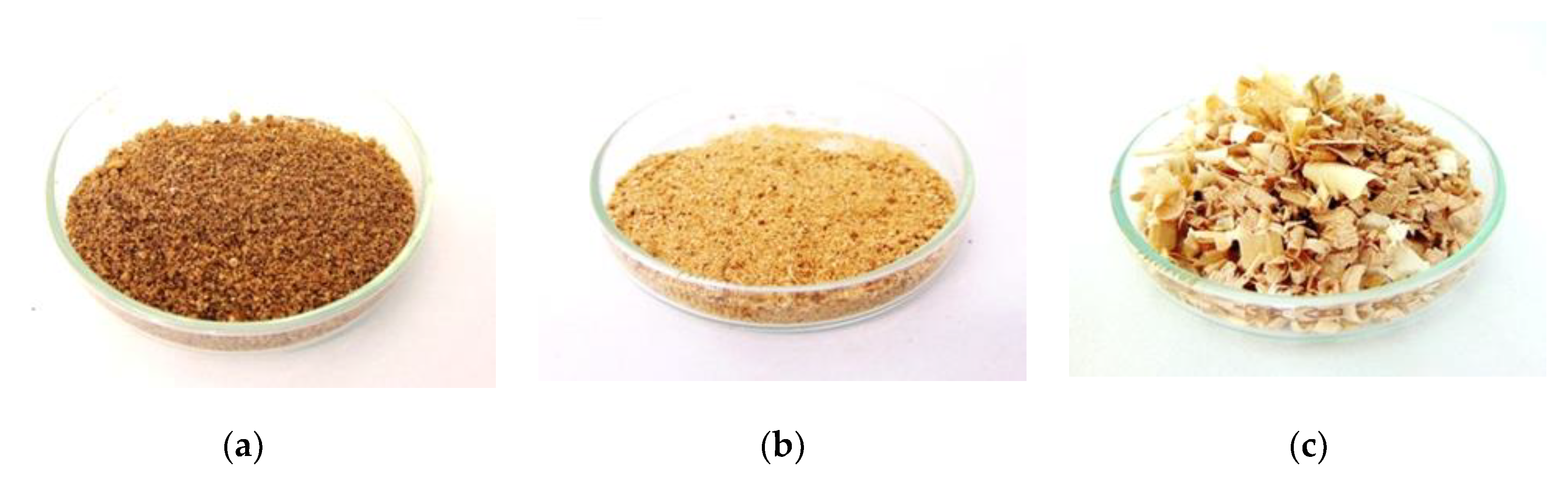
Even though present research was focused mainly on the utilization of SCG (sample A), two other waste materials were also investigated, i.e., larch sawdust (sample B) and spruce shavings (sample C). Extension of research by those two materials was performed as a response to the inconveniences caused by SCG behavior during the densification process (bio-briquette production), which are explained in the further sub-chapter “Bio-briquette samples”.
The initial form of chosen materials before experimental measurements in their initial unprocessed form is expressed in
Figure 1.
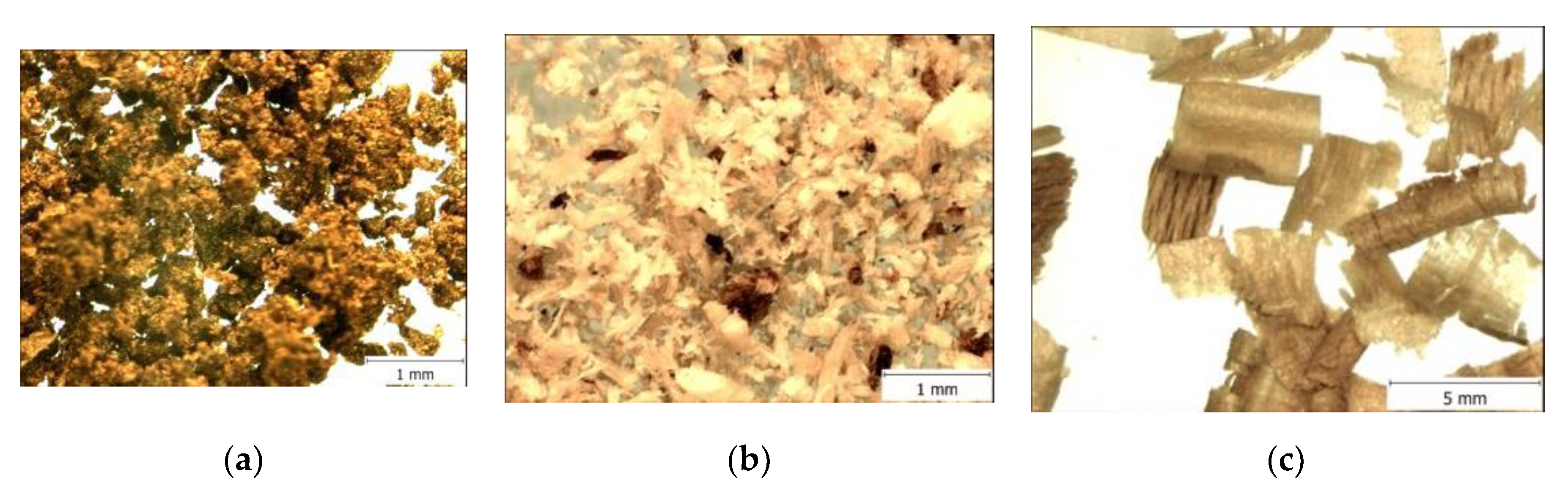
A microscopic analysis of particle size and shape of chosen materials was investigated within their visible disparity, which in practice results in the heterogeneity of the further created mixtures. Measurements were performed by using the stereoscopic microscope Arsenal, Type 347 SZP 11-T Zoom (Prague, Czech Republic) with a measurement scale of 1 mm and 5 mm; the image analysis is visible in
Figure 2.
Worth to be mentioned, that all materials occurred in a form suitable for the densification process regarding their particle size, thus, the milling or crushing processes were not required. It represents a great advantage due to the reduction of electricity demands of such bio-briquette fuel production. On the contrary, the drying process was necessary.
2.2. Fuel Parameters
Chemical composition and energy potential of investigated materials represent important information within the statement of their suitability for energy generation by the process of direct combustion or possibly, fora different sustainable purpose (as was mentioned in the “Introduction” chapter). In total, three different waste materials were subjected to a set of tests, namely, two kinds of wood waste biomass-larch sawdust (sample B) and spruce shavings (sample C) and spent coffee ground (sample A), which represents fruit waste biomass.
The set of performed experimental measurements contained a determination of moisture content
Mc (%) and ash content
Ac (%) by using thermogravimetric analyzer LECO, type TGA 701 (Saint Joseph, United States). Further, the determination of gross calorific value
GCV (MJ∙kg
−1) by using of isoperibol calorimeter LECO, type AC 600 (Saint Joseph, United States) was performed, while result values of net calorific value
NCV (MJ∙kg
−1) were calculated. Finally, the results of elementary composition as Carbon
C (%), Hydrogen
H (%), Nitrogen
N (%) were carried out by laboratory instrument LECO, type CHN628 + S (Saint Joseph, United States), which uses helium as a carrier gas. The content of Oxygen
O (%) was expressed as a difference from the total sum of previously measured elements and ash (in a dry state). All measurements were repeated until the difference between observed results values correspond to the requirements of the standard. The methodology of performed experimental measurements fully followed the instructions of applied mandatory technical standards, see
Table 2.
2.3. Bio-Briquette Samples Production
After performed chemical analysis the investigated materials were used as a feedstock for bio-briquette fuel production. Primarily, the materials were compared with the requirements on the feedstock materials for solid biofuel production, specific standards are noted in
Table 3.
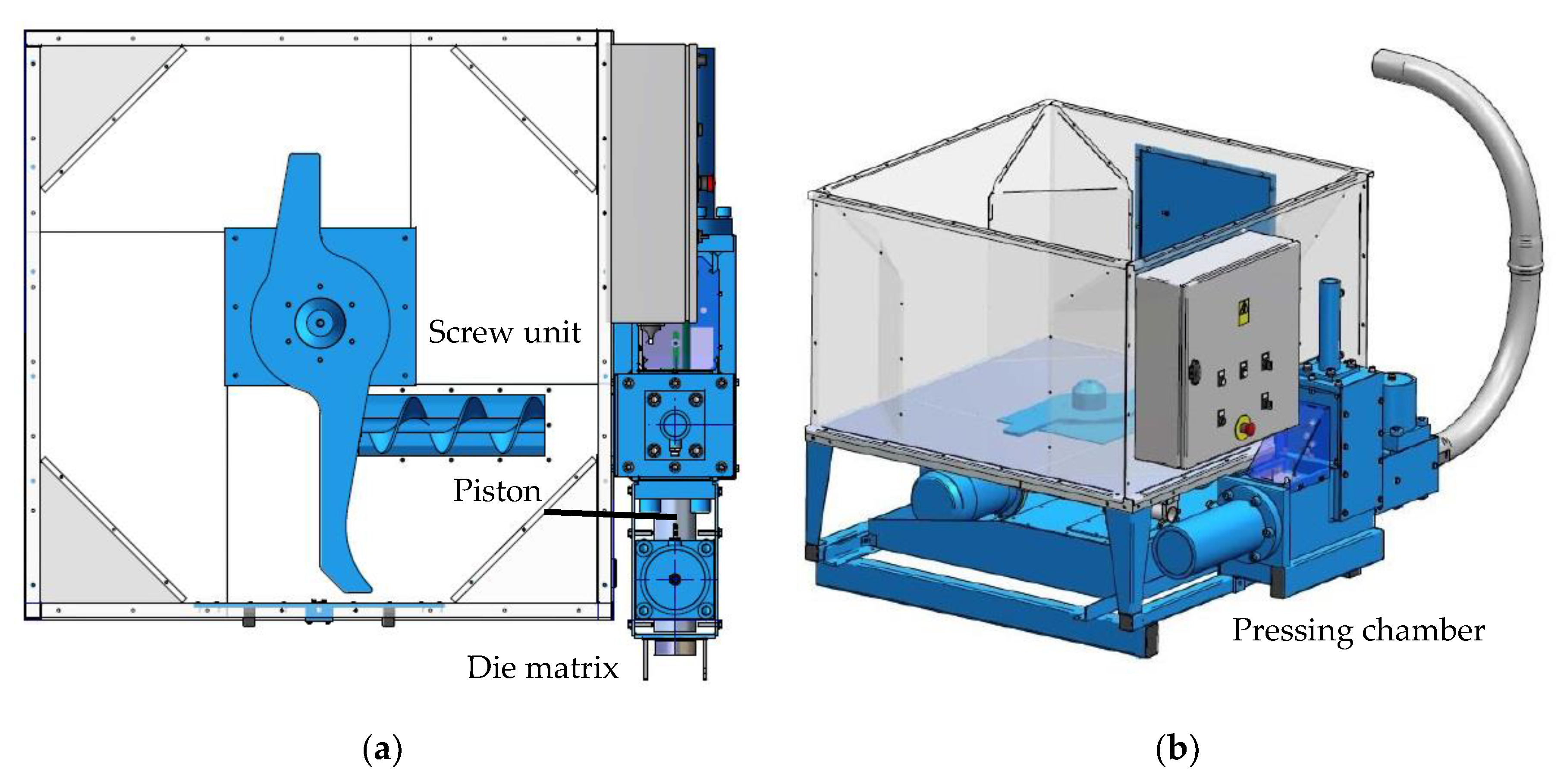
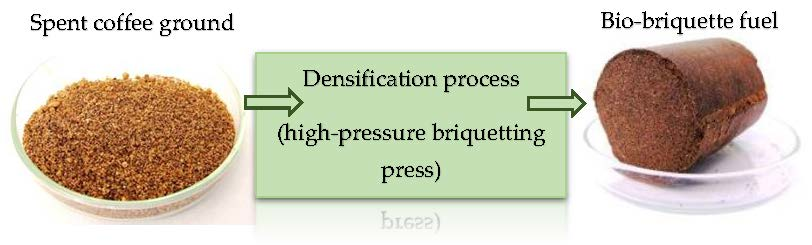
Secondary, when the materials were evaluated as a suitable feedstock (waste biomass) for solid biofuel production, they were used for the actual densification process. For bio-briquette samples production a high-pressure hydraulic briquetting press Briklis, type BrikStar 30-12 (shown in
Figure 3) (Malšice city, Czech Republic) was used, which works with a piston as a pressing unit. Used briquetting press operates automatically, thus, ensures similar bulk density ρ (kg·m
−3) of produced bio-briquette samples. Produced bio-briquette samples were cylindrically shaped with diameters of 50 mm due to the shape and size of briquetting press die matrix.
A technical specification of used briquetting press is noted in
Table 4 within the better understanding of the impact of such equipment use for bio-briquette in large-scale commercial production.
In the first step, 100% A sample (see
Table 4) was used as a feedstock. Further, larch sawdust and spruce shavings have been involved in the investigation and been mixed with the SCG in different mass ratios (1:1, 3:1) to avoid another unsuccessful experiment. Created mixtures represented mixed biomass when one of the materials should be considered as an additive. Using additives within the mixed biomass bio-briquette fuel is common practice to increase specific parameters or properties. In the present case, the wood biomass was used to improve the unsuitable behavior of SCG during the densification process. Specifically created mixtures of feedstock materials are described in
Table 5.
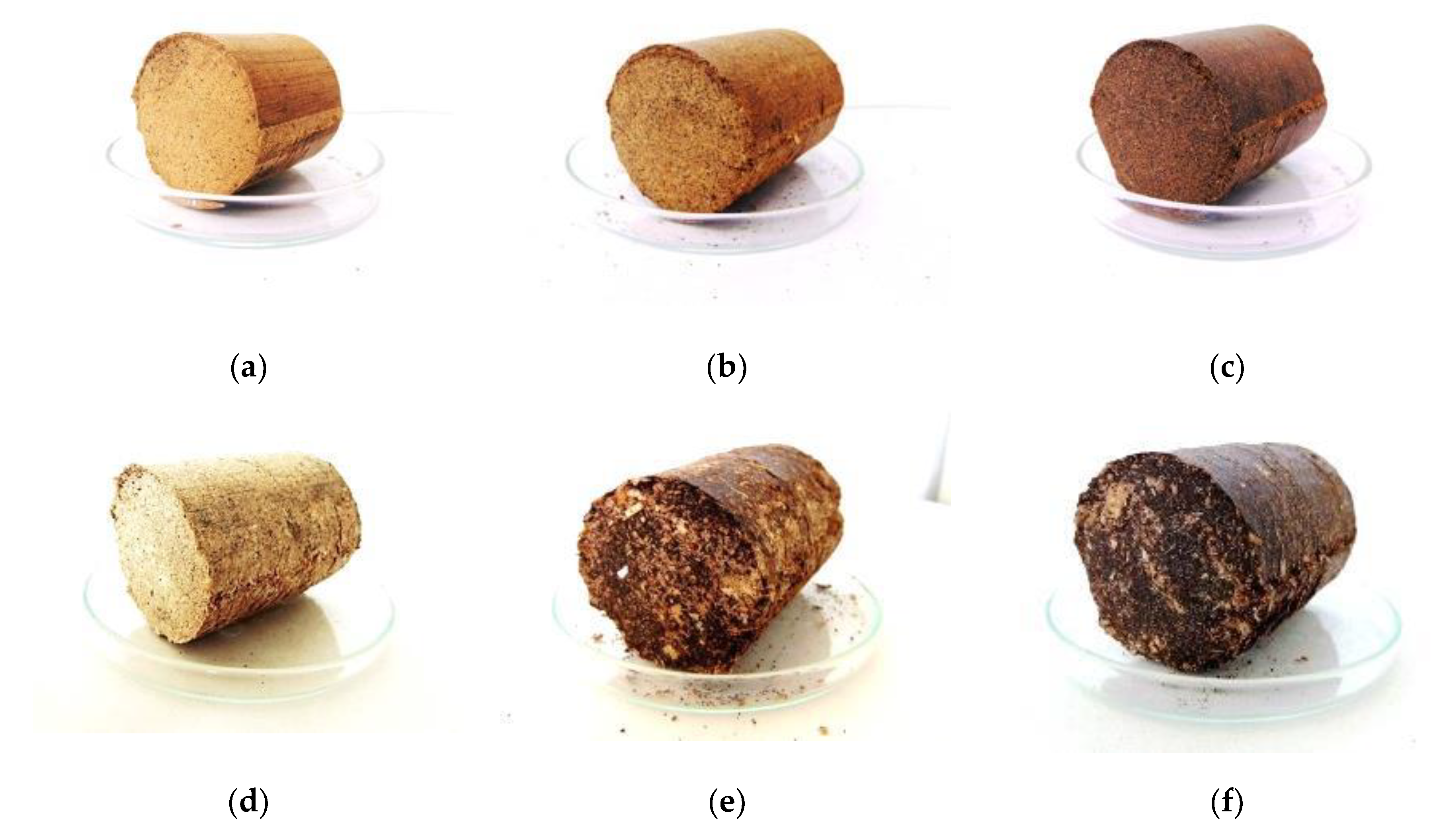
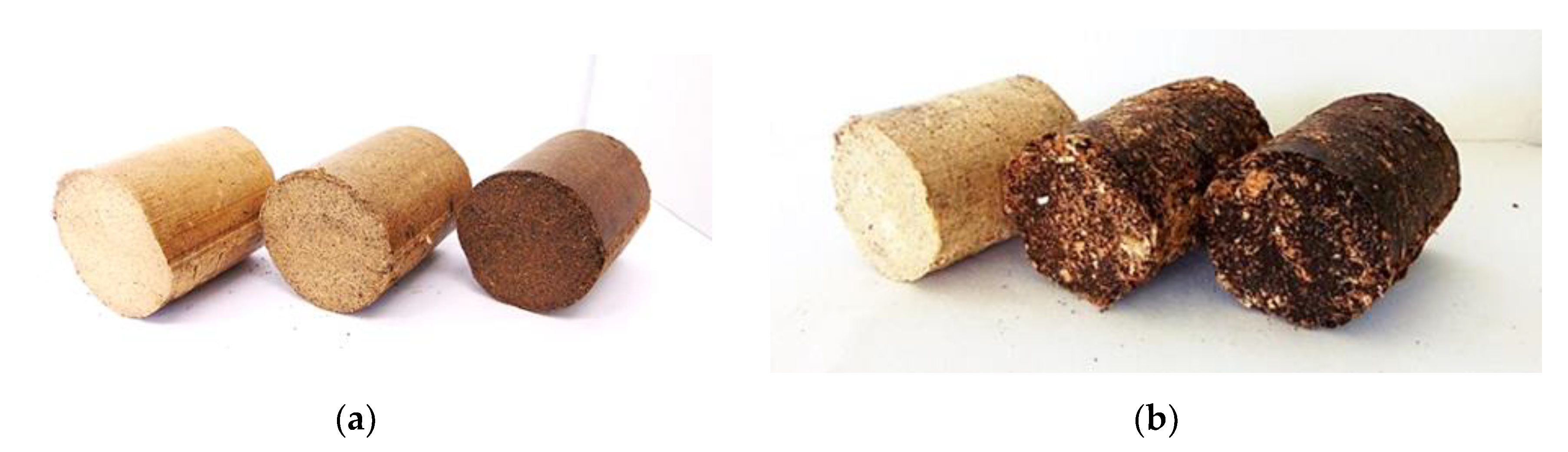
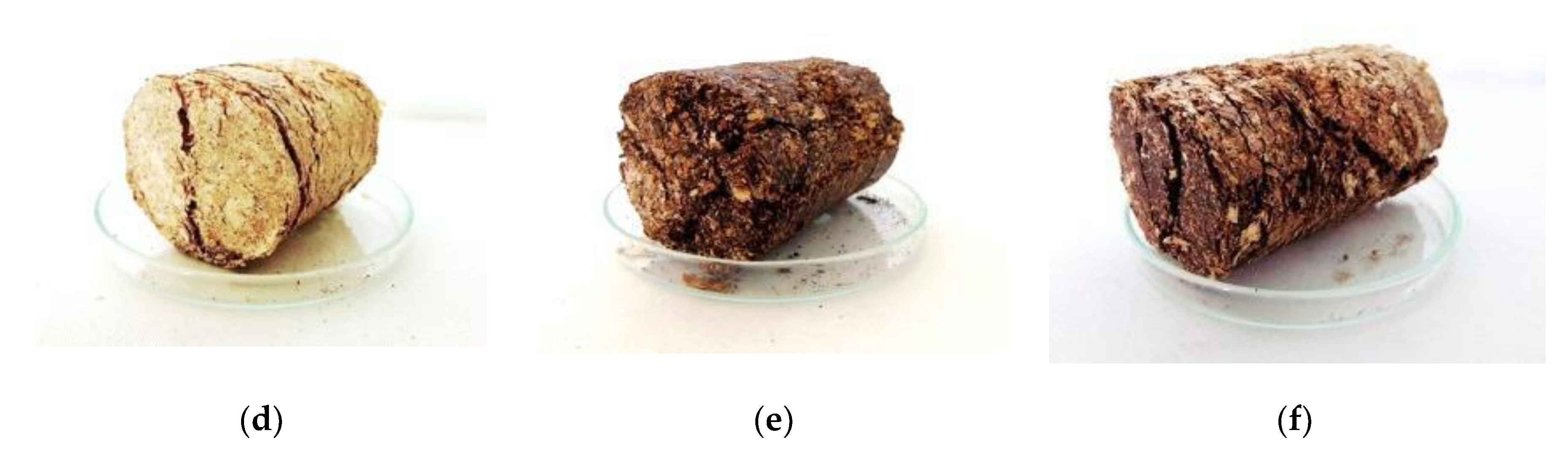
All created mixtures were successfully used for bio-briquette samples production. Six different types which are expressed in
Figure 4 were produced.
All bio-briquette samples were produced with the same diameter (approximately 50 mm), but their length and weight differed. After measurements of all sample dimensions, the average values were calculated and are noted in
Table 6.
2.4. Mechanical Quality Indicators
After measurements of basic parameters were bio-briquette samples subjected to the determination of their mechanical quality. Specific indicators were experimentally tested within the statement of the type of bio-briquette samples with the highest mechanical quality. Experimental measurements were performed within the evaluation of the final mechanical quality of investigated bio–briquette samples and the procedures corresponded to the related standards (see
Table 7) or were based on knowledge from practice.
Basic dimension parameters of produced bio-briquette samples were used for the calculation of the first important mechanical quality indicator, a Bulk density ρ (kg·m
−3). Such an indicator describes the ability and suitability of the material for the densification process and resulting in the final quality of products. Following formula was used within performed calculations:
ρ-volume density (kg·m
−3),
m-bio-briquette samples mass (kg),
V-bio-briquette samples volume (m
3).
As an important indicator of bio-briquette fuel mechanical quality within the commercial biofuel sale is considered a Mechanical durability
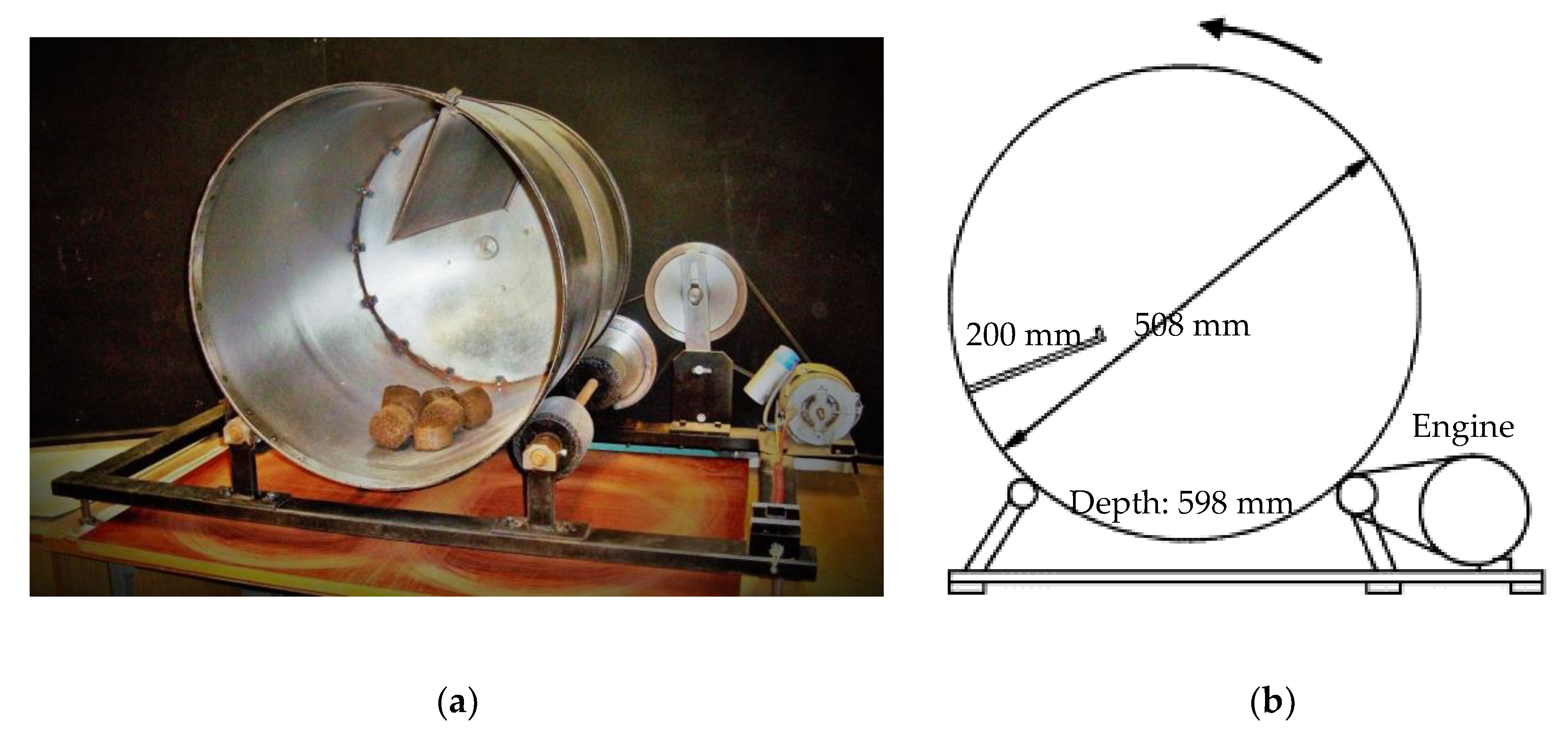
DU (%); such an indicator describes the mechanical strength and ability of the bio-briquette fuel to resists the impacts during the handling, transportation or storage. Within the experimental testing were bio-briquette samples subjected to controlled impacts inside of the special electric rotating dust-proof drum equipped with a rectangular steel partition, see
Figure 5.
Before and after experimental testing where all samples weighted and final loss of material (abrasion) was calculated by using of following formula:
DU-mechanical durability (%),
ma-samples weight after testing (g),
me-samples weight before testing (g).
To simulate the stress of the bio-briquette fuel in practice, the mechanical indicator of Compressive strength
σ (N∙mm
−1) was applied. Such an indicator did not correspond to any technical standards but is based on previously published papers about strength of products under the pressure [
25,
26,
27,
28]. Such an indicator plays an important role in the logistics of solid biofuel transportation and storage when bio-briquette fuel is stored above each other. Basically, a maximum increasing load, which can tested bio-briquette sample absorbs before it disintegrates, was measured [
29]. Experimental measurements were performed by using a universal testing machine Labortech, type MP Test 5.050 (Opava, Czech Republic) with force meter KAF-S (range of 0–5000 N, used accuracy 0.1 N). After experimental deformation measurement of maximal load
Fmax (N) were used in the following formula to calculate the result values of Compressive strength
σ (N∙mm
−1):
σ-compressive strength in cleft (N∙mm
−1),
Fmax-maximal load (N),
L-bio-briquette sample length (m).
3. Results and Discussion
Present result data corresponds to the investigated issues of feedstock materials parameters and bio-briquette samples quality; consequently, the current chapter is divided in such order as well.
3.1. Fuel Parameters
The first evaluated indicators should primarily describe the suitability of SCG for direct combustion processes within the bio-briquette fuel burning. As
Table 8 below describes, the results of the basic chemical parameters of investigated samples were obtained, in both, wet basis and dry basis.
Samples moisture content
Mc (%) was stated as a first; results of all samples occurred at a higher level than it is recommended for the bio-briquette fuel production, but the level was still acceptable. Moisture content
Mc (%) of properly prepared feedstock material should not exceed 15%. A higher level of moisture content
Mc (%) should be considered as a limitation because it results in a lower amount of produced energy (more energy is consumed for vaporizing of moisture during the fuel burning) [
30,
31]. Nevertheless, such an indicator can be easily improved by the feedstock drying process. Further, an energy potential of samples expressed as a calorific values
CV (MJ∙kg
−1) was investigated. As is visible, calorific value
CV (MJ∙kg
−1) of wood biomass samples occurred at a satisfactory level, typical for wood biomass according to the technical standard EN ISO 17225-1 (2015): Solid Biofuels - Fuel Specifications and Classes-Part 1: General Requirements. On the contrary, desired SCG proved an extremely high level of calorific values
CV (MJ∙kg
−1), which indicated a high potential in energy generation by using combustion processes. Moreover, if the level of moisture content
Mc (%) occurred at lower level, the results of calorific values
CV (MJ∙kg
−1) would be even better. Such a positive result was amplified by the observed low level of ash content
Ac (%), which is highly appreciated because it indicates the positive behavior of fuel during burning. Moreover, observed ash content
Ac (%) was comparable with the ash contents
Ac (%) of wood biomass samples, which commonly occurred at low level, but other biomass kinds (herbaceous, fruit, aquatic, mixed) commonly express worst results. Thus, the combination of a high level of calorific values
CV (MJ∙kg
−1) and low level of ash content
Ac (%) was evaluated as a significant advantage of SCG samples.
In consequence, SCG represents high-quality feedstock material for bio-briquette production, as well as to produce other types of biofuel intended for energy generation by burning. It indicates that SCG can be used as an additive or as one of feedstock in specific feedstock mixtures within increasing of final mixture calorific value. Such an idea was already investigated in a case of a mixture of SCG with herbaceous biomass (wheat straw) with satisfactory results [
32]. As was reported in a different study, addition of SCG in amount of 10% and 25% to beech wood biomass feedstock increased the calorific value
CV of final products from initial 18.77 MJ∙kg
−1 to 19.12 MJ∙kg
−1 (10% of SCG) and 20.32 MJ∙kg
−1 (10% of SCG) [
33].
For comparison of observed result values with other author’s results (sorted from the best result to the worst) were inserted in
Table 9 below.
The observed high level of calorific value
CV (MJ∙kg
−1) could be caused by the presence of residual oil in the SCG. As the literature reports, the content of residual oil in SCG occurs at the following levels: 13.0% [
38], 14.7% [
34], 28.3%. Moreover, the calorific value
CV (MJ∙kg
−1) of SCG residual oil occurred at an extremely high level, specifically 36.4 MJ∙kg
−1 [
35]. The elementary composition analyses (expressed in
Table 10) proved low levels of Oxygen
O (%) in the case of SCG, which is required. Result values of both wood biomass materials occurred at a satisfactory level as well; Oxygen
O (%) level should occurred around 40%.
To compare observed data of elementary composition,
Table 11 was prepared; noted data originates from other authors’ studies and except one value of Nitrogen
N (%) (highlighted by bold letters) all values occurred at a similar level as the result value of the present research.
For a more detailed evaluation of investigated materials chemical analyses where the results were also determined in a dry ash free state, see
Table 12, which expresses them in the most exact way. Within this state, the results are expressed without the presence of ash, which can occasionally influence the final result values. Such an influence can be caused by the contamination of samples by dust or external impurities.
3.2. Mechanical Quality
The first practical result, which was observed, was the inability of production of bio-briquette samples from pure SCG, thus, it was concluded that such production is not feasible. Moreover, related to the complications monitored during the briquetting press work, it was not recommended to continue in the procedure due to the high possibility of briquetting press damages. Before such a statement, it must be highlighted that the SCGs were properly prepared for the densification process and fulfilled all requirements (suitable moisture content and particle size), thus, the difficulties were related directly to the characteristics of SCG itself as a reported high content of residual oil.
The second observed result was related to the visual conditions of produced bio-briquette samples. As visible from
Figure 6 the homogeneity of samples (as well as feedstock mixture) achieved better results in the case of the A + B mixtures. Such a result was related to the similarity of their particle size. In the case of the A + C mixtures was concluded that the difference in the particle sizes was too significant, thus, the particles could not establish permanent and strong bonds between each other. Such a statement was supported by the observation of particle bonds breaking directly after the bio-briquette samples production, which was reflected as a material loss during sample handling.
If compare results of tested mechanical quality indicators, all of them proved the higher mechanical quality of bio-briquette samples produced from A + B mixtures. First monitored (calculated) indicator, the bulk density
ρ (kg·m
−3), proved a satisfactory level of all produced bio-briquette samples if compared with the requirements for commercial sale;
ρ should range between 900–1200 kg·m
−3 [
37,
38,
39]. Observed data noted in
Table 13 provide a clear comparison between all tested bio-briquette samples, while
Table 13 provides a comparison between bulk densities
ρ (kg·m
−3) of bio-briquette fuel produced from different feedstock materials.
Further, mechanical durability
DU (%) represents the most important quality indicator of bio-briquette fuel, which indicates if the fuel is suitable for commercial production (achievement is mandatory). The lowest acceptable level of mechanical durability is
DU > 90%; the next level defining solid biofuel of the highest mechanical durability is
DU > 95% [
40]. As is visible from
Table 12, the bio-briquette samples produced from A + B mixtures achieved the acceptable level and fulfilled mandatory requirements for commercial sale. Bio-briquette samples produced from A + C mixtures exhibited results deeply below the acceptable level of
DU (%). Satisfactory results were observed only in the case of 100% C bio-briquette samples. Observed result values can be easily compared with the results of pure wood biomass feedstock samples to evaluate the influence of SCG on the final mechanical quality of samples. A comparison of investigated bio-briquette samples
DU (%) with the results of other author’s studies is expressed in
Table 14.
Moreover, bio-briquette samples produced from A + B mixtures proved a high level of mechanical durability DU (%), despite their higher level of moisture content Mc (%), which is commonly evaluated as a limitation. In general, a high level of moisture content Mc (> 15%) can cause problems during the densification process or within the product’s final quality.
The last investigated indicator, the compressive strength
σ (N·mm
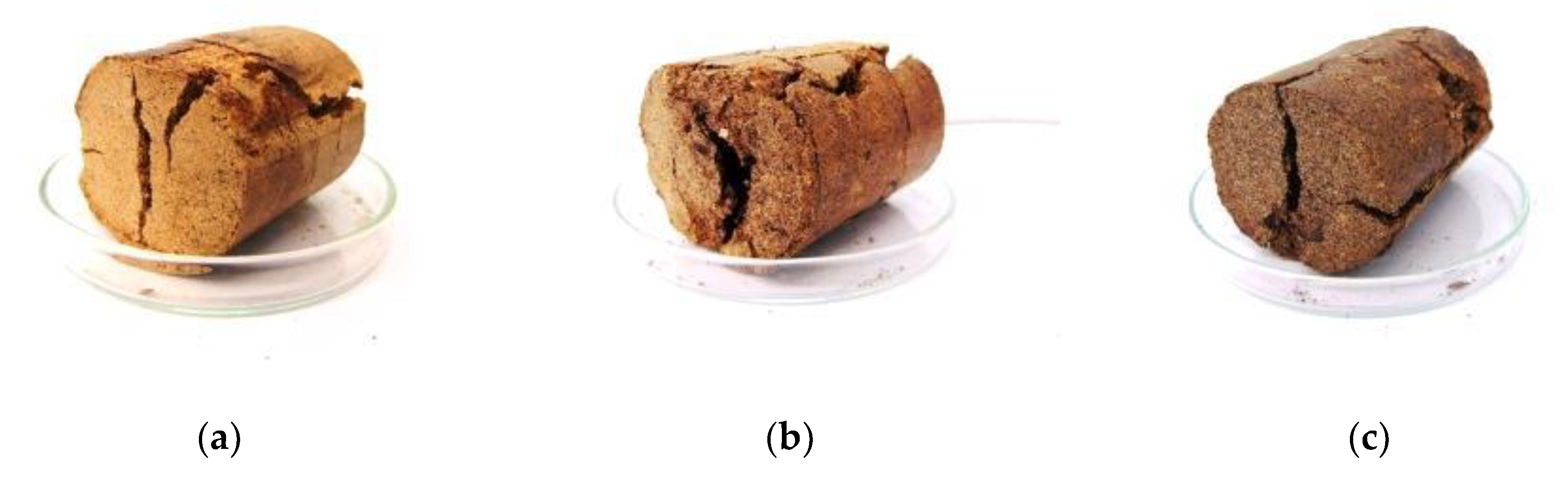
−1), monitored the ability of bio-briquette samples to resist the pressure. In practice, such ability is important during bio-briquette fuel handling and storage when the fuel is packed above each other in multiple layers. Best results were achieved by 100% B and 100% C bio-briquette samples, which was expected. All bio-briquette samples created from feedstock mixtures exhibited worse result, but comparable within the mixture samples. The investigated bio-briquette samples after the deformation testing are expressed in
Figure 7.
Compressive strength
σ (N·mm
−1) of bio-briquette fuel is not stated by any mandatory standards, thus, there are no required levels to achieve. Its evaluation can be performed only by the form of comparison with similar performed measurements, see
Table 14.
As data noted in
Table 14 indicates, bio-briquette samples investigated in present research proved a satisfactory level of bulk density
ρ (kg·m
−3), if compare with other types of bio-briquette fuel. In the case of mechanical durability
DU (%) can be indicated that bio-briquette samples from A + B mixtures and 100% C material correspond to the highest level of
DU (%) across different biomass bio-briquette fuel. On the contrary, it can be concluded that observed results of bio-briquette samples produced from 100% A and A + C mixtures occurred at a very low level, even if compare with various types of other bio-briquette fuel. Finally, the compressive strength
σ (N·mm
−1) comparison expressed that 100% B and 100% C occurred at a satisfactory level of such indicator, while all mixed bio-briquette samples occurred at a lower level.



 ,
,