Article

A Process Integration Method for Total Site Cooling, Heating and Power Optimisation with Trigeneration Systems

by
Khairulnadzmi Jamaluddin
1,2,
Sharifah Rafidah Wan Alwi
1,2,*,
Zainuddin Abdul Manan
1,2,
Khaidzir Hamzah
2 and
Jiří Jaromír Klemeš
3
1
Process Systems Engineering Centre (PROSPECT), Research Institute for Sustainable Environment, Universiti Teknologi Malaysia, Johor Bahru 81310 UTM, Malaysia
2
School of Chemical and Energy Engineering, Faculty of Engineering, Universiti Teknologi Malaysia, Johor Bahru 81310 UTM, Malaysia
3
Sustainable Process Integration Laboratory—SPIL, NETME Centre, Faculty of Mechanical Engineering, Brno University of Technology—VUT BRNO, Technická 2896/2, 616 69 Brno, Czech Republic
*
Author to whom correspondence should be addressed.
Energies 2019, 12(6), 1030; https://doi.org/10.3390/en12061030
Submission received: 1 February 2019 / Revised: 8 March 2019 / Accepted: 11 March 2019 / Published: 16 March 2019

Abstract

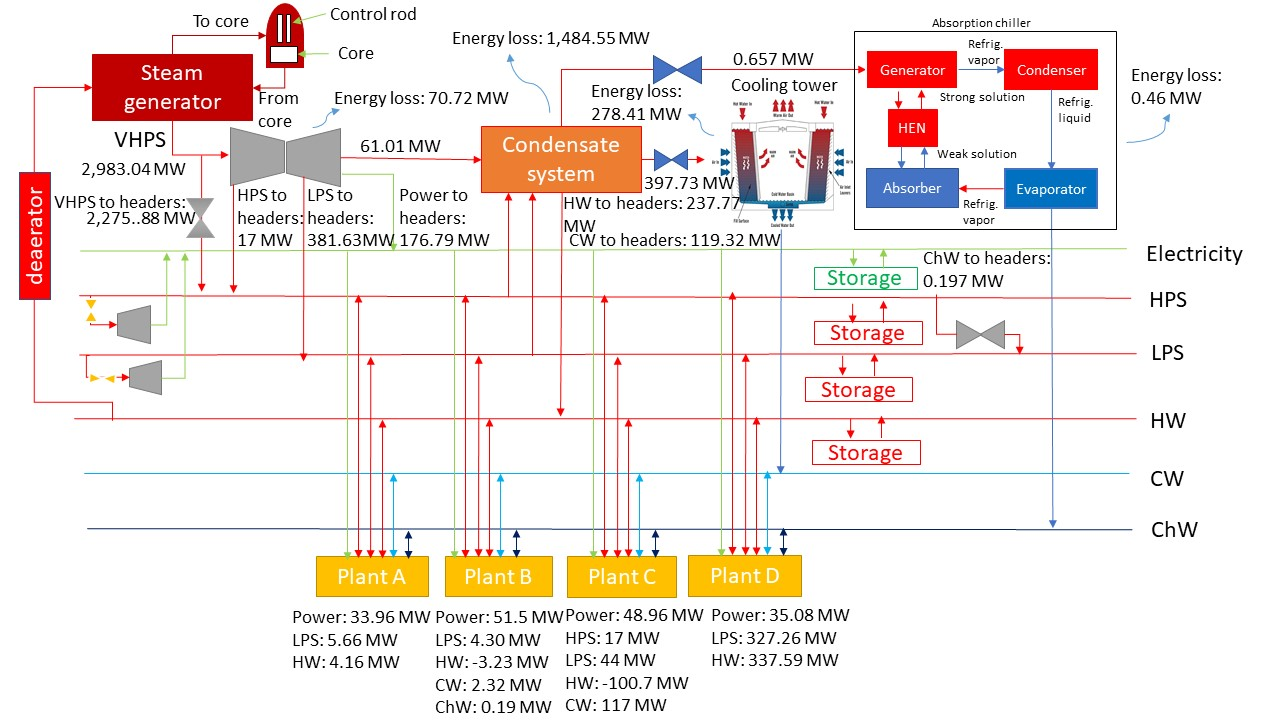
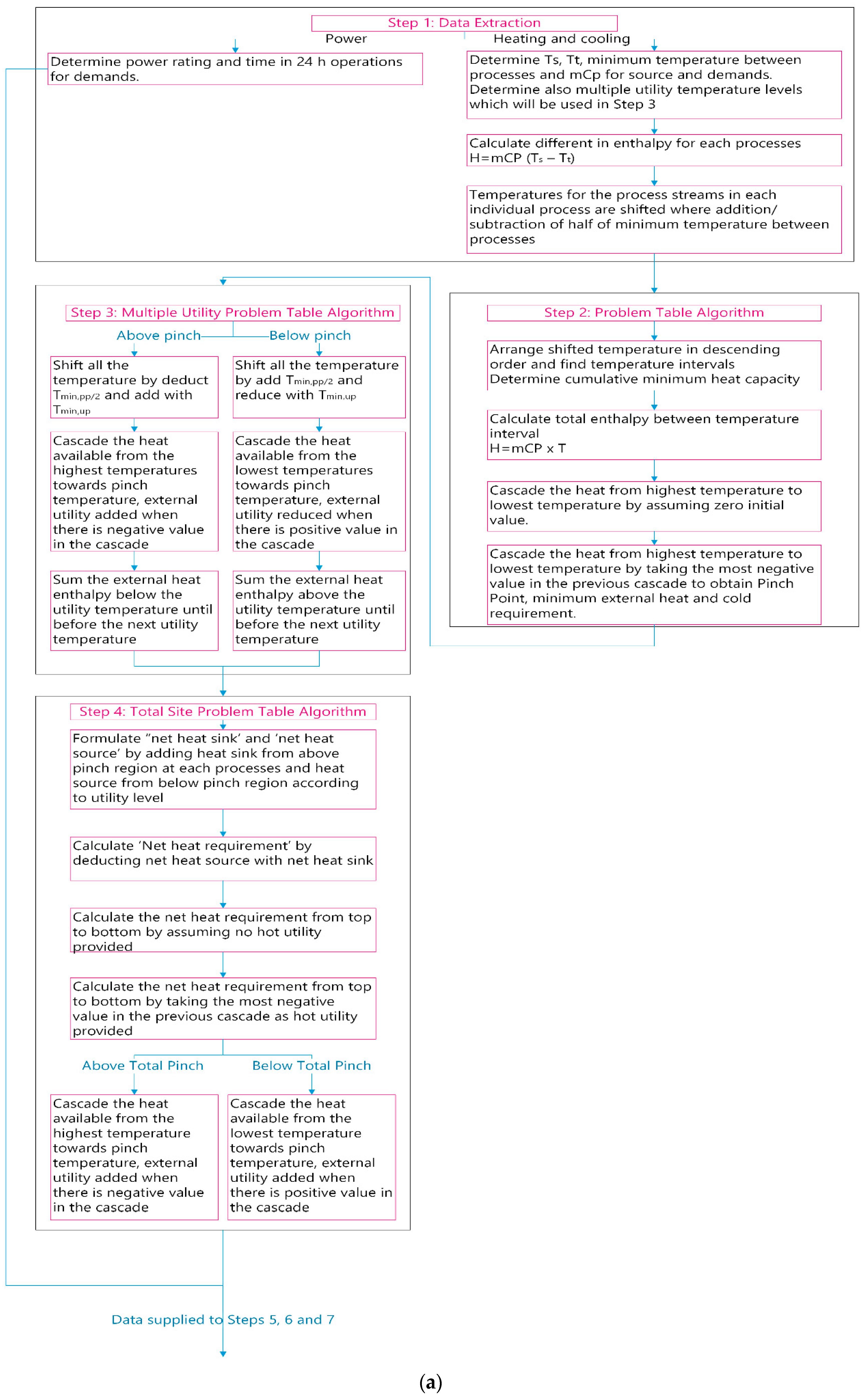
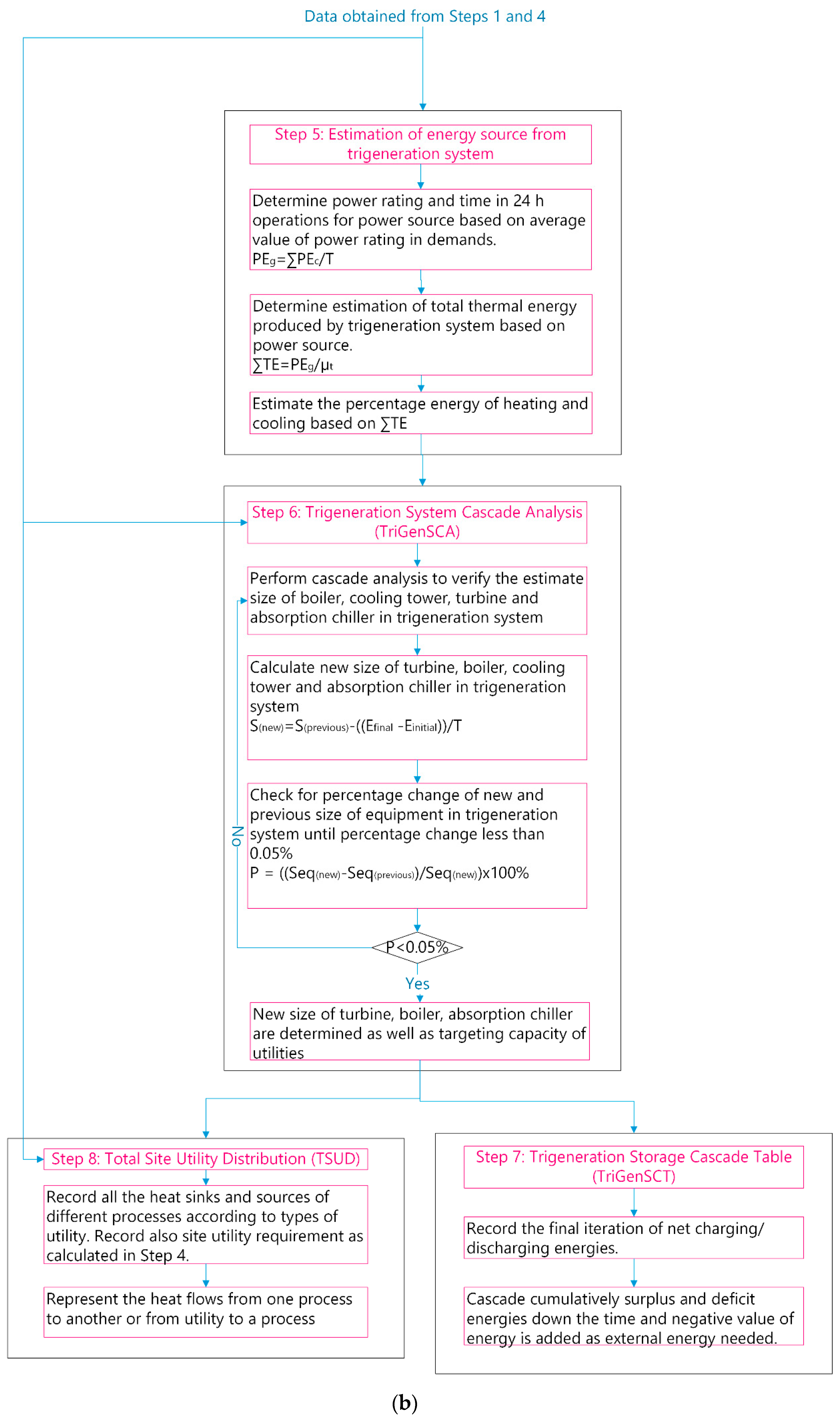
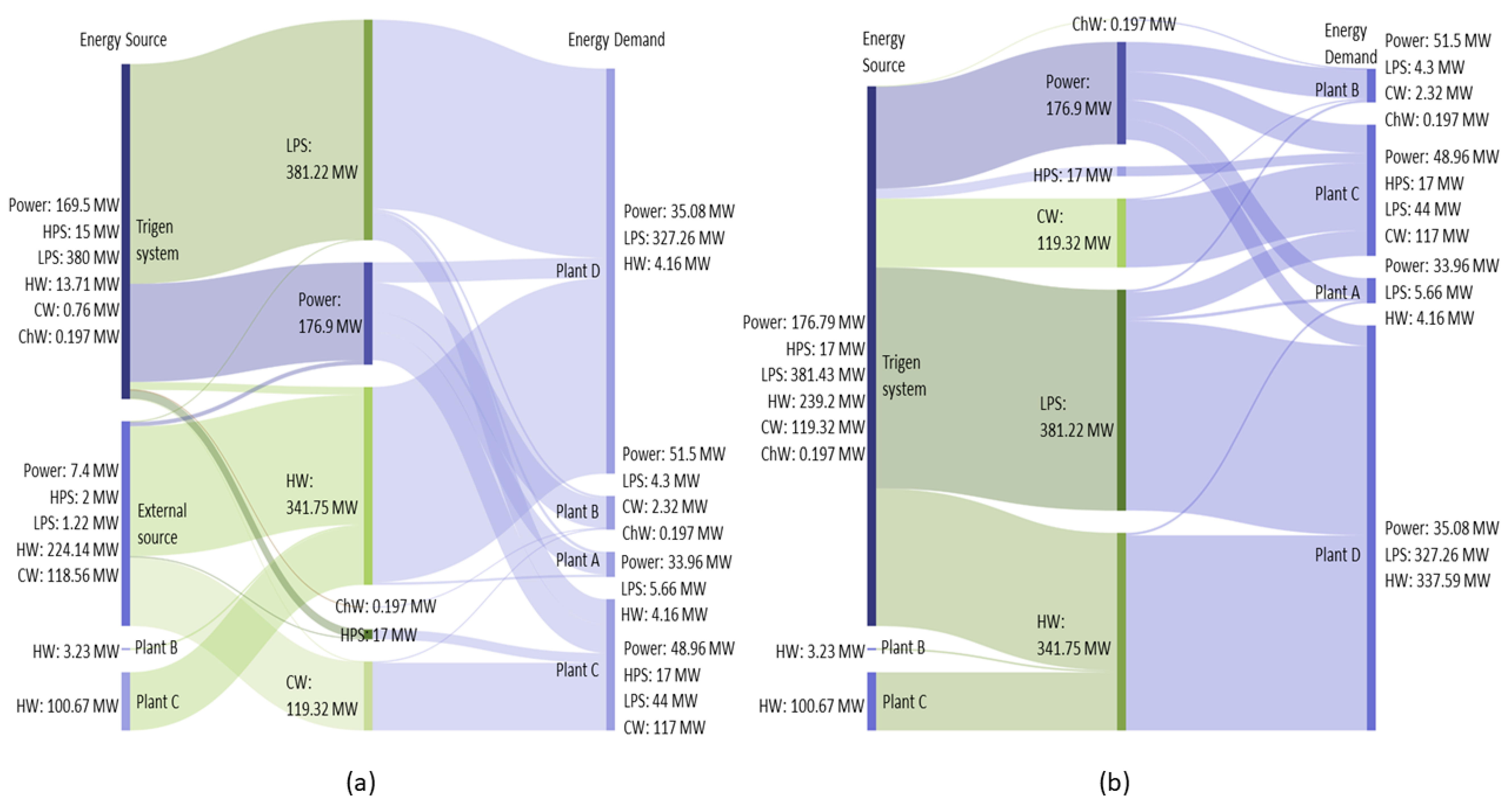
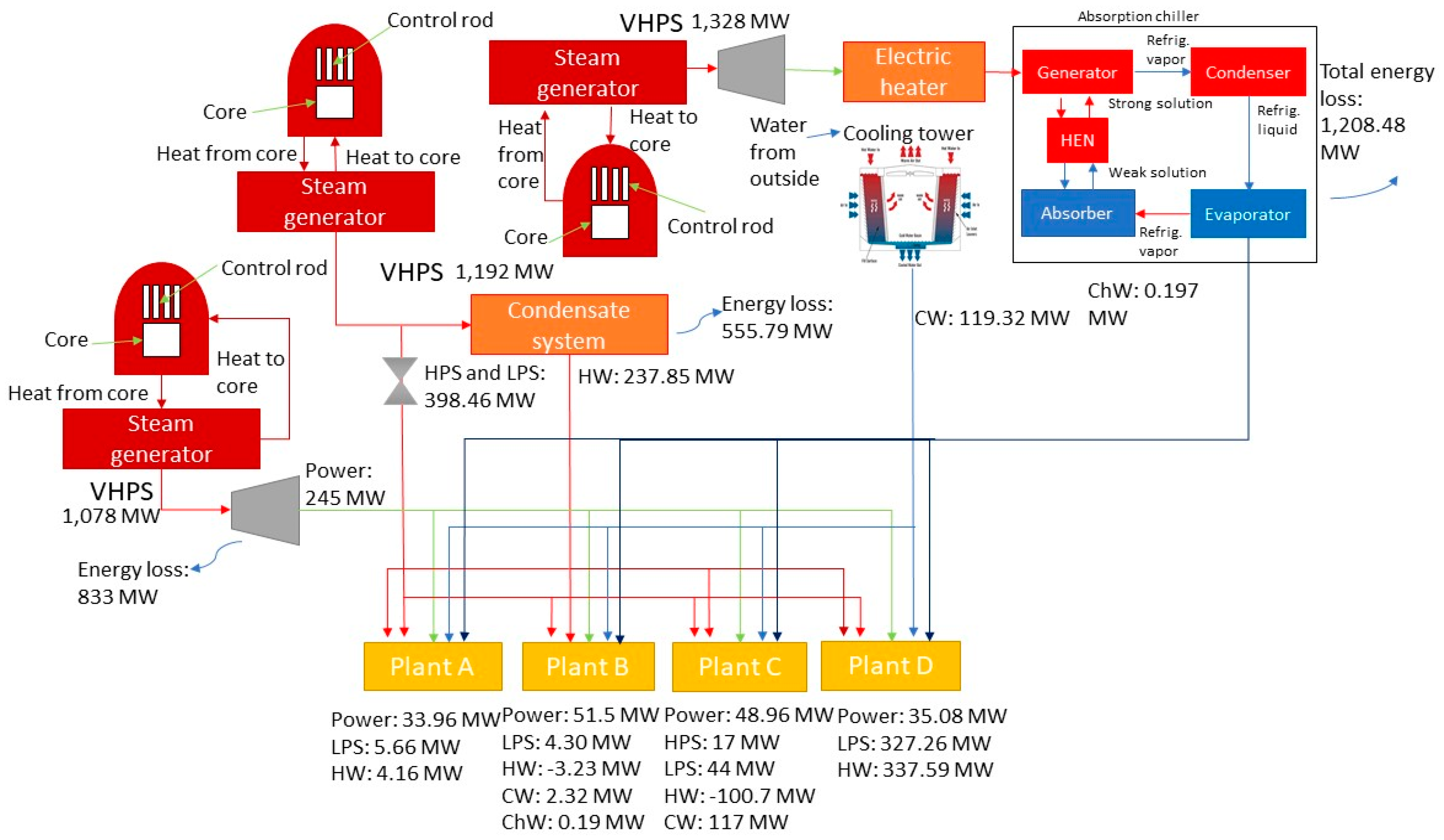
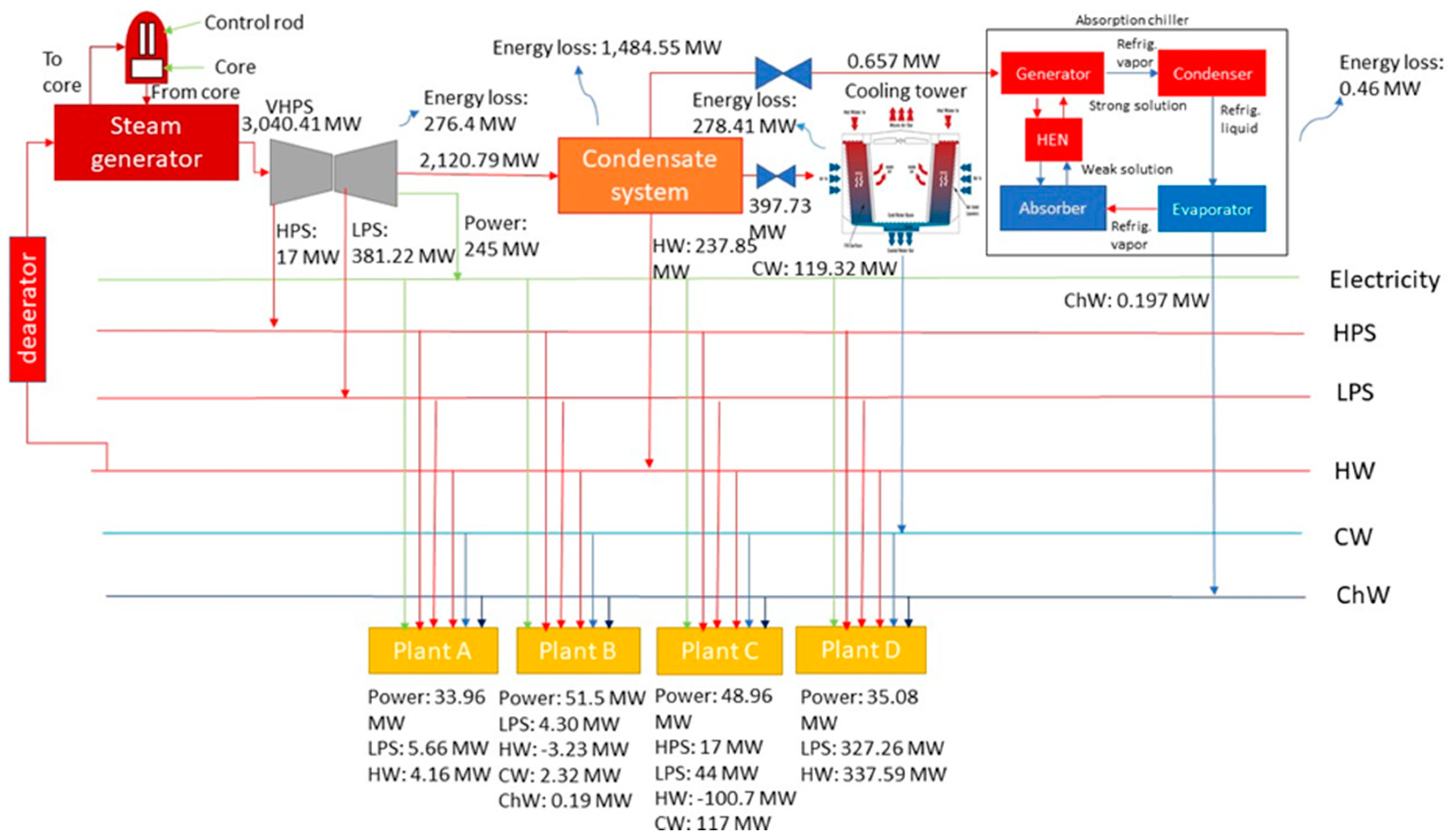
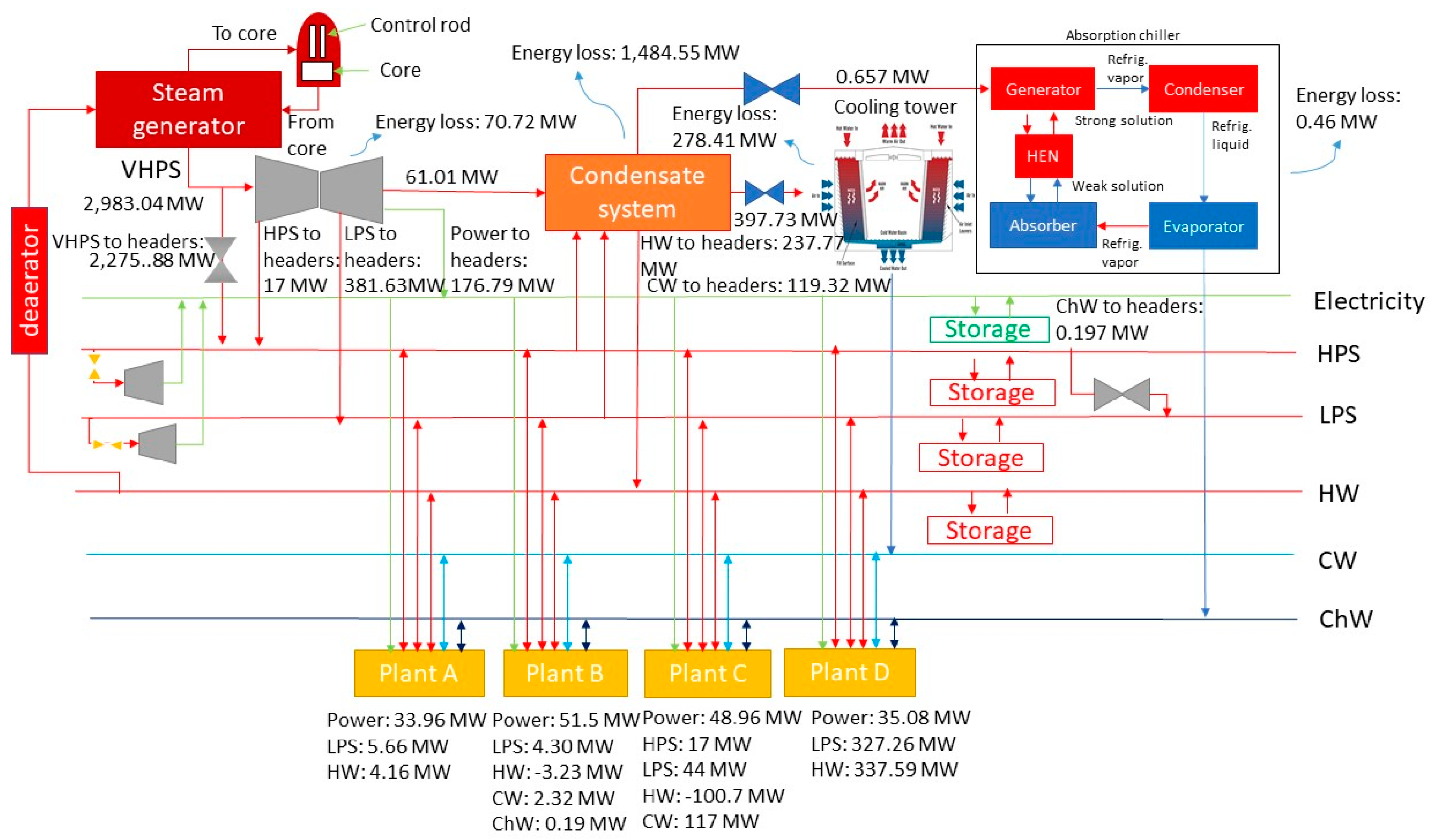
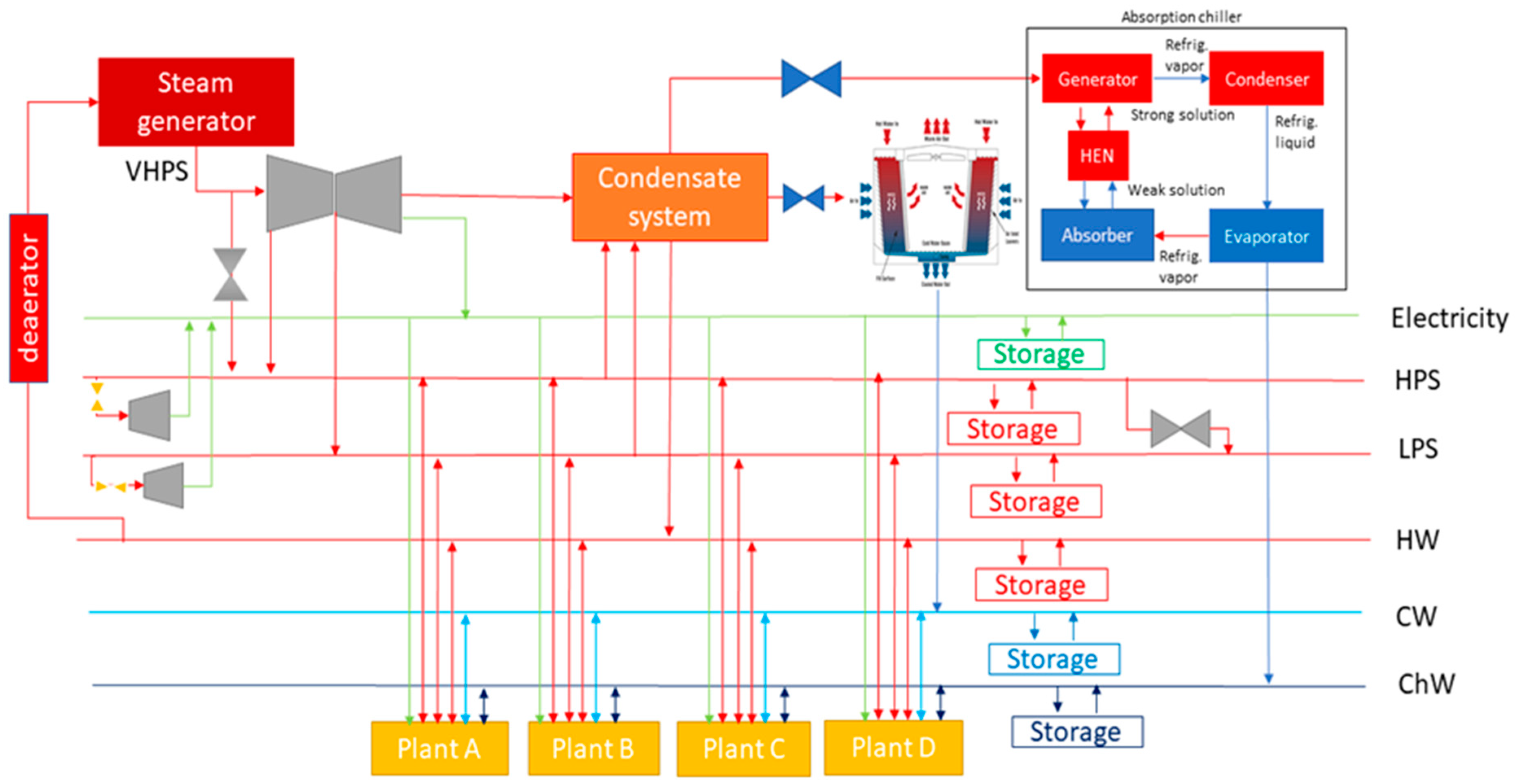
Research and development on integrated energy systems such as cogeneration and trigeneration to improve the efficiency of thermal energy as well as fuel utilisation have been a key focus of attention by researchers. Total Site Utility Integration is an established methodology for the synergy and integration of utility recovery among multiple processes. However, Total Site Cooling, Heating and Power (TSCHP) integration methods involving trigeneration systems for industrial plants have been much less emphasised. This paper proposes a novel methodology for developing an insight-based numerical Pinch Analysis technique to simultaneously target the minimum cooling, heating and power requirements for a total site energy system. It enables the design of an integrated centralised trigeneration system involving several industrial sites generating the same utilities. The new method is called the Trigeneration System Cascade Analysis (TriGenSCA). The procedure for TriGenSCA involves data extraction, constructions of a Problem Table Algorithm (PTA), Multiple Utility Problem Table Algorithm (MU PTA), Total Site Problem Table Algorithm (TS PTA) and estimation of energy sources by a trigeneration system followed by construction of TriGenSCA, Trigeneration Storage Cascade Table (TriGenSCT) and construction of a Total Site Utility Distribution (TSUD) Table. The TriGenSCA tool is vital for users to determine the optimal size of utilities for generating power, heating and cooling in a trigeneration power plant. Based on the case study, the base fuel source for power, heating and cooling is nuclear energy with a demand load of 72 GWh/d supplied by 10.8 t of Uranium-235. Comparison between conventional PWR producing power, heating and cooling seperately, and trigeneration PWR system with and without integration have been made. The results prove that PWR as a trigeneration system is the most cost-effective, enabling 28% and 17% energy savings as compared to conventional PWR producing power, heating and cooling separately.
Keywords: trigeneration system; process integration; pinch analysis; co-generation; storage system; trigeneration system cascade analysis; total site heat integration trigeneration system; process integration; pinch analysis; co-generation; storage system; trigeneration system cascade analysis; total site heat integration
Graphical Abstract