Prediction-Learning Algorithm for Efficient Energy Consumption in Smart Buildings Based on Particle Regeneration and Velocity Boost in Particle Swarm Optimization Neural Networks

Abstract
1. Introduction
2. Literature Review
3. Particle Swarm Optimization-Based Neural Networks (PSO-NN) Prediction Methodology
3.1. Neural Networks (NNs)
3.2. Particle Swarm Optimization (PSO)
3.3. Training NNs with PSO
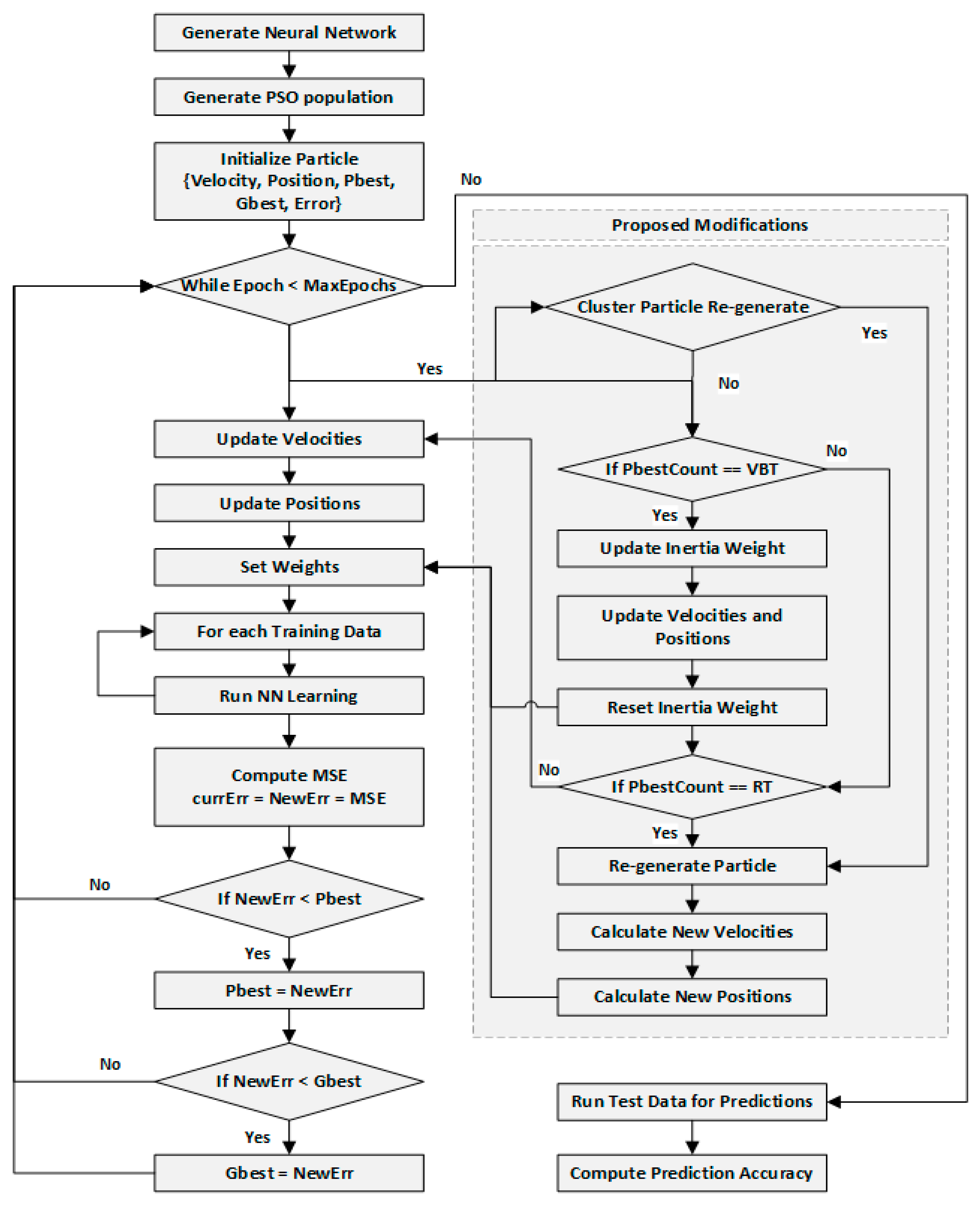
3.4. Modified PSO-NN
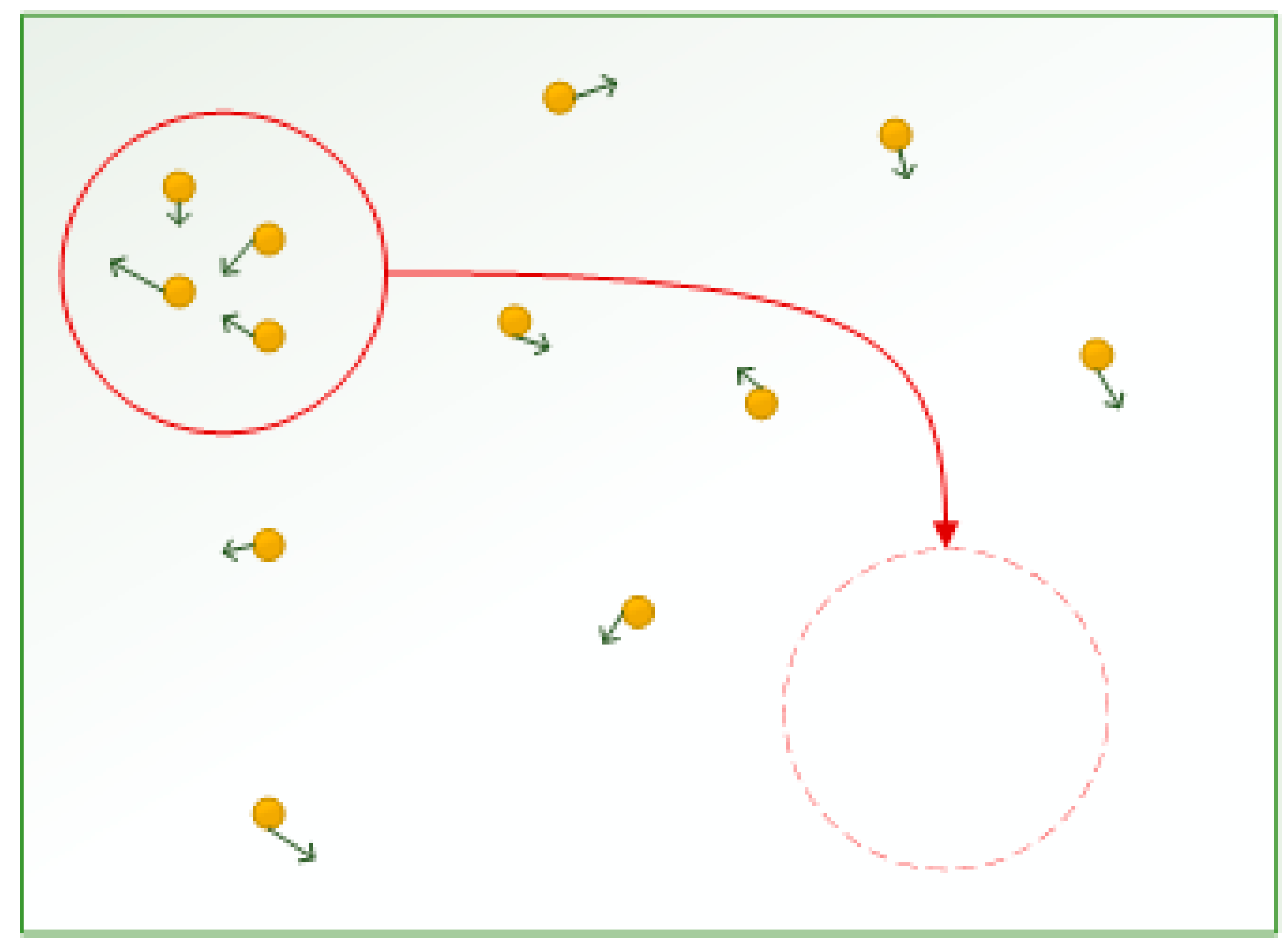
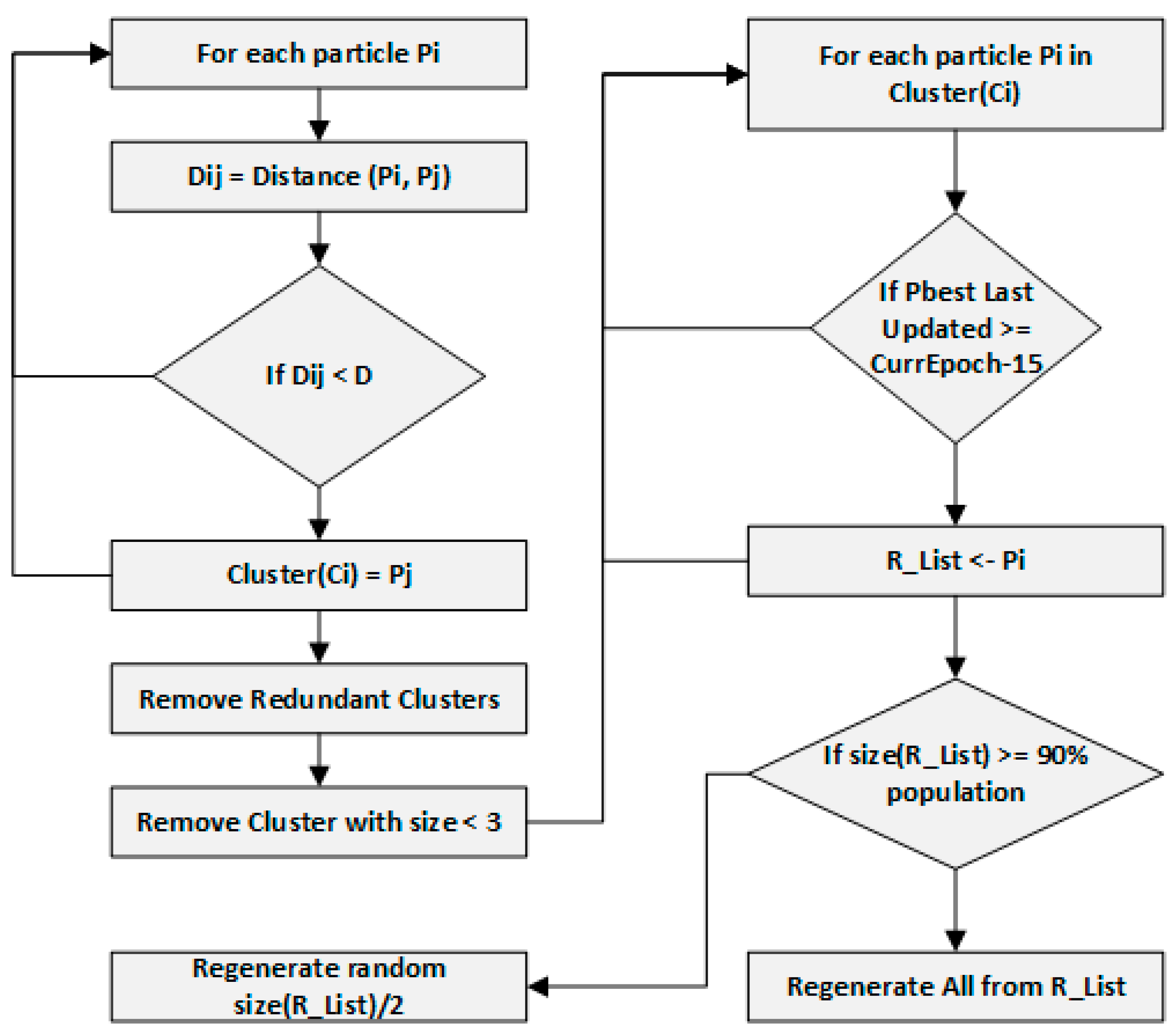
3.4.1. Re-Generation Based PSO-NN (R-PSO-NN)
3.4.2. Velocity Boost-Based PSO-NN (VB-PSO-NN)
4. Data Set and Experimental Setup
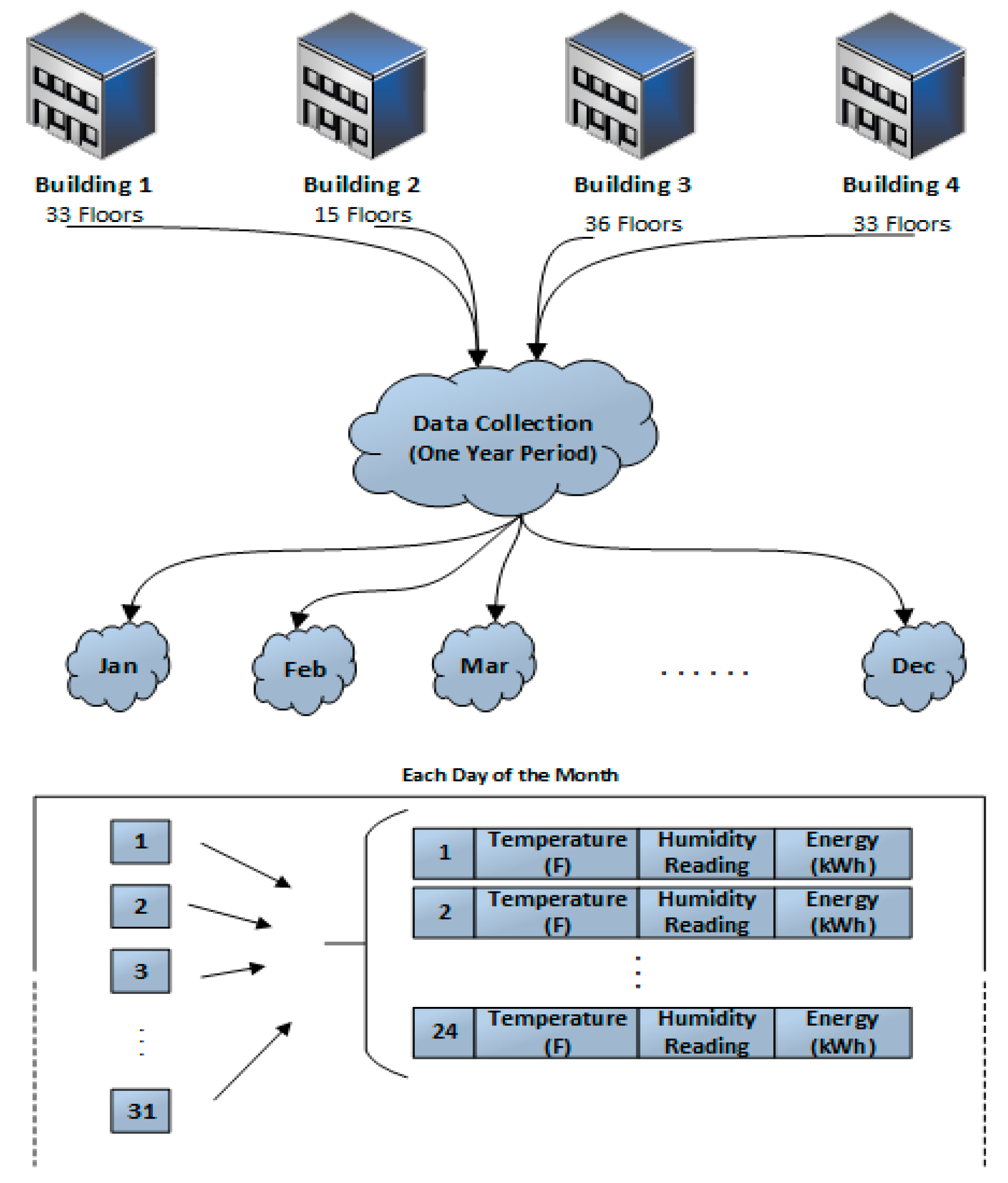
4.1. Data Set
4.2. Experimental Setup
5. Results Analysis
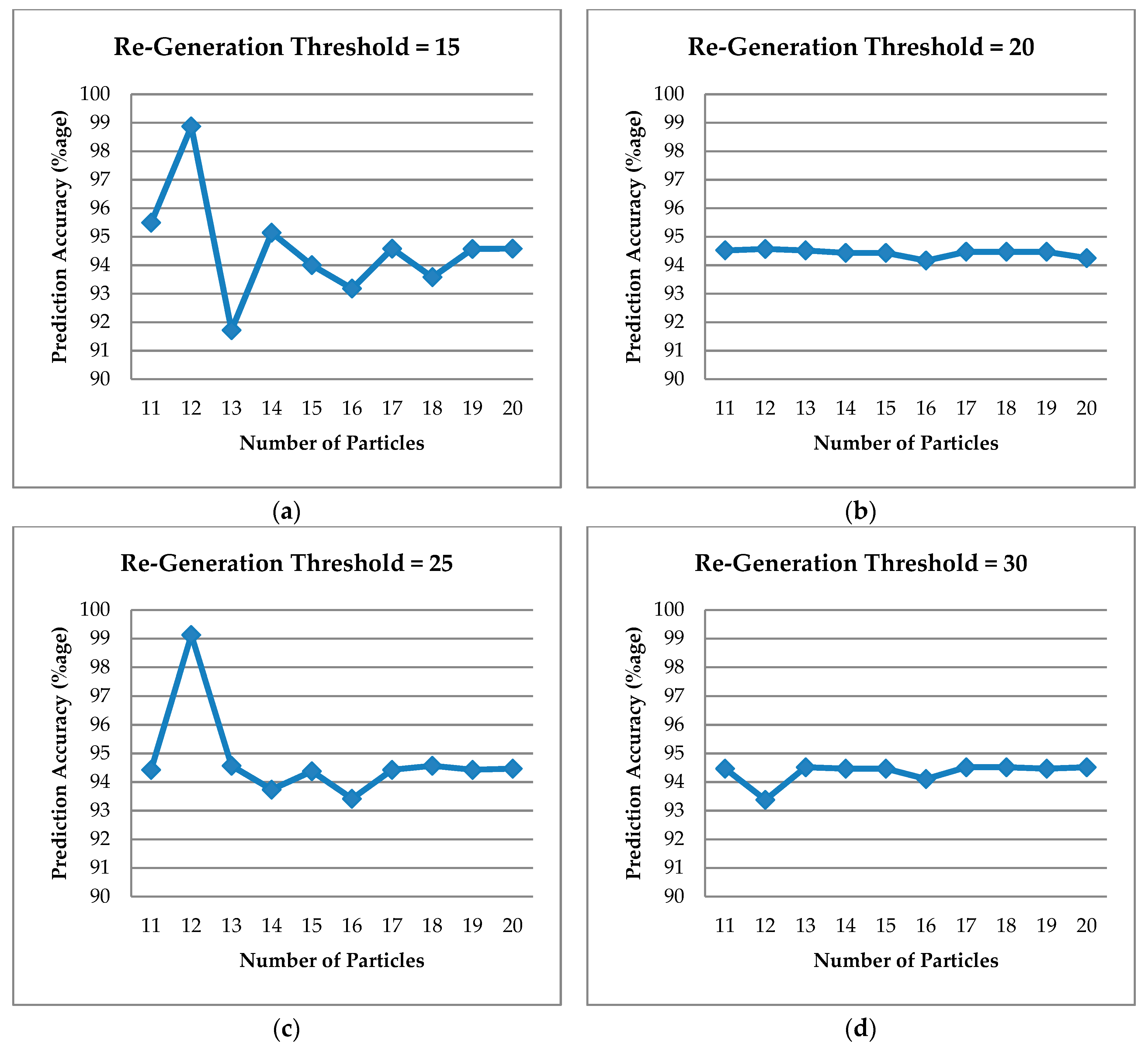
5.1. Re-Generation Threshold (RT)
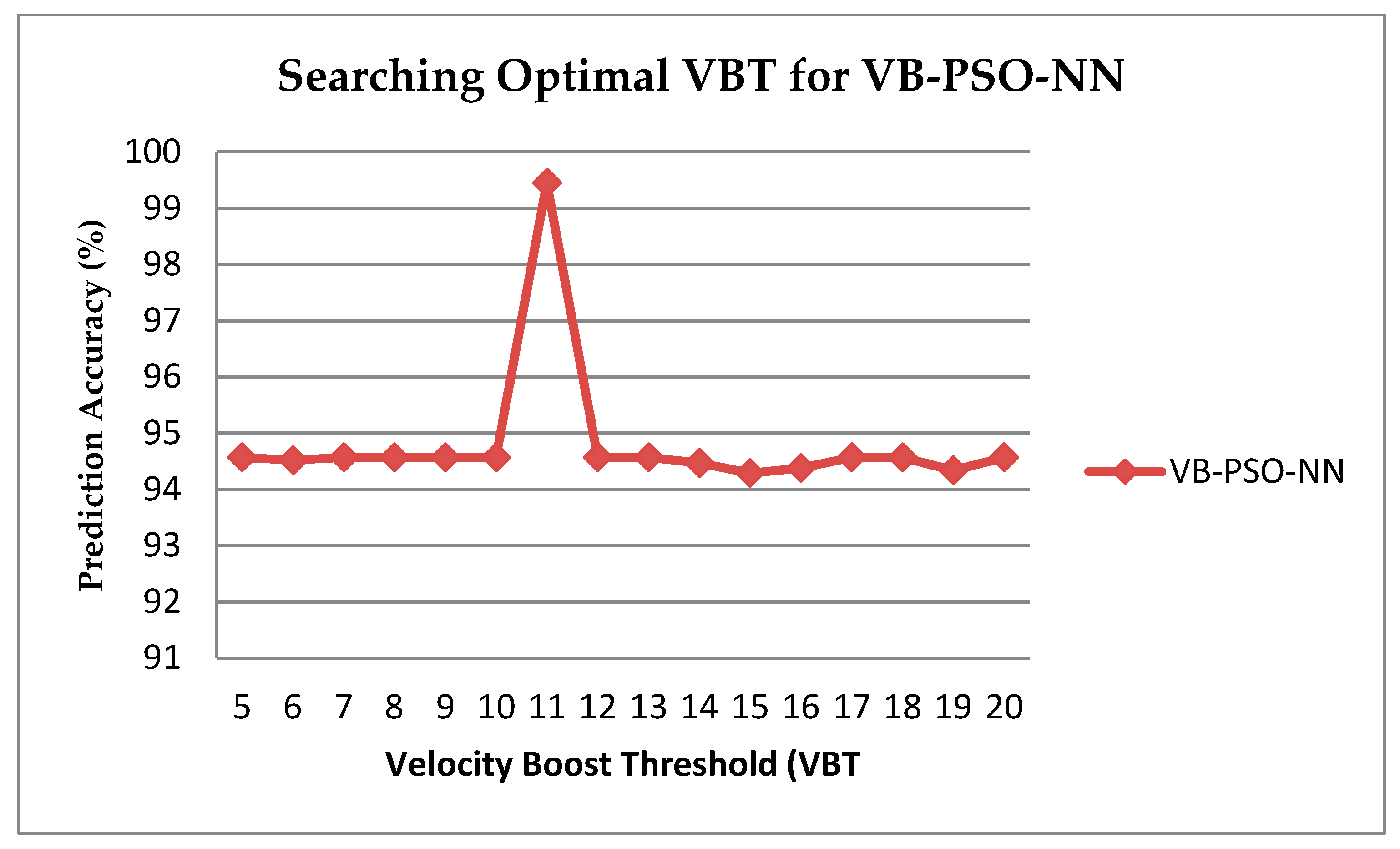
5.2. Velocity Boost Threshold (VBT)
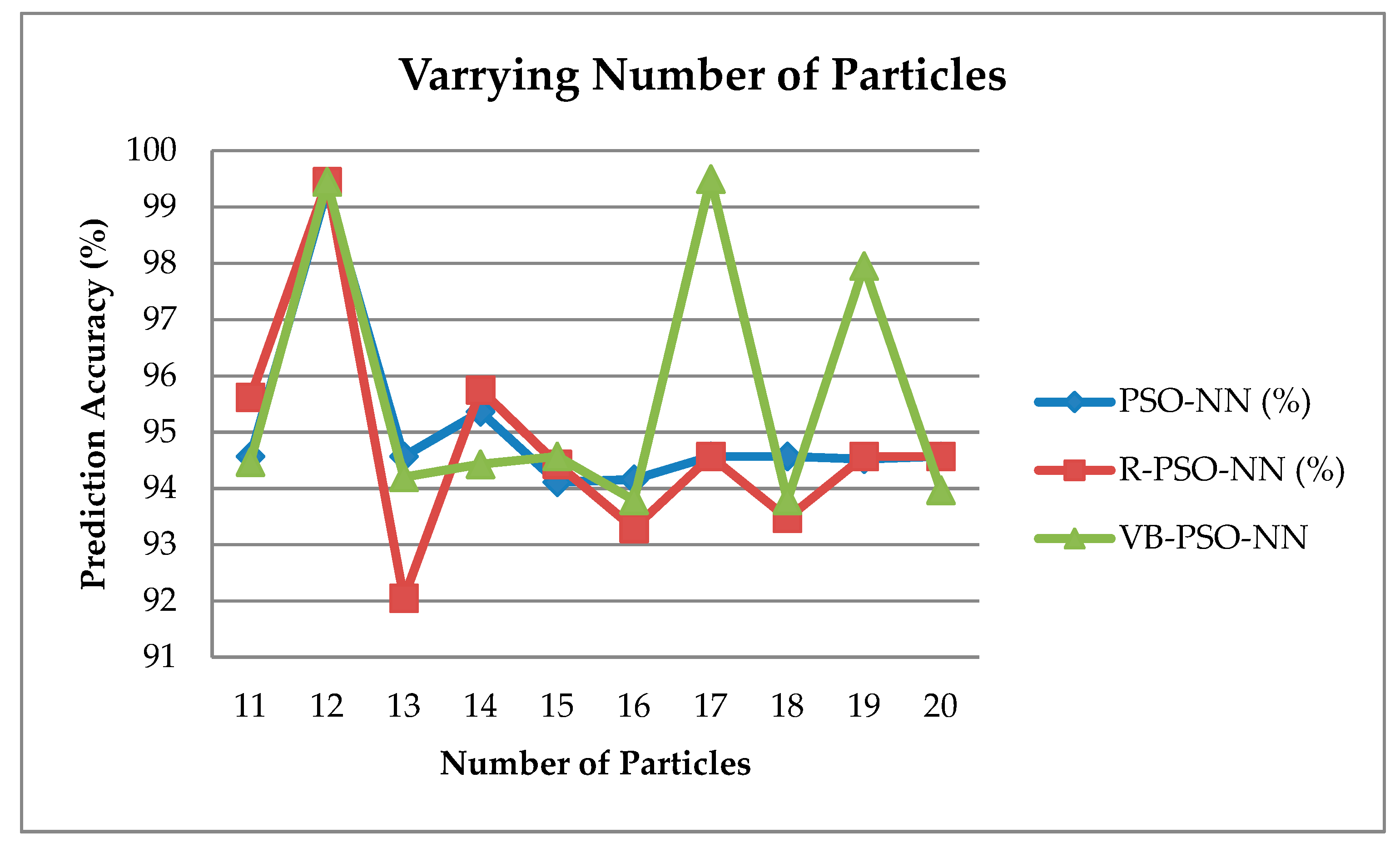
5.3. Number of Particles and Epochs Comparison
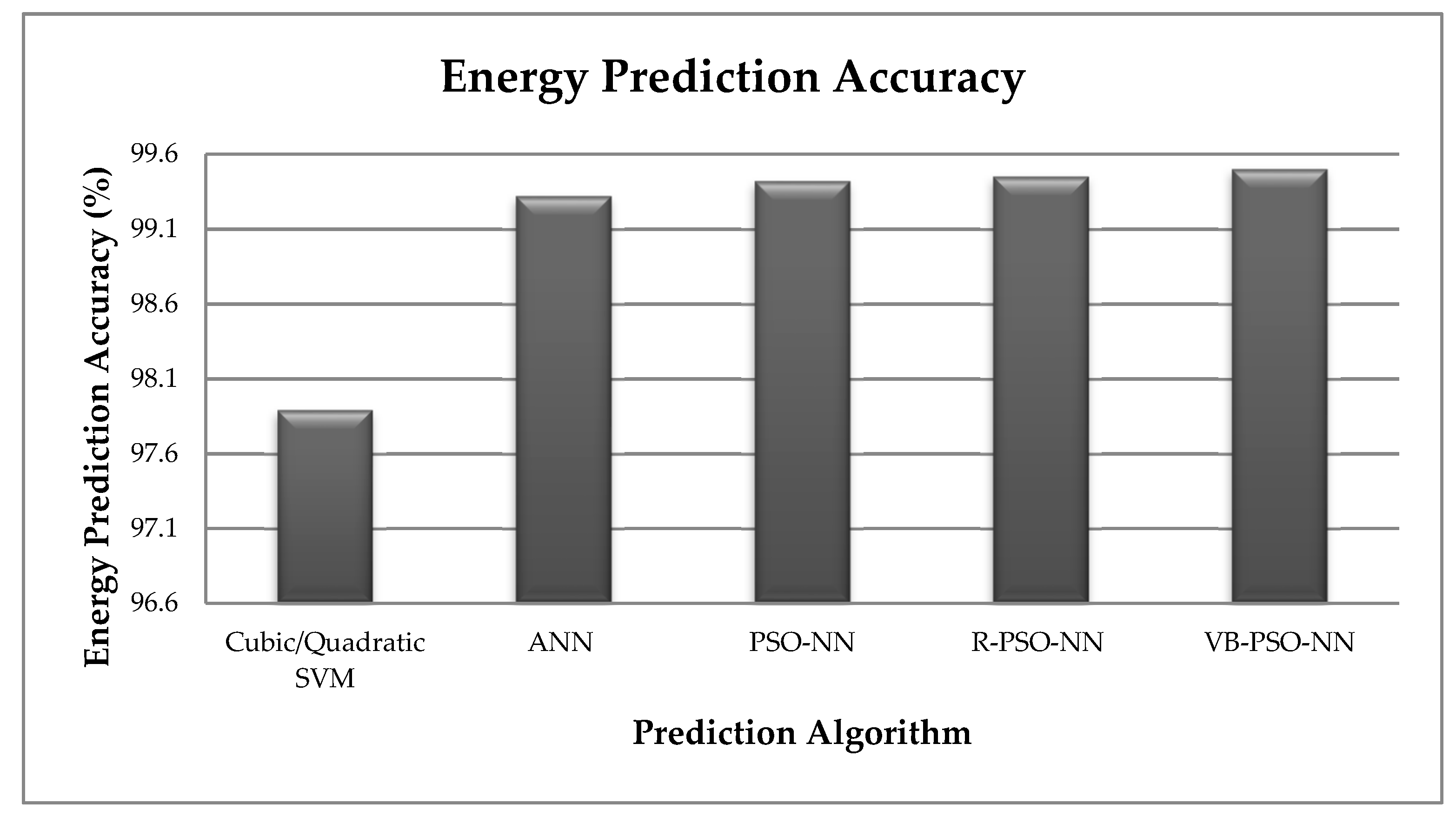
6. Discussion
7. Conclusions
Author Contributions
Acknowledgments
Conflicts of Interest
References
- Global Demand for Energy Will Peak in 2030, Says World Energy Council. Available online: https://www.theguardian.com/business/2016/oct/10/global-demand-for-energy-will-peak-in-2030-says-world-energy-council (accessed on 5 April 2018).
- Energy Information Korea. 2016. Available online: https://www.keei.re.kr/web_keei/en_publish.nsf/XML_Portal_New/B9C4089854585599492580BF0009503E/$file/EnergyInfo2016.pdf (accessed on 4 May 2018).
- International Energy Outlook. 2017. Available online: https://www.eia.gov/outlooks/ieo/pdf/0484(2017).pdf (accessed on 5 April 2018).
- Deru, M.; Torcellini, P. Source Energy and Emission Factors for Energy Use in Buildings (Revised); No. NREL/TP-550-38617; National Renewable Energy Laboratory (NREL): Golden, CO, USA, 2007.
- The Internet of Things: Making the Most of the Second Digital Revolution. Available online: https://www.gov.uk/government/uploads/system/uploads/attachment_data/file/409774/14-1230-internet-of-things-review.pdf (accessed on 5 April 2018).
- Korea’s Smart Homes Need New Lessons. Available online: http://koreajoongangdaily.joins.com/news/article/article.aspx?aid=3029201 (accessed on 5 April 2018).
- Korea Energy Agency. 2014. Available online: http://www.energy.or.kr/web/kem_home_new/energy_issue/mail_vol22/pdf/publish_05_201507.pdf (accessed on 5 April 2018).
- 4 Ways the Internet of Things Is Saving Energy, Water & Money. Available online: http://dadolabs.com/energyefficiency/ (accessed on 5 April 2018).
- Amasyali, K.; El-Gohary, N. Building lighting energy consumption prediction for supporting energy data analytics. Procedia Eng. 2016, 145, 511–517. [Google Scholar] [CrossRef] [Scilit]
- Hu, Y.-C. Electricity consumption prediction using a neural-network-based grey forecasting approach. J. Oper. Res. Soc. 2017, 68, 1259–1264. [Google Scholar] [CrossRef] [Scilit]
- Israr, U.; Ahmad, R.; Kim, D. A Prediction Mechanism of Energy Consumption in Residential Buildings Using Hidden Markov Model. Energies 2018, 11, 358. [Google Scholar] [CrossRef] [Scilit]
- Perez-Lombard, L.; Ortiz, J.; Pout, C. A review on buildings energy consumption information. Energy Build. 2008, 40, 394–398. [Google Scholar] [CrossRef] [Scilit]
- Zhao, H.-X.; Magoules, F. A review on the prediction of building energy consumption. Renew. Sustain. Energy Rev. 2012, 16, 3586–3592. [Google Scholar] [CrossRef] [Scilit]
- Ahmad, A.S.; Hassan, M.Y.; Abdullah, M.P.; Rahman, H.A.; Hussin, F.; Abdullah, H.; Saidur, R. A review on applications of ANN and SVM for building electrical energy consumption forecasting. Renew. Sustain. Energy Rev. 2014, 33, 102–109. [Google Scholar] [CrossRef] [Scilit]
- Fumo, N. A review on the basics of building energy estimation. Renew. Sustain. Energy Rev. 2014, 31, 53–60. [Google Scholar] [CrossRef] [Scilit]
- Nogales, F.J.; Contreras, J.; Conejo, A.J.; Espínola, R. Forecasting next-day electricity prices by time series models. IEEE Trans. Power Syst. 2002, 17, 342–348. [Google Scholar] [CrossRef] [Scilit]
- Massimiliano, M.; Caputo, P.; Costa, G. Paradigm shift in urban energy systems through distributed generation: Methods and models. Appl. Energy 2011, 88, 1032–1048. [Google Scholar]
- Adel, A.; Hemmati, M.; Abdoos, A.A. Short term load forecasting using a hybrid intelligent method. Knowl. Based Syst. 2015, 76, 139–147. [Google Scholar]
- Gallego, C.; Costa, A.; Cuerva, A. Improving short-term forecasting during ramp events by means of regime-switching artificial neural networks. Adv. Sci. Res. 2011, 6, 55–58. [Google Scholar] [CrossRef] [Scilit]
- Tutun, S.; Chou, C.-A.; Erdal, C. A new forecasting framework for volatile behavior in net electricity consumption: A case study in Turkey. Energy 2015, 93, 2406–2422. [Google Scholar] [CrossRef] [Scilit]
- Lu, X.; Lu, T.; Kibert, C.J.; Viljanen, M. Modeling and forecasting energy consumption for heterogeneous buildings using a physical-statistical approach. Appl. Energy 2015, 144, 261–275. [Google Scholar] [CrossRef] [Scilit]
- Swan, L.G.; Ugursal, V.I. Modeling of end-use energy consumption in the residential sector: A review of modeling techniques. Renew. Sustain. Energy Rev. 2009, 13, 1819–1835. [Google Scholar] [CrossRef] [Scilit]
- Al-Homoud, M.S. Computer-aided building energy analysis techniques. Build. Environ. 2001, 36, 421–433. [Google Scholar] [CrossRef] [Scilit]
- Wang, S.W.; Xu, X.H. Simplified building model for transient thermal performance estimation using GA-based parameter identification. Int. J. Therm. Sci. 2006, 45, 419–432. [Google Scholar] [CrossRef] [Scilit]
- Hyojoo, S.; Kim, C. Short-term forecasting of electricity demand for the residential sector using weather and social variables. Resour. Conserv. Recycl. 2017, 123, 200–207. [Google Scholar]
- Yang, J.; Rivard, H.; Zmeureanu, R. On-line building energy prediction using adaptive artificial neural networks. Energy Build. 2005, 37, 1250–1259. [Google Scholar] [CrossRef] [Scilit]
- Karatasou, S.; Santamouris, M.; Geros, V. Modeling and predicting building’s energy use with artificial neural networks: Methods and results. Energy Build. 2006, 38, 949–958. [Google Scholar] [CrossRef] [Scilit]
- Wong, S.L.; Wan, K.K.W.; Lam, T.N.T. Artificial neural networks for energy analysis of office buildings with daylighting. Appl. Energy 2010, 87, 551–557. [Google Scholar] [CrossRef] [Scilit]
- Dong, B.; Cao, C.; Lee, S.E. Applying support vector machines to predict building energy consumption in tropical region. Energy Build. 2005, 37, 545–553. [Google Scholar] [CrossRef] [Scilit]
- Kavaklioglu, K. Modeling and prediction of Turkey’s electricity consumption using support vector regression. Appl. Energy 2011, 88, 368–375. [Google Scholar] [CrossRef] [Scilit]
- Zhao, H.-X.; Magoulès, F. Feature selection for predicting building energy consumption based on statistical learning method. J. Algorithms Comput. Technol. 2012, 6, 59–78. [Google Scholar] [CrossRef] [Scilit]
- Tso, G.K.; Yau, K.K. Predicting electricity energy consumption: A comparison of regression analysis, decision tree and neural networks. Energy 2007, 32, 1761–1768. [Google Scholar] [CrossRef] [Scilit]
- Kalogirou, S.A.; Bojic, M. Artificial neural networks for the prediction of the energy consumption of a passive solar building. Energy 2000, 25, 479–491. [Google Scholar] [CrossRef] [Scilit]
- Peram, T.; Veeramachaneni, K.; Mohan, C.K. Fitness-distance-ratio based particle swarm optimization. In Proceedings of the 2003 IEEE Swarm Intelligence Symposium, SIS’03, Indianapolis, IN, USA, 24–26 April 2003; pp. 174–181. [Google Scholar]
- Cai, X.; Cui, Y.; Tan, Y. Predicted modified PSO with time-varying accelerator coefficients. Int. J. Bio-Inspired Comput. 2009, 1, 50–60. [Google Scholar] [CrossRef] [Scilit]
- Chen, X.; Li, Y. A modified PSO structure resulting in high exploration ability with convergence guaranteed. IEEE Trans. Syst. Man Cybern. Part B 2007, 37, 1271–1289. [Google Scholar] [CrossRef] [Scilit]
- Sedghi, M.; Aliakbar-Golkar, M.; Haghifam, M.R. Distribution network expansion considering distributed generation and storage units using modified PSO algorithm. Int. J. Electr. Power Energy Syst. 2013, 52, 221–230. [Google Scholar] [CrossRef] [Scilit]
- Ghomsheh, V.S.; Shoorehdeli, M.A.; Teshnehlab, M. Training ANFIS structure with modified PSO algorithm. In Proceedings of the IEEE Mediterranean Conference on Control & Automation, MED’07, Athens, Greece, 27–29 June 2007; pp. 1–6. [Google Scholar]
- Wang, S.; Watada, J. A hybrid modified PSO approach to VaR-based facility location problems with variable capacity in fuzzy random uncertainty. Inform. Sci. 2012, 192, 3–18. [Google Scholar] [CrossRef] [Scilit]
- Cui, G.; Qin, L.; Liu, S.; Wang, Y.; Zhang, X.; Cao, X. Modified PSO algorithm for solving planar graph coloring problem. Prog. Nat. Sci. 2008, 18, 353–357. [Google Scholar] [CrossRef] [Scilit]
- Chau, K.W. Particle swarm optimization training algorithm for ANNs in stage prediction of Shing Mun River. J. Hydrol. 2006, 329, 363–367. [Google Scholar] [CrossRef] [Scilit]
- Chatterjee, S.; Sarkar, S.; Hore, S.; Dey, N.; Ashour, A.S.; Balas, V.E. Particle swarm optimization trained neural network for structural failure prediction of multistoried RC buildings. Neural Comput. Appl. 2017, 28, 2005–2016. [Google Scholar] [CrossRef] [Scilit]
- Song, Y.; Chen, Z.; Yuan, Z. New chaotic PSO-based neural network predictive control for nonlinear process. IEEE Trans. Neural Netw. 2007, 18, 595–601. [Google Scholar] [CrossRef] [Scilit] [PubMed]
- Chau, K.W. Application of a PSO-based neural network in analysis of outcomes of construction claims. Autom. Constr. 2007, 16, 642–646. [Google Scholar] [CrossRef] [Scilit]
- Lu, W.Z.; Fan, H.Y.; Lo, S.M. Application of evolutionary neural network method in predicting pollutant levels in downtown area of Hong Kong. Neurocomputing 2003, 51, 387–400. [Google Scholar] [CrossRef] [Scilit]
- Ahmadi, M.A. Neural network based unified particle swarm optimization for prediction of asphaltene precipitation. Fluid Phase Equilib. 2012, 314, 46–51. [Google Scholar] [CrossRef] [Scilit]
- Gordan, B.; Armaghani, D.J.; Hajihassani, M.; Monjezi, M. Prediction of seismic slope stability through combination of particle swarm optimization and neural network. Eng. Comput. 2016, 32, 85–97. [Google Scholar] [CrossRef] [Scilit]
- Sheikhan, M.; Mohammadi, N. Time series prediction using PSO-optimized neural network and hybrid feature selection algorithm for IEEE load data. Neural Comput. Appl. 2013, 23, 1185–1194. [Google Scholar] [CrossRef] [Scilit]
- McCulloch, W.; Walter, P. A Logical Calculus of Ideas Immanent in Nervous Activity. Bull. Math. Biophys. 1943, 5, 115–133. [Google Scholar] [CrossRef] [Scilit]
- Minsky, M.; Papert, S. Perceptrons: An Introduction to Computational Geometry; MIT Press: Cambridge, MA, USA, 1969. [Google Scholar]
- Artificial Neural Networks as Models of Neural Information Processing|Frontiers Research Topic. Available online: https://www.frontiersin.org/research-topics/4817/artificial-neural-networks-as-models-of-neural-information-processing (accessed on 30 March 2018).
- Artificial Neuron Output. Available online: https://en.wikipedia.org/wiki/Artificial_neuron (accessed on 4 May 2018).
- Kennedy, J.; Eberhart, R. Particle Swarm Optimization. In Proceedings of the IEEE International Conference on Neural Networks, Perth, Australia, 27 November–1 December 1995; pp. 1942–1948. [Google Scholar]
- Poli, R.; Kennedy, J.; Blackwell, T. Particle swarm optimization. Swarm Intell. 2007, 1, 33–57. [Google Scholar] [CrossRef] [Scilit]
- Hyperbolic Function. Available online: https://en.wikipedia.org/wiki/Hyperbolic_function (accessed on 4 May 2018).
- Softmax Function. Available online: https://en.wikipedia.org/wiki/Softmax_function (accessed on 4 May 2018).
- Mean Squared Error Function. Available online: https://en.wikipedia.org/wiki/Mean_squared_error (accessed on 4 May 2018).
- Euclidean Distance. Available online: https://en.wikipedia.org/wiki/Euclidean_distance (accessed on 4 May 2018).
- Seoul Average Weather. Available online: https://www.ncdc.noaa.gov/ (accessed on 4 May 2018).
- Korea Electricity Consumption. Available online: https://www.ceicdata.com/en/korea/electricity-generation-and-consumption/electricity-consumption (accessed on 4 May 2018).
- Bebis, G.; Georgiopoulos, M. Feed-forward neural networks. IEEE Potentials 1994, 13, 27–31. [Google Scholar] [CrossRef] [Scilit]
- Krammer, K.; Singer, Y. On the algorithmic implementation of multi-class SVMs. Proc. JMLR 2001, 2, 265–292. [Google Scholar]

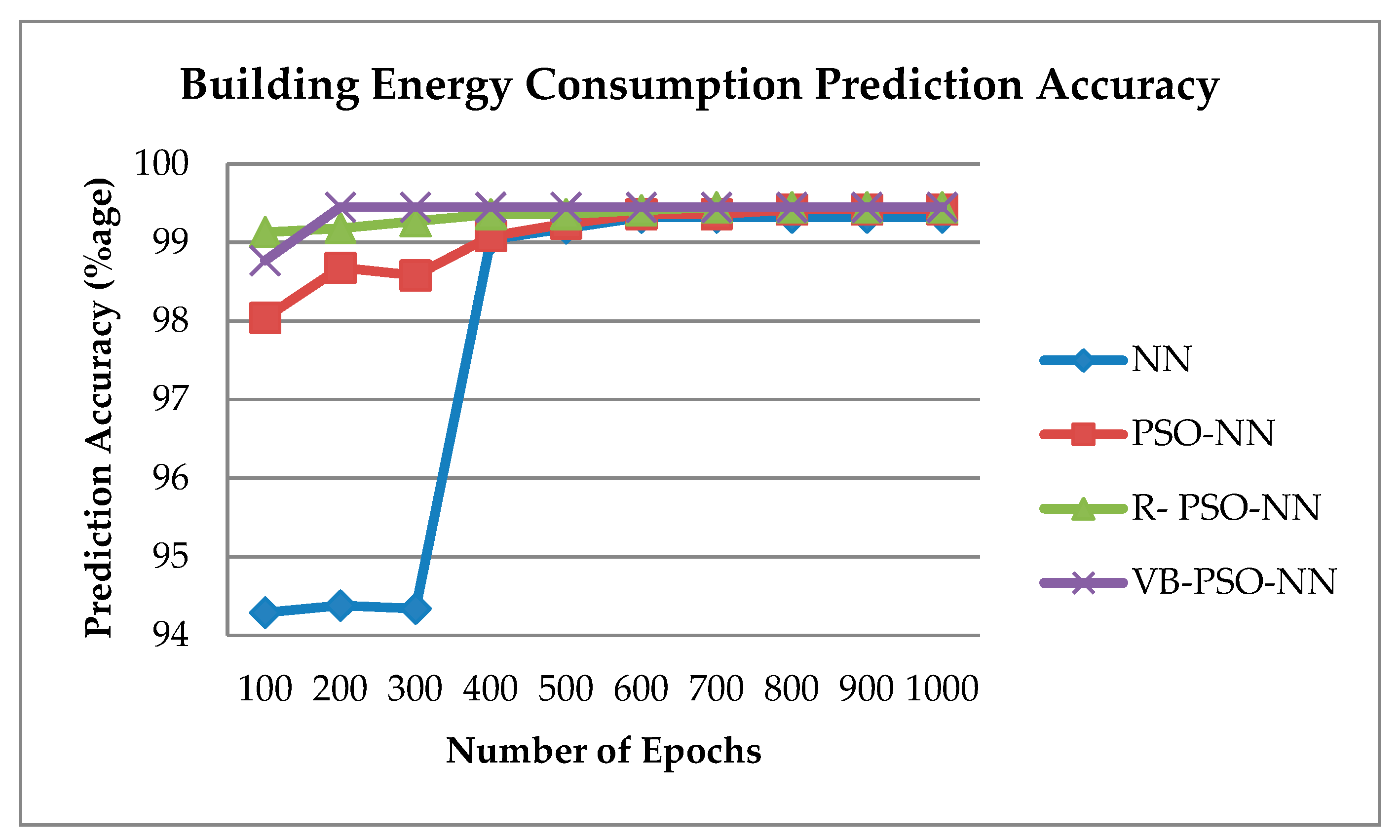
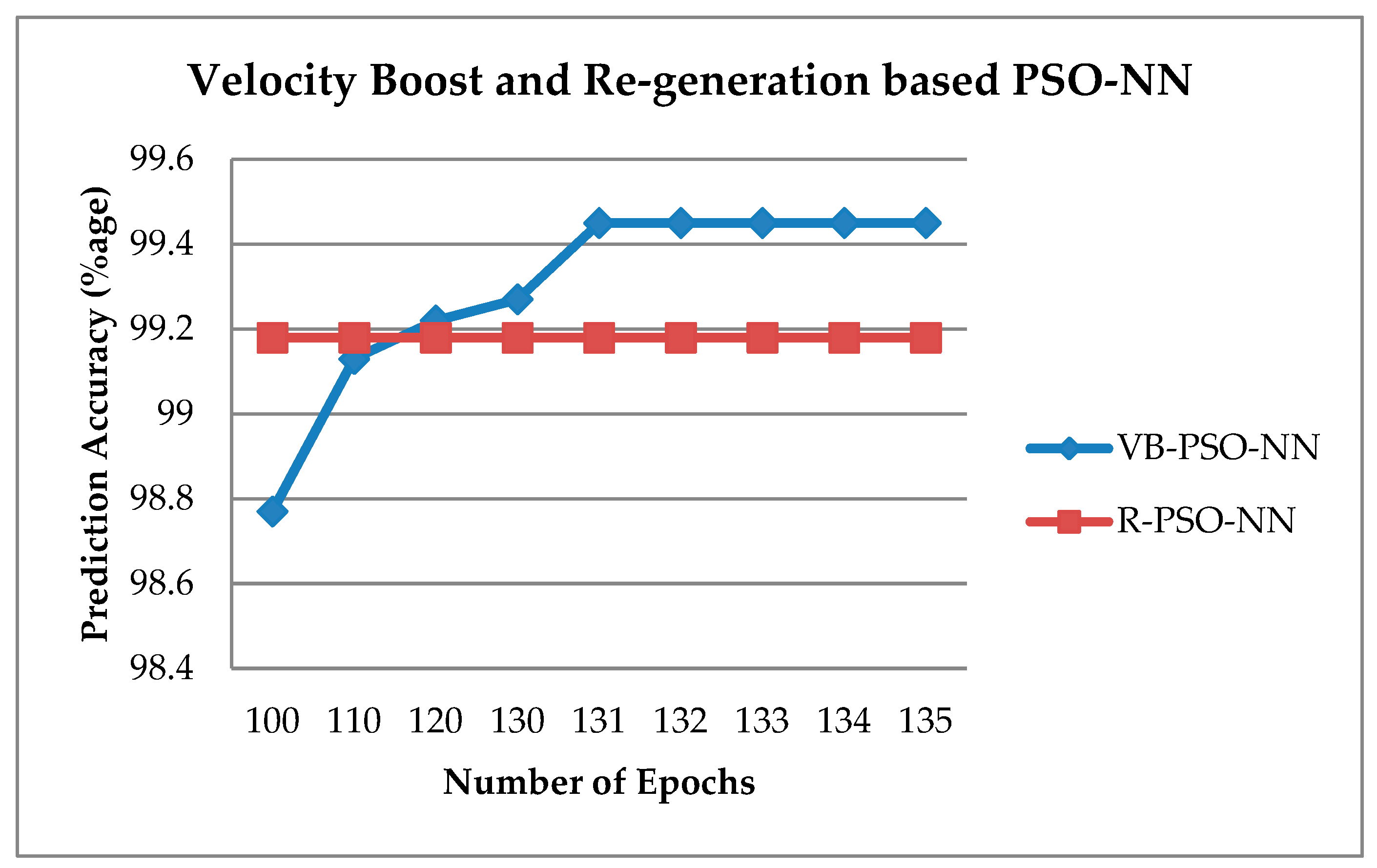

| Algorithm | Number of Epochs | Number of Particles | Best Accuracy |
|---|---|---|---|
| ANN | 600 | - | 99.32% |
| PSO-NN | 800 | 12 | 99.42% |
| R-PSO-NN | 700 | 12 | 99.45% |
| VB-PSO-NN | 133 | 17 | 99.50% |
© 2018 by the authors. Licensee MDPI, Basel, Switzerland. This article is an open access article distributed under the terms and conditions of the Creative Commons Attribution (CC BY) license (http://creativecommons.org/licenses/by/4.0/).
Share and Cite
Malik, S.; Kim, D. Prediction-Learning Algorithm for Efficient Energy Consumption in Smart Buildings Based on Particle Regeneration and Velocity Boost in Particle Swarm Optimization Neural Networks. Energies 2018, 11, 1289. https://doi.org/10.3390/en11051289
Malik S, Kim D. Prediction-Learning Algorithm for Efficient Energy Consumption in Smart Buildings Based on Particle Regeneration and Velocity Boost in Particle Swarm Optimization Neural Networks. Energies. 2018; 11(5):1289. https://doi.org/10.3390/en11051289
Chicago/Turabian StyleMalik, Sehrish, and DoHyeun Kim. 2018. "Prediction-Learning Algorithm for Efficient Energy Consumption in Smart Buildings Based on Particle Regeneration and Velocity Boost in Particle Swarm Optimization Neural Networks" Energies 11, no. 5: 1289. https://doi.org/10.3390/en11051289
APA StyleMalik, S., & Kim, D. (2018). Prediction-Learning Algorithm for Efficient Energy Consumption in Smart Buildings Based on Particle Regeneration and Velocity Boost in Particle Swarm Optimization Neural Networks. Energies, 11(5), 1289. https://doi.org/10.3390/en11051289