
Imaging-Guided Algorithmic Management of Mandibular Condylar Fractures: A 13-Year Institutional Analysis of 495 Joints

Abstract
1. Introduction
2. Evaluation of Treatment Philosophy
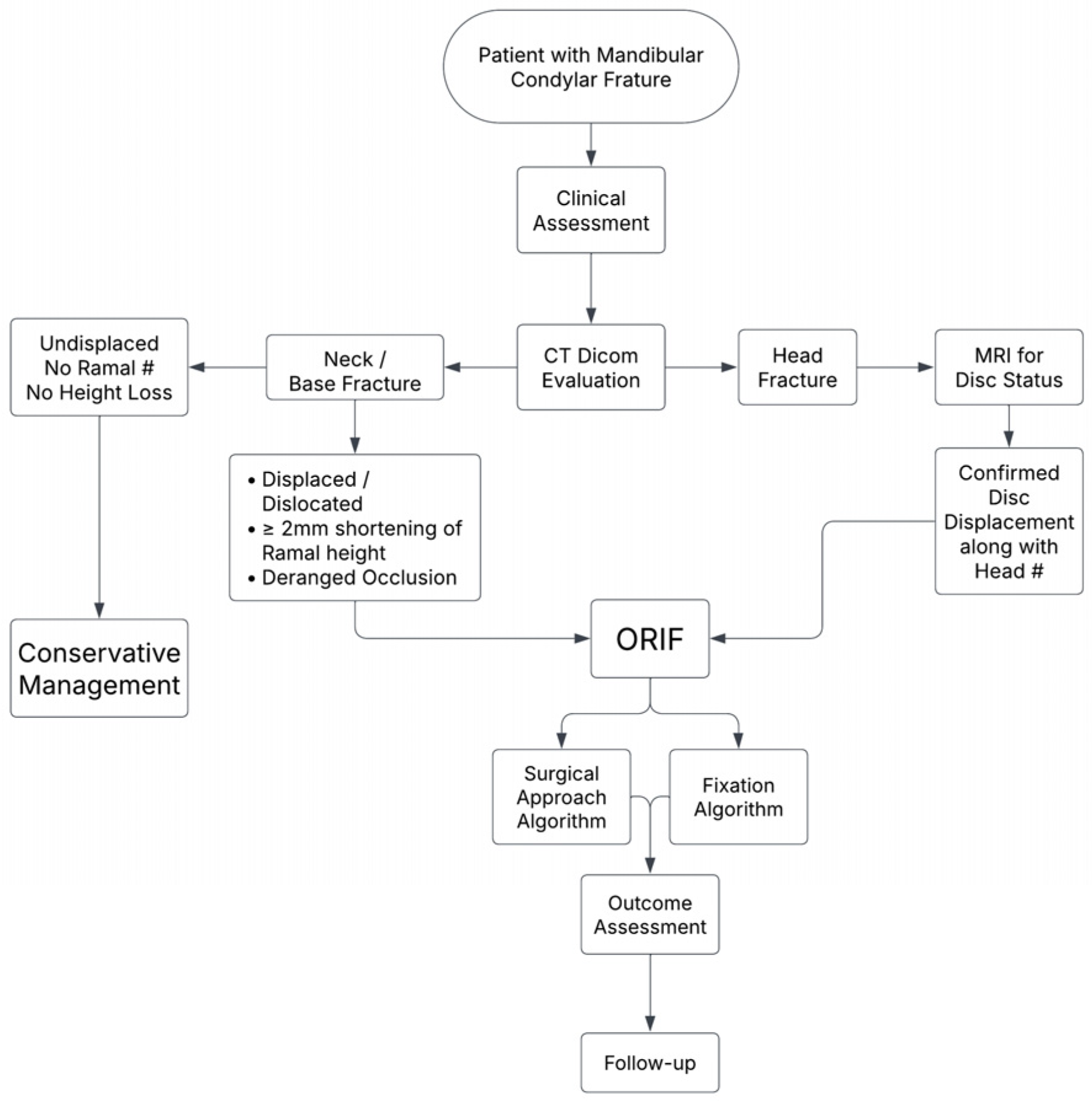
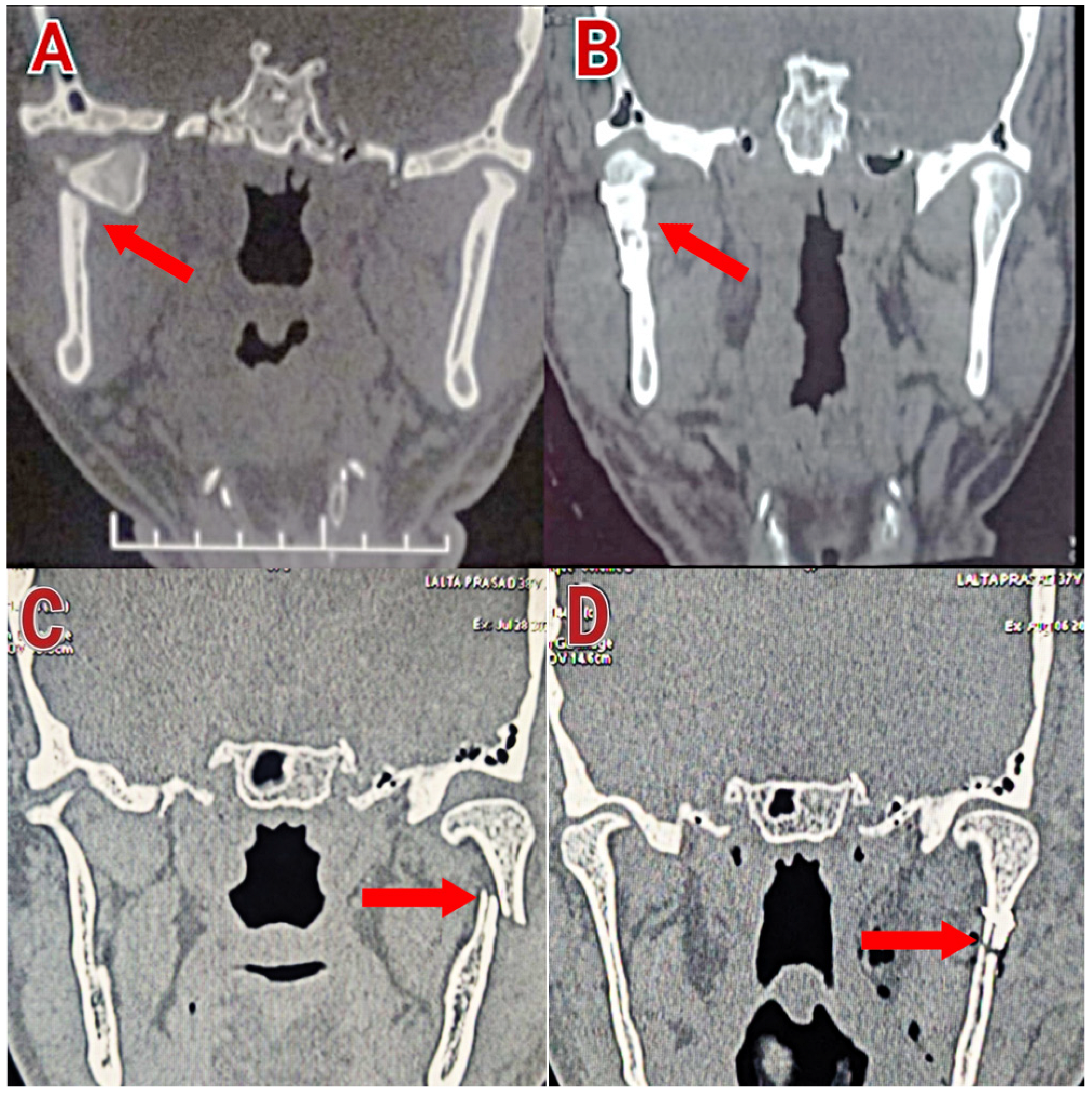
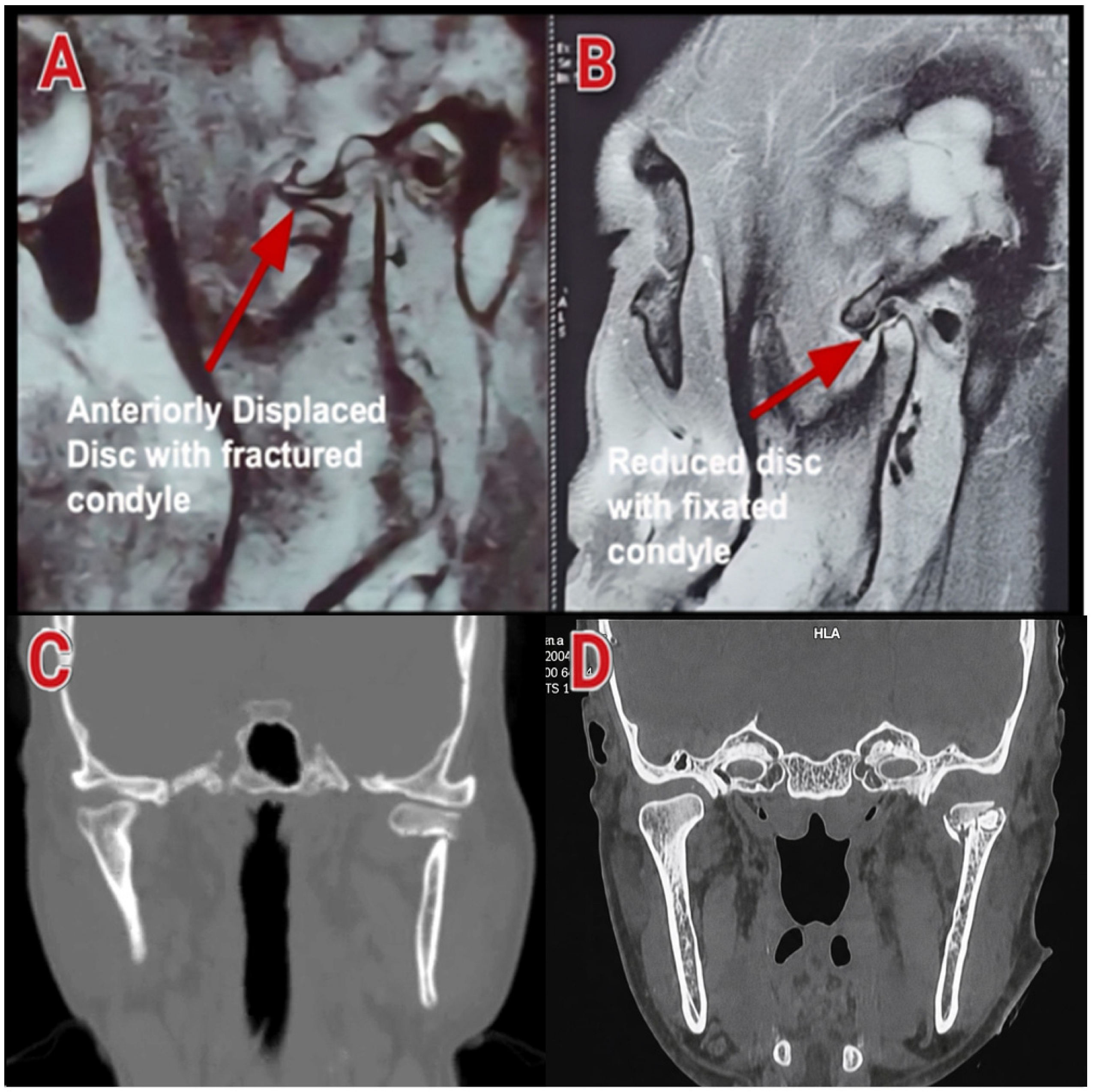
2.1. Principle 1: Radiological Evaluation as the Foundation of Decision-Making
2.2. Principle 2: Reinterpreting the Indications of Open vs. Closed Management
2.3. Indication of Intracapsular Condylar Fracture and the Role of Disc Position
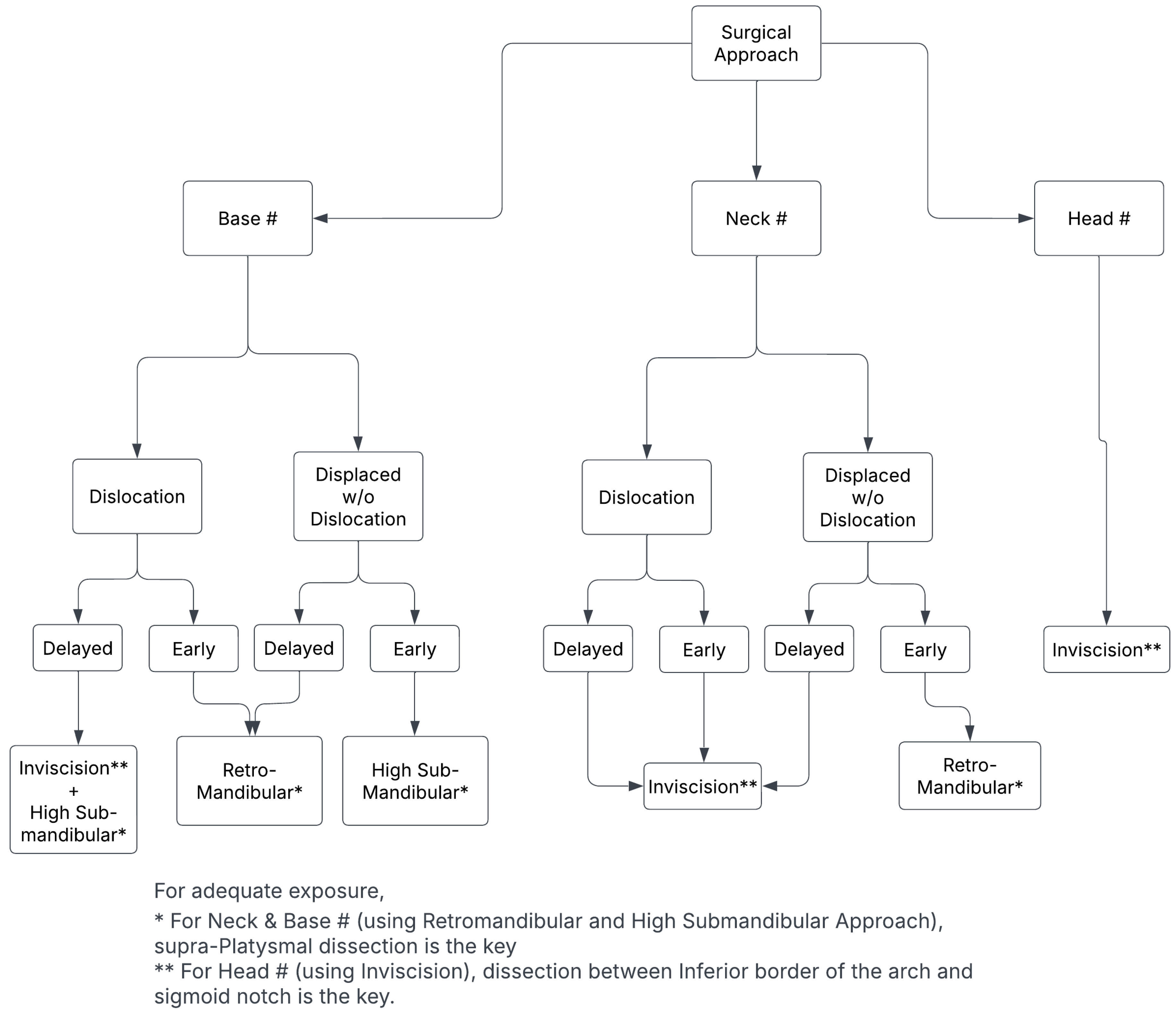
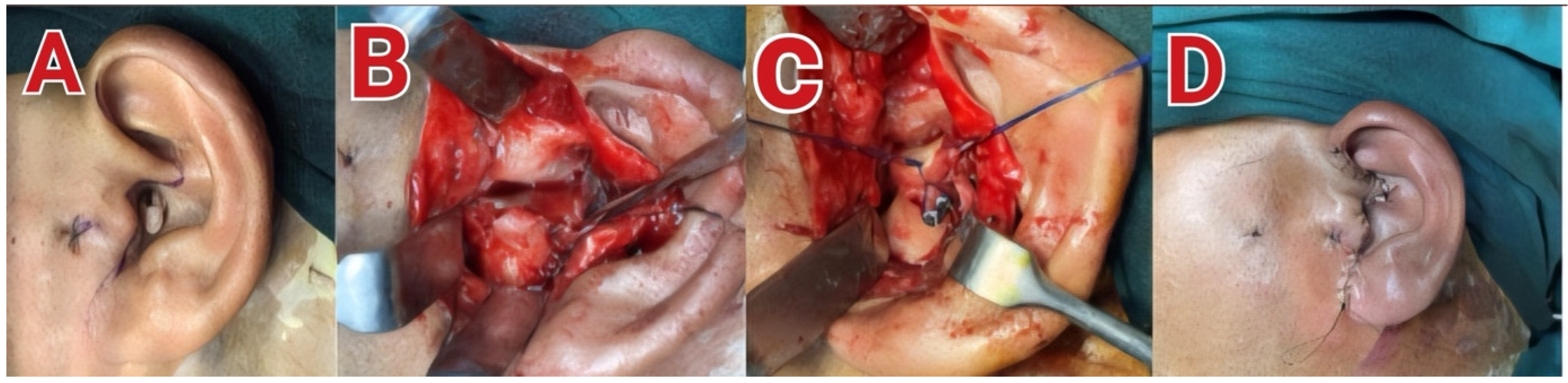
2.4. Principle 3: Surgical Approach Selection Based on Fracture Level
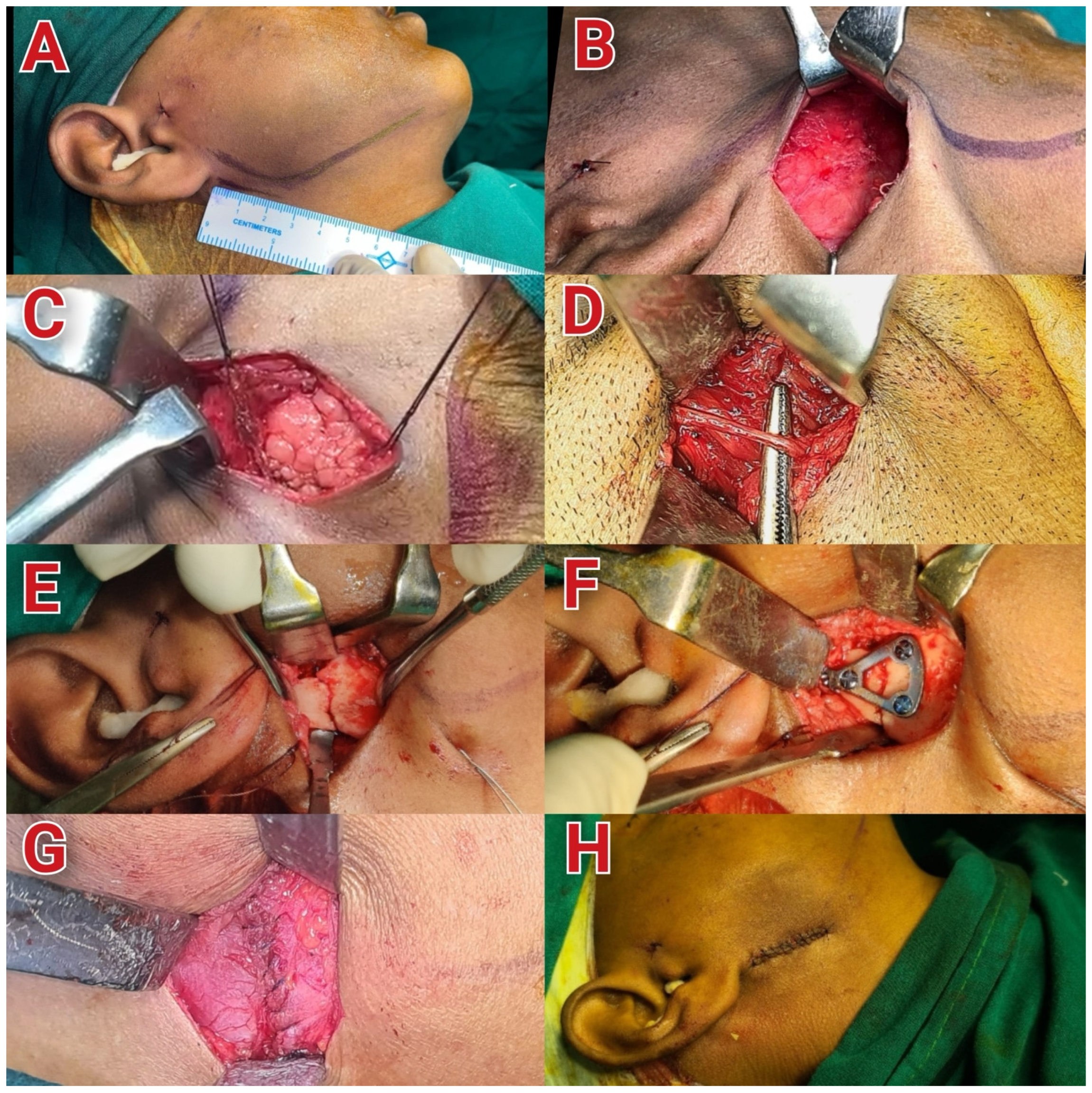
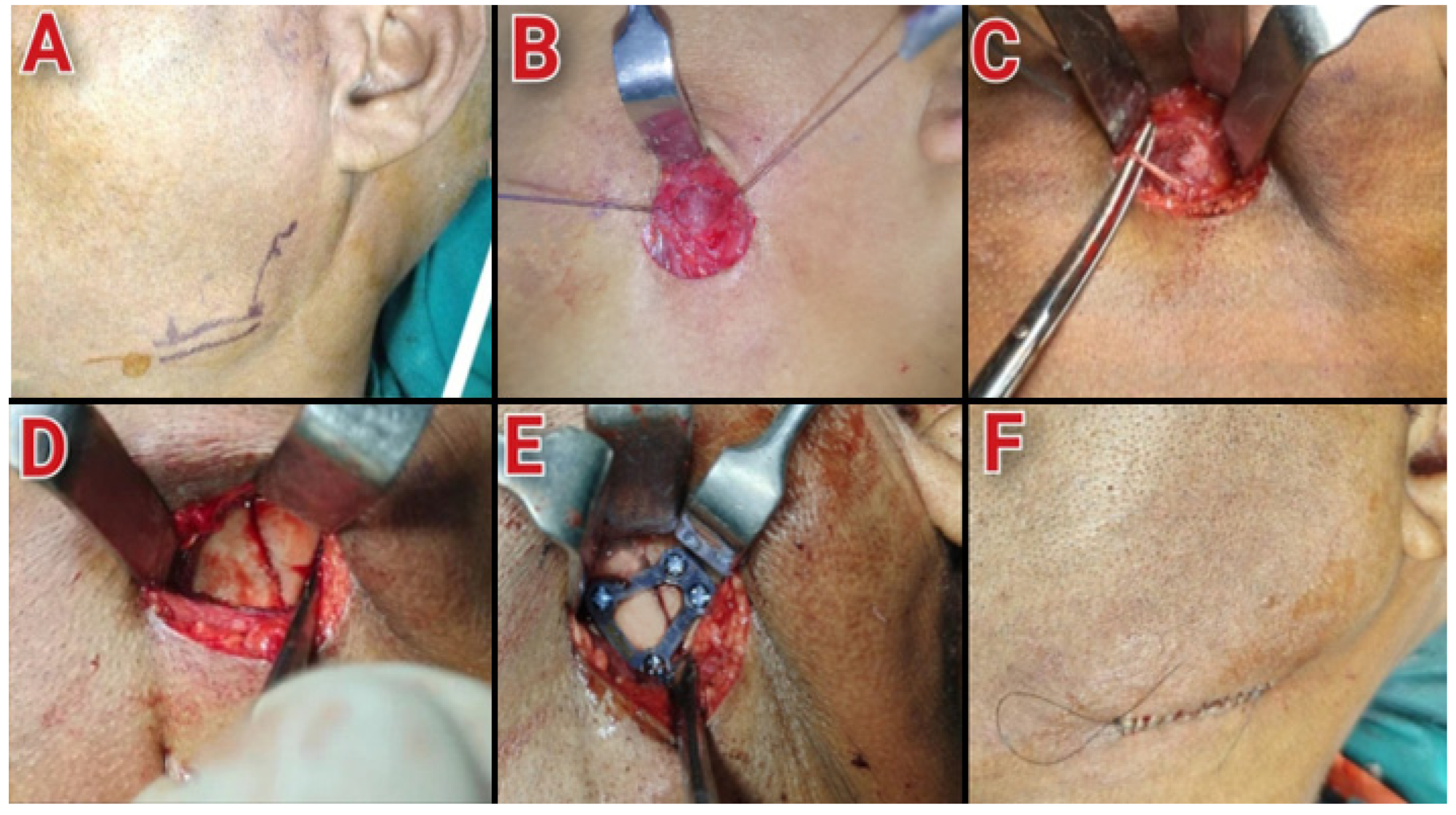
2.5. Approach Selection According to Fracture Level
2.6. Principle 4: Sequence of Reduction in Combined Fracture
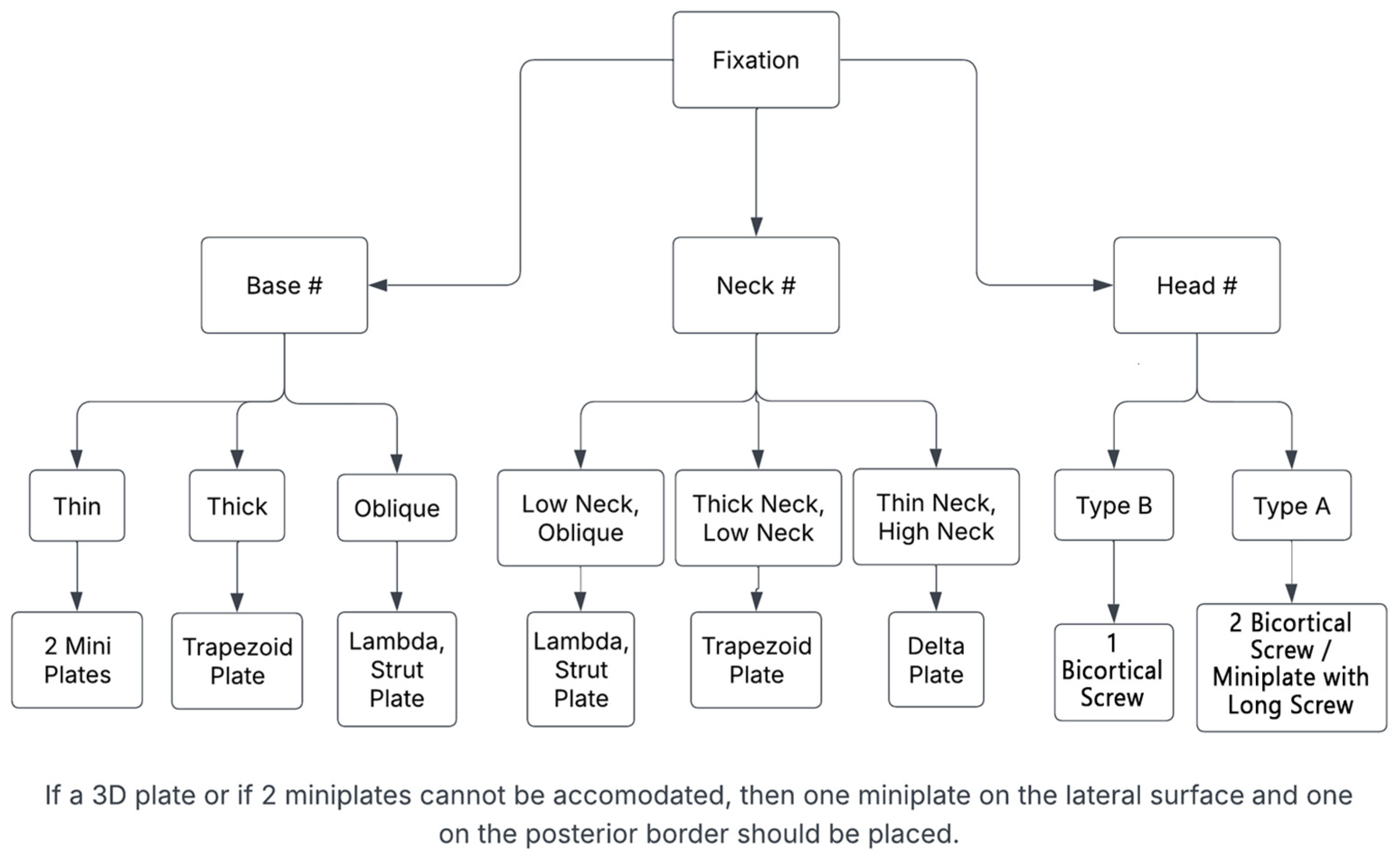
2.7. Principle 5: Fixation Biomechanics
2.8. Principle 6: Functional Rehabilitation as an Integrated Component
3. Institutional Experience Supporting the Algorithm
3.1. Cohort Description
3.2. Cohort Eligibility
- Age ≥16 years
- Functional impairment was defined as deranged occlusion, restricted mouth opening, or clinically evident mandibular deviation during movement
- Radiologic evidence of displacement ≥10° or ramal height shortening ≥2 mm
- Fracture dislocation
- Contraindication to intermaxillary fixation
- MRI-confirmed disc displacement, even in the absence of occlusal derangement
- Edentulous status
- Pathological fractures
- Pre-existing temporomandibular joint internal derangement unrelated to trauma
- Associated midfacial fractures
- Medical contraindications to surgical intervention
- Group A: Intracapsular fracture (Inviscision (Figure 6) & Endaural)
- Group B: Condylar neck fracture (Retromandibular-subparotid) (Figure 7)
- Group C: Condylar base fracture (High submandibular) (Figure 8)
3.3. Surgical Technique
- Condylar head fractures: positional bicortical screws or small microplates, depending on fragment size and morphology, placed away from the articulating surface.
3.4. Functional Outcomes Assessment
4. Limitations
5. Conclusions
Author Contributions
Funding
Institutional Review Board Statement
Informed Consent Statement
Data Availability Statement
Conflicts of Interest
References
- Ellis, E.; Dean, J. Rigid fixation of mandibular condyle fractures. J. Oral Maxillofac. Surg. 1993, 51, 17–28. [Google Scholar] [CrossRef]
- Neff, A.; Kolk, A.; Deppe, H.; Horch, H.H. New aspects for indications of surgical management of condylar head fractures. J. Craniomaxillofac. Surg. 2014, 42, 1097–1103. [Google Scholar]
- Zide, M.F.; Kent, J.N. Indications for open reduction of mandibular condyle fractures. J. Oral Maxillofac. Surg. 1983, 41, 89–98. [Google Scholar] [CrossRef]
- Mathes, S.J.; Hentz, V.R. Plastic surgery principles. In Plastic Surgery; Saunders: Philadelphia, PA, USA, 1983. [Google Scholar]
- Al-Moraissi, E.A.; Louvrier, A.; Colletti, G.; Wolford, L.M.; Biglioli, F.; Ragaey, M.; Meyer, C.; Ellis, E. Does the surgical approach for treating mandibular condylar fractures affect the rate of facial nerve injuries? A systematic review and meta-analysis. J. Craniomaxillofac. Surg. 2018, 46, 1016–1027. [Google Scholar]
- Ellis, E. Complications of mandibular condyle fractures. J. Oral Maxillofac. Surg. 1998, 56, 1390–1396. [Google Scholar]
- Al-Moraissi, E.A.; Ellis, E. Surgical treatment of adult mandibular condylar fractures provides better outcomes than closed treatment: A systematic review and meta-analysis. J. Oral Maxillofac. Surg. 2015, 73, 482–493. [Google Scholar] [CrossRef]
- Youssef, S.A.L.Y.; Raghoebar, I.I.; Helmers, R.; de Lange, J.; Dubois, L. Redefining and Identifying Evidence-Based Indications for Open Reduction and Internal Fixation in Mandibular Condylar Fractures: A Comprehensive Systematic Review and Evidence Analysis. Craniomaxillofac. Trauma Reconstr. 2025, 18, 25. [Google Scholar]
- He, D.; Yang, C.; Chen, M.; Jiang, B.; Wang, B. Intracapsular condylar fracture of the mandible: Our classification and open treatment experience. J. Oral Maxillofac. Surg. 2009, 67, 1674–1679. [Google Scholar] [CrossRef]
- Mansuri, Z.; Dhuvad, J.; Anchlia, S.; Bhatt, U.; Rajpoot, D.; Patel, H. Comparison of three different approaches in treatment of mandibular condylar fractures—Our experience. Natl. J. Maxillofac. Surg. 2023, 14, 256–263. [Google Scholar]
- Eckelt, U.; Schneider, M.; Erasmus, F.; Gerlach, K.L.; Kuhlisch, E.; Loukota, R.; Rasse, M.; Schubert, J.; Terheyden, H. Open versus closed treatment of fractures of the mandibular condylar process—A prospective randomized multi-centre study. J. Craniomaxillofac. Surg. 2006, 34, 306–314. [Google Scholar] [CrossRef]
- Schneider, M.; Erasmus, F.; Gerlach, K.L.; Kuhlisch, E.; Loukota, R.A.; Rasse, M.; Schubert, J.; Terheyden, H.; Eckelt, U. Open reduction and internal fixation versus closed treatment and mandibulomaxillary fixation of fractures of the mandibular condylar process: A randomized, prospective, multicenter study with special evaluation of fracture level. J. Oral Maxillofac. Surg. 2008, 66, 2537–2544. [Google Scholar] [CrossRef]
- American Association of Oral and Maxillofacial Surgeons. Clinical Practice Guidelines for Oral and Maxillofacial Surgery; AAOMS: Rosemont, IL, USA, 2017. [Google Scholar]
- Yang, X.; Yao, Z.; He, D.; Cai, Y.; Dong, M.; Yang, C. Does soft tissue injury affect intracapsular condylar fracture healing? J. Oral Maxillofac. Surg. 2015, 73, 2169–2180. [Google Scholar] [CrossRef] [PubMed]
- Court-Brown, C.M.; Heckman, J.D.; McQueen, M.M.; Ricci, W.M.; Tornetta, P., III; McKee, M.D. (Eds.) Rockwood and Green’s Fractures in Adults, 8th ed.; Wolters Kluwer: Philadelphia, PA, USA, 2015. [Google Scholar]
- Imai, T.; Fujita, Y.; Motoki, A.; Takaoka, H.; Kanesaki, T.; Ota, Y.; Iwai, S.; Chisoku, H.; Ohmae, M.; Sumi, T.; et al. Surgical approaches for condylar fractures related to facial nerve injury: Deep versus superficial dissection. Int. J. Oral Maxillofac. Surg. 2019, 48, 1227–1234. [Google Scholar] [CrossRef] [PubMed]
- Sahal, A.; Anchlia, S.; Dhuvad, J.; Bhatt, U.; Prajapati, G.; Chudasma, M. Inviscision: A futuristic alternative to endaural incision for TMJ surgeries. J. Maxillofac. Oral Surg. 2024, 23, 1026–1032. [Google Scholar] [CrossRef]
- Anchlia, S.; Sahal, A.; Bhatt, U.; Dhuvad, J.; Prajapati, G.; Chudasma, M. The perimeatal modification of Inviscision: In the search of the ideal preauricular incision. J. Maxillofac. Oral Surg. 2025, 52, 67–68. [Google Scholar] [CrossRef]
- Ellis, E., III. Atlas of Approaches to the Craniofacial Skeleton; W.B. Saunders: Philadelphia, PA, USA, 1999. [Google Scholar]
- Scolozzi, P.; Foletti, J.M. A closer examination of the retromandibular subparotid approach: Surgical technique and anatomical considerations with a special focus on the angular tract. A cadaveric study and a technical note. J. Stomatol. Oral Maxillofac. Surg. 2020, 121, 569–574. [Google Scholar] [CrossRef]
- Trost, O.; Troulis, M.J.; Kaban, L.B. The high submandibular approach for open reduction and internal fixation of condylar fractures. J. Oral Maxillofac. Surg. 2009, 67, 2116–2121. [Google Scholar] [CrossRef]
- Pau, M.; Navisany, K.; Reinbacher, K.E.; Zrnc, T.; Wallner, J.; Schwenzer-Zimmerer, K. Use of a modified high submandibular approach to treat condylar base fractures: Experience with 44 consecutive cases treated in a single institution. J. Craniomaxillofac. Surg. 2016, 44, 1977–1983. [Google Scholar]
- Ellis, E.; Throckmorton, G.S. Bite forces after open or closed treatment of mandibular condylar process fractures. J. Oral Maxillofac. Surg. 2001, 59, 389–395. [Google Scholar] [CrossRef]
- Champy, M.; Lodde, J.P.; Schmitt, R.; Jaeger, J.H.; Muster, D. Mandibular osteosynthesis according to the tension lines. Rev. Stomatol. Chir. Maxillofac. 1978, 79, 356–371. [Google Scholar]
- Nayak, S.; Kamath, A.T. Surgical management of double/triple mandibular fractures involving the condylar segment: Our perspective. J. Int. Soc. Prev. Community Dent. 2018, 8, 10–15. [Google Scholar] [CrossRef] [PubMed]
- Meyer, C.; Kahn, J.L.; Boutemi, P.; Wilk, A. Photoelastic analysis of bone deformation in the region of the mandibular condyle during mastication. J. Craniomaxillofac. Surg. 2002, 30, 160–169. [Google Scholar] [PubMed]
- Marwan, H.; Sawatari, Y. What is the most stable fixation technique for mandibular condyle fracture? J. Oral Maxillofac. Surg. 2019, 77, 2522.e1–2522.e12. [Google Scholar] [CrossRef] [PubMed]
- Al-Moraissi, E.A.; El-Sharkawy, T.M.; Mounair, R.M.; El-Ghareeb, T.I. Three-dimensional versus standard miniplates in the management of mandibular condylar fractures: A systematic review and meta-analysis. Int. J. Oral Maxillofac. Surg. 2020, 49, 709–718. [Google Scholar]
- Ahuja, S.A.; Galinde, J.; Asnani, U.; Mistry, Y.A. Comparative Evaluation of Clinical Outcomes Using Delta Plates and Conventional Miniplates for Internal Fixation of Mandibular Condylar Fractures in Adults. J. Oral Maxillofac. Surg. 2018, 76, 1255–1266. [Google Scholar] [CrossRef]
- Murakami, K.; Yamamoto, K.; Sugiura, T.; Horita, S.; Matsusue, Y.; Kirita, T. Computed Tomography-Based 3-Dimensional Finite Element Analyses of Various Types of Plates Placed for a Virtually Re-duced Unilateral Condylar Fracture of the Mandible of a Patient. J. Oral Maxillofac. Surg. 2017, 75, 1239.e1–1239.e11. [Google Scholar] [CrossRef]
- Choi, B.H.; Kim, K.N.; Kim, H.J.; Kim, M.K. Evaluation of condylar neck fracture plating techniques. J. Craniomaxillofac. Surg. 1999, 27, 109–112. [Google Scholar] [CrossRef]
- Alkan, A.; Celebi, N.; Ozden, B.; Baş, B.; Inal, S. Biomechanical comparison of different plating techniques in repair of mandibular angle fractures. Oral Surg. Oral Med. Oral Pathol. Oral Radiol. Endod. 2007, 104, 752–756. [Google Scholar] [CrossRef]
- Prein, J. (Ed.) Manual of Internal Fixation in the Cranio-Facial Skeleton: Techniques Recommended by the AO/ASIF-Maxillofacial Group; Springer: Berlin/Heidelberg, Germany, 1998. [Google Scholar]



| Criteria | Zide and Kent | Mathes | AAOMS/AOMSI | AO CMF | Institutional Algorithm (Present Study) |
|---|---|---|---|---|---|
| Absolute indications | Cranial fossa displacement; foreign body; lateral extracapsular displacement; inability to achieve occlusion | Dislocated condyle; loss of fragment contact | Failure of conservative management; mechanical obstruction; foreign body | Severe displacement with functional block | Mechanical obstruction to mouth opening; TMJ dysfunction due to dislocation |
| Displacement/Angulation | Lateral override | >30° angulation | Significant displacement | >30–45° angulation | >10° proximal segment angulation |
| Ramal height loss | Indirect | Ramus shortening (~≥5%) | Considered if occlusion affected | >2–5 mm shortening | >2 mm ramal shortening |
| Occlusion | Inability to achieve occlusion | Malocclusion after conservative management | Persistent malocclusion | Primary determinant | Included (functional derangement) |
| Functional limitation | Limited movement | Functional impairment | Mandibular dysfunction | Mouth opening restriction | Mechanical obstruction to opening |
| Dislocation | Lateral extracapsular displacement | Condyle out of fossa | Dislocation present | Strong indication | Dislocation causing TMJ dysfunction |
| Fragment relation | Not defined | Loss of fragment contact; bone gap >4–5 mm | Not explicit | Loss of alignment | Superolateral override (zygomatic arch impingement) |
| TMJ/Soft tissue | Not included | Dysfunction risk | Hemarthrosis; effusion; CSF otorrhea | Ankylosis risk | MRI-confirmed disc tear/TMJ dysfunction |
| Bilateral fractures | Relative indication | Bilateral with open bite | Bilateral with open bite | Functional deficit important | Considered selectively |
| Conservative indications (CM) | Not defined | Not defined | Undisplaced fractures | Functional stability | Undisplaced; comminuted; pediatric without displacement |
| Parameter | Sub-Category | Value (n %) |
|---|---|---|
| Demographics | ||
| Age (years) | Mean ± SD (Range) | 31.03 ± 12.64 (18–65) |
| Gender | Male | 329 (79.7%) |
| Female | 84 (20.3%) | |
| Total Patients | 413 | |
| Fracture Characteristics | ||
| Associated Fracture | Parasymphysis | 178 (43.1%) |
| Body | 92 (22.3%) | |
| Angle | 61 (14.8%) | |
| Symphysis | 48 (11.6%) | |
| Dentoalveolar | 8 (1.9%) | |
| Absent | 26 (6.3%) | |
| Condyle Fracture Distribution | Base | 224 (45.25%) |
| Head | 206 (41.62%) | |
| Neck | 65 (13.13%) | |
| Total Joints | 495 | |
| Operative Parameters | ||
| Days from trauma to surgery | Mean ± SD (Days) | 9.71 ± 4.03 |
| Incision to exposure time | Mean ± SD (min) | 9.59 ± 2.78 |
| Fixation time | Mean ± SD (min) | 8.74 ± 2.71 |
| Postoperative Complications | Parotid Fistula | 4 (1.0%) |
| Facial Nerve Injury (Total) | 41 (10.2%) | |
| Temporary Injury | 40 (10%) | |
| Permanent Injury | 1 (0.2%) |
| Time Interval | Mouth Opening (mm) (Mean ± SD) | Normal Occlusion (% Patients) | Left Posterior Bite Force (N) (Mean ± SD) | Right Posterior Bite Force (N) (Mean ± SD) | Right Excursion (mm) (Mean ± SD) | Left Excursion (mm) (Mean ± SD) | VAS Score (Mean ± SD) |
|---|---|---|---|---|---|---|---|
| Pre-operative | 18.77 ± 2.30 | Deranged (100%) | 55.00 ± 15.00 | 50.00 ± 14.00 | 5.27 ± 4.04 | 5.13 ± 3.15 | 7.90 ± 0.74 |
| 1 Week | 25.81 ± 1.91 | Normal (99.0%) | 110.00 ± 20.00 | 105.00 ± 19.00 | 6.79 ± 2.45 | 5.94 ± 2.33 | 2.90 ± 0.54 |
| 1 Month | 35.32 ± 2.02 | Normal (99.0%) | 274.47 ± 20.00 | 270.00 ± 22.00 | 8.69 ± 1.33 | 8.25 ± 1.60 | 0.06 ± 0.24 |
| 6 Months | 40.55 ± 1.88 | Normal (100%) | 343.78 ± 19.52 | 339.43 ± 23.37 | 9.56 ± 0.62 | 9.63 ± 0.77 | 0.00 ± 0.00 |
| p value | <0.001 | <0.001 | <0.001 | <0.001 | <0.001 | <0.001 | <0.001 |
| Fracture Site | N = 495 | Fixation Method | N | Percentage |
|---|---|---|---|---|
| Condylar Base | 224 | Trapezoid Plate | 146 | 65% |
| Two Miniplates | 78 | 35% | ||
| Condylar Neck | 65 | Delta Plate | 49 | 76% |
| One Miniplate | 16 | 24% | ||
| Condylar Head | 206 | Double Bicortical Screws | 103 | 50% |
| Single Bicortical Screw | 62 | 30% | ||
| Miniplate | 41 | 20% | ||
| Total | 495 | 495 | 100% |
Disclaimer/Publisher’s Note: The statements, opinions and data contained in all publications are solely those of the individual author(s) and contributor(s) and not of MDPI and/or the editor(s). MDPI and/or the editor(s) disclaim responsibility for any injury to people or property resulting from any ideas, methods, instructions or products referred to in the content. |
© 2026 by the authors. Published by MDPI on behalf of the AO Foundation. Licensee MDPI, Basel, Switzerland. This article is an open access article distributed under the terms and conditions of the Creative Commons Attribution (CC BY) license.
Share and Cite
Anchlia, S.; Amipara, H.; Khan, Z.; Barasara, J.; Dhuvad, J.; Gosai, H. Imaging-Guided Algorithmic Management of Mandibular Condylar Fractures: A 13-Year Institutional Analysis of 495 Joints. Craniomaxillofac. Trauma Reconstr. 2026, 19, 28. https://doi.org/10.3390/cmtr19020028
Anchlia S, Amipara H, Khan Z, Barasara J, Dhuvad J, Gosai H. Imaging-Guided Algorithmic Management of Mandibular Condylar Fractures: A 13-Year Institutional Analysis of 495 Joints. Craniomaxillofacial Trauma & Reconstruction. 2026; 19(2):28. https://doi.org/10.3390/cmtr19020028
Chicago/Turabian StyleAnchlia, Sonal, Hetal Amipara, Zibran Khan, Jigar Barasara, Jigar Dhuvad, and Hrushikesh Gosai. 2026. "Imaging-Guided Algorithmic Management of Mandibular Condylar Fractures: A 13-Year Institutional Analysis of 495 Joints" Craniomaxillofacial Trauma & Reconstruction 19, no. 2: 28. https://doi.org/10.3390/cmtr19020028
APA StyleAnchlia, S., Amipara, H., Khan, Z., Barasara, J., Dhuvad, J., & Gosai, H. (2026). Imaging-Guided Algorithmic Management of Mandibular Condylar Fractures: A 13-Year Institutional Analysis of 495 Joints. Craniomaxillofacial Trauma & Reconstruction, 19(2), 28. https://doi.org/10.3390/cmtr19020028