Squamous cell carcinoma of the bladder is rare, accounting for only 8% of all bladder cancers.[
1] Invasive squamous cell carcinoma with distal metastases offers a poor prognosis. It is unusual to find metastatic disease presenting distal to the knee, and it is rare to discover metastasis to the bones of the foot.[
2] This article reviews the clinical presentation, radiographic appearance, and histologic diagnosis of distal metastasis to a pedal bone and contributes one case of biopsy-proven squamous cell carcinoma from the bladder that has metastasized to the middle phalanx of a fourth toe.
Case Report
A 61-year-old male with a past medical history significant for a colostomy approximately 9 years prior presented to the Edward Hines, Jr. Veterans Affairs emergency department in Hines, Illinois. His chief complaint upon presentation was abdominal pain, in addition to right fourth toe pain. He related the toe pain back to an injury that occurred 1 month earlier. The patient was unable to provide a thorough past medical history. His social history included a 45 pack-year smoking history and a 40-year, 6 beers per day drinking history. His review of systems was significant for urinary retention with increased urgency and frequency but inability to pass urine.
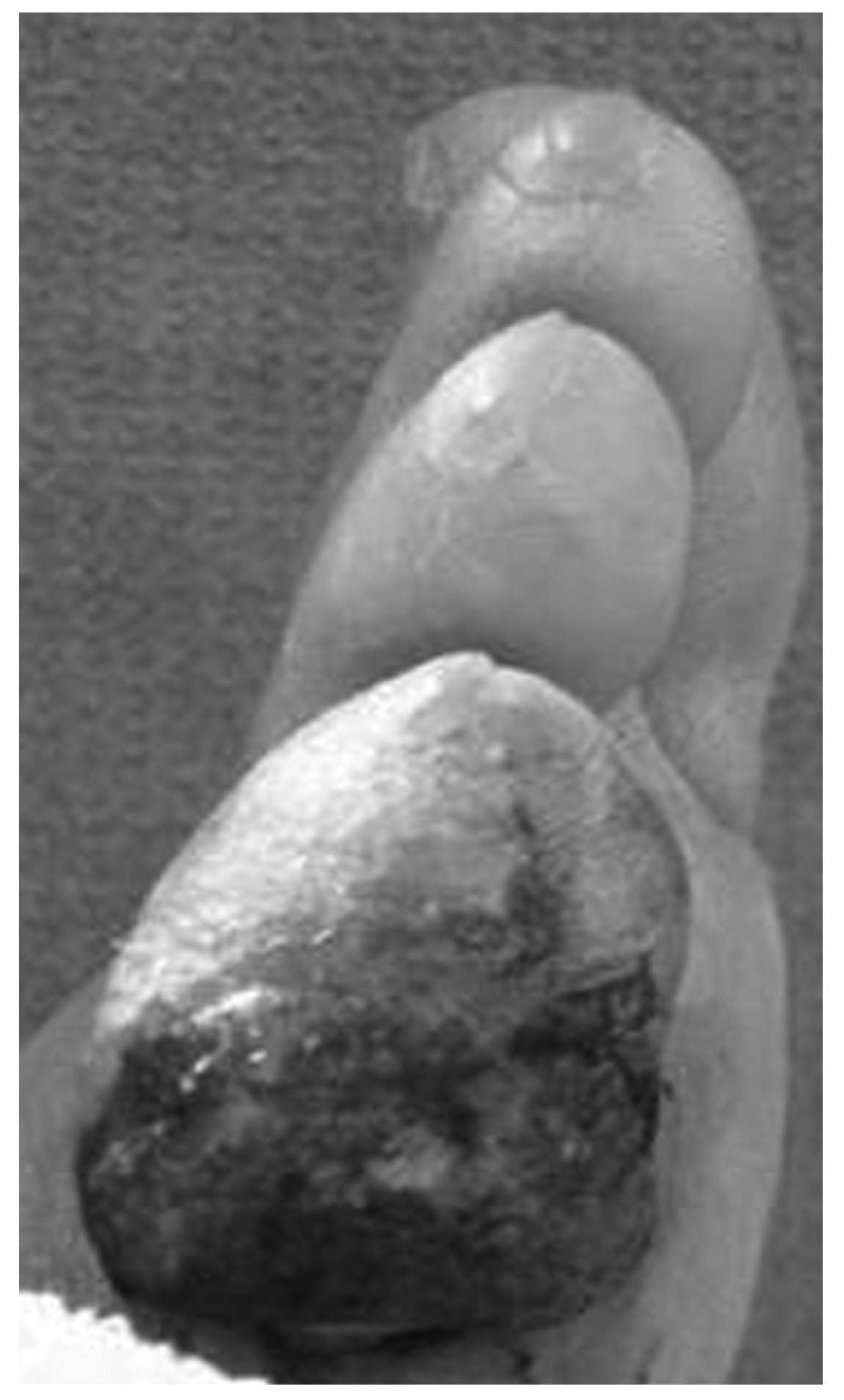
On physical exam the pertinent findings included a 2-cm raised nodular lesion on the lower right quadrant of his abdomen and an edematous and erythematous right fourth toe with a 3 × 2.5-cm lesion that was granulomatous in appearance, with no purulence and no warmth along the lateral aspect of the digit. The neurovascular status of the patient was intact, with pain on range of motion and palpation of the lesion. Admission laboratory values were significant for a leukocytosis of 16,000/mm
3, bandemia of 18,000/mm
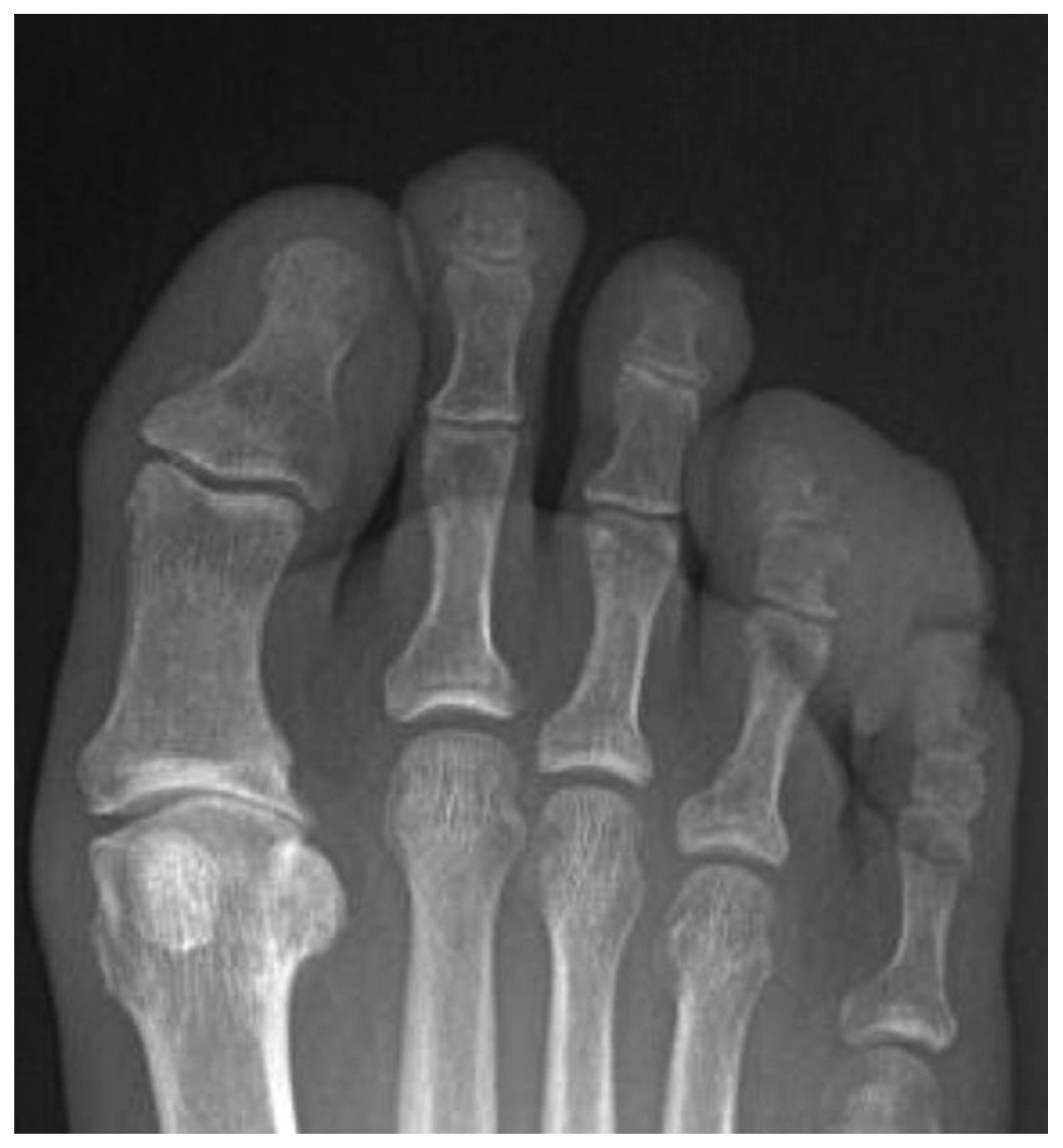
3, creatinine of 7.0 mg/dl, and a positive urinalysis. A radiograph of the chest revealed multiple pulmonary nodules; radiograph of the right foot confirmed a significant lesion of the middle phalanx of the right fourth toe. The lesion appeared lytic with ballooning of the cortex, sparing of the joint space, and no periosteal reaction. Soft-tissue inflammation surrounded the osseous lesion, but remained localized to the right fourth toe. (
Figs. 1 and
2)
Figure 1.
A preoperative radiograph of the right foot demonstrating a lytic lesion of the middle phalanx of the right fourth toe with ballooning of the cortex and sparing of the joint space.
Figure 1.
A preoperative radiograph of the right foot demonstrating a lytic lesion of the middle phalanx of the right fourth toe with ballooning of the cortex and sparing of the joint space.
Figure 2.
Preoperative clinical presentation of the lesion of the right fourth toe.
Figure 2.
Preoperative clinical presentation of the lesion of the right fourth toe.
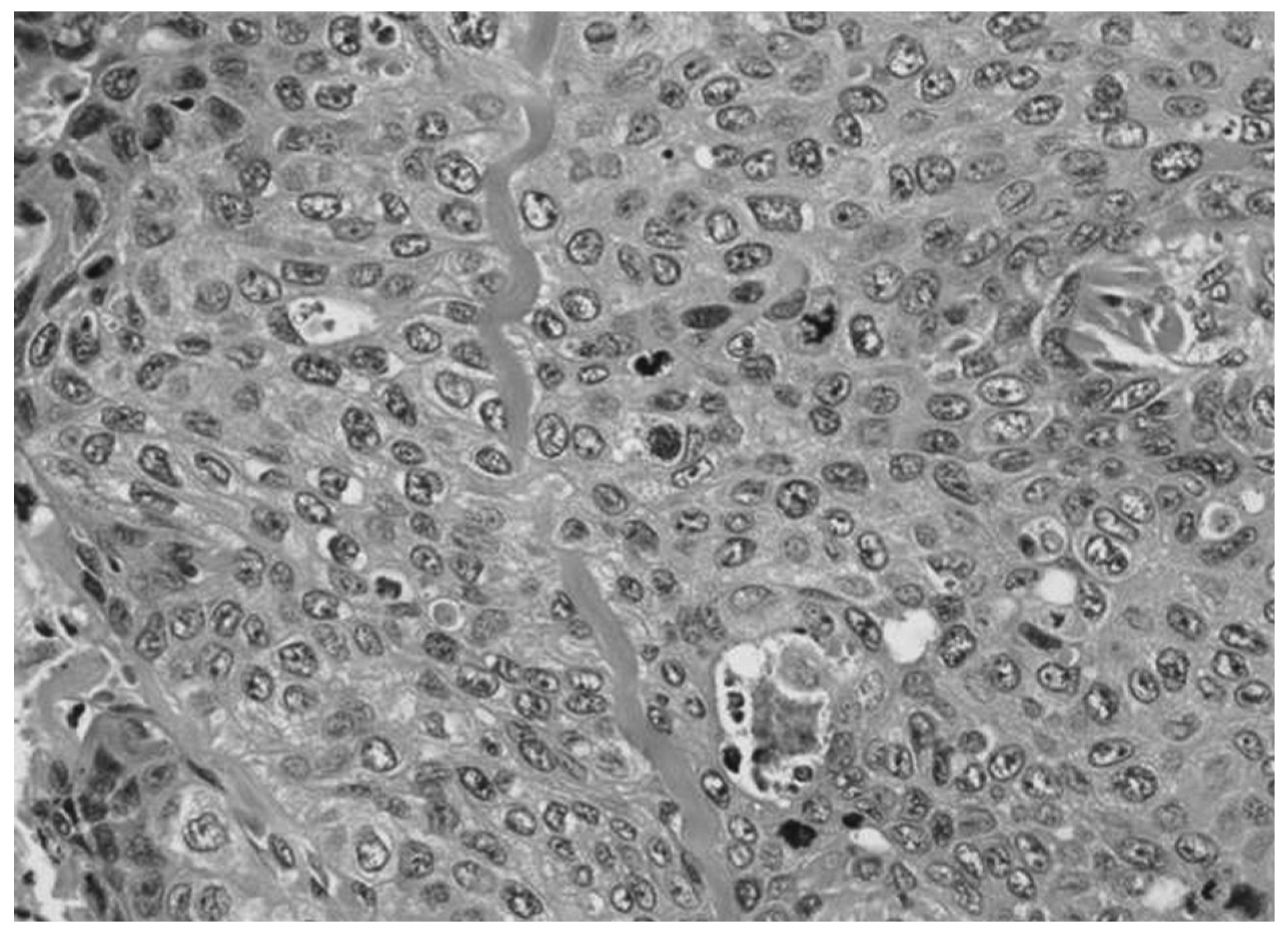
Initially, an incision and drainage was performed in an attempt to decompress the inflamed fourth toe. Upon surgical incision, only sanguinous drainage presented with no purulent fluid. At that time, a tissue sample was obtained and sent for pathologic analysis. The pathology report was significant for invasive squamous cell carcinoma of the right fourth toe. Medical treatment for this patient consisted of excision of the abdominal mass, amputation of the right fourth toe, and bilateral placement of a neprostomy tube for hydronephrosis (
Fig. 3). The pathology report from the bone of the toe, abdominal wall mass, and bladder debris were all consistent with invasive squamous cell carcinoma. After further imaging studies, the patient was found to have several other areas of metastases, including the skull, the humerus, and the adrenal glands. The patient underwent a series of palliative bladder radiation treatments and chemotherapy. The patient died 5 weeks after initial presentation.
Figure 3.
The malignant cells demonstrate abundant eosinophilic cytoplasm with markedly vesicular and pleomorphic nuclei. In some of the cells there are prominent nucleoli. Atypical mitotic figures are also seen (H&E, ×40).
Figure 3.
The malignant cells demonstrate abundant eosinophilic cytoplasm with markedly vesicular and pleomorphic nuclei. In some of the cells there are prominent nucleoli. Atypical mitotic figures are also seen (H&E, ×40).
Discussion
Squamous cell carcinoma is a malignant tumor of the squamous epithelium and can occur in many different organs. It can present in situ or invasive; invasive forms have the potential to metastasize to other organs. Squamous cell carcinoma of the bladder poses many risk factors and carcinogens. Occupational exposure is found in 20% of cases, the most common being exposure to aromatic amines.[
3] Smoking has been associated with an increased risk of squamous cell carcinoma, and approximately 85% of men who die from this form of cancer have a positive tobacco history. Signs and symptoms may include hematuria, hesitancy, urgency, frequency, and dysuria.[
3,
4]
The first report of metastatic disease involving a pedal bone was reported by Bloodgood in 1920.[
5,
6] Since this time, other cases have been reported,[
1,
2,
6–
14] but overall reported incidences remain rare.[
7,
10] Although most common malignant tumors of the skeletal system are metastatic, foot and ankle involvement is very uncommon.[
13] It is unusual for metastatic disease to present distal to the knee and even more infrequent to discover distal metastases to the bones of the foot.[
2] Within the tarsal bones, the calcaneus is most commonly involved. While the tarsal bones account for approximately 50% of the involved pedal bones, the phalanges are affected 17% of the time.[
2] Phalangeal metastases occur more frequently in men, usually between 40 and 60 years of age.[
12]
Metastases to the foot often originate from a primary lesion in the colon or the genitourinary system, and primary lesions of lung are found to metastasize to the hand.[
2,
10–
12,
14] Most digital metastases initially involve the bone and then spread to the soft tissue, sparing the surrounding joints.[
12] This pattern of peripheral metastases can be explained by the retrograde spread of tumor emboli from the vertebral venous plexus down the incompetent veins of the leg.[
9,
14] The valveless vertebral venous system communicates with the iliofemoral venous system, but the iliofemoral system is unable to compensate for gravitational forces because of the incompetent leg veins.[
15] This lack of compensation for gravitational forces may allow a path for the tumor embolization to distal sites, such as the ankle, foot, and toes. Nevertheless, the mechanism of tumor development within the extremities is still unclear. The probability of tumor emboli occurring at a particular site can be influenced by trauma, thermal differences, hormonal influence, host immune response, and local hemodynamic factors.[
6,
10,
12,
14] The level of the diaphragm provides a line of division for the path of tumor emboli. Supradiaphragmatic organs, such as the lung, tend to embolize toward the hand; subdiaphragmatic organs, such as the colon, rectum, bladder, kidney, uterus, and prostate, tend to metastasize toward the foot.[
6]
Presentation of a peripheral metastasis carries a poor prognosis, with an average survival time of less than 9 months.[
6,
14] The survival of the patient in our case was only 5 weeks from the initial date of presentation. The goal of therapy is palliative, aimed at reducing pain, preventing infection, and offering the best quality of life to the patient. The purpose in presenting this case report is to make the reader aware of the unusual presentation of distal metastasis of squamous cell carcinoma from a primary bladder origin and should not be confused with superficial squamous cell carcinoma. Timely recognition and treatment of this condition is essential to improve the quality of life of the patient. Phalangeal metastases should be considered in the differential diagnosis of inflammatory disease processes of the digits, and a radiograph and histopathologic study should be performed in every questionable case to ensure proper treatment.